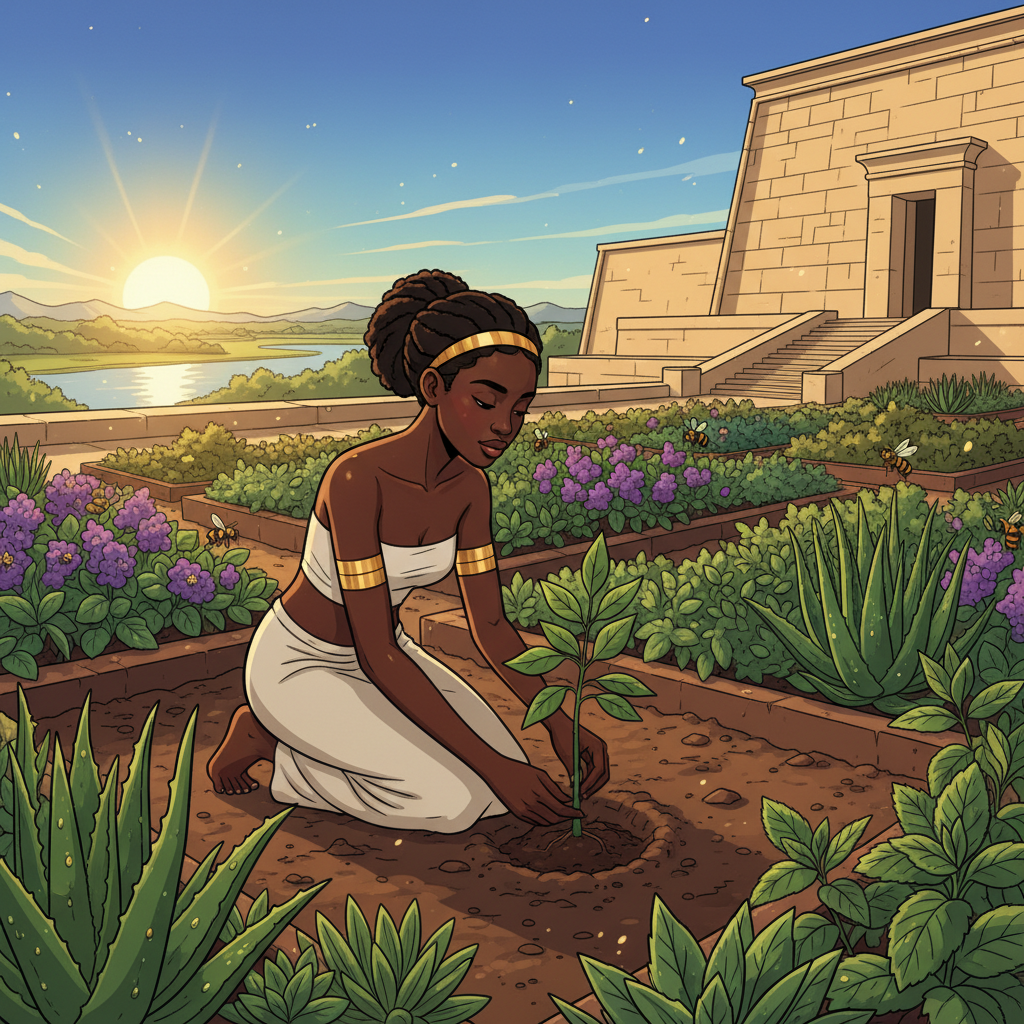
The morning sun poured golden light over the healing garden beside the great temple of Men-nefer. Nefertari knelt in the rich dark soil, her deep ebony fingers pressing gently around the roots of a young sycamore seedling. The air smelled sweet, like honey mixed with fresh mint and wet earth after rain. All around her, rows of green plants stretched toward the bright sky of Kemet. Purple flowers buzzed with bees, and thick aloe leaves glistened with dew. Nefertari breathed in deeply and smiled, because this garden felt like the most peaceful place along the whole Nile.
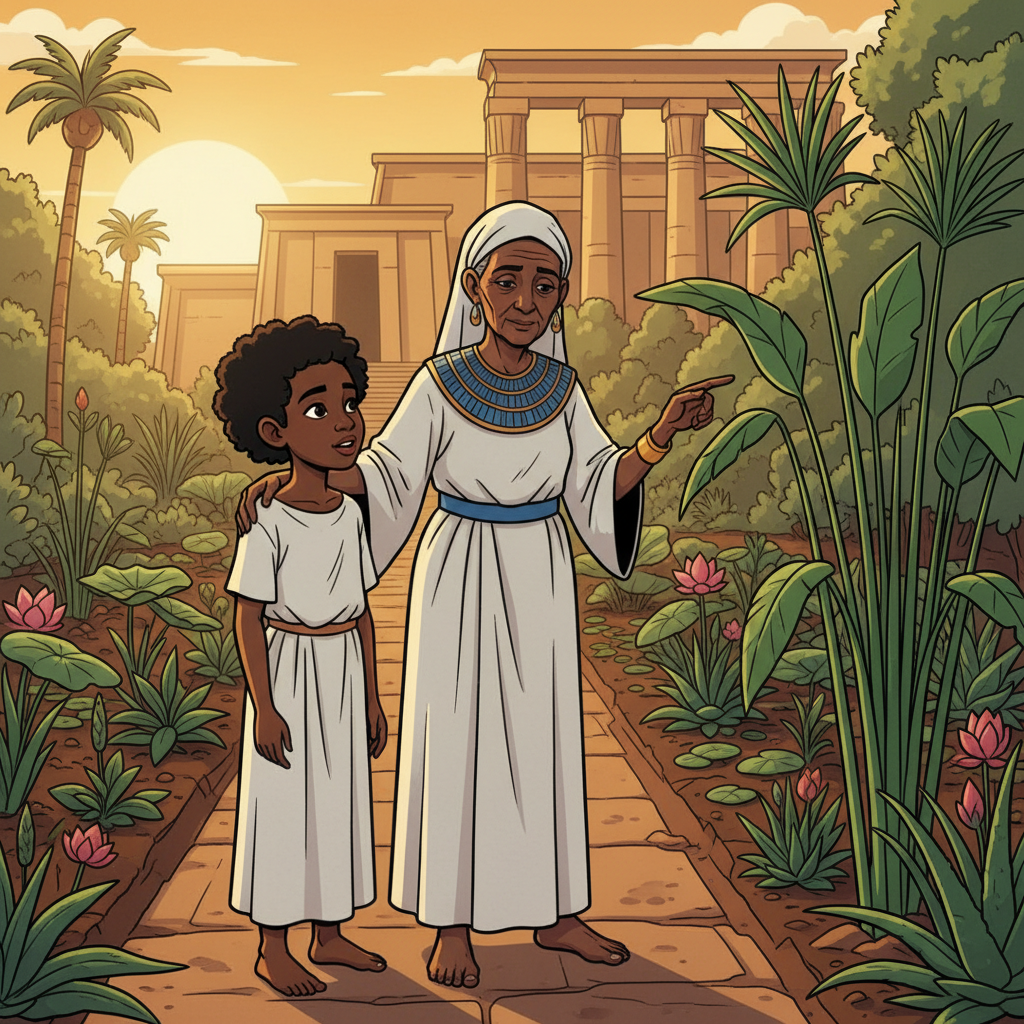
Nefertari was the youngest apprentice healer in all of Men-nefer, and she was only nine years old. Some of the older students whispered that she was too young, too small, too quiet. But her teacher Meresamun had chosen her, and Meresamun was the wisest healer anyone had ever known. Every morning before the sun climbed high, Nefertari walked the rows of the garden and practiced saying the name of every plant. She would touch each leaf, smell each flower, and repeat the words until they stuck inside her mind like seeds taking root. Learning the plants was the first step on the long path to becoming a true healer of Kemet.
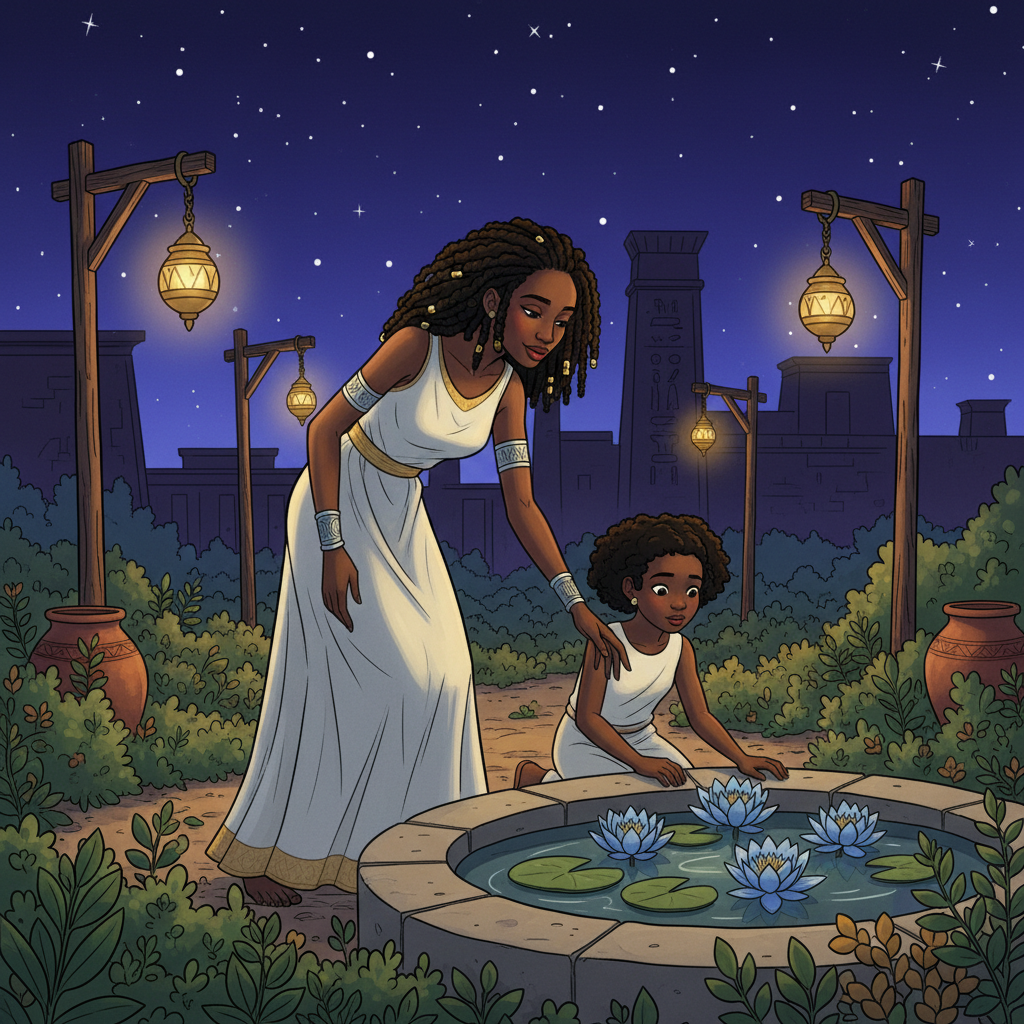
Meresamun walked slowly between the rows, her long white linen dress brushing the tops of the low herbs. Her dark brown skin glowed in the sunlight, and her eyes were sharp and kind at the same time. She stopped beside a pool where blue lotus flowers floated on the still water, their petals soft as silk. "Tell me, little one," Meresamun said, bending down so her silver bracelets jingled. "What does the blue lotus do?" Nefertari touched one of the delicate petals and felt its coolness against her fingertip. "It calms the spirit," she answered. "When someone feels afraid or cannot sleep, the blue lotus brings peace to their heart."
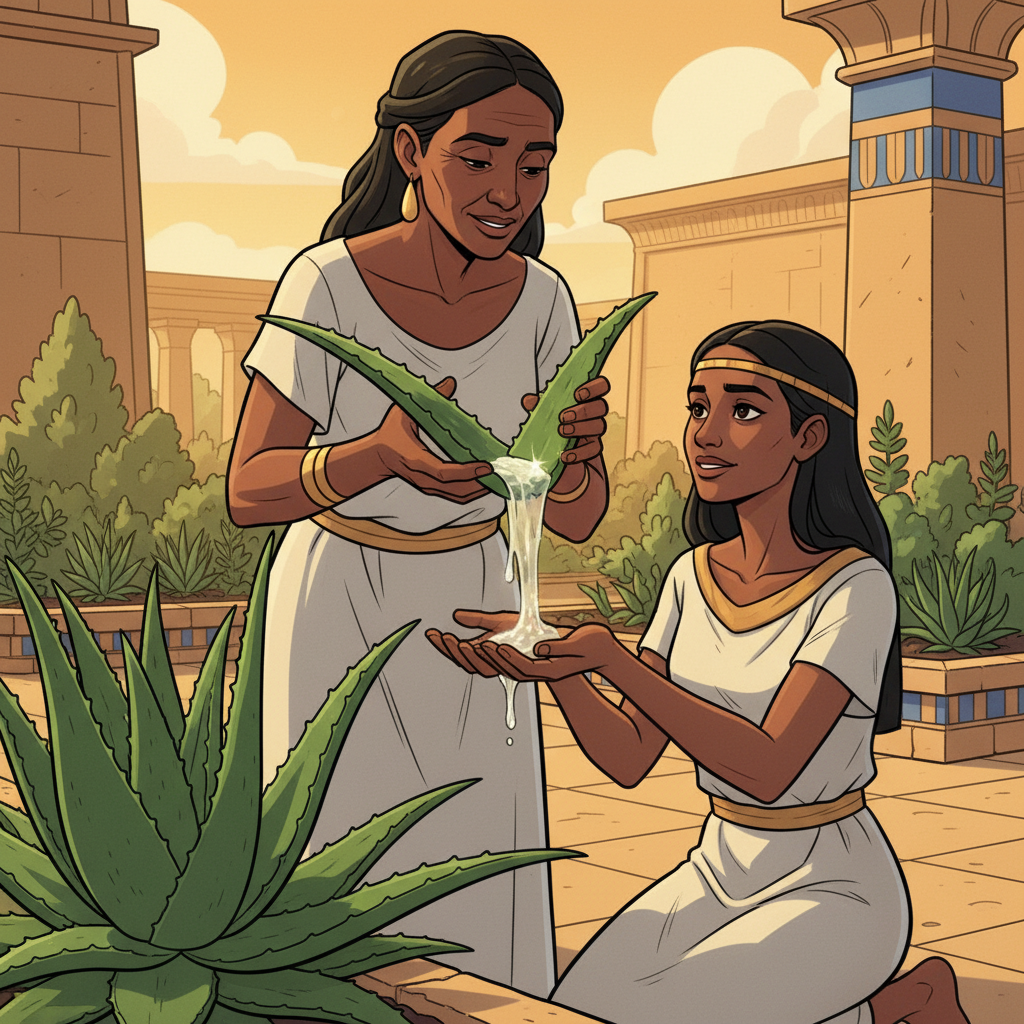
Meresamun nodded and guided Nefertari to a thick green plant with fat, spiny leaves. She broke one leaf open, and a clear gel oozed out, cool and slippery. "And this one?" she asked, holding it up so the gel caught the light like a tiny jewel. "Aloe," Nefertari said proudly. "It heals burns and soothes skin that has been hurt by the sun." Meresamun squeezed the gel onto Nefertari's palm so she could feel its coolness spreading across her skin. "Good," Meresamun said. "A healer must know each plant with her eyes, her nose, her fingers, and her heart. That is the way of Maat — to understand deeply, not just quickly."
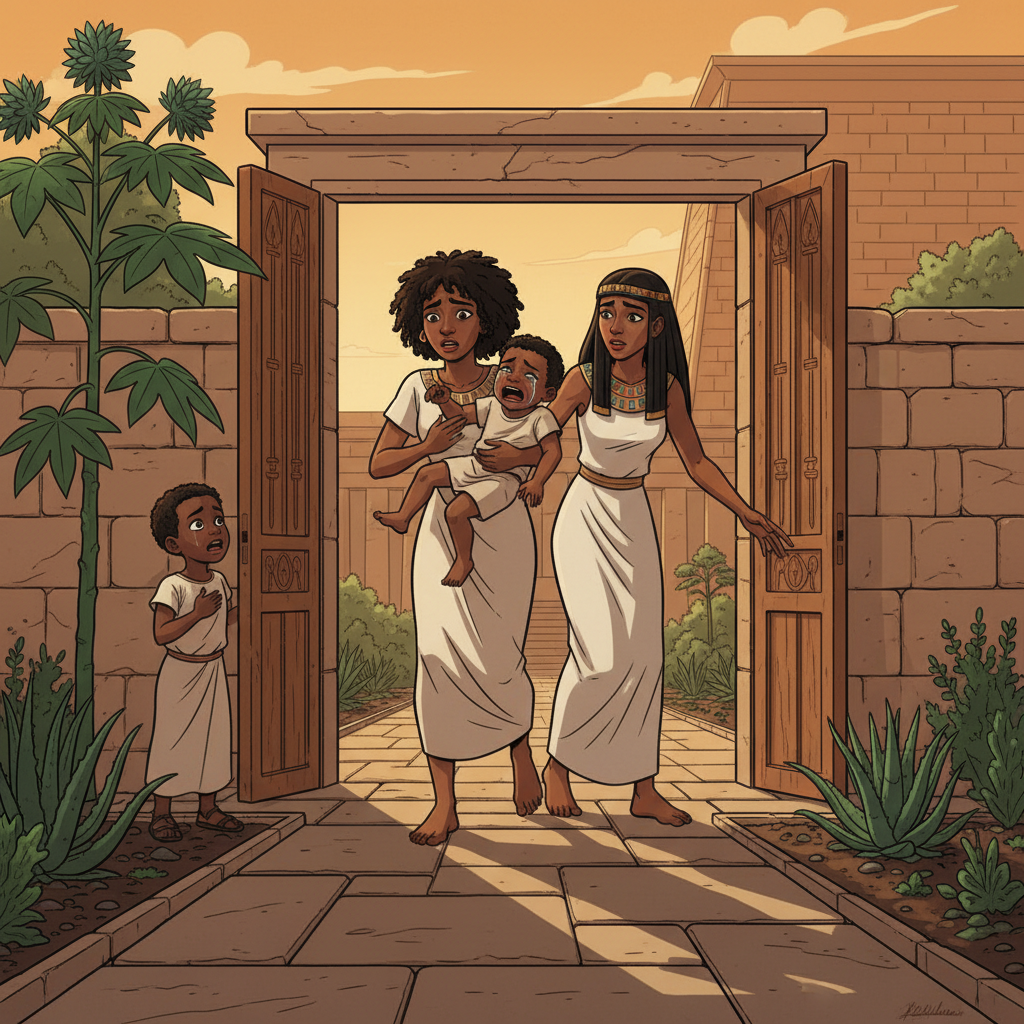
Nefertari was about to ask about the tall castor plant in the corner when she heard something that made her stomach jump. Footsteps, fast and loud, were slapping against the stone path outside the garden. Then came a voice, high and frightened, calling out for help. A woman burst through the garden gate, her chest heaving and her eyes wide with worry. In her arms she carried a small boy who was crying so hard that his whole body shook. His face was twisted with pain, and tears ran down his round brown cheeks. Nefertari felt her own heart begin to pound like a drum inside her chest.
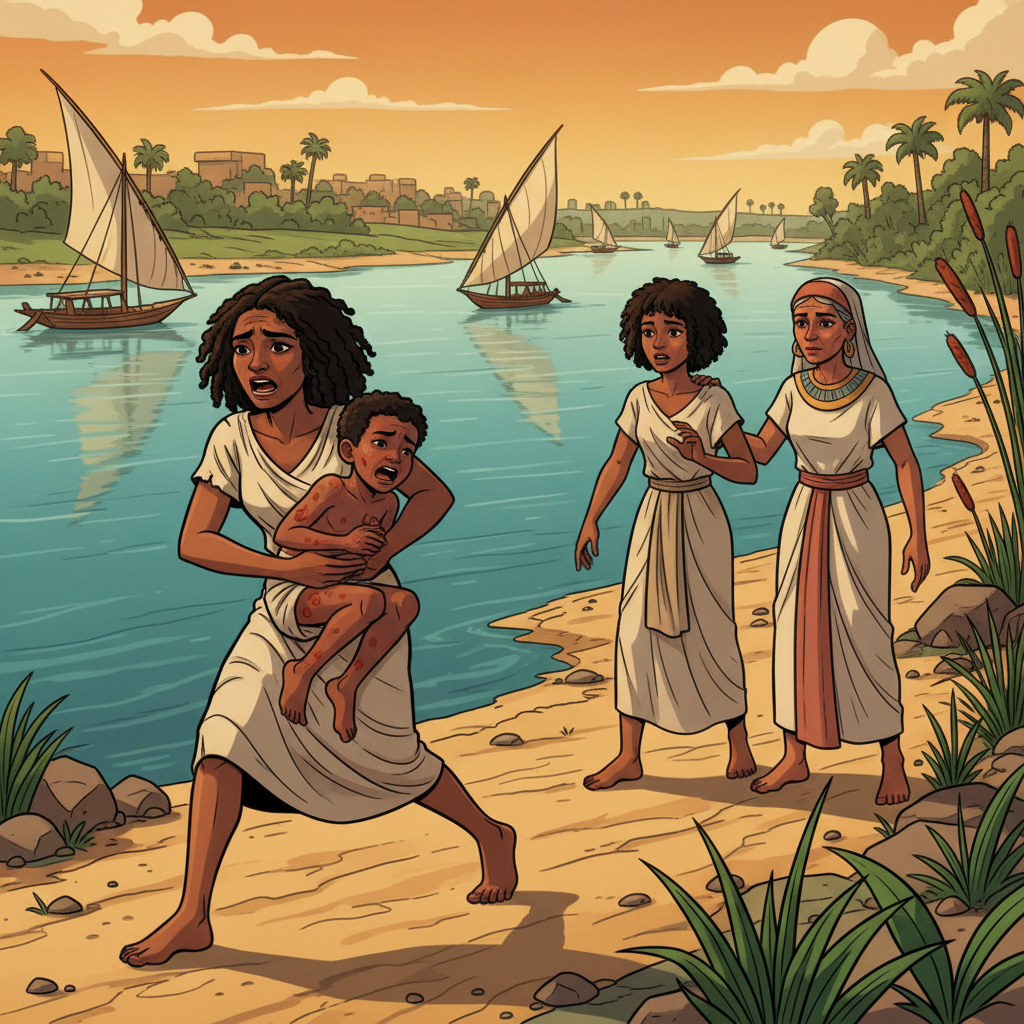
"Please!" the woman cried, rushing toward Meresamun. "My son Kha ate wild berries from the riverbank. His belly is on fire and he cannot stop the pain!" The boy wailed and clutched his stomach, curling up tight like a little beetle. Nefertari stepped back, her hands trembling at her sides. What if she made a mistake? What if she gave the wrong plant and made things worse? The fear felt like cold water filling up her lungs. She looked at Meresamun, hoping her teacher would take over and fix everything.
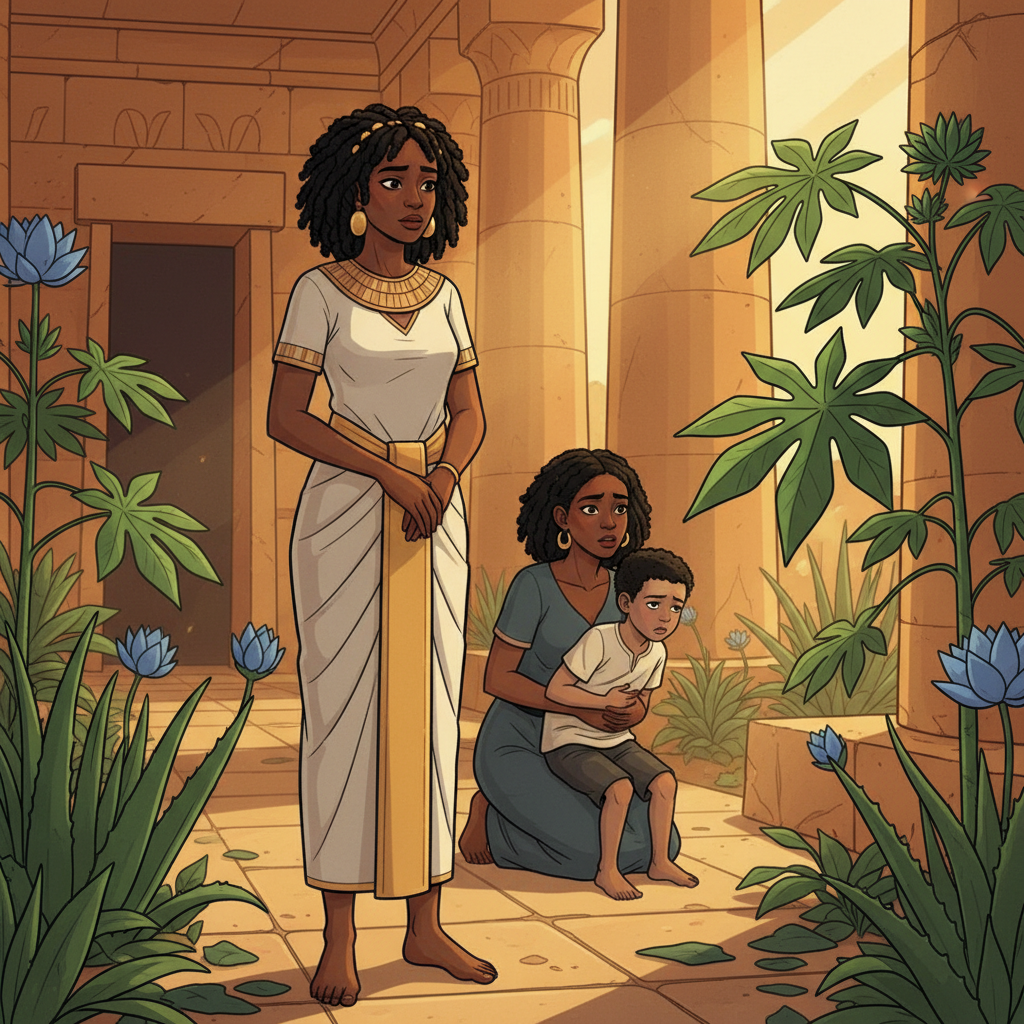
But Meresamun did not rush to the medicine shelf. Instead, she turned her calm dark eyes toward Nefertari and spoke in a steady voice. "Nefertari, you have studied well. Tell me — what plant do we give when someone has eaten something that makes the belly sick?" Nefertari's mind raced like a bird caught in a storm. She looked around the garden at all the plants she had been learning. The blue lotus? No, that was for calming the spirit. The aloe? No, that was for the skin. Then her eyes landed on the tall castor plant in the corner, its wide star-shaped leaves fanning out like open hands.
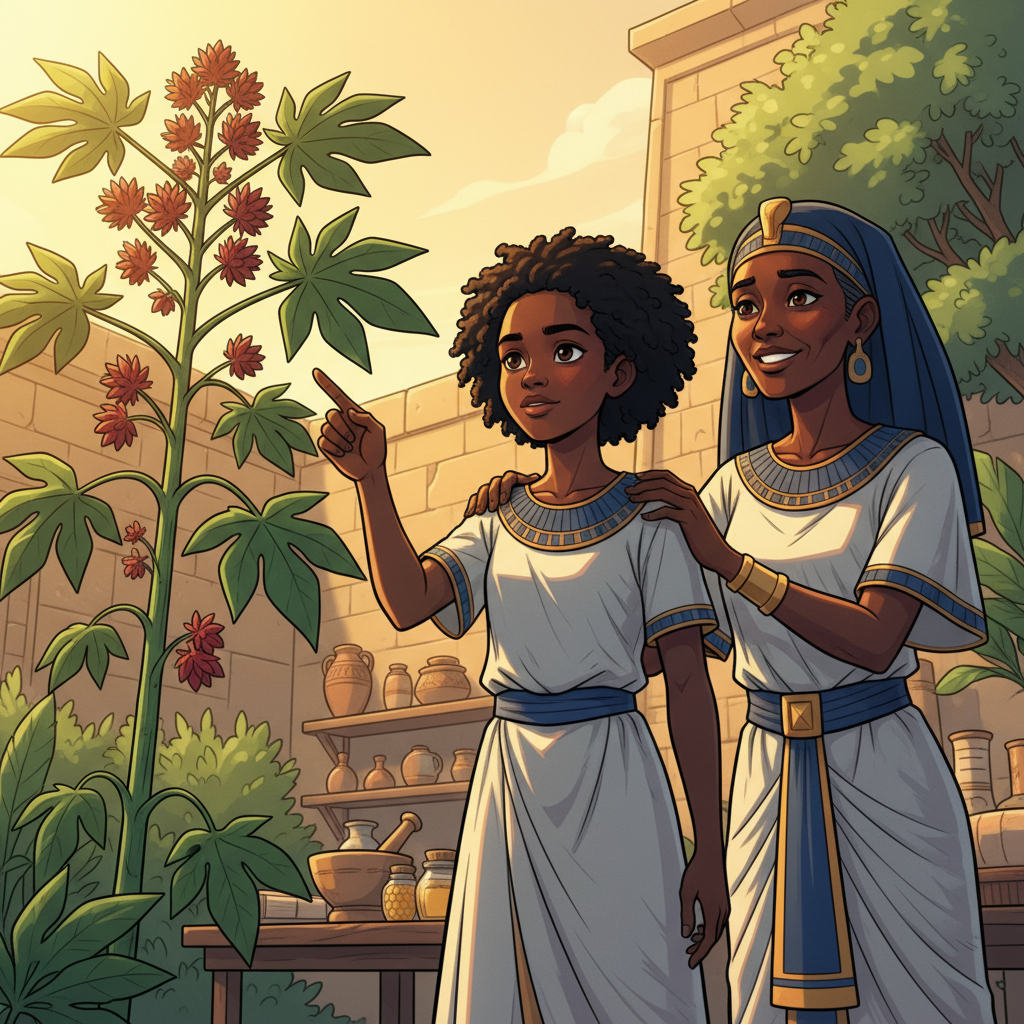
"The castor plant," Nefertari said, her voice shaking at first but growing stronger. "We press the oil from its seeds and mix it with honey. The oil cleans the belly of the bad thing, and the honey makes it gentle enough for a child to swallow." Meresamun's eyes brightened with pride. "That is correct, little one," Meresamun said warmly. "Now show me. A healer does not only know the answer — a healer acts with steady hands and a brave heart. Go and prepare the remedy yourself." She placed a firm, gentle hand on Nefertari's shoulder, and the touch sent a wave of courage through the girl's body.
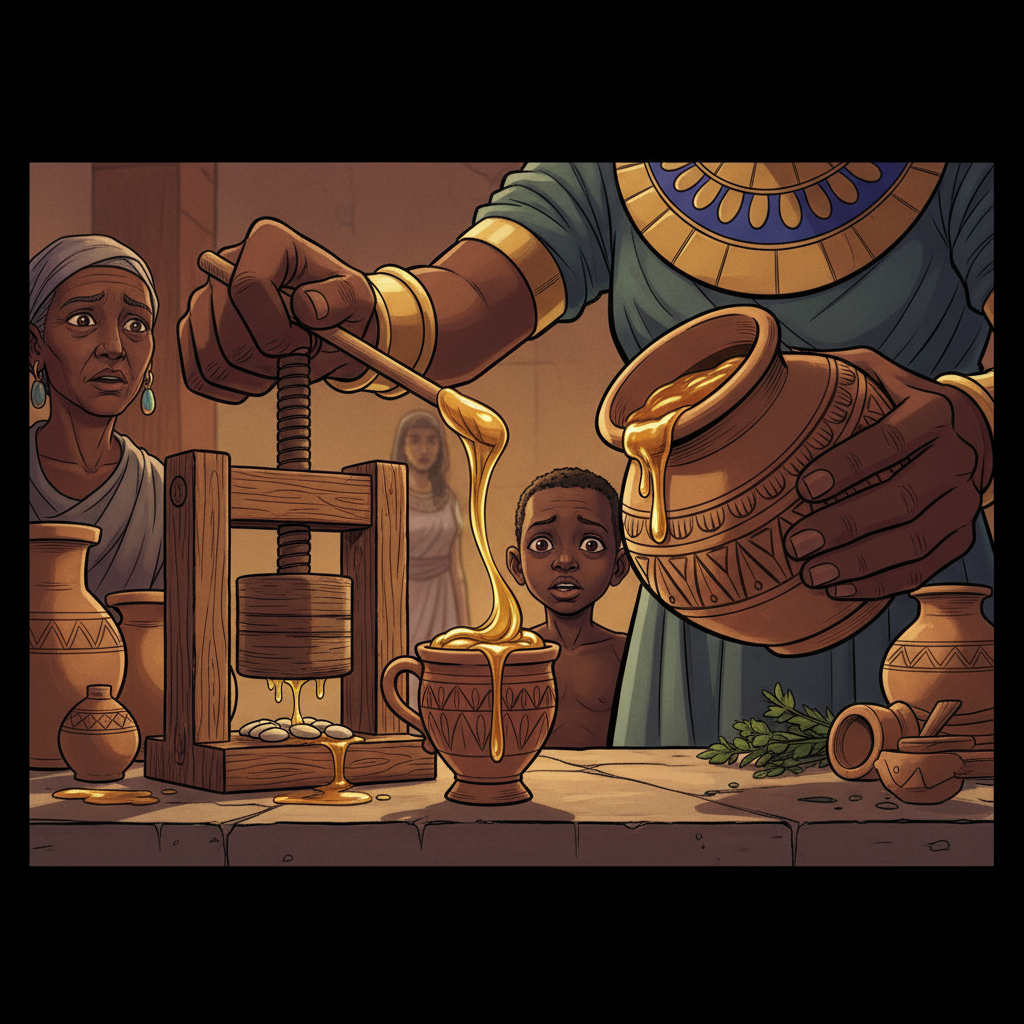
Nefertari moved quickly to the stone table where the tools were kept. She picked up the small wooden press and a handful of pale castor seeds from a clay jar. Her fingers were still shaking, but she pressed the seeds firmly, watching the thick golden oil drip slowly into a cup below. The oil smelled strong and earthy, like the deep soil of the Nile valley. Then she reached for the honey pot and poured a long golden ribbon of sweetness into the cup, stirring it together with a smooth acacia stick. The mixture turned from dark gold to a soft amber color. She tasted a tiny drop on her fingertip to make sure the honey was enough to hide the bitterness, just as Meresamun had taught her.
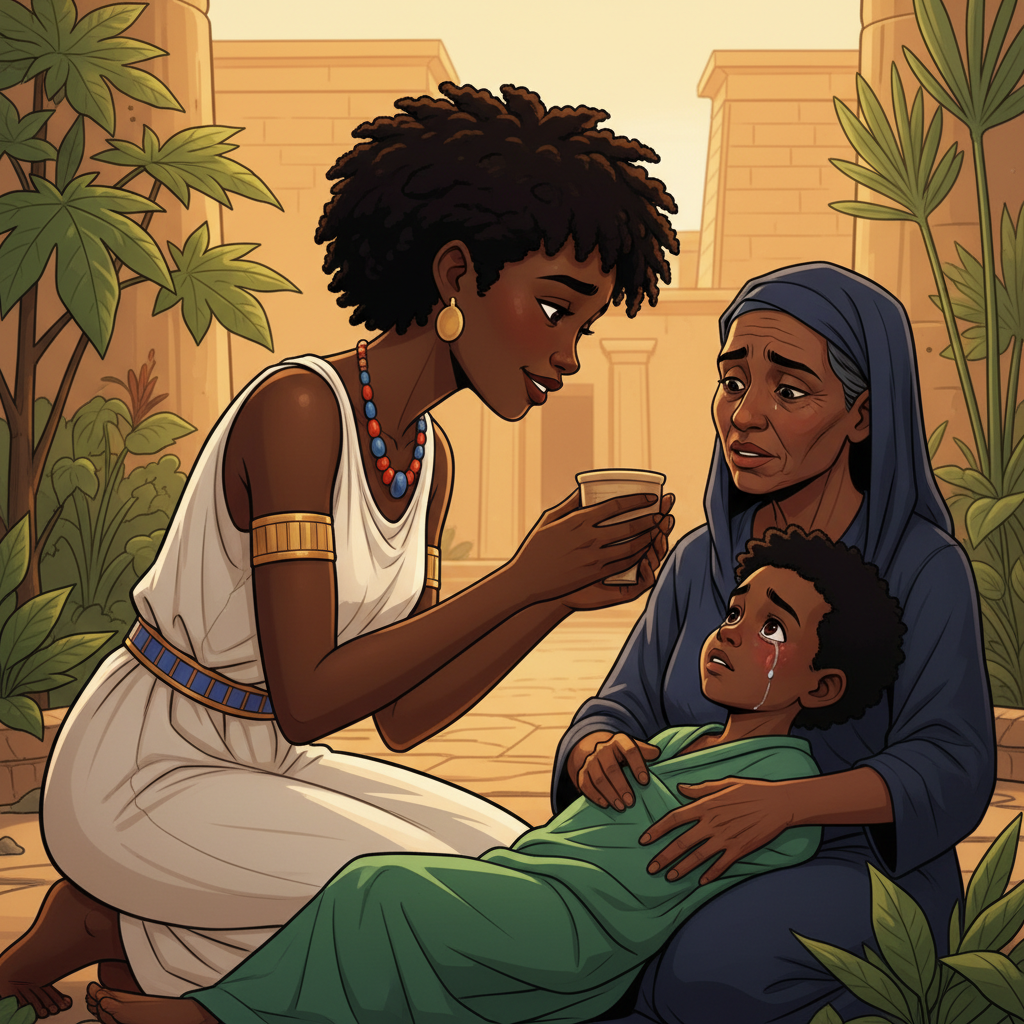
Nefertari carried the cup carefully to where the boy lay crying in his mother's arms. She knelt down beside him so her face was close to his, and she could see the tears still wet on his dark brown cheeks. "My name is Nefertari," she said softly, the way you might speak to a small bird. "I know your belly hurts so much right now. But I have something that will help the hurt go away." The boy looked at her with wide, frightened eyes. Nefertari held the cup steady and smiled at him, a real smile that came from deep inside her chest. "It tastes like honey," she whispered. "Can you be brave and take a sip for me?" The boy sniffled, then nodded slowly and opened his mouth. She tipped the cup gently, and he swallowed.
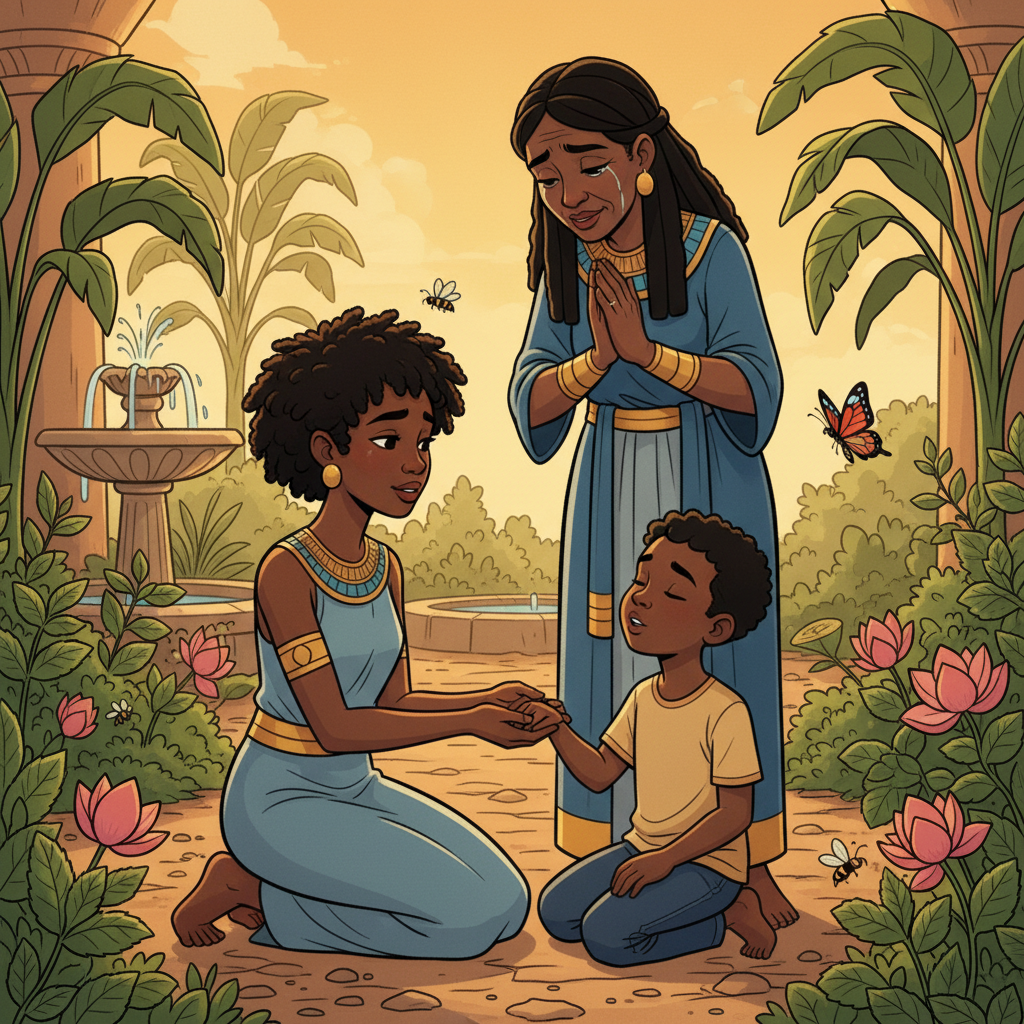
They waited together in the warm garden, surrounded by the smell of mint and the buzzing of bees. Nefertari stayed right beside the boy, holding his small hand in hers. She told him about the butterflies that visited the garden each afternoon and about the frogs that sang by the Nile at night. Slowly, so slowly, the tight knot in his face began to loosen. The boy's crying became soft hiccups, and then quiet breathing, and then a long, peaceful sigh. The pain was fading like a shadow chased away by sunlight. His mother pressed her hands together and looked at Nefertari with eyes full of gratitude. "Thank you," she whispered, her voice cracking with relief. "Thank you, young healer of Kemet."
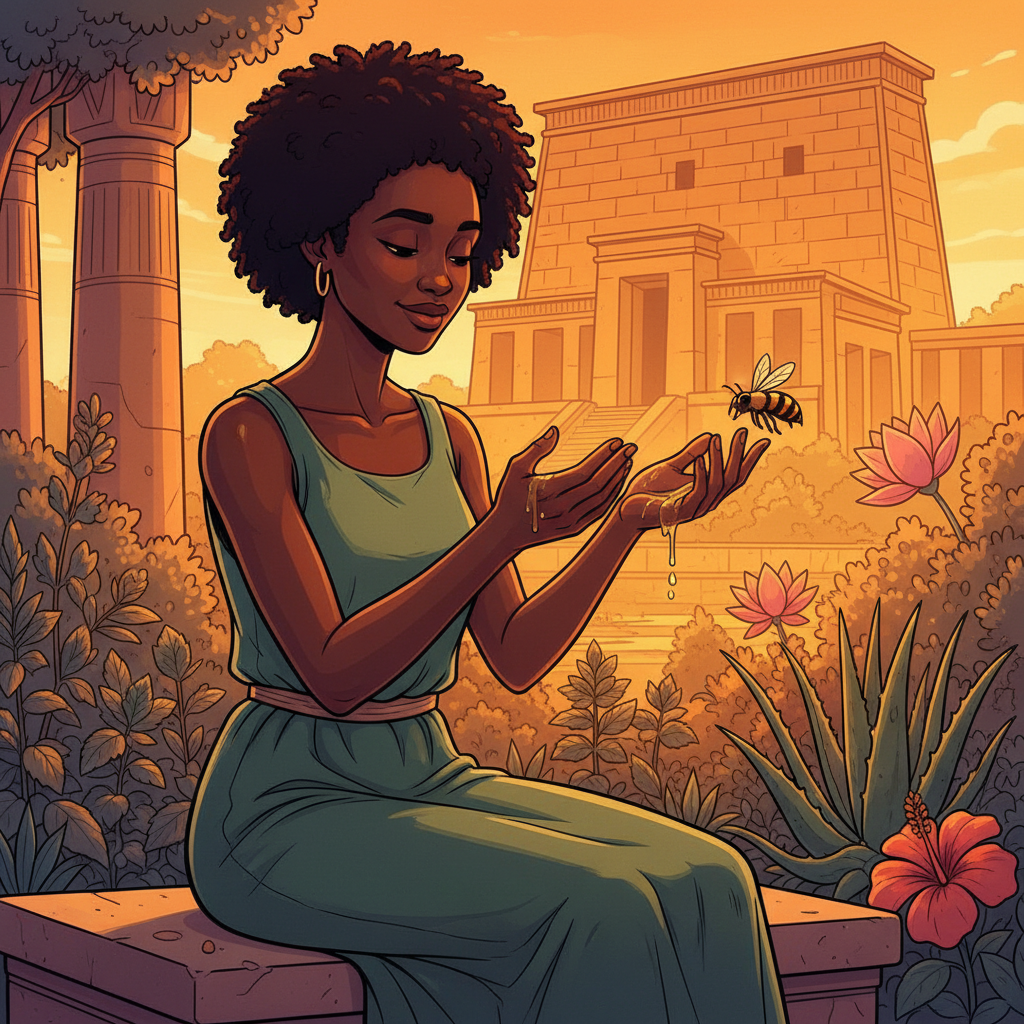
After the mother and boy had gone, Nefertari sat alone in the garden as the afternoon light turned everything to copper and gold. Her hands had stopped shaking. She looked down at her palms, still faintly sticky with honey and castor oil, and she understood something new and important that settled deep inside her bones. Healing was not just about knowing which plant to pick or how to mix a remedy. Healing was about sitting beside someone who was afraid and letting them know they were not alone. It was about speaking softly and holding steady and caring with your whole heart. That was Maat — the truth that lived inside every act of compassion. And Nefertari knew, as sure as the Nile flowed north, that this was the path she was born to walk.