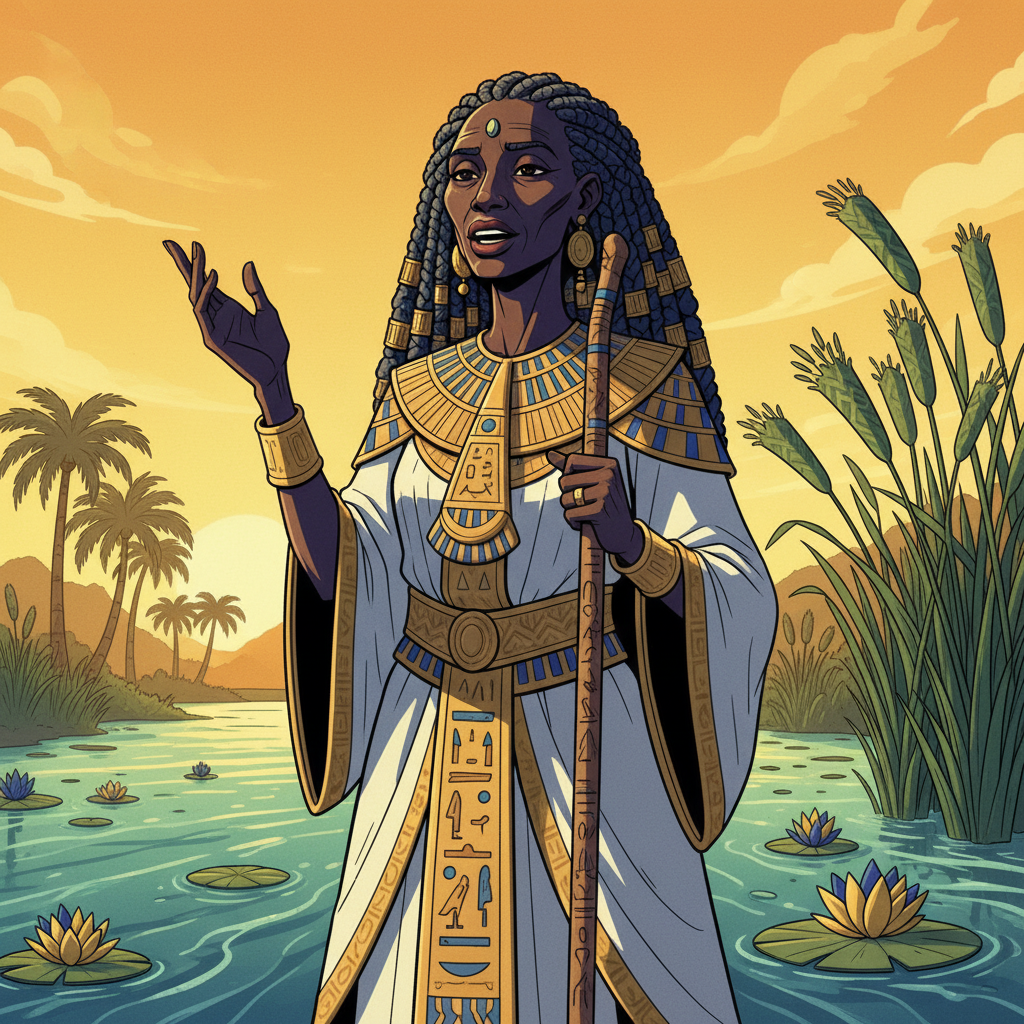
Elder Sekhmet gathered the children of the village at the edge of the great Nile as the sun turned the water to gold. She was ancient, with ebony-dark skin that seemed to hold the stories of a thousand years. Her voice was low and strong like the river itself. The children came from all corners of the village, their sandals kicking up dust as they hurried to her side. Some carried reed baskets, others clutched small clay tablets where they practiced their hieroglyphs. They knew when Sekhmet called, you listened. She was the keeper of the old knowledge, the one who remembered what others had let slip away like water through careless fingers.
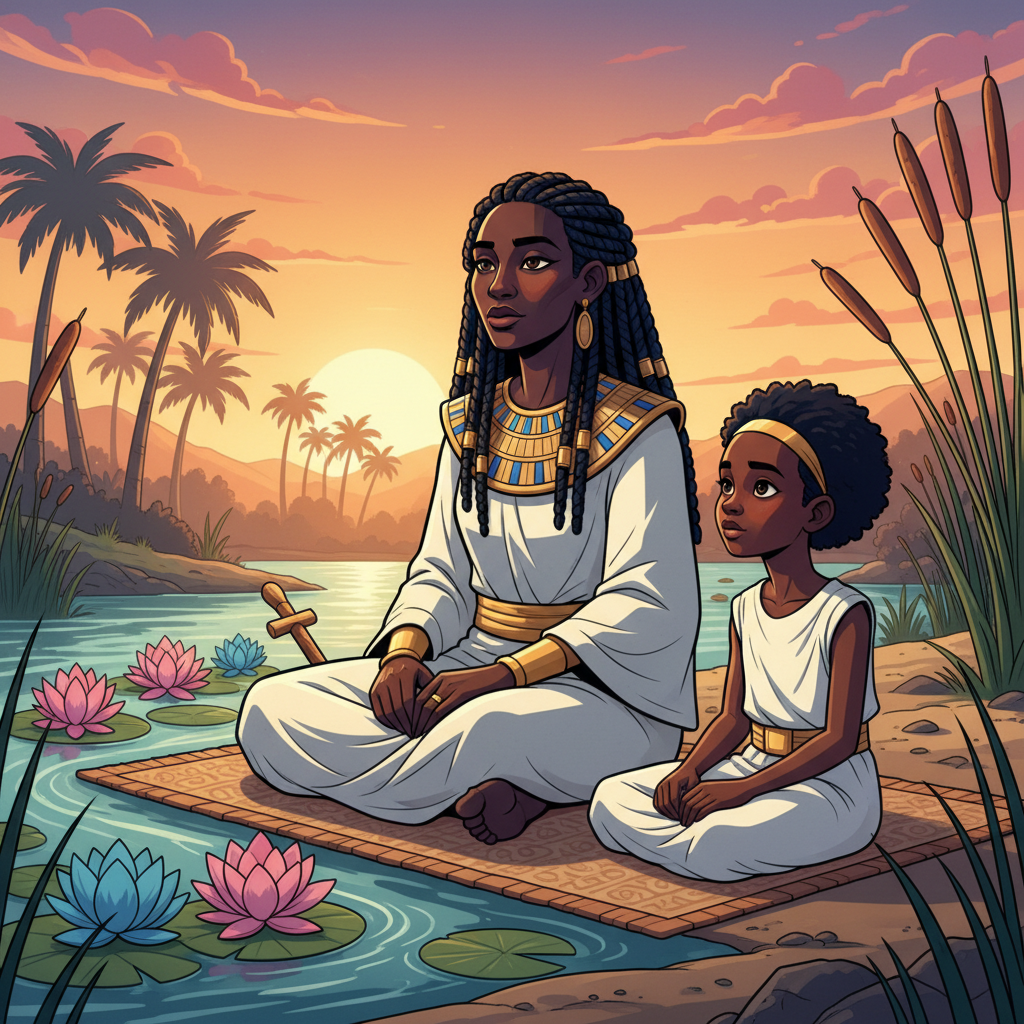
"Listen well," she said, settling onto a smooth stone worn by centuries of river current. "I will tell you why the Nile weeps." The children sat close, their deep brown faces reflecting the shimmering water. A warm wind carried the scent of lotus blossoms across the surface. "In the time of our ancestors, in the land they called Kemet — the Black Land, named for the rich dark soil the Nile left behind — this river was sacred. To pollute it was a crime against Maat, the divine order that holds the universe together. It was as serious as stealing or lying. Perhaps more serious, because when you poison a river, you steal from every living thing that depends upon it."
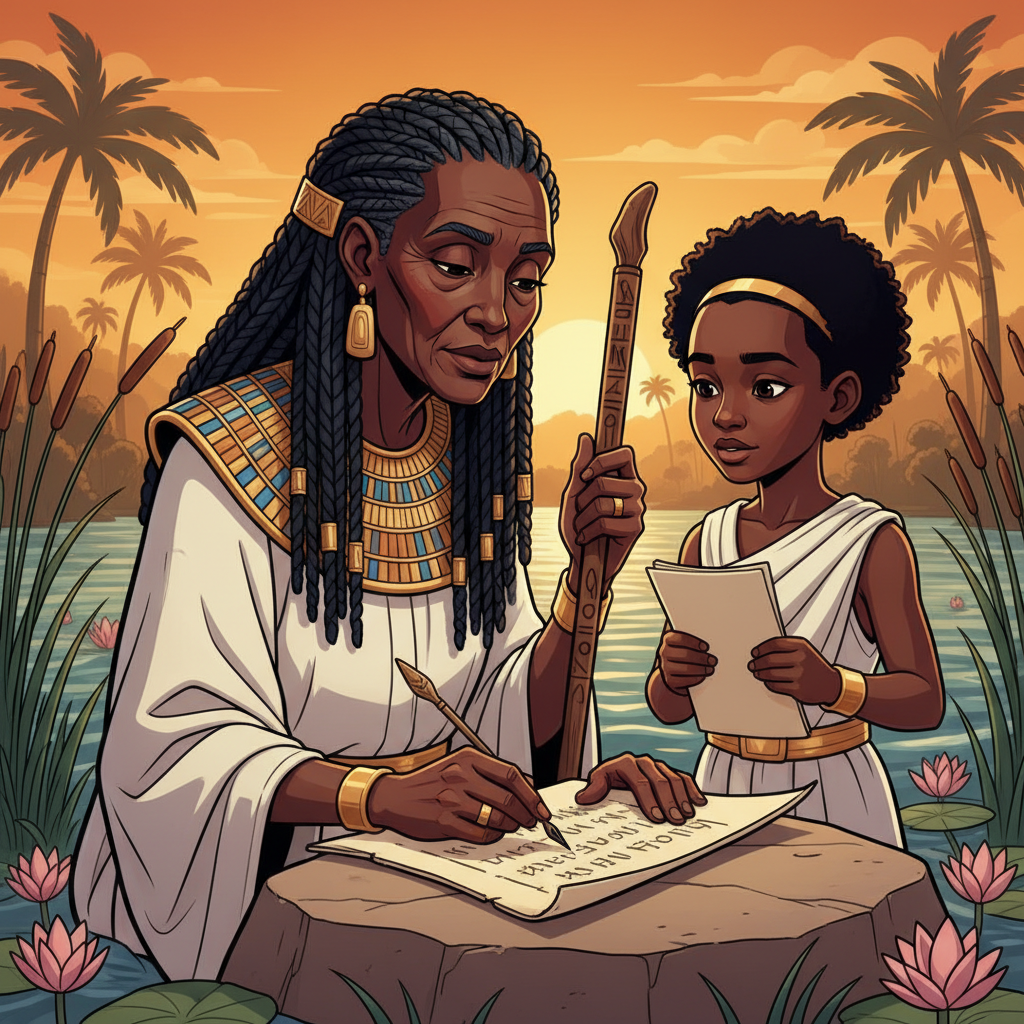
Sekhmet raised her weathered hand and pointed upstream, where the river curved like a serpent of light. "The scribes wrote it clearly in the forty-two declarations of Maat — the confessions every soul had to make before entering the afterlife. 'I have not polluted the water. I have not blocked the flow of the river.' These were not suggestions, children. They were sacred laws." She paused, letting the weight of her words settle. "Think about that. Our ancestors believed that your very soul would be judged by how you treated the water. Your heart would be weighed on the scales of Maat, and if you had poisoned a stream or choked a channel with waste, your heart would be heavy with that Isfet — that disorder, that wrongness — forever."
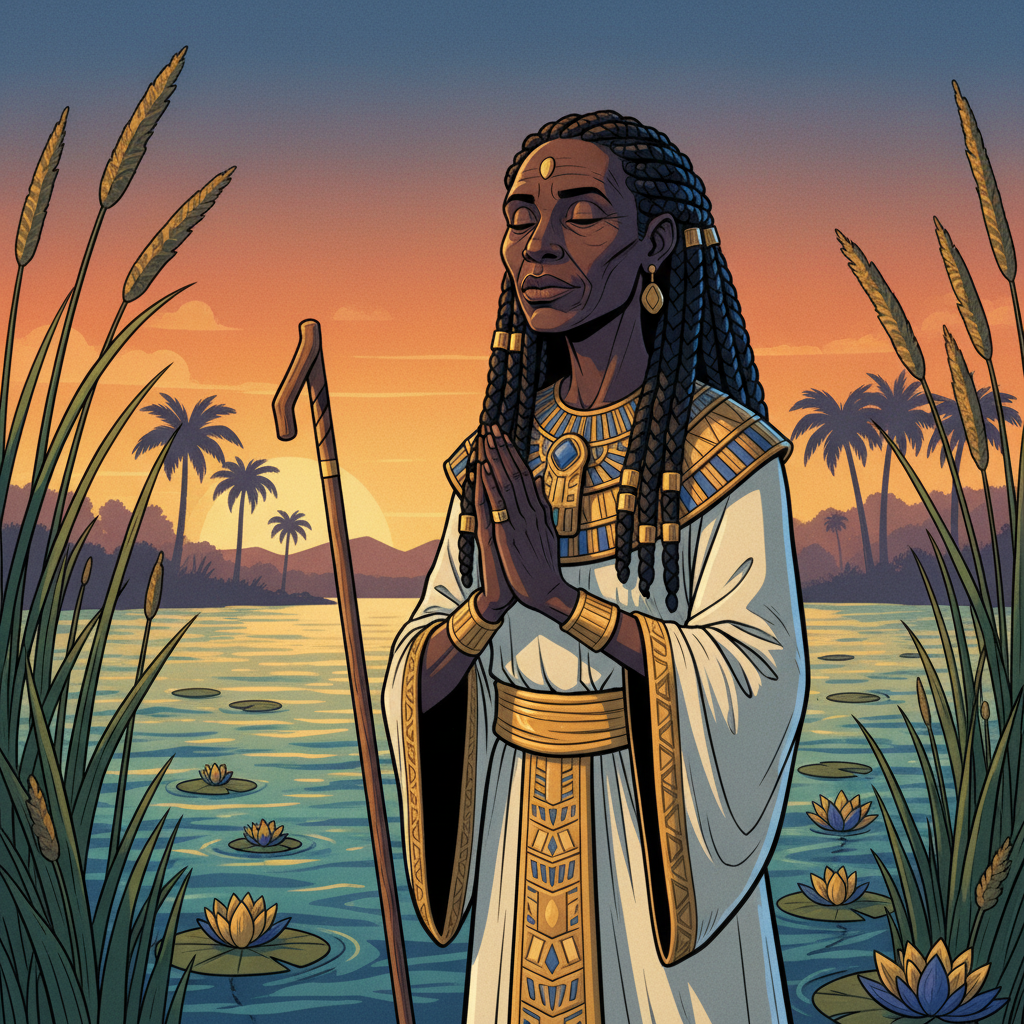
"Our ancestors understood something profound," Sekhmet continued, her dark eyes sweeping across the children's attentive faces. "They understood that the river is alive. It has a ka — a life force — just as you and I do. It feeds us, cleans us, carries us from place to place. It makes the crops grow tall and the papyrus sway. To poison it is to poison ourselves." A boy named Khari, whose skin was deep as midnight, tilted his head thoughtfully. "Elder, did the ancestors really believe the river had a spirit?" Sekhmet nodded slowly. "Not just a spirit, child. They knew the river was sustained by Hapi, the great neter of the flood, who brought the waters each year without fail. Hapi was neither fully man nor woman — Hapi was abundance itself."
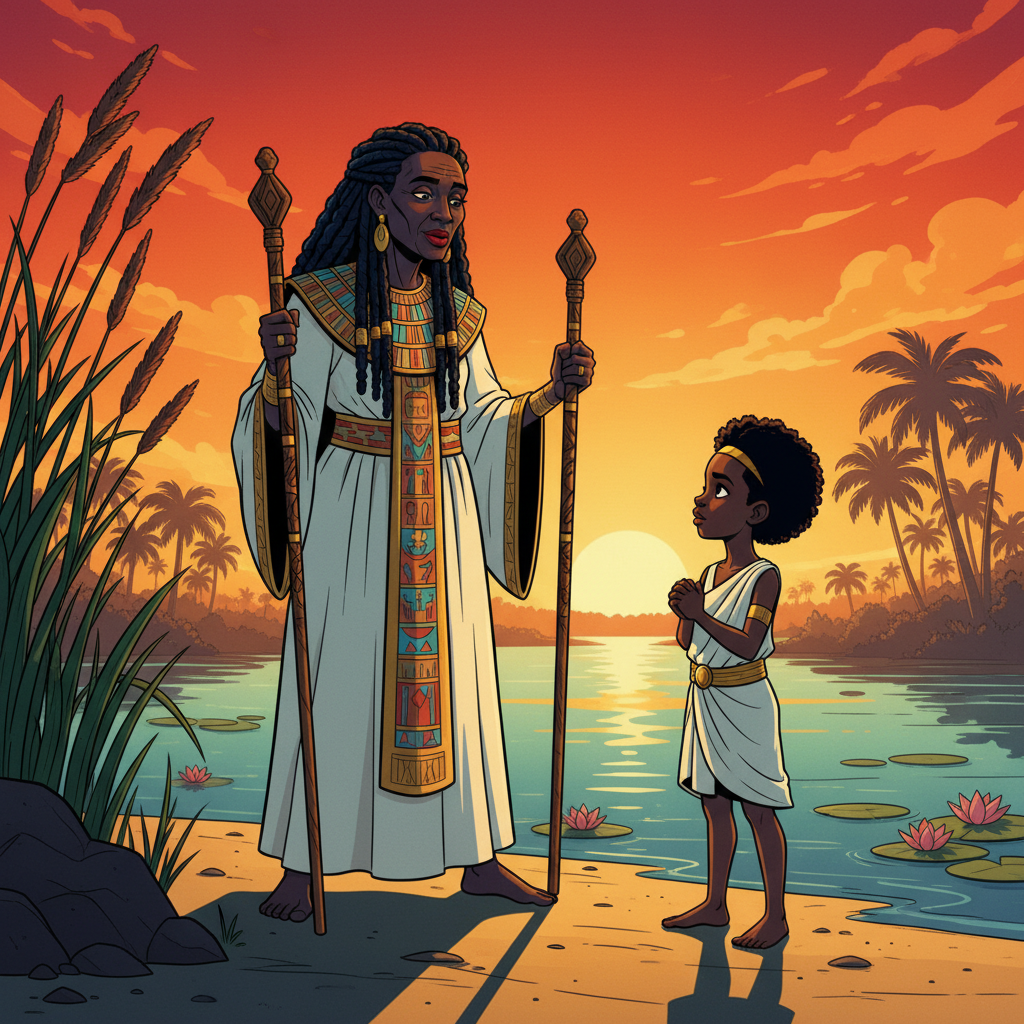
Sekhmet smiled as she saw the wonder in their eyes. "Let me tell you about the engineers of Kemet, for our ancestors were not only spiritual — they were brilliant builders. They constructed vast irrigation systems, channels and canals that carried the Nile's gift to fields far from the riverbank. They built nilometers — stone structures that measured the height of the annual flood." She drew lines in the sandy earth with her finger, sketching a simple map. "They could predict how much water the land would receive and plan their planting accordingly. The engineers of Kemet managed water for thousands of years without destroying it. They took what they needed and returned what they could. That is the practice of Maat — balance, harmony, reciprocity with the living world."
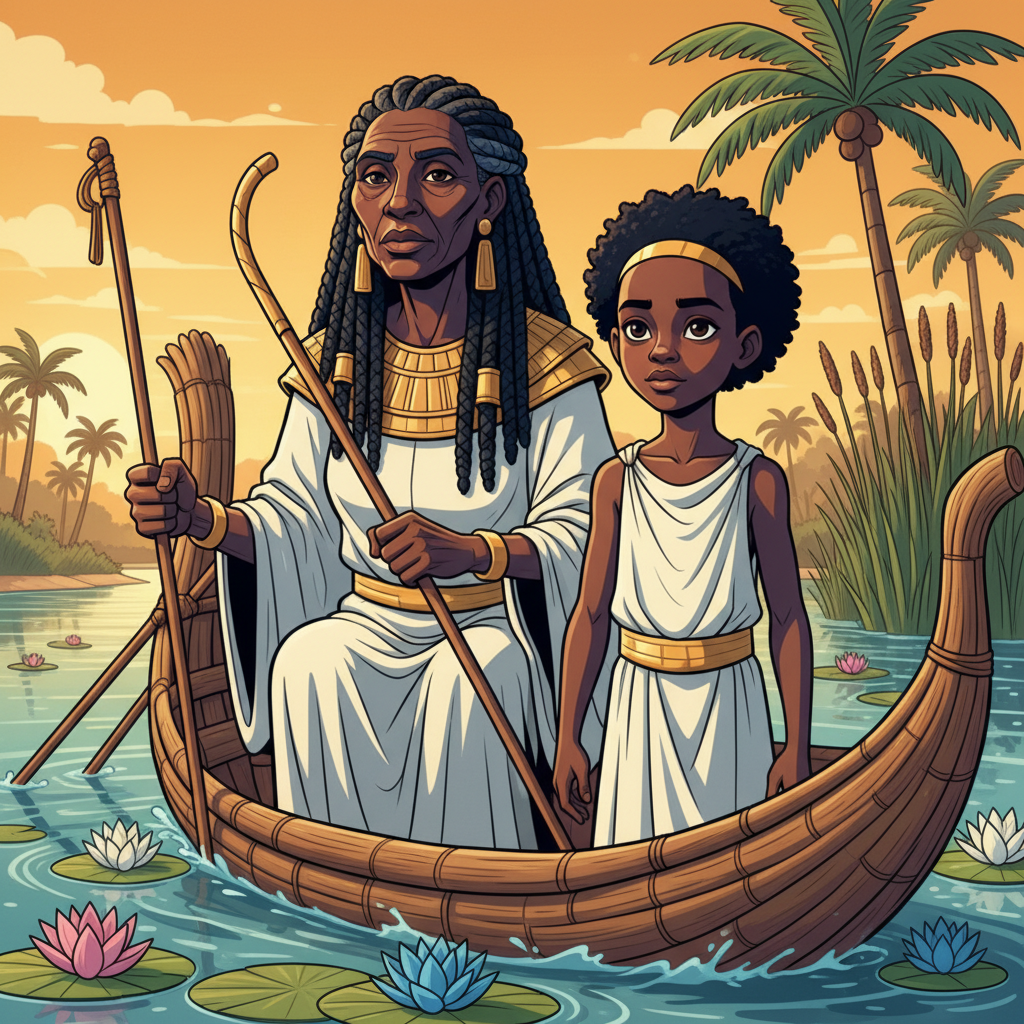
"And the Medjay," Sekhmet said, her voice swelling with pride, "the Medjay who guarded the water channels were as respected as those who guarded the pharaoh himself. They patrolled the canals and irrigation ditches. They made certain no one dumped refuse or blocked the flow. They were environmental guardians thousands of years before that word existed." She looked at each child in turn, her gaze serious and warm. "Because without clean water, there is no pharaoh, no temple, no civilization. Our ancestors in Kemet and Kush — the great kingdoms of the Nile — knew this truth in their bones. They built the most enduring civilization the world has ever seen, and at its foundation was respect for the river that made everything possible."
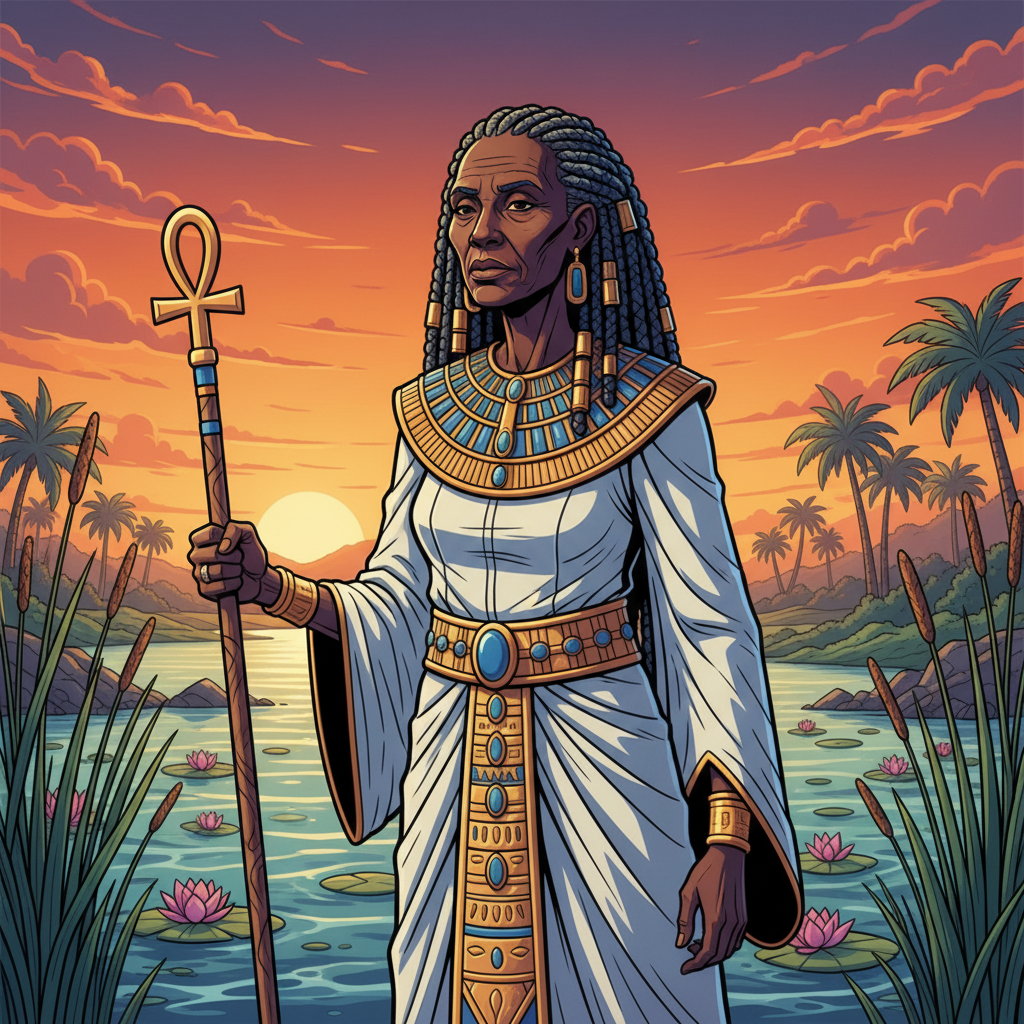
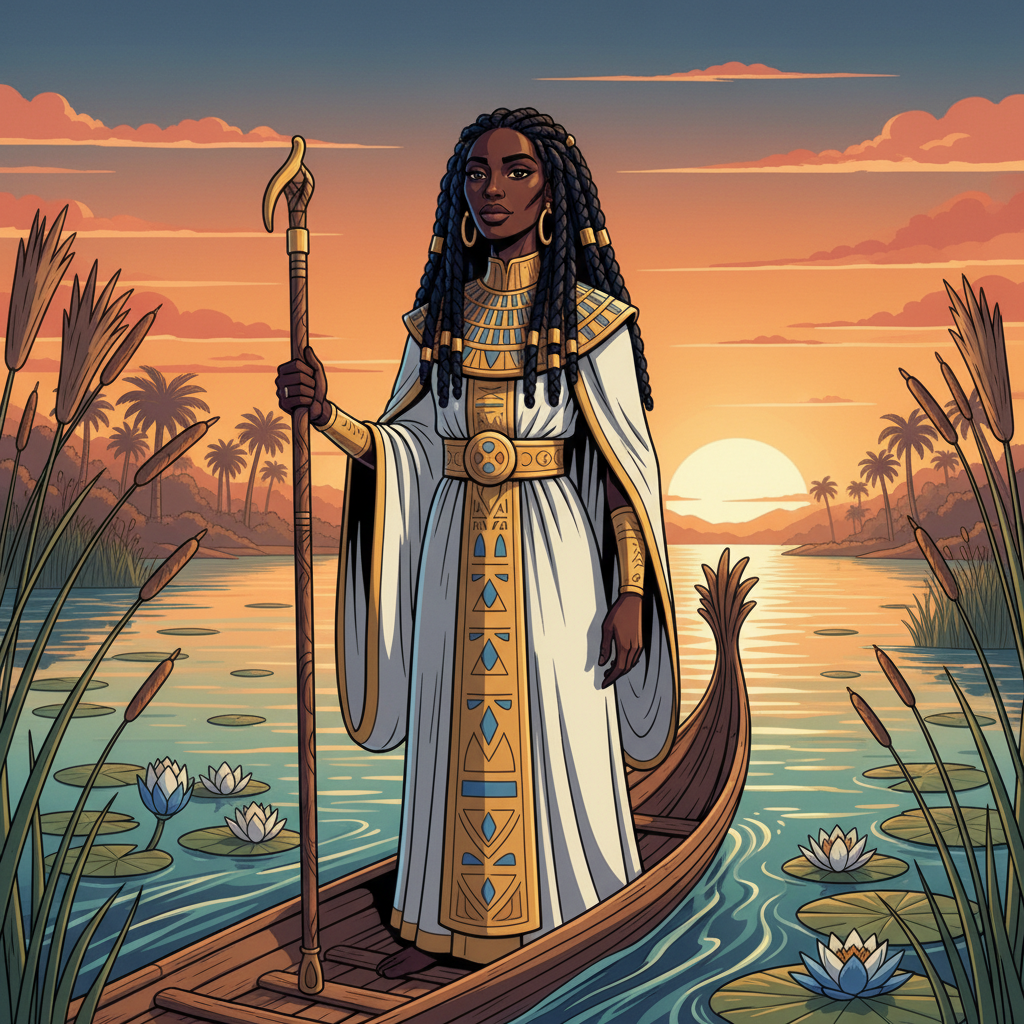
"The people of Kush, far to the south where the Nile begins its long journey, were equally devoted to the river," Sekhmet explained. "They built their own great cities — Meroe, Napata, Kerma — along the Nile's banks. Kushite queens, powerful kandakes with skin like polished onyx, commanded armies and oversaw the waterways." She leaned forward, and the children leaned with her. "The Kushites developed their own methods of irrigation, their own ways of reading the river's moods. North and south, the civilizations of the Nile understood one unshakable truth: you do not own water. You are its guardian, its temporary keeper. You hold it in trust for your children and their children after them. This is the deepest expression of Maat."
A girl named Nia, with tightly coiled hair adorned with small cowrie shells, spoke up. "Elder, my grandmother says the floods don't come like they used to. She says the river is changing." Sekhmet nodded gravely, the lines in her dark face deepening. "Your grandmother speaks truth, Nia. And this brings us to the sorrow in our story. For thousands of years, the people of the Nile valley lived in partnership with the river. They studied its rhythms, celebrated its floods, and never took more than it could give. But the modern world brought a different philosophy — one of domination rather than partnership. One of extraction rather than reciprocity. And the river has suffered for it."
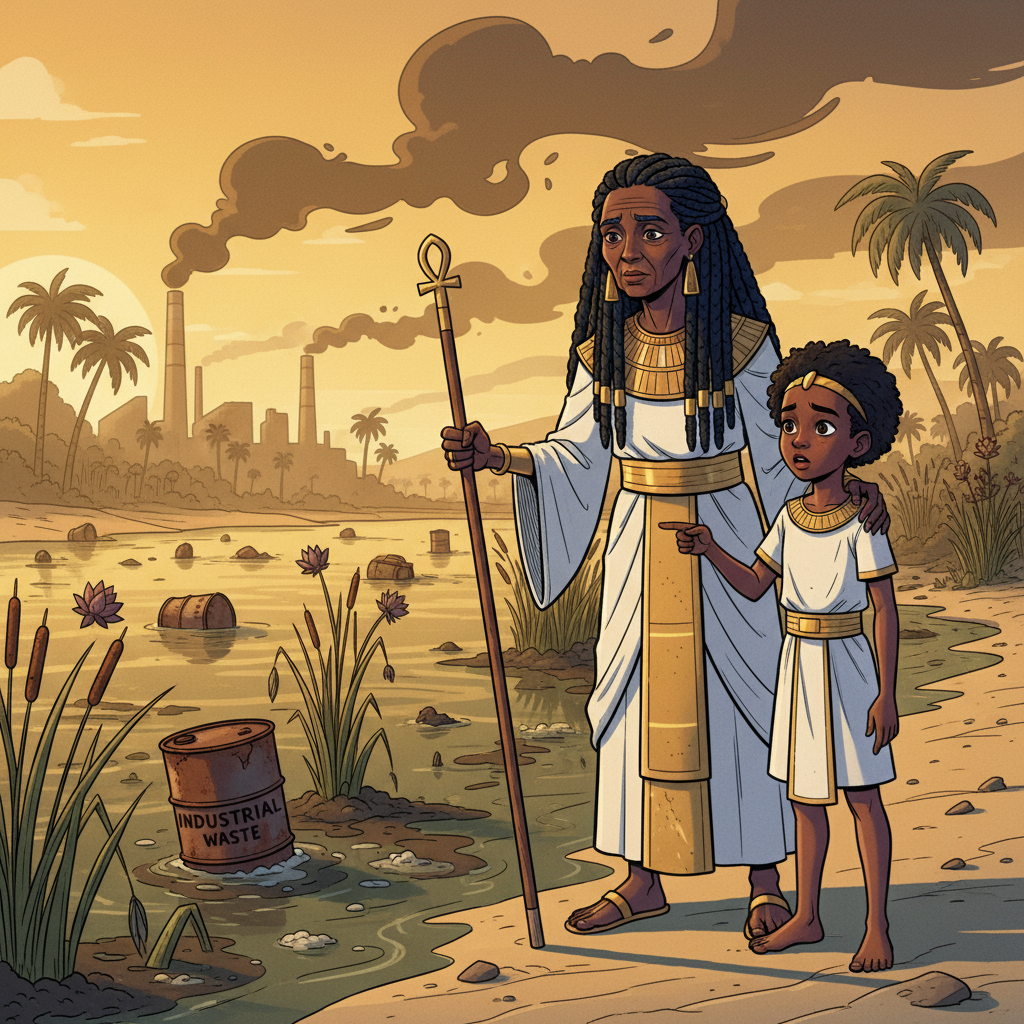
"But today," Sekhmet continued, her voice dropping to a whisper that somehow carried more weight than a shout, "rivers across the world are dying. Factories pour poison into the water — chemicals with names as ugly as their effects. Mercury, lead, industrial waste that turns living rivers into dead channels of filth." She shook her head slowly. "Powerful corporations dump waste where children swim and families fish. They call this progress. They call this development. Your ancestors would call it what it is: Isfet. Pure, unforgivable Isfet — the destruction of divine order, the unraveling of everything Maat holds together. When you kill a river, you kill the future itself."
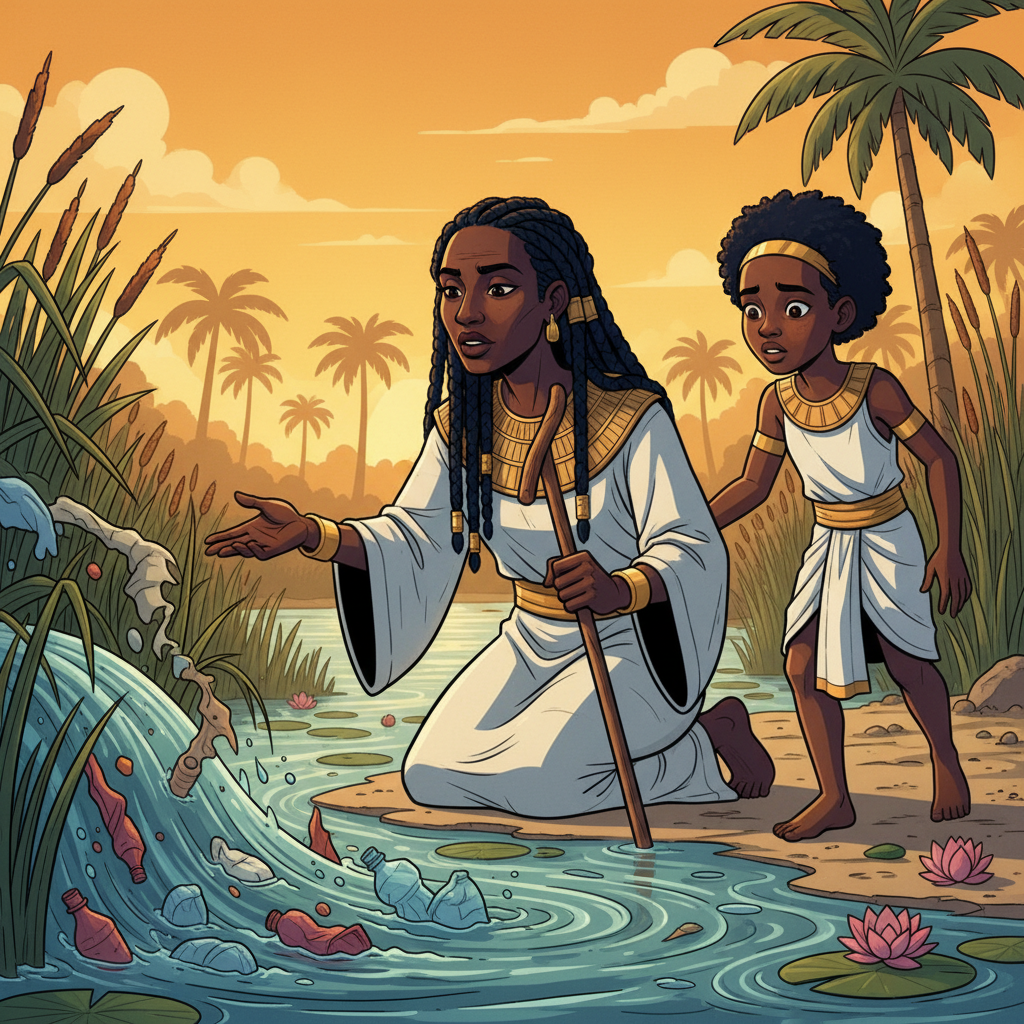
"And it is not only the factories," Sekhmet said, rising to her feet with surprising strength for one so old. She walked to the water's edge, and the children followed. "Look at this riverbank. What do you see?" The children looked and saw, tangled among the reeds, scraps of plastic — bottles, bags, wrappers carried by the current. "The modern world treats water as something to own and sell. They put it in plastic bottles while the rivers run foul. Corporations drain aquifers — the underground rivers our ancestors knew about — and sell that water back to the very people who live above it. But water belongs to no one. It is a gift from Hapi, from the neter of the flood, from the earth itself."
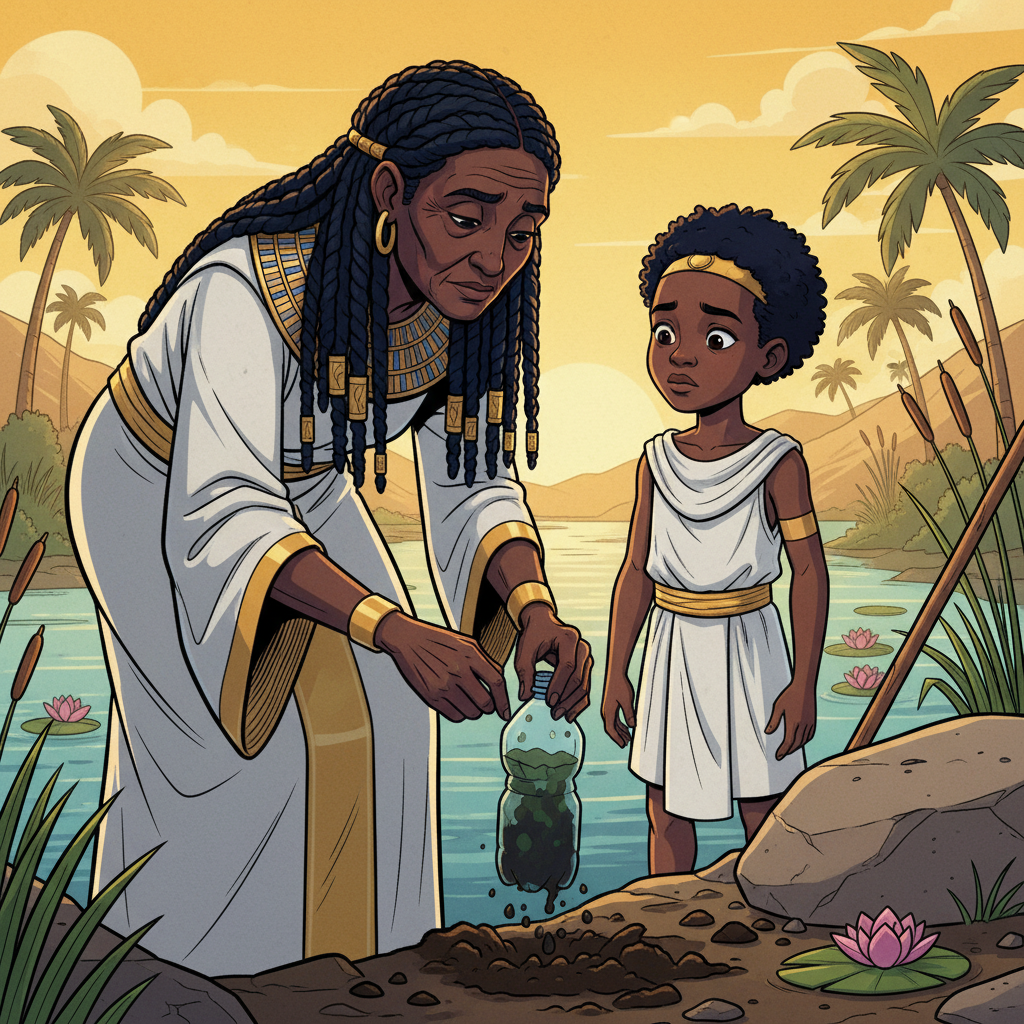
Sekhmet bent down and pulled a plastic bottle from the mud. She held it up, and the children could see algae growing thick inside it. "Selling water for profit while others thirst — that is the deepest Isfet. In Kemet, every person had a right to clean water. The poorest farmer and the pharaoh drank from the same river." Her voice grew fierce. "Now there are places in this world where children walk miles for water that is not even clean. Where communities are told their water is safe while poison runs through their pipes. Where the wealthy drink from crystal glasses while the poor drink illness and death. Our ancestors would weep to see it. And the Nile weeps with them."
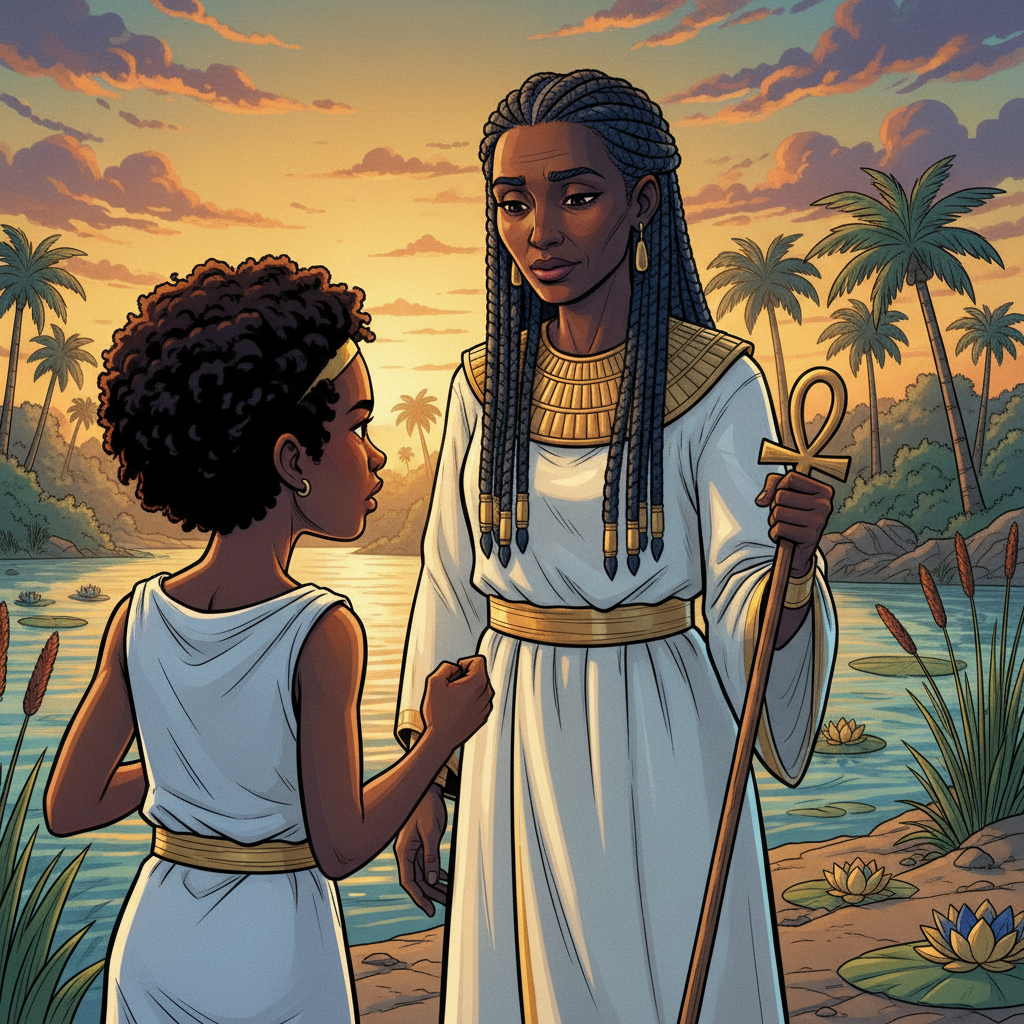
The children were quiet for a long moment. The river murmured past them, carrying its ancient secrets southward to the sea. Then Adisa spoke. She was dark-skinned and serious-eyed, the kind of child who listened more than she talked, and when she did speak, everyone paid attention. "Elder," she said carefully, "I understand that this is wrong. I can feel the Isfet in it. But what can we do? We are just children. We do not own factories. We do not make the laws. How can we fight something so enormous?" Her voice did not waver, but there was genuine anguish in it — the frustration of someone who sees injustice clearly but cannot yet see the path through it.
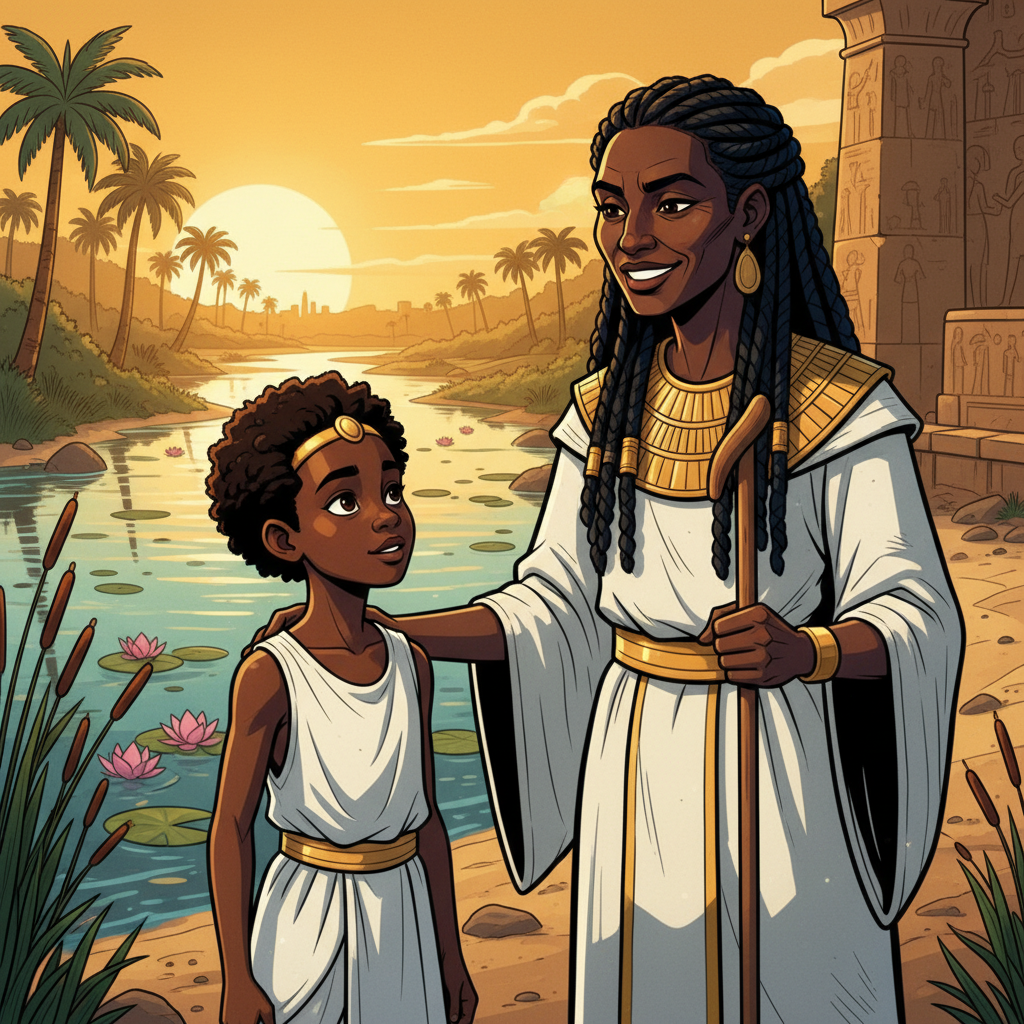
Sekhmet smiled — not the pitying smile of an elder humoring a child, but the fierce, proud smile of a warrior recognizing another. "You are not 'just' children, Adisa. You are the next generation of guardians. Your ka — your life force — burns bright with purpose. I can see it in every one of you." She placed her hand on Adisa's shoulder. "Protecting the water is not a modern idea dreamed up by people in laboratories. It is ancient Kemetic wisdom that the world forgot and is only now stumbling back toward. You carry that wisdom in your blood, in your bones, in the stories I am telling you right now. You are not starting from nothing. You are continuing a tradition older than any nation on earth."
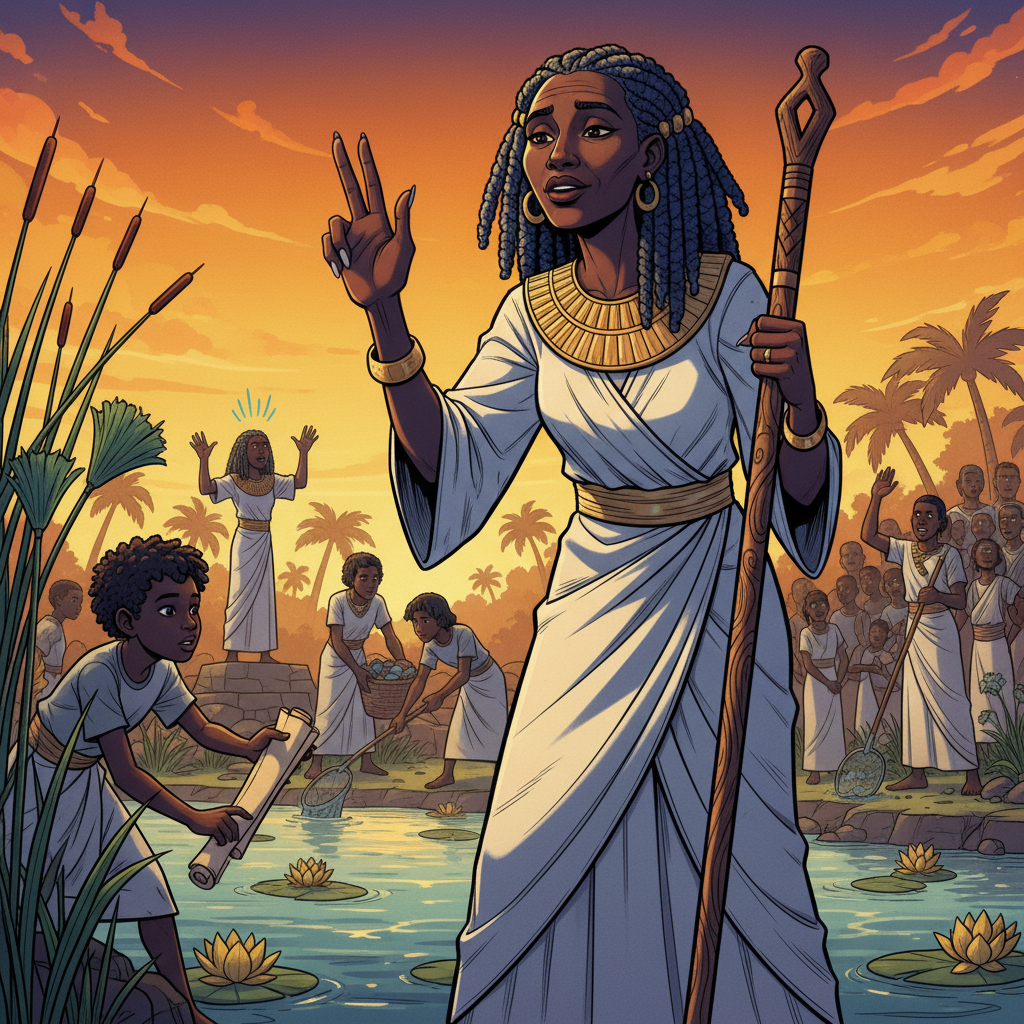
"Let me tell you what you can do," Sekhmet said, settling back onto her stone as the golden light shifted to amber. "First, you must learn. Study the water systems around you — where your water comes from, where it goes after you use it, who controls it. Knowledge is the first weapon of Maat." She counted on her long, dark fingers. "Second, you must speak. When you see Isfet — when you see someone dumping waste, when you hear someone say pollution is the price of progress — you must speak truth. The scribes of Kemet recorded truth on stone so it would last forever. Your voices can be just as enduring. Third, you must act. Clean what you can. Protect what you can. Organize with others who understand."
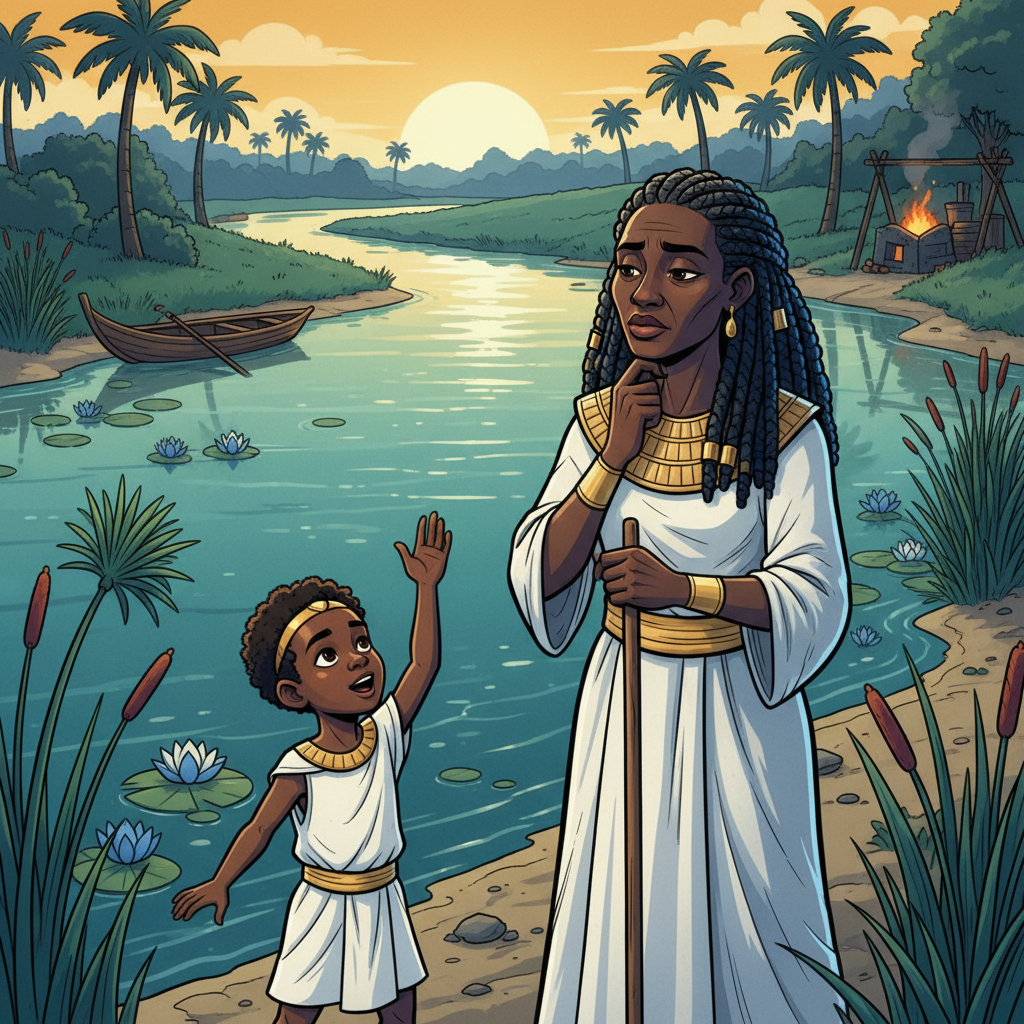
Khari raised his hand eagerly. "Elder, at school they taught us about water treatment plants and recycling programs. Is that the same thing?" Sekhmet considered this thoughtfully, her dark brow creasing. "Those are useful tools," she replied. "But they address symptoms, not the disease. The disease is a way of thinking — a belief that humans are separate from nature, that we stand above the rivers and forests rather than within them. Our ancestors in Kemet never made that mistake. They knew that the health of the Nile and the health of the people were one and the same. True environmental Maat begins not with technology but with understanding your relationship to the living world around you."
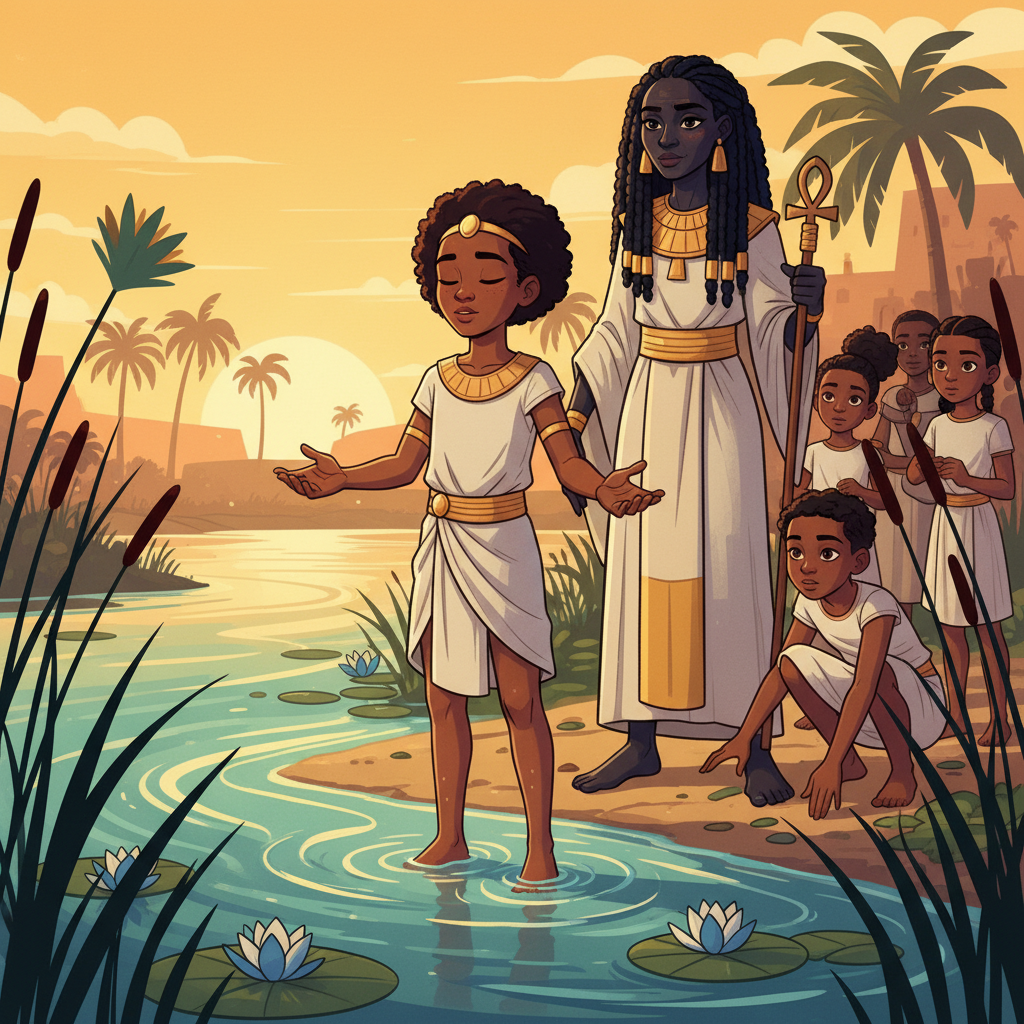
Nia stood and walked to the river's edge, letting the warm water lap at her toes. "I can feel it," she said quietly. "The river's ka. It's tired but it's still here." The other children looked at her, and some nodded. They could feel it too — that ancient pulse beneath the surface, the heartbeat of a living thing that had sustained civilizations for millennia. Sekhmet watched Nia with deep approval. "That is the beginning of everything, child. When you can feel the life in the water, you will never allow it to be destroyed. The engineers of Kemet built their great works because they loved the river. Not because they wanted to control it, but because they wanted to honor it. Love is the foundation of Maat."
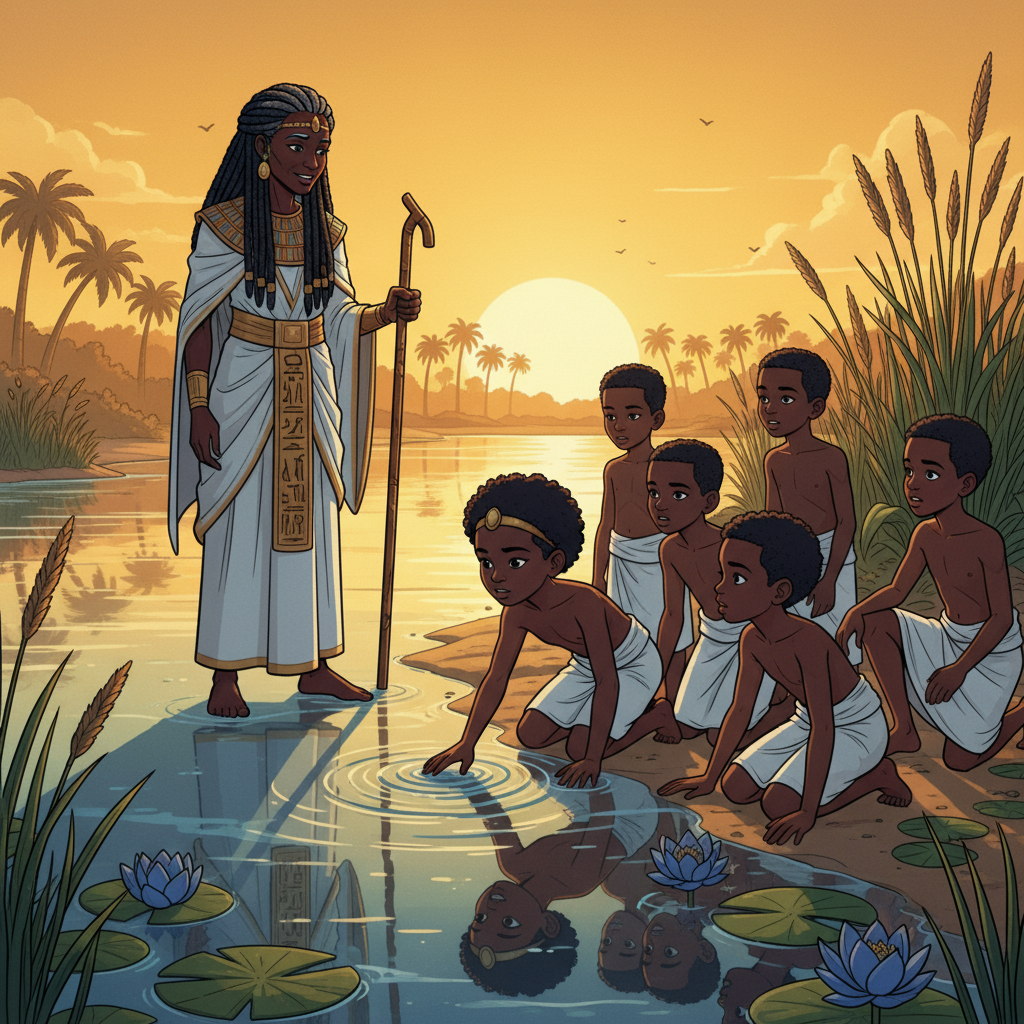
Adisa stood now too, her reflection rippling in the darkening water beside Nia's. "I want to be like the Medjay," she said firmly. "A guardian of the water. But not just this river — all rivers. All water everywhere." The other children murmured their agreement, their young voices blending with the sound of the current. Sekhmet felt something stir in her chest — a warmth she recognized as hope. These children, with their dark bright faces and fierce young hearts, carried the seed of something powerful. They were not merely learning history. They were inheriting a responsibility, accepting a sacred charge that stretched back to the first days of Kemet, when the first farmers knelt beside the Nile and gave thanks.
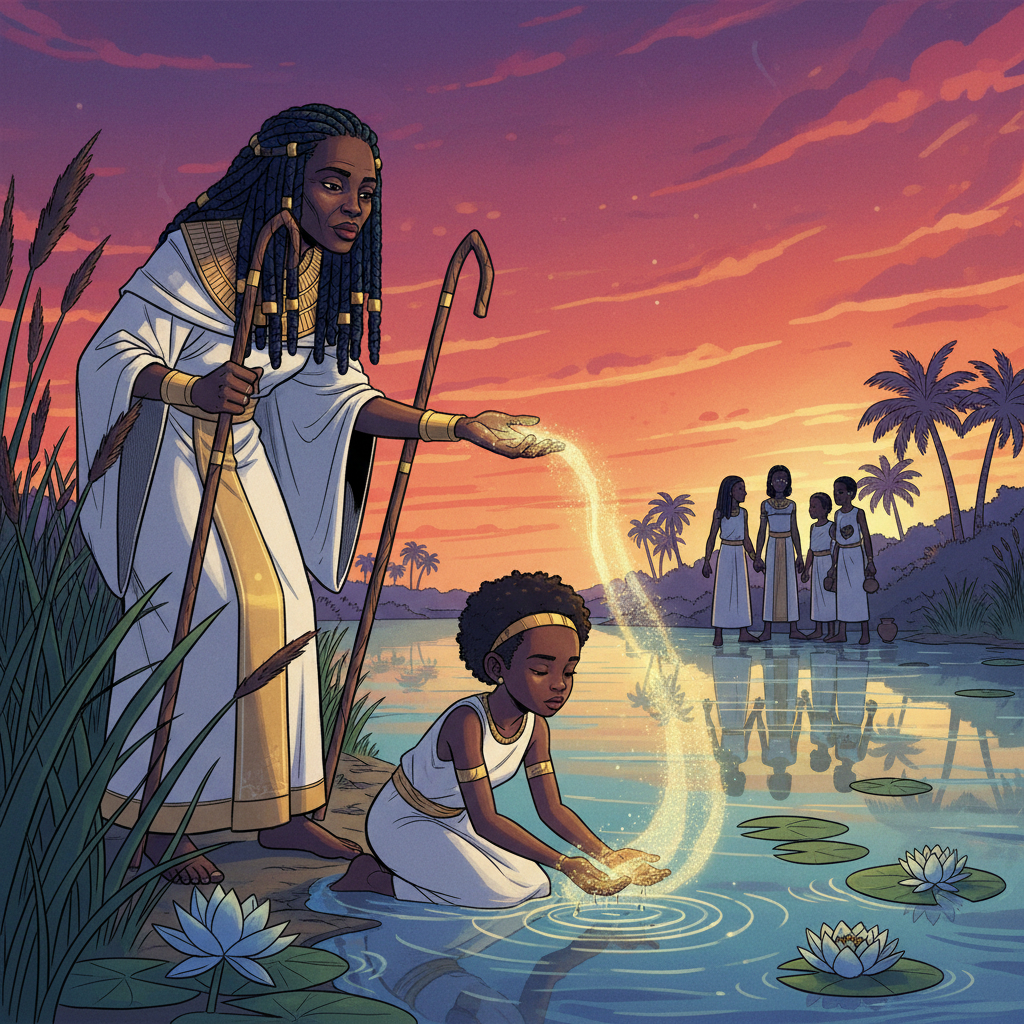
"Every time you refuse to waste water, every time you clean a riverbank, every time you speak truth about those who poison our world — you are practicing Maat," Sekhmet said, her voice ringing out across the water. "You are continuing what our ancestors began thousands of years ago. The Nile weeps because people forgot. You will make it sing again." The sun had nearly set now, painting the sky in deep purples and burning orange. The children of the village stood together at the river's edge — Adisa, Khari, Nia, and all the others — their dark silhouettes reflected in the ancient water. And if you listened closely, beneath the gentle rush of the current, you could almost hear it: the Nile, old and patient and waiting, beginning to hum with the promise of a new generation of guardians.