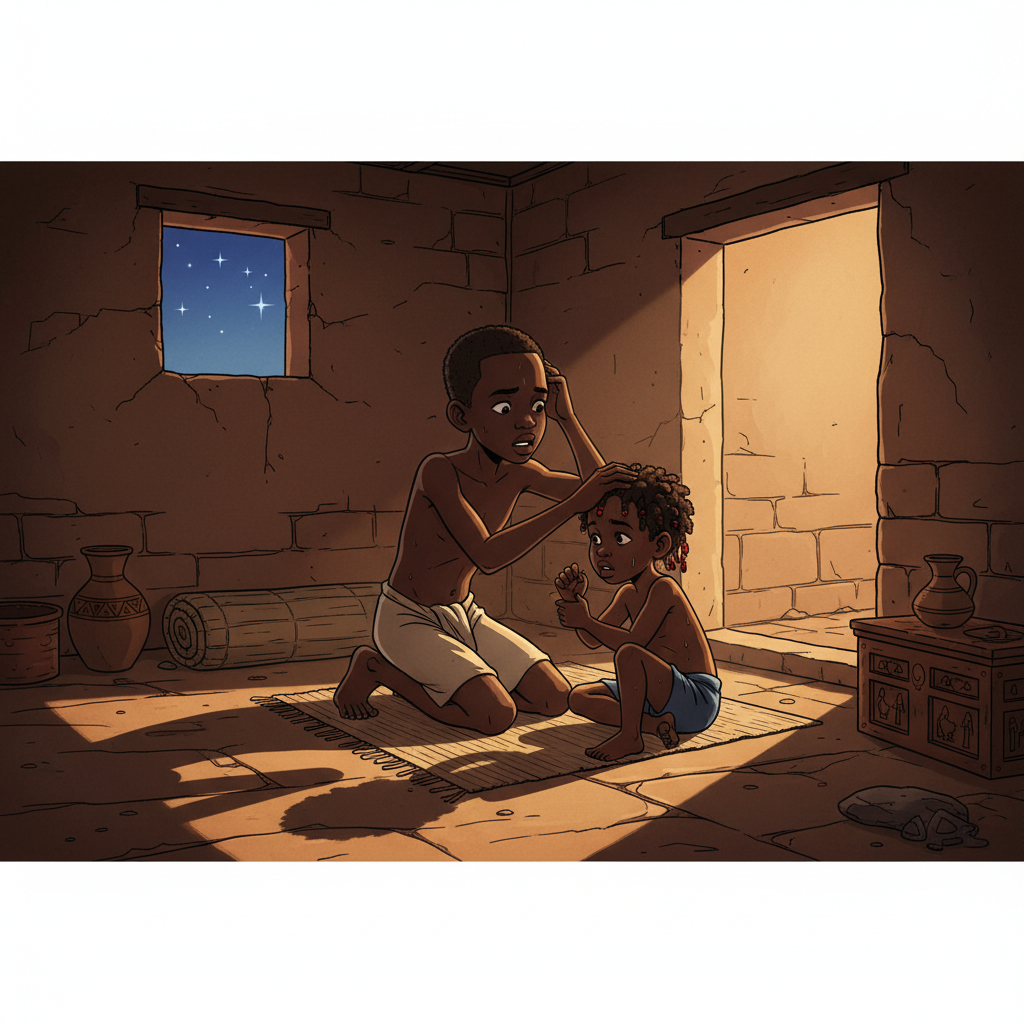
The first stars were still fading when Kofi heard his little sister cry out in the darkness. He rolled off his sleeping mat and crossed the small mud-brick room in two steps, his bare feet silent on the packed earth floor. Abena lay curled on her mat, her small body burning with fever, her dark brown skin slick with sweat. She was only five years old, with round cheeks and tightly coiled hair that their mother braided with red thread every market day. Kofi pressed his hand to her forehead and pulled it back as though he had touched a cooking stone. The heat was terrifying. Abena's eyes were glassy and unfocused, and her breathing came in quick, shallow gasps like a bird trapped in a net. "Kofi," she whispered, her small fingers gripping his wrist. "My head hurts. Everything hurts." His stomach dropped. This was not an ordinary fever.
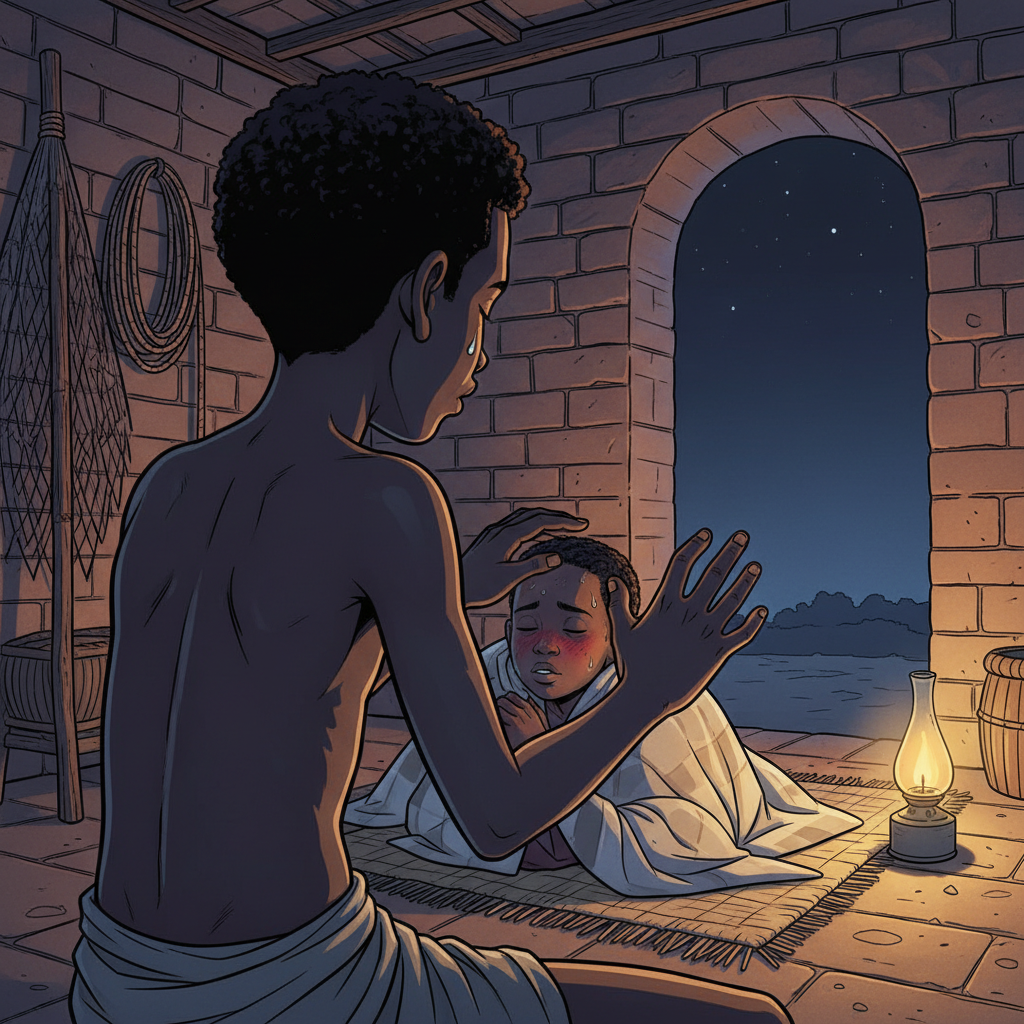
Their mother, Esi, had left two days ago to visit her sister in the village upstream and would not return until the next moon. Their father had been dead since Kofi was seven — taken by the same river fever that now seemed to grip Abena. Kofi was ten years old, the man of the house, with skin the color of rich Nile silt and steady hands that could mend a fishing net or steer a reed boat through rough current. But right now his hands were shaking. He knew what he needed to do. The healer, old Priestess Aset, lived across the great river in the village of Djeba. She was the only person within a day's walk who knew the sacred healing arts — the medicines of the per ankh that could break a fever this fierce. But the river was wide, the current was strong, and Kofi had no boat.
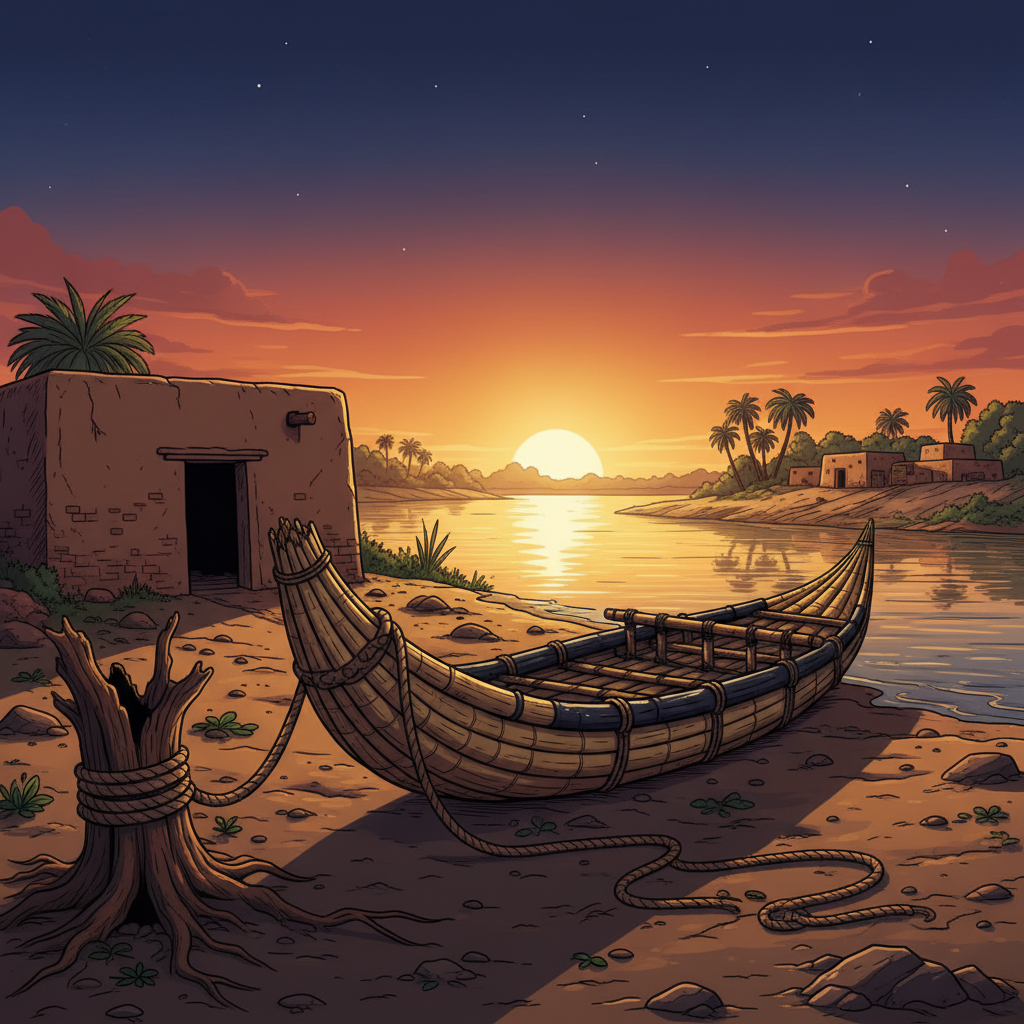
There was one boat, though. It sat on the muddy bank just thirty paces from Kofi's door, tied to a tamarisk stump with a rope of braided palm fiber. It was a beautiful fishing boat — not large, but sturdy, built from bundled papyrus reeds lashed tight with cord and sealed with pitch. Its owner was Elder Mensah, the old fisherman who lived in the house at the bend of the path. Mensah had built that boat with his own hands over three long months, shaping every reed, testing every knot. It was his livelihood. Every morning before dawn, Mensah pushed that boat into the Nile and pulled fish from the deep channels — tilapia, perch, catfish — enough to feed himself and to trade at the market for grain and oil. Without that boat, Elder Mensah could not fish. Without fishing, he could not eat. The boat was not just wood and reeds. It was his life.
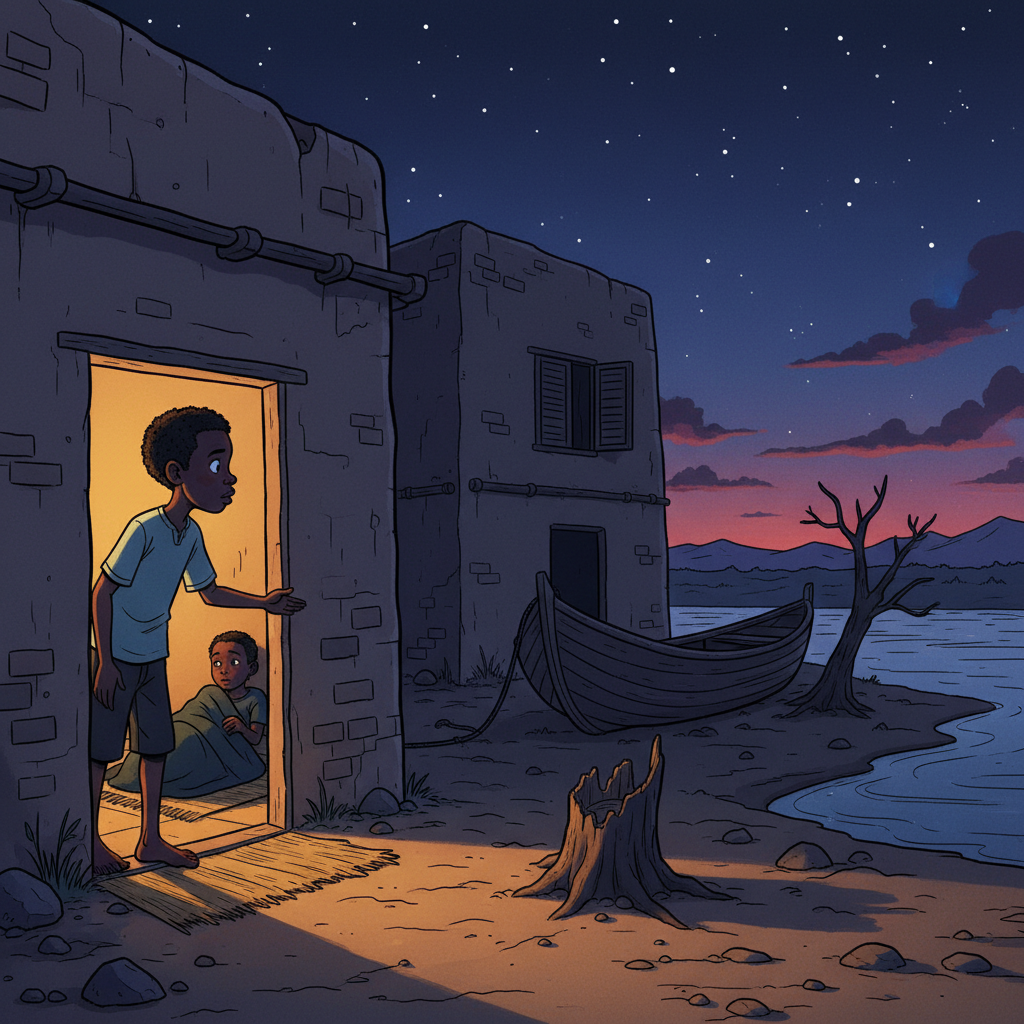
Kofi stood in the doorway of his house and looked at the boat, then back at Abena, whose breathing was growing weaker. The sky was still dark, bruised purple along the eastern horizon where dawn was gathering. Mensah's house was shuttered and silent. The old man slept deeply — everyone in the village knew that Mensah could sleep through a hippo bellowing outside his window. Kofi could knock on Mensah's door and ask permission. That was the right thing to do. That was maat — the principle of truth, honesty, and respect that his mother had taught him since he was old enough to understand words. You do not take what is not yours. You ask. You wait. You honor the trust between neighbors. But asking would take time. Waking the old man, explaining, convincing him — it could take half an hour or more. And Abena did not have half an hour. Her fever was climbing like fire up dry reeds.
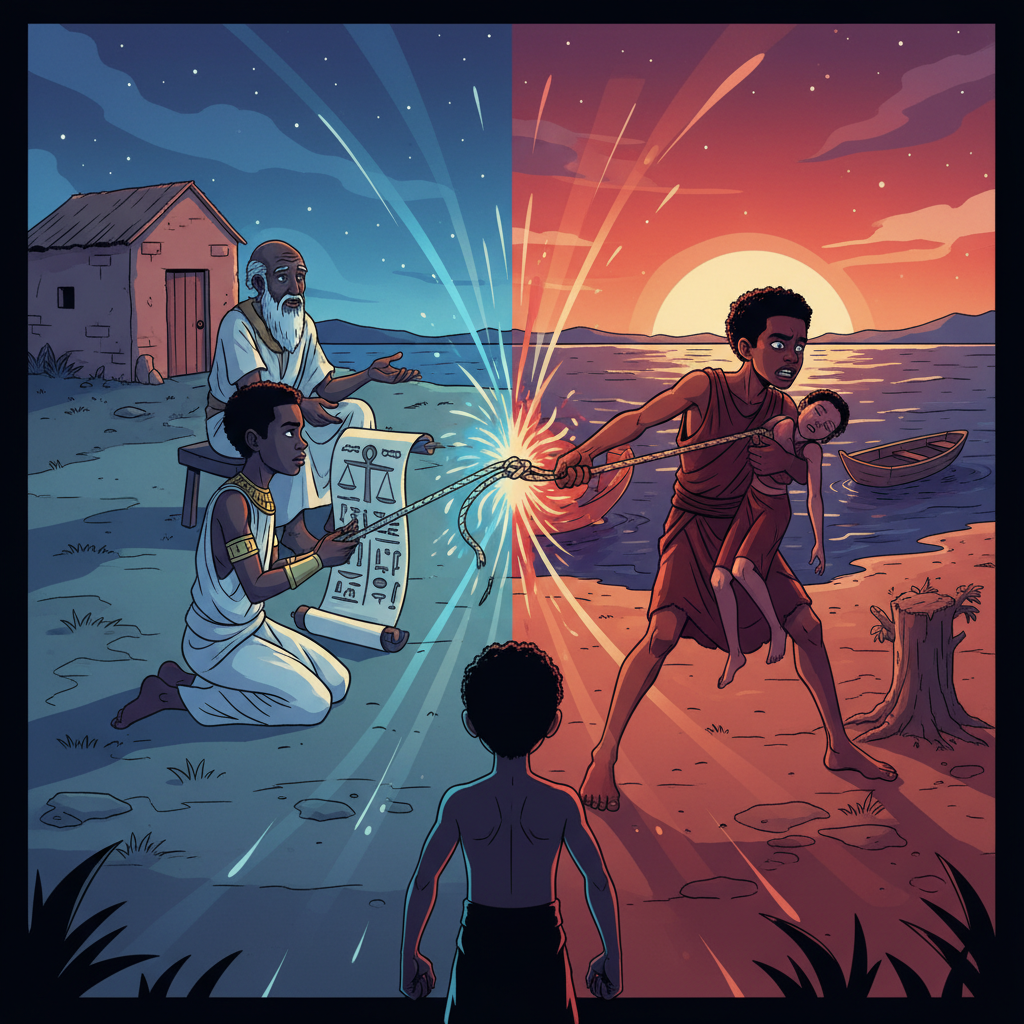
Kofi felt two voices warring inside his chest. One voice said: wake Mensah. Do it properly. Maat demands honesty, even when it is hard, even when it is slow. Taking without asking is the way of isfet — chaos, disorder, the breaking of sacred trust between people. If you take the boat without permission, you become a thief, no matter how good your reason. The other voice said: your sister is dying. Every moment you stand here arguing with yourself, the fever burns hotter. Abena is five years old. She trusts you to protect her. What good is maat if your sister dies while you knock politely on an old man's door? Kofi's ka — his spirit, the deepest part of himself — felt torn in half, pulled in two directions like a rope in a tug of war between what was right and what was urgent.

He made his choice. Kofi lifted Abena onto his back, wrapping her thin arms around his neck. She was so light it frightened him — lighter than a sack of grain, lighter than she should have been. He carried her down the bank to Mensah's boat, untied the rope with trembling fingers, and pushed off into the dark Nile. The current grabbed the boat immediately, swinging it sideways. Kofi dug the paddle deep and fought the water, his young muscles straining against the ancient power of the river. Abena moaned softly against his shoulder. "Hold on, little sister," he whispered through gritted teeth. "I am taking you to the healer. Hold on." The far bank was a dark line against the paling sky. It looked impossibly far away. But Kofi paddled with everything he had, his arms burning, his breath coming in ragged gasps, because the alternative was unthinkable.
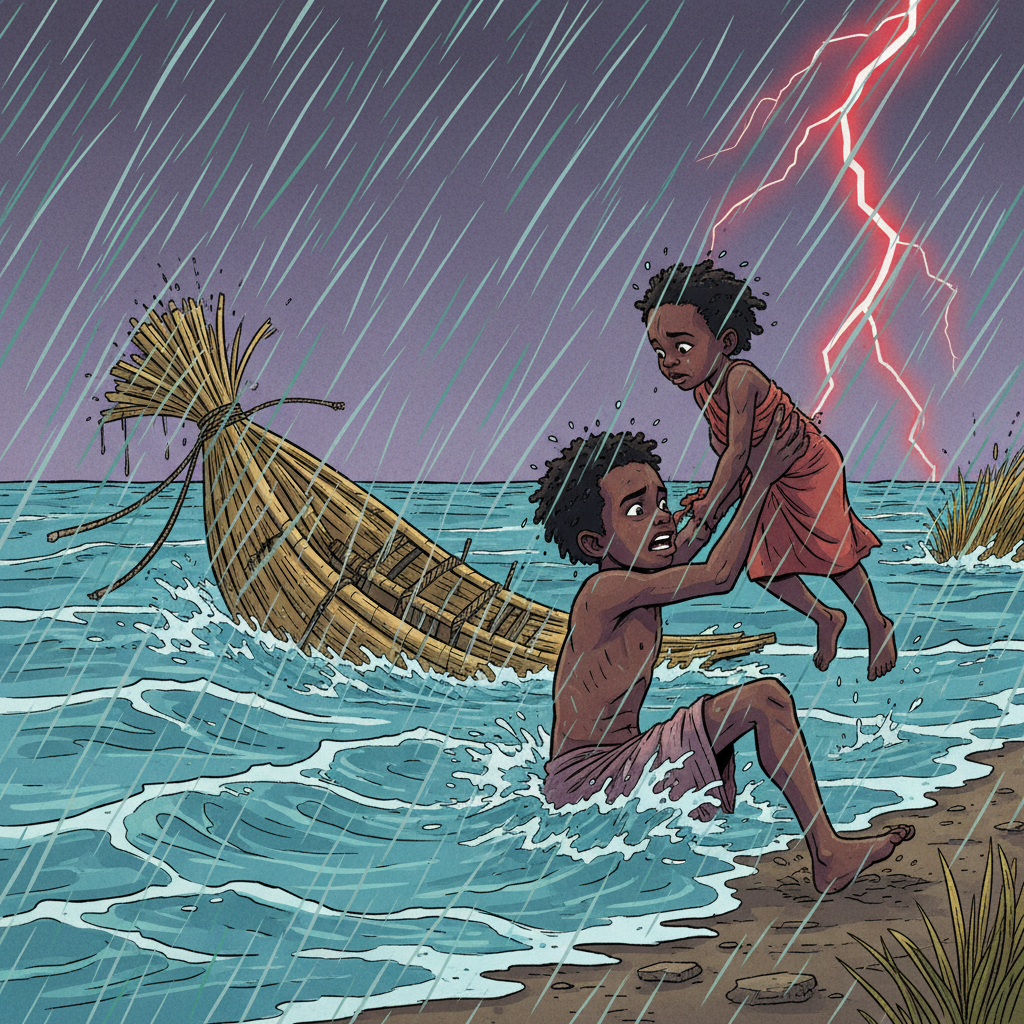
Halfway across, the storm hit. It came from the south without warning — a wall of wind that turned the river into a churning, angry thing. Rain slashed sideways, stinging Kofi's face and arms. Waves slapped over the sides of the boat, soaking the papyrus bundles and making the vessel heavy and sluggish. Kofi bailed water with one hand and paddled with the other, but the boat was taking on more than he could throw out. A wave caught the stern and spun the boat sideways. Kofi heard a terrible sound — the crack of lashing cord snapping under strain. The rear section of the boat began to sag, the papyrus bundles spreading apart like fingers opening. The boat was breaking apart. Kofi grabbed Abena and held her above the rising water, kicking toward the far bank with desperate strength. His feet found mud. He staggered upright, clutching his sister, and dragged them both onto the shore just as the ruined boat drifted past, listing badly, half-submerged.
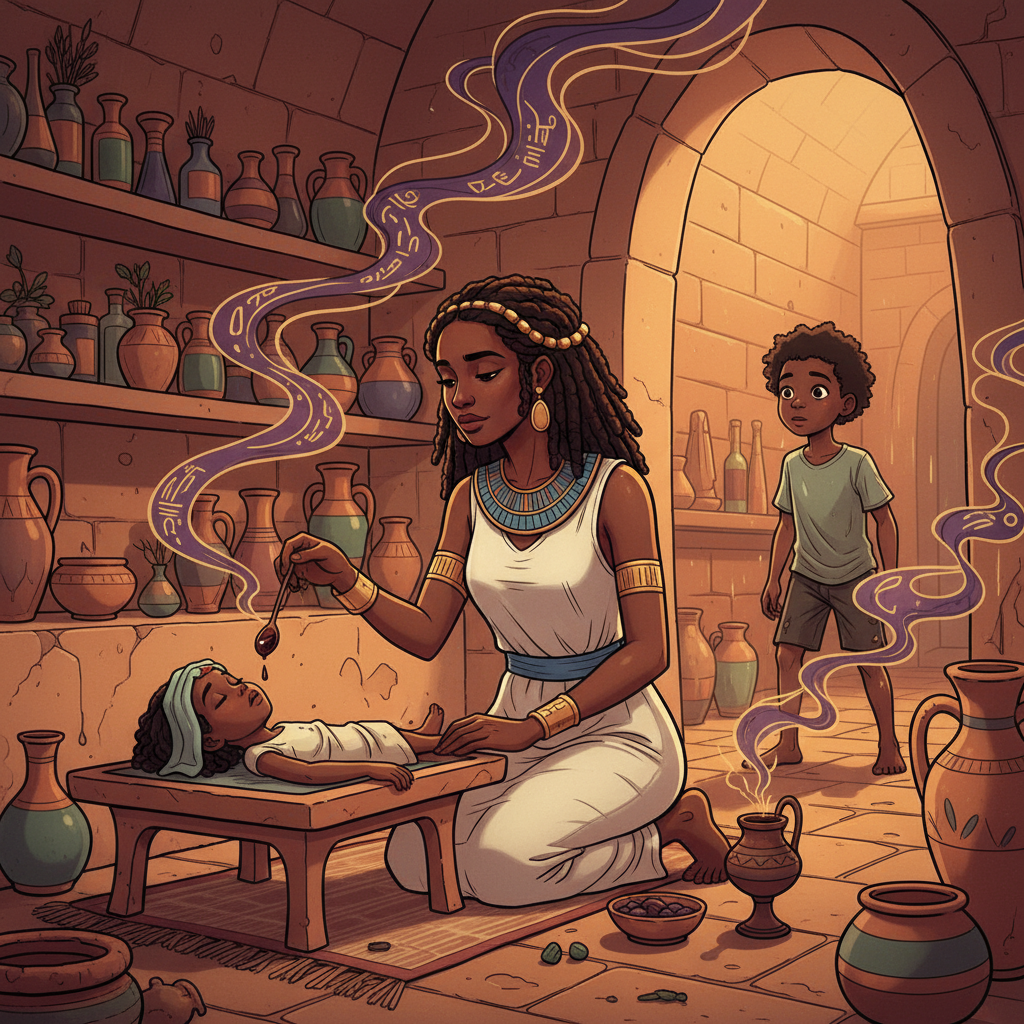
The healer, Priestess Aset, opened her door to find a soaking, shivering boy holding a burning-hot child in the pouring rain. She asked no questions. She took Abena from Kofi's arms and carried her inside to the healing room, where clay jars of dried herbs and oils lined the walls and the air smelled of myrrh and crushed mint. Aset was a woman of deep ebony skin and calm, ancient eyes who had trained at the great per ankh of Waset. She had seen fevers like this before. She ground black seed and willow bark into a paste, mixed it with honey and warm water, and fed it to Abena drop by drop. She placed cool cloths soaked in lotus water on the child's forehead and chest. She burned kyphi incense and spoke the old healing words — heka, the sacred speech that the ancestors believed carried power beyond what any medicine could reach alone.
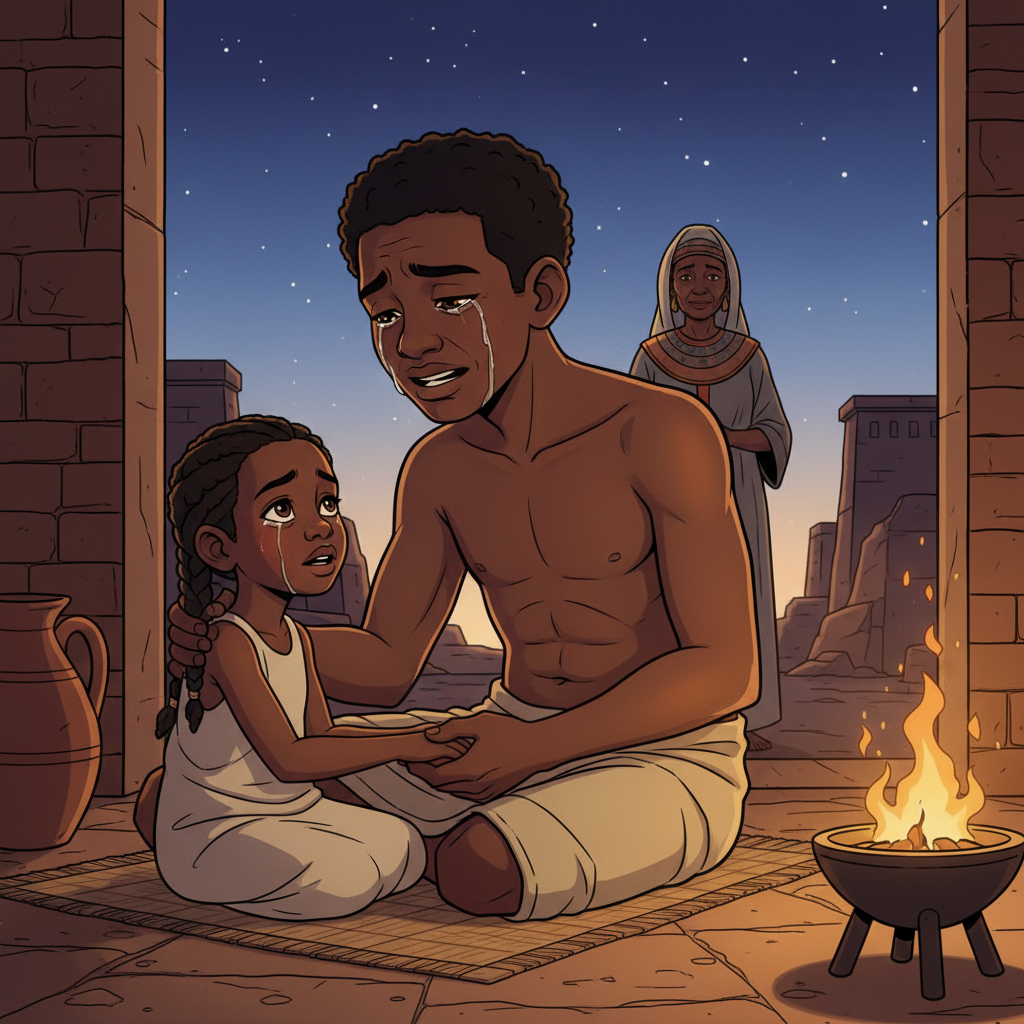
By dawn, Abena's fever broke. Kofi sat beside her mat and watched the color return to her small face like sunlight creeping across a dark room. Her breathing slowed and deepened. Her fingers, which had been clenched tight for hours, finally relaxed. She opened her eyes, looked at her brother, and whispered, "I am thirsty." Kofi wept. He did not care that Priestess Aset could see him crying. He held his sister's hand and let the tears fall freely, because she was alive, and last night he had not been sure she would be. But even as relief flooded through him, a cold weight settled in his stomach. The boat. Mensah's boat. He had seen it drifting downstream, broken and waterlogged. By now it would be caught in the reeds somewhere, or sunk, or carried far beyond recovery. And when Mensah woke and found his boat gone, there would be a reckoning.
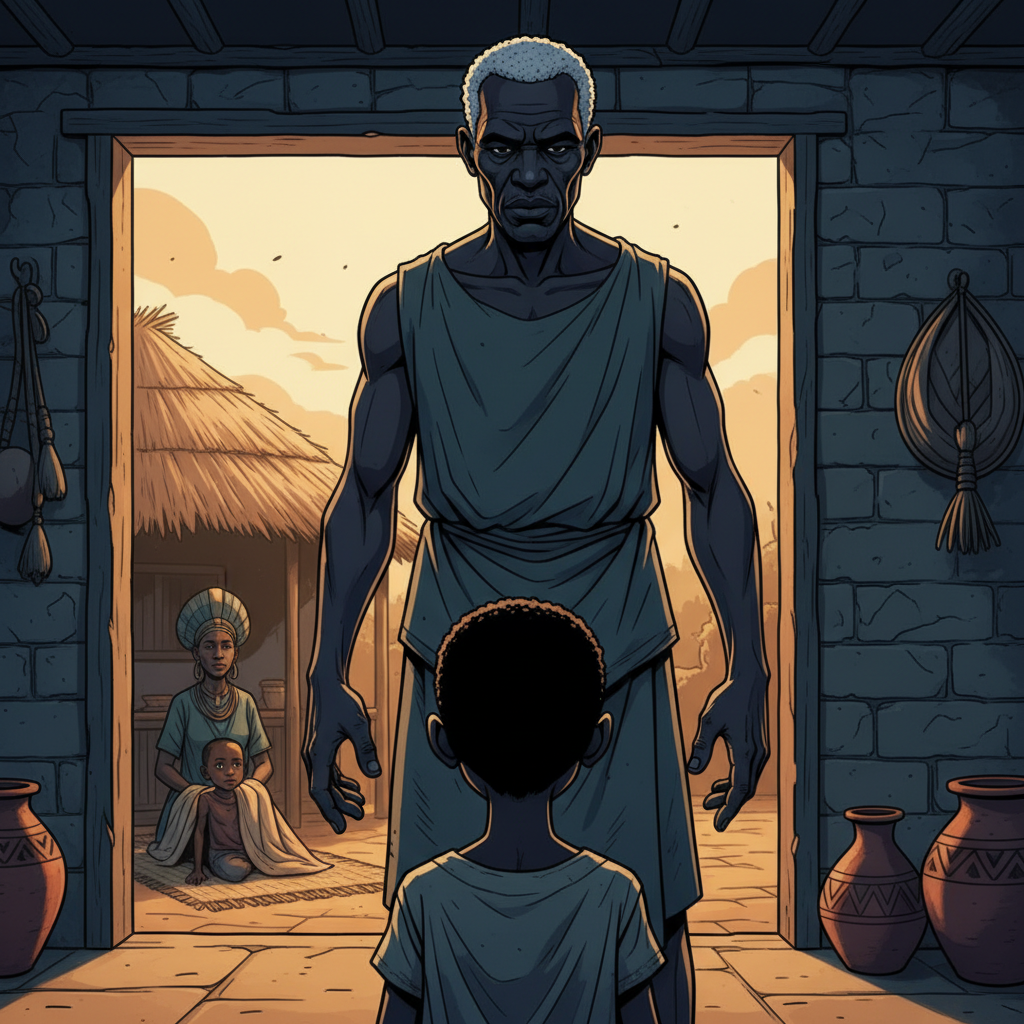
The reckoning came that afternoon. Word traveled fast along the river, and by midday, Elder Mensah stood in the doorway of Priestess Aset's healing house, his face carved from stone. Mensah was a tall man with deeply lined dark skin and white hair cropped close to his skull. His hands — thick, scarred, powerful hands that had pulled fish from the Nile for forty years — hung at his sides, opening and closing slowly. "You took my boat," he said to Kofi. His voice was quiet, but the quietness was worse than shouting. "You took it without asking. Without a word. I woke this morning and it was gone, and I thought thieves had come in the night." Kofi stood and faced the old man. He did not look away. "Yes, Elder. I took it. My sister was dying. I had no other way to reach the healer."
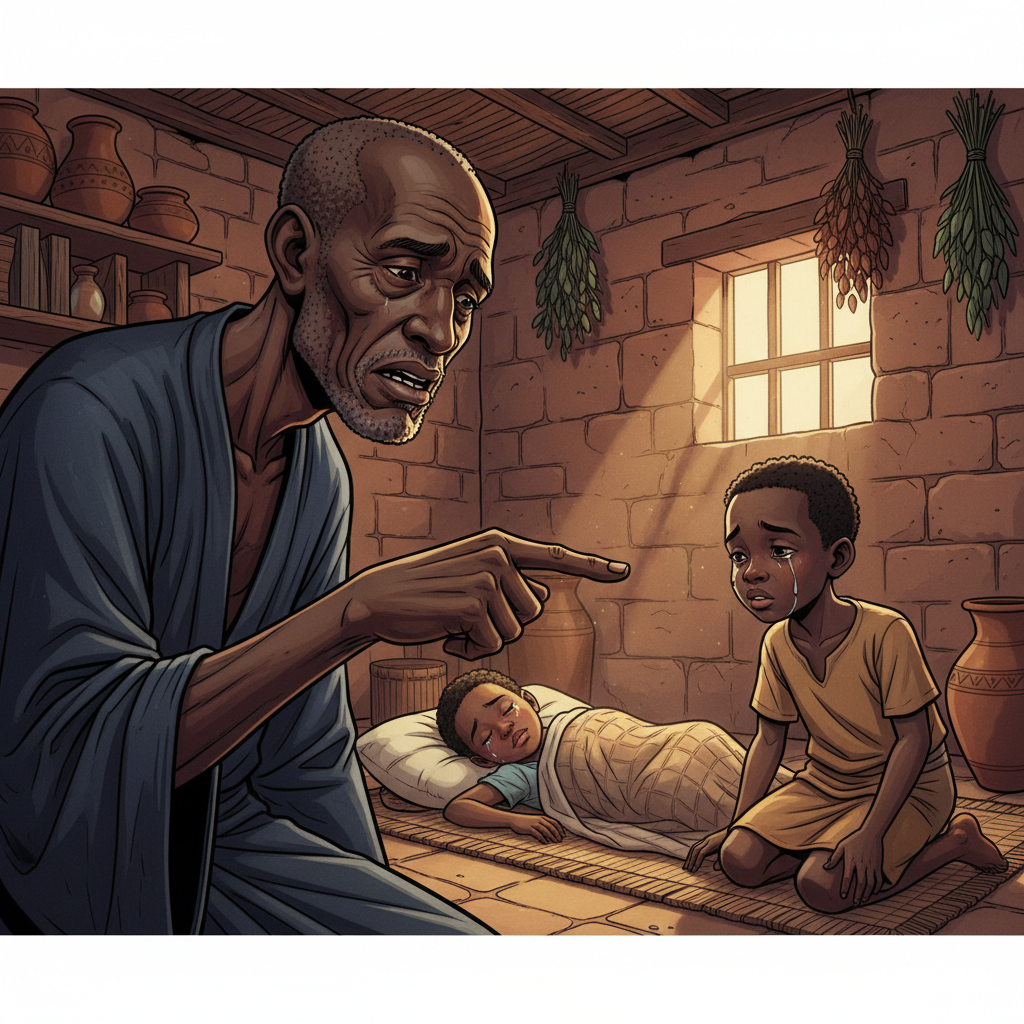
Mensah looked at little Abena sleeping peacefully on the mat, then back at Kofi. Something shifted in his face — not forgiveness, not yet, but recognition. He had lost people to fever himself. He knew the terror of watching someone you love burn from the inside. But when he spoke again, his voice was hard. "That boat is everything I have, boy. I built it with these hands. I fish with it every day to survive. Without it, I cannot feed myself. I am too old to build another. Do you understand what you have taken from me?" Kofi felt the words hit him like stones. He understood. He had saved his sister's life, but he had destroyed an old man's livelihood. Both things were true at the same time, and neither one canceled the other out.
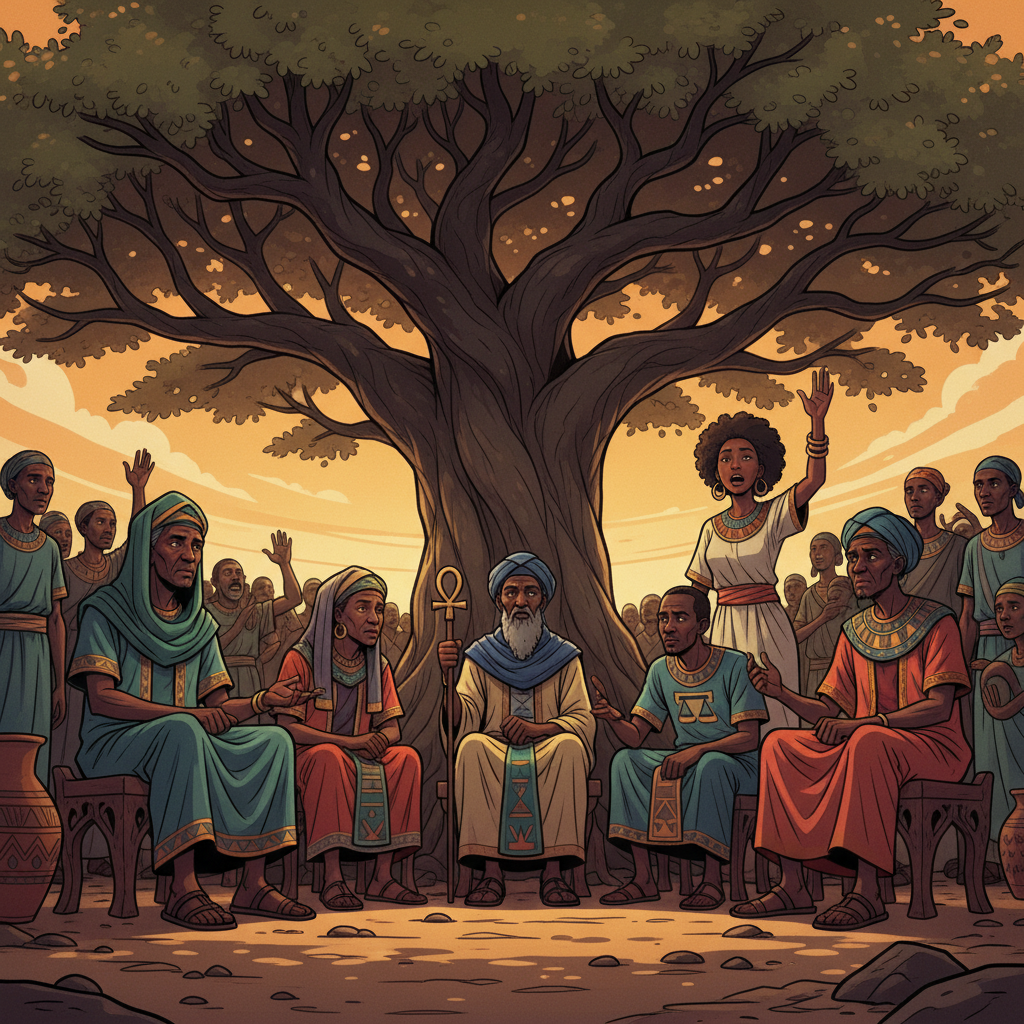
The village elders heard about what happened, and within two days, they called a gathering at the kenbet — the council of justice that settled disputes in the way of maat. The kenbet met under the great acacia tree beside the river, where the ancestors had met for generations. Seven elders sat on carved wooden stools, their dark faces serious and thoughtful. The whole village came to watch, because everyone had an opinion and no one could agree. Some said Kofi was a hero. "He saved his sister's life!" declared Ama, the potter, her voice ringing with conviction. "What kind of person would stand by and let a child die for the sake of a boat?" Others shook their heads. "He stole from an elder," said Penu, the grain merchant. "If we excuse theft because the reason was good, where does it end? Anyone could claim their need was great enough to take what belongs to another."
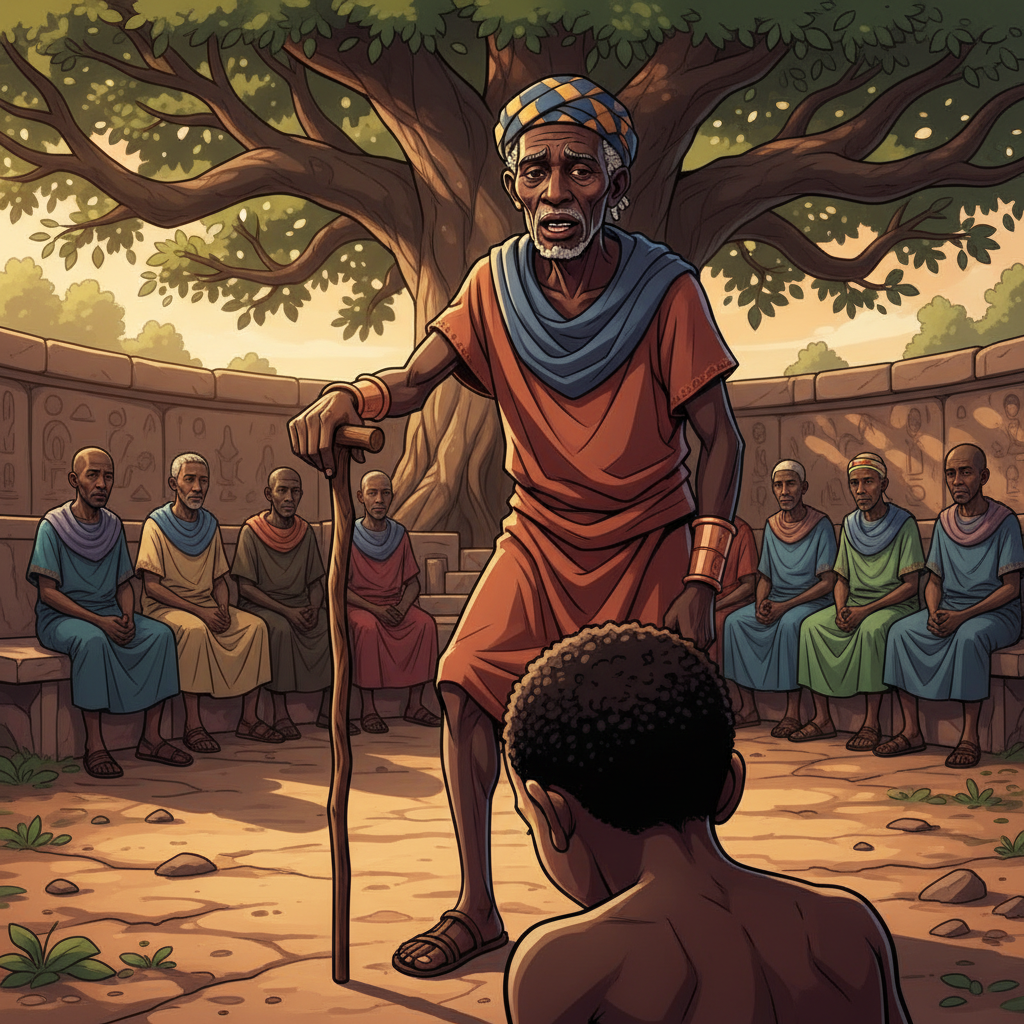
Elder Mensah spoke first. He stood slowly, leaning on his walking stick, and addressed the kenbet with the dignity of a man who had earned every line on his face. "I do not call this boy evil. I believe he acted from love. But love does not erase harm. My boat is destroyed. I cannot fish. I cannot trade. If I cannot fish, I will go hungry before the next moon. The boy's choice — however well-meaning — has put my survival at risk. Maat teaches us that every action has weight. You cannot place love on the scales and expect it to make the damage disappear." Kofi listened with his head bowed. He could not argue with a single word. Everything Mensah said was true. The old man was not being cruel. He was being honest. And honesty, even when it hurt, was the foundation of maat.
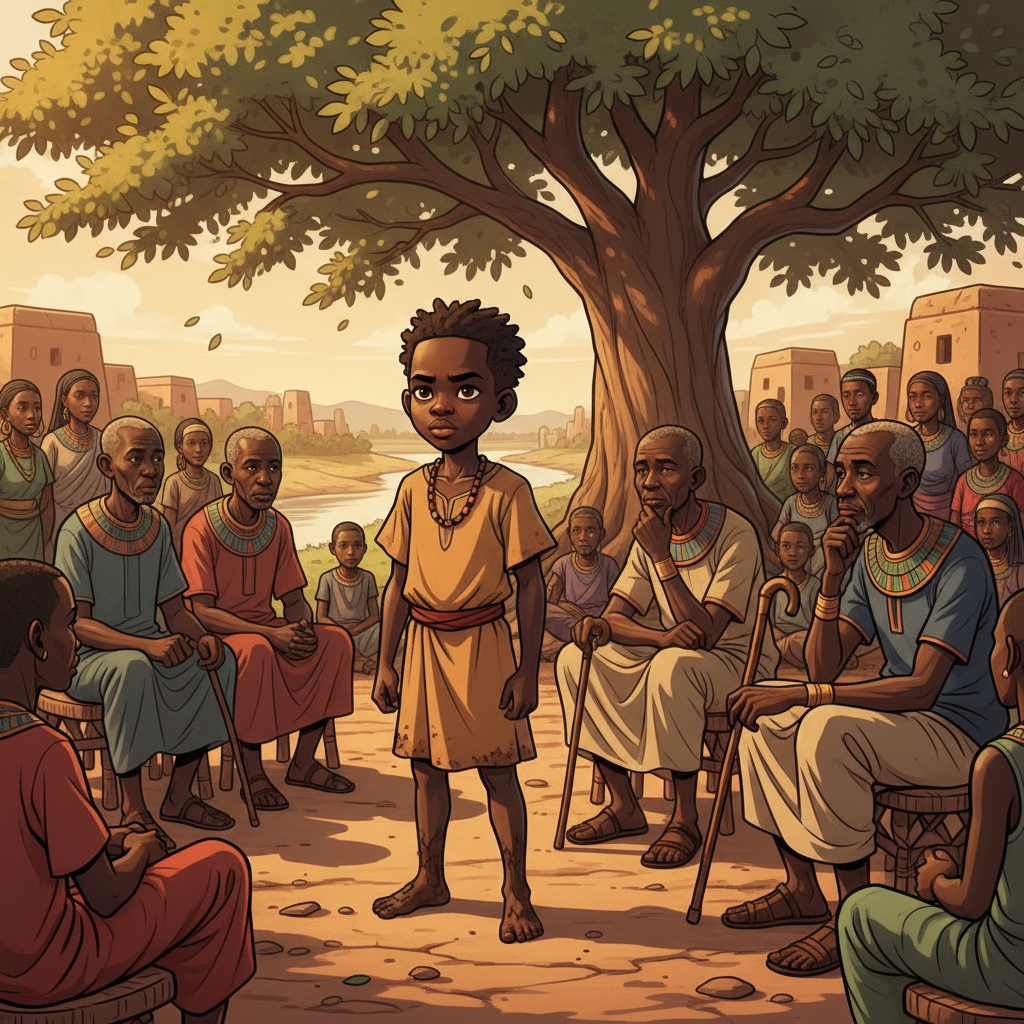
Then Kofi spoke. He stood before the kenbet, this ten-year-old boy with steady eyes and river mud still caked on his ankles, and he did not make excuses. "I knew it was wrong to take the boat without asking. I felt it in my ka before I even untied the rope. But my sister was dying, and I could not wait. I chose to save her life and accept whatever came after. I do not ask you to say I was right. I ask you to understand that sometimes there is no right answer — only the answer you can live with." The kenbet was silent for a long moment. Even the wind seemed to hold its breath. Kofi continued: "I will repair Elder Mensah's boat. I will fish for him until it is fixed. I will give him half my family's grain store. I cannot undo what I did, but I can take responsibility for the harm, even though I would make the same choice again to save Abena."
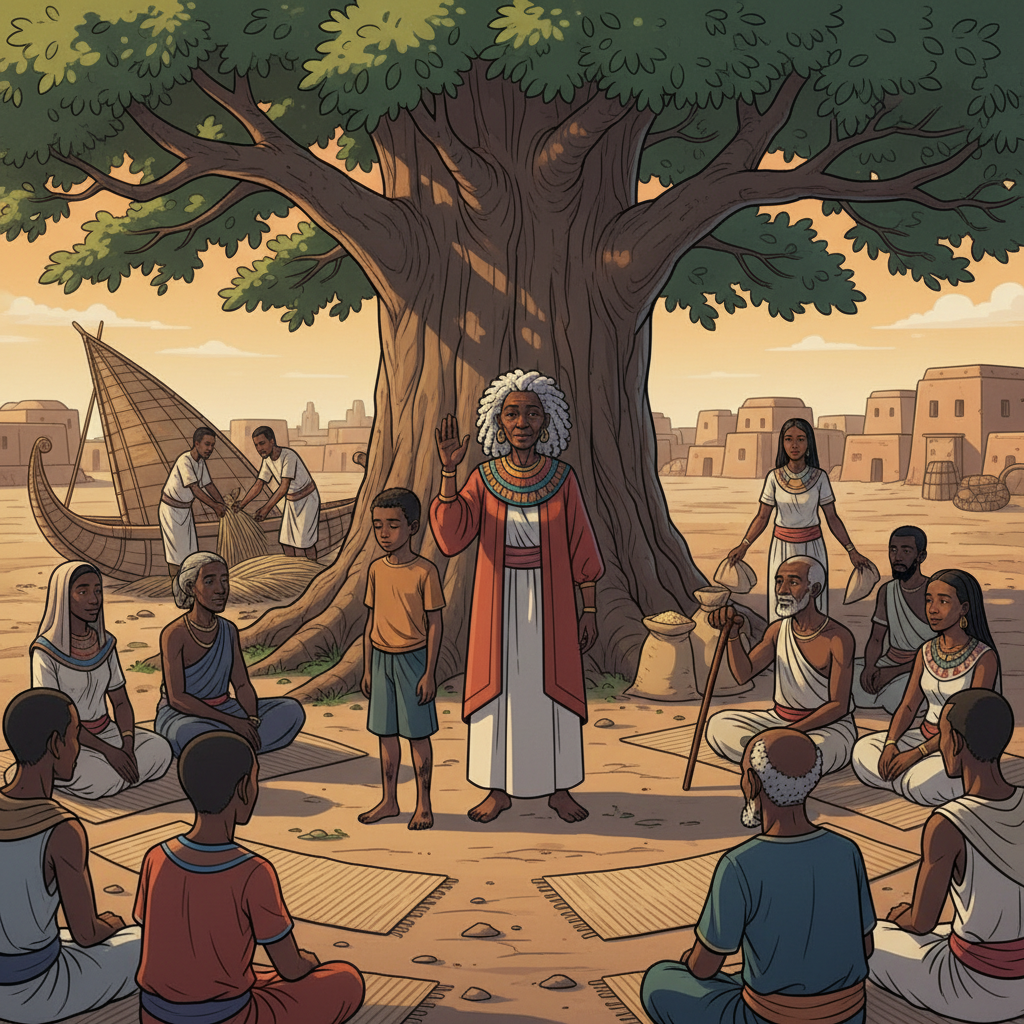
The eldest member of the kenbet, a woman named Priestess Nzinga with silver-white hair and skin dark as the deepest river clay, raised her hand for silence. She had listened to every word without expression, her ancient eyes moving between Kofi and Mensah like a hawk watching two fish circle in the shallows. "This case has no perfect answer," she said, and her voice carried the weight of decades spent judging the tangled knots of human life. "The boy broke trust. That is real. The old man lost his livelihood. That is real. But a child lives who might have died. That, too, is real. Maat does not always give us clean lines between right and wrong. Sometimes it gives us this — a place where two truths stand side by side, and neither one bows to the other. The question is not who is right. The question is: how do we restore balance?" The kenbet ordered Kofi to repair the boat and fish for Mensah until it was seaworthy again. The village would contribute reeds and pitch. Mensah would receive grain from three families. And Kofi would ask permission next time — even if it cost him precious minutes — because trust, once broken, takes far longer to rebuild than a boat made of papyrus and prayer.