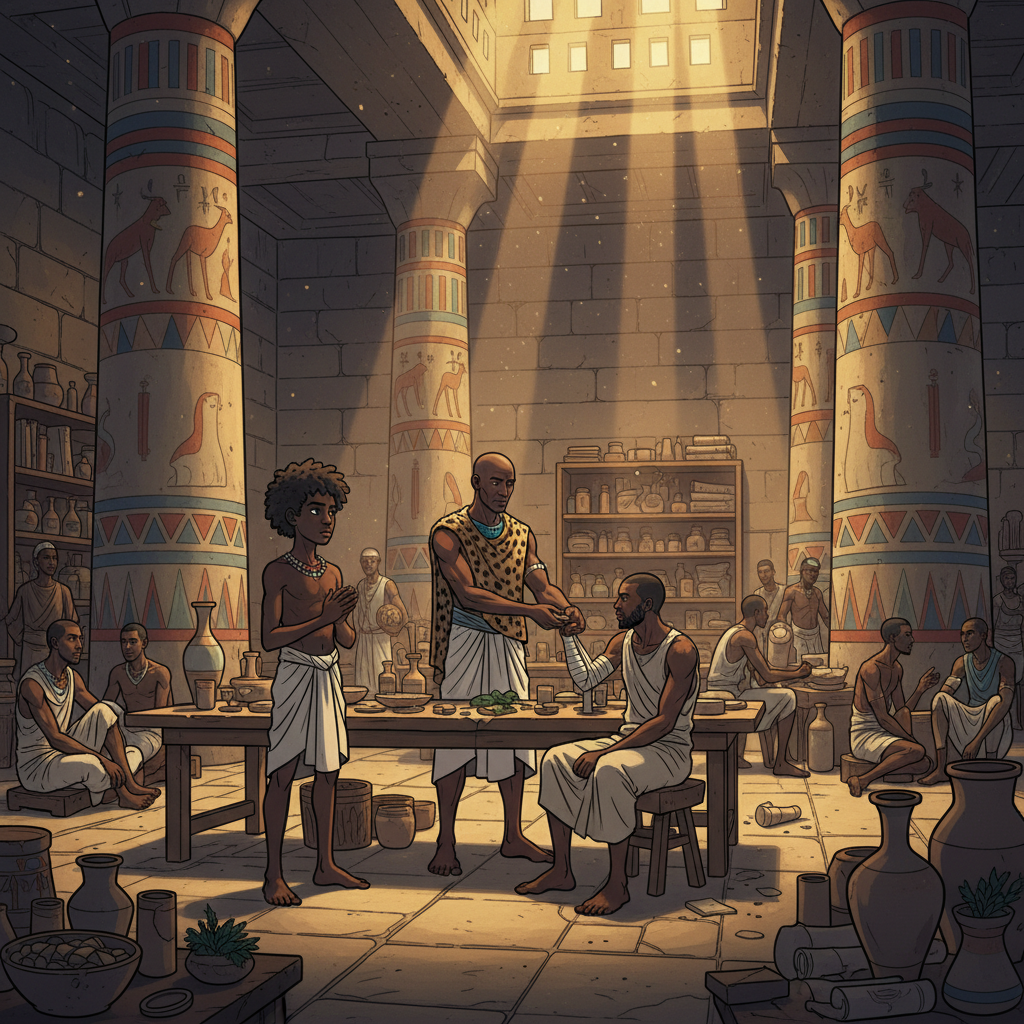
Hori was fourteen years old, and he had grown up watching the most careful hands he had ever known: his father’s. His skin was deep brown, his own fingers long and steady, and his home was a room inside the Per Ankh of Mennefer — the House of Life — where his father was a sunu, a physician, who mended the bodies of the workers who raised the great stone monuments. Hori had decided, before he could even remember deciding, that he too would be a physician. So each morning he stood at his father’s elbow and watched, and learned, slowly, that healing was not magic at all. It was attention.
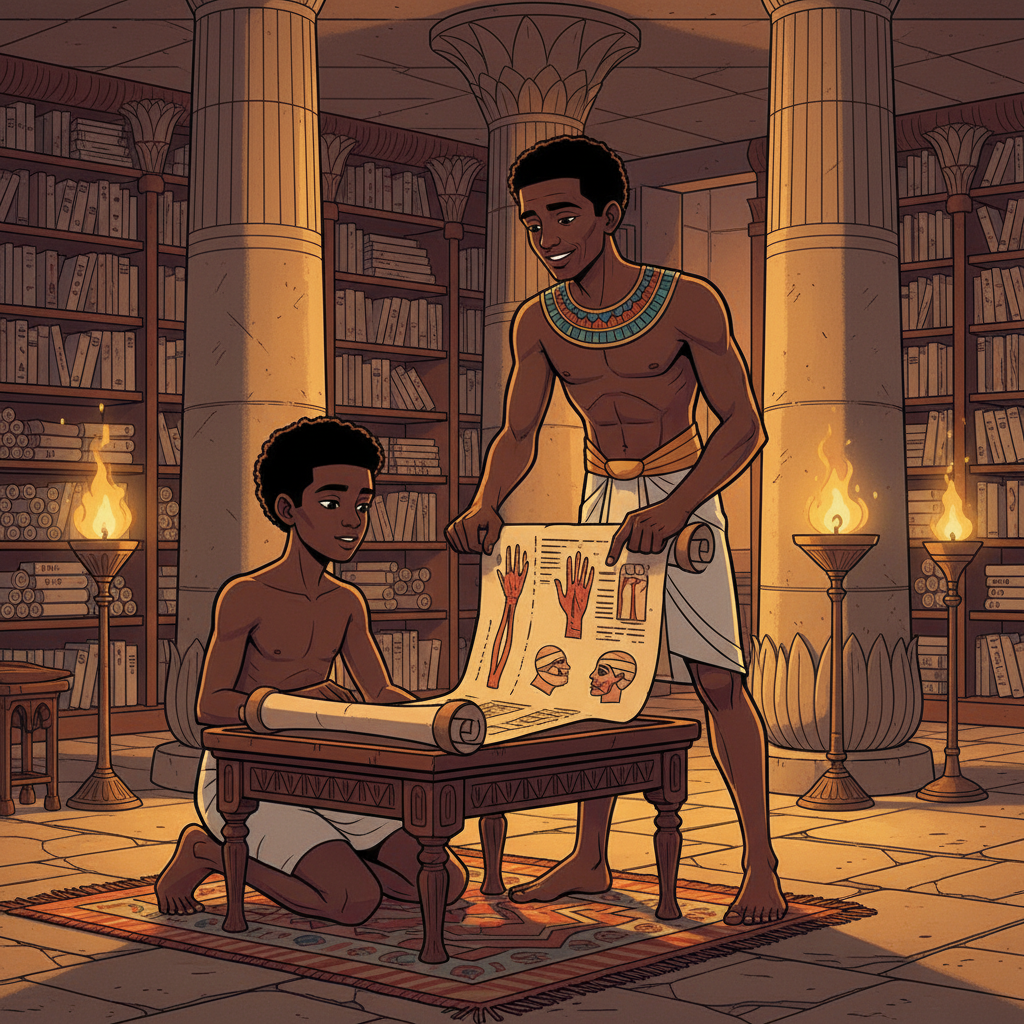
The Per Ankh of Mennefer kept a long papyrus that Hori’s father treasured above almost anything: the Surgical Papyrus of the Per Ankh. It held forty-eight cases of injury, most of them from the building-work — broken bones, crushed hands, deep wounds, and injuries to the head. For every case it taught the same disciplined order: examine the body carefully; name plainly what you see; then give a verdict. It taught the use of honey on wounds, which kept them from going bad; of clean linen, of splints and stitches, of bronze tools. The physicians of Kemet had studied the body — even the brain within the skull — and written down what they found, plainly, so that the next healer could learn it.
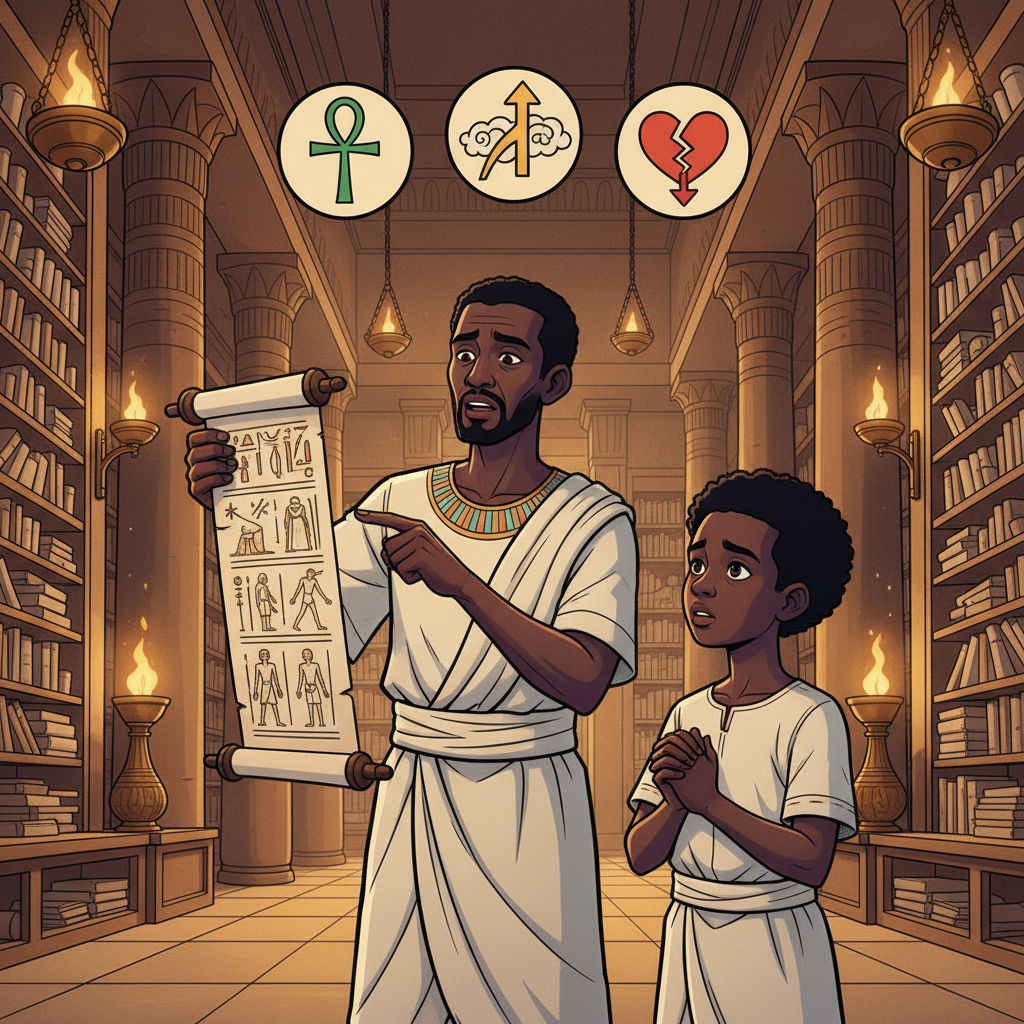
It was the verdict that Hori’s father drilled into him hardest. For every injury, the Surgical Papyrus required the physician to decide, and to say out loud, which of three things it was: “an ailment I will treat”; or “an ailment I will contend with” — meaning the outcome is uncertain, but I will fight for it; or “an ailment not to be treated” — meaning there is nothing my hands can honestly do. Three verdicts. And the discipline, his father said, was not in knowing them. It was in saying the true one aloud, to a frightened family, even when the true one was not the one they were praying to hear.
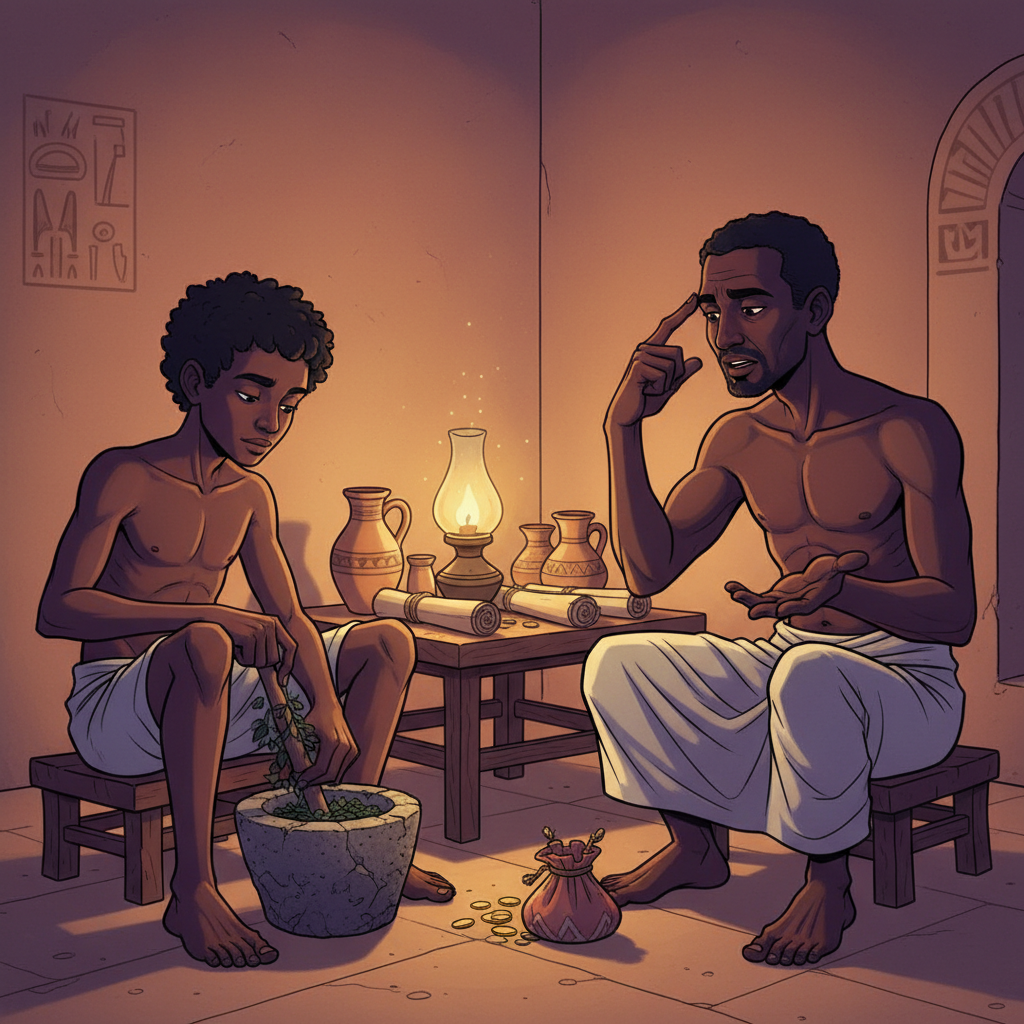
“A sunu is paid by the case,” his father told him one evening, while Hori ground dried herbs in a stone bowl, “and every case carries a temptation hidden somewhere inside it. A frightened family will pay you more, and bless you harder, if you promise them a cure. So the easiest coin in all the world to earn is the coin you are handed for promising what you cannot truly deliver. Hear me well, Hori, for this is the whole of it: that coin is poison. The physician who promises cures he cannot give buys today’s gratitude with tomorrow’s good name. And a physician’s name,” he said, tapping the side of his own head, “is the only real medicine he carries with him from house to house. Lose it once, and your two hands are empty, no matter how skilled they may be.”
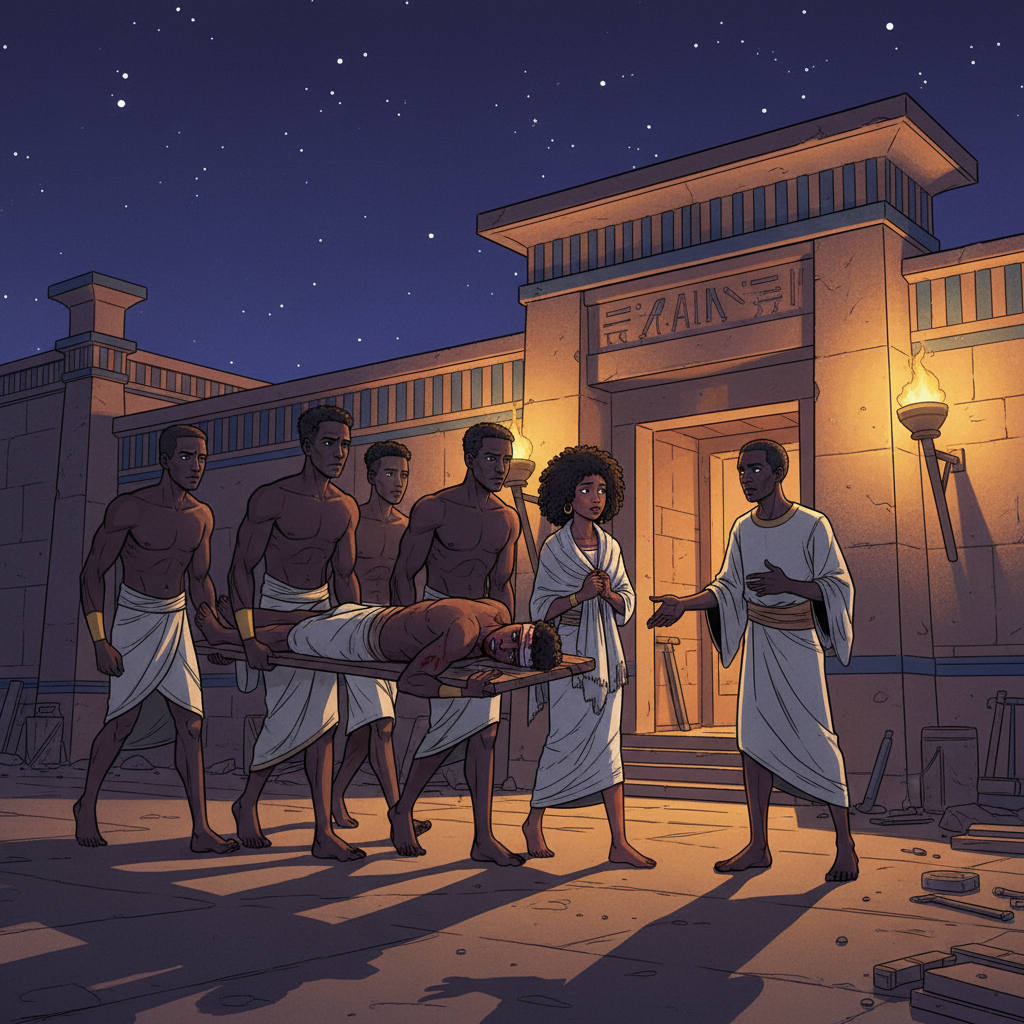
One hot afternoon they carried in a stoneworker named Userhat. He had been high up on the wooden scaffolding of a new temple wall when a great block shifted without warning, and a falling stone struck him hard on the side of the head. His fellow workers brought him in on a plank, six of them, grim and quiet, and behind them, white-faced and silent, came his wife — a young woman named Maia, twisting the worn edge of her shawl in both hands. Userhat was breathing, but he would not wake, and there was blood matted dark and thick in his hair. Hori felt his own stomach clench hard at the sight of it. But his father simply rolled up his linen sleeves and said, very quietly, “Now we work. Watch everything I do.”
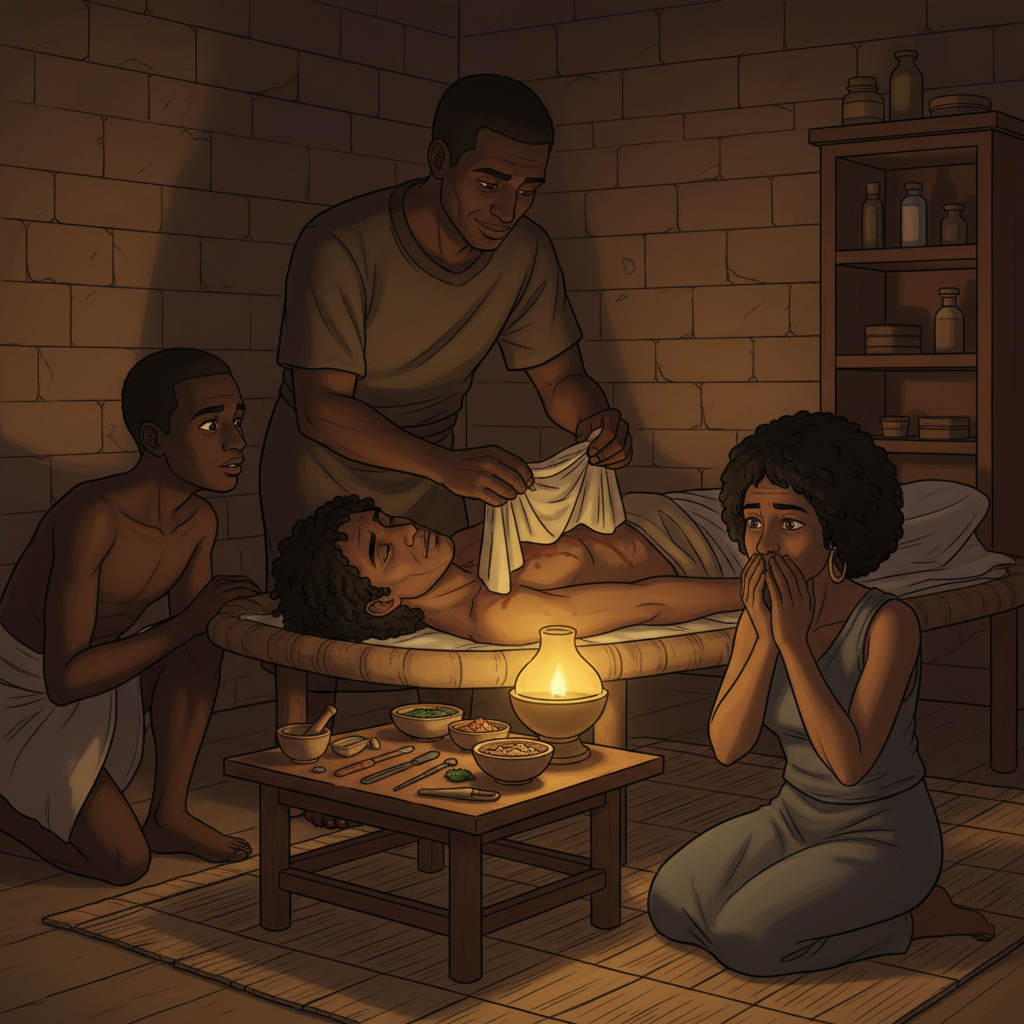
Hori watched his father’s hands above all else. They did not rush, not even now, not even with a man’s whole life balanced on the next hour. Gently, so gently, his father lifted away the matted linen the workers had pressed to the wound, parted the bloodied hair to either side, and looked — truly looked, for a long time — at the injury beneath. Maia sat just beyond the reach of the lamplight, in the soft shadow at the foot of the bed, her hands pressed flat against her mouth, watching the physician’s face for any small sign of what it all meant. And Hori watched too — all three of them caught in the lamp-glow: his father’s steady hands on the wound, the wife’s frightened eyes fixed on his father’s face, and his own breath gone shallow and quick in his chest.
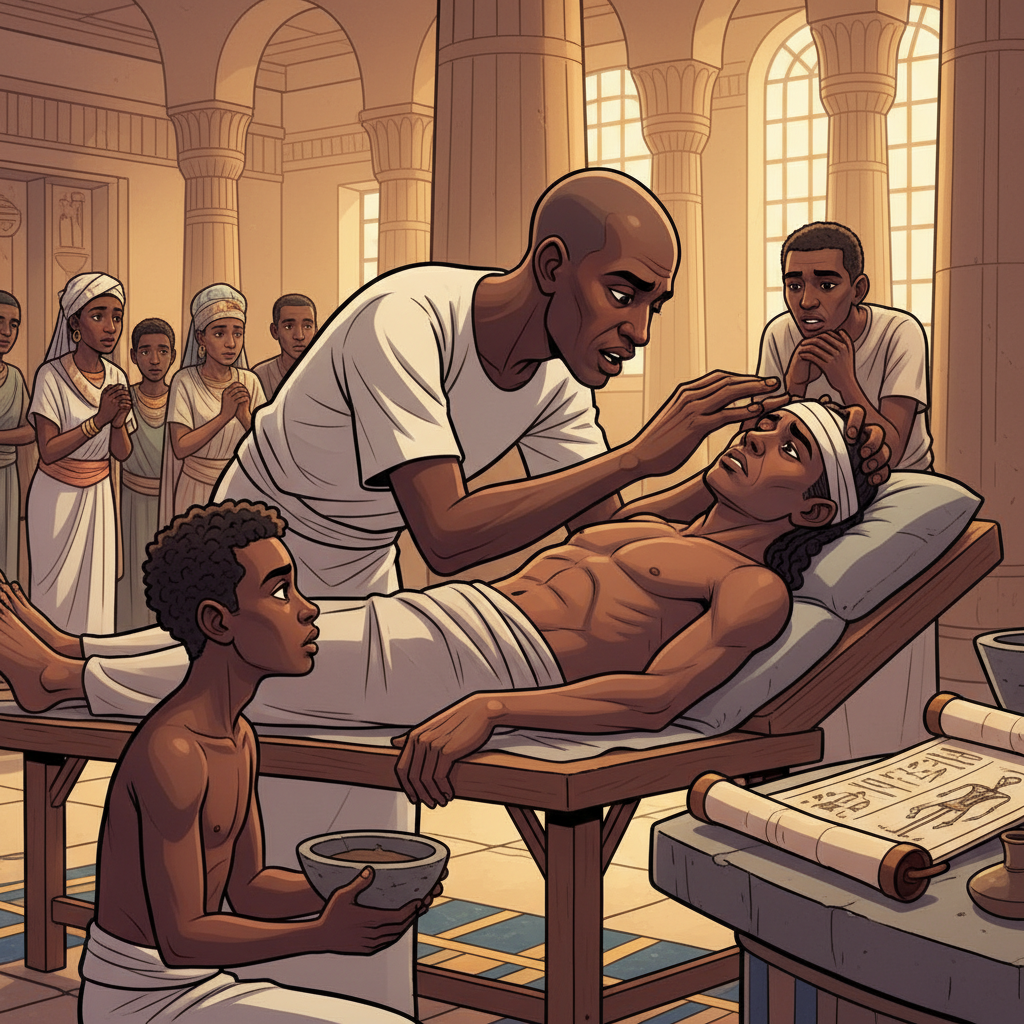
His father examined Userhat the way the Surgical Papyrus taught — not in a hurry, not in a panic, but in order. He looked closely at the wound, and felt carefully around it. He watched the rise and fall of Userhat’s breath. He lifted an eyelid and watched the eye. He pressed the man’s hand and watched the fingers. And he spoke each thing he found aloud, plainly, so that Hori could learn the naming of it: this is the size of the wound; this is how deep it runs; the eyes still answer the light; the breath is steady; the hand still grips. Piece by careful piece, he was building the truth of what had happened inside the skull.
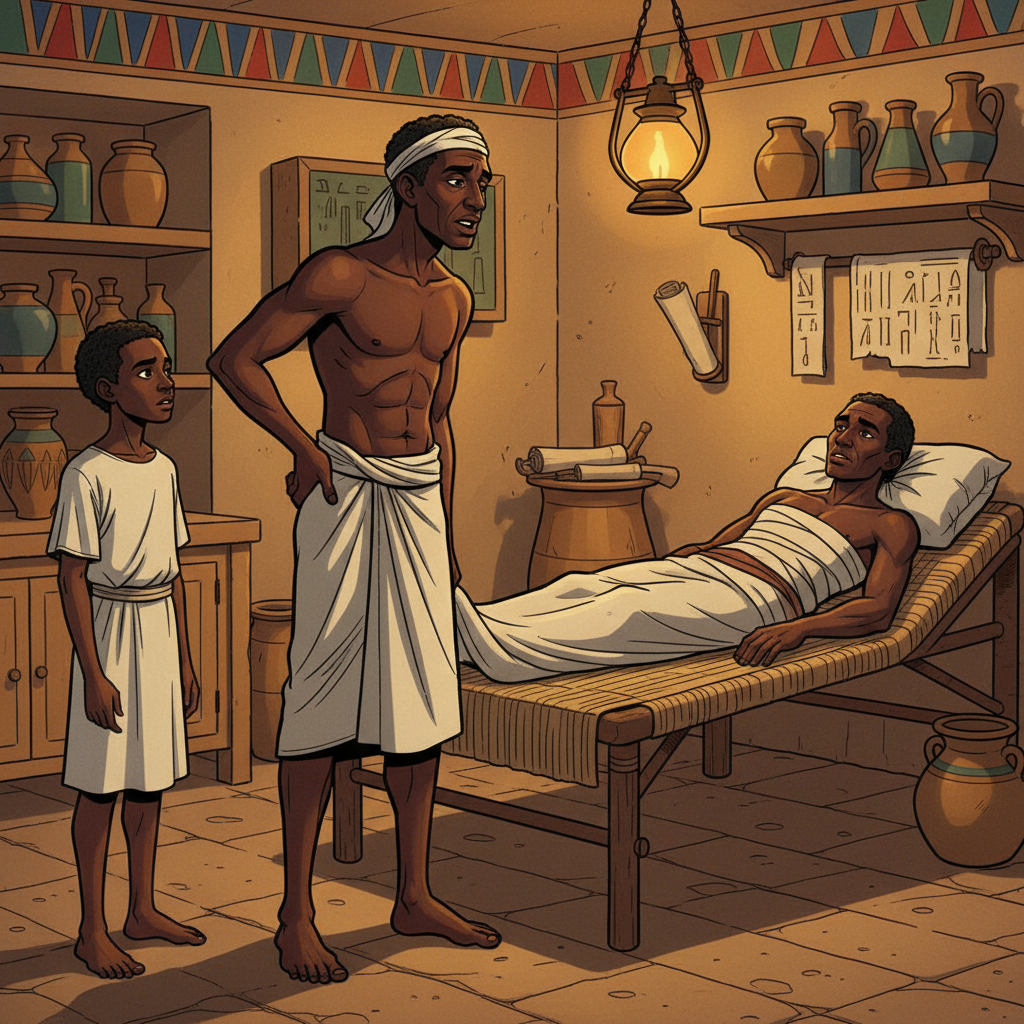
Then came the verdict — the part Hori had been dreading since the plank first crossed the threshold. His father straightened slowly, one hand pressed to the small of his back. He had weighed everything he had seen and felt and heard, and now he had to choose, out loud, in front of them all, which of the three things this was. It was not “an ailment I will treat”; far too much was still uncertain for so confident and easy a word. And it was not “an ailment not to be treated”; the breath was steady, the eyes still answered the light, the hand still gripped — there was real hope here, and he would not throw it away. “This,” his father said at last, into the waiting silence, “is an ailment I will contend with.” Uncertain. Fightable. No promise made in either direction.
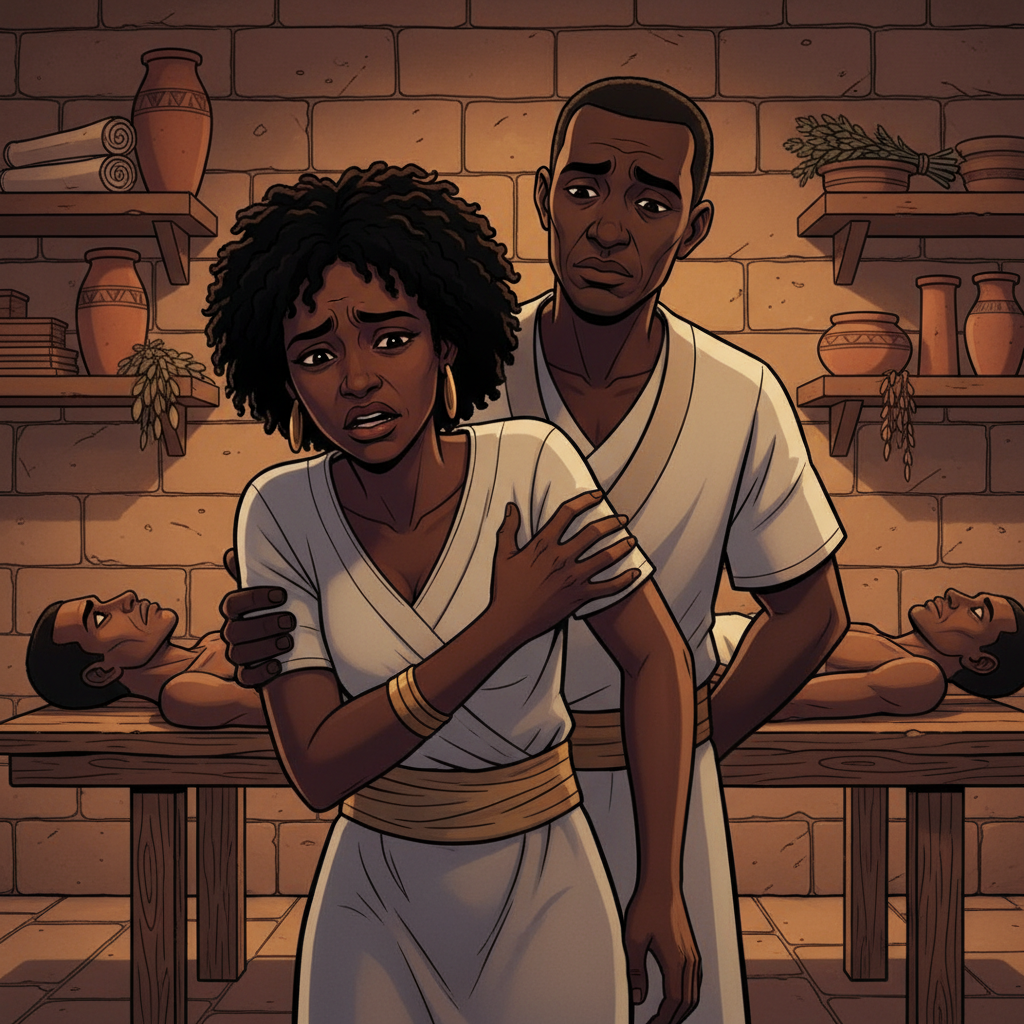
Maia heard the careful words and did not hear comfort in them. She came forward out of the shadow and gripped the physician’s arm. “Will he live?” she begged. “Tell me he will live. Promise me.” Hori watched his father’s face, and Maia’s face, and felt the whole weight of the room come down. It would have cost his father nothing — nothing today — to say the one word she was begging for. One small word: yes. It would have wrapped her in comfort like a warm cloak. Hori, fourteen and tender-hearted, wanted his father to say it so badly that he very nearly said it himself.

But his father did not say it. He covered Maia’s hand with his own, gently, and told her the truth. “I will contend with this,” he said. “That means I will do everything this house knows how to do — the honey, the dressing, the watching, every art the papyrus teaches — and I will not leave his side carelessly for as long as it is uncertain. But I will not promise you what I do not know. He may live. He may not. What I can promise you is the truth, every single day, and my full fight. That is worth more than a promise of a cure — because a promise of a cure would be a lie, and a lie has never once healed anyone.”
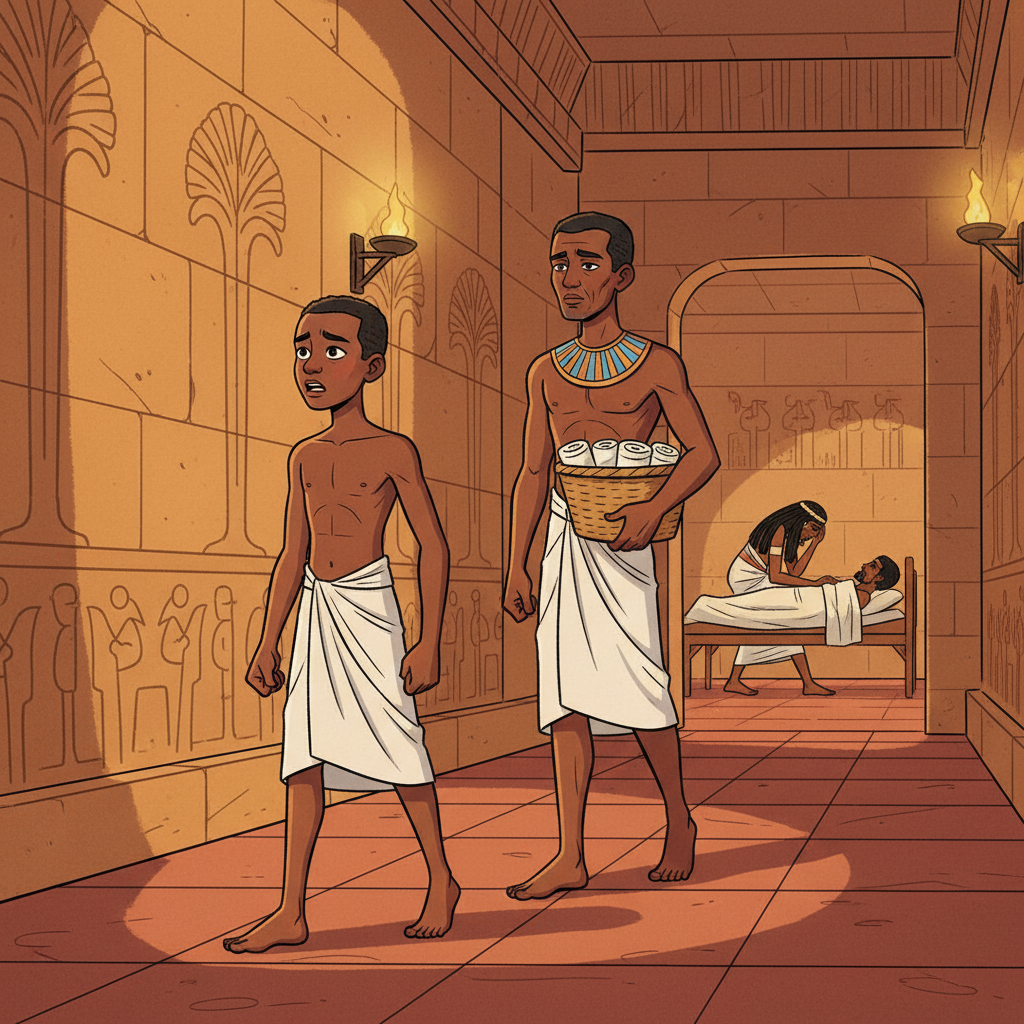
Hori burned with the unfairness of it. Maia was weeping; one word would have eased her. On the walk to fetch more linen, he could not hold it in. “She is suffering,” he whispered to his father. “Would it have cost so much to give her the yes? Even if it were not certain — only to let her hope?” His father did not answer at once. “Fetch the honey,” he said. “We will speak of it on the day Userhat can hear us argue about him — which, if we do our work well and the neters are kind, he one day will.”
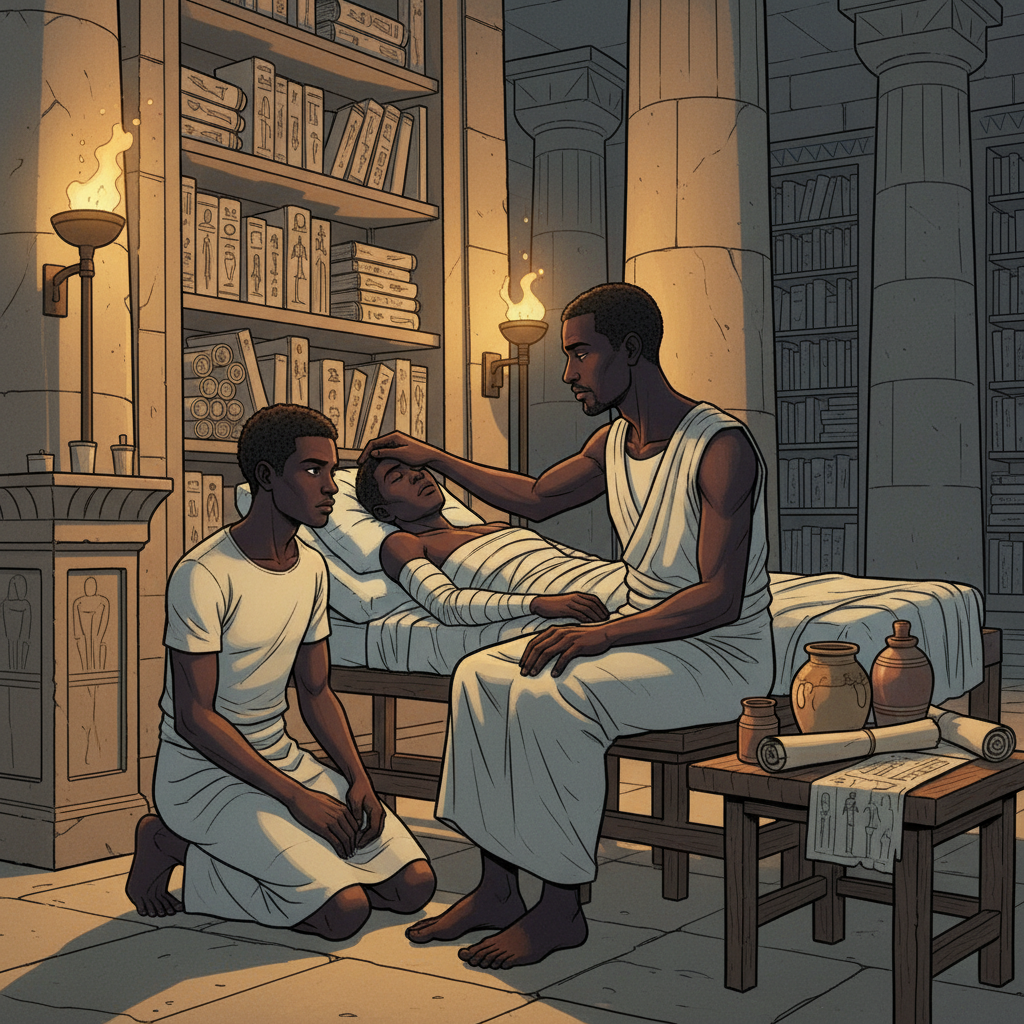
So they worked. His father cleaned the wound and laid honey into it, because honey — as the papyrus taught and as generations had confirmed — kept a wound from turning foul. He bound it with clean linen. He kept Userhat still, and watched him through the night, and the next day, and the next, reading the small signs the papyrus named: the breath, the eyes, the warmth of the skin, whether the man stirred. Hori learned more in those days at the bedside than in a year of copying — that “I will contend with it” was not a shrug. It was a vow of work.
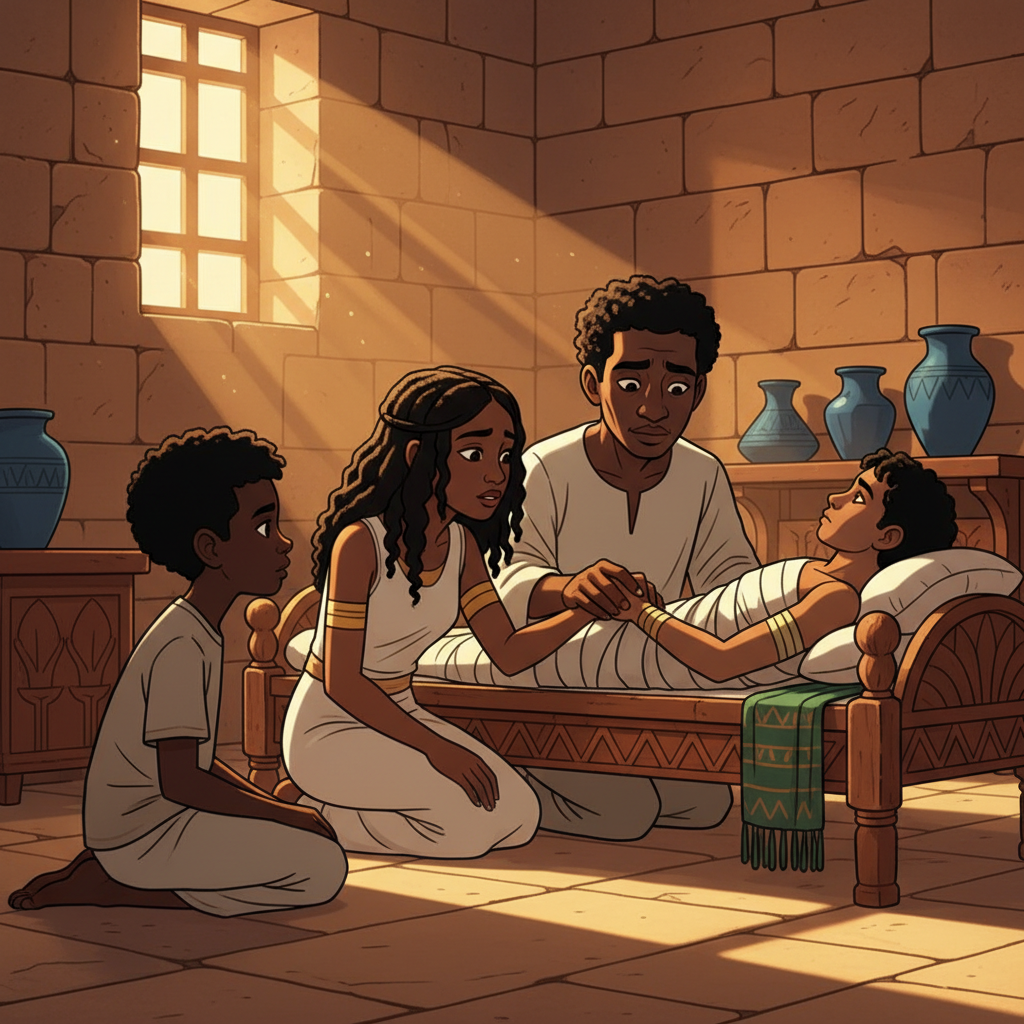
Each day, Maia asked, and each day Hori’s father told her exactly what was true — no more, and no less. “Today he is the same; that is not bad.” “Today he stirred when I pressed his hand; that is good, but it is not yet safe.” He never frightened her with a despair he did not feel, and he never soothed her with a hope he had not earned. He simply gave her the truth, in small daily pieces she could carry. And Hori noticed something: the truth, even when it was hard, seemed to steady Maia in a way that wild swings between false hope and sudden panic never could have.
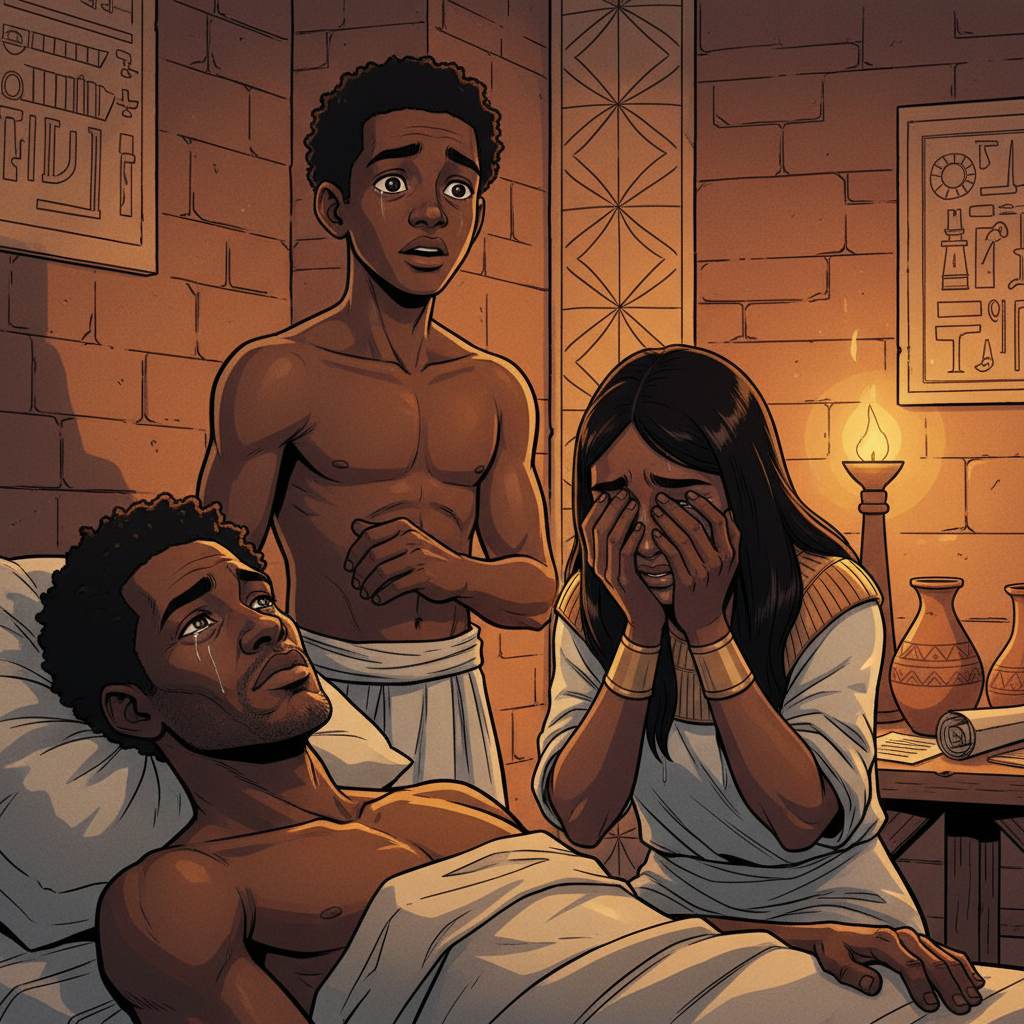
On the fourth day, Userhat opened his eyes. They wandered at first, unfocused and strange, but they opened. By the sixth day he knew his wife’s name and could shape it with his mouth. He was terribly weak, and he would carry a long scar beneath his hair and a season of headaches yet to come, but he would live — and he would live not because anyone had promised it on the first dark night, but because a careful man had contended for that life honestly, doing each small true thing the papyrus taught, hour by hour, day after watchful day. When Userhat first spoke Maia’s name aloud, cracked and quiet, she put her face into her two hands and wept — and this time, Hori saw, the weeping was the good kind, the kind that washes something clean.

Maia thanked Hori’s father with her whole heart — and not only for her husband’s life, though that alone was a debt past paying. She thanked him, too, though she did not quite have the words for this second part, for the days of truth. Because she had been able to trust every single word he said while Userhat hung in the balance between living and dying, she had been able to rest, a little, inside those words, even the hard ones. A physician who had given her false comfort on that first night would have left her drowning in secret doubt the whole long while, never quite knowing what to believe or when. But the true, plain “I will contend with it” had been a rope she could actually take hold of, and hold.
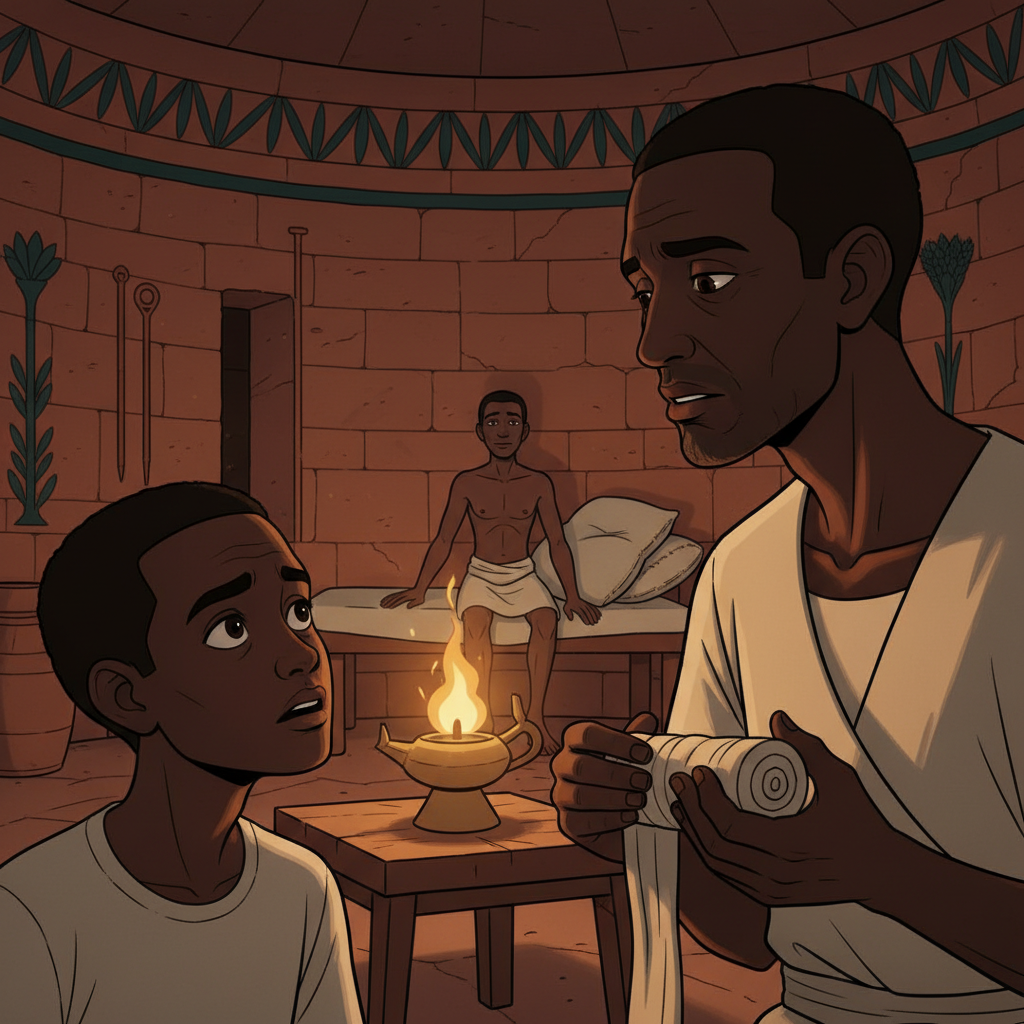
When it was all over and Userhat was sitting up and mending, Hori finally asked his father the question he had carried, unspoken, since the very first night. “When she begged you to promise, and you would not give her the word — was that not cruel of you? One small word would have eased her suffering through all those terrible days. Why not give her at least the comfort of it, even if it might have turned out to be false in the end?” His father set down the roll of clean dressing he had been winding, and he looked at his son for a long, considering moment, the lamp burning low between them. And then he gave Hori the answer that would go on to shape the whole of his life.
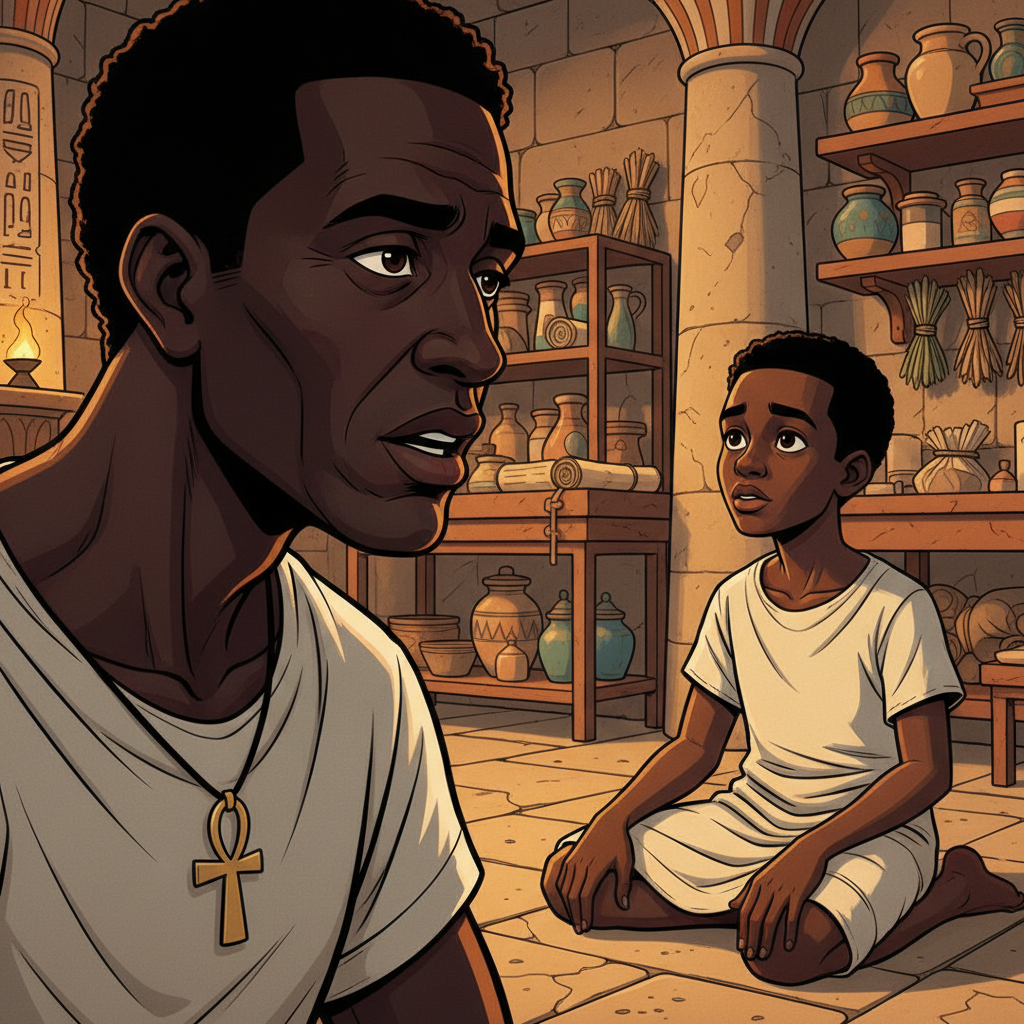
“A lie heals nothing,” his father said. “Hear the whole of it. If I had promised her a cure, and Userhat had died, she would have hated me — and worse, she would never again have trusted a physician, not for herself, not for her children, not ever. And the next family, and the next after them, would learn that the sunu of Mennefer promises cures the way a careless merchant promises bargains. The truth cost me her easy joy for a few days. But the truth is the only reason that, when at last I could say he will live, she believed me. The truth costs me their joy today; the truth keeps me a physician tomorrow.”
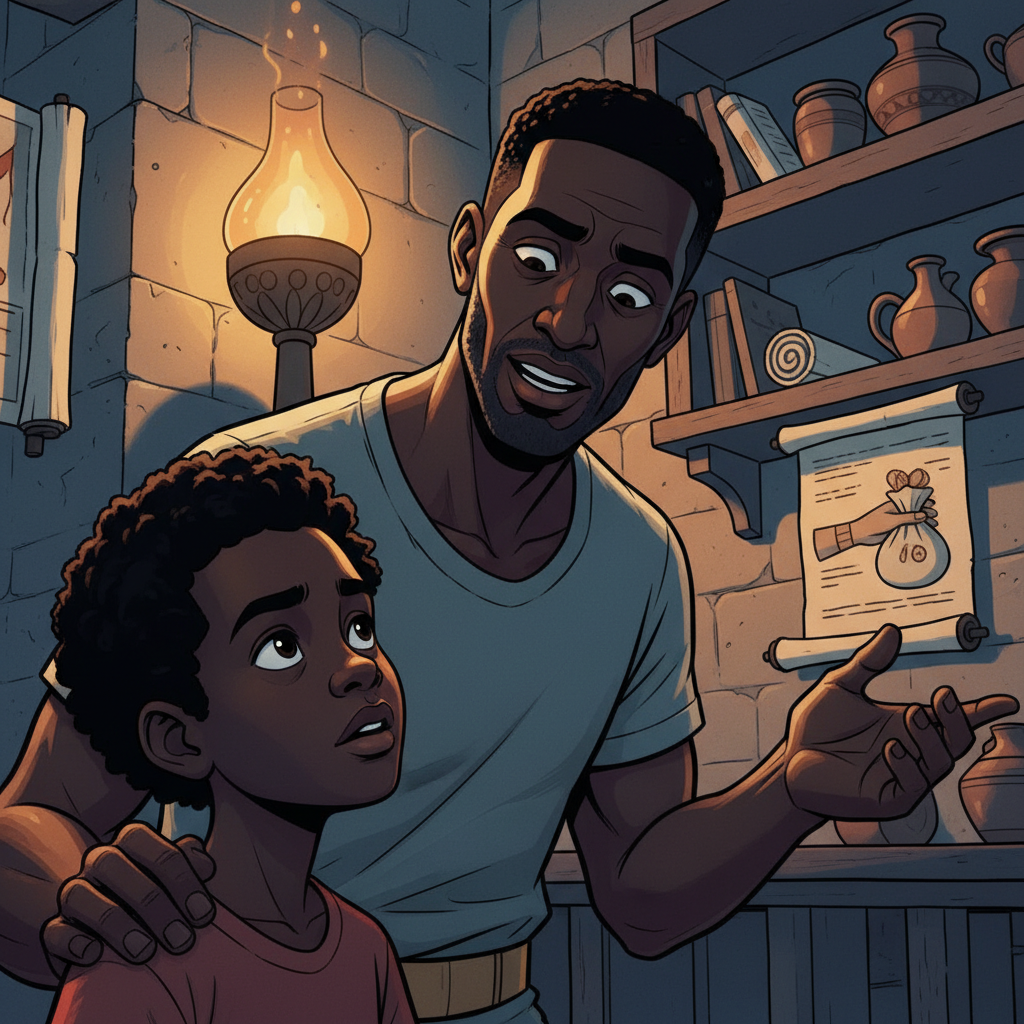
His father went on, because Hori needed all of it. “A sunu is paid by the case, yes. Promise cures, and you will earn more — once. Then your name will rot, and no one will call for you, and you will earn nothing at all. But name every case honestly — even the ones you cannot win, even the verdict that no family wants — and you will lose that one fee and earn a hundred others, because the whole town will come to know that when the sunu of Mennefer speaks, it is the body itself speaking through him. A physician’s honesty is not separate from his skill. It is the foundation his skill stands upon.”
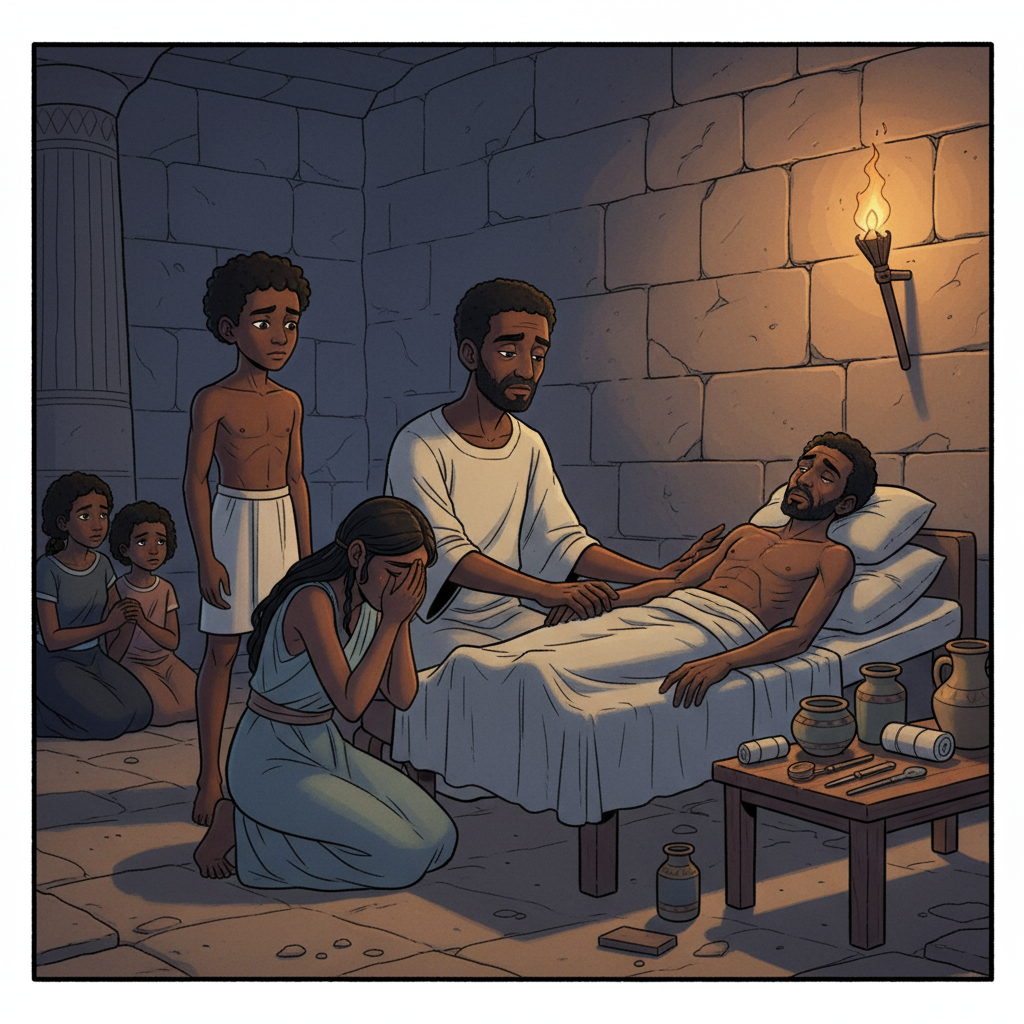
Hori understood it most fully, strangely, on a later day — the day he watched his father give the hardest verdict of the three. A man was carried in too badly hurt to save, and Hori’s father, after his careful examination, told the family gently but plainly: “This is an ailment not to be treated. I cannot honestly promise you that he will mend, and I will not pretend that I can.” The family wept. But because he did not waste their last hours on a false hope, they spent those hours saying true goodbyes, instead of waiting for a cure that was never going to come. Even the verdict that could not heal, Hori saw, was a kind of mercy — the mercy of a truth that lets people meet what is real.
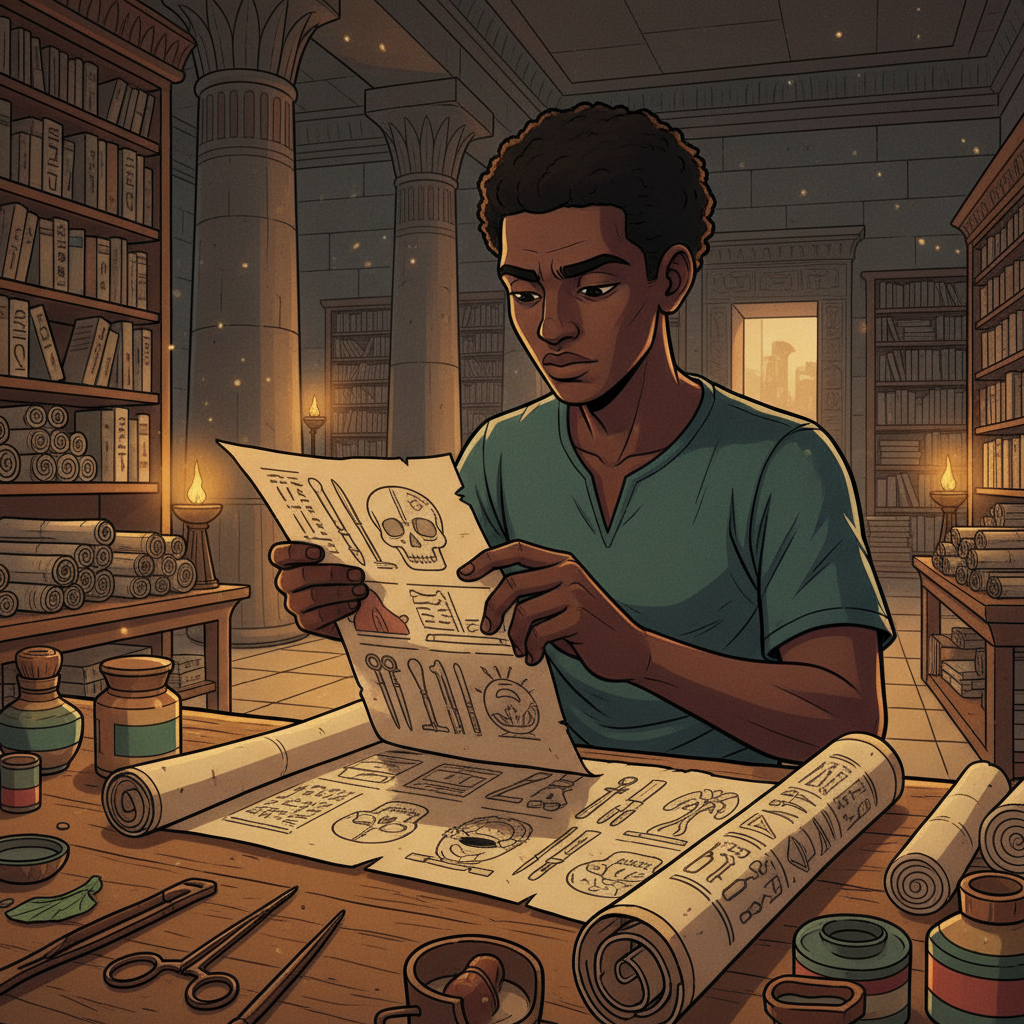
Hori never once thought of the Surgical Papyrus as an old curiosity. To him it was exactly what it was: a discipline of truth made into a science. Examine. Name what you truly see. Give the honest verdict — treat, contend, or do not pretend. Use the honey, the linen, the splint, the bronze tools. Record it, so the next sunu can learn. The physicians of Kemet had studied the body — even the brain within the skull — and written down what they found with a care and an honesty that would still be teaching healers thousands of years on. They did not need a far-off age to certify their work. The bodies they mended were certificate enough.
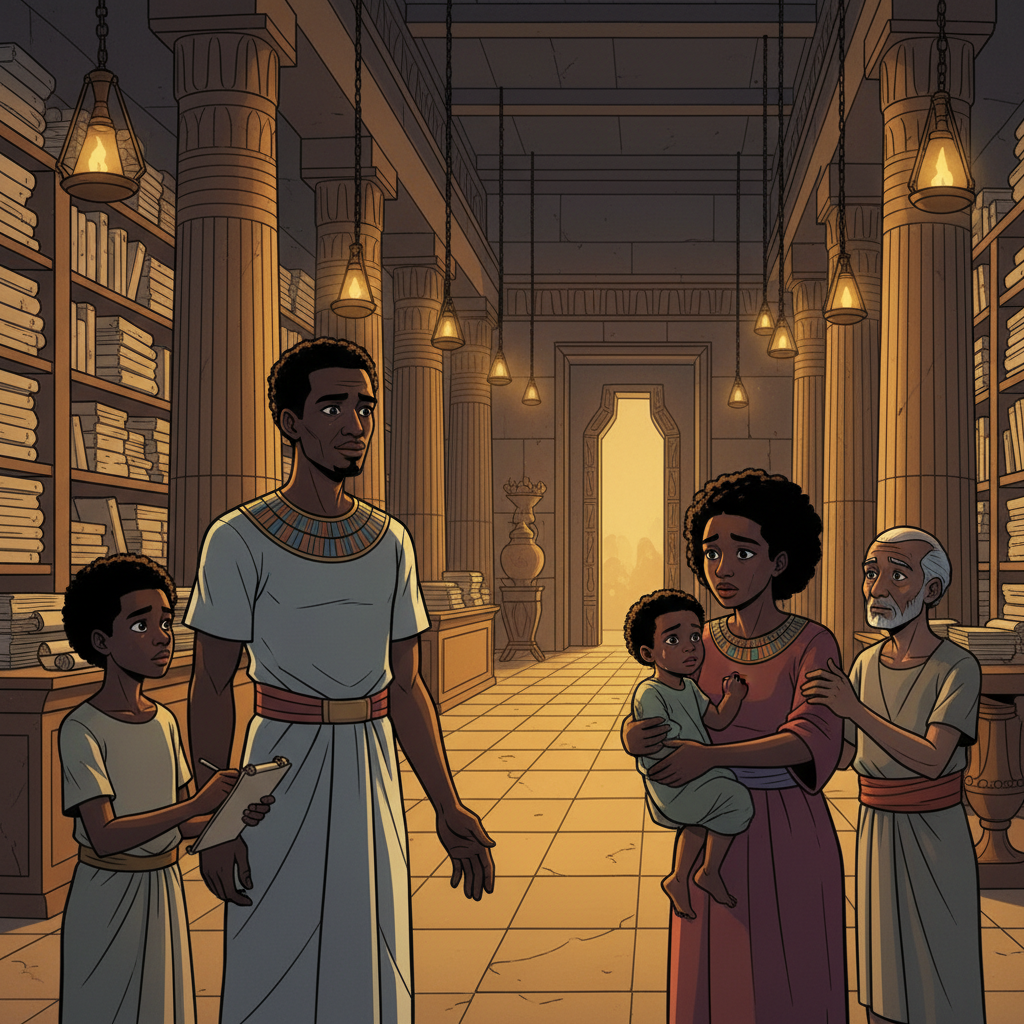
Hori grew up to be a sunu himself, at the same Per Ankh, with apprentices standing at his elbow the way he had once stood at his father’s. He taught them the examination, and the honey, and the splints, and the three verdicts. But the test he watched for in each of them was the one his father had watched for in him: what the young physician does when a weeping family begs for a promise he cannot honestly give. “You can learn the cases in a few years,” Hori would tell them. “To say the true verdict to a frightened mother — that is the work of a whole life, and it is the only thing that makes the rest of your skill worth trusting.”
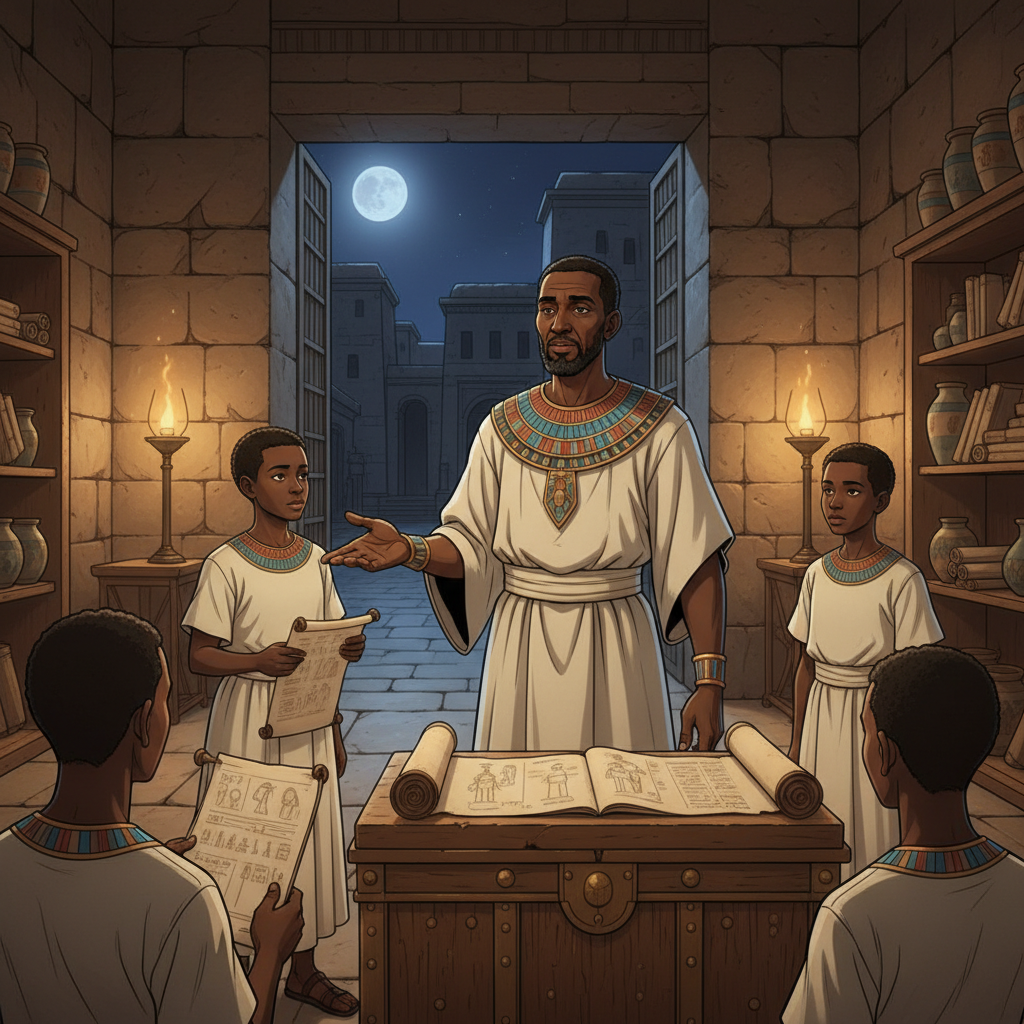
Diagnostic honesty, Hori taught, is Maat — the right order of things, kept steady in the very room where people are most afraid. A lie heals nothing; a false promise is isfet, disorder dressed up in the clothing of kindness, and it only borrows a little comfort today against a debt that comes due tomorrow — a debt that is always, always paid by the trusting and the weak. The Surgical Papyrus and its forty-eight honest cases were not some primitive thing, he would tell his apprentices, but a true science — careful, written down, humane — set in good order by physicians of Kemet who refused to pretend they knew what they did not yet know. And Hori had learned the very heart of it at fourteen, in lamplight, watching his father’s steady hands lift a bandage and his steady mouth refuse to lie: that the truth costs you the day’s easy joy, and buys you, in fair exchange, a whole lifetime of being believed.