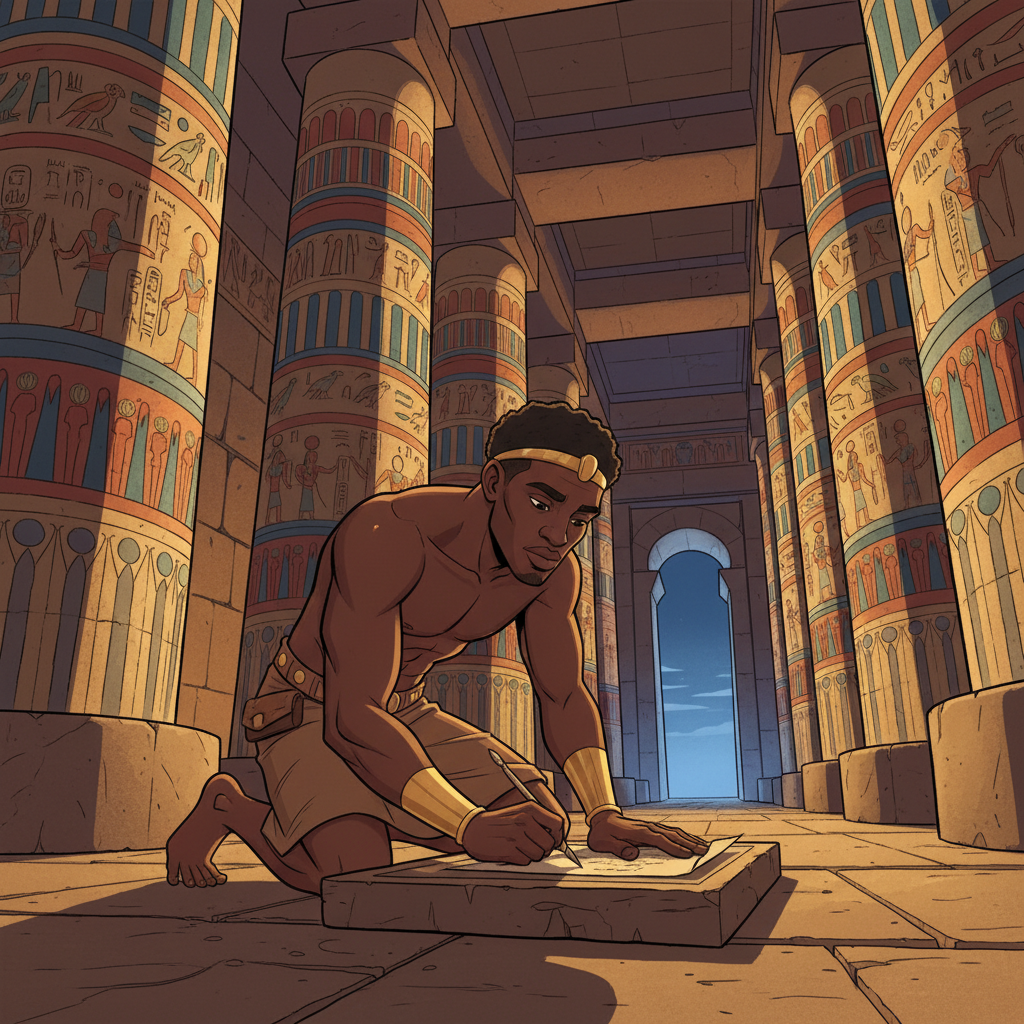
When the great farmer Kamose died, he left behind two sons, Sefu and Baruti, and a fertile stretch of land along the Nile. The land was black and rich, fed by the river's annual flooding, and it had sustained their family for generations in the heart of Kemet. Everyone in the village knew Kamose as a man of Maat — a man who lived with justice in his heart and balance in his actions. Sefu was the elder, with broad shoulders and dark skin weathered by years of field work beneath the relentless sun. Baruti was younger, with deep brown skin and the quick mind of a scribe. Where Sefu understood the language of soil and seasons, Baruti understood the language of words and numbers. Together, they had been their father's pride.
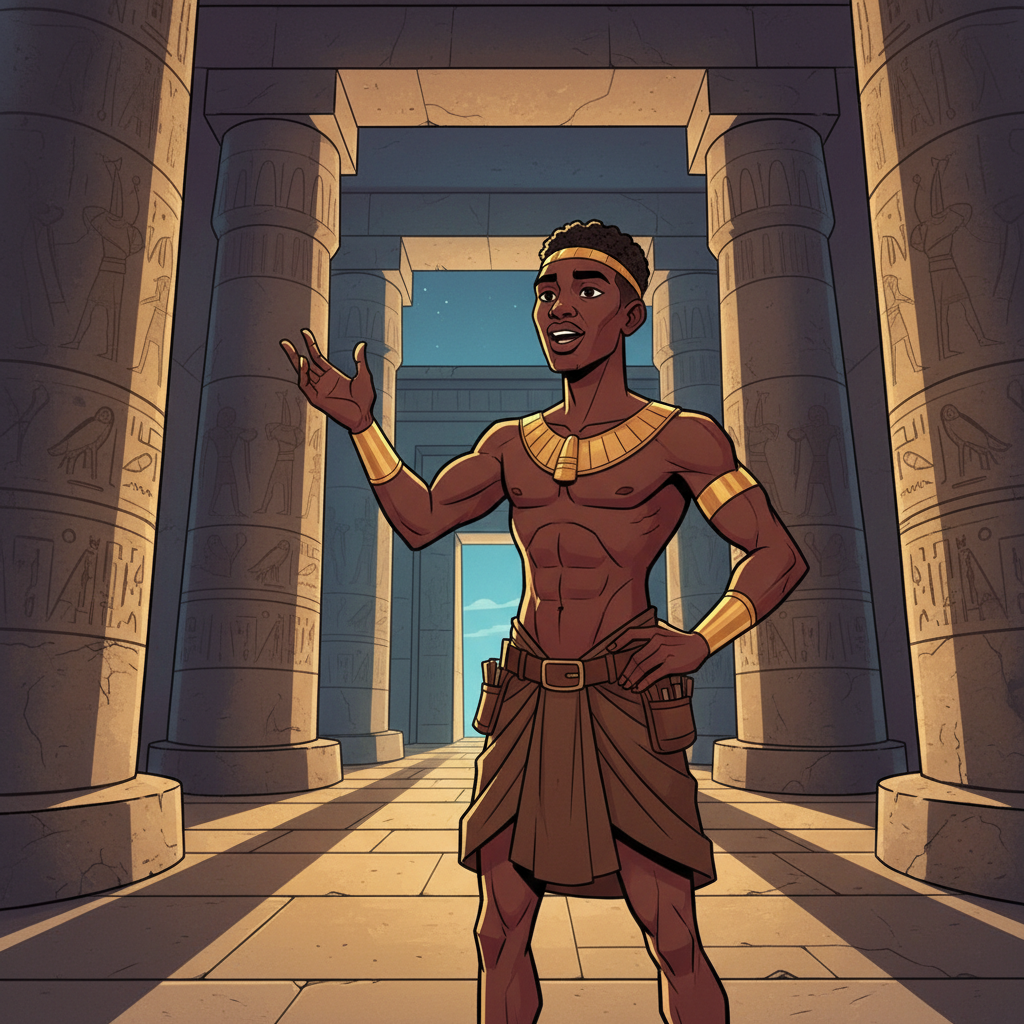
Kamose had always taught his sons that the land was not merely property — it was a living gift from the Nile, and to care for it was a sacred duty. Before he died, he gathered the village elders as witnesses and divided the land equally, half for each son. He placed boundary stones himself, pressing them deep into the dark earth with his own weathered hands. "The land does not belong to you," Kamose told them, his voice thin but firm. "You belong to the land. Care for it equally, as I have loved you equally." These were among his last words. The brothers washed his body with sacred oils and mourned him for seventy days, as was the ancient custom of Kemet.
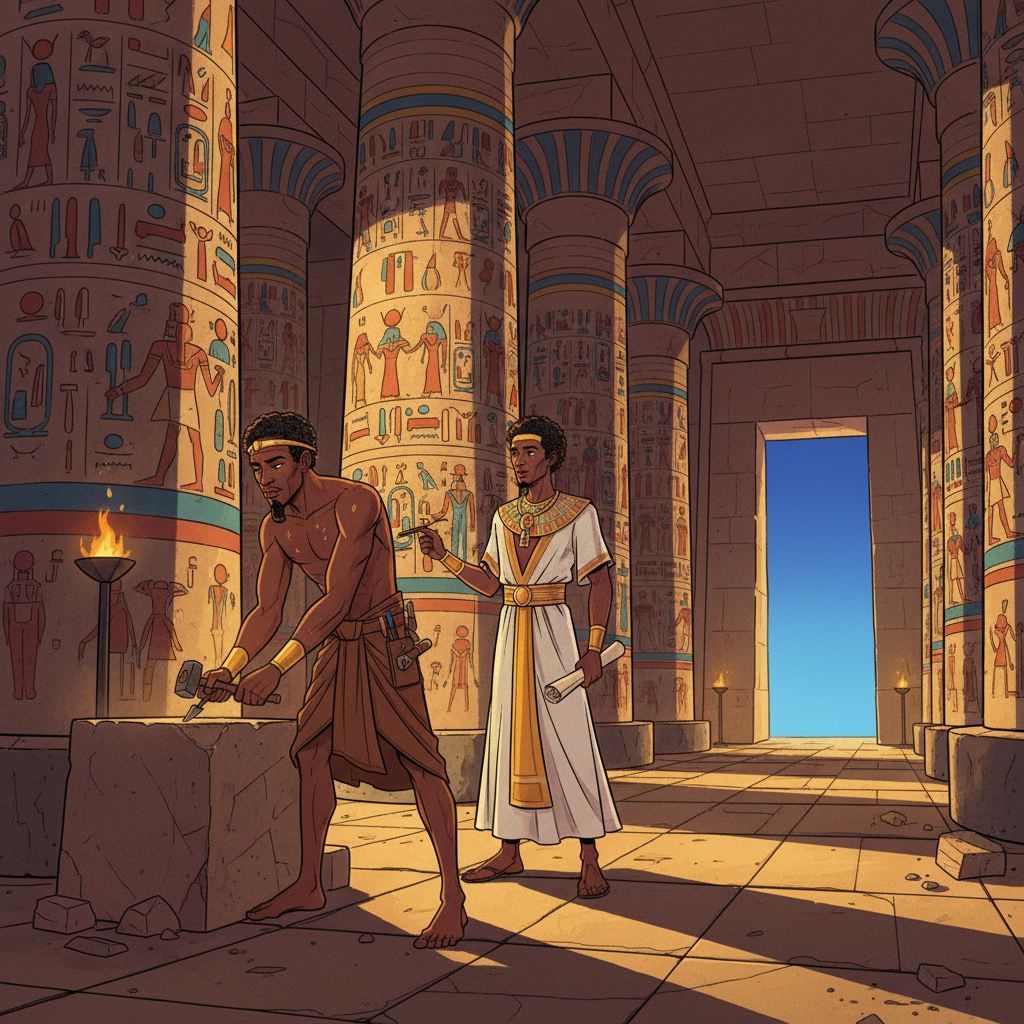
After the mourning ended, the brothers returned to their fields. At first, they worked side by side as their father would have wanted. Sefu rose before dawn, his dark muscular frame silhouetted against the pink sky as he guided the ox and plow through the soft earth. Baruti kept the records, measuring the harvest and negotiating fair prices at the market. But something had shifted inside Sefu. A whisper of resentment grew louder with each passing week. He watched his hands crack and bleed from the plow while Baruti's remained smooth from holding reed pens. "I am the eldest," he muttered to himself at night. "I broke my back in these fields while he sat in the shade. I deserve the larger share."
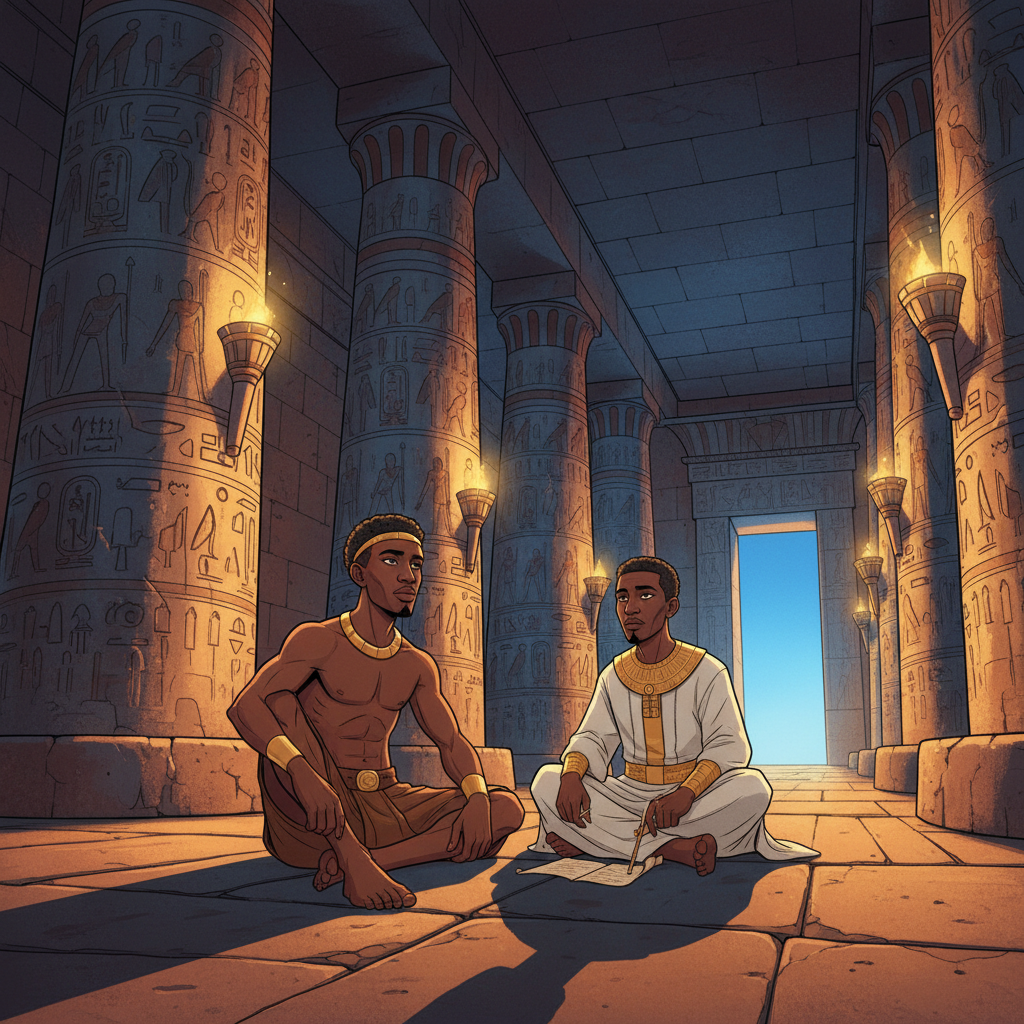
This feeling — this hunger for more than what was rightfully his — was what the ancestors called Isfet. It was disorder. It was greed disguised as fairness, selfishness wearing the mask of justice. Isfet was the opposite of everything their father had lived for, but Sefu could not see it. When a person convinces himself that wrong is right, he becomes blind to his own shadow. One moonless night, while the village slept, Sefu crept to the boundary stones. His heart pounded as he dug them from the earth and repositioned them, stealing a full third of Baruti's land. The soil was soft and forgiving, but the act was not. He told himself he was only taking what he deserved. But the earth remembered where those stones had stood.
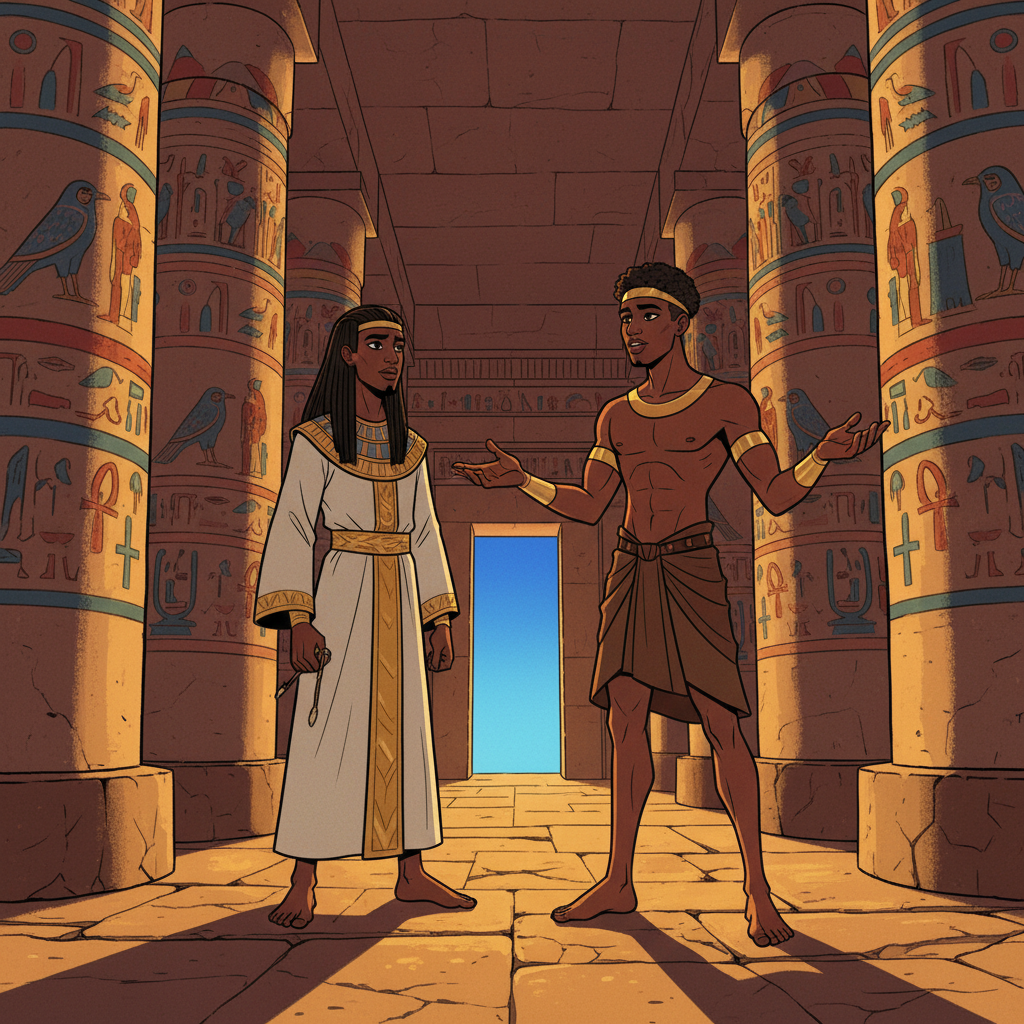
Baruti discovered the moved stones three days later while walking the edges of his field. He noticed that his irrigation channels no longer reached the far rows of emmer wheat. When he investigated, he found the boundary stones sitting in unfamiliar positions, the disturbed earth around them still darker than the rest. His stomach turned cold with the realization of what his brother had done. Fury rose in Baruti like the Nile in flood season — sudden, powerful, and threatening to destroy everything in its path. He stormed toward Sefu's portion of the field, his fists clenched, his mind already calculating how he would move the stones even further, taking not just his land back but a portion of Sefu's as punishment.
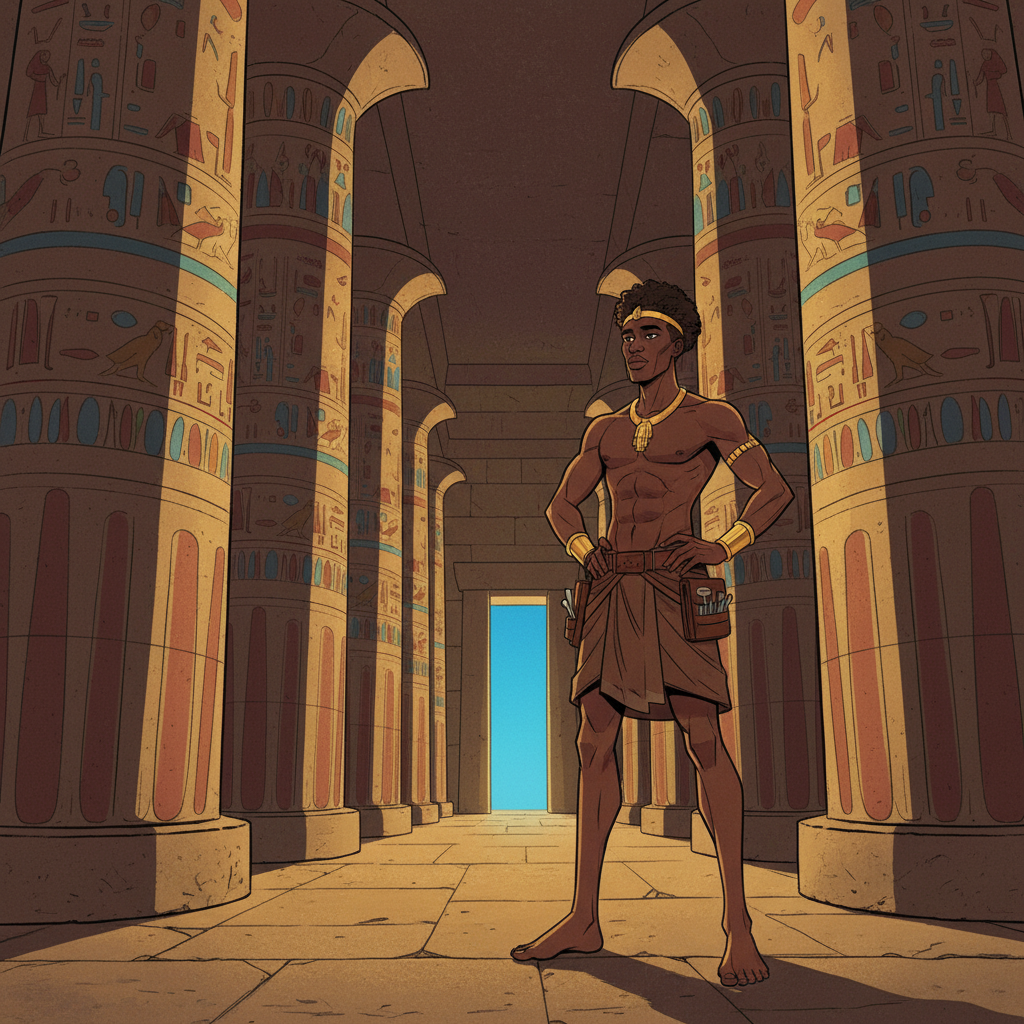
But Baruti's wife, Talibah, saw him from the doorway of their home. She was a woman of deep ebony beauty and deeper wisdom, with eyes that could read a person's intentions the way scribes read papyrus. She had studied at the Per Ankh — the House of Life — where she learned the teachings of Maat alongside healing arts and sacred texts. Few women were granted such education, but Talibah's brilliance had been undeniable since childhood. "Stop," she said, stepping into his path. Her voice was quiet but carried the weight of absolute certainty. "Where are you going with that rage, Baruti? What do you intend to do with it?" He told her his plan. She shook her head slowly, her dark face grave.
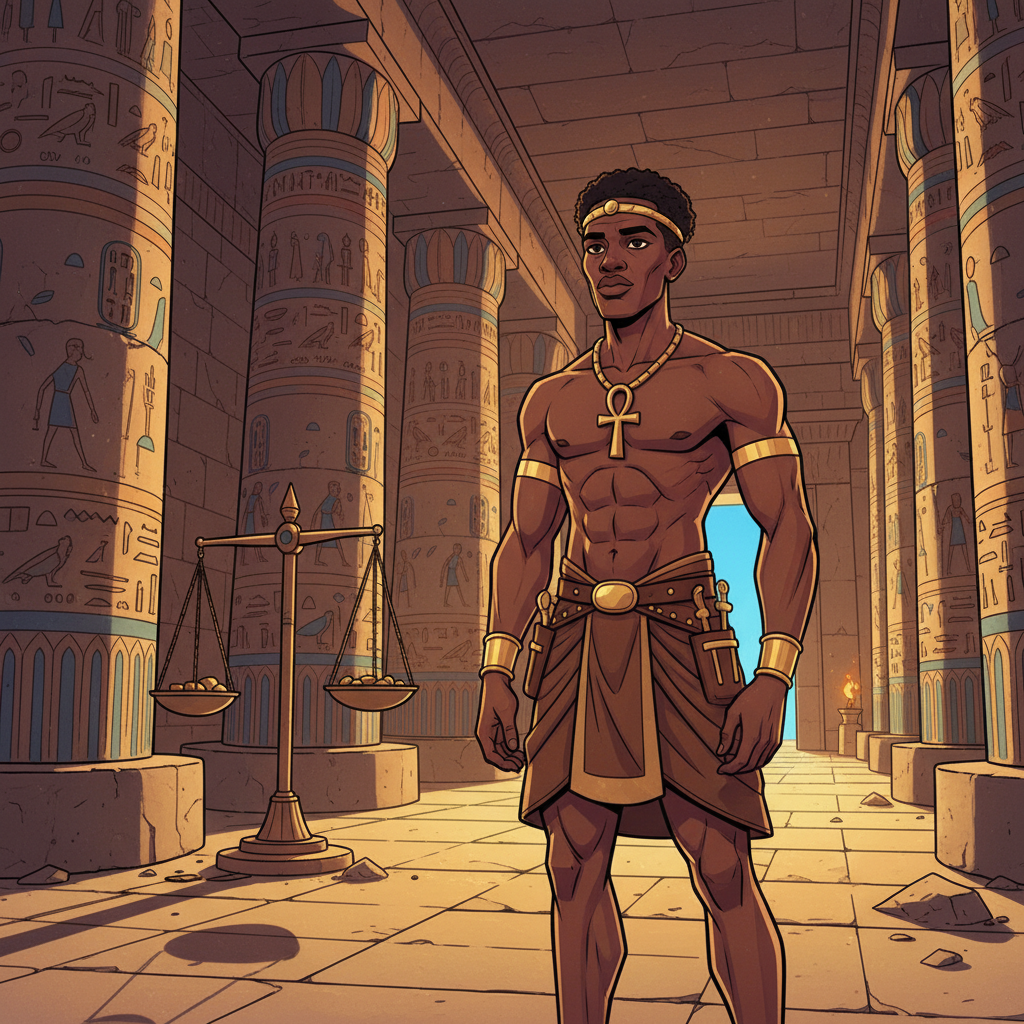
"Two acts of Isfet do not make Maat," Talibah said, placing her hand on his chest where his heart hammered. "If you steal from your brother in return, you become what he became. You feed the same darkness. Then who will restore balance? Who will be left to speak for justice?" Baruti wanted to argue, but her words pierced through his anger like light through storm clouds. "Take this to the council of elders," she continued. "That is the way of Maat — not revenge, but restoration. Not punishment for its own sake, but healing for the whole community. Your father would have wanted it this way." Baruti breathed deeply. The anger did not vanish, but he chose not to follow it. That choice was the first step toward justice.
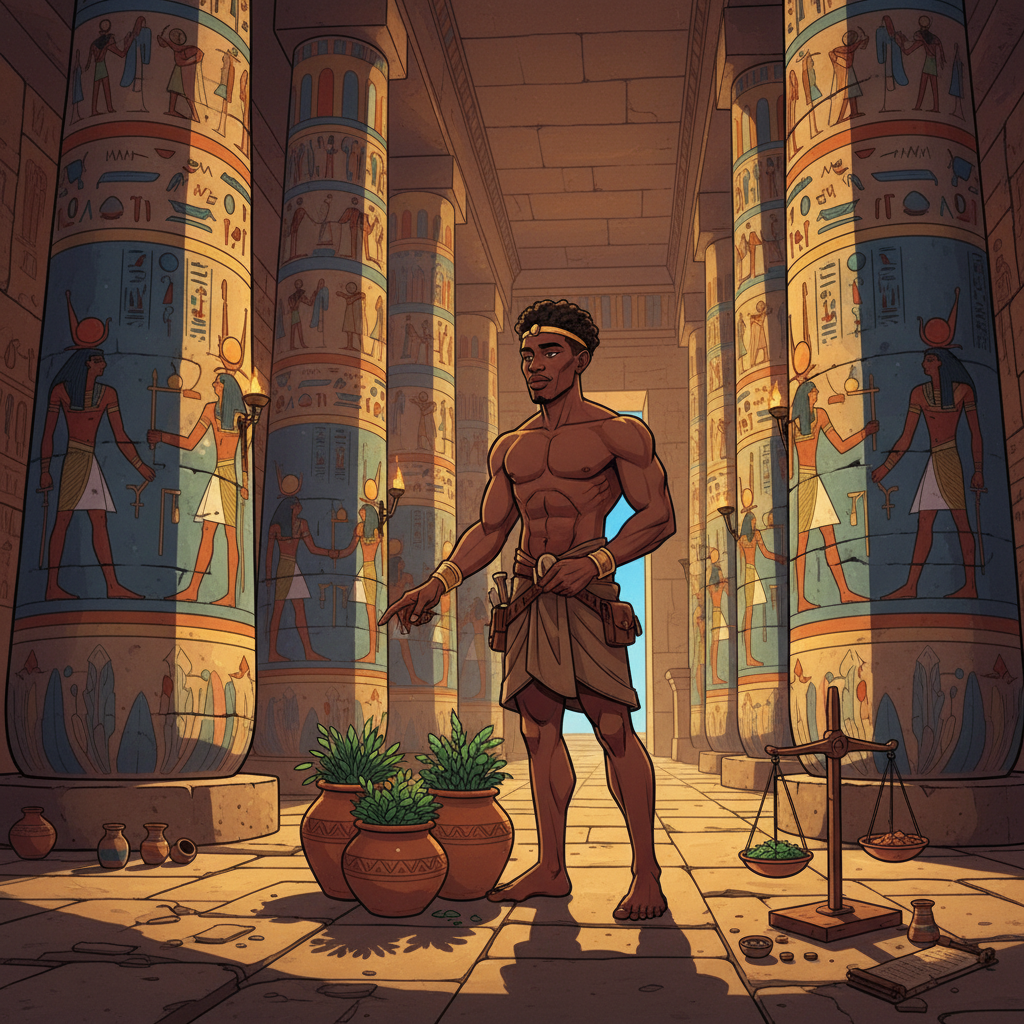
The next morning, Baruti sent word to the council of elders, and a hearing was called for the following day beneath the great sycamore tree at the center of the village. This tree was ancient — some said it had been planted when the first pharaoh united the Two Lands. Its roots ran deep into the earth, and its branches spread wide enough to shade a hundred people. All matters of justice in the village were settled here. News traveled quickly. By evening, every family in the village knew about the dispute. Some sided with Sefu, saying the eldest should inherit more. Others sided with Baruti, calling Sefu a thief. The disagreement spread like cracks in dry mud, threatening to split the entire community apart.
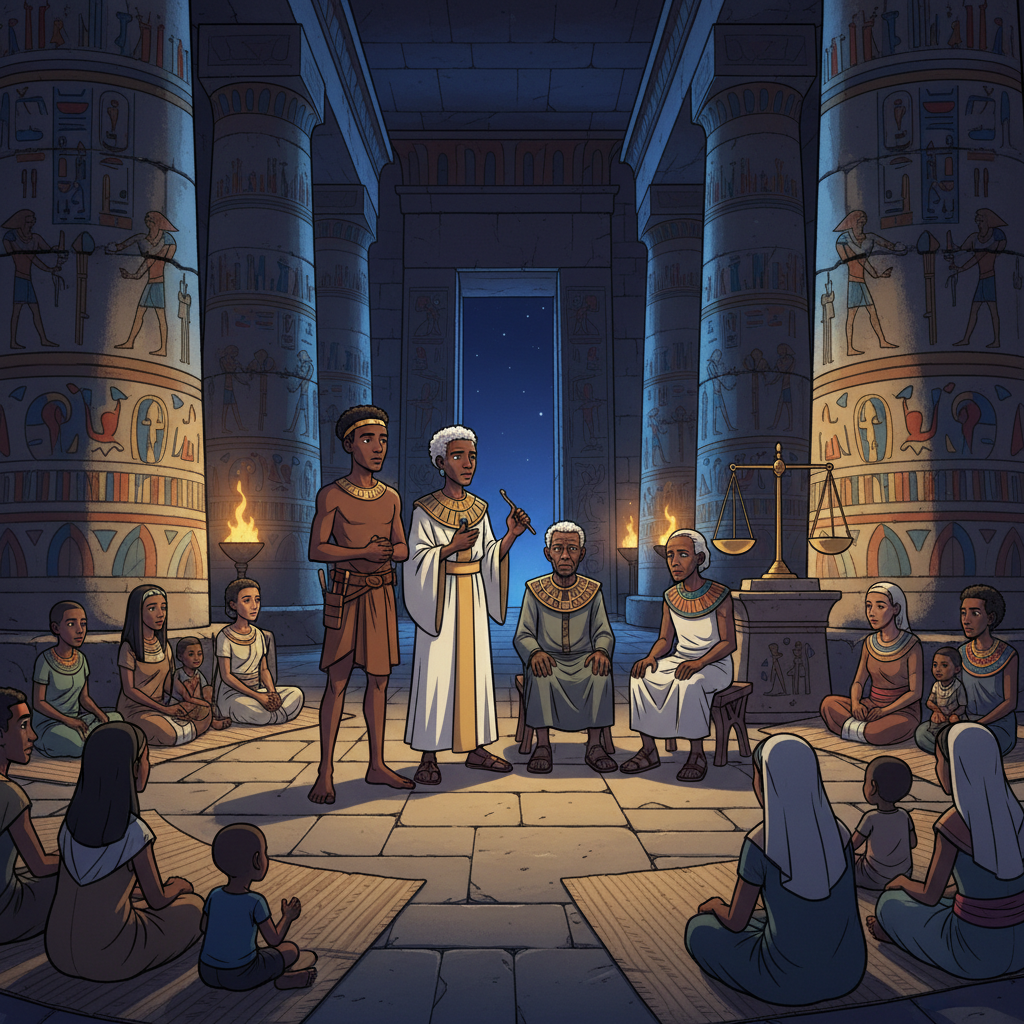
The brothers stood before the council beneath the great sycamore's canopy as the morning sun filtered through its leaves. Three elders sat on carved wooden stools, their faces solemn and attentive. Villagers gathered in a wide circle, sitting on woven mats, children held quiet on their mothers' laps. This was not entertainment — it was a sacred process. Everyone understood that when one family's balance was broken, the whole village felt the tremor. The eldest elder, Harkhebi, sat in the center. His ancient dark face was mapped with lines like the tributaries of the Nile, and his white hair shone like river foam. He had settled disputes for forty years. He listened to both sides in complete silence, his hands resting on his knees. He did not interrupt. He did not take sides.
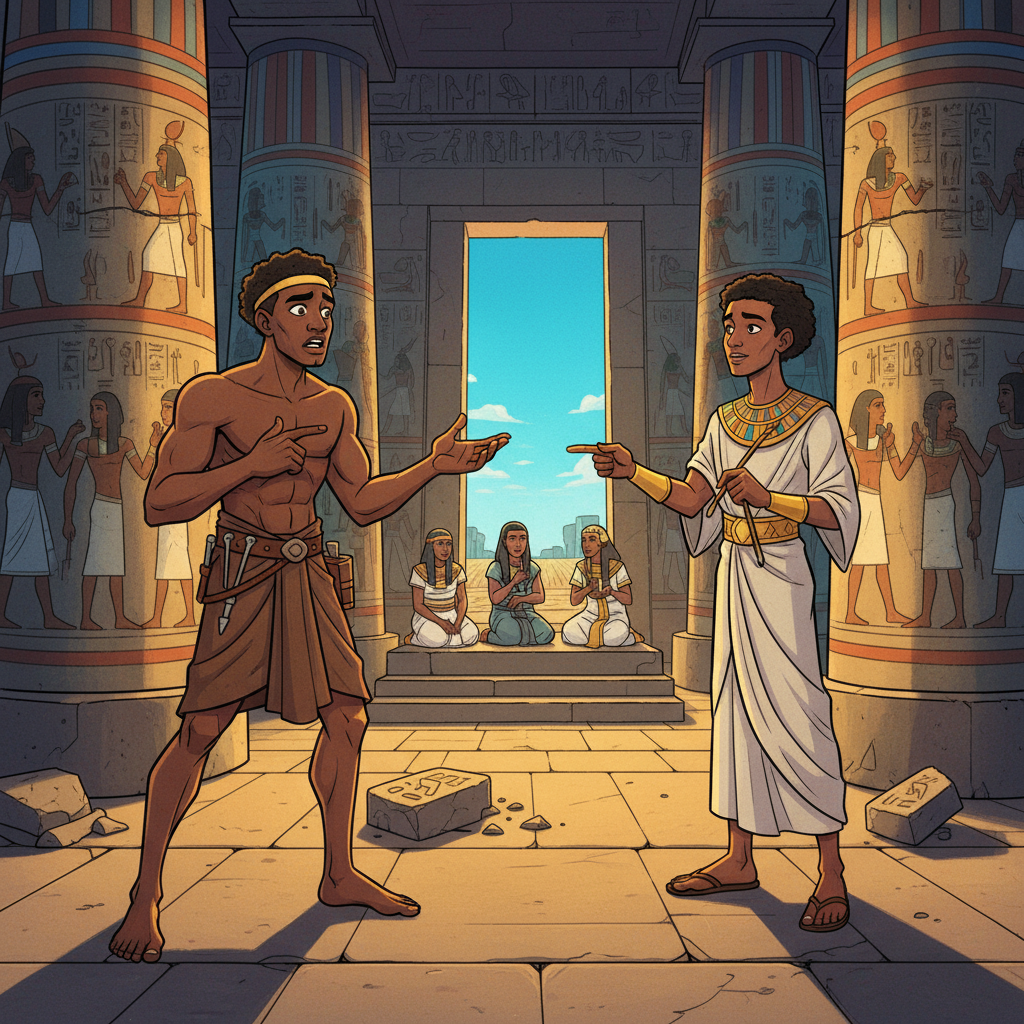
Sefu spoke first, as was the right of the accused. He stood tall, but his eyes darted nervously. "I worked the fields since I was a boy," he said. "My hands bled for that soil. My brother sat in the shade with his scrolls. Our father's division was not fair." His voice grew louder, more desperate. "I only took what my labor earned." Then Baruti spoke. He was calmer now, Talibah's wisdom still steady in his chest. "Our father divided the land with witnesses present. He placed the stones himself. Sefu moved them in darkness, without witness, without honor. I ask the council not for revenge but for restoration — for Maat." The crowd murmured in approval at his measured words.
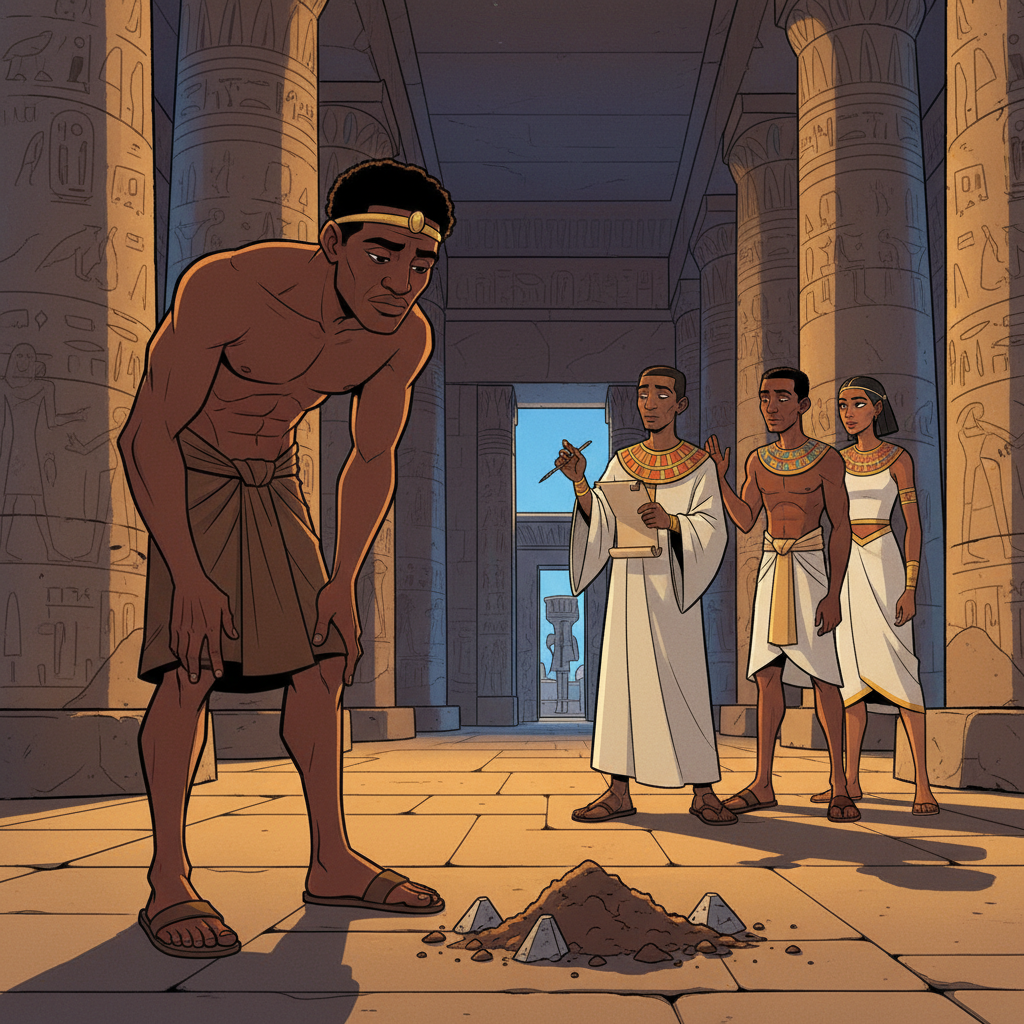
Harkhebi raised one weathered hand, and the murmuring stopped instantly. He sat in silence for a long moment, letting the weight of both testimonies settle like sediment in still water. The other two elders — Nefertari, a woman with skin like polished mahogany and sharp analytical eyes, and Amenhotep, a broad-shouldered former soldier whose dark face bore a long scar — exchanged quiet glances but waited for Harkhebi to lead. "Sefu," Harkhebi said at last, his voice deep and unhurried. "You moved the boundary stones. This is known. The earth itself remembers where they stood. The disturbed soil testifies against you. Your own neighbors saw your field grow wider overnight. Why did you do this?" Sefu looked at his feet. "I thought I deserved more," he whispered.
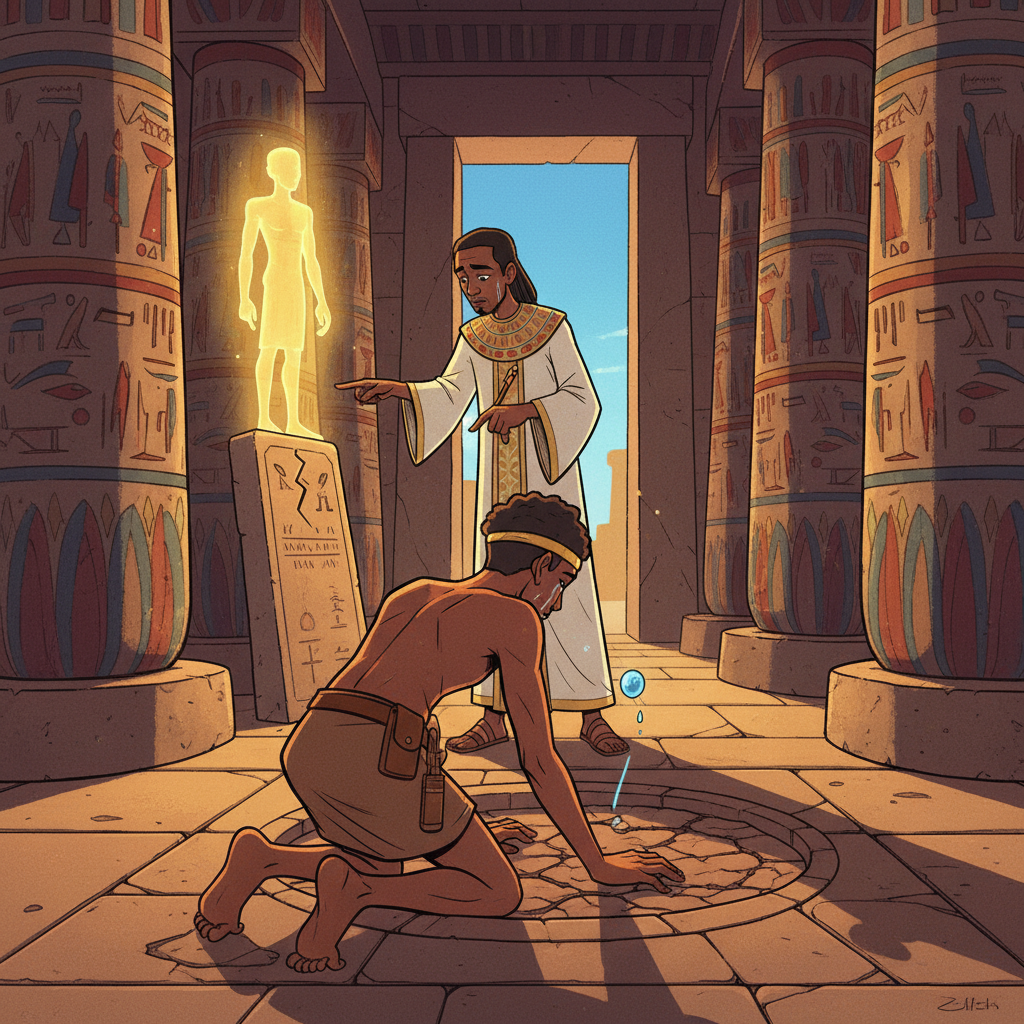
"Deserving is not the same as taking," Harkhebi replied, each word deliberate and heavy. "A man may feel he deserves the rain, but that does not give him the right to steal water from his neighbor's well. Maat does not ask who worked harder or who sweated more. Your father divided the land equally because he loved you equally. To steal from your brother is to spit on your father's Ka." Sefu's eyes filled with tears of shame. The Ka — the spiritual essence of a person that lived on after death — was sacred. To dishonor it was among the gravest offenses in all of Kemet. Sefu realized that in grasping for more land, he had not just wronged his brother. He had wounded the memory and spirit of the father he loved.
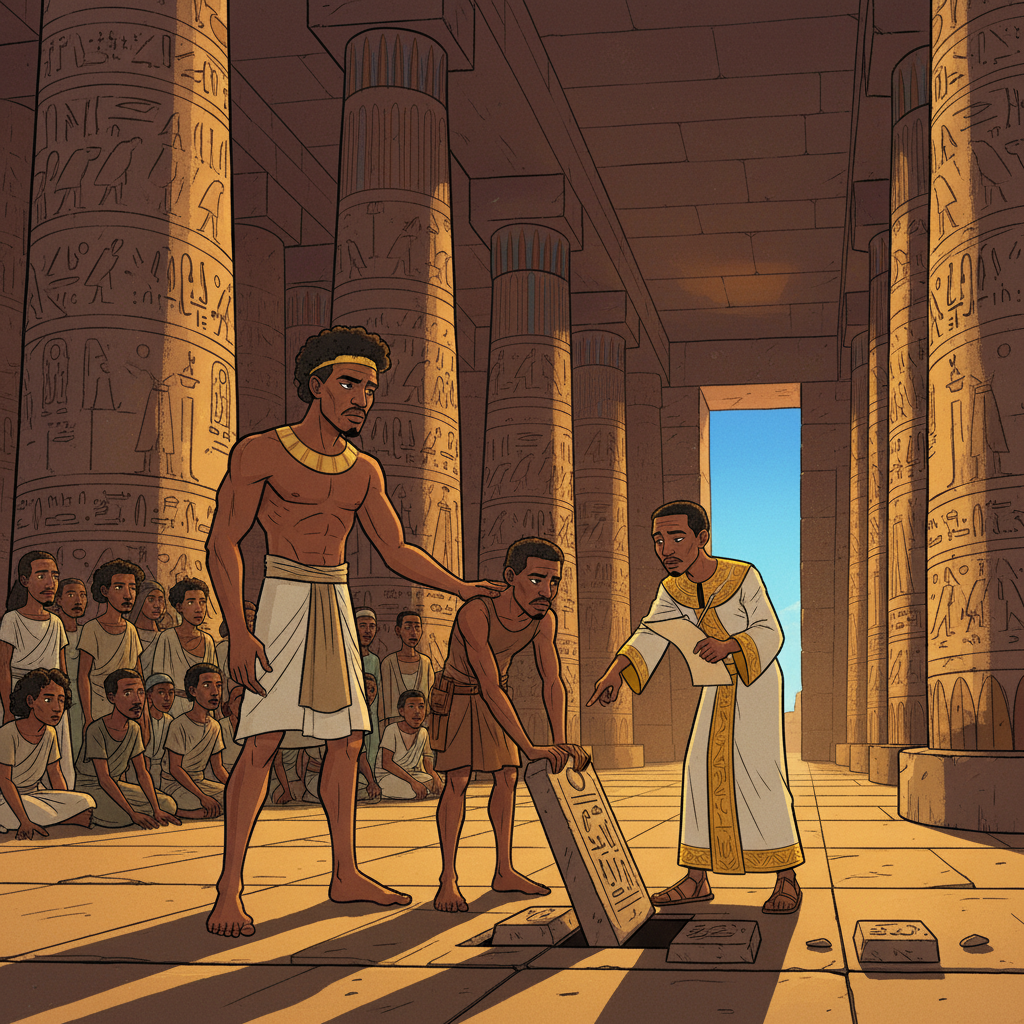
Nefertari spoke next, her voice clear and precise. "The boundary stones are sacred markers," she said. "They are placed with witnesses and blessed with prayers. To move them is not a small crime — it is an act of Isfet that disrupts the order of the entire community. When one person takes what is not theirs, trust breaks down. Neighbors begin to suspect neighbors. The fabric that holds us together begins to unravel." Amenhotep nodded, his scarred face serious. "I have seen what Isfet does to communities," he said. "On the battlefield and in the village. It starts small — one moved stone, one broken promise — and it grows until it consumes everything. That is why we must address it now, before it spreads further." The villagers listened in heavy silence.
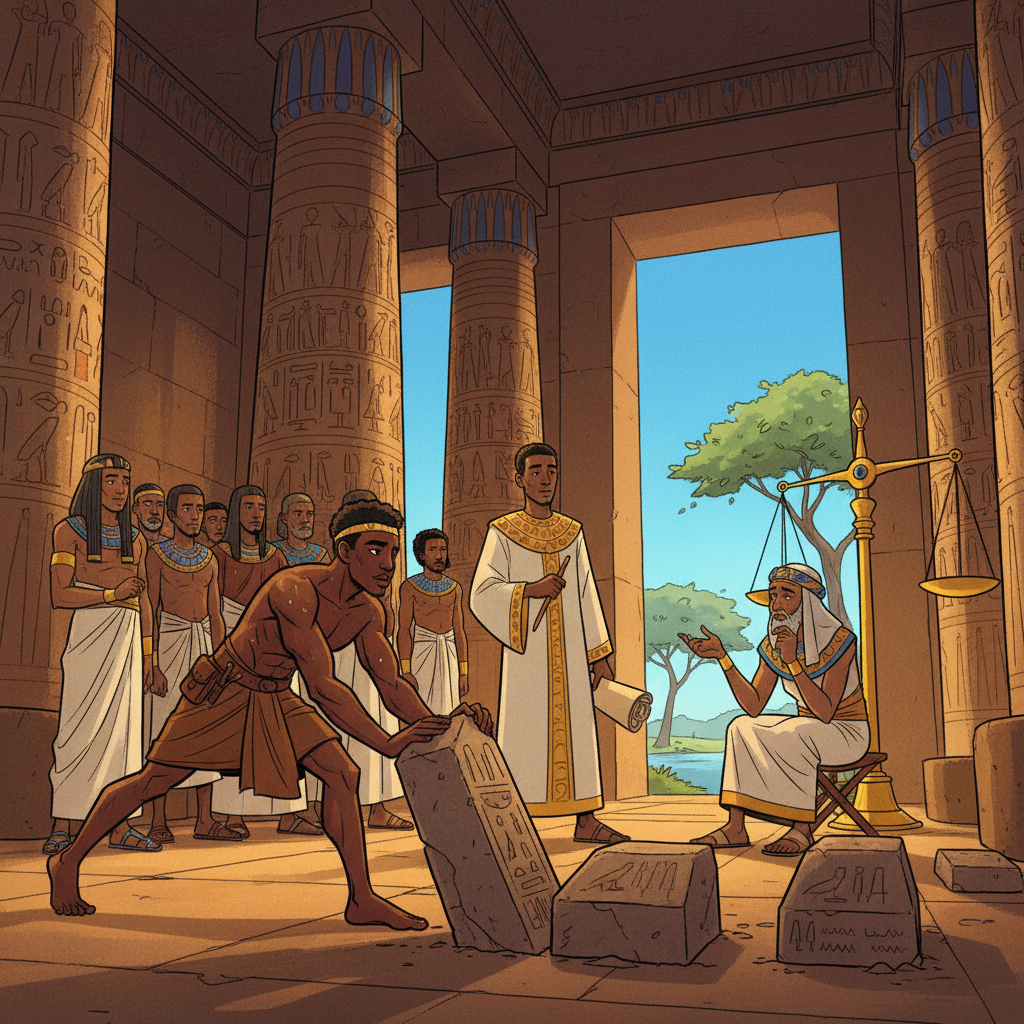
"In the way of Maat, justice is not about punishing you, Sefu," Harkhebi continued, leaning forward on his stool. "It is about restoring balance — like returning the river to its banks after a flood. You will return the boundary stones to their rightful positions, witnessed by this entire council. And you will work Baruti's fields for one full season, to repair what you have broken through your own labor and sweat." He turned his ancient eyes to Baruti. "And Baruti — you will forgive your brother. Not because what he did was small, but because Maat cannot live where resentment festers. Forgiveness is not weakness. It is the hardest labor of the heart. It is the only path that leads forward for both of you." The sycamore's leaves rustled as if the tree itself agreed.
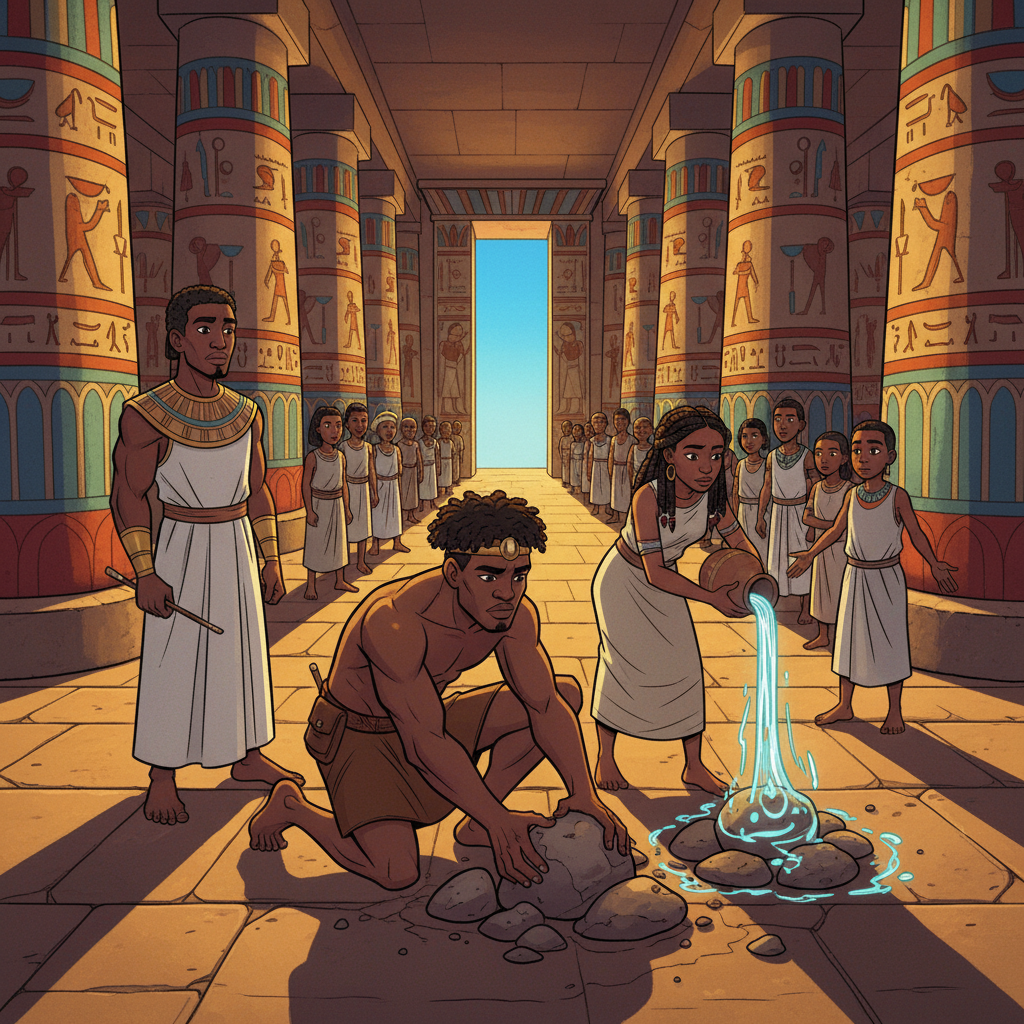
The council's judgment was not the end — it was the beginning of a process the elders called "the mending." That afternoon, the entire village gathered at the boundary line. Sefu knelt in the dirt and dug up the wrongly placed stones with his bare hands while everyone watched. It was humbling, even painful, but it was necessary. He carried each stone back to its original position, and Harkhebi blessed them again with prayers to Maat. Then Talibah stepped forward. From her studies at the Per Ankh, she knew the old rituals of reconciliation. She poured water from the Nile over the restored boundary stones, symbolizing purification. "Let the river wash away the Isfet," she said. "Let this land remember only Maat from this day forward." The villagers repeated her words together.
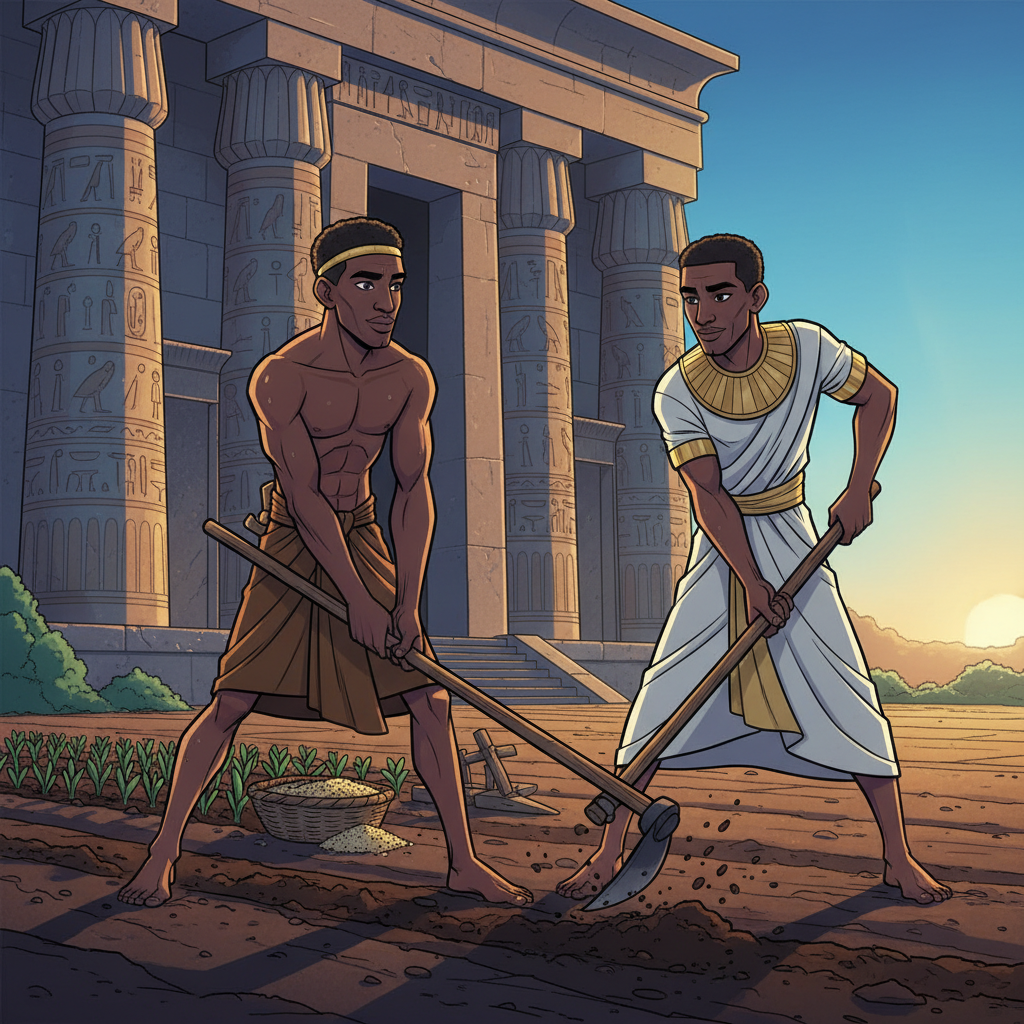
The next morning, Sefu reported to Baruti's fields as the judgment required. It was strange and uncomfortable at first — the elder brother laboring under the younger brother's watch. But Baruti did not lord his position over Sefu. He worked alongside him, shoulder to shoulder in the dark earth, their skin gleaming with sweat under the Kemet sun. Slowly, through the rhythm of shared labor, something began to heal between them. They remembered how they had worked together as boys, racing to see who could plant a row faster, laughing when their father pretended to judge their contests. The land, which had been the source of their conflict, became the place of their reconciliation. The soil did not care about pride or resentment — it only asked to be tended.
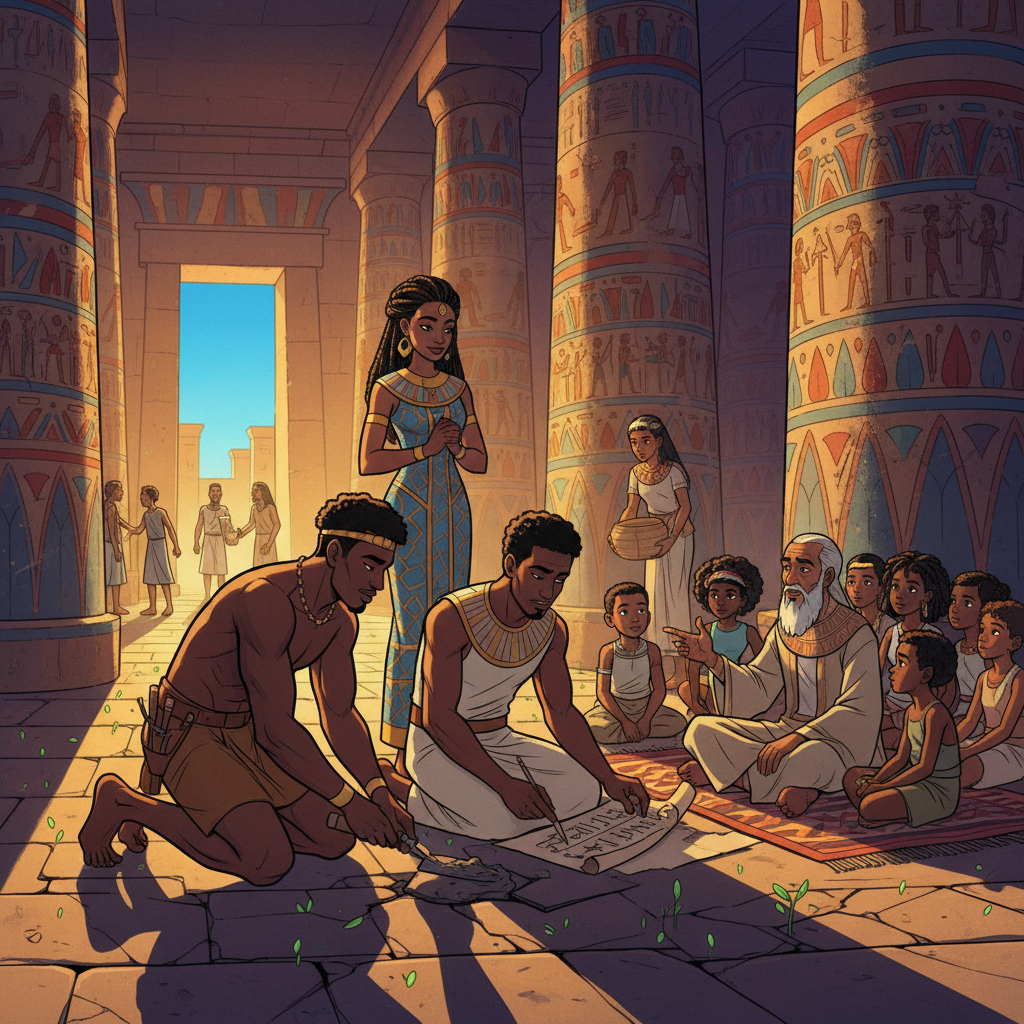
By the end of the season, the brothers were closer than they had been since their father's death. Sefu had learned humility — that true strength was not in taking, but in giving and making things right. Baruti had learned that forgiveness was not a single act but a daily practice, a choice remade each morning. Talibah watched them with quiet satisfaction, knowing that the teachings of the Per Ankh were alive in this healing. The village, too, had been restored. The cracks that had formed between neighbors mended as people saw the brothers working together. Trust returned like green shoots after the flood. Harkhebi told the children gathered at his feet, "Remember this. Maat is not just a word. It is a living force, and it grows strongest when people choose it over anger."
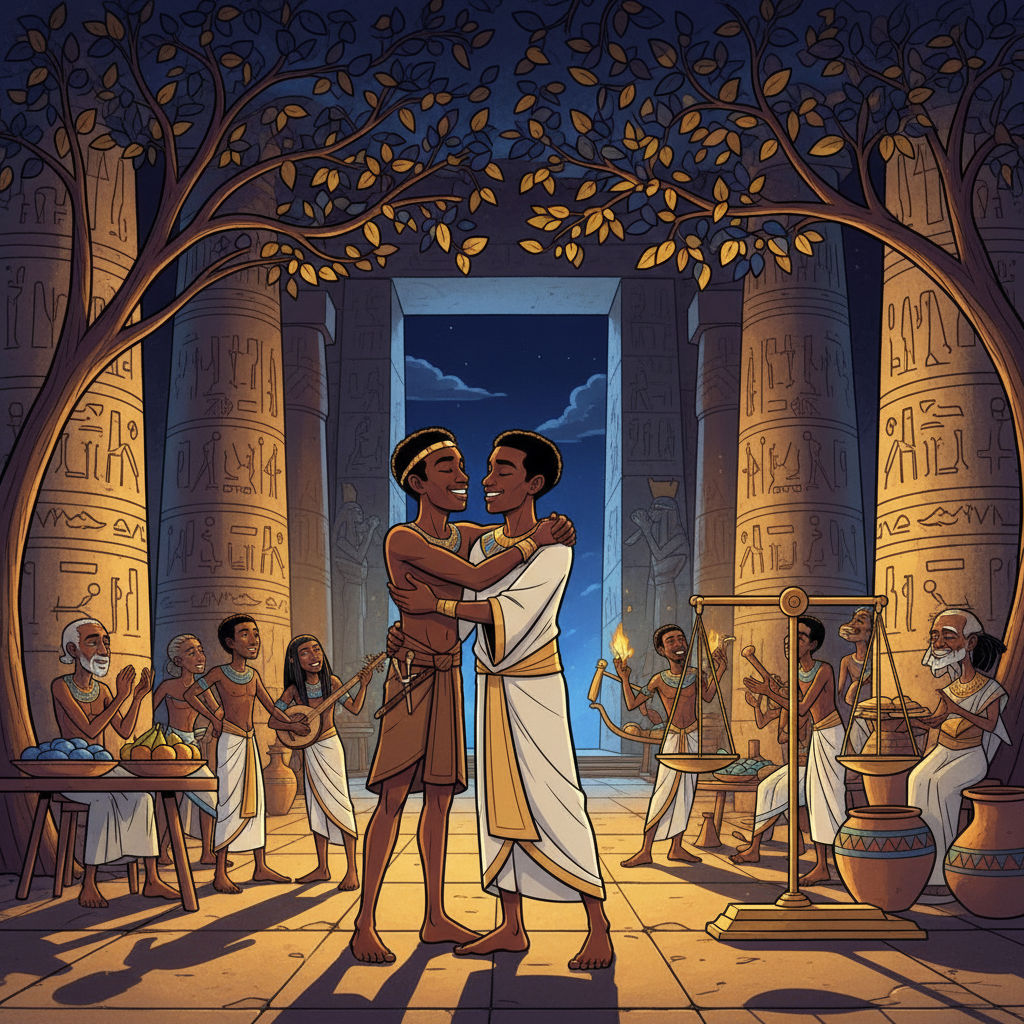
The brothers embraced on the last day of the season beneath the great sycamore tree, and the village celebrated with music, food, and stories of their ancestors who had walked in Maat. Harkhebi smiled, his ancient dark face creased with joy, knowing that balance had been restored — not through punishment, but through accountability, labor, and love. In the modern world, courts are often about winning and losing. Lawyers twist words, and the one with more money frequently prevails. But the ancient way of Maat was different. It was about restoring balance and healing the community. Justice was not a weapon to be wielded against the guilty — it was medicine for the whole village. And like all true medicine, it required patience, wisdom, and the courage to forgive.