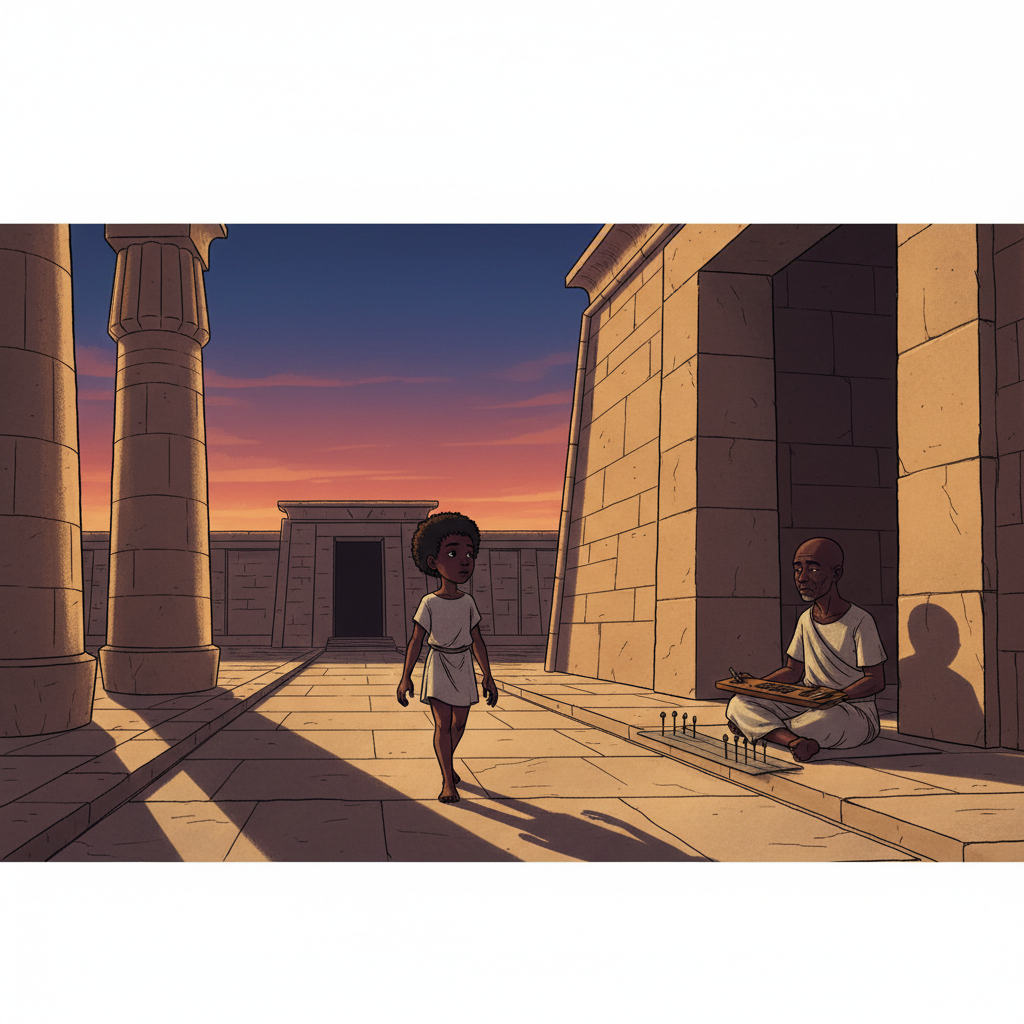
Inhapi was eleven years old, and the tips of her fingers were always stained black. The stain was ink, and she was proud of it. It meant she was a student of the Per Ankh — the House of Life — in the city of Mennefer, two years into her training as a scribe. Her skin was deep brown, the color of riverbank earth, and she wore her hair short the way the youngest scribes did, so that it would not fall across the papyrus while she worked. Every morning she walked to the great temple before the sun was fully up, when the stone was still cool, and every morning the master scribe Khety was already there before her, sitting cross-legged with his palette across his knees and his reed pens laid out like a row of small spears.
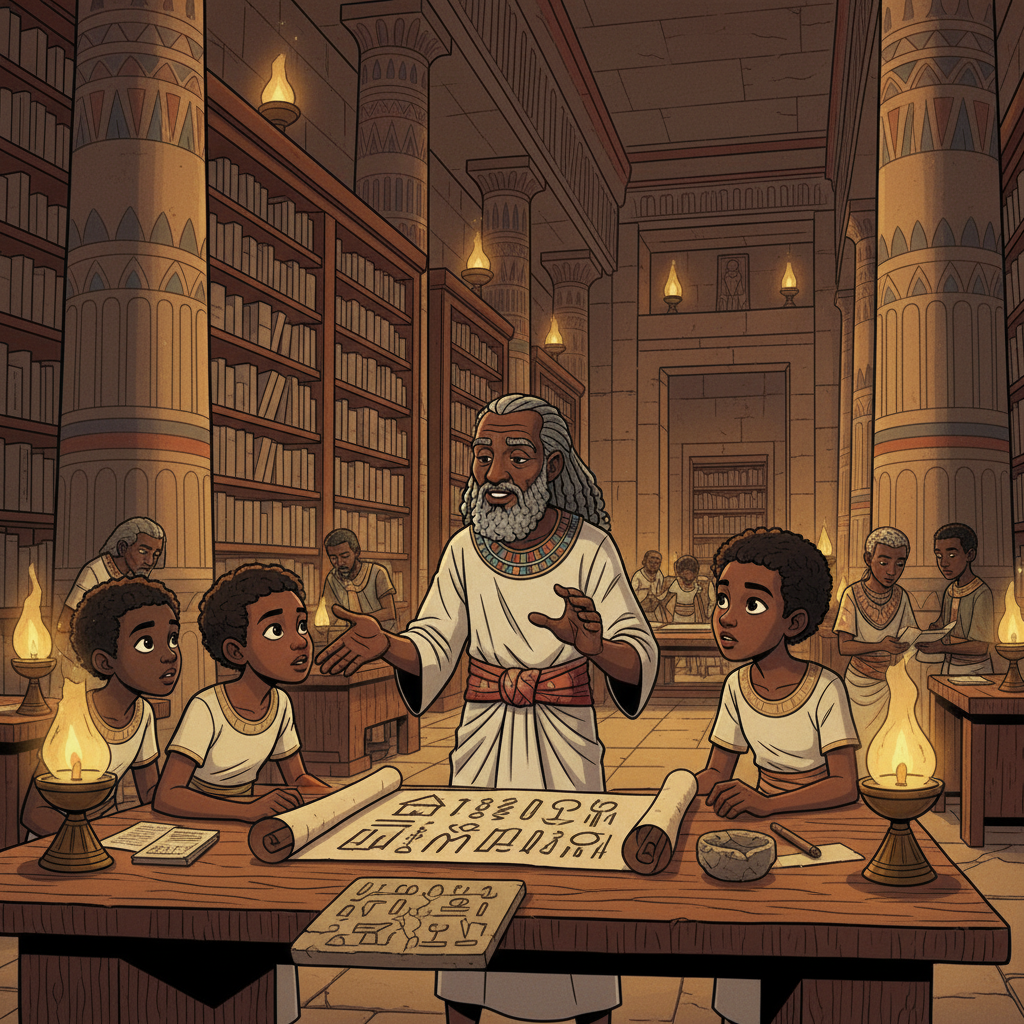
What Inhapi was learning was called medu neter — the words of the neter, the words of the sacred powers themselves. The teacher Obenga, in books that would not be written for thousands of years, would say that the people of Kemet had made the first true writing on the whole earth, older than the marks of the lands between the rivers to the east by the span of many grandmothers’ lives. And not only the first, Obenga would say, but the deepest — because in Kemet a written word was never only a sound. Each of the seven hundred signs was a picture that was also a sound that was also a holy thing. The sign for house was a little house. The sign for water was a ripple. To write was to make a small world and lay it down in a place where it would stay.
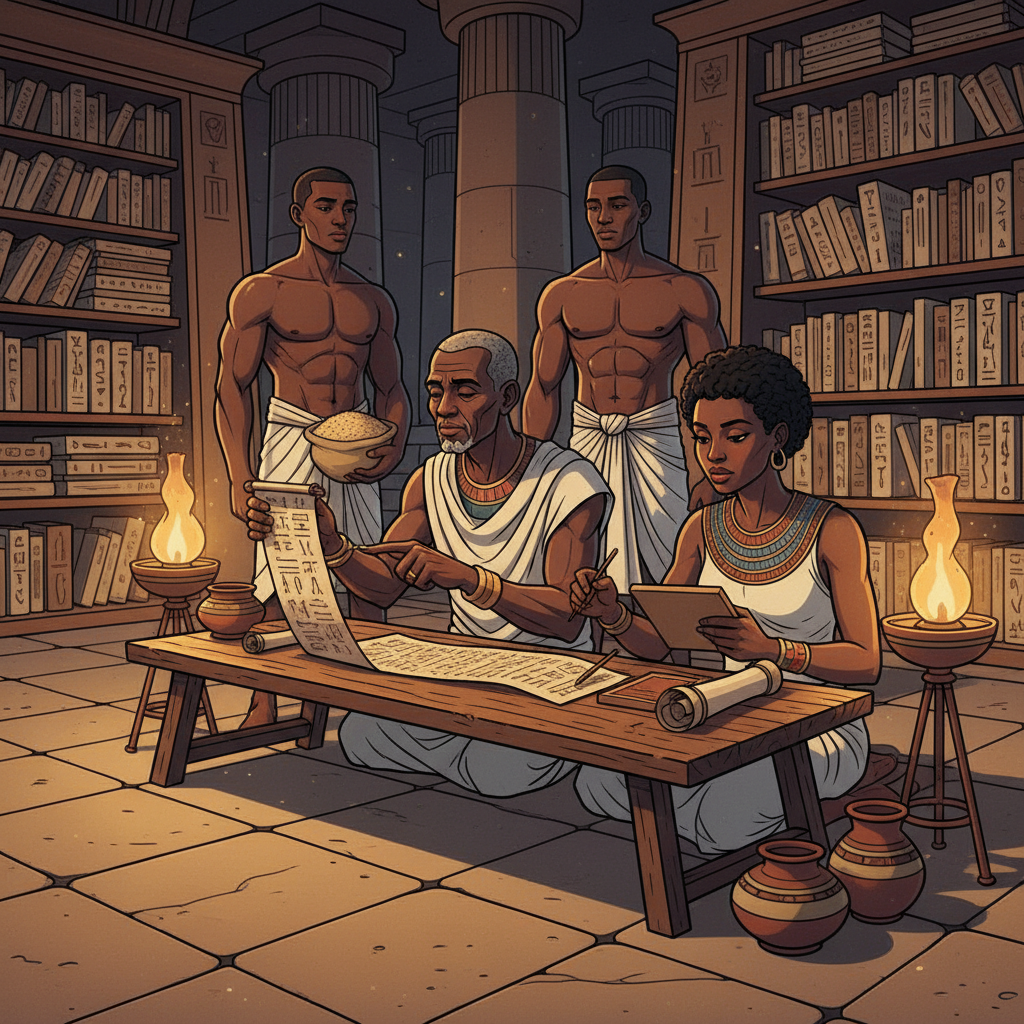
Master Khety taught that the scribe was the memory of the people and also the conscience of the people. The scribes counted the grain in the temple stores so that no one would starve in a thin year. They wrote the names on the work-teams so that every builder was paid. They kept the records of who owed what to whom, so the strong could not simply take from the weak and call it owed. “A kingdom cannot eat without us,” Khety said, “and a kingdom cannot be fair without us. That is the honor. It is also the weight. A scribe who writes a false thing has not made a small mistake. He has bent the back of Maat.”
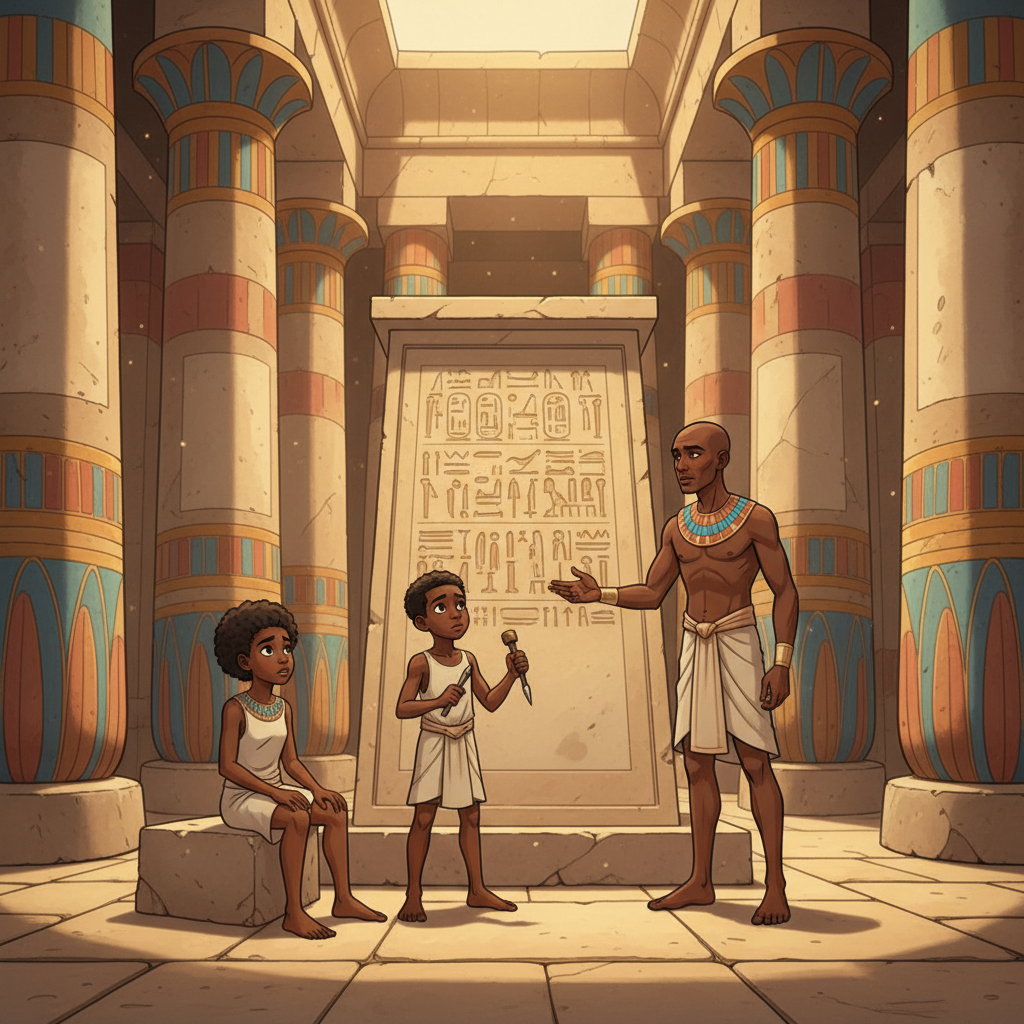
There was a boy who studied beside Inhapi named Kawab. He was twelve, a year older than her, but he was the sort who shook when he was nervous, and he was nervous often. On the morning this story turns, Master Khety gave Kawab a real task for the first time — not practice on a scrap of stone, but the true wall. “The merchant Pawah has given grain to the temple store,” Khety said. “You will carve the count of his gift into the donation wall, beneath the others, so that it is remembered.” Kawab’s eyes went wide with the honor of it, and he took up the small bronze chisel. But Inhapi, sitting beside him, felt her stomach turn cold — because Inhapi knew something about the merchant Pawah’s gift.
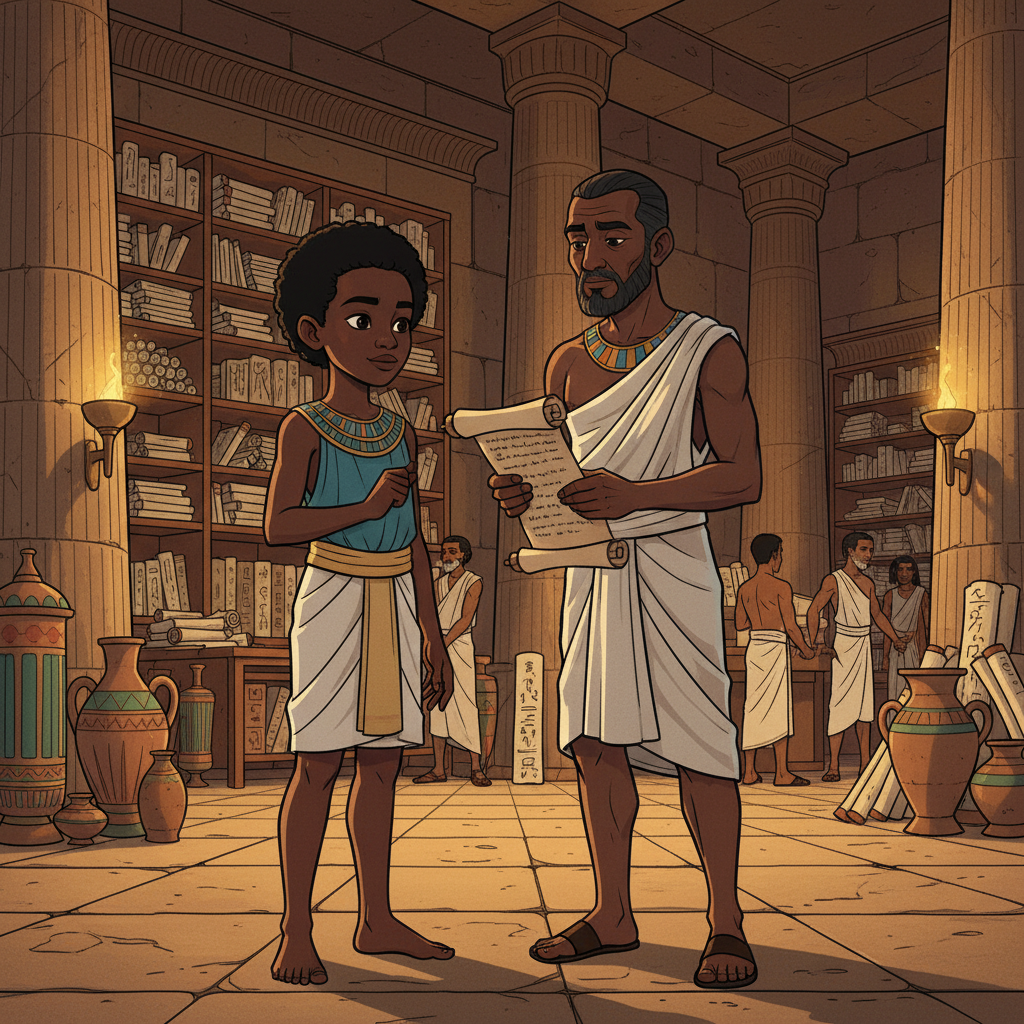
Six days before, Inhapi had been one of the students sent to count the temple store. It was dull work, counting sacks of barley in a dim cool room, but she had done it carefully, because Khety had taught her that careless counting was its own kind of lie. She had written the true number on her practice papyrus and carried it to the steward herself. And she remembered it. She remembered it exactly. The merchant Pawah had not given the temple the great mountain of grain he was now claiming. He had given a small heap — perhaps a tenth of it. Inhapi did not know why he was claiming more. Perhaps for honor, to have the largest number on the wall. Perhaps to be owed a favor later. But she knew the number Kawab had been told to carve was not true.
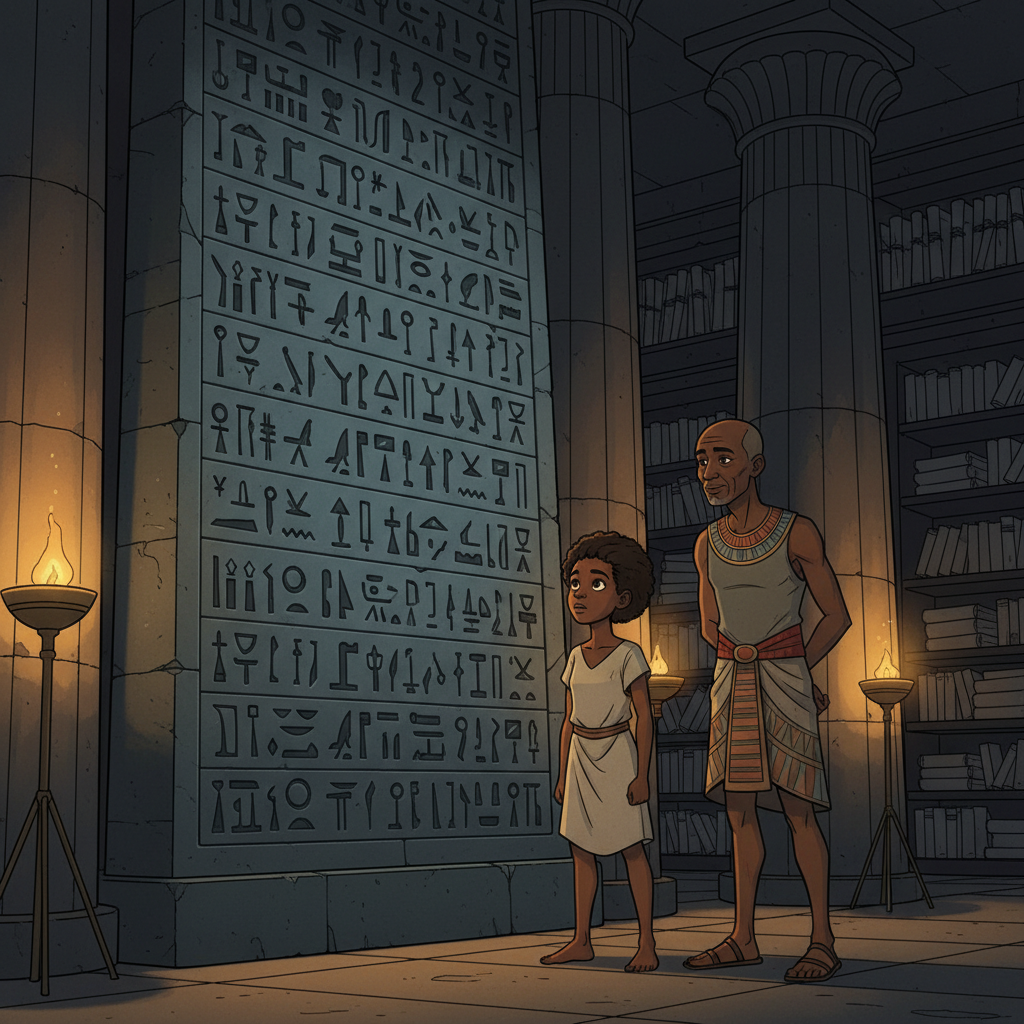
Inhapi looked at the donation wall, at the rows of careful signs already cut into it. Master Khety saw her looking. “On papyrus,” he said, as if he had read her thought, “a wrong word can be scraped away and written again. The reed forgives. But stone does not forgive. Stone is for the things we mean forever.” He laid his hand flat against the cool wall. “Every letter we carve here is a covenant — a promise to the neter and to every person who will ever read it. If you carve a lie into the stone, the stone remembers the lie long after the liar is dust. A false word in the wall is not a small thing, Kawab. It is isfet — disorder — set into the very bones of the temple.” He did not know yet that he was describing the exact thing about to happen.
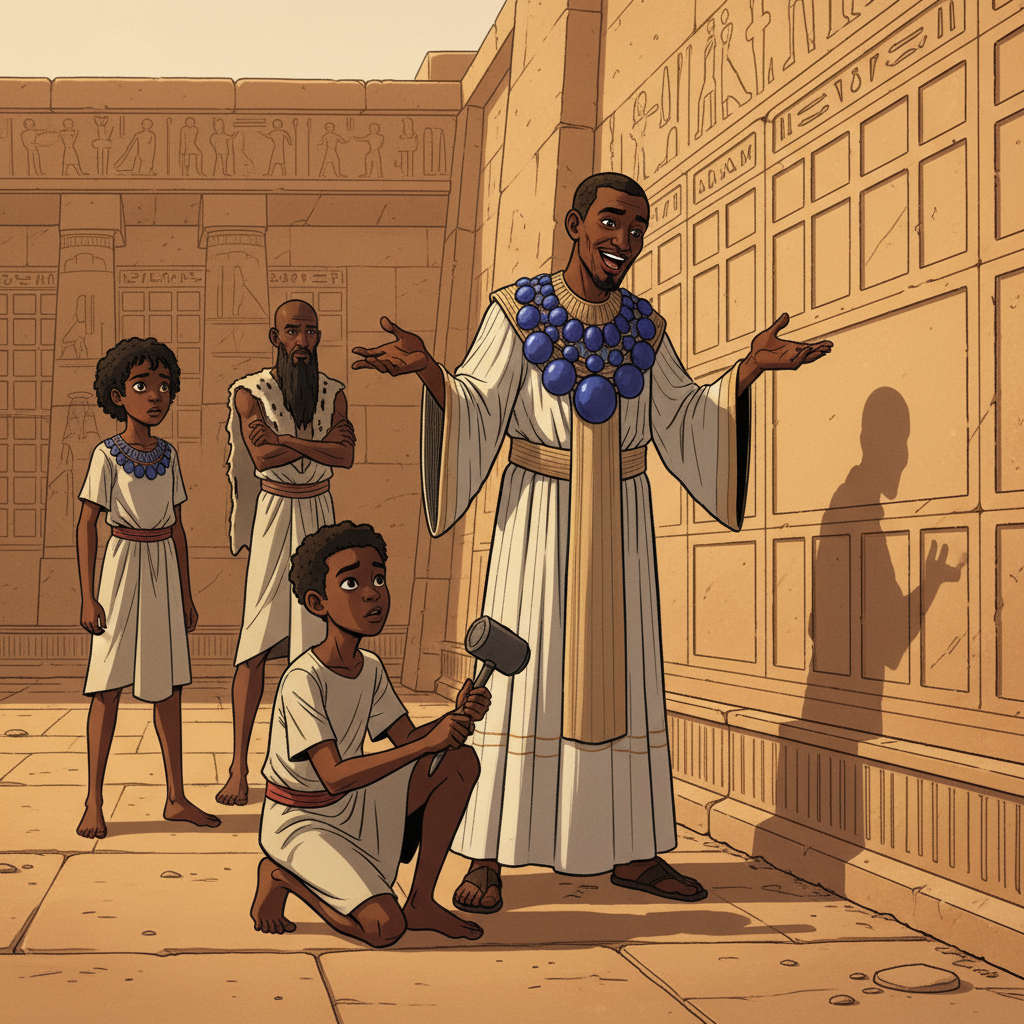
Then the merchant Pawah himself came into the courtyard, in a fine pleated robe with a wide collar of blue beads. He had come to watch his gift be written, the way a man comes to watch his own honor made permanent. He stood over Kawab and read out the number he wanted carved — a number so large it would be the greatest single gift on the whole wall. “Carve it deep, boy,” Pawah said, smiling. “I want it read in a hundred years.” Master Khety said nothing. He only watched. And Inhapi understood, then, that the master was not going to stop Pawah, and was not going to rescue Kawab. He was watching to see what the boy with the chisel in his hand would choose to do.
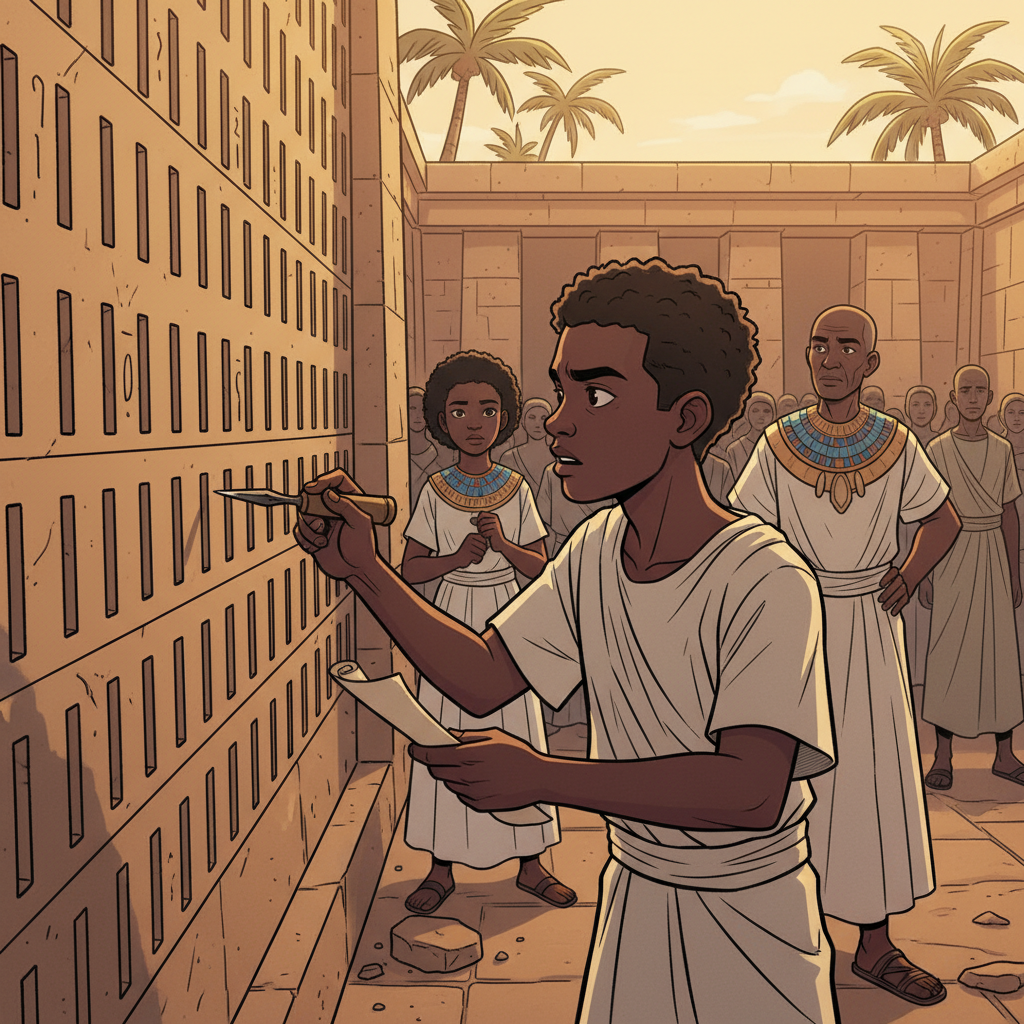
Kawab lifted the chisel to the stone. His hand was shaking. He set the bronze edge against the wall, looked at the number Pawah had given him, and Inhapi saw the moment he understood that he did not actually know whether it was true — he was only being told. He looked sideways at Inhapi, because Inhapi had been on the counting-team, and everyone knew it. His eyes asked her the question he could not say aloud in front of the merchant: is this number real? Inhapi held his gaze. She gave the smallest shake of her head. No. Kawab’s hand stopped. The chisel hovered against the stone, not cutting, while the merchant waited and the master watched and the morning sun climbed slowly up the wall.
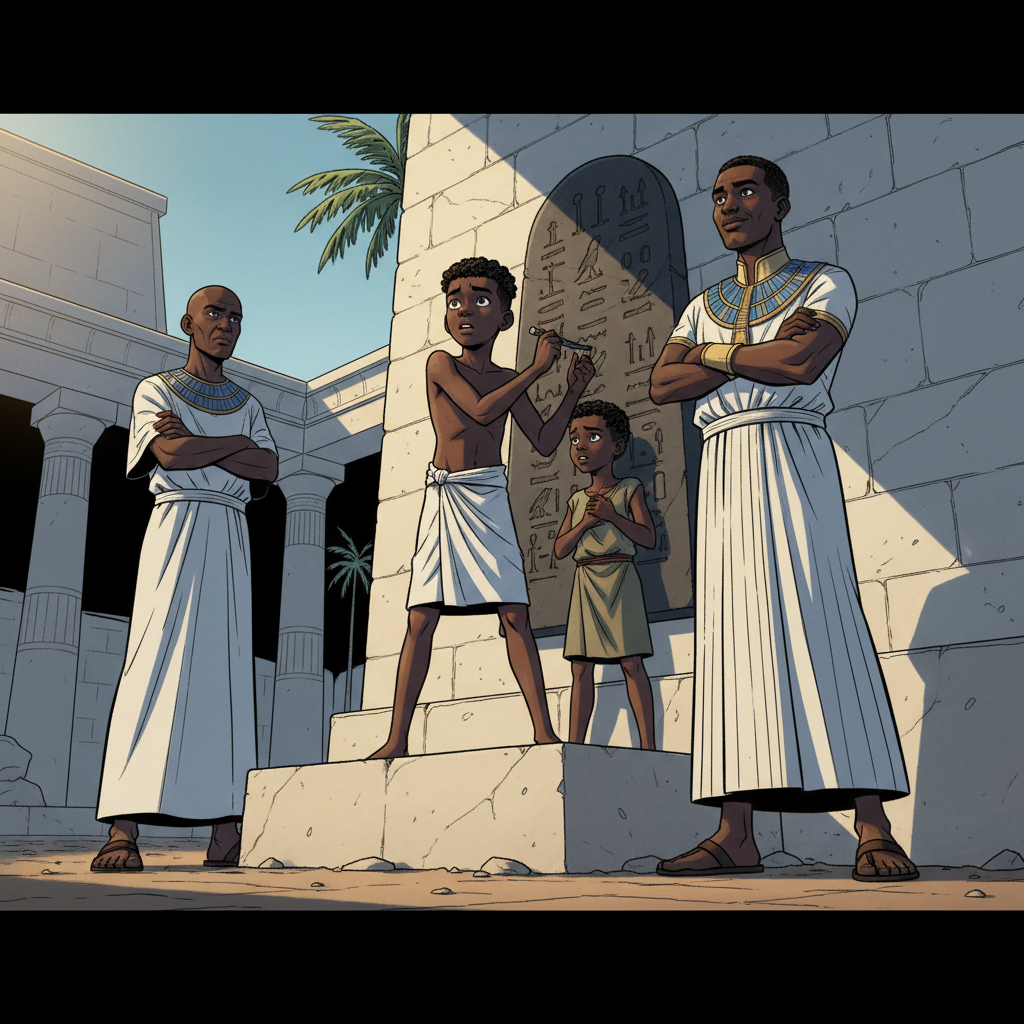
For a long breath nobody moved. Kawab could carve the number and be praised by the merchant and finish his first true task, and no one but Inhapi would ever know it was false — and Inhapi was only a student, a girl with ink on her fingers, a year younger than him. The merchant was rich. The master had said nothing. The easiest thing in the whole world was to let the chisel fall and cut the lie. Inhapi watched the boy’s shaking hand and felt the same fear rise in her own chest, because she knew that if Kawab cut it, the only way the truth would ever be spoken was if she spoke it herself — out loud, to a master scribe and a wealthy man, in her small voice, in the cool morning air.
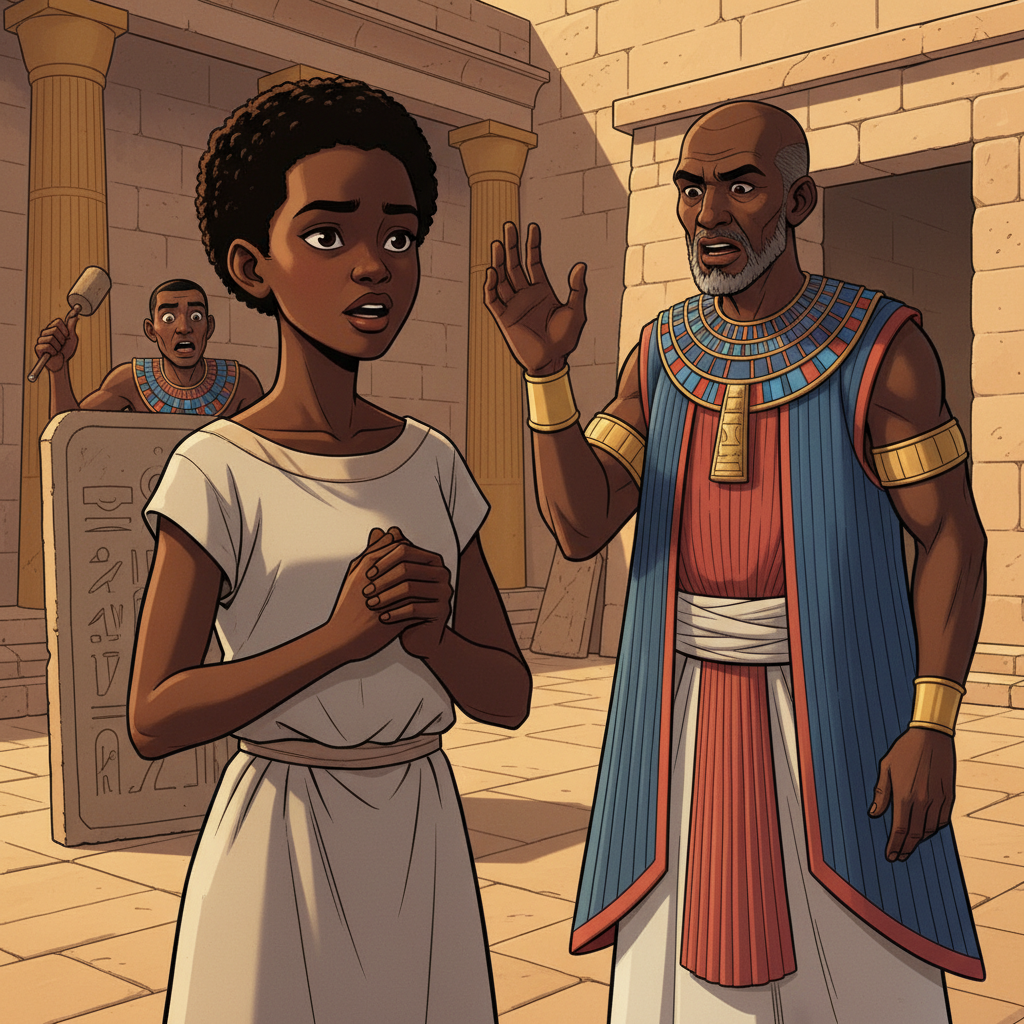
So she spoke. “Master Khety,” Inhapi said, and her voice came out steadier than she felt, “I was on the team that counted the store six days ago. I wrote the true number and carried it to the steward myself.” And she said the real count — the small one, the tenth. The courtyard went very still. The merchant Pawah’s smile slid off his face. “You would take the word of a child,” he began, “over—” “I would take the word of the store,” Khety said quietly, “which does not lie, and can be counted again this very hour.” He turned to Inhapi. “You carried the count to the steward. Then there is a papyrus with your hand upon it. The stone will wait. The truth does not mind waiting to be checked.”
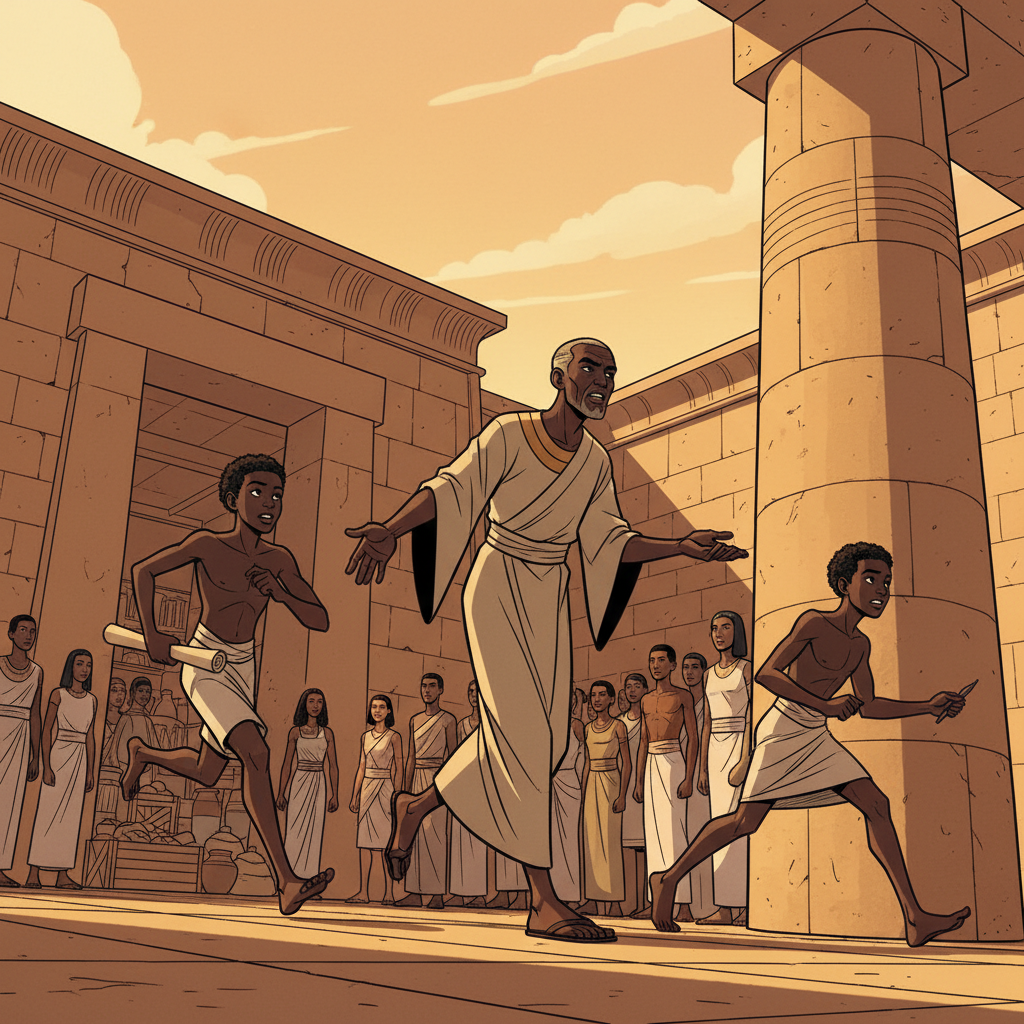
Master Khety did not shout. He did not call the merchant a liar. He simply sent two students running — one to fetch the steward’s papyrus, one to fetch the steward himself — and he had the temple store opened and counted again, then and there, while everyone stood and waited. This was the discipline of the scribe: not to accuse, not to guess, but to count, and to write down only what counting showed. “The chisel can wait an hour,” Khety told the trembling Kawab, and his voice was gentle now. “It is better that the wall stand empty for an hour than stand wrong forever. You were right to stop your hand. Stopping is also a kind of writing.”
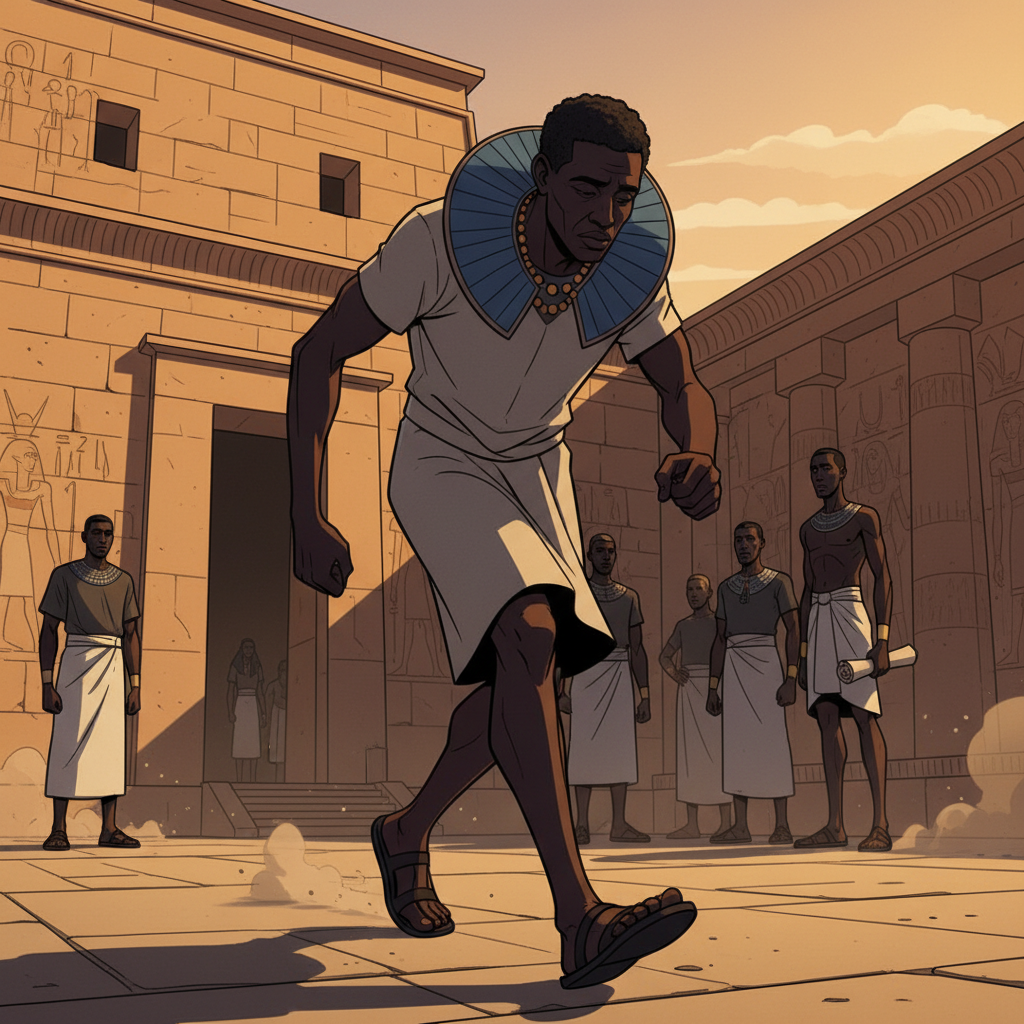
The store was counted. The steward’s papyrus was brought, and Inhapi’s careful signs were upon it, and the new count matched her old count exactly. The merchant Pawah had given the temple a small heap of barley and claimed a mountain. When the true number was laid beside his claim, there was nothing for Pawah to say. He did not rage — a man caught against a counted truth has no wall to stand behind. He left the courtyard quickly, and his fine blue collar suddenly looked like a thing he was hiding behind. The honor he had come to make permanent had very nearly become a permanent shame, cut into the temple of the neter in a careful young hand.
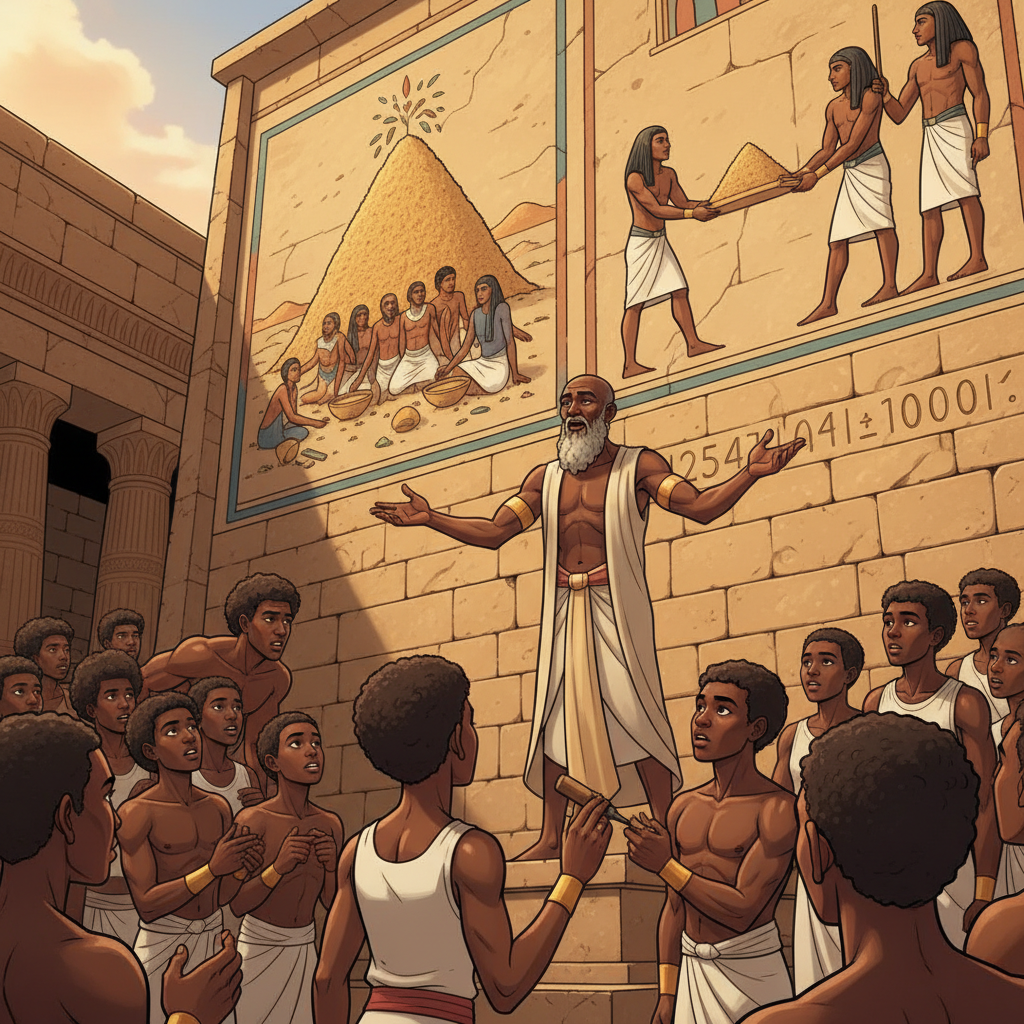
Master Khety had Kawab carve the true number — the small, honest one — into the donation wall, beneath the others. It was not a grand number. But it was true, and it would still be true in a hundred years, and in a thousand. Then Khety explained to all the students why this mattered beyond one merchant’s pride. The temple store fed the city in the thin years. If the wall said the store held a mountain when it held only a heap, then in a hungry season the stewards would plan to feed a city they could not feed, and people would starve, trusting a number that was a lie. “A false count is not only an insult to Maat,” Khety said. “It is a famine waiting for its year.”
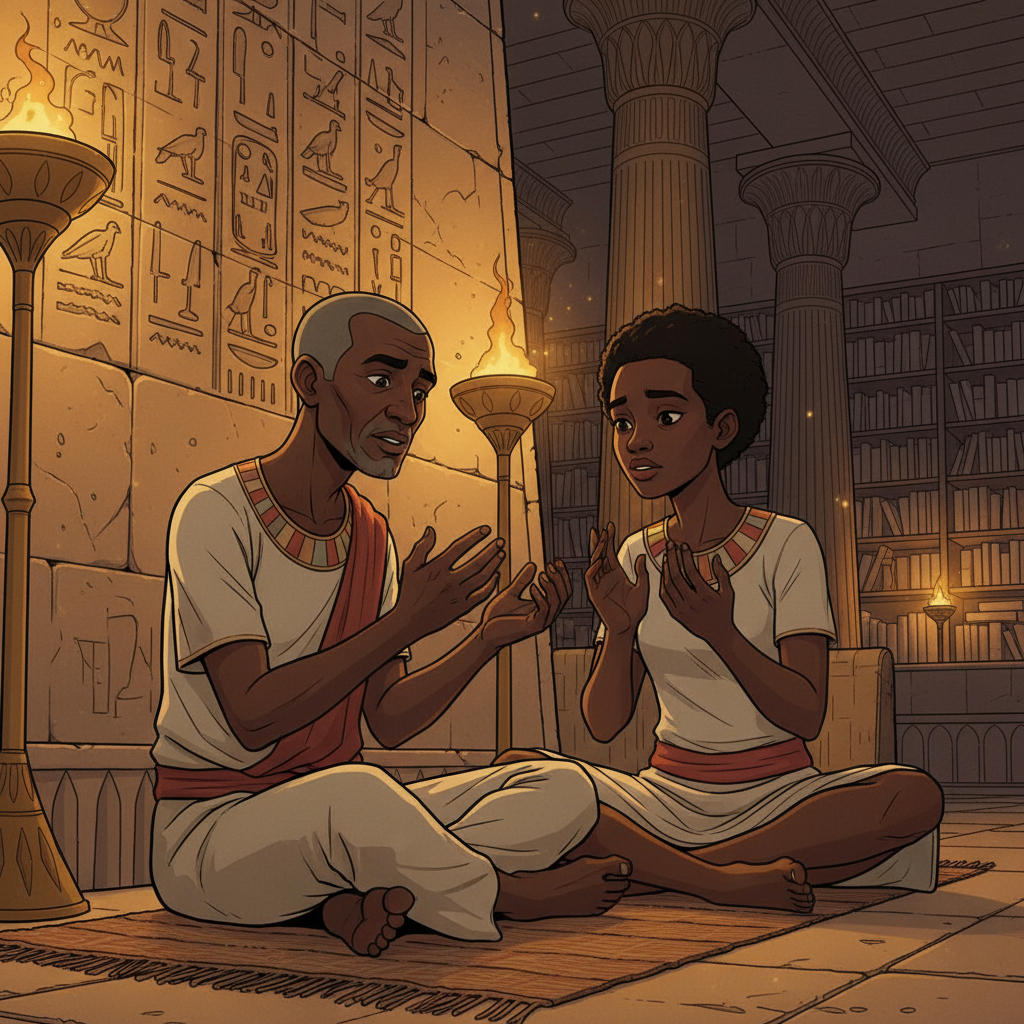
That evening, when the others had gone, Master Khety sat with Inhapi beside the cooling wall. “Do you know why we call it medu neter — the words of the neter?” he asked. Inhapi shook her head. “Because to write is to do what the neter did at the beginning: to speak a thing, and make it stand. That is a holy power, and a dangerous one. A people who can write can remember everything — every harvest, every law, every promise. But a people who can write can also lie forever, if they choose. The scribe is the one who holds that door. Every true sign you cut keeps it open to Maat. Every false sign you refuse to cut keeps out the flood of isfet.” He looked at her ink-stained fingers. “Today, you held the door.”
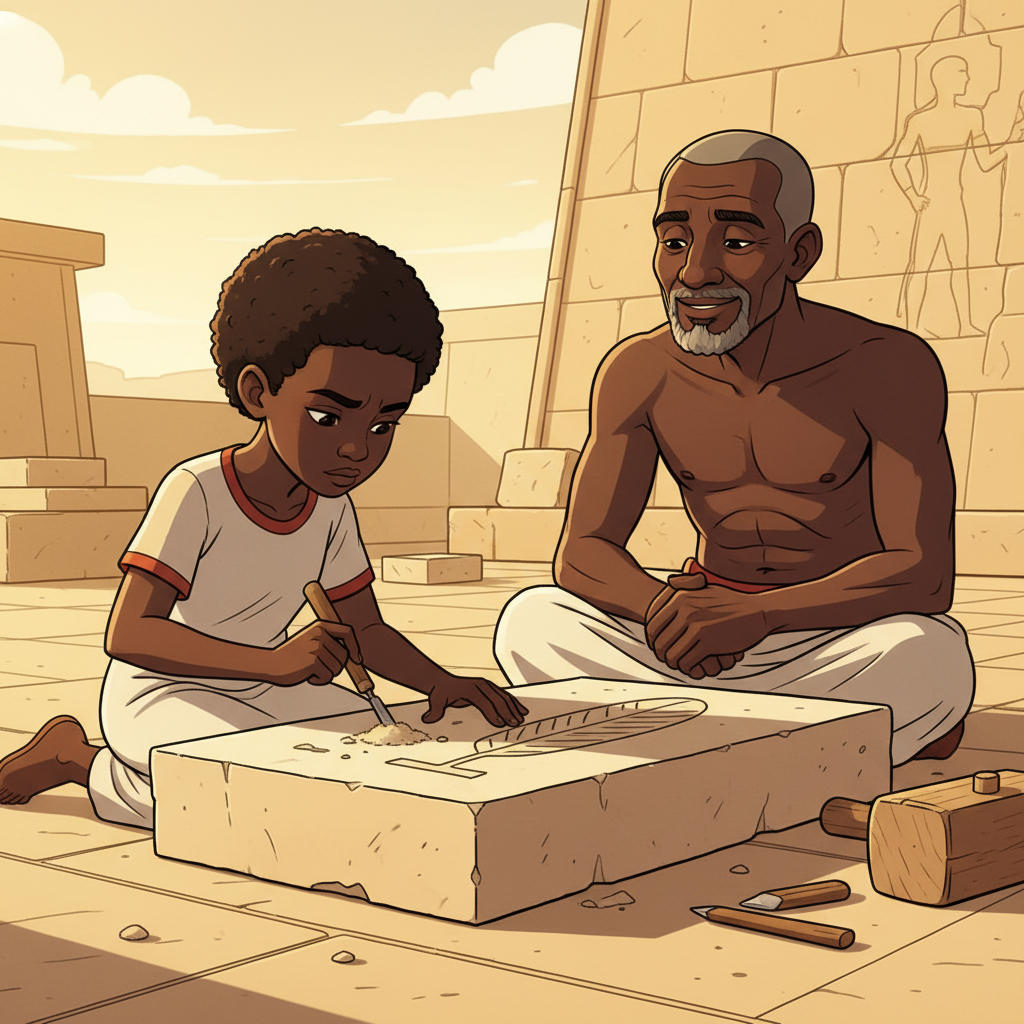
The next morning, Master Khety let Inhapi carve a sign of her own into a corner of the practice stone — her first true mark on real stone, not a scrap of clay. She chose the sign that meant Maat, the upright feather, and she cut it slowly, the way she had learned to count: carefully, because careless was its own kind of lie. The teacher Obenga would write, long after, that the people of Kemet had given the world its first writing. Inhapi, had she known his words, would have added one more: and its truest. For in Kemet a written word was a covenant, and the stone remembers. They had taught it to remember only what was real. That was the whole of it, and it was enough — every letter a promise, and the promise kept.