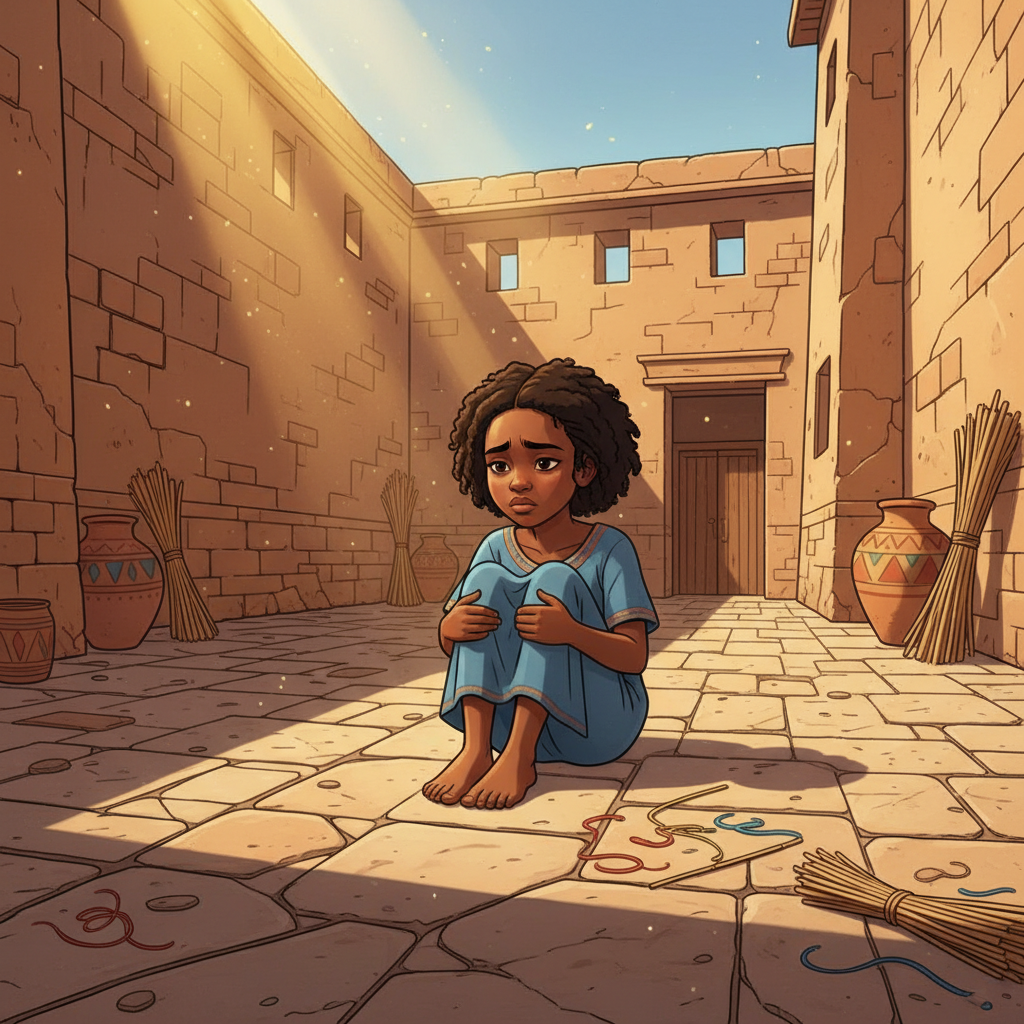
Twelve-year-old Takhat sat in the courtyard of her family's mudbrick home with a problem she could not bring to her mother. She had told a lie. Not a large lie — not the kind that ruins harvests or breaks marriages. A small one. She had told her friend Kiya that she could not come help with weaving because she was sick. In truth, she simply did not want to go. The afternoon sun poured golden light across the courtyard stones, but Takhat felt no warmth from it. She pulled her knees to her chest and pressed her palms against her ribcage, as if she could hold the uneasy feeling in place. She had chosen comfort over honesty, and now comfort had abandoned her.
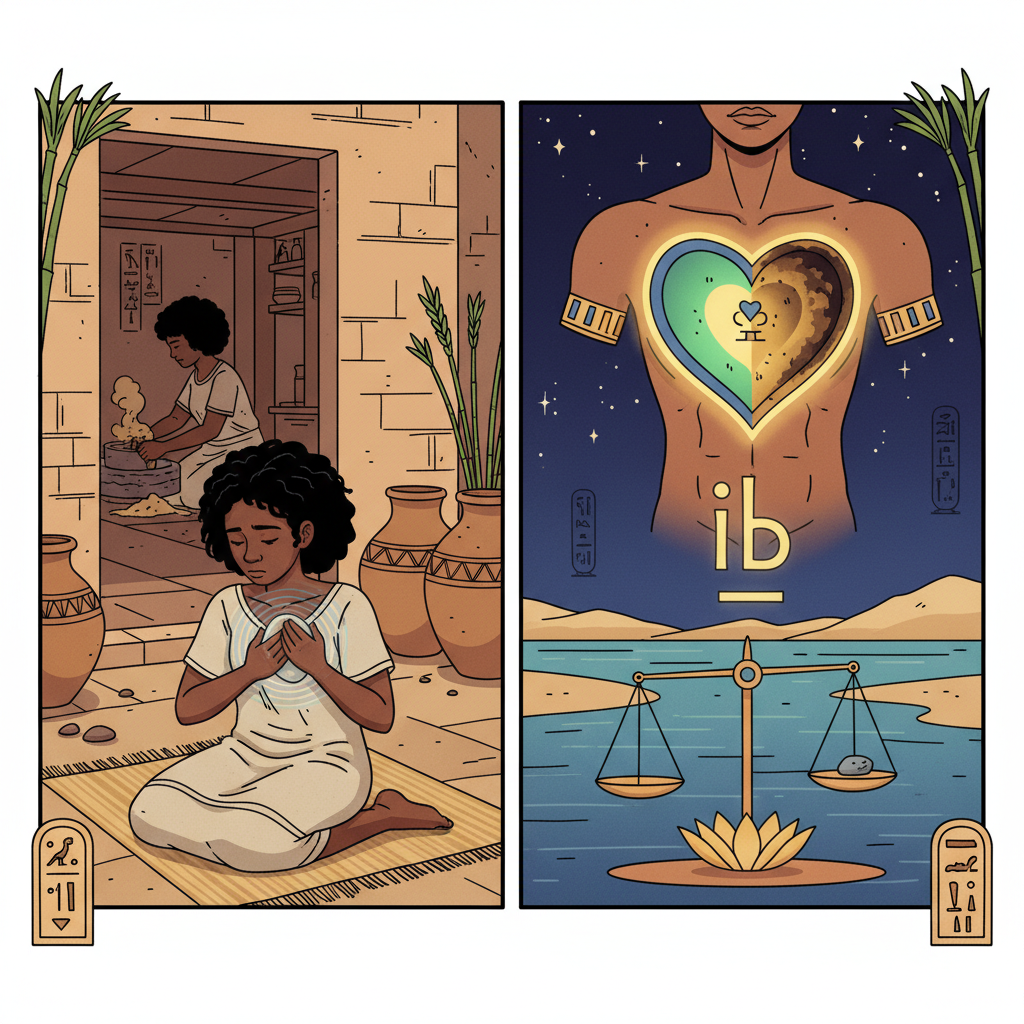
No one would ever know. Kiya believed her. Her mother, busy grinding emmer wheat in the next room, had not heard the conversation. There would be no punishment, no correction, no guided reflection from an elder. And that was exactly the problem. The lie had worked perfectly — and that made it worse. Takhat could feel the weight of it sitting in her chest like a river stone lodged between her ribs. Her ib — her heart, the seat of her conscience and her character — felt heavier than it had yesterday. In Kemet, the people understood that the ib was not merely an organ that pushed blood through the body. It was the place where truth lived, or where truth decayed.
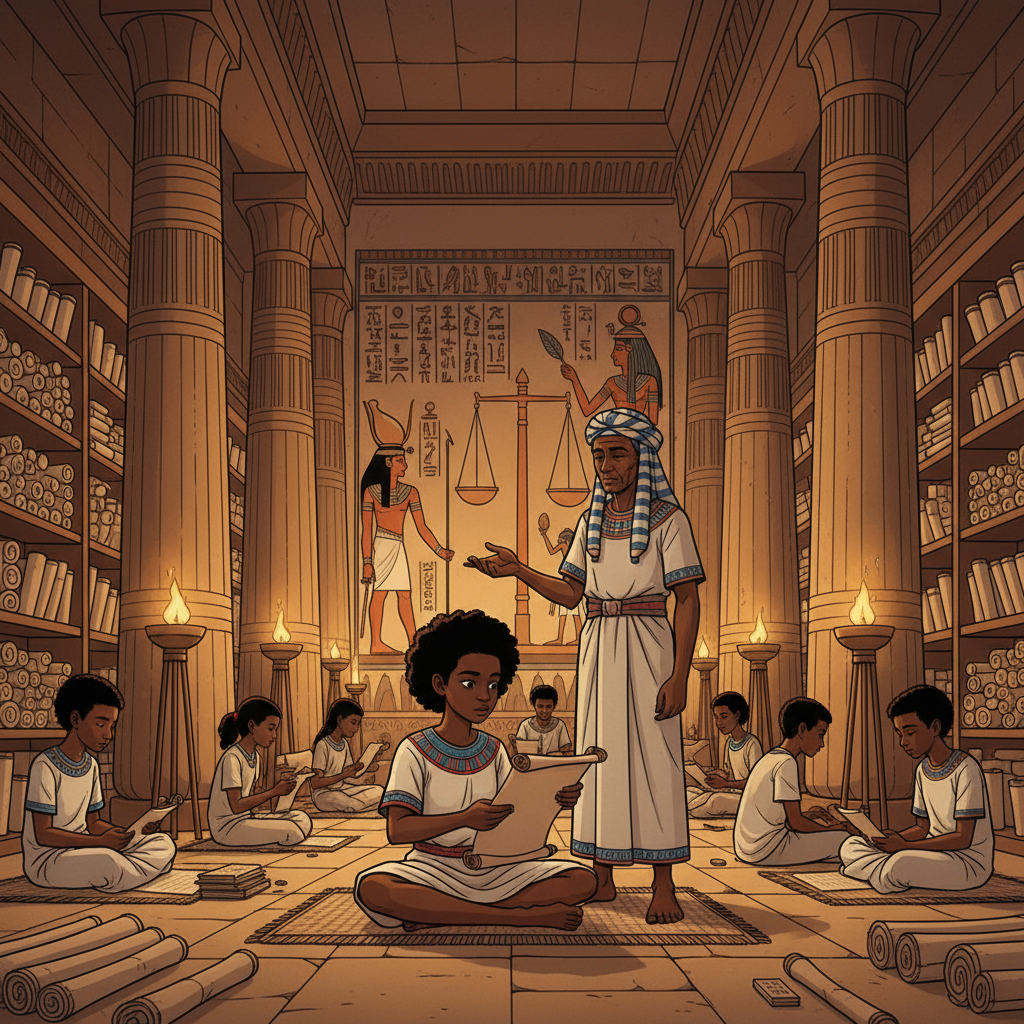
She remembered the lessons from the Per Ankh — the House of Life where she and the other children of the village studied writing, mathematics, medicine, and the sacred teachings. Her teacher, old Merneptah with his deep ebony skin lined by decades of thought, had spent many mornings on the lesson of the Hall of Two Truths. This was the great hall of the Duat, the realm beyond death, where every soul must eventually stand. It was not a place of cruelty but of precision. The hall existed because the universe demanded balance. Every action, every word, every silence where a word should have been — all of it mattered. All of it was remembered.
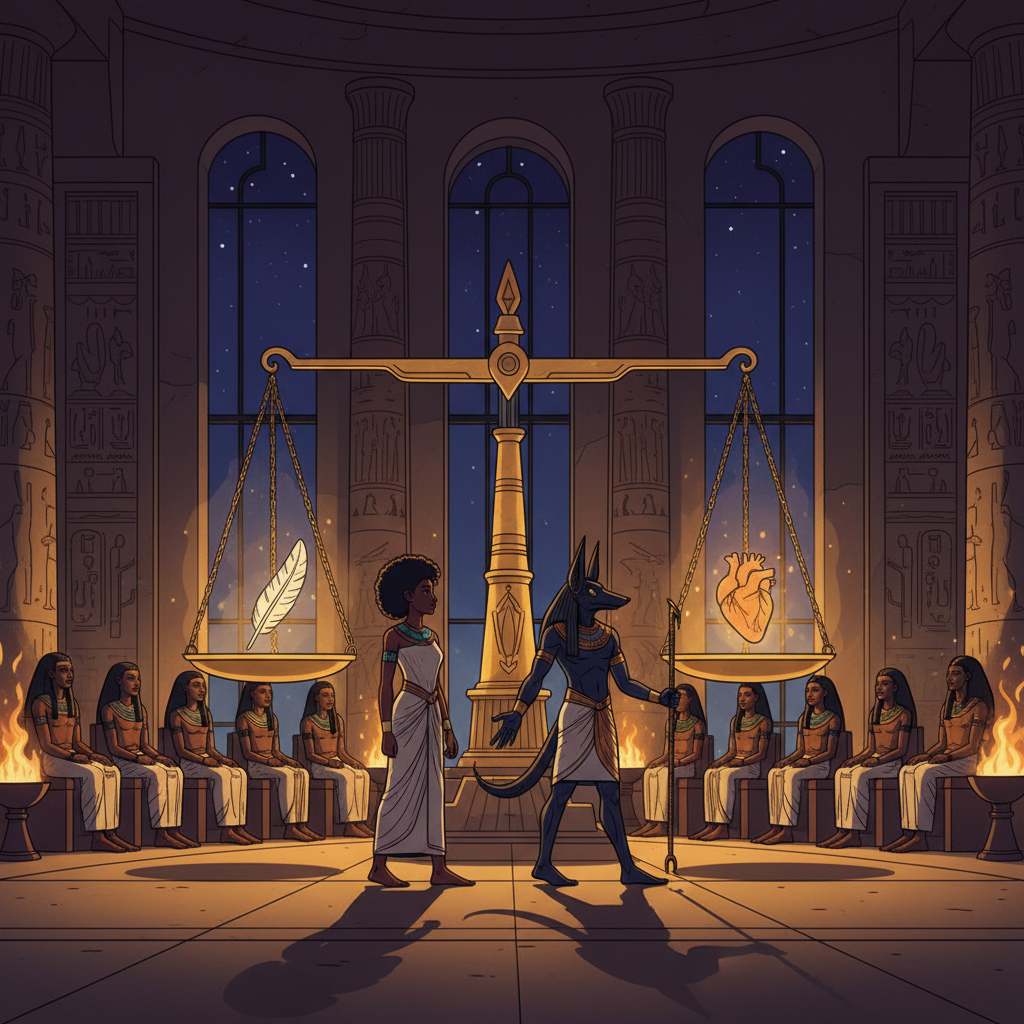
"After death," Merneptah had taught them, "Anpu, the guardian with the head of the jackal, leads you into the Hall of Two Truths. He is not your enemy. He is the one who walks with you through the darkness so that you do not walk alone. His hands are steady. His purpose is clear. He brings you before the great scale." Takhat had imagined it many times — the enormous golden scale standing in that vast, silent hall, with the forty-two assessors watching from their thrones. On one side, the feather of Ma'at, light as breath, light as a whispered truth. On the other side, your ib. Your heart. Everything you ever were.
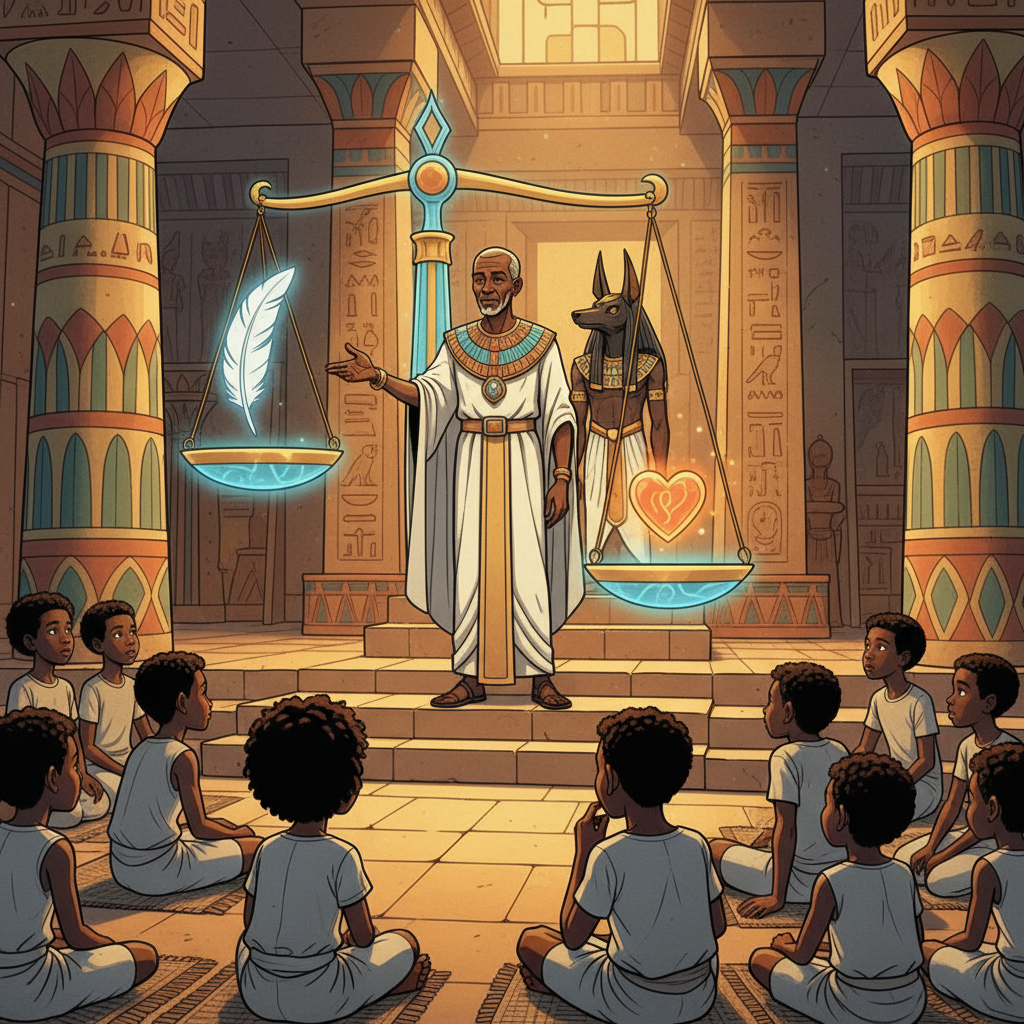
"If your heart balances with the feather," Merneptah had continued, his voice low and serious, "it means you lived in Ma'at. You carried truth, justice, and balance within you. Your ka — your spirit — moves forward into the beautiful west, into peace, into eternity among the blessed ancestors." But then he had paused, and the children had grown very still. "If your heart is heavier than the feather — heavy with isfet, with disorder, with lies unpaid and harm unrepaired — then Ammit waits. She who is part crocodile, part lion, part hippopotamus. She devours the heavy heart, and the soul ceases to exist. Not punishment. Erasure. As if you never were."
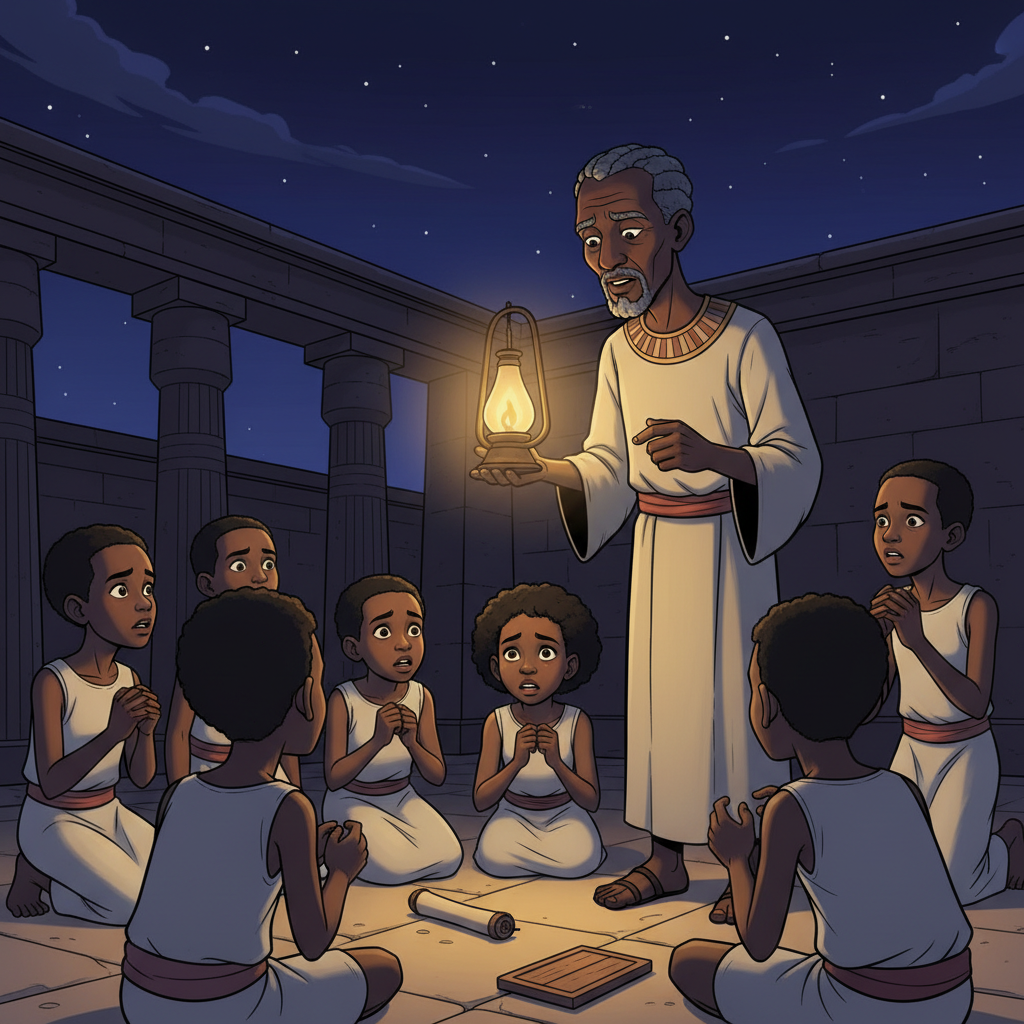
That lesson had given Takhat nightmares for a week. But Merneptah was not finished. On the next morning, he had looked at their frightened faces and said something that changed everything. "The judgment is daily," he told them. "Every night, before you sleep, weigh your own heart. Ask yourself: Was I truthful? Was I balanced? Did I take more than my share? Did I repair what I broke?" The children of Kemet did not wait for death to be measured. They measured themselves, each evening, in the quiet of their own minds. This was the practice of the ancestors — not perfection, but honest accounting. Takhat had nodded along with the others. She thought she understood. Now, sitting alone in the courtyard with her small lie pressing against her ribs, she truly understood.
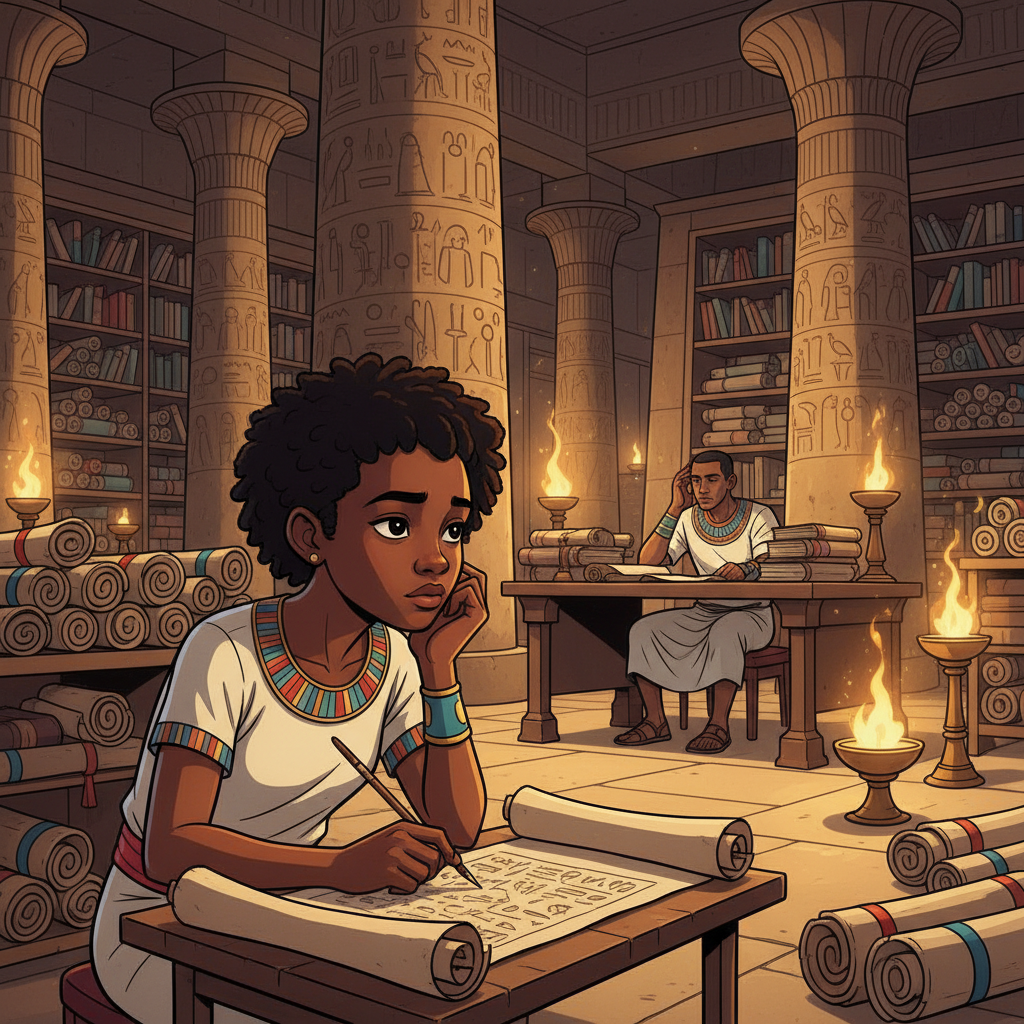
She tried to argue with herself the way a scribe might argue a case before a magistrate. It was only a small lie. Kiya would never discover it. No one was harmed. The weaving would be done by others. The world continued to turn on its axis. But her ib would not be persuaded by clever arguments. That was the thing about the heart — it did not care about logic or convenience. It only knew what was true and what was not. A small lie was still isfet. A tiny crack in a dam still lets the water through. And Takhat realized, with a chill despite the heat, that the most dangerous lies were the ones that worked. Because those were the ones you might tell again.
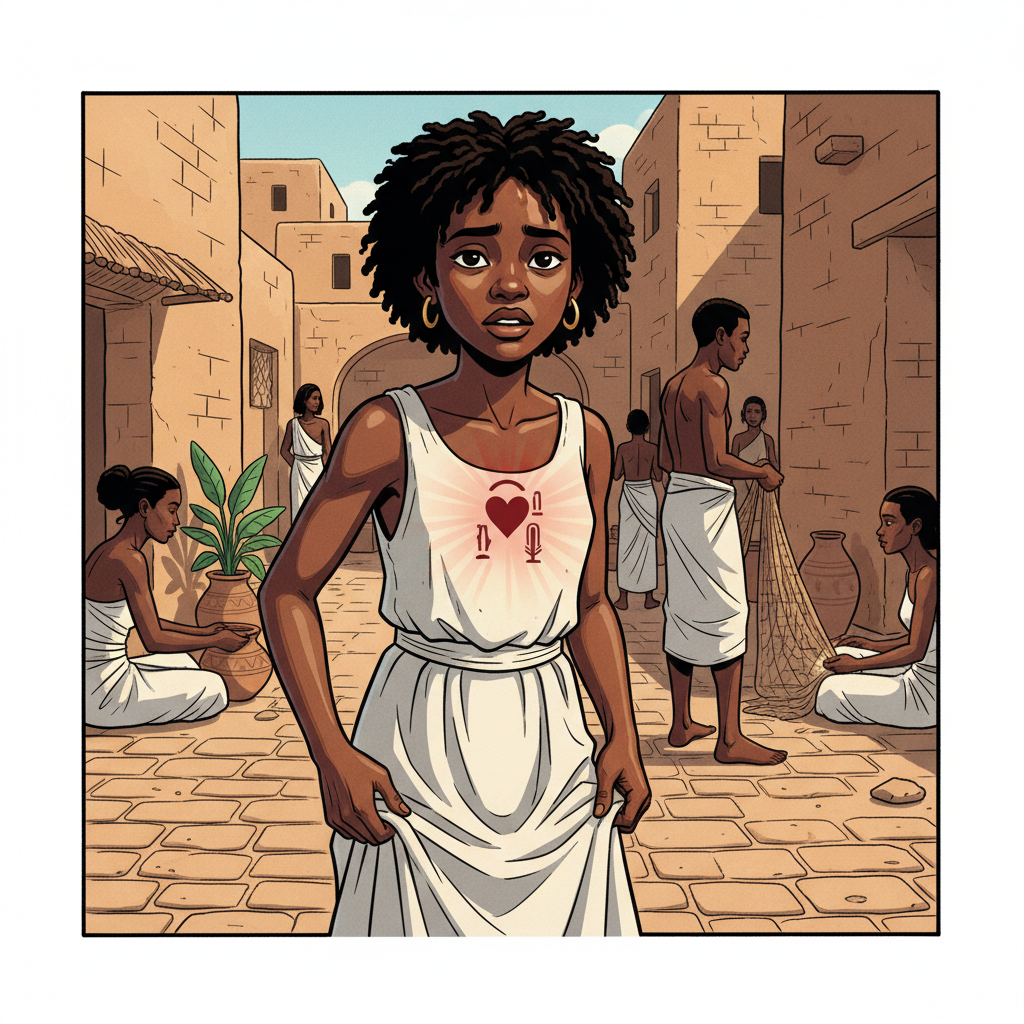
She stood up from the courtyard stones and brushed the dust from her white linen dress. Her hands were trembling, though not from cold or hunger. This was a different kind of trembling — the kind that comes when you know what you must do and you are afraid to do it. No one was making her go to Kiya. No elder had discovered her dishonesty. No parent stood behind her with stern words and a pointed finger. The only voice telling her to move was the voice inside her own chest — her ib, beating its steady rhythm, heavier with each passing moment. Takhat understood now what Merneptah meant when he said that Ma'at does not come from outside. It rises from within, or it does not rise at all.
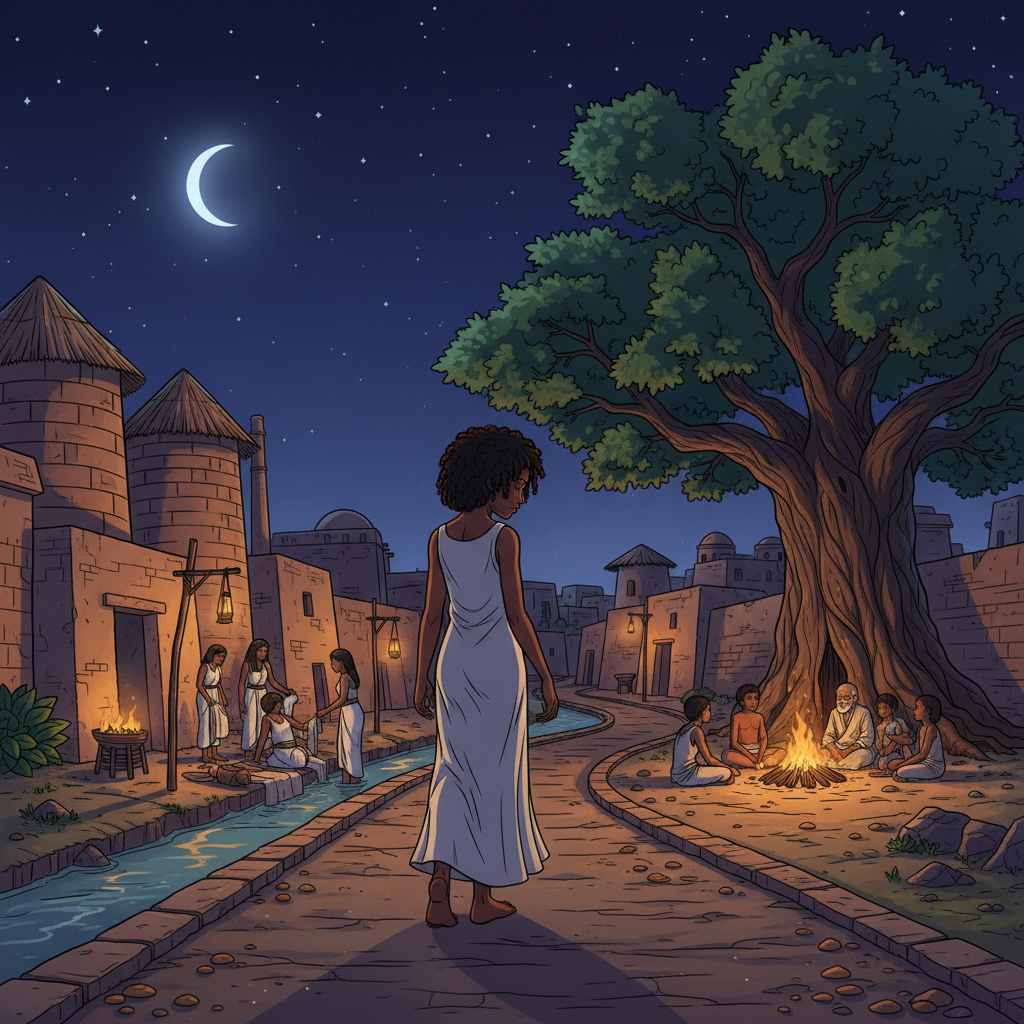
The walk to Kiya's home felt longer than it ever had. Takhat passed the grain stores, the canal where women washed linen, the old sycamore fig tree where the children gathered to hear stories. Every step gave her another chance to turn back. Every shadow offered a place to stop, reconsider, and decide that the lie was too small to bother correcting. But she kept walking. She thought of Anpu, steady and unwavering, guiding souls through darkness not because it was easy but because it was necessary. If the jackal-headed guardian could walk calmly into the Duat, she could walk down a dirt road to her friend's house. She whispered to herself: "Carry your own scales, Takhat. Do not wait for the hall."
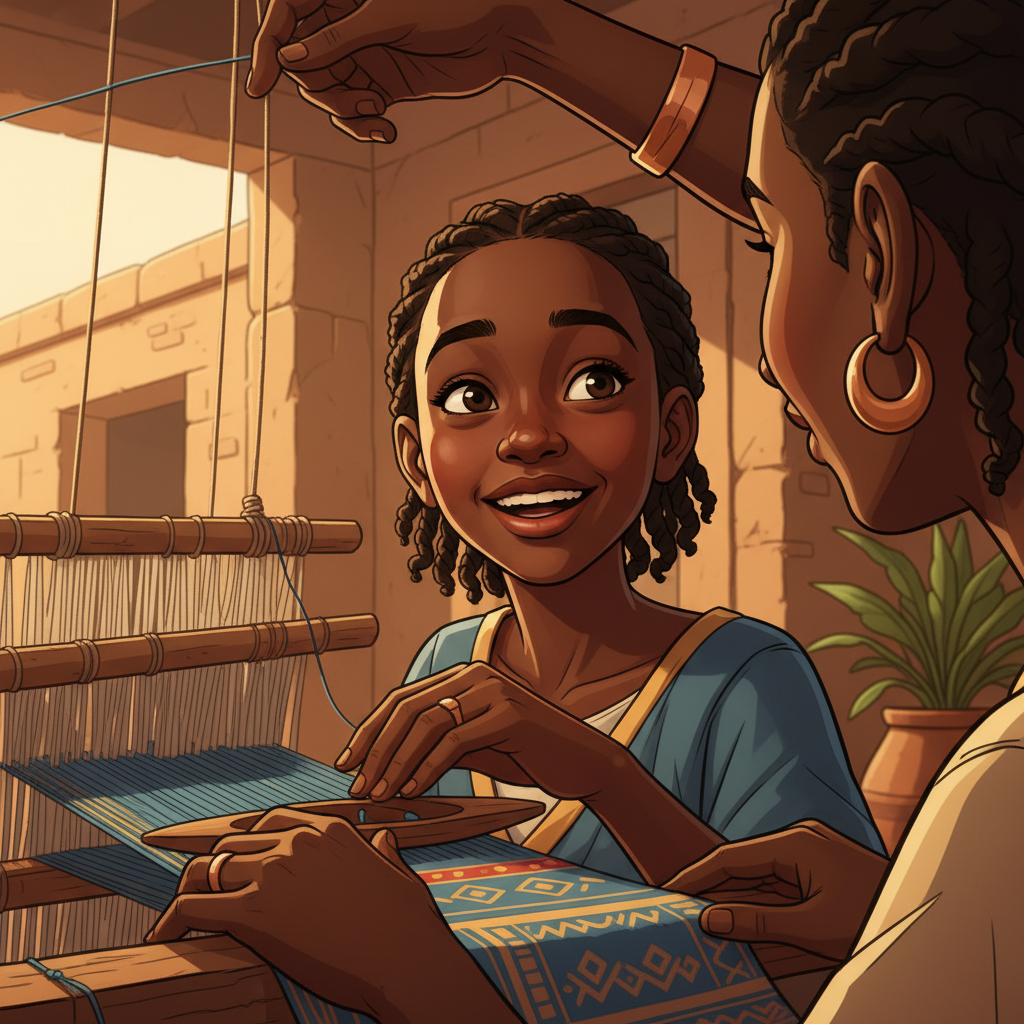
Kiya was sitting outside her family's home, working the loom with her mother's shuttle. Her dark brown fingers moved with practiced rhythm through the threads, and she looked up with surprise and a warm smile when she saw Takhat approaching. "Are you feeling better already? I was worried about you." Those kind words struck harder than any punishment could have. Takhat's stomach tightened. Kiya had been worried. While Takhat sat in her courtyard feeling sorry for herself, Kiya had been carrying concern for a friend who was not actually sick. The lie had not only weighed on Takhat's heart — it had stolen Kiya's peace too. That was what isfet did. It never stayed where you put it.
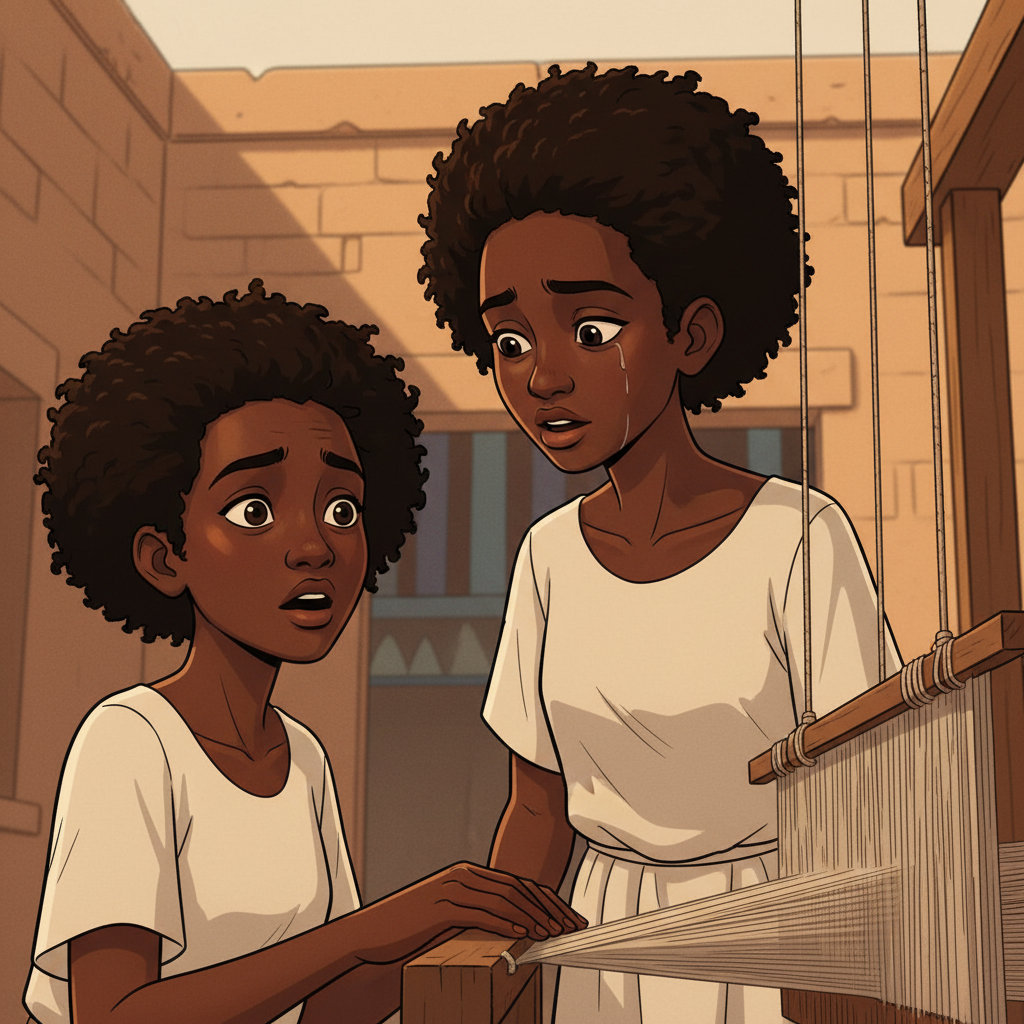
Takhat took a breath. She looked at her friend's open, trusting face and said the hardest words she had spoken in her twelve years of life. "Kiya, I was not sick. I lied to you because I did not want to come help with the weaving. I chose laziness over friendship, and I chose a lie over the truth. I am sorry." The silence that followed felt like the silence of the Hall of Two Truths — vast, still, and full of meaning. Kiya's smile faded. She set down the shuttle. Her dark eyes searched Takhat's face, and Takhat forced herself not to look away. If you place your heart on the scale, you must watch it be weighed. You do not get to close your eyes.
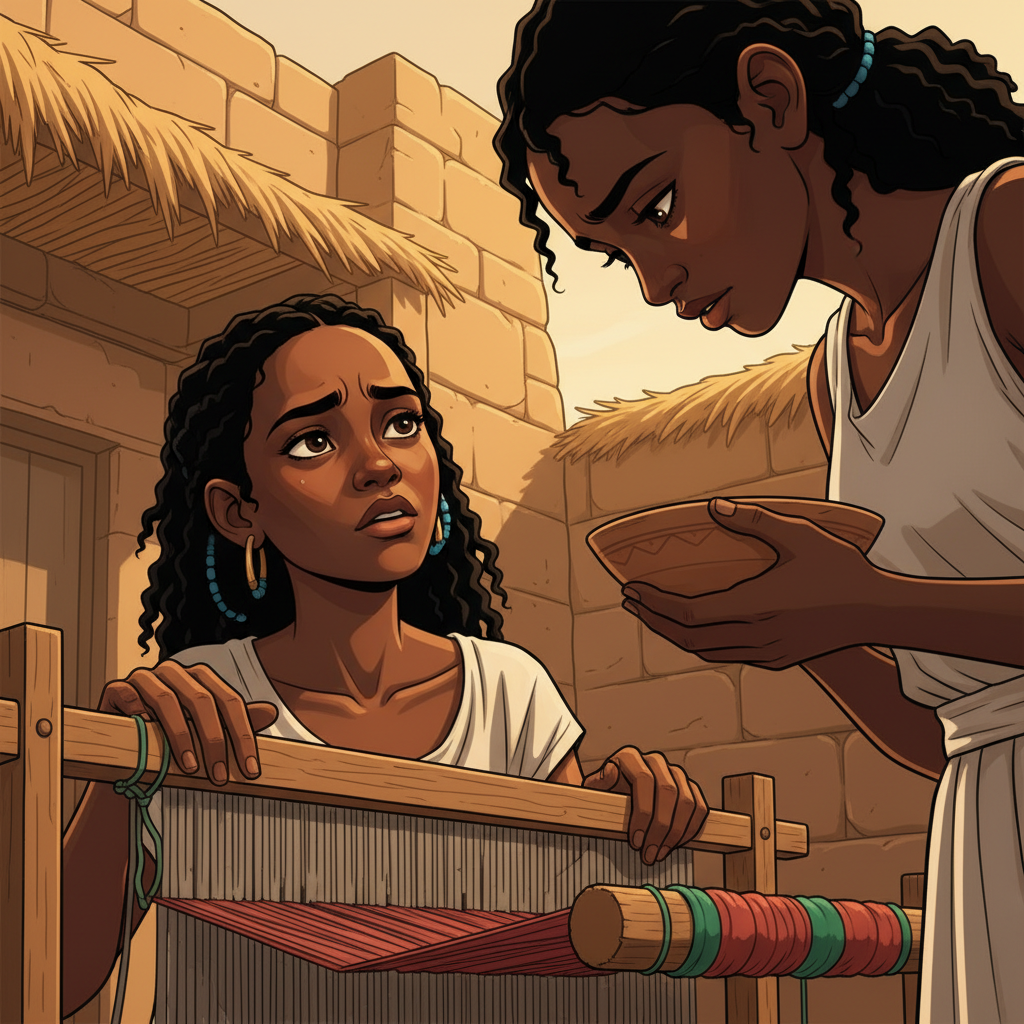
"That hurt," Kiya said quietly. "Not the weaving. I could do the weaving myself. But thinking you were sick — I almost brought you broth. I was going to walk all the way to your home in the heat to care for you." She paused. "You let me worry for nothing." Takhat nodded. There was nothing to argue. No defense to offer. She had caused harm, and the only honest response was to stand in the truth of it. "You are right," she said. "I owe you more than an apology. I owe you the work I promised. And I owe you a friend who does not lie when the truth is inconvenient." Kiya studied her for a long moment — then slowly, carefully, nodded.

"Why did you come tell me?" Kiya asked. "I never would have known." It was a genuine question, not an accusation, and Takhat considered it carefully. Why had she come? No one forced her. No one would have punished her. "Because I would have known," Takhat said. "My ib knew from the moment the lie left my mouth. And every day I carried it, my heart would grow heavier. I do not want to arrive at the great scale someday with a heart full of small lies I never corrected. I want to weigh my heart now, today, while I can still set things right." Kiya was quiet for a moment. Then she moved aside on the bench and made room. "Come. Help me finish this cloth. We will weave and talk."

That evening, Takhat sat on her sleeping mat as the last light drained from the sky over Kemet. She closed her eyes and did what Merneptah had taught them. She placed her heart on her own invisible scale. On one side, her ib, with all the day's choices. On the other, the feather of Ma'at — weightless, perfect, and patient. Her heart was not perfectly light. She had still told the lie. She had still caused Kiya worry and hurt. But it was lighter than it had been that morning, because she had chosen repair over silence. She had chosen courage over comfort. The daily weighing was not about being without fault. It was about refusing to let your faults sit uncorrected. It was about picking up what you broke and mending it with your own hands.

From that day forward, Takhat carried her own scales. Not real ones made of gold and bronze — but the invisible kind that lived inside her chest, balanced on the steady beat of her ib. Before she spoke, she weighed her words. Before she acted, she measured the cost. And every evening, she sat with herself in honest stillness and asked: Was I truthful today? Was I balanced? Did I take more than my share? Did I repair what I broke? She was not perfect. No one who has ever lived in Kemet or anywhere else has been perfect. But she was accountable — to herself, to her friend, to Ma'at. And she learned the deepest lesson the Per Ankh could offer: that the scale is not something that waits for you at the end of your life. The scale is something you carry with you, every single day, in the courage of your own heart.