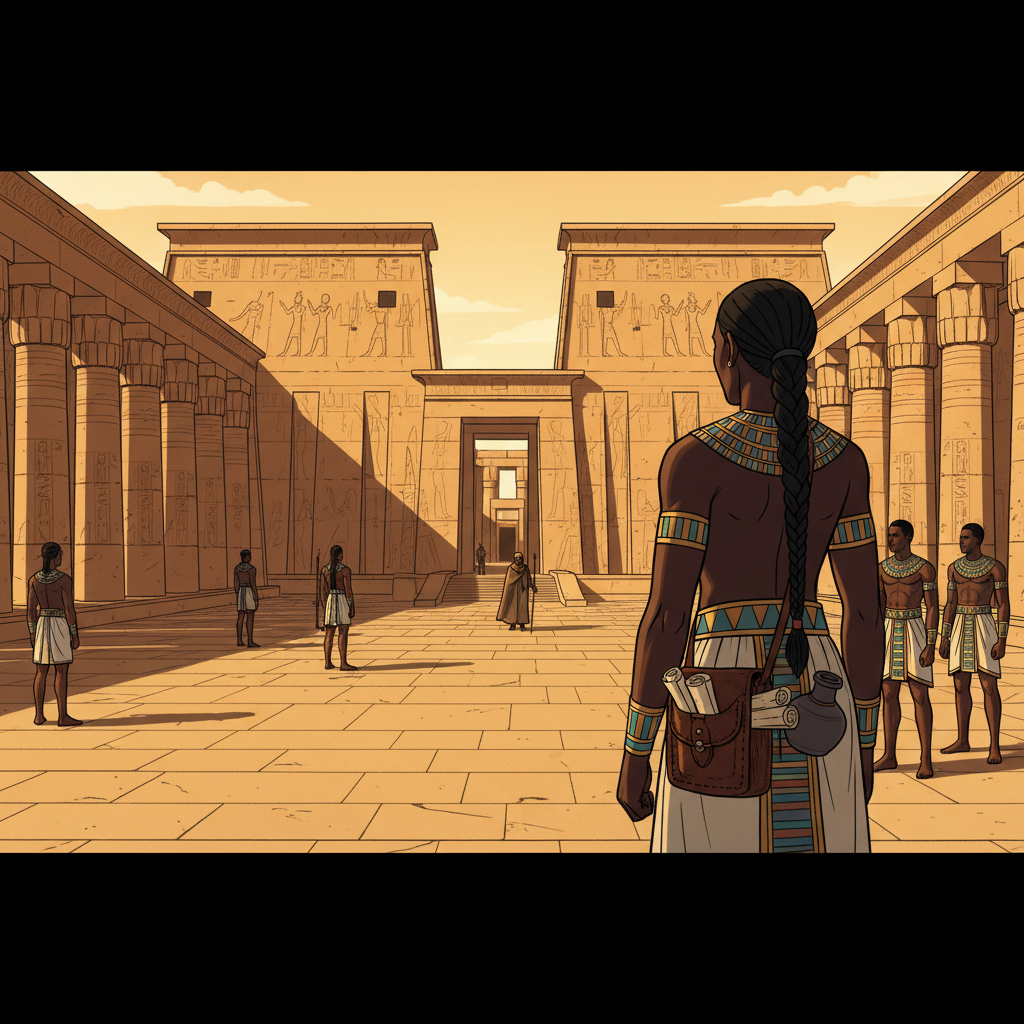
Iset was twenty-eight years old the summer her posting changed. She had served six years as a Medjay before the order came down from the vizier's office naming her personal guard to the pharaoh herself. Iset was tall — taller than most men in the regiment — and her shoulders were broad from the running drills of her younger years. Her skin was very dark, polished by the sun of the training fields outside Waset. A single long braid fell down her back, bound at the end with a strip of black linen. She wore the royal-guard kilt with its gold trim, and at her hip, on a strap of tooled leather, she carried a small satchel that the other Medjay did not carry. Inside the satchel were sheets of papyrus, a reed pen, and a closed clay inkwell. That satchel was unusual.
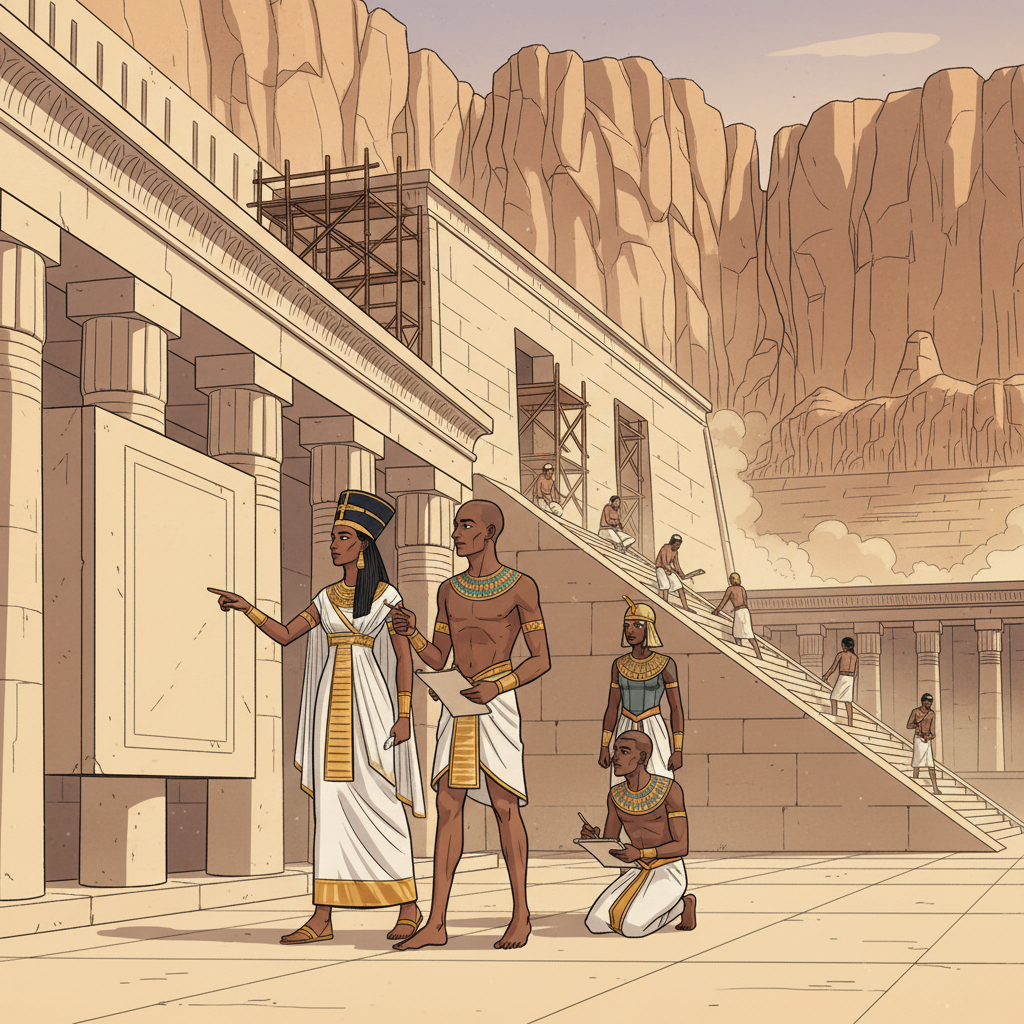
Her first day at her new post was at Deir el-Bahri. The mortuary temple was still under construction — terrace after terrace rising against the cliff face, pale limestone pillars white in the morning sun, cedar scaffolding bristling along the upper court. Stoneworkers called to each other across the ramps. The air smelled of dust and fresh-cut wood. Hatshepsut walked the colonnade with an architect beside her, a lean man in a pleated kilt whom Iset knew by name — Senenmut, the chief of works, the pharaoh's trusted builder. They were discussing the placement of a relief panel. Hatshepsut pointed, Senenmut nodded, a scribe beside them took notes on a wax tablet. Iset walked two paces behind the pharaoh, silent, watching the terraces and the workmen and every angle where a stranger might appear.
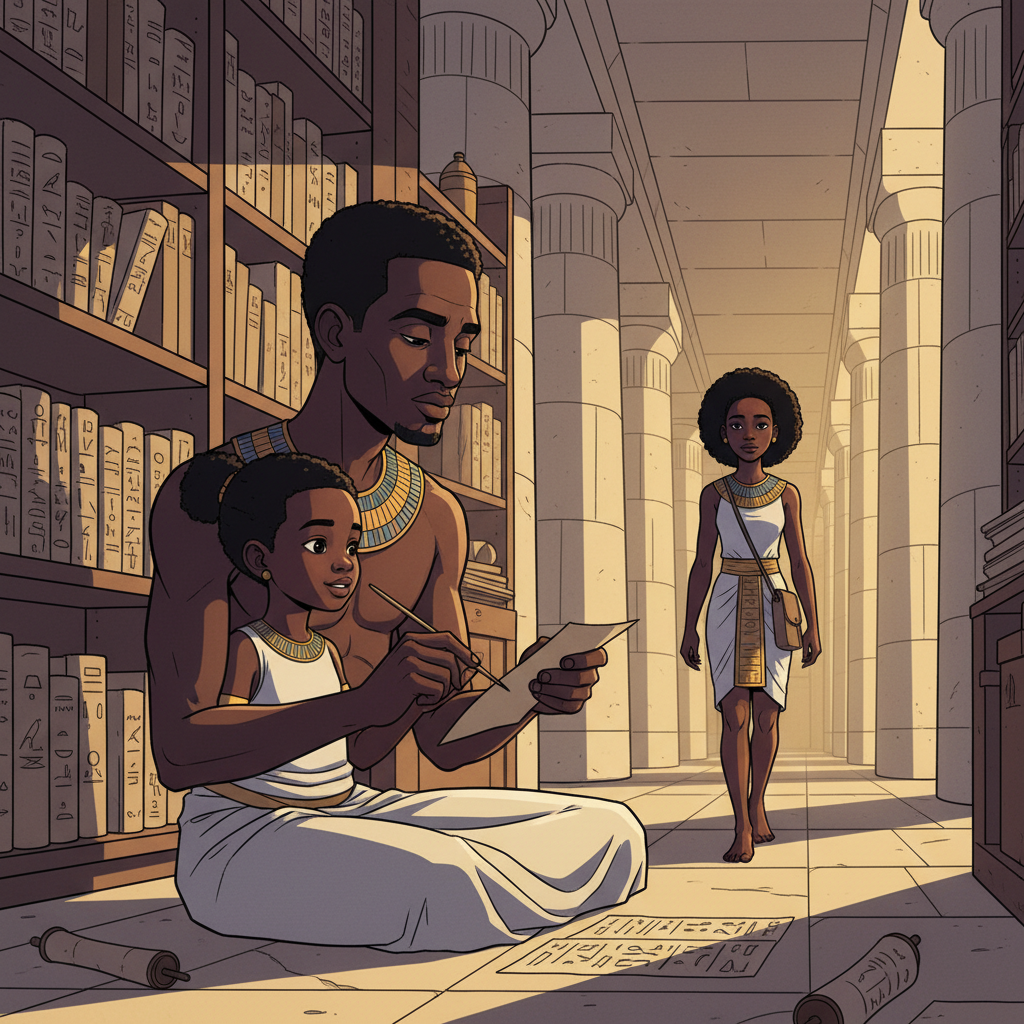
Iset's father had been a temple scribe at Karnak, and she had grown up in the shadow of papyrus. Her earliest memory was the smell of ink drying on a scroll, and the soft scrape of her father's reed pen in the cool of a back room in the priestly quarter. He had taught her the shapes of the medu neter before she could braid her own hair. Most Medjay were fighters first and readers second, if at all. Iset was the other way around. The captain who recommended her to the palace had written in the margin of her file, in small careful script: literate, observant, remembers. Hatshepsut had read the file herself. That was how Iset came to walk two paces behind her pharaoh with a papyrus satchel at her hip.
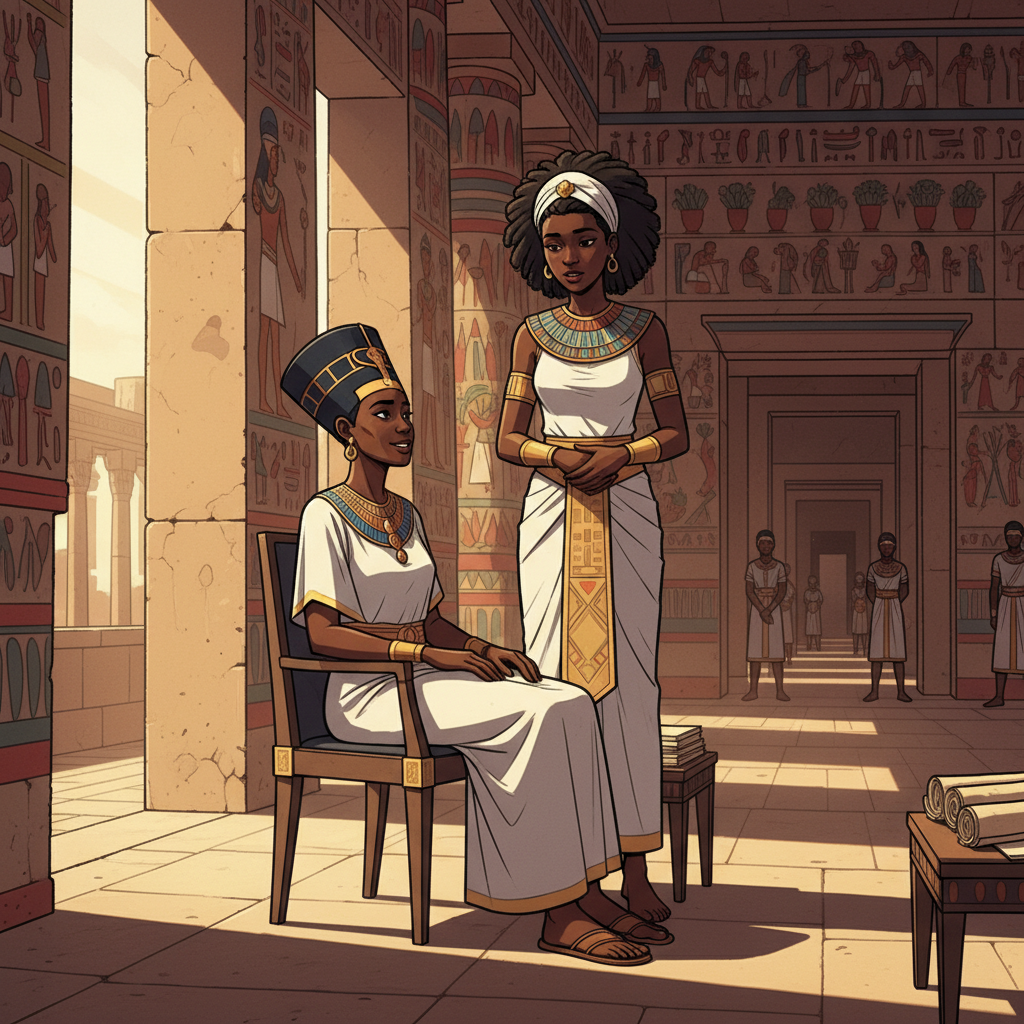
Most days were quiet. The pharaoh's rooms were deep inside the palace complex and her public appearances were small and controlled. Iset walked the colonnades, watched the doorways, stood behind chairs. And sometimes, in the long slow hours of a peaceful afternoon, Hatshepsut talked to her. Not as a ruler to a guard. As two people who read. Hatshepsut would name a hymn, and Iset would finish the line. Hatshepsut would ask what Iset had been copying lately, and Iset would tell her — a passage from the wisdom of Ptah-hotep, a medical text she had borrowed from a temple physician. The pharaoh listened. She remembered. The next week she would ask follow-up questions. Iset kept her voice even and her answers brief. But she noticed that she looked forward to those conversations.
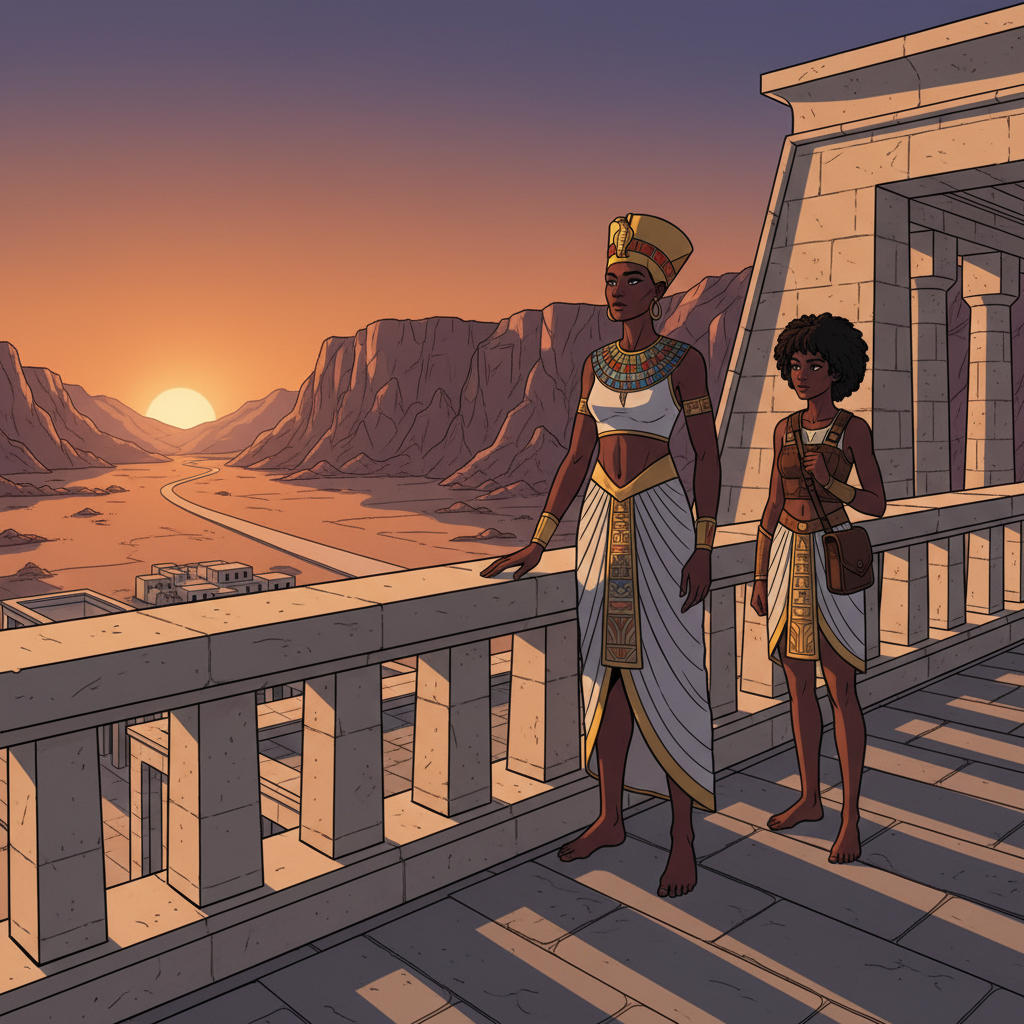
There came an evening on the upper terrace of the mortuary temple when the sun was sliding behind the western cliffs and the workmen had gone home. Hatshepsut stood at the balustrade looking down at the valley road, and Iset stood three paces back, as was proper. Without turning, the pharaoh spoke. "Iset. You carry a scroll at your hip. What do you write on it?" Iset's hand went to the satchel without thinking. She answered carefully. "The day's events, Per-aa. What I saw. What was said. Nothing political. A record for myself." Hatshepsut nodded. She was quiet for a long moment. Then she said: "Good. Keep doing it. One day it will matter." She did not explain. Iset did not ask. The sun went behind the cliff and the terrace cooled in one breath.
Weeks later, at the edge of the garden where the pharaoh kept a small reflecting pool, Hatshepsut spoke more openly. She sat on a bench of polished cedar and Iset stood near enough to hear. "My reign is contested, Iset. You know this. My nephew Thutmose will sit where I now sit. That is the order of succession, and I accept it. What I do not accept is being remembered wrongly. If they write of me at all, let them write of Punt. Let them write of the temples I raised. Let them write that Kemet knew peace for twenty years under my hand. Not battles. Not the sons of other kings. The ships and the stones and the years of no war. That is what I built."
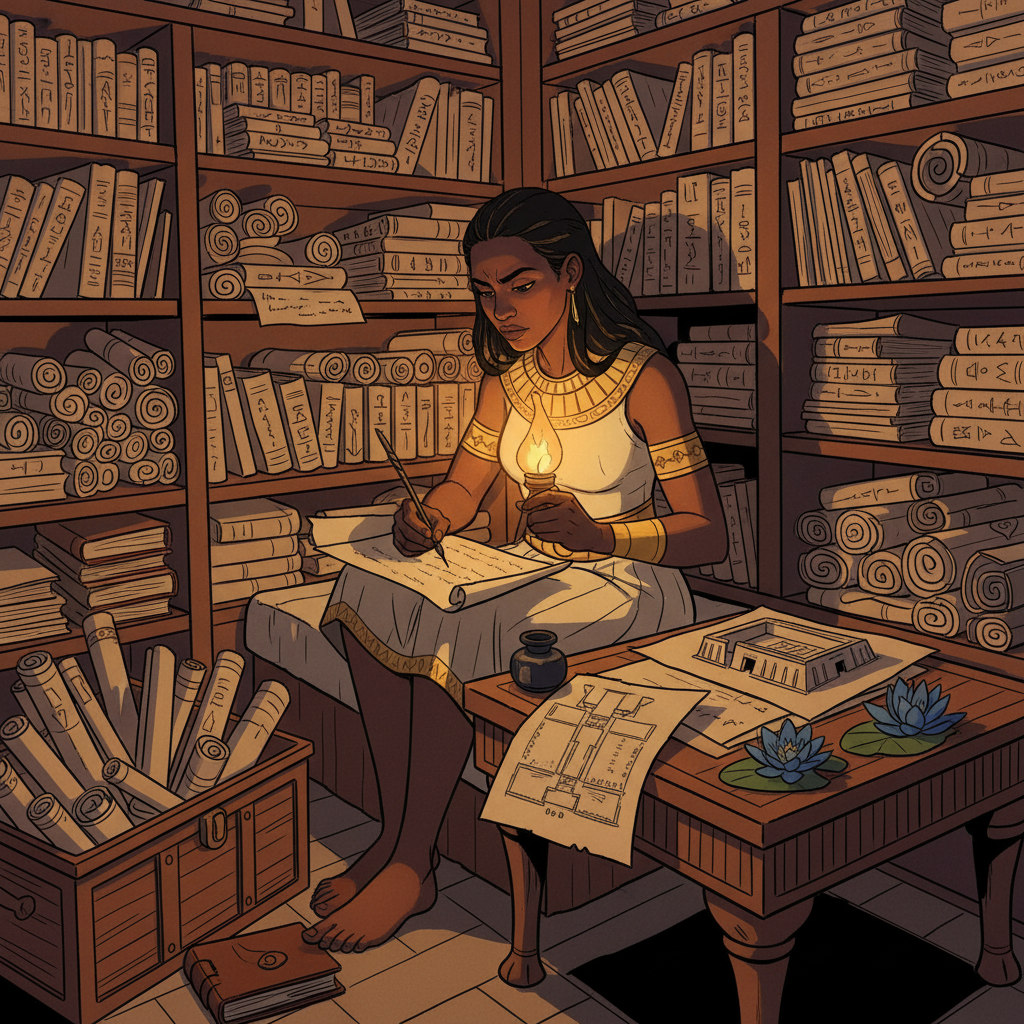
That night in her quarters Iset lit a small oil lamp and wrote. She wrote down everything the pharaoh had said, word for word as she could remember, and then she added the setting — the bench, the reflecting pool, the blue water lilies folded shut for the evening. She copied, too, a sketch Senenmut had made on a wall panel of the temple: the terraces in elevation, with the offering chapels marked. She was not a great artist, but she was a patient one. She drew it twice until the proportions were correct. Then she put the scroll in the wooden chest at the foot of her bed, beside the others that were slowly filling it. Her private journal. Twenty pages in the first year. Forty by the second. It grew like a slow plant.
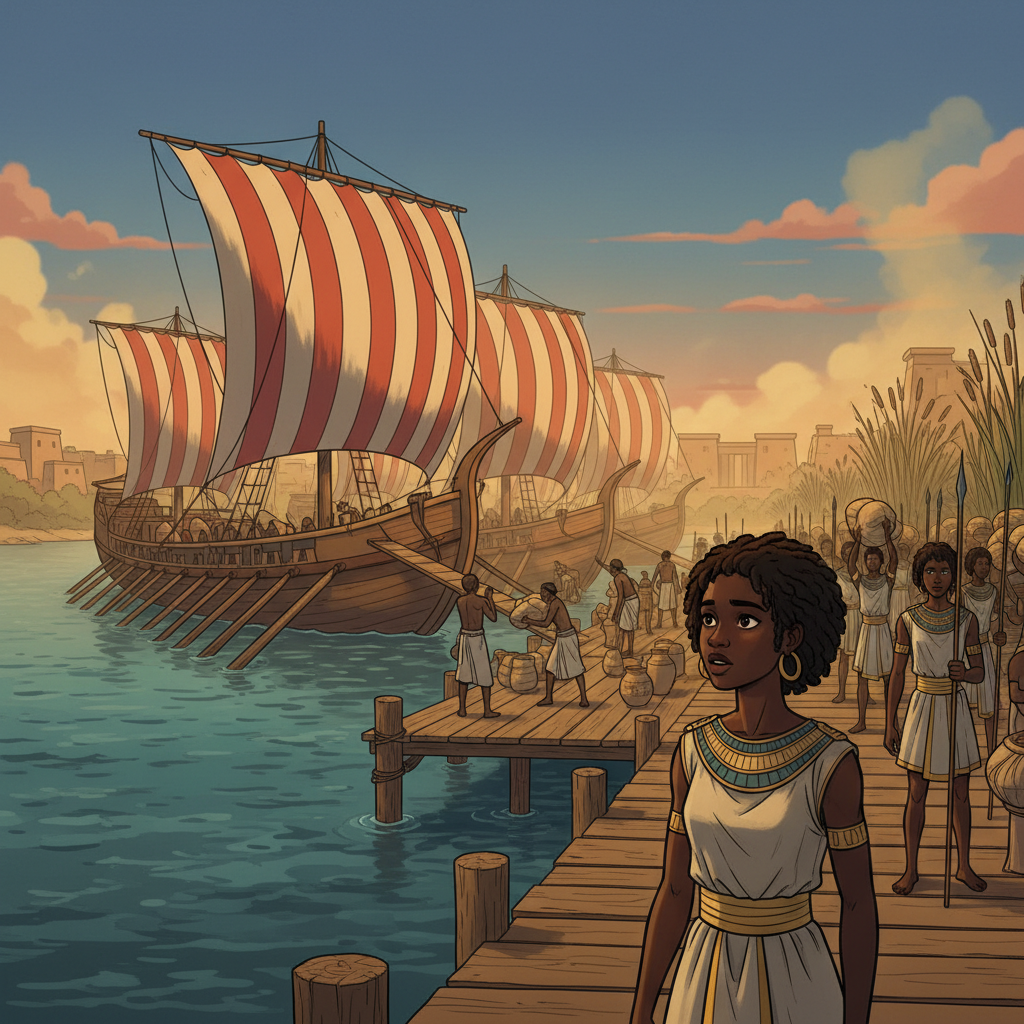
Time passed the way it passes in a reign without crisis — the floods came up and went down, the harvests were counted, the festivals were observed. In the ninth year of Hatshepsut's pharaonic rule the Punt expedition returned. Iset stood at the river dock with the rest of the royal guard and watched the ships come in. Five great vessels with cedar hulls and striped linen sails, riding low under their cargo. The air already smelled different before they were tied off — something resinous and strange, warm and sweet, that she would later learn was myrrh. The gangplanks came down. The unloading began at dawn the next morning. Iset had pulled extra rotation to be there. She wanted to see everything. And she wanted to write it down.
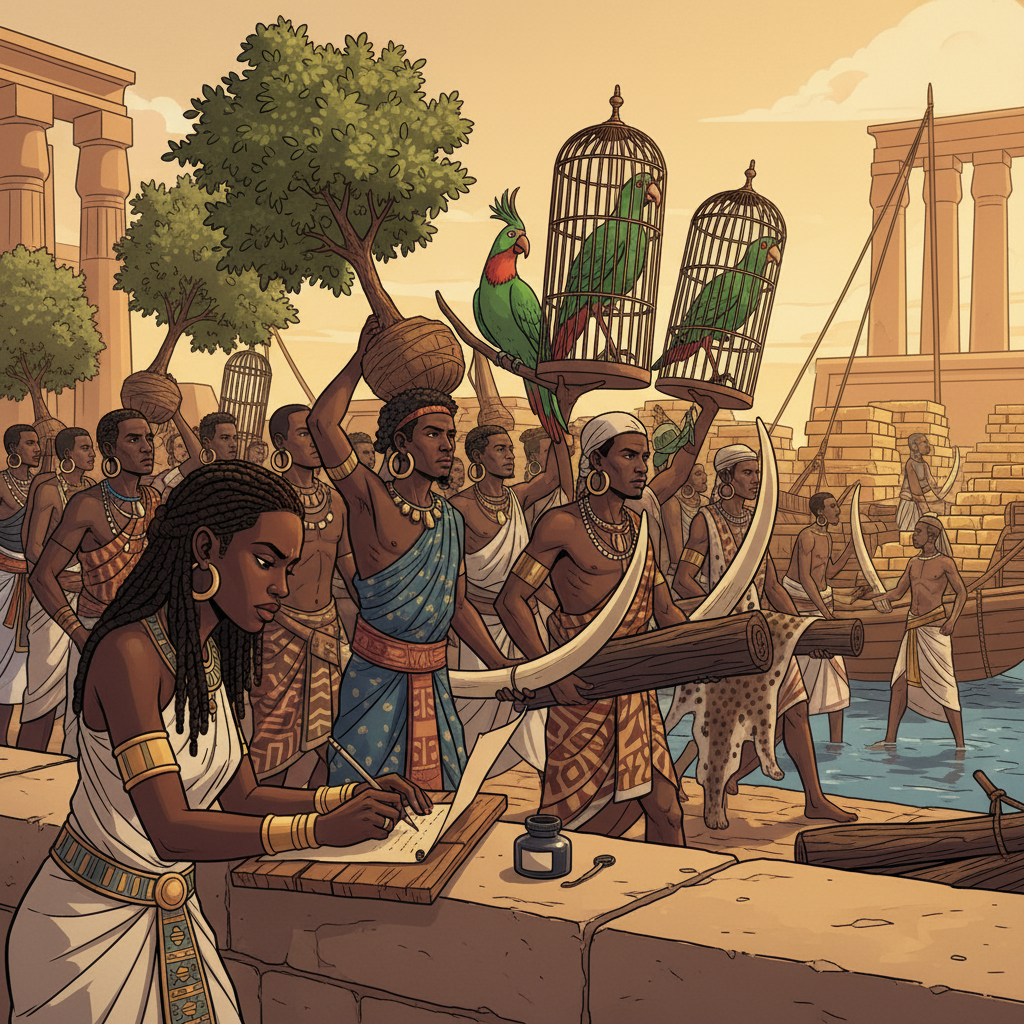
The gifts from the Land of Punt came ashore for three full days. Iset stood to one side with her papyrus braced against a wooden board, the inkwell propped on a low wall beside her, and she wrote. Live myrrh trees with their root balls wrapped in wet linen. Cages of exotic birds — small green and red things that shrieked at each handler who came near. Tusks of ivory. Ingots of gold stacked like bricks. Panther skins, rolled tight. Ebony logs black as night water. Men of Punt walked in with them, dressed in their own clothes, with their own ornaments in their ears. Iset recorded the count of every bale. She recorded the names of the captains, the dates of the unloading, the weight of the gold. She wrote until her hand cramped. Then she wrote more.
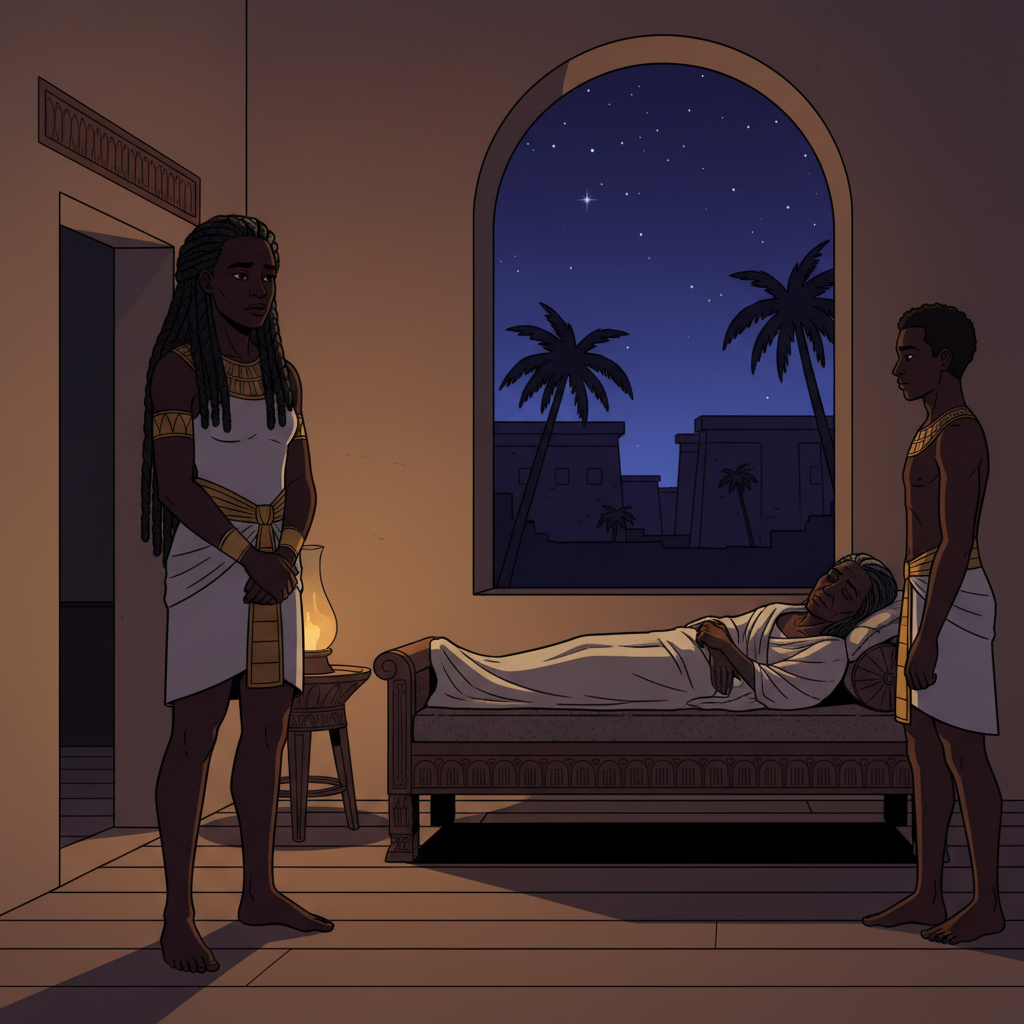
Years passed after that — six, seven, eight. Iset aged. Her braid grew threads of iron at the temple. Hatshepsut aged too, more slowly and with more grace, but the lines deepened at her mouth and there were days when she leaned harder on her staff. The reign remained peaceful. The temples grew. Trade flowed. And then one evening Iset was summoned to the pharaoh's quarters and found her asleep on a couch with a linen shawl across her shoulders. Iset did not wake her. She stood watch instead, silent in the corner, until another of the royal guard came to relieve her. That was the last time she saw Hatshepsut alive. The pharaoh died in her sleep two nights later. The news reached the regiment at the first hour of morning.
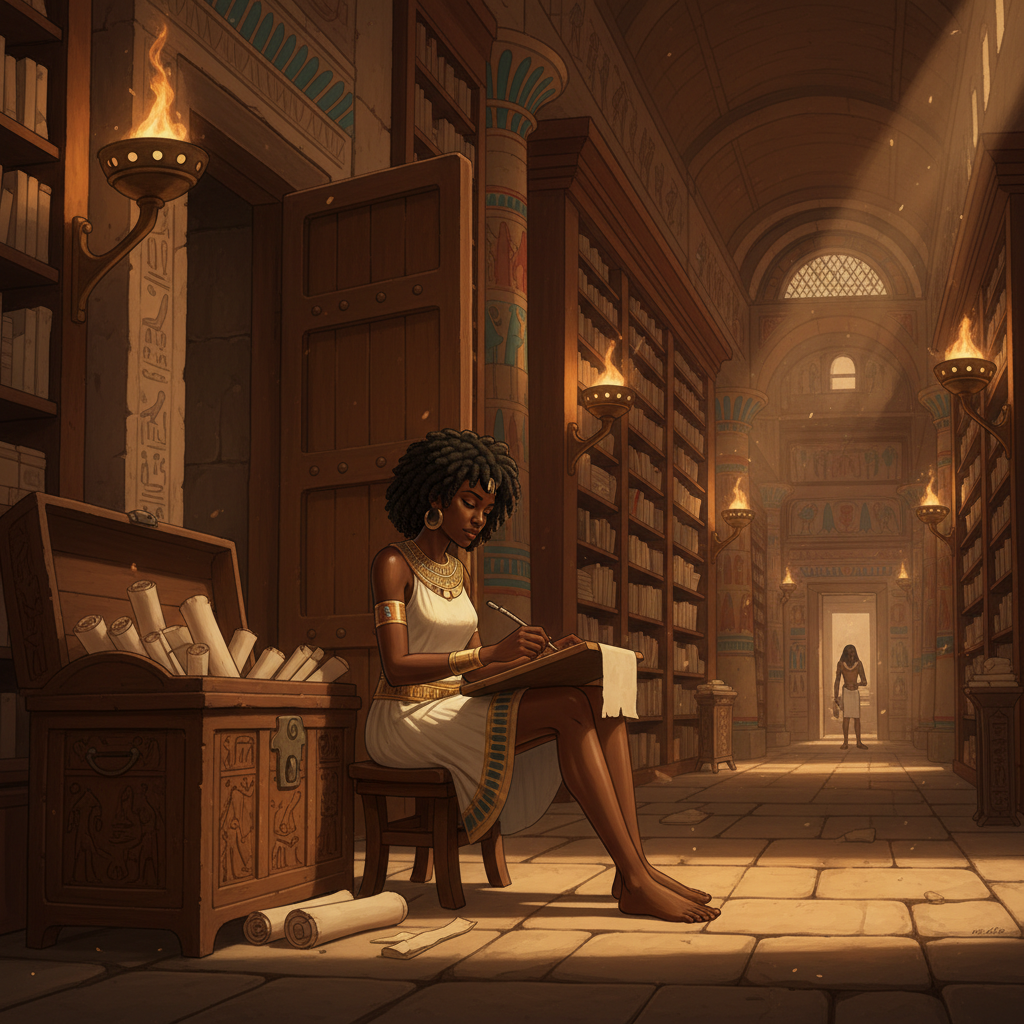
Thutmose III took the double crown. The transition was orderly. Iset was not dismissed from the Medjay — her record was good — but she was reassigned. No longer in royal chambers. A mid-tier post at the administrative complex near Karnak, watching the door of a records office that saw perhaps three visitors a day. It was a quiet post. It suited her. She took her wooden chest of scrolls with her when she moved out of her palace quarters, and she kept writing. She copied her old pages onto fresh papyrus. She added memories she had not had time to write down before — a phrase the pharaoh had used at a banquet, the way Senenmut laughed, the sound of the Punt trees creaking as they were hauled off the ships. The journal thickened.
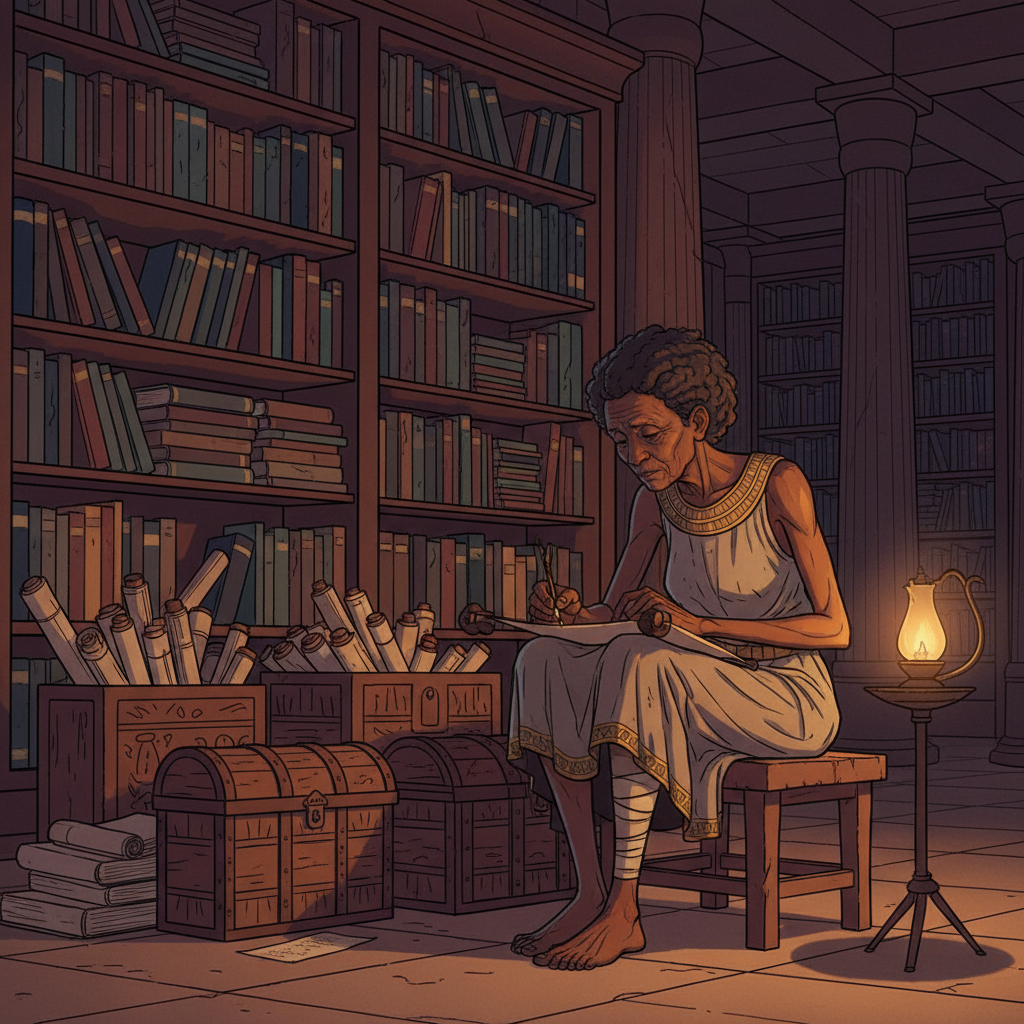
Decades moved the way they do. Iset was fifty, and then fifty-five, and then sixty-two. Her knees ached in the wet season. Her daughter Meryt was grown now — married to a temple copyist, living in a small house on the western edge of Waset. Meryt had two children of her own. Iset still wore the Medjay kilt on her watch days, though it hung looser on her now. The chest of scrolls had been joined by a second chest, and then a third. She wrote in the evenings by a single lamp, slower than she once had but just as steady. The pharaoh she had guarded was a generation dead. The pharaoh on the throne had been her Hatshepsut's nephew, and was now an old man himself, long into his own reign.
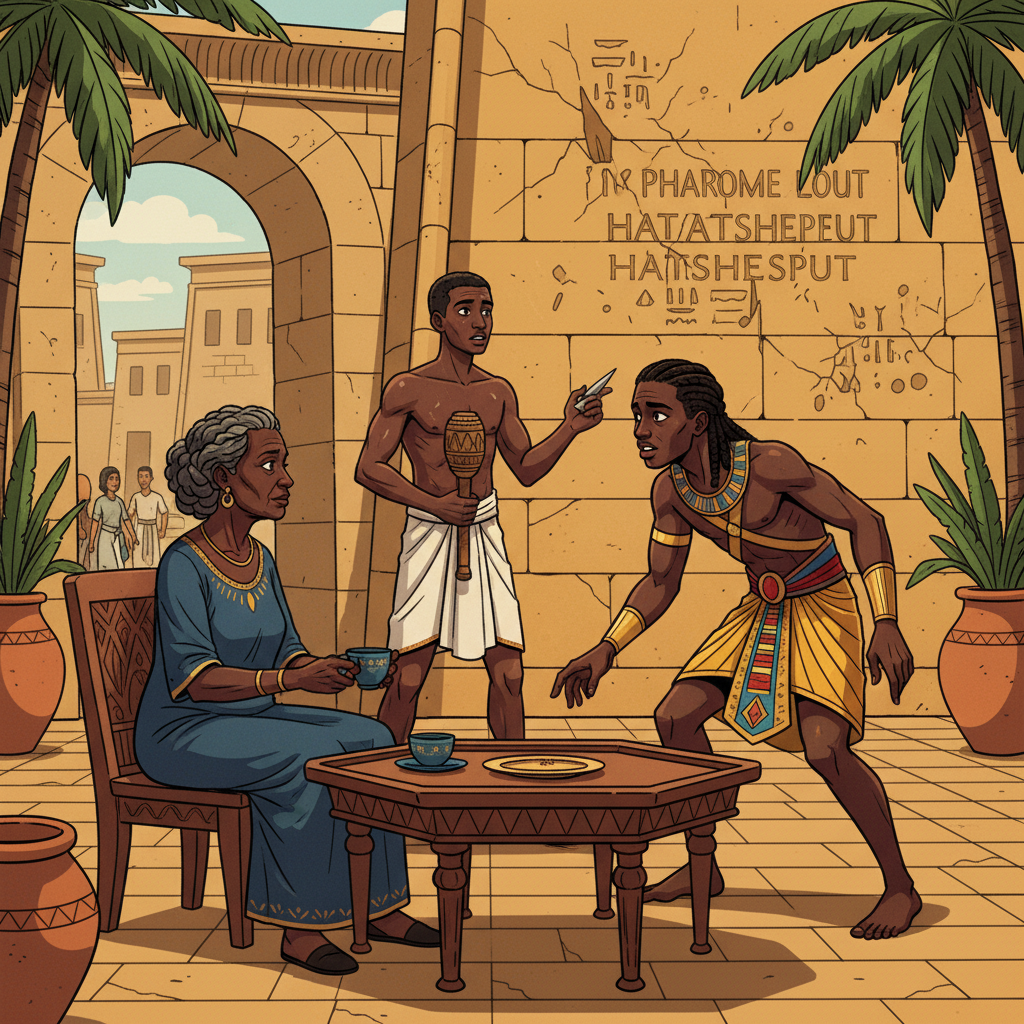
Word came to Iset through a younger Medjay named Wenes, who had a brother on a temple work crew. The brother had been given strange orders. The work crew was to go to Deir el-Bahri. They were to take chisels and mallets. They were to strike the name of the old pharaoh Hatshepsut from the reliefs and the cartouches on the outer walls of the temple. Also from selected panels at Karnak. Also from the obelisks. Wenes told Iset this in a low voice over tea in a back courtyard, and his eyes kept flicking to the gate. The order had come from the throne. From the old pharaoh himself, Thutmose III. Erasure. Iset set her cup down. Her hand was steady. She said only, "Thank you for telling me. Say no more."
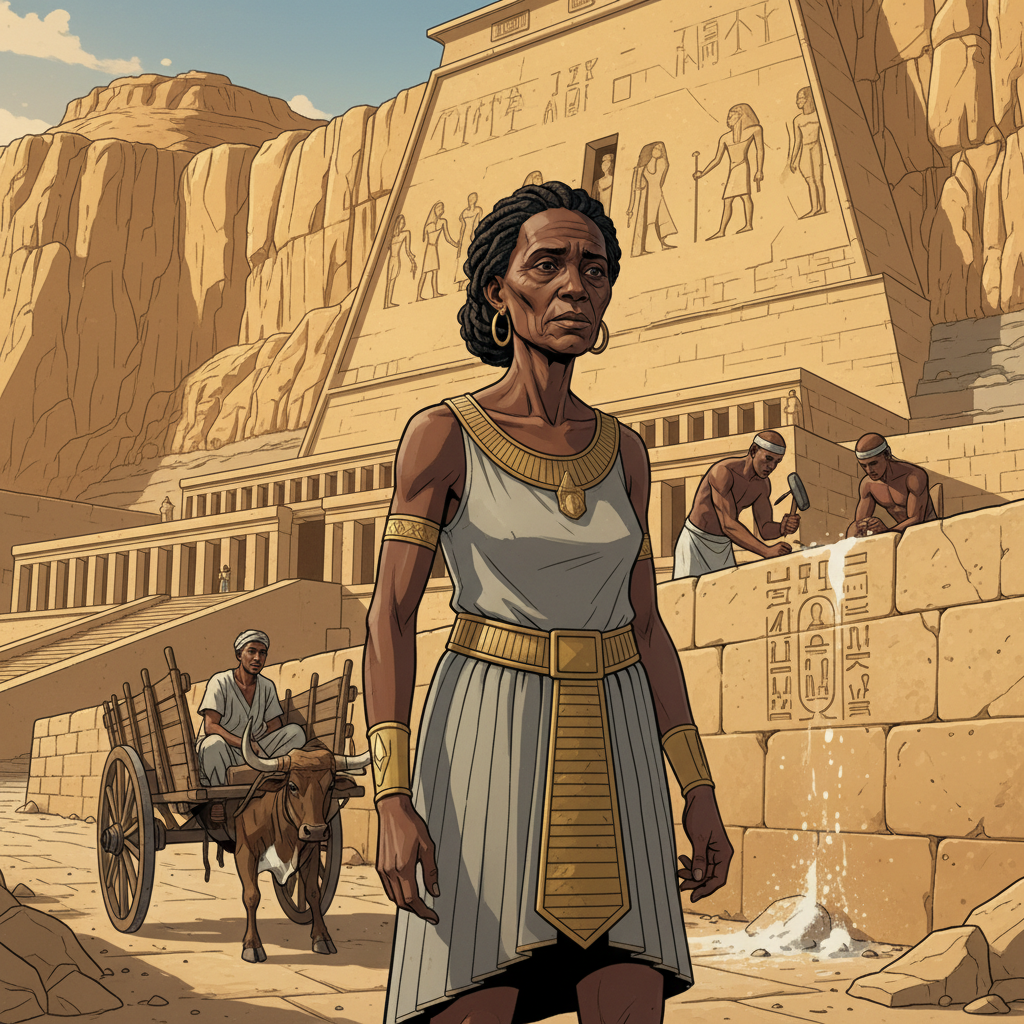
She walked to Deir el-Bahri three days later. She was old. The road was long. She paid a carter for a seat on a farm cart for half the distance and walked the rest. When she reached the mortuary temple she sat on a low wall at the edge of the first terrace and watched. The workmen were already there. Two men with iron chisels and a third with a mallet. They were working on a cartouche in the outer colonnade — the one that held the name of the pharaoh Maatkare, the throne name of Hatshepsut. A fine white dust drifted down from the wall as the chisel bit. The stone gave up its name a letter at a time. Iset watched. She did not move. She did not speak. She sat until the sun moved off the wall.
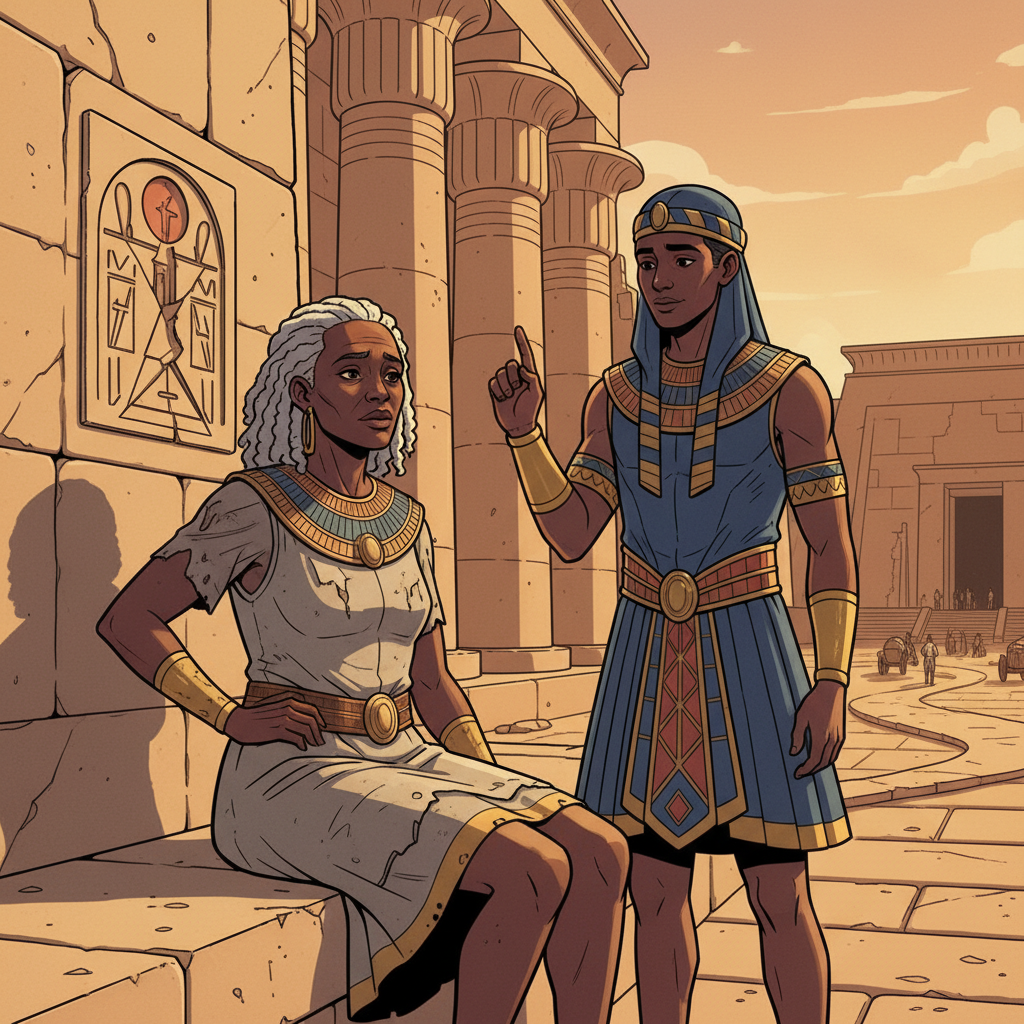
A younger guard she did not know came over and asked her politely if she was lost. She said no. She said she had served here once, long ago. The young guard looked at her kilt and the old Medjay insignia and nodded with a kind of distant respect. He did not ask her to leave. He did not offer to help her. He went back to his post and left her alone on the low wall. Iset sat until her hips ached. Then she stood. She looked at the chipped cartouche one last time — the stone ragged where the name had been — and she walked slowly back down the path toward the carts. She did not speak to the workmen. She did not interfere. She was old. She was one woman. The order came from the throne.
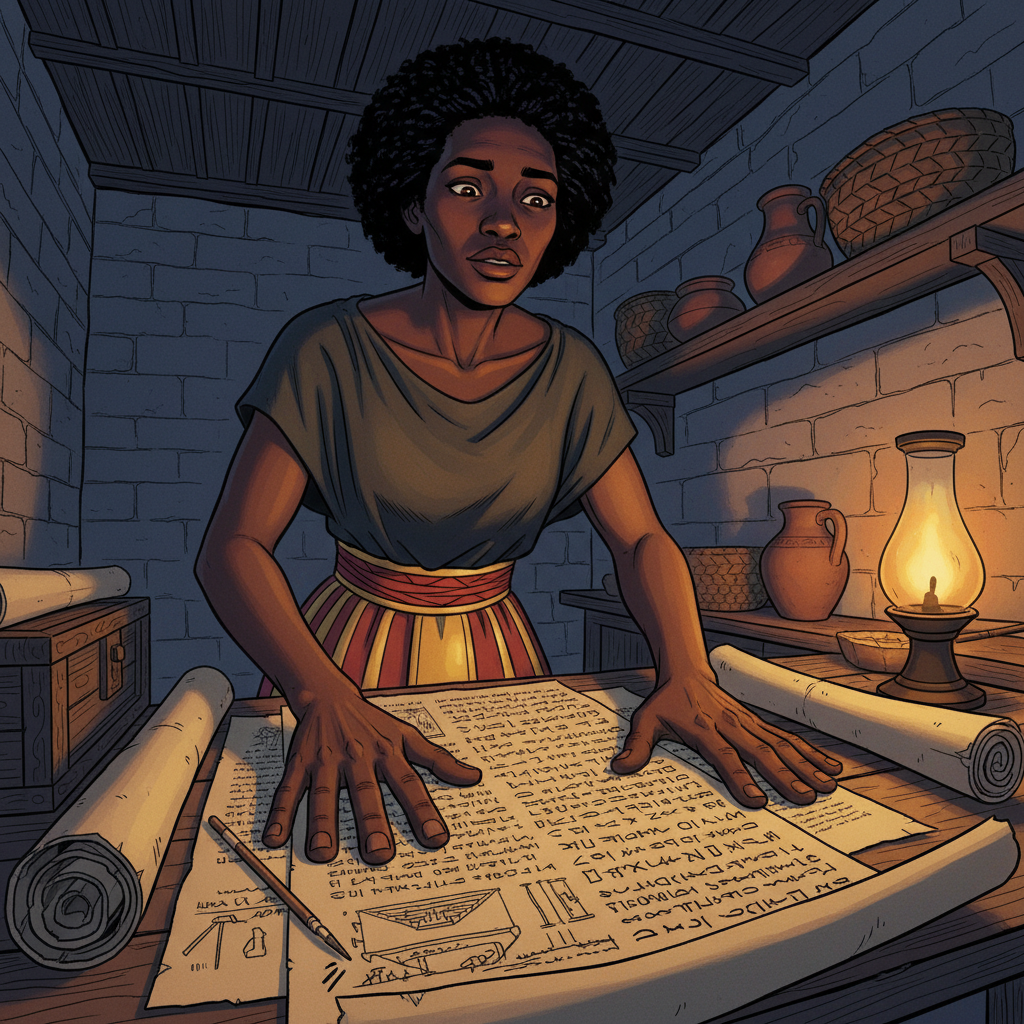
That night in her small house she pulled the newest scroll from the chest and added to it. She wrote for hours. Every saying she could remember. Every decision. The colors of the linen on the bench at the reflecting pool. The exact words about Punt and the temples and the twenty years of peace. The sketch of the terraces. The names of the Punt captains. The weight of the ivory. She wrote until her fingers would not close around the reed pen anymore. Then she set the pen down and sat with her hands flat on the desk. She was not angry. She was not surprised. A pharaoh could order the chisel. The chisel could reach the stone. But the chisel could not reach papyrus hidden well. That part was hers.
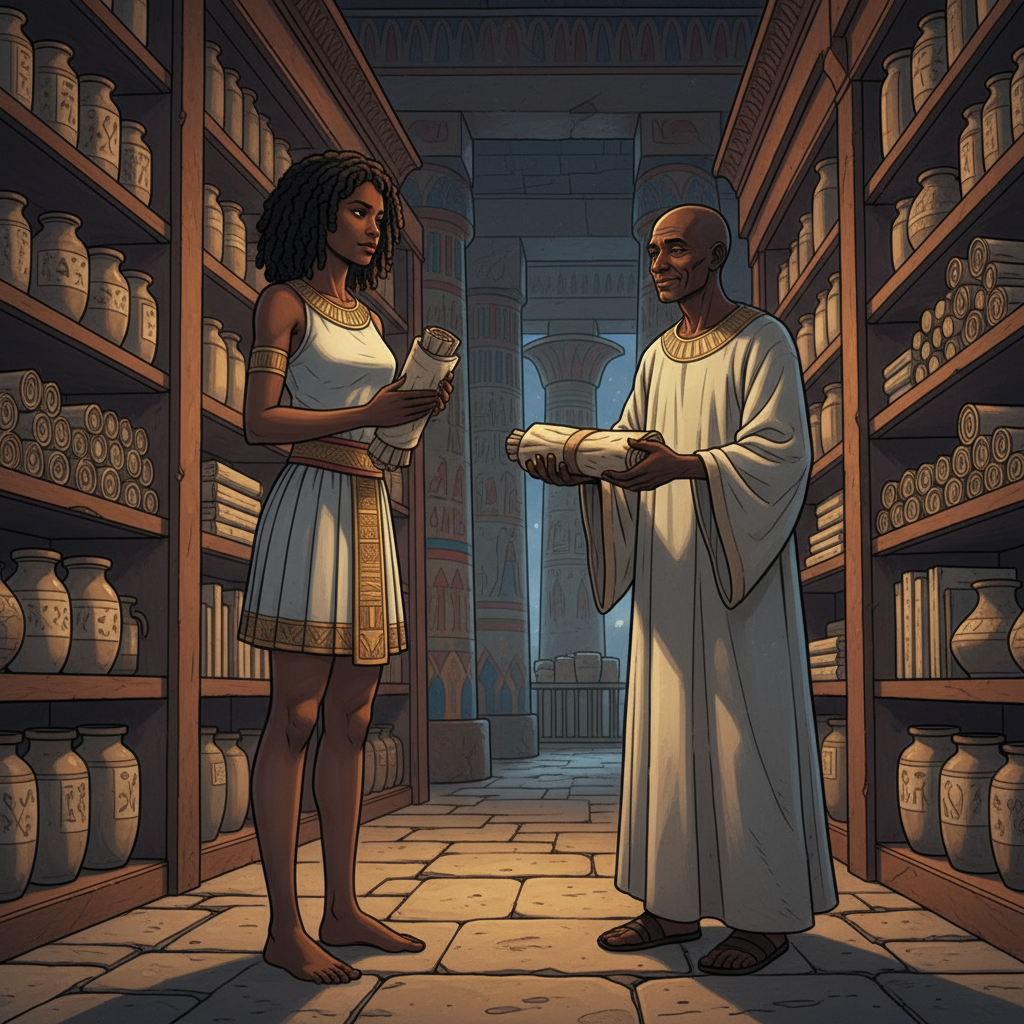
Over the next season Iset made three copies of the journal. She worked slowly, a few pages an evening, using the fresh papyrus she had stockpiled for years against exactly this. When the three copies were done she considered where each one would go. She walked one copy herself to the temple archive at Karnak, wrapped in oiled linen, and left it in the care of a senior archivist who had been her father's apprentice long ago. He asked no questions. He stored it in a sealed jar on a shelf with other private papers, among records no one would disturb for decades. The second copy she gave to her daughter Meryt, with instructions to keep it hidden behind the cooking hearth and tell no one — not her husband, not her children. Meryt nodded. She understood.
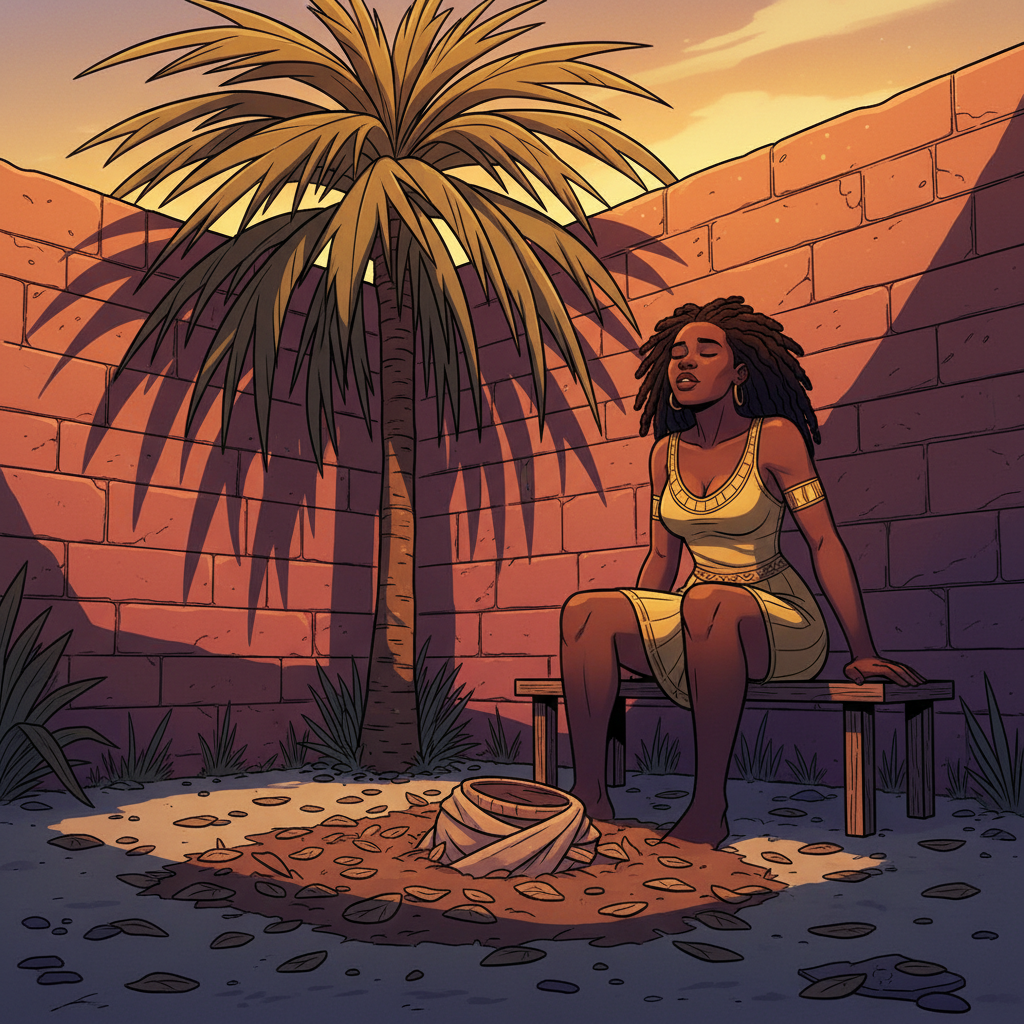
The third copy Iset buried. She sealed the scroll inside a ceramic jar of the kind used for storing dried grain, stoppered the mouth with wax, and wrapped the whole jar in a double layer of coarse cloth. Then she went out one quiet evening into the small walled garden behind her house and dug a hole beside the date palm she had planted when Meryt was born. She laid the jar in the hole. She packed the earth back over it. She tamped it flat with her foot and scattered a layer of dry leaves across the surface so the disturbance would not show. Then she sat on a low bench and caught her breath. Somewhere in the distance a dog barked once and stopped. The evening air was cool. The date palm's shadow fell across the patch of ground.

Meryt came to see her not long after, and they sat together in the garden as the sun went down. Meryt asked the question she had been holding. "Mother — why write it? The pharaoh ordered it forgotten. The walls at Deir el-Bahri are being scraped blank. What are three scrolls against a pharaoh's order?" Iset did not answer right away. She watched a thin bird move across the sky. Then she said: "Because someone has to remember. If the hammer hits and no one wrote it down, then the hammer wins. The hammer will not win." She did not explain further. Meryt looked at her mother for a long moment, and then she nodded. She did not ask again. They sat until the first stars came out.
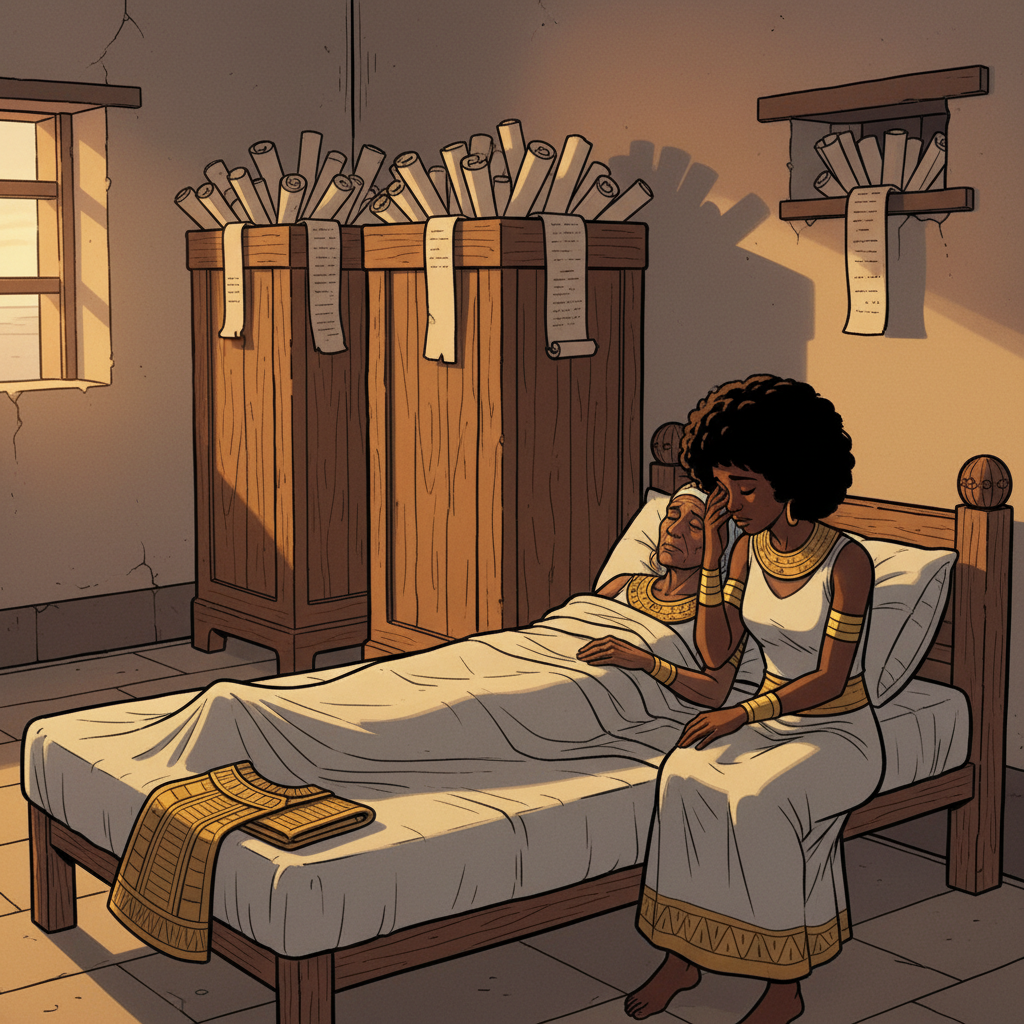
Iset died two years later. She died in her own bed, in her own house, on a cool morning in the month of Pharmuthi. Meryt was with her. The old Medjay kilt was folded at the foot of the bed. The wooden chests of scrolls stood against the far wall, three of them now, each one heavy with papyrus. Meryt closed her mother's eyes with two fingers. Then she sat beside the bed for a while before she called the neighbors. In the quiet she thought about the scroll hidden behind her cooking hearth, and the scroll in the temple archive at Karnak, and the scroll buried under the date palm in the garden. She thought about what her mother had said. The hammer will not win. She found she believed it.
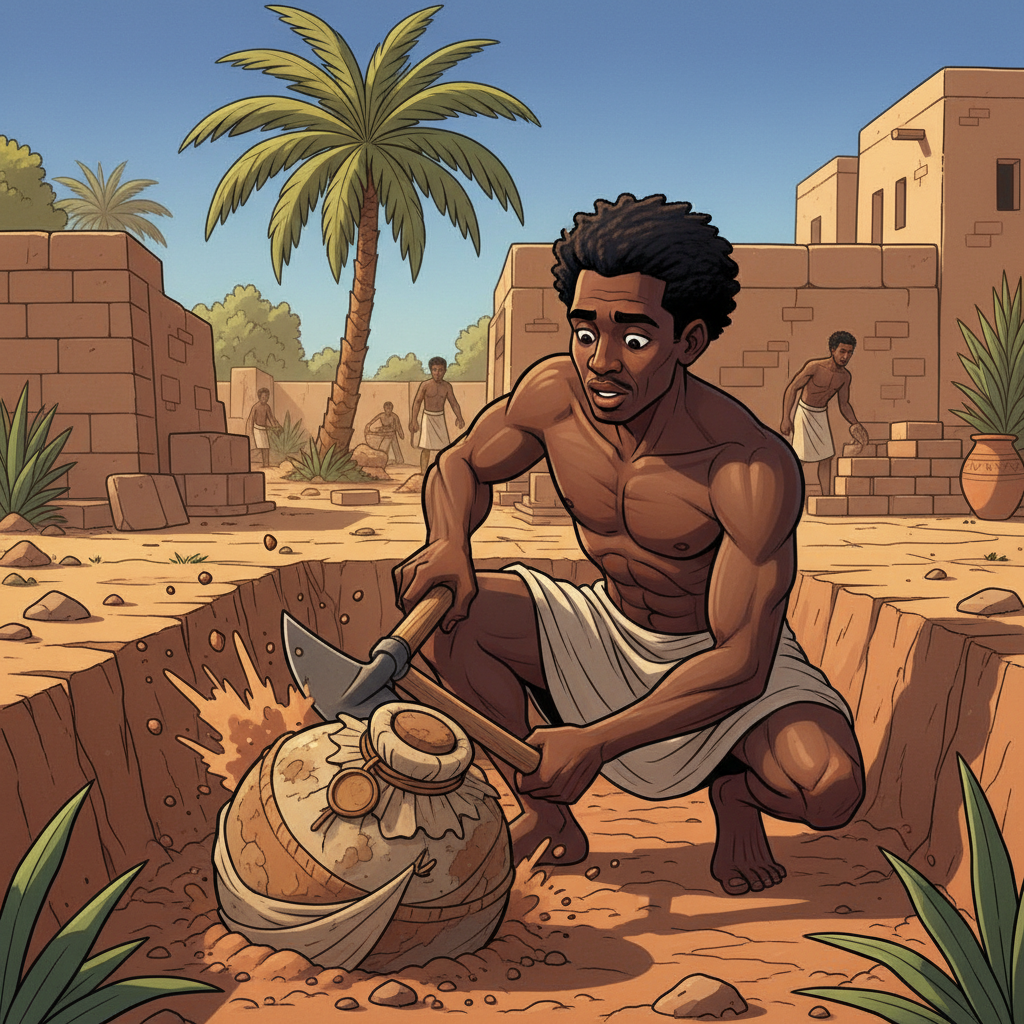
The jar under the date palm lasted. The garden changed owners twice. A new house was built over part of the old compound. The date palm died and was replaced. Many centuries went by. Kemet itself changed hands, changed languages, changed gods. And one year — long after everyone who had known Iset was dust, long after the reign of Hatshepsut was a footnote that scholars argued about — a workman digging a foundation trench in a garden in what had once been Waset struck a ceramic jar with his spade. He lifted it out. He broke the wax seal. He unrolled the scroll inside. It was in a script he could not read, but he took it to someone who could. What that scroll said, along with two others like it, is part of how we know what Hatshepsut actually did.
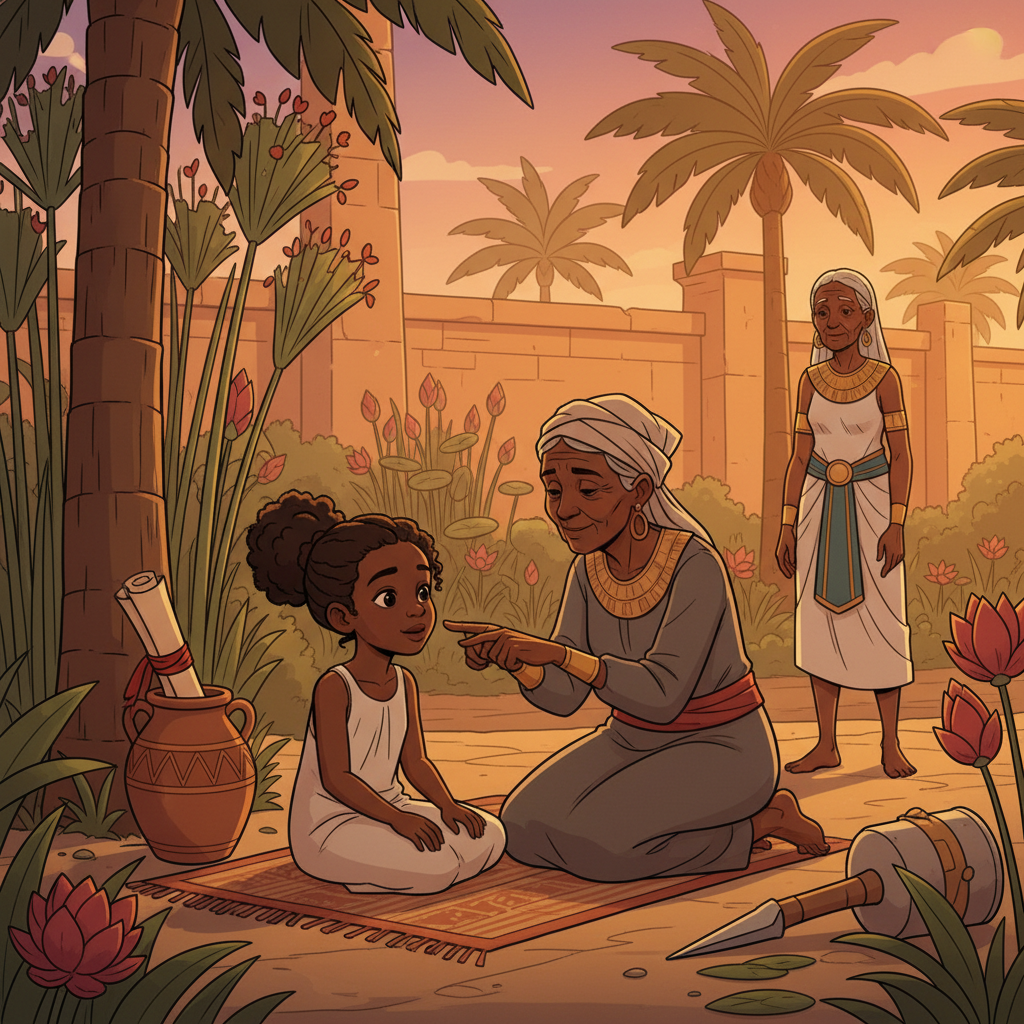
{name}, that is the story. Iset did not stop the chisel. She was one person and she was old, and the order came from the throne. But she wrote. She hid her writing well. And the hammer could not reach every copy. That is the Medjay teaching that lasts longest — not the arrow, not the spear, but the pen and the hidden scroll. Maat is memory. If you see something true and you do not want it lost, write it down. Hide the page well. Tell someone you trust where it is. The chisel can scrape a wall. The chisel cannot reach a scroll in a jar in a garden. If you write what you saw, and someone hides the page well, the hammer cannot reach it. That is why we tell these stories. That is why you are reading this one.