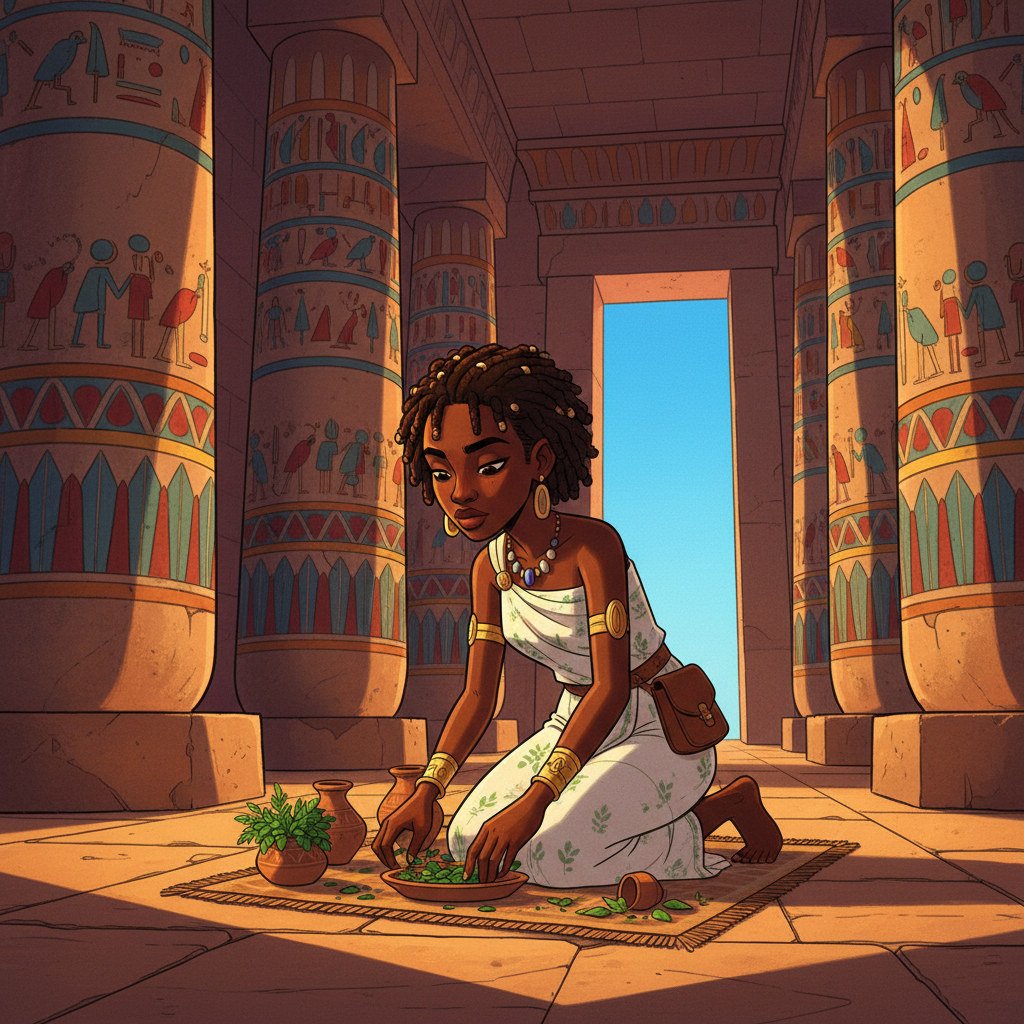
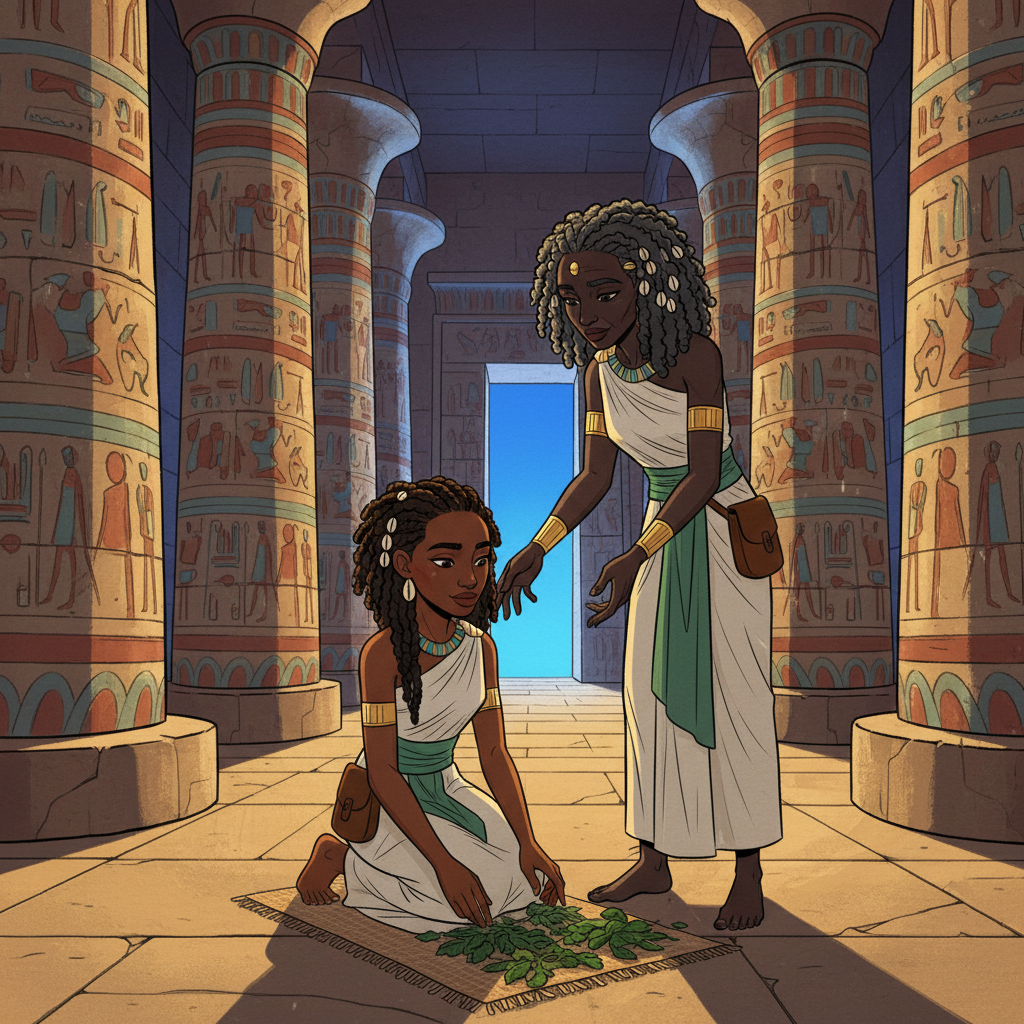
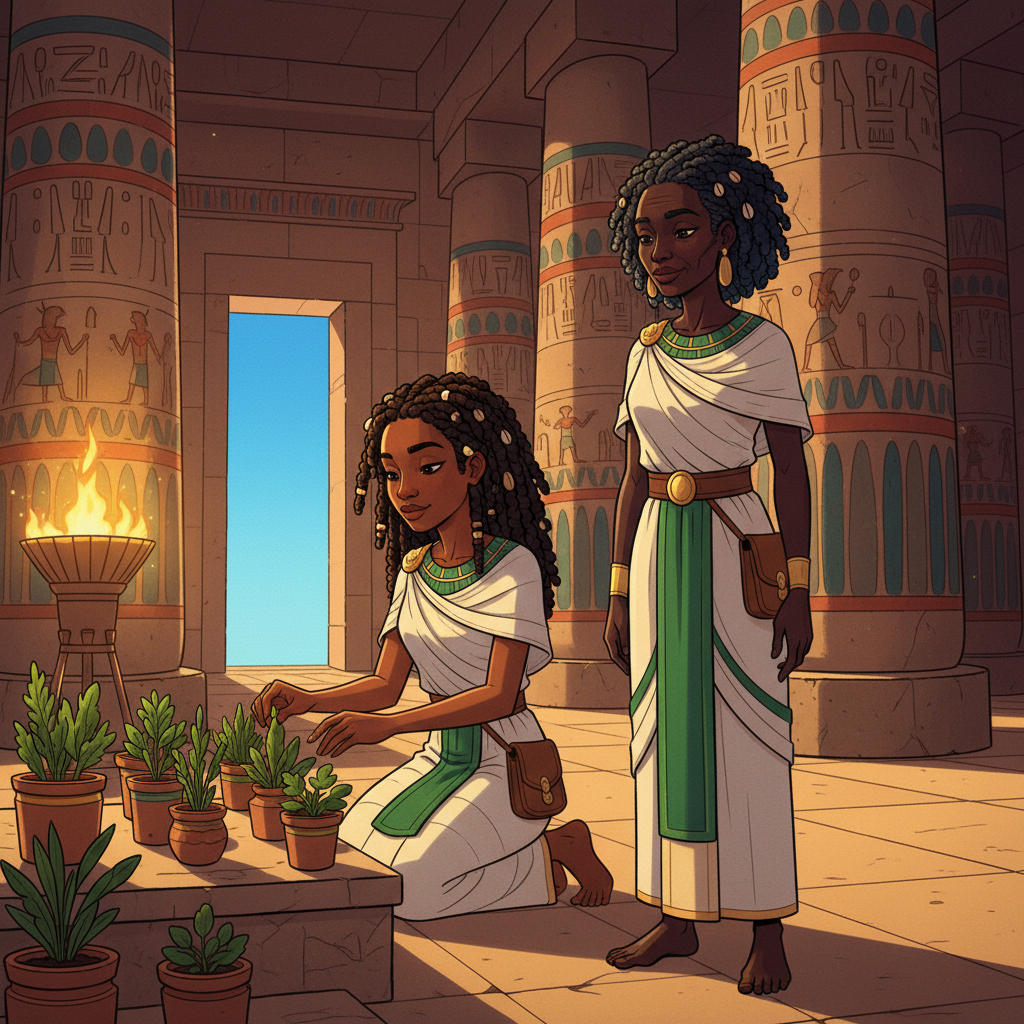
Takhat pressed a clean linen bandage against the traveler's wound and tied it firmly. Her deep brown hands moved with the skill of someone trained since childhood. She was a healer at the great Per Ankh — the House of Life — attached to the temple in the ancient city of Waset. Her teacher, Peseshet, was one of the most respected physicians in all of kemet. Peseshet's ebony-skinned face carried the calm expression of someone who had seen every kind of suffering and refused to look away. She had trained Takhat since the girl was nine years old, teaching her that healing was not just a skill but a sacred duty under maat.
The traveler lying on the reed mat was a tall man with skin the color of rich earth. He had come from far beyond the southern cataracts of the nile, from a land of dense forests and wide rivers that the people of kemet called kush. A deep gash ran along his forearm where a river stone had cut him during a crossing. "Sickness knows no borders," Peseshet always said, her dark brown face calm and focused as she examined the wound. "And neither should healing. We treat every person who walks through our door, no matter where they come from. That is what maat requires of us."
The Per Ankh was more than a place of healing. It was a great library, a school, and a workshop all contained within tall stone walls covered in painted hieroglyphs. Shelves carved into the walls held hundreds of papyrus scrolls describing surgeries, herbal medicines, and treatments for broken bones and infected teeth. Ancient Kemetic doctors had been setting bones, performing surgery, and creating medicines for thousands of years before Takhat was born. Scribes recorded every cure so future healers could learn. Peseshet often reminded Takhat that every word on those scrolls represented someone's life that had been saved or a lesson learned through loss.
One scroll was more precious than all the others. It was ancient even by the standards of kemet, written in careful red and black ink on papyrus that had yellowed with centuries. The healers called it the Book of Wounds. It described forty-eight different injuries to the human body, from skull fractures to spinal damage. The scroll taught healers to examine patients carefully, to feel the pulse, and to look for signs invisible to untrained eyes. It told them honestly which wounds could be treated and which were beyond any healer's power. Peseshet said that honesty was part of maat too — even when the truth was painful.
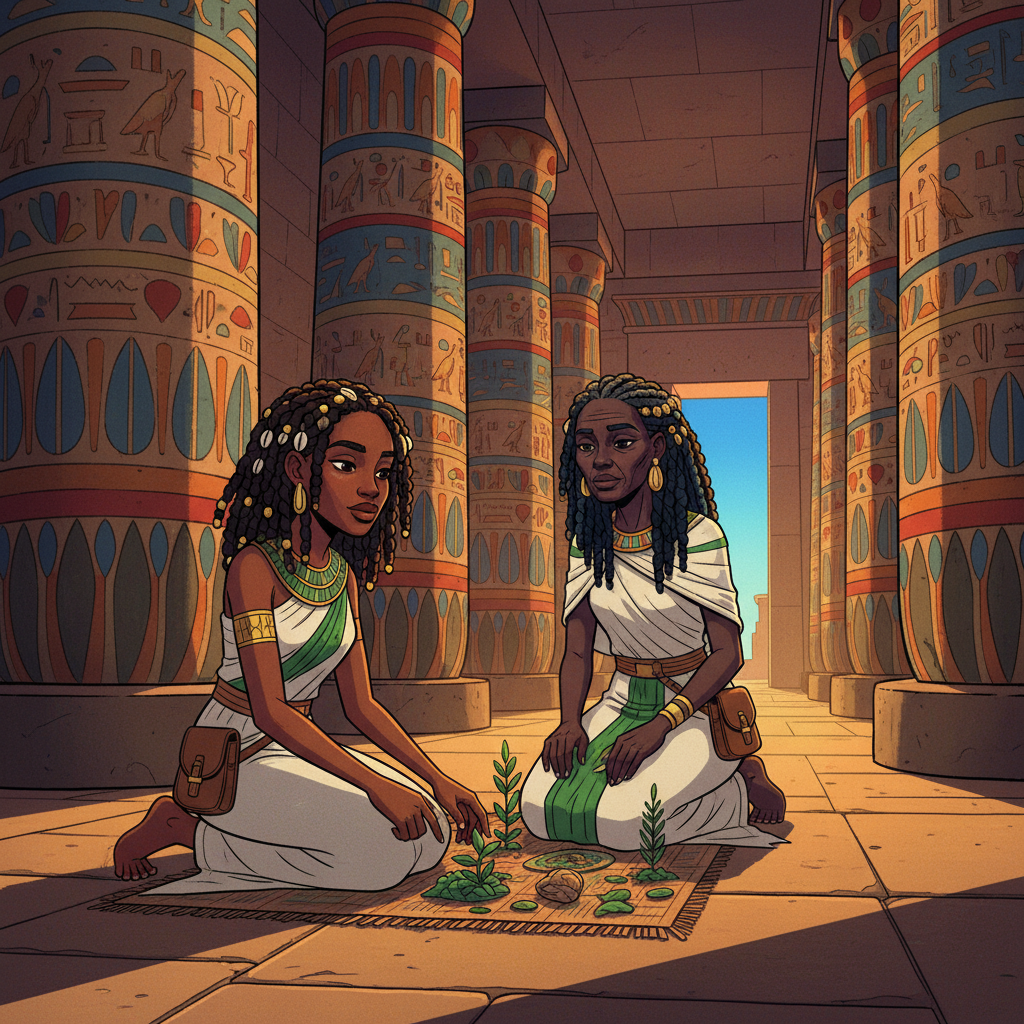
Takhat spent her mornings grinding medicines in a stone mortar. She crushed willow bark for pain, mixed honey with herbs to fight infection, and prepared poultices from acacia leaves. The smell of frankincense and castor oil filled the workshop where she worked alongside three other apprentices. All of them were young women with deep brown and ebony skin, chosen for their sharp minds and steady hands. Peseshet believed women made excellent physicians. "The goddess Sekhmet is the patroness of healers," she told them. "She holds both destruction and healing in her hands. A true healer must understand both, and choose healing every single time."
That afternoon, a mother arrived carrying a small child whose leg was badly broken. The bone had shifted beneath the skin. The mother's dark face was tight with fear, and she spoke a dialect Takhat did not recognize. She had traveled many days from a village near the border of kush. Peseshet did not hesitate. She called Takhat over and said, "We will set this bone using the method described in the old scrolls. Bring linen, bring the wooden splints, and bring the paste made from ground acacia and honey. This child will walk again. The neter — the divine — lives in her just as it lives in us."
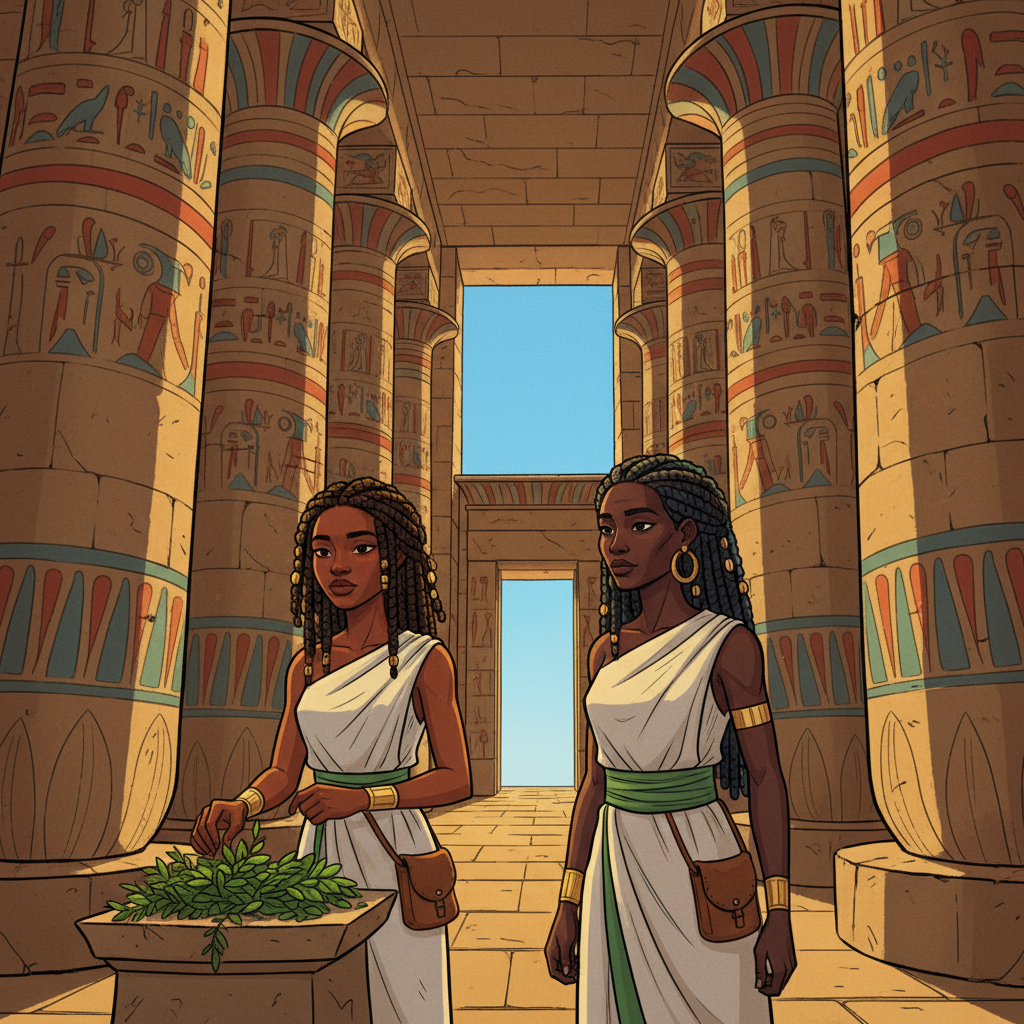
Takhat watched as Peseshet worked with extraordinary precision. She felt along the child's leg, her dark fingers gentle but firm, finding the exact place where the bone had shifted. She gave the child a drink made from poppy and herbs to dull the pain, then waited for it to take effect. When the moment came, Peseshet realigned the bone with a quick, sure movement. Takhat wrapped the leg in linen soaked with the acacia paste, then placed the wooden splints on either side. The technique was the same one described in scrolls written over a thousand years earlier. Ancient knowledge, still saving lives.
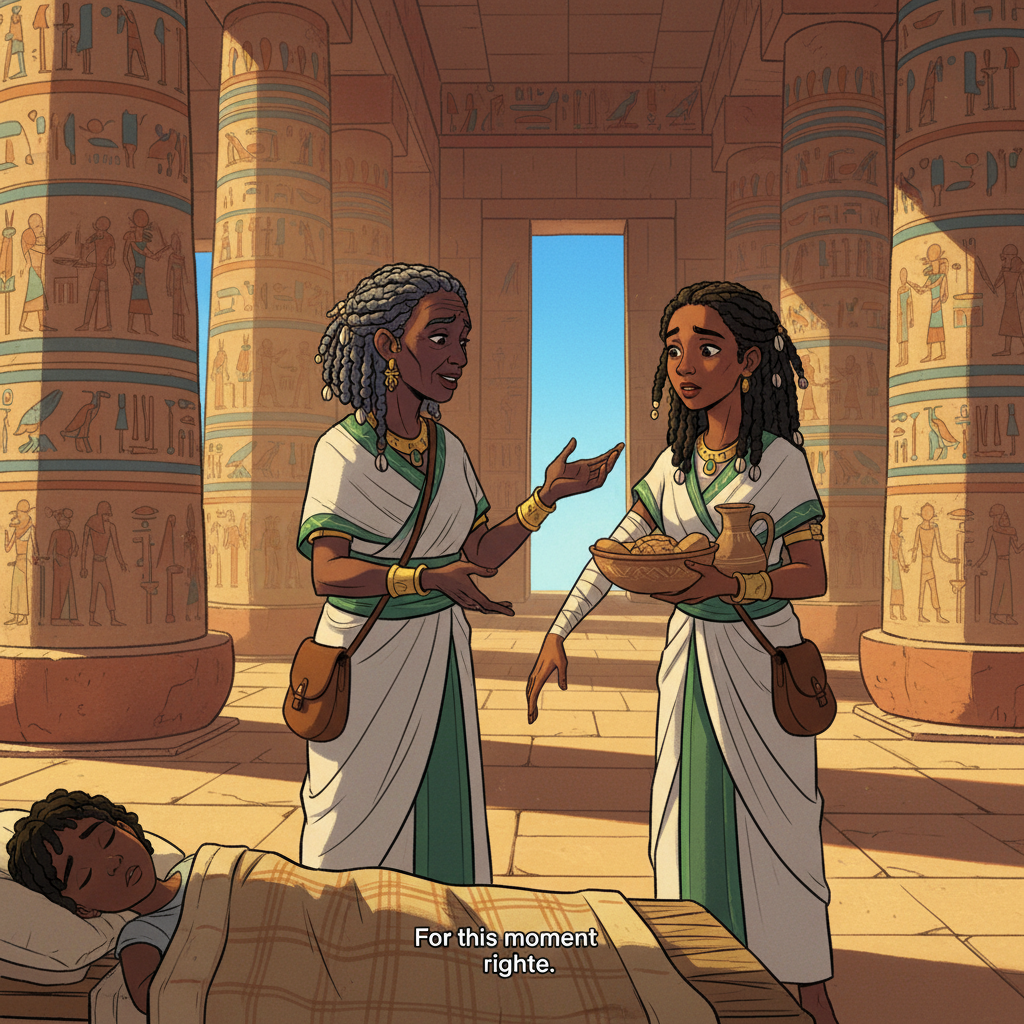
As the child slept, Peseshet sat with the mother and spoke slowly, using gestures where words failed. She showed her how to change the bandages and when to apply fresh honey to prevent infection. Kemetic healers had discovered long ago that honey kept wounds clean, a secret that the rest of the world would not understand for many centuries. Takhat brought the mother bread and beer from the temple kitchen. The woman's eyes filled with tears — not from sadness, but from relief. "This is what the Per Ankh exists for," Peseshet told Takhat quietly. "Not for glory. Not for gold. For this moment right here."
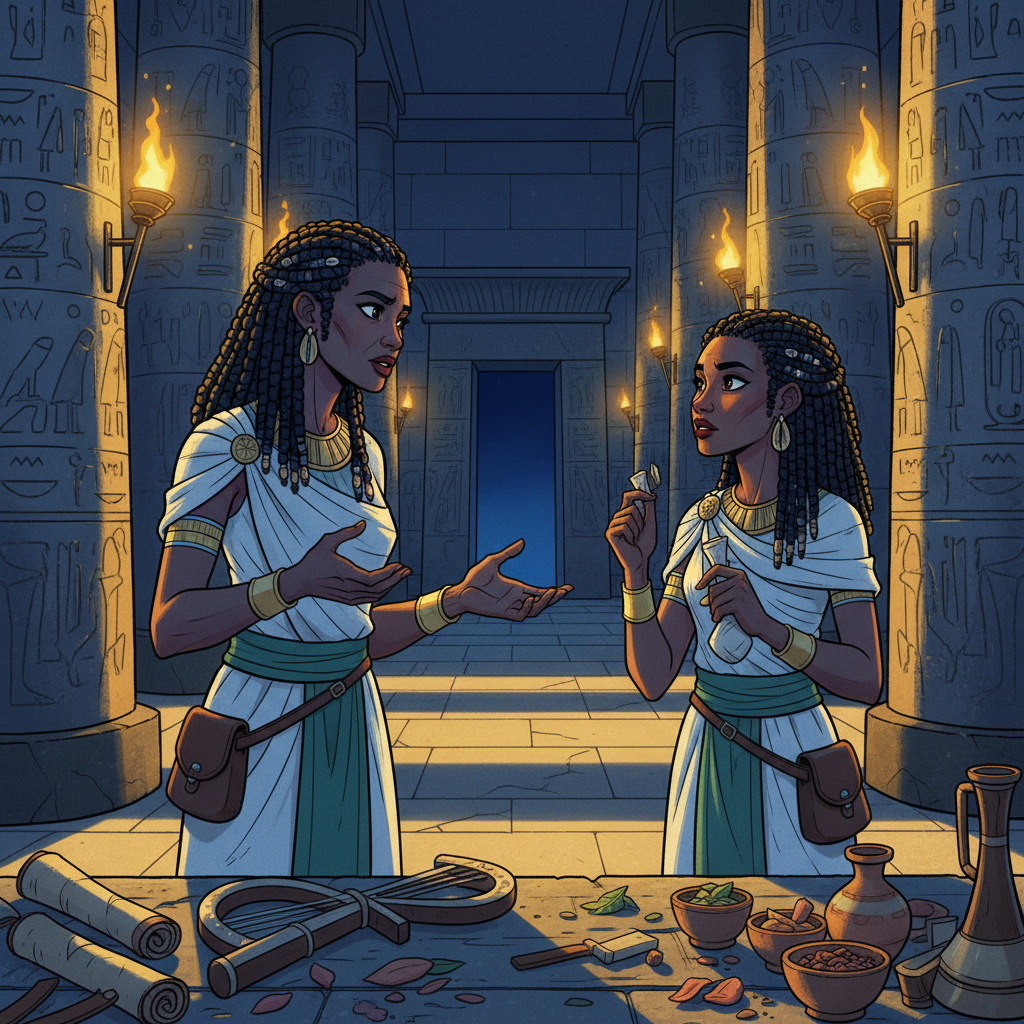
"Some say we should only help our own people," Takhat said quietly one evening as they cleaned the workshop. Peseshet looked at her sharply, her dark eyes reflecting the oil lamp's flame. "That is isfet talking. Isfet is the disorder that tears the world apart." She set down the instrument she was cleaning and faced Takhat directly. "The ka in every person is sacred. It is the life force breathed into us by the creator. When you refuse to heal someone because they are different, you poison your own spirit. Maat demands that we see the neter — the divine spark — in everyone. That is not just philosophy. It is medicine."
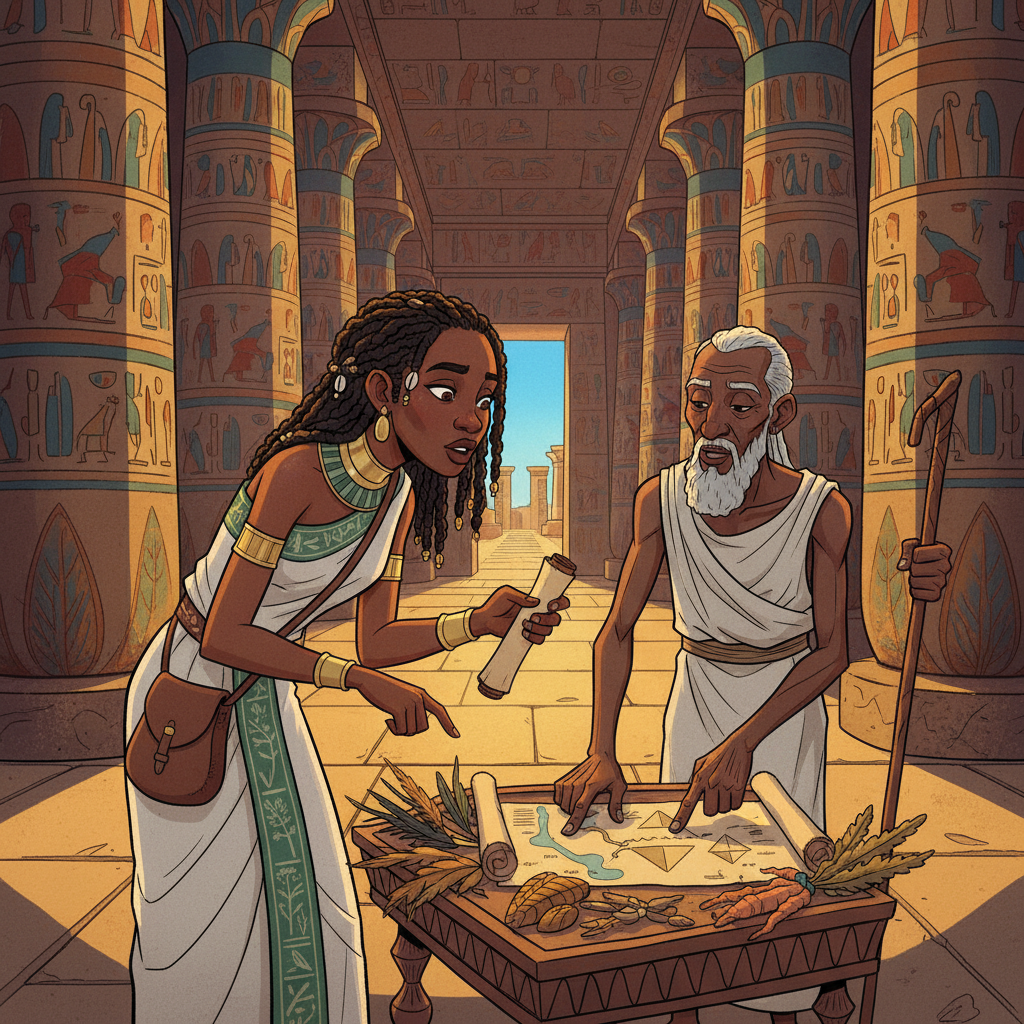
Peseshet told Takhat about her own teacher, an old man whose deep black skin had been weathered by decades of service. He had traveled south into kush and east across the great desert to learn healing techniques from other cultures. He brought back knowledge of plants that did not grow along the nile and surgical methods that complemented Kemetic practices. "He taught me that no single people holds all wisdom," Peseshet said. "The river of knowledge has many tributaries. When we share freely and learn humbly, we honor maat. When we hoard knowledge or believe ourselves superior, we invite isfet into our hearts."
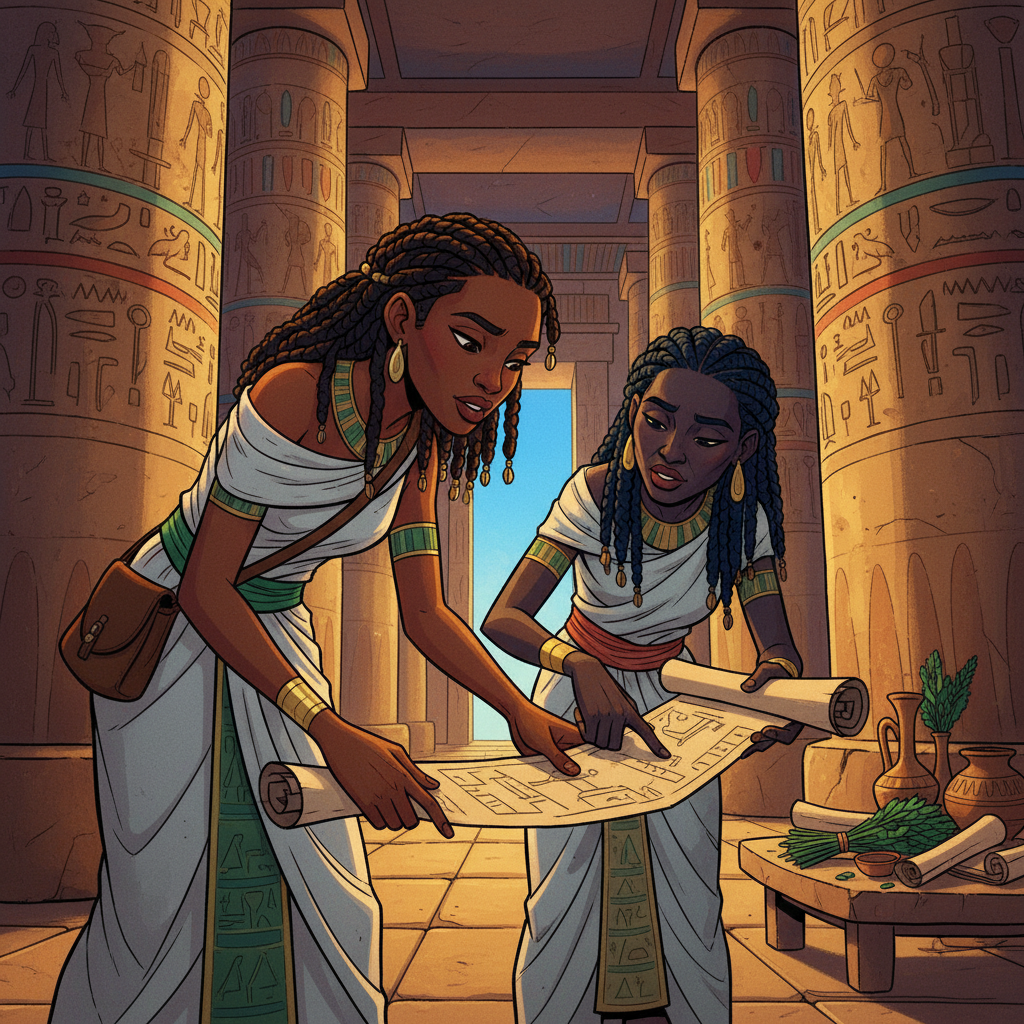
Traders and scholars passed through the Per Ankh regularly, carrying questions and sometimes carrying new knowledge. Healers from kemet shared their medical texts freely with anyone who wished to learn. They believed that hiding a cure was as wicked as causing the disease itself. Travelers carried Kemetic medical scrolls to distant lands — to Greece, to Persia, to kingdoms across the great sea. A Greek scholar named Hippocrates, often called the father of Western medicine, studied practices that Kemetic healers had perfected centuries before him. But the roots of that knowledge grew from African soil, nourished by the waters of the nile. Knowledge always has roots deeper than we are told.
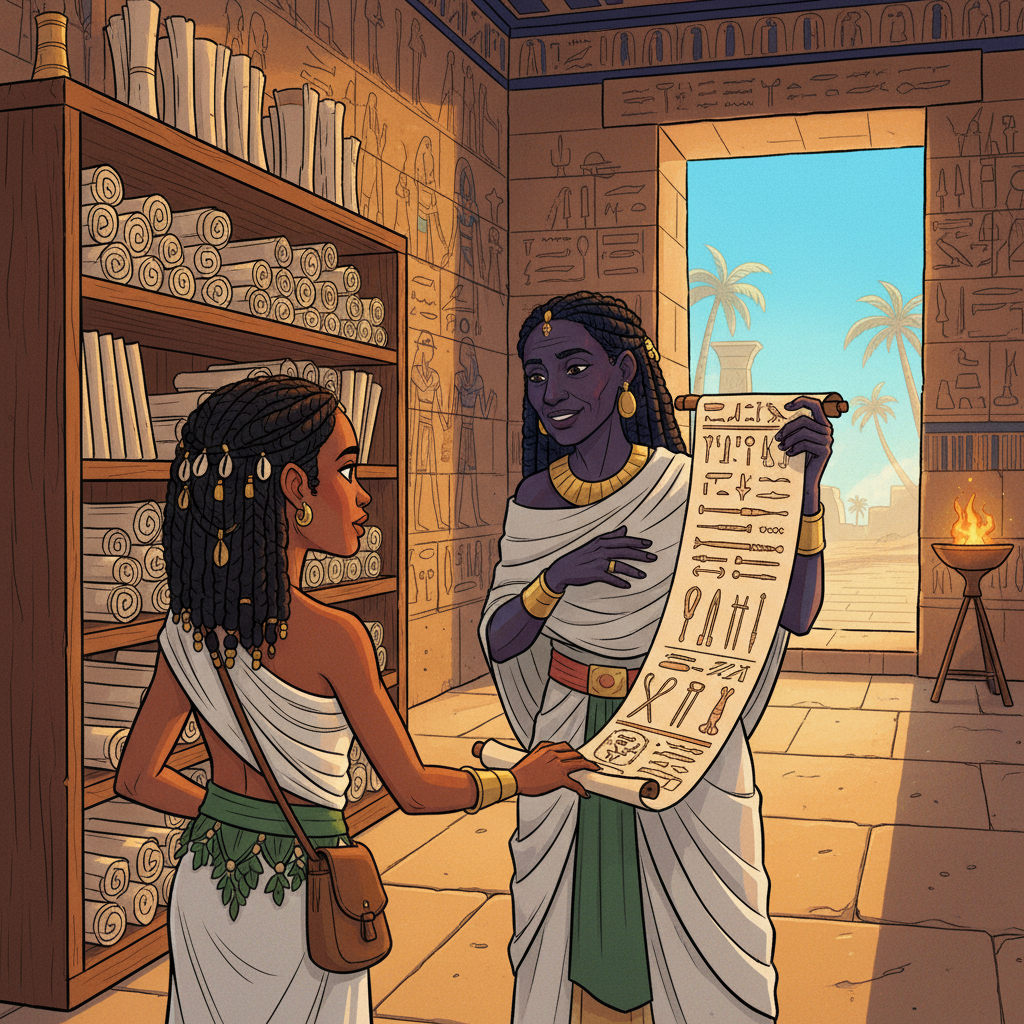
Takhat learned that Kemetic surgeons had performed extraordinary operations long before other civilizations attempted them. They drained infections from the chest, removed damaged tissue, and even operated near the brain with tools made from obsidian and copper. The Book of Wounds described how to stitch a wound closed using a needle and thread made from plant fibers. Every procedure was recorded so that the next generation of healers could improve upon it. "We do not heal for ourselves alone," Peseshet explained to her apprentices one morning, her ebony hands gesturing toward the shelves of scrolls. "We heal for every person who will come after us. That is the true meaning of maat."
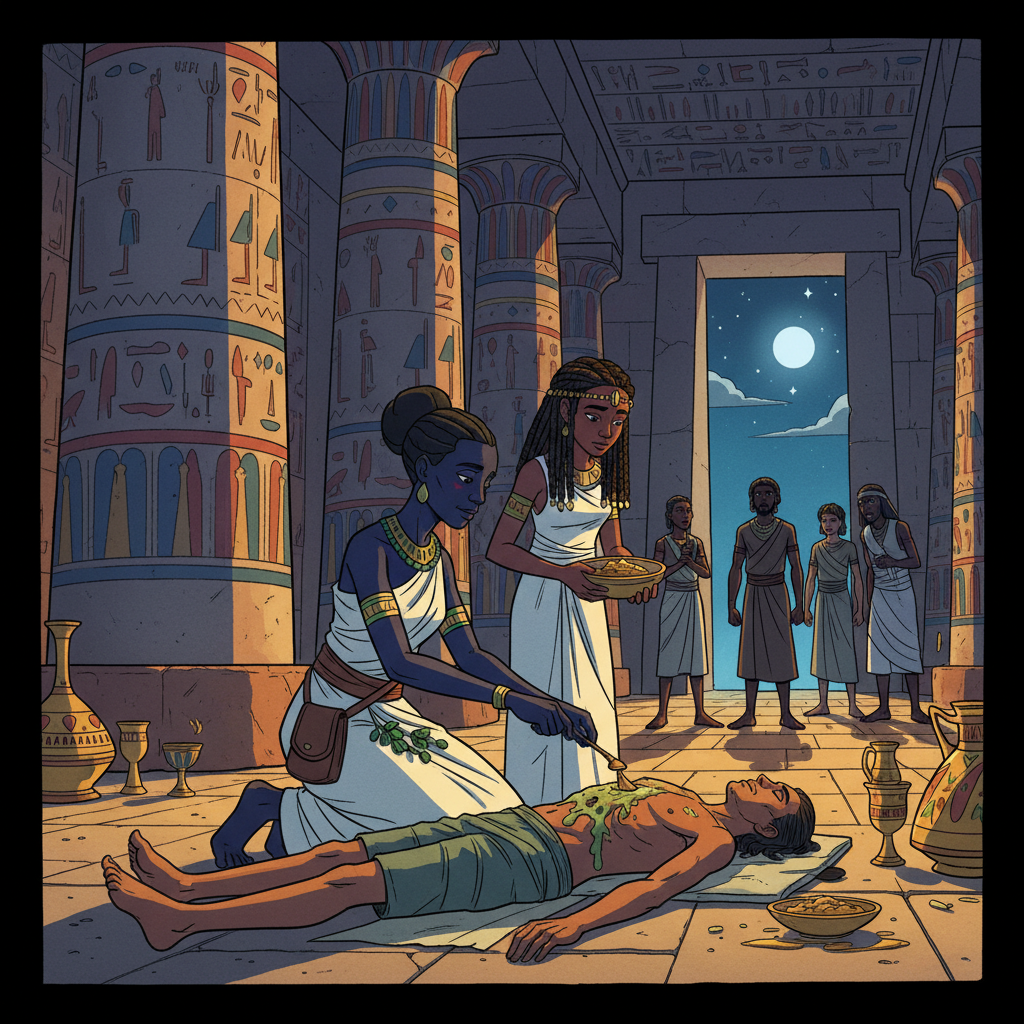
One night, a group of merchants arrived at the Per Ankh. Among them was a man from a land far to the northeast who had a deep wound in his side that had grown hot and swollen with infection. Several healers at ports along his journey had refused to treat him because he could not pay their price. Peseshet examined him without asking about payment. She drained the infection, applied a poultice of honey, garlic, and ground minerals, and wrapped the wound in fresh linen. "The ka does not carry a purse," she told Takhat. "Denying medicine to someone because they are poor is isfet of the worst kind. It says that gold matters more than life."
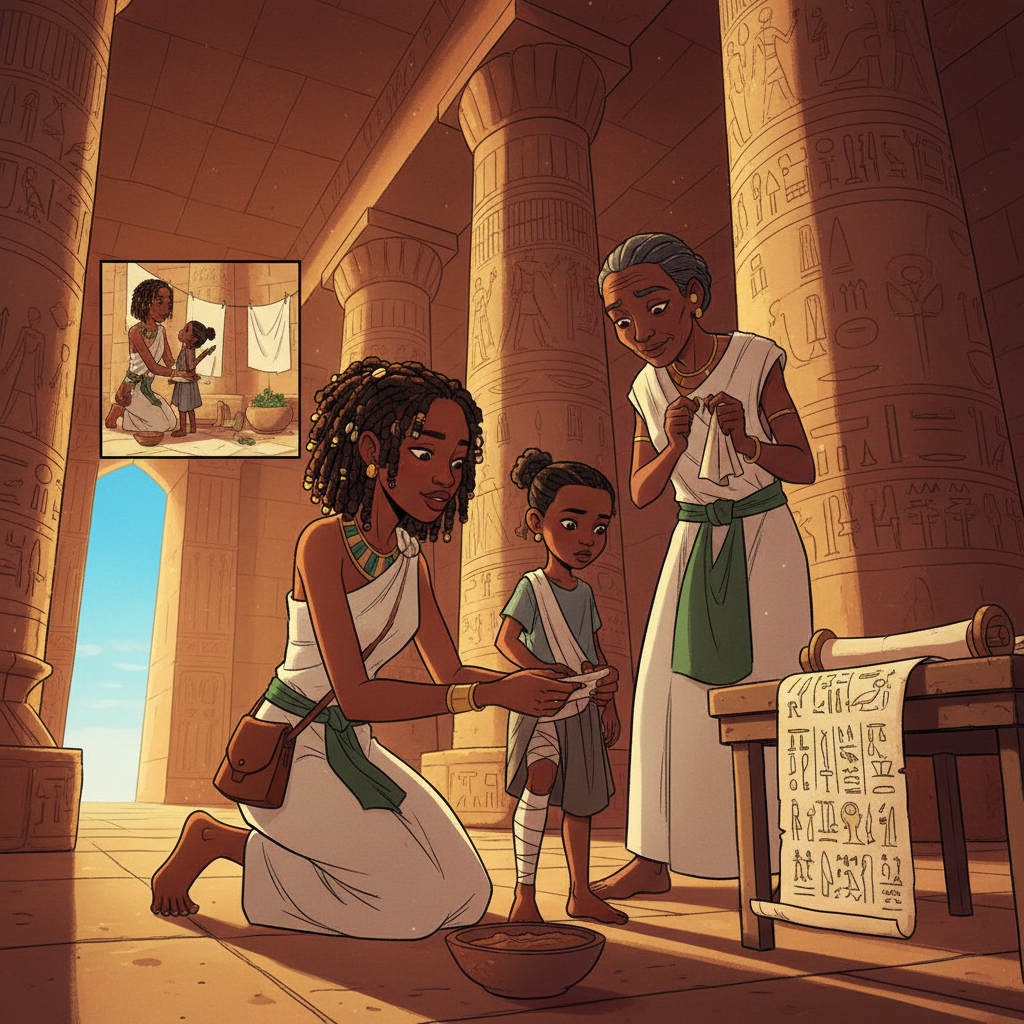
As weeks passed, Takhat noticed that the child from kush was healing well. The little girl had begun to stand, carefully testing her mended leg while her mother watched with anxious hope. Takhat checked the splints each day, adjusting the wrappings and applying fresh acacia paste exactly as the ancient scrolls instructed. The mother began helping around the Per Ankh, grinding herbs and washing linens. Though she and Takhat spoke different languages, they communicated through gestures and smiles. Compassion, Takhat realized, was its own language. It needed no translation. The neter that connected all people was stronger than any barrier of tongue or distance.
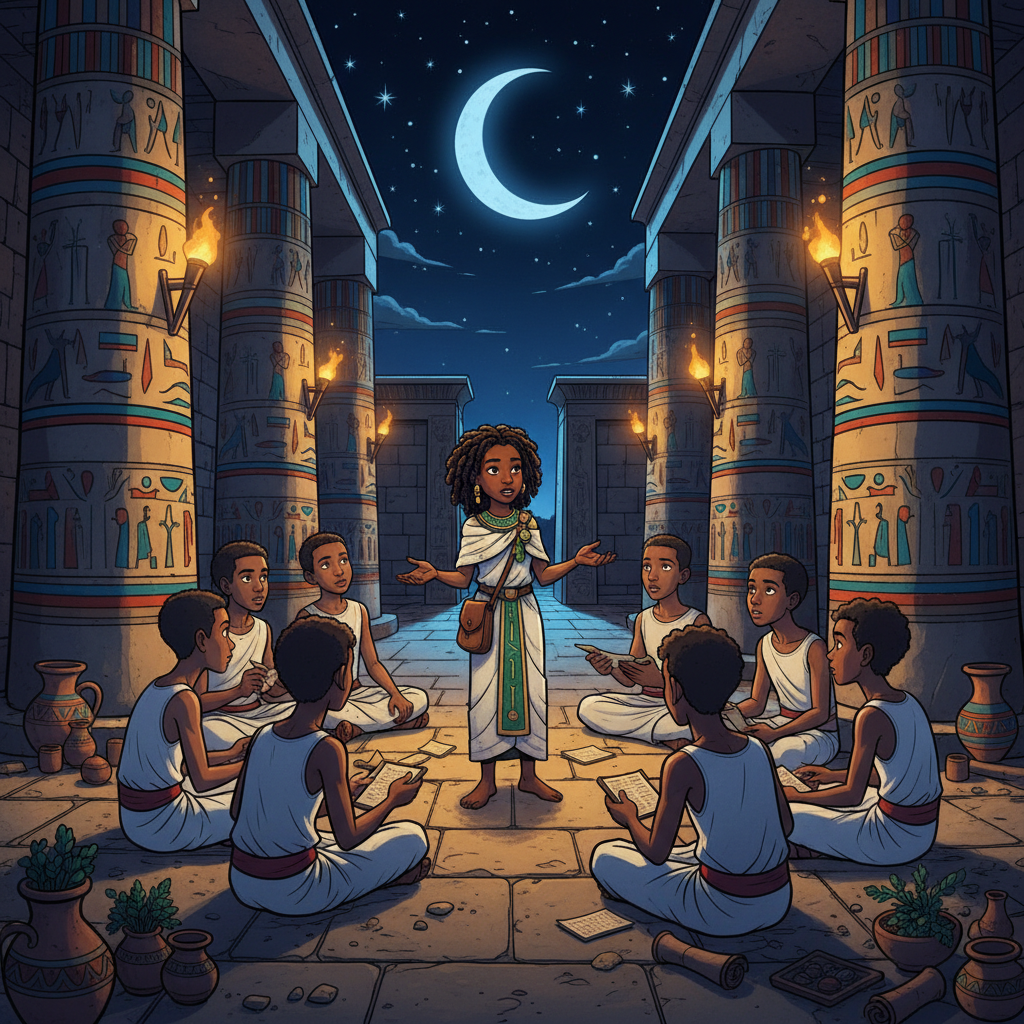
Peseshet gathered her apprentices one evening under the stars in the temple courtyard. The sky above kemet was vast and dark, filled with the same stars that shone over kush, over the great desert, over every land where people suffered and hoped for healing. "You will each go your own way someday," Peseshet said, her deep brown face serious in the moonlight. "Some of you may travel far from the nile. Wherever you go, carry maat with you. Heal without condition. Teach without jealousy. Record your knowledge so it outlives you. That is how we defeat isfet — not with weapons, but with open hands."
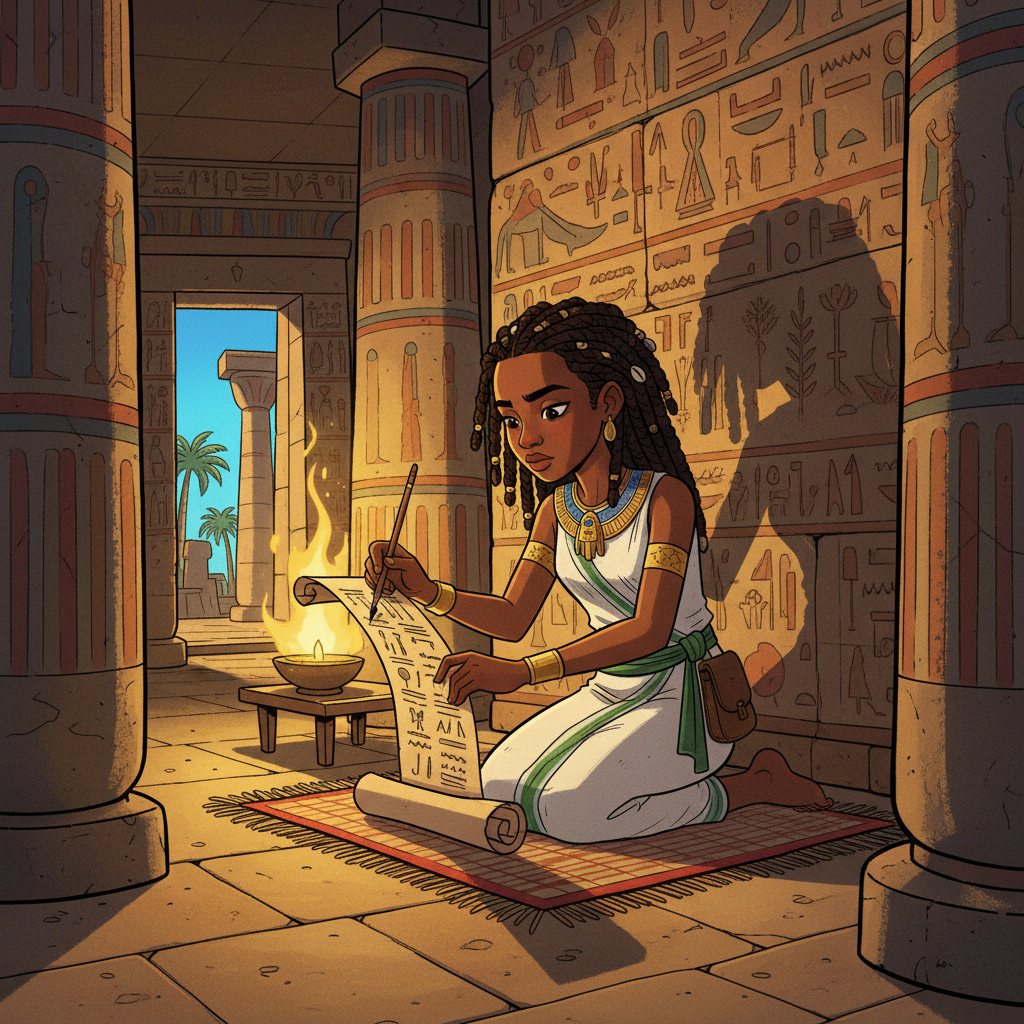
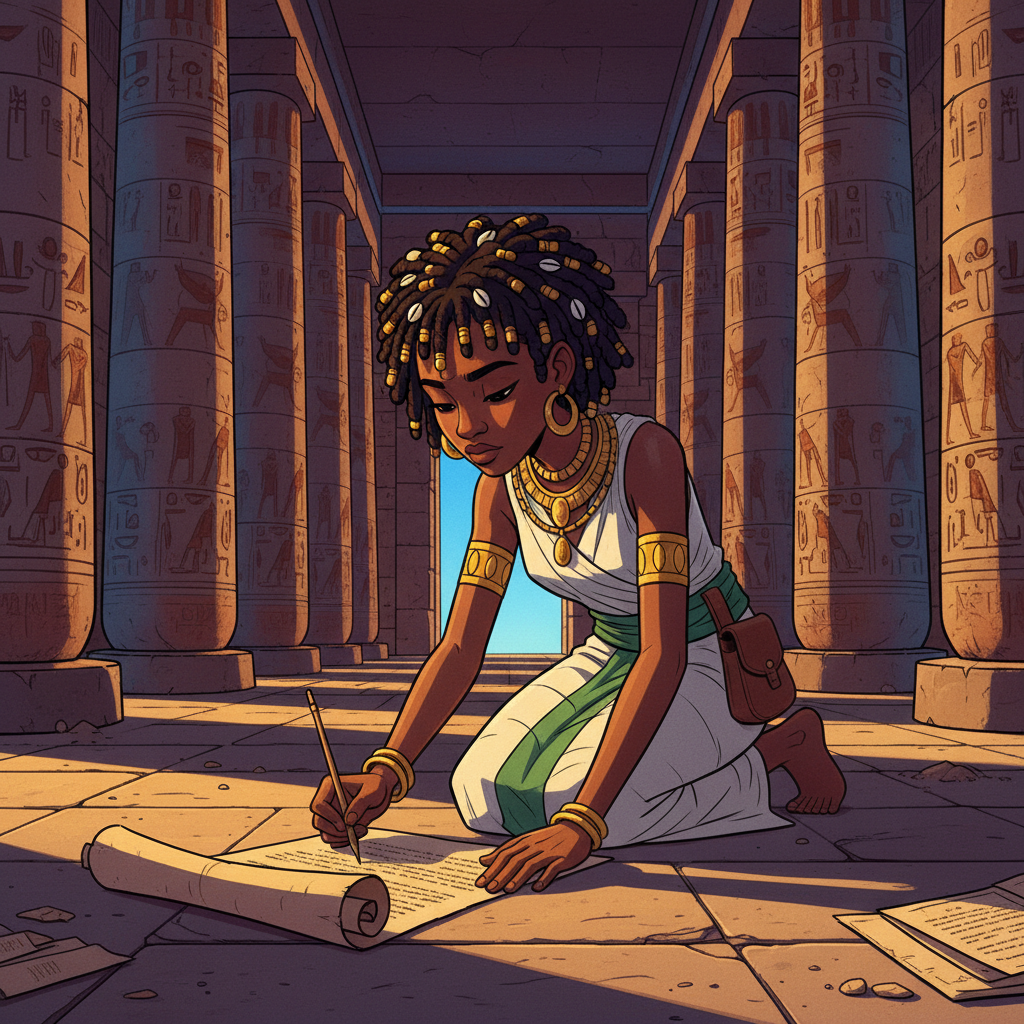
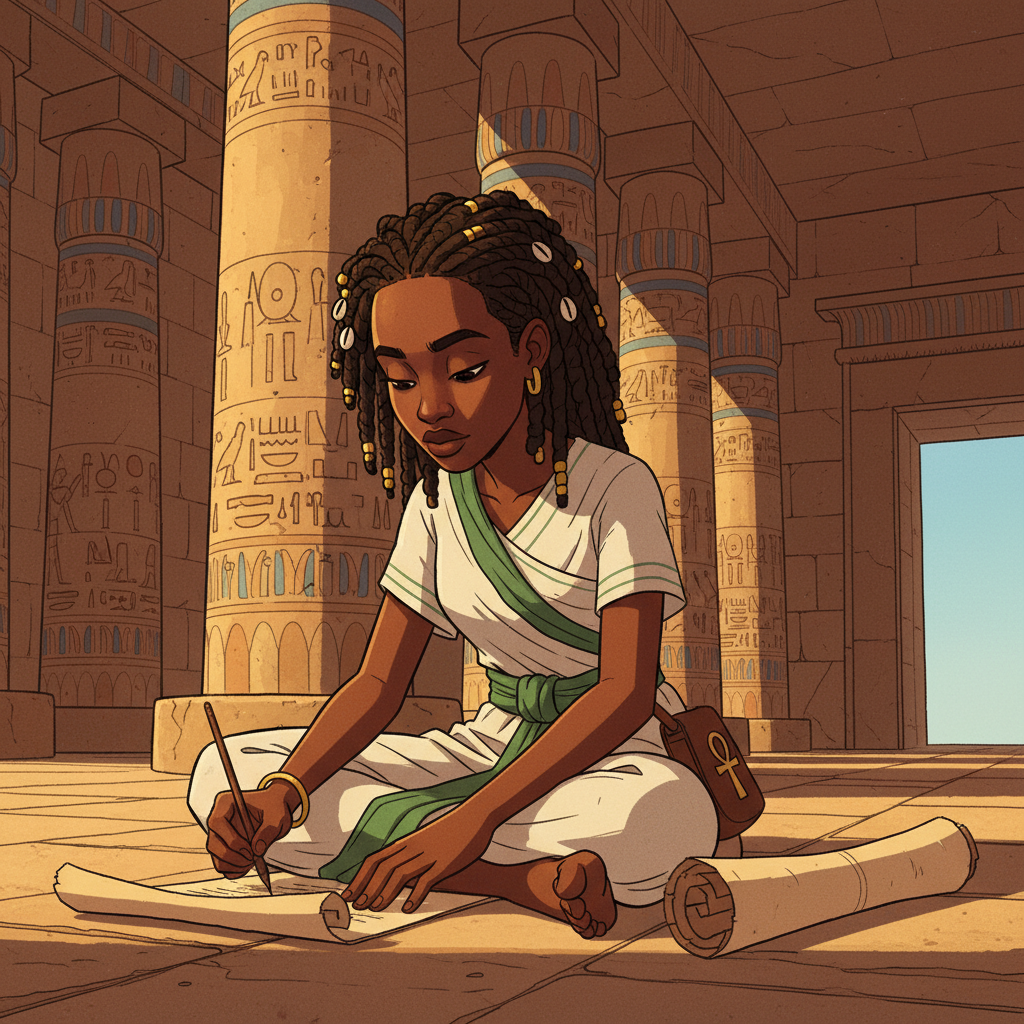
Takhat thought about the healers who would come after her, in times and places she could not imagine. She thought about children not yet born who might suffer from fevers that she knew how to treat. She picked up her reed brush, dipped it in black ink, and began copying a scroll on treating fevers and infections. Every word she wrote could save a life someday, somewhere, in a land she might never see. Her deep brown hand moved steadily across the papyrus, forming each hieratic symbol with care. The oil lamp flickered, casting her shadow large against the stone wall. She did not need fame or reward. The work itself was enough.
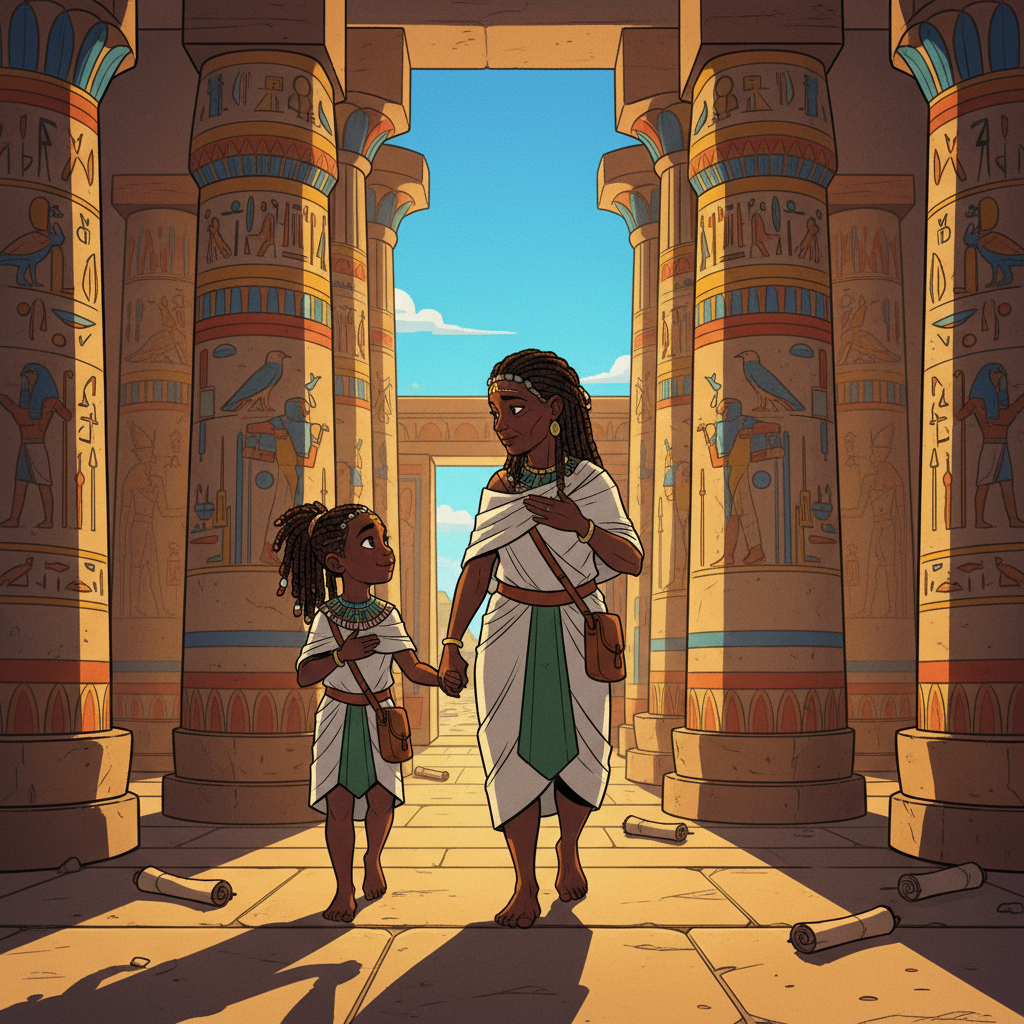
The morning came when the child from kush was strong enough to leave. She walked out of the Per Ankh on her own two legs, holding her mother's hand. At the gate, the mother turned back and placed her hand over her heart — a gesture of gratitude that needed no words. Takhat felt something warm settle in her chest. This was what Peseshet meant about the neter connecting all people. This child would grow up in a distant land, and she would carry within her body the proof that a stranger in kemet had cared enough to help. That was maat made real — not written on papyrus, but living and breathing and walking home.
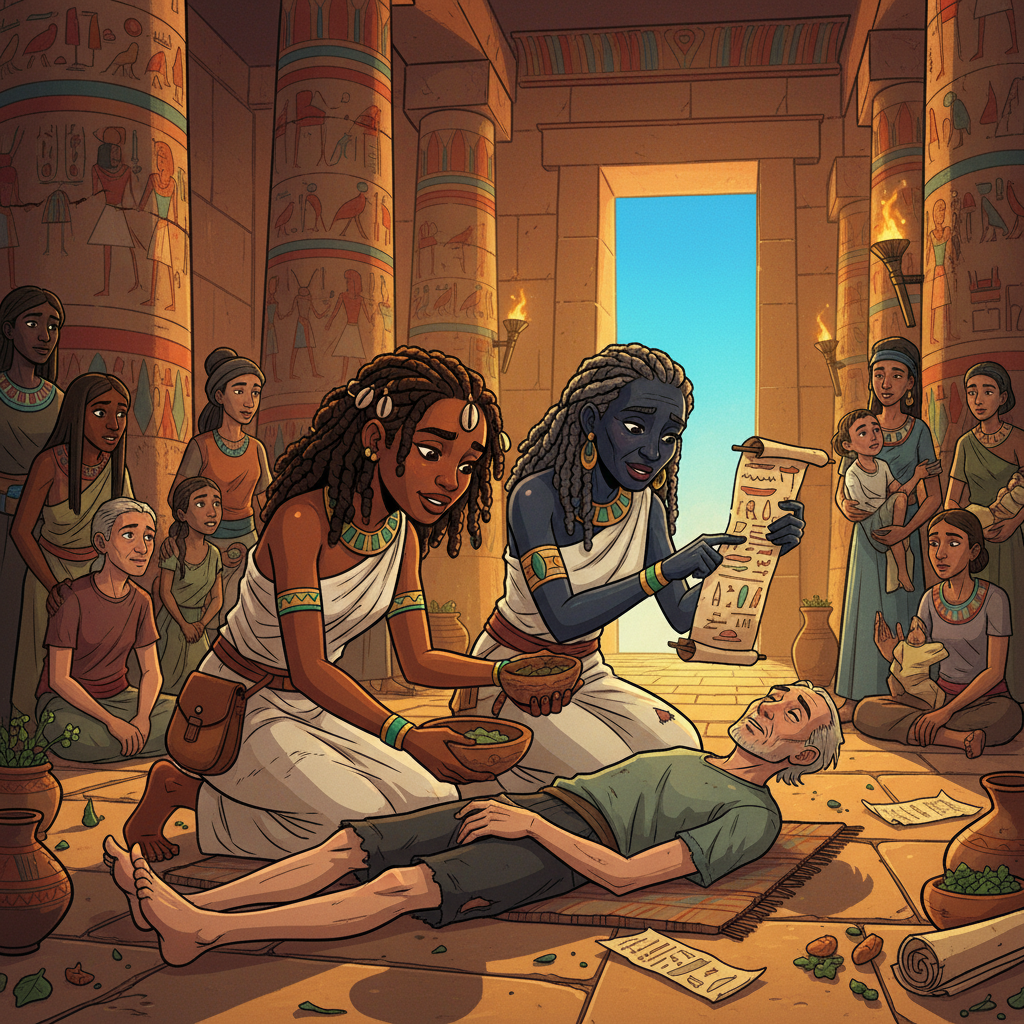
Today, doctors and nurses around the world still follow the same principle that Peseshet taught beside the nile thousands of years ago: help everyone, no matter who they are. Modern medicine owes a great debt to the ancient healers of kemet, who were among the first to study the body scientifically, record their findings, and share their knowledge across borders. But in many places, people are still denied medicine because they are poor or different. The ancient healers of kemet would call that the deepest isfet. Takhat's scrolls have crumbled to dust, but her principle endures — that the ka in every person is sacred, and compassion is the oldest medicine in the world.