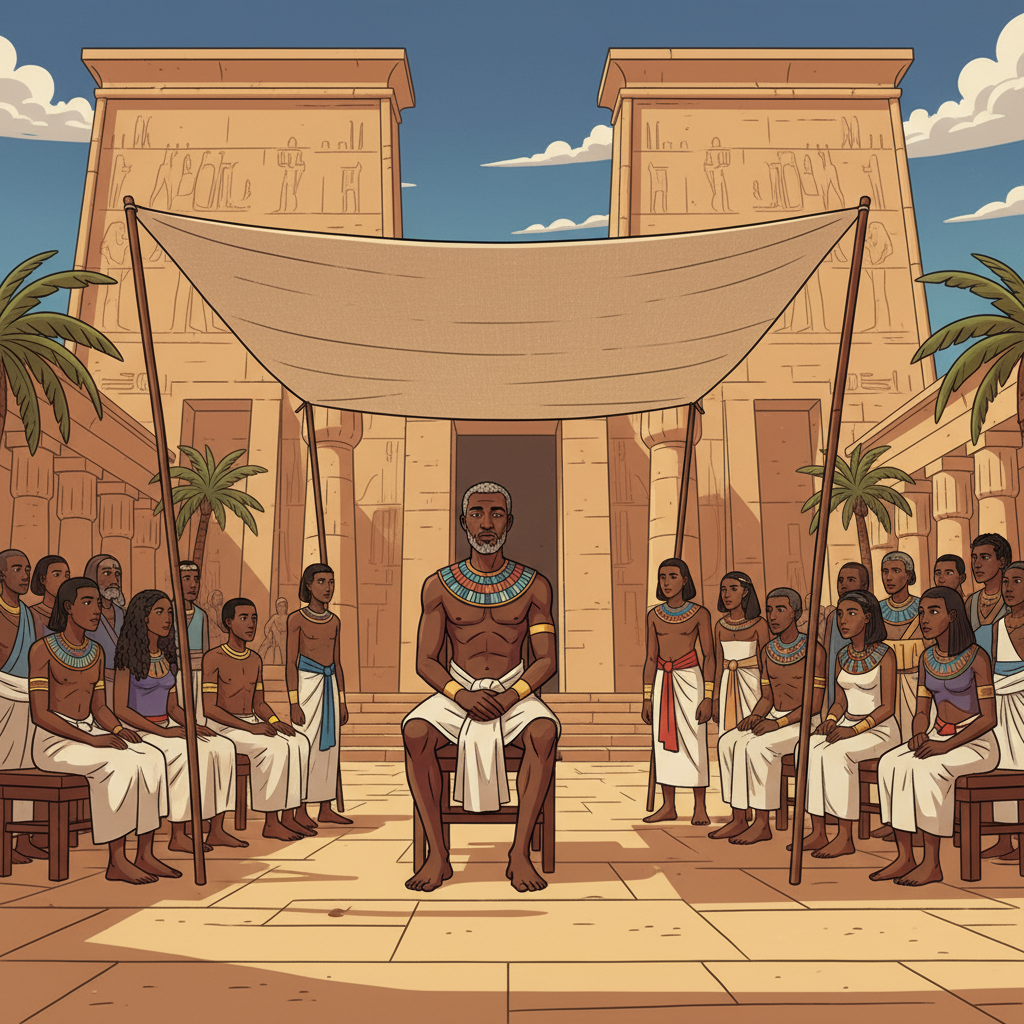
The kenbet of Waset met every seventh day in the open courtyard behind the Temple of Maat, under a canopy of woven linen that filtered the sun into soft gold light. Judge Djoser had presided over this court for twenty-two years — a tall, lean man of fifty-three with very dark skin that held the deep warmth of old mahogany, close-cropped grey hair, and hands that never fidgeted. He was known throughout the district for two things: his voice, which was low and measured and never raised, and his verdicts, which no one had ever successfully appealed.
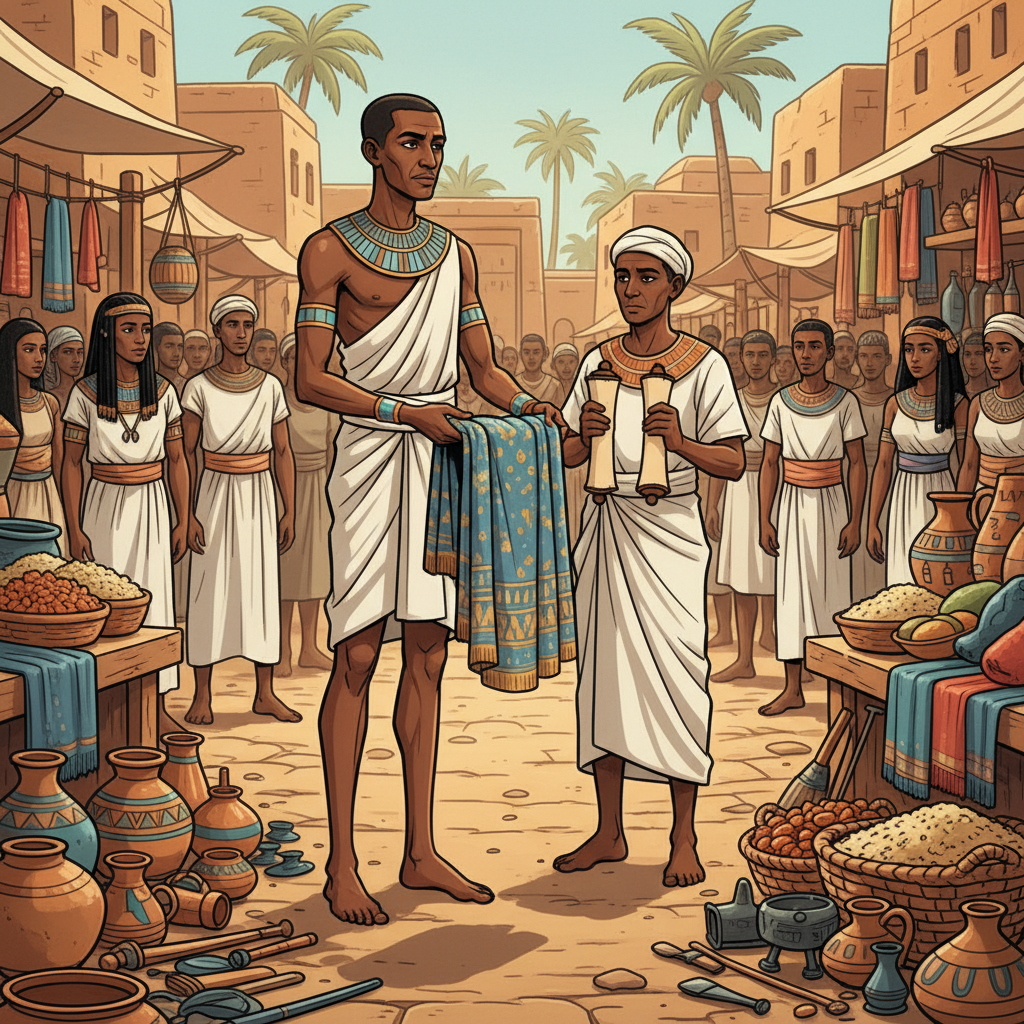
Djoser's authority came not from harshness but from something rarer: consistency. He applied the law the same way to merchants and to beggars, to priests and to farmers. When a wealthy linen trader tried to bribe him with a bolt of finest cloth, Djoser returned the cloth publicly and doubled the trader's fine. When a poor widow was accused of stealing bread, he dismissed the case when the evidence proved thin, even though the baker who accused her was his neighbor. In Waset, they said that Djoser's scale had no thumb — it balanced on its own.
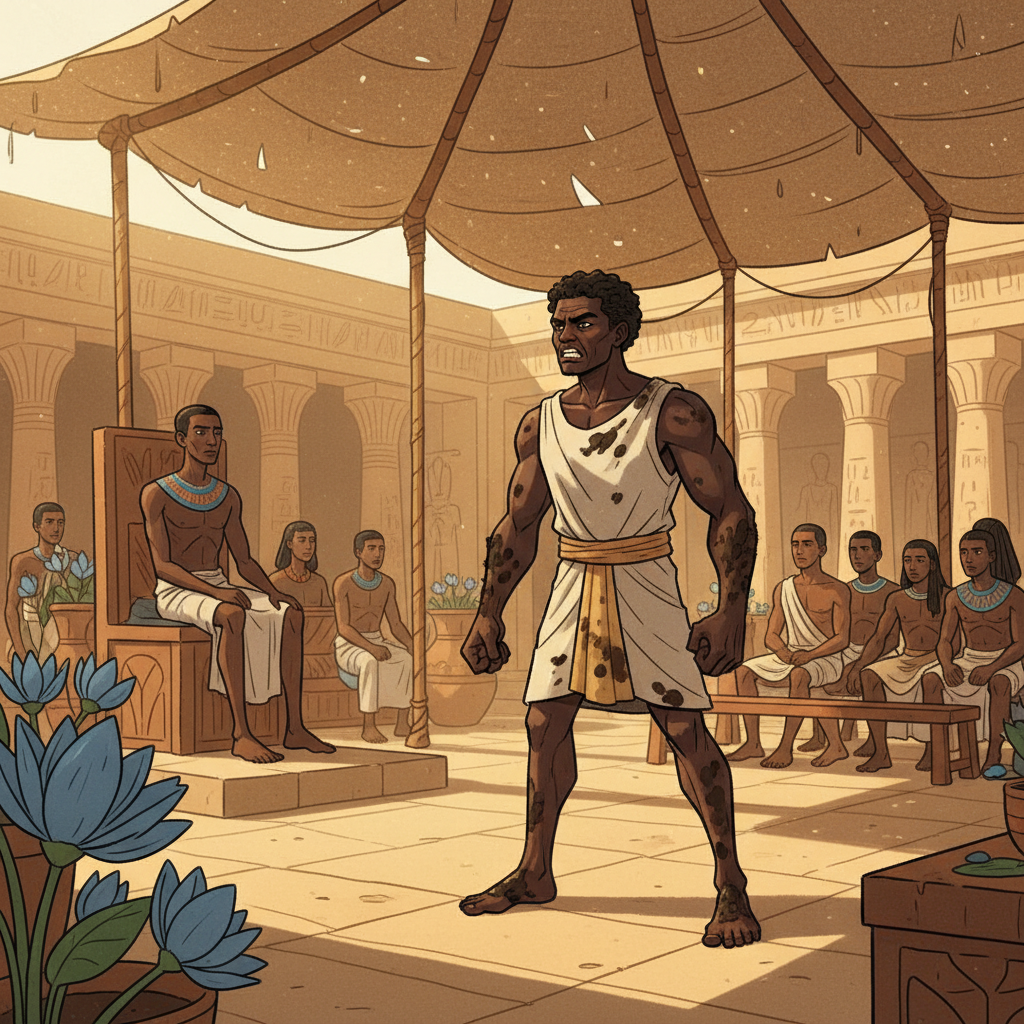
The case that shattered this reputation arrived on a morning when the river was running high and the air smelled of wet earth and lotus. A farmer named Heqanakht stood before the court with mud still on his hands and fury carved into every line of his face. Heqanakht was forty, dark-skinned and heavy-muscled from twenty years of working the black soil, with three children who depended on his harvest for everything — food, clothing, the small copper pieces that paid for their schooling at the local Per Ankh.
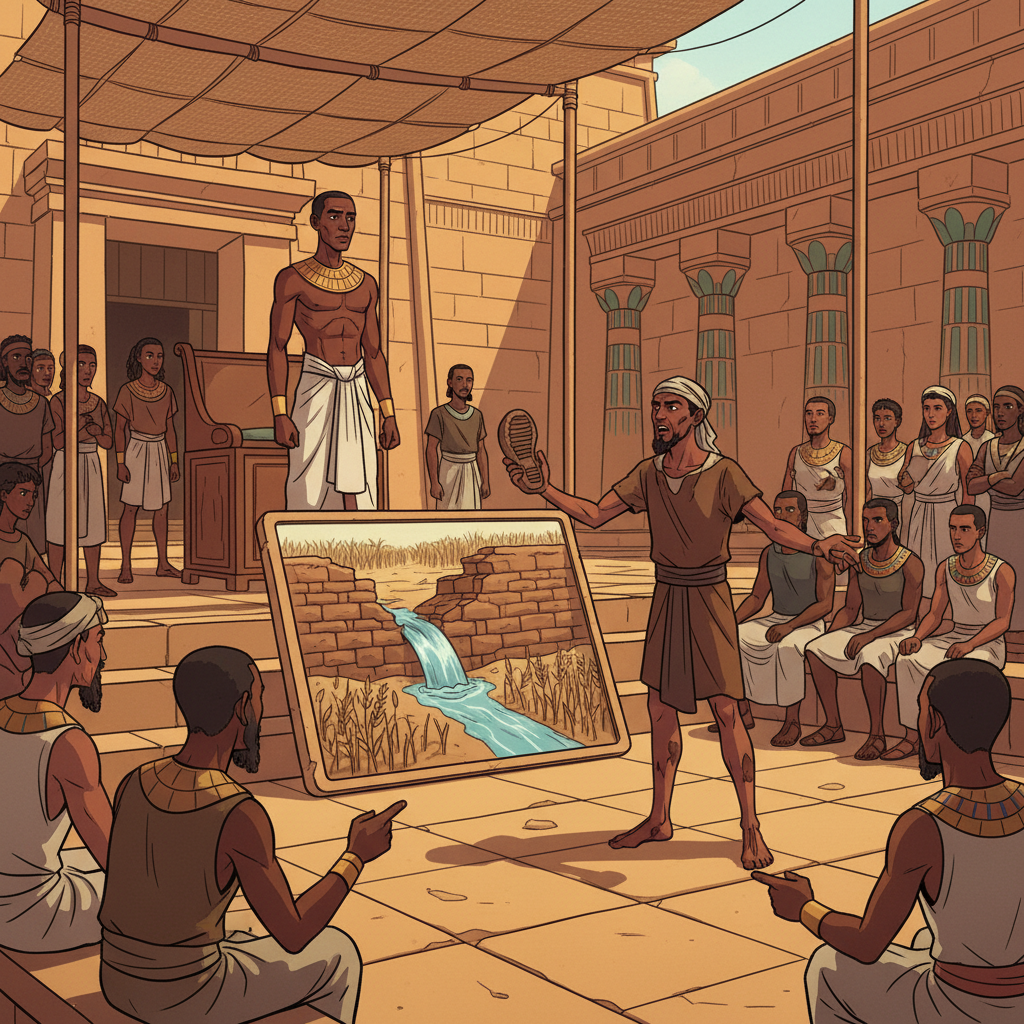
"Three nights ago," Heqanakht said, his voice tight with controlled anger, "someone broke the main channel of my irrigation system. The channel that feeds my western field — two acres of emmer wheat, nearly ready for harvest. The water drained into the sand. The field is ruined. Half my season's crop is dead." He placed a piece of hardened clay on the court table — a sandal print, perfectly preserved in the dried mud beside the broken channel. "I found this beside the break. And I know whose foot it fits."
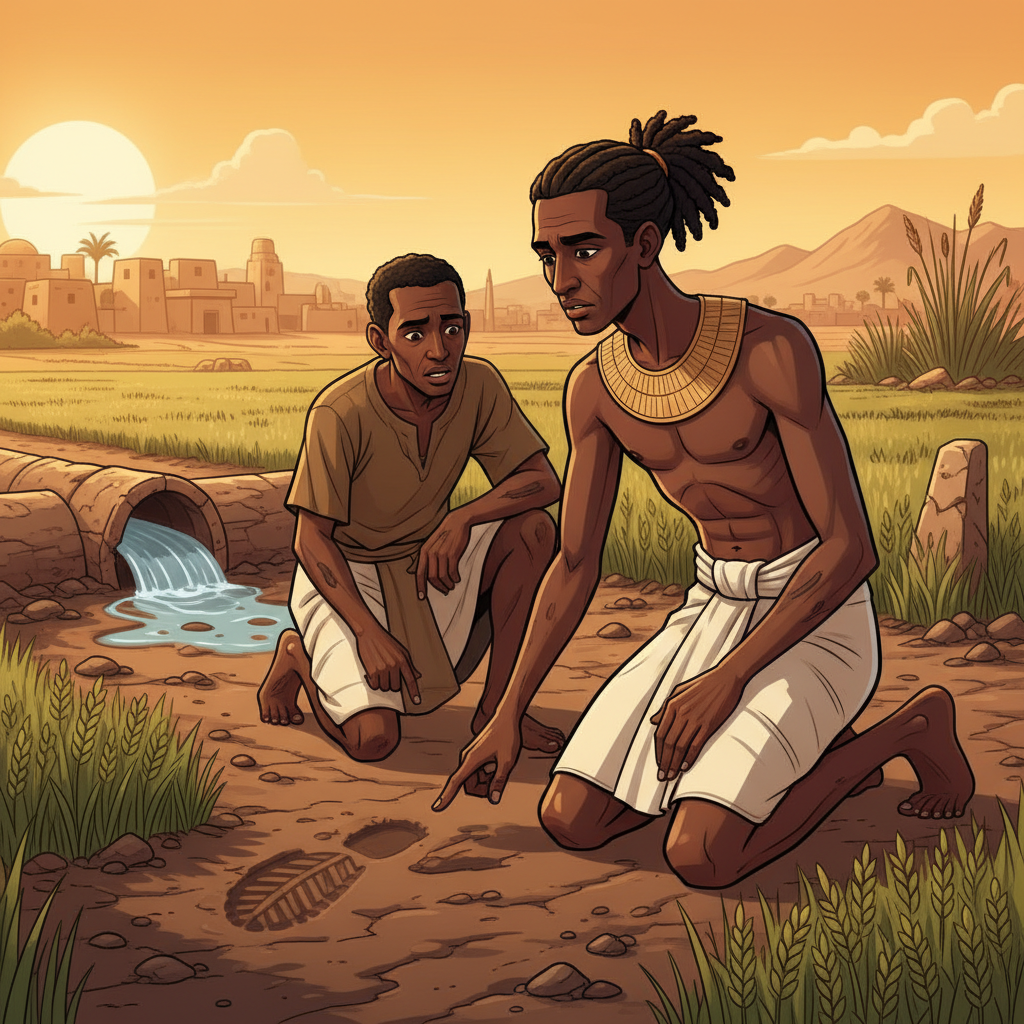
Djoser looked at the sandal print. It was large, with a distinctive pattern — a weave that was made by only one sandal maker in Waset, a craftsman named Ptahmes who worked exclusively with a small number of wealthy clients. The print belonged to an expensive sandal. Heqanakht's fields bordered a disputed strip of land that had been contested for three generations between his family and another — the family of Djoser's sister, Meritaten.
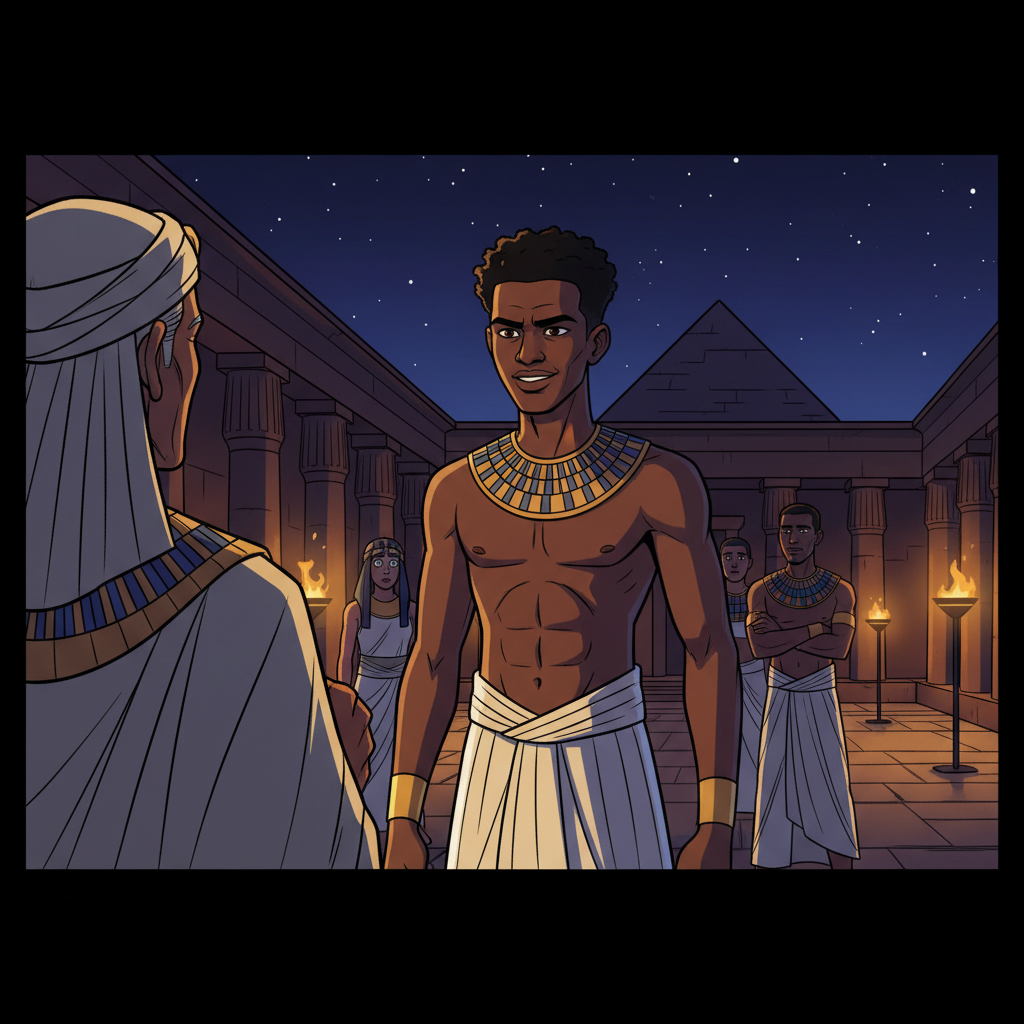
The accused was Amenhotep. He was twenty years old, Meritaten's only son, and therefore Djoser's nephew. Amenhotep was tall and handsome, with the same deep dark skin as his uncle, an easy smile, and a temper that flared like oil on water — sudden, bright, and consuming. He had argued publicly with Heqanakht about the disputed strip just ten days before the irrigation channels were destroyed. Witnesses had heard him say, "If that farmer will not give up the land, I will make sure he cannot use it."
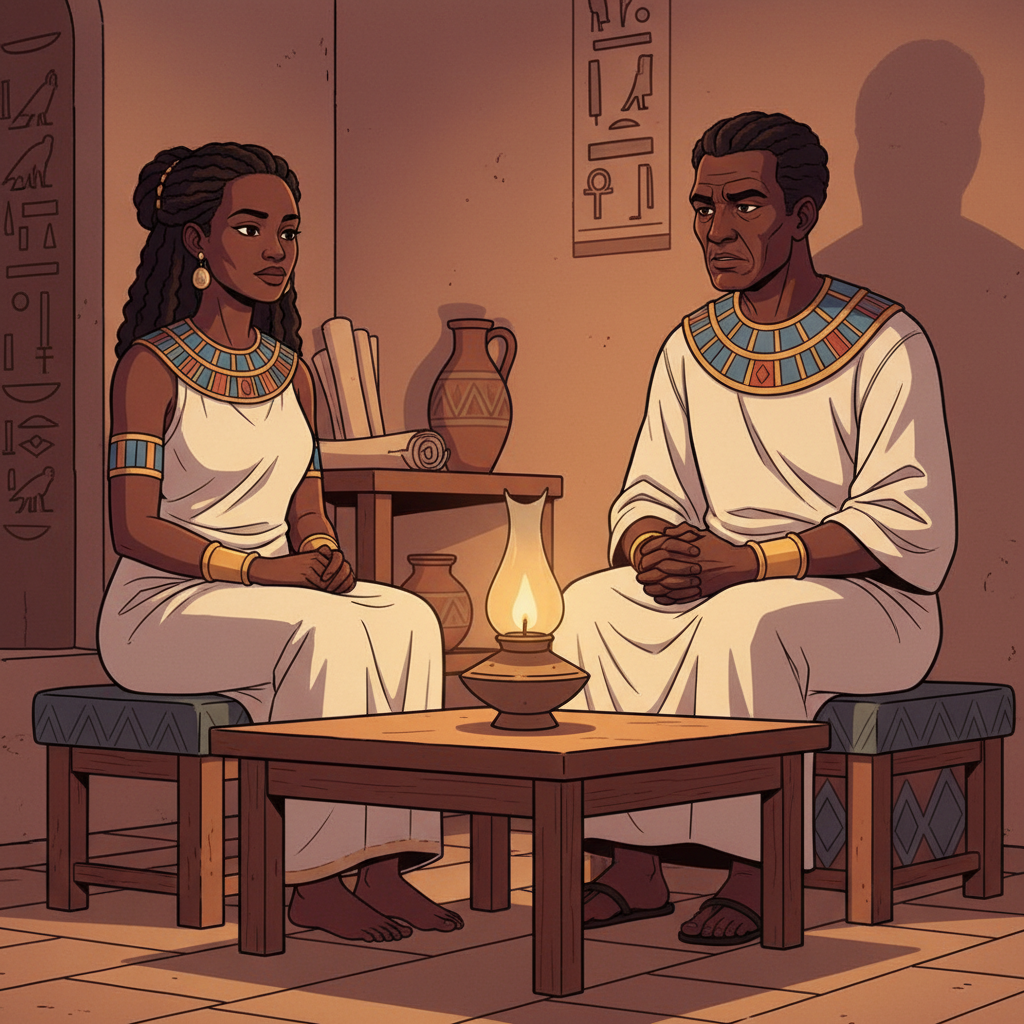
Meritaten came to Djoser's home that evening, before the formal hearing. She was three years younger than her brother, with the same dark features and the same controlled manner, but where Djoser had hardened into stone, Meritaten had softened into something more like water — flowing, adaptive, persistent. She sat across from him in the lamplight and spoke with the careful precision of someone who had rehearsed every word.
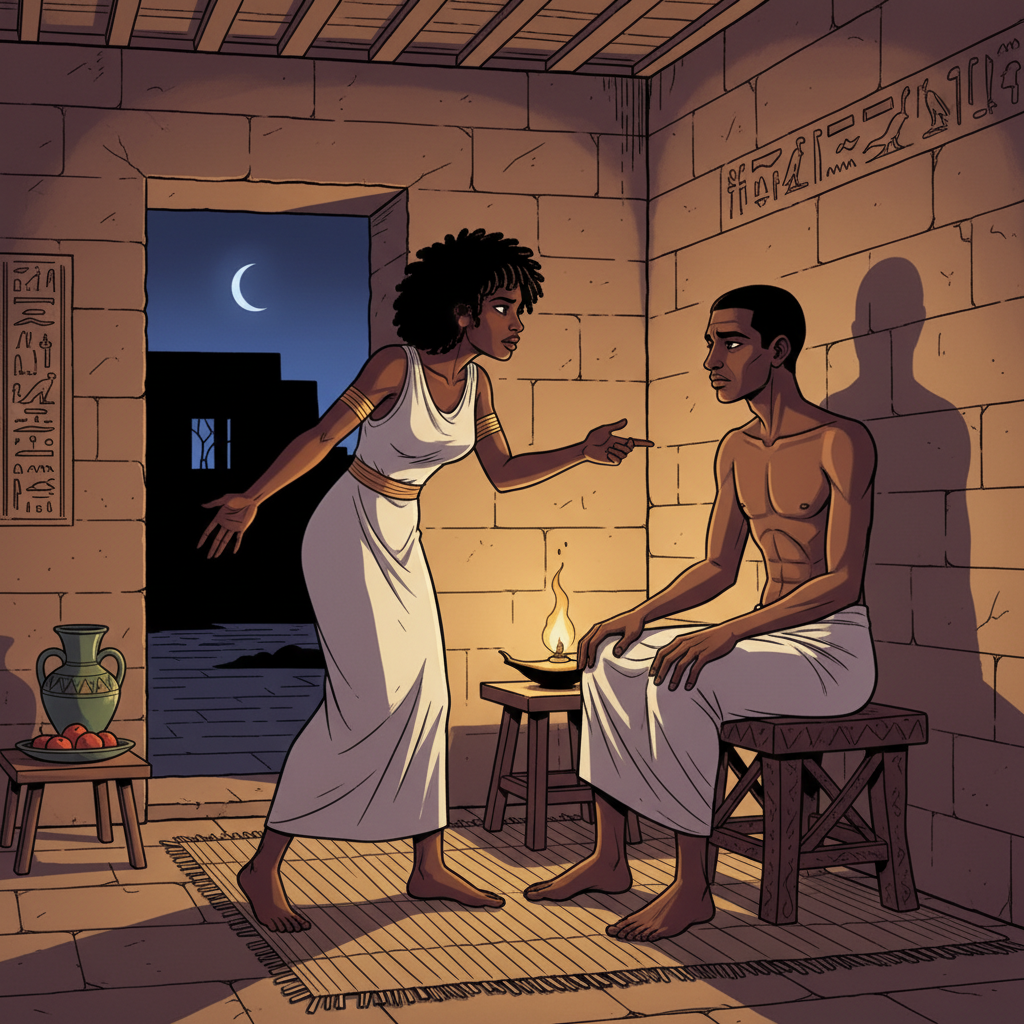
"You cannot judge this case," she said. "Amenhotep is your blood. Your sister's only son. Every person in Waset knows our family. If you find against him, they will say you were too harsh to prove your impartiality. If you find for him, they will say blood protected blood. There is no verdict you can give that will not be questioned. Recuse yourself. Let Judge Senbi take the case."
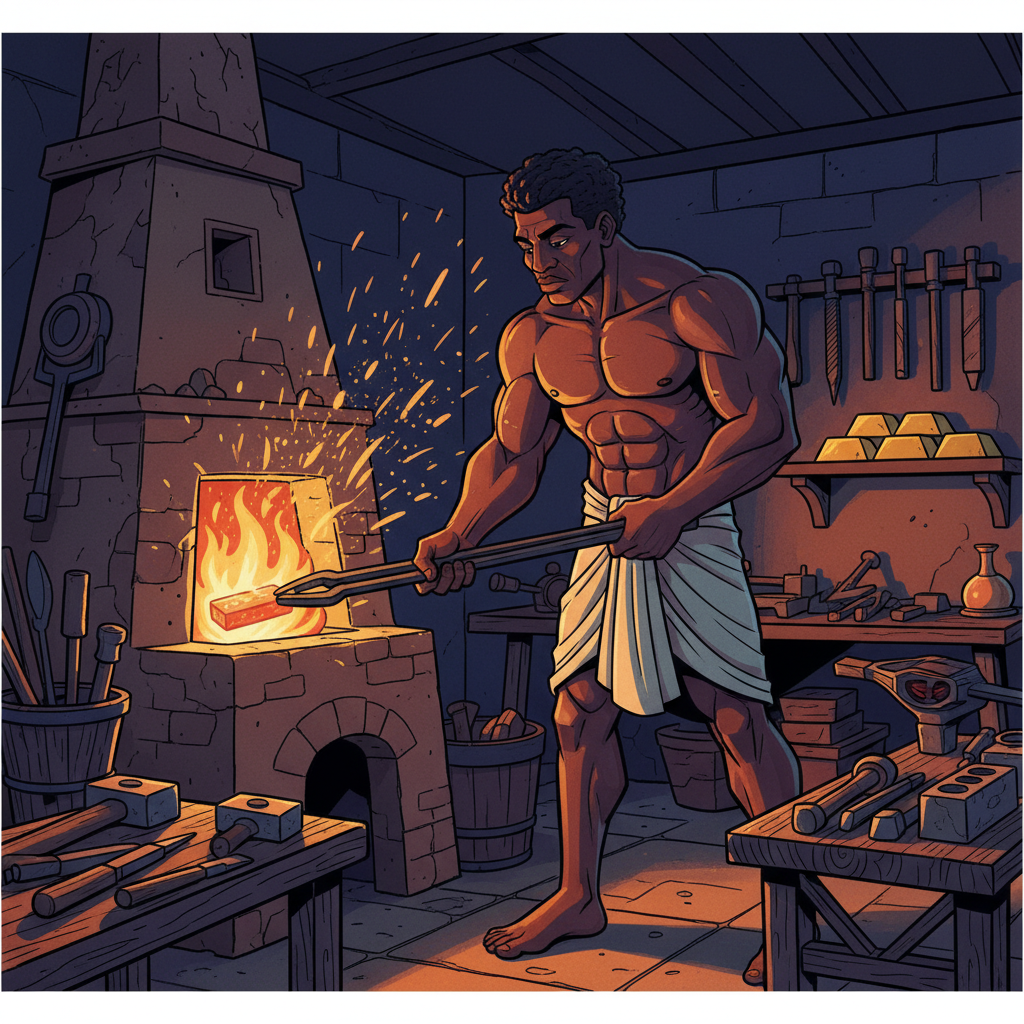
Djoser had considered this. Senbi was the only other qualified judge in the district — a competent man but one known for severity. Where Djoser weighed circumstances and sought restoration, Senbi imposed maximum penalties as a matter of principle. If Amenhotep was found guilty under Senbi, the sentence could be exile — removal from Waset for five years, loss of property rights, separation from his mother. For a young man's impulsive act of vandalism, exile was a sledgehammer where a chisel was needed.
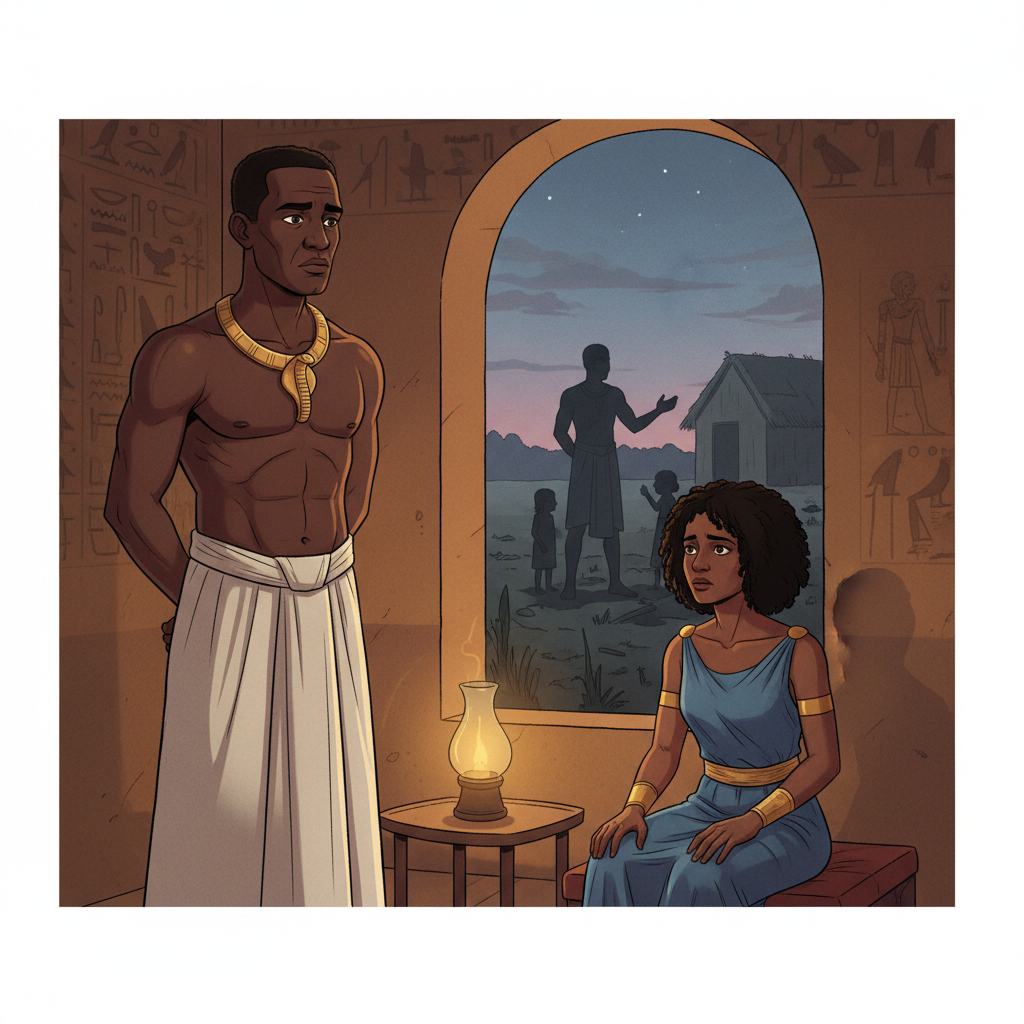
"I have thought about recusing myself," Djoser said. "But I have also thought about Heqanakht. His children will go hungry this season because of what was done to his field. If I step aside and Senbi imposes exile, it will be unjust — too harsh for the crime. And if Amenhotep is exiled, you will blame me for stepping aside. You will say I could have judged fairly but chose to protect myself instead of my nephew." He paused. "There is no clean path. Every direction has a cost."
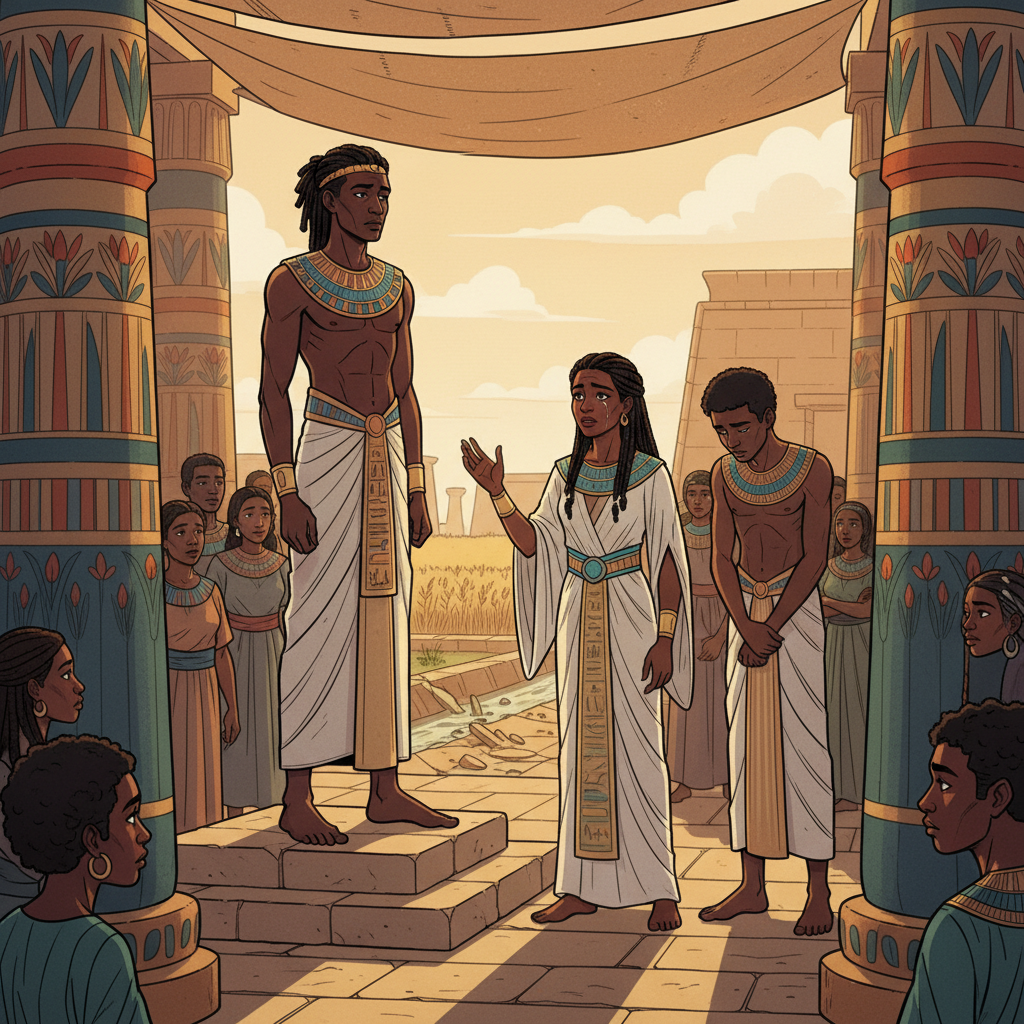
Meritaten's eyes glistened. "He is young, Djoser. Hot-headed. He has already told me he regrets what he did. He destroyed those channels in a moment of fury and he has not slept since. He is sorry." "Sorry does not water Heqanakht's wheat," Djoser said quietly. His sister flinched. It was the truth, and the truth in a judge's voice carries a different weight than the truth in a brother's.
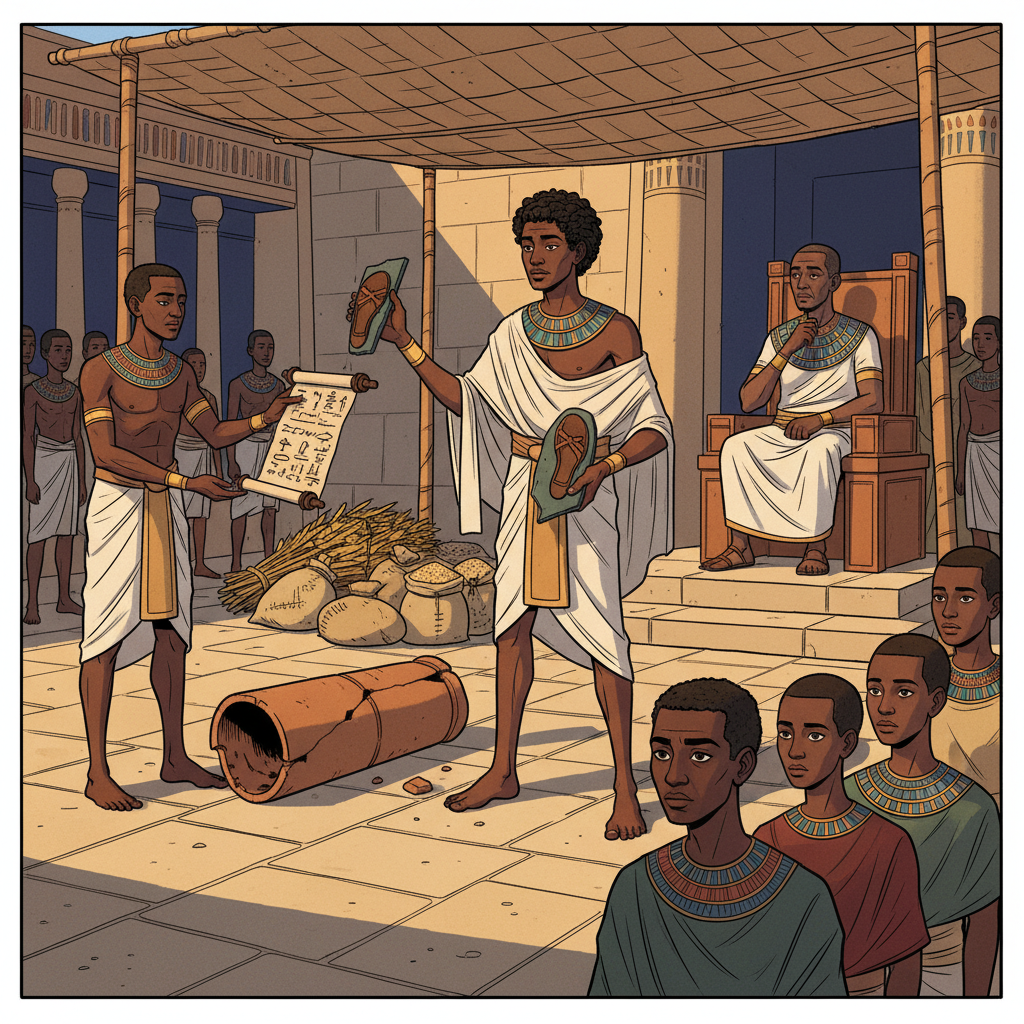
The hearing took place two days later. Heqanakht presented his evidence: the destroyed channels, the ruined crop, the sandal print, the witnesses who heard Amenhotep's threat. A field assessor confirmed the damage — approximately half a season's harvest, worth forty measures of grain. Enough to feed Heqanakht's family for four months. Without it, they would need to borrow, and borrowing in a farming community meant debt that could take years to repay.
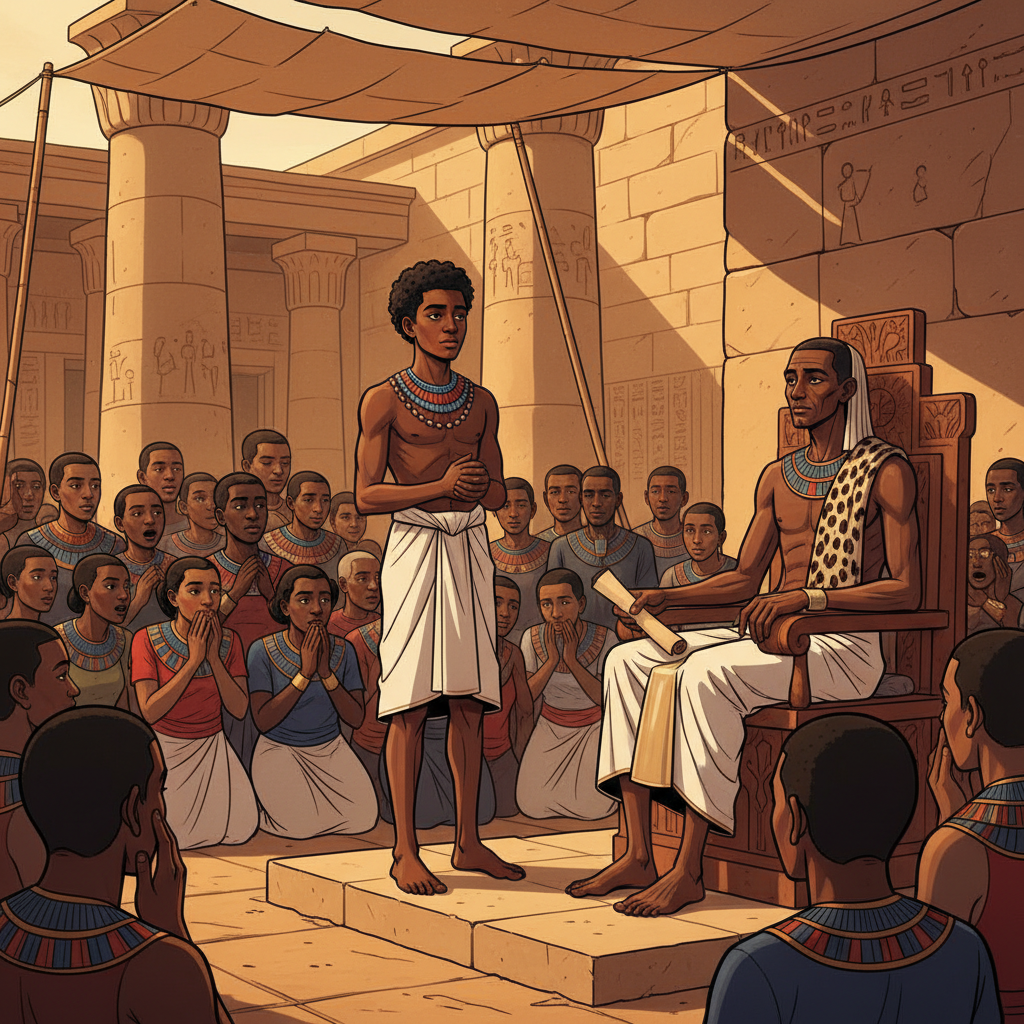
Amenhotep stood before the court and did something that surprised everyone: he admitted his guilt immediately. He did not try to minimize or justify. "I broke the irrigation channels," he said. "I did it at night in anger because I believed the land dispute was unjust. I was wrong to do it. I damaged a man's livelihood and endangered his family. I am here to accept whatever the court decides." His hands were shaking, but his voice was steady. Djoser looked at his nephew and saw something he recognized — the stubborn pride of his own family, bent for the first time under the weight of genuine remorse.
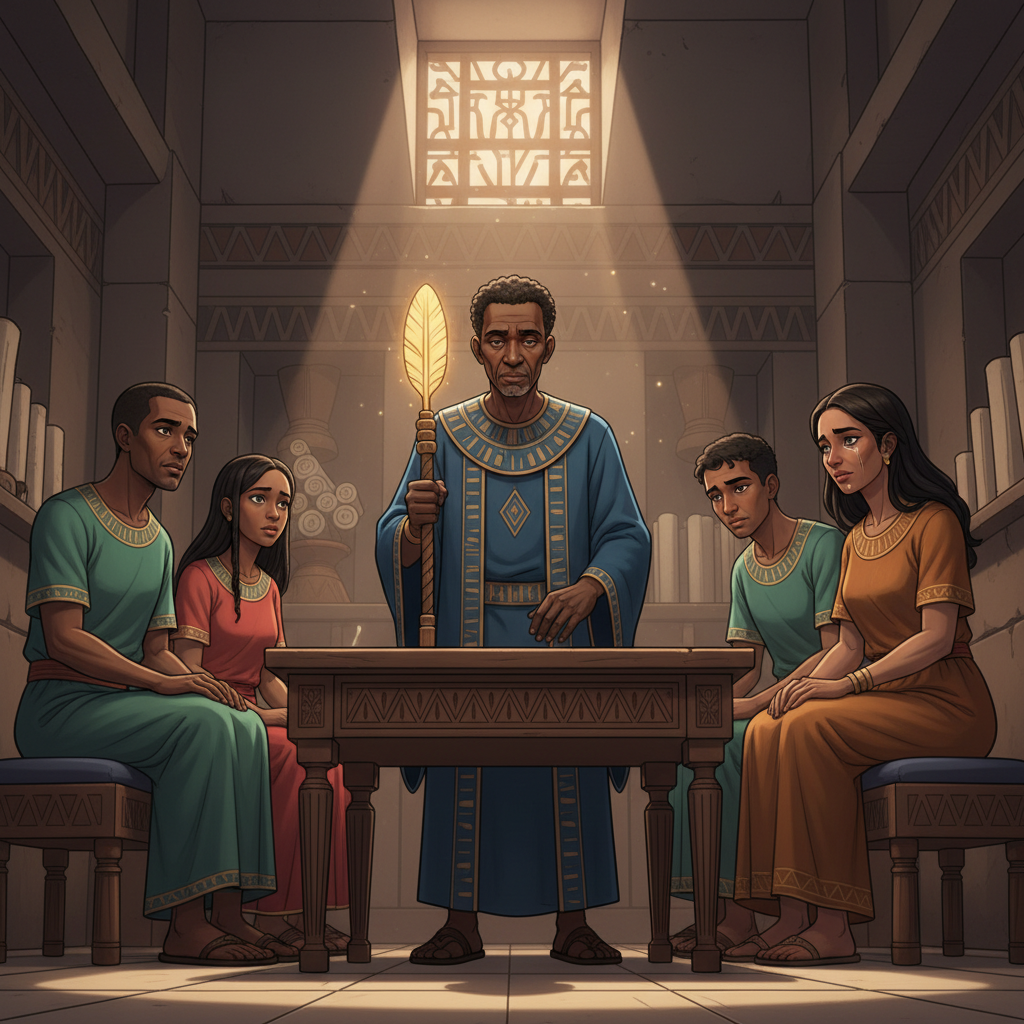
Djoser called both parties and their families into his private chamber. Heqanakht came with his wife and eldest daughter. Amenhotep came with Meritaten. They sat on opposite sides of a low table, and Djoser placed the Staff of Maat between them — a carved wooden staff topped with a gold feather, the symbol of the court's authority. "Before I render a verdict," he said, "I want to address the elephant in this room. Amenhotep is my sister's son. Every person here knows this. I want to tell you what I considered and why I chose not to recuse myself."
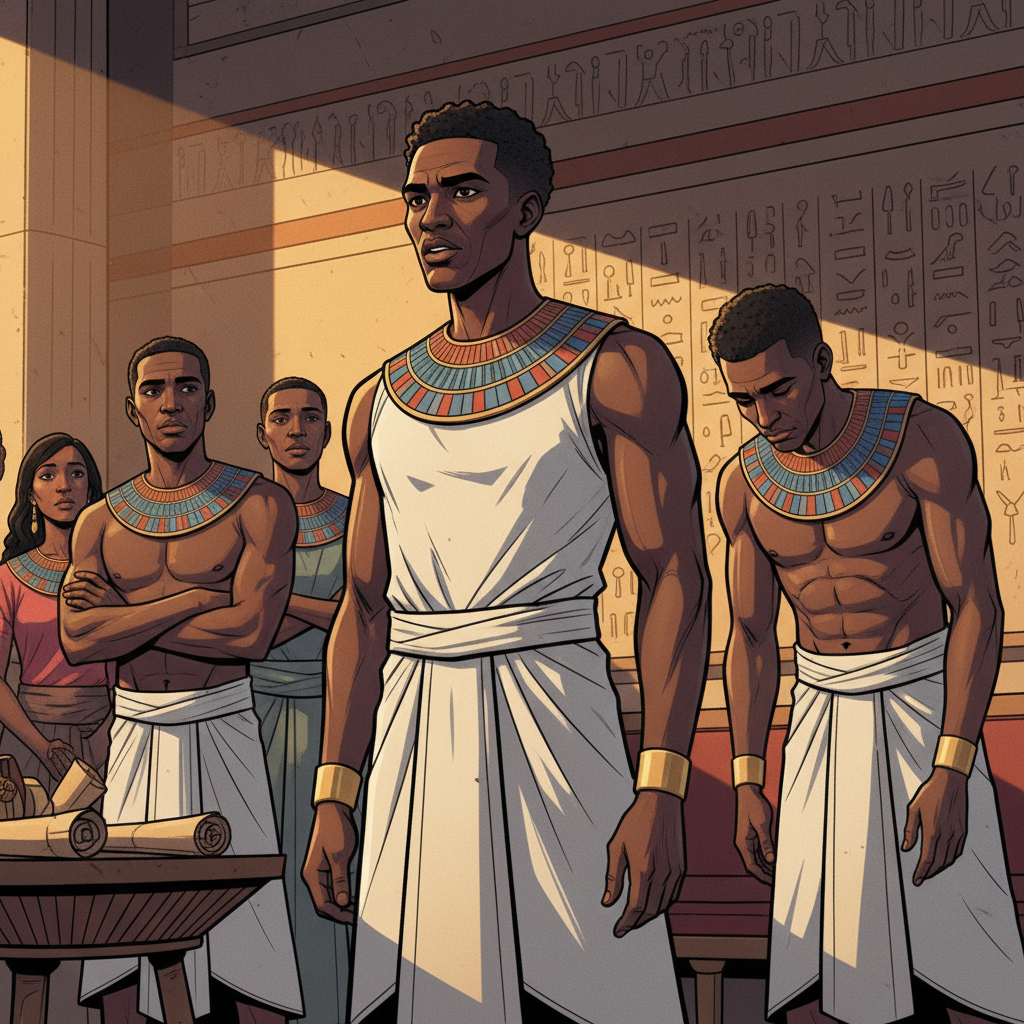
"Judge Senbi would likely impose exile. I believe exile is disproportionate to this crime — it would destroy a young man's life for an act of impulsive vandalism that he has already admitted and regrets. I chose to hear this case not because I want to protect my nephew, but because I believe I can deliver a verdict that serves justice better than Senbi would. If any party here believes my judgment cannot be fair, speak now, and I will step aside." The room was silent. Heqanakht studied Djoser's face for a long moment, then nodded slowly. "You have always been fair, Judge. I trust your scale."
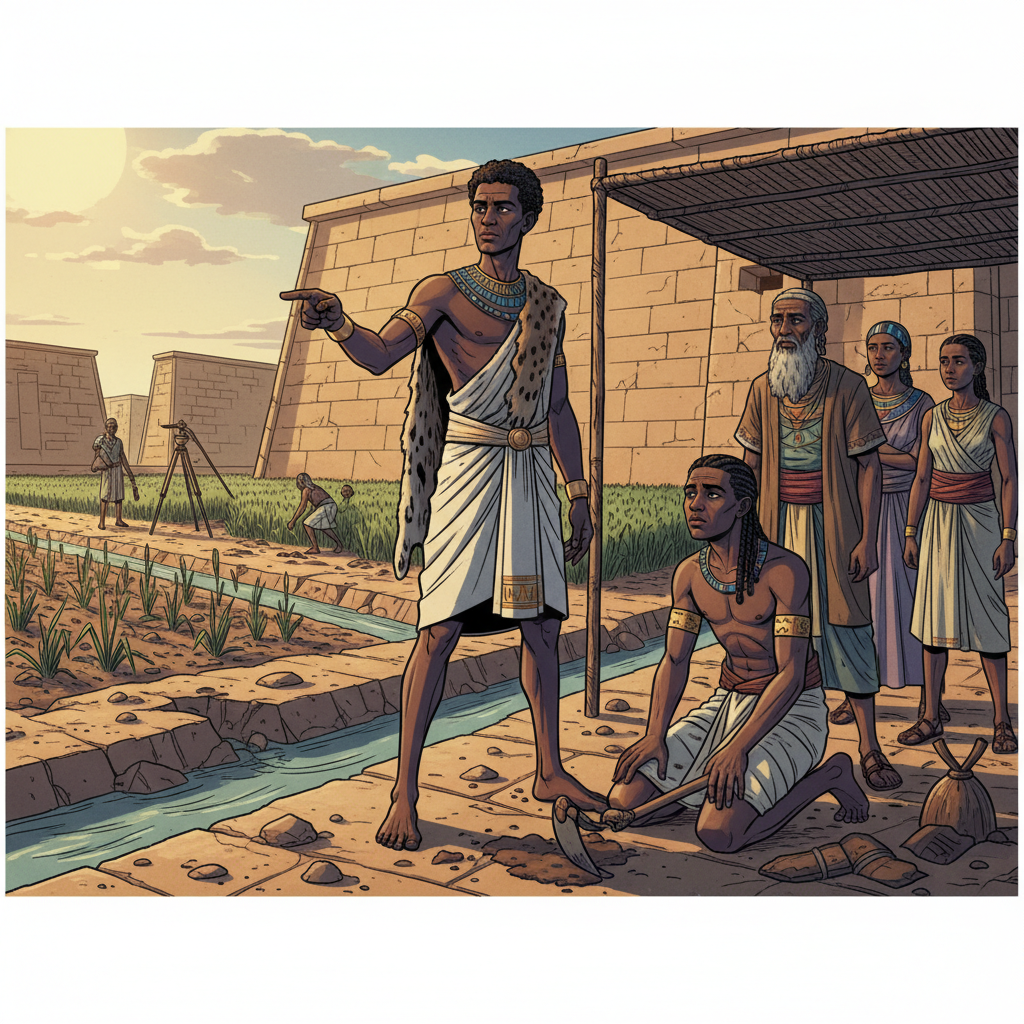
The verdict: Amenhotep would repair every channel he had destroyed, with his own hands, under Heqanakht's supervision. He would then work Heqanakht's western field for the entirety of the next growing season — plowing, planting, irrigating, and harvesting — to replace the crop he had destroyed. The grain harvested would belong entirely to Heqanakht's family. Additionally, the disputed strip of land that had caused the conflict would be surveyed by a neutral assessor, and the kenbet's ruling on ownership would be final and binding.
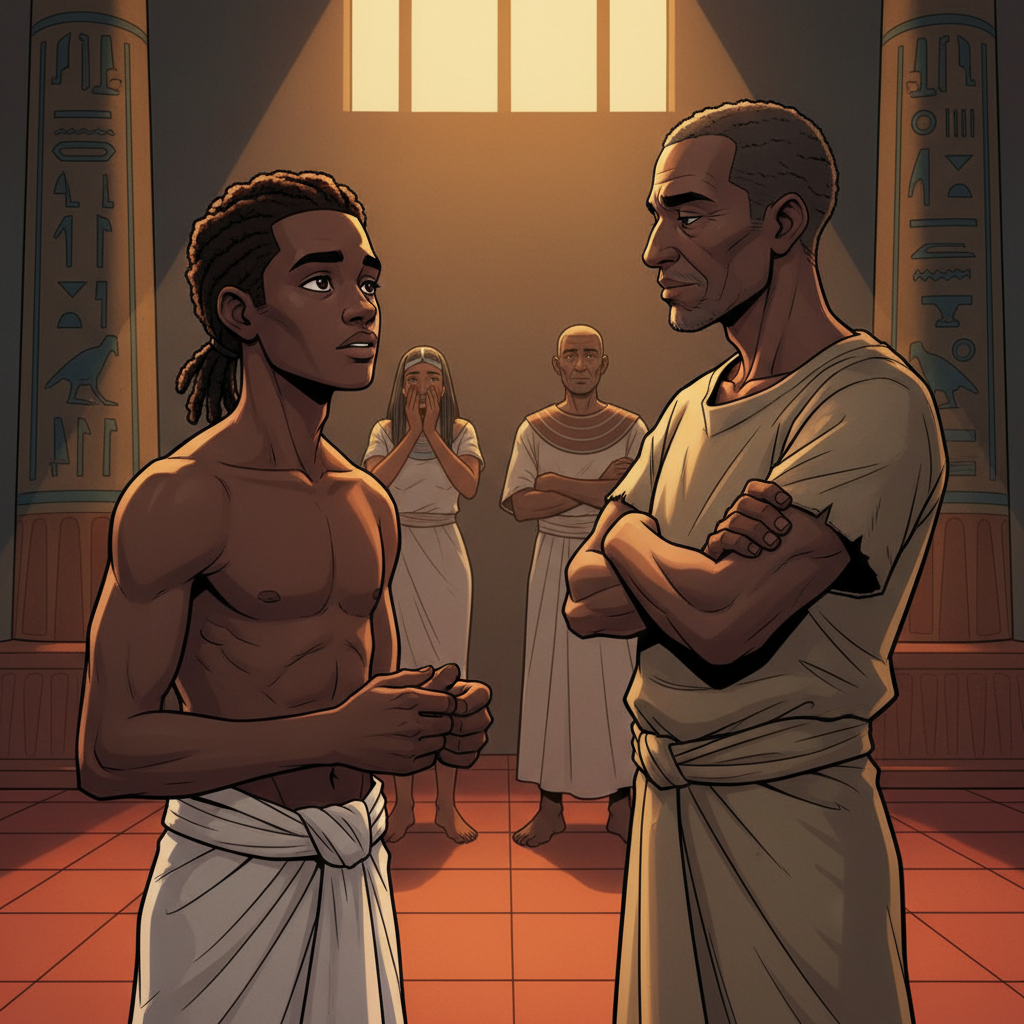
Meritaten exhaled. It was not exile. It was hard — months of manual labor under the supervision of the man her son had wronged — but it was survivable. It was, she realized, exactly the kind of measured justice her brother was known for. Amenhotep looked at Heqanakht and said, "I will repair your channels before the next flood. You have my word." Heqanakht looked at the young man who had destroyed his crop, saw the genuine shame in his eyes, and said nothing. Silence, in that moment, was not absence — it was the space where forgiveness might eventually grow.
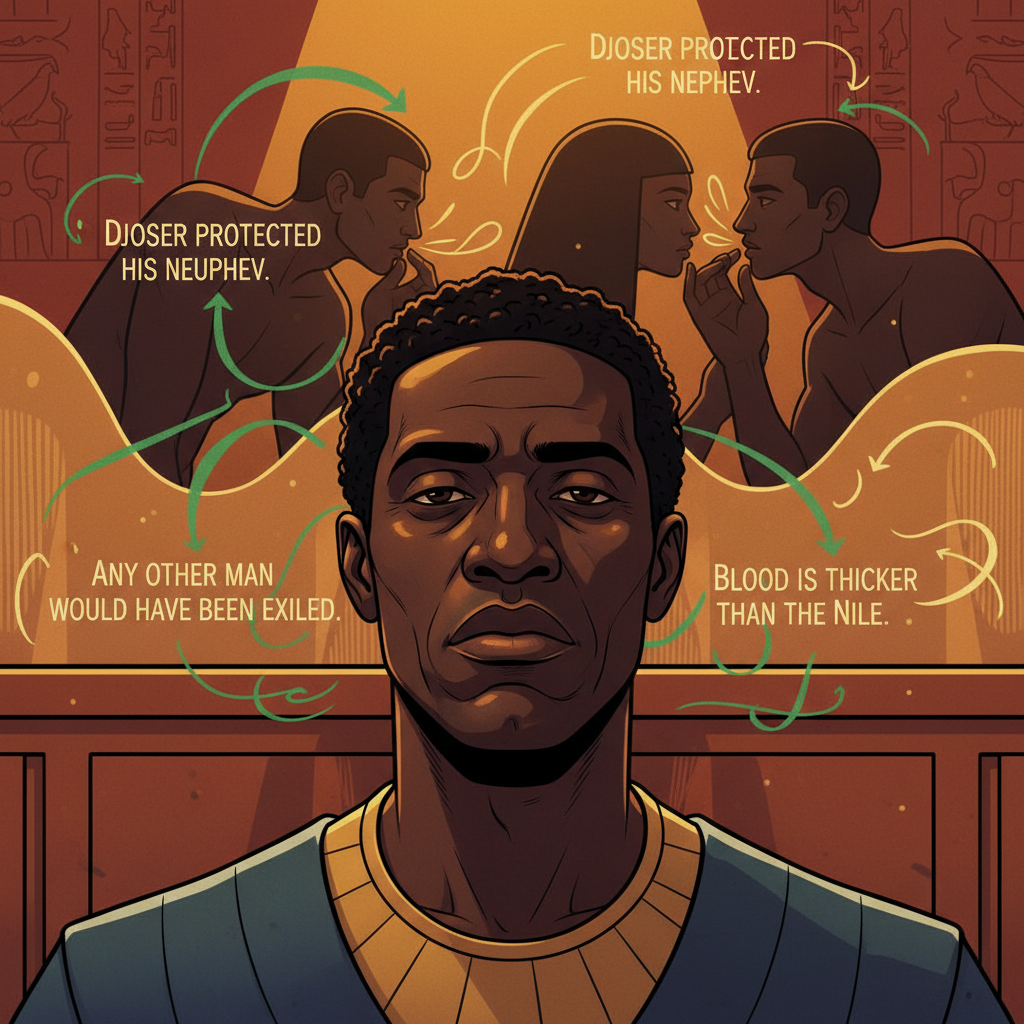
But the verdict was not the end. The whispers started that same afternoon. "Djoser protected his nephew." "Any other man would have been exiled." "Blood is thicker than the Nile." The whispers reached Djoser within hours, carried by well-meaning friends who thought he should know. He had expected them. He had weighed them in advance and judged them lighter than the alternative — exile for a young man whose remorse was genuine and whose crime, while serious, was not irreparable.
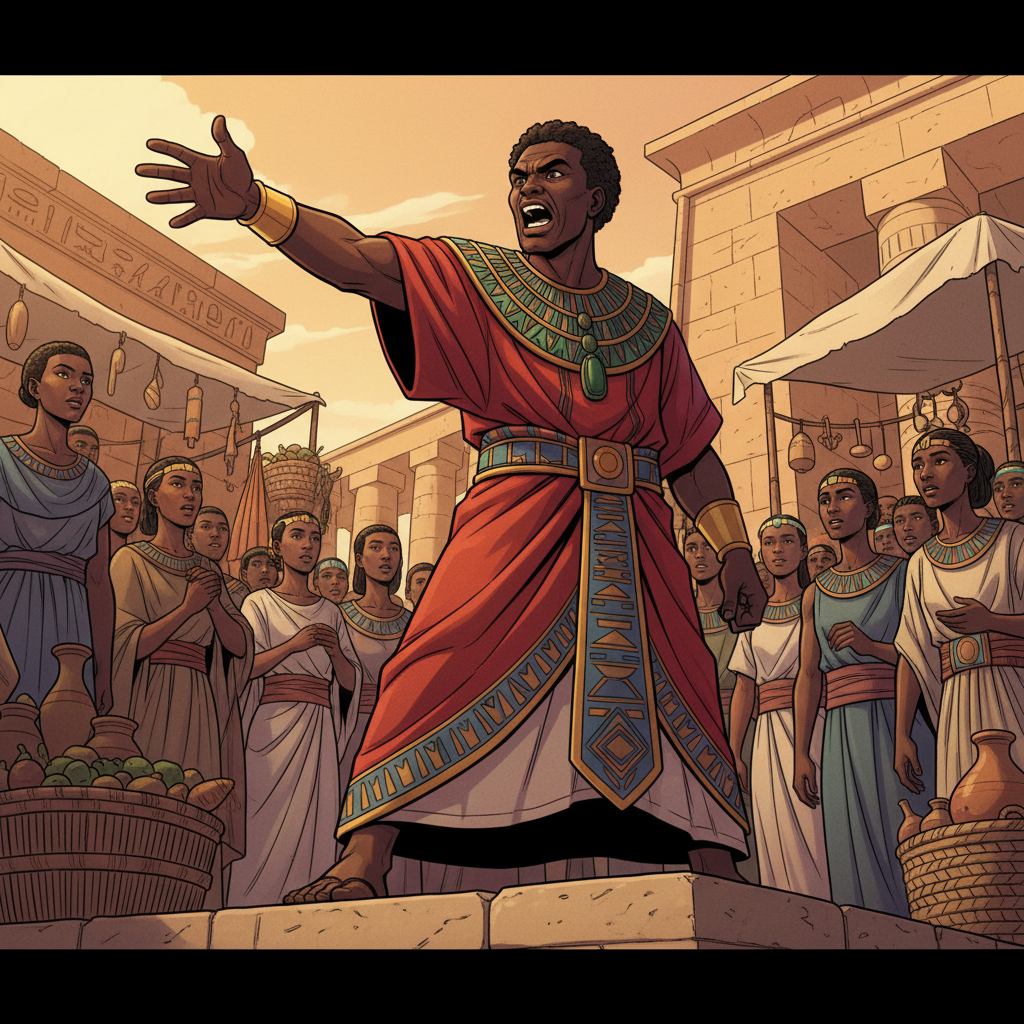
The whispers grew into something louder when Merchant Khufu, who had been fined heavily by Djoser the previous month, used the case as ammunition. "If Djoser's nephew gets restoration while I got double fines, what kind of justice is that?" Khufu asked anyone who would listen. He conveniently omitted that his case had involved deliberate fraud over six months, not a single impulsive act, but the comparison was effective. People began to question not just this verdict but every verdict Djoser had ever delivered.
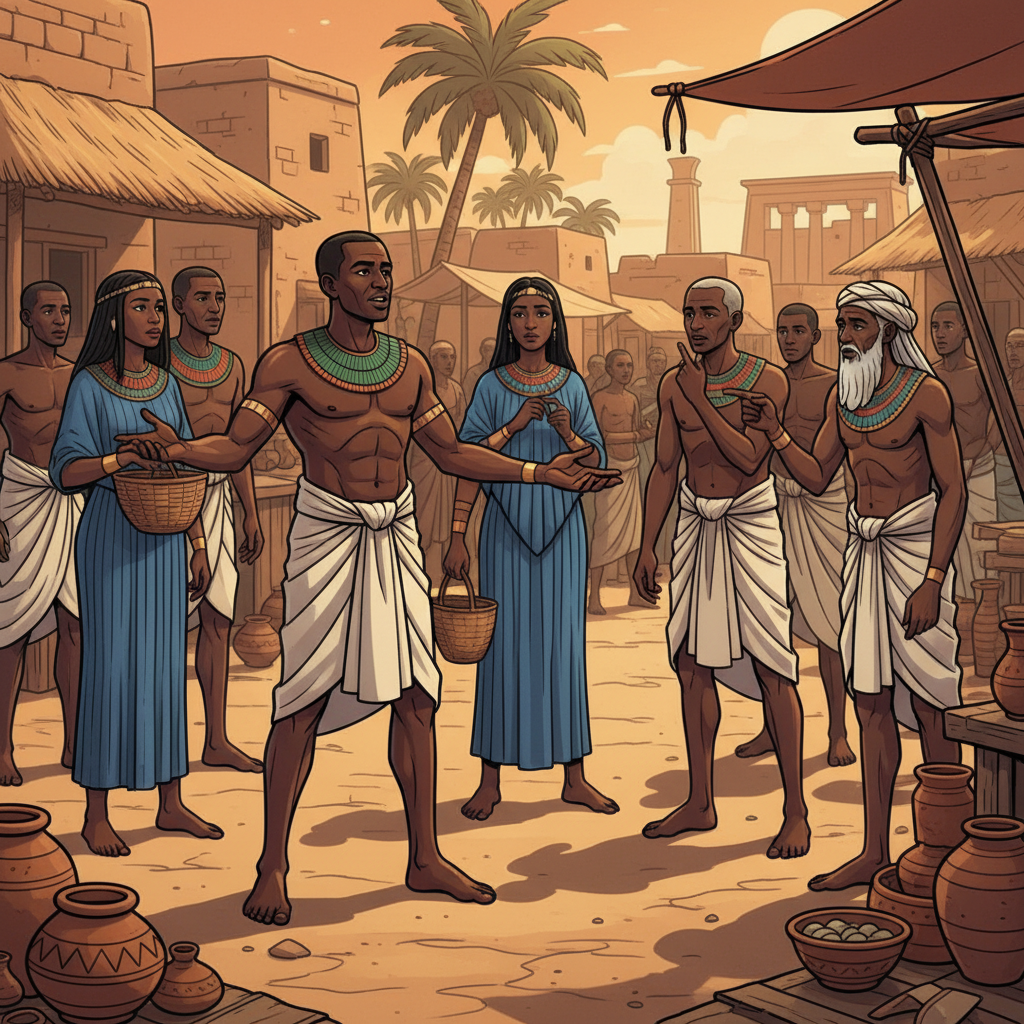
Heqanakht, surprisingly, became Djoser's defender. When neighbors asked him if he felt cheated, he said, "The judge could have stepped aside and let Senbi exile the boy. That would have been safer for Djoser. Instead, he kept the case and gave a verdict that costs him his reputation but serves justice. What kind of man sacrifices his own name to do what is right?" Not everyone was convinced. Some never would be.
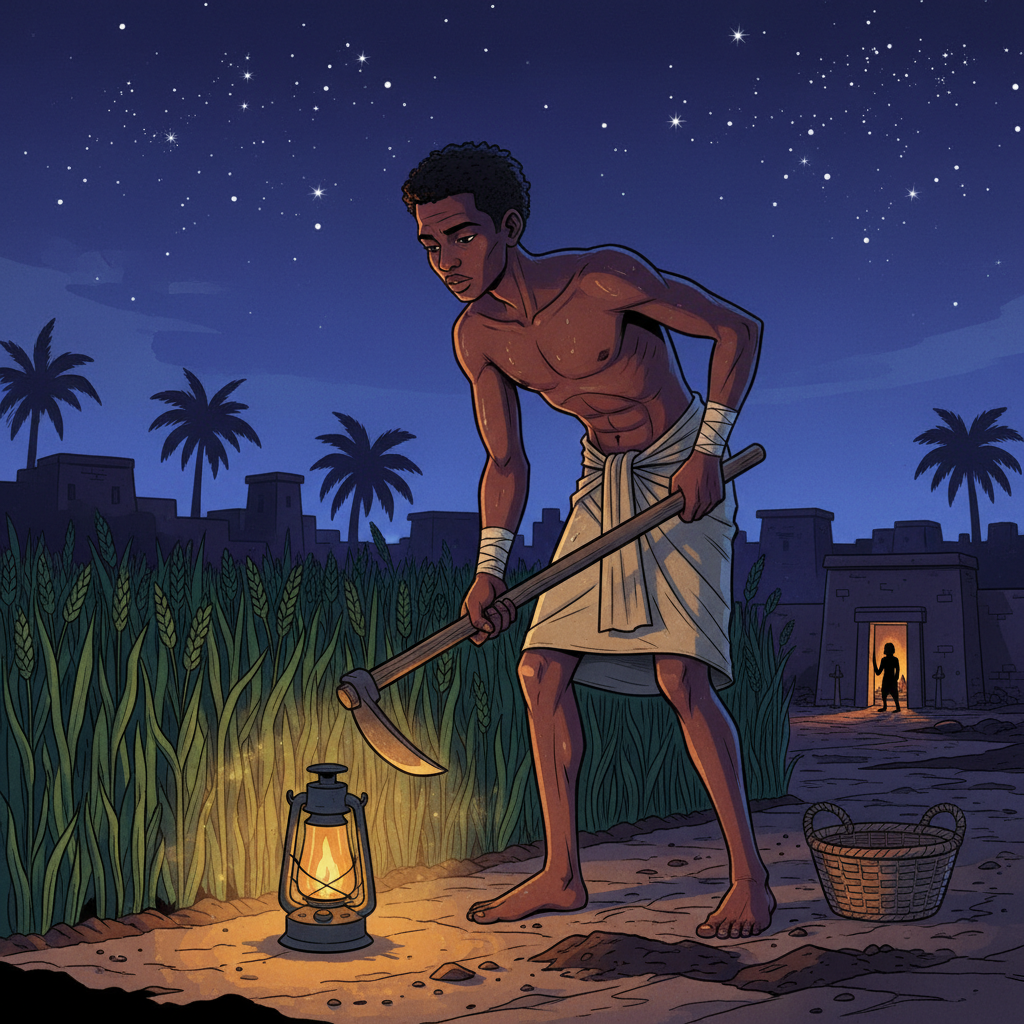
Amenhotep worked Heqanakht's field for the full growing season. He worked silently and without complaint, arriving before dawn and leaving after dark. His hands, which had never done farm work before, blistered and bled and hardened. By the end of the season, Heqanakht's harvest was the largest in three years — partly because the field had been tended with the desperate diligence of a young man trying to rebuild what he had destroyed.
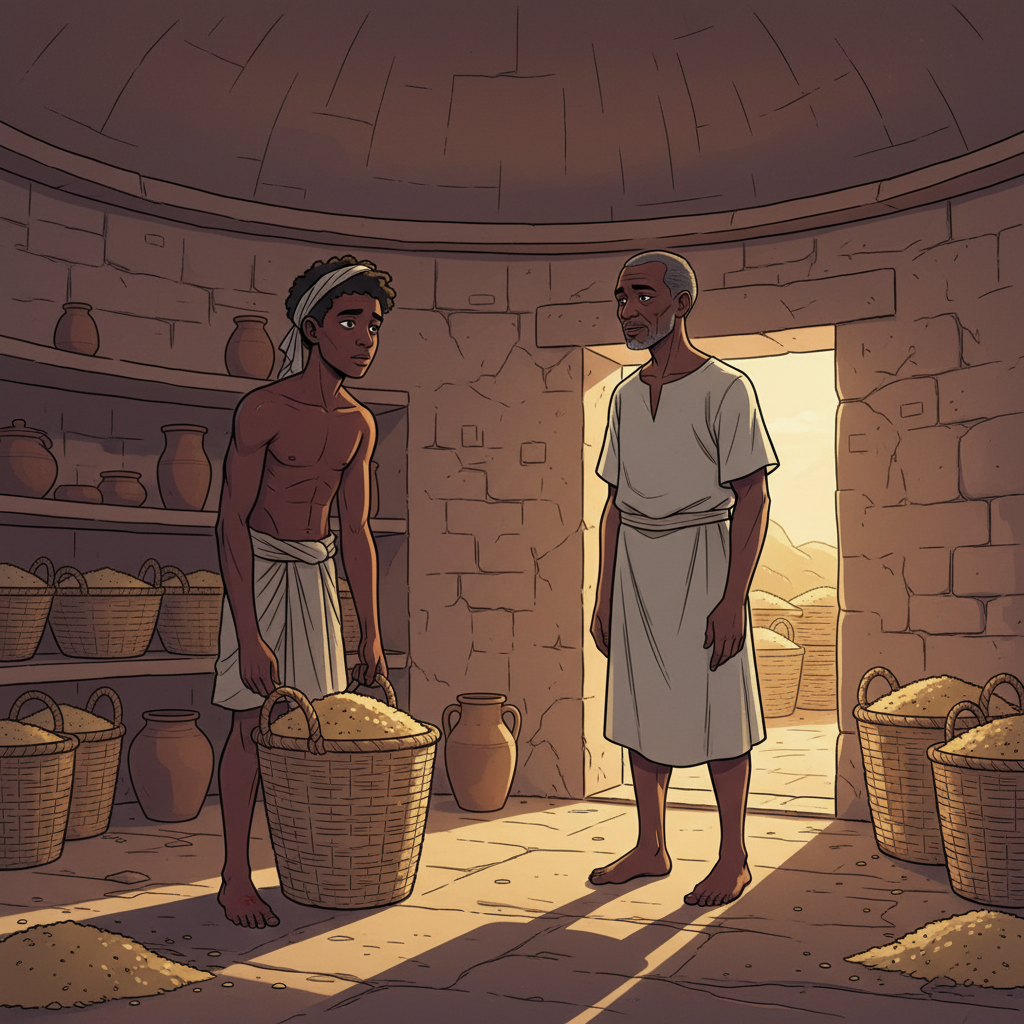
On the last day of harvest, Amenhotep brought the final basket of grain to Heqanakht's storehouse and set it down. Heqanakht looked at him — the blisters, the sunburn, the exhaustion — and saw not the angry boy who had broken his channels but a young man who had been broken and rebuilt by his own labor. "You are not the same person who came to my field," Heqanakht said. "No," Amenhotep agreed. "I am not."
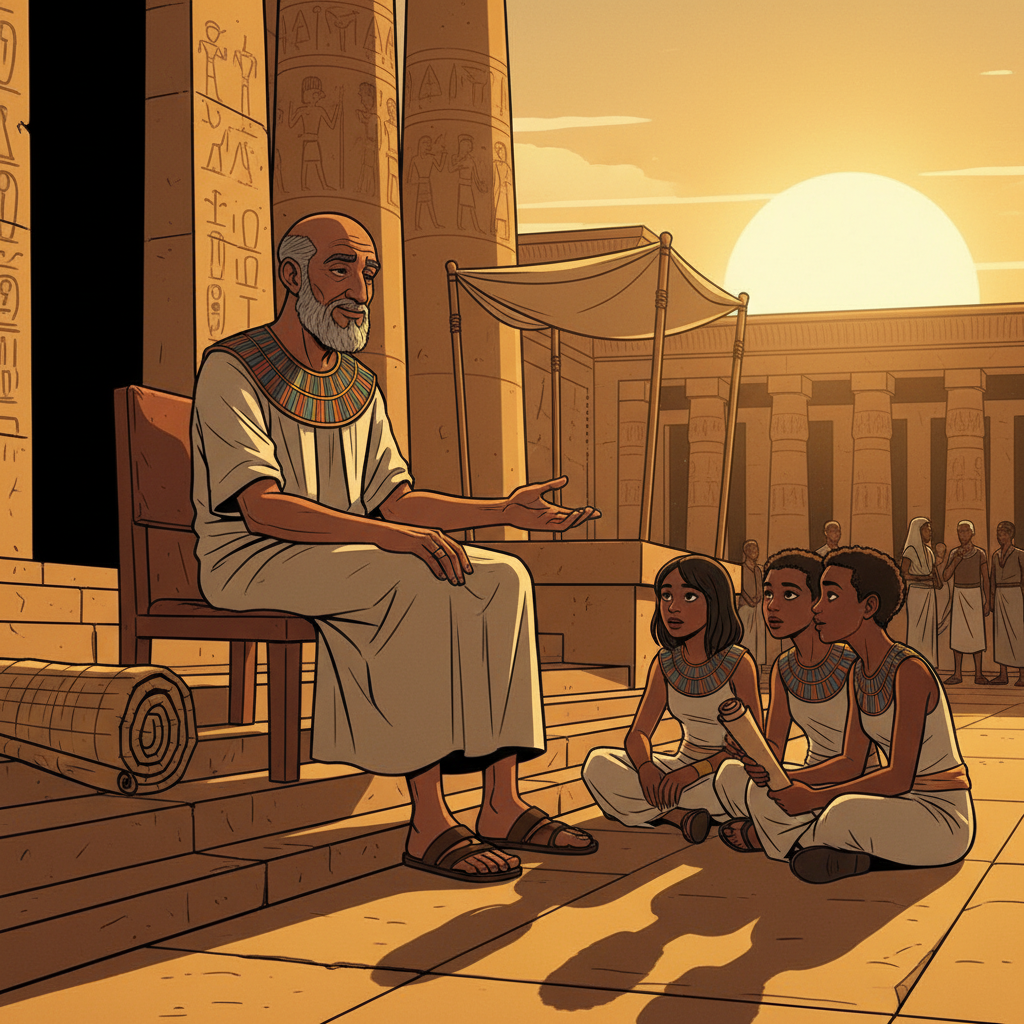
Djoser never fully recovered his reputation. There were always those who believed blood had influenced his judgment. He accepted this as the cost of the choice he had made — the choice to stay on the bench when stepping away would have been safer, the choice to deliver a verdict that served justice at the expense of his name. Years later, when young judges asked him for advice, he always said the same thing: "The hardest cases are not the ones where you don't know the answer. The hardest cases are the ones where every answer costs you something, and you have to decide which cost you can live with. Choose the cost that serves Maat, not the cost that protects you."