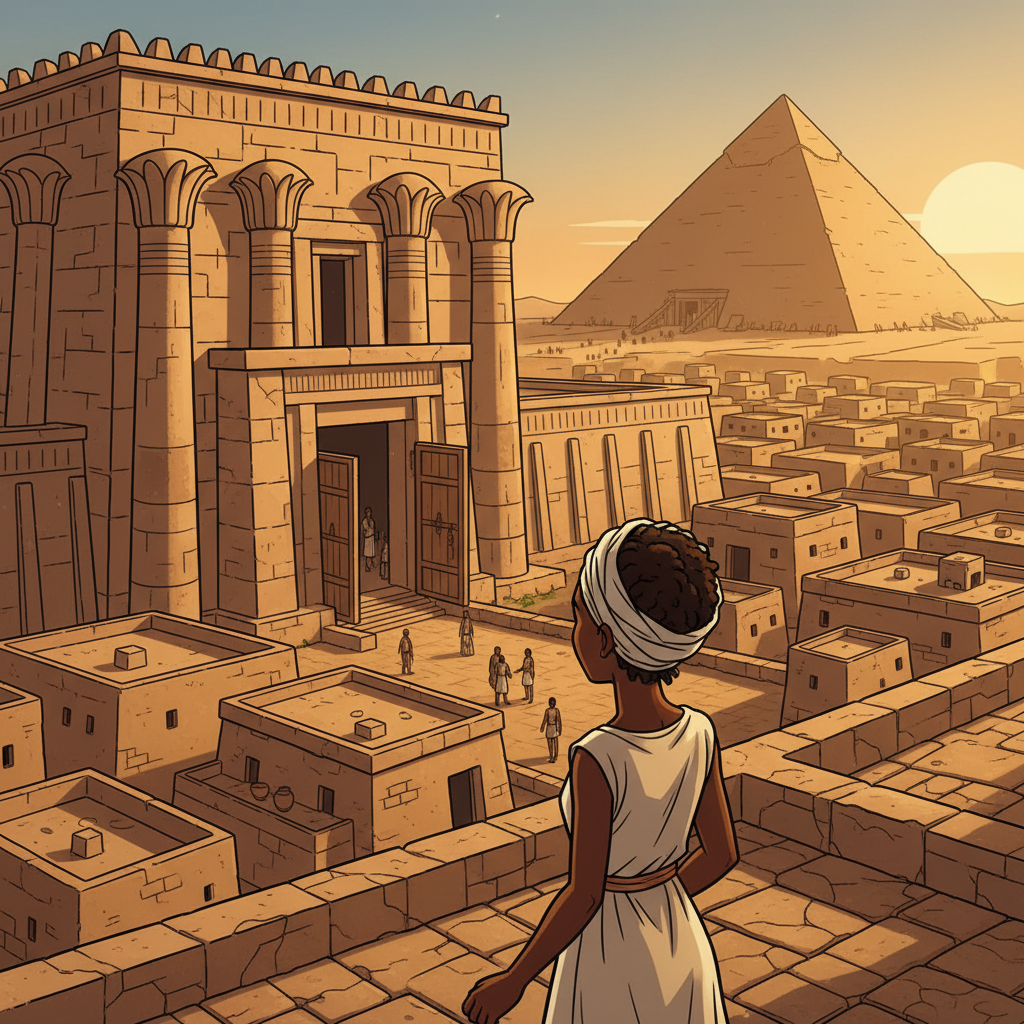
Iset was fourteen years old, and her hands already knew the work of bringing life safely into the world. Her skin was a warm brown, her hair wrapped in a clean linen cloth the way the healing-women wore it, and she was an apprentice at the Per Ankh of Kahun — the House of Life in the town built for the workers of the great pyramid. Her mistress was a sunu, a physician, named Nebet, who had taught Iset since she was small that the healing of women was real knowledge — written down, tested, and handed on — and not the guesswork that some men believed it to be.
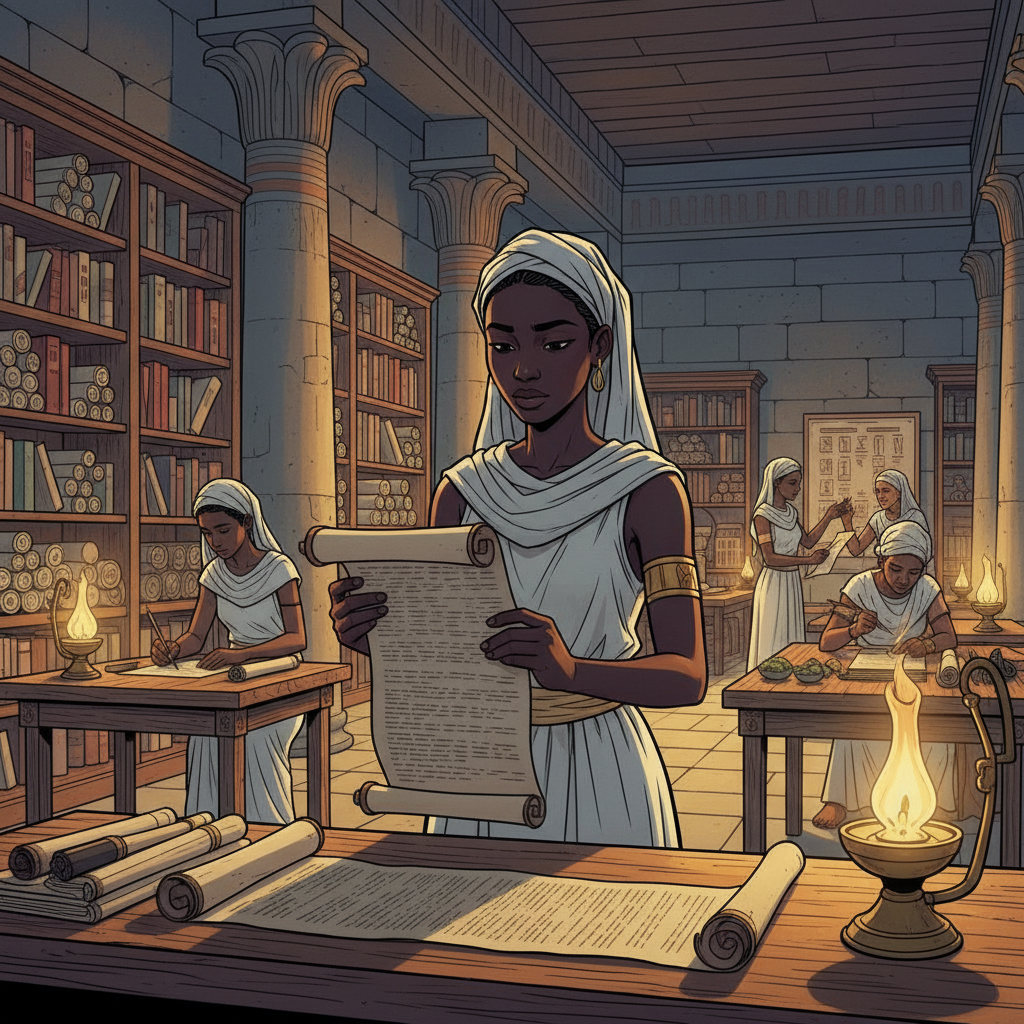
The Per Ankh of Kahun kept something rare and precious: a long papyrus, copied and recopied, with thirty-four sections on the health of women. It held what the healing-women had learned across many lifetimes — how to ease a hard birth, how to treat an illness, how to tell, in the uncertain early days, whether a child was on the way at all. This was not guesswork dressed up as wisdom. It was medicine in the fullest sense: watched carefully, written plainly, and taught hand to hand from one healing-woman to the next. Iset held that papyrus every morning. She knew, the way you know the weight of a real thing in your hands, that it was true knowledge.
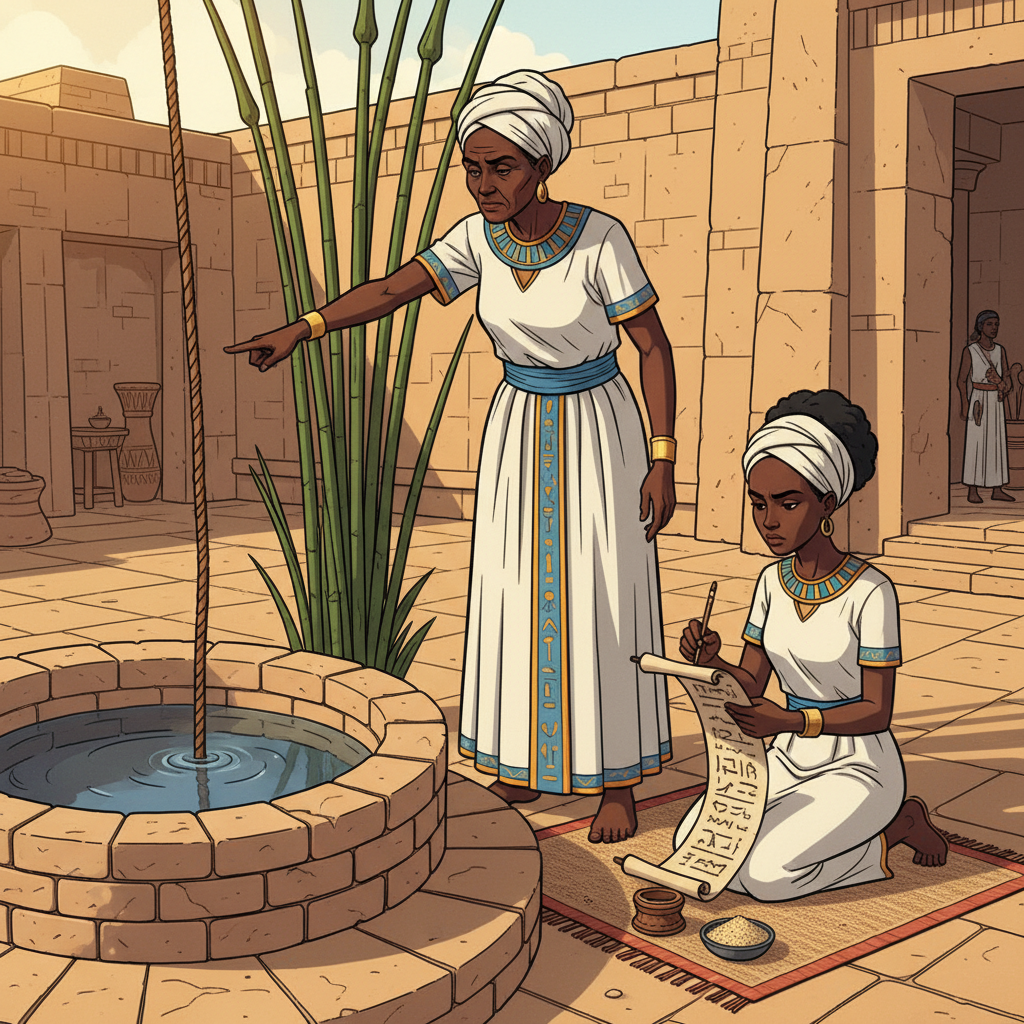
Mistress Nebet was strict about two things above all others. The first was cleanliness. The second was truth. “A healing-woman is paid for her word,” she told Iset. “When she says a thing about a body, people act on it — they hope, they plan, they spend, they name children not yet born. So her word must be worth acting on. A healer who shades the truth to please a powerful person has not done a small wrong. She has poisoned the well that the whole town drinks from.” Iset wrote that down too, in her own careful hand, the way she wrote down everything Nebet taught her.

One of the things written in the Kahun papyrus was a way to tell, in the uncertain early days, whether a woman was expecting a child. It worked like this: over several days the woman would water two small portions of grain — one of wheat, one of barley, set on damp cloth. The healing-women had observed, across many cases and many years, that when a child was on the way the watered grain tended to sprout, and when it was not, the grain stayed still. It was not magic. It was the patient watching of a pattern, recorded over generations — the same way the star-watchers learned the coming flood by the rising of Sopdet. Iset had helped with the test a dozen times. She had learned to read the green shoots the way her father read the river.
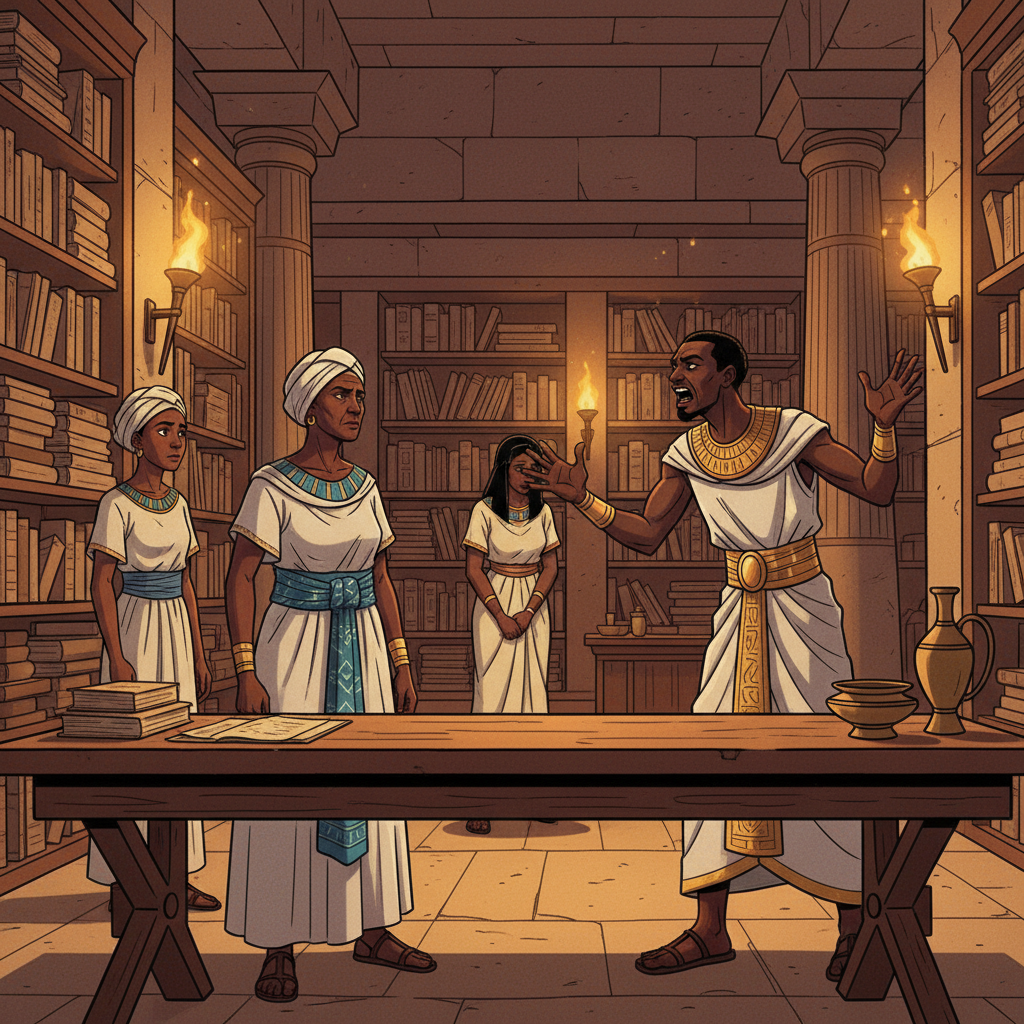
On the morning this story turns, a wealthy merchant named Sebni came to the Per Ankh, loud and impatient, his wife walking quiet behind him. For weeks Sebni had been telling his whole clan that his wife, Tentamun, was carrying his heir — a son, he was sure, to carry his name and his trade. He had boasted of it at every feast. Now he wanted the healing-women to confirm it — today, with a word he could carry back to the clan. He did not want a test that took days. He wanted a yes, and he wanted it before sundown.
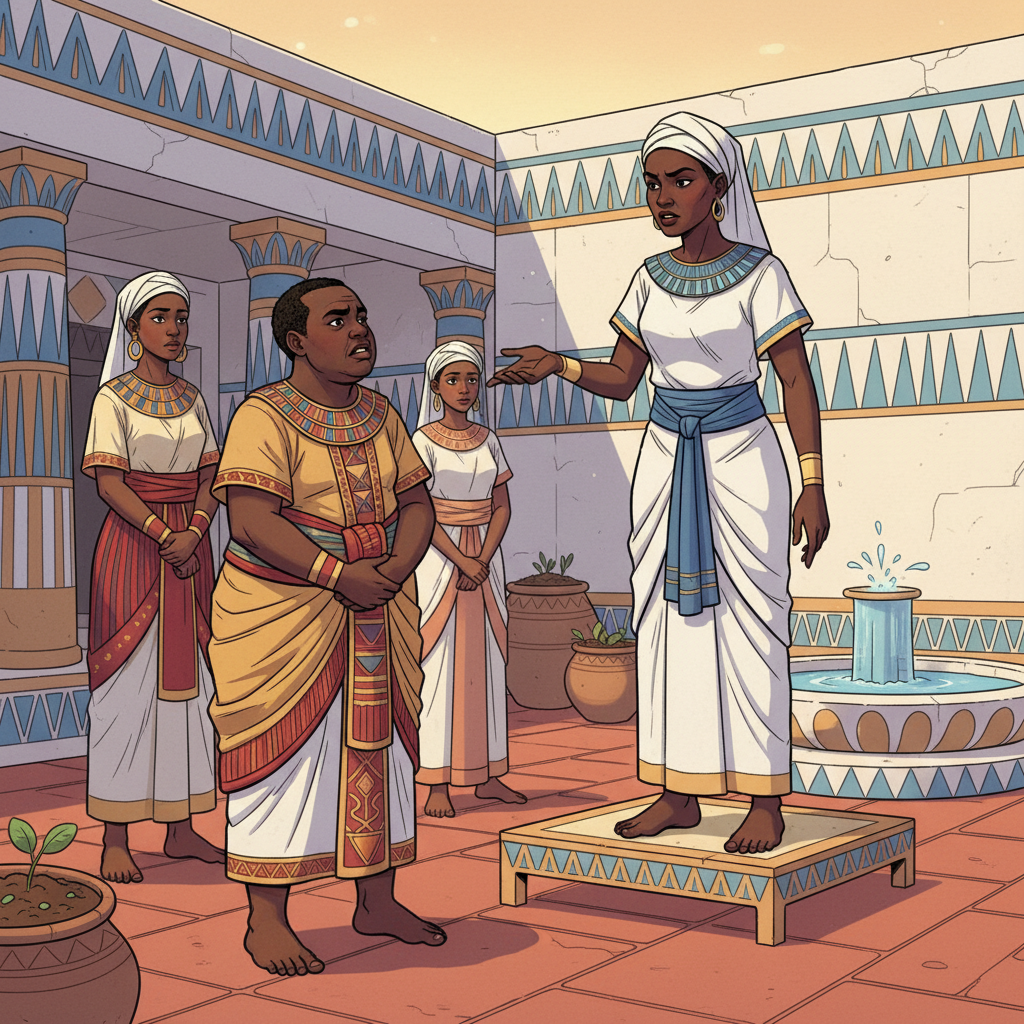
Mistress Nebet was not a woman to be hurried. “The grain test takes its days,” she told Sebni plainly. “Three, sometimes five. The body does not keep your calendar, and neither do I. You may have a true answer when the grain has spoken — or a fast answer that is only a guess. You cannot have both.” Sebni did not like it. He was a man used to paying for what he wanted and getting it at once. But the Per Ankh of Kahun did not belong to him, and Nebet’s word was the most trusted in the whole town, so in the end he left his wife in the healing-women’s care and went away to wait, badly.
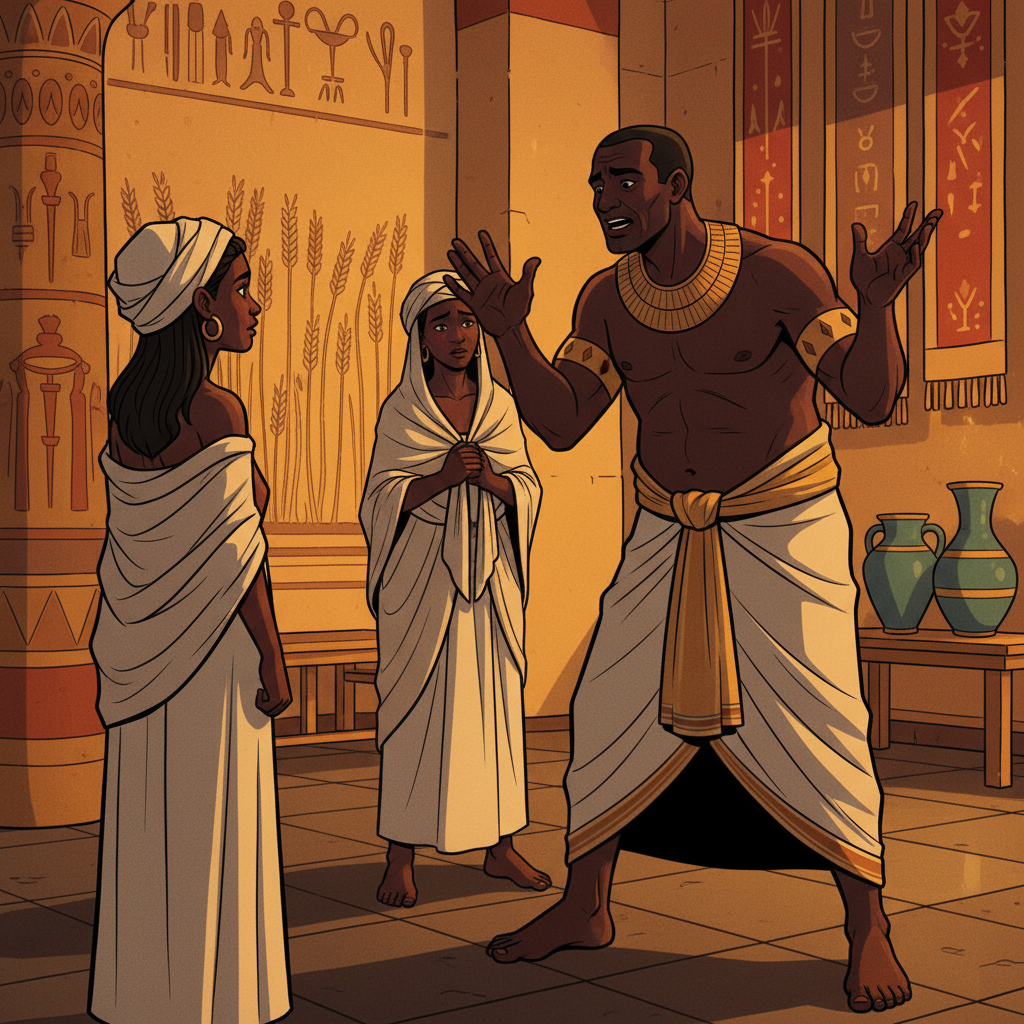
It was Tentamun, the wife, that Iset found herself watching. While the merchant blustered, his wife had said nothing at all. But her hands were knotted in her shawl, and when Sebni boasted of the son he had already promised, something behind her eyes flinched. Iset understood it slowly. Sebni had told the whole clan a child was coming. If no child came, it would not be Sebni who carried the shame. It would be Tentamun — blamed, whispered about, made small for failing to give him the heir he had already announced to the world. And the poor woman was not even certain herself. Her husband had built a tower of boasting on top of her uncertainty.
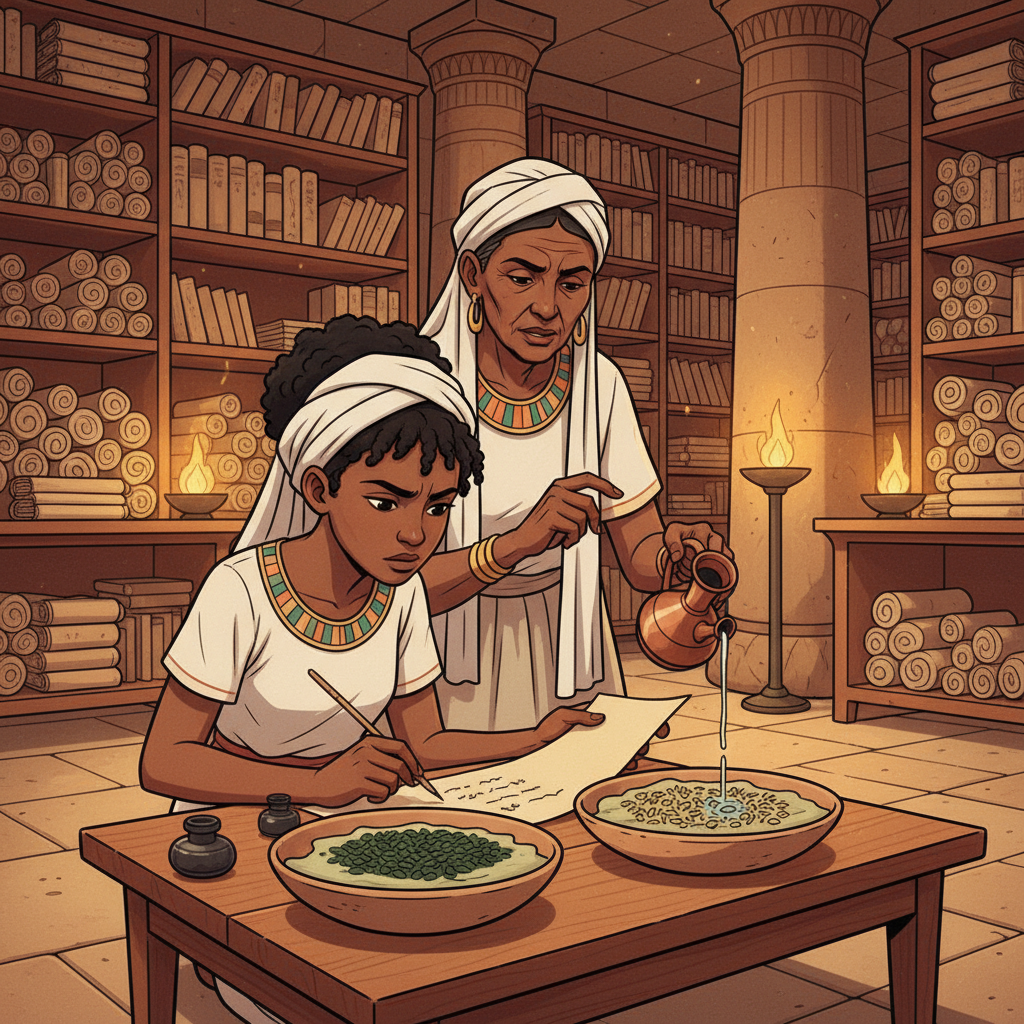
Iset set up the test the way the papyrus described — two shallow bowls, one of wheat, one of barley, the grain laid on damp cloth. Each day, Tentamun would water them, and each day Iset would look closely and write down exactly what she saw: not what she hoped, not what the merchant wanted, but what was actually there. Mistress Nebet checked her records each evening. “Write the green you see,” Nebet told her, “not the green you wish for. A record that flatters is worse than no record at all — because no record makes no promises, and a false record makes a promise the body cannot keep.”
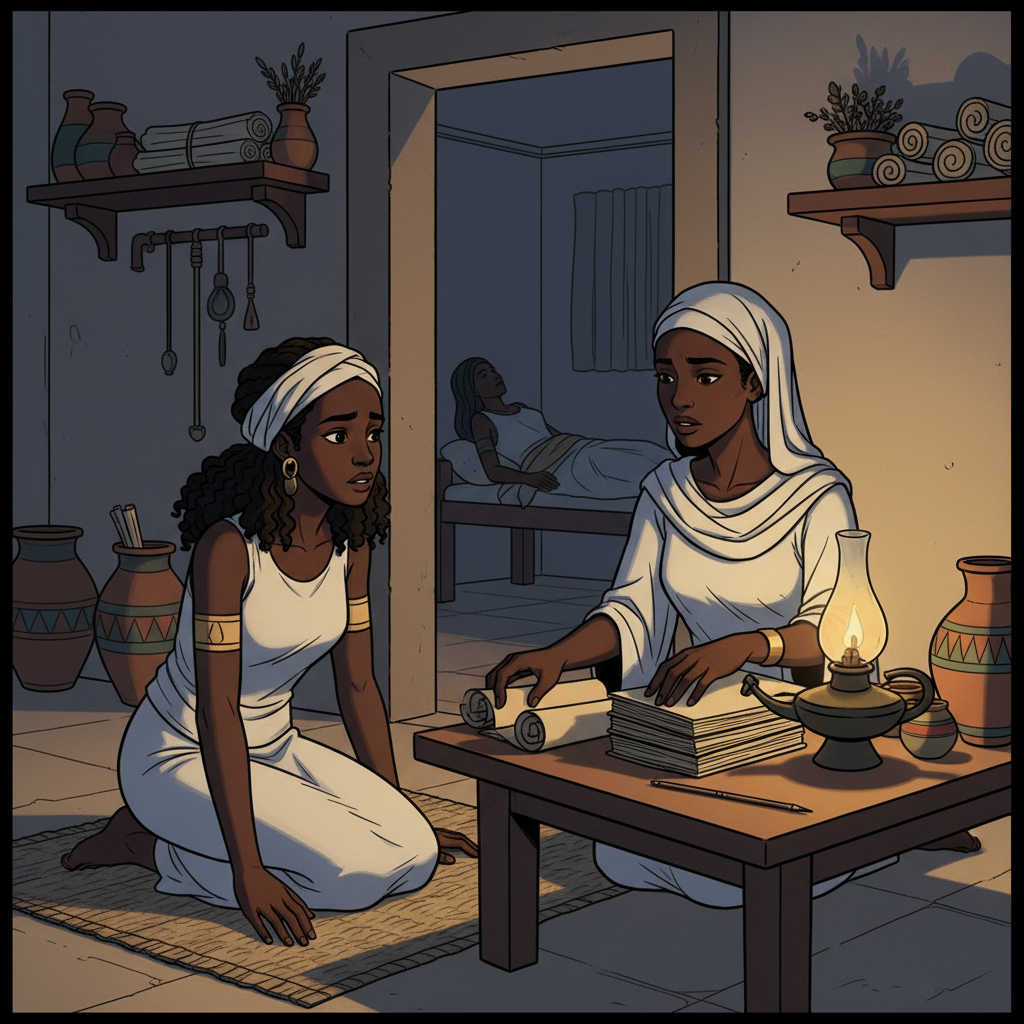
On the second evening, Iset asked her mistress the question that had been growing in her. “And if the answer is the one the merchant does not want? He is rich. He is angry already. He has promised his whole clan.” Mistress Nebet set down her own reed. “Then we tell him the truth, gently and plainly, and we let the truth do its hard work. Hear me, Iset. A diagnosis bent to please is isfet entering through the door of mercy. It feels like kindness. It is among the cruelest things a healer can do — because the lie always comes due, and it comes due on the one with the least power to pay it.” She nodded toward the room where Tentamun rested. “On her. Never on him.”
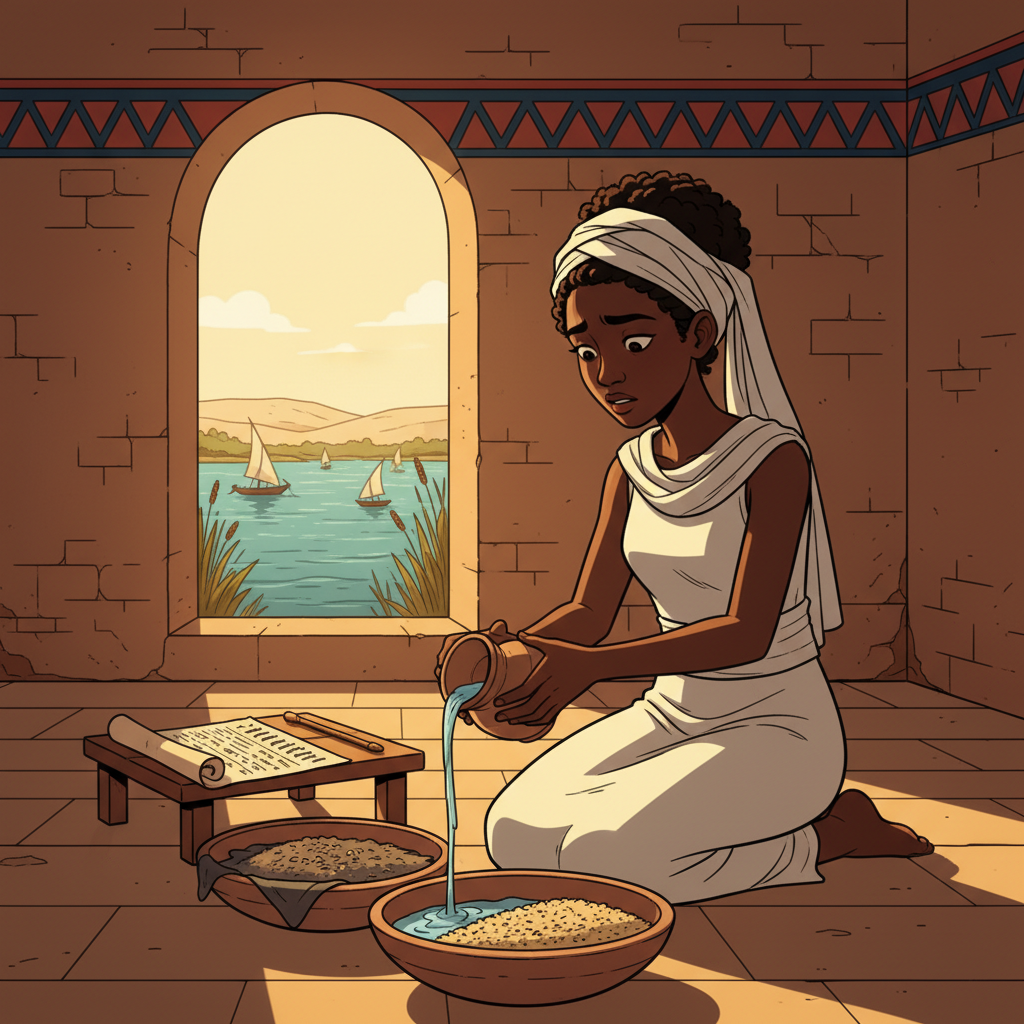
The days passed. Iset watered, and watched, and wrote. And as the grain gave its slow answer, Iset felt the weight Nebet had warned her of settle onto her own young shoulders — because the grain was not sprouting. Day after day, the wheat and the barley lay still on their damp cloth, no green showing anywhere. By the pattern the healing-women had recorded across generations, that meant the same thing every time: not this time. No child was on the way yet. And Iset knew, with a sick certainty, that this was the one answer the loud, rich, waiting merchant had sworn he would not accept.
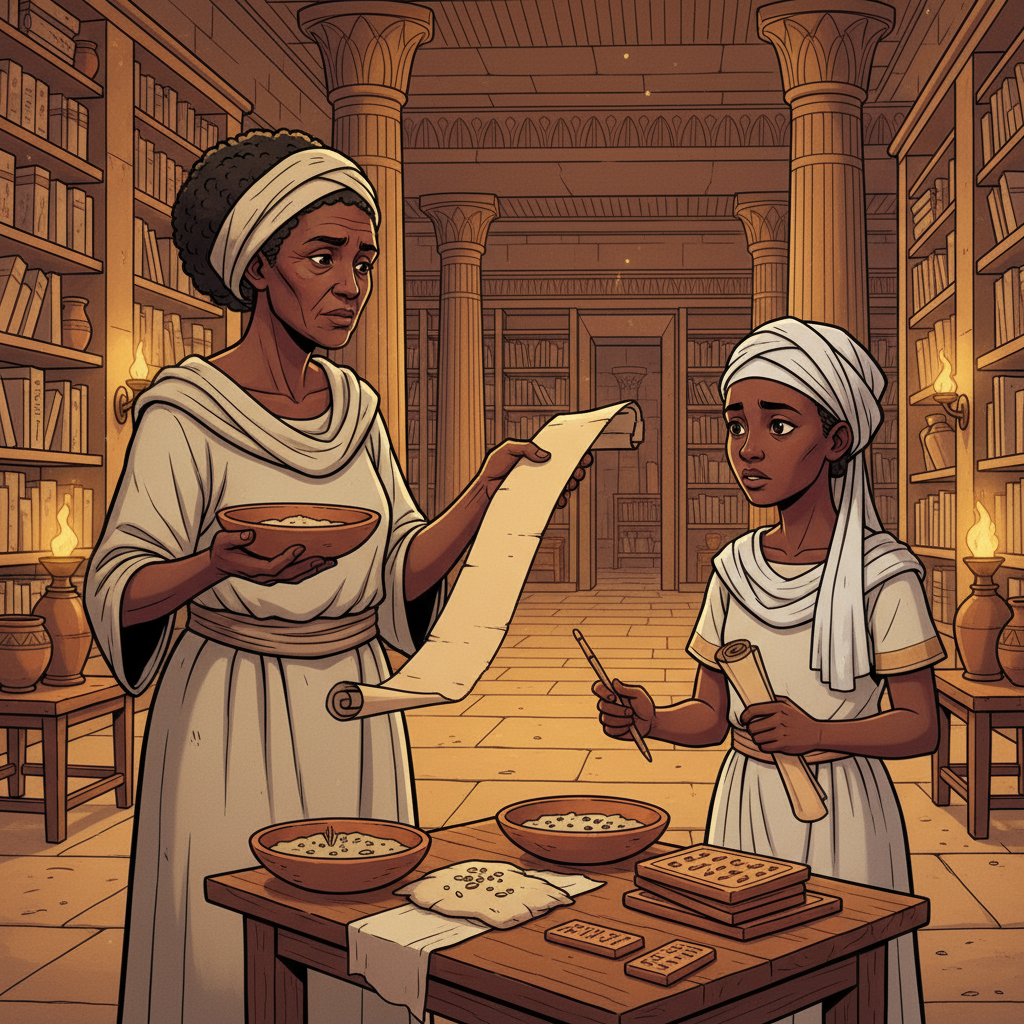
Mistress Nebet examined the bowls herself, and the records Iset had kept, and the days they had counted. She was thorough; she did not rush toward the unwelcome answer any faster than she would have rushed toward a welcome one. But the grain had been given its full days, and the grain had stayed still, and the careful record said what it said. “Not this time,” Nebet confirmed quietly. “Tentamun is not carrying a child — not yet.” She looked at Iset for a long moment. “Now comes the part the papyrus cannot teach. Now we must say it out loud, to a man who paid us to say the opposite.”
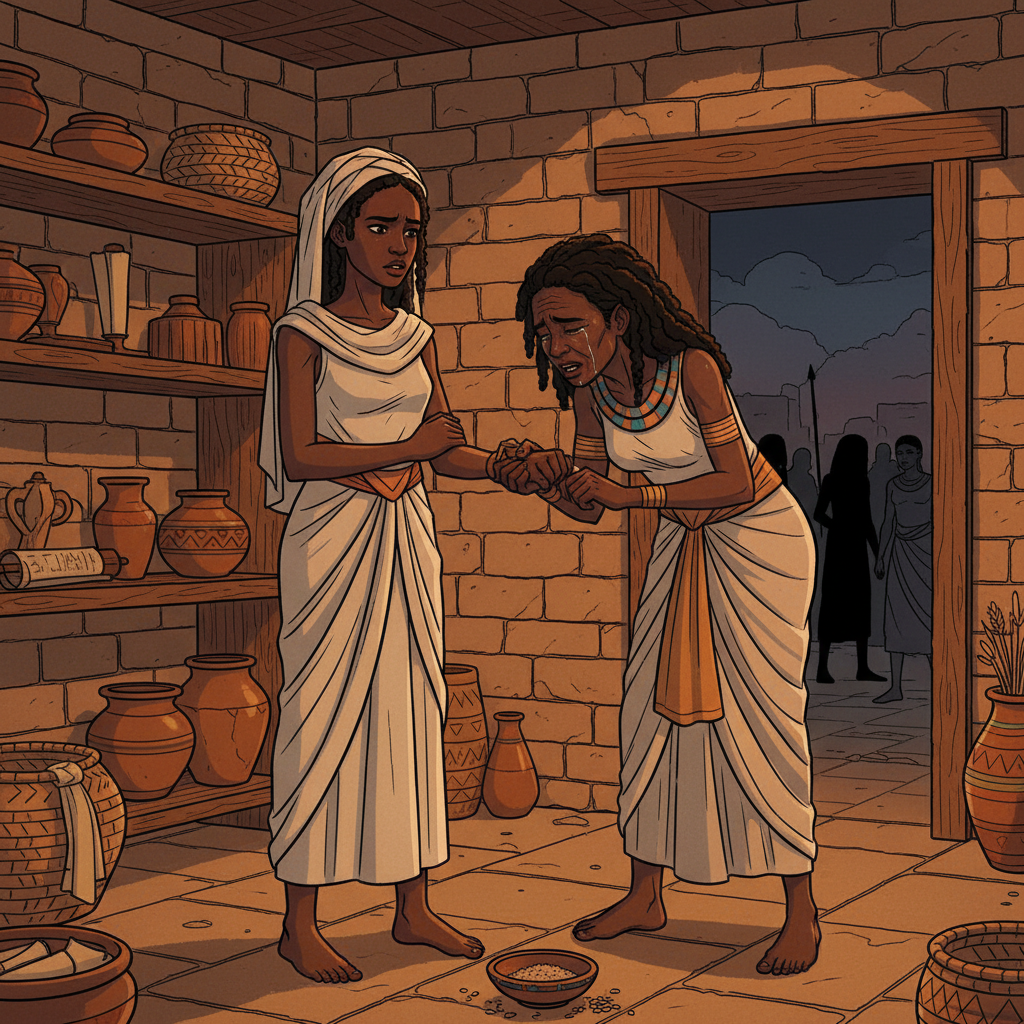
And here was Iset’s true test — harder by far than reading the grain. When Tentamun understood the result, she did not rage. She did something that was worse to bear: she begged. “Tell him it is too soon to know,” she whispered, gripping Iset’s wrist. “Tell him to wait another month before you are sure. Buy me a little time. If you tell him no today, with the whole clan waiting, he will—” She did not finish. She did not have to. And for one long moment, Iset wanted, with her whole kind heart, to do exactly what Tentamun asked. It would be so easy. It would feel like mercy. It would be the most natural lie in all the world.
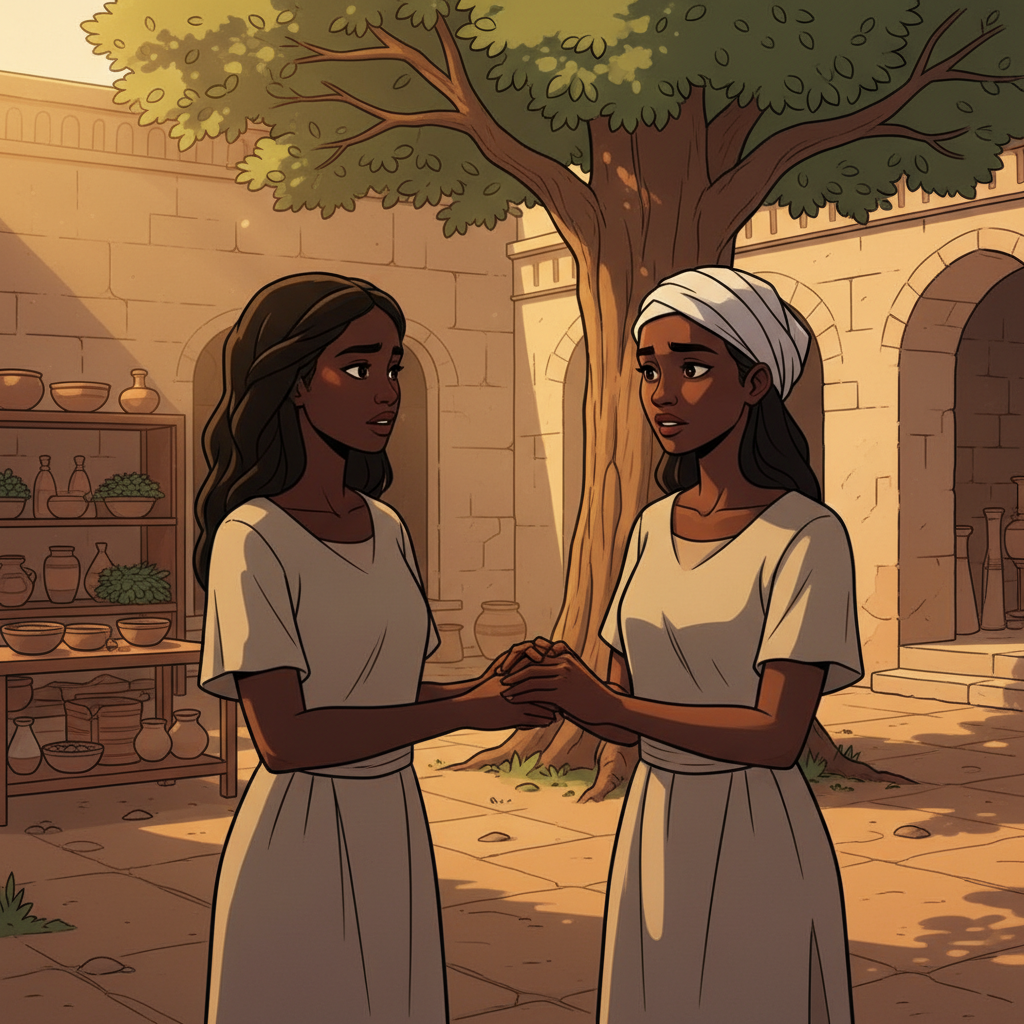
But Iset remembered her mistress’s words: the lie always comes due, and it comes due on the one with the least power to pay it. If Iset bought Tentamun a month with a soft half-truth, Sebni would simply boast for one more month, and the shame, when it finally came, would be a month larger. Iset gently took Tentamun’s hands in both of hers. “I will not tell him a no that makes you small,” she said. “But I will not tell you a maybe that we both know is not true. There is a third thing I can say — the true thing — and it will protect you better than the lie would. Trust my mistress. Trust the truth. It is on your side, even when it does not feel like it.”
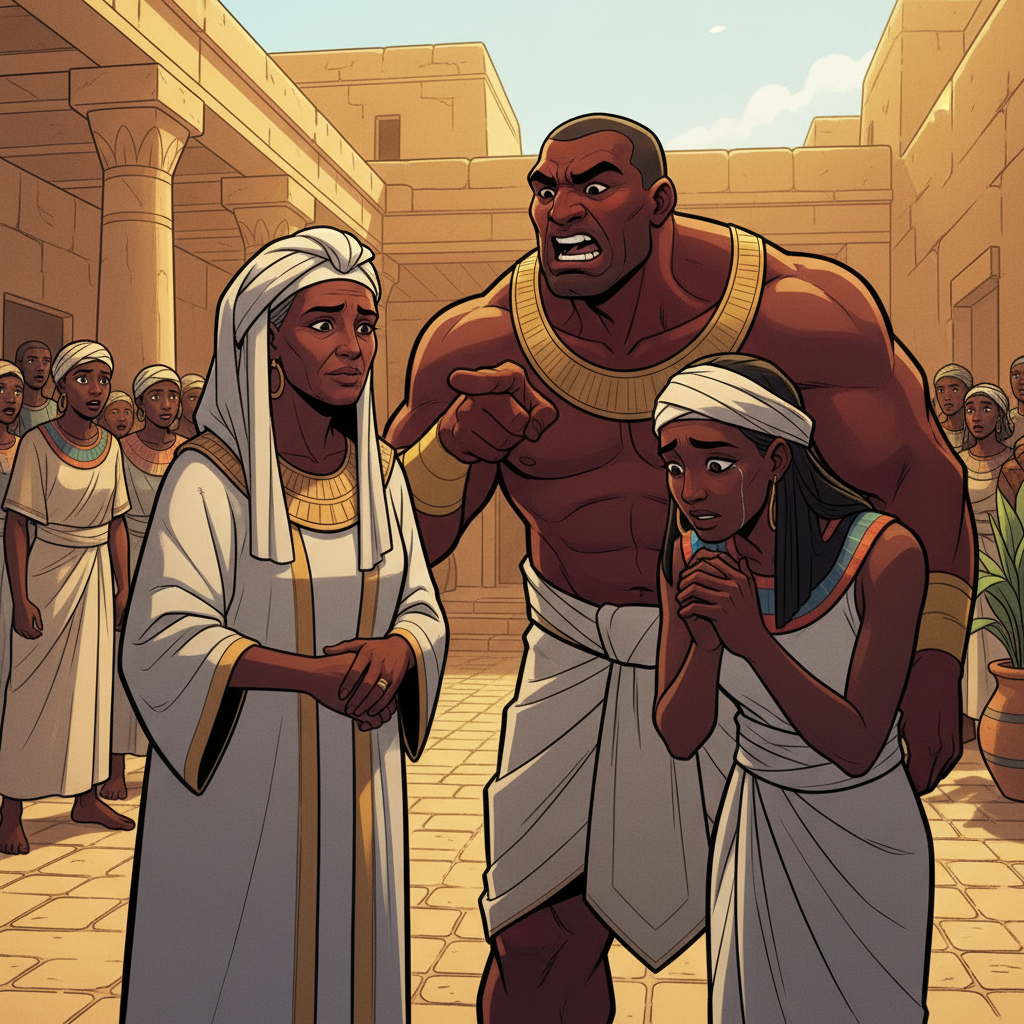
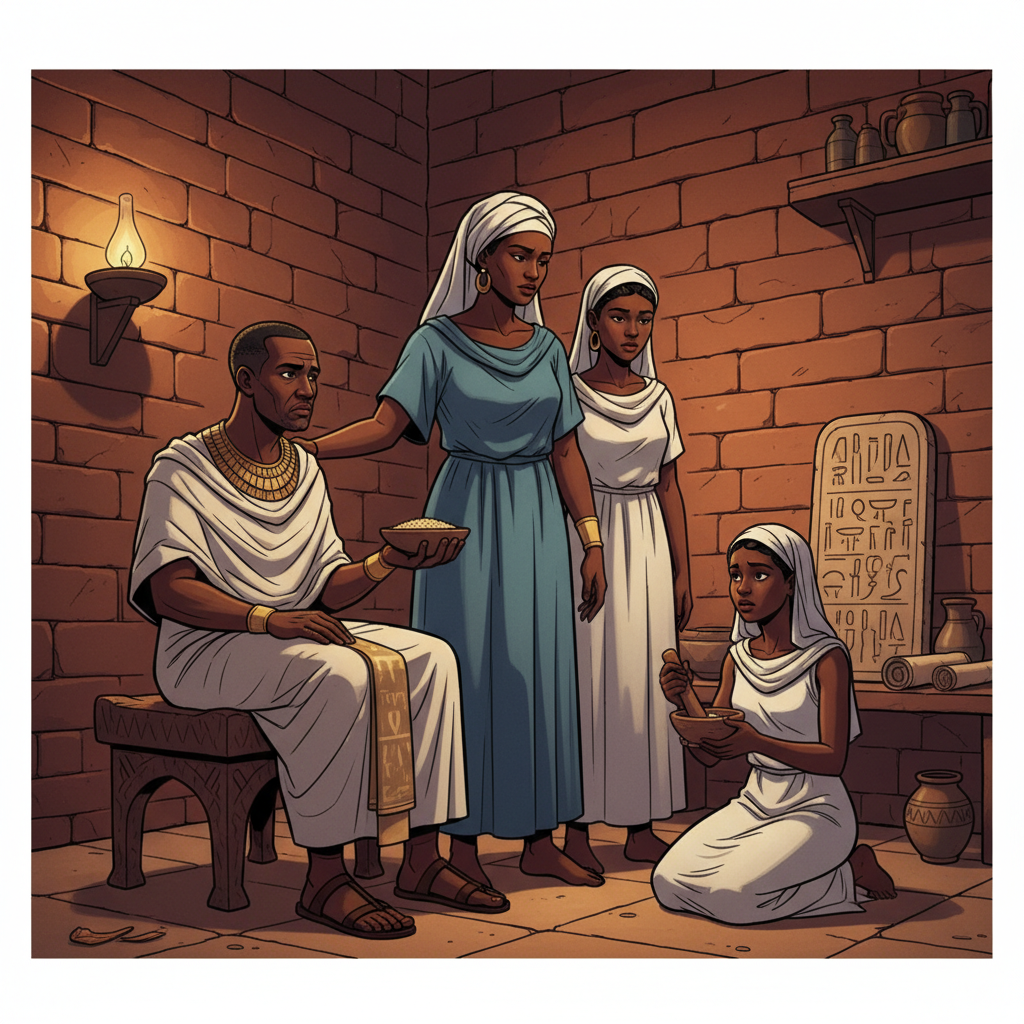
So Mistress Nebet told the merchant Sebni the truth, gently and plainly: no child was on the way yet. Sebni’s face went dark, and then red. And he did exactly the thing Iset had been dreading — he turned at once to blame his wife. “Then it is her failure,” he snapped, loud enough for the whole courtyard to hear and turn. “I have promised my clan a son, and she—” But he did not finish the cruel sentence, because Mistress Nebet had already stepped quietly between him and the trembling Tentamun. She did not raise her voice. She did not need to. And somehow her stillness made the words she spoke next land all the harder for it.
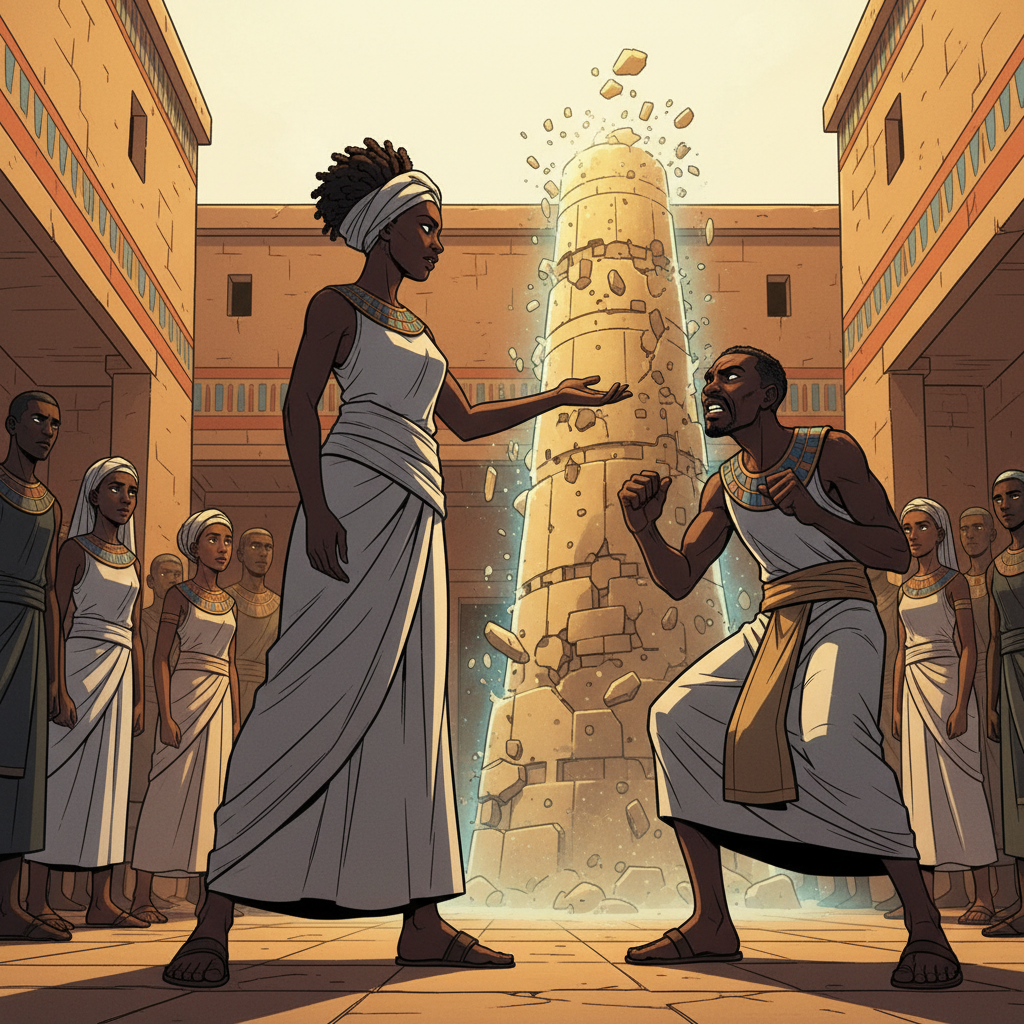
“Hear me, merchant, as you would hear a judge,” Nebet said. “The grain shows whether a child is on the way. It does not show whose doing or not-doing it is — and any healer who tells you it does is selling you a lie. A child not yet come is no one’s failure and no one’s shame, least of all hers. You built a tower of boasting upon a thing that was not yet true, and now you are angry that the truth will not hold your tower up. That is not her fault. That is the cost of boasting before the grain has spoken.” The courtyard had gone very quiet. Sebni had no answer, because there was none to have.
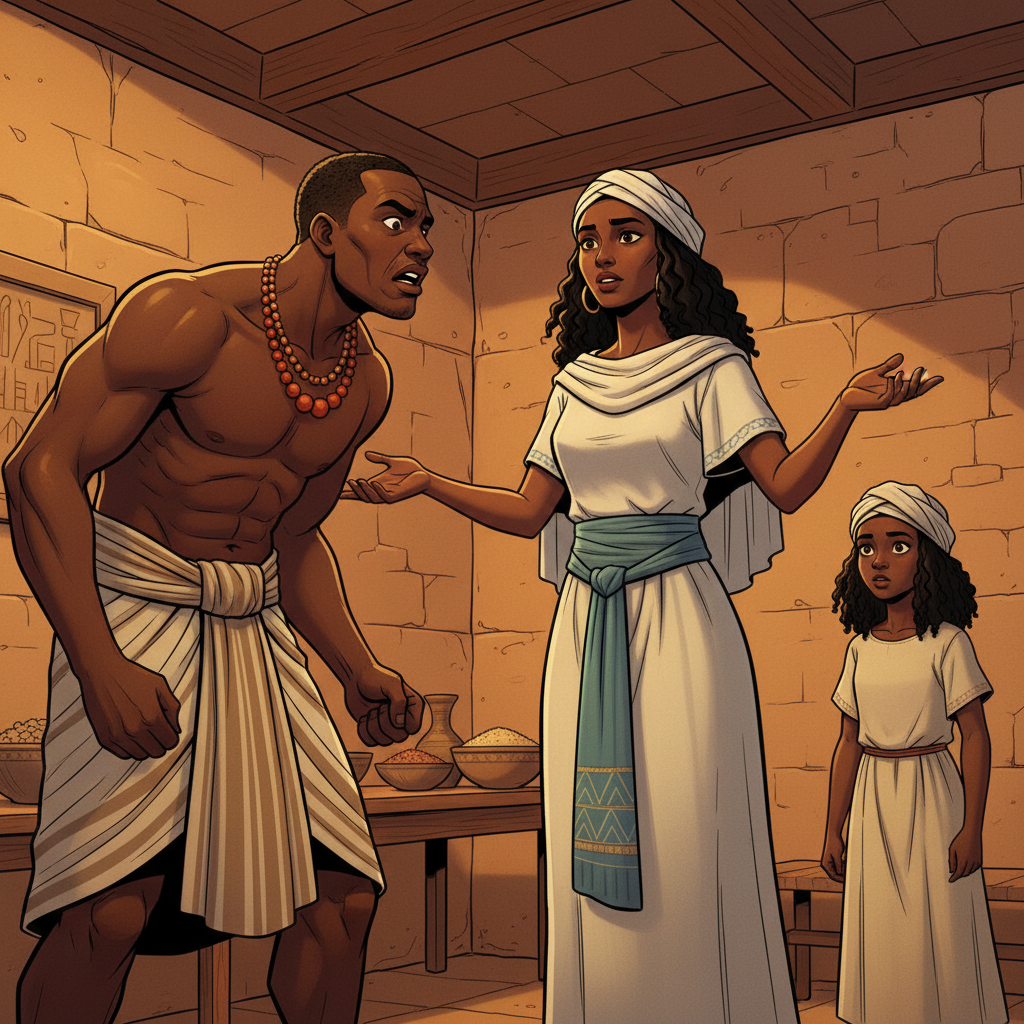
Then Nebet said the thing Iset would carry for the rest of her life. “Think, Sebni, on what you truly asked me for this morning. You asked me to tell you yes, today, whether or not it was so. Suppose I had. You would have run to your clan and sworn the son was coming. And when no son came, the lie would not have fallen on me, who spoke it, nor on you, who demanded it. It would have fallen on her — publicly, lastingly, a shame she did not earn, for a lie she did not tell. The true no I give you today is the kindest thing in this room. A diagnosis bent to please is cruelty wearing the face of mercy.”
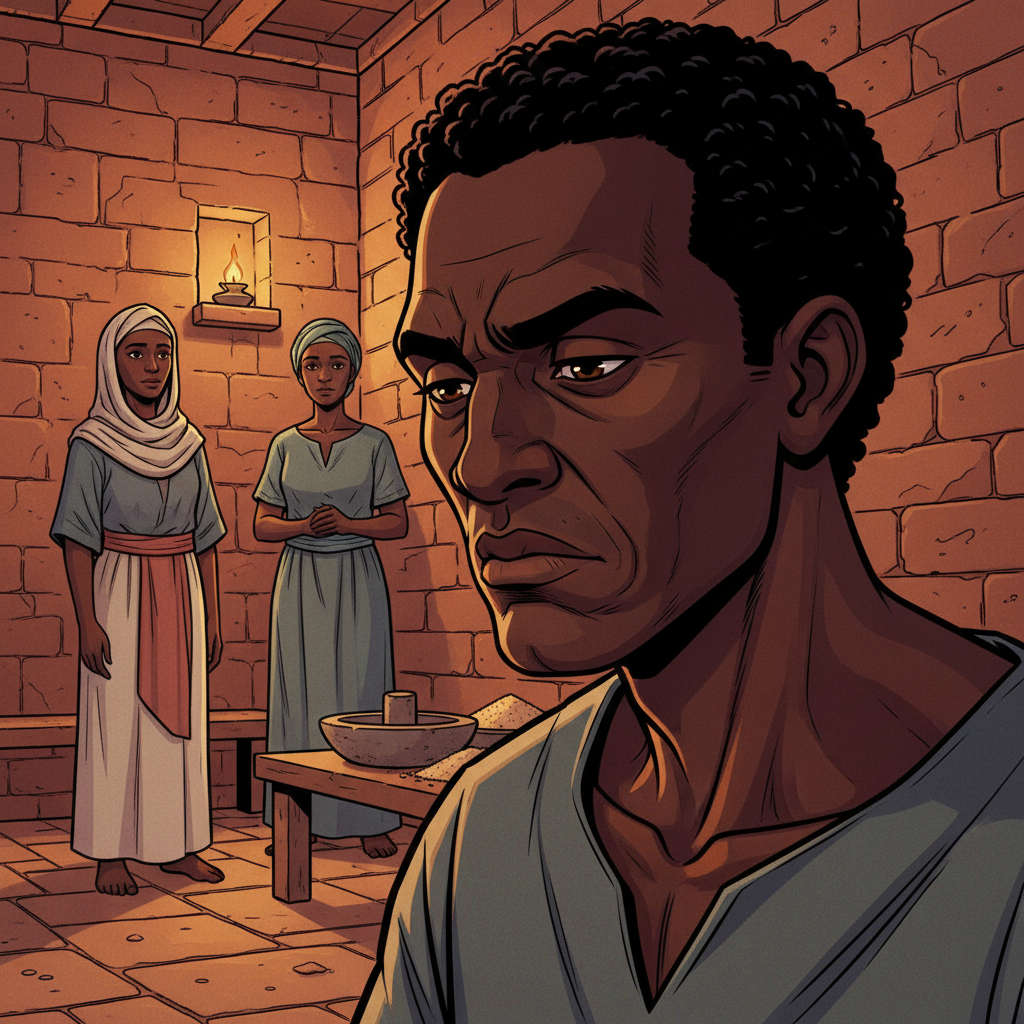
Sebni was not a bad man made good in a single morning; the world rarely turns that quickly. But he was a man who could count, and he could see, now that it had been laid plainly before him, that a true no today cost less than a false yes collapsing in front of his whole clan. His anger had nowhere honest left to go. He muttered that he would wait, and try again in its proper season, and he left without thanking anyone — but he also left without blaming his wife again, because Nebet’s truth had quietly taken that weapon out of his hand.

When the merchant had gone, Tentamun sat for a long while, simply breathing. Then she looked at Iset, and at Mistress Nebet, and said, very quietly, “You could have given me what I asked for. I am glad that you did not.” The hard truth had not given her a child. But it had given her something the soft lie never could: it had spared her a shame that was never hers to carry, and it had set the cost of Sebni’s boasting back where it belonged — upon Sebni. Tentamun left the Per Ankh that day standing straighter than she had come in, which is no small thing for a truth to do.
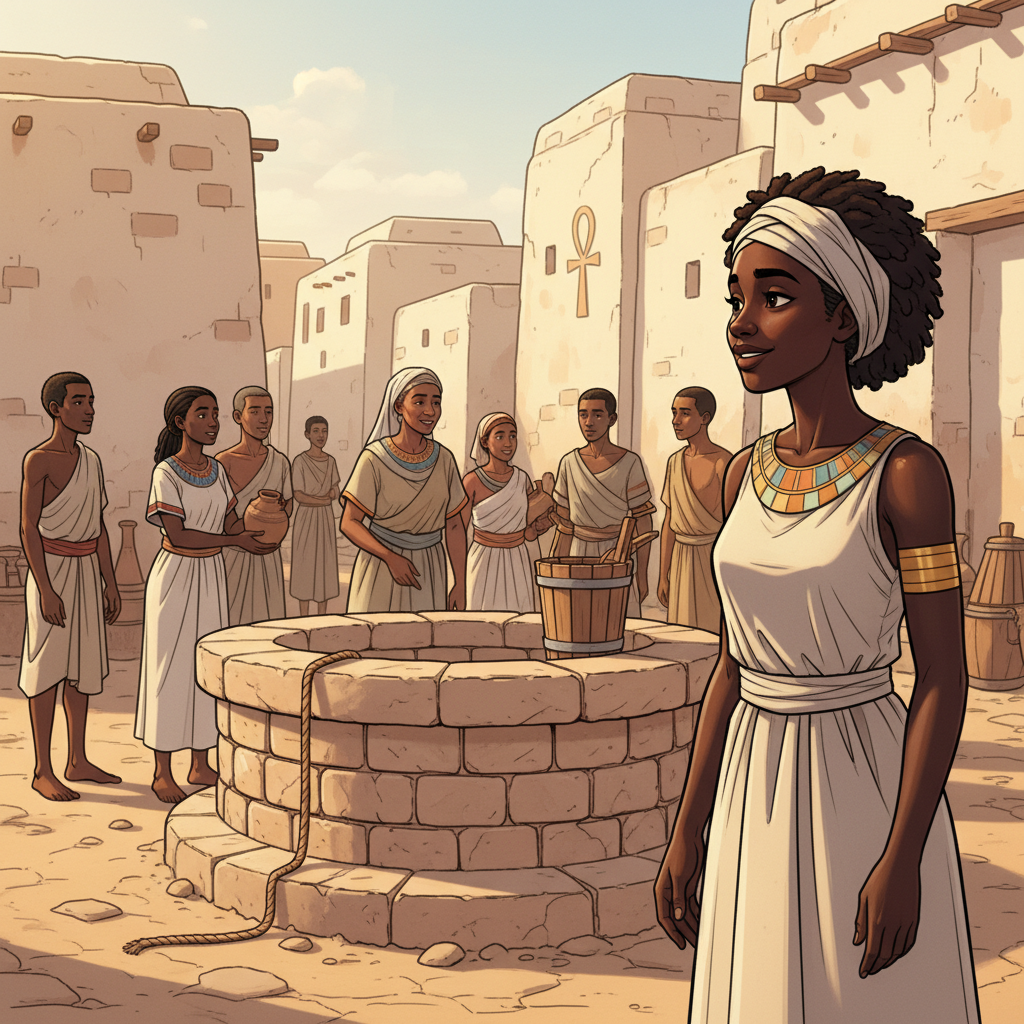
Iset understood, then, what her mistress had meant about the well the whole town drinks from. The healing-women of Kahun were trusted — completely, across the whole town — and that trust was worth more than any single merchant’s fee. It existed for one reason only: because, time after time, year after year, the healing-women told the grain’s true answer even when a rich and angry man had paid for a different one. Truth in medicine was not coldness. It was the deepest care. It was Maat — the right order of things — kept in the one place it matters most: the place where people are most afraid, and most tempted to be told a comfortable lie.
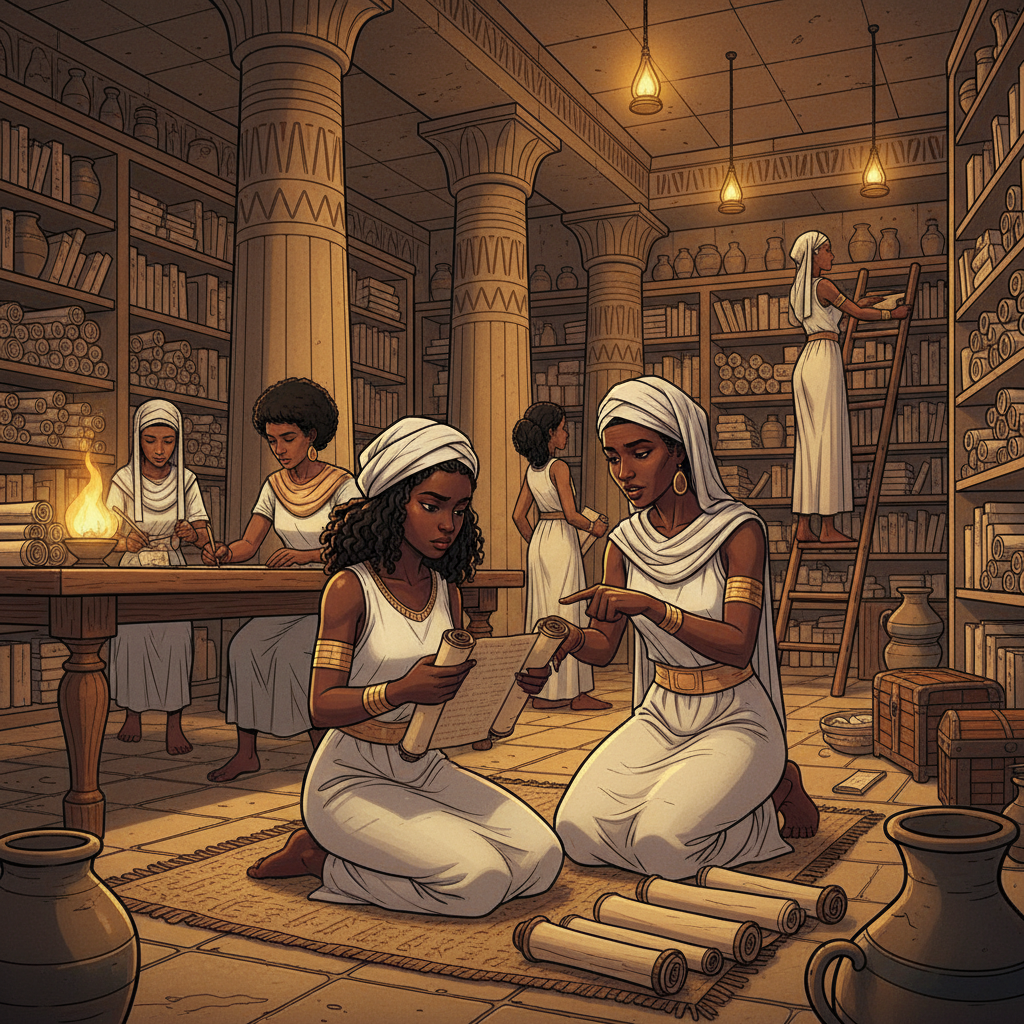
And Iset never once thought of the grain test as a quaint old trick. To her it was simply medicine: a pattern observed across generations, tested case by careful case, written down so it would not be lost, taught from one trained woman to the next, and applied with discipline and honesty. The healing-women of Kemet had been doing this — observing, recording, teaching, telling the truth — for longer than most peoples on earth had been writing anything at all. They did not need a later age to call their work real in order for it to be real. It was real in the bowl, in the record, in the trust of a whole town.
Iset grew up to become a sunu herself, a mistress of the healing-women, with apprentices of her own. She taught them the grain test, and the salves, and the careful records. But the lesson she watched for most closely was not in any of those. It was the one her own mistress had watched for in her: what an apprentice does in the room where a powerful person — frightened, or proud, or both — wants to be told a comfortable lie. “You can teach the test in a single season,” Iset would say. “The courage to read it true — that is the work of a lifetime, and it is the only thing that makes the test worth anything at all.”
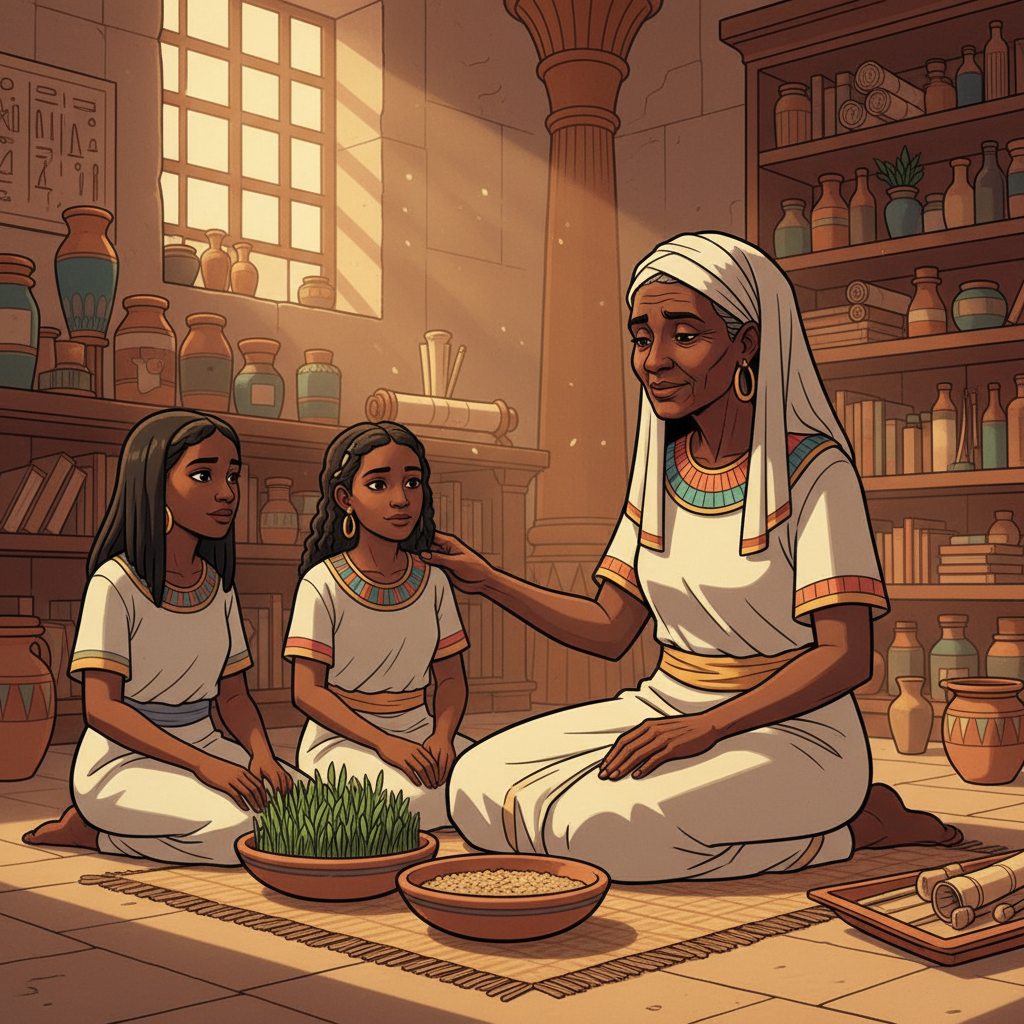
Truth in medicine, Iset taught, is Maat. A diagnosis bent to please is isfet slipping in through the door of mercy — and it always, always comes due on the one with the least power to pay it. The kindest word a healer can give, she would tell the young women who trained under her, is not the soft word the powerful want to hear, but the true word, gently spoken, that puts the cost of a lie back where it belongs and lifts it off the weak. The medicine of Kemet was real science, she taught them — careful, written down, humane, older than anyone could easily count — and its very first ingredient was honesty. But Iset herself had known the heart of it since she was fourteen, watching still grain lie unsprouted in a shallow clay bowl, and learning the thing that shaped her whole life: that the hardest truth, gently told, is the deepest mercy there is.