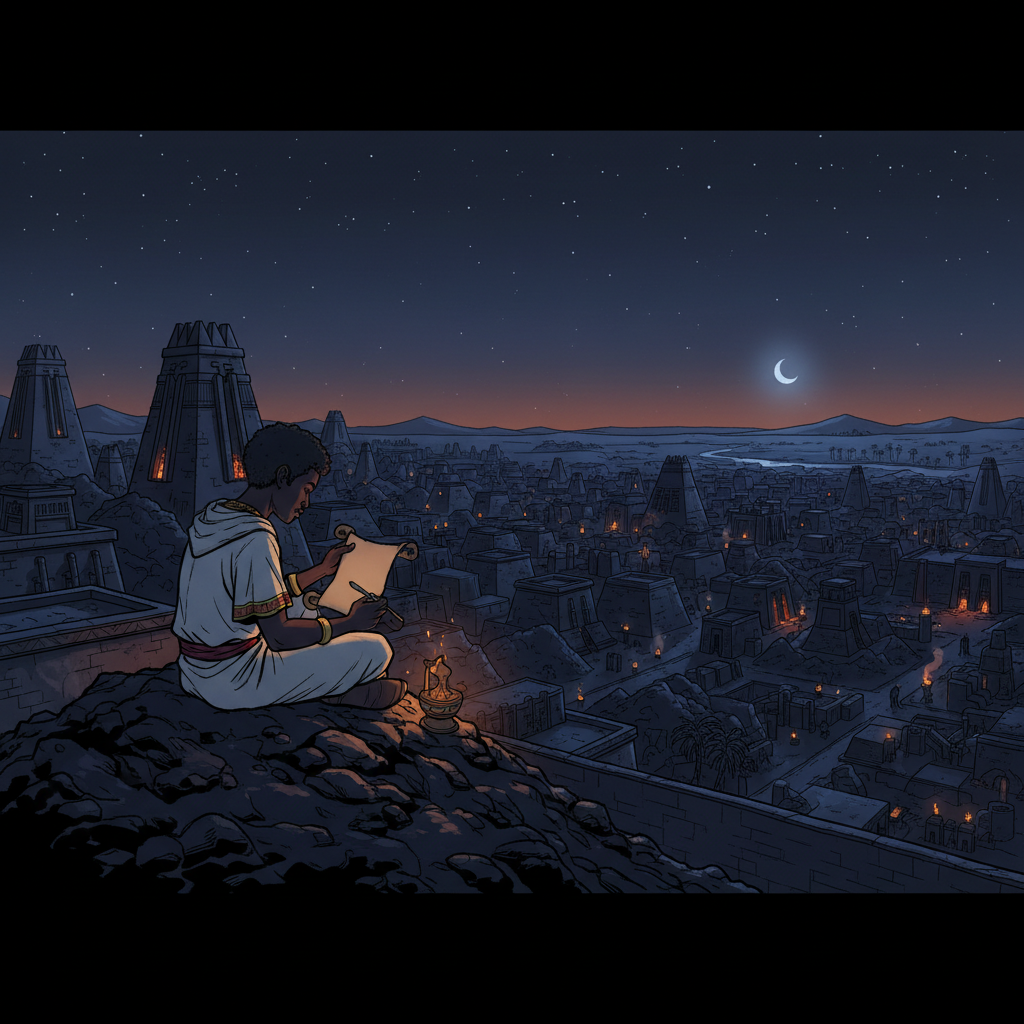
The furnaces of Meroe were going cold, and Taharka-qo could feel it in the silence. Not the silence of nighttime, which had its own sounds — the river birds, the distant jackals, the soft breathing of the city at rest — but the silence of absence. The massive smelting district that had once glowed through the darkness, turning the eastern sky copper-orange with the light of a hundred furnaces, now showed only scattered points of fire — fifteen, perhaps twenty furnaces still operating where once there had been hundreds. The slag heaps that had been the city's proudest industrial monuments rose dark and cold against the sky, no longer growing, no longer fed by the daily output of centuries of iron production. Taharka-qo was twenty-two years old, a scribe in the Temple of Amun, and he was writing the end of the world. Not the world entire — the sun would still rise, the Nile would still flood, the stars would still wheel in their ancient courses. But the world he knew, the world his ancestors had built over a thousand years, was dying around him, and he was determined to record its passing.
The year was approximately 320 of the common era, and the Kingdom of Kush — one of the oldest continuous civilizations in human history, stretching back to the kingdom of Kerma in 2500 BCE — was in its final generation. The causes of decline were multiple and had been accumulating for centuries. The iron industry that had made Meroe wealthy was faltering — some scholars believe the furnaces had consumed the available timber for charcoal over centuries of production, stripping the surrounding landscape of the trees needed to fuel the smelting process. Trade routes that had once connected Meroe to the Mediterranean, the Red Sea, and the African interior were being diverted by the rising power of Aksum, whose control of the Red Sea ports gave them a stranglehold on international commerce. And now Aksum was not merely an economic rival. It was a military threat. Reports were arriving at Meroe of Aksumite forces massing in the Ethiopian highlands, preparing for something that looked less like a raid and more like an invasion.
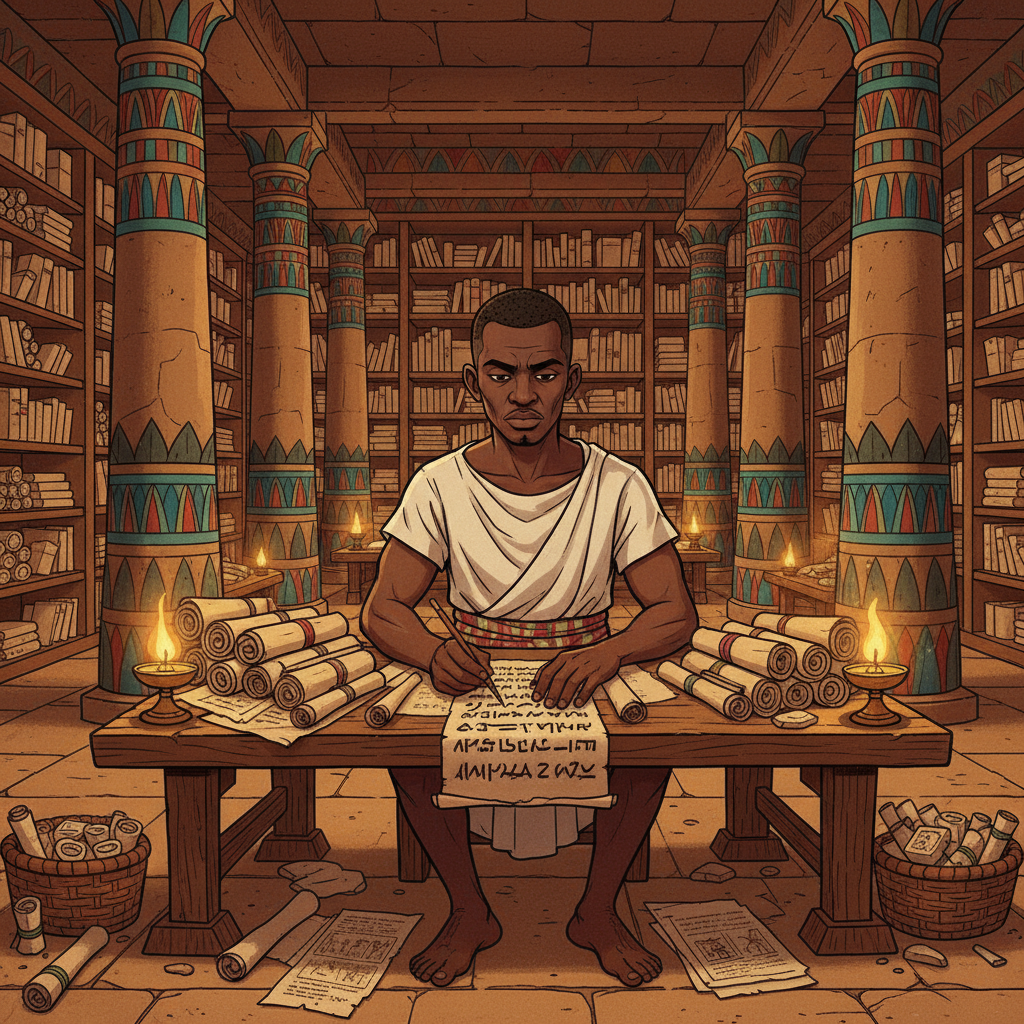
Taharka-qo's work in the temple gave him access to the records — the official correspondence, the diplomatic messages, the reports from frontier scouts — that painted the picture of a kingdom in terminal crisis. He read these documents in the dim light of the temple's archive room, surrounded by scrolls and ostraca that recorded transactions, rituals, astronomical observations, and diplomatic exchanges stretching back centuries. The accumulation of it all — the sheer weight of a civilization's recorded memory — pressed against him with a physical force that he felt in his chest. His skin was very dark, the deep ebony of the Nile Valley peoples, and his 4C hair was shaved in the traditional Meroitic tonsure that marked temple scribes. He wrote in the Meroitic cursive script — a writing system unique to Kush, developed centuries earlier as a way of writing the Meroitic language independently of the Egyptian hieroglyphs that had previously been used for official documents.
The Meroitic script was itself a sign of both Kush's independence and its coming loss. The script had twenty-three letters — an alphabetic system far simpler than Egyptian hieroglyphs, designed to make literacy more accessible to the Meroitic-speaking population. It had been used for centuries for royal inscriptions, temple dedications, funerary texts, and administrative records. But here was the devastating truth that Taharka-qo confronted every day in the archive: while the script could be read by the scribes of his time, the deeper meaning of many older texts was becoming obscure. Phrases that had been clear to his grandparents' generation required interpretation. Technical terms from the smelting industry had fallen out of common usage as the industry declined. Religious formulae were recited by rote without full comprehension. A civilization's writing system is not merely a tool. It is a vessel for everything that civilization knows and values. When the vessel begins to crack, the contents seep away.
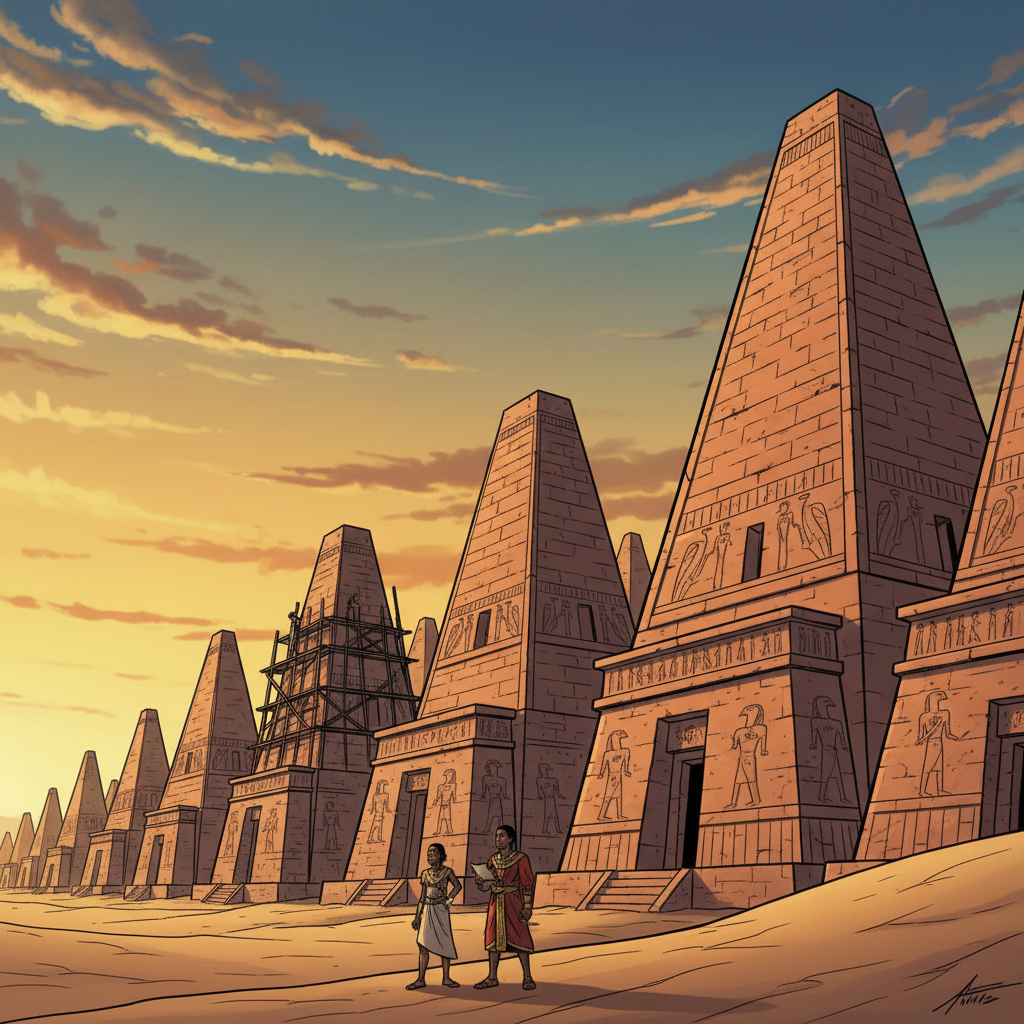
The political situation was equally dire. The Qore — the king — was Yesebokheamani, the latest in a line of rulers that had grown progressively weaker over the past century. The great royal pyramids at Meroe's northern cemetery, which had grown larger and more elaborate during the kingdom's golden age, had been shrinking in size and quality for generations — a physical record of declining resources and diminishing ambition carved in stone. Yesebokheamani's pyramid, still under construction, was the smallest and most modest of the recent royal tombs. The decorative reliefs were competent but uninspired, lacking the dynamic artistry of earlier periods. Even the stone was of lesser quality — imported from closer, cheaper quarries rather than the superior sources used by earlier kings. "We are building smaller because we have less," Taharka-qo noted in his personal journal, a document he kept separate from the official temple records. "But we are also building smaller because we dream less. A kingdom that can no longer imagine greatness cannot build it."
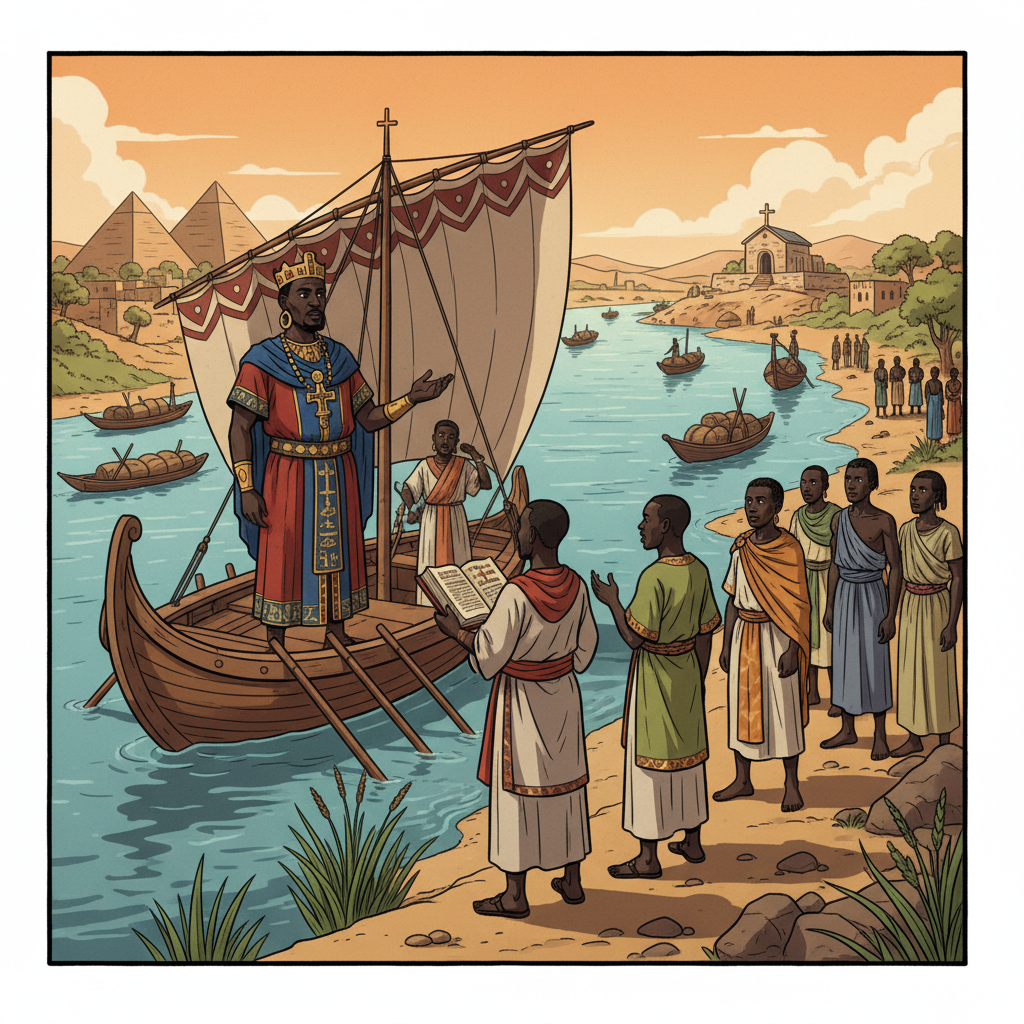
The news from the north was bad and getting worse. Ezana, the young king of Aksum, had converted to Christianity — a new religion sweeping through the Roman world and beyond, carried by merchants and missionaries along the same trade routes that had once enriched Meroe. Ezana's conversion was not merely personal. He was transforming Aksum from a kingdom that honored multiple deities into a Christian state, and his military ambitions were increasingly framed in the language of his new faith. The old African gods — Amun, Apedemak, the patron deities of Kush for two millennia — were being dismissed as false by the Aksumite missionaries who now traveled freely through territories that had once been firmly under Meroitic influence. Taharka-qo understood the theological dimension of this shift with a clarity that frightened him. Christianity offered Aksum something that the ancient Kushite religion did not: a universal narrative. The worship of Amun was tied to place — to the temples, to the Nile, to the specific landscape of the Kushite heartland. Christianity claimed to belong everywhere.
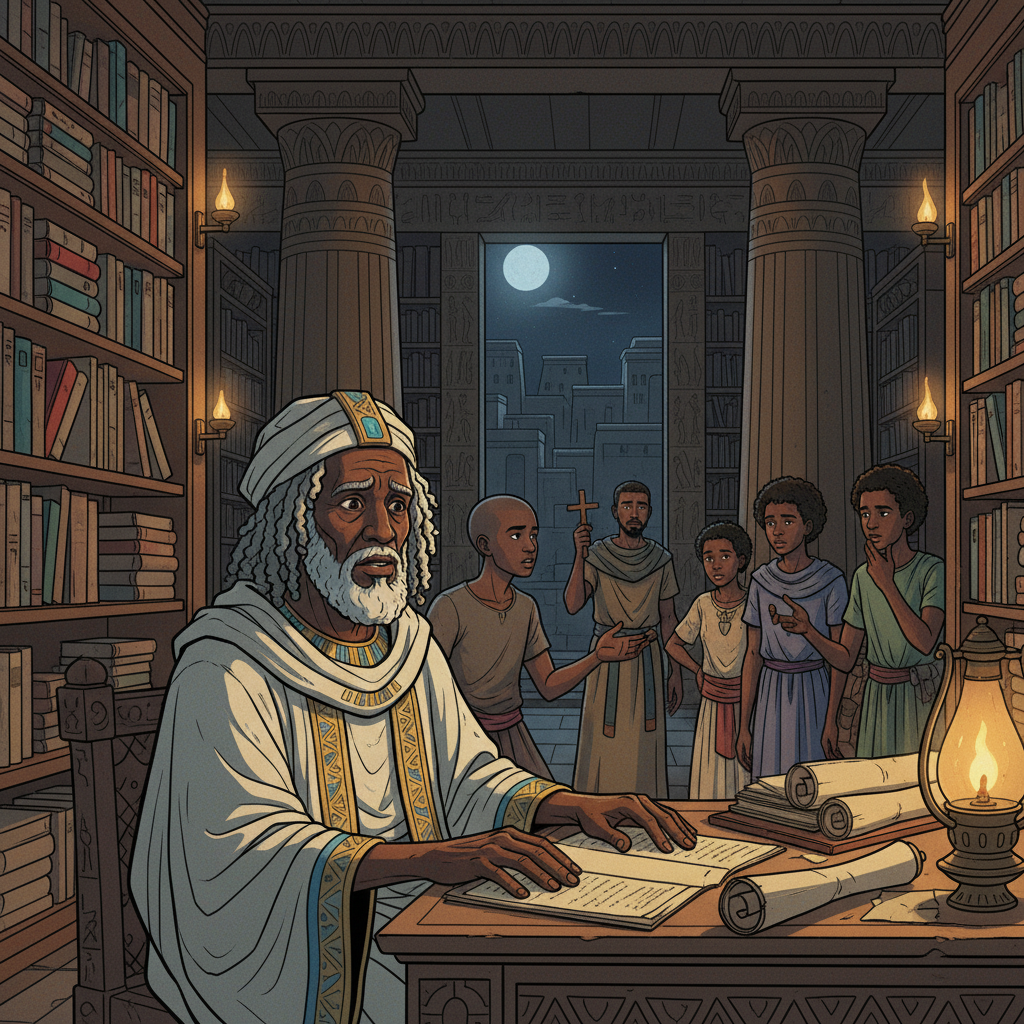
The old religion was not dying quickly — in Meroe, the temples of Amun and Apedemak still functioned, still received offerings, still celebrated the ancient festivals. But the fervor was fading. Young people in the outlying settlements, exposed to Aksumite traders who brought Christian ideas along with their goods, were asking questions that the old priesthood struggled to answer. Why worship gods tied to one river when there is a god who claims the entire world? Why maintain expensive temples when the new faith required only a simple church? Why preserve traditions whose deeper meanings were becoming obscure even to the priests who practiced them? Taharka-qo heard these questions and felt the ground shifting beneath his feet. He was not opposed to new ideas — a scribe who fears new knowledge is a scribe who has forgotten the purpose of the Per Ankh. But he understood that these particular new ideas arrived not in the spirit of intellectual exchange but as the advance guard of a conquering civilization. Aksum's Christianity was not an offering. It was a weapon.
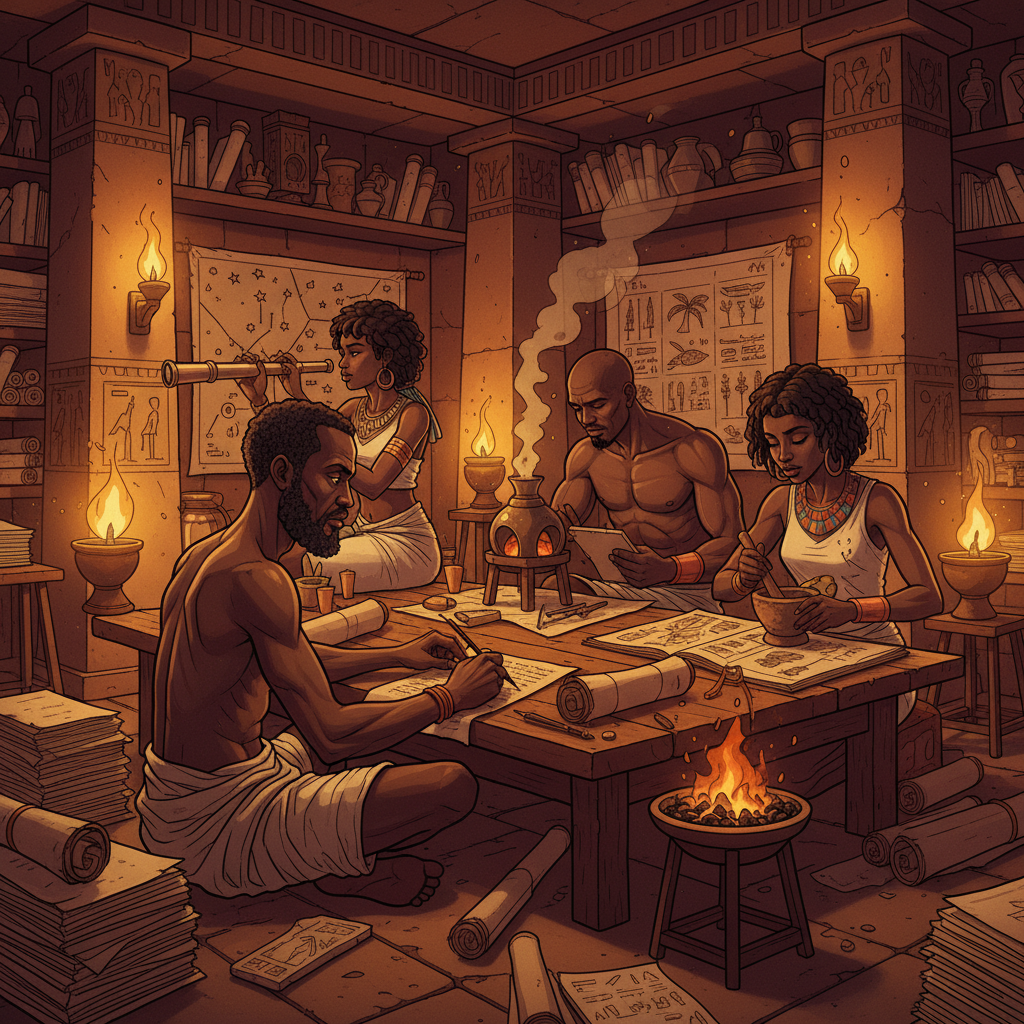
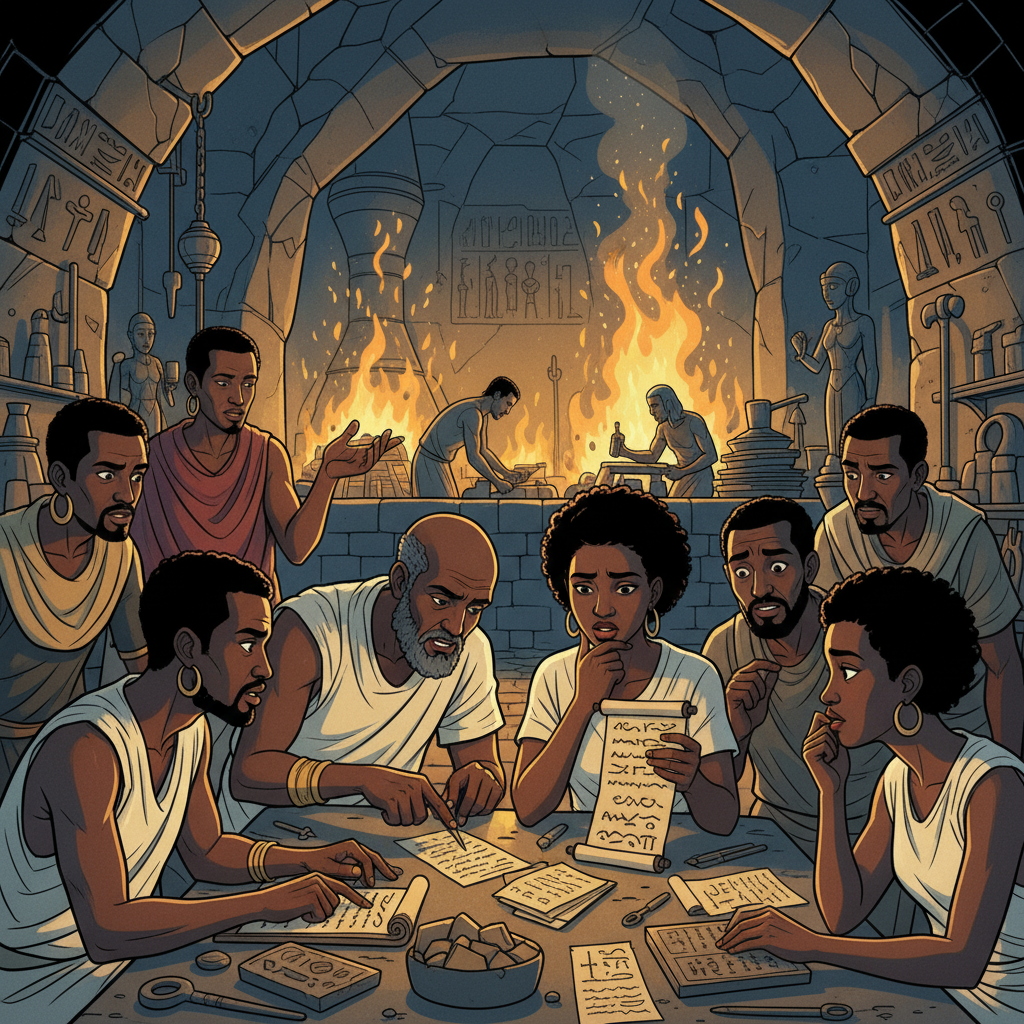
He began a project that would consume the remaining years of his life: a systematic record of everything he could document about Meroitic civilization before it was lost. Working in the temple archive by oil lamp, often through the entire night, Taharka-qo copied ancient texts, compiled vocabularies of the Meroitic language, recorded the technical processes of crafts that were dying as their practitioners aged, and wrote detailed descriptions of religious ceremonies whose meanings were slipping from living memory into historical record. He was not alone in this work. Three other scribes — Amanishakheto, Tabirqa, and Malaqaye — joined the project, each taking responsibility for different domains of knowledge. Amanishakheto documented the astronomical traditions. Tabirqa recorded the smelting techniques from the last active master smelters. Malaqaye compiled the medical knowledge that the temple healers still practiced. Together, the four scribes worked with the urgent concentration of people who understood they were racing against time.
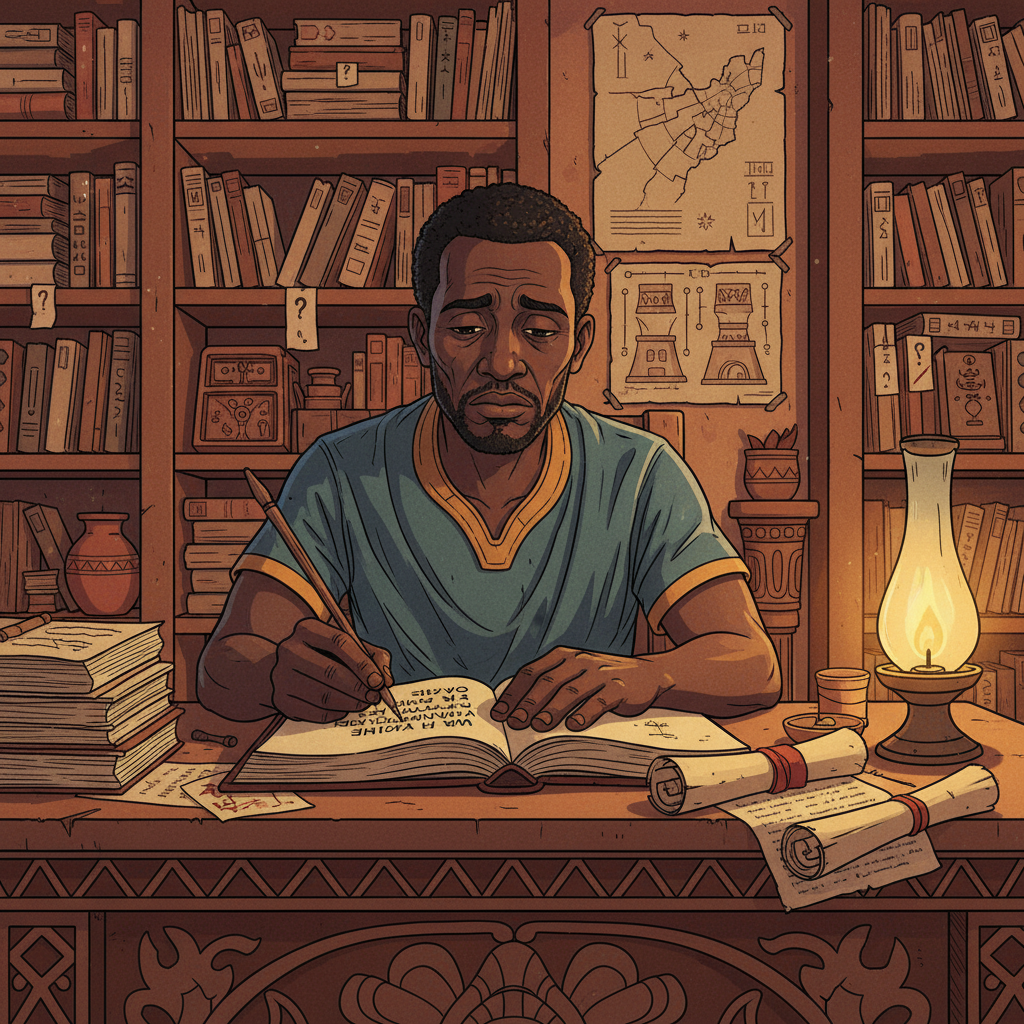
The work was heartbreaking in its revelations. Taharka-qo discovered that much had already been lost — entire categories of knowledge that the older records referenced but that no living person could explain. The astronomical observations of the early Meroitic period, recorded in a technical vocabulary that had fallen out of use, could be copied but not fully interpreted. The smelting records from the industry's golden age described processes using terminology that even Tabirqa, working with the last master smelters, could only partially decode. It was as if the civilization was speaking to itself across time and the message was already breaking apart. "We thought knowledge was permanent," Taharka-qo wrote in his journal. "We thought that what was written could not be lost. But writing is only as permanent as the community that reads it. When the readers disappear — when the language shifts, when the context changes, when the living tradition that gives words their meaning is broken — then even the clearest text becomes a cipher. We are becoming a cipher to ourselves."
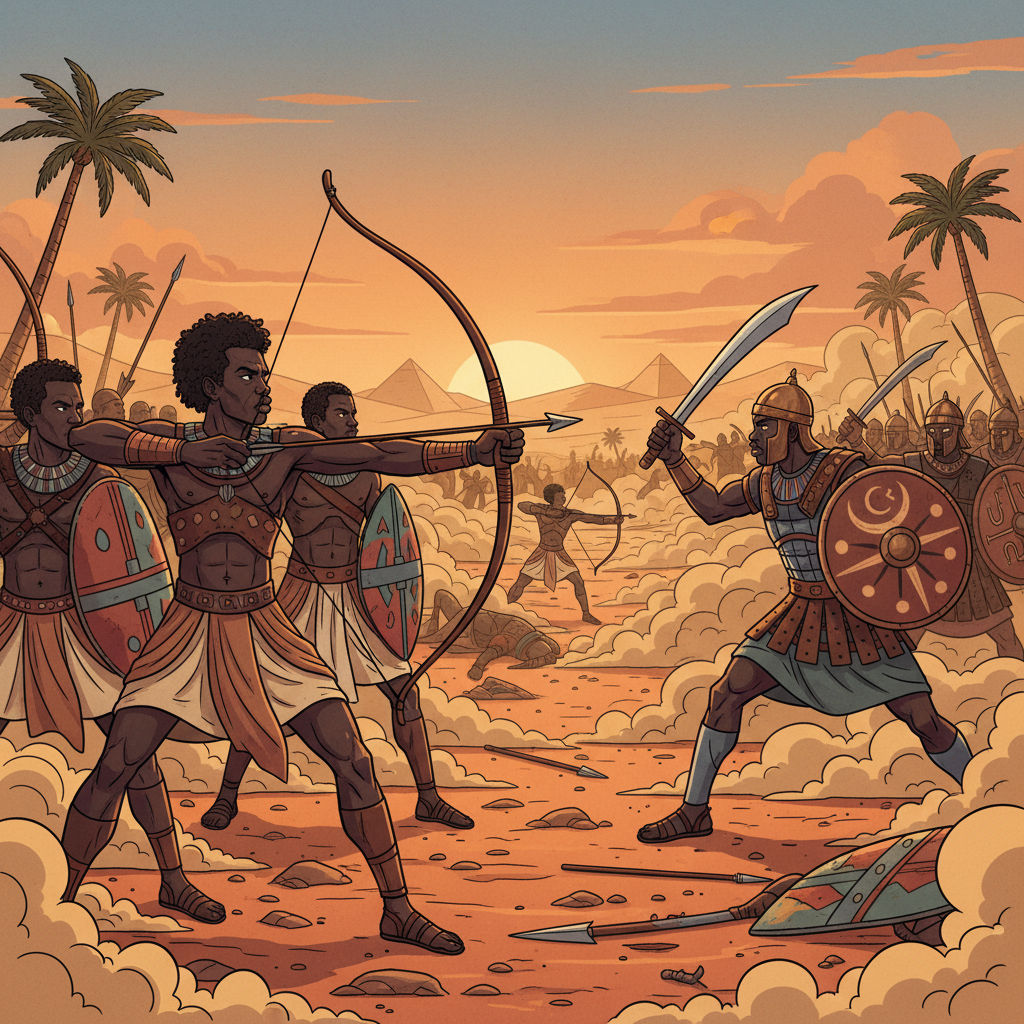
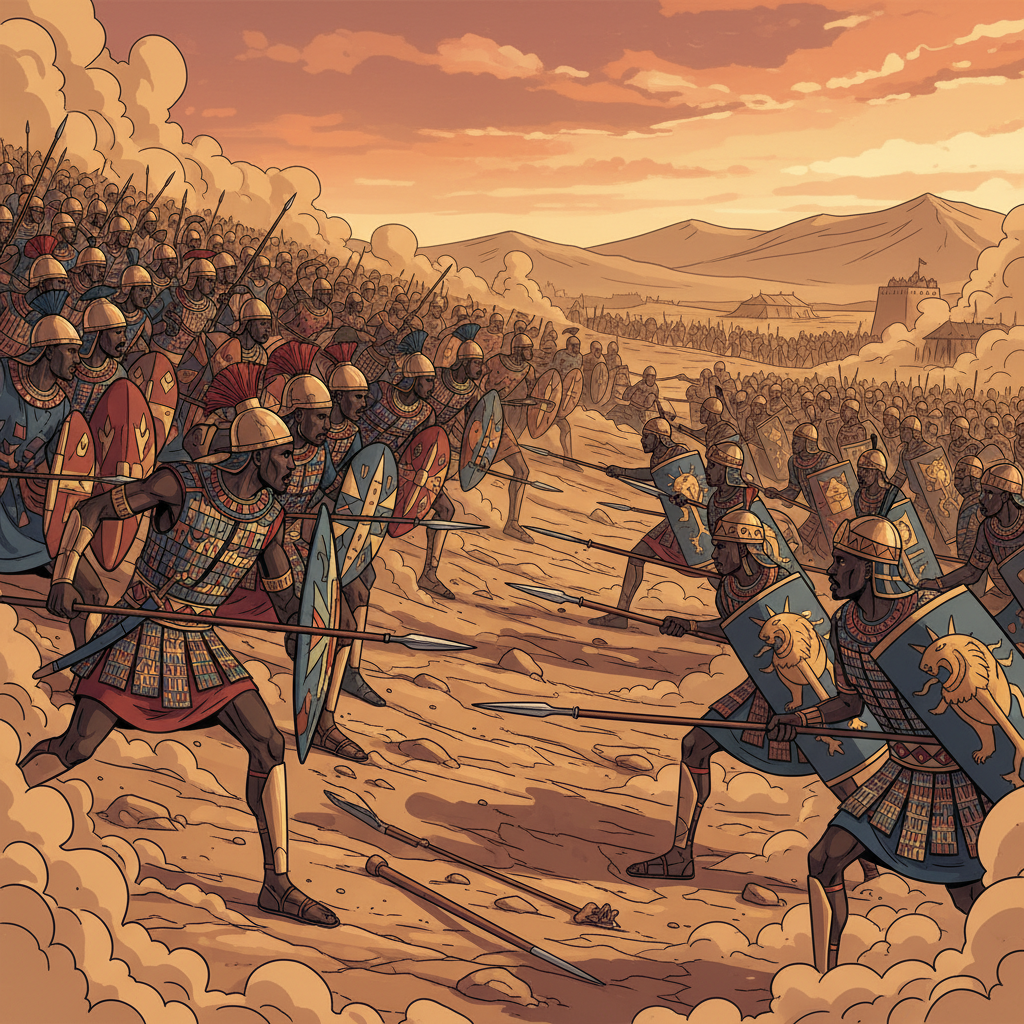
In 325 CE, Ezana of Aksum launched his campaign against Kush. The invasion was framed, in Ezana's own inscriptions, as a response to "the Noba people" raiding Aksumite territory — a pretext that historians have debated ever since. Whatever the immediate cause, the result was devastating. Aksumite forces, battle-hardened and motivated by the combination of imperial ambition and religious fervor that has driven some of history's most destructive campaigns, swept into the Meroitic heartland. The Kushite army, reduced by decades of declining resources and population, fought with the courage that had defined its people for millennia. The archers of Kush — inheritors of the tradition that had earned the ancient name Ta-Seti, the Land of the Bow — fired their iron-tipped arrows with the same deadly accuracy that their ancestors had used against the armies of Egypt, Assyria, and Rome. But courage and tradition cannot overcome the arithmetic of military decline. There were simply not enough soldiers, not enough weapons, not enough resources to resist an enemy that had been growing in power for the same centuries during which Kush had been weakening.
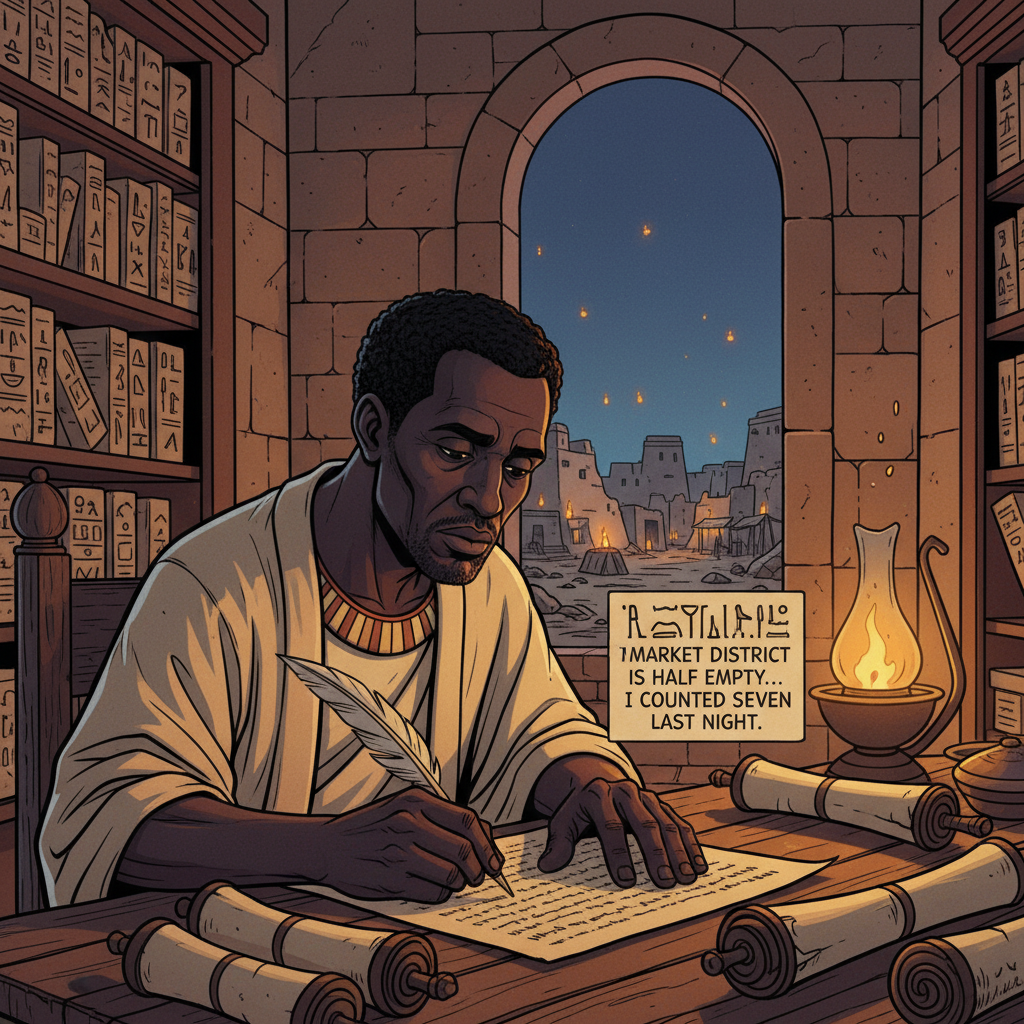
Meroe did not fall in a single dramatic siege. The decline was more gradual and more painful — a progressive loss of territory, a retreat of effective governance, a shrinking of the area over which the Meroitic kings could exercise real authority. The outer provinces were lost first, their populations absorbed into the Aksumite sphere of influence or left to govern themselves as the central power faded. The trade routes that had sustained the economy were diverted or disrupted. The iron industry, already in decline, ceased almost entirely as the remaining skilled workers died or dispersed. Taharka-qo watched the contraction from the temple archive, recording each loss with the meticulous detail of a scribe who understood that his records might be the last testimony of what was being lost. "The market district is half empty," he wrote. "The potter's quarter has three workshops where there were twenty. The smelting fires that once lit the sky — I counted seven last night."
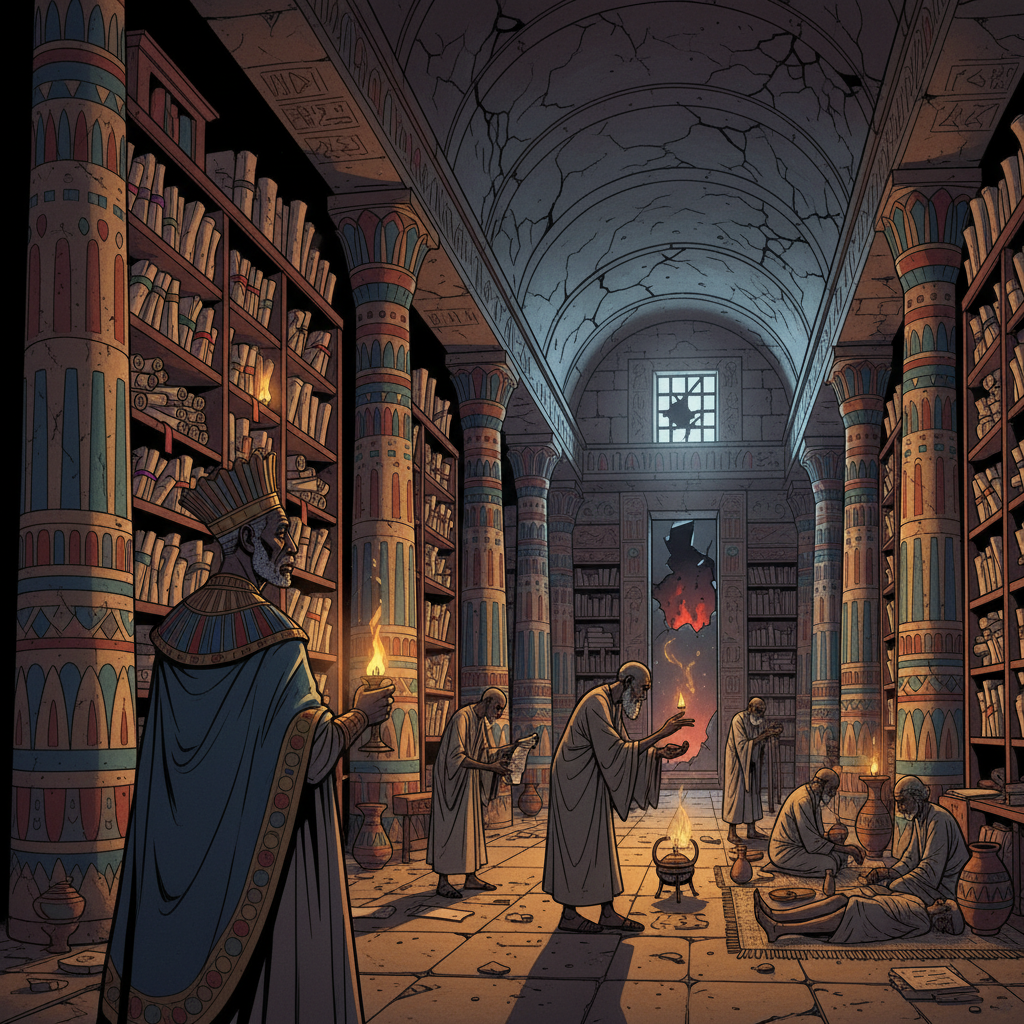
The temple itself became the last stronghold of the old civilization. While the political and economic structures collapsed around it, the Temple of Amun continued to function — priests still performed the ancient rituals, scribes still recorded the astronomical observations, healers still treated the sick with traditional remedies. The temple was not merely a religious institution. It was a repository of everything that Meroitic civilization had been — its knowledge, its values, its understanding of the universe, its connection to the divine. But Taharka-qo saw clearly that the temple could not hold forever. The priests were aging, and fewer young people were entering temple service. The rituals were being simplified as the fully trained practitioners died. The astronomical observations continued, but the theoretical framework that gave them meaning — the cosmological understanding developed over centuries — was becoming fragmented. The temple was a library in a house that was burning down.
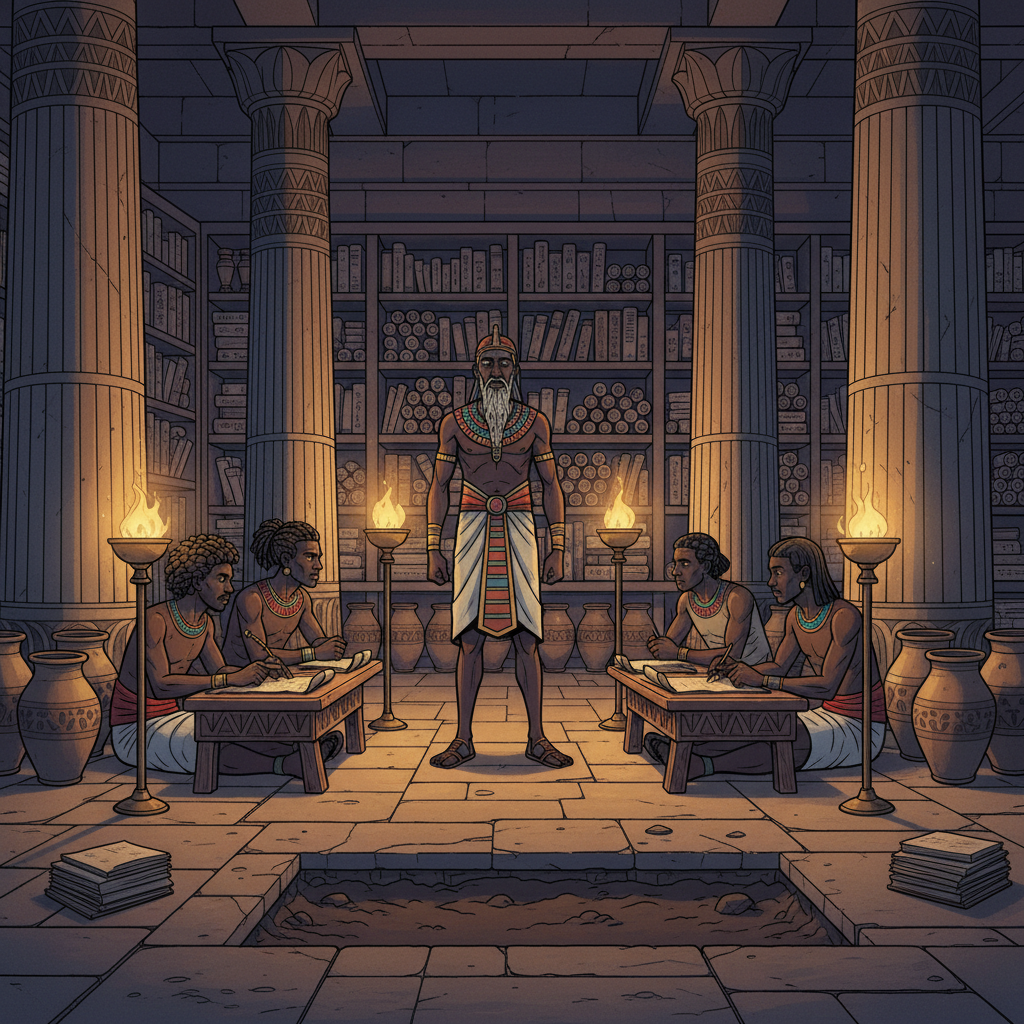
It was during this period that Taharka-qo made the decision that defined his life. He gathered the four scribes and proposed something unprecedented: they would create a comprehensive archive of Meroitic civilization and bury it beneath the temple floor, sealed in jars, protected from the destruction that was coming. Not hidden in the hope that the crisis would pass and the archive could be retrieved — Taharka-qo was too honest for that kind of hope. Buried as a message to the future, a testimony that this civilization had existed, had known things, had mattered. "Someone will dig here someday," he told the other scribes. "Centuries from now, perhaps millennia. They will find our temples and our pyramids and they will want to know who we were. If all they have is the stone, they will know we could build. If they have our writing, they will know we could think. And if they have our deepest records — our science, our philosophy, our understanding of the stars and the body and the soul — they will know that we were a civilization worth remembering."
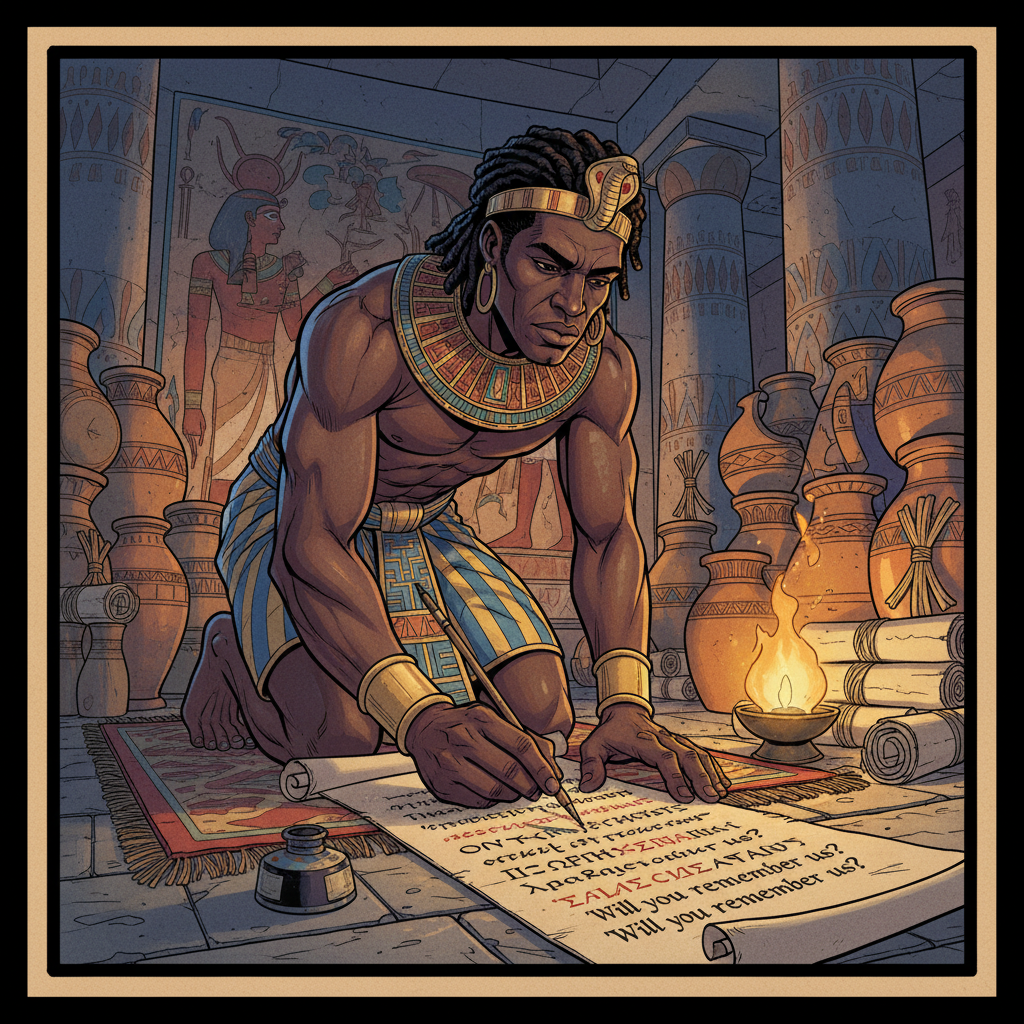
The archive project took two years. The scribes compiled their records onto papyrus scrolls, wrapped them in linen, and sealed them in clay jars — the same preservation technique that the Per Ankh tradition had used for centuries. They worked in secrecy, not because they feared discovery but because the work itself required a solitude that the dying city's remaining inhabitants, preoccupied with their own survival, could not provide. Taharka-qo wrote the final document himself — a letter addressed to whoever would eventually find the archive. He wrote it in Meroitic cursive, in Egyptian hieratic, and in Greek — the three scripts available to him, each casting the widest possible net for future comprehension. He described the kingdom of Kush, its history, its achievements, its values. He described the crisis that was destroying it. And he asked a single question of the future: "Will you remember us?"
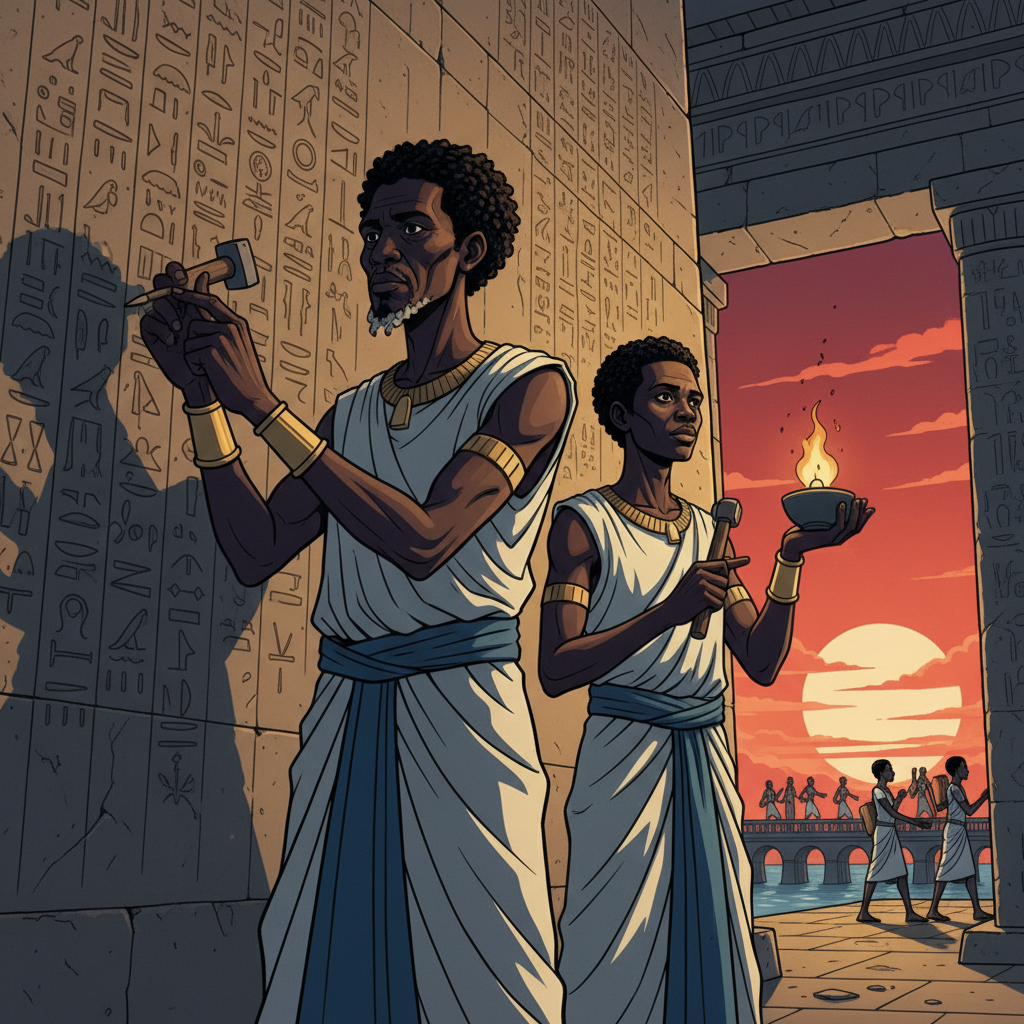
Whether Taharka-qo's specific archive survived is unknown — no such comprehensive find has been reported from Meroe, though the site has not been fully excavated. But the impulse behind it — the determination to preserve knowledge against destruction, to send a message forward through time, to insist that a dying civilization's truth was worth recording — was not unique to Taharka-qo. It was the same impulse that drove the priests of Napata to save the sacred scrolls when Psamtik's army burned the holy city three centuries earlier. It was the same impulse that drove the scribes of the Per Ankh throughout the Nile Valley to record, preserve, and transmit the knowledge of their civilization across millennia. The Meroitic script, however, did survive — on temple walls, on pottery, on stelae, on the funerary objects found in the pyramids. It survived, but it cannot be fully read. Three millennia of written Meroitic records exist, and modern scholars can identify words, parse grammar, and understand many inscriptions in context. But the full richness of the Meroitic language — its literature, its poetry, its philosophical vocabulary — remains locked behind a script that lost its readers when the last Meroitic scribes died.
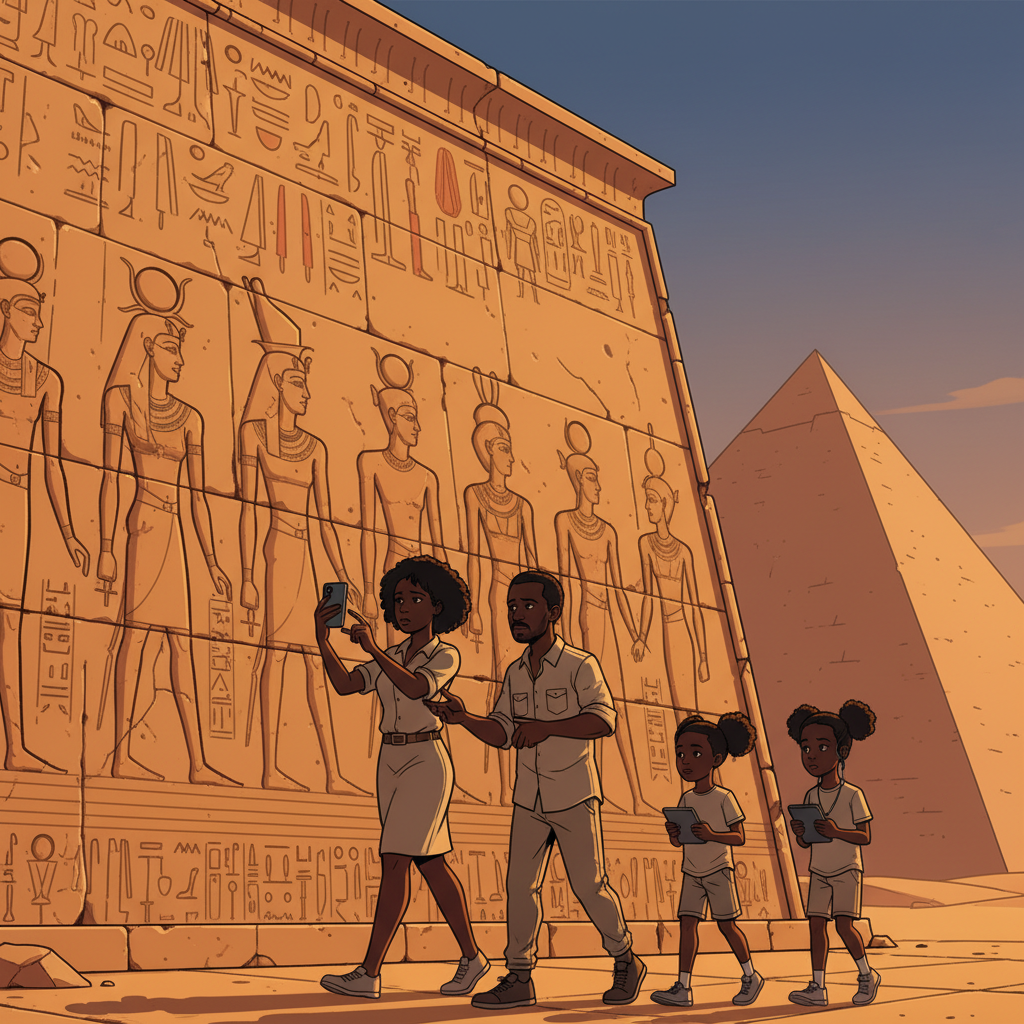
This is perhaps the most haunting aspect of Meroe's fall. The pyramids still stand — over two hundred of them, the largest concentration of pyramids in the world, their steep angles still cutting the sky above the Sudanese desert. The slag heaps still rise, evidence of an iron industry that operated for centuries. The temple foundations still mark the ground where Amun and Apedemak were worshipped for two millennia. The physical evidence of Meroitic civilization is abundant and impressive. But the voices are silent. The texts are partially undeciphered. The names of kings can be read, but their stories cannot be fully told. The inscriptions that the scribes carved with such care, believing that writing was the path to immortality, stand on walls that visitors pass without comprehension. It is as if the civilization is speaking and no one can hear.
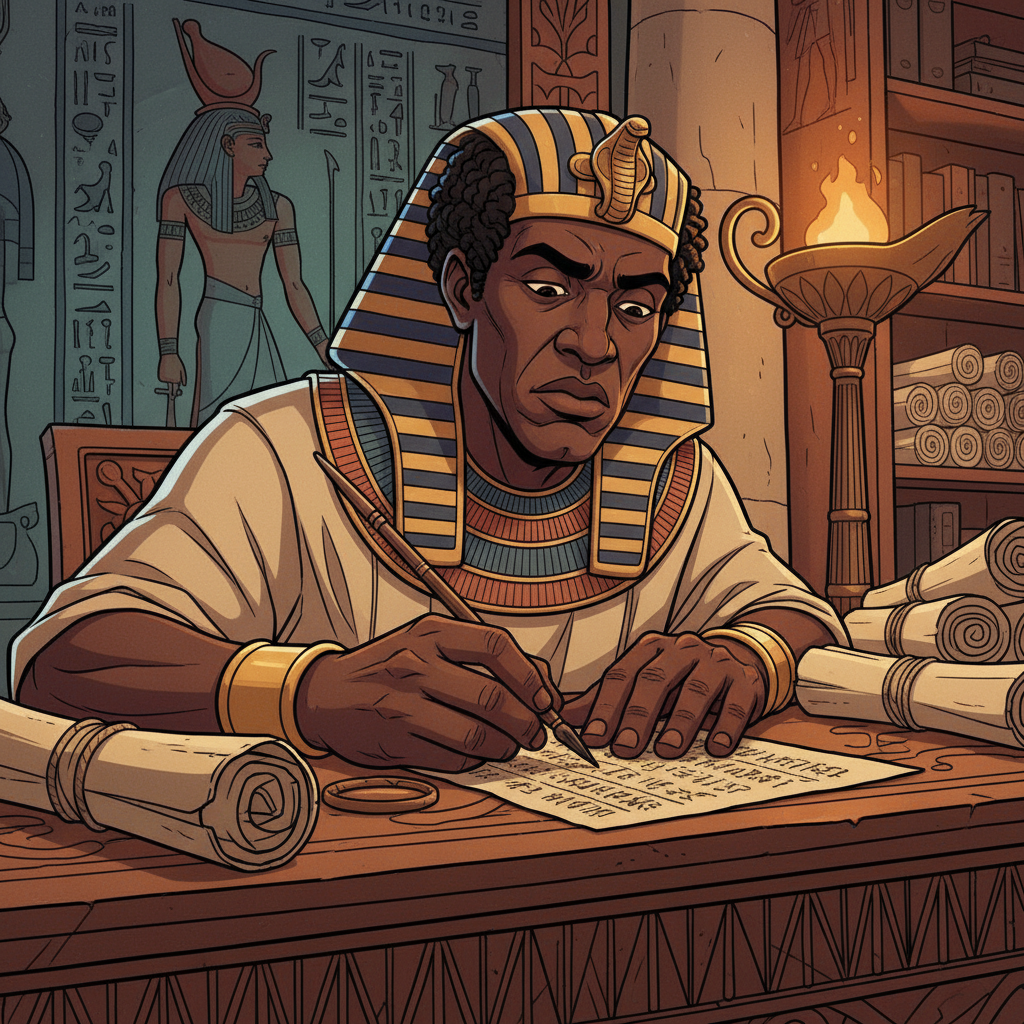
Taharka-qo understood this risk. He wrote about it explicitly in his journal: "The greatest danger is not the destruction of our temples or the conquest of our land. The greatest danger is the loss of our language. Stone can be rebuilt. Land can be reconquered. But a language that dies takes with it everything it ever said — every prayer, every poem, every law, every love letter, every argument, every lullaby sung to a child in the darkness. When a language dies, a world dies with it." He was right. The Meroitic language died. The world it carried — the full world of Meroitic thought, Meroitic feeling, Meroitic understanding — died with it. What remains is fragmentary, tantalizing, and heartbreaking: a civilization whose physical remains prove its greatness while its intellectual remains remain largely inaccessible.
The fall of Meroe forces us to confront a question that the Kemetic philosophers would recognize as central to the human condition: what endures? The pyramids endure, but they are silent witnesses. The script endures, but it cannot be fully read. The slag heaps endure, but the knowledge that produced them has been lost. The names of the kings endure — Natakamani, Amanitore, Amanishakheto — but their deeds are known only in outline. What did endure, in a form the Meroitic scribes might not have predicted, was the cultural inheritance carried by the peoples who survived the kingdom's fall. The Nubians who live in the region today — in Sudan and southern Egypt — carry in their languages, their customs, their artistic traditions, and their oral histories the living echoes of Meroitic civilization. The kingdom died. The people did not. And in the people, something of what Meroe was continues to breathe.
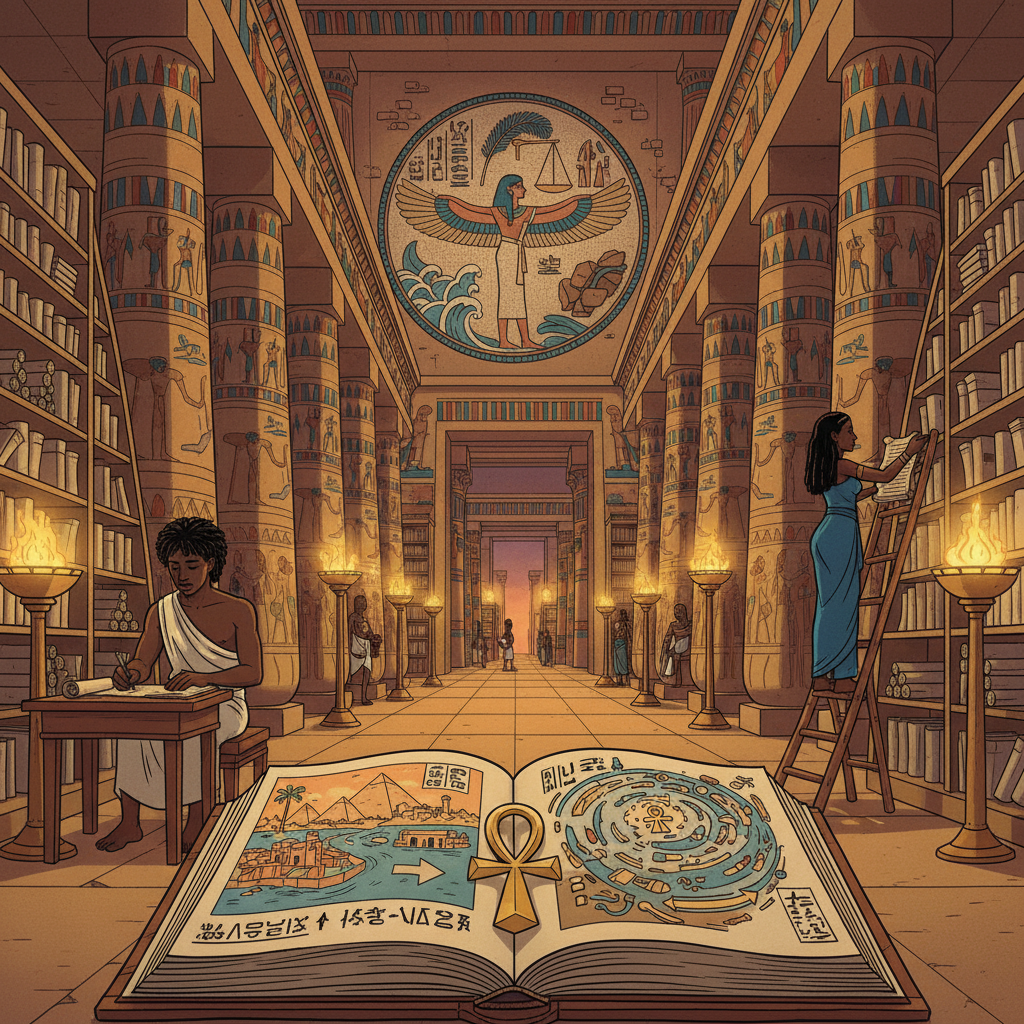
The principle of Maat that Taharka-qo served throughout his life was Balance — the understanding that the universe is not static but dynamic, that order and chaos exist in perpetual tension, that civilizations rise and fall as surely as the Nile floods and recedes. Balance does not mean stasis. Balance means the capacity to adapt, to transform, to find new forms for enduring truths. The Kushites had demonstrated this capacity before — when Napata fell to Psamtik, they moved their capital to Meroe and flourished for another thousand years. But this time, the transformation required was more radical than a change of capital. It required the entire structure of Meroitic civilization to dissolve and reconstitute itself in new forms — forms that the scribes of the temple archive could not have imagined and perhaps would not have recognized.
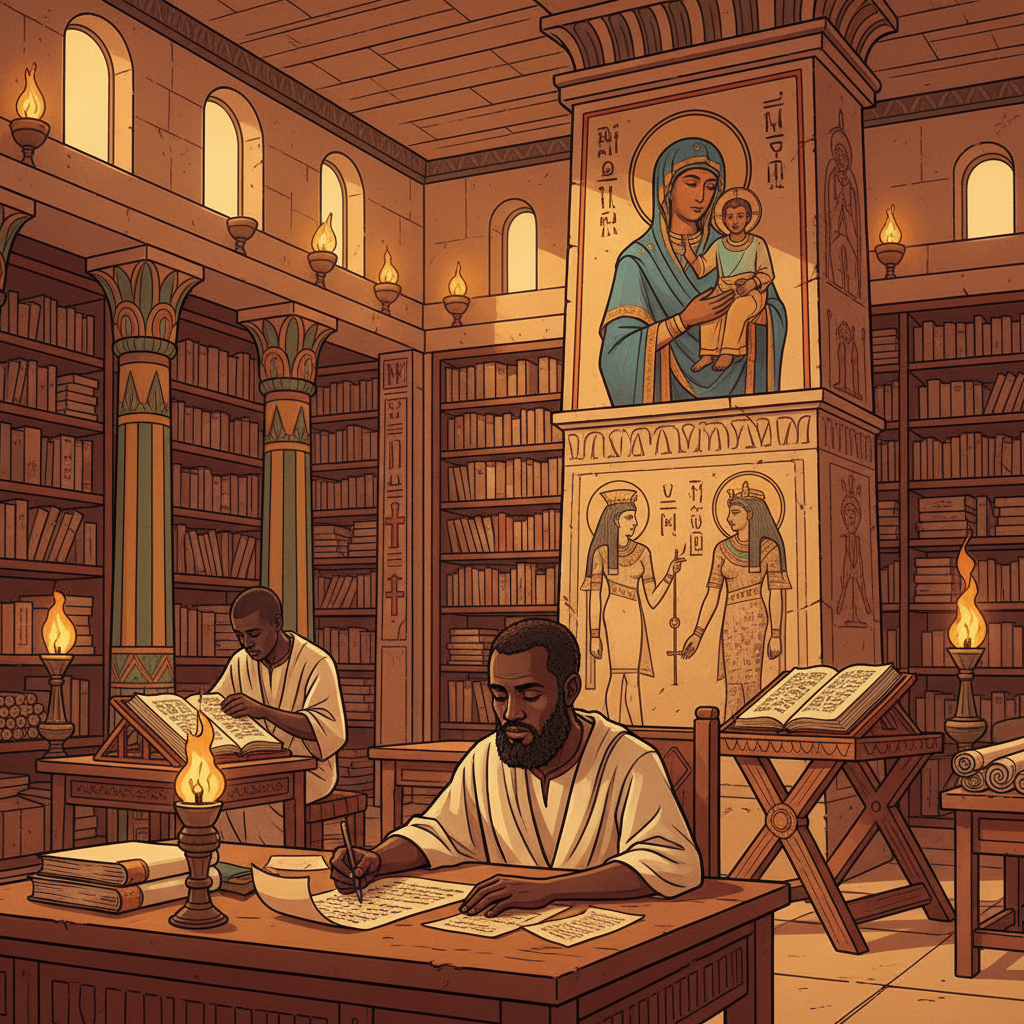
The Christianity that Ezana brought was not, in the end, a total erasure of what came before. The Nubian Christian kingdoms that eventually replaced Meroitic Kush — Nobatia, Makuria, Alodia — incorporated elements of the older tradition into their new faith. The veneration of the Virgin Mary, which became extraordinarily important in Nubian Christianity, bore echoes of the Kushite devotion to Isis and Mut. The monastic traditions of the Nubian church, with their emphasis on desert asceticism and scholarly preservation, resembled nothing so much as the Per Ankh tradition of the temple scribes. The old gods changed their names and their stories, but something of what they represented — the human need for meaning, for connection to the divine, for understanding the cosmos — persisted. This is what Balance means in the Maat tradition: not the prevention of change, which is impossible, but the preservation of essential truth through change. The vessel breaks. The water finds new vessels.
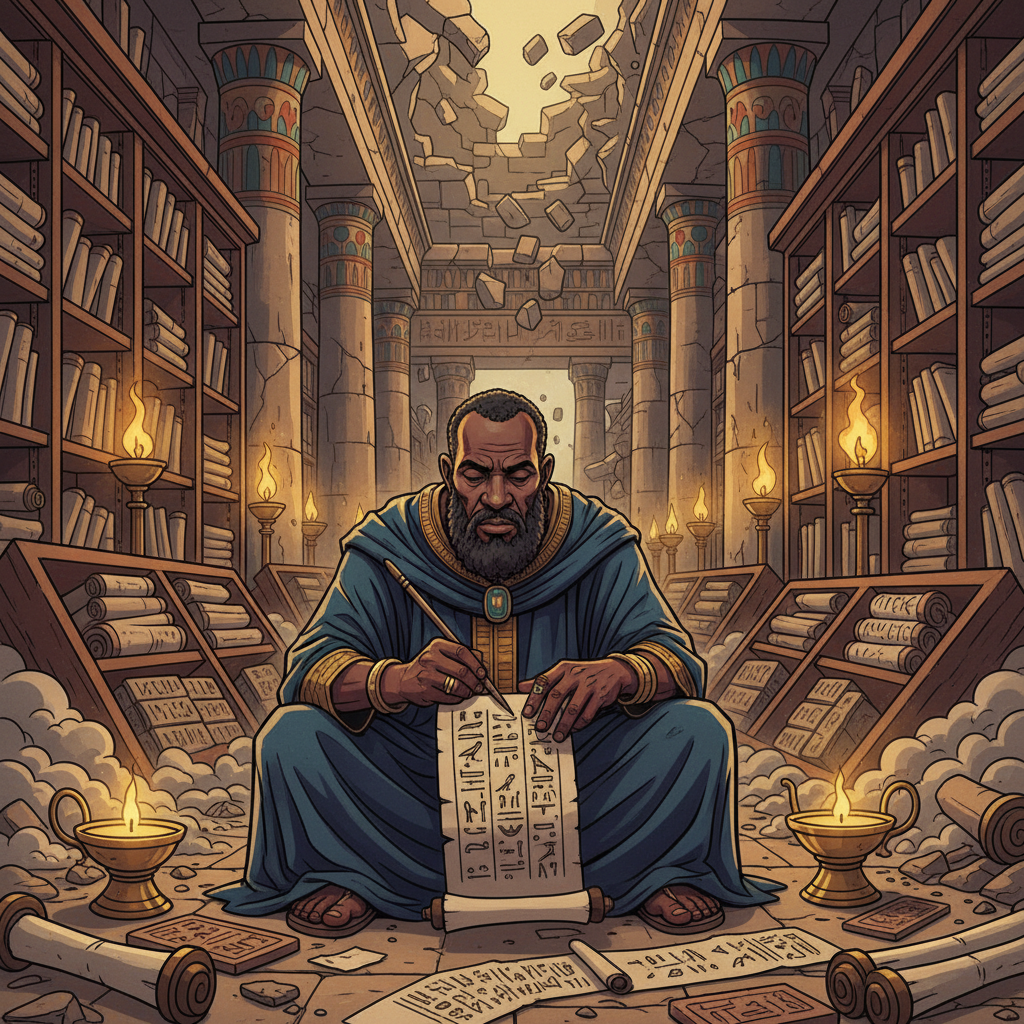
Taharka-qo did not survive to see the final end of Meroitic Kush. The historical record does not tell us when or how he died, because the historical record itself was dying. But the work he did — the desperate, meticulous, heartbreaking work of recording a civilization's knowledge as it slipped away — was not futile, even if his specific archive has not yet been found. The impulse to preserve, to record, to insist that what is being lost matters — this impulse is itself the most important thing that any civilization produces. It is the declaration that truth is worth recording even when no one may read it, that knowledge is worth saving even when the future is dark, that the act of remembering is meaningful even when the memory may be incomplete. The Meroitic script waits on temple walls and funeral stelae across the Sudanese desert, patient as the pyramids themselves, holding its secrets until the day when someone — some future scribe, some descendant of the Per Ankh tradition — finds the key that unlocks the language that unlocks the civilization that unlocks everything the last pharaohs of Meroe knew and felt and thought and loved.
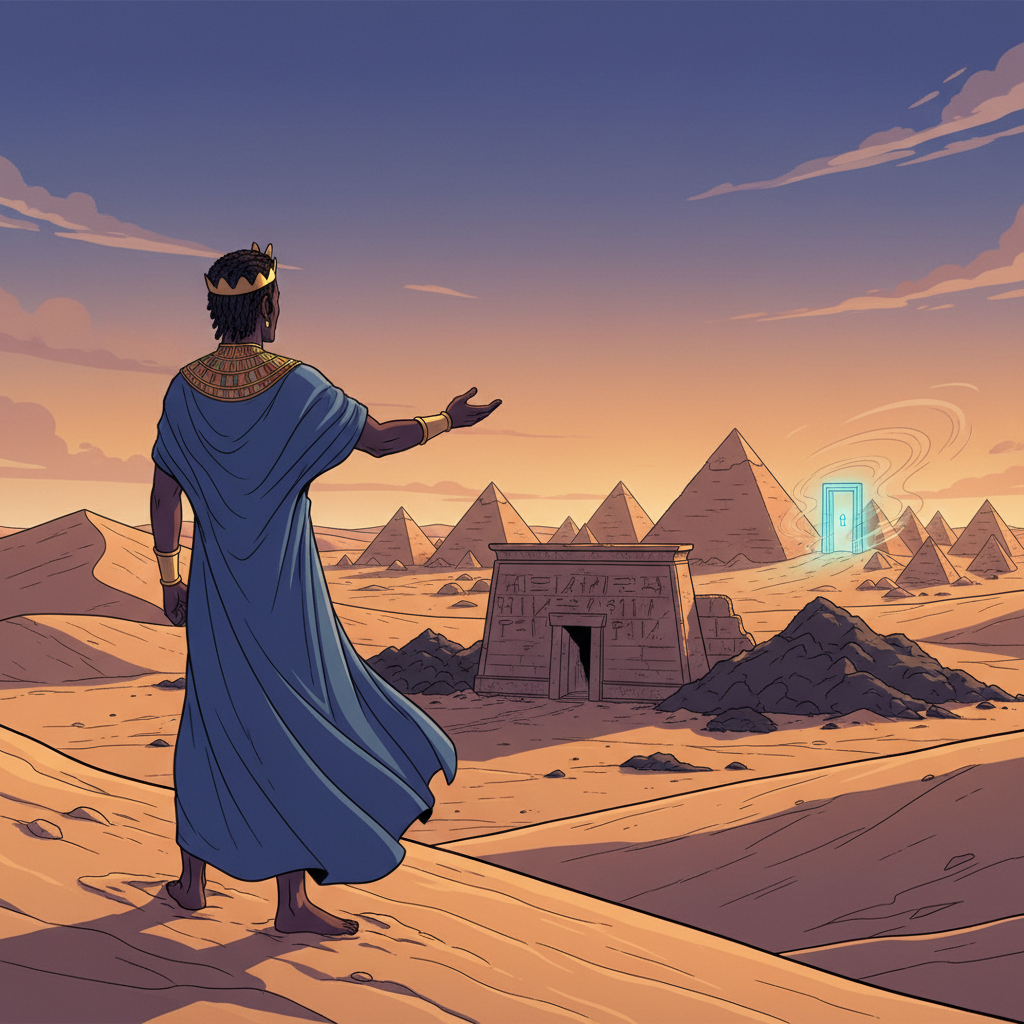
"Will you remember us?" Taharka-qo asked the future. The answer, as of today, is: partially. Imperfectly. With reverence for what can be seen and anguish for what cannot be read. The pyramids of Meroe are a UNESCO World Heritage Site. The iron industry is recognized as one of the great technological achievements of the ancient world. The kingdom of Kush is acknowledged as one of Africa's greatest civilizations. But the Meroitic script remains only partially deciphered, and the full story of Meroe's people, their ideas, their inner lives, remains locked behind a door to which no one has yet found the complete key. Maat teaches that Balance is not an achievement but a practice — something you do, day after day, in the face of forces that pull toward chaos. Taharka-qo practiced Balance by recording truth against the darkness of forgetting. The fact that the darkness has not been fully dispelled does not diminish his effort. It makes it more important. Because somewhere in the sands of Sudan, beneath the steep pyramids and the cold slag heaps and the walls inscribed with letters no one can fully read, the last pharaohs of Meroe are still waiting to tell their story.