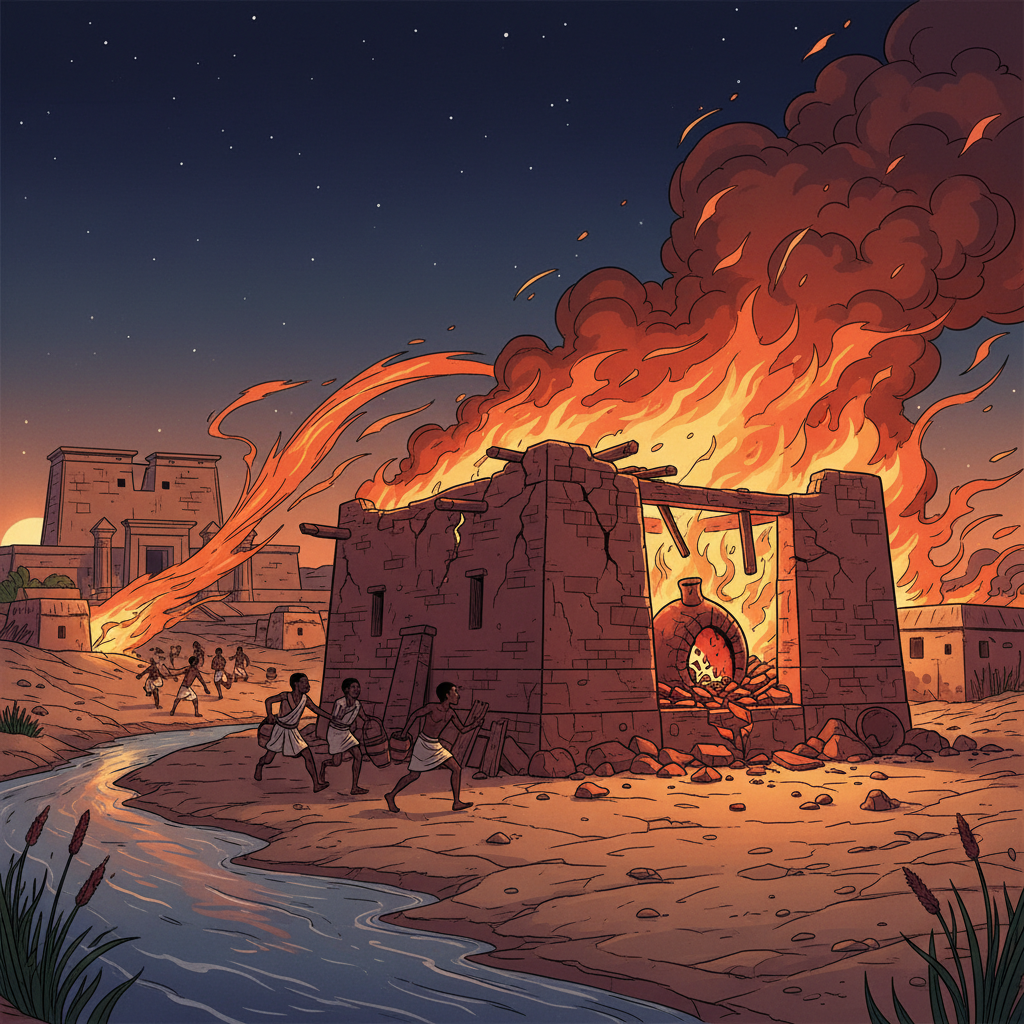
The fire started three hours before dawn, in the season when the desert wind blew hot and dry from the west and the Nile ran at its lowest. It consumed the workshop of master potter Amenemhat and his family in the time it takes a man to run from the riverbank to the temple — less than a hundred heartbeats. By the time the neighbors formed a bucket line, the mudbrick walls had cracked from the heat, the wooden roof beams had collapsed inward, and the kiln that was Amenemhat's livelihood had shattered like one of its own pots dropped from a height.
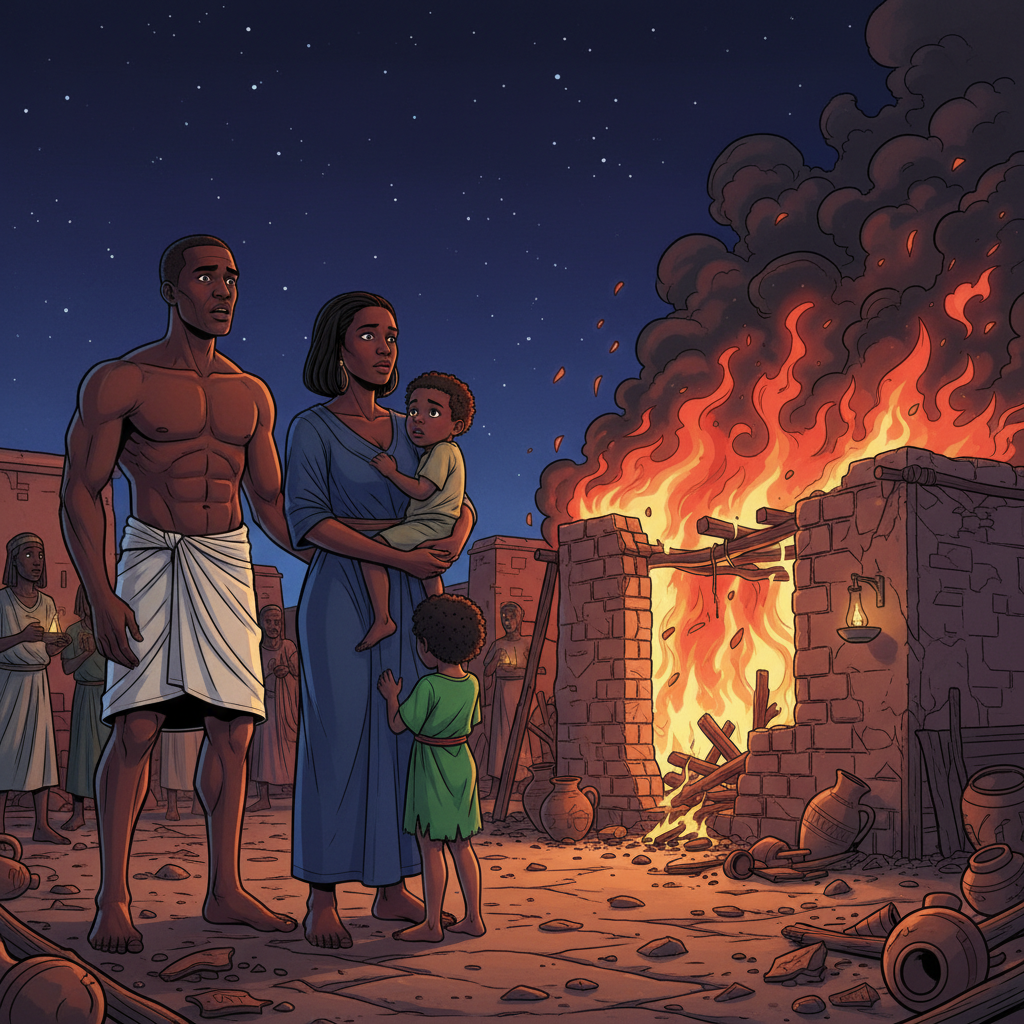
Amenemhat stood in the street with his wife Nefertiti and their two children — a son of twelve and a daughter of eight — watching everything they owned turn to smoke and ash. They had escaped because the daughter, sleeping closest to the door, had smelled the smoke first and screamed. They had nothing now. Not their tools, not their clay stores, not the forty finished pots waiting for market day, not the clothes on the racks, not the food in the jars. Nefertiti held her children and stared at the flames with the blank, uncomprehending face of someone who has not yet understood the size of what has been taken.
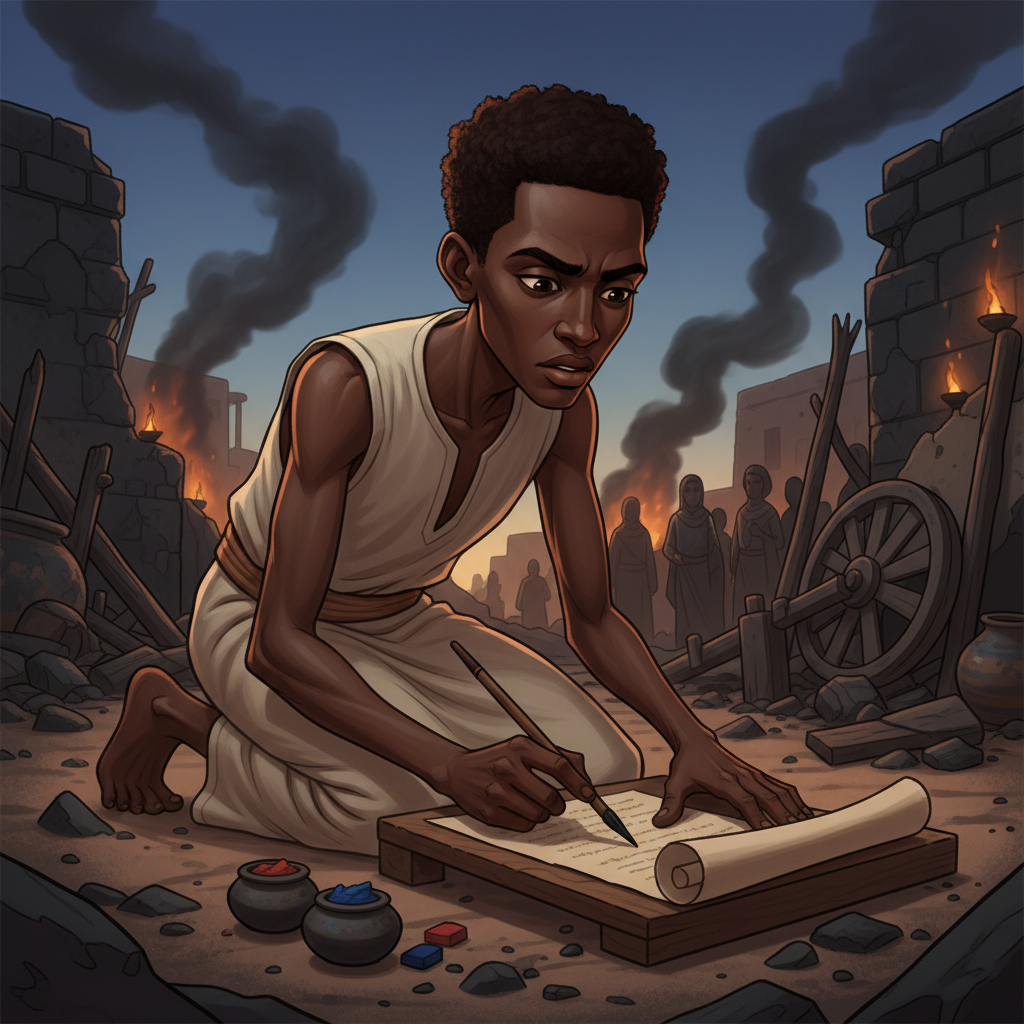
The young scribe Nefermaat arrived at the fire with the other neighbors. He was twenty-three, recently appointed as the junior record-keeper for the kenbet of Per-Wadjet, with very dark skin, careful eyes behind a thin face, and the ink-stained fingers that marked his profession. He carried a writing kit everywhere — papyrus, reed pens, pigment cakes — because a scribe's duty was to record what happened, accurately and completely. He began recording the scene immediately: the direction of the fire's spread, the condition of the walls, the wind direction, the time.
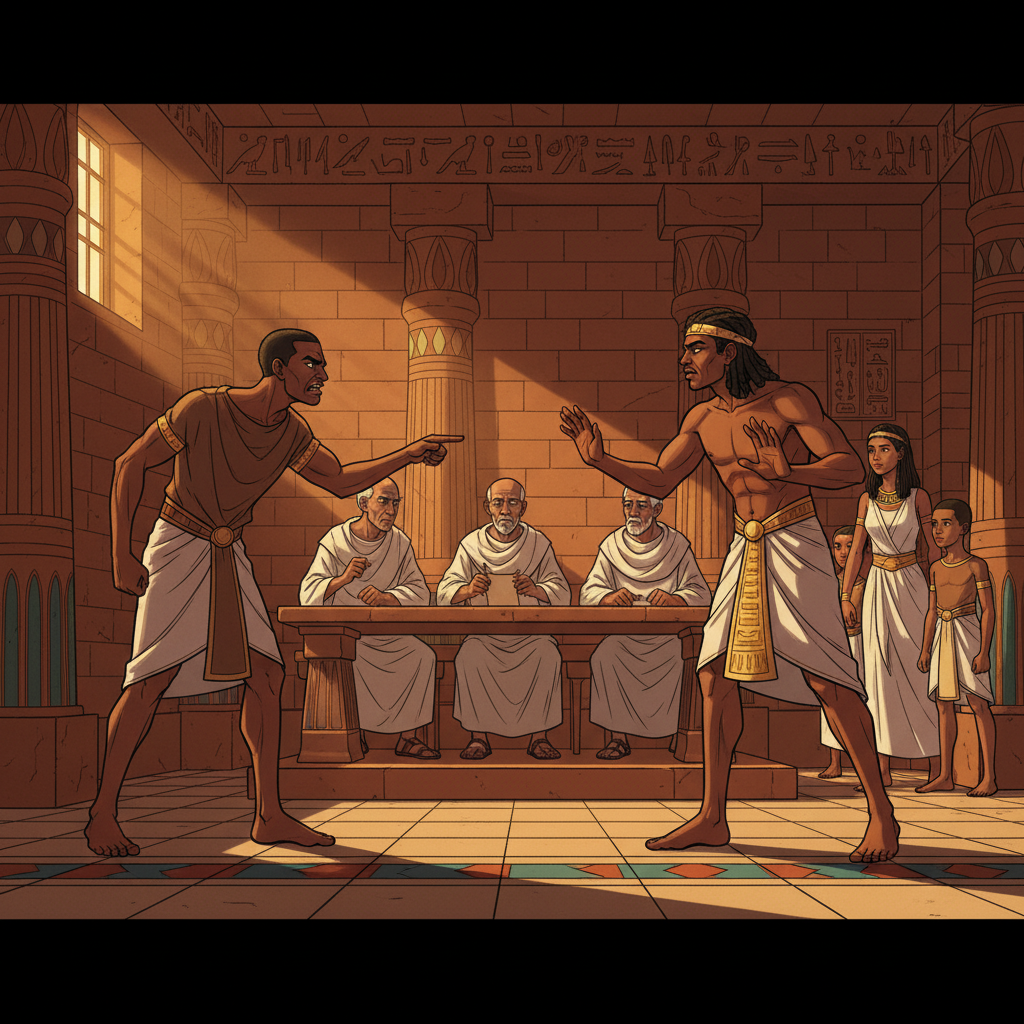
Within hours, suspicion fell on a man named Userhet. He was a rival potter who operated a workshop three streets away and who had been involved in a bitter commercial dispute with Amenemhat for over a year. The dispute was public and ugly: Userhet claimed that Amenemhat had stolen his glaze formula — a family secret passed down through four generations — and used it to undercut his prices. Amenemhat denied the accusation. The kenbet had reviewed the dispute and found insufficient evidence to rule in either direction. The grudge had festered.
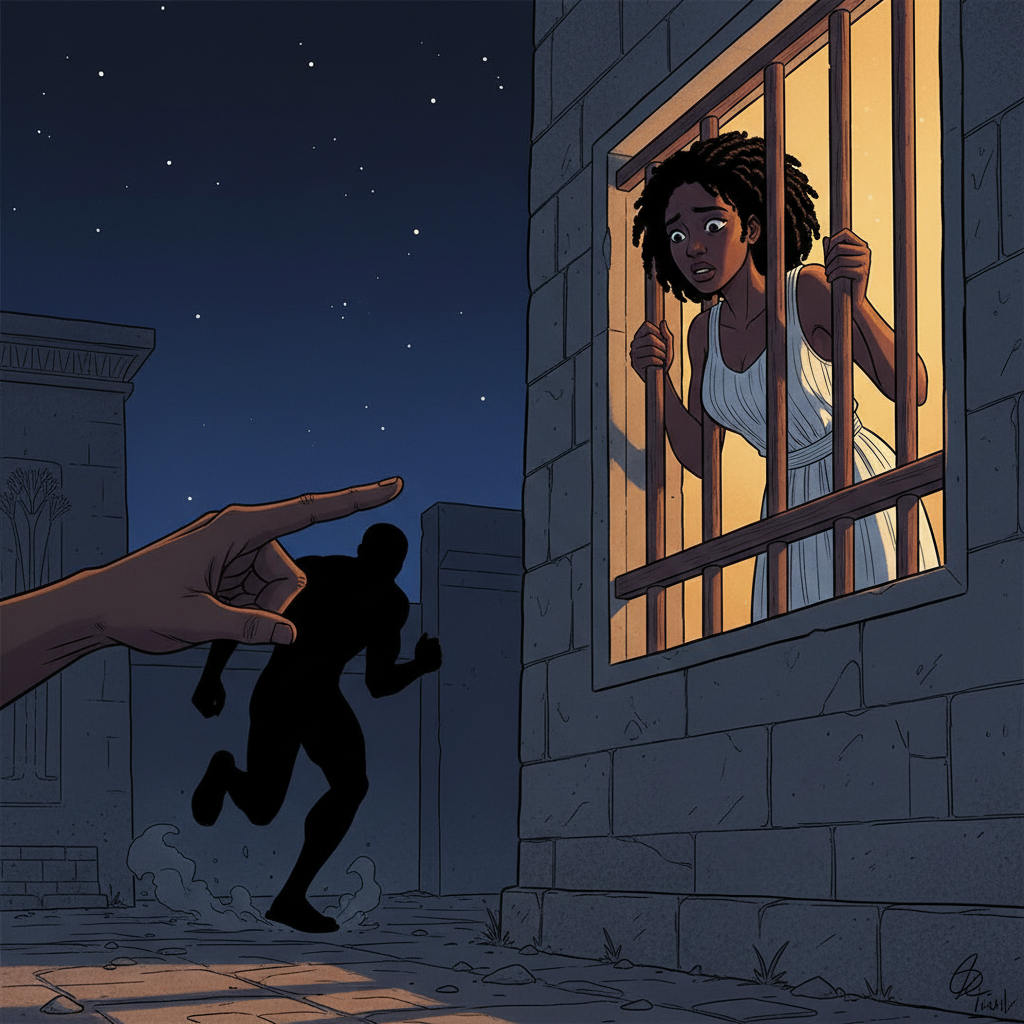
Three witnesses came forward. A night watchman named Baki said he had seen a man matching Userhet's build walking quickly away from Amenemhat's street shortly before the fire was noticed. A neighbor named Satamun said she had heard someone running past her window in the dark — heavy footsteps, a man's gait. And Amenemhat himself said that Userhet had confronted him at the market six days earlier and said, "You will regret what you took from me. I promise you that." The evidence pointed at Userhet like three fingers pointing at the same man.
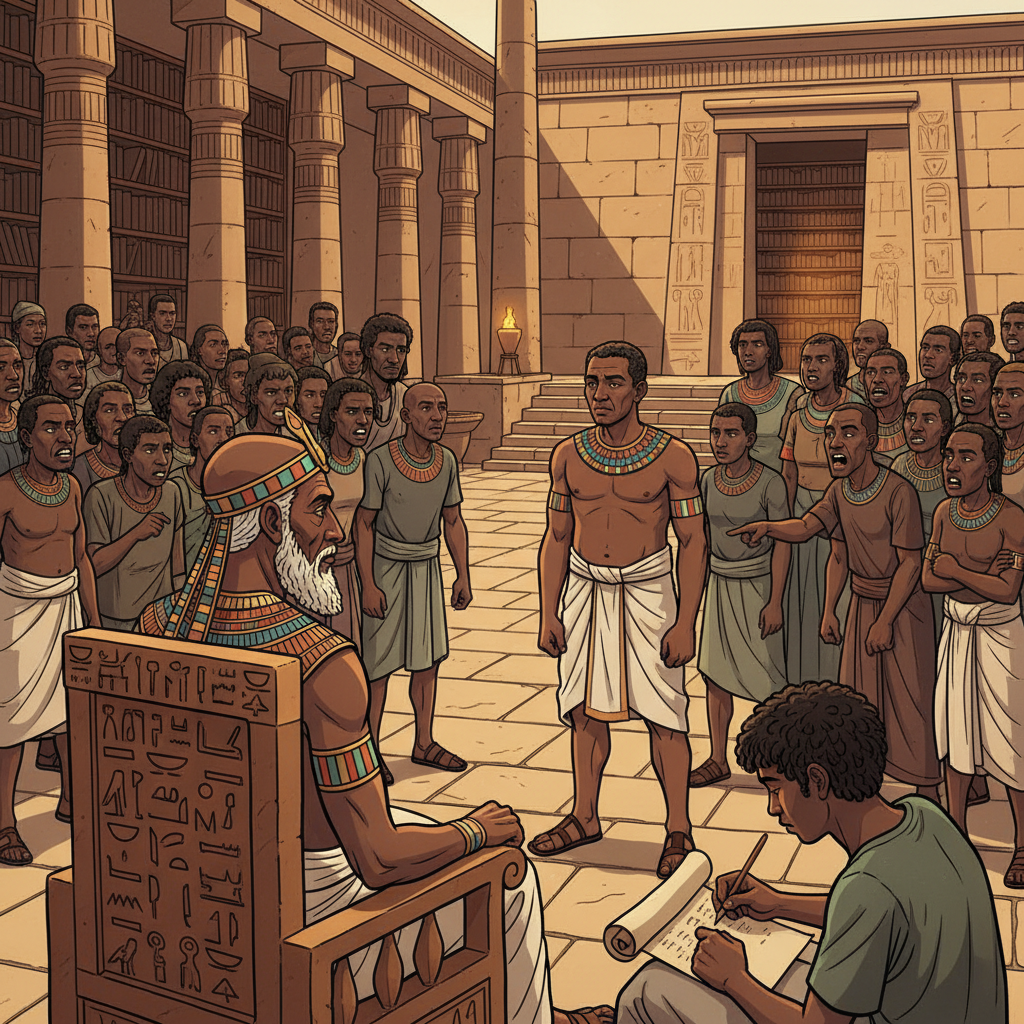
The kenbet convened a formal hearing. Judge Meryre, a sixty-year-old man known for his strict adherence to procedure, presided. Nefermaat served as the court scribe, recording every word with the precise strokes his training demanded. The prosecution presented the three witnesses, the commercial dispute, the threat at the market. The case seemed strong. The courtyard was full of neighbors who had seen the fire and who watched Userhet with undisguised hostility.

But Userhet's advocate was a woman named Hetepheres — sharp-minded, experienced, and relentless. She dismantled the witnesses one by one. Baki the night watchman: "You saw a man of Userhet's build. Could you see his face?" "No. It was dark." "So you saw a man walking. Not Userhet." Satamun: "You heard footsteps. Did you see anyone?" "No." "Heavy footsteps could belong to any man in this district." Amenemhat's testimony about the market threat: "My client was angry about a legitimate business grievance. Saying 'you will regret' is not the same as saying 'I will burn your house.'
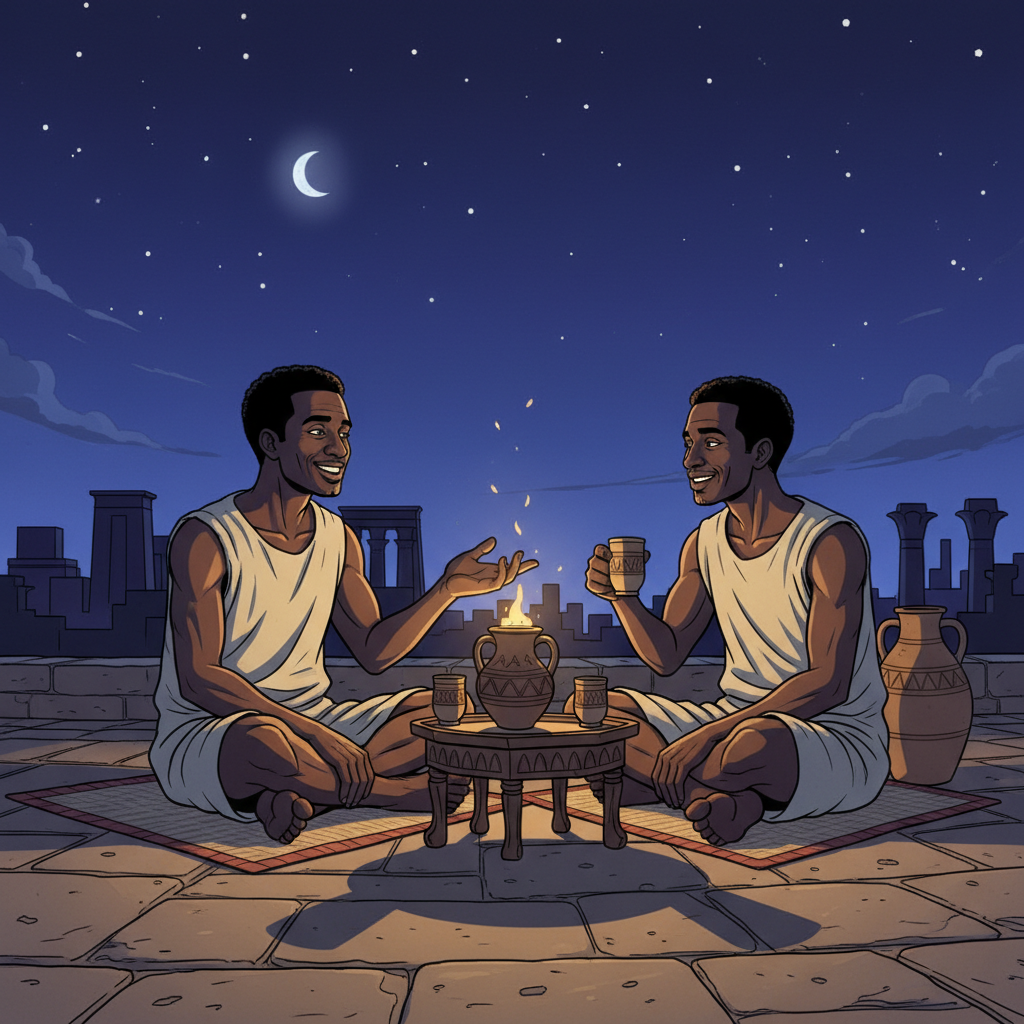
Hetepheres then presented her own evidence. Two of Userhet's neighbors testified that they had seen him at home that evening, drinking beer on his rooftop until well past midnight. The fire started around the third hour before dawn. "My client was at home, witnessed by two people, drinking beer on his roof," Hetepheres said. "The prosecution has a man's silhouette, some footsteps, and an angry comment at a market. This is not evidence. This is suspicion dressed in a witness's robe."
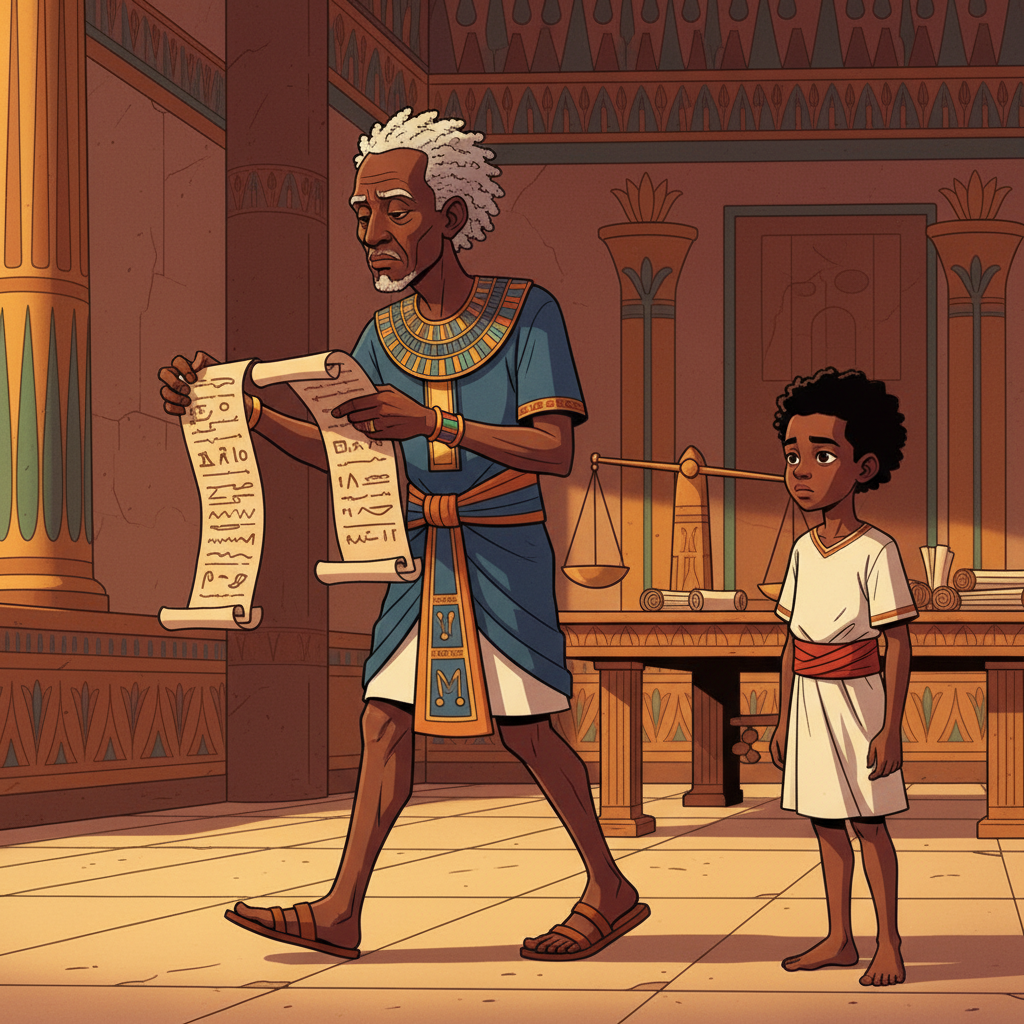
Judge Meryre deliberated for two days. Nefermaat watched the old judge pace the private chamber, reviewing the testimony scrolls, weighing the evidence with the careful precision of a man who had built his career on procedure. When Meryre delivered his verdict, his voice was flat and certain: "The evidence presented is insufficient to prove that Userhet set the fire. The witnesses could not identify him directly. The alibi testimony places him at home. The market threat, while hostile, does not constitute evidence of arson. The accused is acquitted."
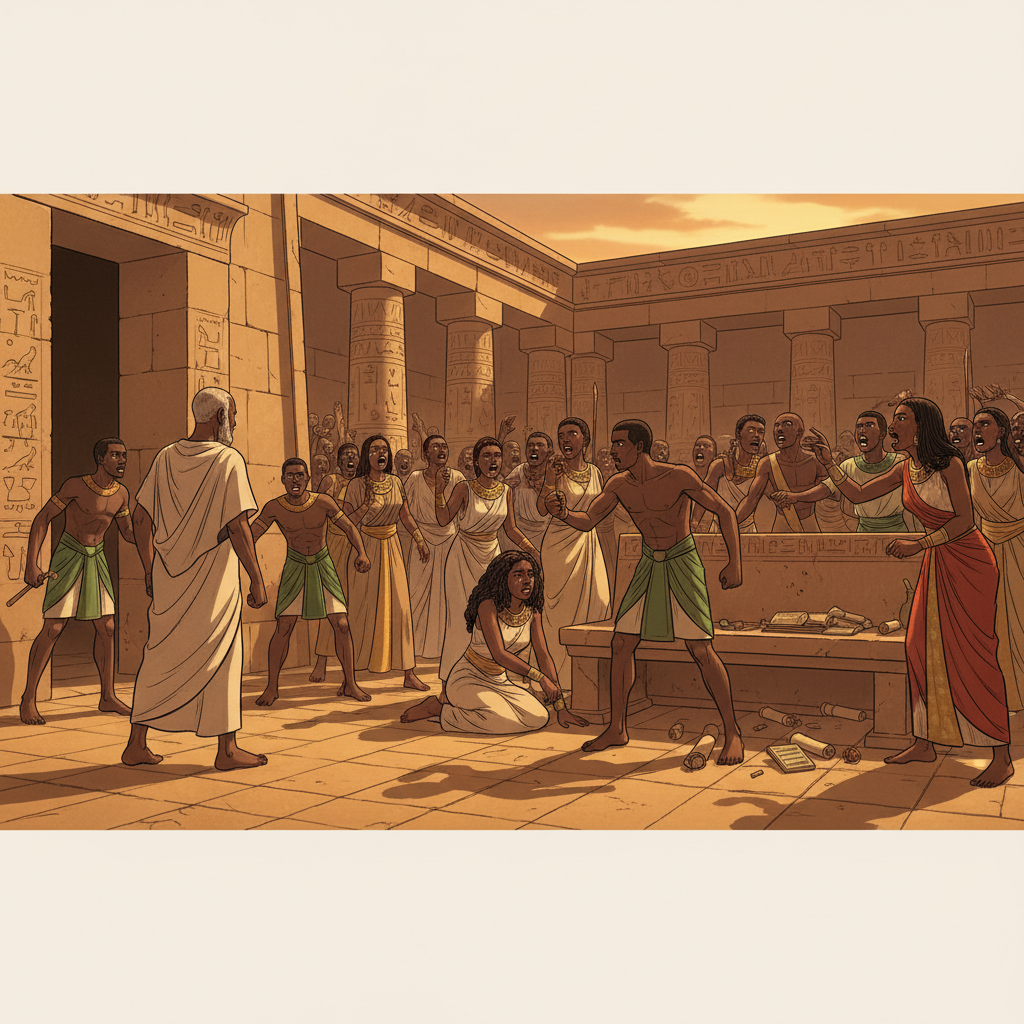
The courtyard erupted. Amenemhat's wife wept. His son kicked the stone bench. Neighbors shouted that everyone KNEW Userhet did it. Judge Meryre waited for the noise to subside and then said something that silenced the room: "This court does not convict on what everyone knows. This court convicts on what can be proven. The alternative — conviction based on belief, suspicion, or popular anger — is not justice. It is a mob with a gavel." He stood and walked out. The case was closed.
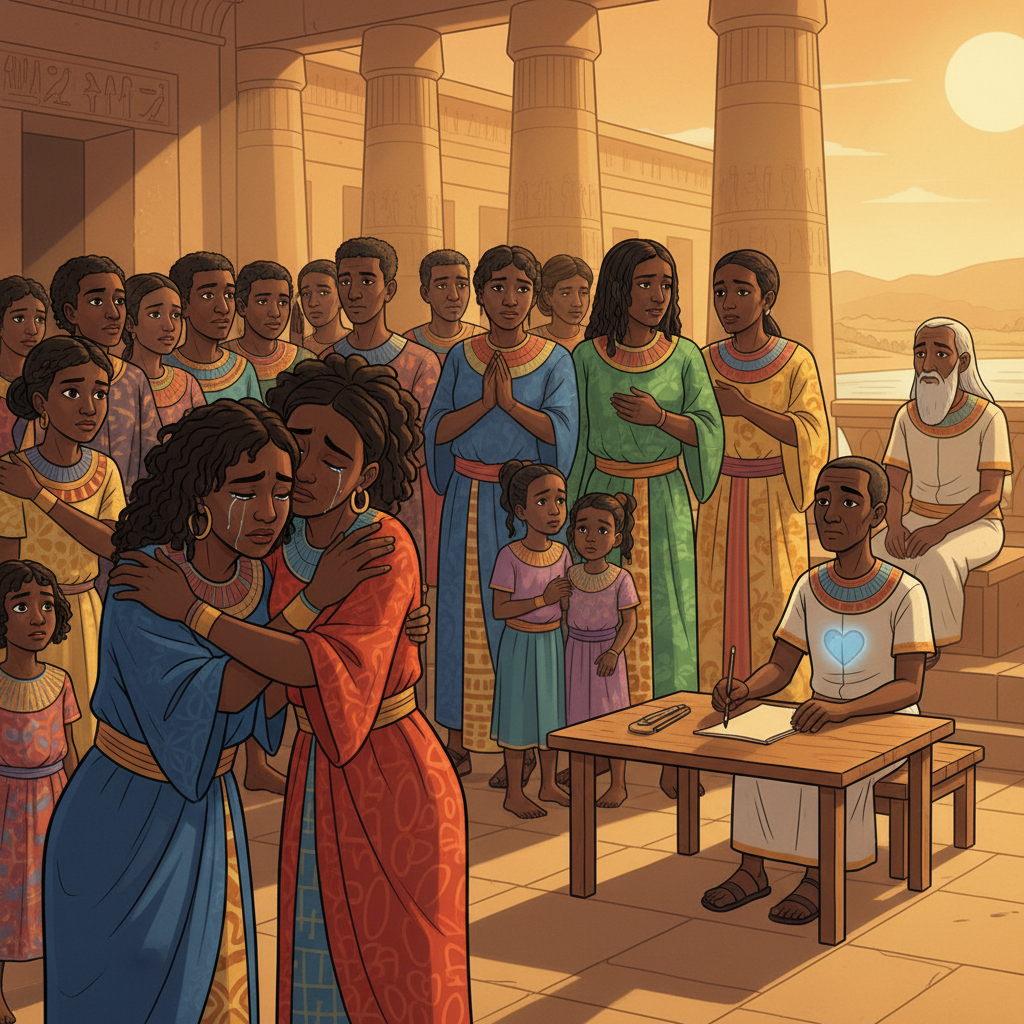
Nefermaat recorded the verdict and the crowd's reaction with the same neutral precision he applied to everything. But inside, something was wrong. Not with the verdict — Meryre was right that the evidence was insufficient. The law had functioned exactly as designed: it protected the accused from conviction without proof. This was the foundation of Kemetic justice, the principle that no person should lose their freedom based on suspicion alone. Nefermaat believed in this principle. He had built his career on it.
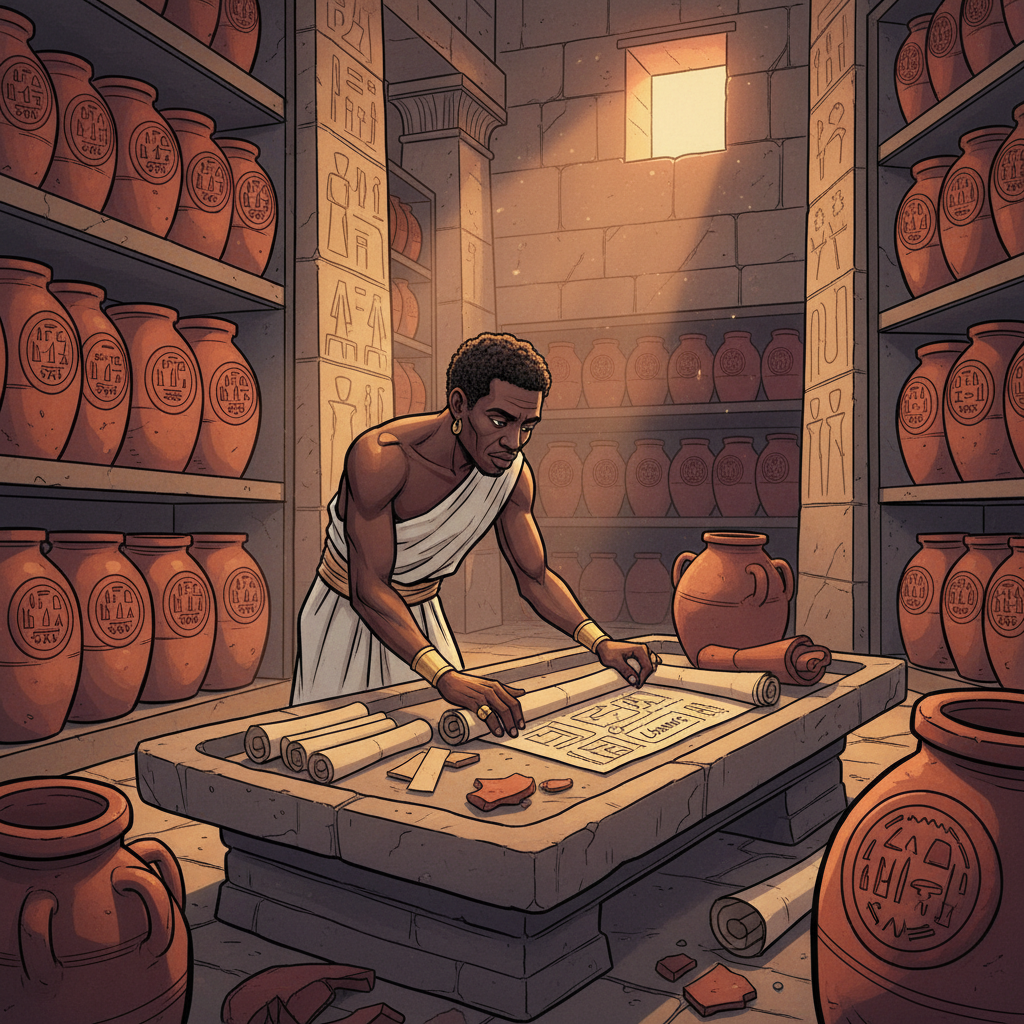
The problem was what happened three weeks later. Nefermaat was cataloguing old records in the kenbet archive — a dusty room in the temple basement where decades of court documents were stored in clay jars sealed with the court's stamp. He was organizing records from the previous year when he found a property dispute involving Userhet. The dispute was unremarkable — a disagreement about a wall between two properties — but attached to it was a surveyor's report that included a detailed map of Userhet's property and the surrounding streets.
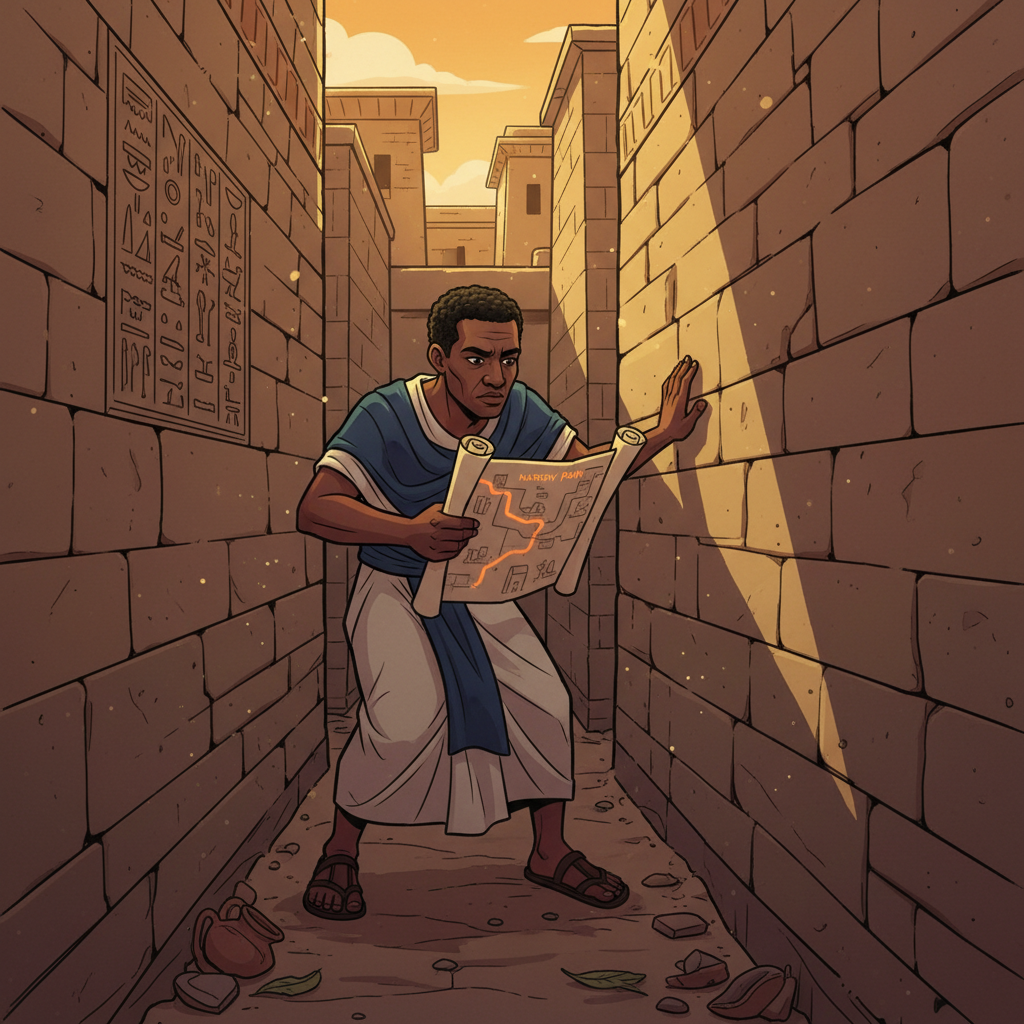
The map showed something that had not been presented at trial. There was a narrow alley — barely wide enough for one person — that ran from the back of Userhet's property directly to Amenemhat's street. It was not a public pathway; it ran between two high walls and would be invisible to anyone who did not know it existed. A man who knew this alley could leave his rooftop, walk to Amenemhat's workshop, set a fire, and return home in less than fifteen minutes — easily within the gap between when his neighbors last saw him and when the fire was noticed.
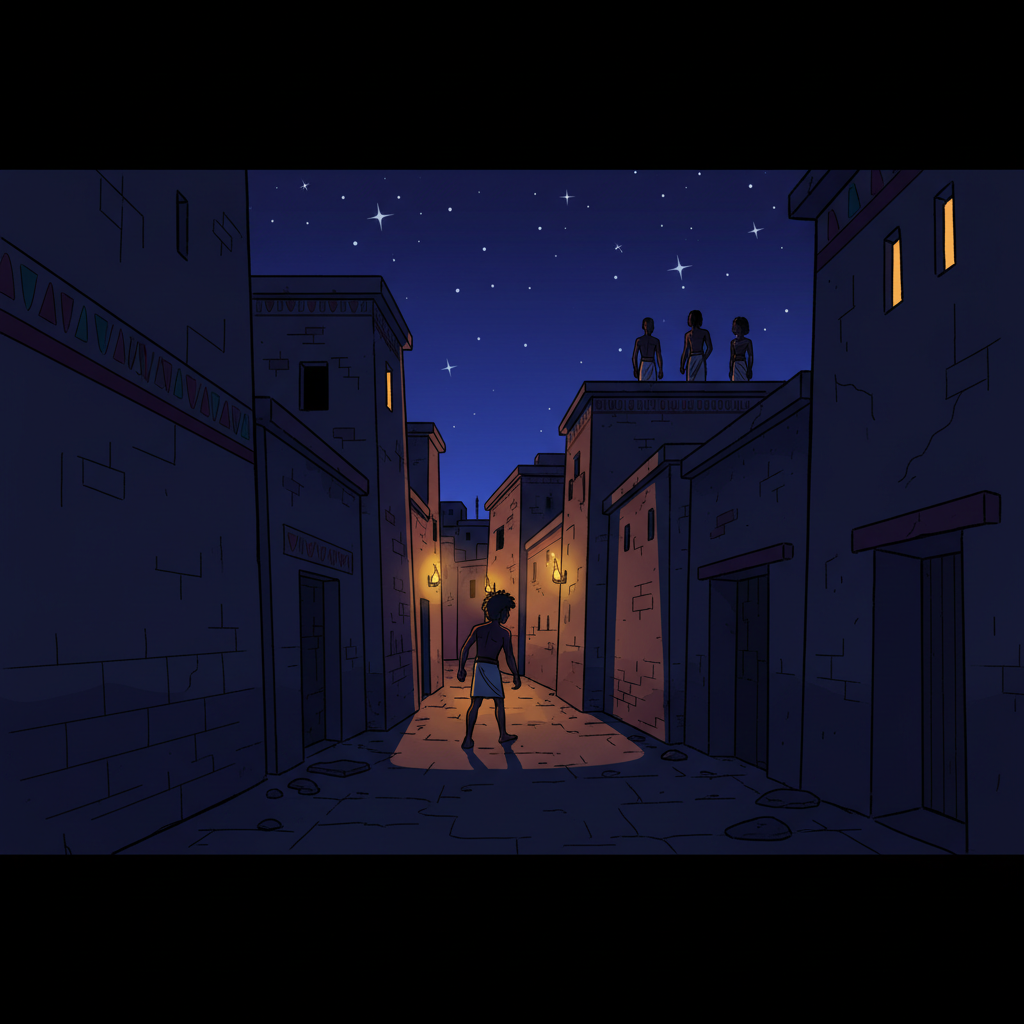
Nefermaat stared at the map for a long time. This was not proof that Userhet set the fire. It was proof that Userhet COULD have set the fire despite the alibi. The alibi — "he was home, his neighbors saw him on the roof" — assumed he could not have traveled to and from Amenemhat's street without being seen. The alley destroyed that assumption. It did not convict Userhet. But it shredded the defense's strongest argument.
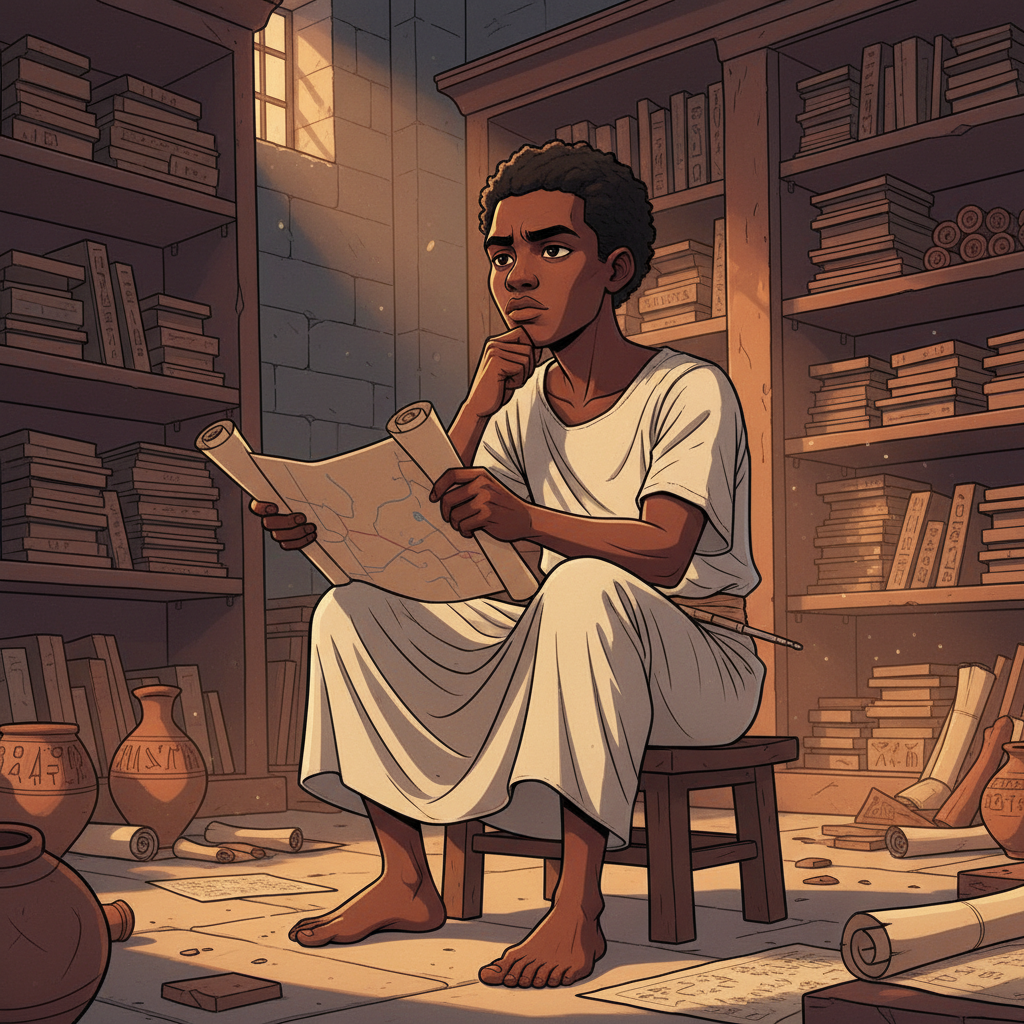
He rolled up the map and sat in the archive's dusty silence, thinking. The case was closed. Judge Meryre had delivered a final verdict. Under Kemetic law, a case that had been fully heard and decided could only be reopened under extraordinary circumstances — new physical evidence directly proving guilt, a confession, or proof that a witness had committed perjury. A map showing a possible route was none of these. It was circumstantial. It strengthened suspicion but did not prove the act.
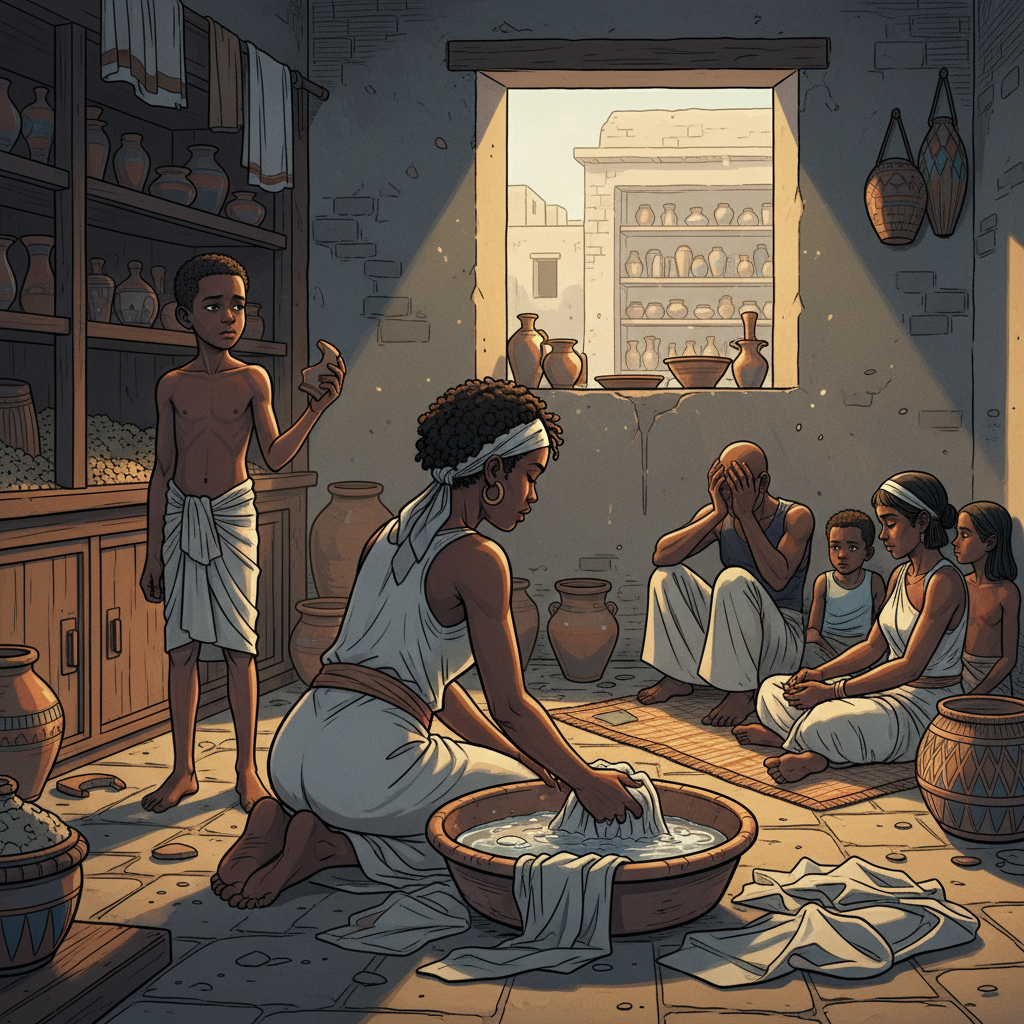
And yet. Amenemhat's family was living in a borrowed room above a grain merchant's shop. His wife washed other people's linen to feed their children. His twelve-year-old son, who had been apprenticed to learn his father's trade, now had no workshop to learn in and no tools to learn with. The family's entire future had been burned to ash, and the man who almost certainly did it was walking free, operating his rival pottery workshop three streets away, his business thriving now that his only real competitor had been destroyed.
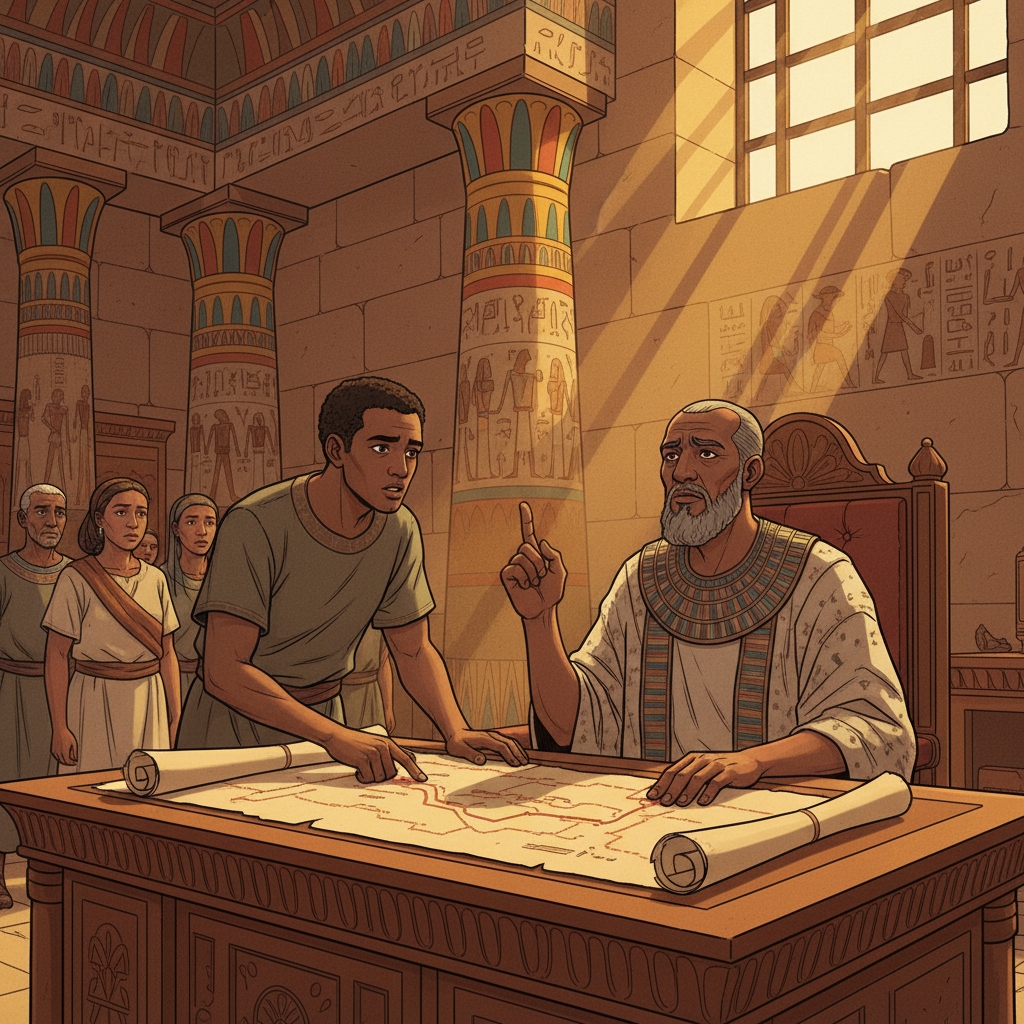
Nefermaat went to Judge Meryre. He laid the map on the old judge's desk and explained what it showed. Meryre examined it with the same careful precision he brought to everything, tracing the alley route with his finger, calculating distances, considering timing. When he looked up, his face was troubled but his voice was steady. "This is significant," he said. "But it does not change the verdict. A possible route is not proof that the route was taken. To reopen this case on circumstantial evidence would undermine the very principle that protects every accused person in this court."
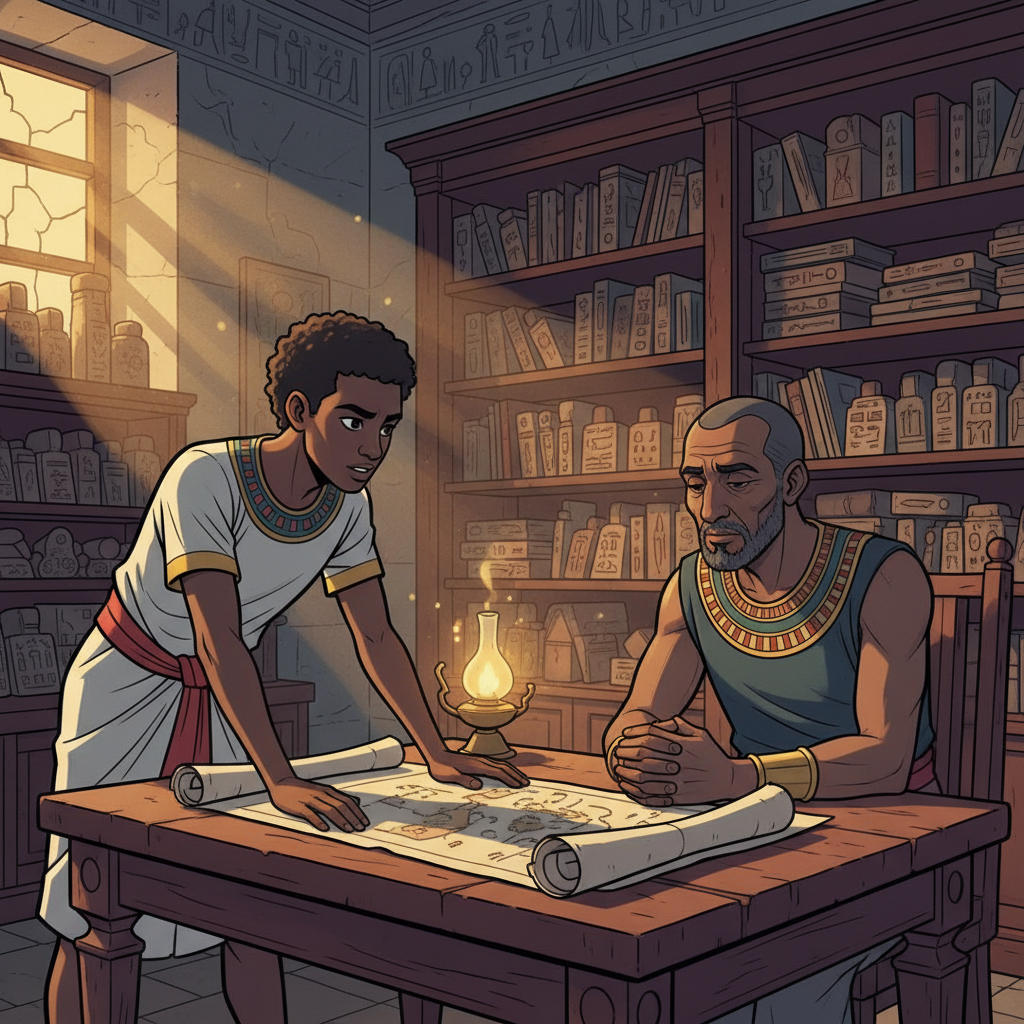
"And if Userhet is guilty?" Nefermaat asked. "If he burned that family's home and workshop and is walking free because the evidence was incomplete?" Meryre was quiet for a long time. "Then something terrible has happened," he said. "And the law was not strong enough to fix it. But the alternative — conviction on suspicion, reopening cases whenever new theories arise — would be worse. It would mean that no verdict is ever final, that no accused person can ever rest secure in an acquittal. The law must protect the innocent even if it sometimes protects the guilty. That is the price of justice."

Nefermaat left Meryre's chamber with the map still rolled in his hand. He walked to the riverside and sat on the stone quay, watching the water move, thinking about prices. The price of justice was that sometimes the guilty went free. The price of certainty was that sometimes the innocent were convicted. The law chose the first price because the second was worse — because one innocent person in chains is a greater violation of Maat than one guilty person walking free. He understood this. He agreed with it, even. But understanding and accepting are different countries, and the border between them is grief.
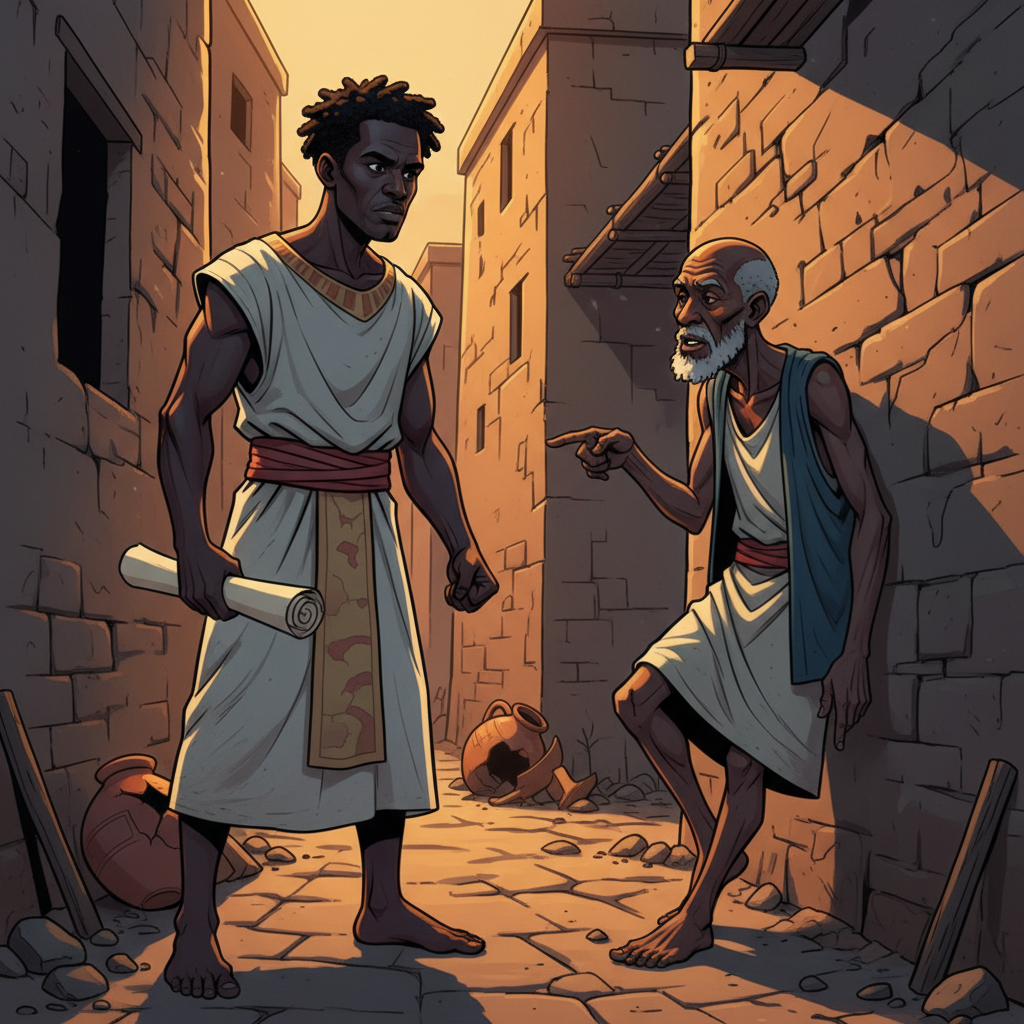
He could not let it go. Not the verdict — he accepted that the kenbet had ruled correctly based on the evidence presented. What he could not accept was that the story ended here. He began investigating on his own time, quietly, not as a court official but as a scribe — a recorder of truth. He interviewed the night watchman again, more carefully this time. Baki remembered one new detail: the man he had seen was limping slightly, favoring his left leg.
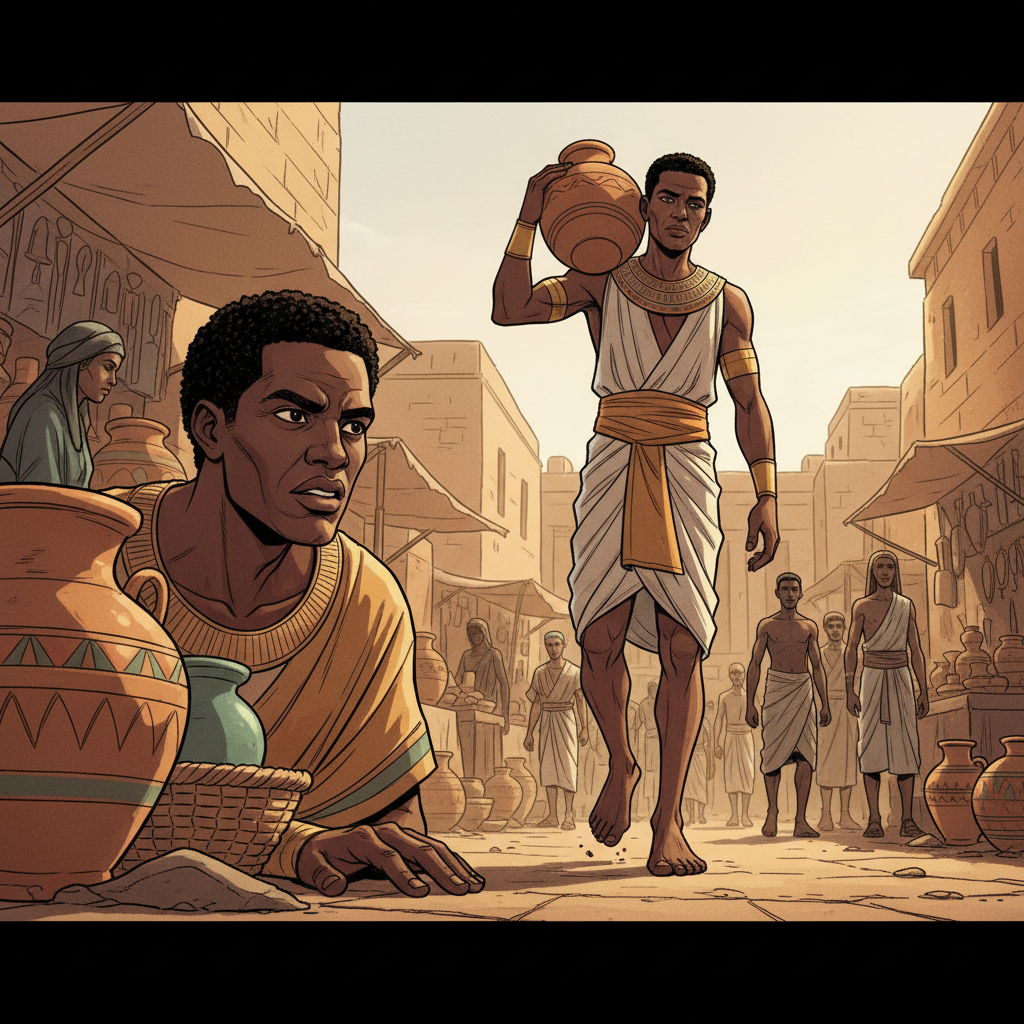
Nefermaat visited the market where Userhet sold his pottery and watched him for three days. On the third day, he saw it: Userhet favored his left leg. Not dramatically — a slight hitch in his stride, the kind of thing you would only notice if you were looking for it. Nefermaat investigated further and found a healer's record — Userhet had been treated for a burn on his left calf two days after the fire. The healer had noted: "Patient claims injury from his own kiln. Burn consistent with contact with hot debris."
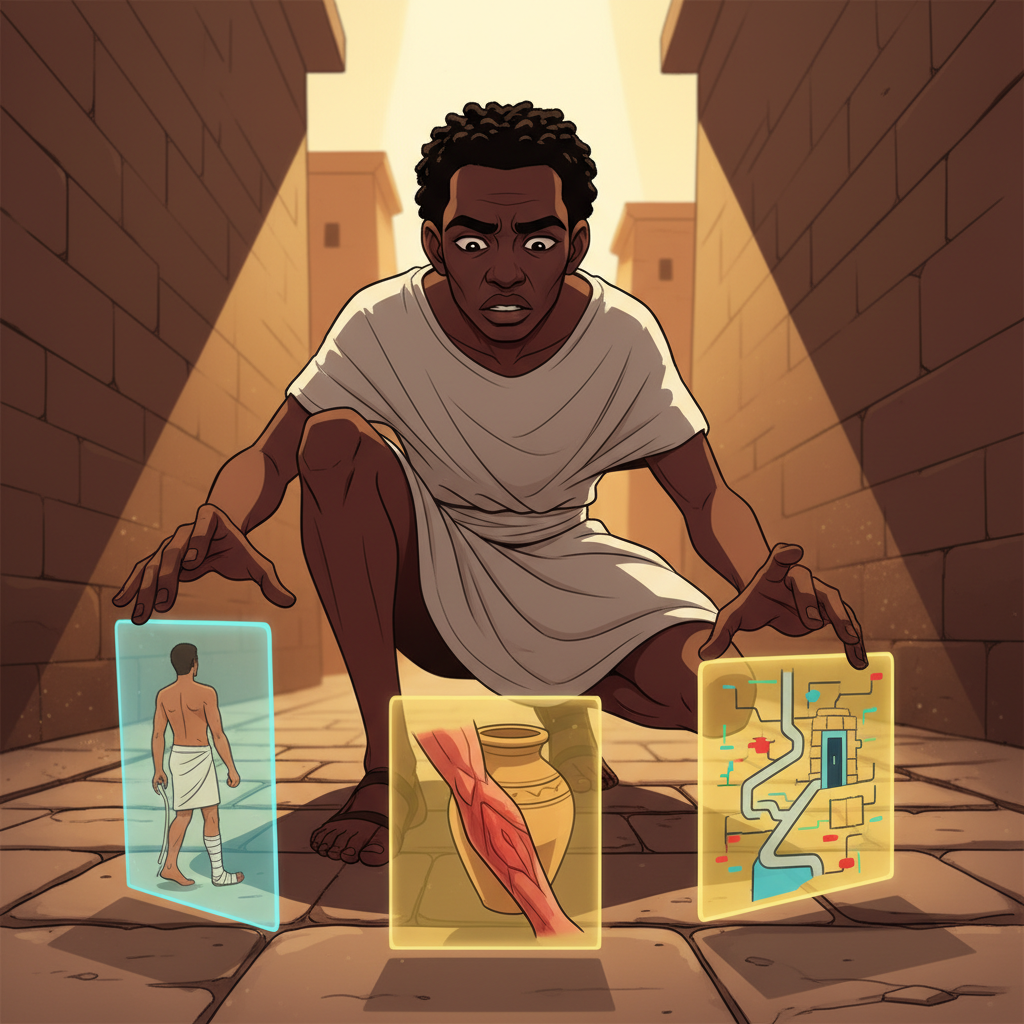
Now Nefermaat had a cluster of evidence: the hidden alley, the limping man, the burn treated two days after the fire. No single piece was conclusive. Together, they formed a picture that was hard to explain away. But he was not a Medjay. He was not a judge. He was a junior scribe who had been told by the most respected judge in Per-Wadjet that the case was closed and the law required it to stay closed.
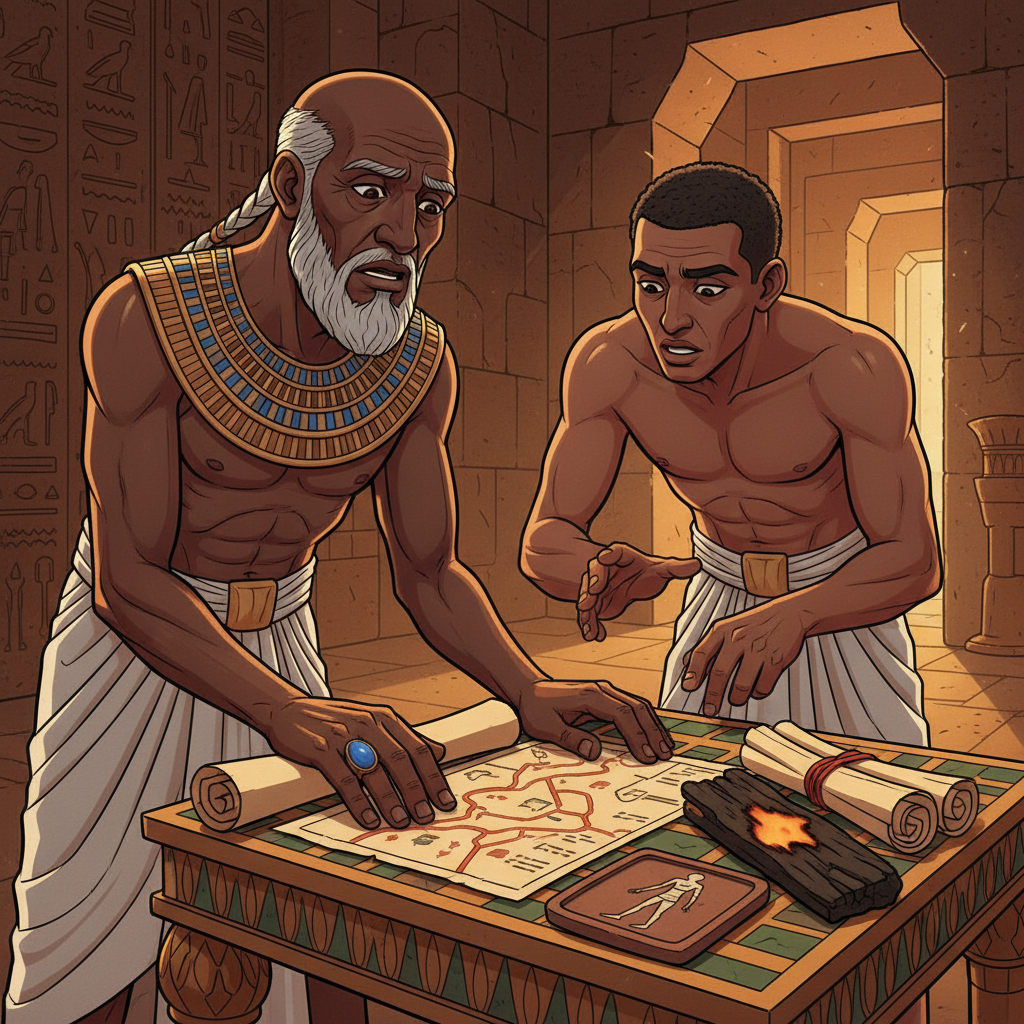
He went back to Meryre one final time. He laid out everything: the alley map, the limp, the healer's record, the burn. Meryre studied the evidence for an hour, his old face growing more troubled with each piece. When he finally spoke, his voice was heavy. "This changes things. A burn on the leg, consistent with the fire, treated two days later and attributed to his own kiln — that is physical evidence. Combined with the alley route and the identified limp, this may meet the threshold for reopening."

He looked at Nefermaat with something that was not quite admiration and not quite sorrow. "You have done something that the court could not do. You refused to accept that the story was finished. That took courage — because I told you to stop, and you did not." He paused. "But I want you to understand something. If this case is reopened and Userhet is convicted, it will be because you, a junior scribe with no authority, chose to keep digging when the system told you to stop. The system was not wrong to acquit based on the evidence it had. You were not wrong to find more evidence. Both things are true."

The case was reopened. New evidence was presented. Userhet's advocate fought fiercely, but the burn evidence — physical, documented, contemporaneous — was devastating. Combined with the alley route and the limping witness identification, the case that had been circumstantial became compelling. Userhet was convicted and sentenced: full restitution of Amenemhat's losses, the rebuilding of the workshop at Userhet's expense, two years of supervised labor, and permanent loss of his right to operate a pottery workshop within the district.
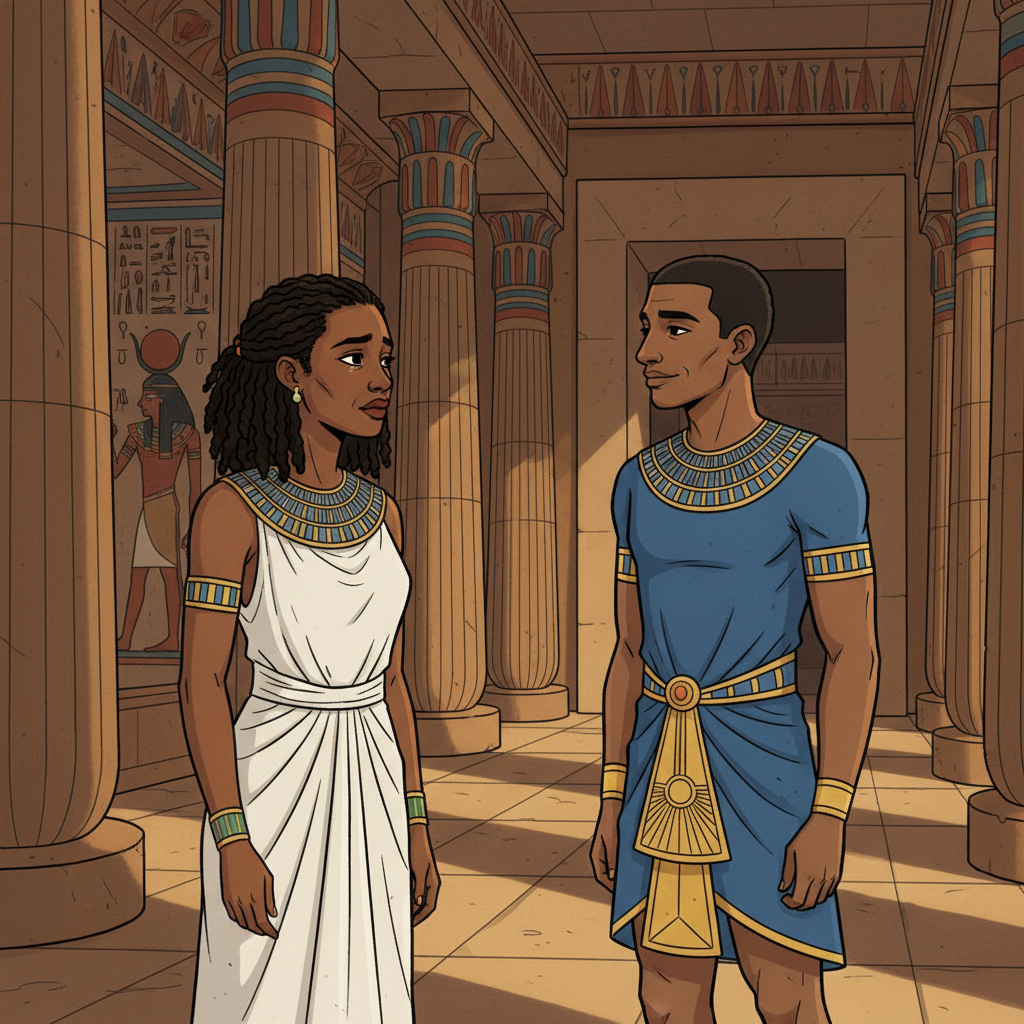
Amenemhat's wife came to Nefermaat after the verdict. She stood in the corridor outside the kenbet chamber and looked at him with eyes that held twelve weeks of grief and three hours of relief. "I thought justice had abandoned us," she said. "When the court said he was free, I felt the world tilt. Not because the law was wrong — I understood that the evidence was not enough. But because the TRUTH was not enough. The truth was there, and the law could not see it."

"The law saw what was presented to it," Nefermaat said. "It could not see what was hidden." "And you found what was hidden." "I found more evidence. Someone else might have found different evidence, or none at all. Justice is not guaranteed, Nefertiti. It depends on people who refuse to stop looking." She touched his ink-stained hand. "Then justice depends on people like you."
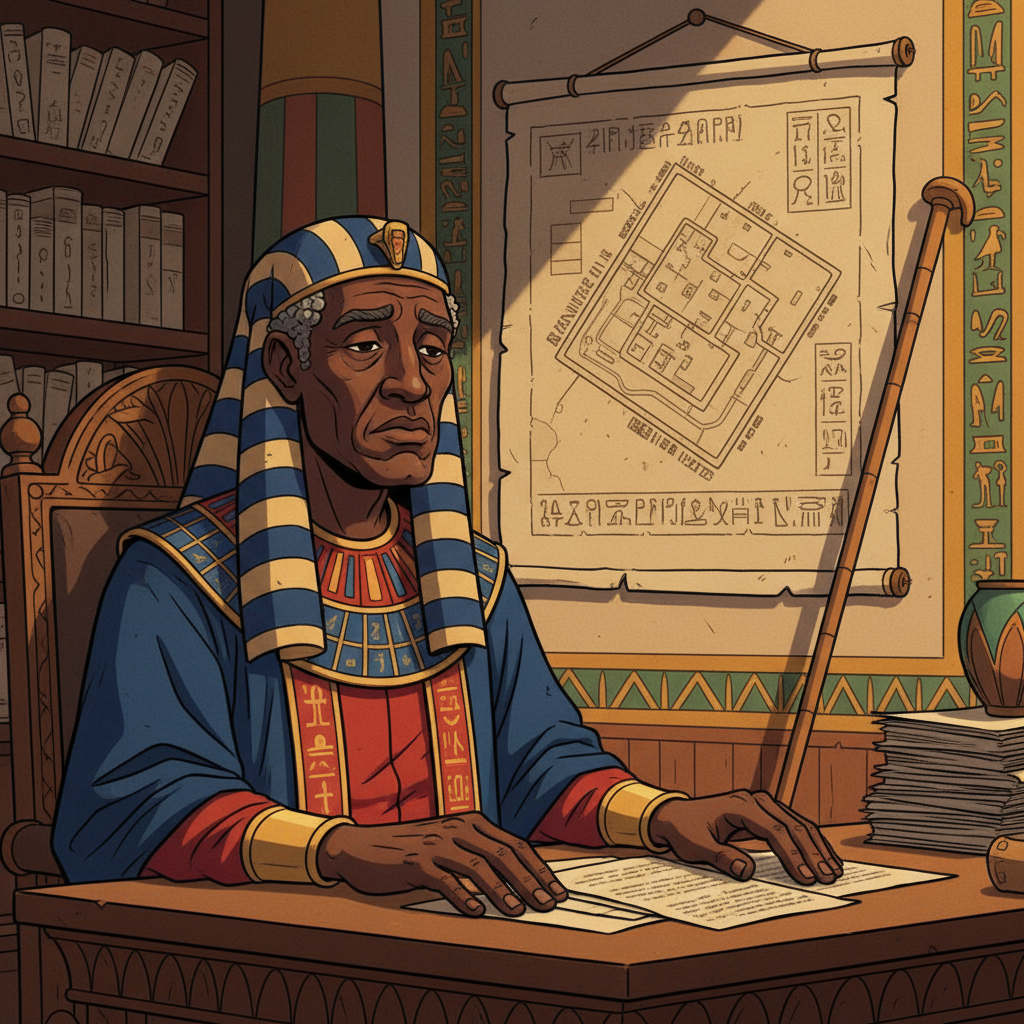
Nefermaat carried the weight of this case for the rest of his career. He became the chief record-keeper of the kenbet, and later a judge himself. He was known for two things: his absolute respect for legal procedure — he never cut corners, never bent rules, never allowed popular anger to substitute for evidence — and his insistence that a case was never truly closed as long as truth remained undiscovered. He kept a copy of the alley map on his chamber wall until the day he retired.

When young scribes asked him about the case, he always said the same thing: "The law that freed Userhet was not broken. It was working exactly as designed — protecting the accused from conviction without proof. That is a good law. A necessary law. A law I would not change." He would pause, and his careful eyes would grow distant. "But a good law is not the same as complete justice. The law is a tool. It needs human hands to hold it and human eyes to see what it cannot. When the system reaches its limit, someone must step beyond the system — not to break it, but to complete it."
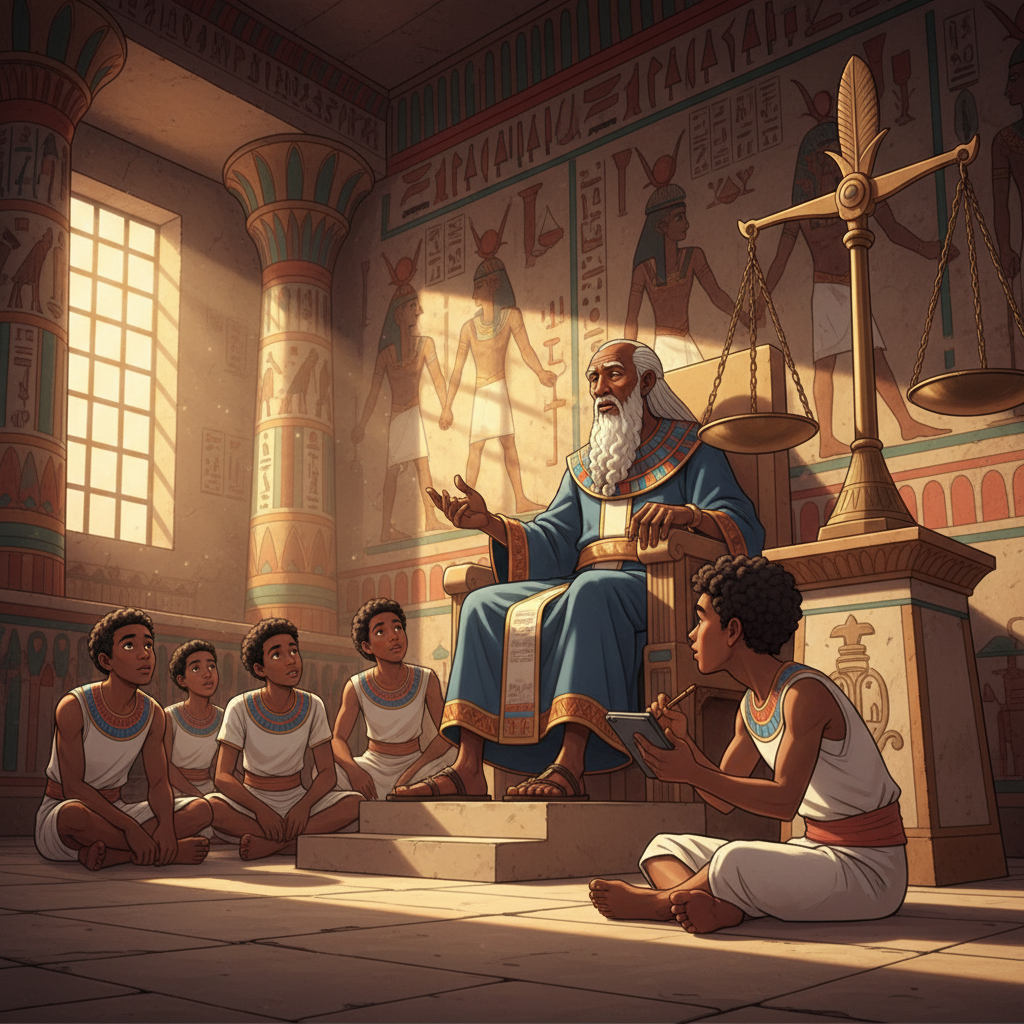
He would look at the young scribes with their ink-stained fingers and their eager faces, and he would say the thing that stayed with all of them long after they left his chamber: "The Scale of Maat is not automatic. It does not weigh itself. Someone must place the evidence on it. Someone must look for the evidence that is missing. Someone must have the courage to say: this is not enough. There is more truth to be found. That someone is you. Not because you are a judge or a Medjay or a priest. Because you are a scribe. Because you are a keeper of truth. And truth does not end when the court adjourns. Truth waits."