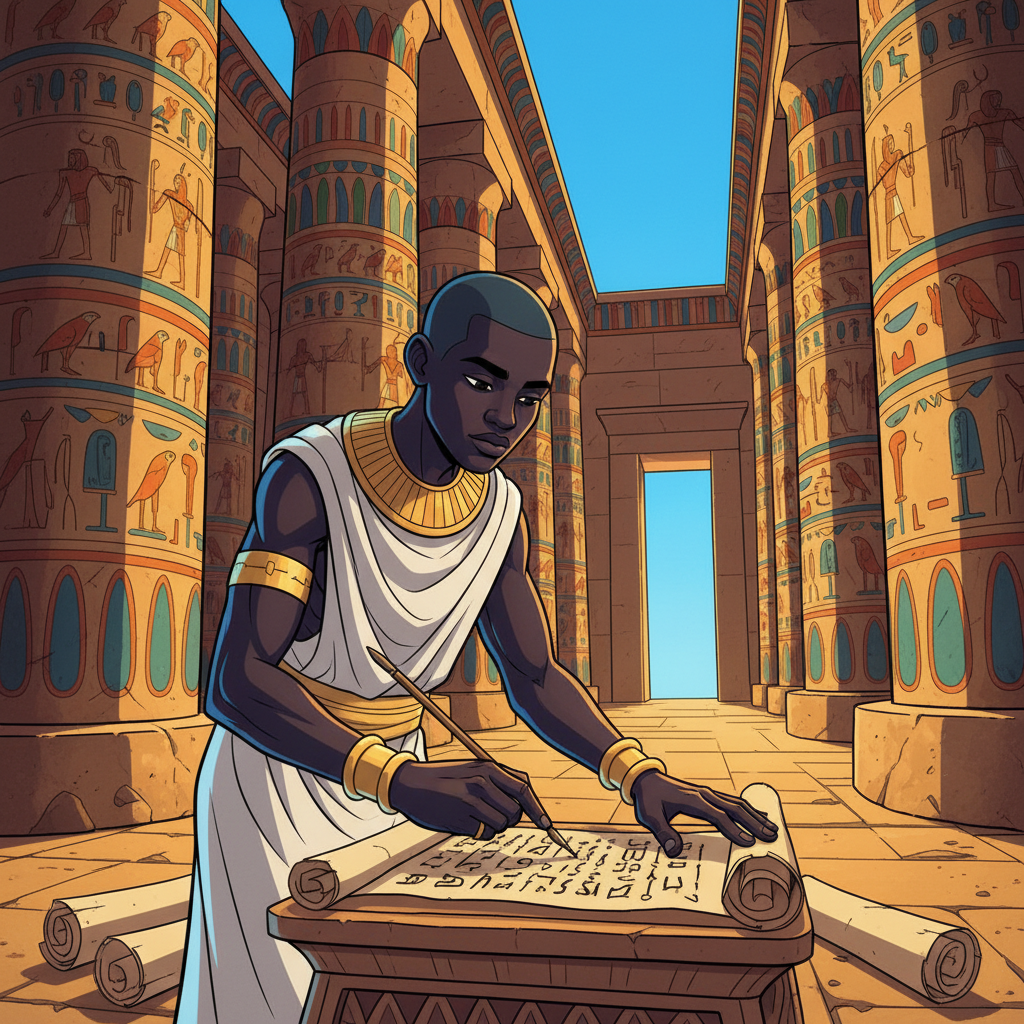
Amenhotep was a young student at the great per ankh in Waset, the grandest house of knowledge in all of kemet. His ebony skin was dusted with papyrus fiber from a long morning of sorting scrolls. The shelves stretched in every direction, holding hundreds of thousands of writings from across the known world. The per ankh was attached to the great temple of Ipet-Isut, whose towering stone pylons rose above the city like arms reaching toward the sky. Students called it the heart of kemet, because just as the heart pumps life through the body, this place pumped knowledge outward to every corner of the land. Amenhotep felt the weight of that purpose every time he walked through its doors.
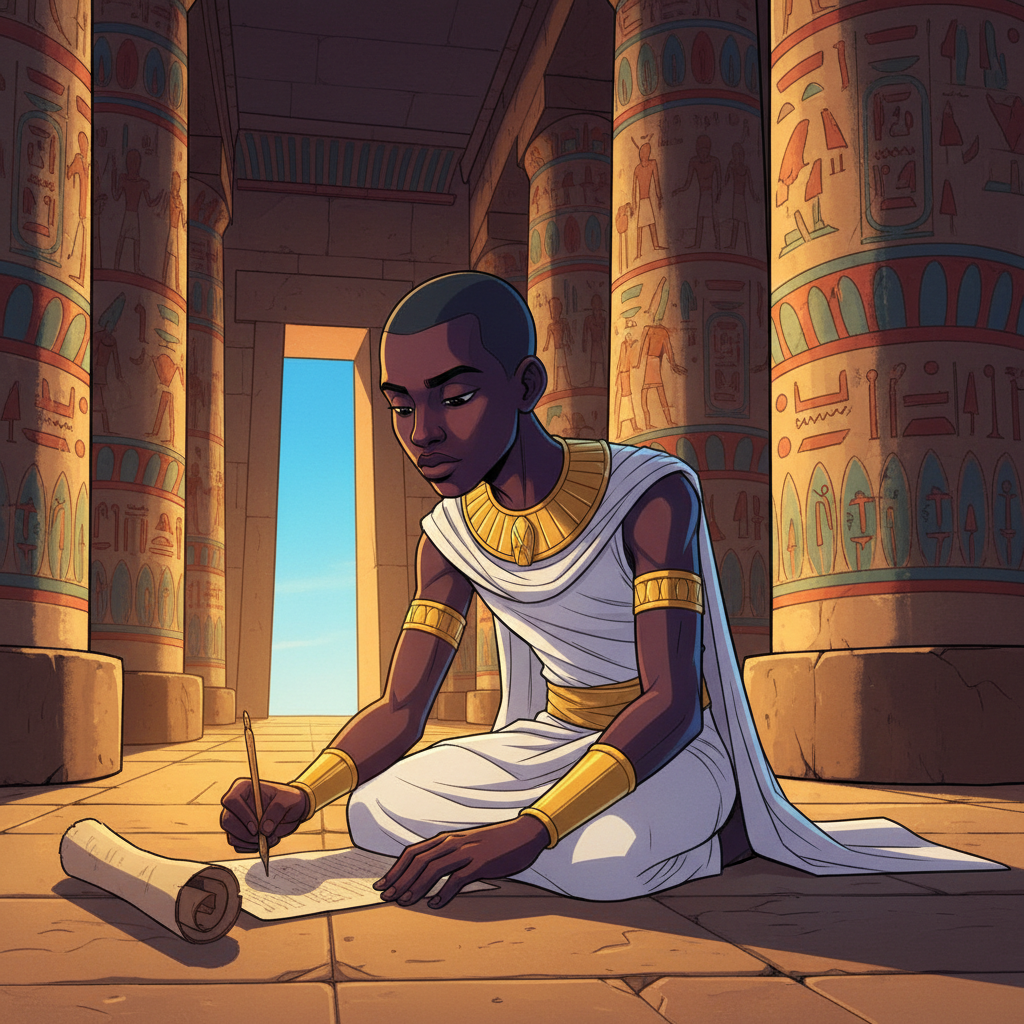
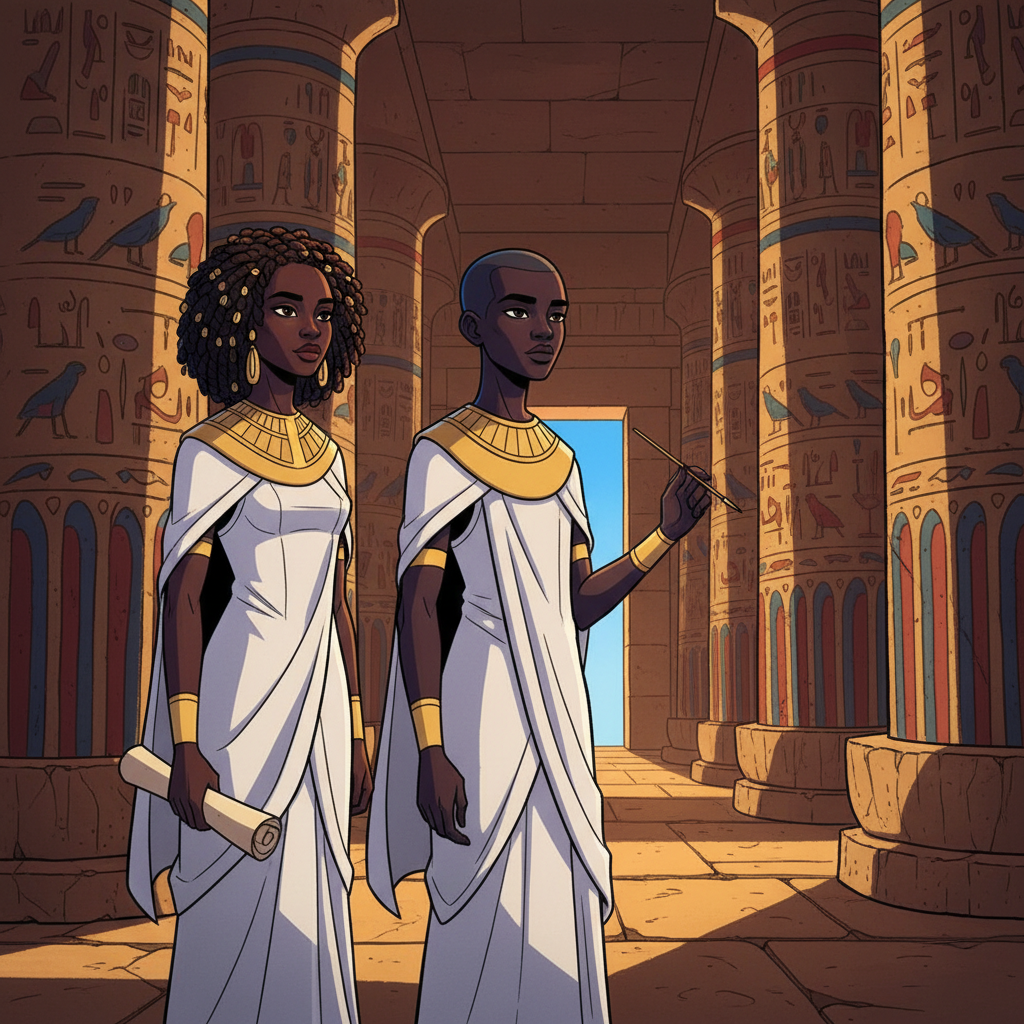
His teacher, a deep brown-skinned woman named Merit, was a master scribe. She had studied at the per ankh since she was younger than Amenhotep, and now her reputation stretched far beyond the walls of Waset. Physicians, astronomers, and priests all sought her counsel. "This scroll came from healers in Kush," she said, unrolling one carefully. "And this one holds mathematics from scholars who studied the movements of the nile. Knowledge has no homeland — it belongs to all who seek it." Her dark fingers moved across the papyrus with the gentleness of someone touching something alive.
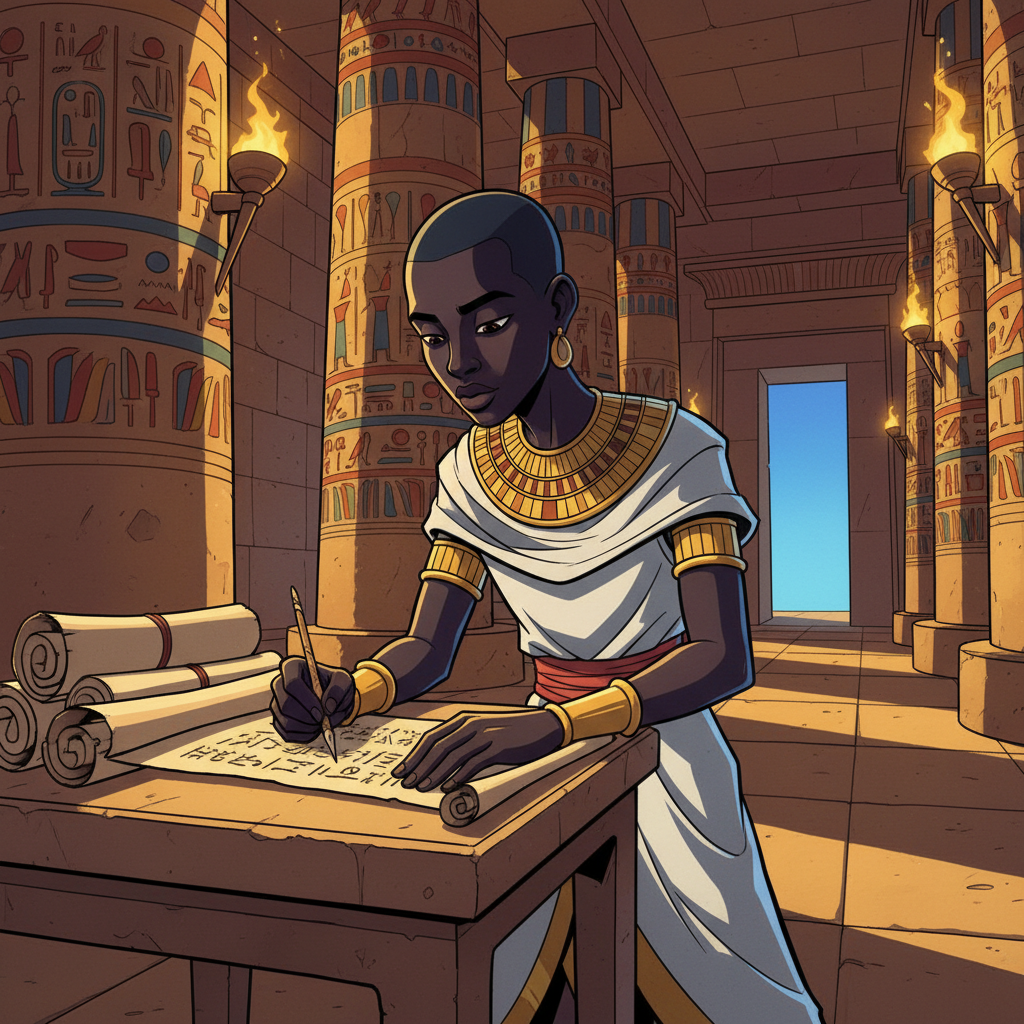
Each morning before lessons began, Merit led Amenhotep through the rows of the great library. Cedar shelves lined the walls from floor to ceiling, and clay jars held rolled scrolls organized by subject. One section held writings on medicine. Another held star charts. A third held the collected wisdom of Kemet's legal traditions stretching back thousands of years. "A library is not just a building full of scrolls," Merit told him, her deep brown eyes scanning the shelves with pride. "It is the memory of an entire civilization. Without it, every generation would have to start over, learning everything from the beginning. That is why the per ankh is called the House of Life — because knowledge is life itself."
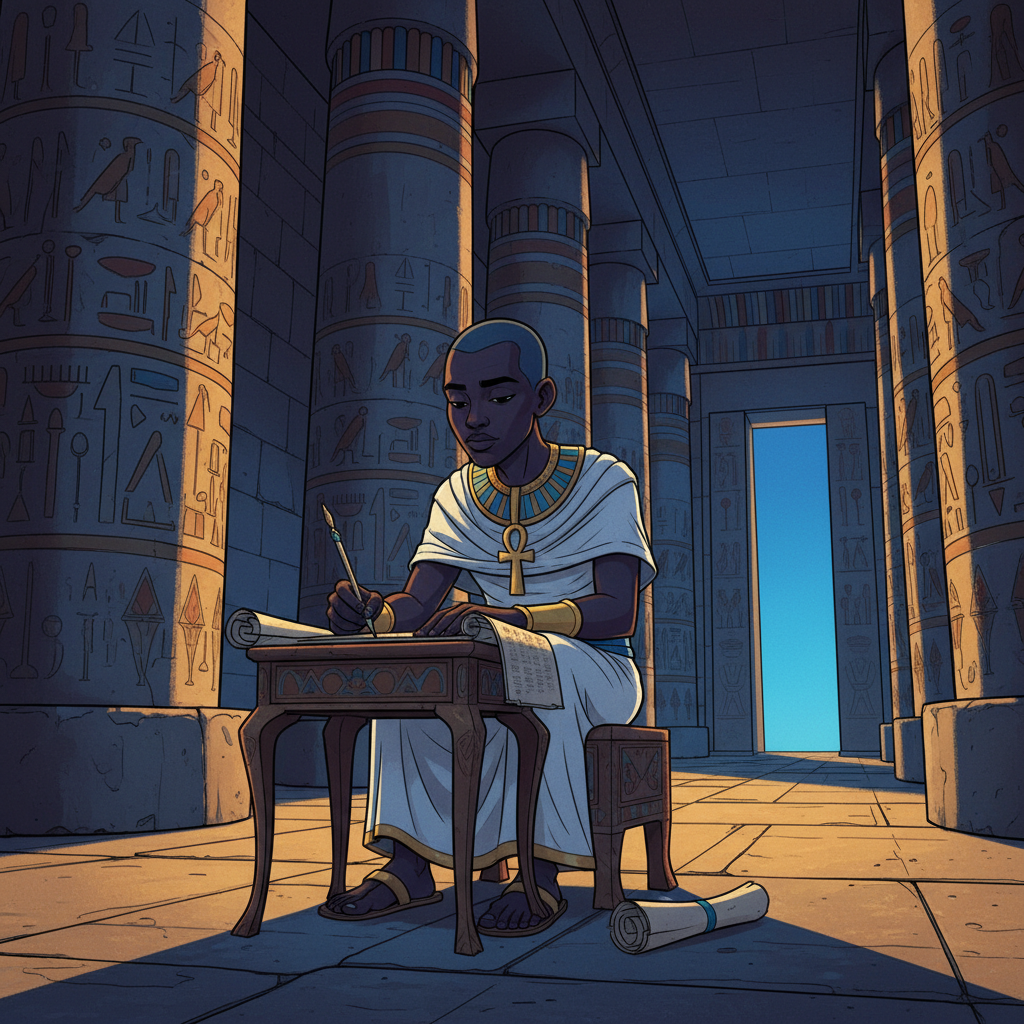
Amenhotep's daily work began with preparing his tools. He ground his own ink each morning — black ink from soot mixed with gum arabic for the main text, and red ink from ochre for headings and important words. He shaped his reed pens by hammering the tips until they frayed into fine brushes, then trimmed them with a copper blade. Merit watched him prepare his palette. "A scribe's tools are sacred," she said. "Djehuti, the neter of wisdom, invented writing itself. Every time you pick up your pen, you are continuing a tradition that stretches back to the beginning of civilization. Respect your tools, and they will serve the truth."
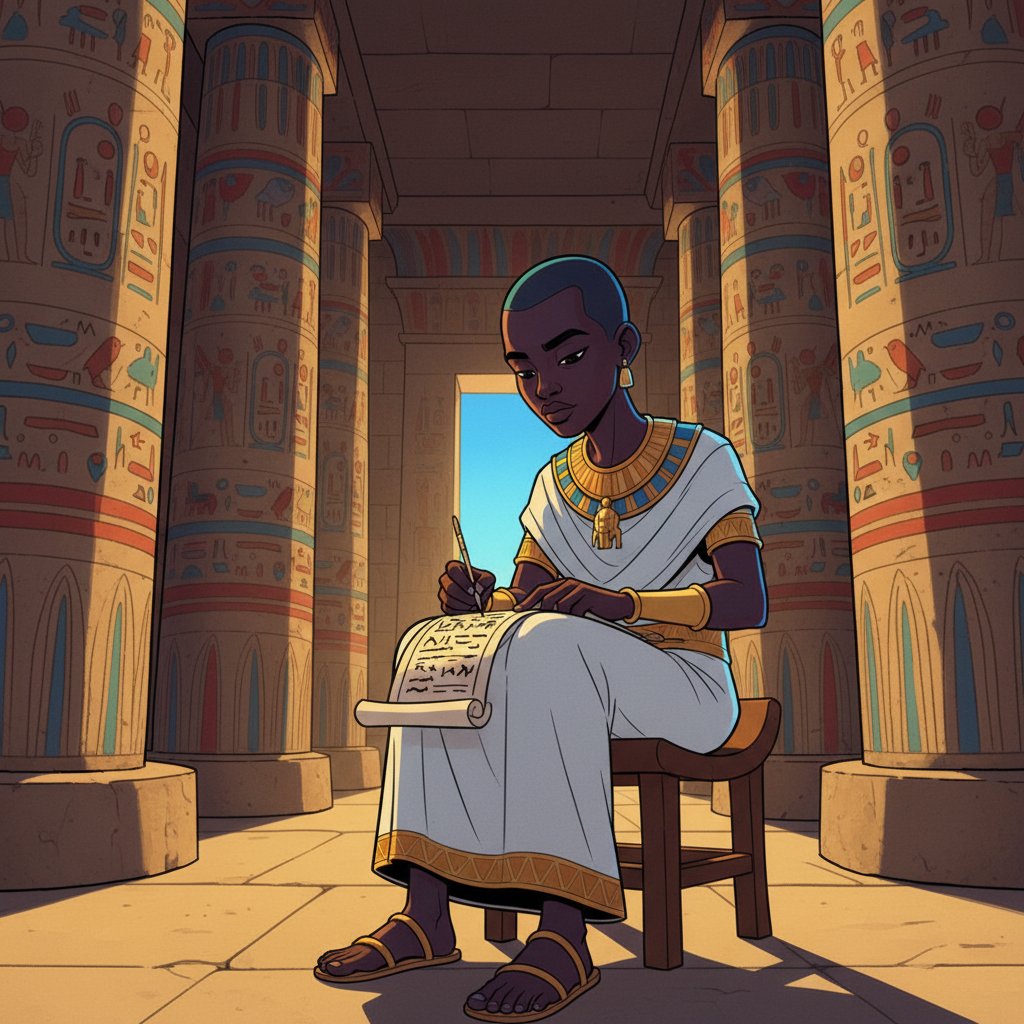
Amenhotep's main job was to copy aging scrolls onto fresh papyrus so the words would survive another thousand years. Some of the scrolls he copied were so old that the papyrus crumbled at the edges when he unrolled them. The ink had faded to a pale brown whisper. But the words were still there, waiting to be preserved. Each hieroglyph he painted was an act of preservation. "A scribe's hand holds the future," Merit told him. "What we write today, children will read long after we return to the west." By "the west," she meant the afterlife, where the sun set each evening and where the ancestors dwelled in peace.
One afternoon, Merit taught Amenhotep how papyrus itself was made. She took him to the marshes along the nile where tall green reeds grew higher than a man's head. Workers with dark glistening skin harvested the stalks and carried them in bundles to the workshop. "Watch carefully," Merit said. The workers sliced the inner pith of the reeds into thin strips, then laid them in two layers — one horizontal, one vertical. They coated the layers with a thin vegetable gum and pounded them flat with wooden mallets. After drying for days under heavy stones, the result was a smooth, pale surface perfect for writing. "Every sheet of papyrus begins in the mud of the nile," Merit said. "Truth itself grows from the earth."
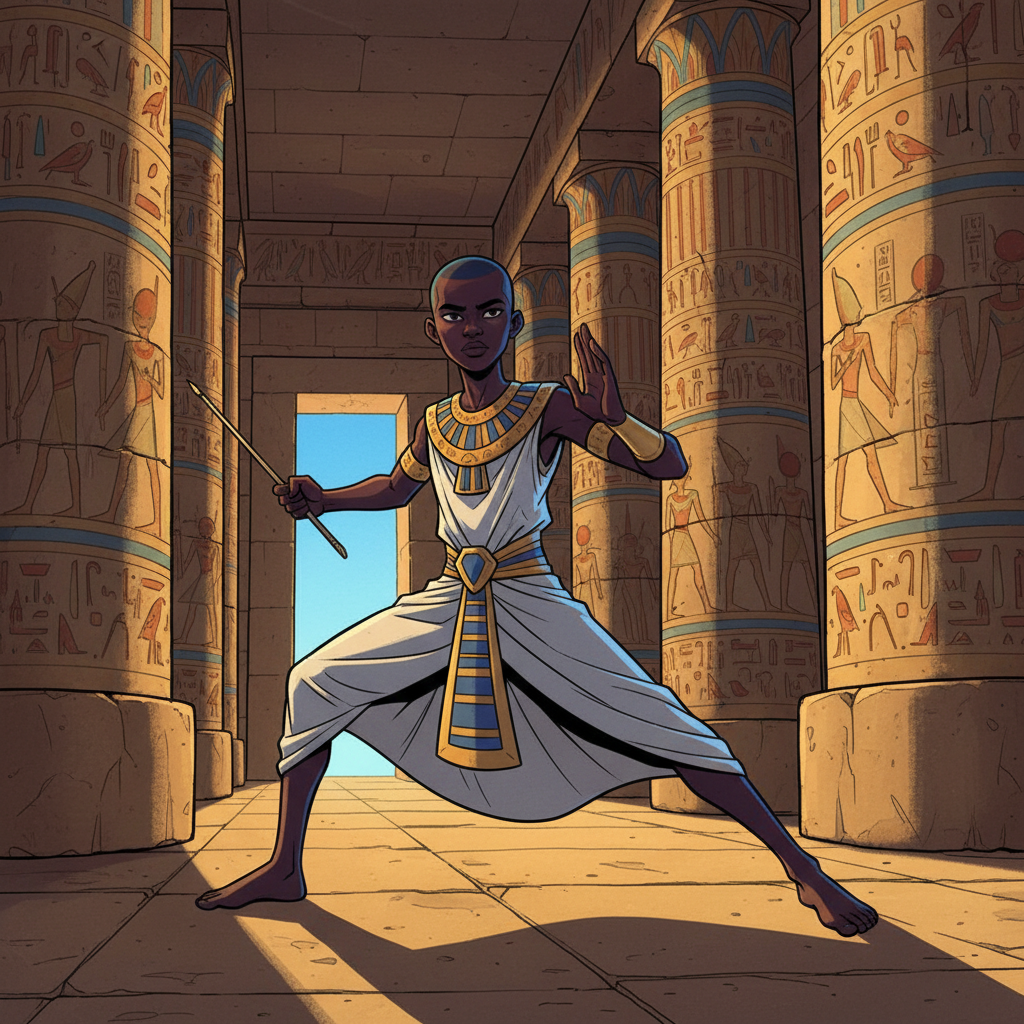
Amenhotep learned that the per ankh was not just a library. It was also a school, a research center, and a scriptorium where scribes produced new copies of important texts. Students studied medicine, astronomy, mathematics, law, and the sacred arts. Healers mixed remedies in one room while astronomers mapped the stars in another. The youngest students practiced their writing on ostraca — broken pieces of pottery or flat chips of limestone — because papyrus was far too expensive to waste on beginners. Only after years of training did a student earn the right to write on papyrus. Amenhotep remembered the thrill of the first time Merit placed a fresh sheet before him and said, "You are ready."
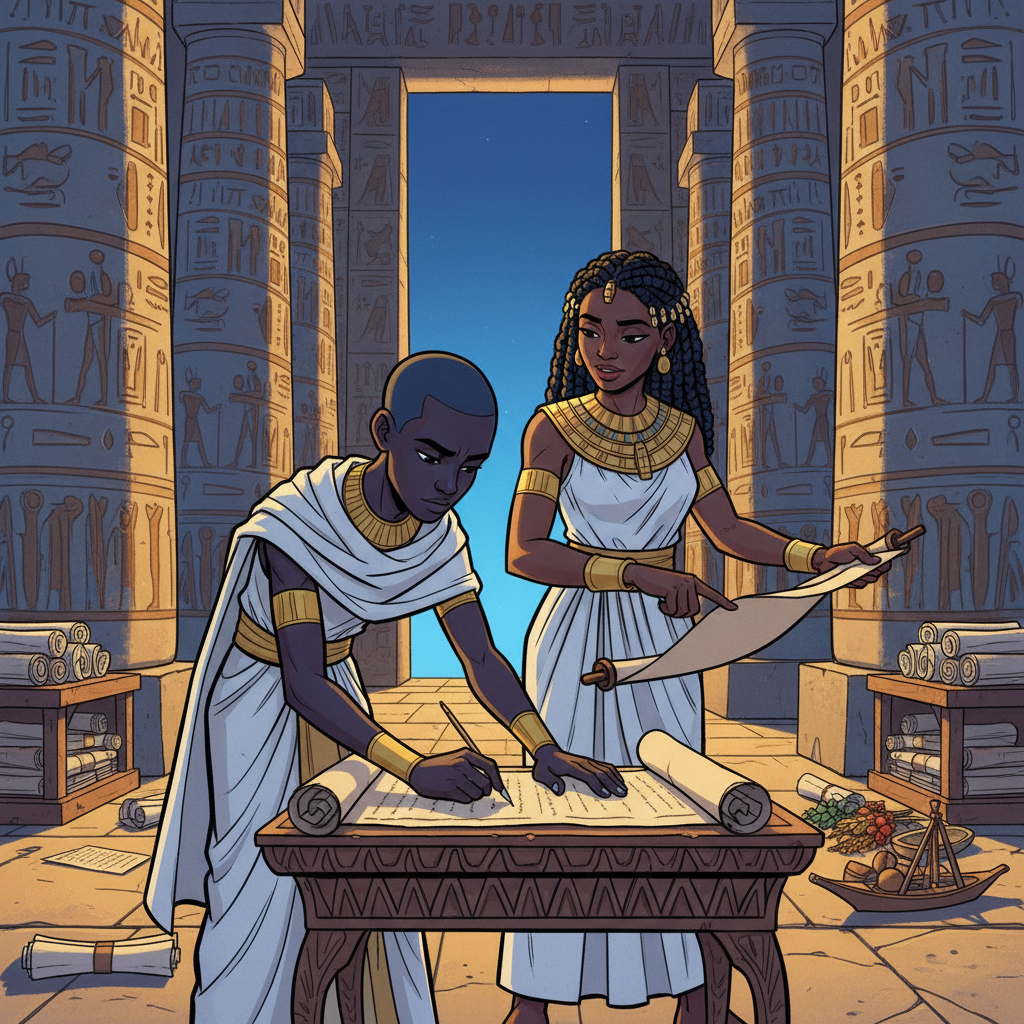
Travelers brought new scrolls every season — star charts from astronomers in distant lands, healing recipes from physicians in Kush, farming methods developed along the banks of rivers Amenhotep had never seen, and stories from peoples whose languages he did not speak. The per ankh welcomed knowledge from every land and every people. Scribes who had mastered foreign tongues translated these writings into the medu neter so nothing would be lost. This was maat in its highest form: the gathering and protection of truth. Merit said that a single scroll, properly preserved, could teach a thousand generations. But a scroll destroyed was a wound in the memory of the world that could never fully heal.
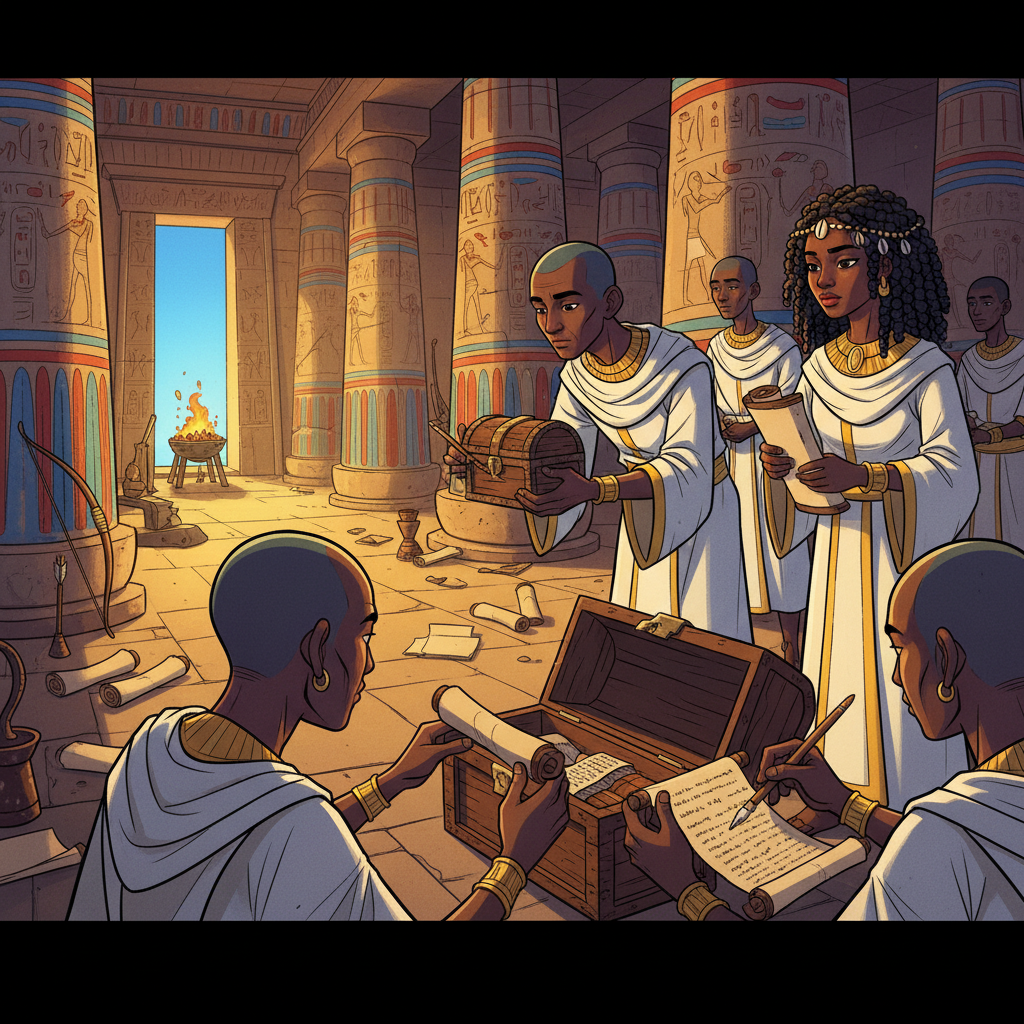
One evening, a caravan arrived from the south carrying a wooden chest sealed with wax. Inside were scrolls from the kingdom of Kush describing a new method for smelting iron. The head of the per ankh, an elderly man with deep ebony skin and a shaved head, received the scrolls with both hands and bowed his head in gratitude. "Knowledge is the greatest gift one nation can offer another," he said. Amenhotep watched as scribes carefully unrolled the scrolls, examined the writing, and began the work of translation and copying. Within a month, the wisdom of Kushite iron-makers would be available to every student in the per ankh. This was how civilizations grew — not through conquest, but through the sharing of what each people had learned.
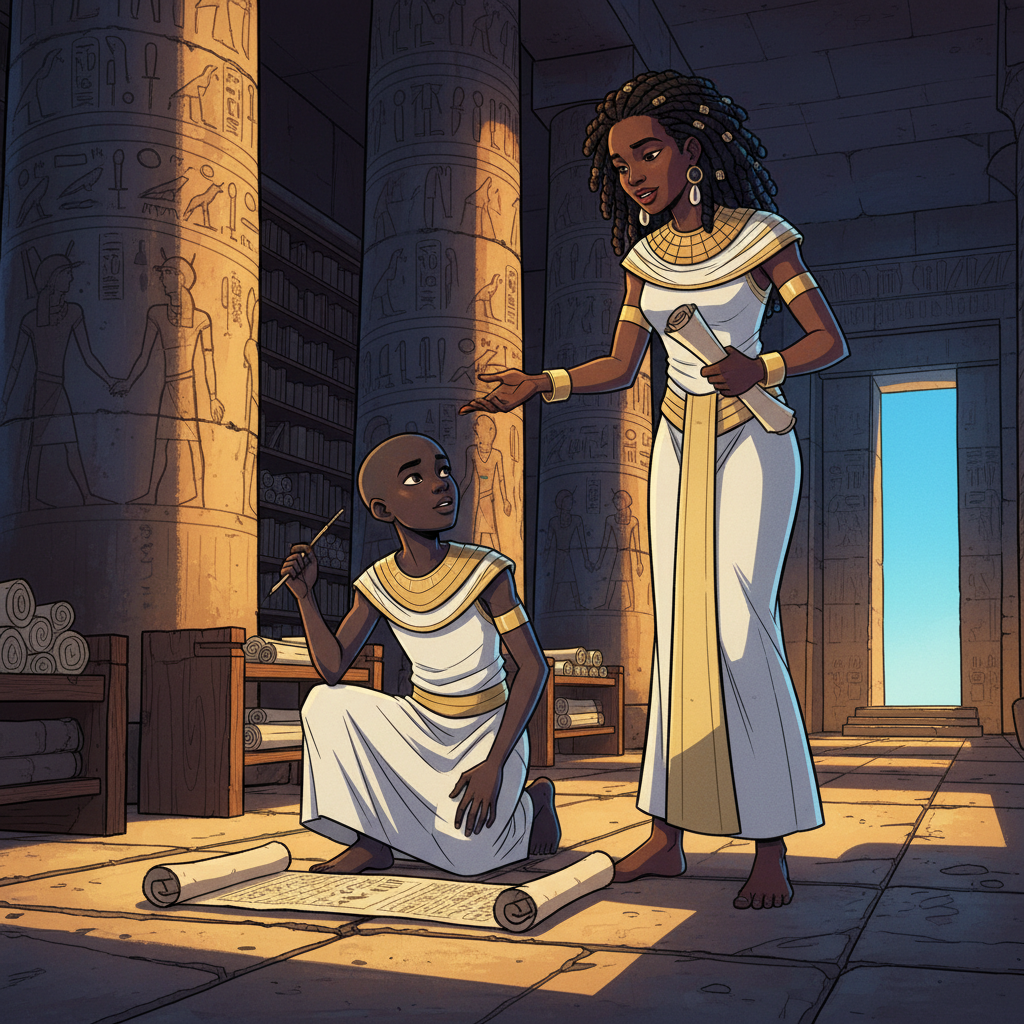
Merit told Amenhotep that scholars from many lands traveled to kemet to study at the per ankh. "Men and women come from across the great sea," she said. "From the lands the Greeks call their own, from the islands, from places whose names we can barely pronounce. They sit where you sit. They study the same scrolls. And when they return home, they carry our knowledge with them." Amenhotep thought about this. The mathematics he was copying had been developed by Kemetic scholars over thousands of years. The medicine in these scrolls had been tested and refined by generations of healers with dark hands like his own. "Does it bother you," he asked, "that they take our knowledge to their own lands?" Merit shook her head slowly. "Knowledge shared is knowledge multiplied. Knowledge hoarded is knowledge that dies."
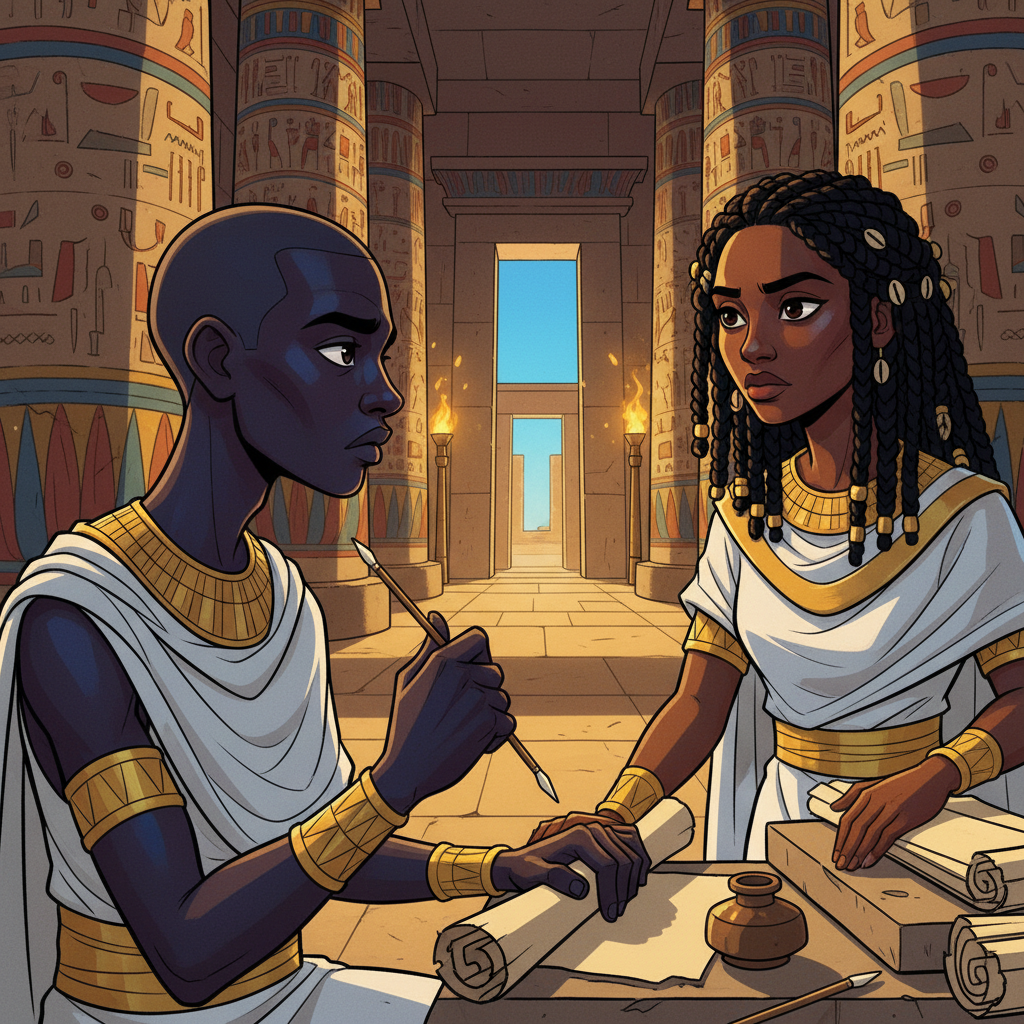
"But there are those who fear knowledge," Merit warned one morning, her dark brown eyes serious. She set down her pen and looked directly at Amenhotep. "Throughout history, conquerors have burned libraries and silenced scribes. They destroy what others have learned so they can control what people believe." Amenhotep gripped his brush tighter. "Why would anyone destroy a library?" he asked. "Because a person who can read is a person who can think for themselves," Merit answered. "And a person who thinks for themselves is difficult to control. That is the deepest isfet — not just the destruction of scrolls, but the destruction of the ability to question, to reason, to know. When you silence a scribe, you silence every person who would have read their words."
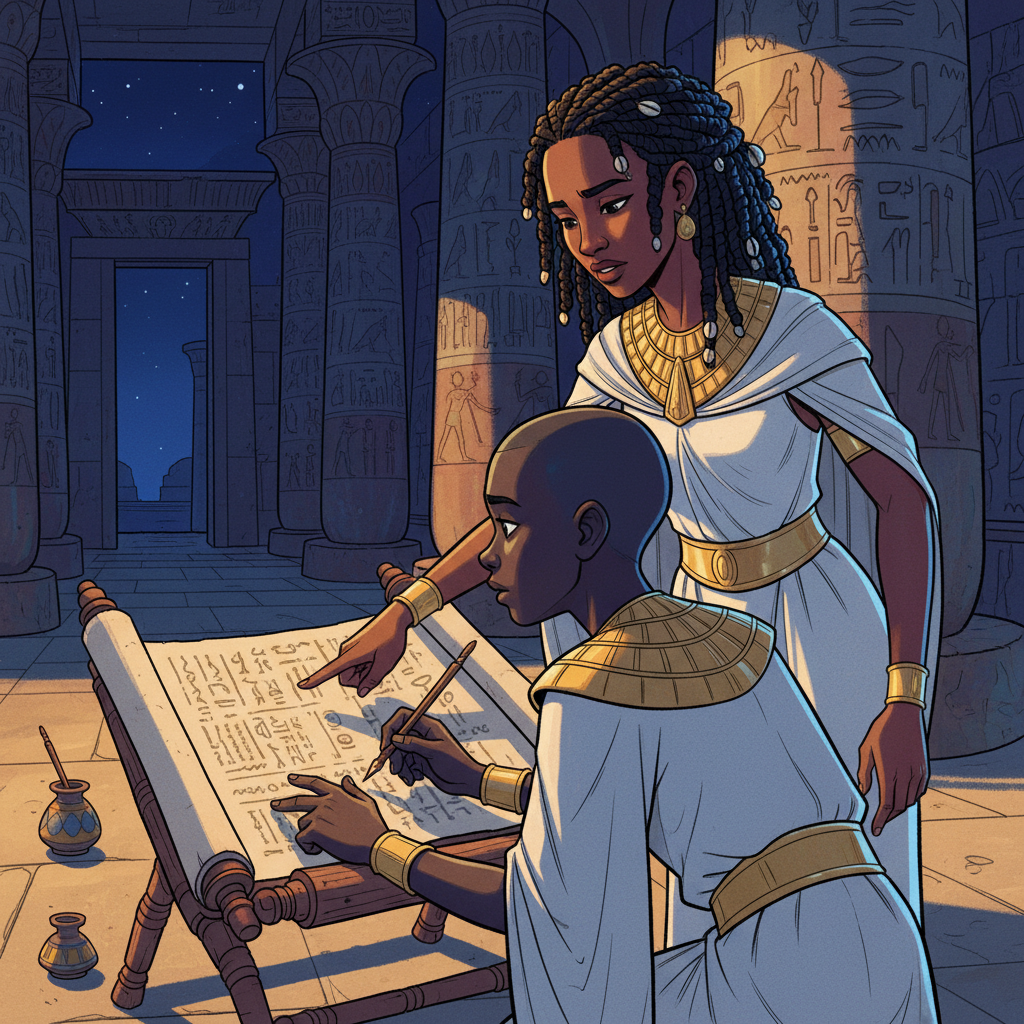
Merit told him the story of a time, long before either of them was born, when invaders from across the sea had tried to burn the great library of a city to the north. Scrolls containing centuries of astronomical observations, medical knowledge, and philosophical writings were reduced to ash in a single night. "Imagine," she said, her voice heavy. "A healer's recipe that could have saved thousands of lives — gone. A star chart that took three generations to complete — gone. The collected poetry of an entire people — gone. Each scroll that burns is a voice silenced forever." She paused, letting the weight of her words settle into the boy's ka. "That is why our work matters, Amenhotep. We are not simply copying words. We are keeping voices alive."
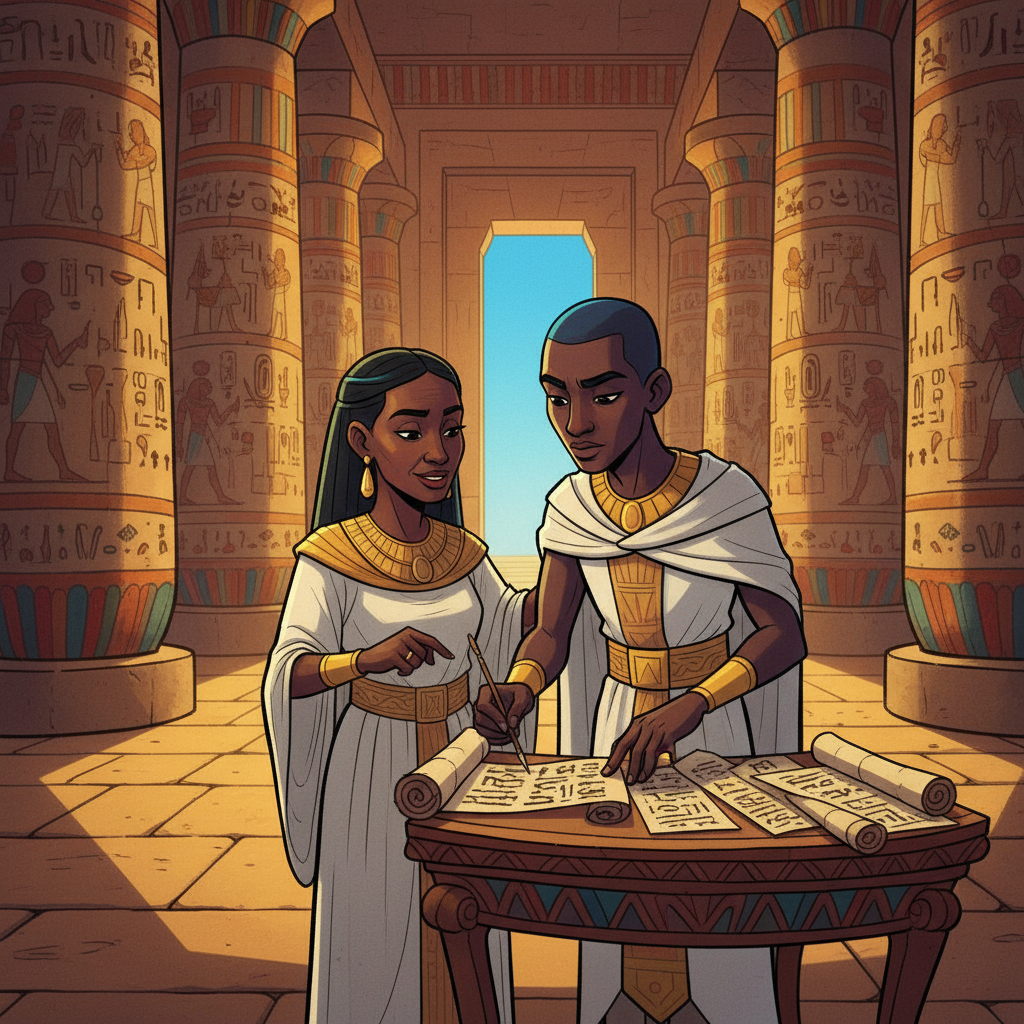
After hearing Merit's warning, Amenhotep began to understand his work differently. Every morning when he sat down at his palette and dipped his reed pen into the black ink, he felt a new sense of purpose flowing through his ka. He was not just a student completing an assignment. He was a guardian of truth. He copied more carefully than ever before. He checked every hieroglyph twice. When he found a scroll whose ink had faded so badly that certain words were barely visible, he brought it to Merit immediately rather than guessing at the missing text. "You are learning," she said, her deep brown face softening into a rare smile. "A scribe who guesses is no better than a scribe who lies. Accuracy is the foundation of maat."
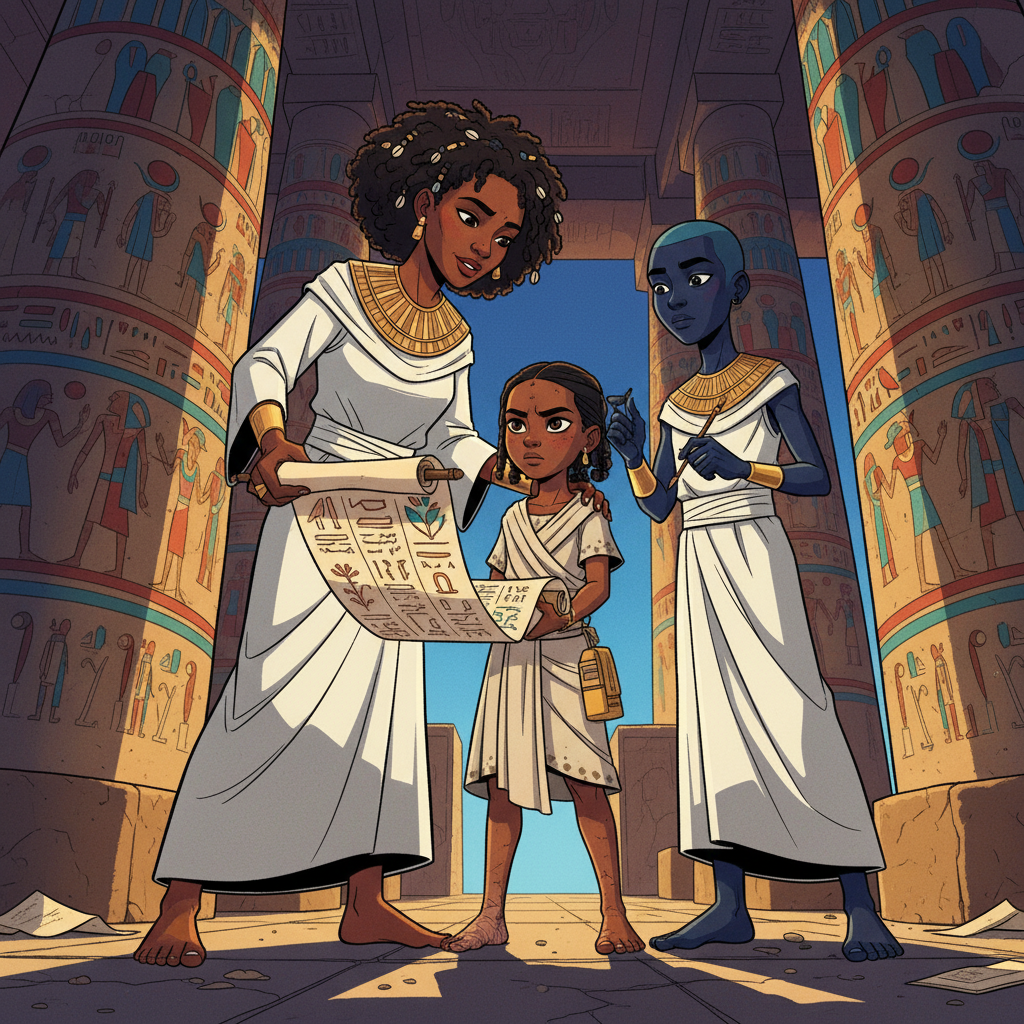
One day, a young girl arrived at the per ankh. Her name was Takhat, and she had traveled alone from a small village three days south along the nile. Her dark skin was dusty from the road, and her feet were blistered, but her eyes were fierce with determination. She carried a single scroll wrapped in linen. "My grandmother was a healer," she told Merit. "Before she returned to the west, she asked me to bring her life's work to the per ankh so it would not be lost." Merit unrolled the scroll carefully. It contained detailed descriptions of healing plants that grew only in the far south — knowledge found nowhere else in the library. Merit placed her hand on Takhat's shoulder. "Your grandmother's wisdom will live here forever. You have done a brave and sacred thing."
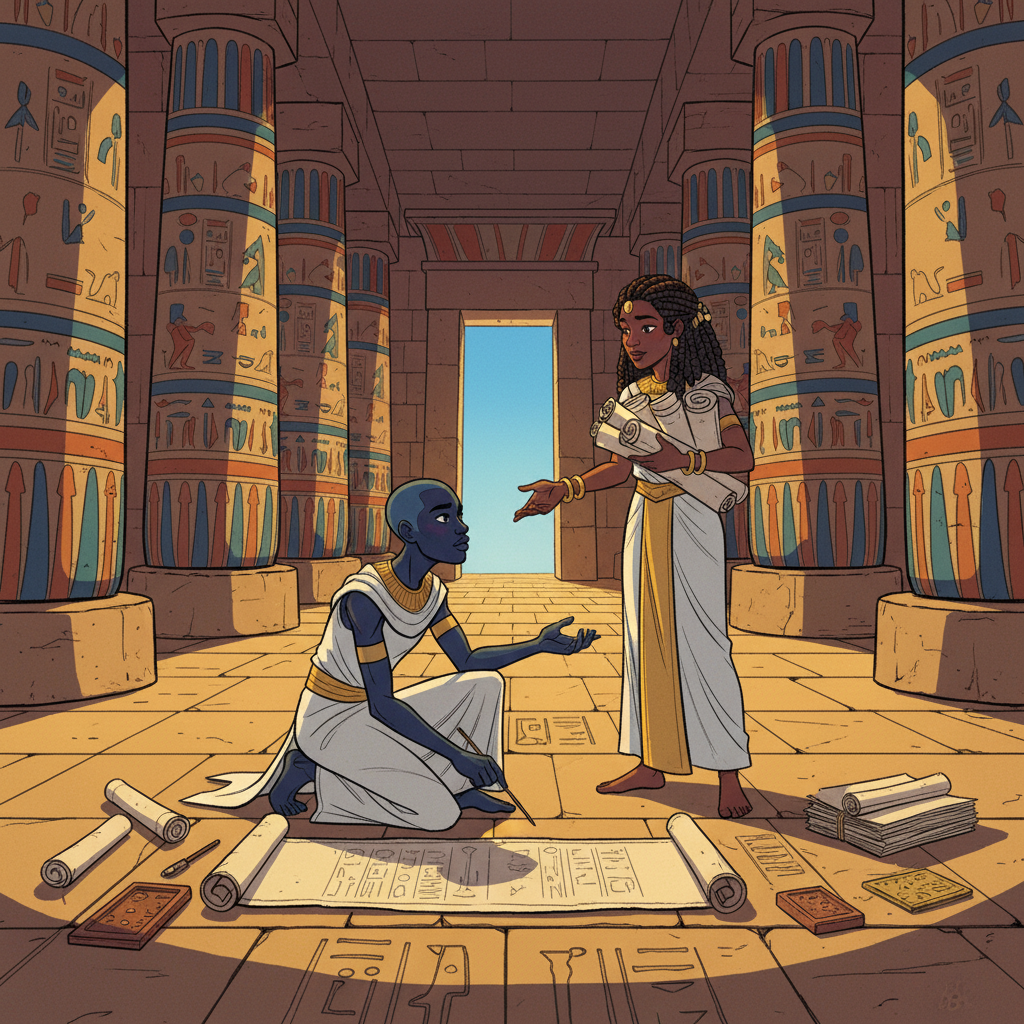
Inspired by Takhat's journey, Amenhotep asked Merit if he could help organize a project to collect knowledge from villages along the nile that had no per ankh of their own. "The farmers know things about the soil that our scholars have never written down," he said. "The fishermen understand the river's moods. The weavers have techniques passed down for generations. If we do not record this wisdom, it will vanish when the elders who carry it return to the west." Merit studied him for a long moment. "You are thinking like a true scribe now," she said. "Knowledge does not only live in great libraries. It lives in the hands of the potter, the songs of the grandmother, the memory of the farmer who reads the sky. Gathering all of it — that is the highest service to maat."
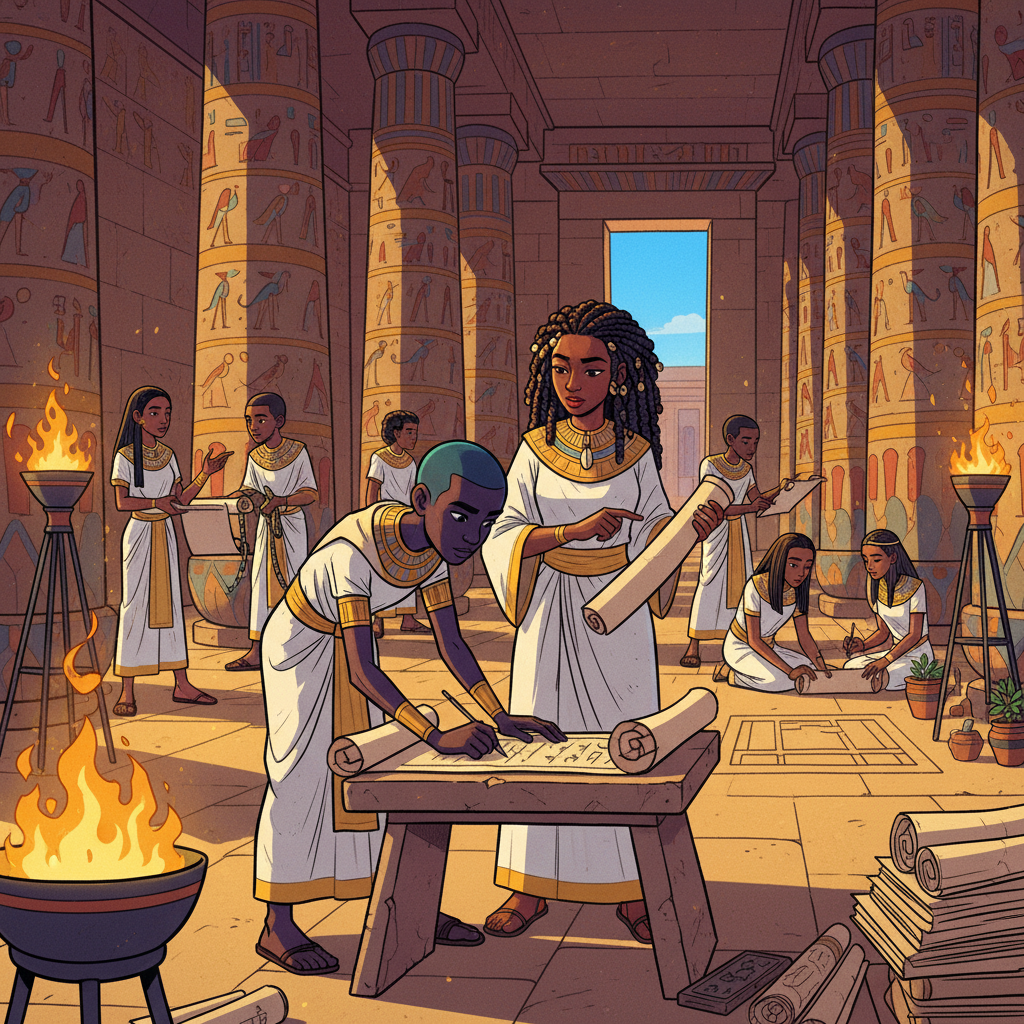
He thought of the ancient library at Waset and how its wisdom had flowed outward to inspire scholars in Greece, Rome, and beyond. Those scholars often studied in kemet before returning to their own lands. Some wrote books that credited kemet's teachings. Others did not. But the knowledge survived regardless, carried in the minds of those who learned it. Knowledge was never created alone — it was built by many hands across many generations. The geometry that helped architects raise great temples began with farmers measuring their fields after the nile's annual flood. The medicine that healed pharaohs started with village healers experimenting with the plants that grew along the riverbanks. Every great discovery stood on the shoulders of countless ordinary people whose names were never recorded.
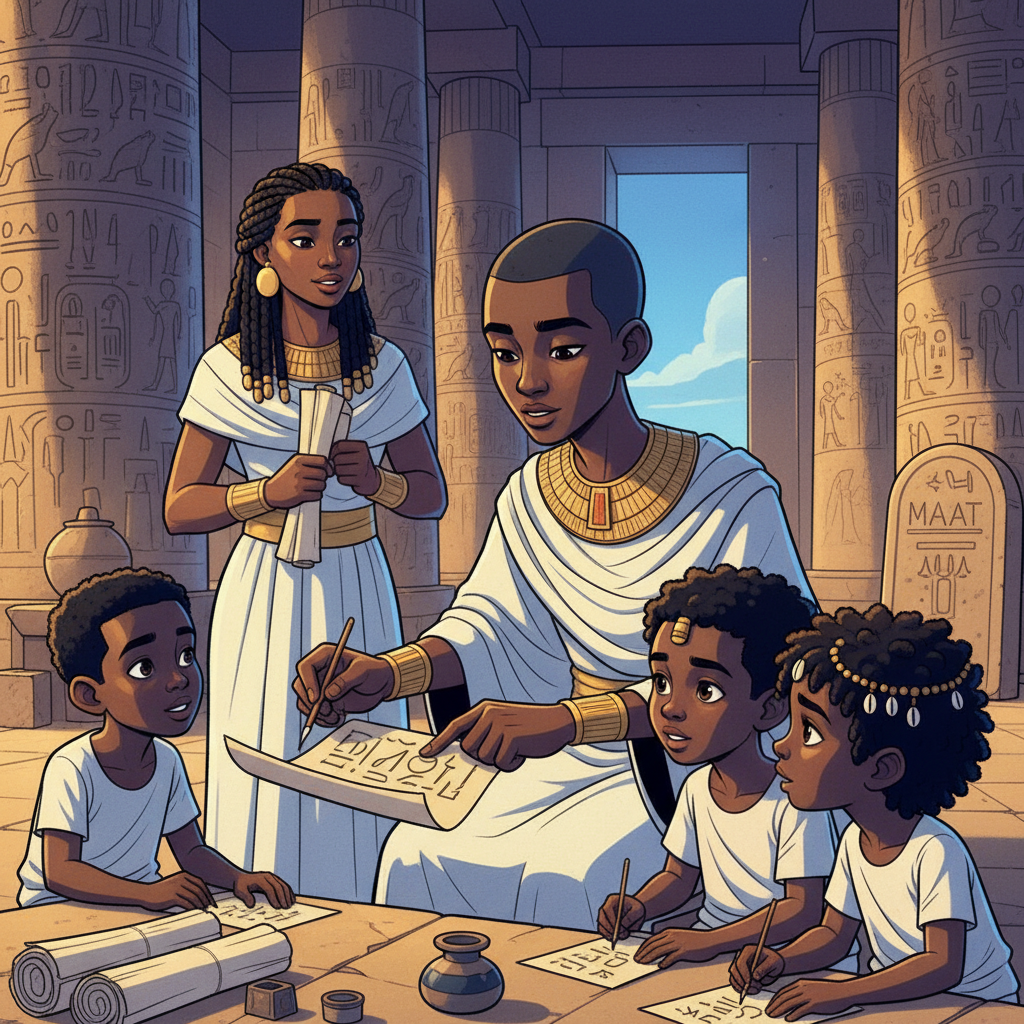
As the years passed, Amenhotep became a master scribe himself. His ebony hands, once clumsy with the reed pen, now moved with the precision and grace that Merit had modeled for him. He took on students of his own — children with dark bright faces and eager minds who reminded him of himself on that first dusty morning in the per ankh. He taught them what Merit had taught him: that a scribe does not simply copy words, but carries the ka of every person who ever wrote or spoke those words. He taught them that maat demands accuracy, patience, and courage — the courage to preserve truth even when powerful people would prefer that truth be forgotten. And he taught them that knowledge belongs to all people, everywhere, for all time.
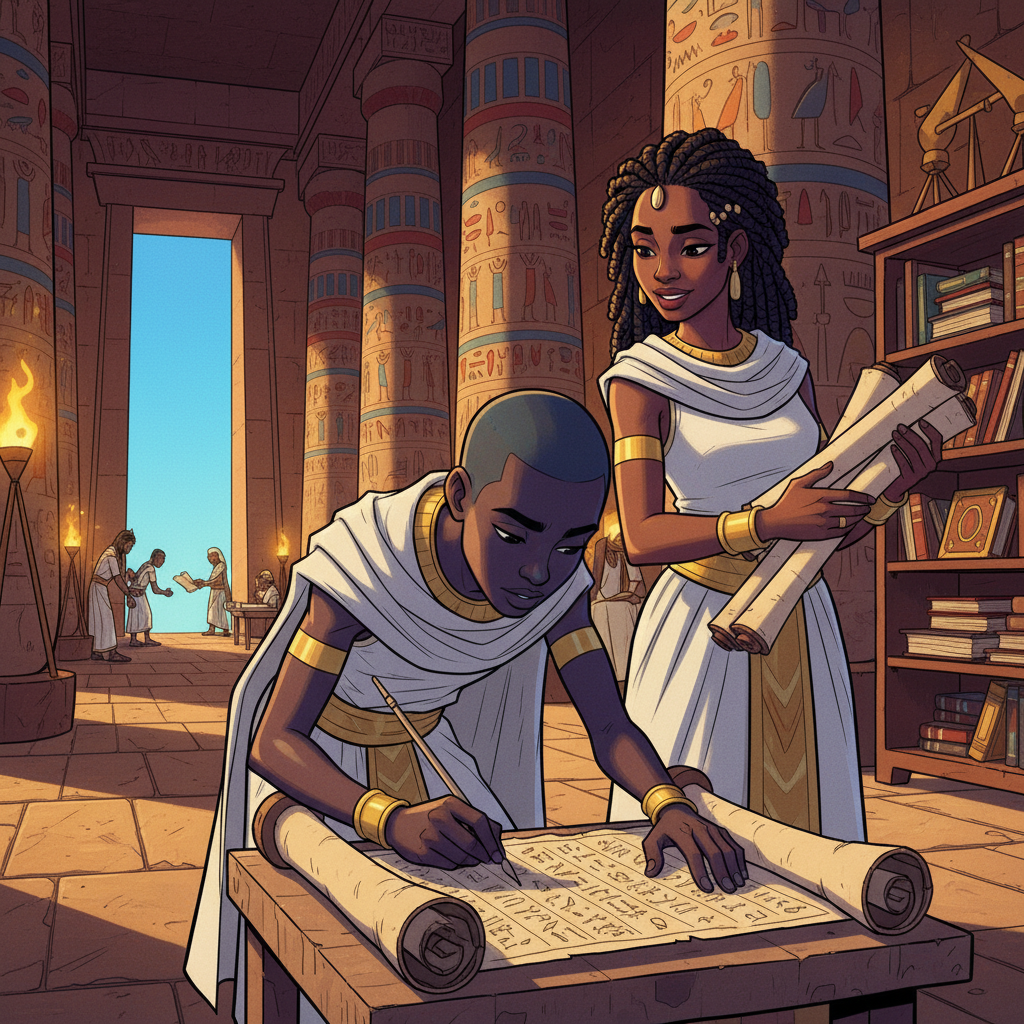
Today, millions of books exist in libraries and digital archives around the world. The writings of ancient kemet have survived not because they were hidden, but because scribes like Amenhotep copied them again and again across thousands of years, passing the truth forward with steady hands and faithful hearts. But some people still try to ban books and hide history. They still fear what happens when people can read, think, and question freely. Every time you protect a story, seek out the truth, or share what you have learned with someone who needs it, you are doing the same sacred work Amenhotep did. You are keeping the per ankh alive. You are fighting isfet with knowledge. And you are living in maat.