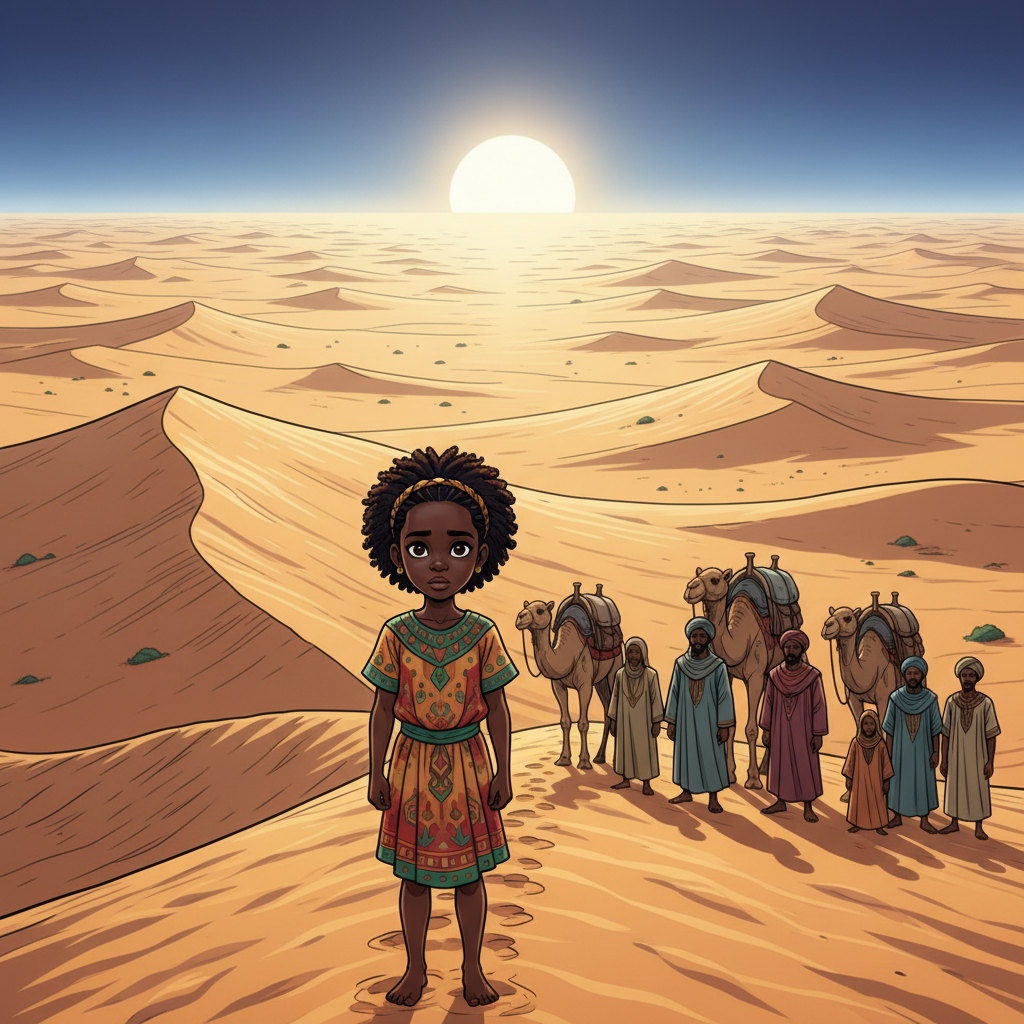
The Sahara stretched before them like an ocean made of sand, vast and shimmering under a sun that burned white at its center and faded to a deep, impossible blue at the edges of the sky. Aminata had heard stories about the great desert all her life — the traders who returned to Niani with cracked lips and sand-scored skin spoke of it with fear and reverence, as if the Sahara were a living thing with moods and appetites. But no story could have prepared her for the reality of standing at its edge and feeling its immensity press against her chest like a physical weight. Aminata was twelve years old, with deep ebony skin that gleamed with shea butter in the fierce sunlight and thick 4C hair that her mother had braided into a crown of tight cornrows woven with thin gold thread. Her dark brown eyes were wide and alert, taking in everything — the color of the sand, the shapes of the dunes, the way the heat made the air ripple and dance as if the whole world were a reflection in troubled water. She was the daughter of General Farba Tunkara, one of Mansa Musa's most trusted military commanders, and she had begged her father for months to let her join the great pilgrimage.
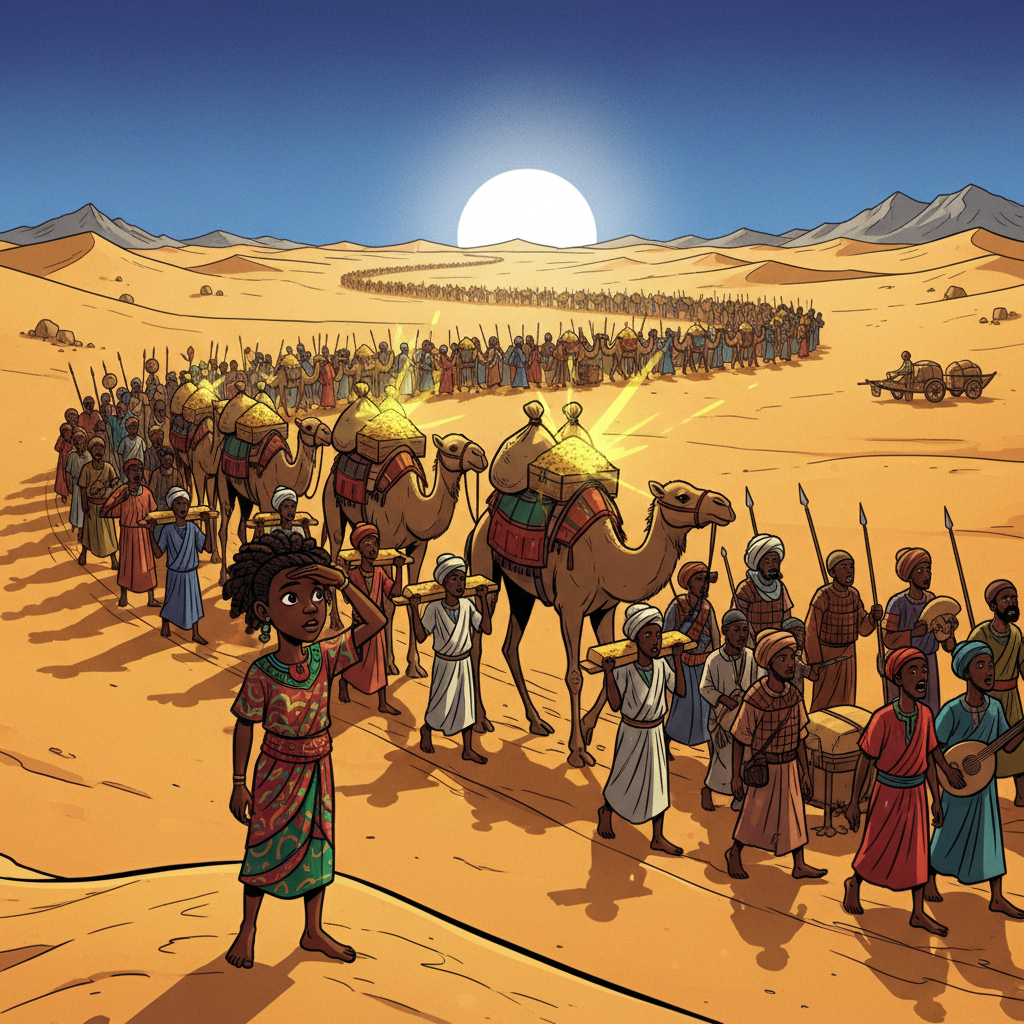
The caravan was unlike anything the world had ever seen. Sixty thousand people stretched behind and before Aminata in a line so long that she could not see either end of it, no matter how she craned her neck or shaded her eyes. There were soldiers in leather armor carrying spears tipped with iron forged in the furnaces of Niani. There were scholars from the great university at Sankoré in Timbuktu, their robes white and their heads wrapped against the sun, carrying precious manuscripts bundled in oiled cloth. There were traders, cooks, servants, musicians, and griots whose voices rose above the shuffle and creak of the procession like birds circling a great river. And then there was the gold. One hundred camels walked in a special file at the center of the caravan, each one carrying a load of pure gold dust that weighed as much as a grown man. The gold had been mined from the deep shafts of Bambuk and Bure, where men descended into the earth with torches and emerged covered in the precious dust that clung to their skin like pollen. Twelve thousand servants walked alongside the camels, each one carrying a bar of gold that caught the sun and threw it back in blinding flashes. The caravan glittered as it moved, like a golden river flowing north across the sand.
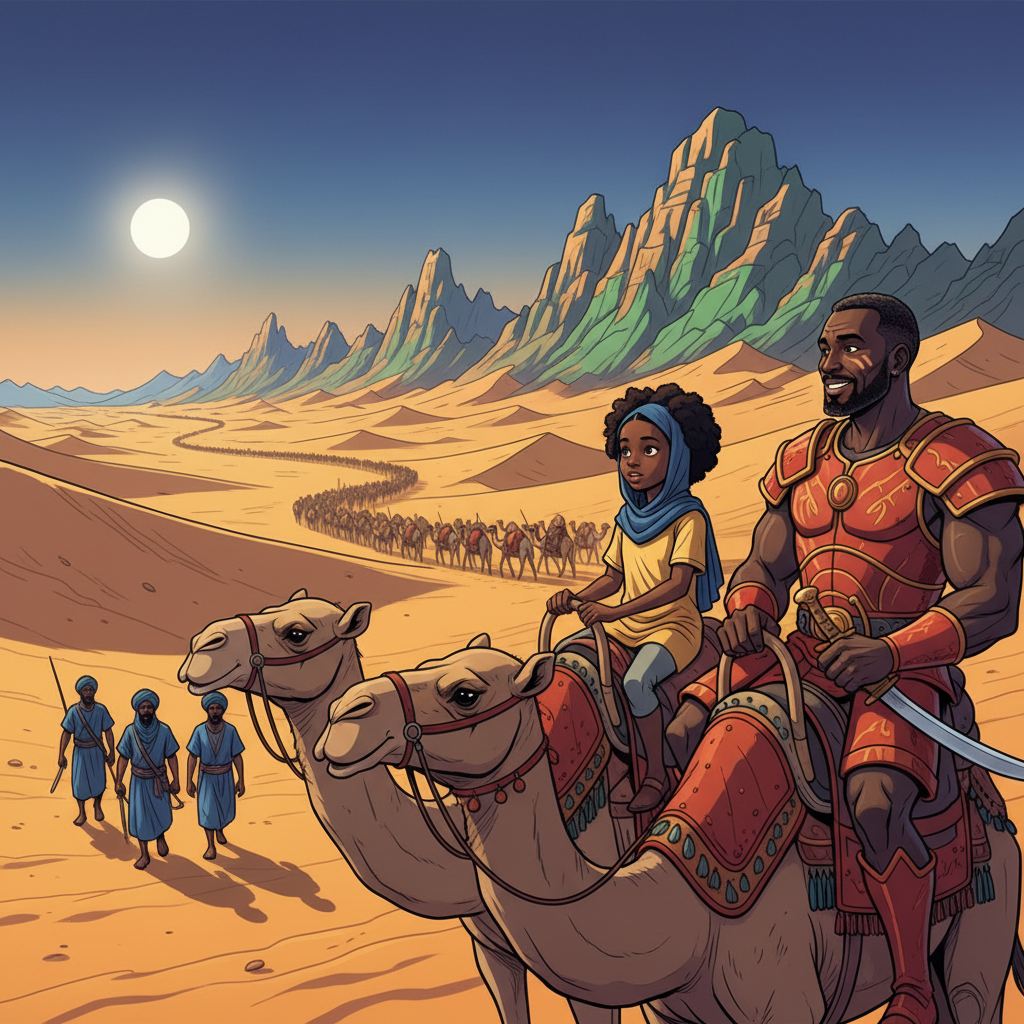
Aminata rode a camel near her father, who sat tall in his saddle with his hand resting on the hilt of his sword. General Farba had the build of a warrior — broad shoulders, thick arms, and dark skin that bore the ritual scarification marks of his clan in three parallel lines across each cheek. His 4C hair was cropped close to his skull and was beginning to show threads of silver at the temples. Despite his fierce appearance, his eyes softened whenever they landed on Aminata, and he pointed out every new sight to her as if he were a child himself seeing the desert for the first time. "Look there," he said, gesturing toward the horizon where a range of rocky hills rose from the sand like the spine of a buried animal. "Those are the Adrar mountains. The Tuareg people have lived among those rocks for centuries. They know every well, every passage, every place where shade can be found. Our guides are Tuareg — without them, this caravan would be bones in the sand within a week." Aminata shivered despite the heat. The desert demanded respect, and she was beginning to understand why.
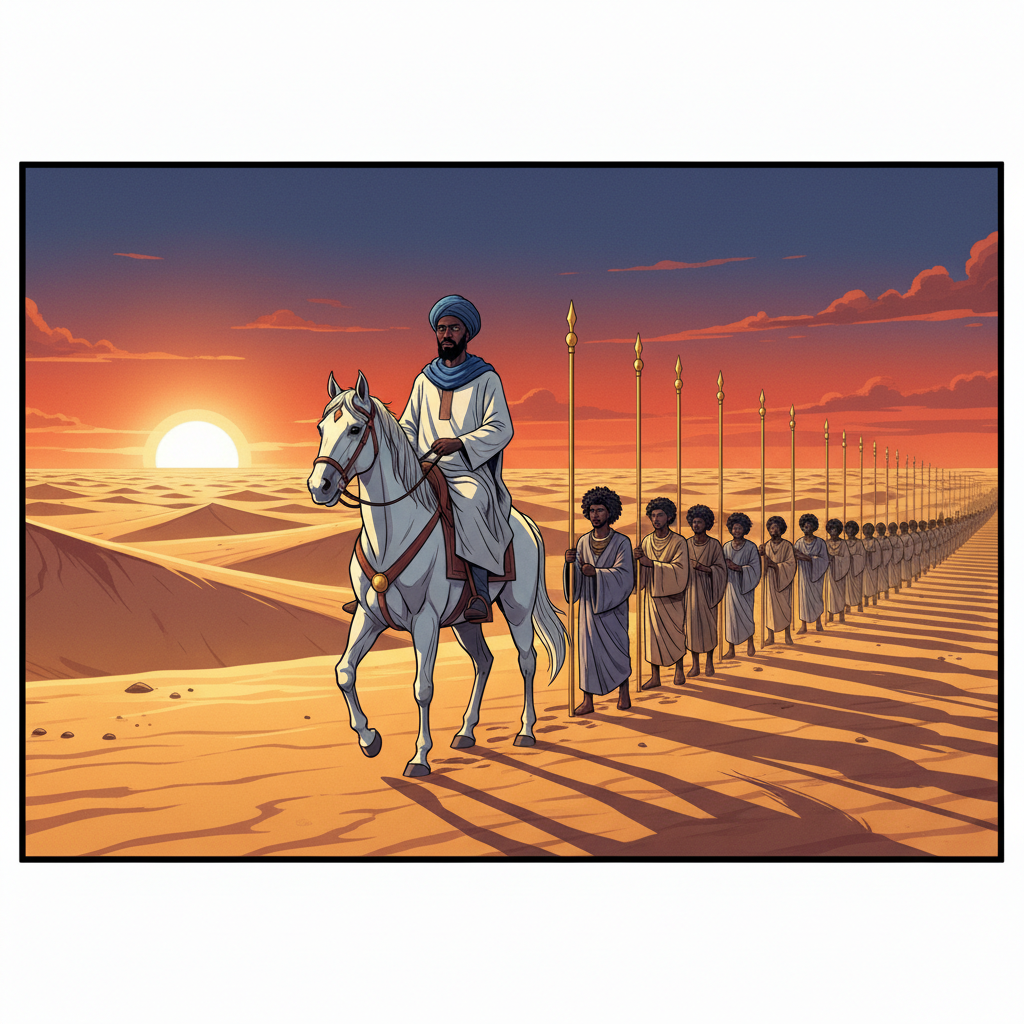
At the head of the caravan, riding on a magnificent white horse whose hooves seemed barely to touch the sand, was Mansa Musa himself — the richest man in the world, ruler of an empire that produced more gold than any other kingdom on Earth. Aminata had seen the Mansa many times in the royal court at Niani, seated on his golden throne beneath a silk parasol, but out here in the desert he seemed both larger and more human. He wore a simple white robe and a turban of deep blue cloth, but even in these plain garments, there was something about him that made people fall silent when he passed. It was not just his wealth or his power. It was a quality of stillness, a gravity, as if Mansa Musa carried the weight of his empire in his posture and bore it without complaint. Five hundred servants preceded him, each carrying a staff of gold that flashed in the sunlight. It was said that when the caravan moved, the golden staffs created a shimmering curtain of light that could be seen from miles away. The Sahara had never witnessed such a procession, and it would never see another like it.

The days fell into a rhythm that Aminata learned to read like a song with repeating verses. They rose before dawn, when the stars still blazed overhead and the sand was cool enough to walk on with bare feet. The griots sang the caravan awake with songs that told of great journeys — the migration of the Mandinka people, the founding of the Mali Empire, the prophecy of Sundiata the Lion King. Their voices carried across the dunes like the calls of birds that had been singing since the beginning of the world. By midday the heat was a living force, pressing down on everything like a great hand. The sand burned through the leather soles of sandals. The air tasted of dust and salt. Aminata learned to wet a cloth and drape it across her face, breathing through the damp fabric, the way the experienced desert travelers did. She learned to read the patterns of the wind in the sand, to spot the subtle darkening of the ground that meant water might be found below, to watch for the black kites circling overhead that often marked an oasis. At night, when the desert cooled so quickly that Aminata wrapped herself in two blankets and still shivered, the scholars would gather around fires and teach. They spoke of astronomy — how the stars could guide a traveler across the trackless sand. They spoke of mathematics — the calculations needed to plan water supplies for sixty thousand people across hundreds of miles. They spoke of the manuscripts waiting in libraries from Timbuktu to Cairo, and of the universal pursuit of knowledge that connected all peoples.
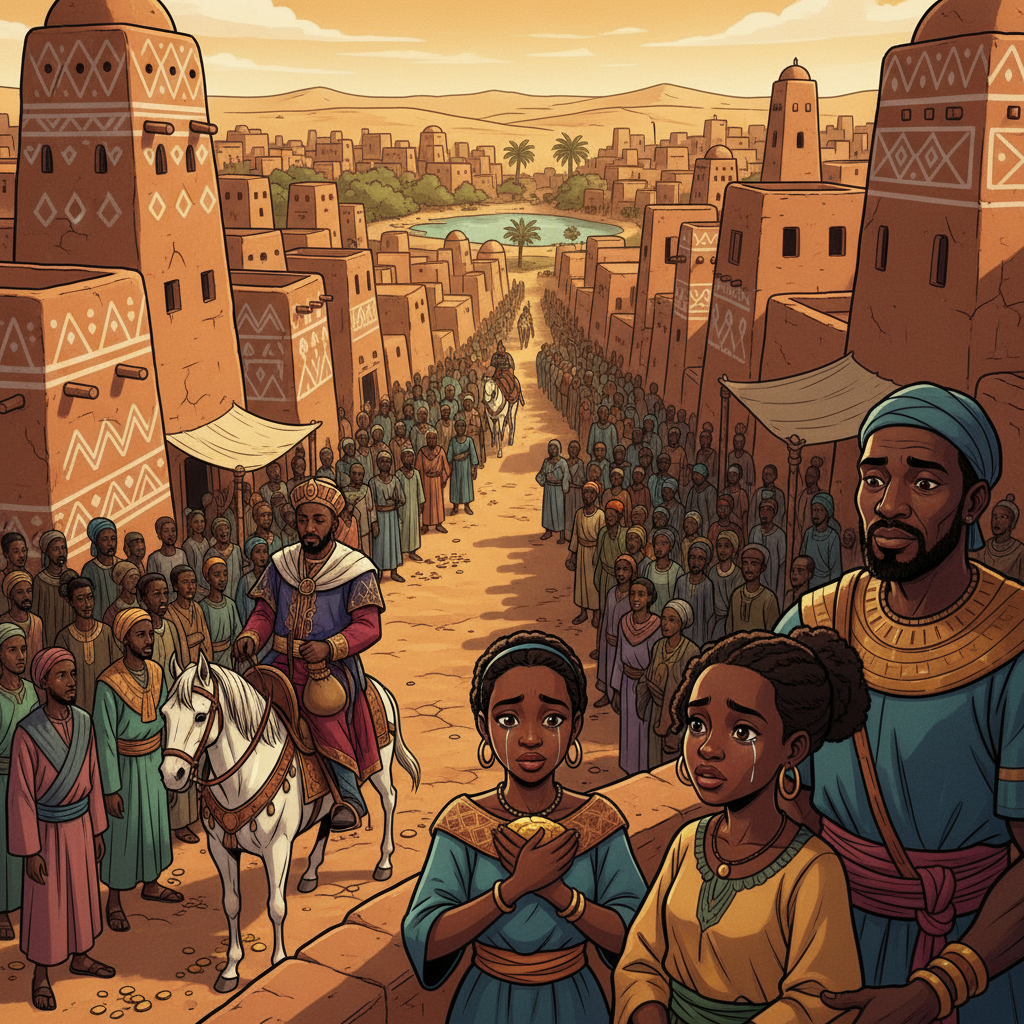
Three weeks into the journey, the caravan reached the oasis city of Walata, where they would rest and resupply before the final crossing. Walata was a city of merchants and scholars, its mud-brick buildings decorated with intricate geometric patterns painted in white lime against brown walls. The people came out in crowds to watch the caravan arrive, their dark faces filled with astonishment at the sheer number of travelers and the glittering river of gold that flowed through their streets. Mansa Musa gave freely. He handed gold to the elders of Walata, to the merchants who sold his caravan grain and water, to the poor who lined the roads with outstretched hands. Aminata watched from beside her father as the Mansa moved through the crowd, his dark hand dipping into a leather pouch and emerging each time with a handful of gold dust that he sprinkled into waiting palms like a farmer sowing seed. "He gives so much," Aminata whispered to her father. General Farba nodded slowly, his expression thoughtful. "The Mansa believes that wealth is a trust from the Creator, not a possession," he said. "In Mali, we say that the hand that gives is always above the hand that receives. Generosity is the highest virtue of a mansa." Aminata watched a woman clutch a gold nugget to her chest, weeping with gratitude, and she felt a swell of pride so strong it brought tears to her own eyes.
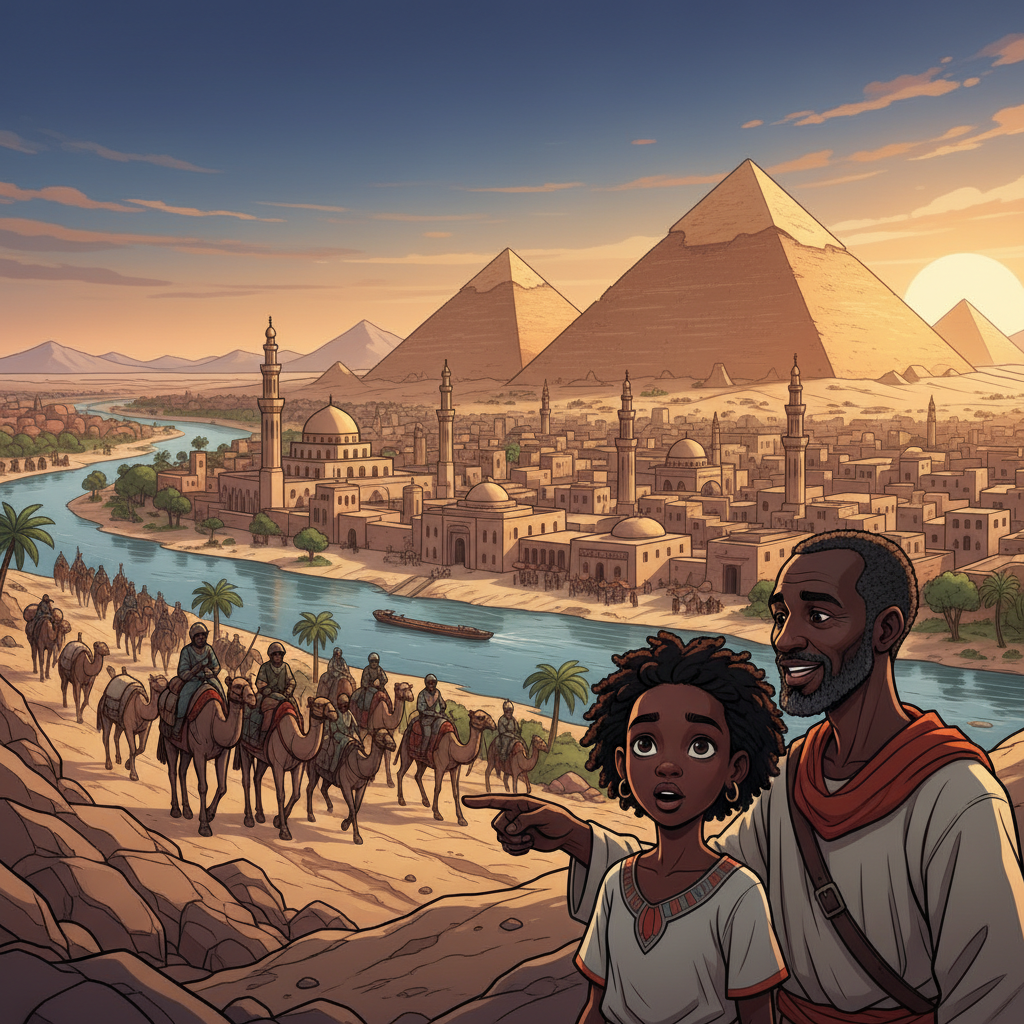
Weeks later, the great caravan crested a ridge and Aminata saw Cairo for the first time. She had thought Niani was a great city. She had thought Timbuktu was magnificent. But Cairo was something beyond her imagining — a sprawling labyrinth of mosques and markets and towering stone buildings that stretched along the banks of a river that her father told her was the same Nile that the ancient people of Kemet had called the source of all life. The pyramids rose in the distance, ancient beyond reckoning, their surfaces catching the late afternoon sun and glowing like mountains made of amber. Aminata's mouth hung open. "Who built those?" she breathed. Her father smiled. "Our ancestors, little one. The people of Kemet — the Black Land, they called it, named for the rich dark soil of the Nile. Those pyramids were already thousands of years old when our own empire was young. The knowledge that built them — the mathematics, the astronomy, the engineering — that knowledge flowed south and west along trade routes and rivers until it reached our own scholars at Djenné and Sankoré." Aminata stared at the pyramids and felt something vast and ancient stir inside her, as if a door had opened in her chest and revealed a room she had always carried but never known was there.
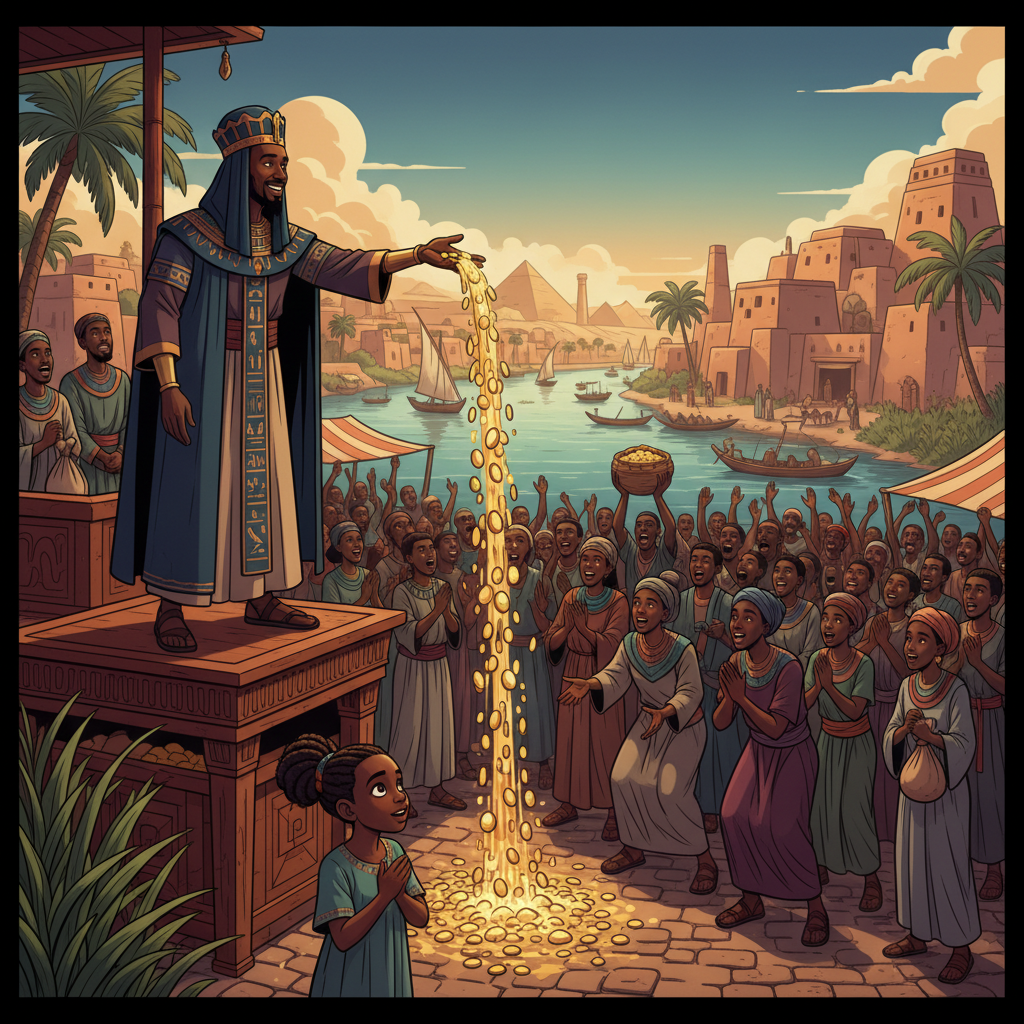
The Sultan of Egypt, al-Nasir Muhammad, received Mansa Musa in his palace with all the ceremony that one great ruler affords another. But it was not the diplomatic rituals that left their mark on Cairo. It was the gold. Mansa Musa gave gold to everyone. He gave gold to the Sultan's officials. He gave gold to the merchants in the bazaars. He gave gold to the beggars in the streets. He bought goods at many times their asking price, pressing extra gold into sellers' hands and refusing to accept change. He paid for the construction of mosques and schools. He tipped servants with nuggets that a common family could live on for a year. Gold poured from his hands like water from an endless spring, and everywhere it flowed, people gasped and cheered and praised the name of the great Mansa of Mali. Aminata was swept up in the excitement at first. She watched her king transform the city with his generosity, watched faces light up, watched merchants dance in their stalls. This was Maat in action, she thought — balance, justice, the powerful lifting up the poor. This was what a great mansa was supposed to do.
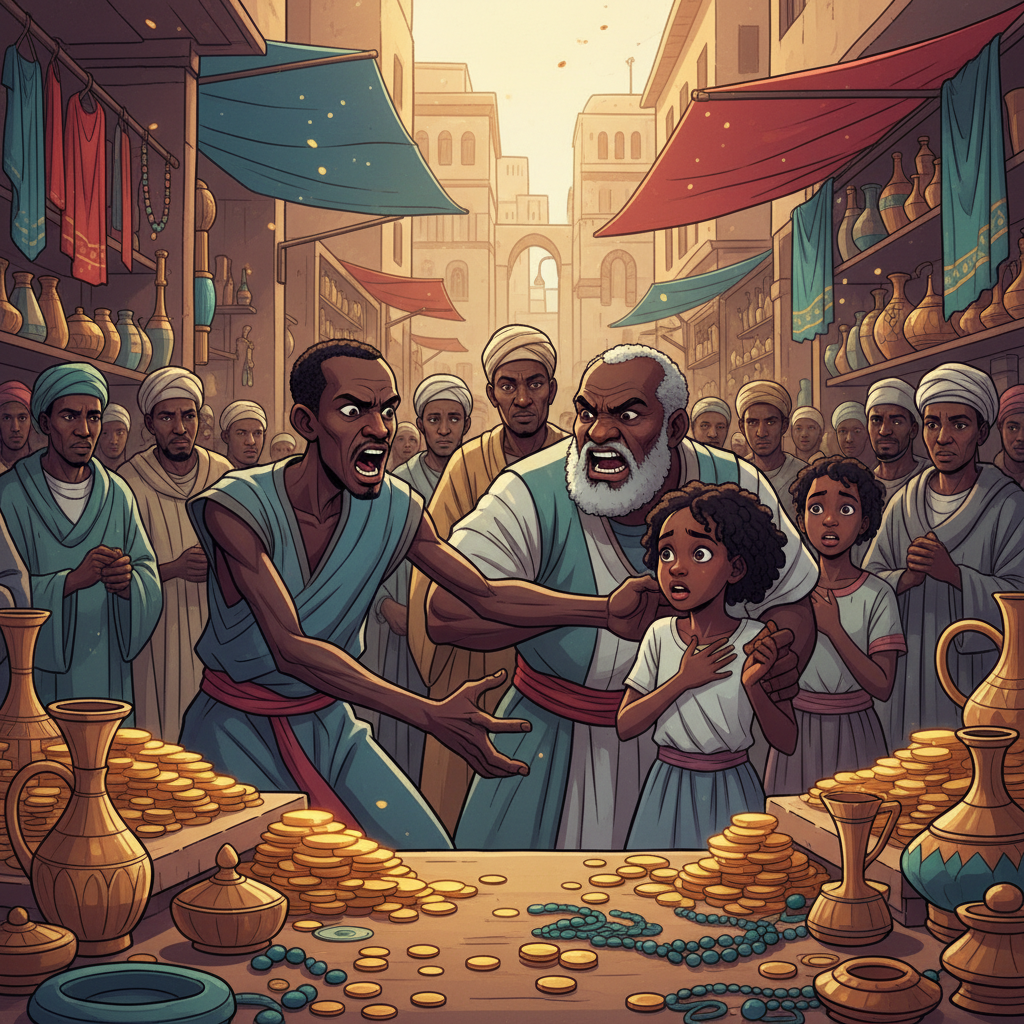
But on the fourth day in Cairo, Aminata noticed something that made her stop in the middle of a crowded market street. She was walking with her friend Hawa, another general's daughter, through the gold merchants' quarter, when she saw two traders arguing so fiercely that their faces were contorted with rage. One of them, a thin man with sharp eyes, was shouting: "I cannot sell my goods at yesterday's price! The gold is worth nothing now! Your Mansa has flooded our markets and drowned us all!" Aminata felt a cold shock pass through her, like stepping into a river that looked warm but was fed by mountain streams. She grabbed Hawa's arm. "What does he mean, the gold is worth nothing?" Hawa shrugged, but Aminata could not let it go. She found an old merchant sitting on a low stool outside his shop, a man with weathered brown skin and a white beard that reached his chest, and she asked him. The old merchant looked at her with eyes that held no anger, only a deep weariness. "Child," he said, "when there is too much gold in a city, the gold becomes common. When gold is common, it buys less. Your king meant to be generous, but he has poured so much gold into our markets that a dinar that once bought a sack of grain now buys only a handful. The merchants cannot set fair prices. The poor who were given gold find that it purchases less than the copper they had before. Your king's gift has become a flood, and floods destroy even when the water is sweet."
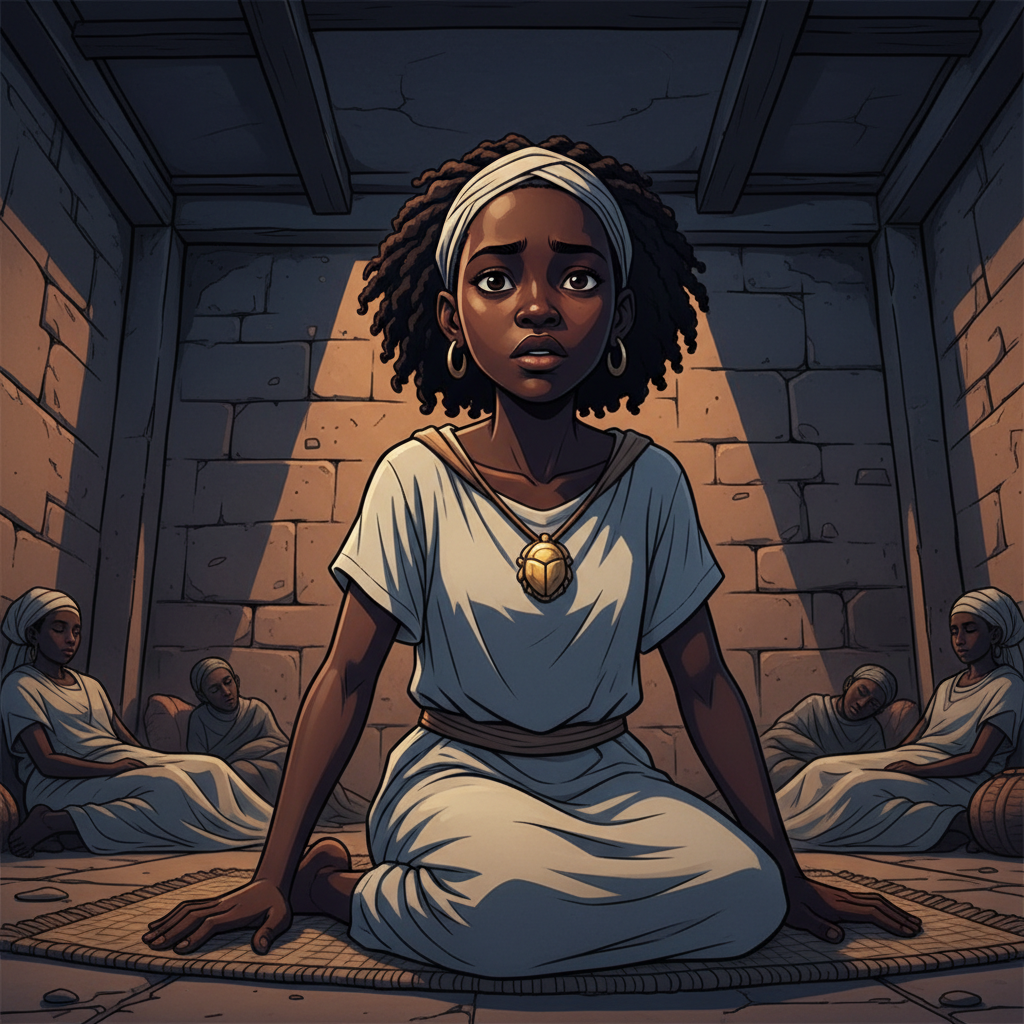
That night Aminata lay on her sleeping mat in the quarters that had been arranged for the Malian delegation, and she could not sleep. The merchant's words turned over and over in her mind like a stone being polished by a river. She thought about the sages of Kemet — those ancient scholars whose wisdom her own teachers revered — and the principle they called Maat. Maat was balance in all things. Maat was truth and justice and cosmic order. Her father had told her that the Manden Charter, the great law that Sundiata himself had proclaimed, taught the same principles — that freedom, justice, and the dignity of every person must be preserved through wisdom and balance. But what happened when a good impulse was not guided by wisdom? What happened when generosity, the noblest of virtues, was unleashed without thought for consequences? The sages of Kemet taught that Maat is balance in all things. Even generosity, when it lacks wisdom, becomes a kind of Isfet — a beautiful chaos that leaves destruction in its wake. Aminata sat up in the darkness. She knew what she had to do, even though it frightened her more than the Sahara had.
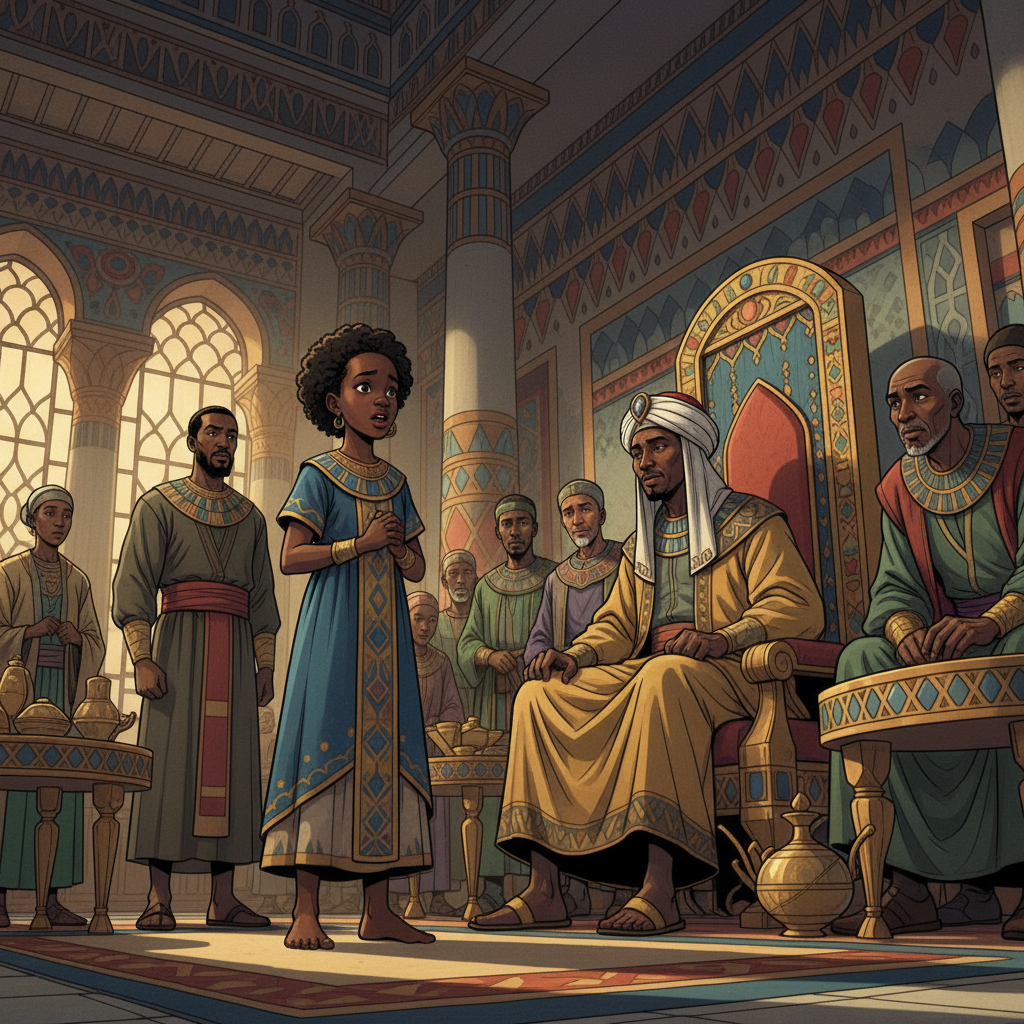
The next morning, Aminata approached her father before the dawn prayers. General Farba listened to his daughter with the same serious attention he gave to his officers in the war council. When she finished describing what the merchant had told her, and the worry that had kept her awake all night, he was silent for a long time. Then he said, "You have seen with the eyes of a leader, Aminata. Not with the eyes of someone dazzled by gold, but with the eyes of someone who asks what comes after the gold is spent." He took her to see the Mansa that very morning. Aminata's heart hammered in her chest as she entered the great room where Mansa Musa sat surrounded by his advisors. Her father spoke first, explaining that his daughter had observed something in the markets that deserved the Mansa's attention. Then he stepped back and left Aminata standing alone before the most powerful man in the western world. Aminata's voice shook at first, but she spoke the truth — about the arguing merchants, about the old man's explanation, about the dinar that could no longer buy a sack of grain. She spoke about Maat and about Isfet, about how even water, the source of all life, became destructive when it overflowed its banks.
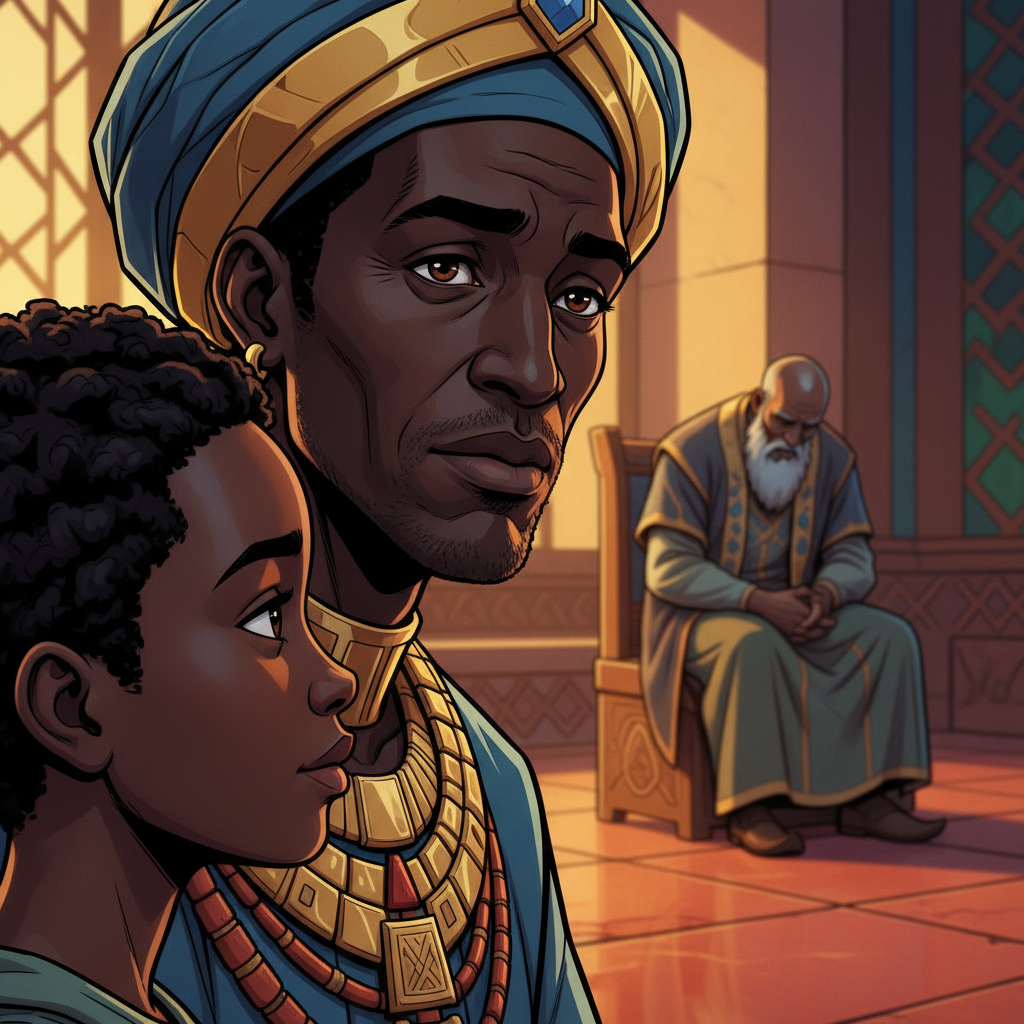
Mansa Musa listened without interrupting. His dark face was still as carved wood, but his eyes — Aminata noticed — changed as she spoke. Something moved behind them, a recognition, a dawning understanding that arrived not as a shock but as a confirmation of something he had perhaps already begun to feel. When Aminata finished, the room was silent. Then Mansa Musa spoke, and his voice was heavy with a new kind of wisdom — the kind that comes from learning that even your best intentions can cause harm. "The child speaks truth," he said. "I have given with an open hand, but I have not given with open eyes. A river that floods does not become evil — but it must learn to stay within its banks if it wishes to give life instead of taking it." He turned to his chief advisor. "We will borrow gold back from the merchants of Cairo — at interest — to remove the excess from the markets and restore the balance of trade." This was an astonishing decision. The richest man in the world, who had come to Cairo trailing a river of gold, would leave the city owing money. It was a humbling that lesser men would have fought against with pride. But Mansa Musa understood something that Aminata was only beginning to learn: true strength was not in the giving or the withholding. True strength was in the wisdom to know the difference.
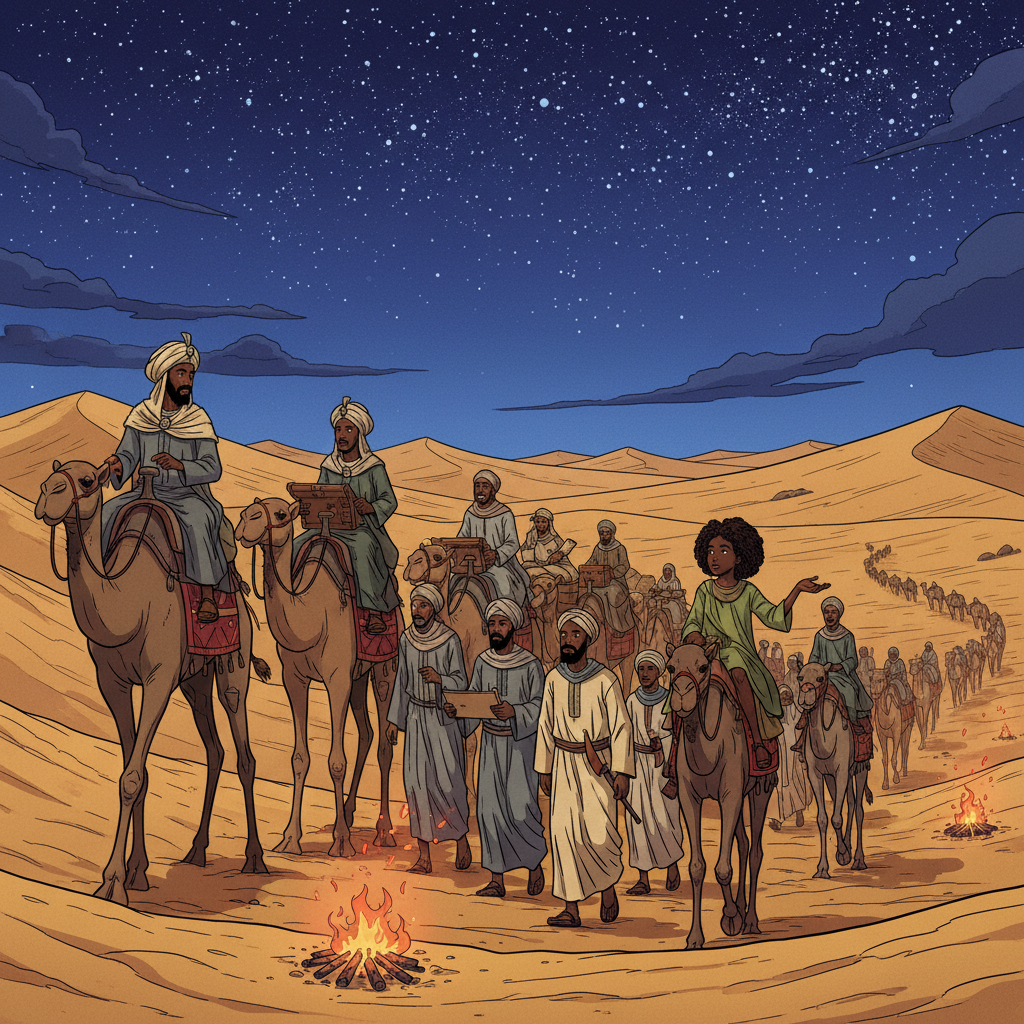
The return journey across the Sahara was quieter than the outward one. The caravan was still magnificent, still sixty thousand strong, but there was a thoughtfulness to it now, a gravity that had not been there before. Mansa Musa rode at the head of the procession as always, but Aminata noticed that he spoke more often with his scholars and less often with his treasurers. He asked questions about the cities they passed through — not how much gold they needed, but how their markets worked, how their farmers irrigated their fields, how their craftspeople set fair prices. Aminata rode beside her father as the great dunes of the Sahara rolled beneath them like golden waves frozen in time. The stars blazed overhead in the desert night, so thick and bright that they seemed close enough to touch. "Father," she said one evening as the cooking fires sent sparks spiraling into the darkness. "The Mansa is not angry at me?" General Farba laughed softly — a deep, warm sound that Aminata felt as much as heard. "Angry? Aminata, you spoke truth to power. That is the most sacred act a person can perform. The griots do it through song. The scholars do it through writing. You did it with your own voice, trembling as it was. The Mansa respects truth above all things — it is the foundation of the Manden Charter, the same principle the ancient people of Kemet called Maat. You served Maat today, my daughter, and in doing so, you served your king and your people better than any amount of gold could."
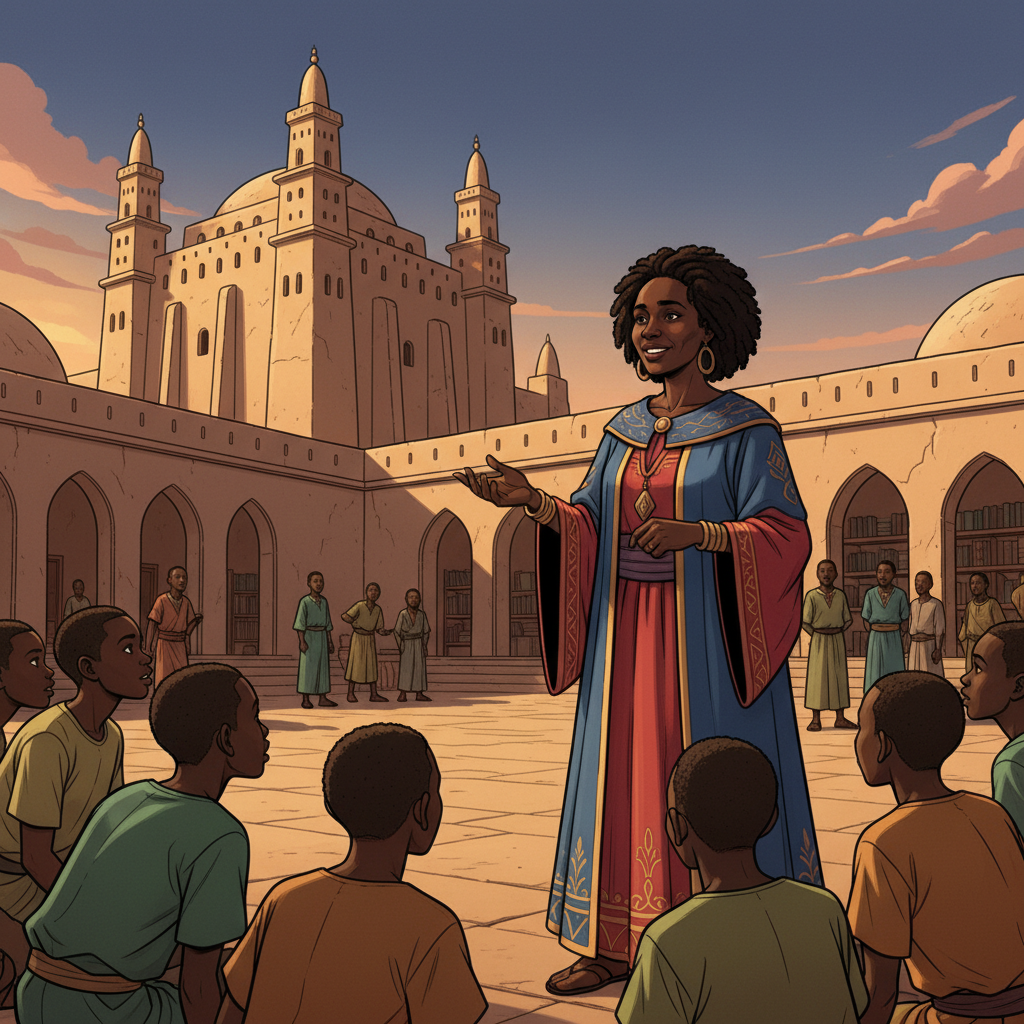
Years later, when Aminata herself had become an advisor in the royal court of Mali, she would tell this story to the young people who came to study at the great university of Sankoré in Timbuktu. She would stand in the courtyard where scholars from across Africa and beyond gathered to debate philosophy and mathematics and law, and she would tell them about the golden road to Cairo and the lesson it taught. "Mansa Musa was the richest human being who ever lived," she would say, her deep ebony skin catching the warm light of the Timbuktu afternoon, her voice carrying the calm authority of someone who had learned wisdom the hard way. "His generosity was legendary, and it came from a true and noble heart. But generosity without wisdom is like a river without banks — it floods everything it touches. Maat teaches us that every virtue must be held in balance. Courage without mercy becomes cruelty. Mercy without justice becomes weakness. And generosity without wisdom becomes destruction, no matter how golden the intentions." The students would lean forward, their dark faces intent, and Aminata would smile — because she knew that in this moment, she was doing what the griots and the scribes and the sages of Kemet had done since the beginning of time: passing truth forward, one voice at a time, so that the world might keep its balance. Djenné's great mosque would catch the setting sun behind her, and the ancient knowledge would flow on, from generation to generation, as it always had and as it always must.