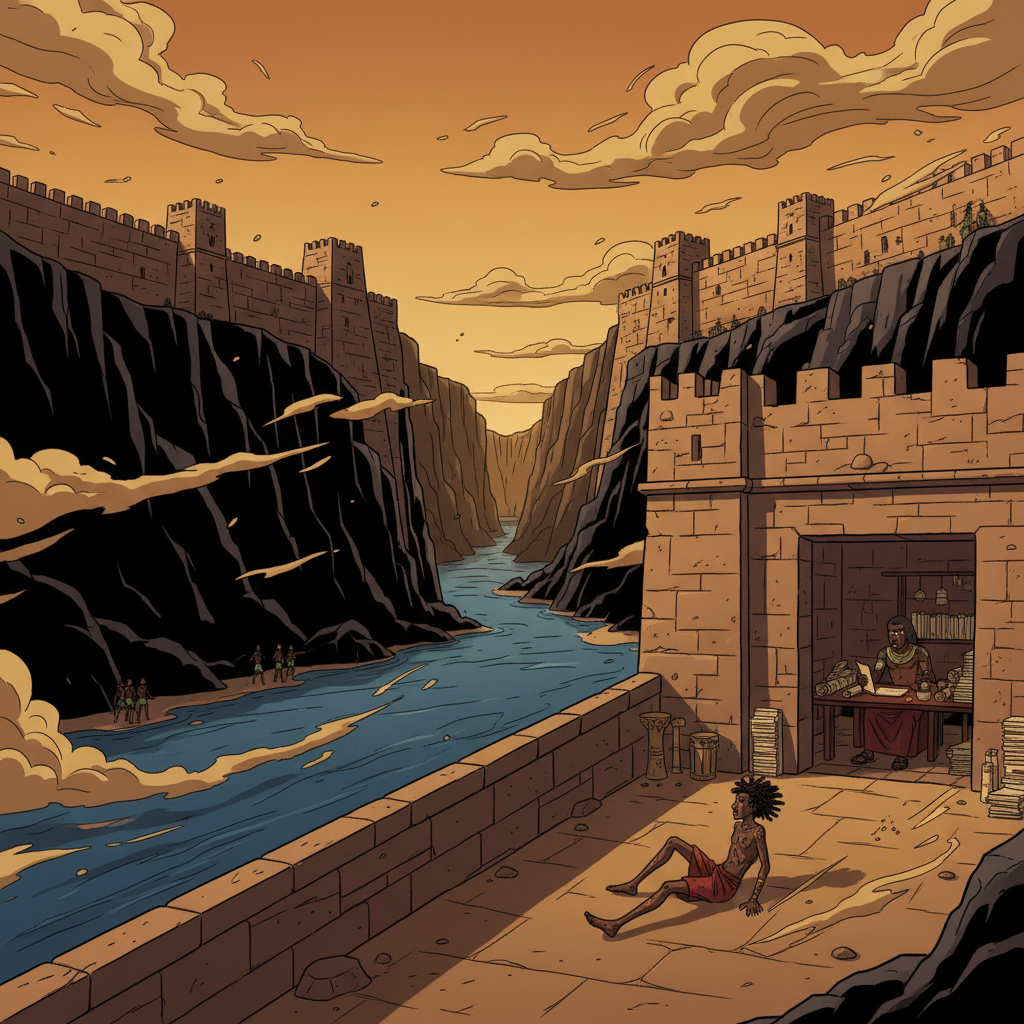
The message reached Amun-her-khepeshef at the fortress of Buhen, where the Nile narrowed between walls of black granite and the desert wind carried sand that could strip skin from bone. He was reading dispatches in the garrison office when a runner arrived — a thin young man drenched in sweat who had traveled three days upriver from Kerma. The message was sealed with the personal mark of the regional vizier. Amun broke the seal, read the papyrus, and felt the world tilt beneath his feet.
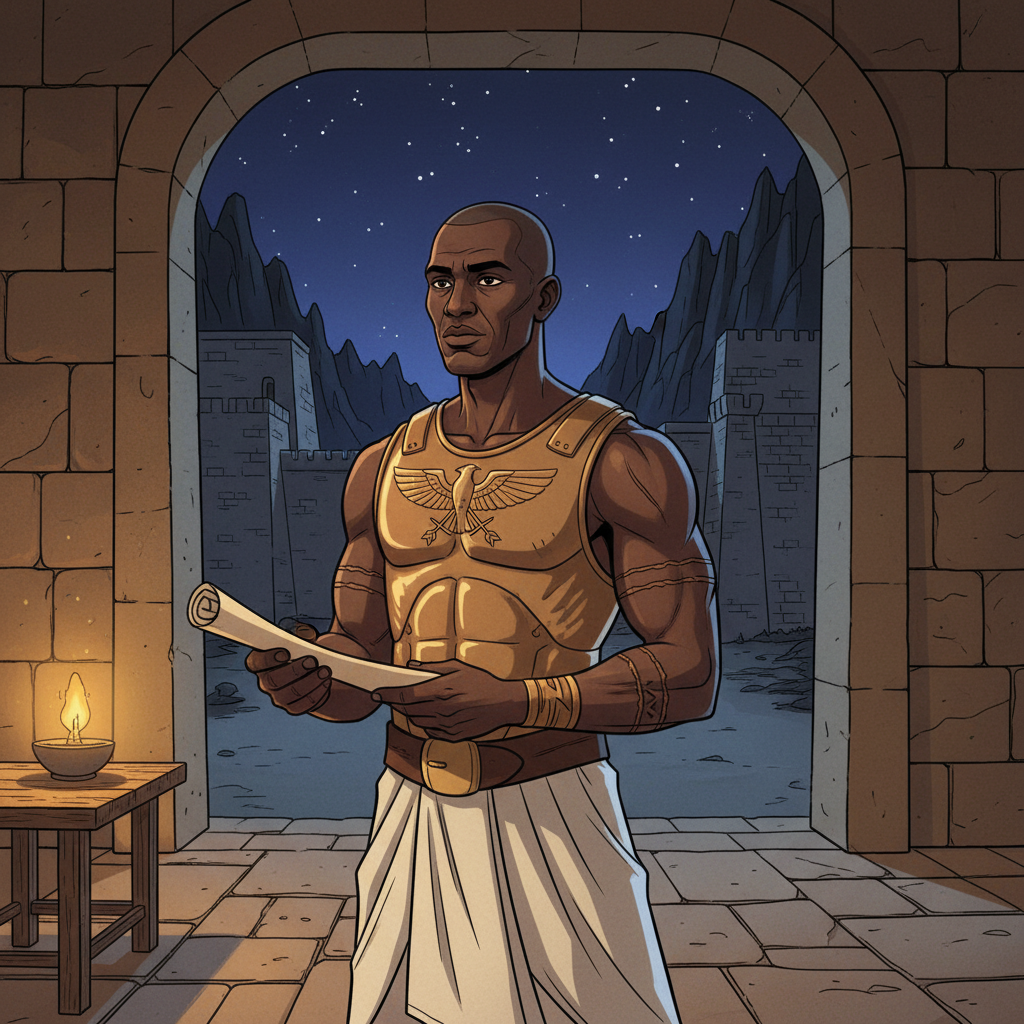
Amun was thirty-four years old, a senior Medjay with fourteen years of service. His very dark ebony skin bore the marks of his profession — a long scar across his left shoulder from a raider's khopesh, ritual scars on both forearms earned during his initiation, and the calloused hands of a man who had drawn a war bow ten thousand times. His head was shaved clean in the Medjay tradition, and his bronze chest plate bore the insignia of a patrol commander — a falcon with spread wings above a pair of crossed arrows.
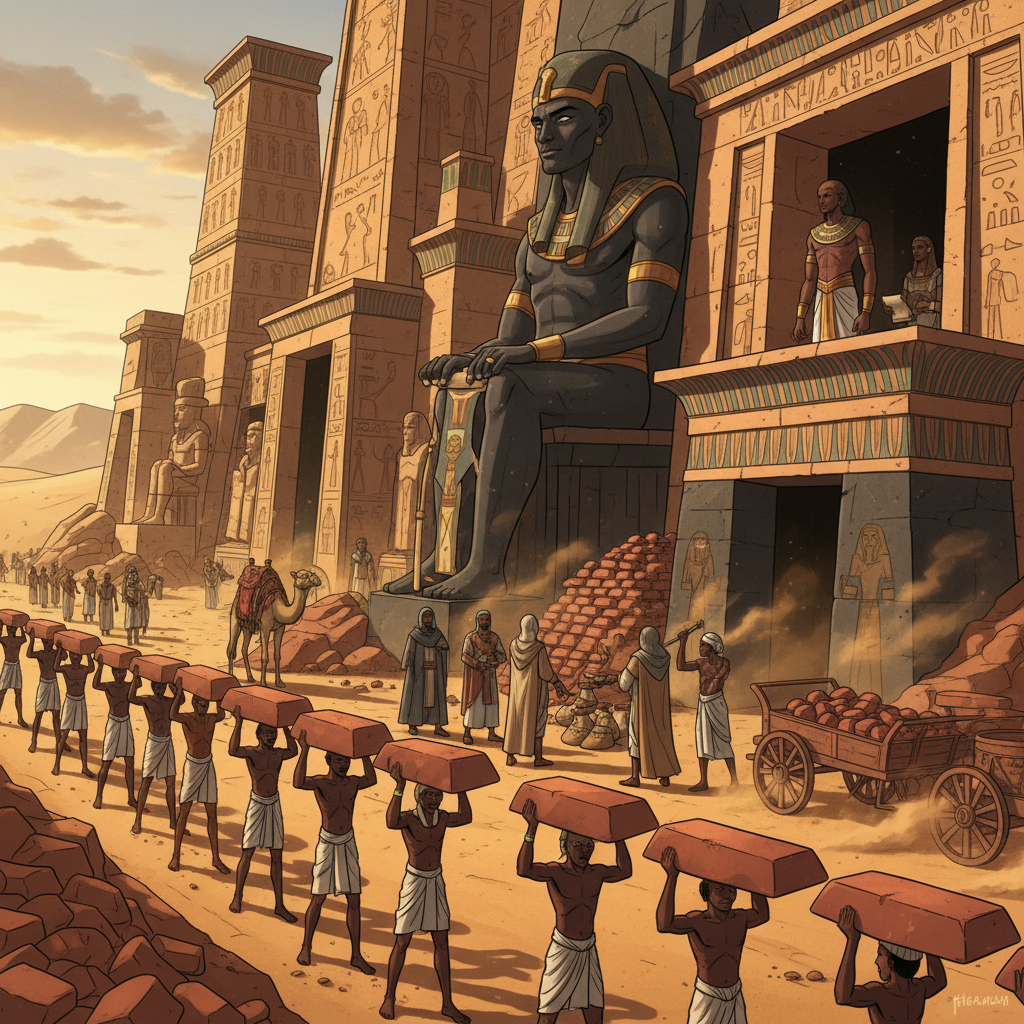
The message reported that someone had been systematically stealing copper ingots from the royal mines at the edge of the desert — the mines that supplied metal for tools, weapons, and temple offerings across all of Kush. The theft had been going on for months, conducted through a network of middlemen who traded the stolen copper to foreign merchants. The regional vizier had received intelligence identifying the leader of the operation. It was Penno. Amun's younger brother.
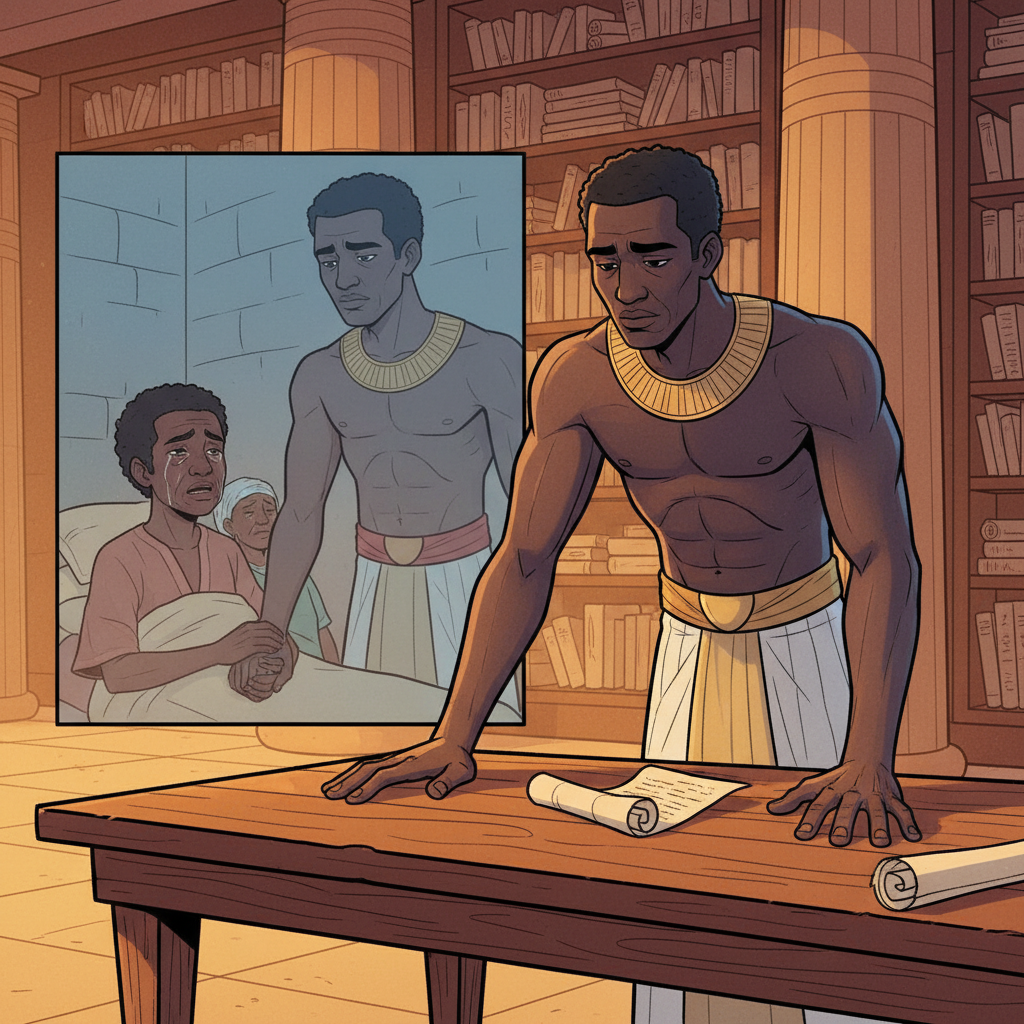
Amun set the papyrus down and pressed both hands flat against the table, steadying himself the way a man steadies a boat in rough water. Penno. Twenty-five years old, quick to laugh, quicker to charm. The brother who had followed Amun everywhere as a child, imitating his warrior stance with a stick for a spear. The brother who had held Amun's hand at their mother's deathbed three years ago, weeping openly while Amun — the Medjay, the soldier, the man who showed nothing — kept his face like stone.
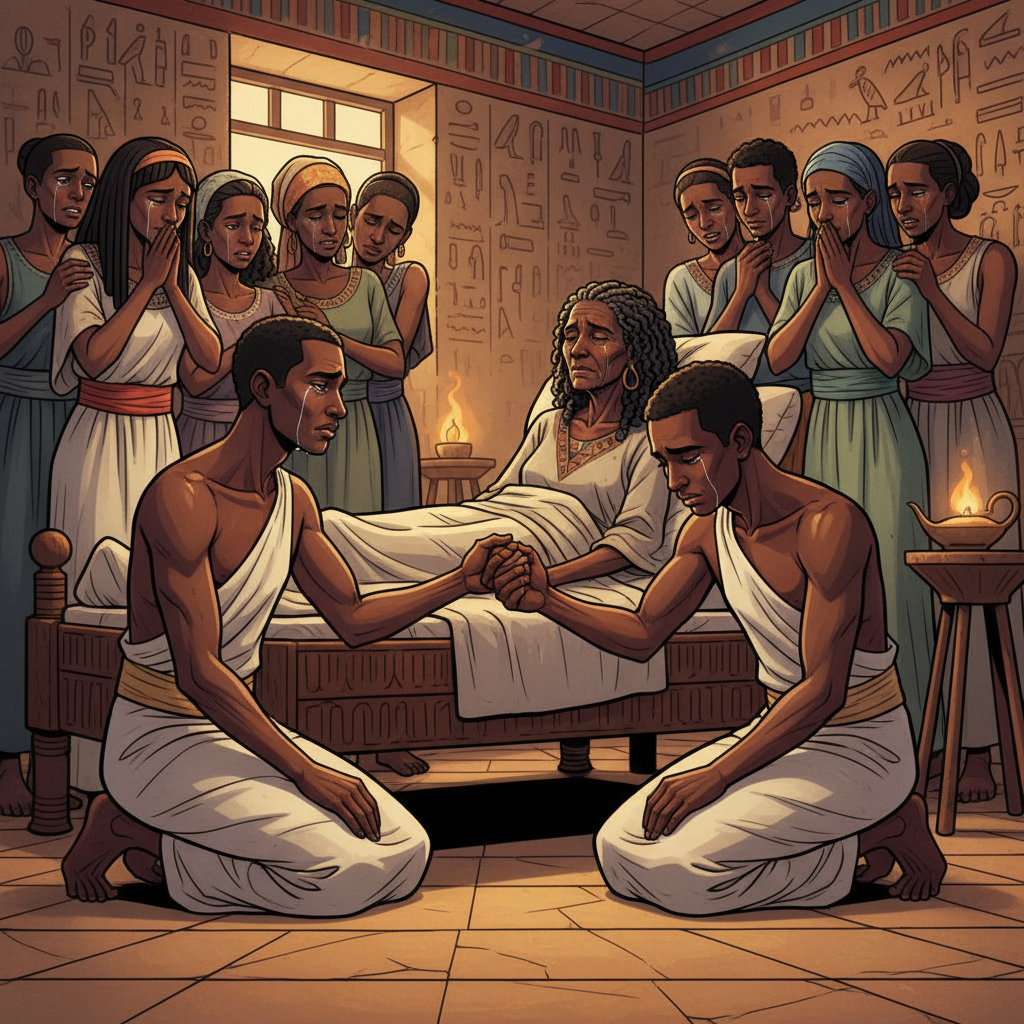
Their mother Takhat had made them swear an oath as she died. She had gripped their hands with the fierce strength that the dying sometimes summon and said, "You are brothers. The world will try to separate you — ambition, jealousy, distance, pride. Promise me that you will always protect each other. Promise on my Ka." They had promised. Both of them, with tears running down their faces, had sworn on their mother's departing spirit that they would always stand together.
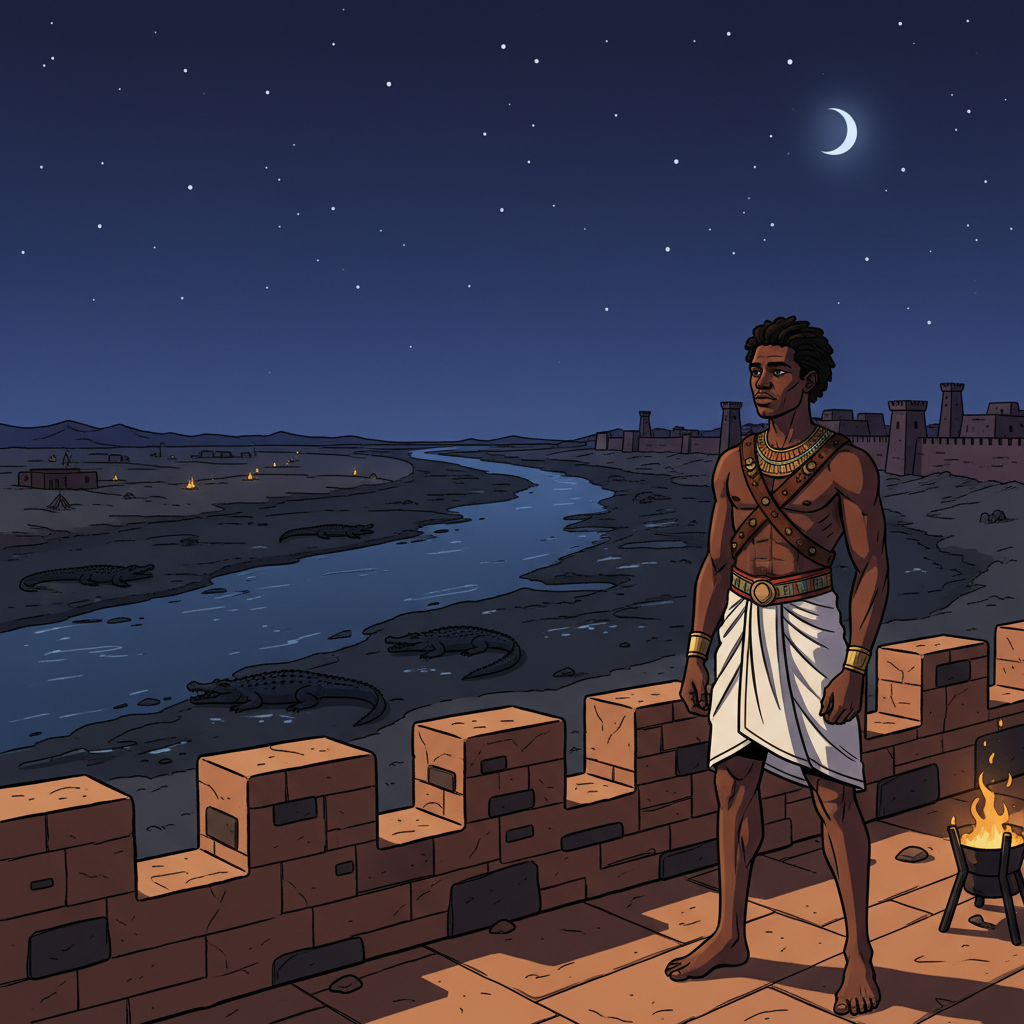
Amun walked out of the garrison and stood on the fortress wall, looking south along the Nile. The river was low in the dry season, its banks exposing dark mud where crocodiles basked in the afternoon sun. He thought about the oath. He thought about the copper. And he thought about the Medjay code that he had sworn when he was twenty years old — a code that was as binding as any family oath: "I serve Maat above all. Above family, above self, above Pharaoh. Where truth demands action, I will act, though the cost be my own blood."
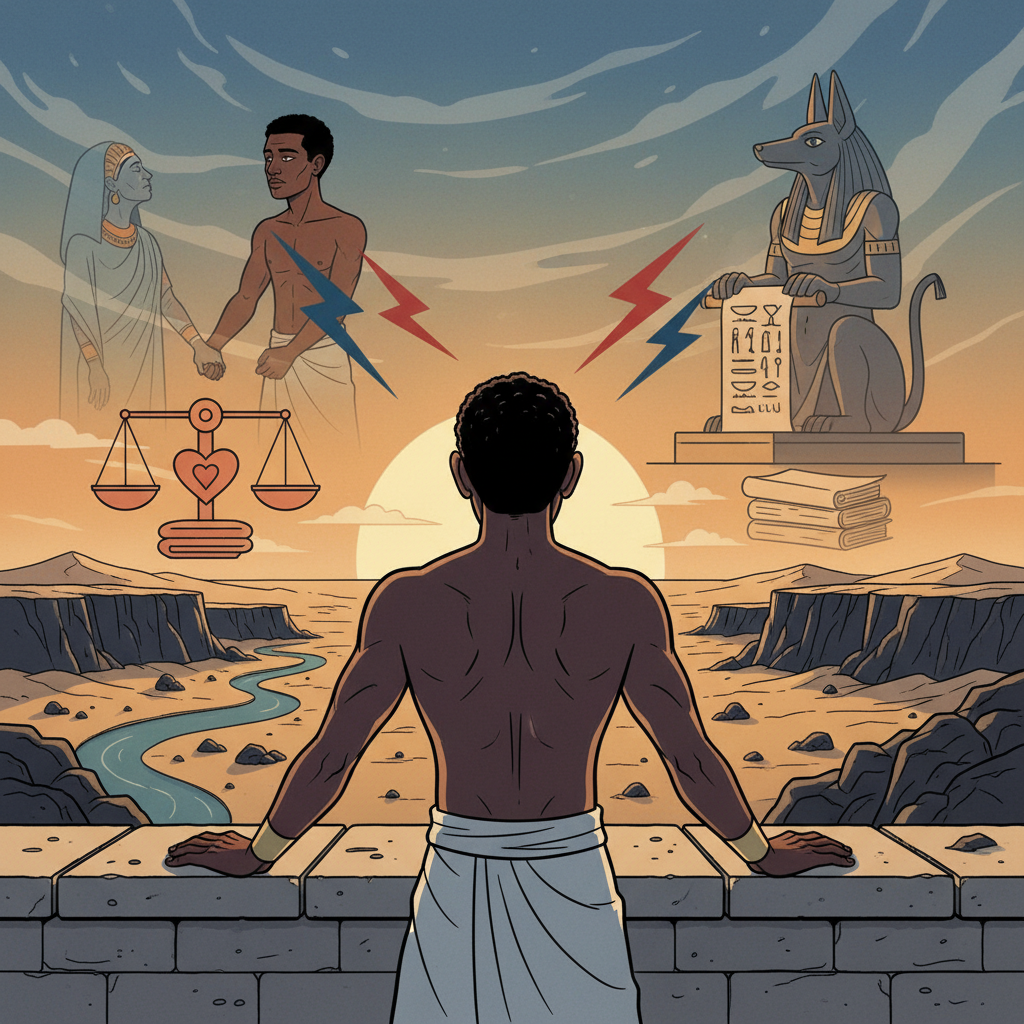
Two oaths. Both sacred. Both given freely, with full understanding of their weight. One bound him to his blood — the last words of a dying mother. The other bound him to his duty — the foundation of every law, every protection, every shred of justice that held civilization together. Amun knew, with the cold clarity of a man trained to face impossible situations, that he could not honor both. Whatever he did next would break a sacred promise.
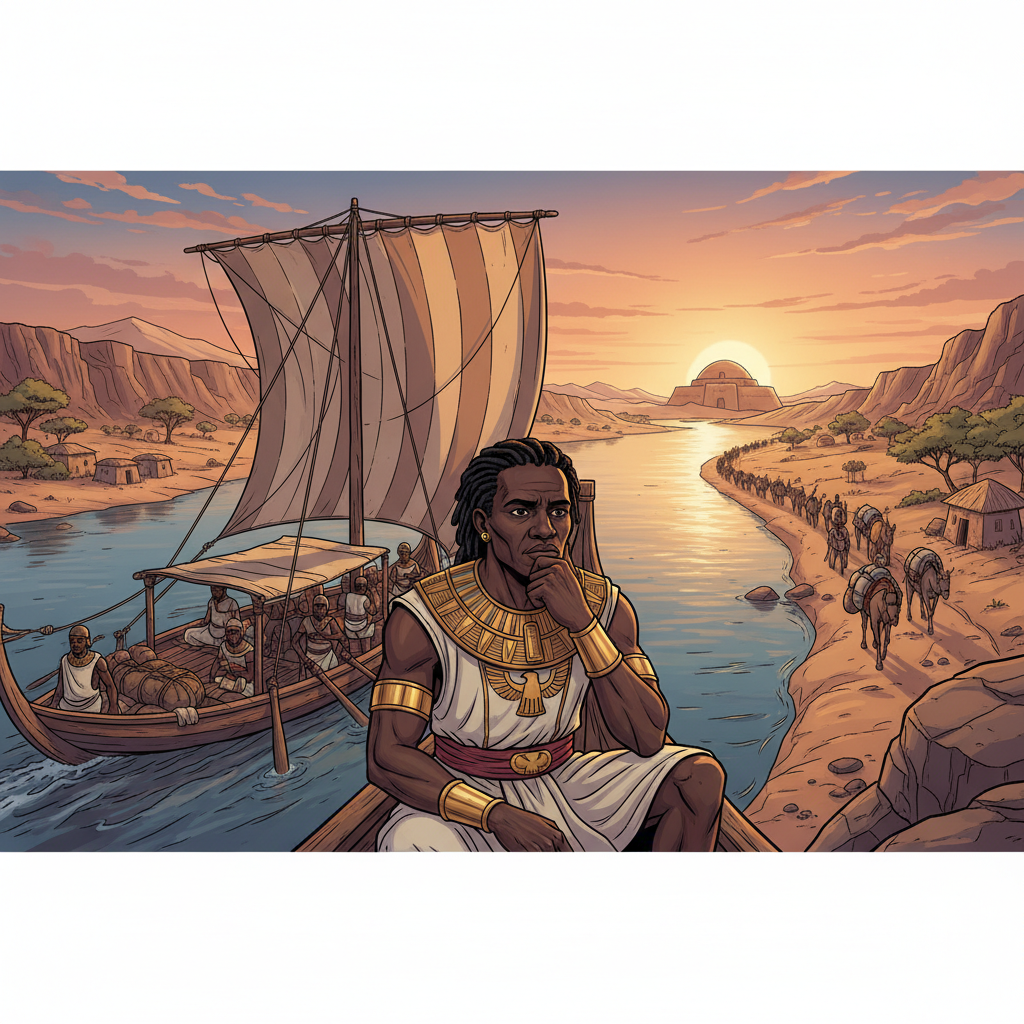
He traveled south to Kerma, where Penno lived. The journey took four days by boat, and Amun spent every hour of it turning the situation over in his mind. He considered alternatives. Could he warn Penno? Give him time to flee before the investigation closed in? That would make Amun complicit in the theft — a Medjay aiding a criminal. It would betray every colleague who trusted him and every citizen who depended on the Medjay to be incorruptible.
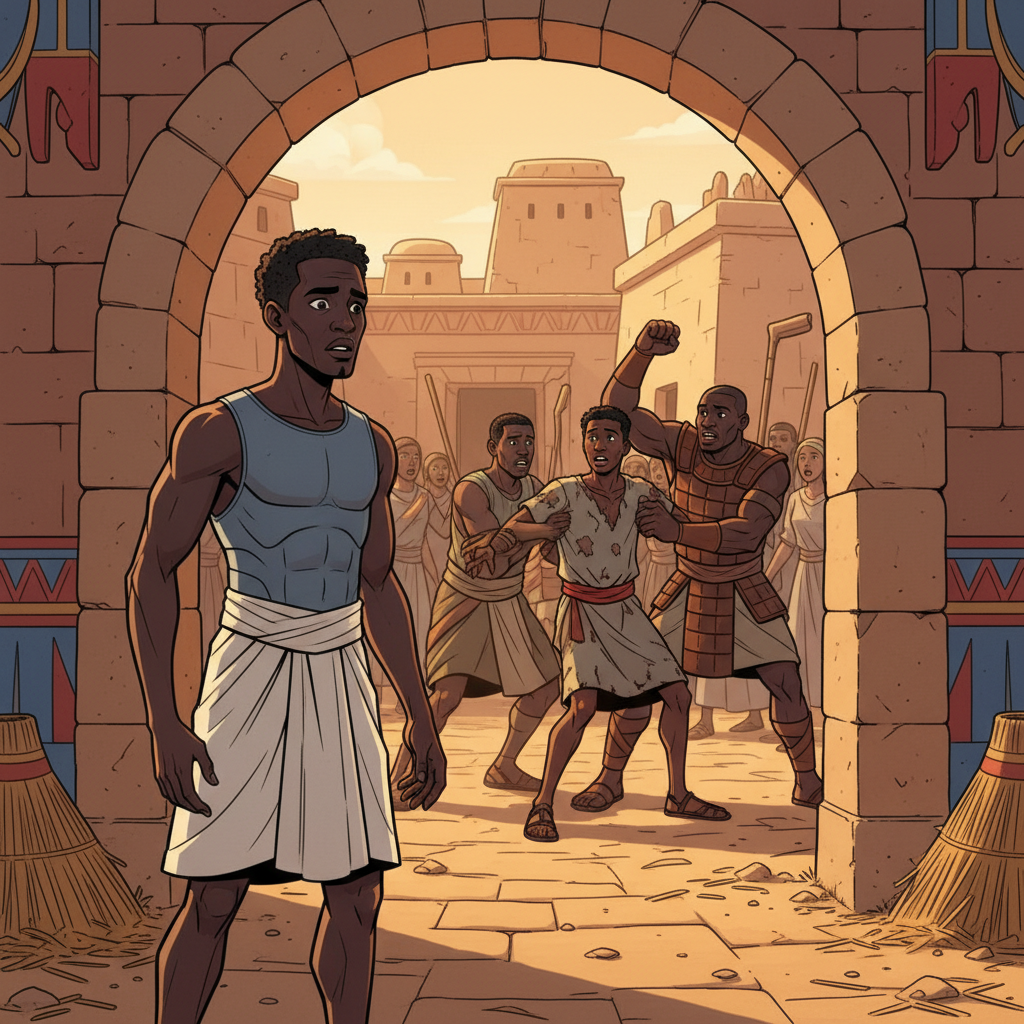
Could he simply refuse the case? Claim a conflict of interest and let another Medjay handle it? That was permitted under the code, but Amun knew what would happen. The vizier's agents were already closing in. If Penno was arrested by strangers, he would face the full harshness of the law with no one to advocate for fair treatment. At least if Amun was involved, he could ensure his brother was treated with dignity — arrested properly, given a fair hearing, protected from abuse.
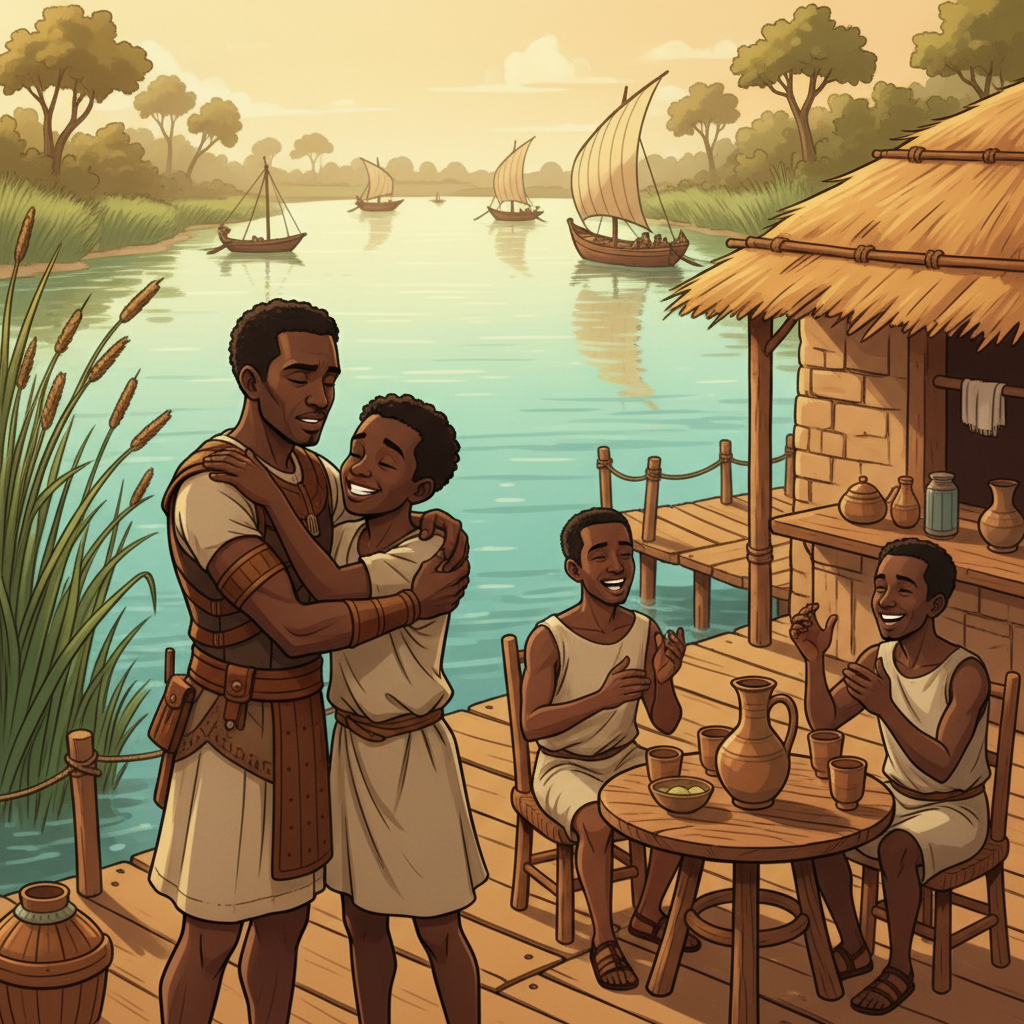
He found Penno at a riverside tavern in Kerma, drinking palm wine with two men Amun did not recognize. Penno looked up and his face broke into the wide, unguarded smile that had charmed everyone who knew him since he was a child. "Brother! What brings the mighty fortress commander to our humble city?" He rose and embraced Amun, and Amun felt the warmth of his brother's arms and the familiar smell of the cedar oil Penno used in his hair, and he wanted nothing in the world more than to sit down and drink wine and pretend he had never read that dispatch.
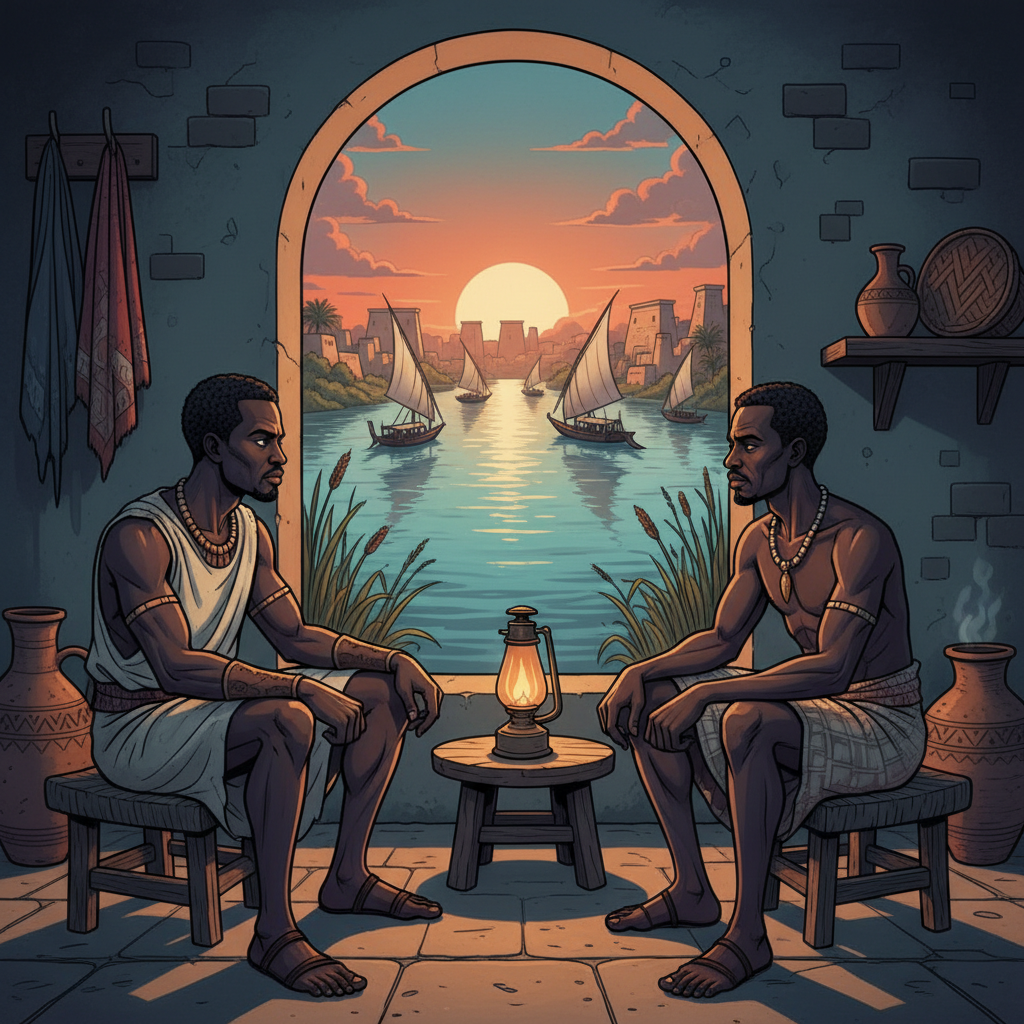
But Amun was a Medjay. And a Medjay did not pretend. "We need to talk alone," he said quietly. Penno's smile flickered — a momentary shadow that crossed his face like a cloud across the sun — but he recovered quickly and led Amun to a quiet corner of the tavern's upper floor. They sat across from each other on low stools, and the sound of the river came through the open window like the breathing of some vast sleeping creature.
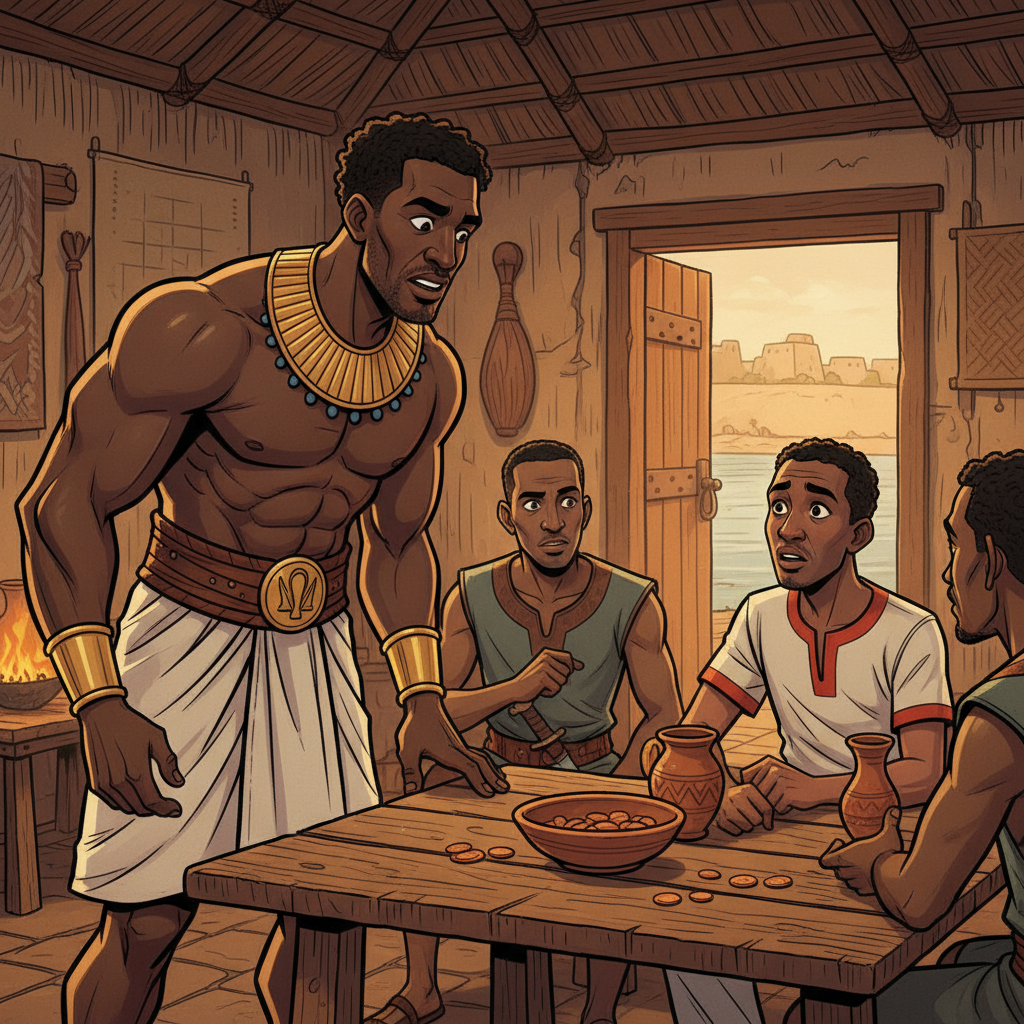
"I know about the copper," Amun said. He watched his brother's face as he spoke, the way he had been trained to watch the faces of men being questioned. Penno's easy charm did not collapse — it shifted. His smile became tighter, more guarded, more like a wall than a welcome. "I don't know what you're talking about," Penno said, but his eyes betrayed him. They darted left — toward the door, measuring the distance.
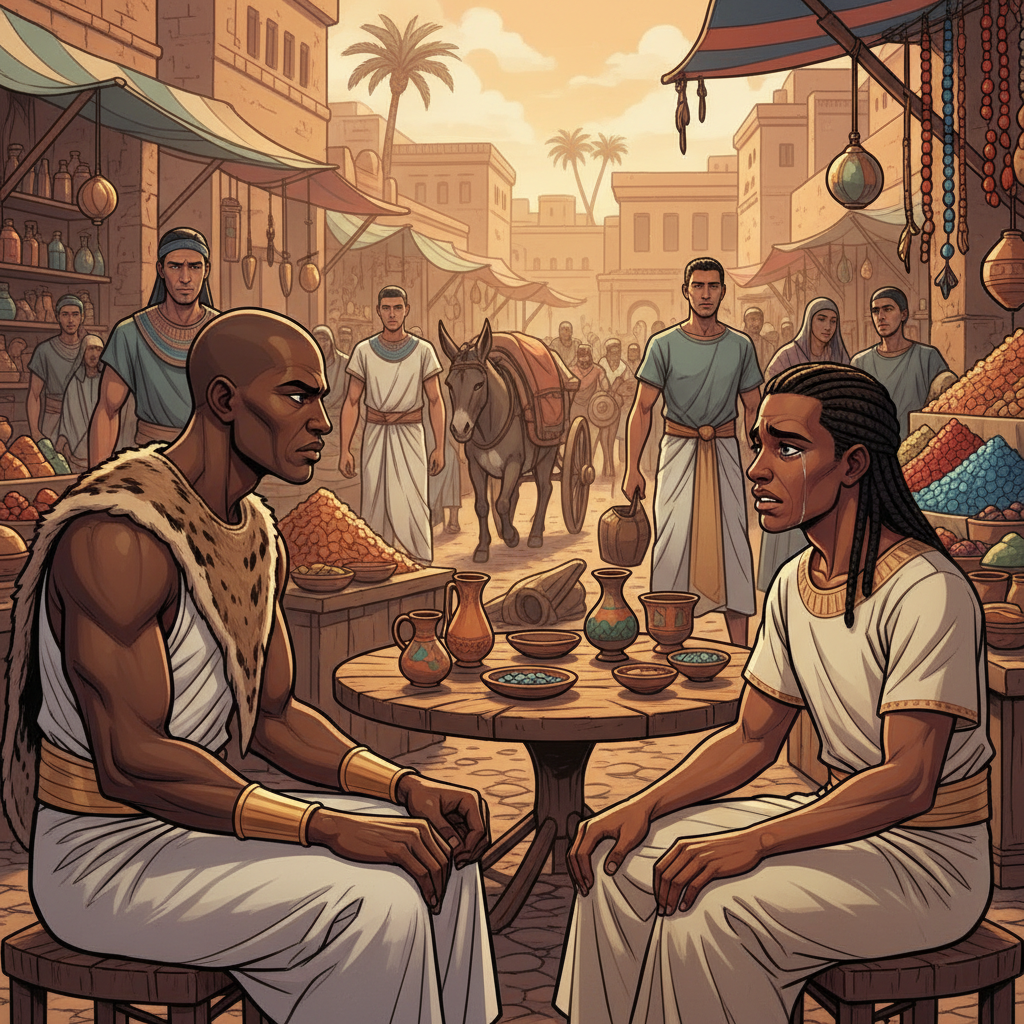
"Don't," Amun said. The word was quiet but it carried the weight of fourteen years of authority. "Don't lie to me, Penno. The vizier knows. The mines have records. The foreign merchants have been questioned. They have names, dates, quantities. This is not a suspicion — it is a certainty. The only question that remains is what happens next." Penno's mask finally cracked. The charming smile disappeared, and beneath it Amun saw something he had not expected: not guilt, not defiance, but despair.
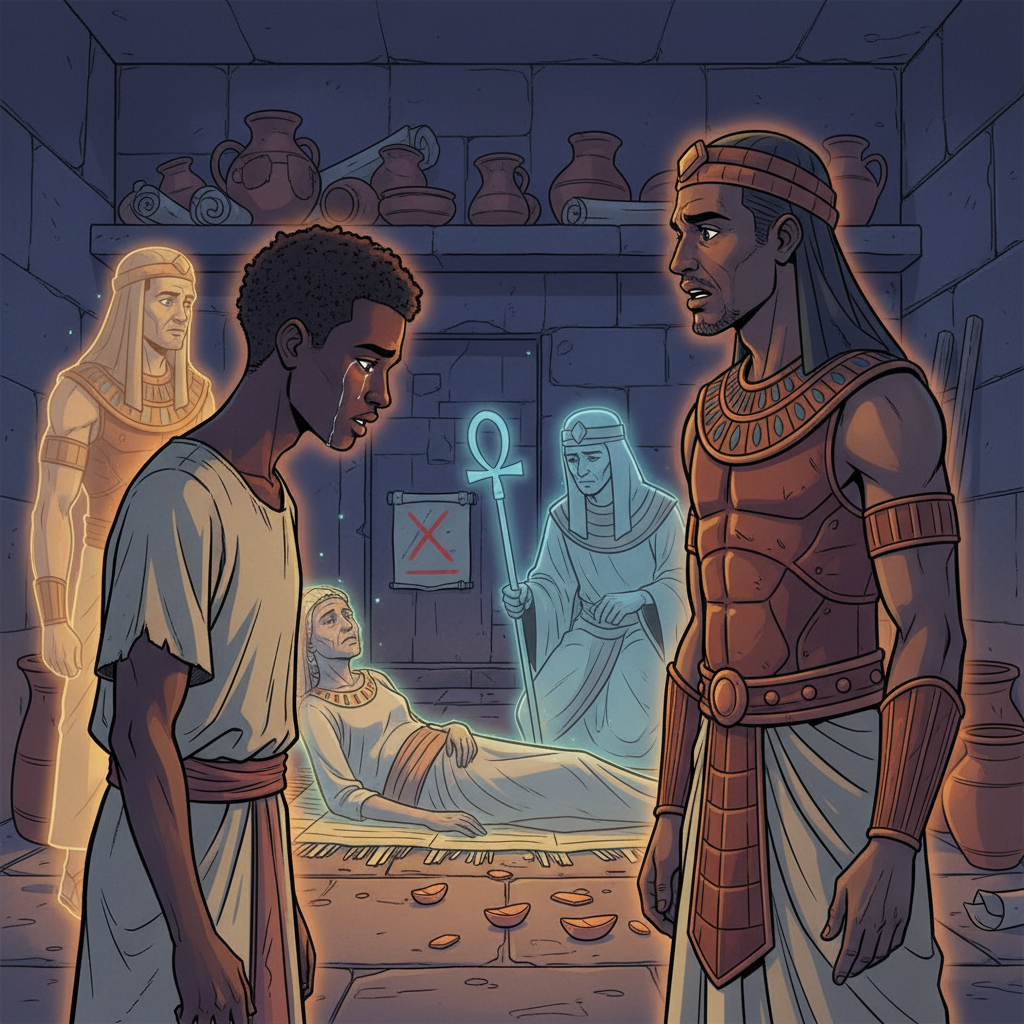
"You don't understand," Penno whispered, and his voice was the voice of the boy who used to follow Amun through the reeds by the river, not the voice of a copper smuggler. "After Mama died, the debts — she was sick for two years, Amun. The healers, the medicines, the priests. I sold everything. I borrowed from everyone. And when there was nothing left to sell and no one left to borrow from, a man offered me work. Easy work. Just move some copper from one place to another. I knew it was wrong. I knew. But the alternative was prison for the debts, and who would remember Mama then?"
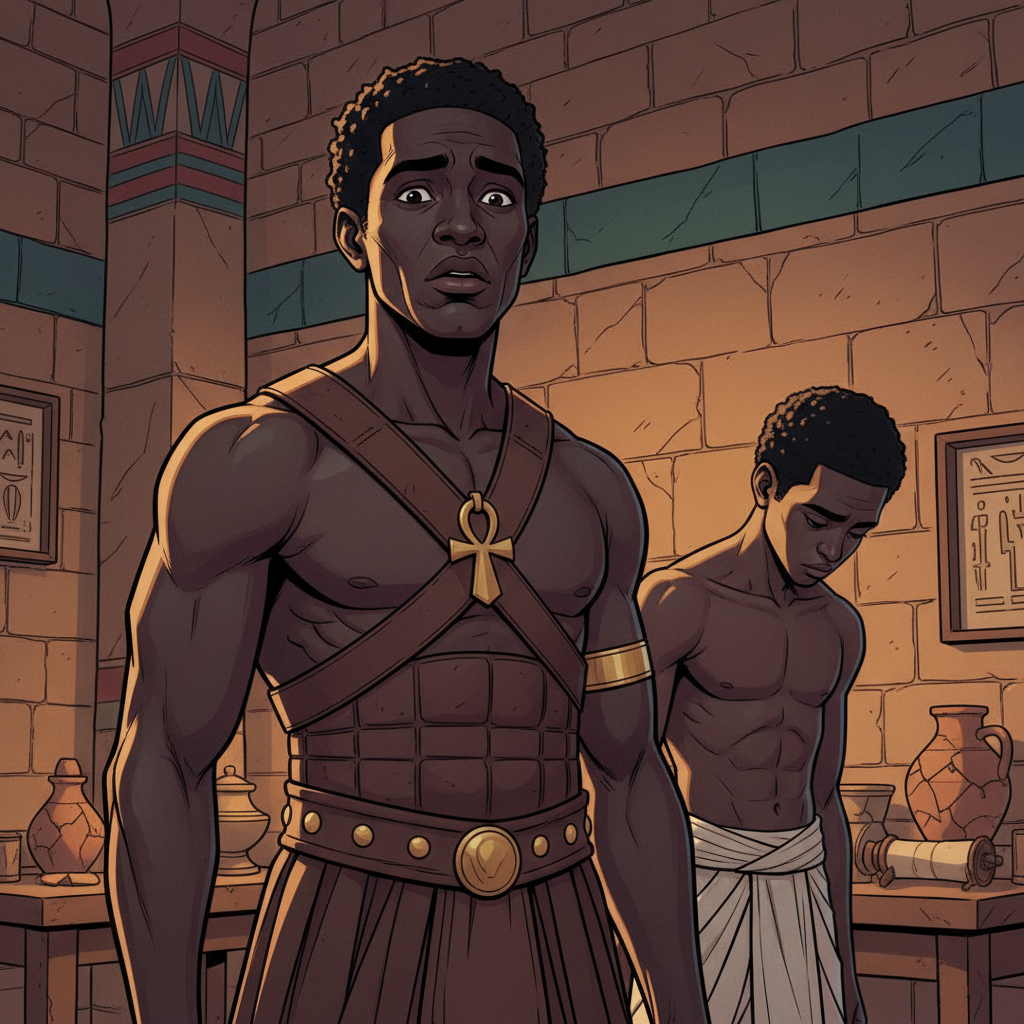
Amun listened. He let his brother speak without interruption — every justification, every rationalization, every thread of the story that had led a good-hearted young man into a web of theft and corruption. And he understood. That was the terrible part. He understood completely. The debts were real. The desperation was real. Penno had not stolen from greed — he had stolen from grief and fear and the crushing weight of obligations that a twenty-two-year-old should never have had to carry alone.
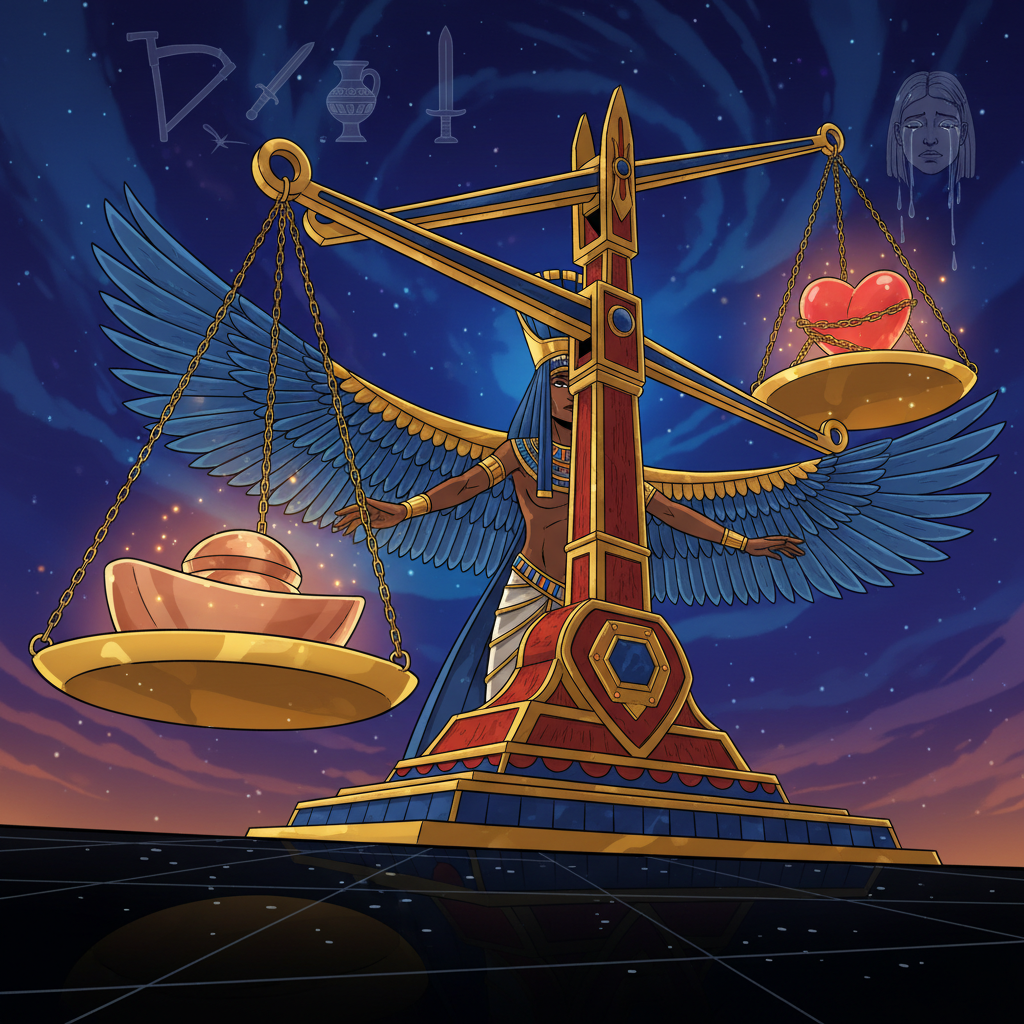
But understanding did not change the truth. The copper belonged to the people of Kush. The mines fed the forges that made tools for farmers, weapons for soldiers, and offerings for temples. Every ingot Penno had diverted was a plow that was not made, a sword that was not forged, a sacred vessel that was not cast. His brother's pain was real, but so was the harm. On the Scale of Maat, both sat waiting to be weighed.
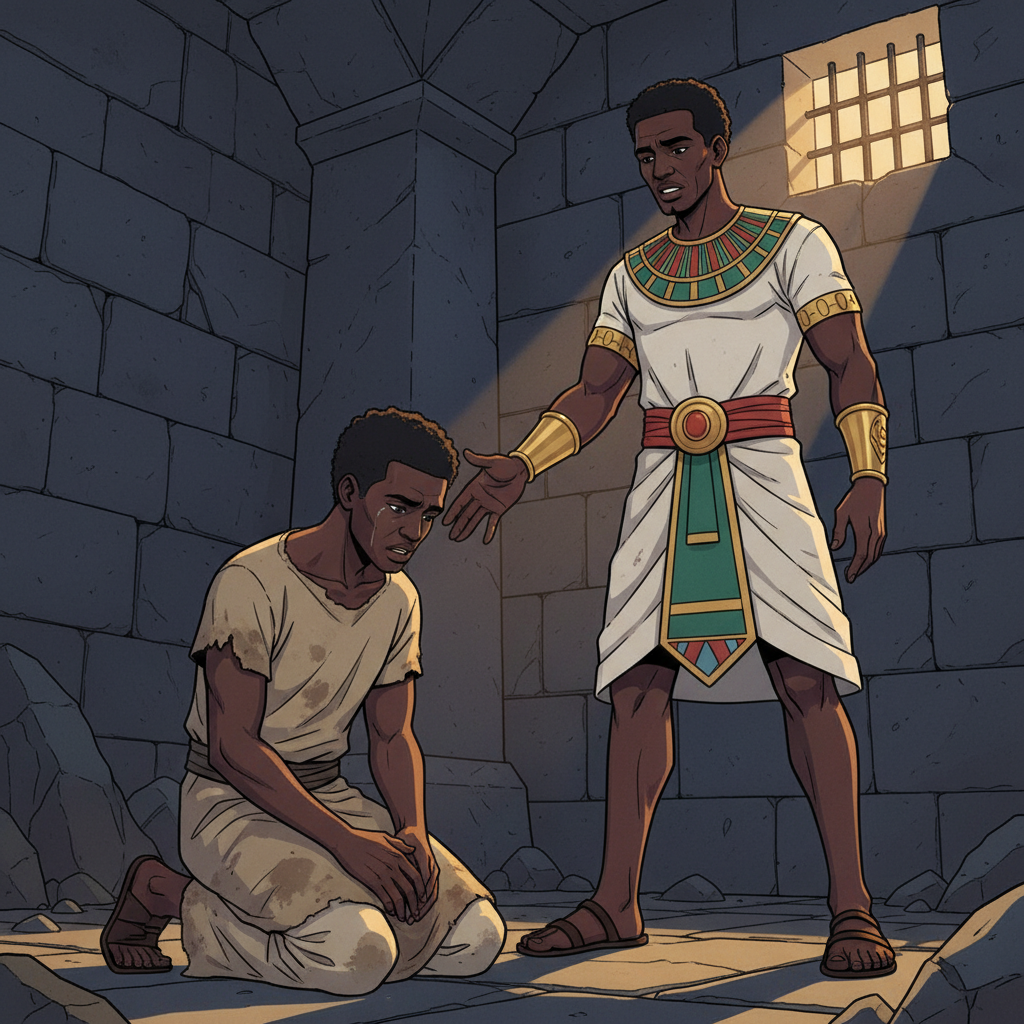
"Come with me to the vizier," Amun said. "Confess. Return what you can. Cooperate with the investigation to identify the foreign merchants and the middlemen who recruited you. If you do this — if you choose truth now, even though it is late — the judges may show mercy. Not forgiveness. You stole, and there must be consequences. But mercy for a man who confesses is different from punishment for a man who hides."
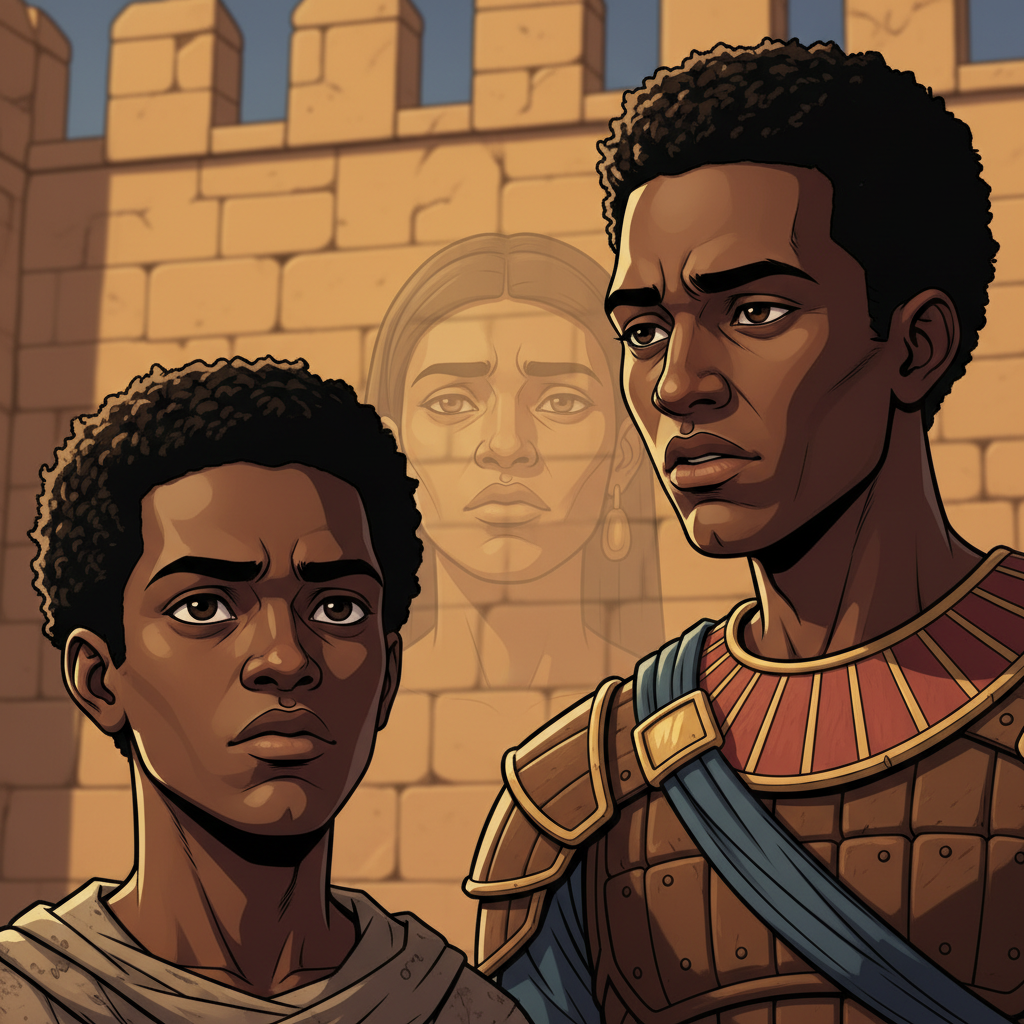
Penno stared at his brother. "And our oath? Mama made us promise to protect each other. If you turn me in, you break your word to our dead mother." The words hit Amun like stones. He felt each one land in his chest and settle there with a weight that made breathing difficult. He looked at his brother's face — so like their mother's face, the same wide-set eyes, the same broad nose, the same stubborn jaw that meant a Medjay or a thief, depending on which path life took.
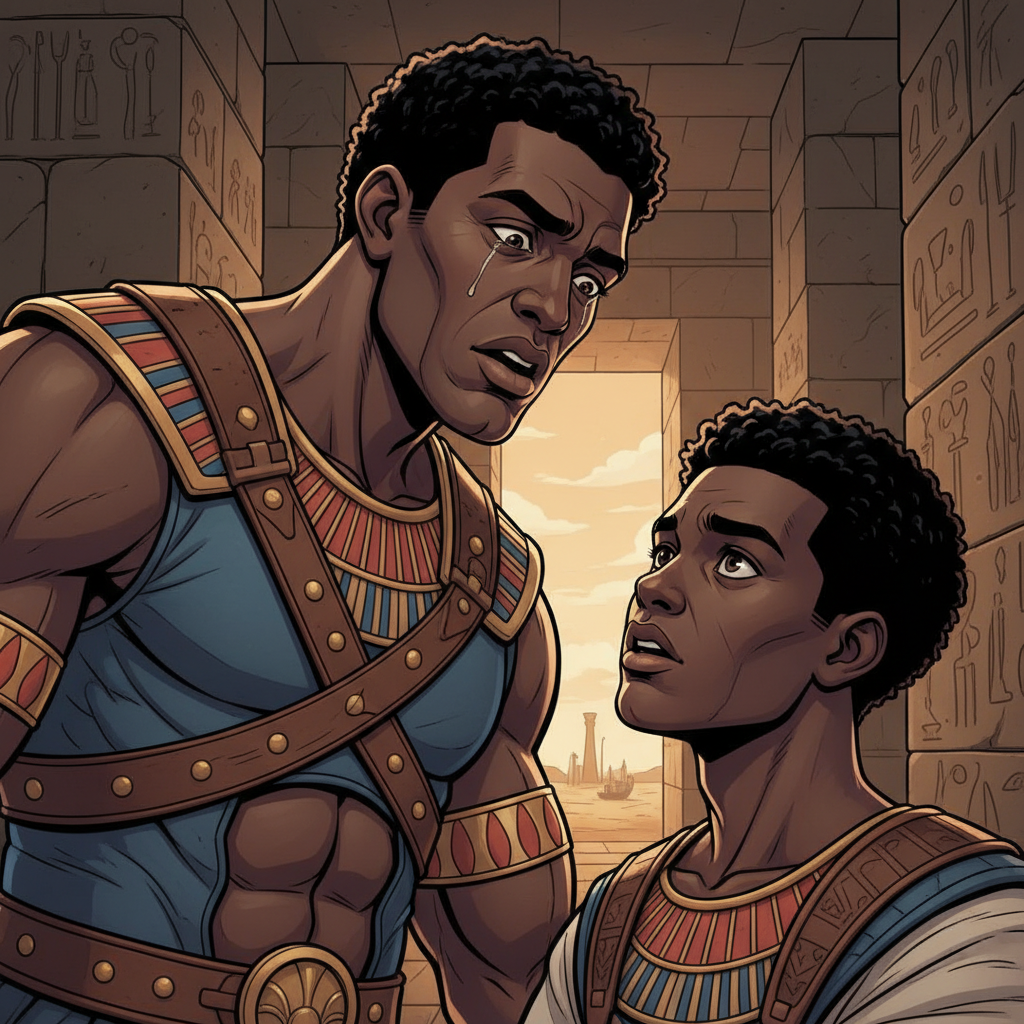
"I am protecting you," Amun said, and his voice broke on the word protecting — the first crack in his composure that Penno had ever seen. "If you run, they will find you. The vizier's agents are already watching the river roads. If you fight, you will die or kill, and your Ka will carry that weight into the next world. If you confess, you face punishment — but you keep your honor. You keep your Ka light enough to face Mama when you see her again. I am not choosing duty over love, Penno. I am choosing the only path that does not destroy you."
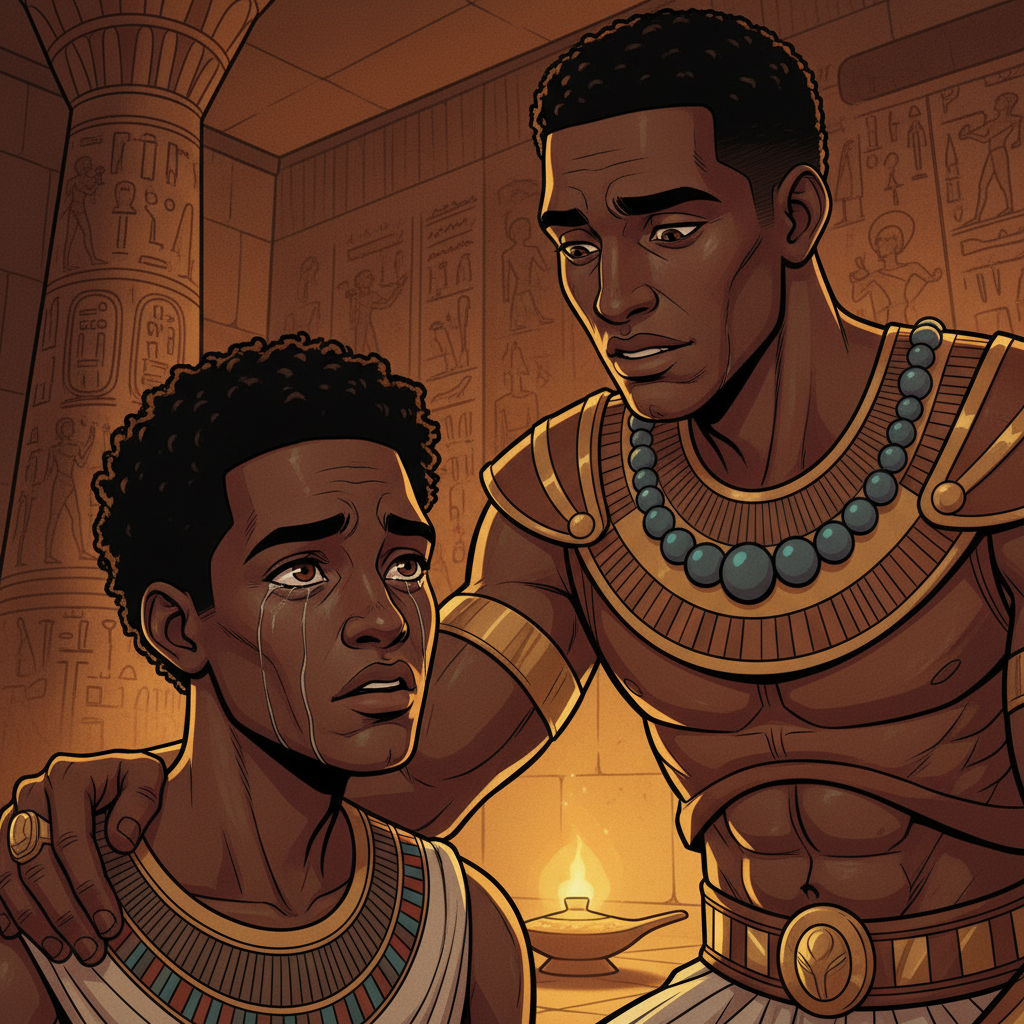
Penno wept. Not the quiet tears of their mother's deathbed but the deep, shaking sobs of a man who has been carrying a secret so heavy that releasing it feels like drowning and breathing at the same time. Amun sat with him through it, his hand on his brother's shoulder — the Medjay's hand, the brother's hand, both at once. When the tears finally slowed, Penno looked up with red eyes and said, "Will you stand with me? At the kenbet? Not as a Medjay. As my brother." Amun squeezed his shoulder. "I will stand with you everywhere," he said. "That is what the oath means."
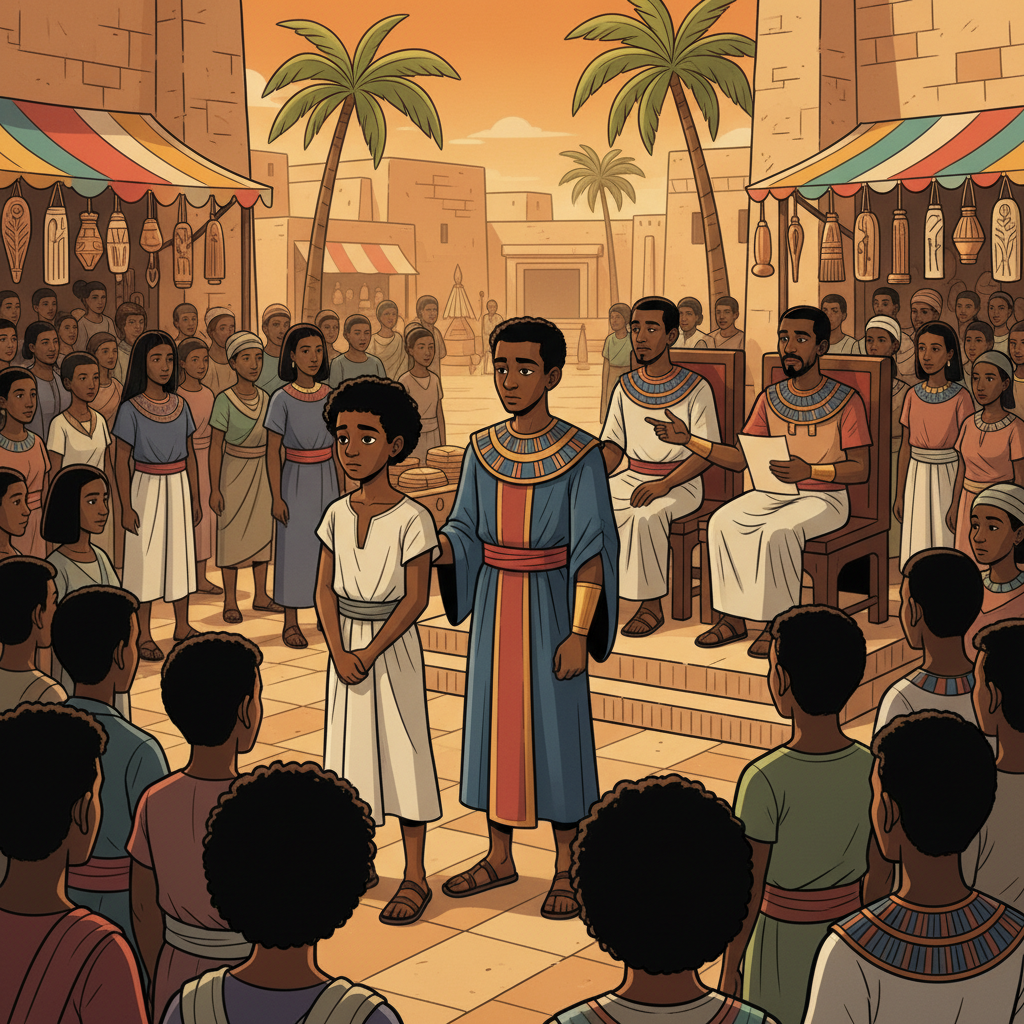
The trial was held ten days later. Penno confessed everything — the debts, the recruitment, the copper, the foreign merchants. He named every middleman and returned what funds he could. The judges sentenced him to three years of labor in the very mines he had stolen from — hard work, but not cruel. They noted his full cooperation and the circumstances of his debts. Amun stood beside his brother throughout, not as a Medjay commander but as family, his hand on Penno's arm when the sentence was read.
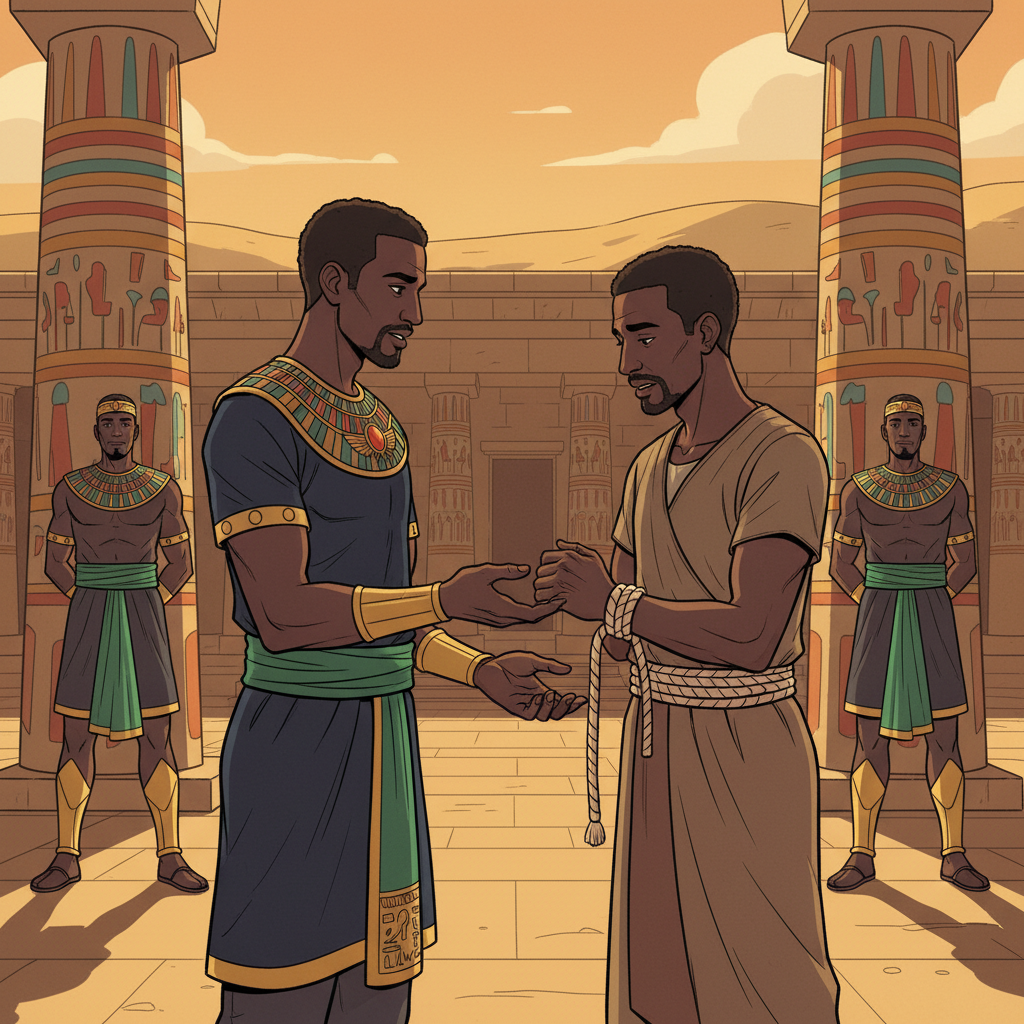
Afterward, as guards led Penno away to begin his sentence, the brothers faced each other one last time. Penno's wrists were bound with soft rope — a courtesy the guards extended because of Amun's rank, though Amun had not asked for it. "I am sorry, brother," Penno said. "Not for what I did — I was wrong and I know it. But for putting you in this position. For making you choose." Amun shook his head. "You did not make me choose. Life made us both choose. And we both chose Maat — you by confessing, me by bringing you to the truth. Mama would understand."
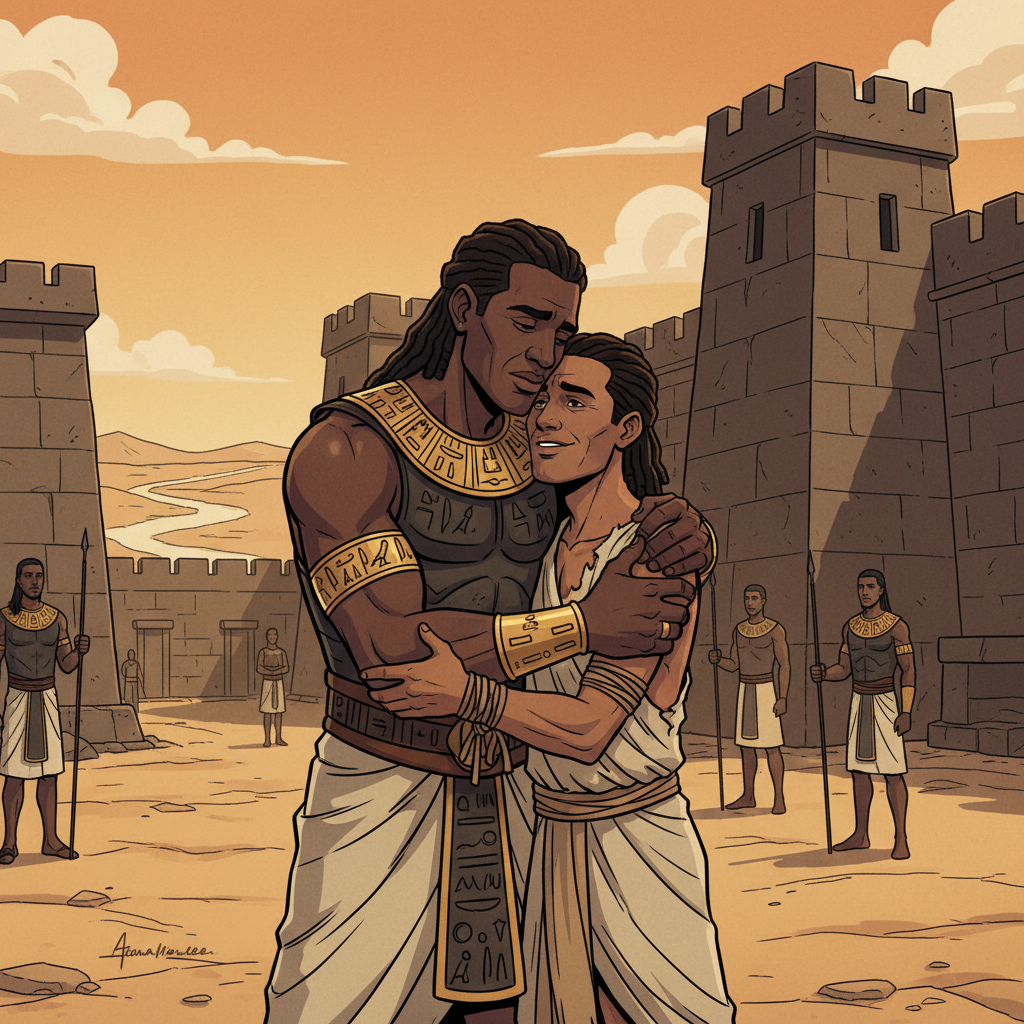
Penno managed a small, broken smile — nothing like his old charm, but something more real. "Three years," he said. "I will come home in three years and we will drink palm wine by the river and I will never steal so much as a date from a market stall." Amun pulled his brother into an embrace that was fierce and brief and wordless, because some things cannot be spoken — they can only be held.
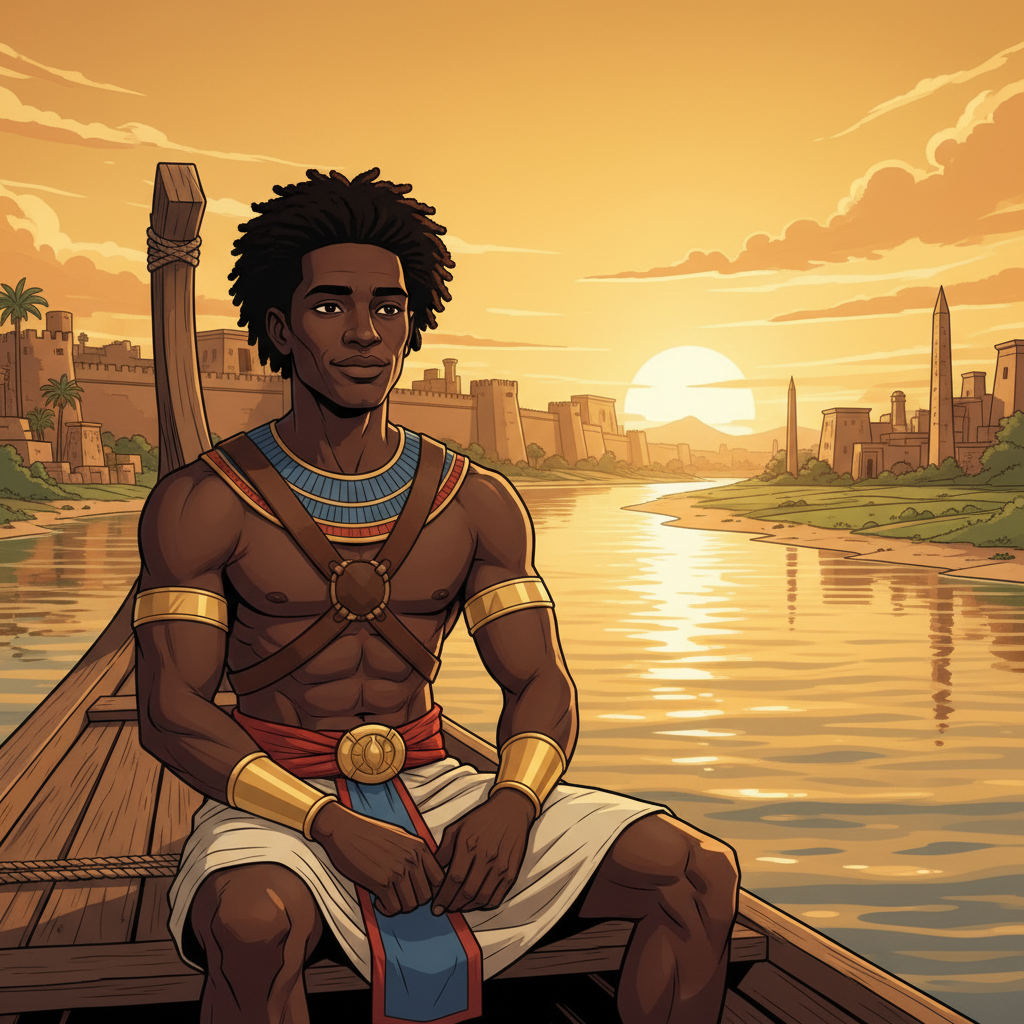
On the long journey back to Buhen, Amun sat at the bow of the boat and watched the Nile carry him north. The river did not judge. It flowed past cities and villages, past temples and farms, past the just and the unjust alike. It simply moved, carrying everything forward. Amun thought about his mother's oath and his Medjay oath, and he understood now that they were not as opposed as he had feared. Protecting his brother did not mean shielding him from consequences. It meant walking beside him through them. Love without truth is not protection — it is a cage gilded with good intentions. And duty without love is not justice — it is machinery. The hardest form of Maat was holding both at once, the way the Scale holds the heart and the feather — each one necessary, neither one sufficient alone.