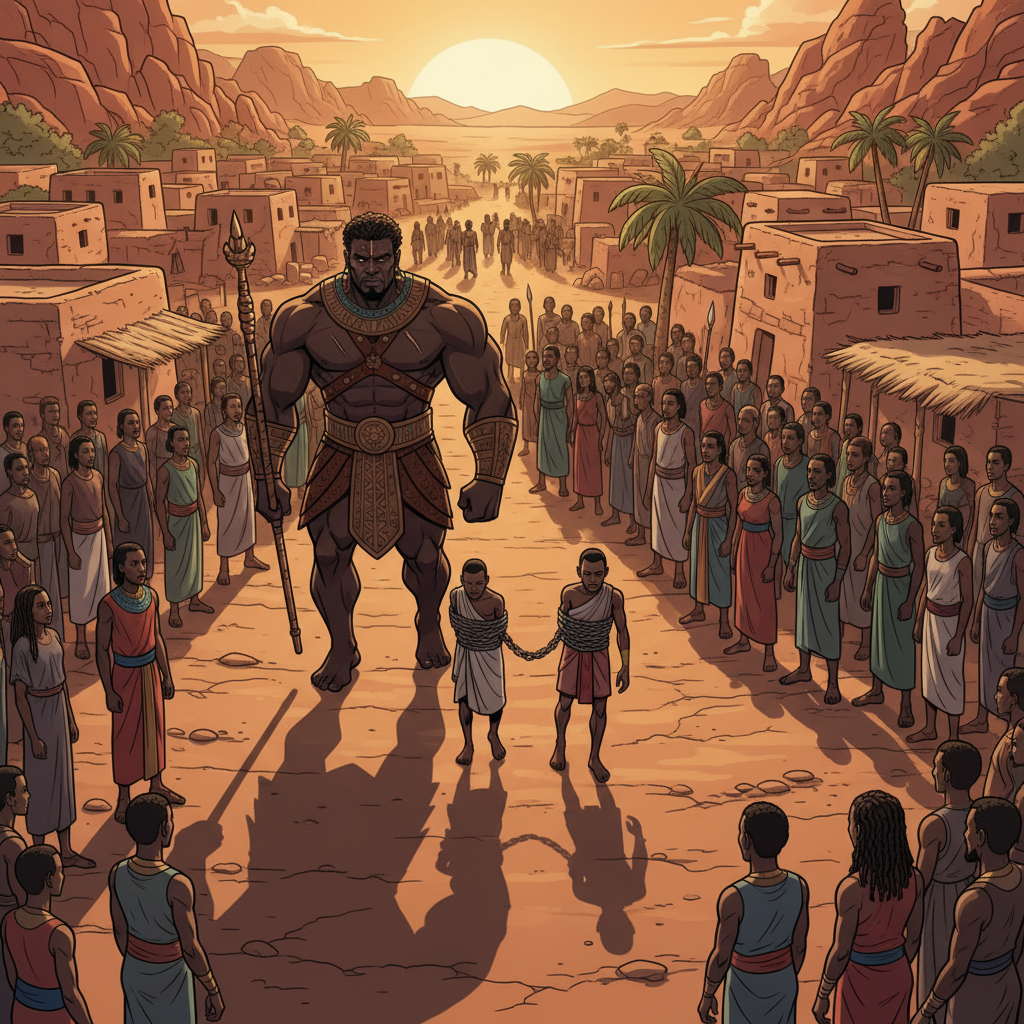
They brought the raider to the village of Iken in chains, and every family came out to watch. Kashta walked behind the prisoner, his massive frame casting a long shadow in the late afternoon sun. He was forty-one years old, a Medjay warrior-judge who had patrolled the western desert border for eighteen years. His very dark ebony skin was mapped with scars — a thin line across his forehead from a thrown spear, a ragged mark on his right forearm from a knife that had gotten too close, and the three ritual lines on each cheek that marked him as a son of the border clans.
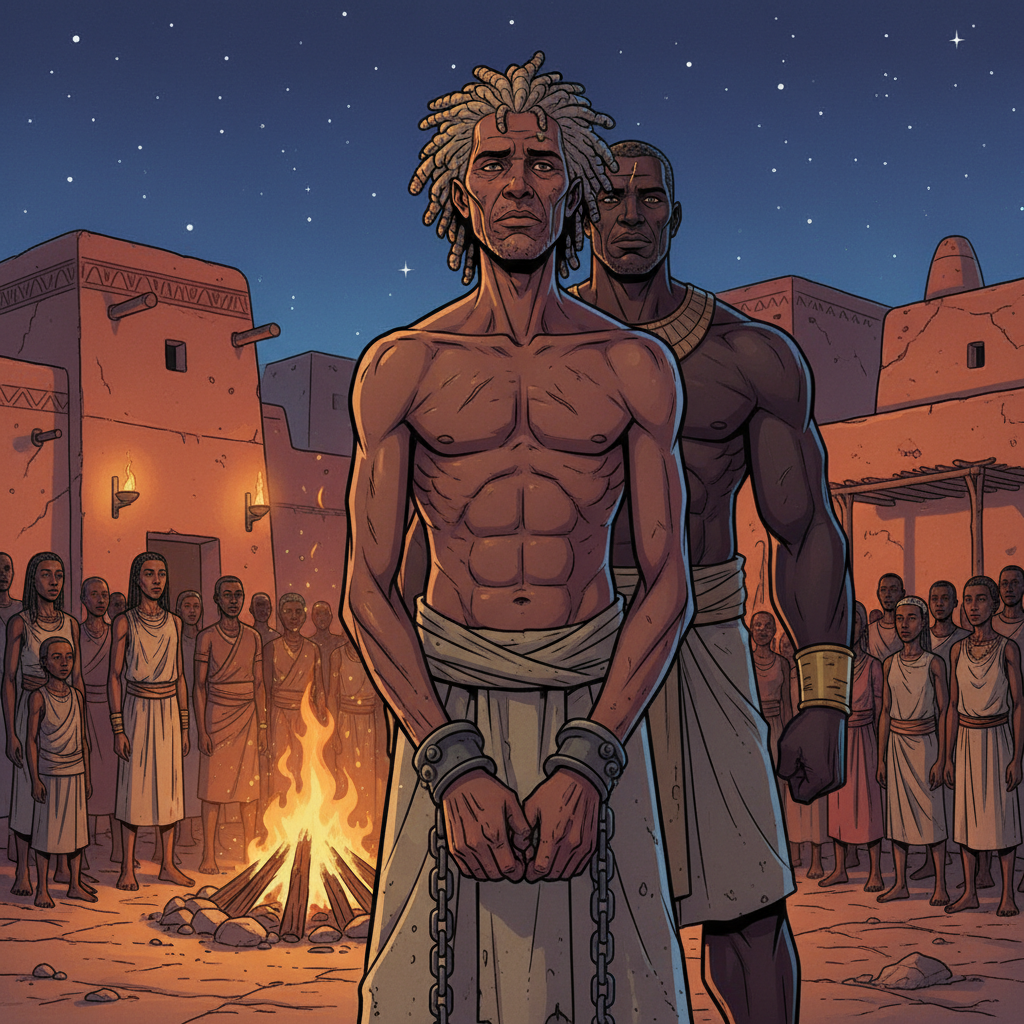
The prisoner's name was Meshwesh, and he was the leader of a Libyan raiding band that had terrorized the border villages for nearly a decade. He was a tall, weathered man with sun-darkened skin, tangled hair bleached by years of desert living, and hands that were scarred from a lifetime of violence. He walked with his chin up and his eyes forward, showing neither fear nor defiance — the blank composure of a man who had accepted whatever came next.
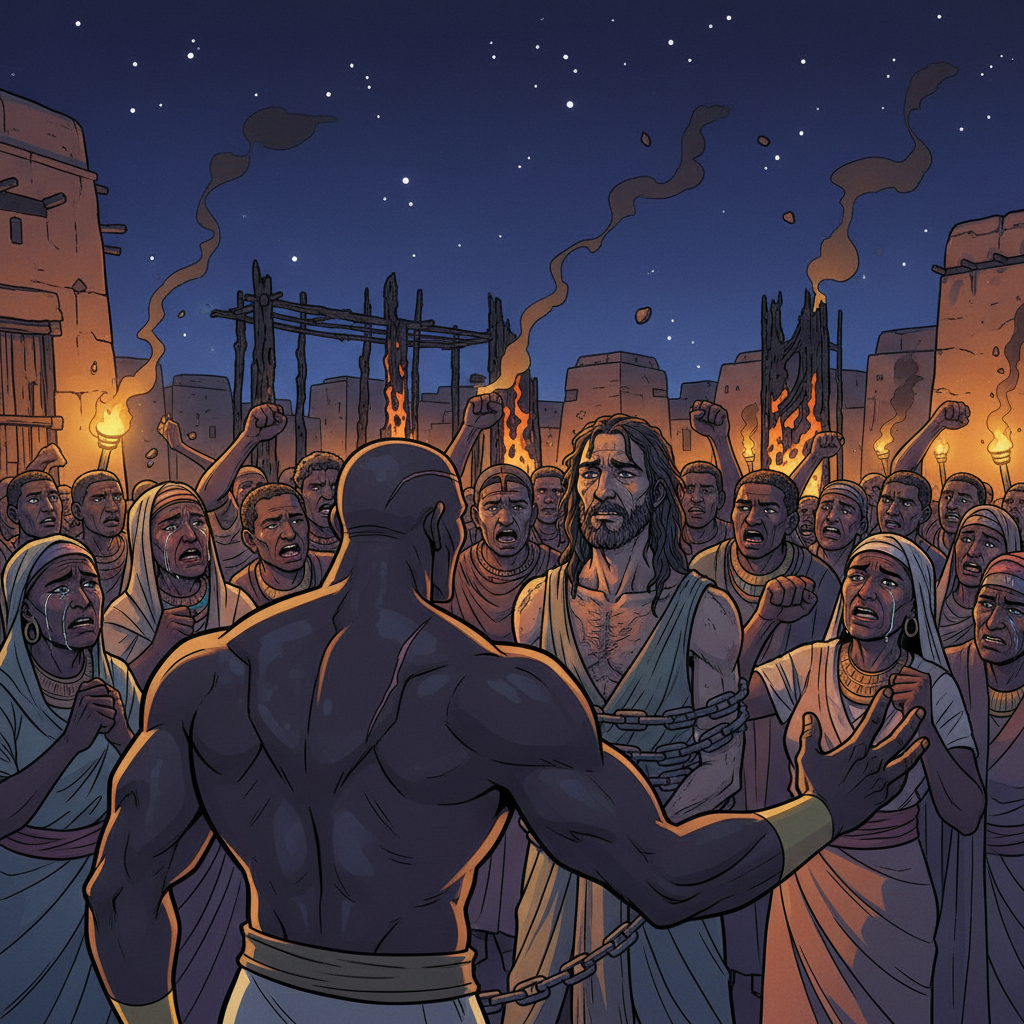
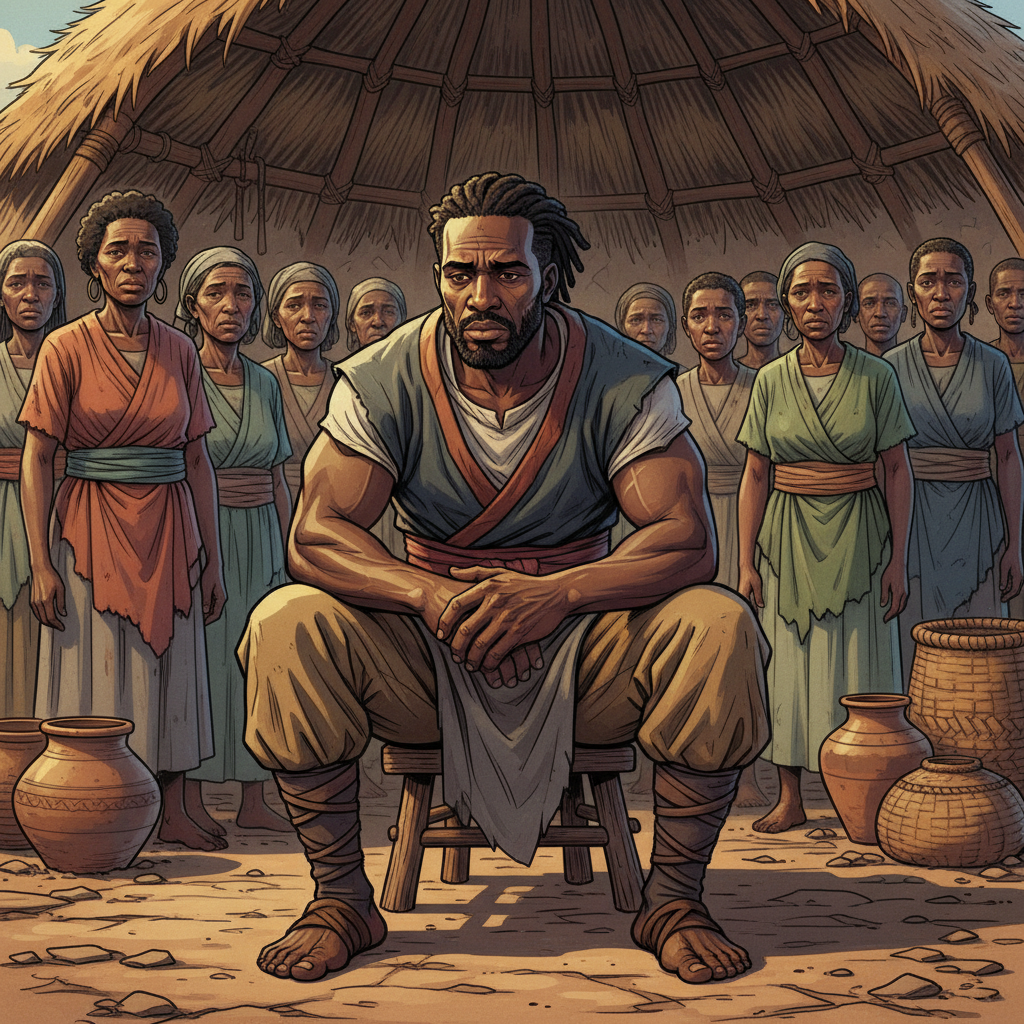
The village of Iken had suffered more from Meshwesh's raids than any other settlement along the border. Three young men had been killed in raids over the past six years. Livestock had been stolen. Granaries had been burned. Women had been terrorized. Children had grown up with the sound of warning drums woven into their nightmares. When the villagers saw Meshwesh in chains, some wept with relief. Others shouted for his death. A few threw stones, and Kashta had to shield the prisoner with his own body — not out of sympathy, but because justice required that the accused arrive at the kenbet alive.
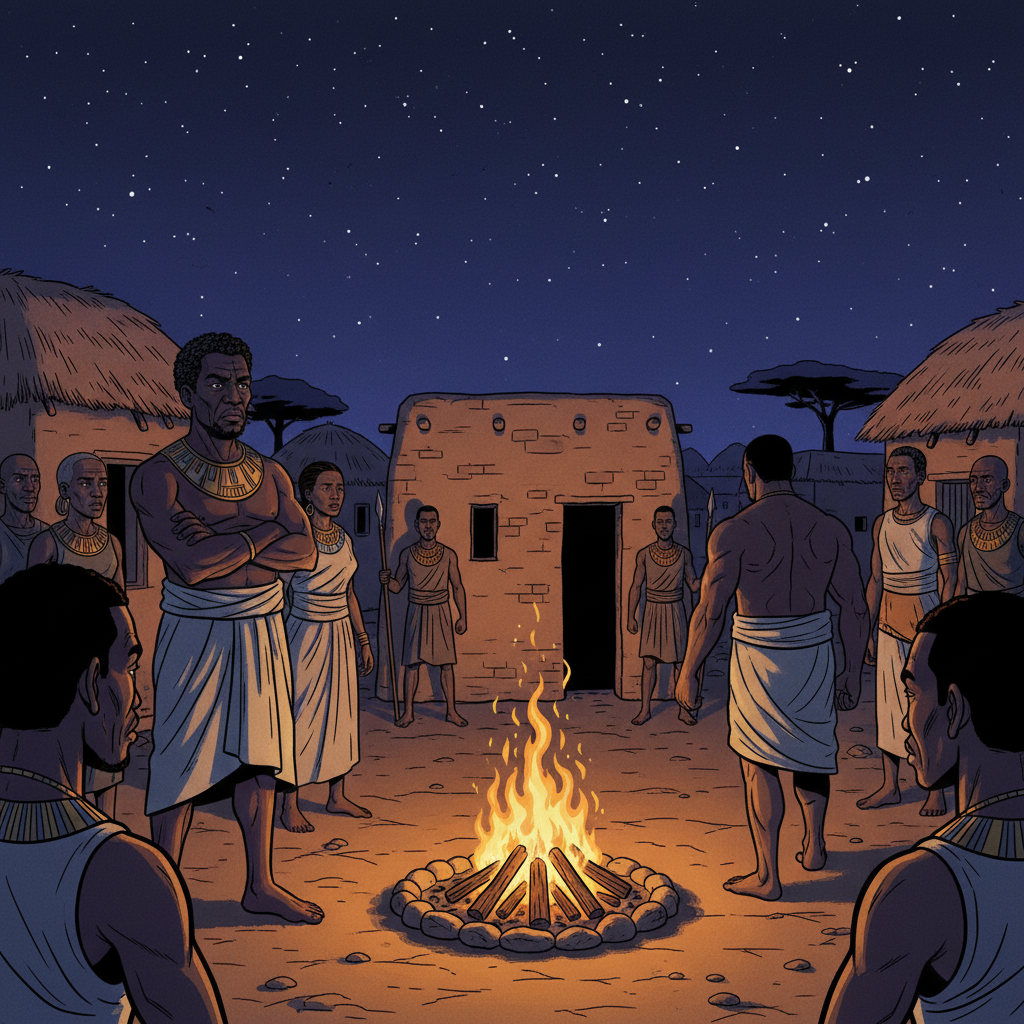
Kashta secured Meshwesh in the village holding cell — a small mudbrick room with a single window too narrow for a man's shoulders. He posted two guards and walked to the central fire pit where the village elders had already gathered. The mood was thick with anger and grief. Mothers who had lost sons stared at the holding cell with eyes that burned like embers. Elder Baraka, whose eldest grandson had been killed in the last raid, stood with his arms crossed and his jaw set like carved granite.
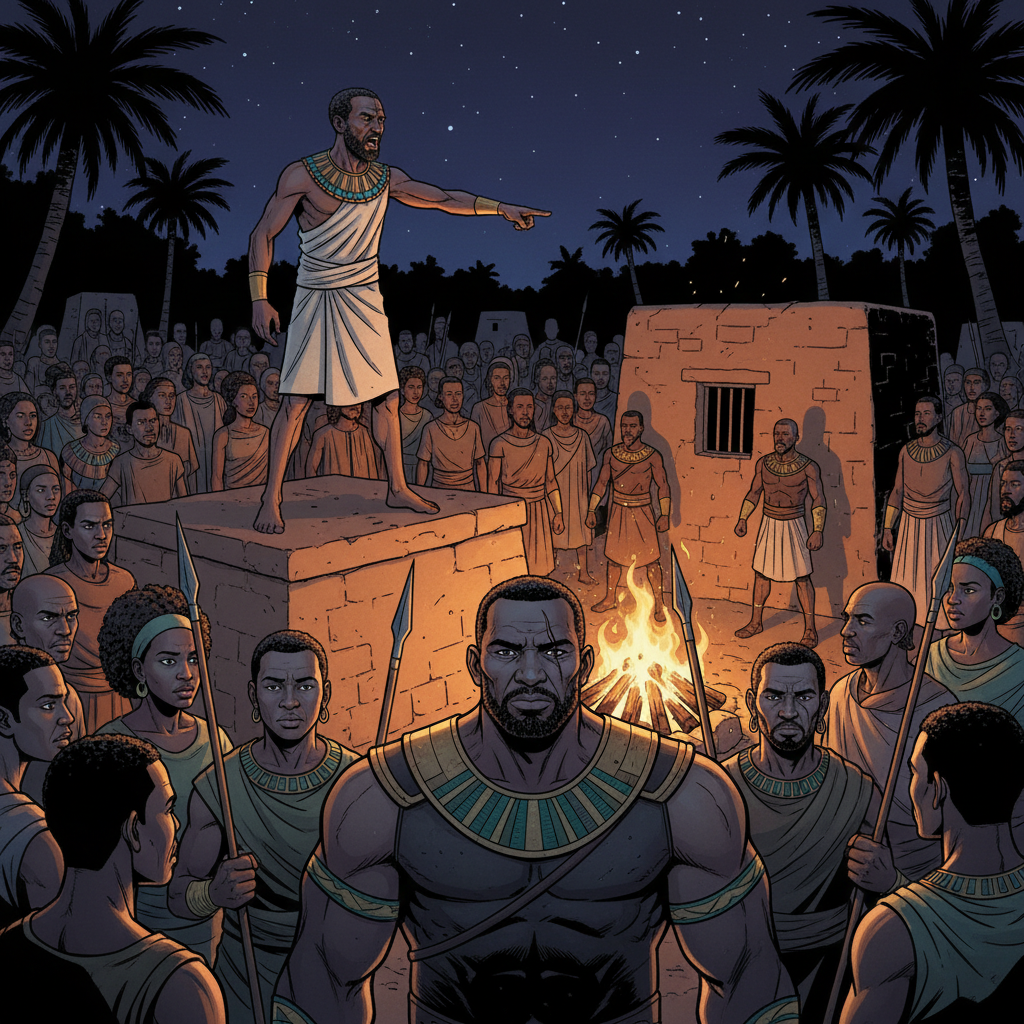
"We know what justice demands," Elder Baraka said, his voice rough with controlled fury. "This man has killed our sons. He has burned our grain. He has stolen our peace for ten years. The law of the border is clear — a raider who takes life forfeits his own. Execute him at dawn and let us finally sleep without fear." Murmurs of agreement rippled through the crowd. Kashta listened without expression. The border law was indeed clear. Meshwesh had been caught in an ambush during his latest raid, his sword still wet.
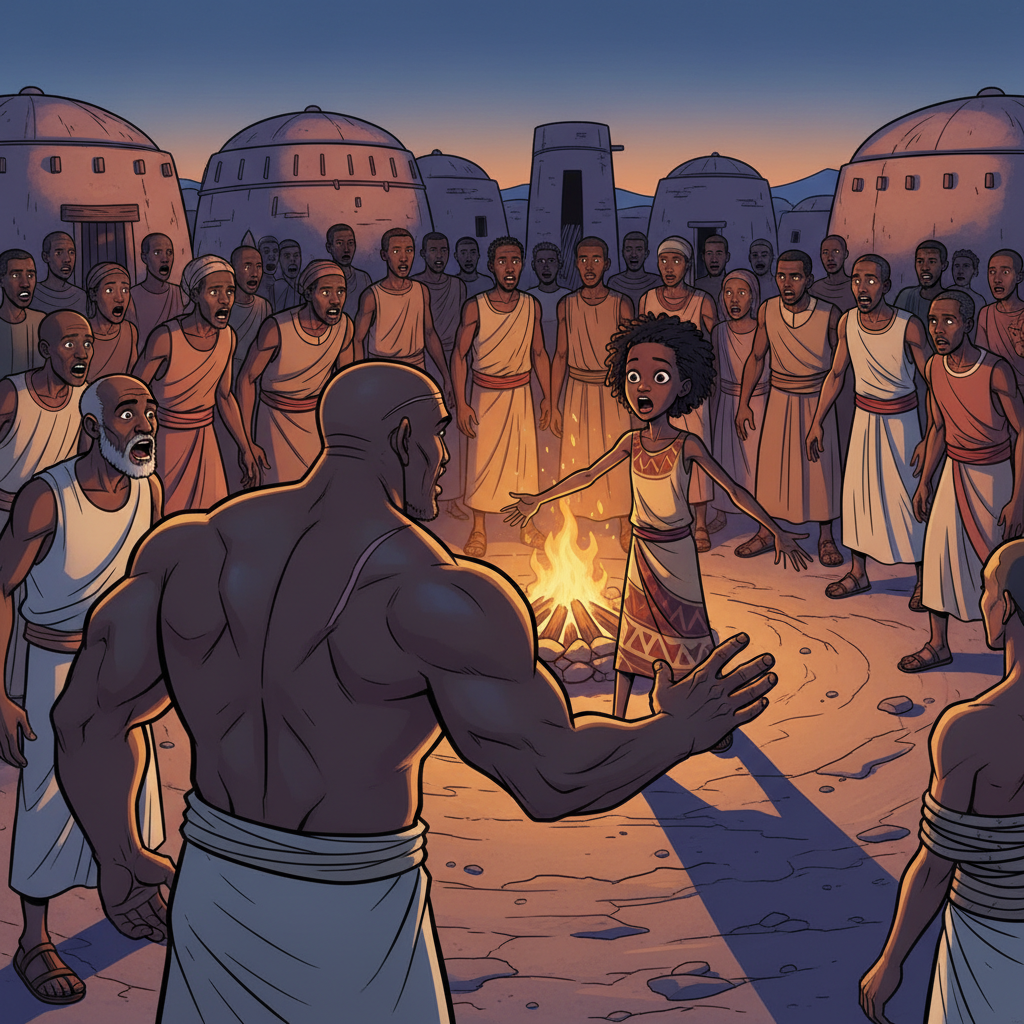
Kashta was about to set the execution for dawn when a small voice cut through the crowd like a blade through linen. "Wait." Everyone turned. A girl was pushing through the circle of adults — a thin child of about eight, with deep brown skin and enormous dark eyes that seemed too old for her small face. Her name was Aset, and she was the daughter of Nia, one of the village potters. Kashta had seen Aset around the village but had never heard her speak more than a few words at a time. She was known as the quiet child, the one who watched.
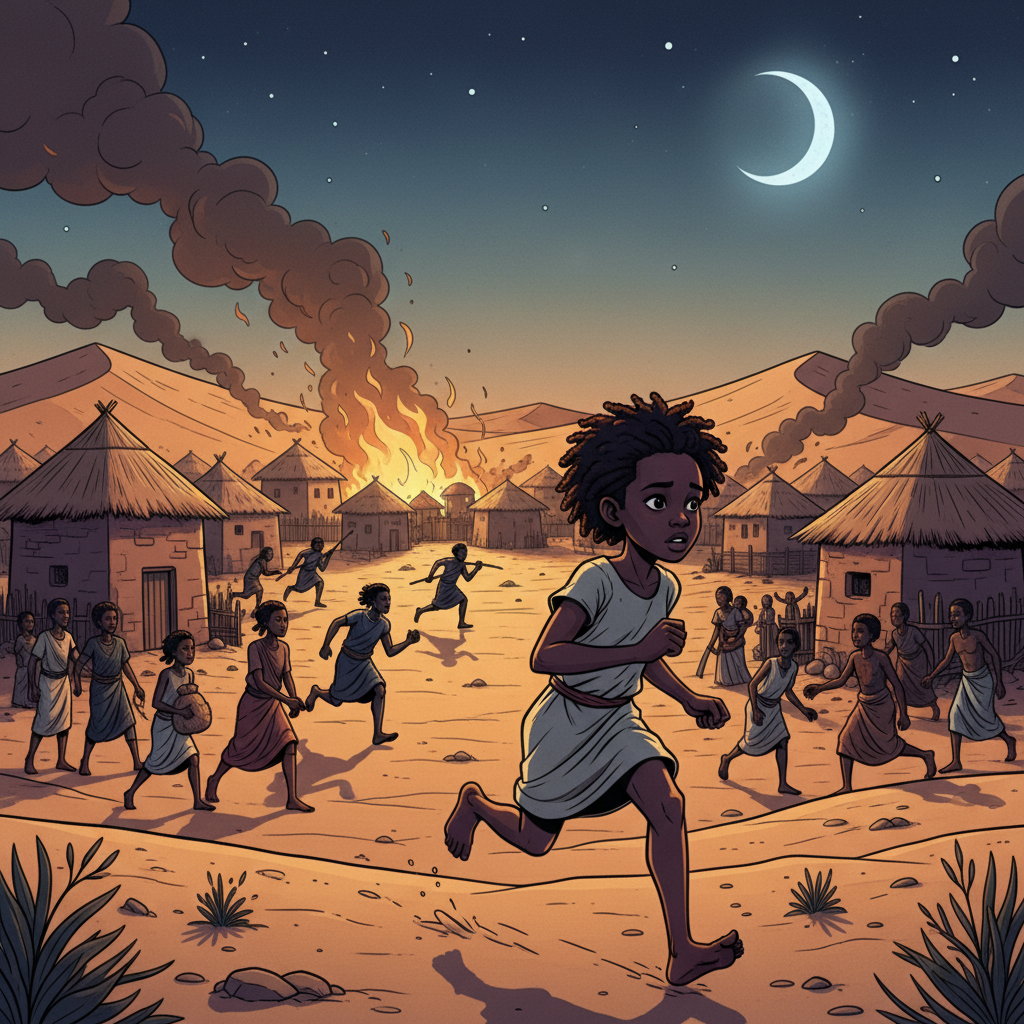
"I have something to say about the prisoner," Aset said. Her voice trembled, but she did not lower her eyes. Kashta crouched down to her level — a habit he had developed over years of working with frightened witnesses. "Speak, child. The kenbet hears all voices." Aset took a deep breath. "Two years ago, during the harvest moon raid, I was lost. The raiders came at night and everyone ran. I could not find my mother. I ran into the desert alone."
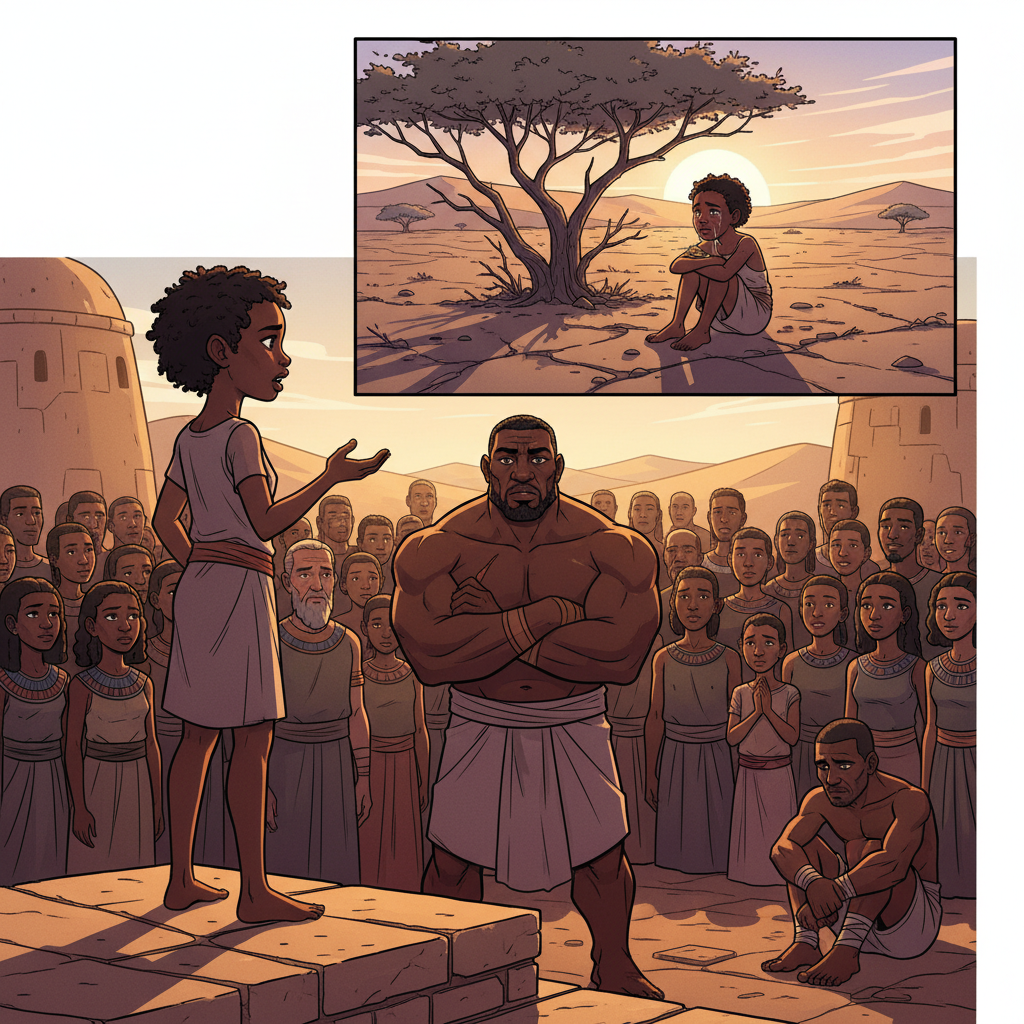
"I walked until the sun came up and then I could not walk anymore. I sat under a thorn bush and cried because I was going to die and nobody would find me." Aset's voice was steady now, the trembling gone, replaced by the careful precision of someone who has rehearsed this story in their mind a thousand times. "Then a man came. He was one of the raiders. I knew because he carried their weapons and wore their marks. He looked at me for a long time. Then he gave me water from his own skin and showed me which direction the village was. He said 'Go home, little one.' And he walked away."
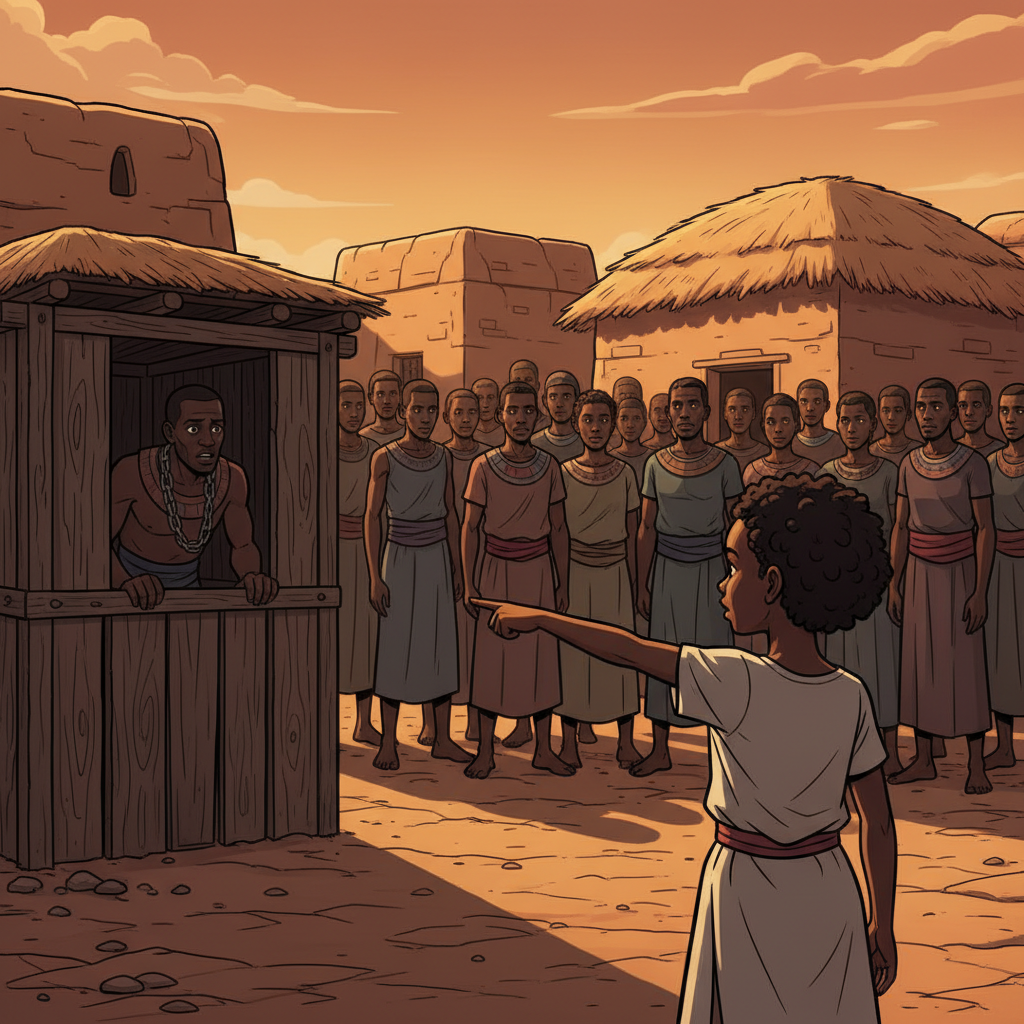
The village fell absolutely silent. Aset pointed at the holding cell. "That man was the prisoner." The silence deepened into something heavy and uncomfortable, like a stone placed on every chest. Kashta looked at the child's face and saw only earnest, unwavering honesty. This was not a story she had been coached to tell. This was a memory she had carried alone for two years, waiting for the moment when it would matter.
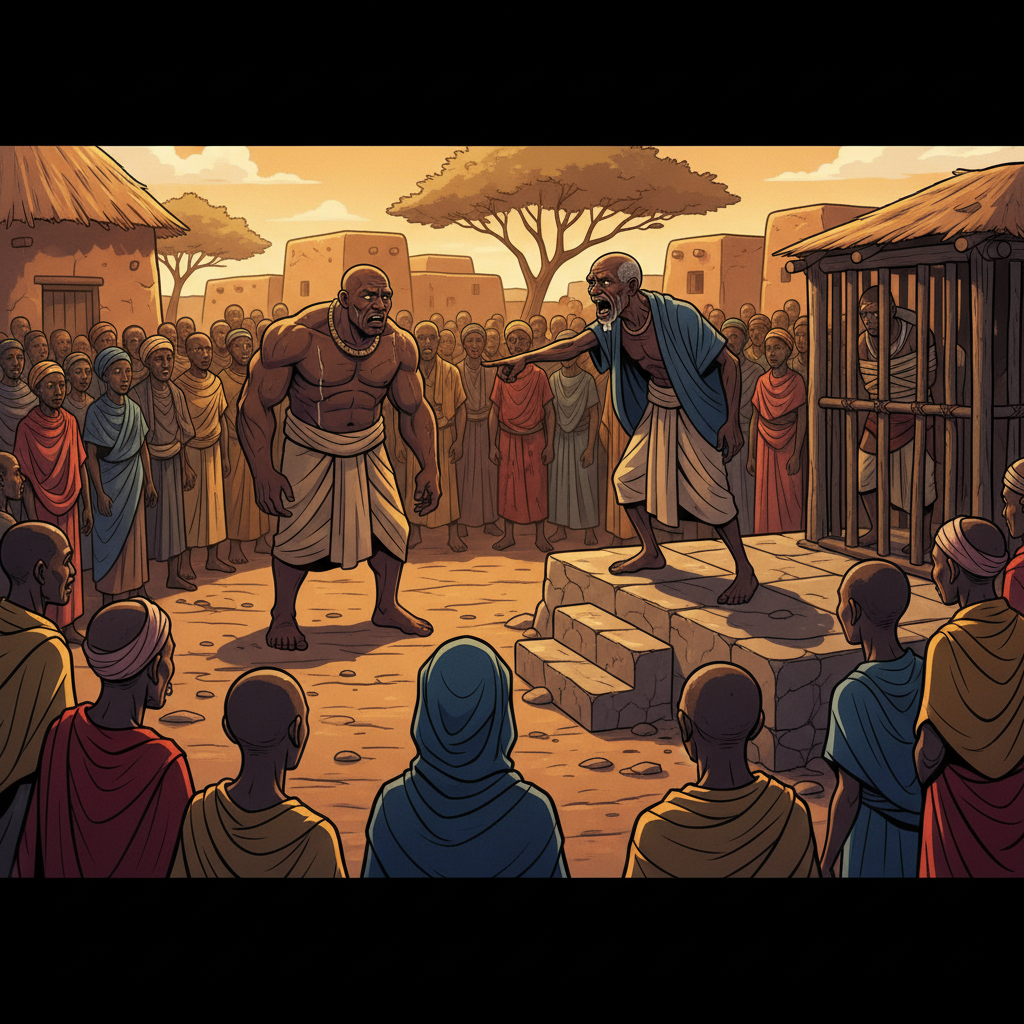
Elder Baraka broke the silence. "One cup of water does not wash away ten years of blood," he said harshly. "My grandson is dead. Will a cup of water bring him back?" His voice cracked on the last word, and Kashta saw that behind the anger was a grief so deep it had calcified into something like stone. Baraka was not a cruel man. He was a broken one. And broken men often mistake vengeance for justice because both stop the pain for a moment.
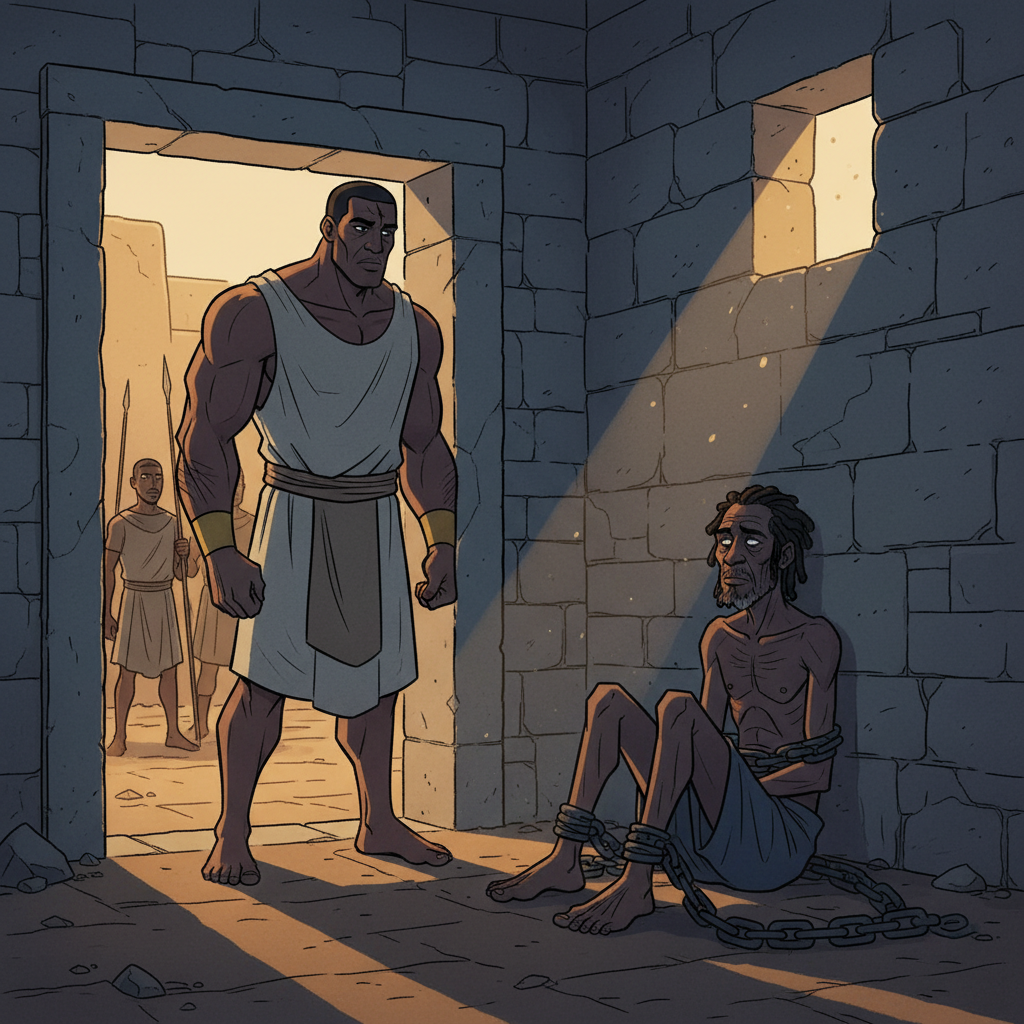
Kashta asked to speak with Meshwesh alone. The guards let him into the holding cell, where the raider sat on the floor with his back against the wall. In the dim light from the narrow window, Meshwesh's face looked older than his years — the face of a man who had lived hard and expected nothing. "The child told her story," Kashta said. "Is it true?" Meshwesh was quiet for a long time. "It is true," he said finally. "I gave her water and showed her the way home."
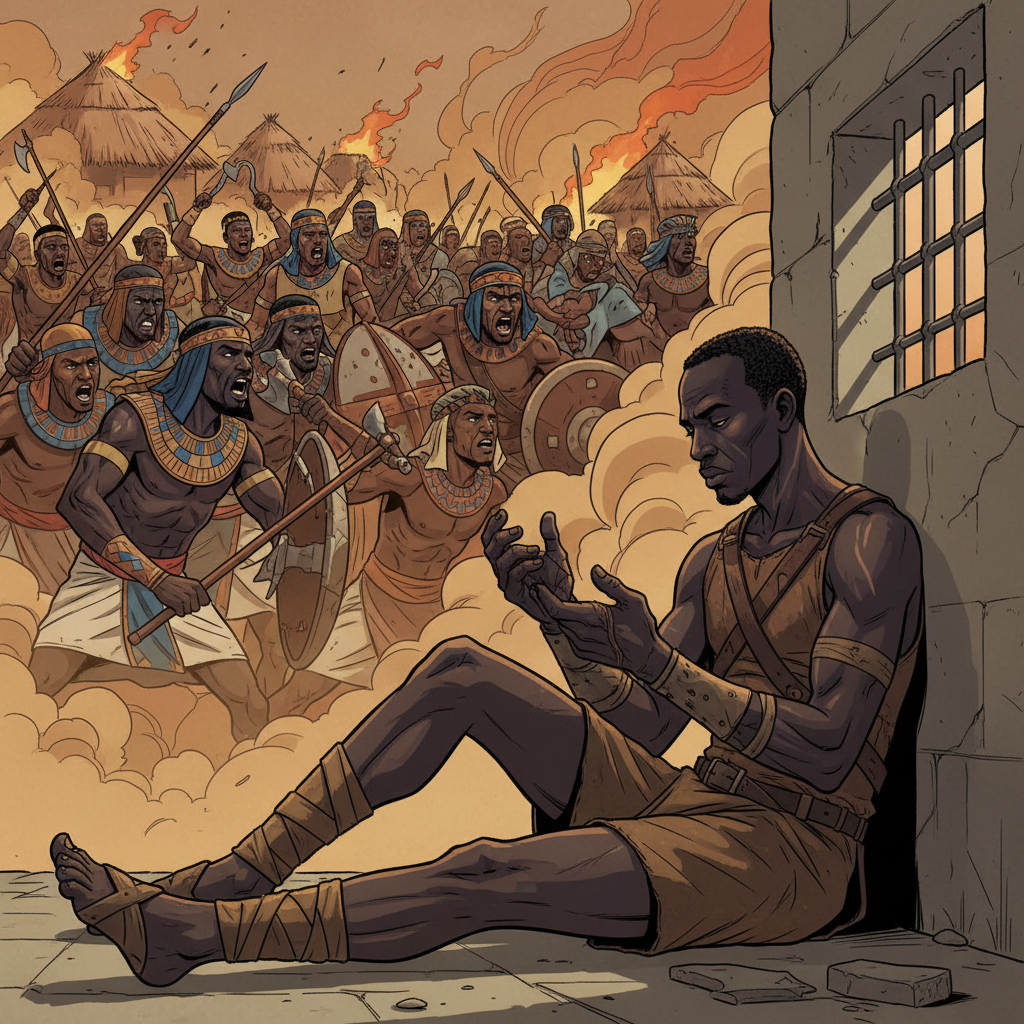
"Why?" Kashta asked. It was the only question that mattered. Meshwesh looked at his scarred hands. "Because she was the age my daughter would have been. My daughter died of fever when she was three. I have done many terrible things in my life. I have raided, stolen, burned, and fought. I am not a good man. But when I saw that child sitting under the thorn bush, crying for her mother — something broke open inside me that I thought was dead."
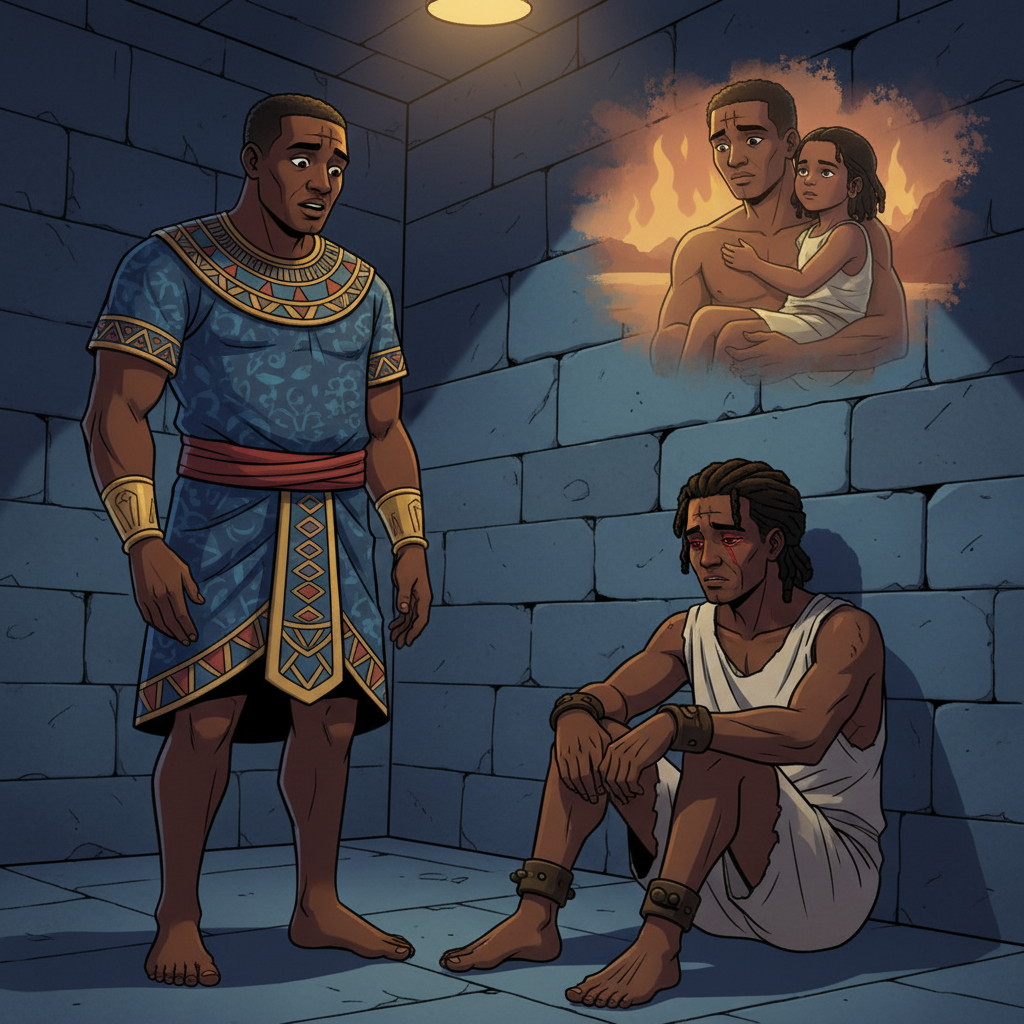
"I could not save my own daughter," Meshwesh continued, his voice barely audible. "She died in my arms and there was nothing I could do. When I saw Aset — I could save her. So I did. It does not make me a good man. It does not erase what I have done. But in that moment, for the first time in years, I remembered what it felt like to be human."
Kashta sat with this. He was a warrior-judge — a man trained to weigh evidence and pronounce verdicts. The evidence against Meshwesh was overwhelming. The raids were real. The deaths were real. The suffering of Iken was carved into the faces of every person in the village. But Aset's testimony was also real, and it pointed to something the border law did not account for: a moment of mercy from the last person anyone would expect to show it.
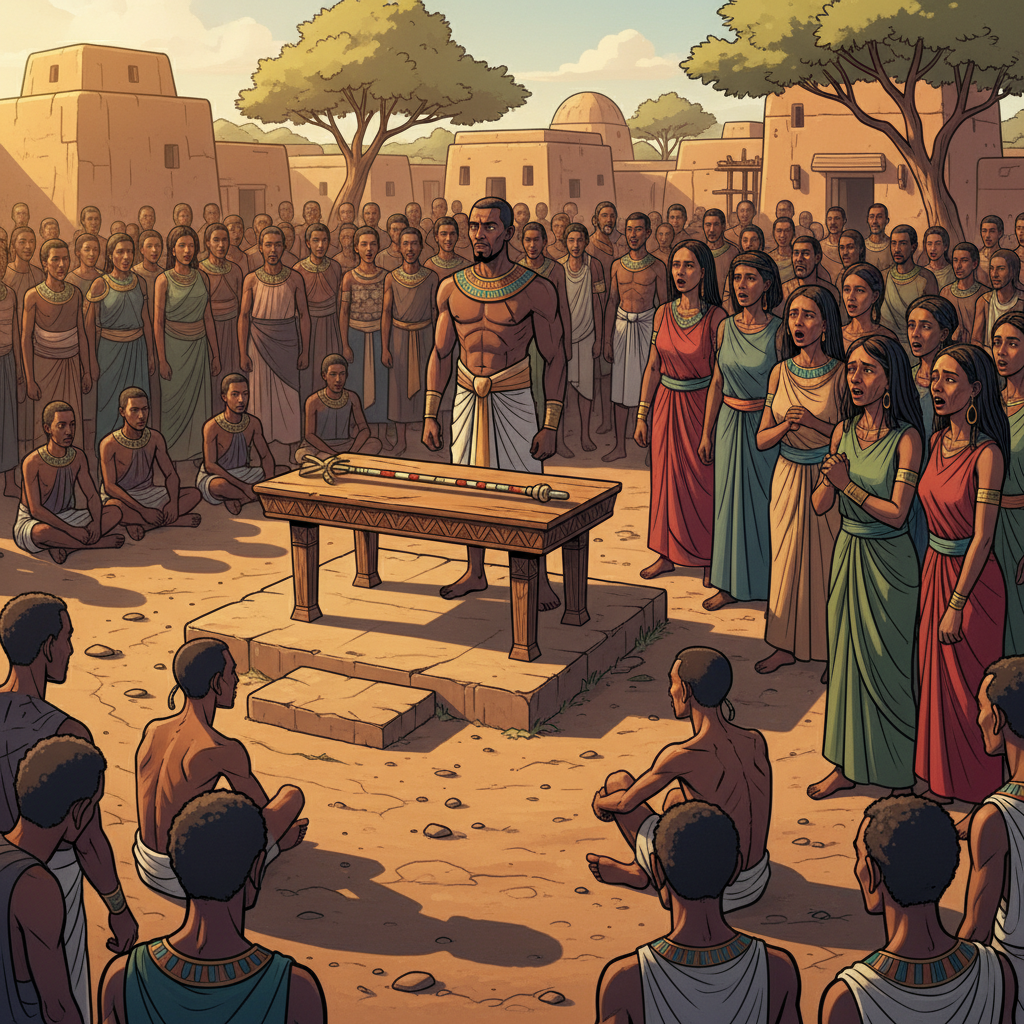
He convened a full kenbet the next morning — not the informal gathering of elders, but a formal court with witnesses, testimony, and the Staff of Maat placed on the judgment table. Both sides would be heard. The mothers who had lost sons would speak their grief. Aset would speak her truth. And Meshwesh would be given the chance to speak for himself. Justice, Kashta believed, was not served by speed. It was served by weight — the slow, careful weighing of everything that mattered.
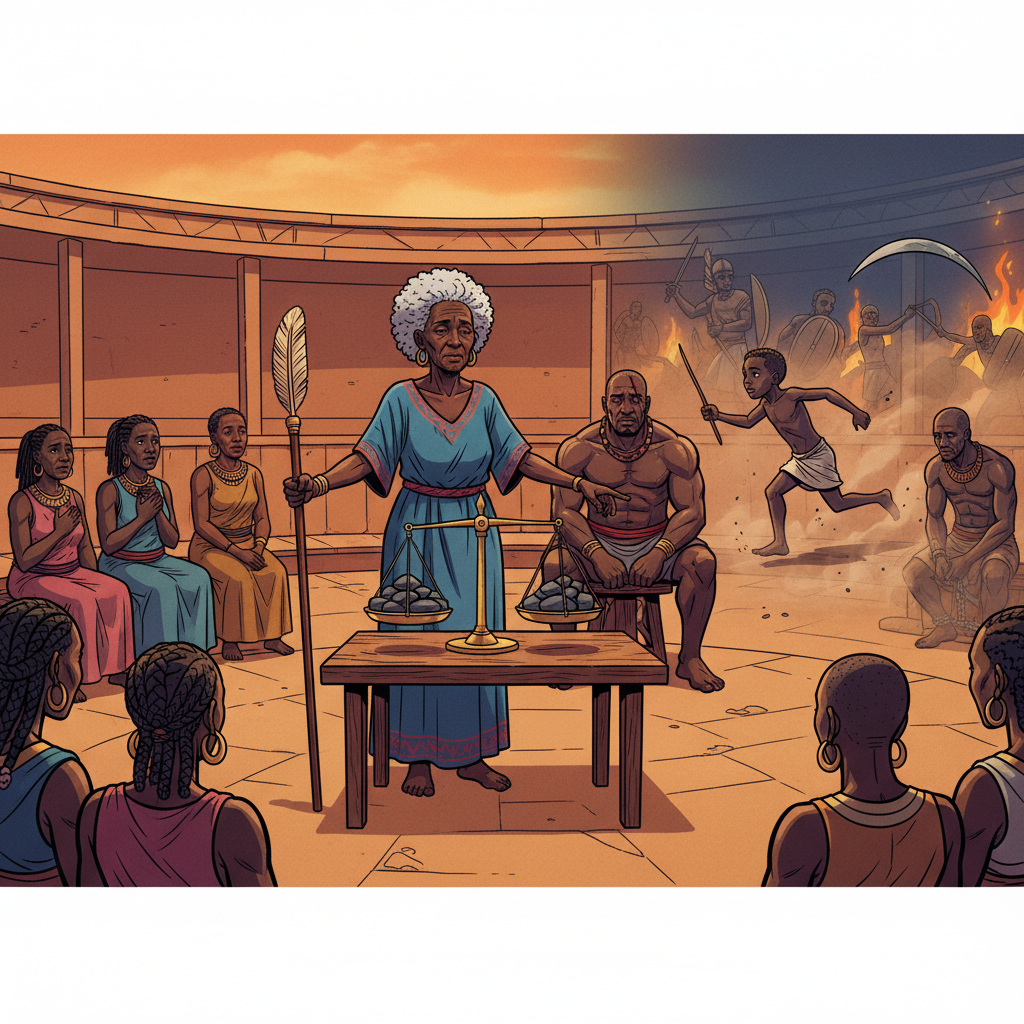
The mothers spoke first. Nia, a potter, told of her eldest son who was seventeen when a raider's spear took him during a night attack. She described the sound he made — the sound no mother should ever have to hear. Grandmother Takhat described losing her grandson, a boy who wanted to be a Medjay like Kashta, who practiced with a stick spear every day and ran as fast as any gazelle but could not outrun a thrown blade. Each testimony was a stone placed on the Scale of Maat, and by the time the mothers finished, the weight was crushing.
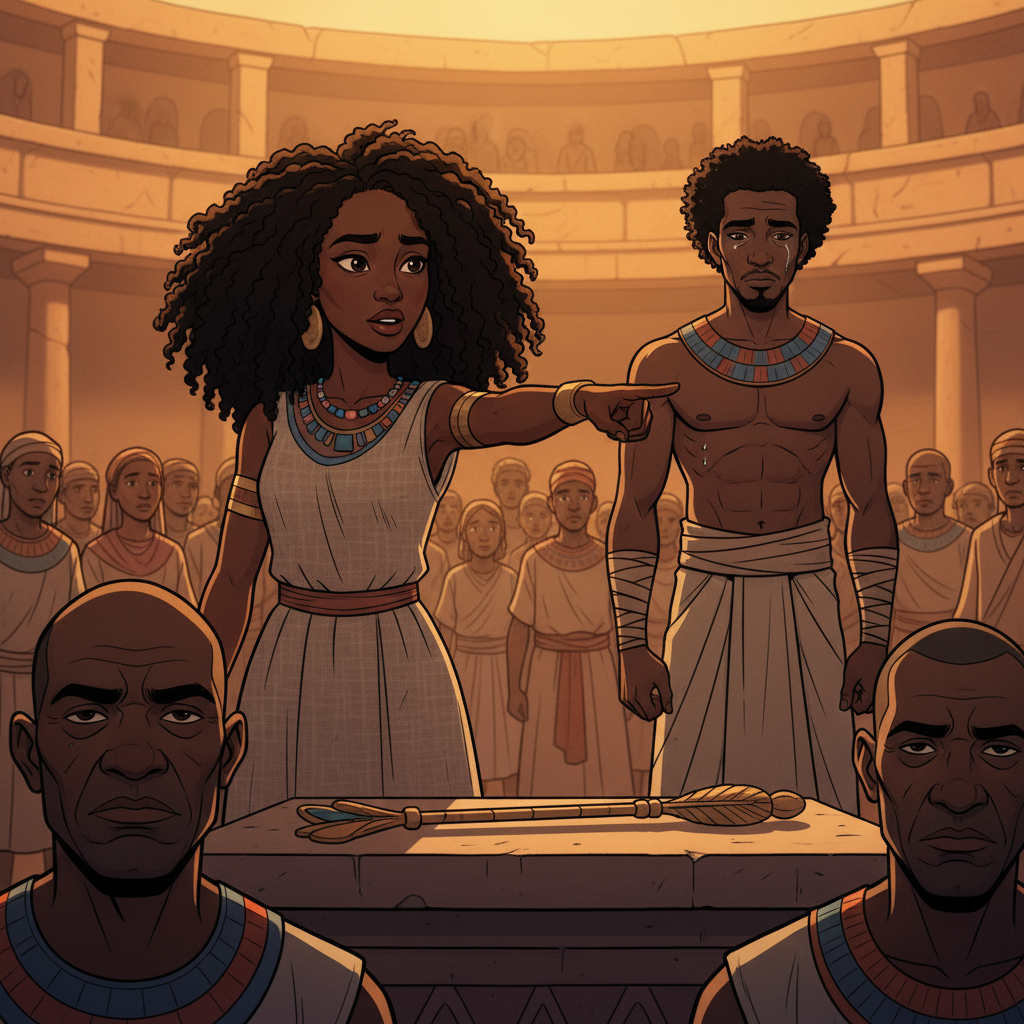
Then Aset spoke. She told her story again — the same words, the same steady voice, the same unwavering honesty. And she added something she had not said the night before. "After he gave me water and showed me the way, I turned back to look at him. He was crying. I have never seen a grown man cry like that. He was not crying because he was afraid. He was crying because something inside him hurt." The kenbet was silent. Even Elder Baraka, whose fury had not diminished, was quiet.
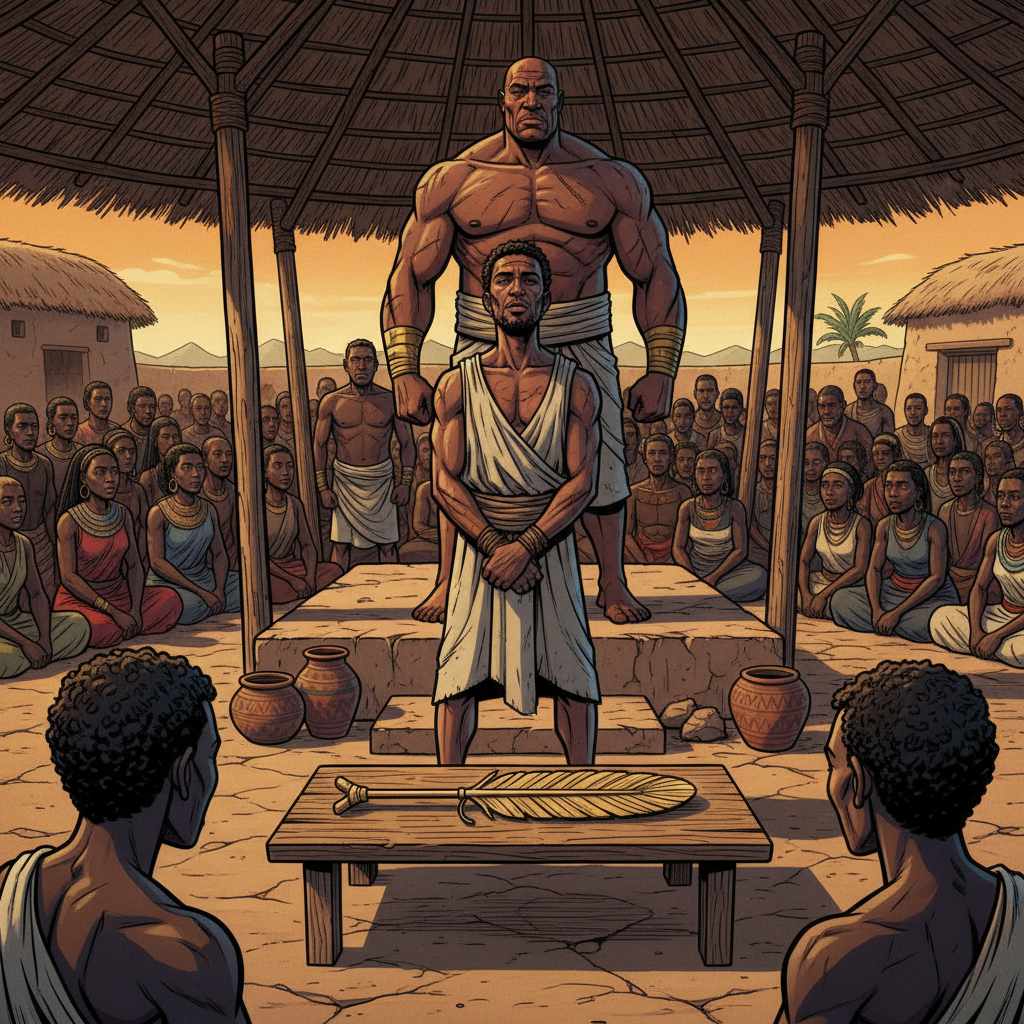
Meshwesh spoke last. He did not deny his crimes. He did not make excuses. He listed every raid he had led against Iken and the surrounding villages — dates, actions, consequences — with the blunt honesty of a man who had nothing left to hide behind. "I was raised in violence," he said. "My father raided. His father raided. It is the only life I knew. That is not a defense. It is a fact. I harmed your people. I cannot undo it. I will accept whatever this court decides."
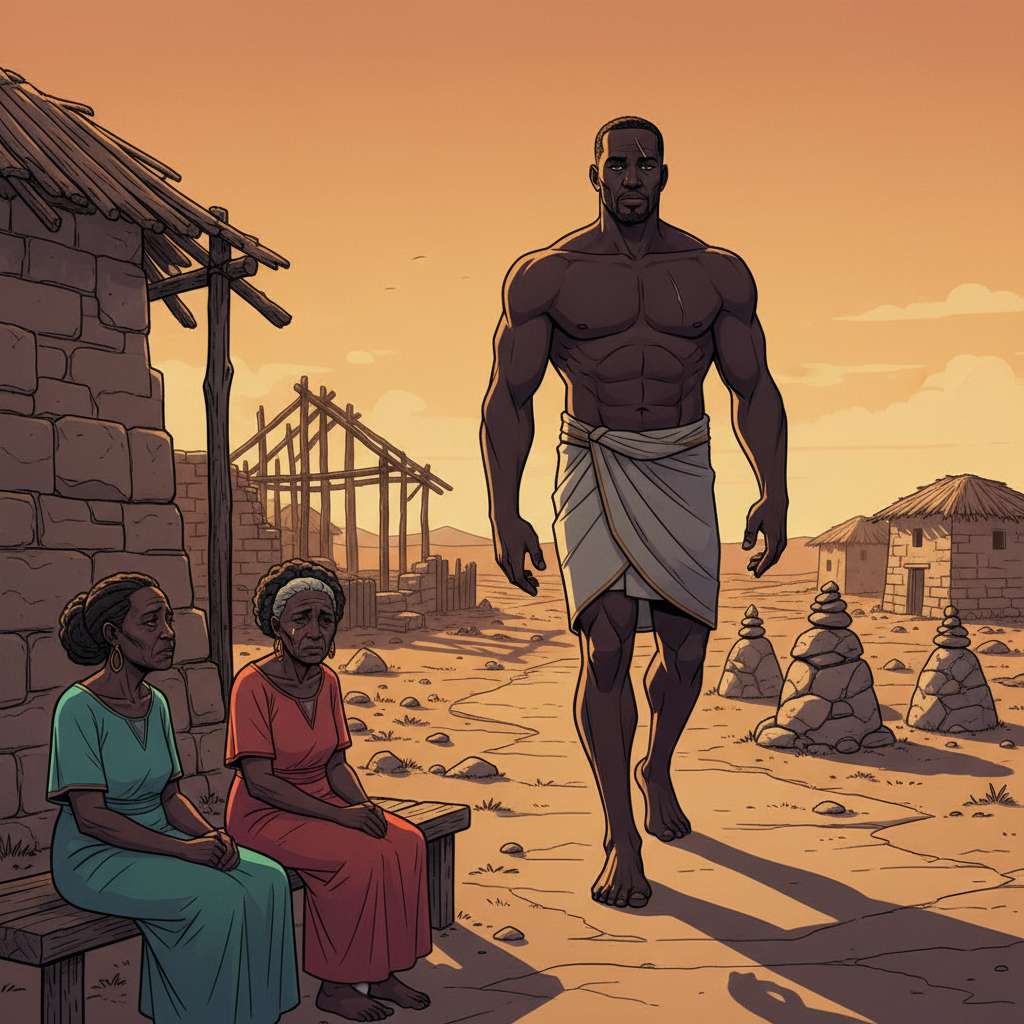
Kashta deliberated for three days. He walked the perimeter of the village, past the scorched foundations of granaries that Meshwesh's men had burned, past the small cemetery where the three young men were buried under cairns of river stone. He sat with the mothers and listened to their pain without trying to diminish it. He sat with Aset and asked her what she thought should happen. "I do not know," she said honestly. "He saved me. He killed others. How do you weigh one against the other?"
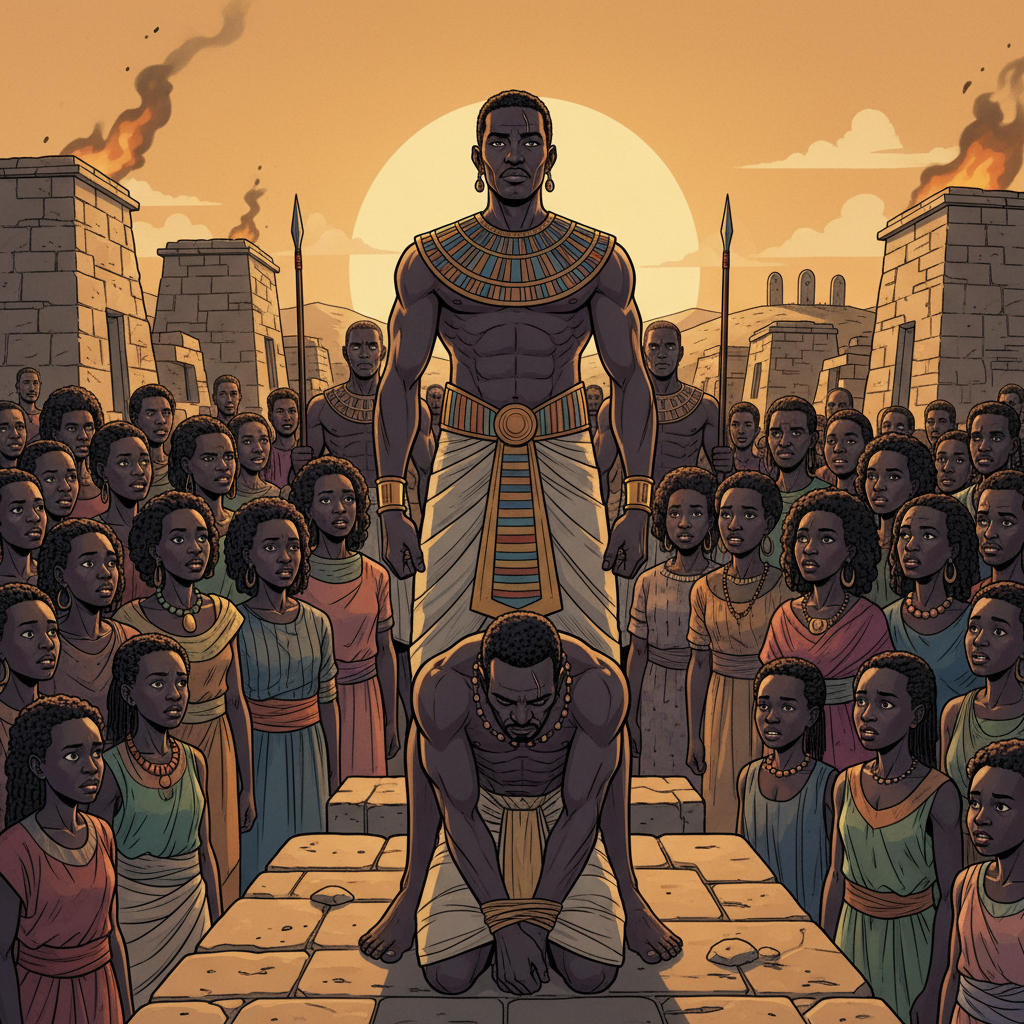
On the third morning, Kashta delivered his verdict before the assembled village. "Meshwesh has committed crimes that demand severe consequence. The dead cannot be returned. The grief cannot be undone. The border law calls for death, and I will not pretend that death is not justified." He paused. The village held its breath. "But Maat is not only the law of consequence. It is also the Scale — the great Weighing that looks at the whole of a life, not only its darkest chapter."
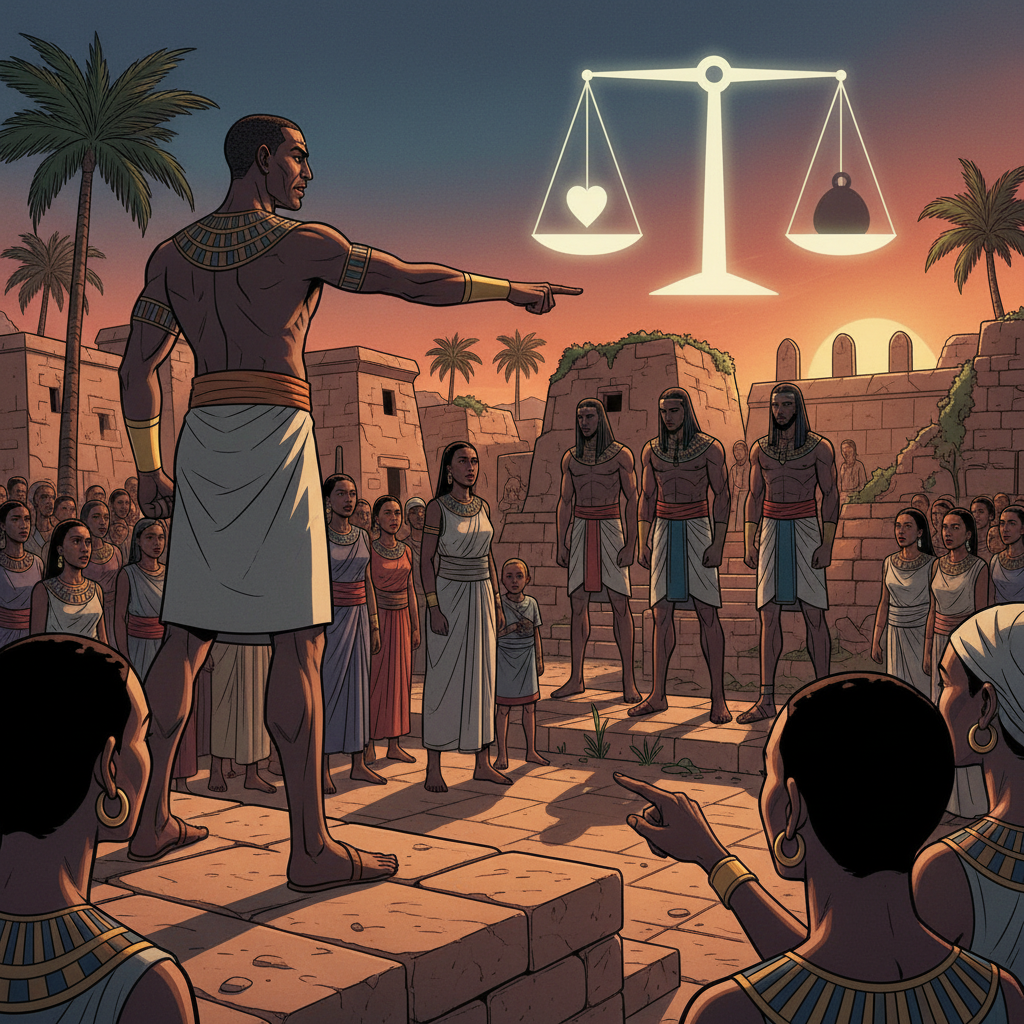
"Aset's testimony tells us that somewhere inside this man, a door remains open to his humanity. A man who shows mercy to a lost child — even once, even in the middle of a war he himself created — is not entirely beyond the reach of Maat." Kashta turned to the mothers. "I do not ask you to forgive. Forgiveness is yours to give or withhold, and no court can command the heart. What I ask is that justice be measured, not in the heat of grief, but on the Scale."
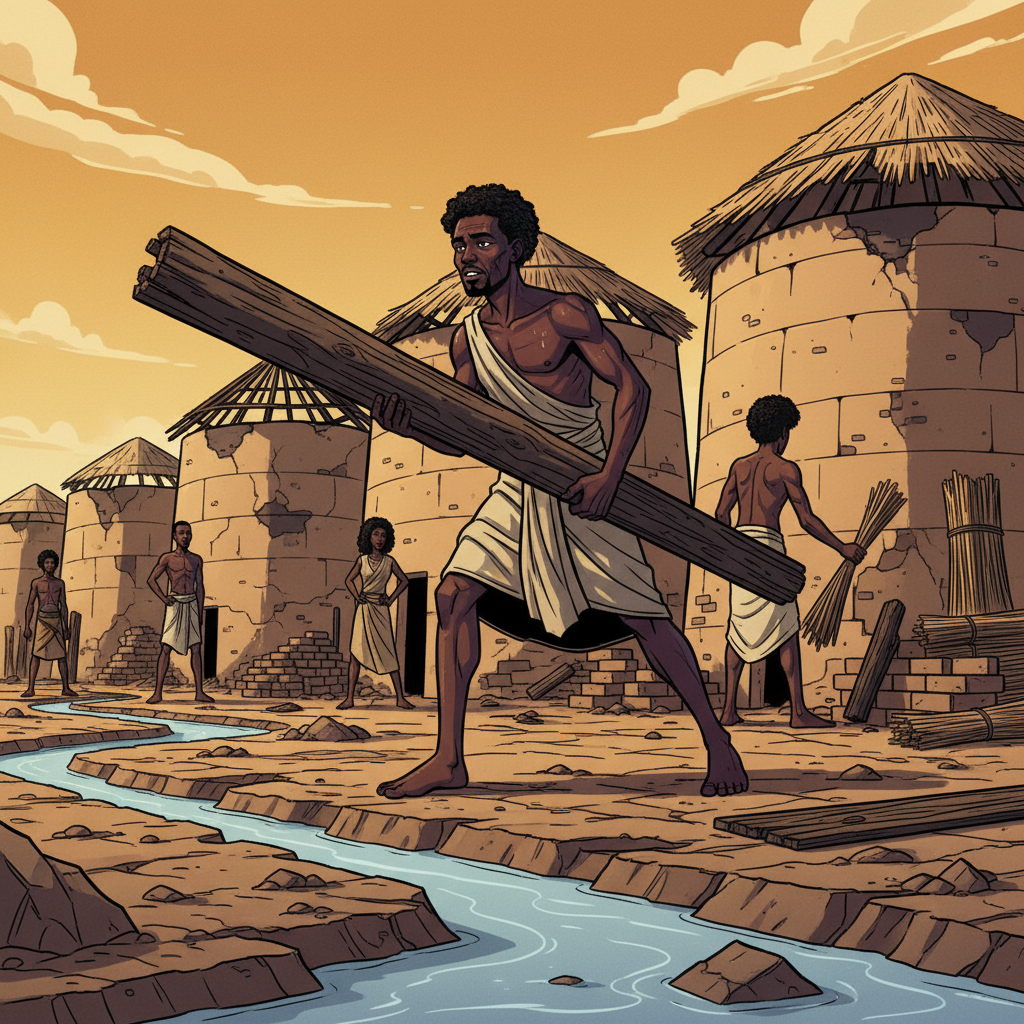
The sentence: Meshwesh would not be executed. He would serve the village of Iken for the remainder of his life — rebuilding what he had destroyed. The burned granaries. The damaged walls. The irrigation channels that had been sabotaged during raids. He would work alongside the people he had harmed, eat the food they grew, and live under their gaze every day. He would never be free, but he would be alive — and he would spend his remaining years restoring what his hands had broken.
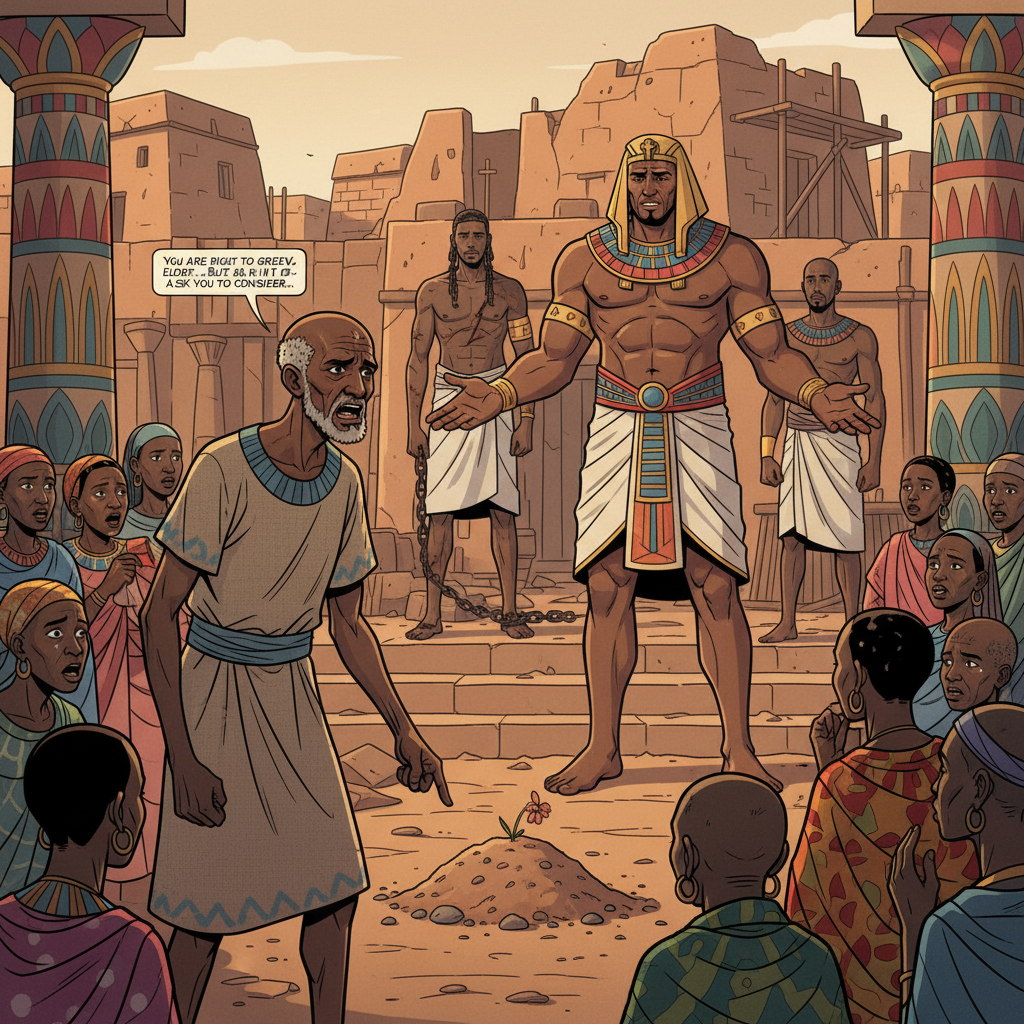
Elder Baraka objected. "This is not justice," he said, his voice shaking. "My grandson is in the ground. This man walks above it." Kashta faced the elder with respect and unflinching honesty. "You are right to grieve, Elder. Your grandson was taken, and nothing I do today can bring him back. But I ask you to consider: does killing Meshwesh lighten your heart? Or does it only add another death to a story that already has too many? The Scale does not ask us to match blood with blood. It asks us to restore Balance."
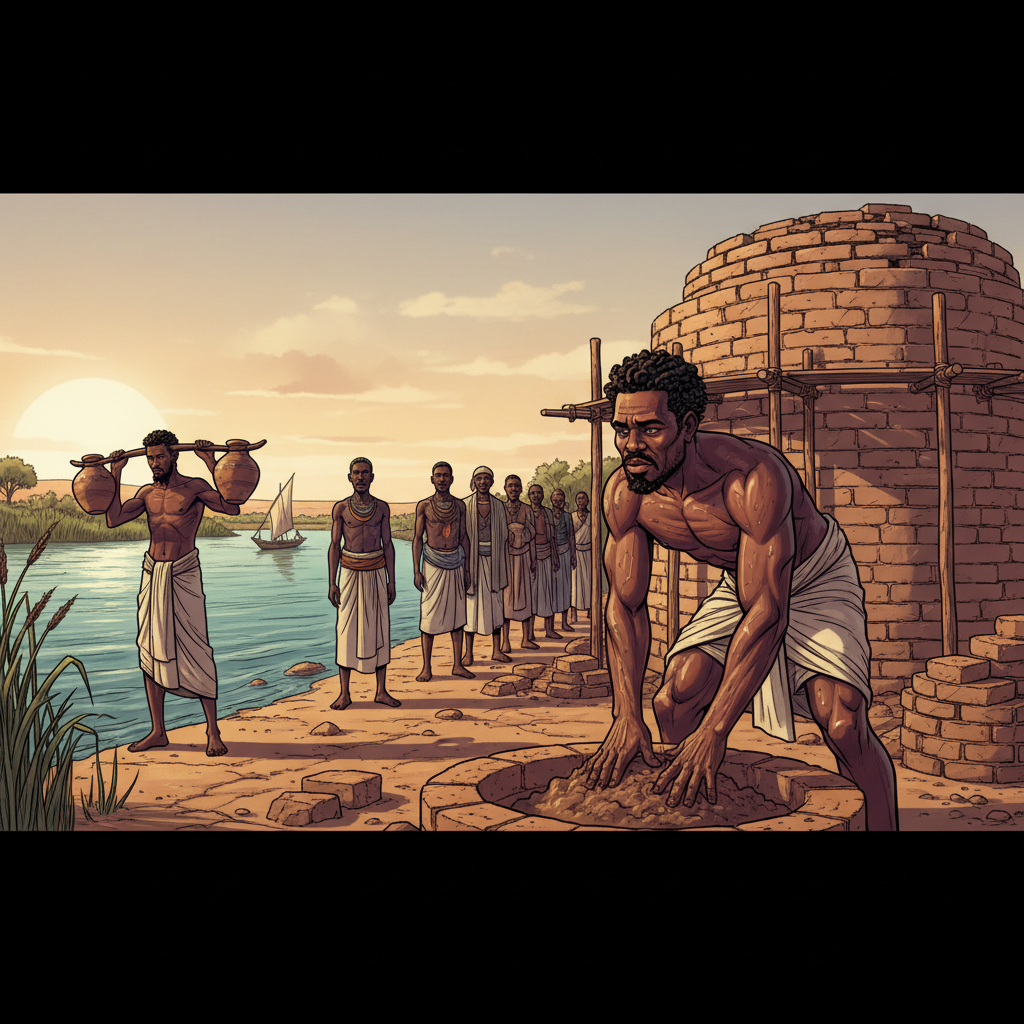
Baraka did not agree. Kashta had not expected him to. Some wounds were too deep for any verdict to heal. But in the months that followed, something happened that no one could have predicted. Meshwesh worked. He worked silently and without complaint, from dawn to dusk, rebuilding the granary he had once burned. He mixed the mudbricks with his own hands. He carried water from the river. He worked through blistering heat and bitter cold. And slowly, painfully, the village began to watch him differently — not with forgiveness, perhaps never with forgiveness, but with something more complicated: the recognition that a person could be both the worst thing they had ever done and something more.
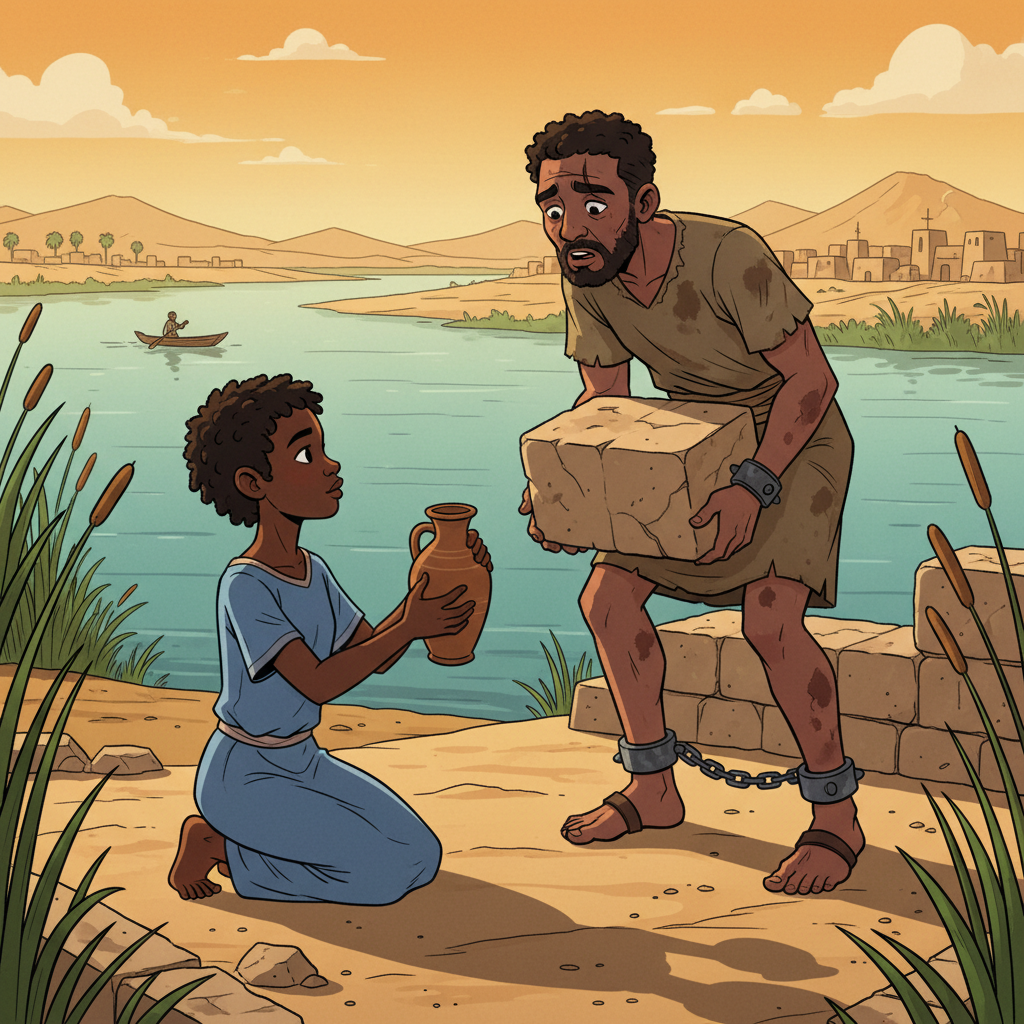
Aset, who had always been the quiet child, became the one who brought Meshwesh water during his work. Not out of pity and not out of gratitude — she had repaid his water long ago. She did it because, at eight years old, she understood something that many adults struggled with: that mercy is not a transaction. It is not given because it is earned or because it will be returned. It is given because the giver chooses to keep the door of their heart open, even when closing it would be easier and safer.
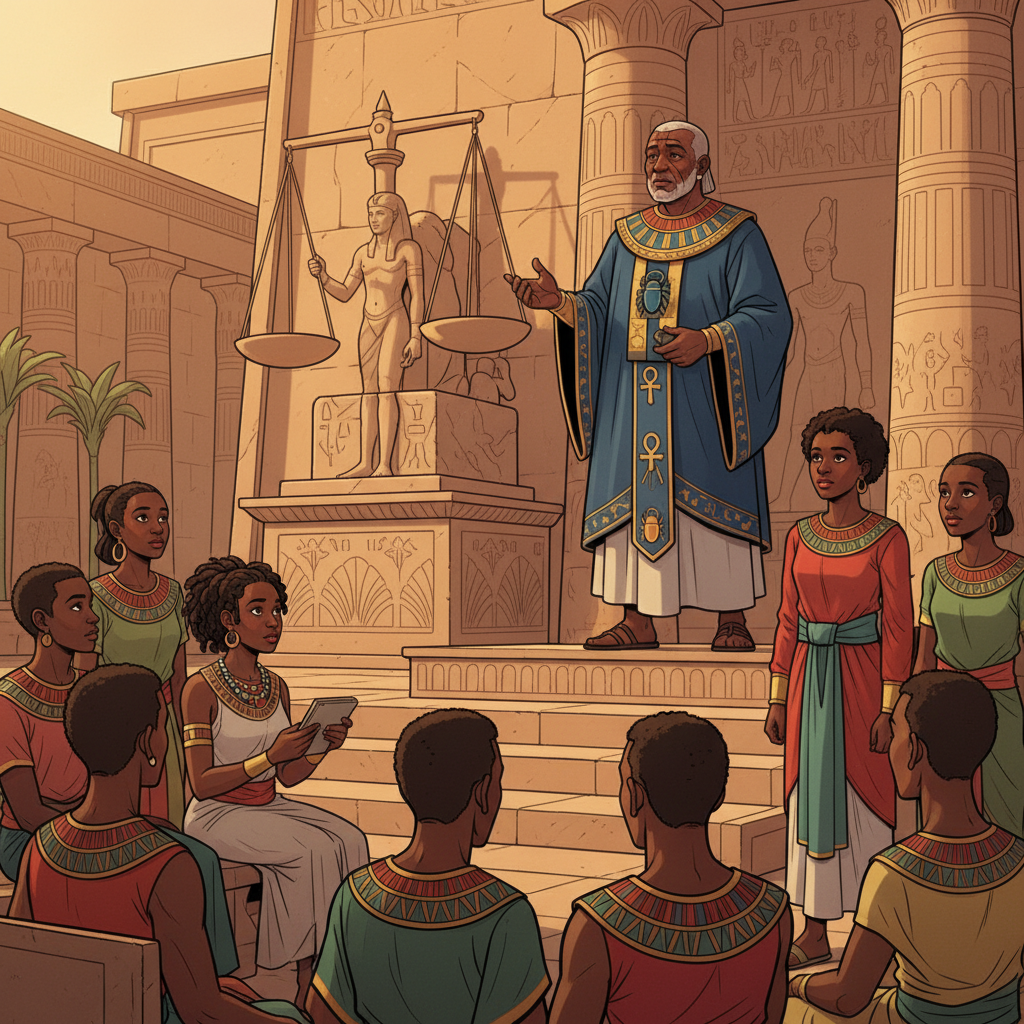
Years later, when Kashta was asked about the hardest verdict he had ever delivered, he always spoke of Meshwesh. "The hardest justice," he would say, "is not choosing between the guilty and the innocent. That is simple. The hardest justice is choosing between vengeance and restoration when vengeance feels righteous and restoration feels like betrayal. The mothers who lost their sons had every right to demand blood. Aset, who was saved by mercy, had every right to demand mercy in return. And I — the judge — had to stand between them and find the place where the Scale balanced. Not perfectly. Not comfortably. But honestly."
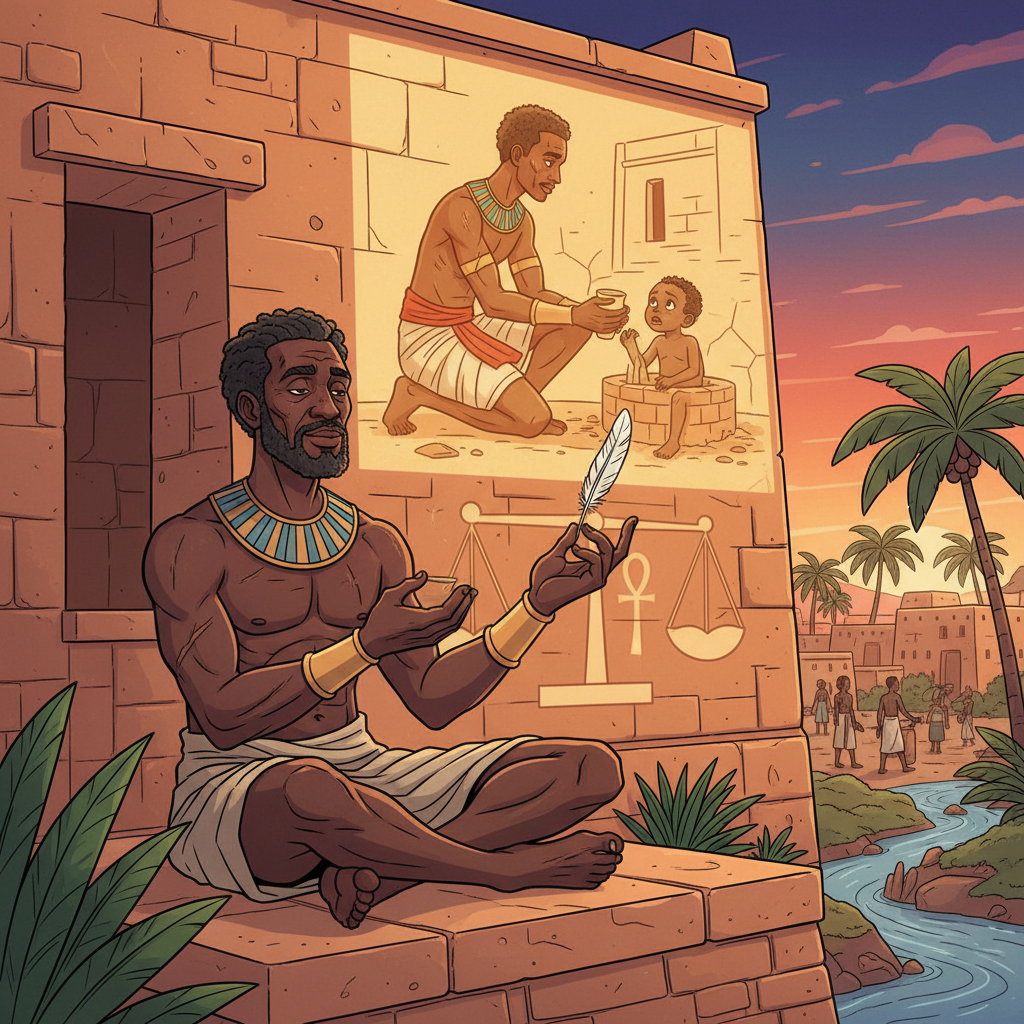
He would pause then, and his scarred face would grow quiet, and he would say the thing that stayed with everyone who heard it: "The feather on the Scale is not heavy. It weighs almost nothing. And yet it is the measure of every heart that has ever lived. Do you know why? Because Maat is not about the weight of your crimes or the weight of your good deeds. It is about whether your heart can still feel the difference. The moment you cannot feel the difference — that is when the Scale tips forever. Meshwesh, for all his crimes, still felt it. I saw it in the water he gave to a lost child. And I decided that a heart that can still feel is a heart worth saving."