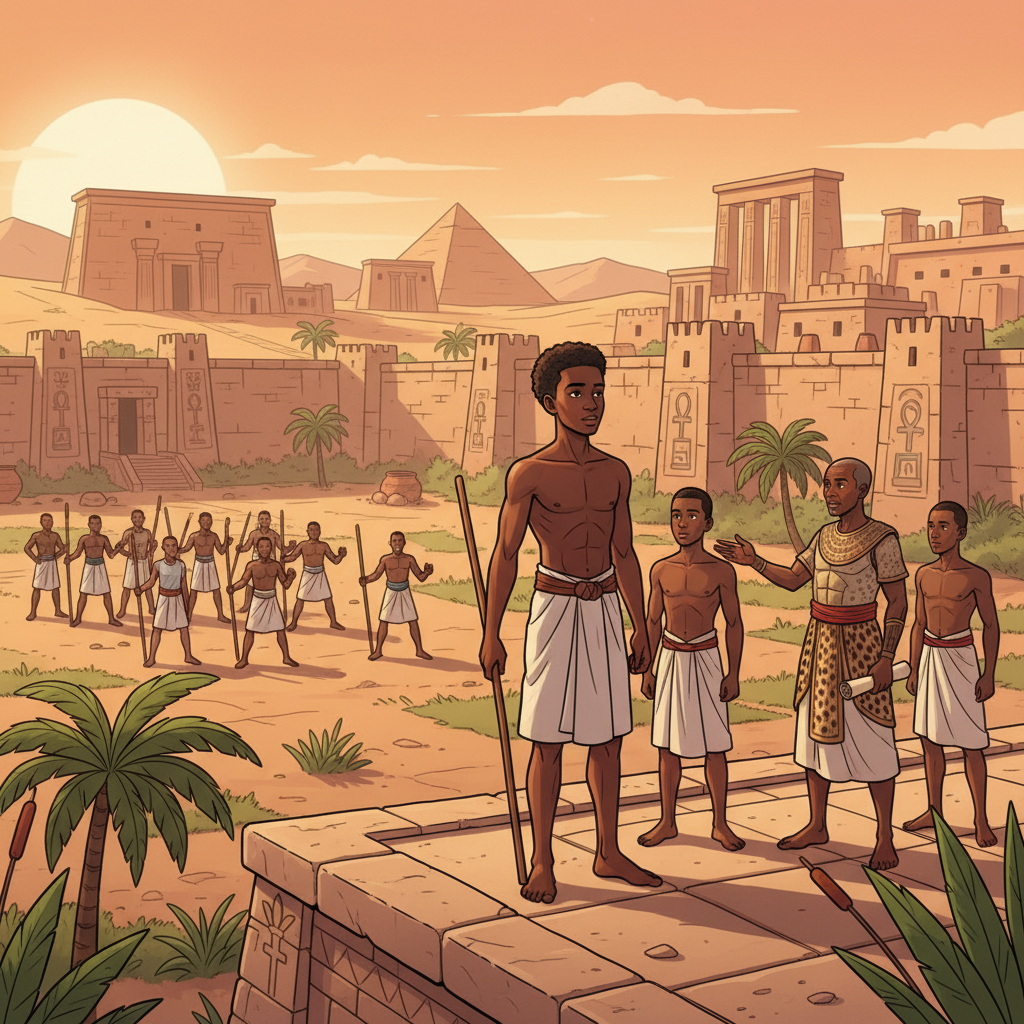
Taharqo had been a Medjay trainee for exactly forty-seven days when they gave him his first real case. He was fifteen years old, tall for his age, with dark brown skin that glowed copper in the afternoon sun and close-cropped 4C hair that his mother still insisted on trimming herself every ten days. He wore the simple kilt and leather belt of a trainee — no armor yet, no bronze insignia, no weapons beyond a wooden practice staff. The other trainees called him "the quiet one" because he listened more than he spoke, which his training captain said was either the mark of wisdom or the mark of someone with nothing to say.
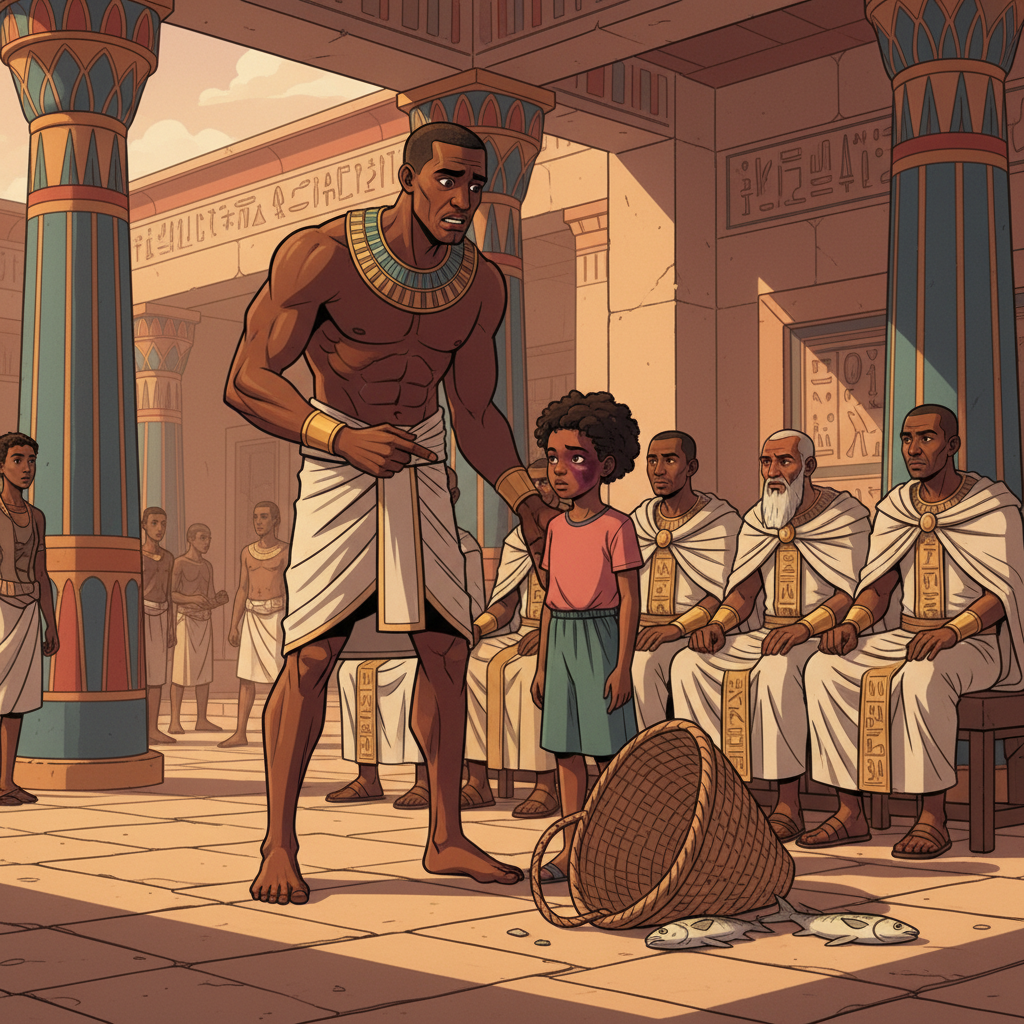
The case seemed simple. A fisherman named Sefu had come to the Medjay station at dawn, his hands shaking and his voice tight with anger. His ten-year-old daughter Iset had been struck across the face the previous evening, and his entire catch of Nile perch — a full basket worth a week's food — had been taken from his boat. The girl said the person who hit her and took the fish was Djehutihotep, the district scribe. The bruise on Iset's cheek was dark and vivid against her brown skin, the unmistakable mark of an adult hand.
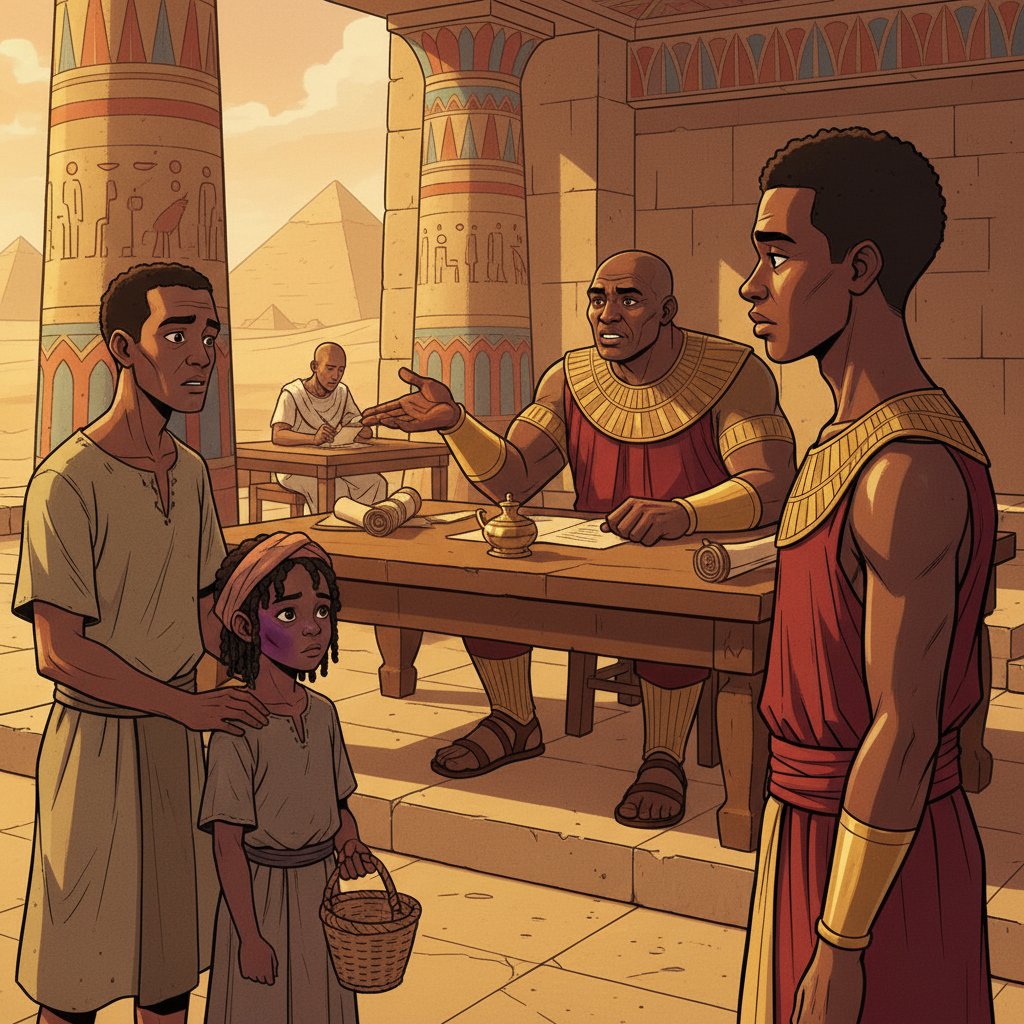
The training captain assigned the case to Taharqo with a shrug. "Talk to the girl, talk to the scribe, write your report. The father is a fisherman, the scribe is respected. It is probably a misunderstanding." There was something in the captain's voice — a dismissal, a pre-judgment — that made Taharqo uncomfortable. The captain had not looked at the bruise on Iset's face. He had not asked a single question about the missing fish. He had heard "fisherman's daughter" and "respected scribe" and made his calculation.
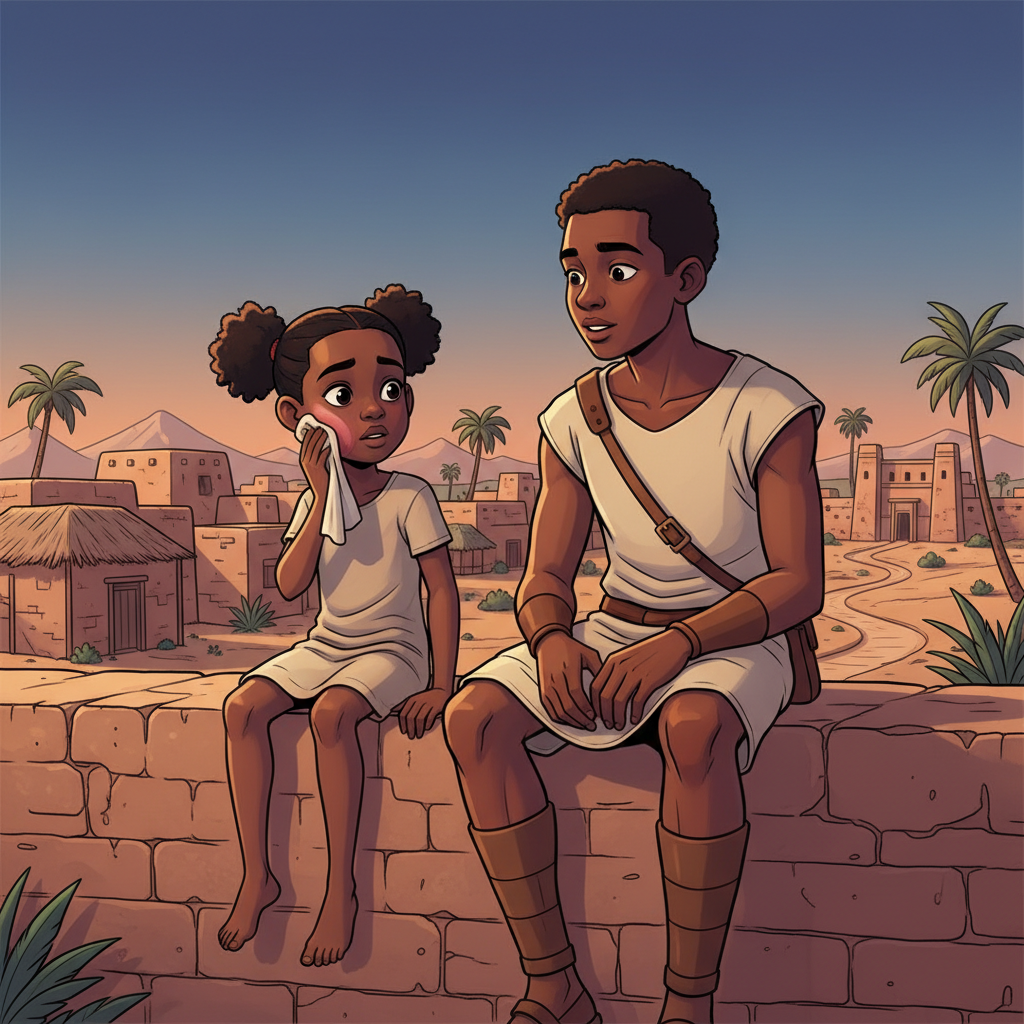
Taharqo found Iset sitting on the mudbrick wall outside her father's house, her legs dangling over the edge, a wet cloth pressed against her swollen cheek. She was small — thin from a diet of mostly fish and bread — with tightly coiled hair pulled back in two puffs and eyes that watched Taharqo approach with the wary alertness of a child who had learned that adults do not always believe children. She did not flinch when he sat beside her, but she did not smile either.
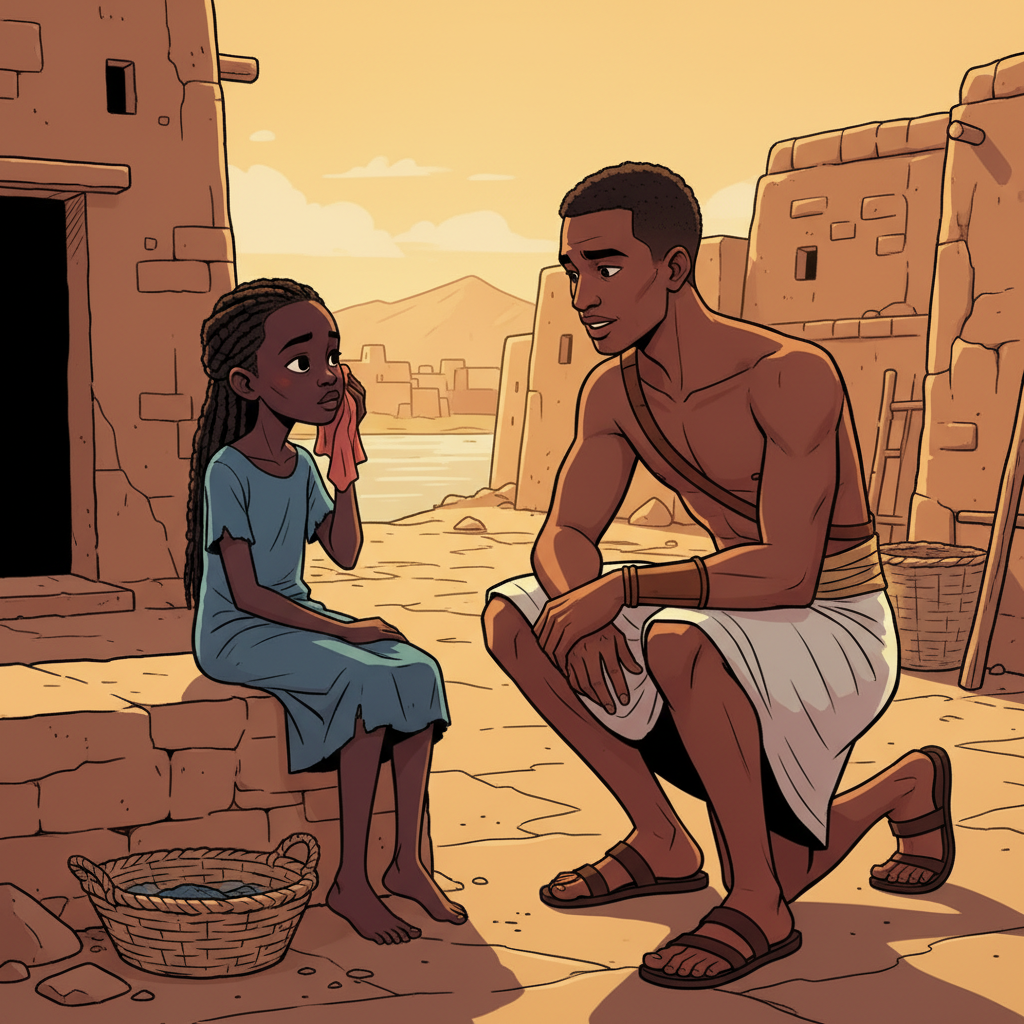
"Tell me what happened," Taharqo said. He kept his voice low and level, the way his mother spoke when she wanted him to tell the truth about something difficult. Iset studied him for a long moment, measuring whether this tall boy in his Medjay trainee kilt was worth trusting. Then she spoke. "I was guarding Baba's fish basket at the dock while he cleaned the boat. The scribe Djehutihotep came down the path. He said Baba owed taxes on the catch and he was taking it. I said Baba already paid the taxes this morning. He grabbed the basket. I held on. He hit me." Her voice was flat, factual, unembellished.

Taharqo wrote everything down on a scrap of papyrus. "Did anyone else see this?" Iset shook her head. "The dock was empty. Everyone had gone home for the evening meal. That is why he came then." The last sentence struck Taharqo. That is why he came then. A ten-year-old girl had identified the tactical thinking of her attacker — he had waited until there were no witnesses. Either Iset was remarkably perceptive, or she was remarkably dishonest. Taharqo did not yet know which.
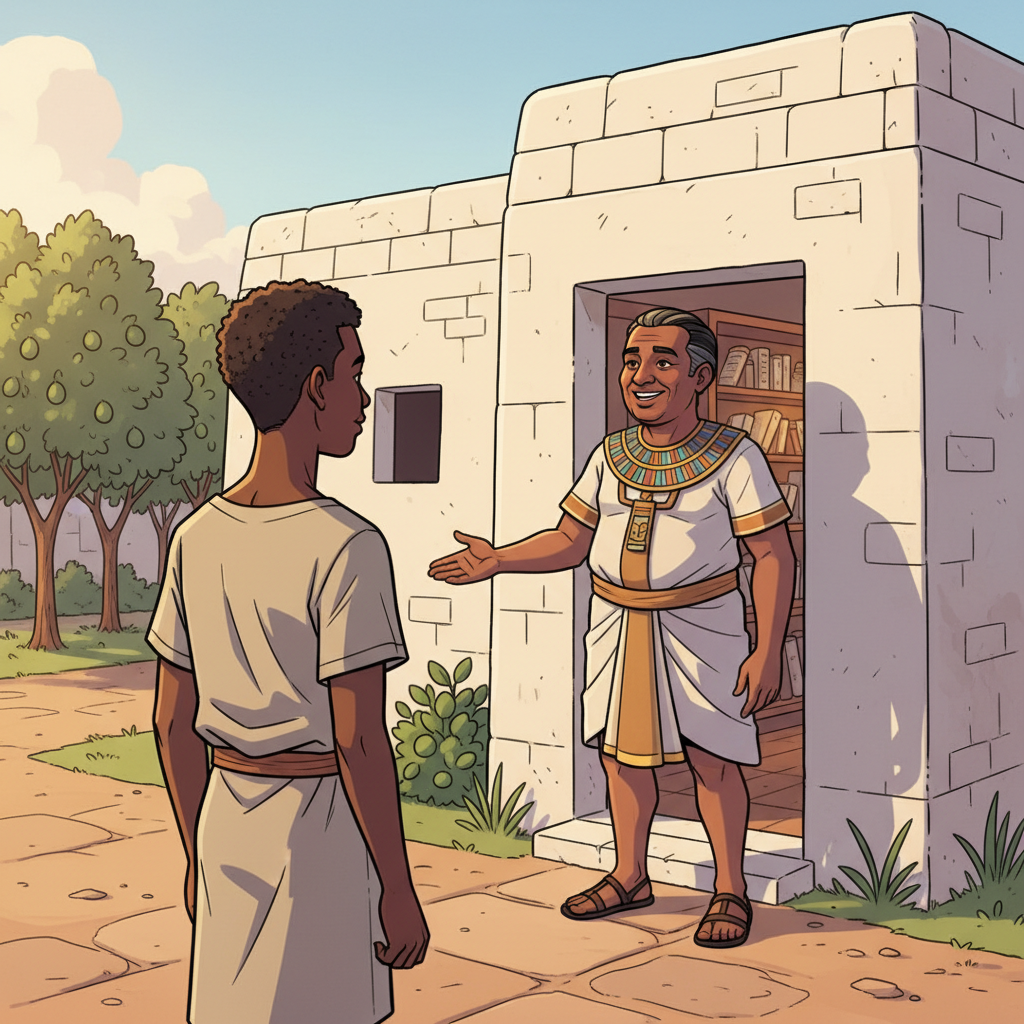
He walked to Djehutihotep's house next. The scribe lived in a comfortable mudbrick home near the temple, with whitewashed walls and a small garden of persea trees. Djehutihotep was a man of fifty, portly and well-dressed, with grey-streaked hair and an easy smile that he deployed immediately when he saw the Medjay trainee at his door. "Ah, young man! Come in, come in. I heard the fisherman is making trouble. Sit, please. Let me explain."
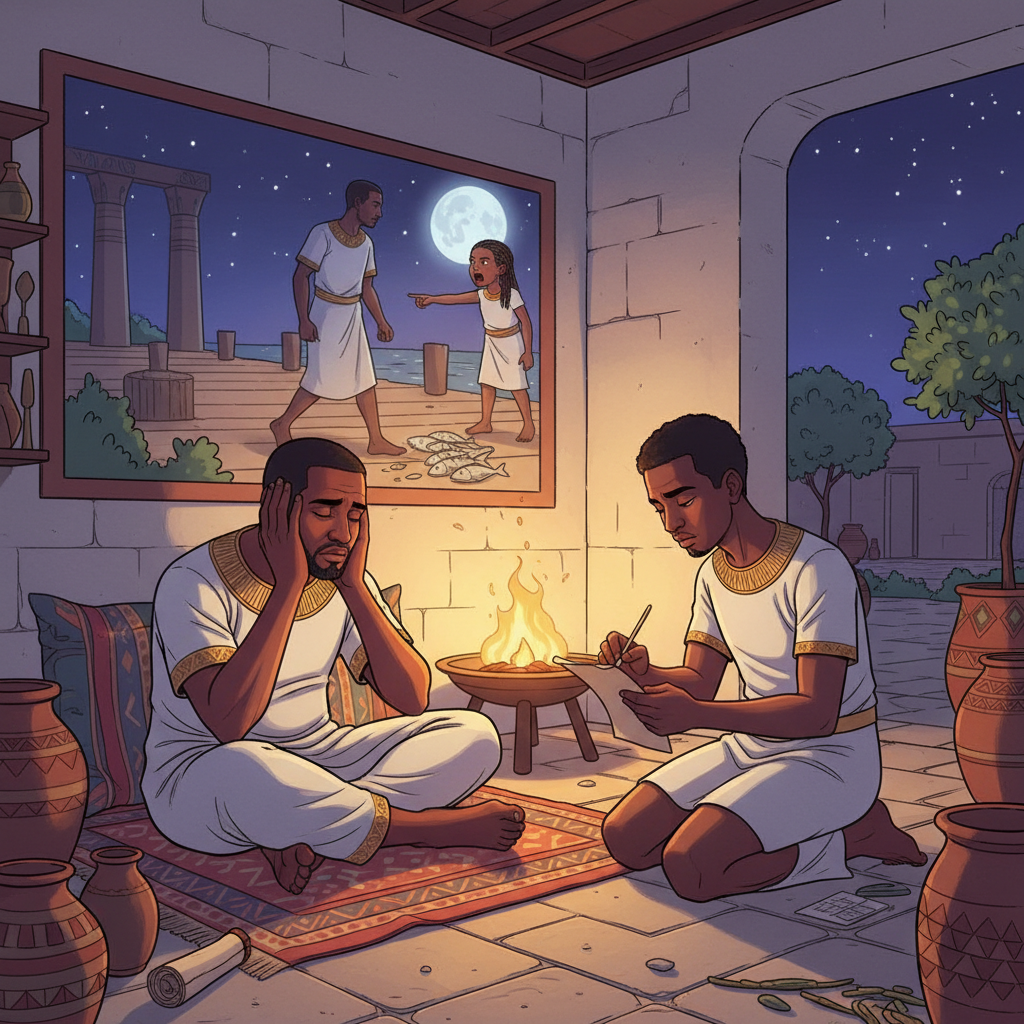
Djehutihotep's story was smooth and detailed. He had been walking by the dock — simply taking his evening constitutional — when the fisherman's daughter had started shouting at him, accusing him of theft. "The child is wild," he said, shaking his head with practiced sadness. "Her father lets her run unsupervised. I tried to calm her, and she fell and hit her face on the dock post. I helped her up and went on my way. The fish? I never touched them. Perhaps they were stolen by someone else, or perhaps the father is lying to avoid paying his full tax."
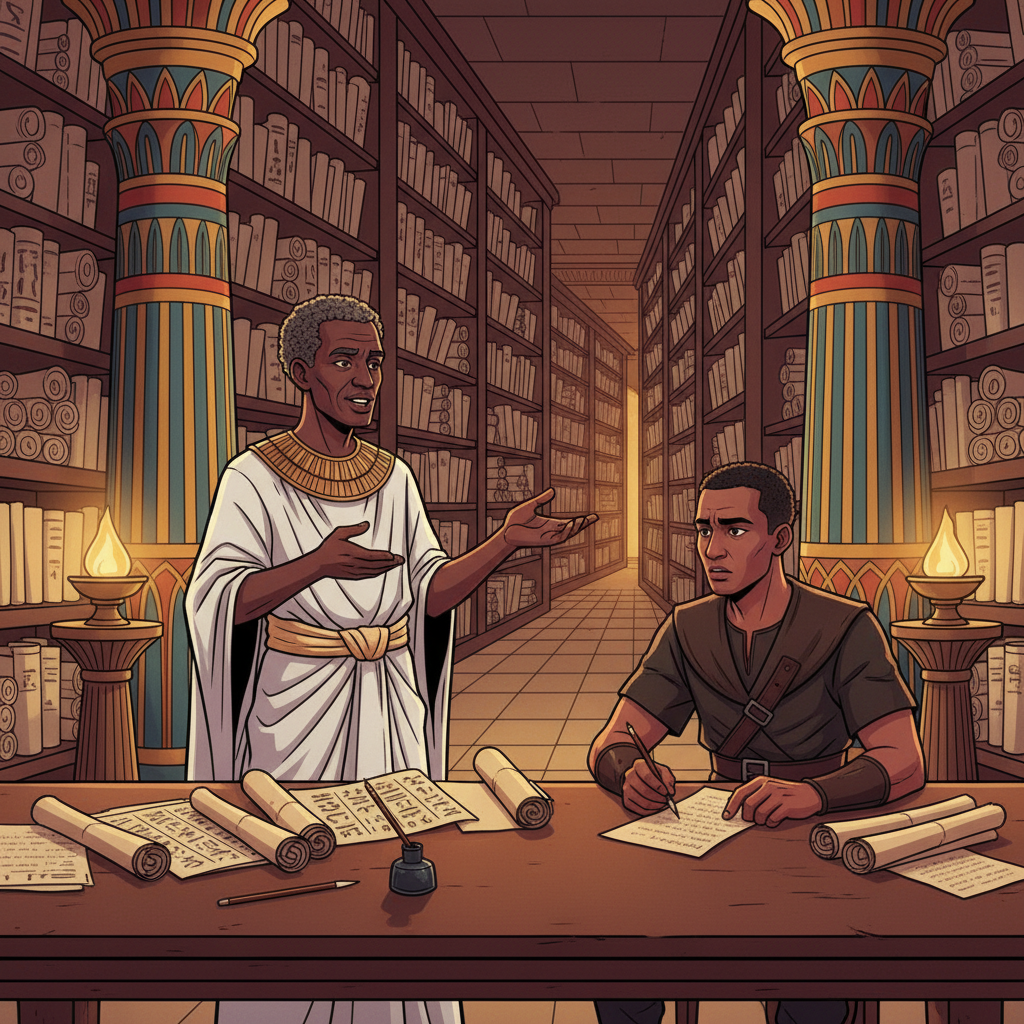
It was a convincing story. Djehutihotep was articulate, calm, and detailed — everything a credible witness should be. And he was a scribe, a man of learning and status, someone the community relied on for tax records, legal documents, and official correspondence. When Taharqo returned to the Medjay station, his training captain listened to both accounts and nodded. "As I expected. The scribe's story is more credible. Close the case." Taharqo stared at his captain. "But the bruise —" "Children fall all the time," the captain said. "Write your report."

That night, Taharqo could not sleep. He lay on his reed mat staring at the ceiling of the trainees' barracks, replaying both stories in his mind. Djehutihotep's account was polished — too polished, perhaps, like a speech rehearsed before a mirror. Iset's account was raw and simple, with the specific detail about the timing that a liar would not think to include. But more than the stories, what kept Taharqo awake was the bruise. He had seen dock posts. They were round and rough. The mark on Iset's face was flat and wide — the shape of an open palm, not a cylinder.
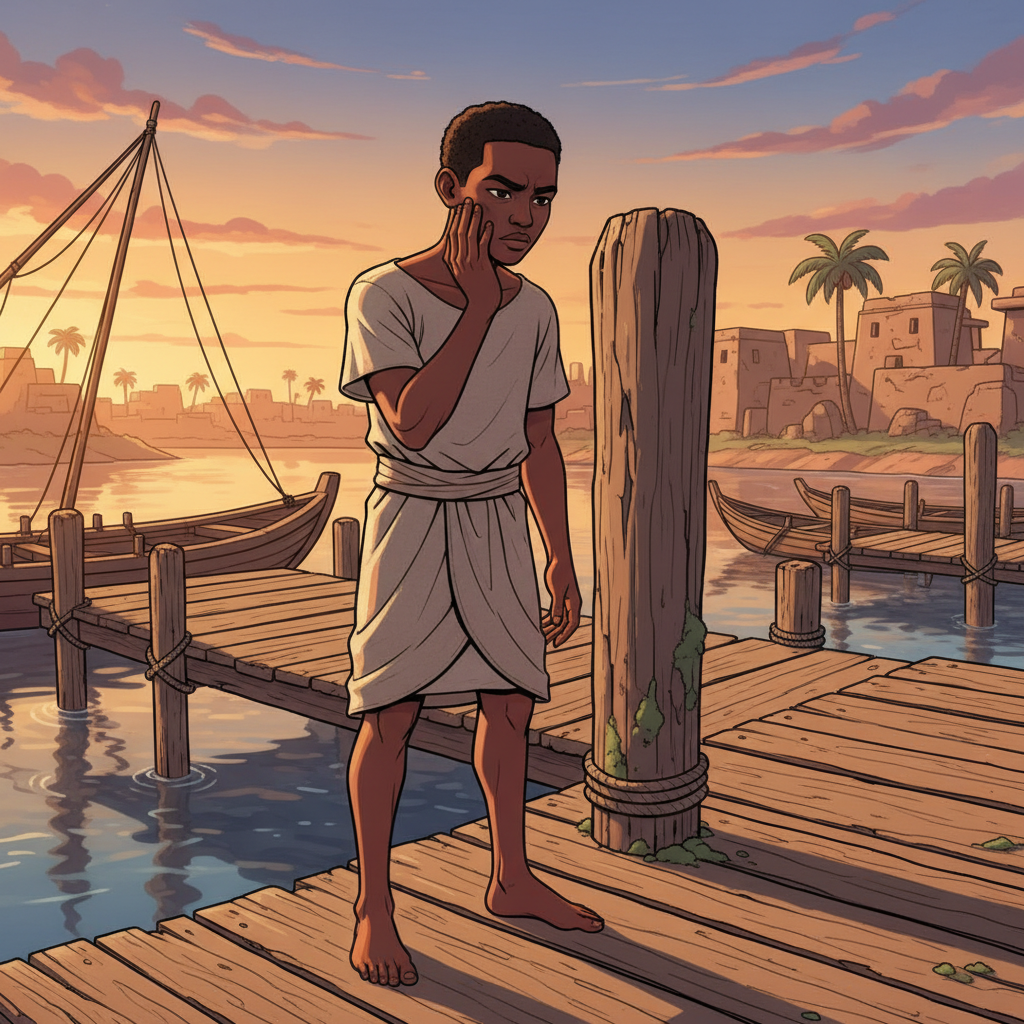
In the morning, Taharqo did something his captain had not told him to do. He went back to the dock. He examined the post that Djehutihotep claimed Iset had fallen against. It was weathered cedar, about as thick as his forearm, standing at the corner of the fishing platform. If a child fell against it, the bruise would be narrow and curved, following the shape of the wood. The bruise on Iset's face was neither narrow nor curved. It was a hand print. Taharqo pressed his own hand against his cheek and compared the proportions. The mark was from someone with a hand much larger than a child's.
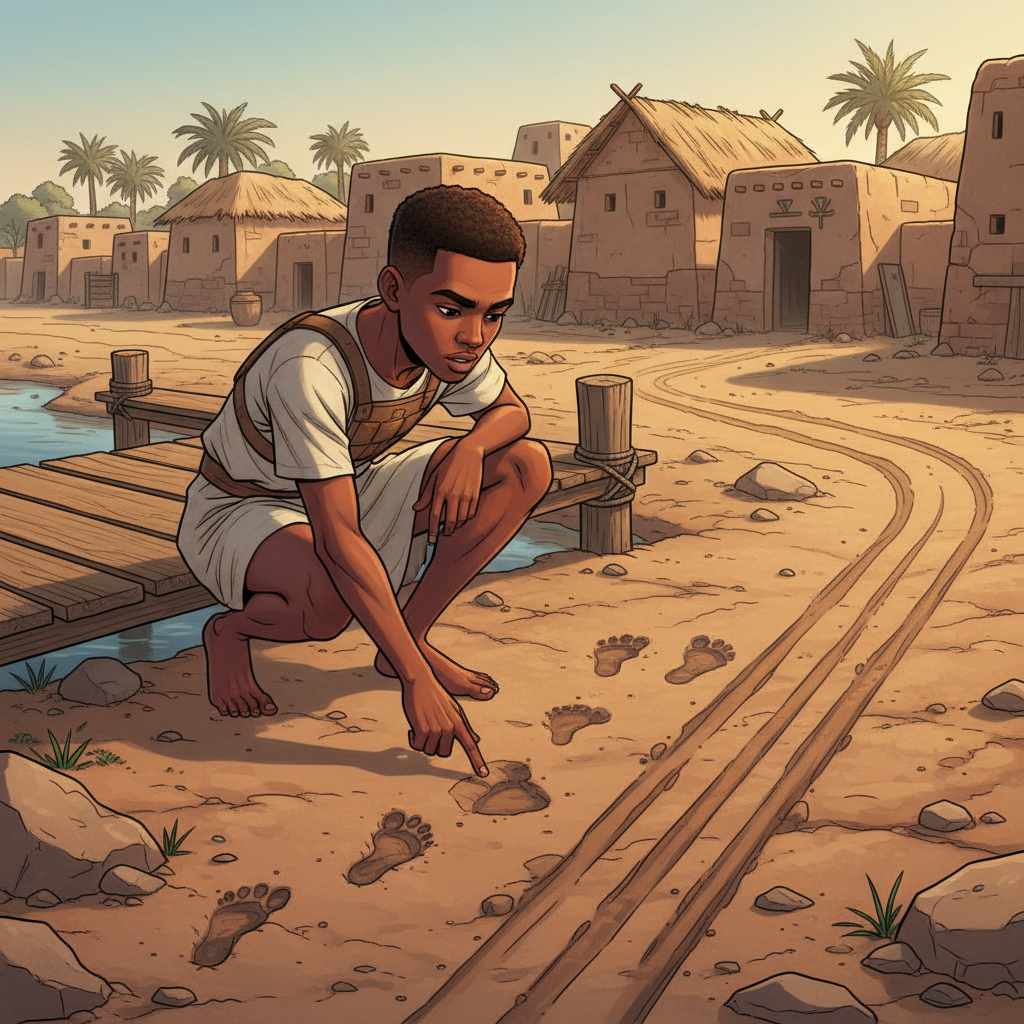
He also found something else. In the mud at the base of the dock, partially scuffed but still visible, were two sets of footprints — one small, one large — and drag marks where the heavy fish basket had been pulled across the ground. The drag marks led away from the dock along the path that ran directly past Djehutihotep's house. Taharqo followed them for fifty paces until the hard-packed road erased the trail. It was not proof. But it was evidence.
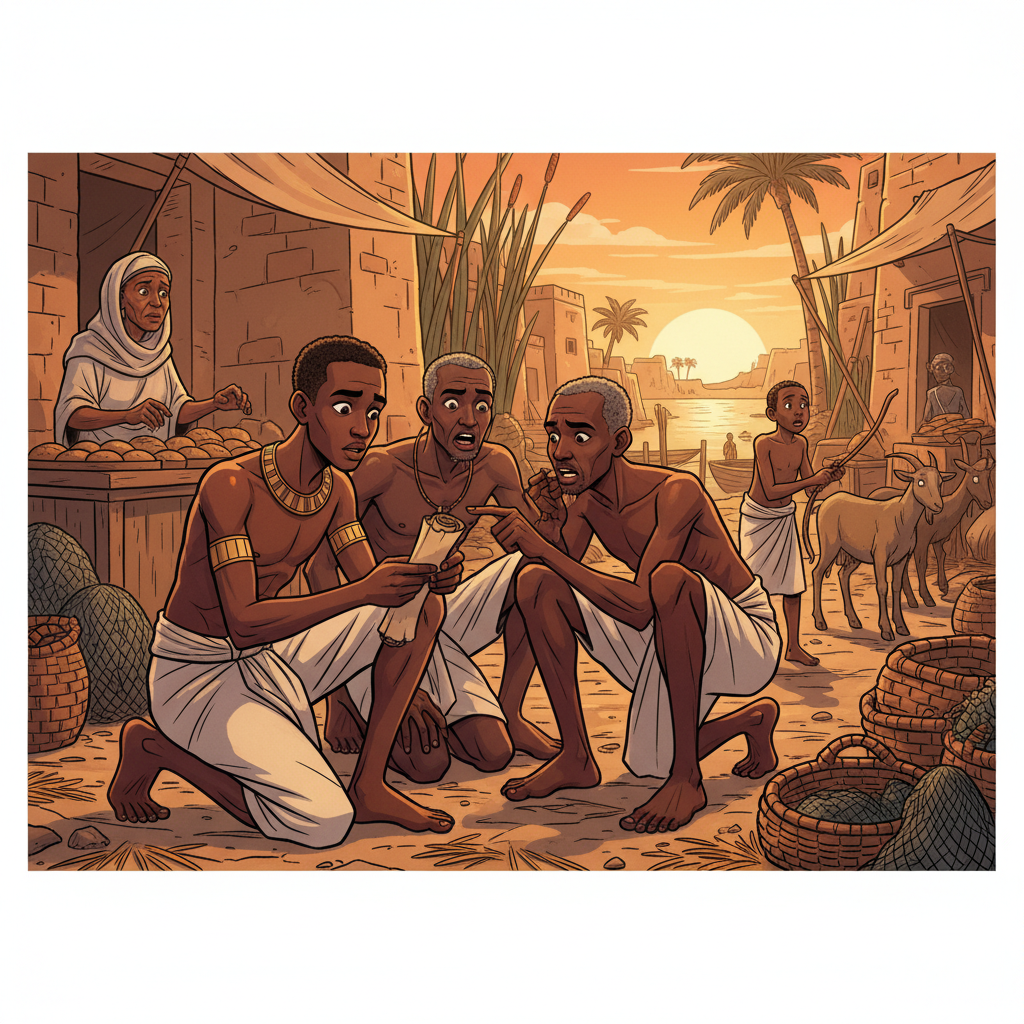
Taharqo spent the next two days talking to people in the district — carefully, quietly, the way a good Medjay investigates without announcing his suspicions. What he found disturbed him. Three other fishermen reported that Djehutihotep had collected "additional taxes" from them in the past year — taxes that did not appear in the official records. An old woman who sold bread near the dock said she had seen Djehutihotep walking with a heavy basket on the evening in question. A young boy who grazed goats on the riverbank said he had heard shouting from the dock — a man's voice and a girl's scream.
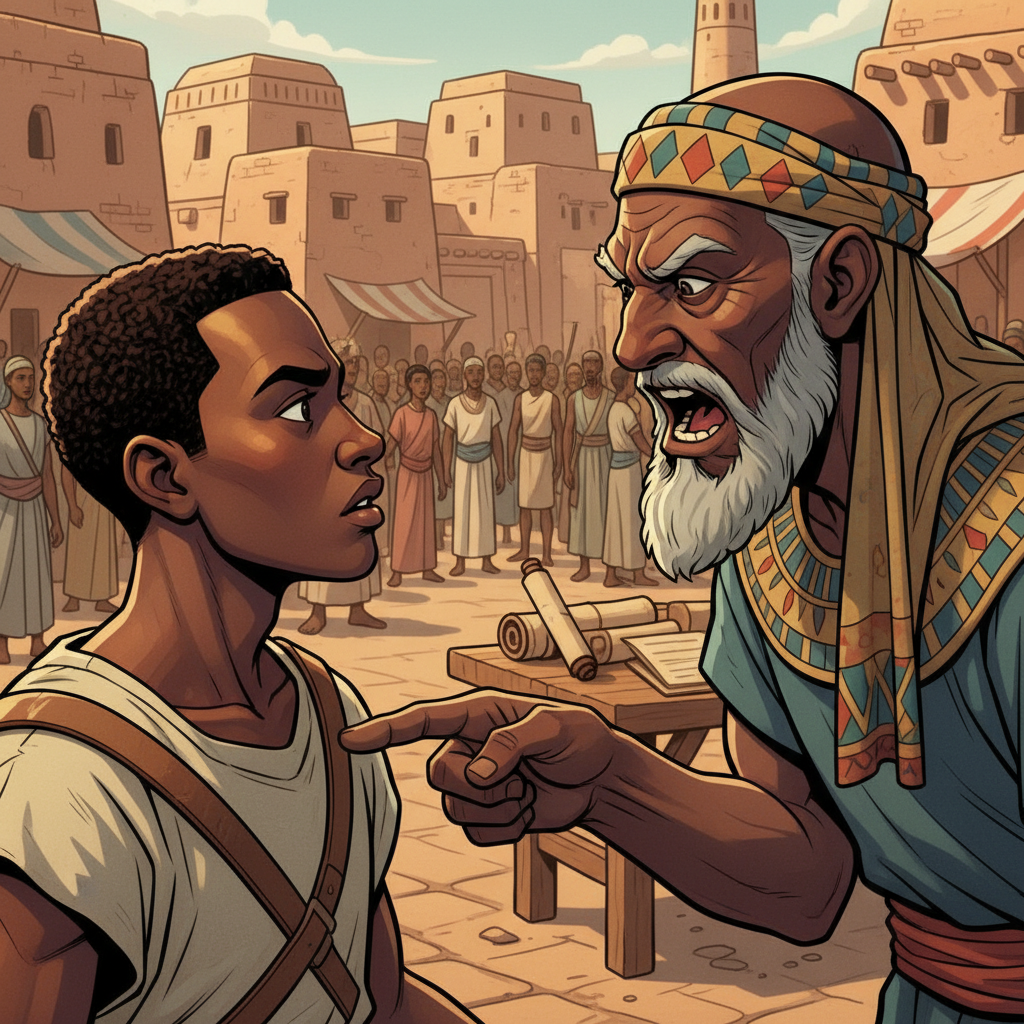
The evidence was mounting, but the community's resistance was mounting too. When Taharqo mentioned his investigation to a local elder, the man grew angry. "Djehutihotep is a pillar of this community. He writes our contracts, records our births, manages our taxes. Without him, we are lost. And you — a boy who has been a Medjay trainee for less than two months — you want to tear him down on the word of a fisherman's child?" The elder's contempt was like a physical blow. Taharqo felt it in his chest.
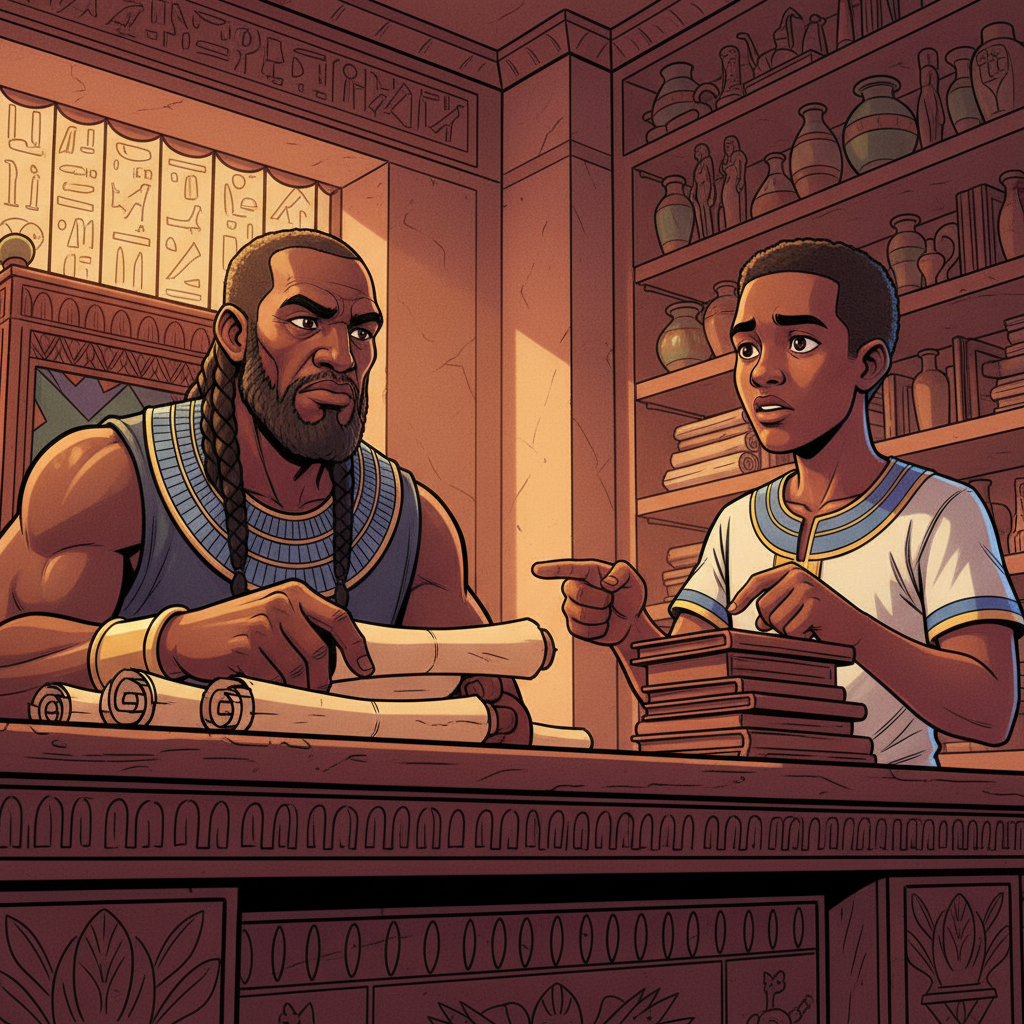
He brought his evidence to the training captain. The captain read the notes, looked at the witness statements, and set the papyrus down with a sigh. "Taharqo, I will speak plainly. Djehutihotep manages the tax records for this entire district. If you accuse him publicly and you are wrong, you destroy his reputation and your career. If you are right, you create chaos — who will manage the records? Who will the people trust? Sometimes the peace of the community requires us to let small injustices pass."
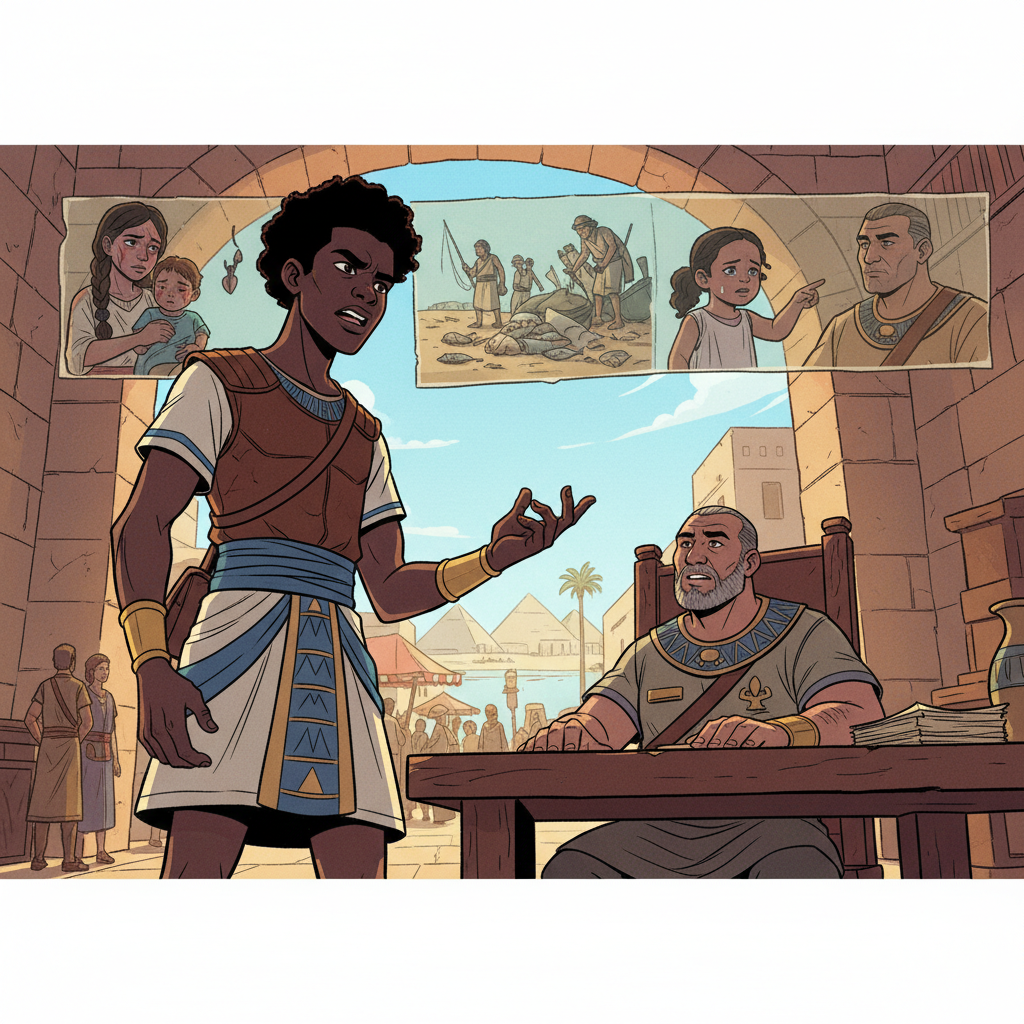
"Small injustices?" Taharqo repeated. He thought of the bruise on Iset's face. He thought of the fishermen who had been robbed of their catches. He thought of a ten-year-old girl who had told the truth and been dismissed because her father was poor and the man who hit her was important. "Captain, with respect — if we let this pass, we are not keeping peace. We are keeping silence. And silence in the face of injustice is not Maat. It is fear wearing the mask of wisdom."
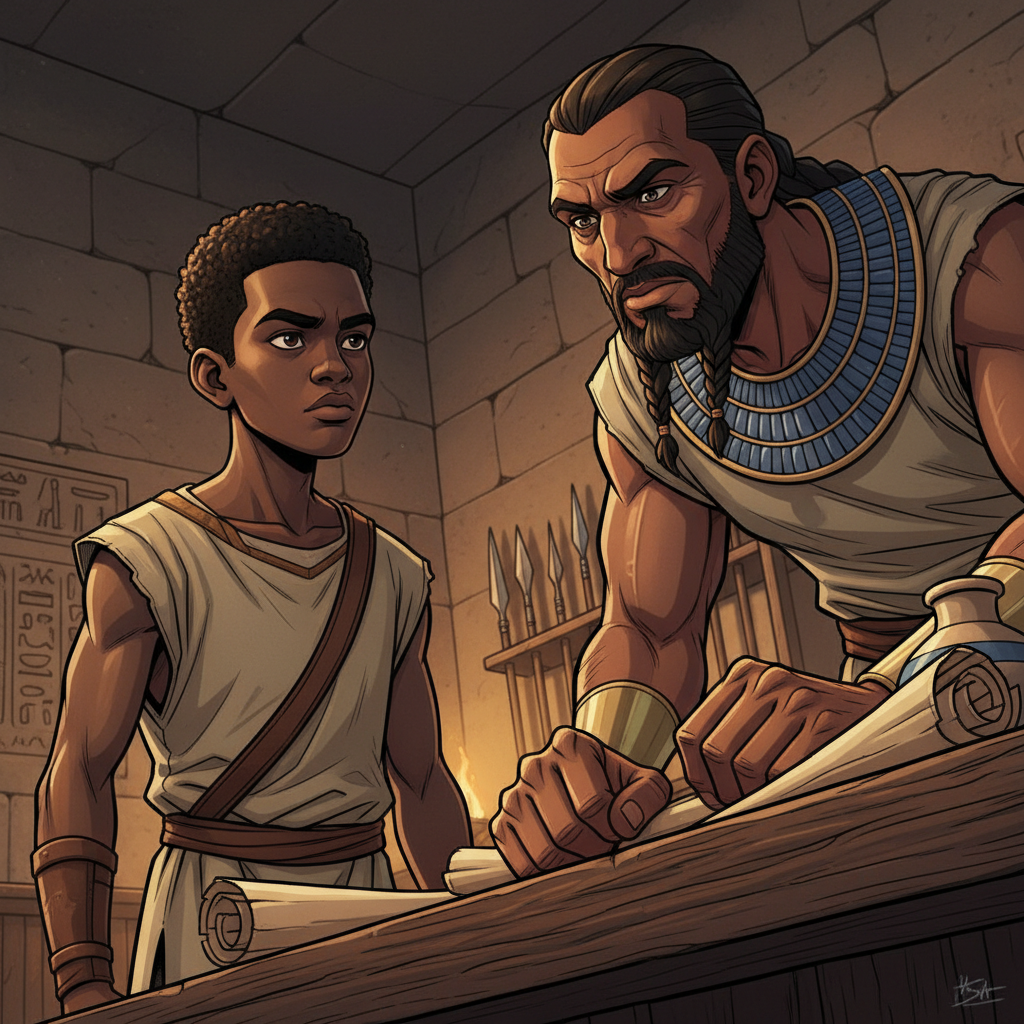
The captain stared at Taharqo for a long time. Something shifted in his face — whether it was shame or admiration, Taharqo could not tell. "You understand," the captain said slowly, "that if you take this to the kenbet, you will be calling a respected scribe a thief and a liar in front of the entire district. You will be asking the community to believe a child over a man they have trusted for twenty years. You will make enemies. Are you prepared for that?" Taharqo thought of his mother's voice, steady and warm: Tell the truth, even when your hands shake. "Yes," he said.
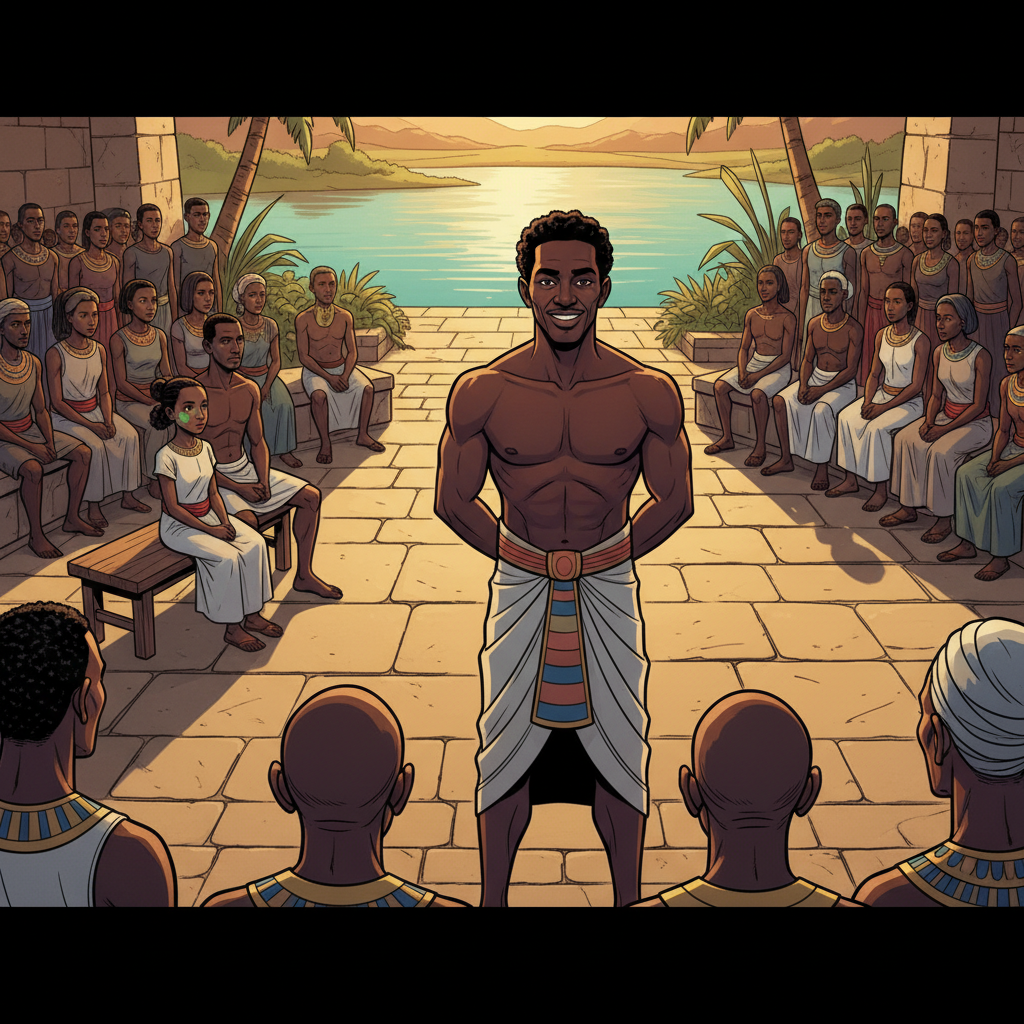
The kenbet was held in the open courtyard beside the river, where all could see and hear. Djehutihotep arrived with the confidence of a man who believed his status would shield him. He smiled at the elders, nodded to the community members, and stood with his hands clasped behind his back — the very picture of dignified innocence. Iset sat on a low bench beside her father, her bruised cheek now fading to yellow and green, her eyes fixed straight ahead. She did not look at Djehutihotep.
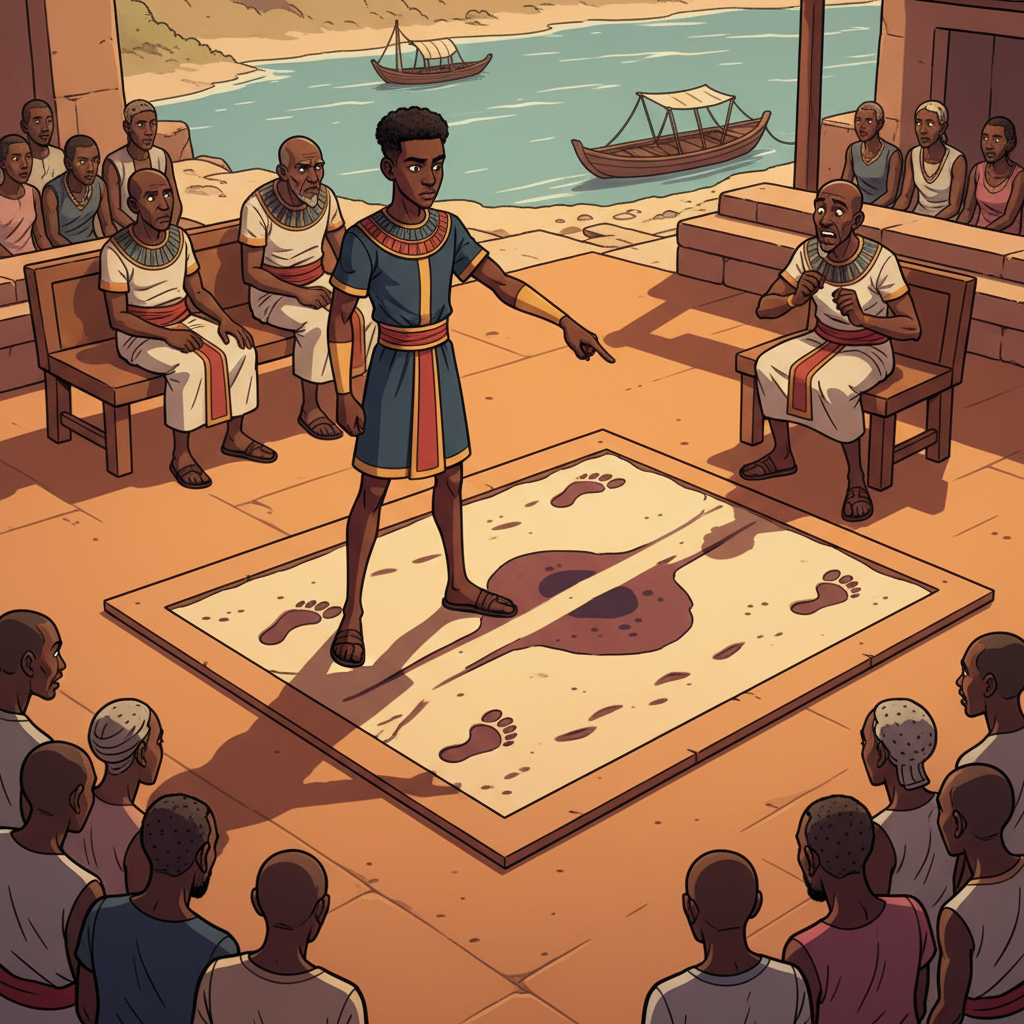
Taharqo presented his case methodically. The shape of the bruise. The footprints and drag marks. The other fishermen's missing catches. The bread seller's eyewitness account. The goatherd boy who heard the scream. Djehutihotep's confidence began to crack as the evidence accumulated. His smile faltered. His hands, once clasped serenely, began to fidget. When the eldest judge asked him directly, "Did you strike this child?" the scribe's composure finally broke.
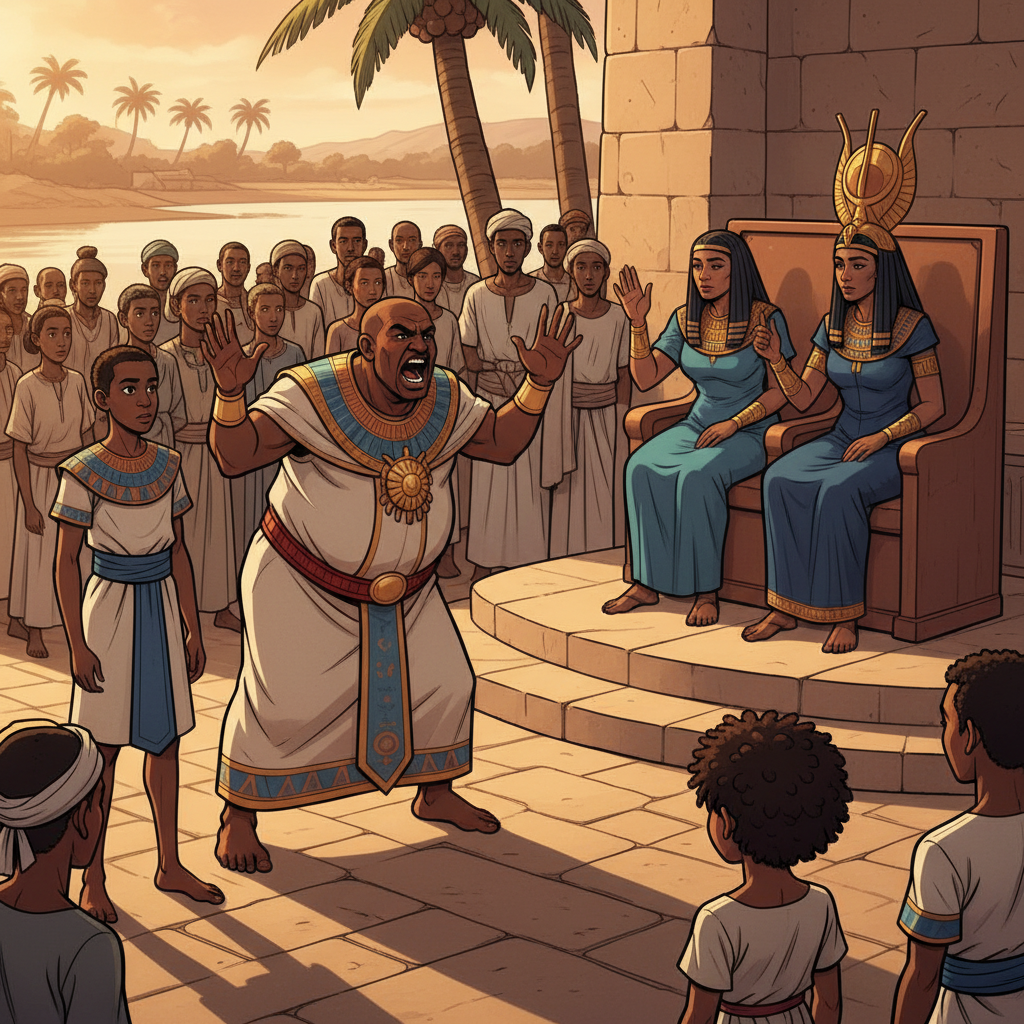
"She is a child!" Djehutihotep shouted. "A fisherman's daughter! Why does the court waste its time on the complaints of the poor? I have served this district faithfully for twenty years!" The courtyard fell silent. In that single outburst, Djehutihotep had revealed more about himself than all of Taharqo's evidence combined. The eldest judge — a woman named Henutweret — leaned forward. "In the eyes of Maat, the child of a fisherman and the child of a pharaoh stand at the same height. Truth does not weigh more or less because of the mouth it comes from."

Djehutihotep was found guilty. He was stripped of his scribal position, ordered to repay every fisherman he had robbed, and sentenced to public confession — standing before the district and admitting what he had done. It was, for a man of his pride, a punishment heavier than any physical blow. A new scribe was appointed within the week — a young woman from the temple school who kept honest records and never collected a tax that was not owed.
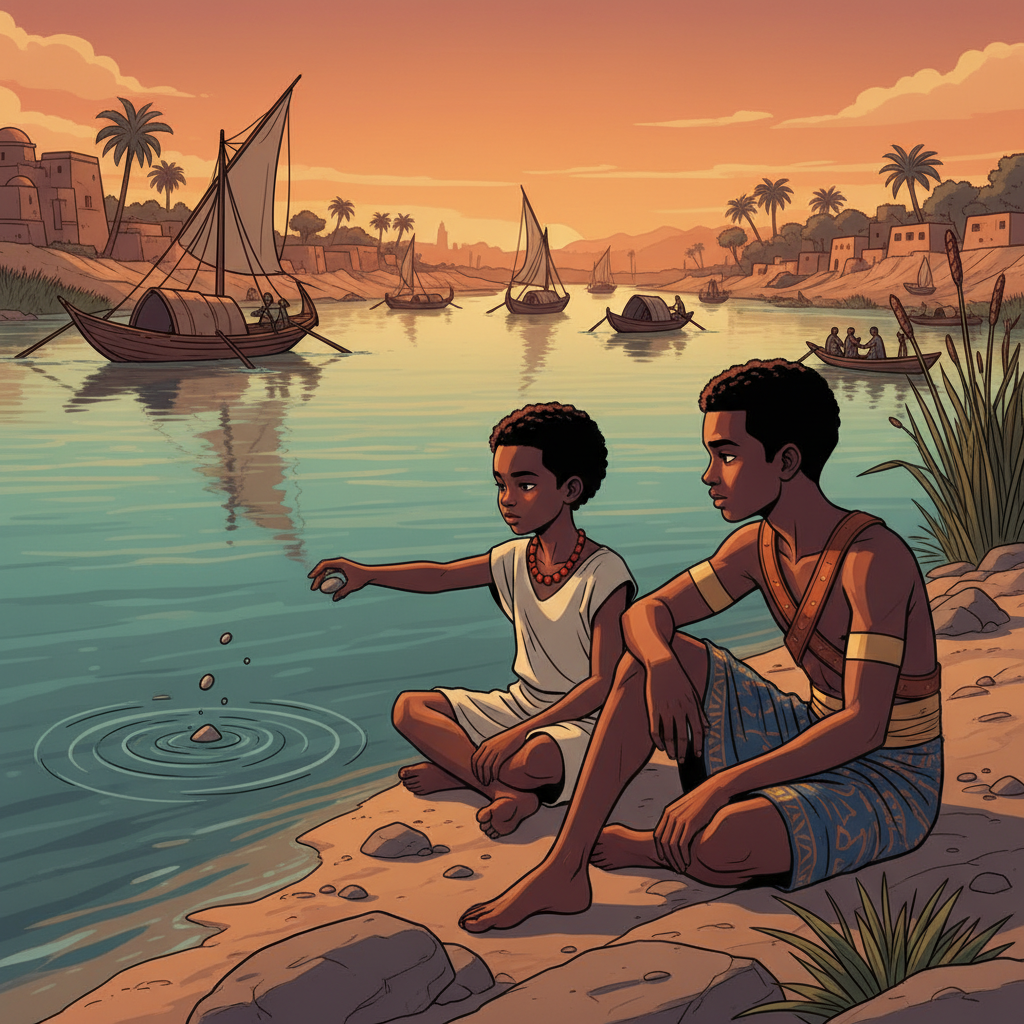
After the kenbet, Taharqo found Iset by the river. She was throwing pebbles into the water, watching the ripples spread. "Thank you," she said, without looking up. "For believing me." Taharqo sat beside her. "I did not believe you," he said honestly. "Not at first. I believed the evidence. The truth does not ask to be believed — it asks to be found." Iset thought about this for a moment, then threw another pebble. "My father says the Medjay only care about important people." She glanced at Taharqo. "Maybe some of them care about the truth."
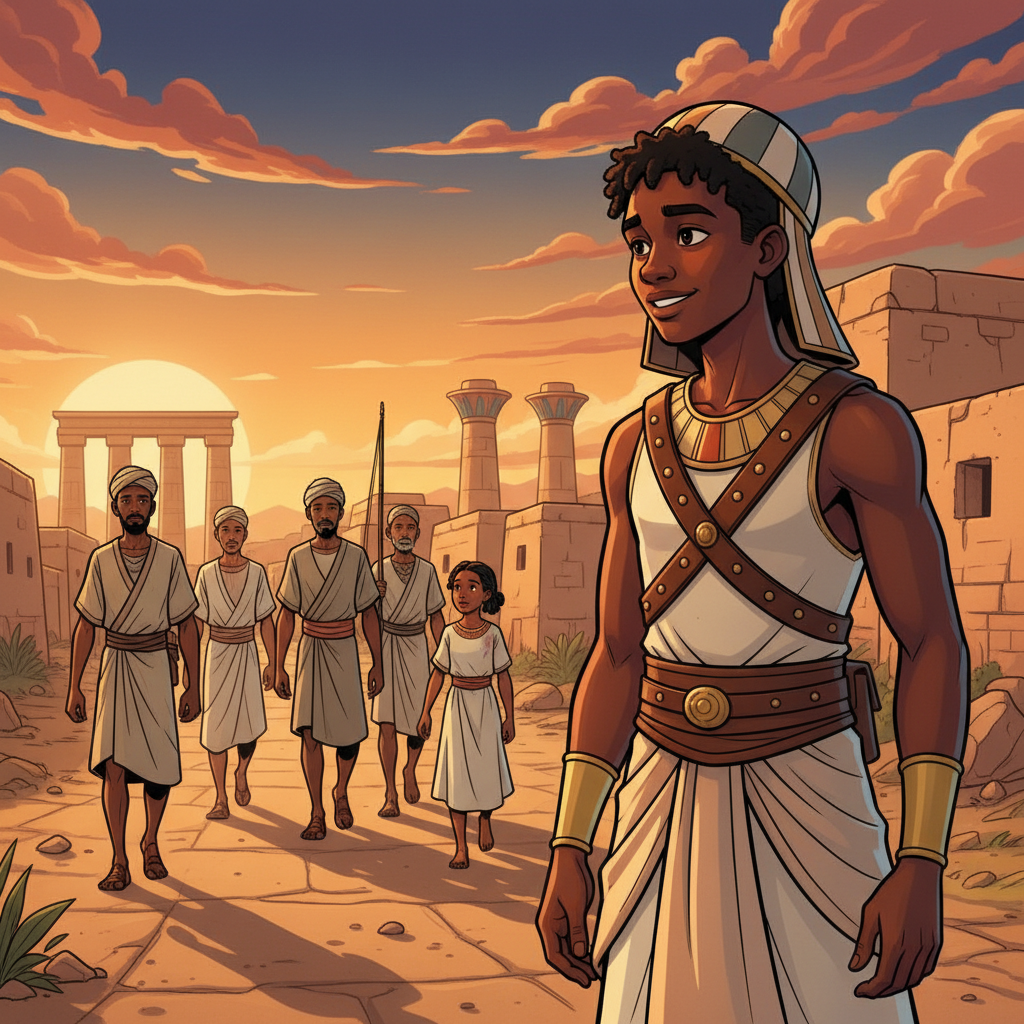
Walking home that evening, Taharqo thought about what his captain had said — that accusing Djehutihotep would create chaos. And in a way, the captain had been right. The district was unsettled. Some people were angry at Taharqo for disrupting the comfortable order they had known. Some whispered that a trainee had no business challenging a respected elder. But Taharqo also saw the fishermen walking with their heads higher, and he saw Iset's bruise fading, and he understood something the captain had missed: peace built on hidden injustice is not peace. It is a wound covered by clean linen, festering underneath. True peace — true Maat — requires the courage to disturb a false calm so that a real one can grow.