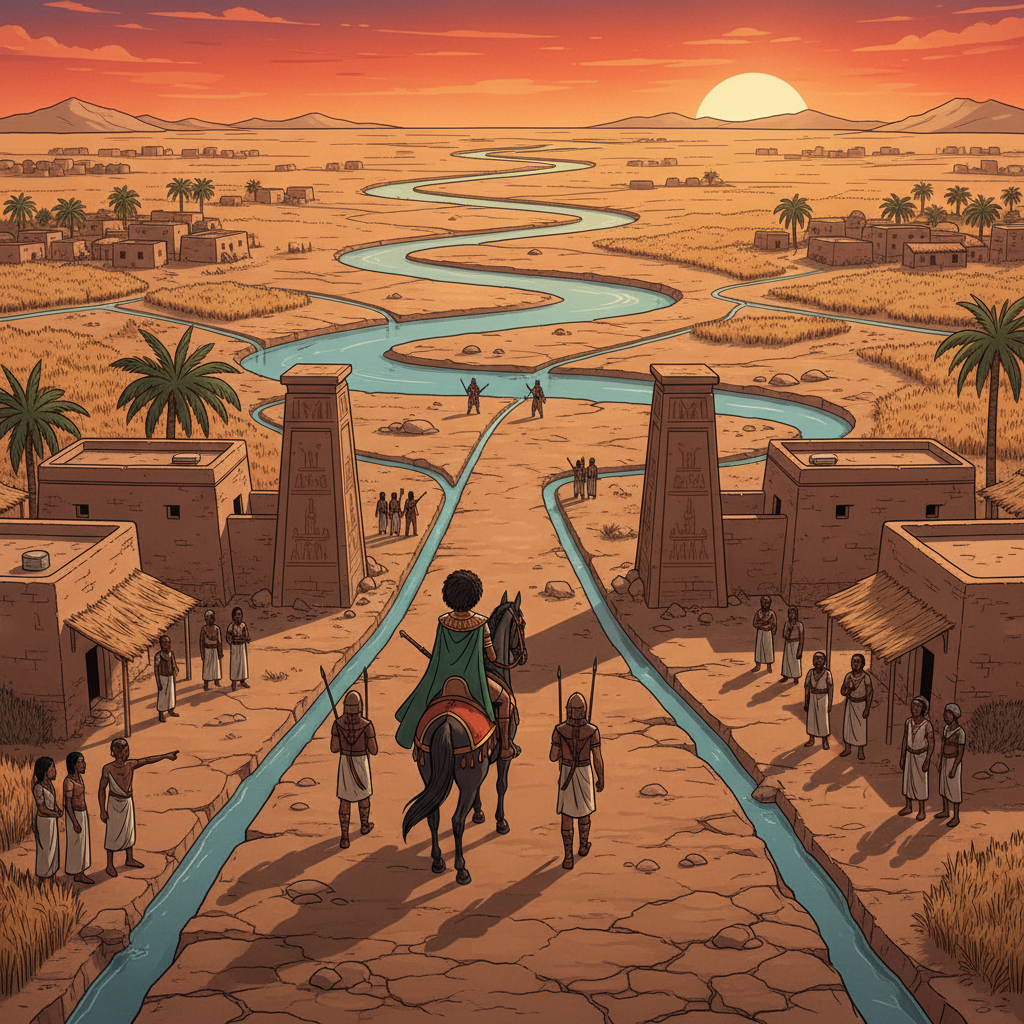
Captain Nefertari arrived at the village of Nekhen-Tawi on the fifth day of the low water season, when the Nile had shrunk to half its normal width and the irrigation canals that fed the surrounding farmland ran thin as threads of silver through the cracked brown earth. She had been summoned by the district vizier to oversee a water dispute that had escalated from angry words to thrown stones, and from thrown stones to two families standing on opposite banks of a shared canal with weapons in their hands.
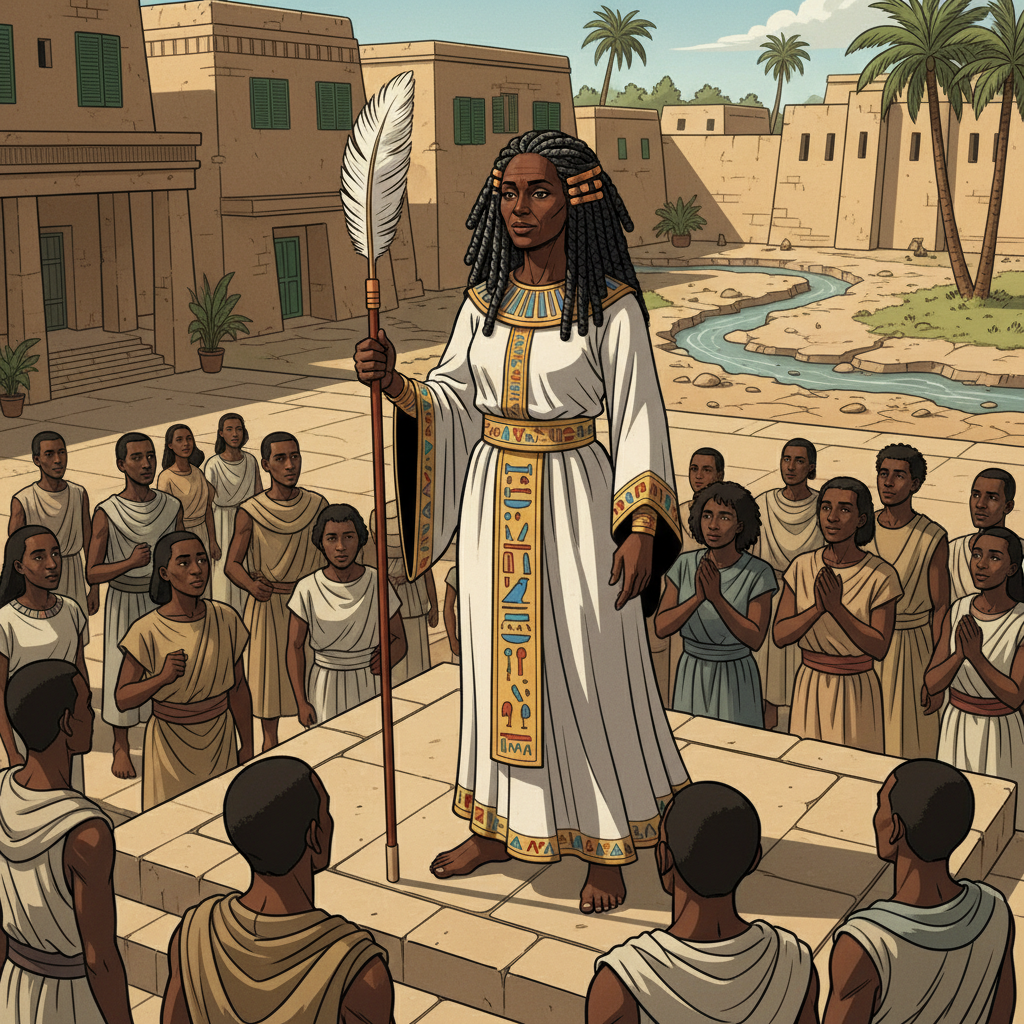
Nefertari was forty-three years old, a Medjay captain who had served justice in four different districts over twenty-one years. Her deep brown skin was weathered by decades of sun and wind, and her once-black hair was now threaded with silver, pulled back in tight braids that she pinned close to her head with copper clasps. She wore the formal robe of a Medjay judge — white linen with a gold-embroidered border — and carried the Staff of Maat, a cedar rod topped with the ostrich feather that symbolized truth and balance. When she walked, people noticed. When she spoke, people listened. Not because she was loud, but because she was fair.
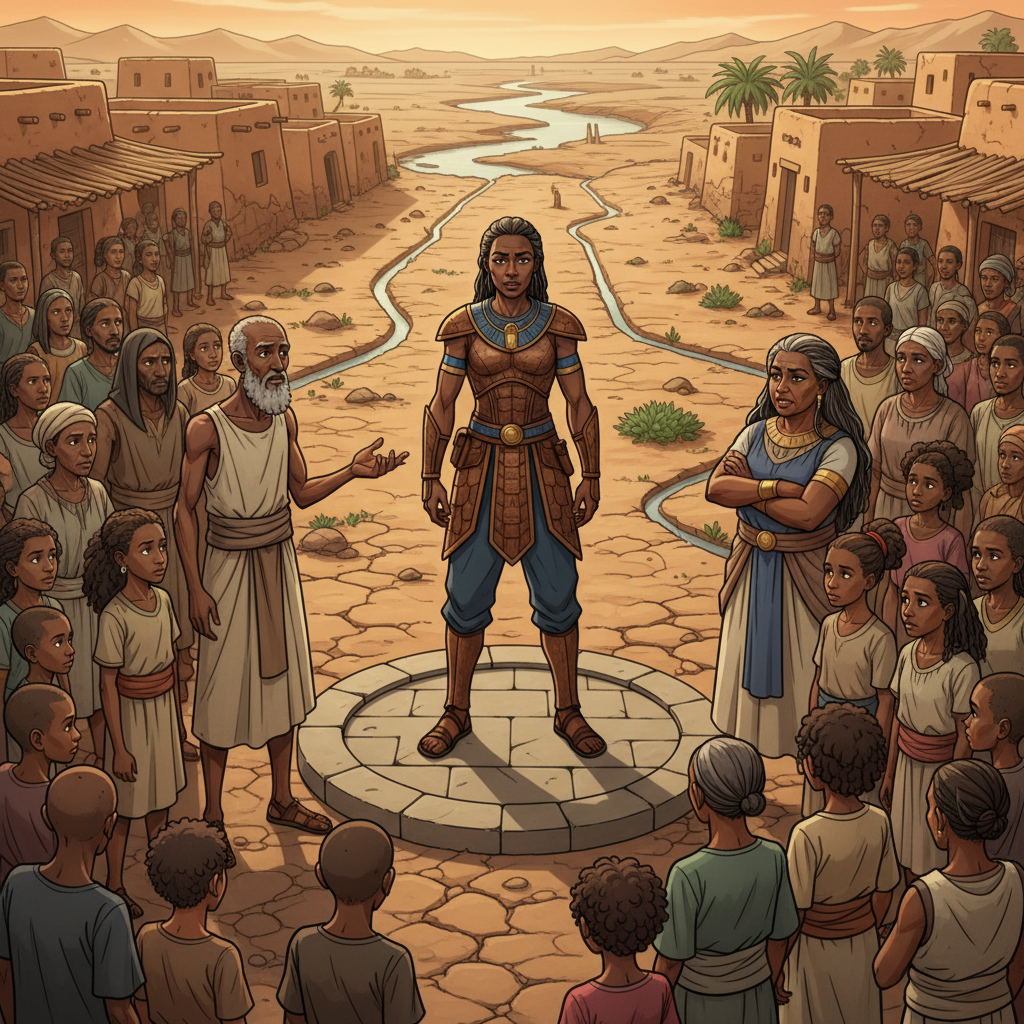
The dispute was between two families who had farmed this land for generations. On the upstream end of the shared canal, the Abasi clan — led by Elder Abasi, a lean, grey-bearded man with skin dark as river mud and hands permanently stained from decades of working the earth. On the downstream end, the Sefu clan — led by Elder Sefu, a stout woman with silver-streaked hair and a voice that could carry across three fields without effort. Both families were respected. Both had children and grandchildren who depended on their harvest. Both were desperate.
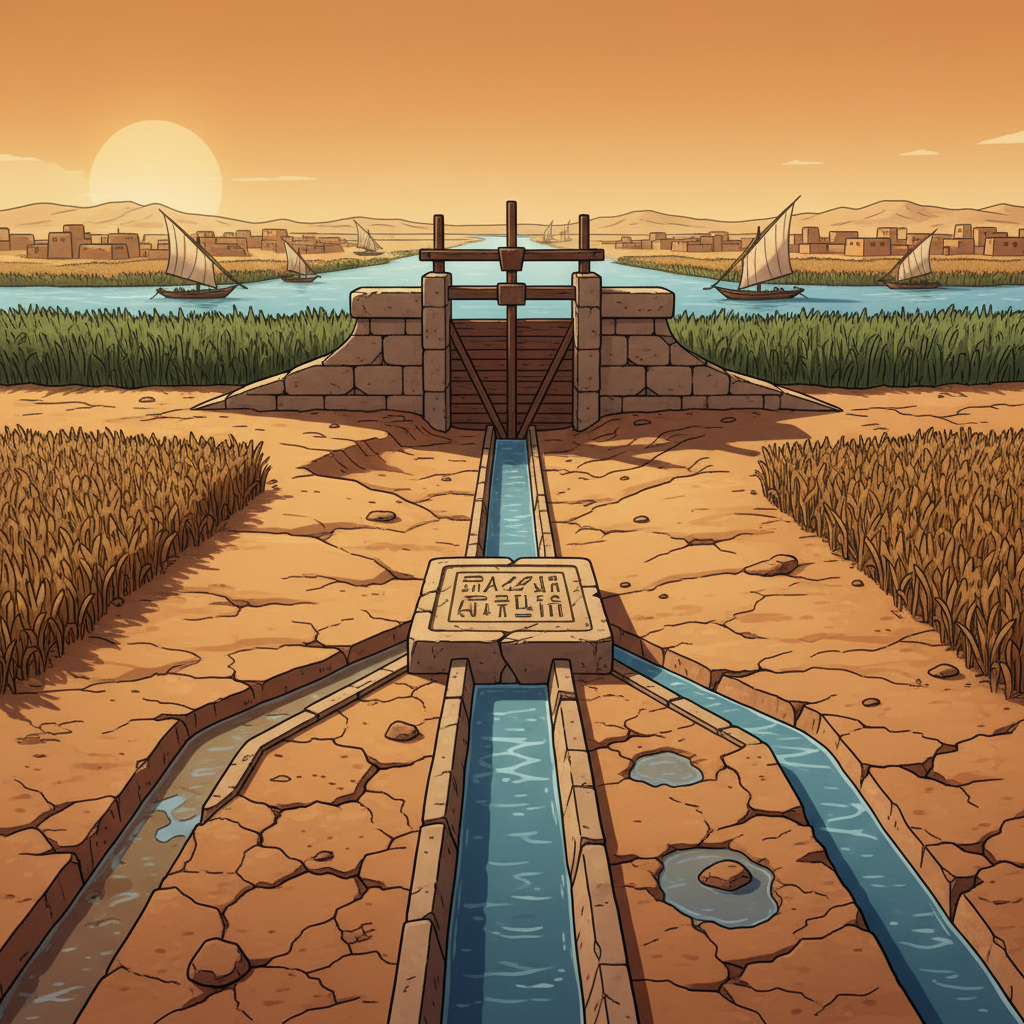
The problem was simple in description and devastating in consequence. The canal that served both families drew water from the Nile through a sluice gate, then split at a junction stone into two branches — one flowing north to the Abasi fields, one flowing south to the Sefu fields. In a normal year, the canal carried enough water for both. But this was not a normal year. The annual flood had been weak — the lowest in living memory — and the canal now carried barely enough water for one family's fields, let alone two.
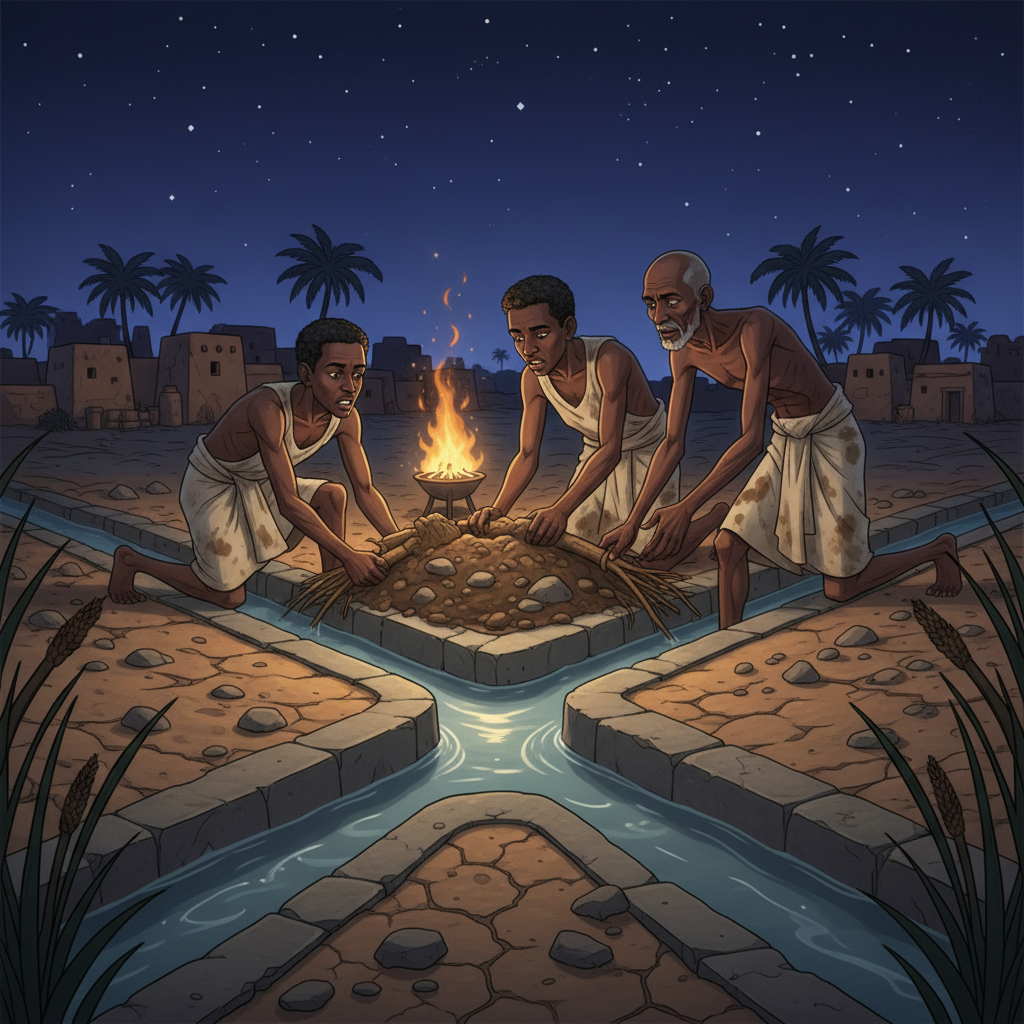
Each family had done what desperate people do: they had tried to redirect more water to their own branch. The Abasi clan had built a small dam of mud and stones at the junction, diverting more flow to their northern channel. The Sefu clan had torn it down overnight. The Abasi rebuilt it. The Sefu tore it down again and built their own dam, sending more water south. Then the Abasi father's eldest son had confronted the Sefu grandmother, and she had hit him with a hoe. Then stones were thrown. Then weapons appeared.
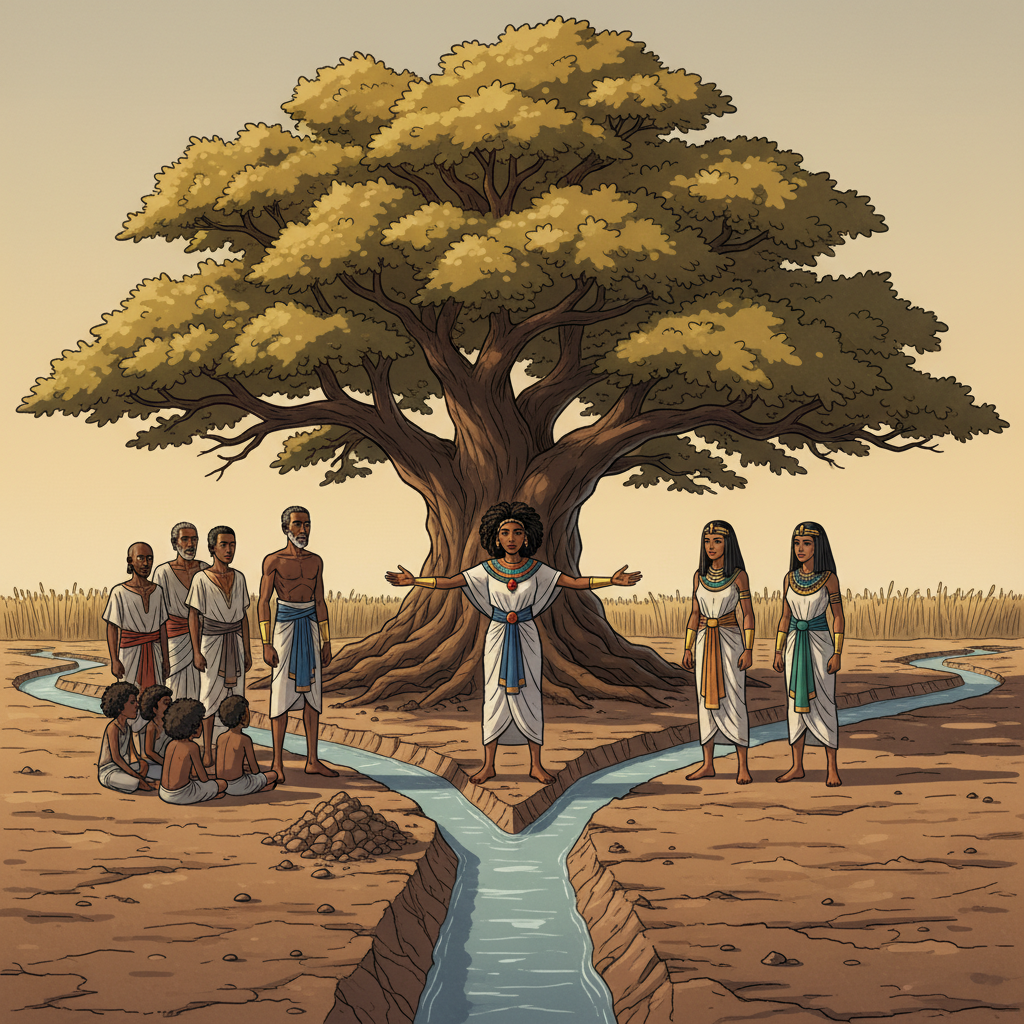
Nefertari convened the kenbet under a great tamarind tree at the junction point — the exact spot where the canal split. She had chosen this location deliberately. In disputes about the physical world, the kenbet should sit where the truth lives. Both families gathered on their respective sides, the adults standing, the children sitting in the dust, all of them watching Nefertari with the combination of hope and suspicion that people bring to any court.
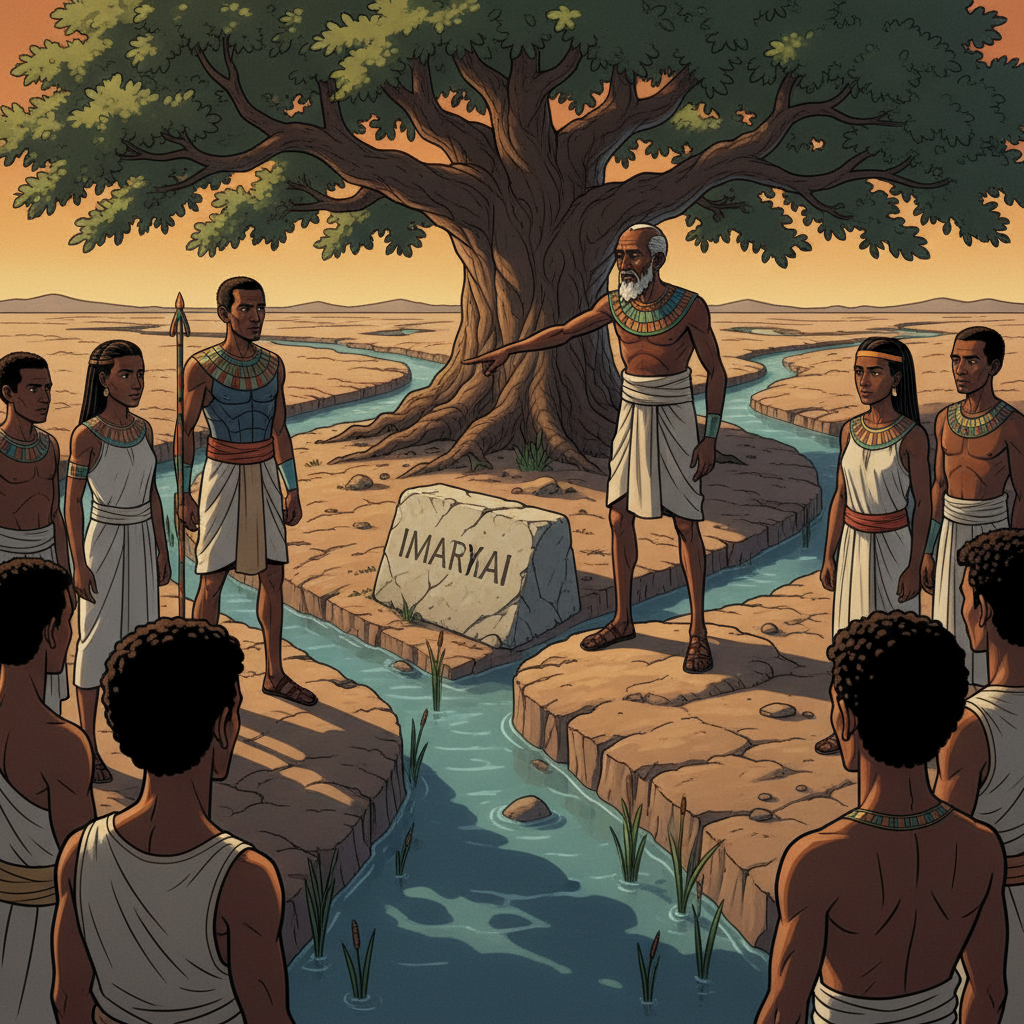
Elder Abasi spoke first, as the upstream claimant. His voice was hoarse and measured. "Captain, my family has farmed this land for five generations. My grandfather's father dug this canal with his own hands and carved his name into the junction stone." He pointed to the ancient limestone block where the canal split — and indeed, carved deeply into its surface was a name in hieratic script, weathered but legible. "The right of first water belongs to the one who built the channel. This is law. This is custom. This is Maat."
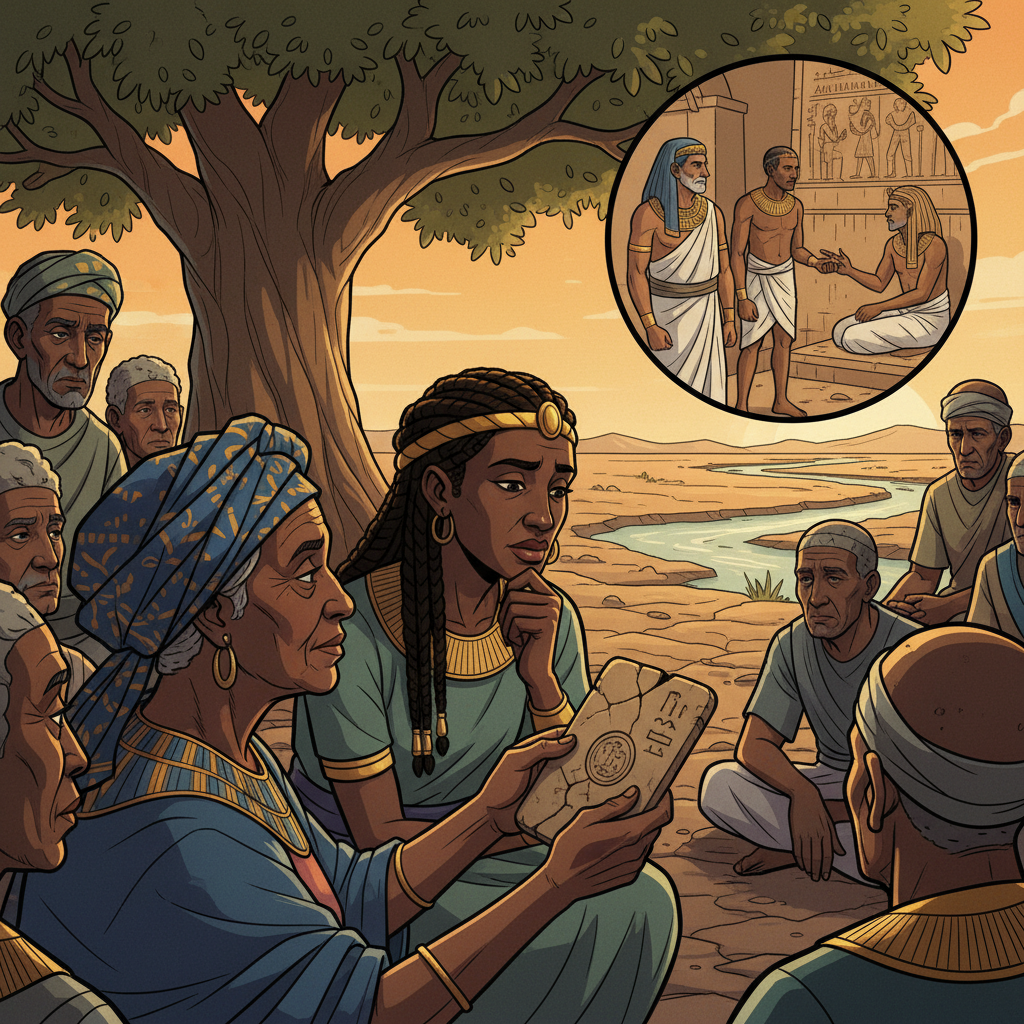
Elder Sefu responded with equal conviction. "Captain, my family has farmed the downstream fields for four generations — not five, I grant, but long enough to plant our dead in this soil and raise our children on its harvest. When my grandmother's mother settled here, the Abasi elder of that time — your own grandfather, Abasi — agreed to share the water equally. The agreement was witnessed by the district scribe and carved into the temple records." She produced a clay tablet, cracked with age but readable, bearing the seal of a long-dead official.
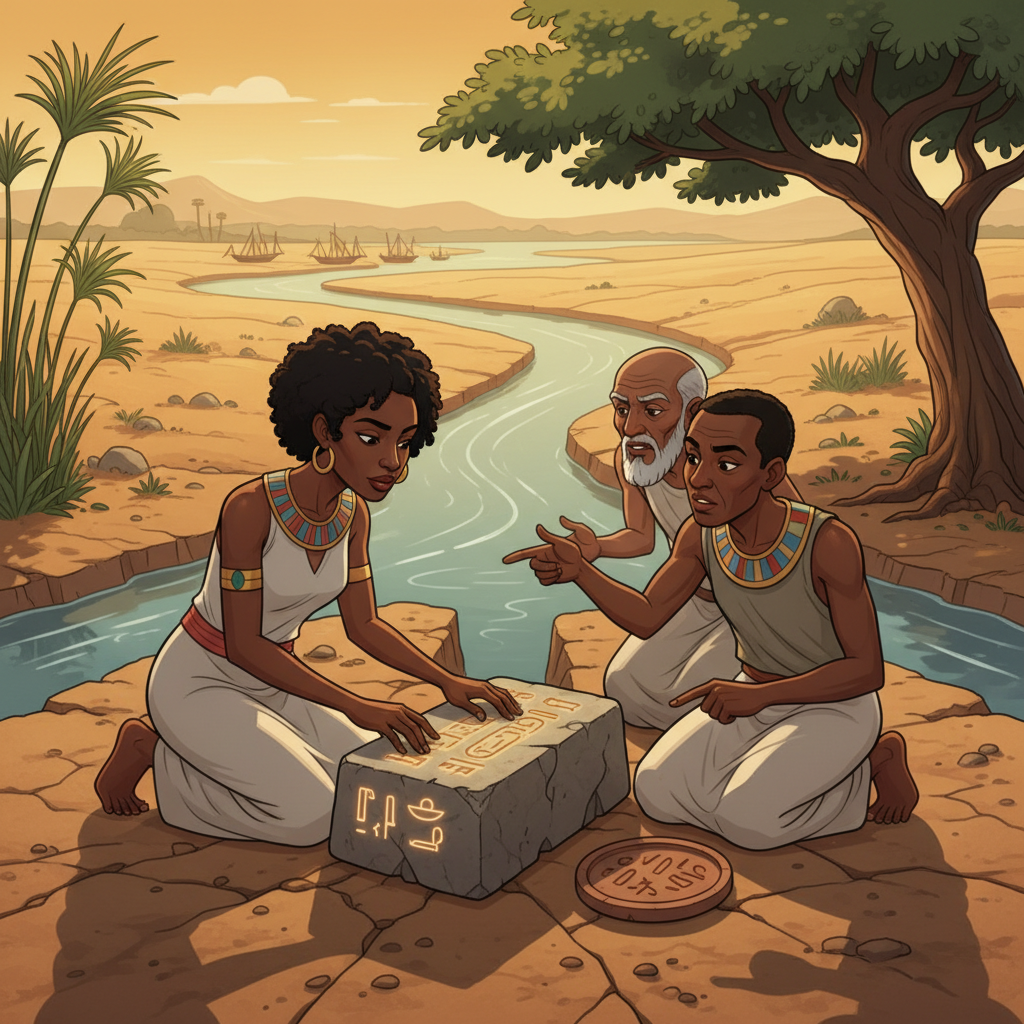
Both claims were legitimate. Nefertari examined the junction stone with its carved name. She examined the clay tablet with its witnessed agreement. The Abasi family had the right of first construction. The Sefu family had the right of a formal agreement, sealed and witnessed. In a normal year, both rights could be honored because there was enough water for all. But the drought had reduced the flow to the point where honoring one right meant denying the other.
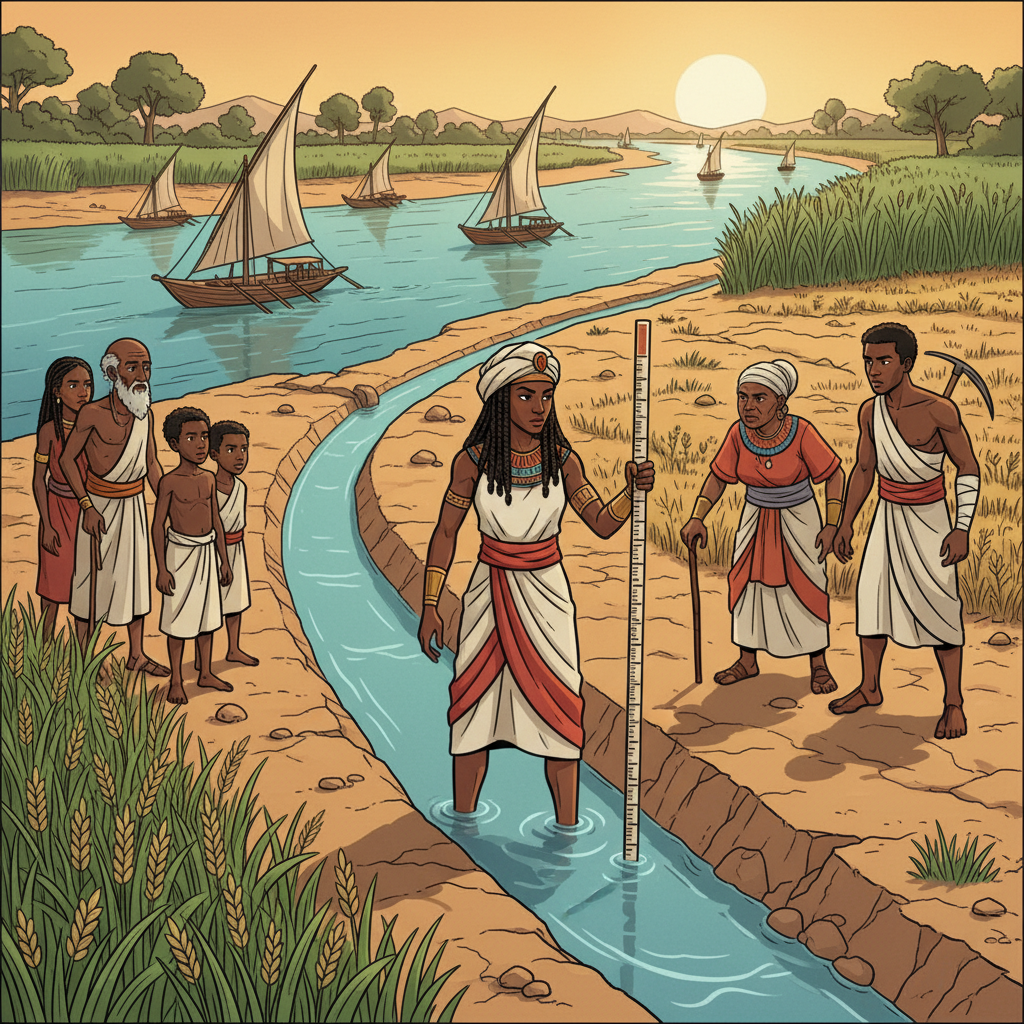
Nefertari spent three days investigating. She walked the canal from the Nile sluice gate to the farthest edges of both families' fields, measuring the water flow with a reed marked in cubits. She examined both sets of fields, noting which crops were planted, how far along they were, and which would survive reduced water and which would die. She talked to every member of both families — the elders, the adults, the children, even the old grandmother who had hit the Abasi son with a hoe.
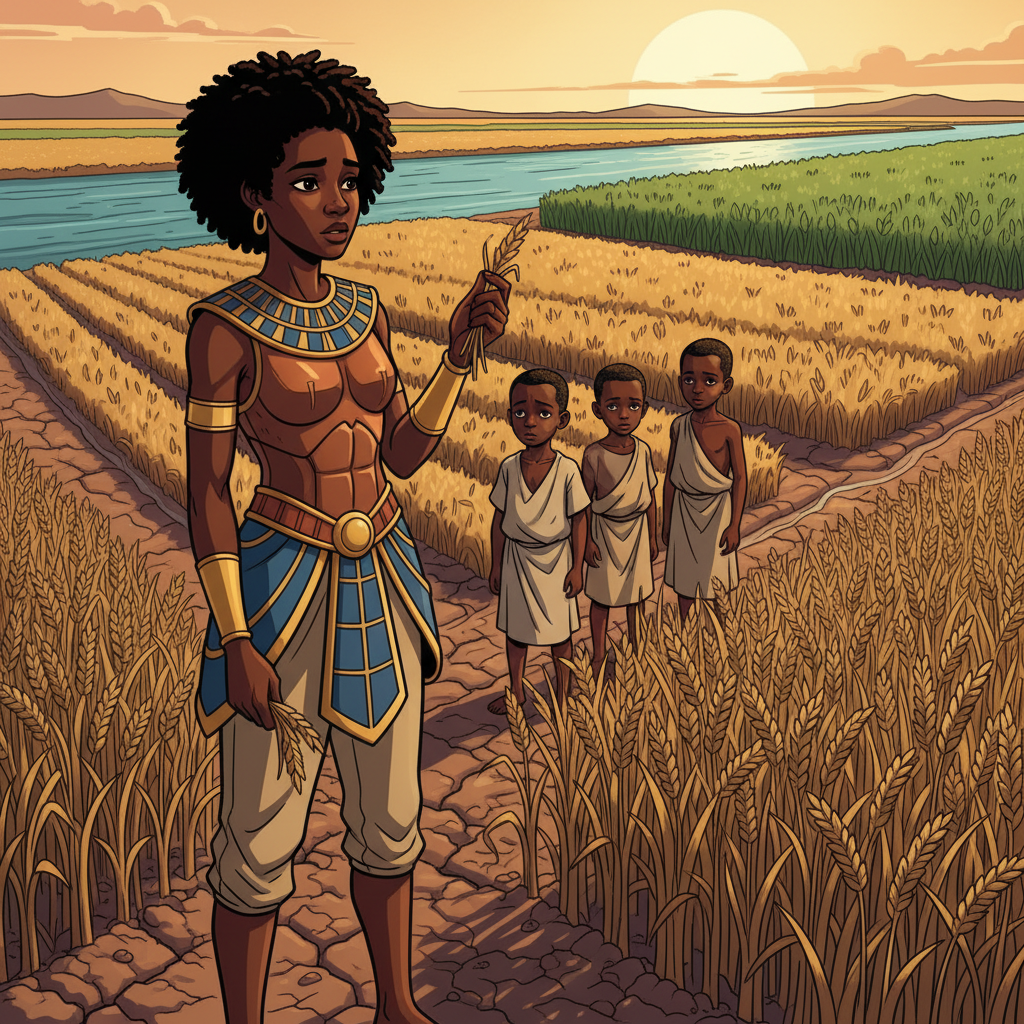
What she found made the case harder, not easier. The Abasi fields were planted with emmer wheat — the staff of life, the crop that would feed the family through the winter. Without water, the wheat would die, and the Abasi children would go hungry. The Sefu fields were planted with flax — valuable for trade and cloth-making, but not food. However, the Sefu family had already traded next season's flax harvest for grain and oil, counting on the crop to fulfill their obligations. If the flax died, they could not honor their debts and would lose everything.
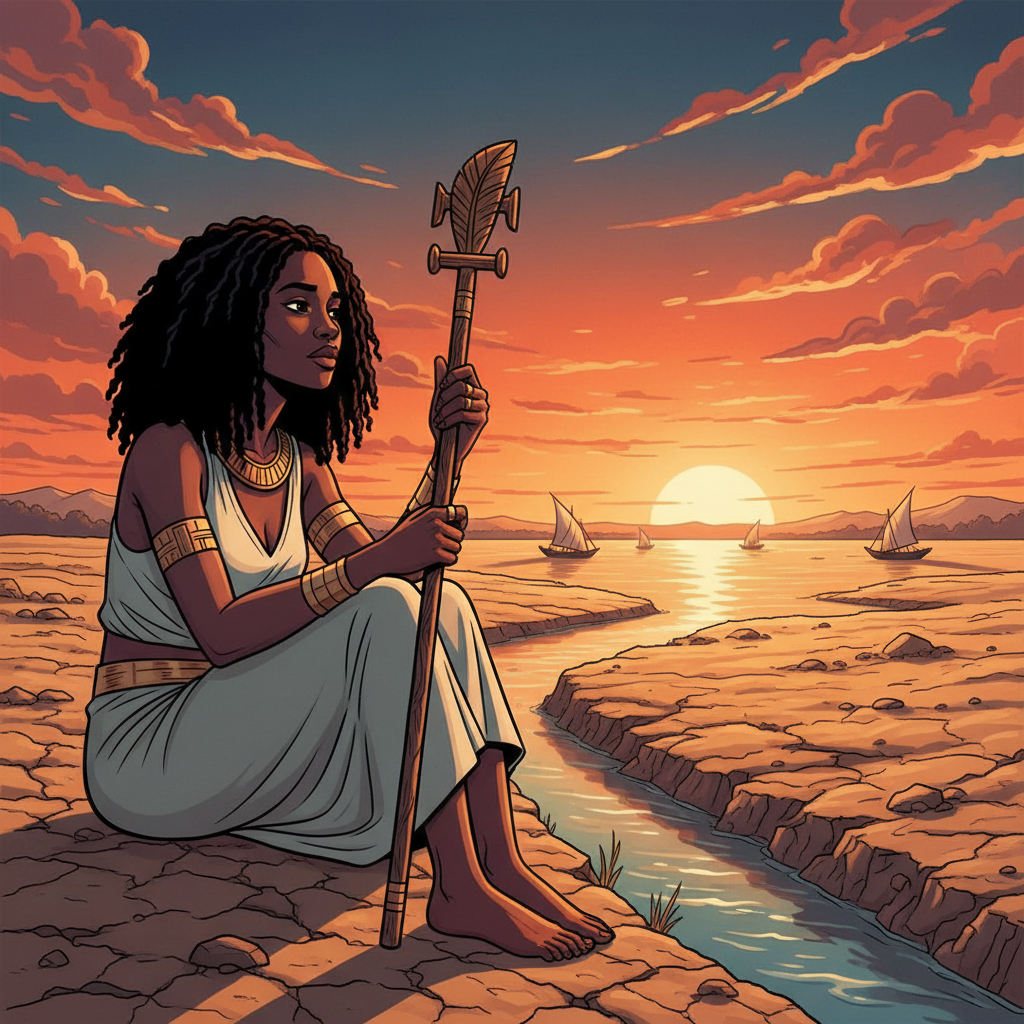
Both families would suffer. Both families had children who would bear the consequences. There was no solution that made everyone whole. Nefertari sat alone by the canal that evening, watching the thin stream of water catch the last light of the setting sun. She ran her fingers along the Staff of Maat and thought about the feather it represented — the feather of truth that was placed on the great Scale in the Hall of Judgment, against which every heart was weighed. What did the Scale say when both sides were right?
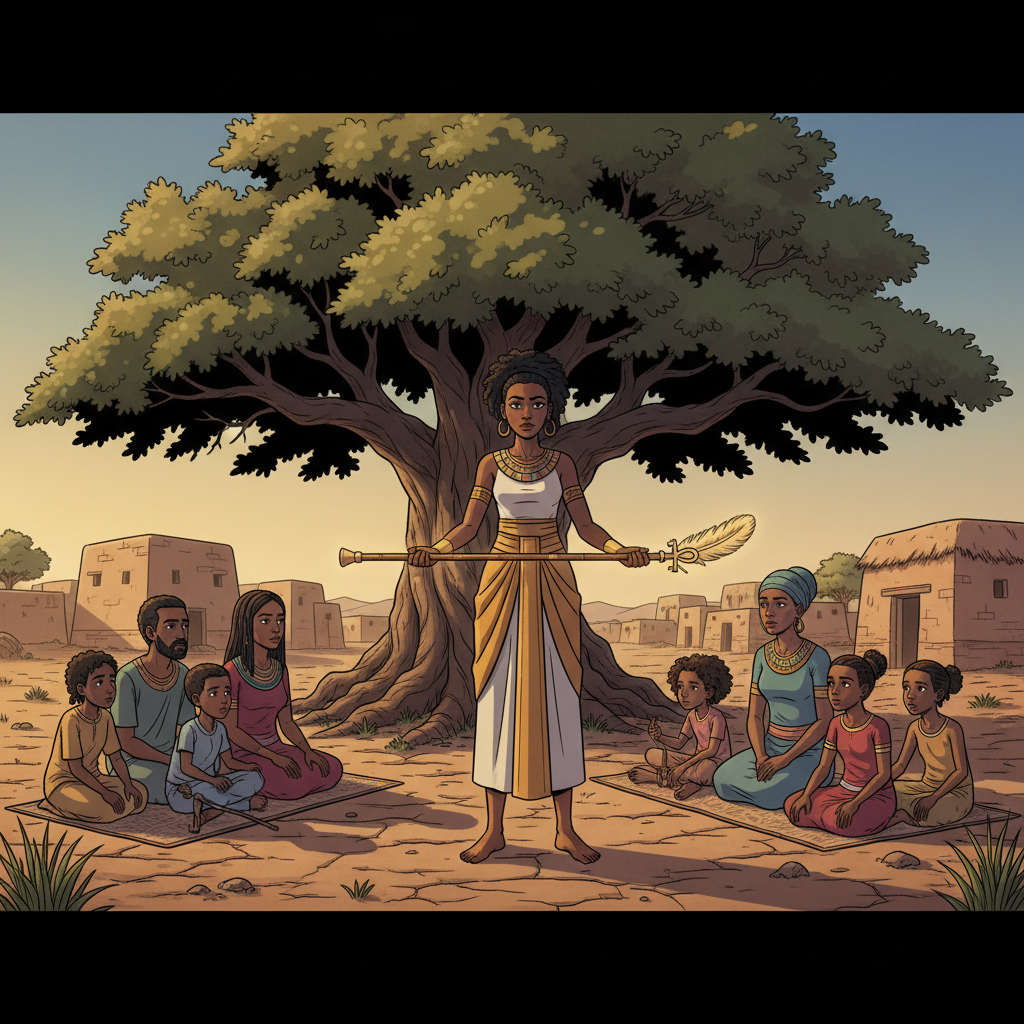
In the morning, she convened the kenbet for the final time. Both families sat under the tamarind tree, their faces drawn and anxious. Children fidgeted in the dust. The morning air was already hot, the sun climbing into another cloudless sky. Nefertari stood between the two families with the Staff of Maat across her palms — holding it level, perfectly balanced, as the symbol demanded.
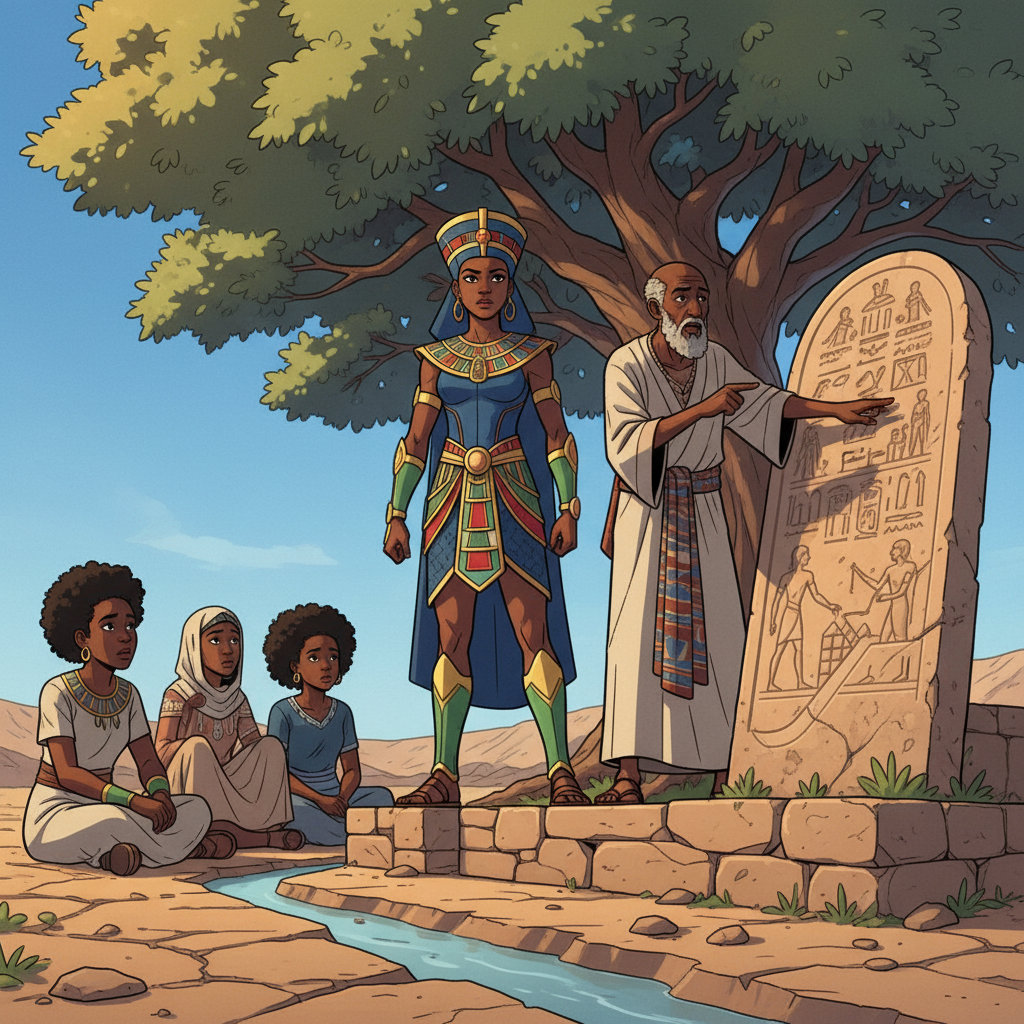
"I have examined both claims," Nefertari began, her voice carrying across the gathered families. "Elder Abasi, your family built this canal. That right is real and carved in stone. Elder Sefu, your family holds a witnessed agreement for equal sharing. That right is real and sealed in clay. Both rights are valid. Both are grounded in Maat. And the water in this canal is not enough for both." She paused, letting the truth settle over the assembly like the heat of the sun — unavoidable, undeniable.
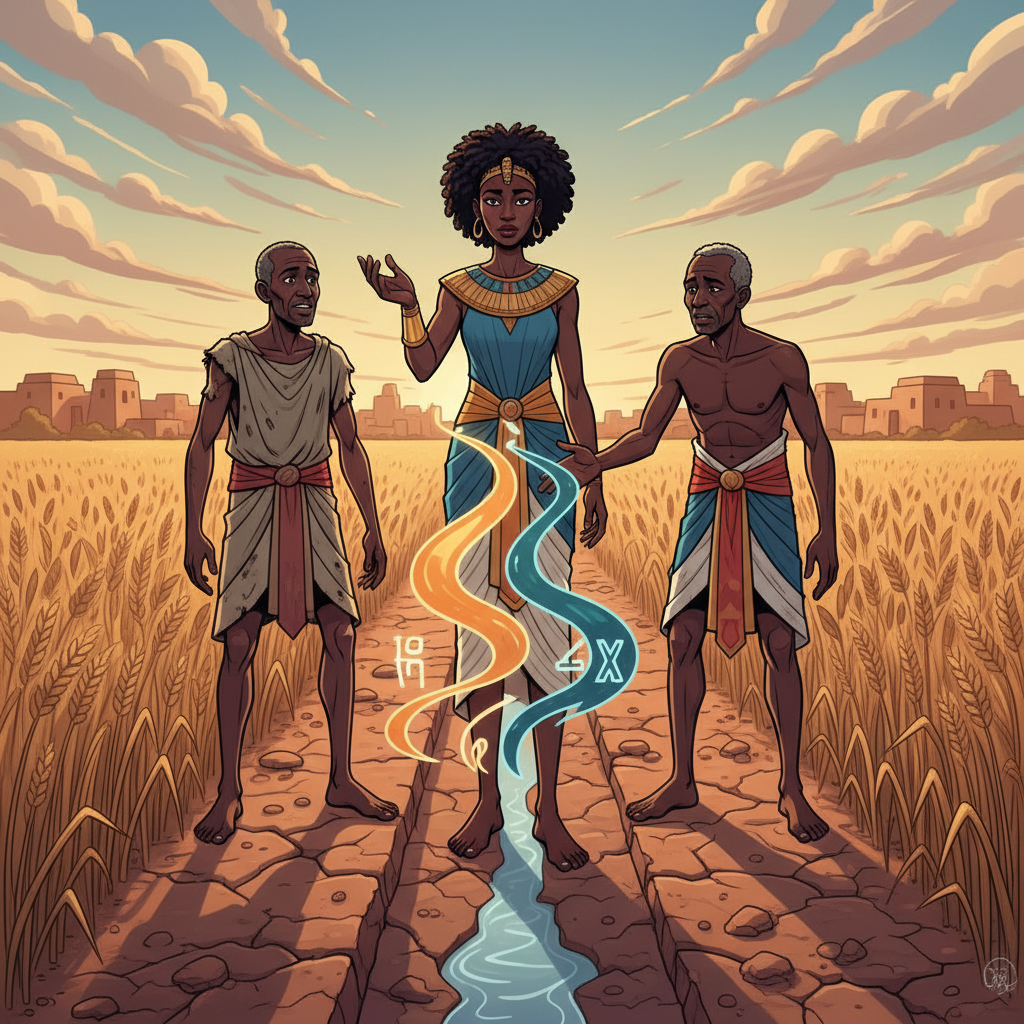
"I will not pretend that what I offer next is perfect justice. It is not. Perfect justice would require more water, and I cannot make the Nile rise. What I offer instead is the closest thing to Maat that an imperfect world allows." She laid out her judgment: the water would be split — not equally, but proportionally based on immediate need. The Abasi fields would receive sixty parts in a hundred, because their wheat was food and hunger is more urgent than debt. The Sefu fields would receive forty parts in a hundred — enough to save some of the flax, though not all.
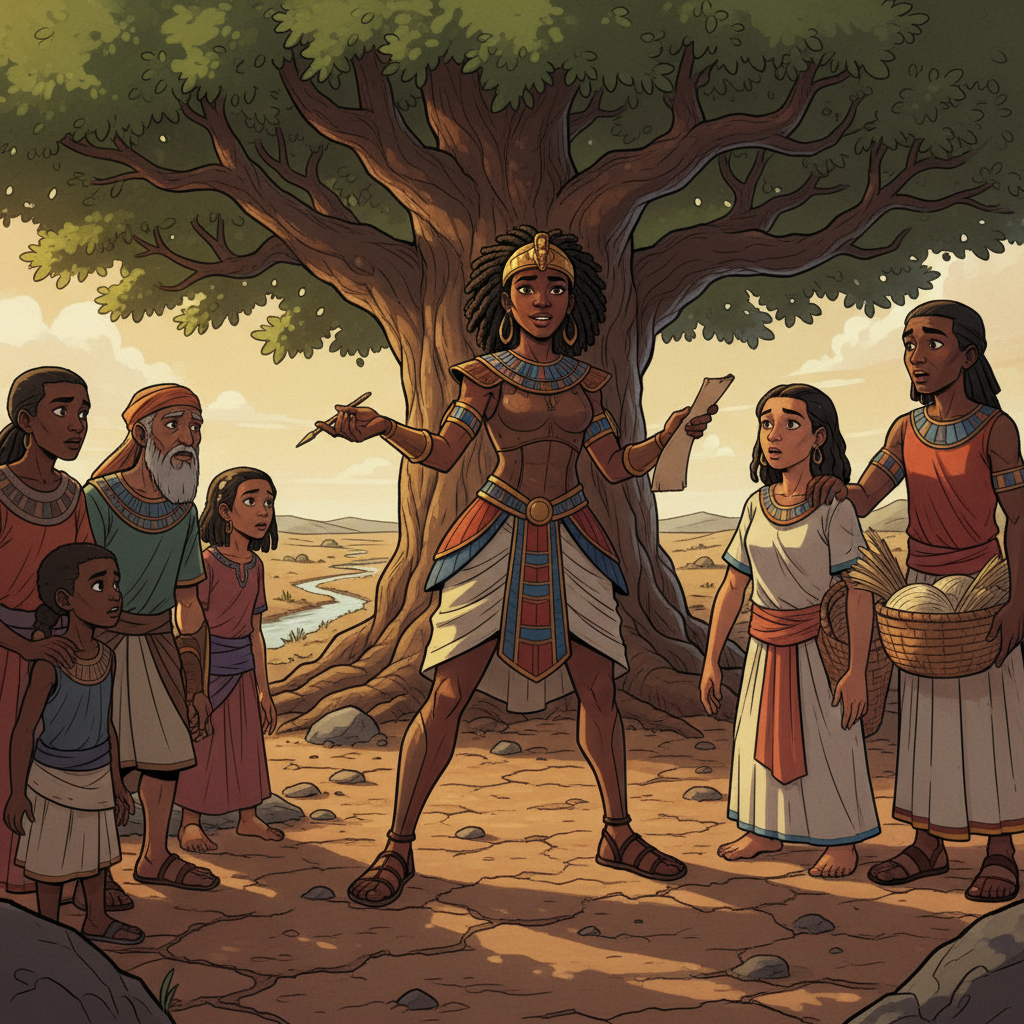
But that was only the first part. The second part was harder. "Elder Abasi, because your family receives more water, you will share one-third of your wheat harvest with the Sefu family after the crop comes in. Elder Sefu, because your flax crop will be reduced, the district will petition the vizier to defer your trade obligations for one season — I will write the petition myself." She looked at both families. "Neither of you will get everything you want. Both of you will get enough to survive."
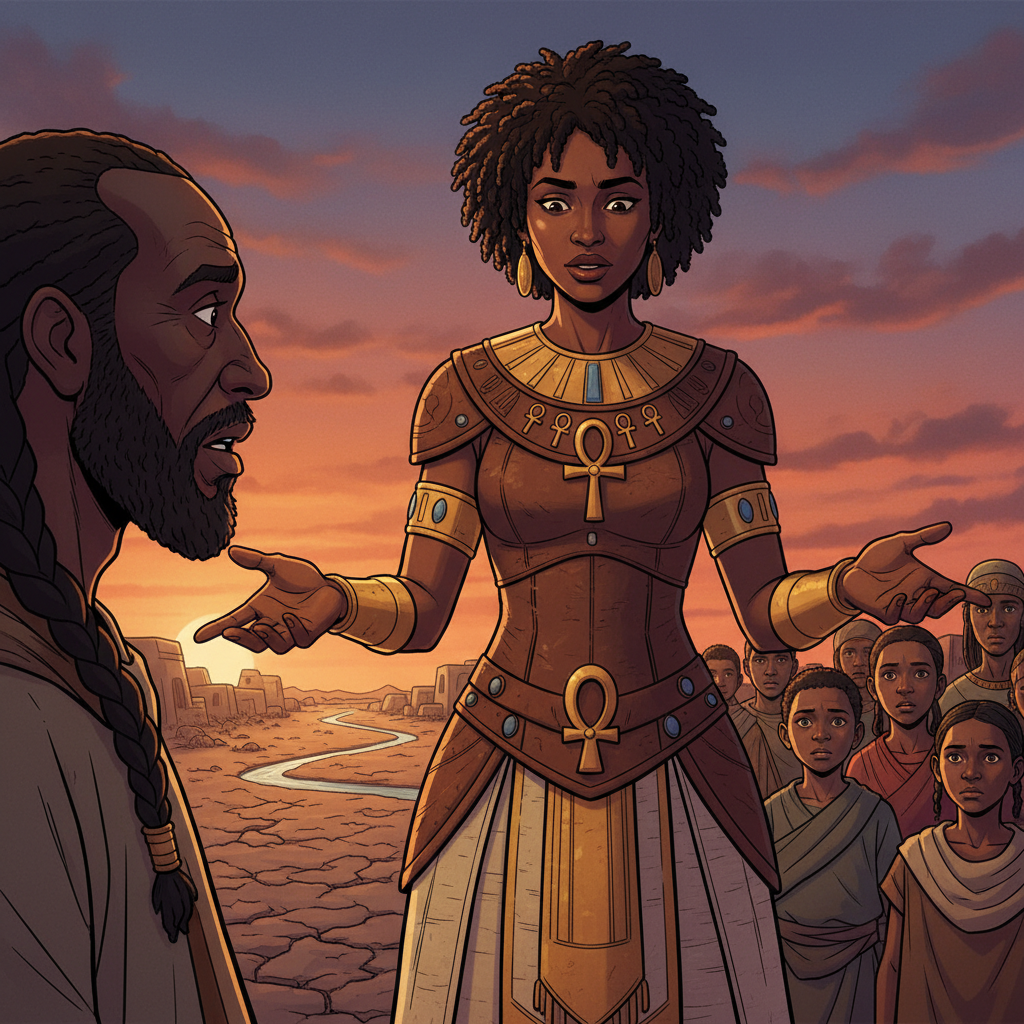
The silence that followed was heavy. Elder Abasi was the first to speak. "This is not fair," he said quietly. "My family built the canal. We should have first right to all the water." Nefertari nodded. "You are correct that it is not perfectly fair. And you are correct that the right of first construction is real. But Maat is not only about rights, Elder. It is also about what happens to the children downstream when we exercise our rights without regard for the people they affect. Your canal was built to bring life to this land. Not just your life. All life."
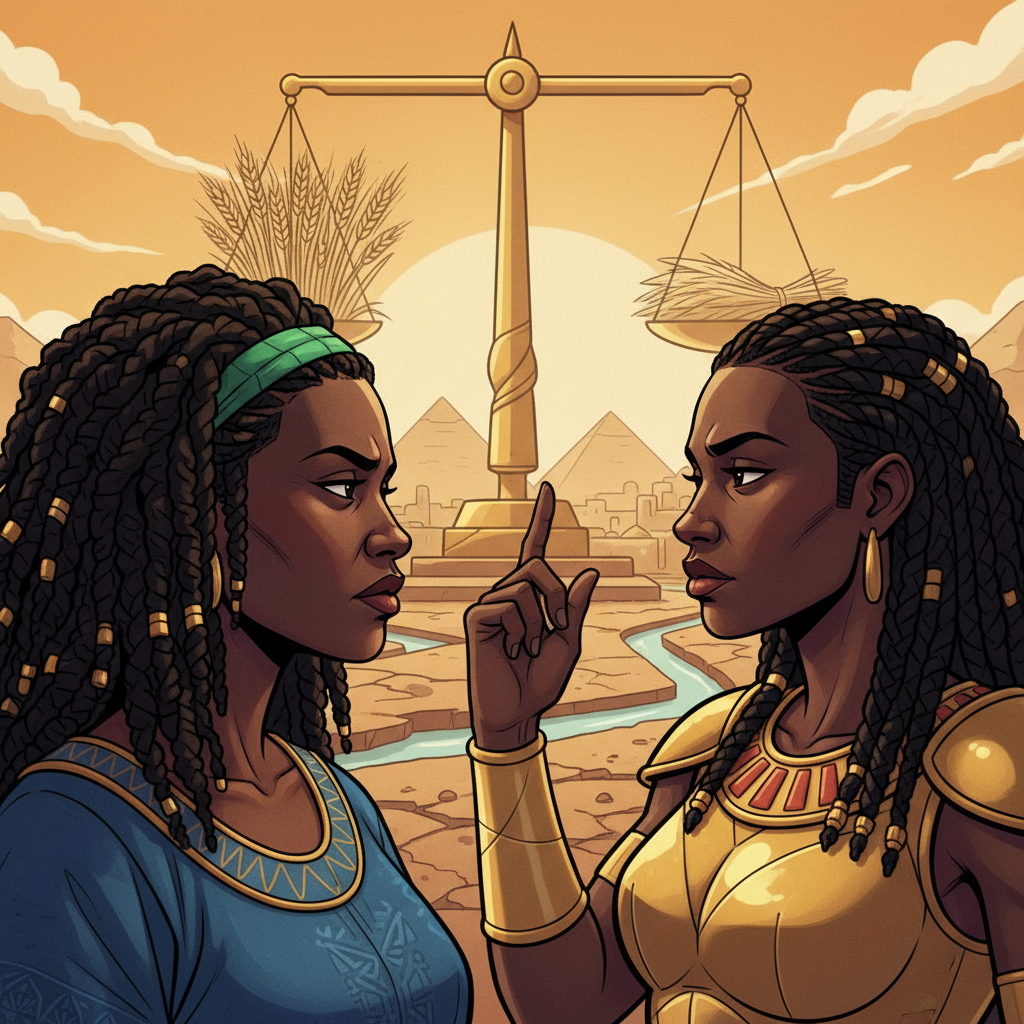
Elder Sefu shook her head. "Sixty-forty is not equal. The agreement says equal." Nefertari faced her with the same steady calm. "You are correct. The agreement says equal. And in a year when the water flows fully, the agreement will be honored fully. But Maat also teaches us that Balance is not a rigid number — it is a living response to real conditions. Your flax is valuable, but it is not food. The wheat feeds children today. I have weighed both needs on the Scale, and the Scale says: food before trade."
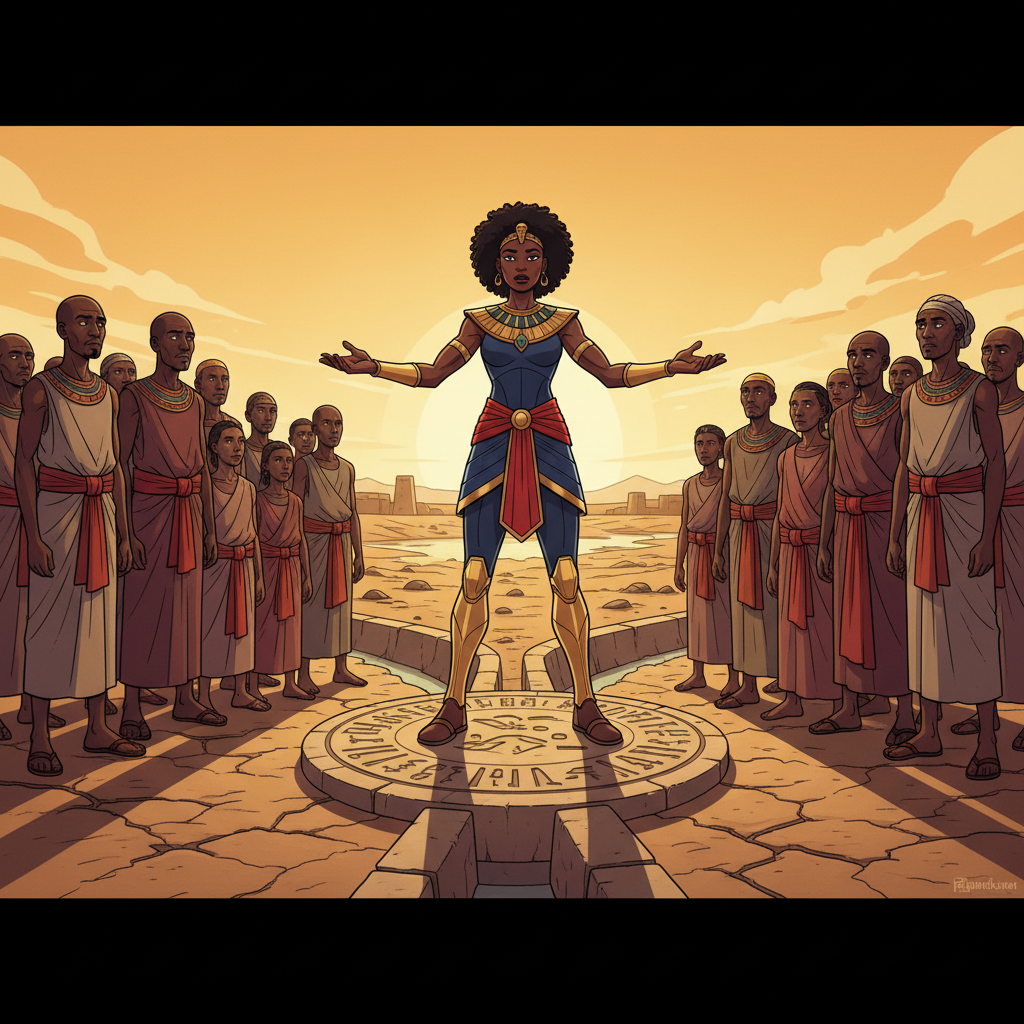
Neither family was happy. Nefertari had expected this. She stood at the junction stone and addressed both families together. "I will tell you something that my teacher told me when I was a young Medjay, and I did not understand it then. She said: 'The truest sign that justice has been done is when both sides feel they have lost something.' I did not understand because I thought justice meant someone wins and someone loses. But the deepest justice — the justice that holds communities together through drought and flood and every hardship between — is the kind where everyone sacrifices a little so that no one loses everything."
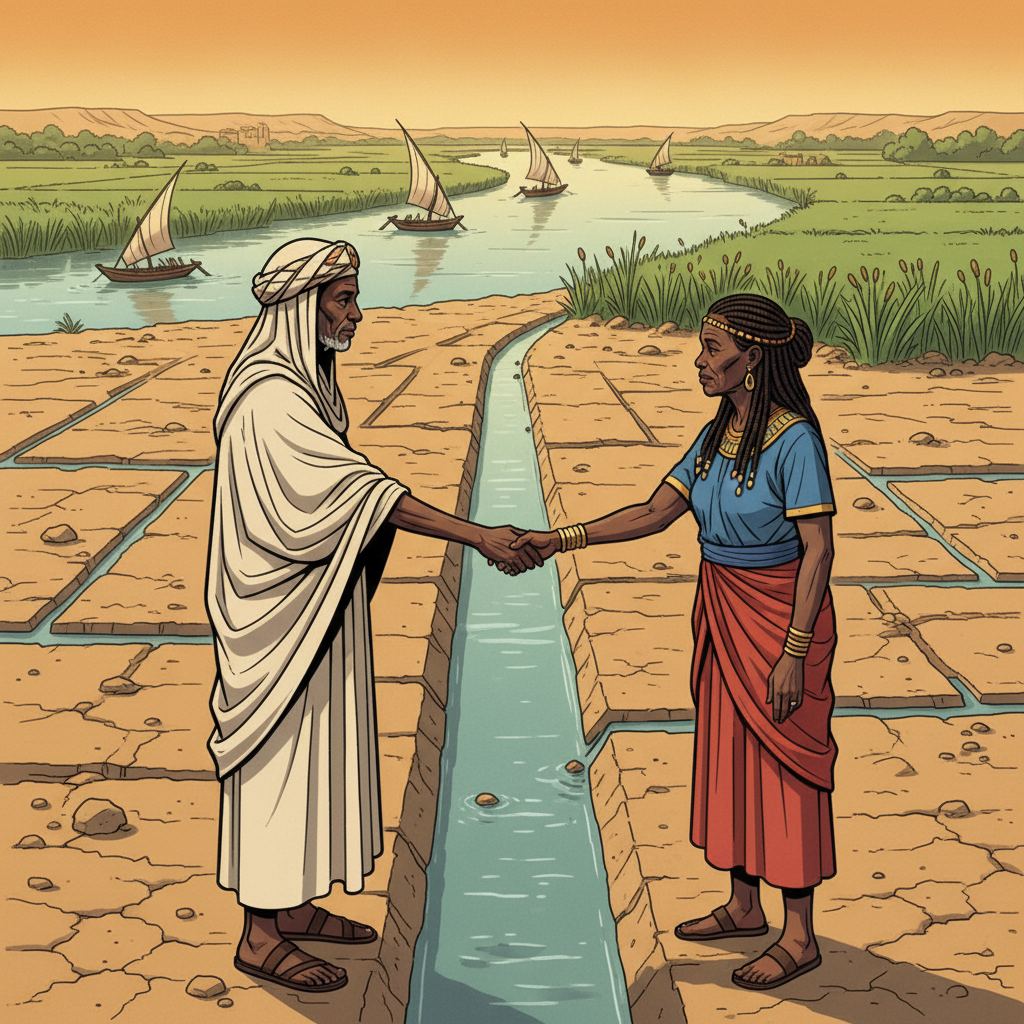
The two elders looked at each other across the canal — the thin, precious stream of water that connected their fields and their fates. Something passed between them that was not friendship, exactly, and not agreement, but perhaps something older and more honest: the recognition that they were bound together, and that their children would be bound together long after both elders were dust. Elder Abasi extended his hand. Elder Sefu took it. The grip was brief and firm and said nothing and everything.
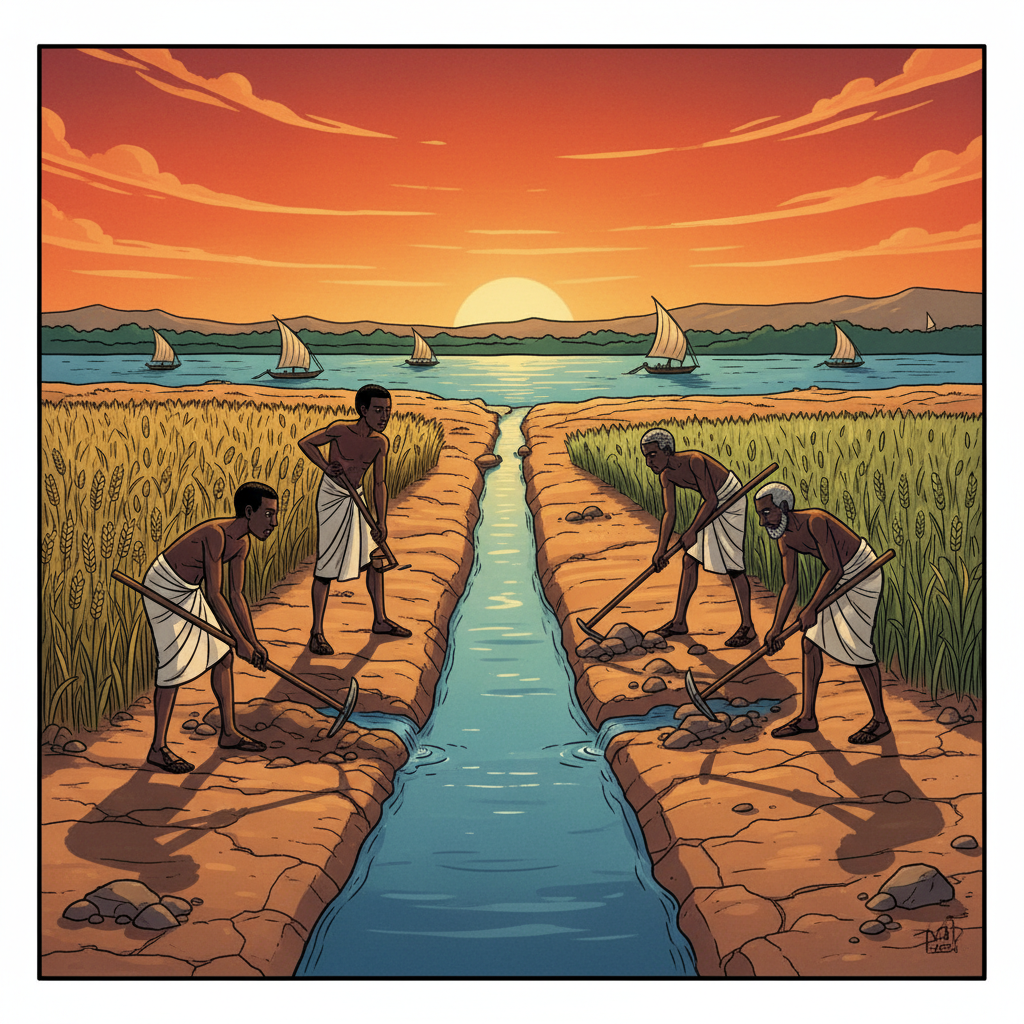
In the weeks that followed, both families worked the diminished canal together — clearing debris, reinforcing banks, ensuring that every drop of water reached the fields instead of seeping into the sand. The Abasi wheat grew, though not as tall as in good years. The Sefu flax survived, though the harvest was thin. When the wheat came in, Elder Abasi loaded one-third onto a cart and drove it to the Sefu homestead himself, without being asked and without complaint.
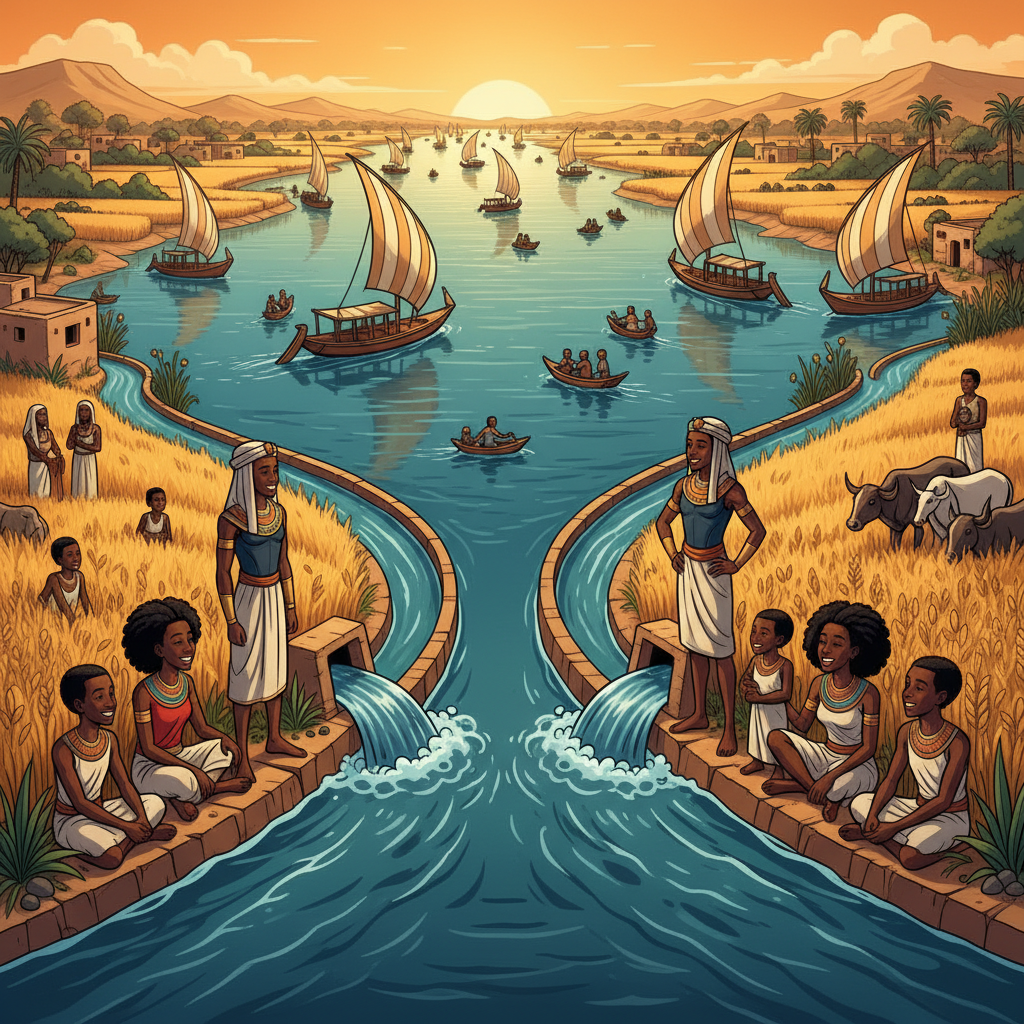
Nefertari learned later that the next year's flood was strong — the Nile rose full and generous, and the canal ran deep with water enough for twenty families, let alone two. The junction split its flow equally, as the ancient agreement demanded. Both fields flourished. Both families prospered. And when travelers asked about the relationship between the Abasi and Sefu clans, the locals would say, "They share water." And in the language of the Nile, where water was life itself, that meant they shared everything that mattered.
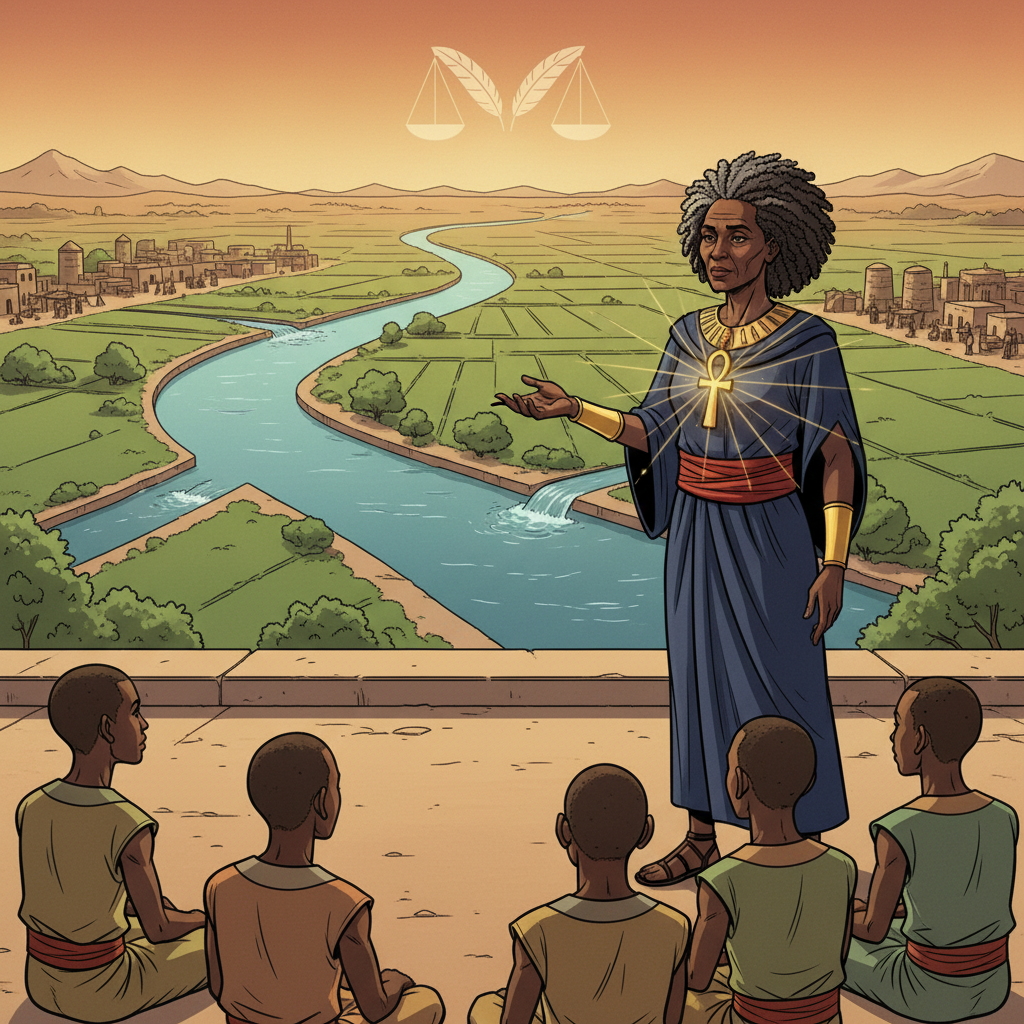
Years later, when young Medjay trainees asked Captain Nefertari what the hardest kind of justice was, she always told them the same thing. "The hardest justice is not punishing the guilty. That is simple — the guilty have earned their consequence. The hardest justice is standing between two good people who both deserve more than the world has given them, and finding the balance that lets both survive. That is the justice that Maat demands of us most often, and it is the justice that no law book can teach you. It must be weighed fresh, every time, on the Scale of your own heart."