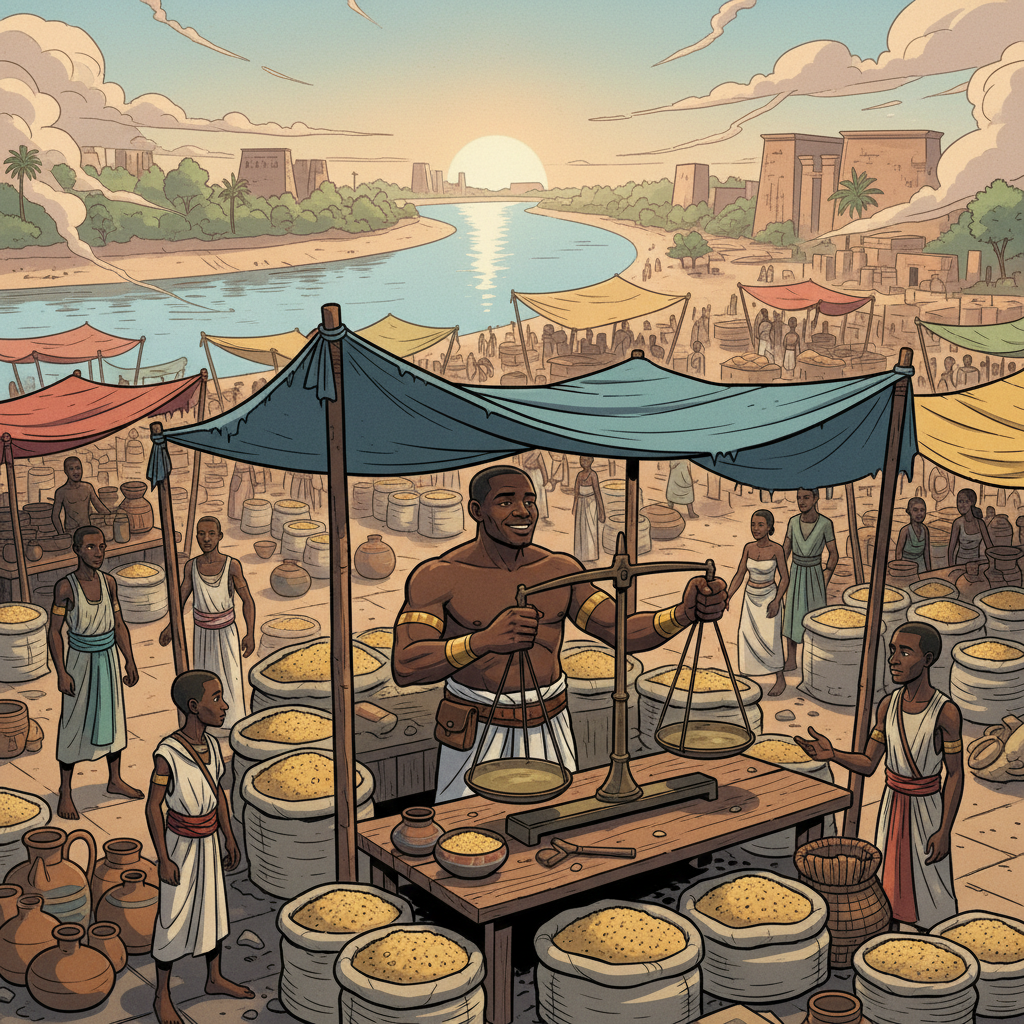
In the great market of Waset, where the Nile curved like a sleeping serpent and the air hummed with the voices of a thousand traders, there was no merchant more respected than Darius. His stall stood at the center of the grain quarter, marked by a blue linen canopy that had faded to the color of the morning sky. Beneath it, Darius weighed grain on a pair of bronze scales that had belonged to his father, and his father's father before that. Three generations of honest trading had built the family's reputation, and in the markets of Kemet, reputation was worth more than gold. Darius was a man of forty seasons, with rich dark skin and a broad face that creased easily into a smile. His hands were large and calloused from years of handling grain sacks, and his arms were thick from lifting them. He wore a simple merchant's kilt of white linen and a leather belt from which hung a small pouch of counting stones — smooth pebbles he used to calculate prices.
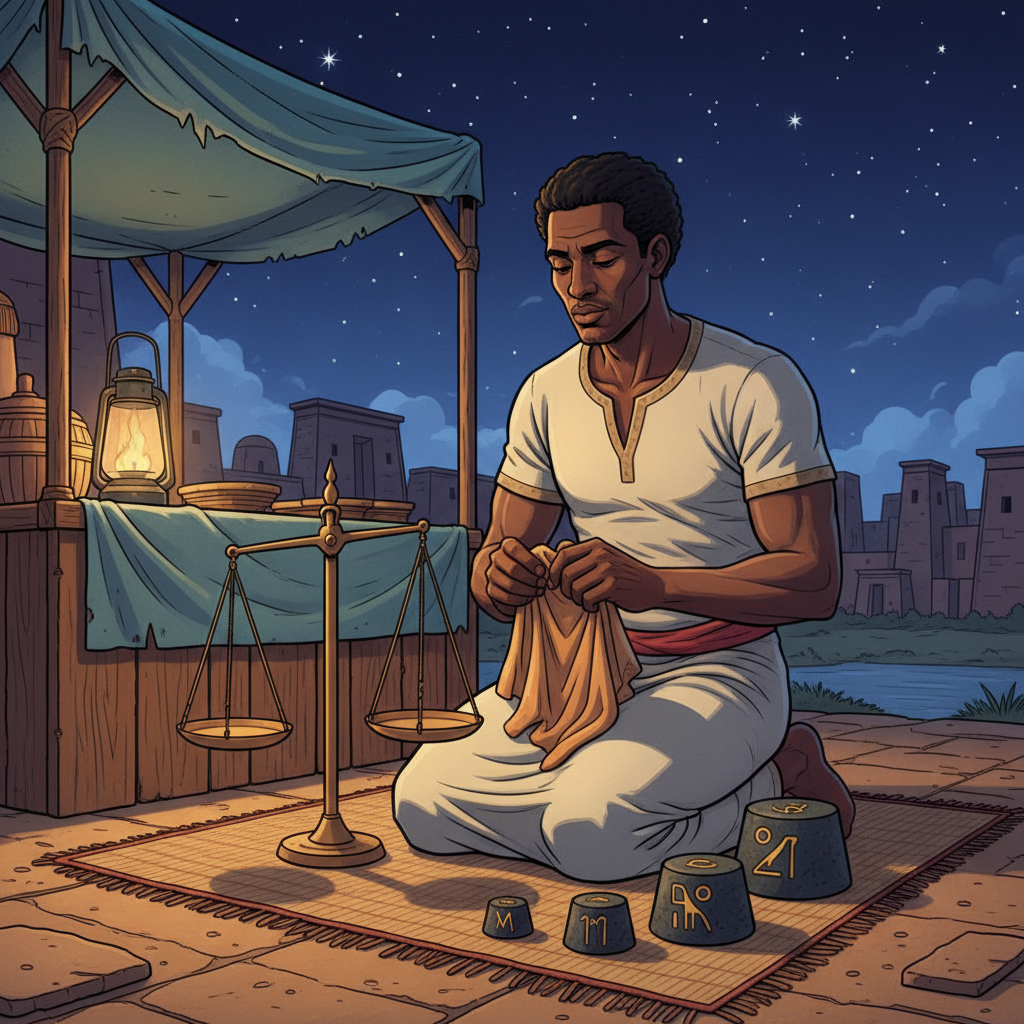
Every morning before the market opened, Darius performed the same ritual his father had taught him. He cleaned his bronze scales with a soft cloth, checked that the pans hung level, and tested them with the official stone weights that every merchant was required to keep. The weights were standardized by the temple of Amun — carved from dark granite, each one stamped with the hieroglyph for its measure. A merchant whose scales did not match the temple weights was guilty of fraud, and fraud in the markets of Kemet was considered one of the gravest forms of Isfet. "A crooked scale poisons everything it touches," Darius's father had told him when he was a boy learning the trade. "It poisons the buyer, who receives less than they paid for. It poisons the seller, who builds wealth on a lie. And it poisons the market itself, because once trust is broken, trade becomes war." Darius had taken these words into his heart and built his life around them.
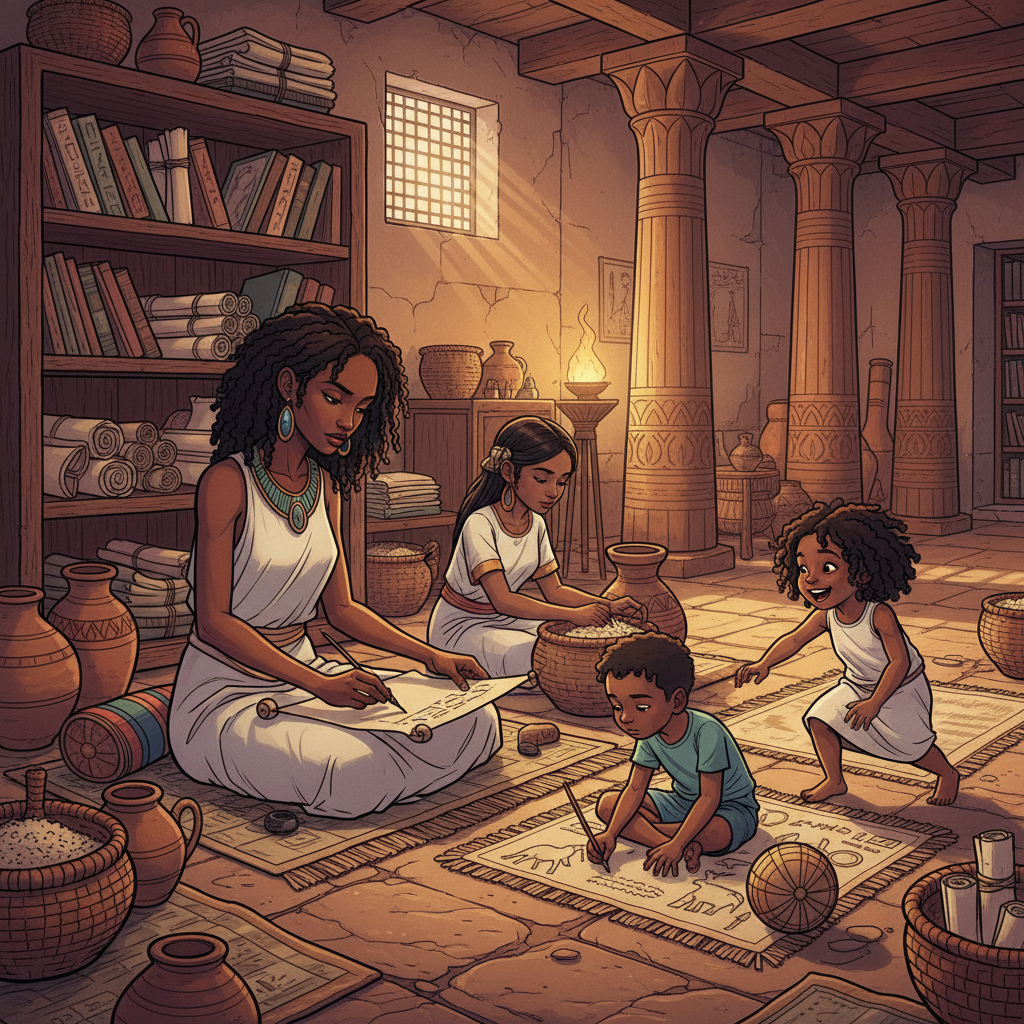
Darius's wife, Takhat, ran the household with the same precision that Darius ran his stall. She was a slender woman with deep brown skin and sharp eyes that missed nothing — not a misplaced jar of oil, not a frayed edge on a garment, not a single deben unaccounted for in the family's records. Takhat kept their accounts on sheets of papyrus, recording every transaction in the neat, small script she had learned as a girl at the village school. She was not a scribe by trade, but she wrote with the care of one. They had three children. Menna was the eldest at fourteen, a serious girl with her father's dark skin and her mother's sharp mind, already helping at the stall on market days. Kha was twelve, restless and dreamy, more interested in drawing pictures in the dust than in counting grain. And little Esi was six, a ball of energy with tight coils of hair and a laugh that could be heard three stalls away.
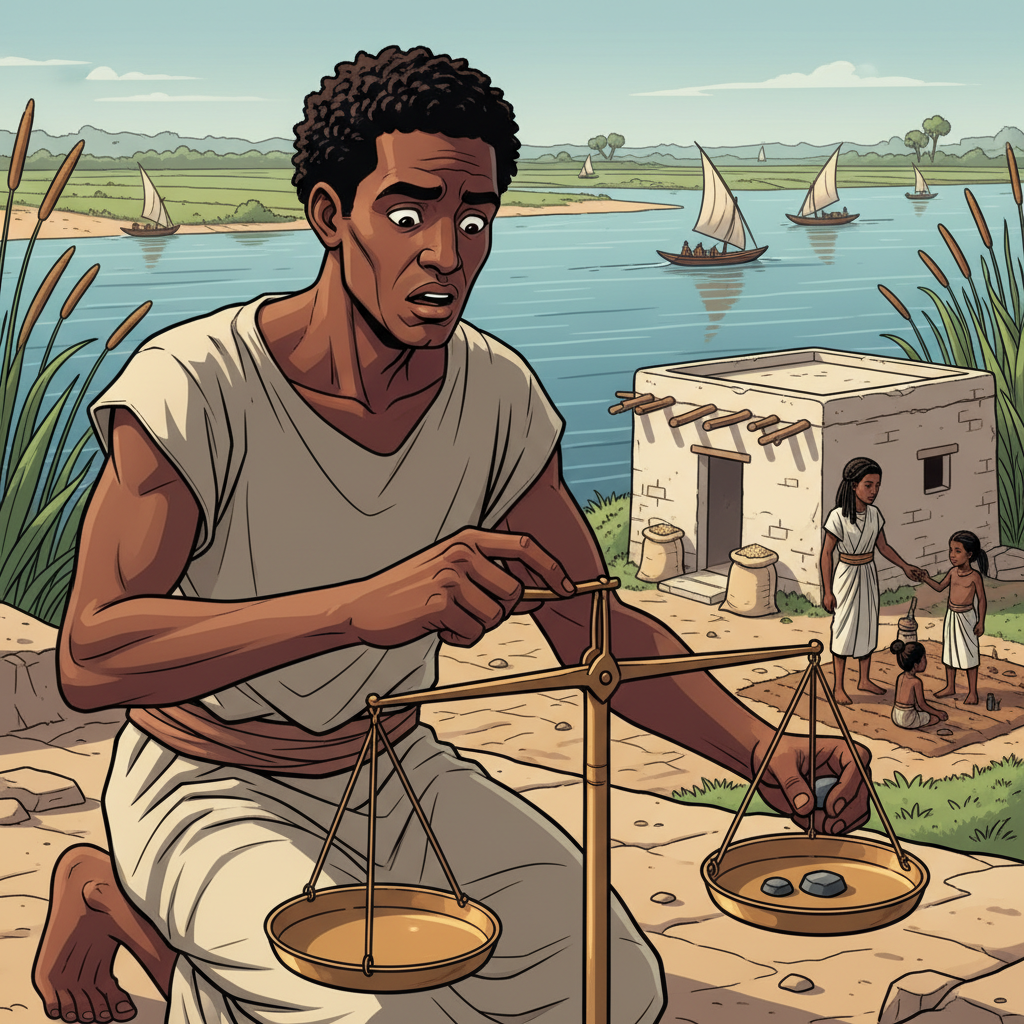
Life was not easy for the family, but it was good. Darius earned enough to feed his children, keep a modest home of whitewashed mudbrick near the river, and set aside a small reserve for emergencies. They were not wealthy — not like the temple merchants who traded in gold and lapis lazuli — but they were respected. In the hierarchy of the market, respect was a currency that could not be bought, only earned through years of honest dealing. Then the discovery happened. It came on an ordinary morning in the month of Peret, when the Nile had receded and the fields were green with new growth. Darius was performing his daily ritual — cleaning the scales, testing the weights — when he noticed something he had never noticed before. The left pan of his scales hung slightly lower than the right. Not by much. The difference was so small that it was nearly invisible. But Darius had been a merchant for twenty years, and his eye was trained to see what others could not.
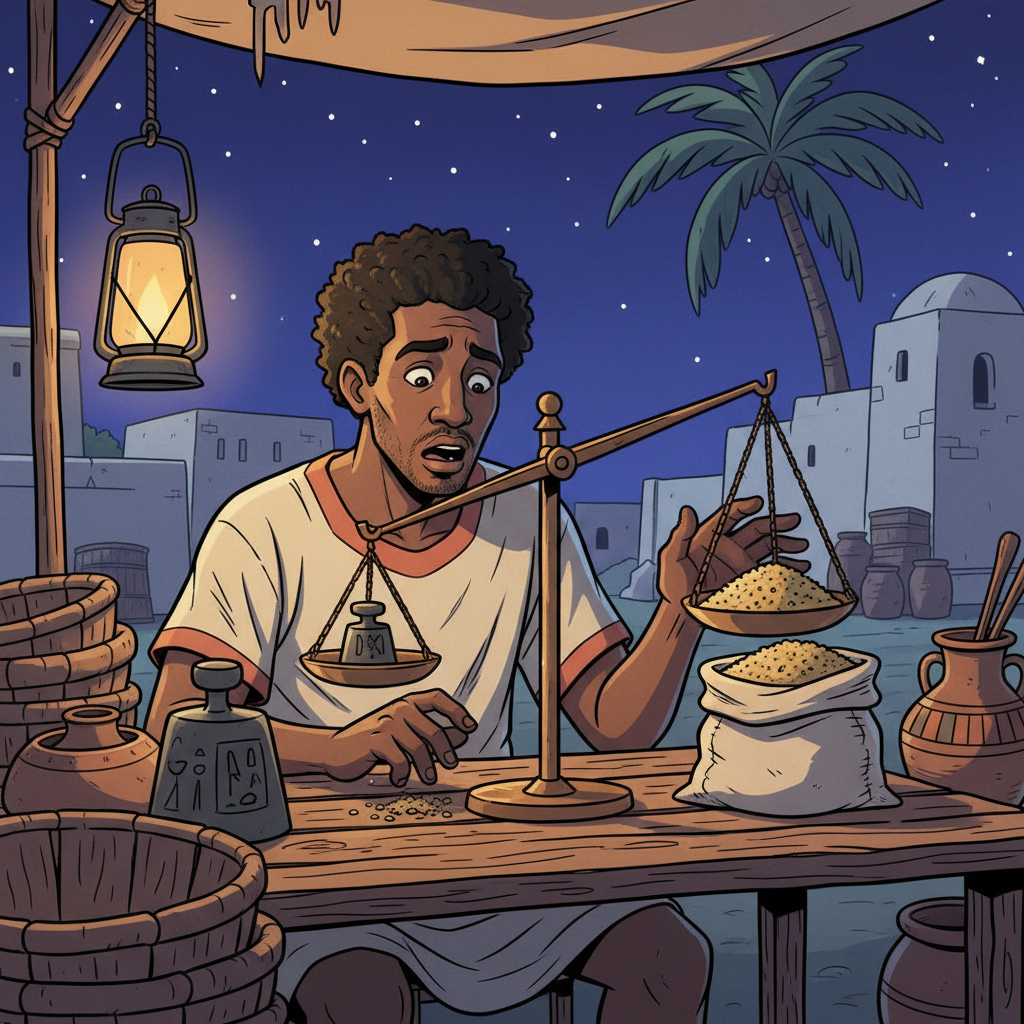
His stomach tightened. He placed the official temple weight on one pan and his own counterweight on the other. They should have balanced perfectly. They did not. The pan with the grain — the customer's pan — dipped lower by a tiny but unmistakable amount. Darius stared at the scales, his dark face frozen, his mind racing. He tested again. And again. Each time, the same result. His scales were miscalibrated. And they were miscalibrated in the customers' favor. This meant that for every measure of grain he had sold, the customer had received slightly more than they paid for. Not a lot more — perhaps an extra handful for every full basket — but over hundreds of transactions, over weeks and months, those handfuls added up. Darius felt a cold wave of understanding wash over him. He had been losing grain with every sale. His reserves — the modest savings he thought he had been building — were smaller than his records showed. His family was poorer than he thought.
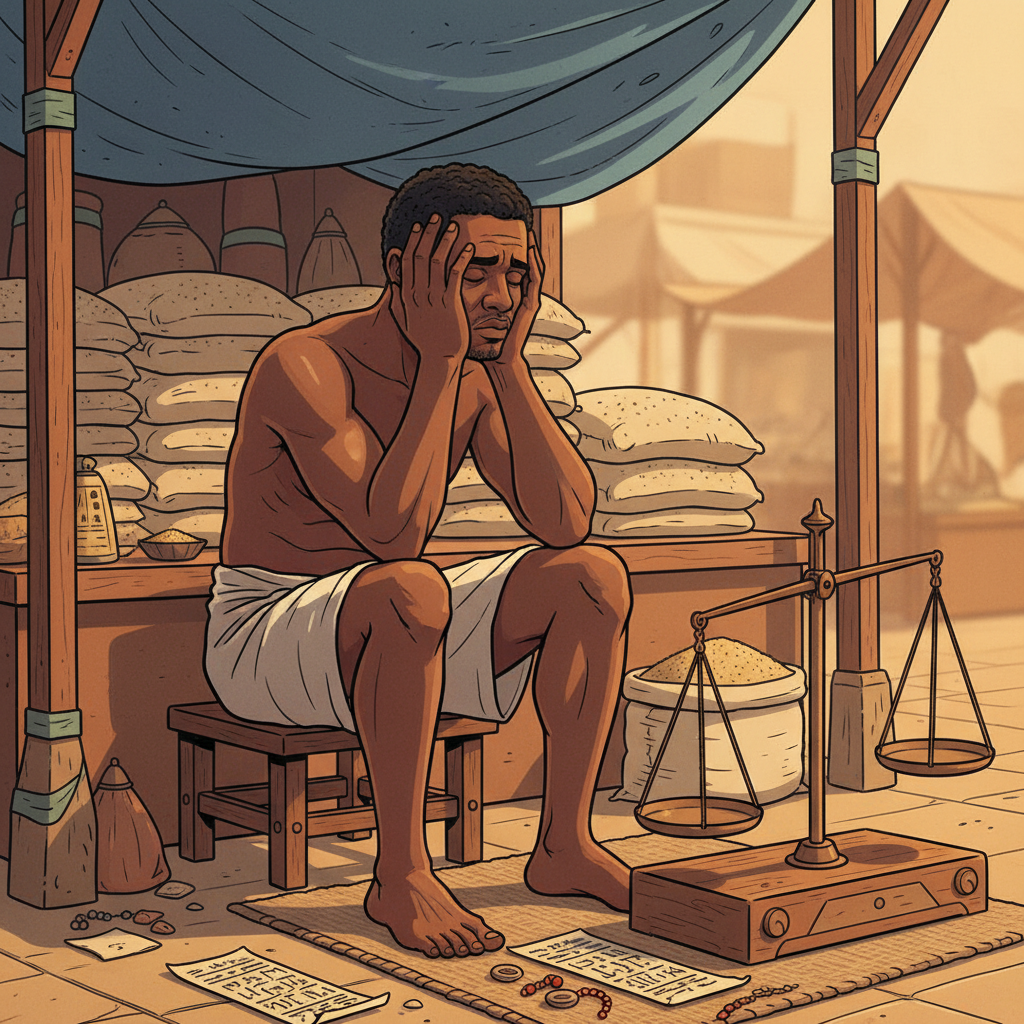
Darius sat on his stool behind the stall and pressed his palms against his eyes. His mind spun through calculations. How long had the scales been off? He could not be certain. He checked them monthly against the temple weights, but the drift had been so gradual — perhaps the bronze pivot pin had worn slightly, perhaps the summer heat had warped one pan by a fraction — that his monthly checks had not caught it. It could have been wrong for two months. It could have been wrong for six. The longer it had been, the more grain he had given away, and the poorer his family actually was. He thought about Takhat's careful records, her neat columns of numbers on papyrus. Every figure she had written was based on what Darius told her he measured. But his measurements had been wrong. The entire household budget — what they spent, what they saved, what they set aside for the children's future — was built on numbers that were lies. Not deliberate lies, but lies all the same. The foundation of their financial life had a crack running through it.

Darius told Takhat that evening, after the children were asleep. They sat on the flat roof of their house, looking out over the Nile where the last red light of sunset bled into the dark water. Takhat listened without interrupting, her dark face still as carved stone. When he finished, she took the papyrus household accounts and began recalculating. The numbers were bad. If the miscalibration had been present for six months — which Darius thought likely — they had given away nearly four full grain sacks beyond what they were paid for. Four sacks was two weeks' food for the family. Their emergency reserve, which Takhat had believed held enough to survive one bad month, actually held barely enough for two weeks. They were not in danger of starving, but the cushion they had counted on was gone. "So what do we do?" Takhat asked. Her voice was calm, but her knuckles were white where she gripped the papyrus.
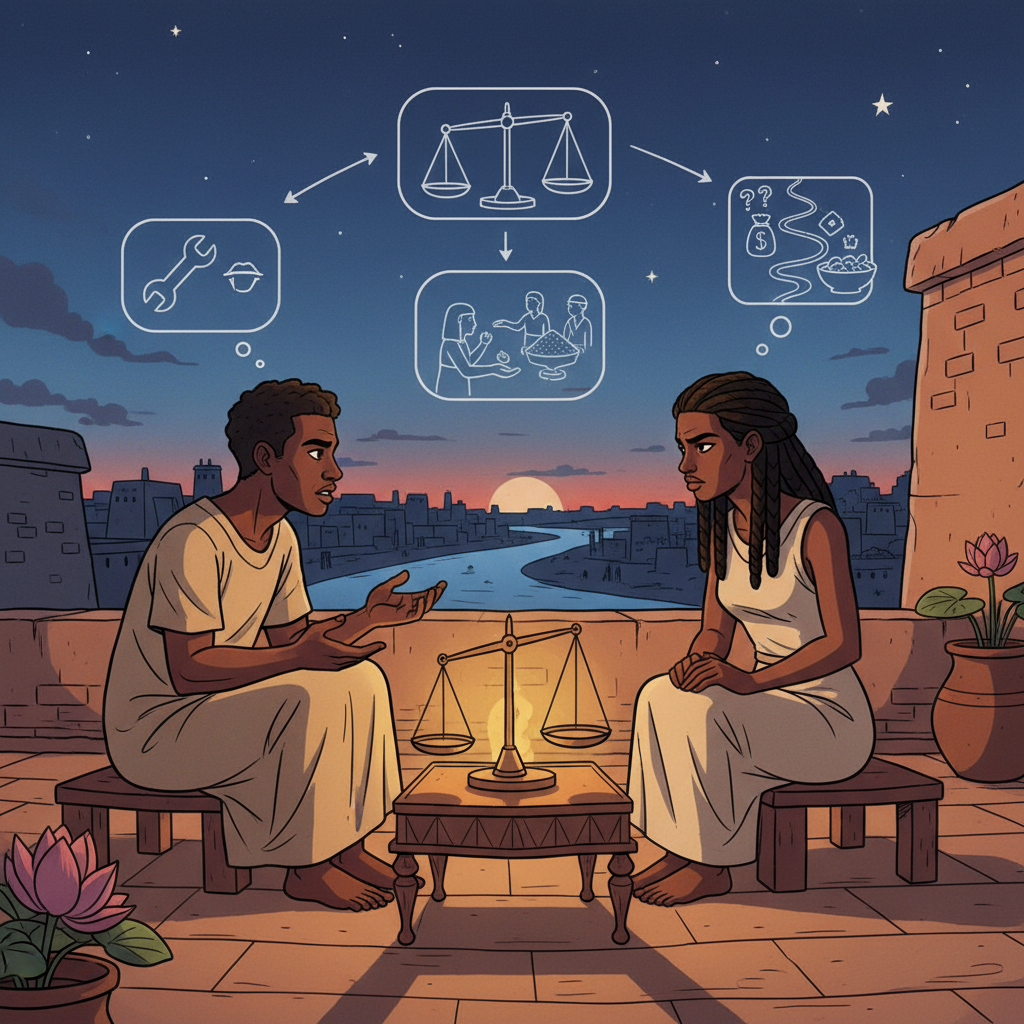
Darius had identified three possible paths. The first was to fix the scales quietly and say nothing — no one had been cheated, and the error had only hurt his own family. The second was to announce the error publicly and ask customers to return the extra grain. The third was something in between. Each path had thorns. Silence felt dishonest — his father's words echoed in his mind about crooked scales poisoning everything. But a public announcement terrified him. People would wonder: if his scales were wrong in their favor this time, were they wrong against them before? Takhat surprised him with a fourth path. "Fix the scales. Say nothing. But adjust our prices slightly to recover the loss over the coming months. No one would notice — grain prices shift with the seasons." Darius considered this. "That is just a different kind of crooked scale," he said. "We would be charging people more than the grain is worth." Takhat's lips tightened. "The difference," she said, "is that our children eat." The words hung between them, sharp as a blade.
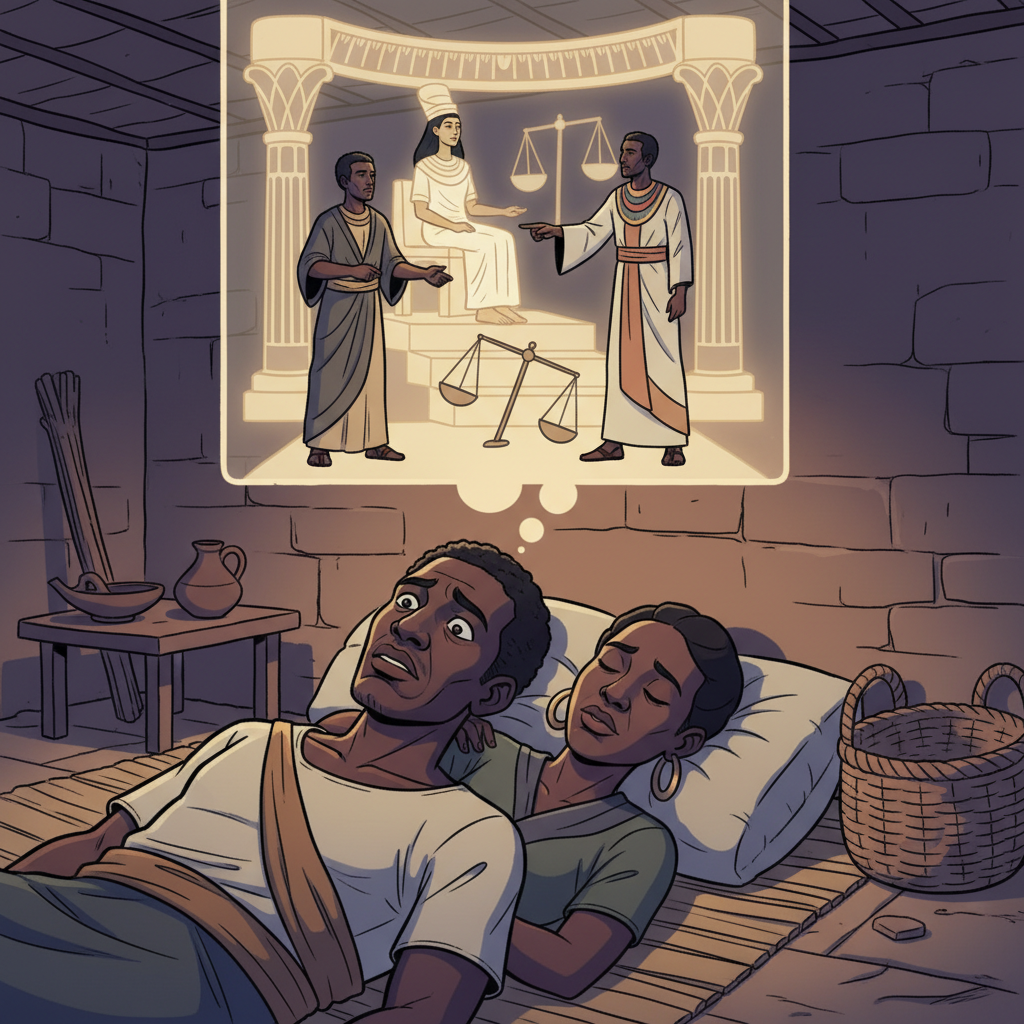
Darius could not sleep. He lay on his reed mat and stared at the ceiling while Takhat's breathing deepened beside him. His mind was a kenbet in session, debating itself. He thought about old Harkhuf, a merchant who had operated three stalls down from his father. Harkhuf had been caught with crooked scales — deliberately crooked, tilted against the customer. The market council had stripped him of his trading license, his stall was burned publicly, and his family had been shamed for a generation. Harkhuf died a broken man, and his children had to leave Waset to escape the stain on their name. But Harkhuf had cheated people on purpose. Darius's situation was entirely different. His error was accidental, and it had hurt nobody except himself. Yet the voice of Maat in his head would not be silenced. "The truth is the truth," the voice said. "It does not care whether the falsehood was deliberate or accidental. The scales were wrong. The measurements were wrong. Every person who traded with you received a quantity different from what was agreed. That is a falsehood in the foundation of trade, and falsehoods do not heal themselves."
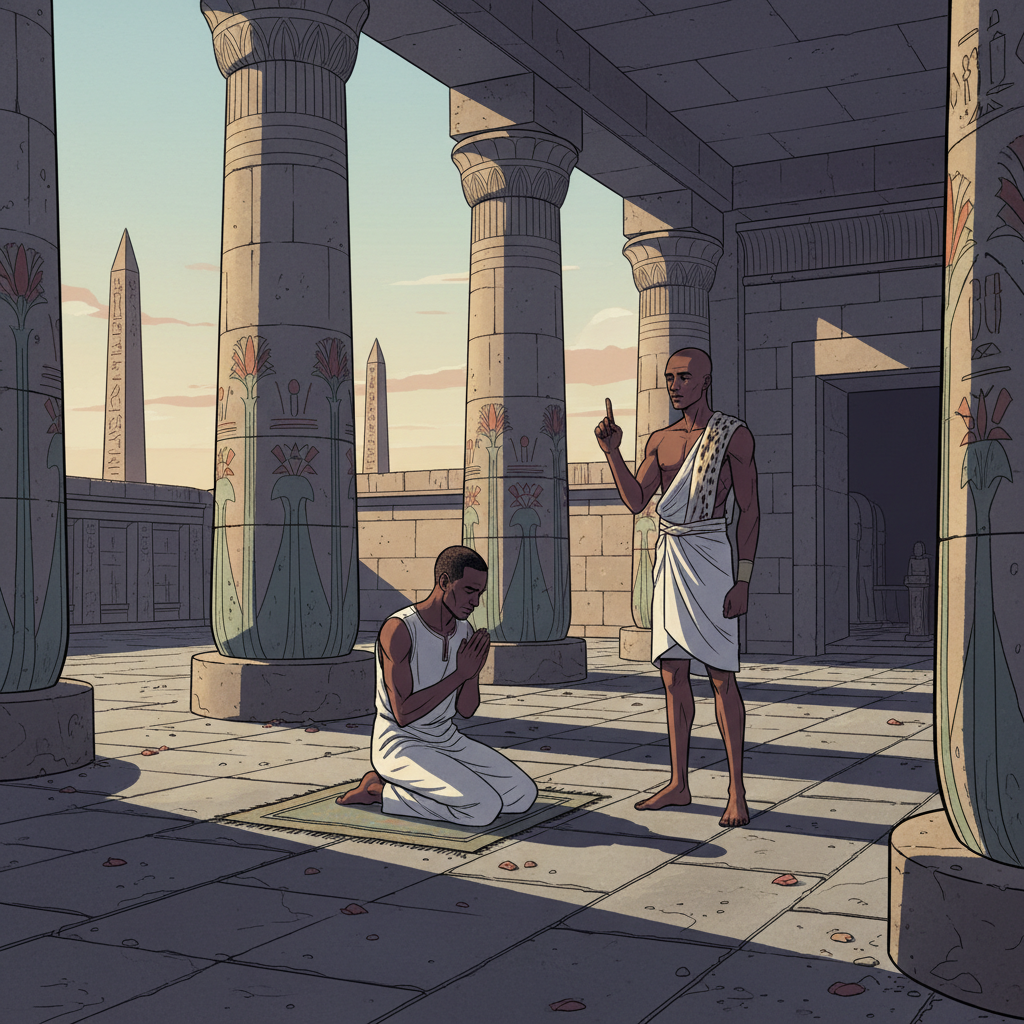
The next morning, Darius went to the temple of Amun before dawn. He sat in the outer courtyard, where massive stone columns threw deep shadows in the gray light, and he prayed — not for guidance, but for clarity. When the temple scribe Wennefer emerged, Darius told him everything. Wennefer was a man with deep brown skin and the shaved head of his profession, known for his precise mind and his devotion to Maat. "This is not a simple question," Wennefer said. "The teaching of Maat says: Let your scales be true, and let your tongue be true. But it also says: Do not destroy what you have built through an excess of righteousness." He held up a finger. "Your scales were false. Your heart was not. In the Weighing of the Heart, Anubis does not place your tools on the scale — he places your heart. And your heart intended no deception. The question is what Maat requires now — and that depends on who would be helped and who harmed by each choice."
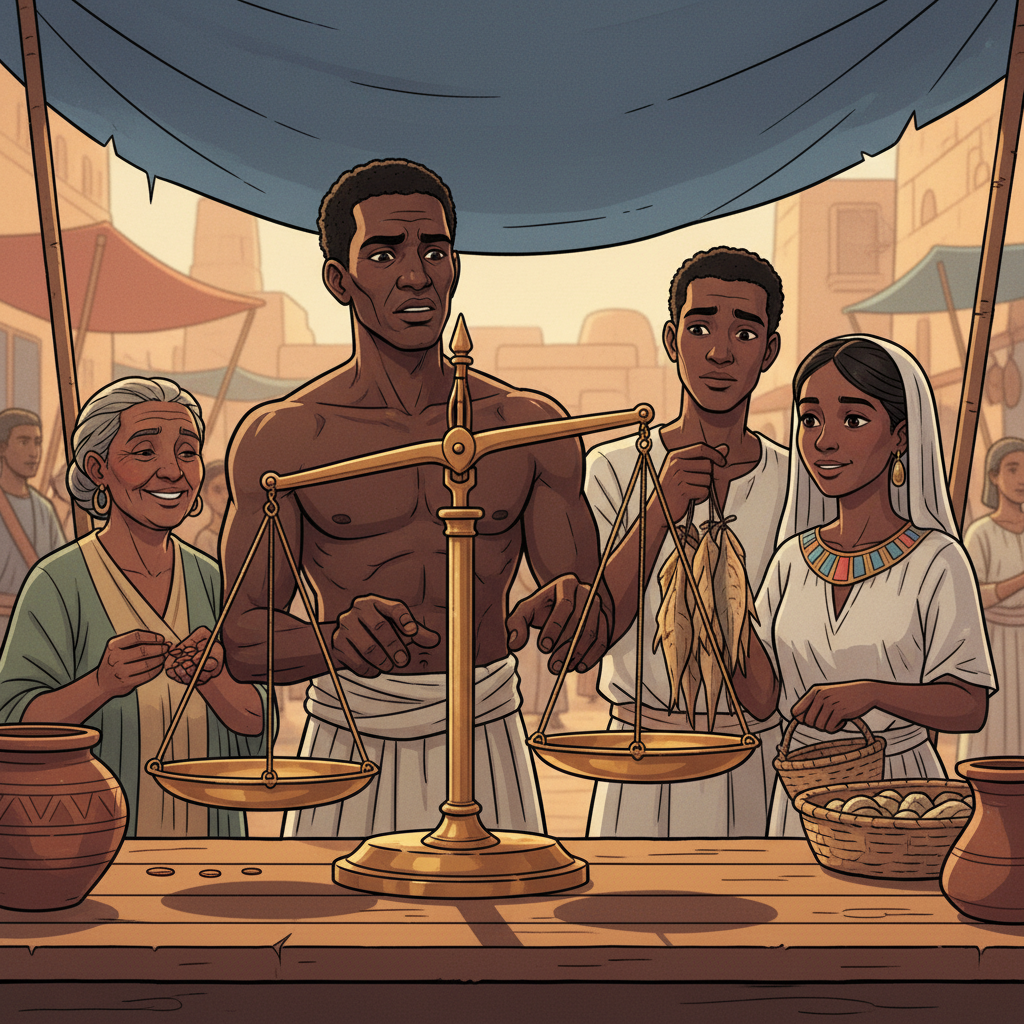
Darius left the temple more confused than when he arrived. Wennefer's words were wise but did not solve the problem. They confirmed what Darius already sensed: every principle of Maat pointed in a different direction. Truth said announce the error. Justice said make it right. Compassion said protect your family. Wisdom said do not destroy what is good in pursuit of what is perfect. He returned to the market and opened his stall. The fixed scales — carefully recalibrated the night before — sat gleaming on his table. Customers came and went as usual. Old Satiah, who bought grain every three days for her family of seven, smiled and counted out her deben. Fisherman Kha brought dried perch to trade. Young Meri, newly married, came for her first independent purchase, beaming with pride. Each of them had received slightly more grain than they paid for over the past months. None of them knew it. And each, if told, would be affected differently.
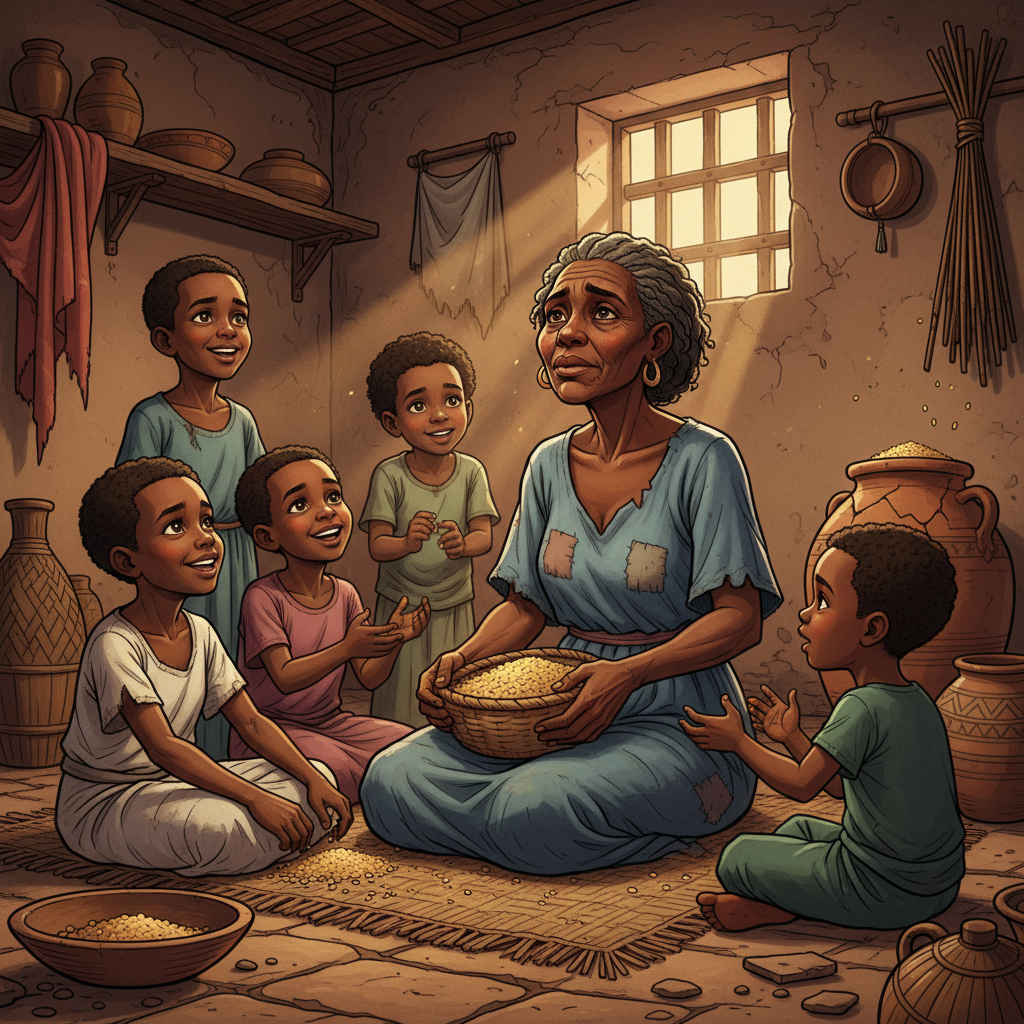
As the day went on, Darius began to see the human dimensions of his dilemma more clearly. Old Satiah was a widow supporting seven people on her dead husband's pension. The extra grain she had unknowingly received might have been the difference between her grandchildren eating well and eating barely enough. If Darius announced the error and asked for repayment, Satiah would be honor-bound to return what she owed — and that small amount, for her, was not small at all. Fisherman Kha was comfortable enough. He would shrug and return the grain without hardship. But Kha was also the biggest gossip in the market district. Within an hour of learning about the error, every merchant, customer, and street sweeper in Waset would know that Darius's scales had been wrong. The news would travel not as "Darius discovered an error and honestly reported it" but as "Darius's famous scales were crooked for months." Gossip, like the Nile, always found the lowest channel.
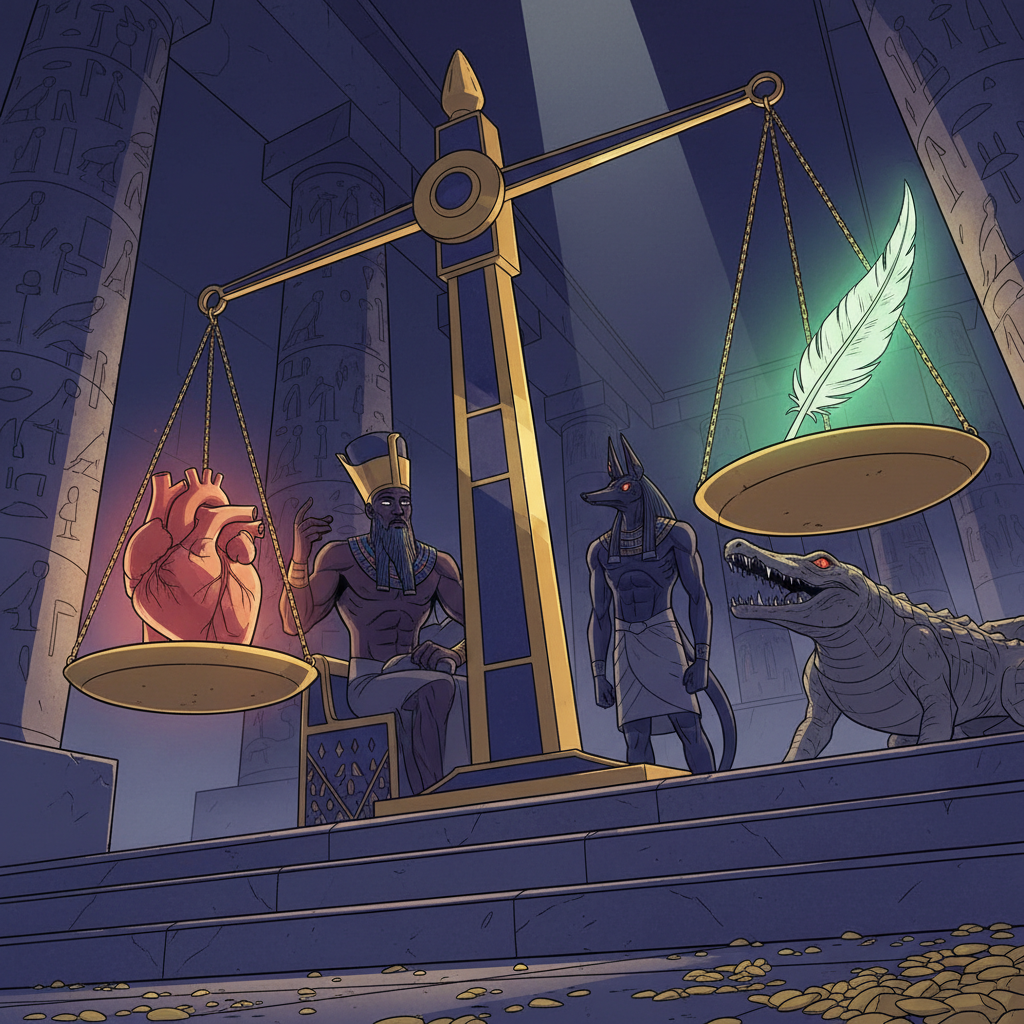
And then there was the matter of principle — the cold, hard principle of Maat that existed beyond individual circumstances. Darius thought about the Weighing of the Heart. When he stood before Osiris and the feather of Maat was placed on the Scale, would this matter? Would the gods care about a few extra handfuls of grain given to customers by accident? Or would they care more about what Darius did when he discovered the truth? Was the measure of a man's honesty found in the absence of error, or in how he responded when error was found? He thought about his father, who had run these same scales for thirty years without a single complaint. His father had been scrupulous about calibration, checking weekly, not monthly as Darius had grown accustomed to doing. Had his father known something Darius had forgotten — that bronze scales were living things, changing slowly with heat and age, requiring constant attention? Was the miscalibration itself a form of negligence, a failure of the vigilance that Maat demanded?
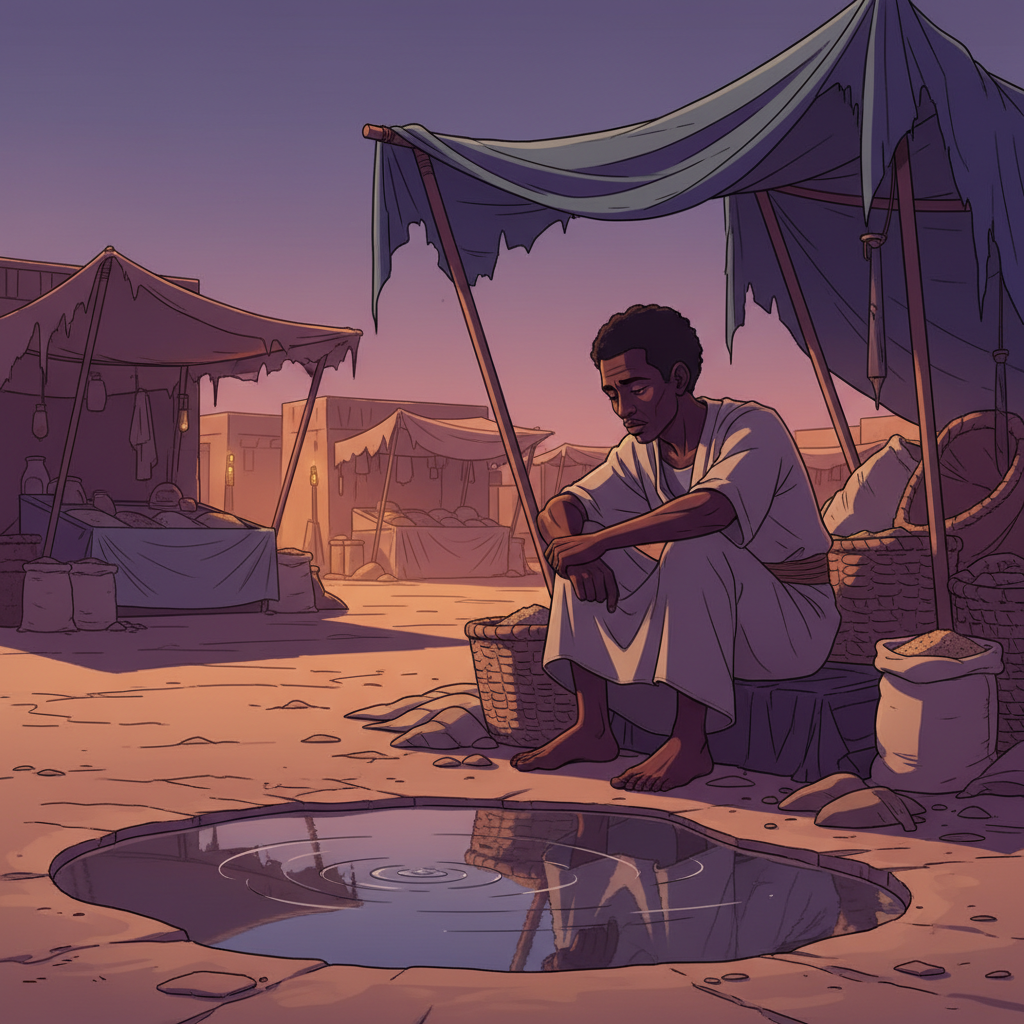
Young Meri returned that afternoon to buy more grain — this time for a celebration she was planning. She beamed at Darius, her dark face bright with excitement, and told him she was expecting her first child. "My husband says your grain is the best in the market," she said proudly. "He says his mother told him to buy only from Darius, because Darius's scales are always true." The words were a dagger made of kindness. Darius weighed her grain on the newly fixed scales and smiled and said nothing, and the silence felt like a stone growing in his chest. As the market closed and the merchants began covering their stalls with linen cloths against the night dust, Darius sat alone beneath his faded blue canopy and watched the shadows lengthen across the empty square. He realized that the question was not simply about honesty or silence. It was about what kind of man he wanted to be when he looked at his own reflection in the waters of the Nile. The ancestors taught that your ka carries the truth of every choice you make — not just the choices the world sees, but the choices you make in the dark, when no one is counting.
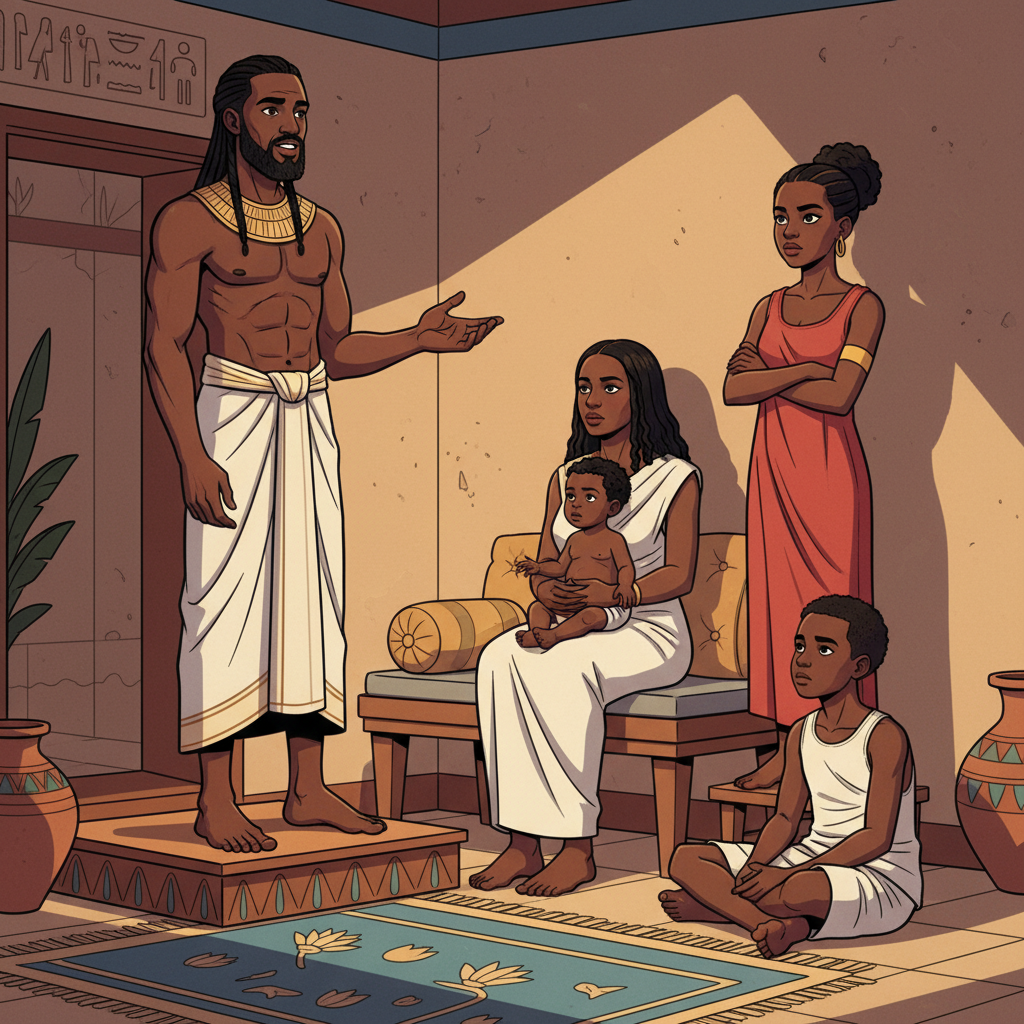
That evening, Darius gathered his family. Takhat sat with little Esi on her lap, her dark face guarded. Menna perched on a stool with her arms crossed, already sensing bad news. Even twelve-year-old Kha stopped his daydreaming and listened. Darius told his children the truth — simply, clearly, without hiding behind excuses. The scales had been wrong. The family had less money than they thought. Their father had a choice to make, and he wanted them to understand why it was hard. Menna spoke first. "Tell everyone," she said immediately. "That is what you taught us. Truth first, always." Her dark eyes blazed with the absolute moral certainty that only a fourteen-year-old can possess. Darius felt a painful surge of pride. His daughter had listened to his lessons and absorbed them completely. She had taken the principle of honesty and made it a sword — beautiful, sharp, and incapable of compromise.
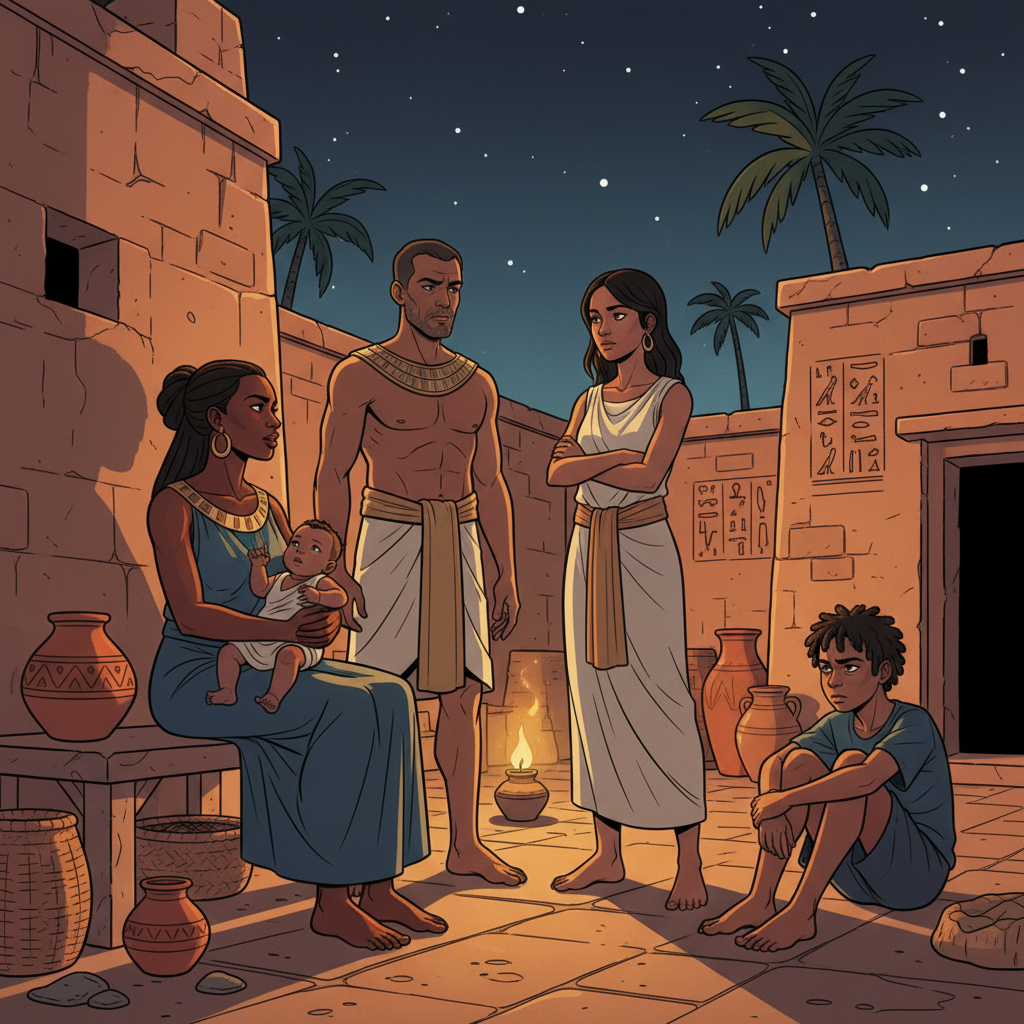
But Takhat shook her head. "Menna, you speak like someone who has never been hungry," she said, and there was no cruelty in her voice, only the weight of experience. "Truth is important. But so is feeding your family. If your father announces this error, he may lose customers who decide his scales cannot be trusted. And then where is the truth? The truth will be that your father was honest and your family went hungry because of it. Is THAT Maat? Is it just for the honest to suffer while those who say nothing prosper?" The family sat in heavy silence. Darius looked at his wife and his eldest daughter and saw the entire dilemma reflected in their faces — the idealism of youth and the pragmatism of experience, both right, both incomplete. Little Esi squirmed in Takhat's lap, oblivious to the moral earthquake happening around her. Kha stared at his feet and said nothing, but his usually dreamy eyes were sharp with thought.
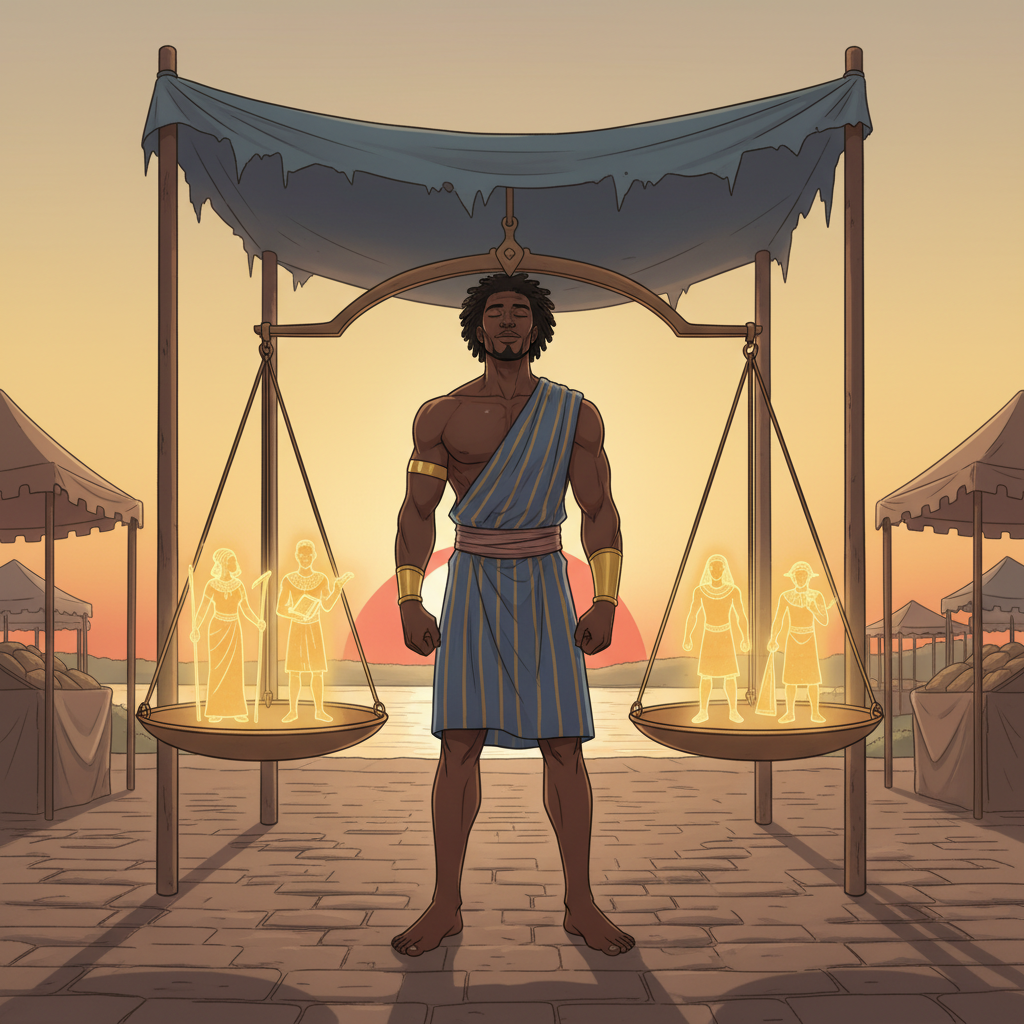
The question that haunted Darius most was not about the past but about the future. If he said nothing, he could fix the scales and move forward. The error would be corrected. No customer would ever be short-changed. In six months, the lost grain would be a forgotten footnote in the family ledger. The practical harm would be zero. But something in Darius rebelled against this logic. It was the same part of him that checked his scales every morning, the same part that had made him walk to the temple of Amun at dawn. It was the voice of his father, and his father's father, and every ancestor who had built the family's name on the foundation of fair dealing. "A reputation is not what people see," his father had once said. "A reputation is what you know about yourself when no one is watching." Right now, no one was watching. The error had been discovered by Darius alone. He could bury it and no one would ever know. But HE would know. And the question was whether he could live with that knowledge — whether the weight of a silent truth was heavier or lighter than the consequences of speaking it aloud.