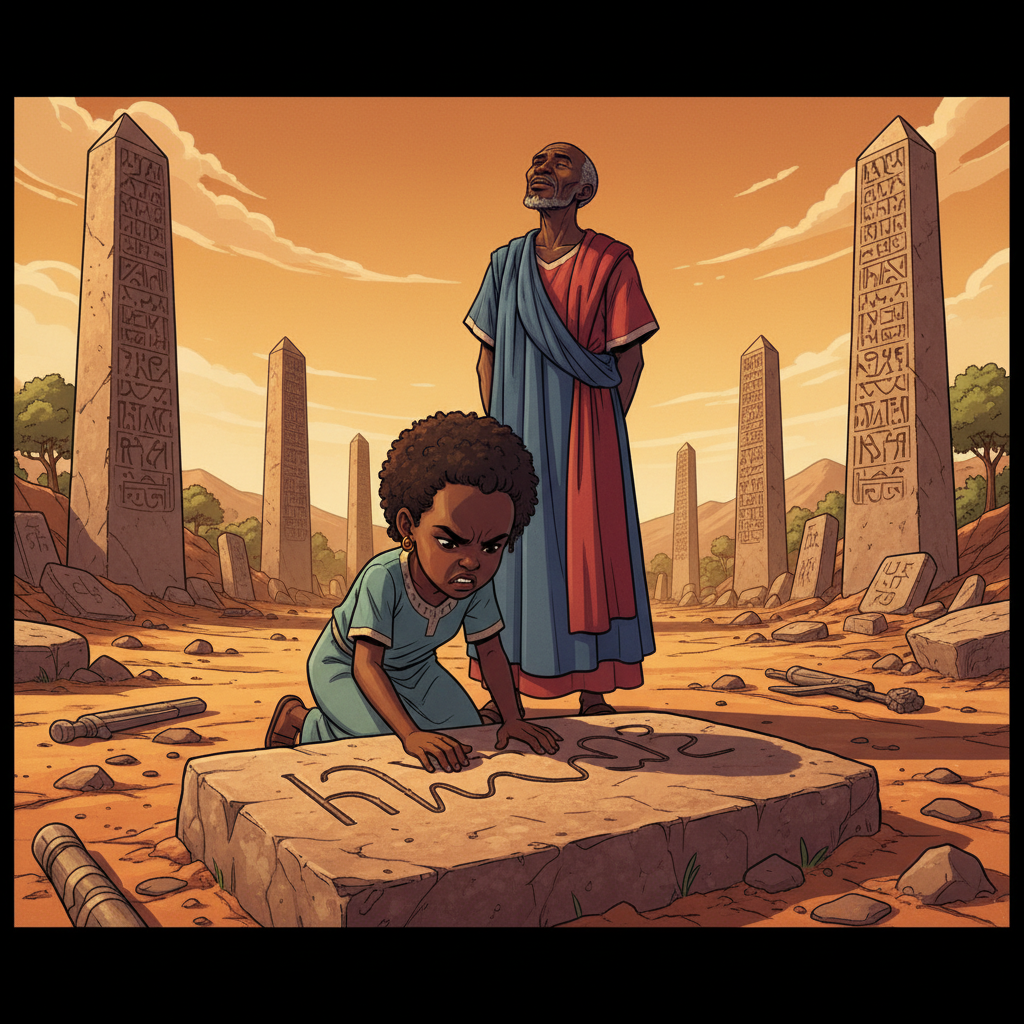
Yeha ran her fingers along the carved grooves of the practice stone and frowned. The line was crooked — again. She had been trying to carve the Ge'ez letter for "truth" all morning, and it still looked like a drunk beetle had crawled through wet clay. Behind her, she heard Master Kaleb let out a long, patient sigh.
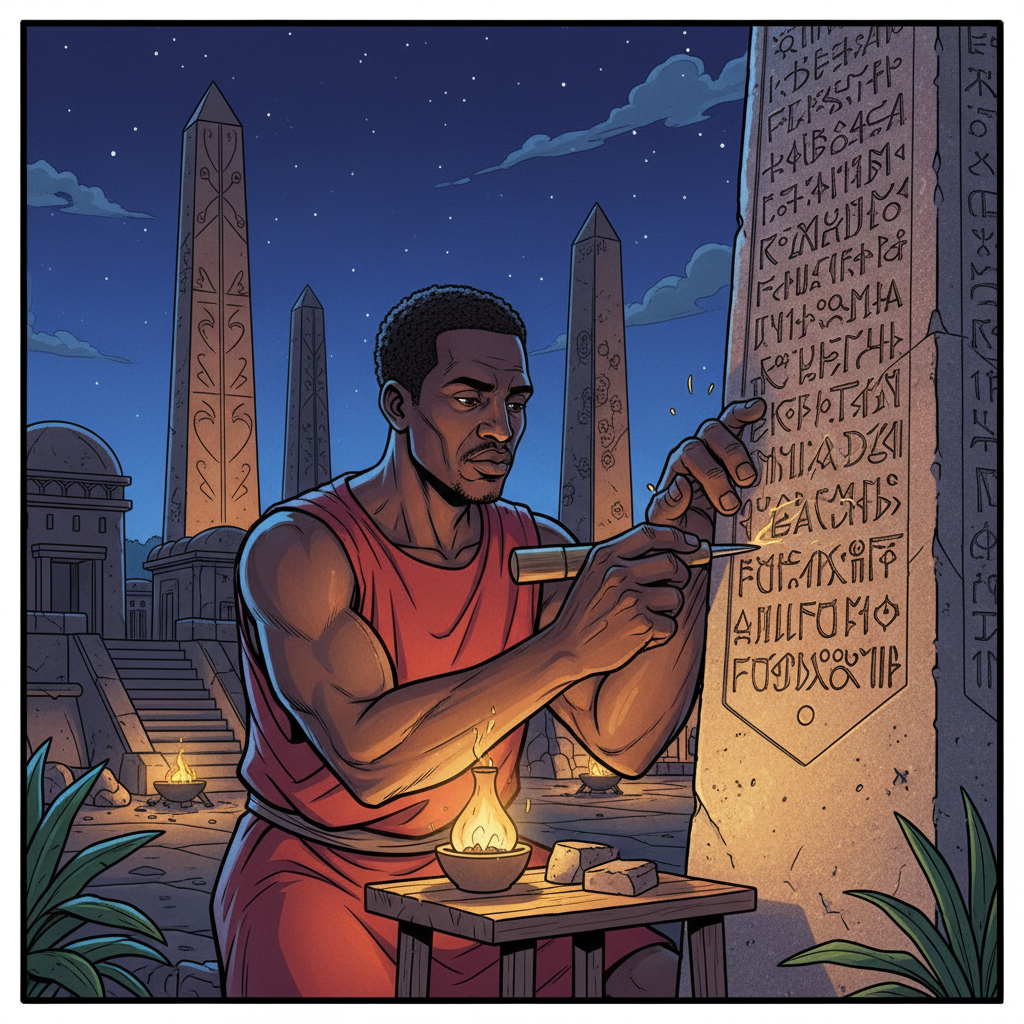
Kaleb was the finest stone carver in all of Aksum. His hands — enormous, dark-skinned, with fingers thick as copper rods — could coax delicate letters from the hardest granite. He had carved inscriptions on six of the great stelae that towered over the city, those magnificent obelisks that told the history of Aksum to anyone who could read their ancient script.
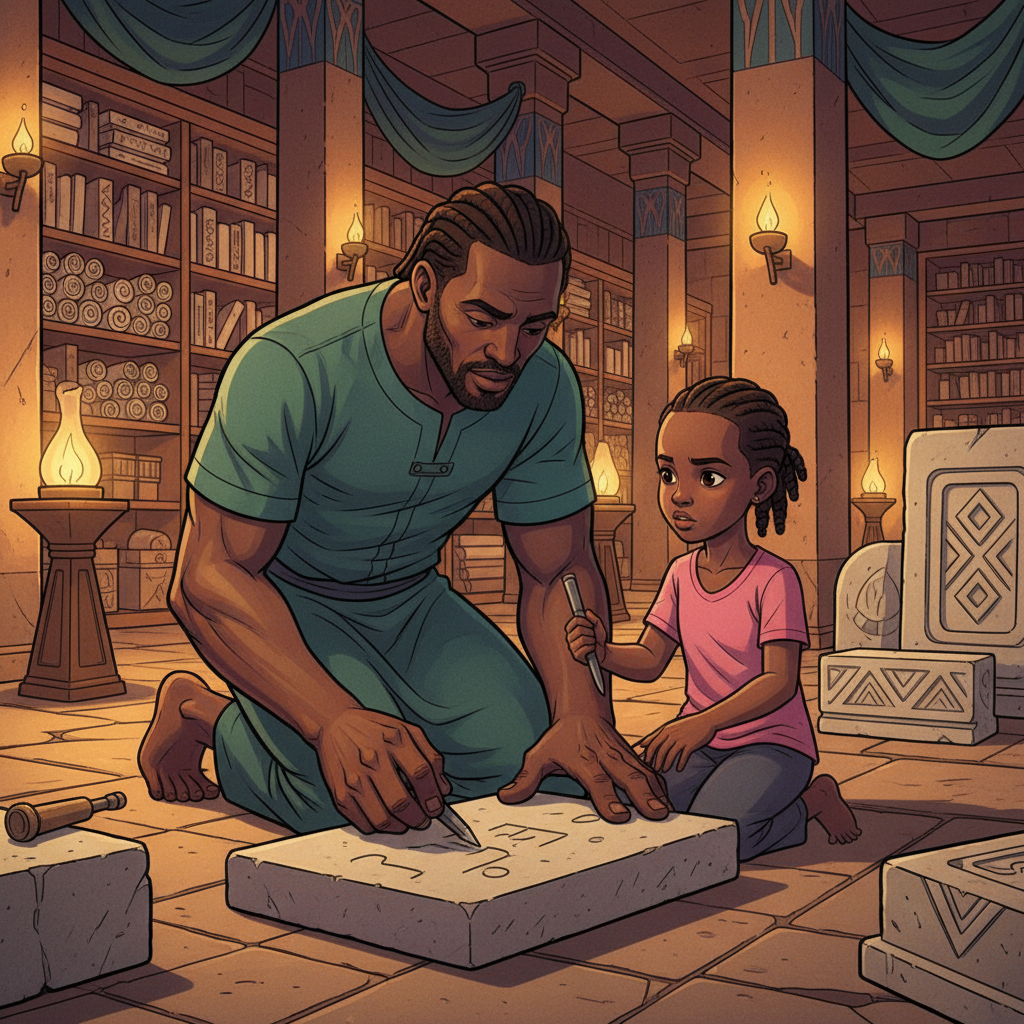
"The stone does not forgive," Kaleb said, kneeling beside her. He took her small chisel and repositioned it in her hand, adjusting the angle of her wrist. "With papyrus, you can cross out a word and write again. With stone, every mark is permanent. That is why we carve slowly, carefully, and only when we are certain." He tapped the granite with one thick finger. "Stone remembers forever."
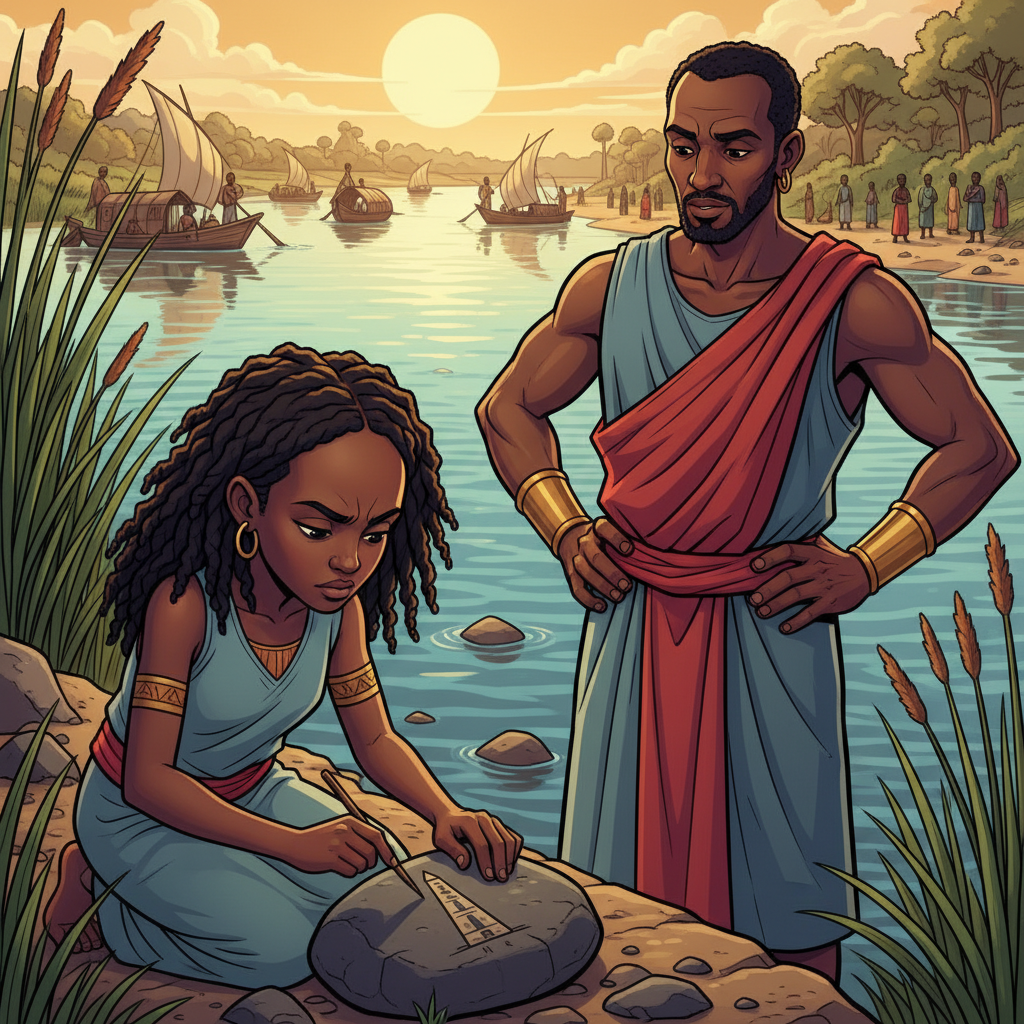
Yeha was eleven years old, small for her age but fierce in her concentration. Her skin was the deep brown-black of the highland people, and her 4C hair was twisted into thick ropes that bounced against her shoulders when she walked. She had been apprenticed to Kaleb for two years now — ever since the day he had watched her scratch pictures into a river stone with a sharp stick and seen something worth training.
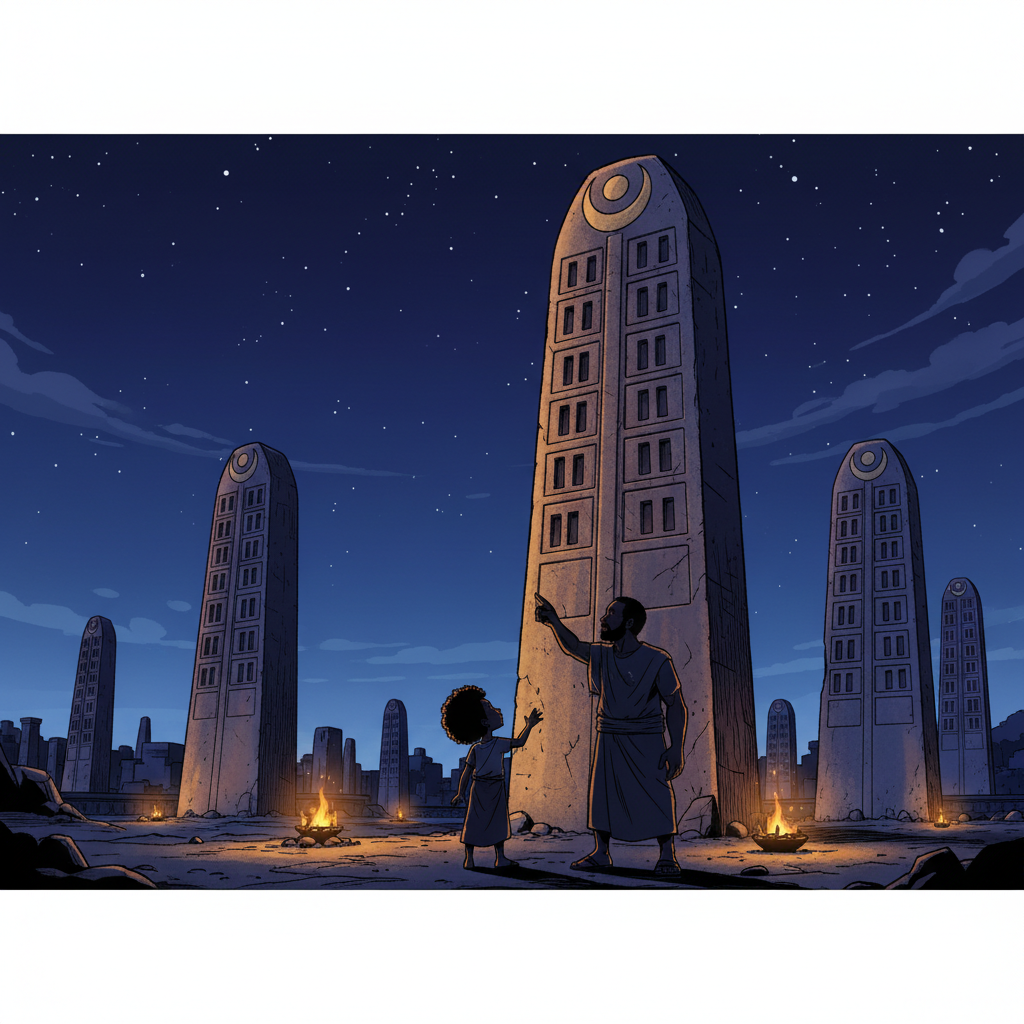
The stelae of Aksum were unlike anything else in the world. They were enormous pillars of solid granite, some standing taller than ten men, carved to look like towering buildings with doors and windows etched into their surfaces. At their tops, crescent moons and circular discs caught the sunlight. Each stele marked the tomb of a king or queen and told their story in Ge'ez script for all eternity.
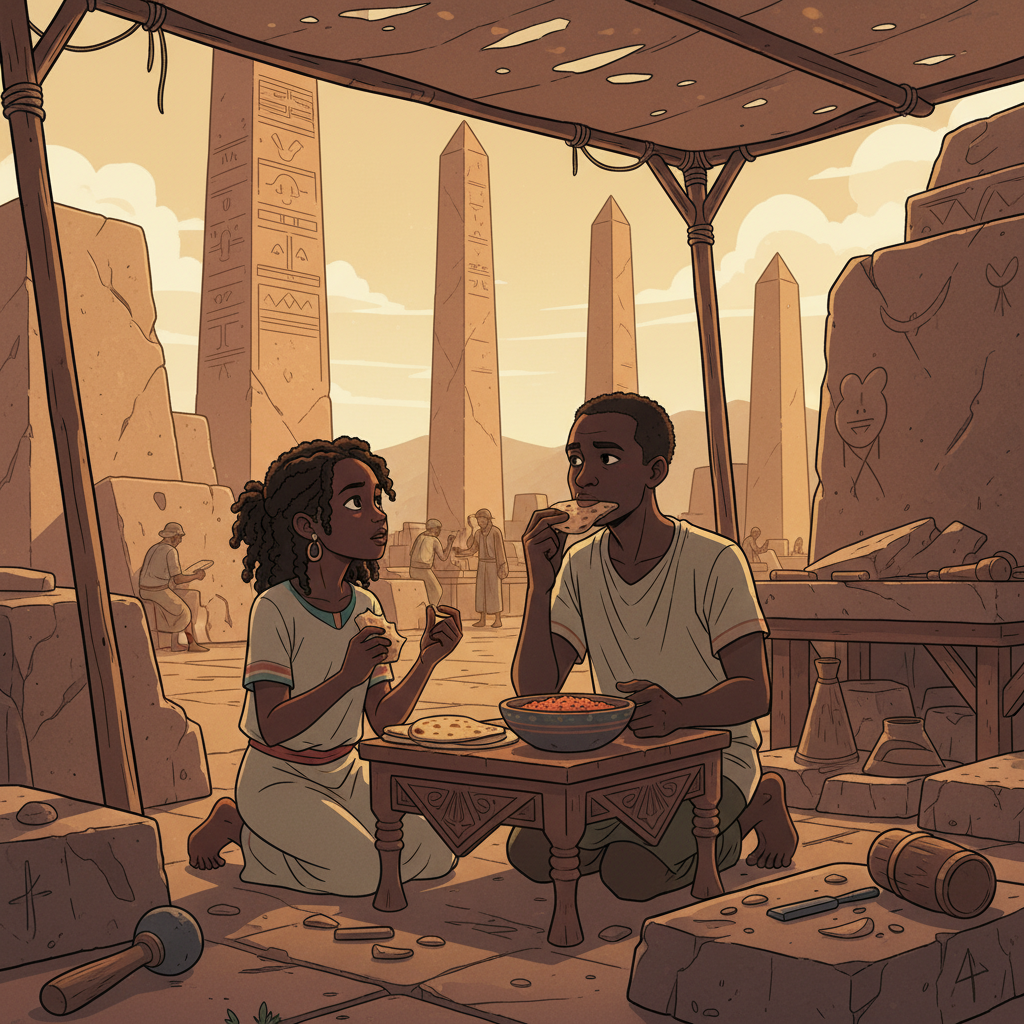
"Why do we carve the stories into stone?" Yeha asked one afternoon as they ate flatbread and lentils in the shade of the workshop. "Why not just tell them, the way the griots do?" Kaleb chewed slowly before answering. "A griot's voice carries truth from mouth to ear, generation to generation. That is powerful. But a voice can be silenced. A story can be changed in the telling. Stone cannot be silenced. Stone does not forget."
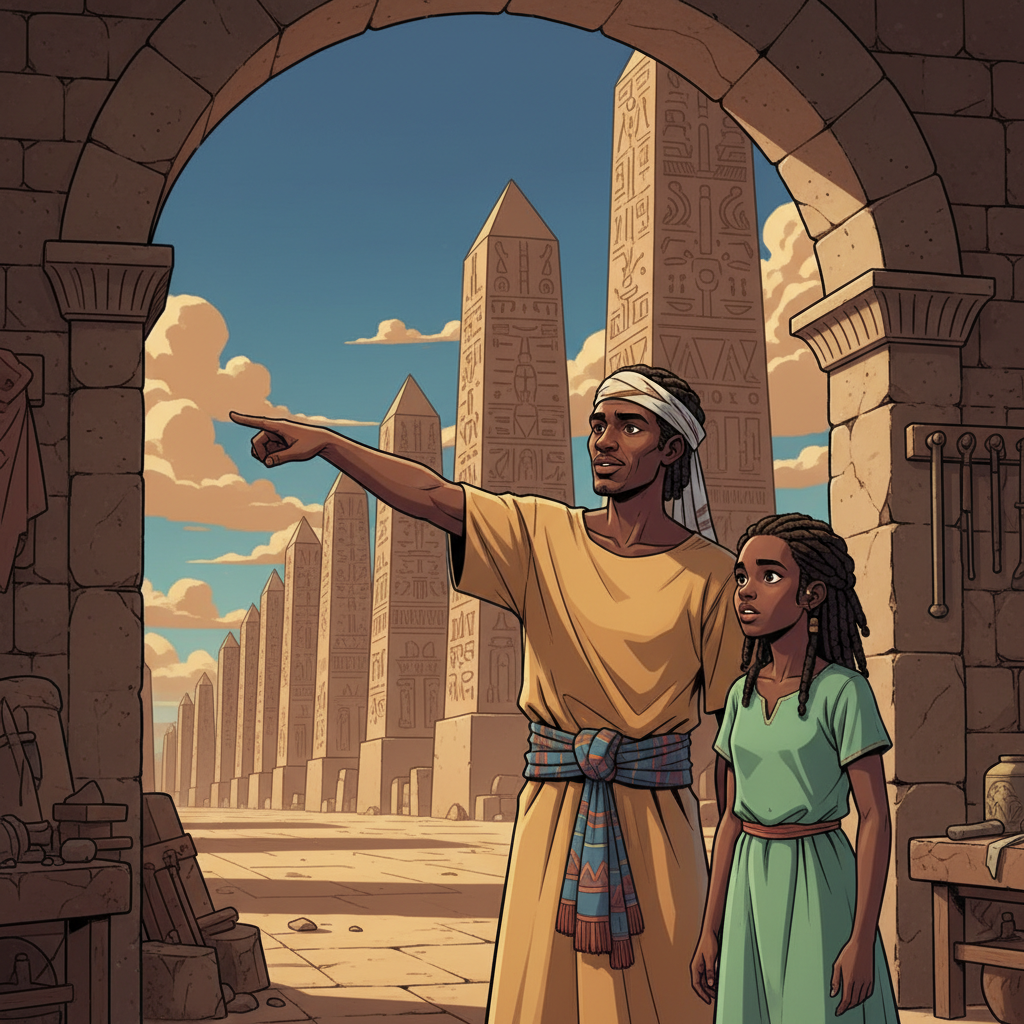
He pointed toward the row of great stelae visible from the workshop door. "Those stones will stand long after you and I are dust. A thousand years from now, someone will read those words and know who we were, what we believed, what we built. That is the gift of the carver — we give our people a memory that time cannot steal."
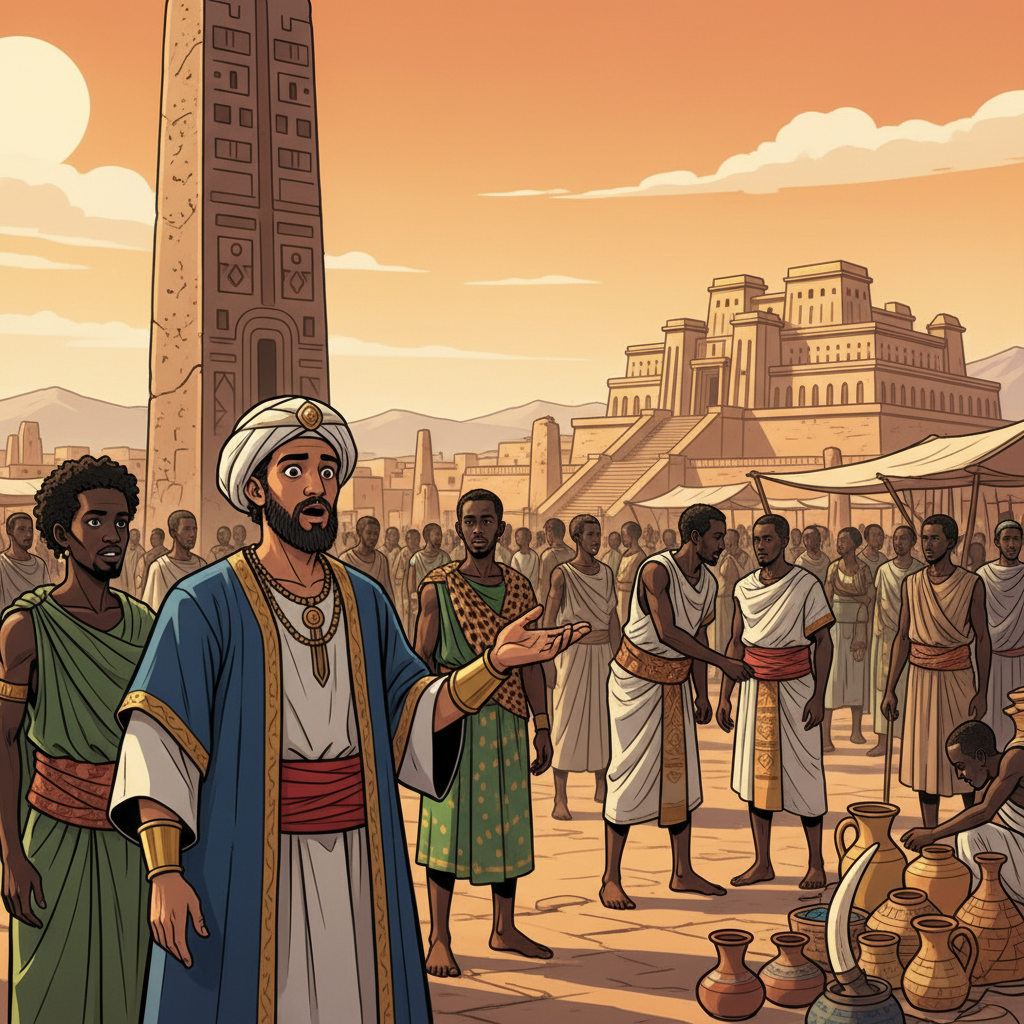
One morning, a foreigner arrived in Aksum. He came from across the sea — a merchant from the trading ports of the Red Sea coast. He wore strange clothing and spoke the language of Aksum with a heavy accent. He walked through the city with wide eyes, marveling at the stelae, the palace, the great market where traders from Kush, Kemet, and the lands beyond the ocean exchanged goods.
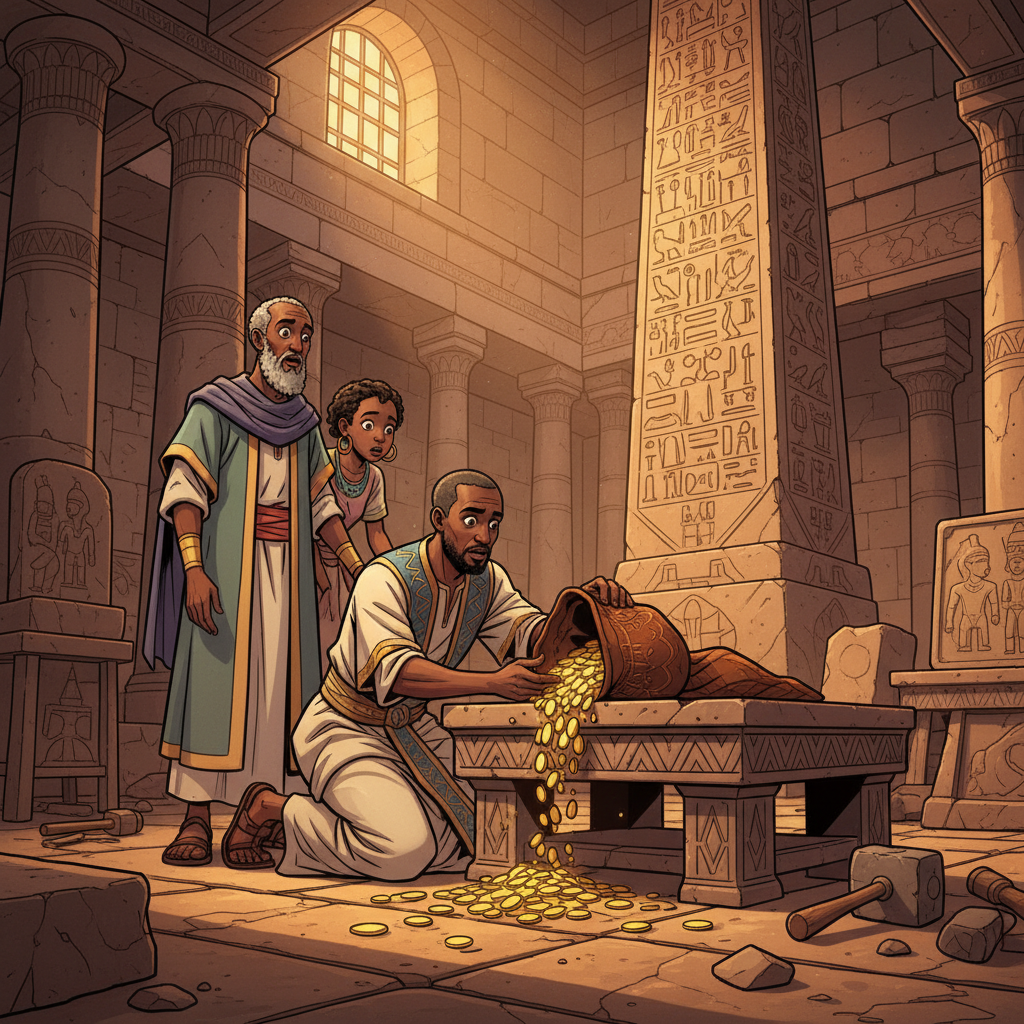
The foreigner sought out Master Kaleb at his workshop. "I represent a wealthy king across the sea," he said, placing a heavy leather bag on the table. Gold coins spilled out — more gold than Yeha had ever seen in one place. "My king wishes to purchase one of your obelisks. He will pay whatever you ask. Name your price."
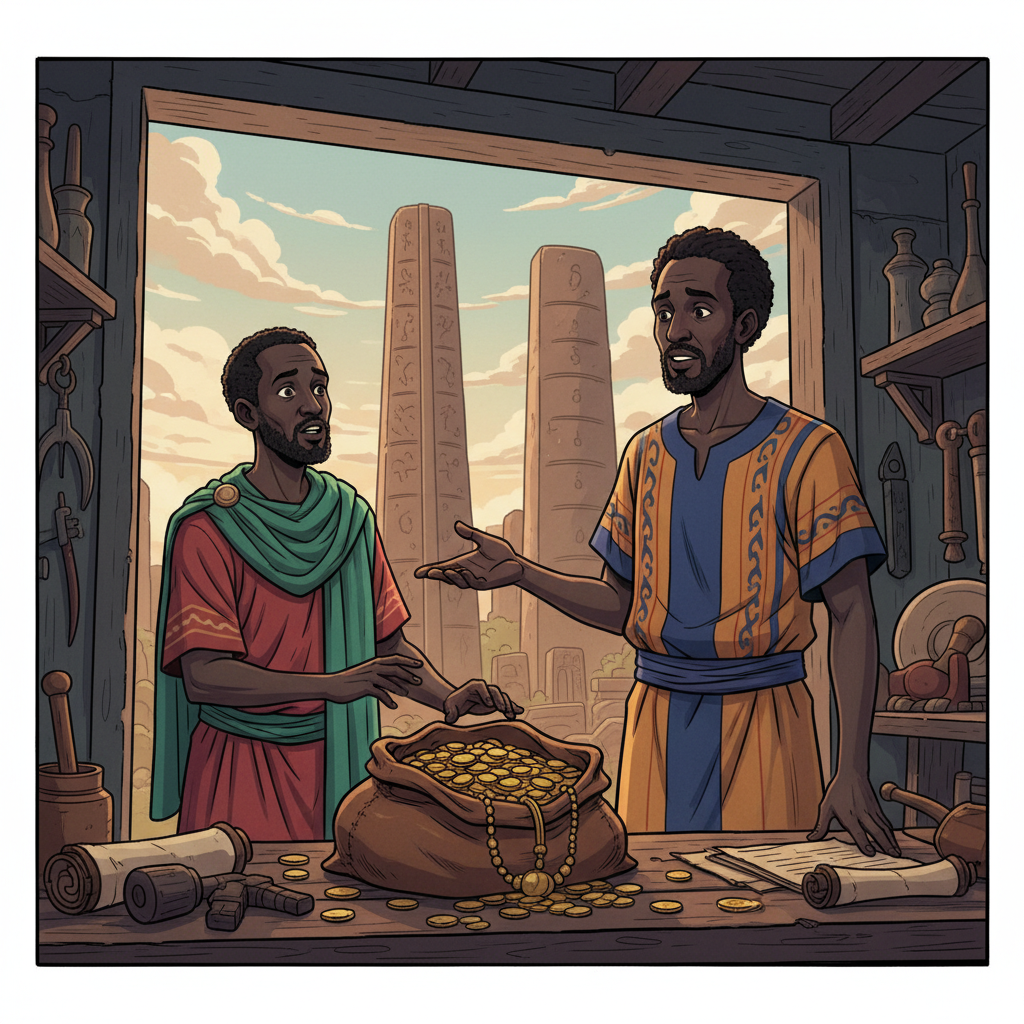
Kaleb did not touch the gold. He looked at the foreigner the way he looked at a student who had carved a line in the wrong place — with patient disappointment. "The stelae are not mine to sell," he said. "They belong to the ancestors. They belong to the people of Aksum. They belong to the children who have not yet been born. You cannot buy a people's memory."
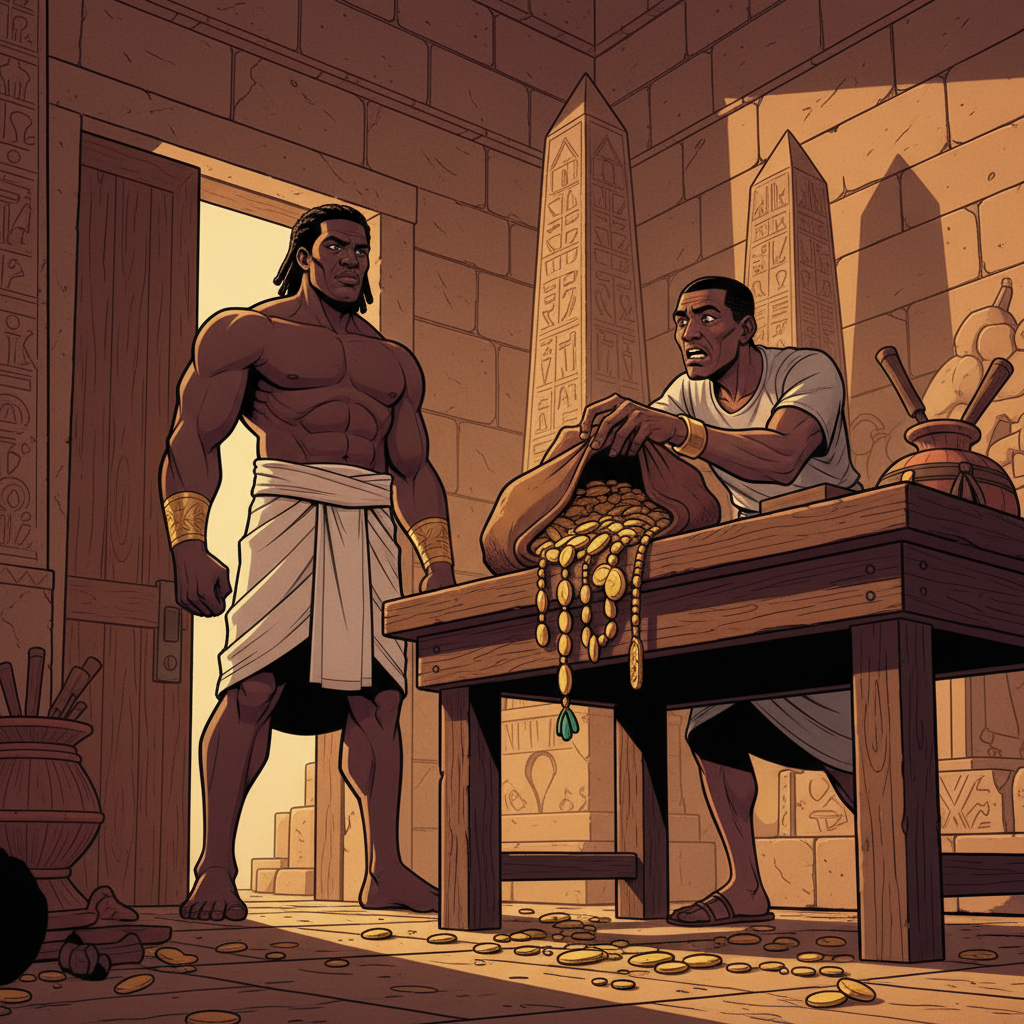
The foreigner pressed harder. "Everything has a price," he insisted, pushing the gold closer. "Double this. Triple it. My king will pay anything." Kaleb stood. His enormous frame blocked the doorway, and his voice dropped to a low rumble. "If your king wants an obelisk, let him carve his own history into his own stone. Ours is not for sale. Not for any price."
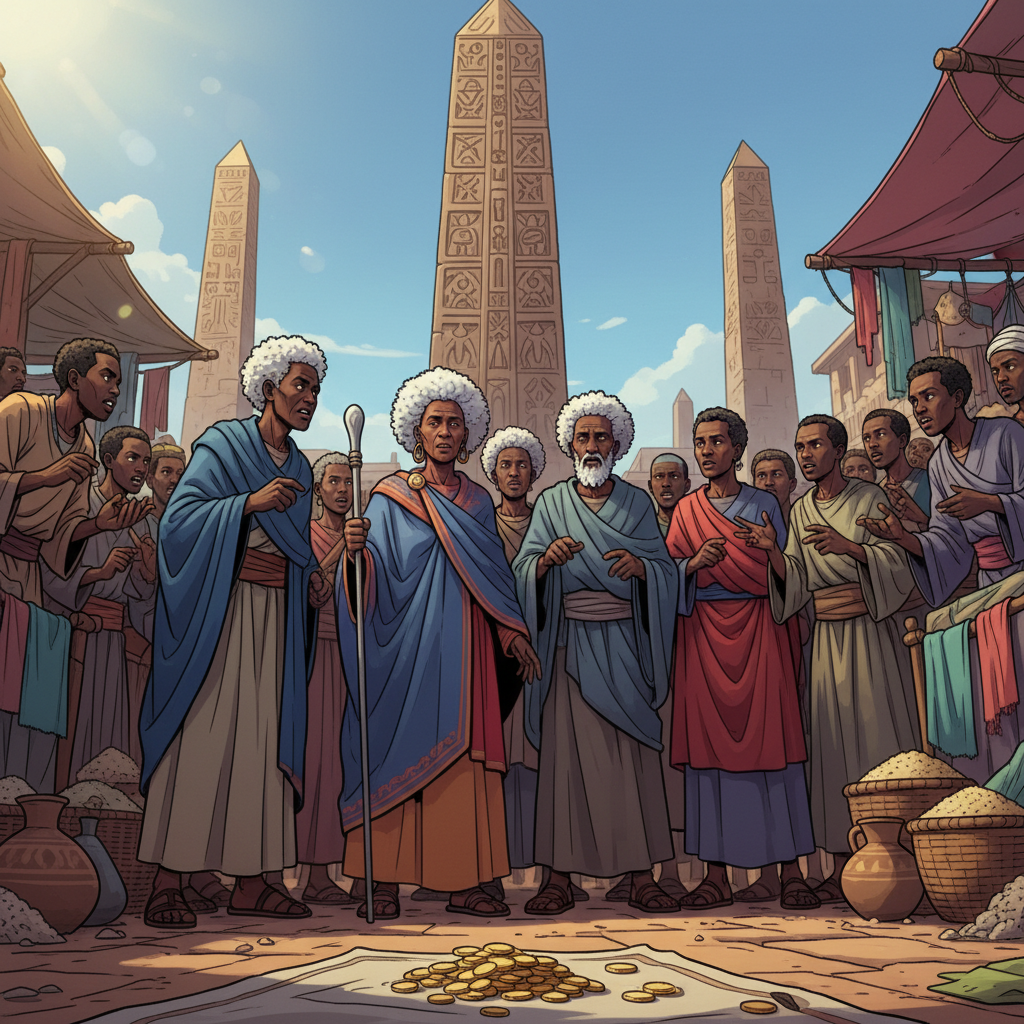
Word of the foreigner's offer spread quickly through the city. The elders gathered at the great market to discuss the matter. Some younger merchants argued that the gold could feed the city for a year. But the elders — men and women with white hair and long memories — spoke firmly. "If we sell one stele, we sell a piece of who we are. And once it is gone, it is gone forever. No amount of gold can buy it back."
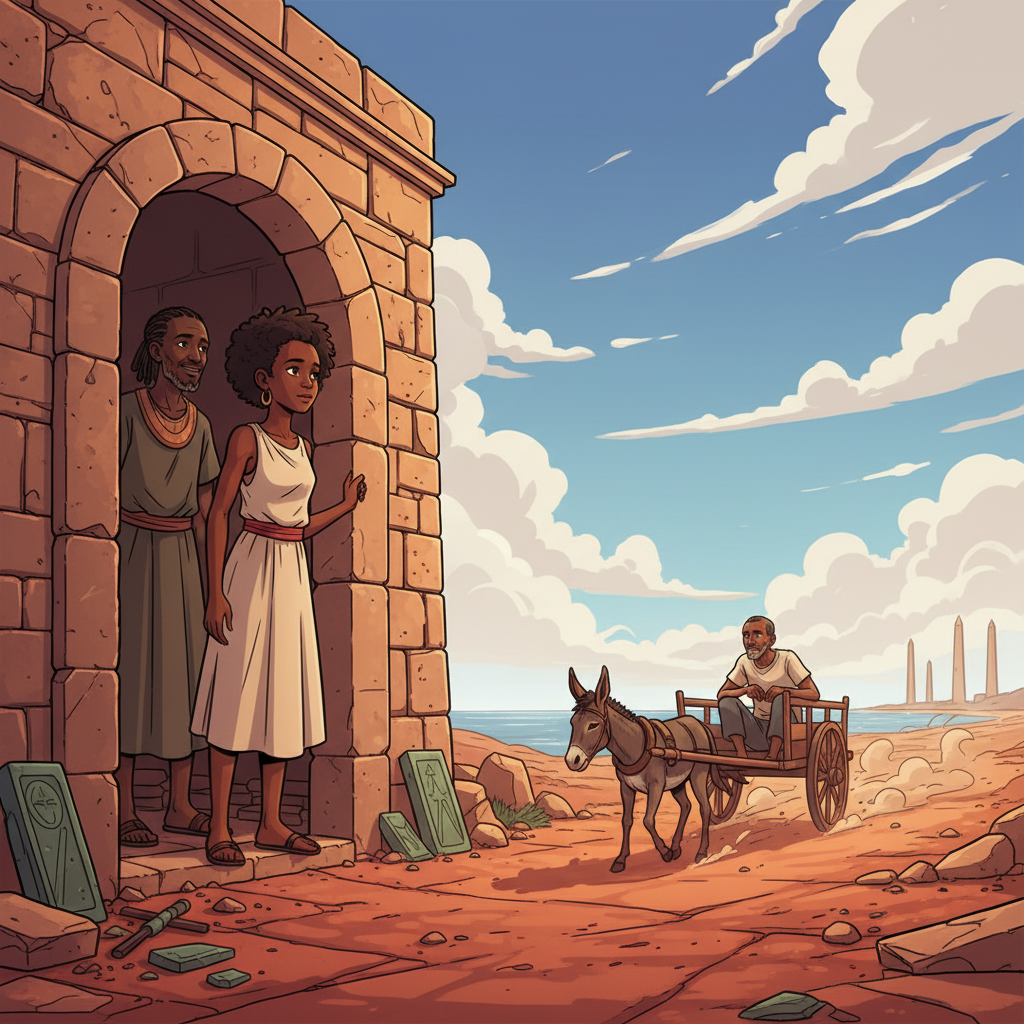
The foreigner left Aksum without his obelisk. Yeha watched him go from the workshop door, his empty cart rattling down the road toward the coast. "He did not understand," she said quietly. Kaleb nodded. "Many people do not understand. They think that because something is old, it is less valuable. The truth is the opposite. The older a thing is, the more lives it has touched, the more memories it holds — the more precious it becomes."
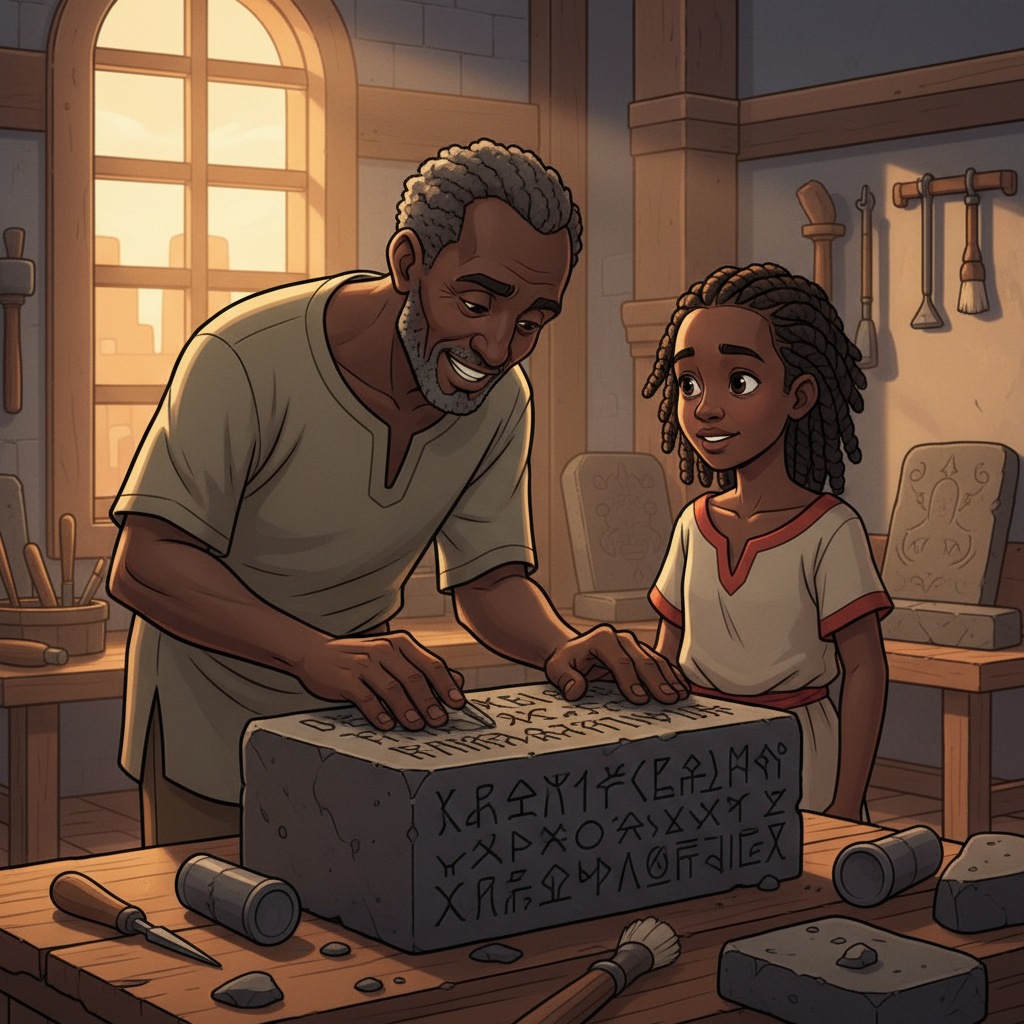
That evening, Kaleb gave Yeha her first real commission — not a practice stone, but an actual inscription for a merchant family's memorial. "You are ready," he said simply. She worked on it for three days, carving each Ge'ez letter with the care and precision he had taught her. When it was finished, Kaleb ran his rough fingers over the smooth grooves and smiled. "This will last a thousand years. Your first piece of forever."
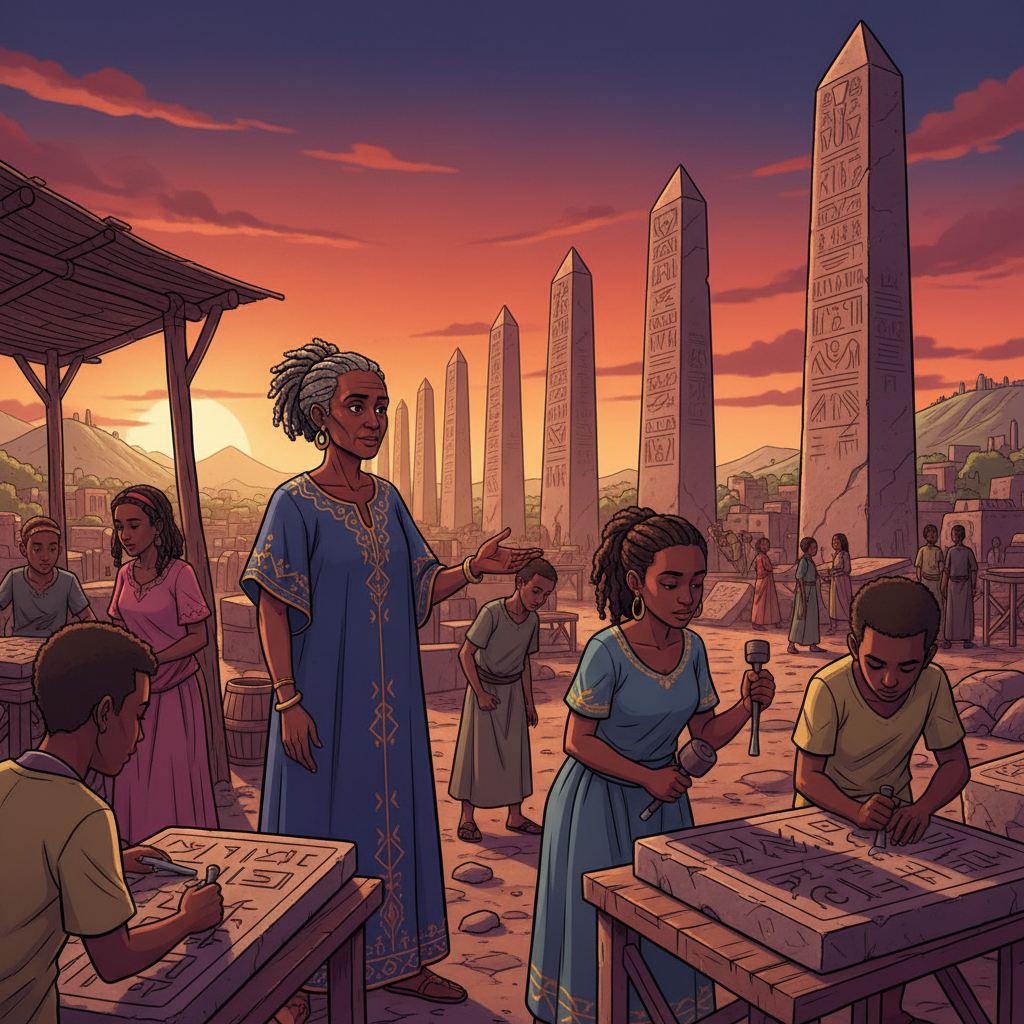
Years later, Yeha became a master carver herself — one of the few women ever to hold that title in Aksum. She trained her own apprentices with the same words Kaleb had taught her: "We are not just carving stone. We are carving memory. Every letter you cut is a promise to the future that our story will not be forgotten. That is the most sacred work there is." And the great stelae of Aksum stood on, tall and silent and eternal, keeping their promise.