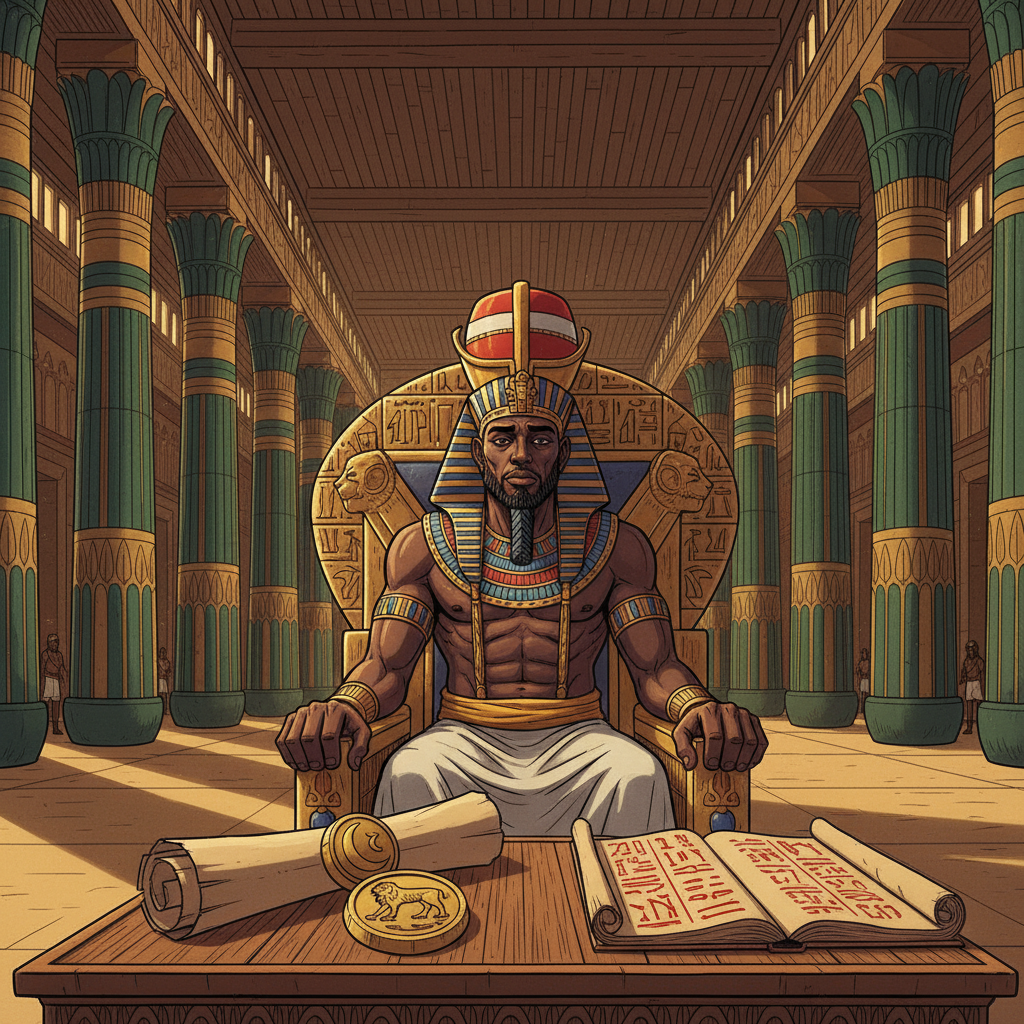
The throne room of the great palace at Waset was vast and cool, its cedar-wood ceiling held aloft by columns painted to look like bundled papyrus stalks. Pharaoh Amenhotep sat upon the golden throne of Kemet with the double crown resting heavy on his brow, and for the first time in his twelve-year reign, the crown felt less like an honor and more like a sentence. He was forty-three years old, with deep ebony skin and the broad shoulders of a man who had trained with soldiers in his youth. His dark eyes, usually sharp and decisive, were clouded with a weight that no army could lift and no prayer could ease. Before him on a low cedar table lay two documents. The first was a treaty scroll, sealed with the cartouche of Kemet and the seal of the Kingdom of Kush — the peace agreement he had signed eighteen months ago with King Alara in the great temple of Amun at Napata. The second was a report from his regional governors, written on fresh papyrus in red ink that meant emergency. Both documents were true. Both were urgent. And they could not both be honored.
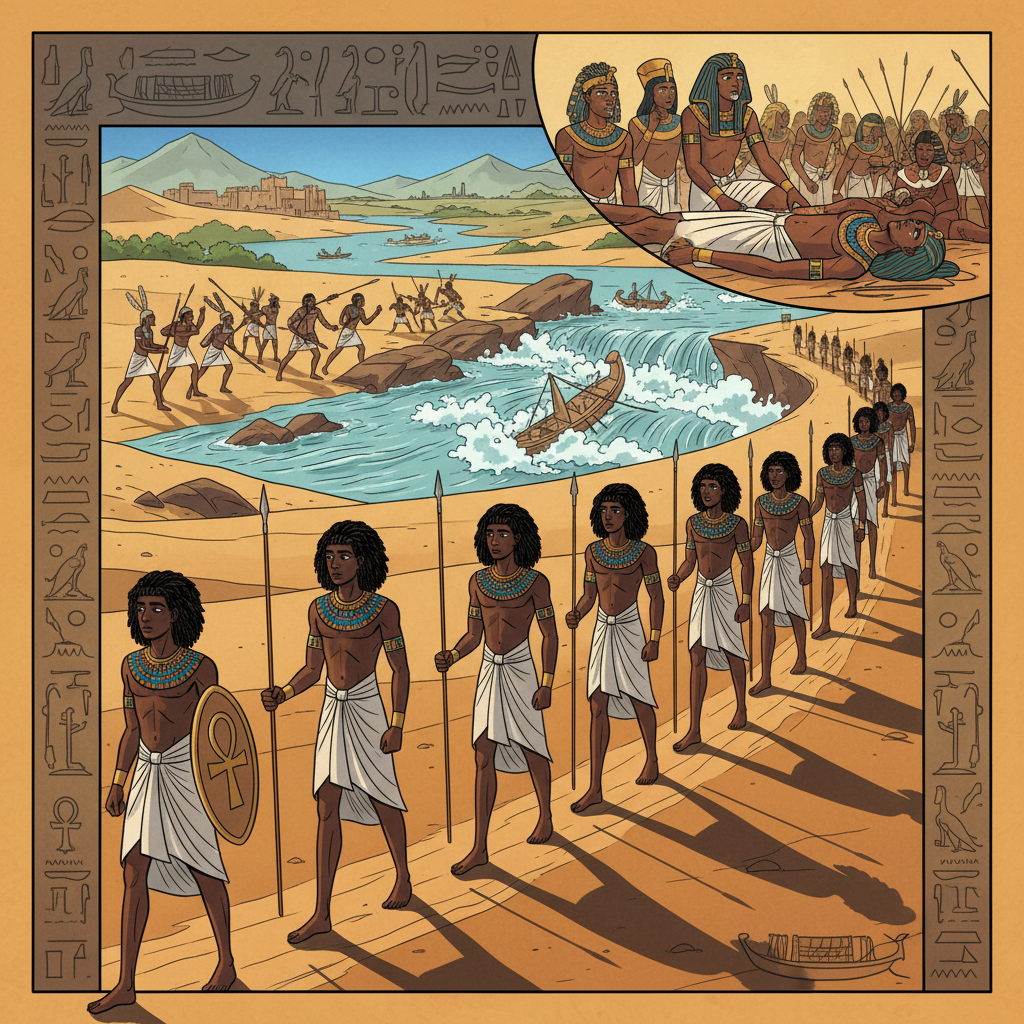
The treaty had been Amenhotep's proudest achievement. For thirty years, the border between Kemet and Kush had been a wound that would not heal — skirmishes along the river, raids on trade caravans, families separated by a line drawn in sand and defended with spears. Amenhotep had watched his own father die fighting Kushite warriors at the second cataract, and he had carried that grief like a stone in his chest for twenty years. When he became Pharaoh, he swore he would do what his father could not: end the bleeding. It had taken six years of patient diplomacy. Six years of sending envoys south, receiving Kushite delegations, negotiating in lamplight while translators struggled with the differences between Kemetic and Kushite protocols. Six years of learning to see King Alara not as an enemy but as a man who loved his people exactly as Amenhotep loved his. The breakthrough came when Amenhotep traveled to Napata himself — the first Kemetic pharaoh to visit the Kushite capital in three generations.
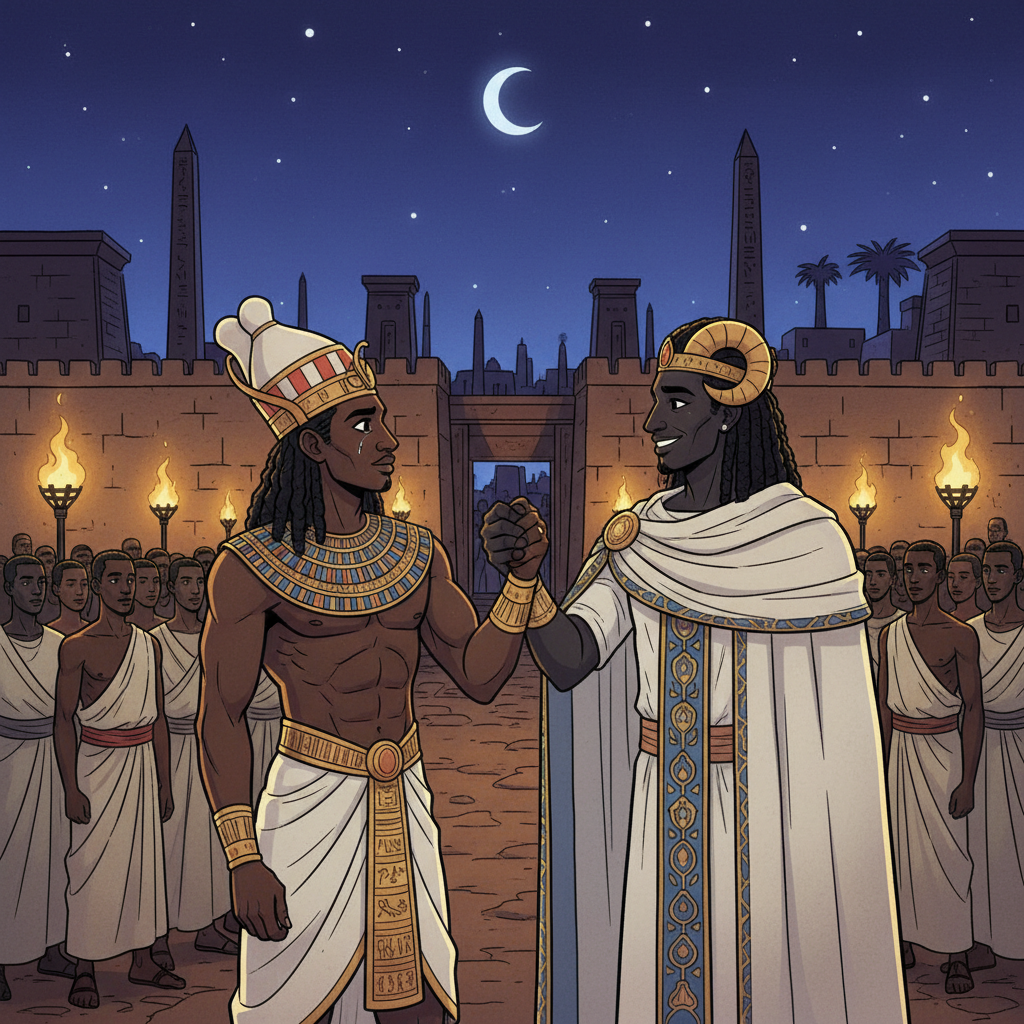
King Alara had met him at the gates of the city. The Kushite king was a head taller than Amenhotep, with skin like polished obsidian and the dignified bearing of a man who traced his lineage through forty generations of rulers. He wore a gold diadem adorned with the ram horns of Amun, and his white robes were edged with the blue-and-gold embroidery of Kushite royalty. When the two kings stood face to face — Amenhotep in the double crown of Kemet and Alara in the diadem of Kush — the crowd that had gathered went silent. For a moment, the entire weight of history balanced on two pairs of dark shoulders. Then Alara had smiled — a warm, genuine smile that cracked through decades of suspicion — and clasped Amenhotep's forearm in the warrior's grip of friendship. "My brother," he said, in accented but clear Kemetic. "We have spent enough blood. Let us spend grain instead." The crowd had roared, and Amenhotep had felt tears prick his eyes for the first time since his father's death.
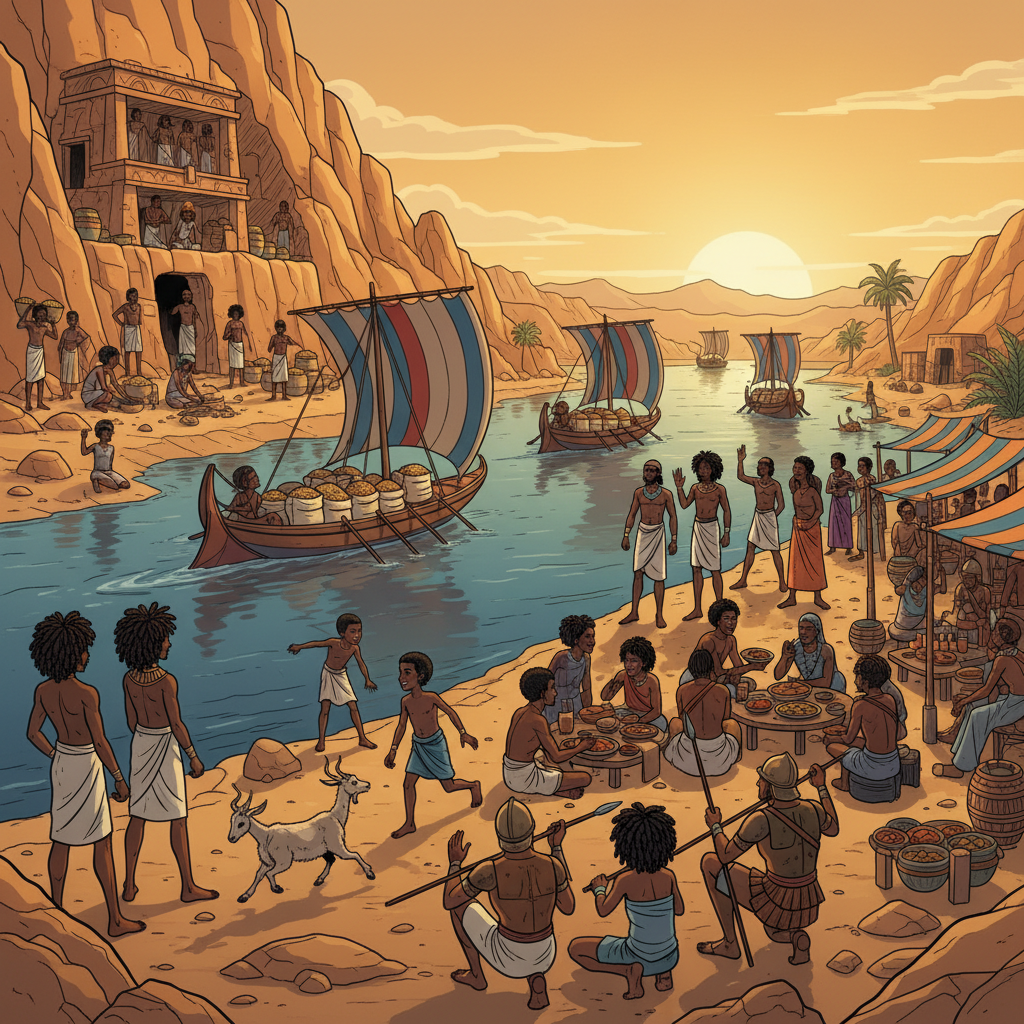
The terms of the treaty were carefully balanced, each provision measured like ingredients in a sacred medicine. Kemet would provide ten thousand measures of grain annually to Kush — enough to feed the border provinces through the lean months when the Kushite harvest fell short. In return, Kush would guarantee safe passage for Kemetic traders along the Nile south of the second cataract, open its gold mines to joint Kemetic-Kushite operations, and — most importantly — disband the raiding parties that had terrorized the southern border for a generation. Both sides made sacrifices. Both sides gained. And for eighteen months, the treaty had held like the walls of a well-built temple. Trade flourished. Families reunited across borders that had been battle lines. Children who had grown up hearing stories of the enemy now played together in the border markets. Soldiers who had faced each other with spears now shared meals and compared tactics. It was not just peace. It was the beginning of something that looked, to hopeful eyes, like brotherhood.
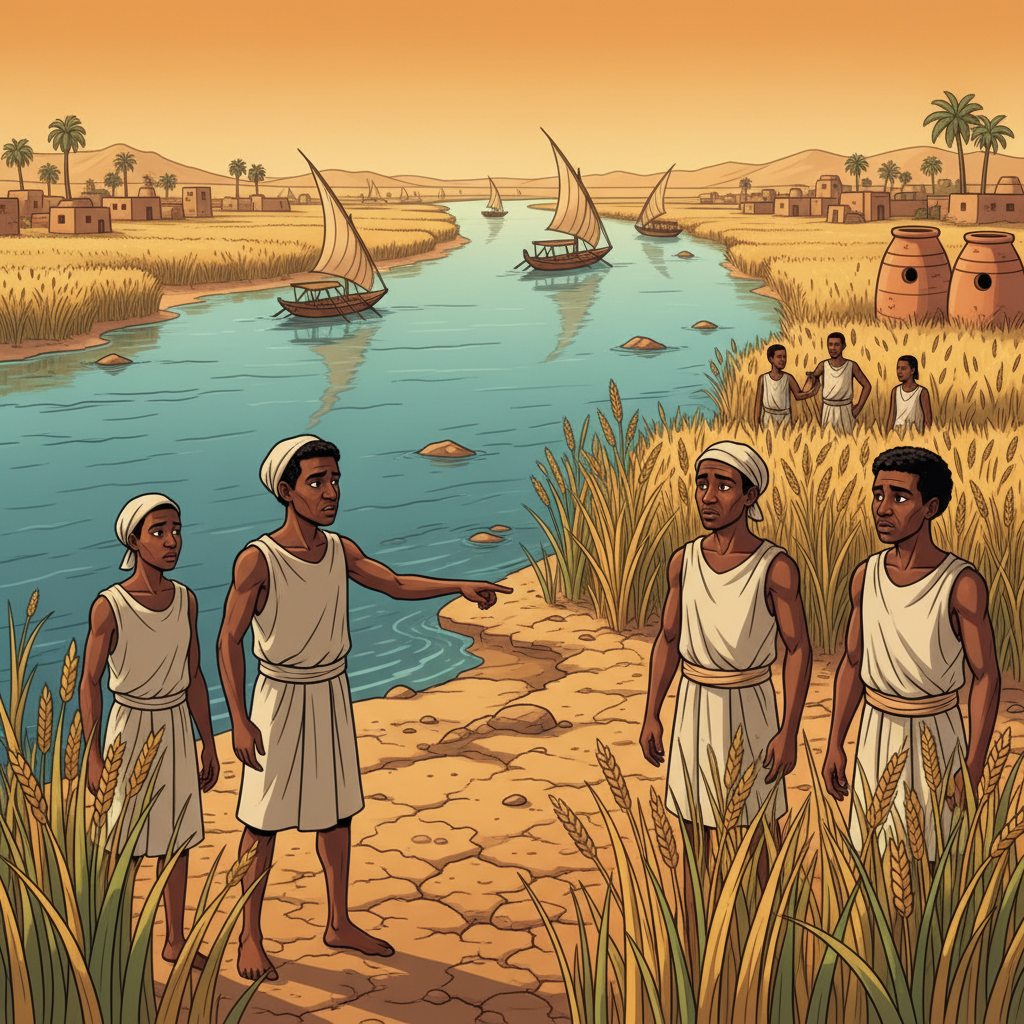
Then the drought came. It arrived not as a sudden catastrophe but as a slow strangulation — the Nile's annual flood, which fed the fields of both Kemet and Kush, fell short. Not dramatically short, not enough to trigger immediate panic, but short enough to cut the harvest by a third. Farmers who had planted full fields watched their crops yellow and thin. Granaries that should have been filled to the rafters after harvest sat two-thirds empty. The shortfall rippled through the economy like a stone dropped into still water — prices rose, tempers shortened, and the comfortable surplus that had made the treaty possible began to evaporate. Amenhotep had dealt with lean years before. Kemet's system of state granaries, maintained by generations of careful pharaohs, provided a buffer against exactly this kind of shortfall. But the buffer was designed for Kemet's needs alone. It had not been calculated to include ten thousand measures of grain promised to a foreign kingdom. And now, with the harvest reduced by a third, the arithmetic had become merciless.
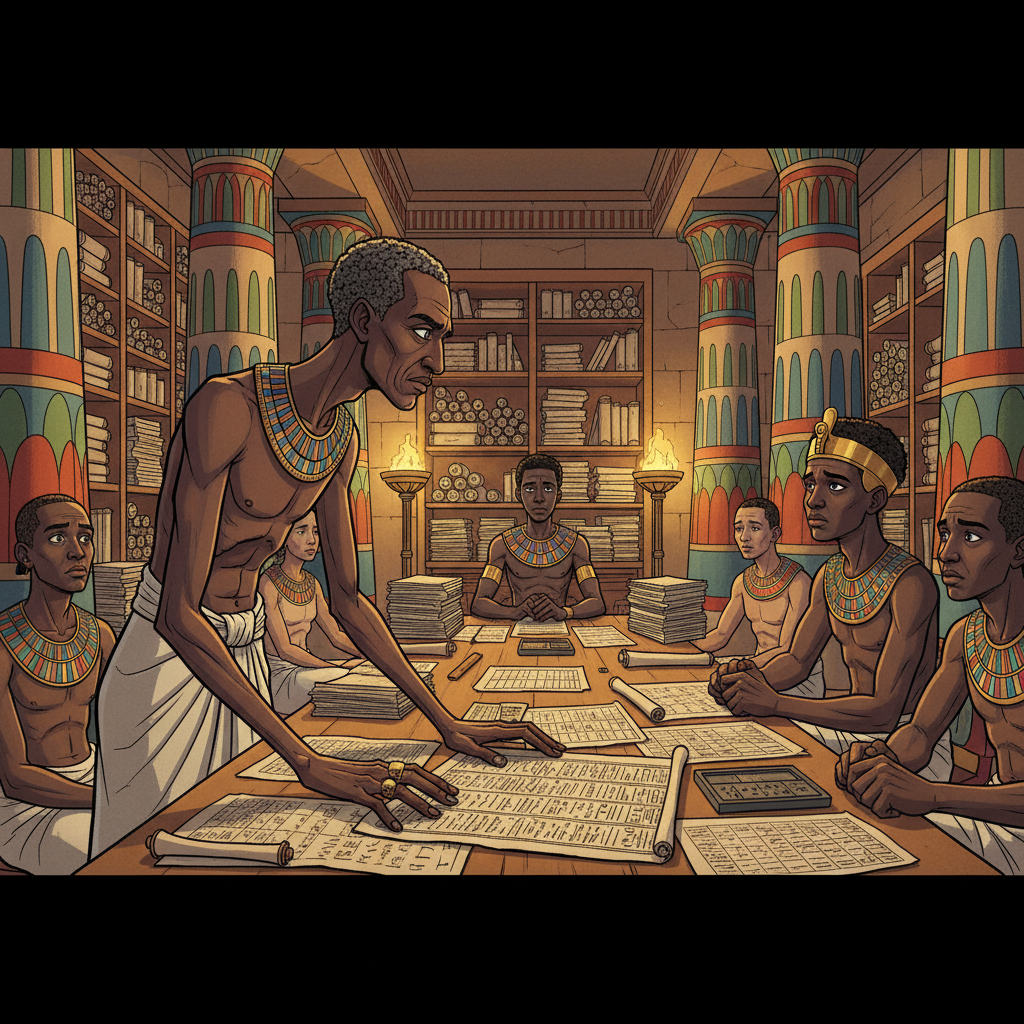
Vizier Kahotep was the first to lay out the numbers. He was a lean, precise man of sixty with deep brown skin stretched tight over angular cheekbones and the careful eyes of someone who had spent a lifetime counting things that other people preferred not to think about. Kahotep had served three pharaohs and had outlasted them all through a simple principle: the truth of numbers does not bend for anyone, not even gods. He spread his papyrus ledgers across the council table and let the figures speak. "The southern provinces — Abdju, Nekhen, and the settlements near the first cataract — have twelve thousand measures of grain in reserve. Their people number roughly sixty thousand. To survive until the next harvest, which is eight months away, they require fourteen thousand measures at minimum. We are short by two thousand measures already." He paused and looked directly at Amenhotep. "The treaty requires us to send ten thousand measures to Kush. If we honor that commitment, the southern provinces will be short twelve thousand measures. People will starve, my Pharaoh. Not might starve. Will starve."
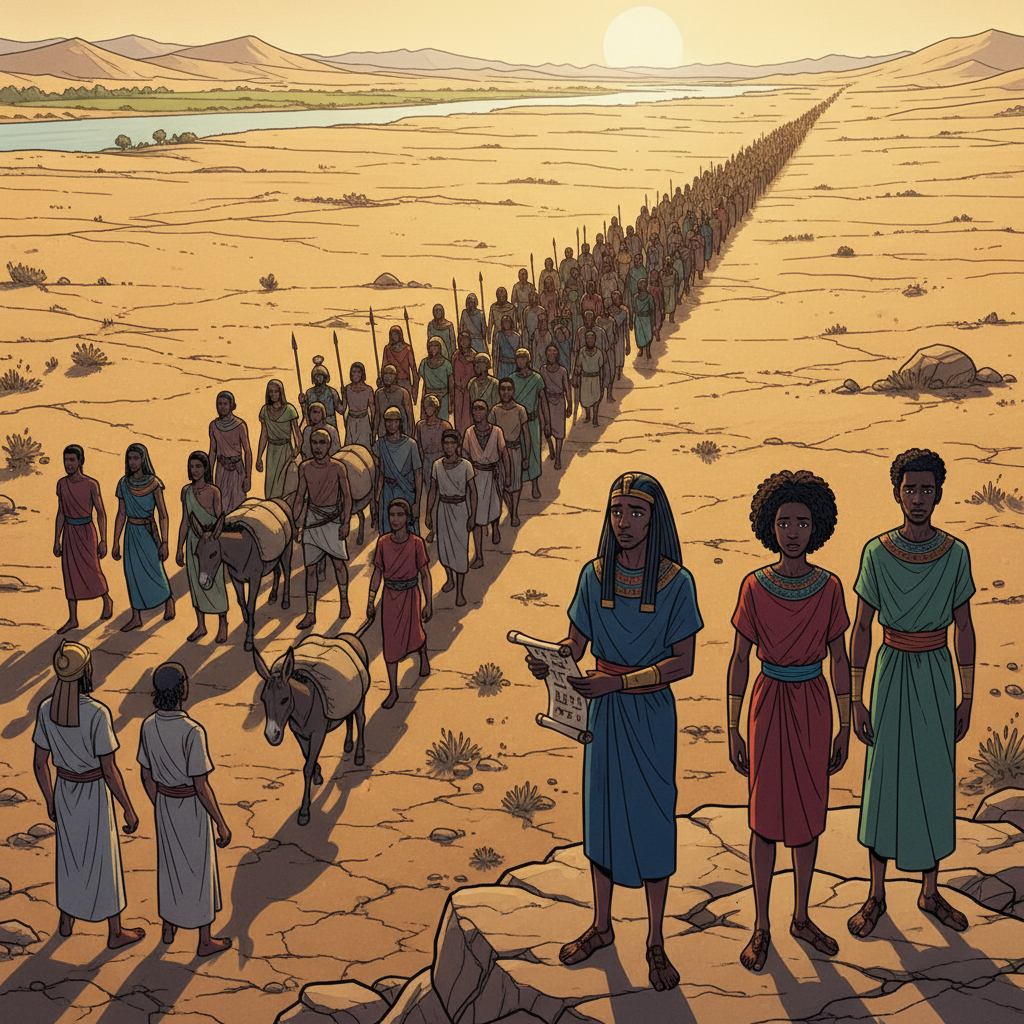
The council chamber fell silent. Amenhotep stared at the numbers as if he could change them by force of will. The southern provinces were the poorest in Kemet — farming communities of dark-skinned families who had worked the same land for generations, people whose loyalty to the throne was absolute and uncomplaining. They paid their taxes, sent their sons to the army, maintained the irrigation channels that kept the region alive. They asked nothing except to be left in peace to work their fields and raise their children. And now the treaty he had signed with such pride and such hope was threatening to starve them. The grain he had promised to Kush was the grain his own people needed to survive. Not wanted — needed. The difference between sending the grain and keeping it was the difference between the southern provinces eating through the lean months and the southern provinces burying their children.
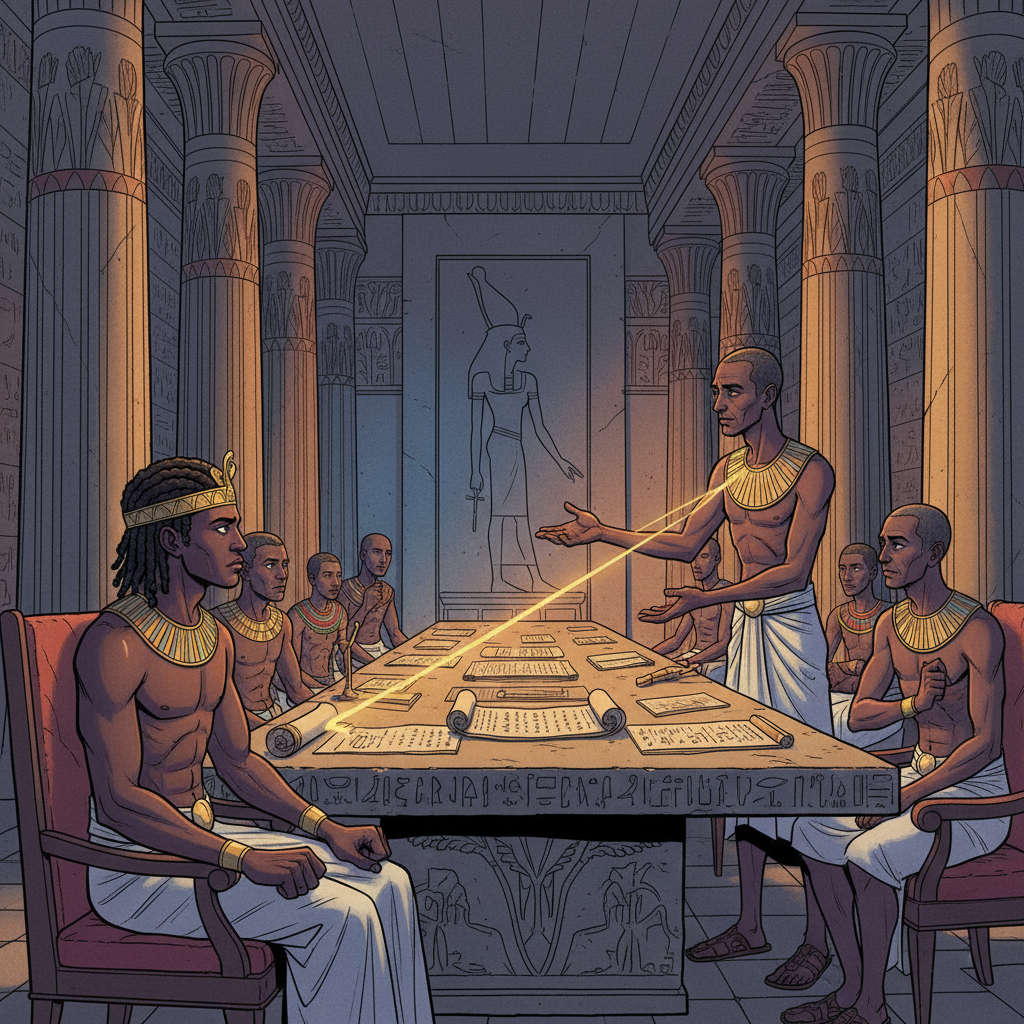
"The solution is clear," Kahotep said, his voice flat and factual as a scribe's palette. "We reduce or suspend the grain shipment to Kush. We explain the circumstances. King Alara will understand — Kush is facing the same drought. A reasonable man does not hold a starving neighbor to a promise made in times of plenty." Kahotep folded his hands on the table. "The treaty can survive a one-year adjustment. Our people cannot survive a one-year famine." Amenhotep wanted to agree. Every instinct of protection, every fiber of his duty as Pharaoh, pulled him toward Kahotep's logic. These were his people. He had sworn before the gods at his coronation to protect them, to ensure that none went hungry under his reign, to maintain Maat throughout the Two Lands. Feeding his people was not just policy — it was sacred obligation. A pharaoh who let his people starve while sending grain to a foreign kingdom was not a keeper of Maat. He was a fool.
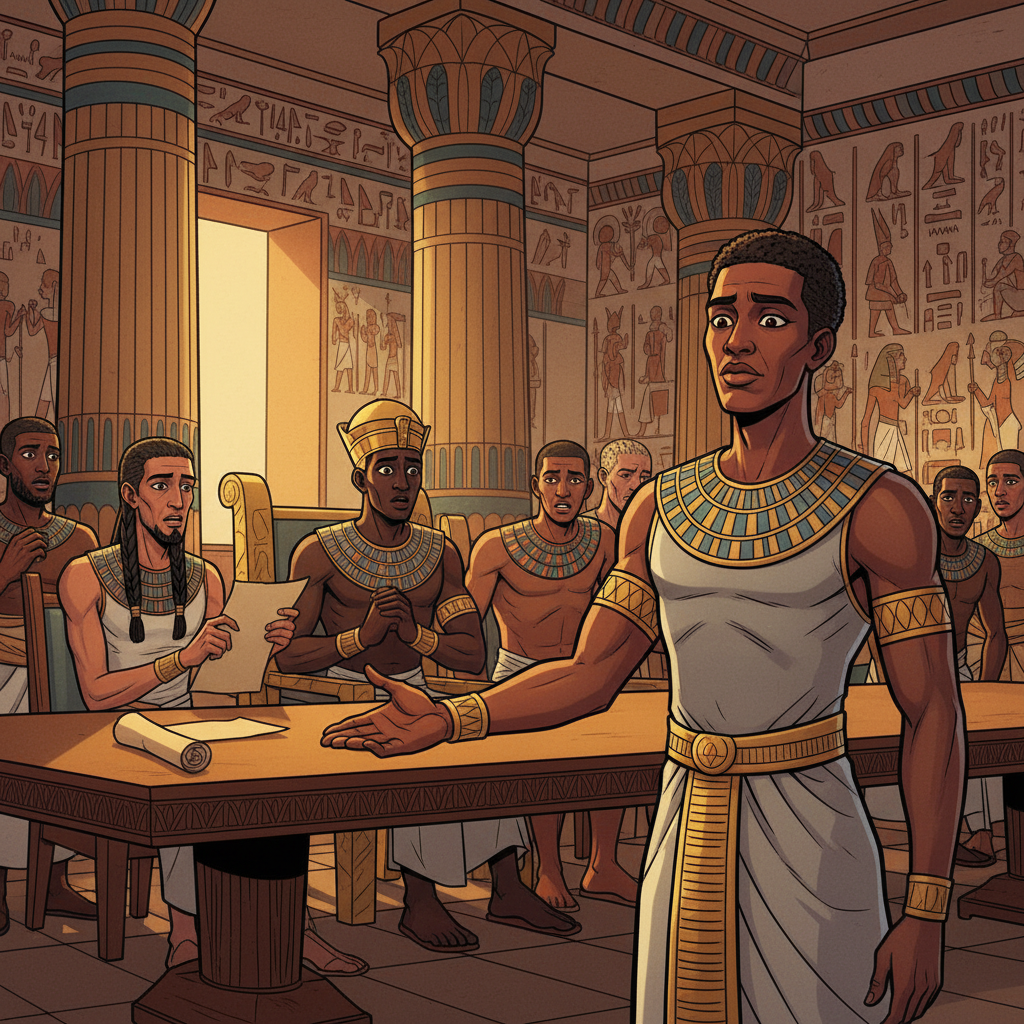
But then his chief diplomat, Senenmut, rose from his seat at the end of the council table, and his first words struck the room like a thrown spear. "My Pharaoh, if you break this promise, you will start a war." Senenmut was forty-five, a man of average build with dark copper-brown skin and eyes that seemed to see through walls. He had spent twenty years in the diplomatic service, had lived in Kush for three of them, and understood the political landscape of the Nile valley the way a fisherman understands the currents. "King Alara staked his reputation on this treaty," Senenmut said, his measured voice cutting through the tension. "He faced opposition from his own war council — generals who called him weak for making peace with Kemet. He overruled them because he trusted your word. Your personal word, my Pharaoh. Not Kemet's word. Yours. If you break that promise now — for any reason, no matter how justified — Alara's generals will say he was a fool to trust a Kemetic pharaoh. And Alara will have no answer for them."
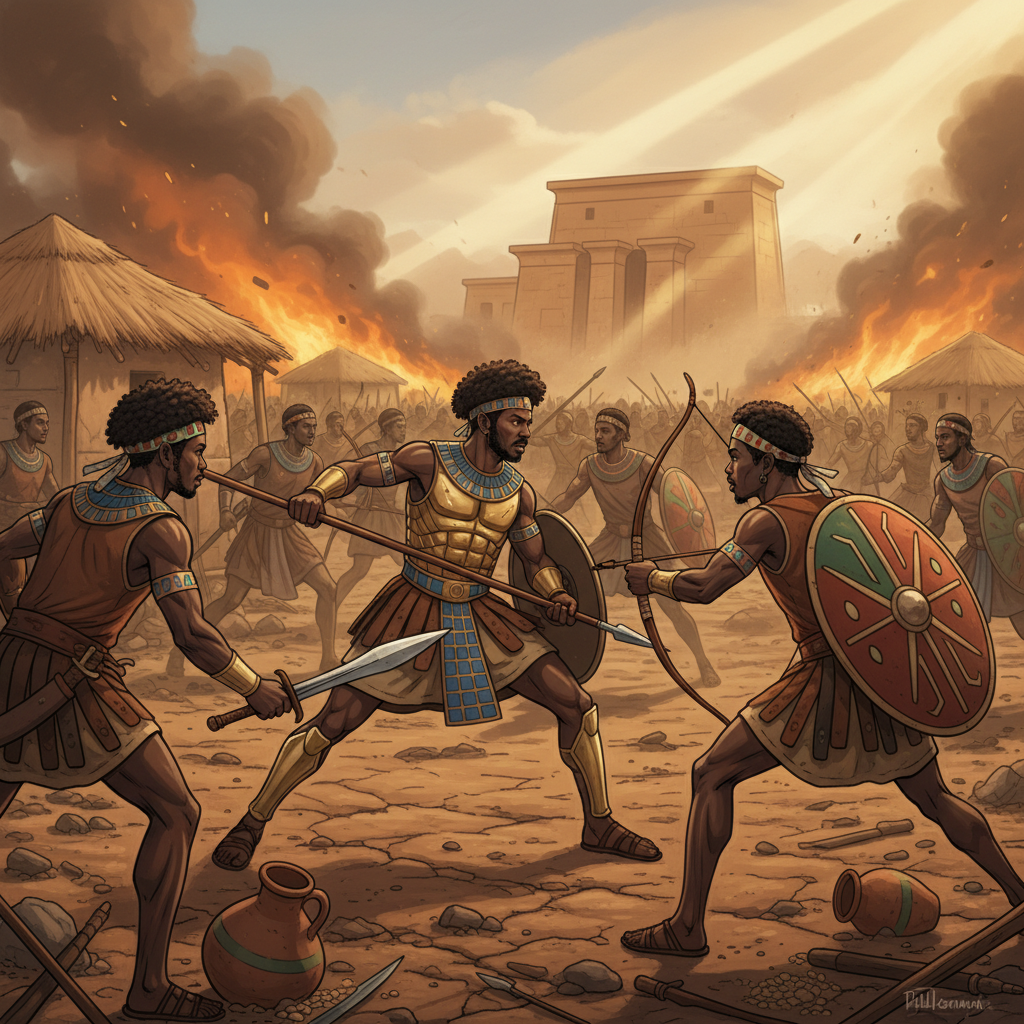
Senenmut paced as he spoke, his sandals clicking against the stone floor. "Within six months, the war council will remove Alara — either by pressure or by force. His replacement will be someone who builds their power on the promise that Kush will never trust Kemet again. The raids will resume. The trade routes will close. The gold mines will be seized. And everything we built in six years of diplomacy will collapse in six months of broken trust." He stopped pacing and faced Amenhotep directly. "And then, my Pharaoh, you will need more grain — not less — because you will need to feed an army. War with Kush will cost ten times what the treaty costs. A hundred times. Not just in grain but in lives, in trade, in the future of both kingdoms. The southern provinces will not merely starve — they will become a battleground. I have seen what war does to farming villages. Drought kills slowly. War kills everything."
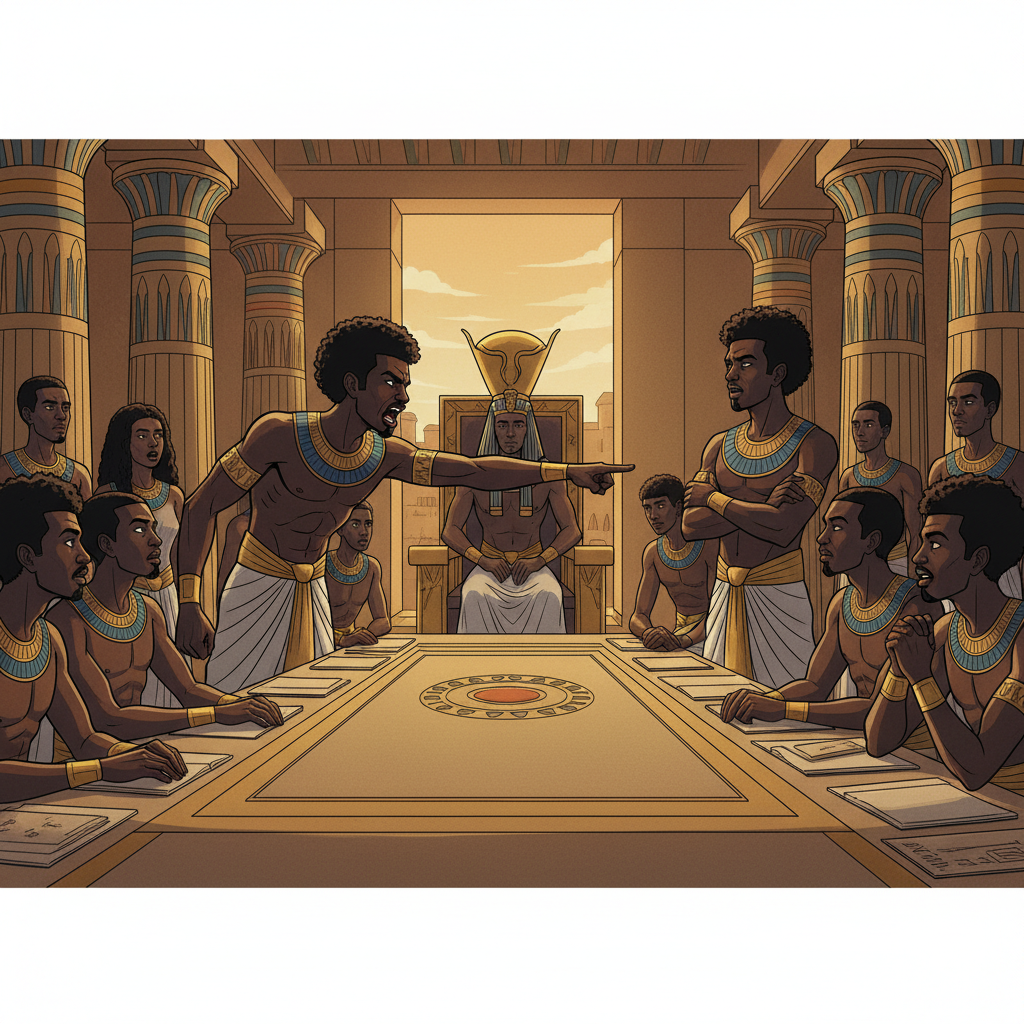
Kahotep was on his feet before Senenmut finished. "You are asking the Pharaoh to let his own people starve on the speculation that a foreign king might lose power!" His usually calm voice was sharp with anger. "Alara's politics are Alara's problem. Our people — Kemetic people, families who look to this throne for protection — are our problem. You sit in this council chamber talking about diplomacy and trade routes while mothers in Abdju are already rationing their children's meals. Can you look those mothers in the eye, Senenmut, and tell them their children must go hungry so that a promise to a foreign king can be kept?" Senenmut did not back down. "And can you look at those same mothers in two years, Kahotep, when Kushite raiders burn their villages and carry off their grain, and tell them that you chose to save them from one lean winter by condemning them to a generation of war? Short sight is not compassion. It is the most dangerous form of cruelty — the kind that feels righteous while it destroys."
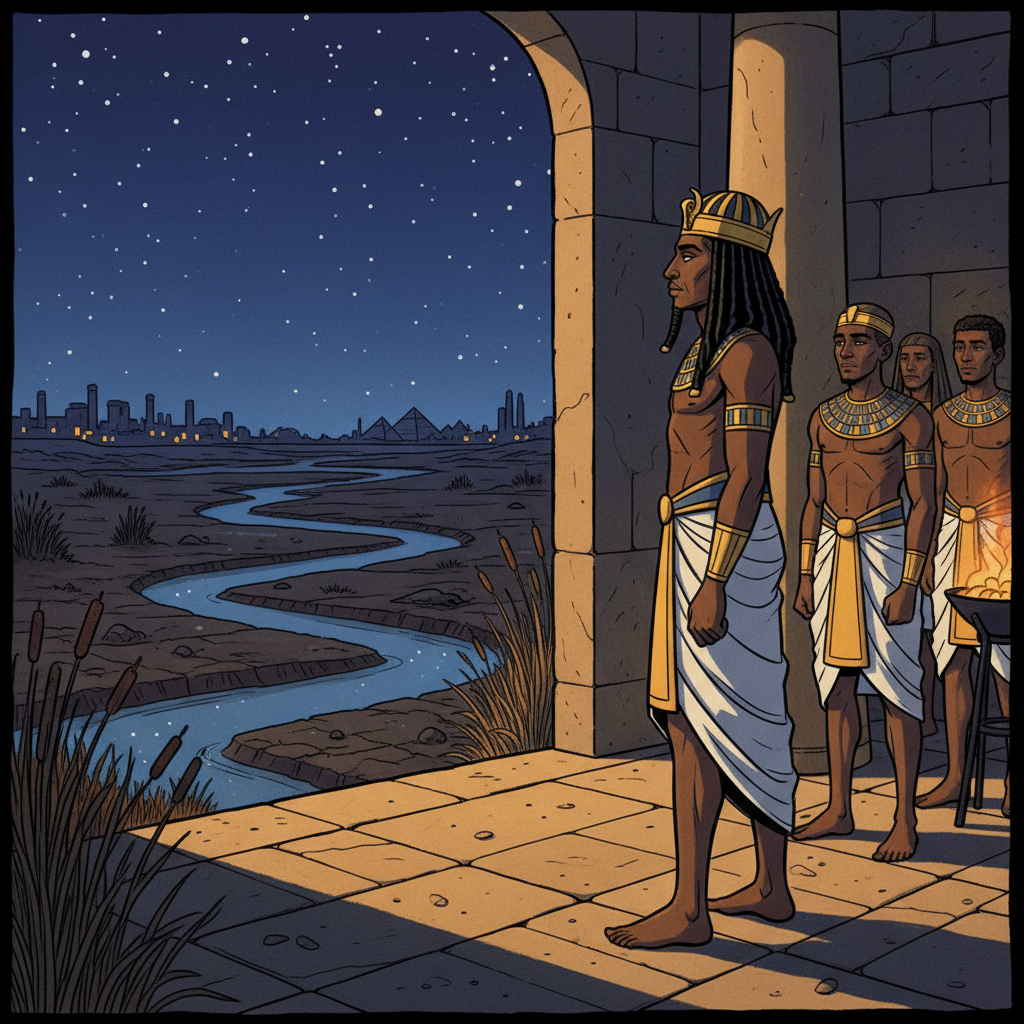
Amenhotep raised his hand and both men fell silent. The Pharaoh stood and walked to the tall window that overlooked the Nile. The great river moved slowly in the drought, its banks pulled back to reveal dark mudflats where reeds stood dry and brittle. Somewhere below, he could hear the sounds of the city — merchants calling their wares, children laughing, the rhythmic thud of a carpenter's mallet. Normal life, continuing in ignorance of the catastrophe being debated above. "Both of you are right," Amenhotep said, and the words tasted like ash. "Kahotep is right that a pharaoh's first duty is to his people. Senenmut is right that a pharaoh's word is the foundation on which peace is built. If I keep my promise, my people suffer. If I break my promise, the peace shatters and my people suffer more later. Both paths lead to suffering. The only question is whose suffering comes first."
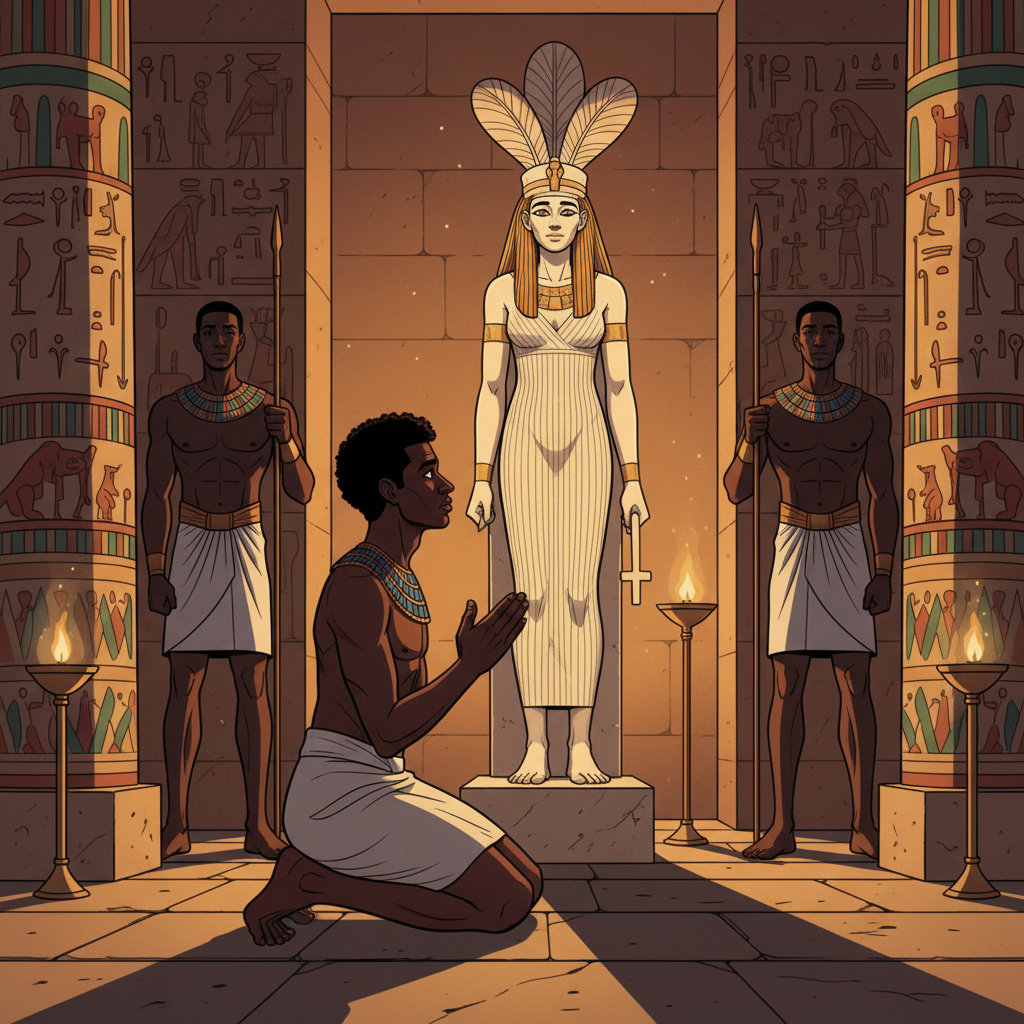
That night, Amenhotep could not sleep. He walked the palace corridors alone, his bare feet cold on the stone floors, the guards standing aside in respectful silence as he passed. He stopped at the temple of Maat within the palace complex — a small chamber with a single alabaster statue of the goddess, her feather-crown gleaming in the lamplight. He knelt before the statue and spoke to it as if the goddess could hear him. "I made a promise," he said. "I gave my word before you and before Amun and before the people of two kingdoms. That word brought peace. It ended thirty years of bleeding. Children are alive today because of that word. And now the earth itself has turned against me, and I cannot keep the promise without harming the people I swore to protect. What does Maat demand of me?" The statue gazed back with serene, unreadable eyes. Maat did not answer in words. Maat never did.

He thought about what it meant to be a pharaoh. Not the golden crown or the great palace or the armies that moved at his command — but the essence of the office. A pharaoh was the living bridge between the gods and the people. His word was not merely a personal promise — it was the word of Kemet itself, backed by the authority of Maat and the power of the gods. When a pharaoh spoke, the cosmic order spoke through him. And when a pharaoh lied, the cosmic order cracked. This was why Senenmut's argument cut so deep. Breaking the treaty was not just a diplomatic maneuver — it was an act of Isfet, a fracture in the sacred bond between word and truth. If a pharaoh's promise could be broken when circumstances changed, then what was a pharaoh's promise worth? How could any kingdom, any people, any individual trust the word of Kemet again? The treaty with Kush had been built on trust, and trust, once broken, did not heal like a bone. It shattered like pottery, and no amount of glue could make it whole.
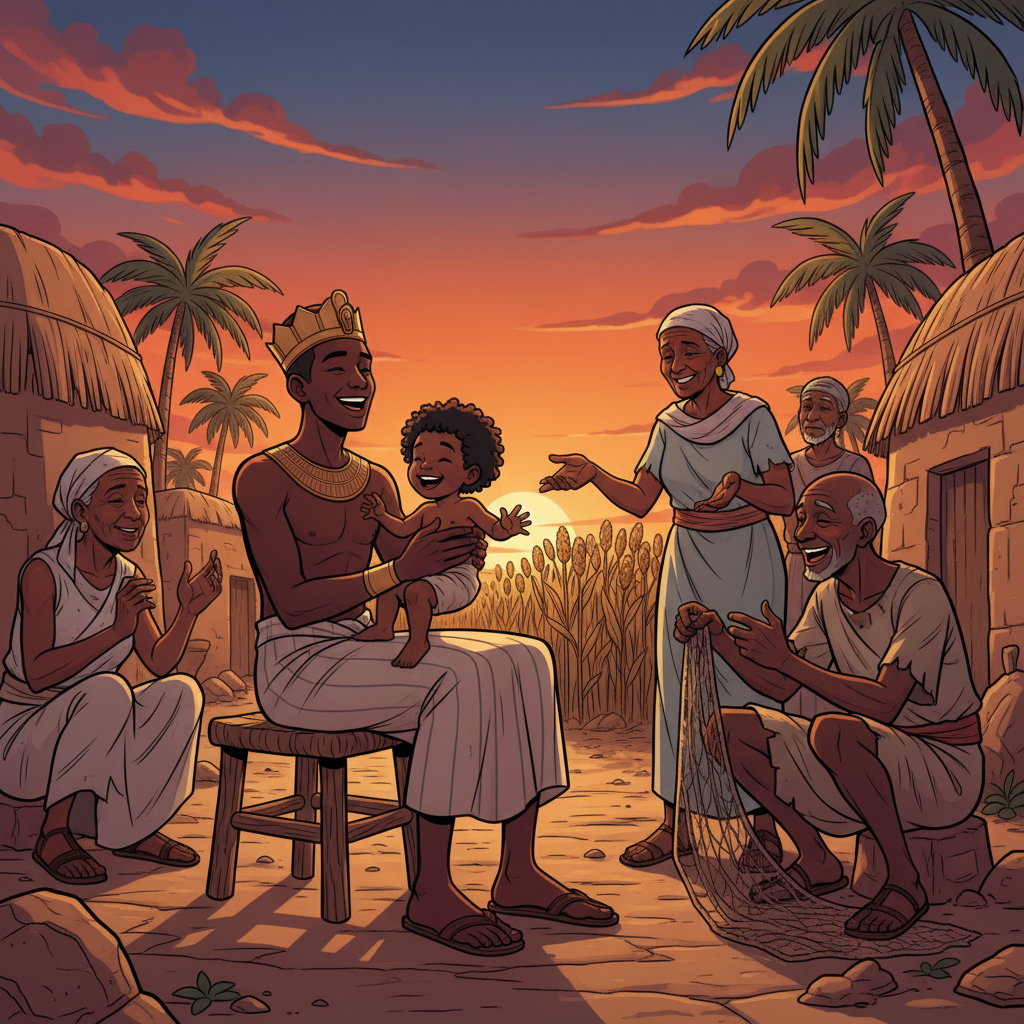
But then he thought about the faces. Not the abstract concept of "the southern provinces" but the specific, irreplaceable faces of the people who lived there. He had visited those villages during his coronation tour — had sat with the elders, eaten their bread, held their children on his knee. He remembered a woman named Nefertari who had shown him her sorghum field with such pride, explaining how her family had worked the same plot for eight generations. He remembered an old fisherman named Kha who had taught him to cast a net in the shallow waters near the first cataract, laughing at the Pharaoh's clumsy throws. These were not numbers on Kahotep's ledger. These were living people with names and stories and children who cried when they were hungry. And Amenhotep had sworn before the gods to protect them. Not Kush. Not Alara. Not the abstract principle of diplomatic trust. Them. His people. The ones who paid taxes in his name and prayed in his temples and believed that the Pharaoh would never let them starve.
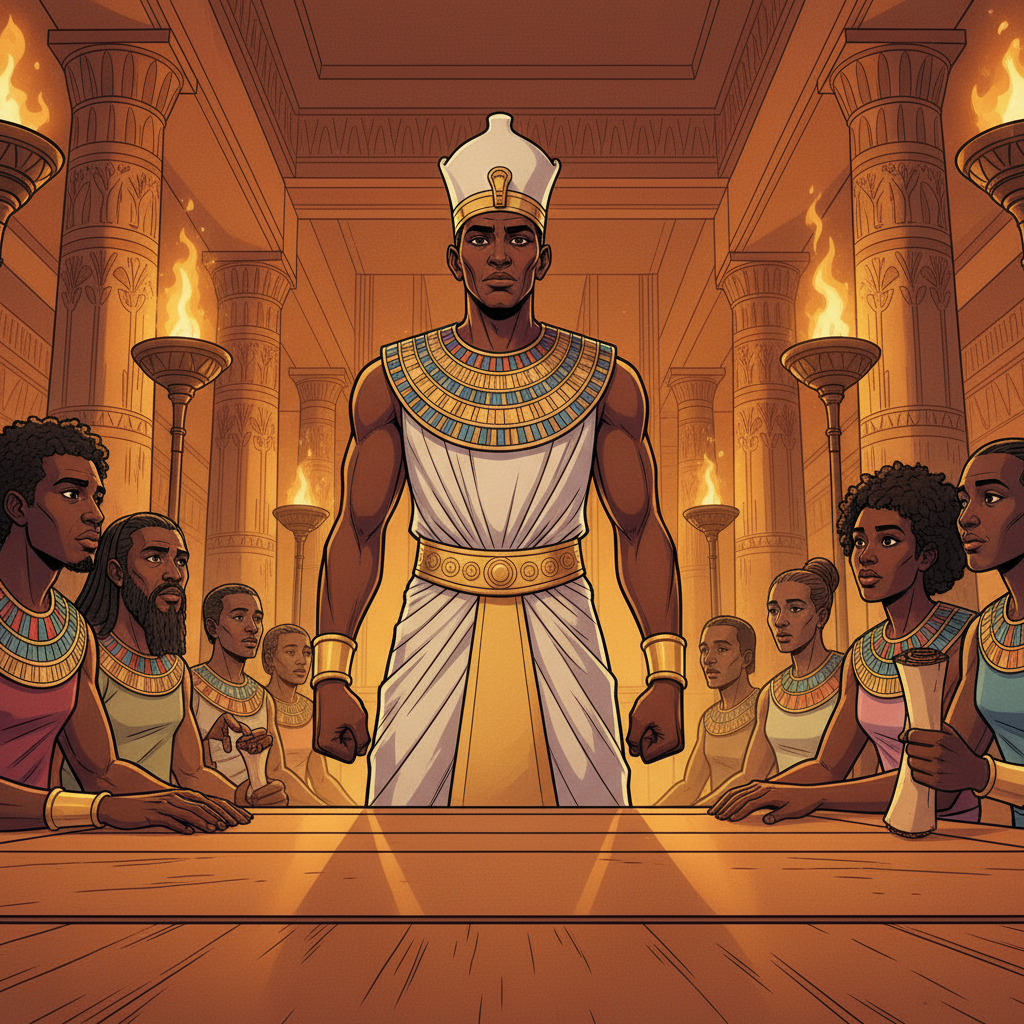
The next morning, Amenhotep summoned his council again. He had not slept, and the shadows under his dark eyes were visible even in the lamplight. But his voice was steady. "I want to hear from the people," he said. "Not from this table. From the provinces." He dispatched runners to the southern governors with a single question: what did the people want their Pharaoh to do? The responses came back within a week, and they surprised everyone. The governor of Abdju reported that when the situation was explained to the village councils, the response was divided but passionate. Many families said: keep the treaty. "We survived lean years before," one village elder had written. "We know how to stretch grain. But we do not know how to survive another war. Our sons died in the last one. Send the grain to Kush and let us tighten our belts. Peace is worth more than a full stomach." But others disagreed, their voices just as forceful: "The Pharaoh's first duty is to us. We are not pawns to be sacrificed for a treaty we did not sign."
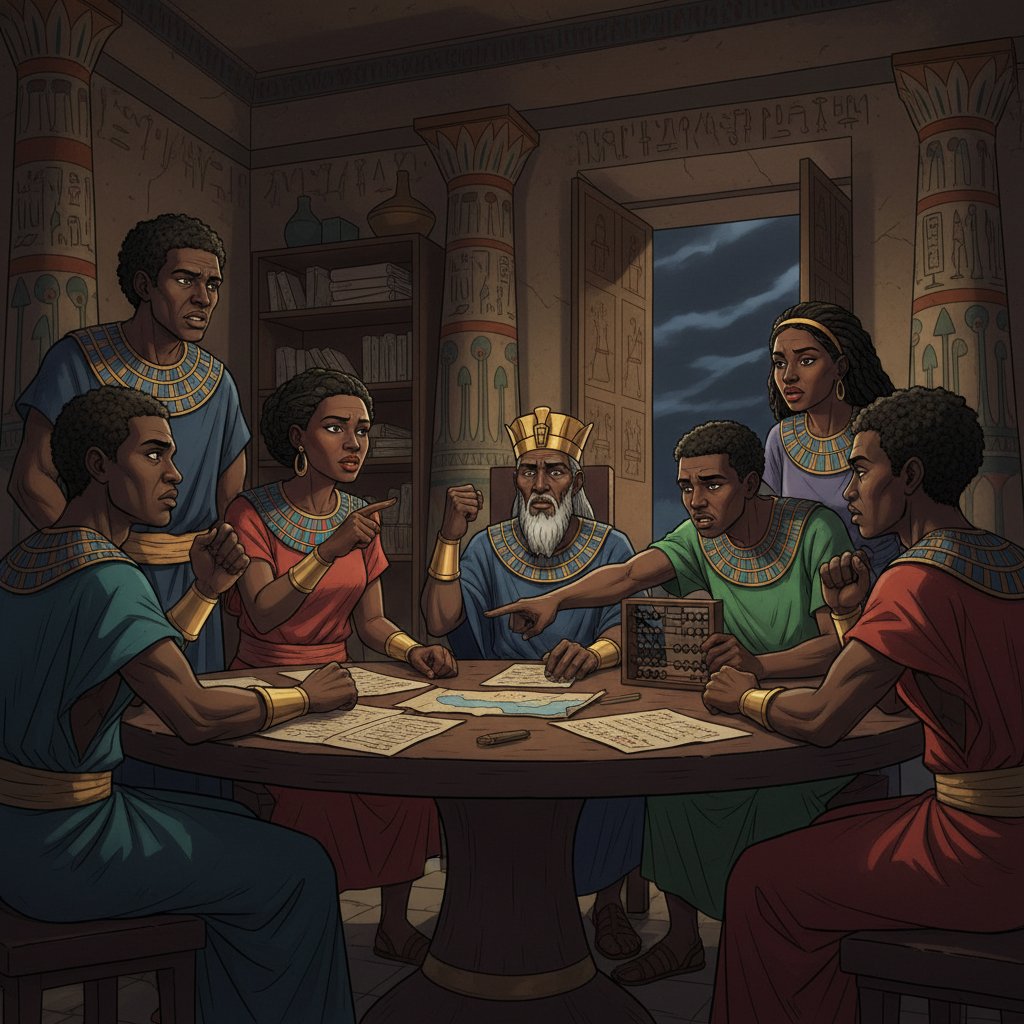
The council debated for three more days. New proposals emerged — partial shipments, delayed deliveries, grain loans from the northern provinces where the harvest had been less affected. Each solution created new problems. The northern provinces had their own needs. Partial shipments might offend Alara more than a full suspension. Delayed deliveries would arrive after Kush's lean period had already begun. Senenmut proposed something radical: send the full ten thousand measures as promised, but send Amenhotep himself to Kush to explain the situation and request that Alara return five thousand measures as a gesture of solidarity. "Make it Alara's choice," Senenmut argued. "Honor the promise completely. Then ask for help. A king who receives a full shipment and is asked for mercy is in a very different position than a king who receives a broken promise and is asked for understanding."
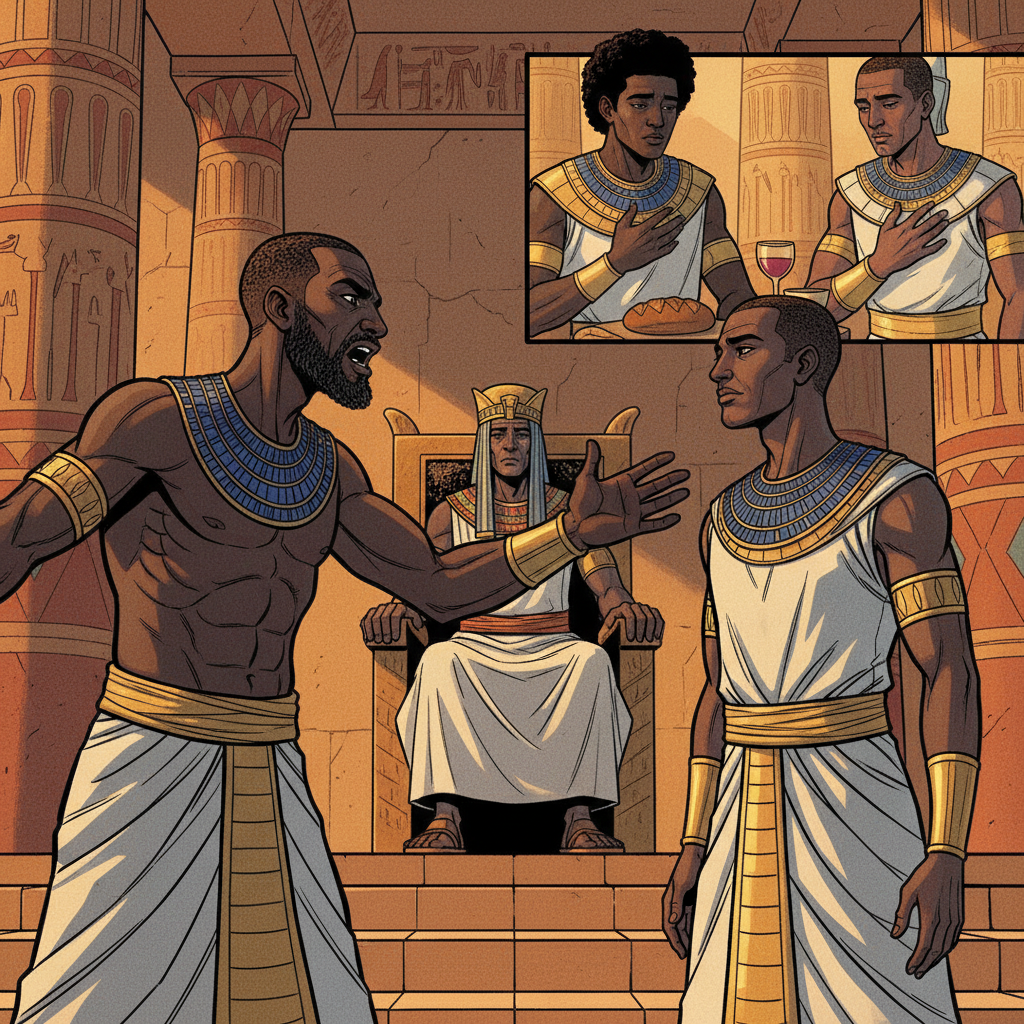
Kahotep nearly erupted. "You want to send ALL the grain — our people's grain — to Kush and then BEG for some of it back? What if Alara says no? What if he keeps it all? Then we have honored our promise, demonstrated our trustworthiness, and starved our own children. History will not call that wisdom, Senenmut. History will call it madness." "History will call it Maat," Senenmut replied quietly. "And Alara will not say no. I know this man. I have broken bread with him, shared wine with him, watched him weep when he spoke of the children lost in the border raids. He made this treaty because he loves his people exactly as Amenhotep loves his. If we show him that our commitment is absolute — that we honored our word even when it cost us dearly — he will respond in kind. That is what trust builds, Kahotep. Not contracts. Not seals. Trust."
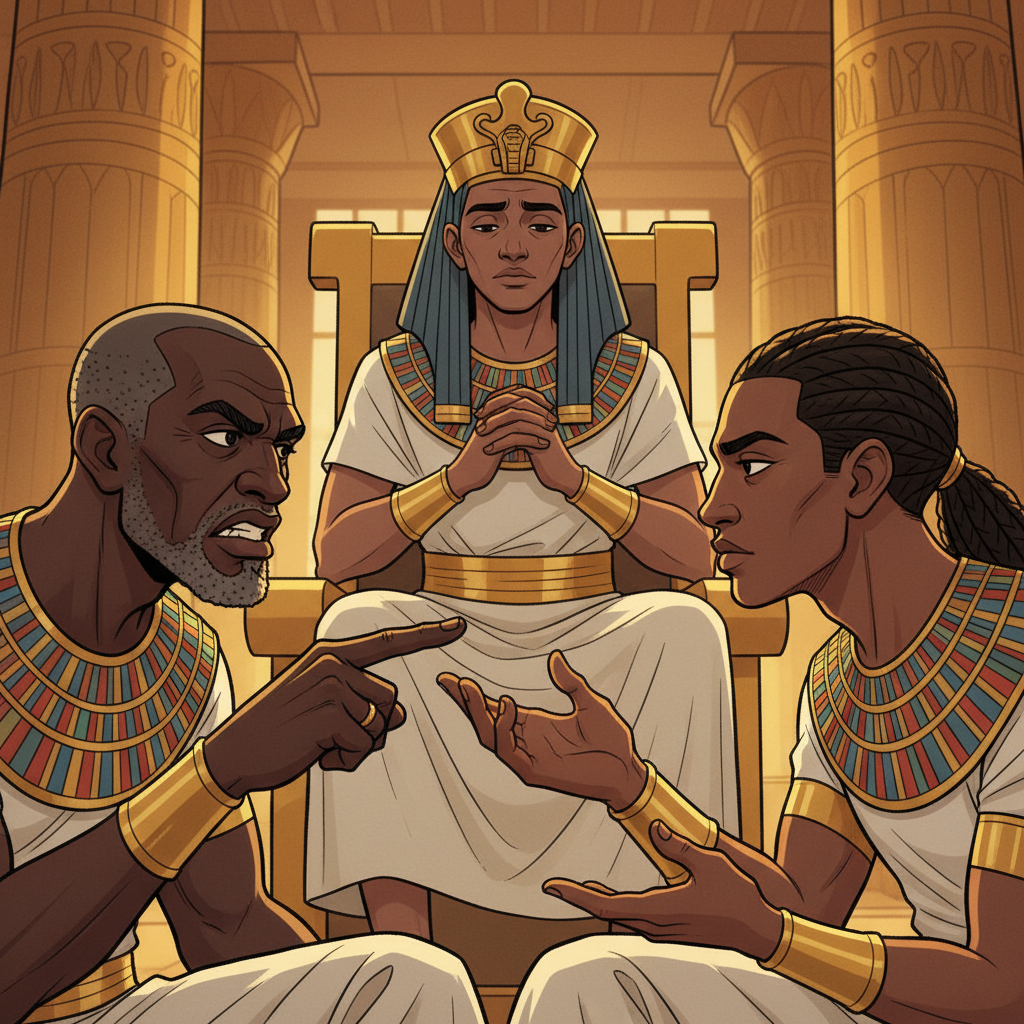
"And if you are wrong?" Kahotep asked. The question hung in the room like a blade. Senenmut met his eyes. "If I am wrong, then I will have been wrong about the character of a man I have studied for twenty years. I will carry that failure in my ka for the rest of my life. But I would rather be wrong about trust than right about suspicion. Because a world built on suspicion is not a world worth governing." Amenhotep listened to both men and felt the familiar, terrible pressure of a choice that had no clean resolution. Kahotep spoke from duty — the hard, immediate, undeniable duty of a pharaoh to feed his people. Senenmut spoke from vision — the larger, riskier, potentially transformative vision of what trust between nations could build. Both were Maat. Both were necessary. And only one could be chosen.
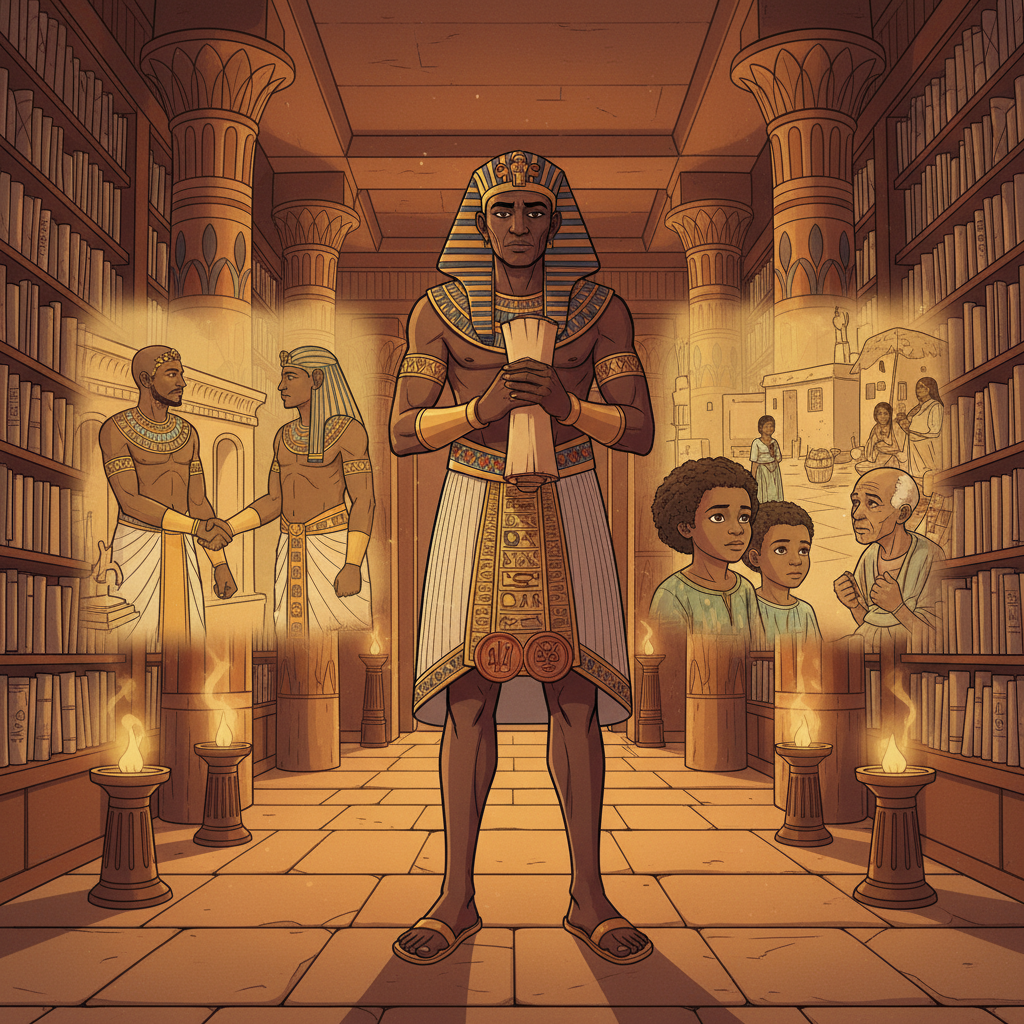
The Pharaoh stood. The council fell silent. Amenhotep looked at the treaty scroll with its two royal seals — his own cartouche and Alara's, pressed side by side into the warm wax, a symbol of two peoples choosing trust over fear. He remembered the moment Alara had clasped his forearm at the gates of Napata, the warmth in the Kushite king's dark eyes, the weight of thirty years of war dissolving in a single gesture of friendship. He also remembered Nefertari and her sorghum field. Old Kha and his fishing net. The children in the village squares who looked up at the Pharaoh with eyes full of absolute faith — the unshakeable belief that this man, this throne, this crown would never let them come to harm. Both memories pulled at him with equal force, and he stood at the center of a storm that was perfectly still.
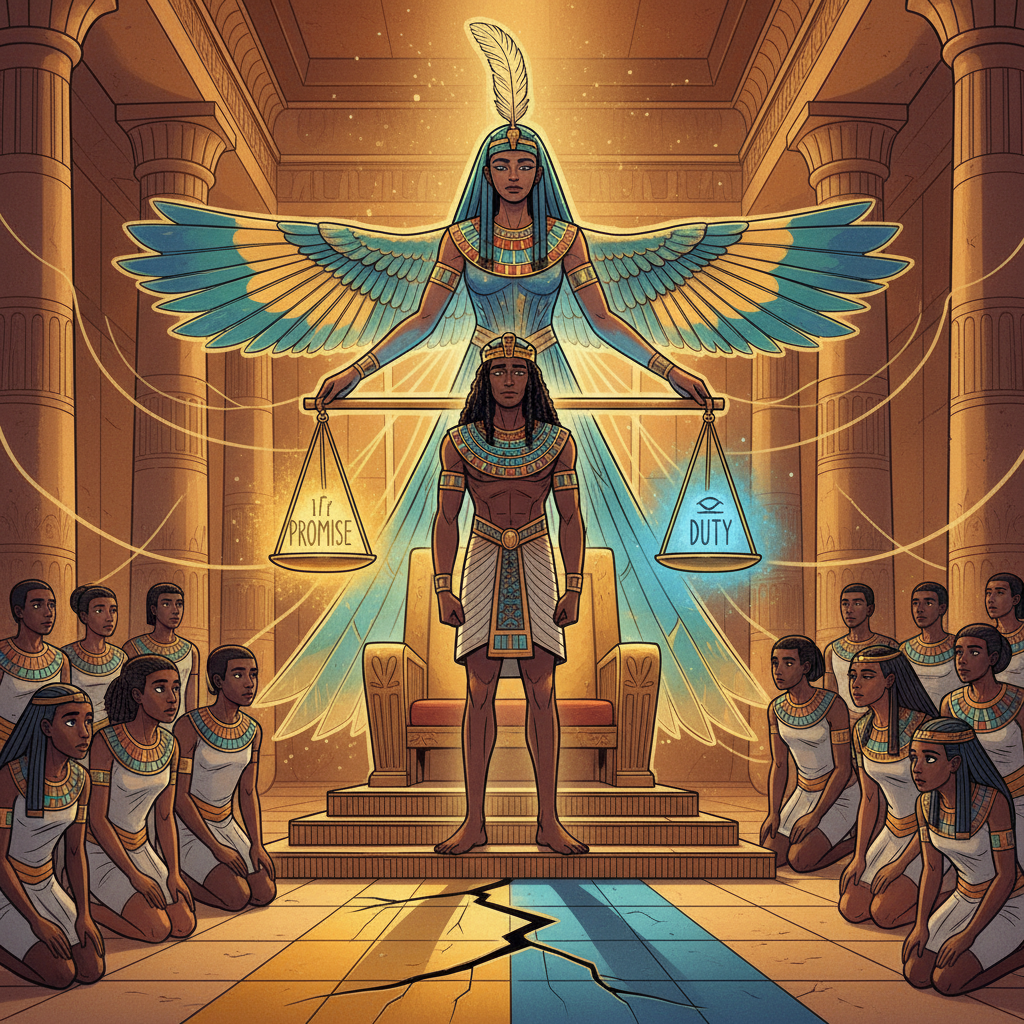
Amenhotep had been Pharaoh for twelve years. He had faced border crises, diplomatic standoffs, a minor rebellion in the Delta, and the death of his eldest son. Through all of it, he had found a path that served Maat without destroying something essential. But this was different. This was a choice between two sacred obligations — his promise to Alara and his duty to his people — and fulfilling one meant betraying the other. There was no clever compromise that made both sides whole. There was only the scale, the two weights, and the terrible stillness of a beam that would not tip. He thought about what Maat truly meant. Not the statue in the temple with her feather crown. Not the ritual declarations spoken over the dead. The living Maat — the principle that held the universe together, the force that demanded truth and justice and order in every human action. Did Maat demand that a promise be kept at any cost? Or did Maat demand that a ruler protect his people above all? And what happened when Maat itself was divided against itself?
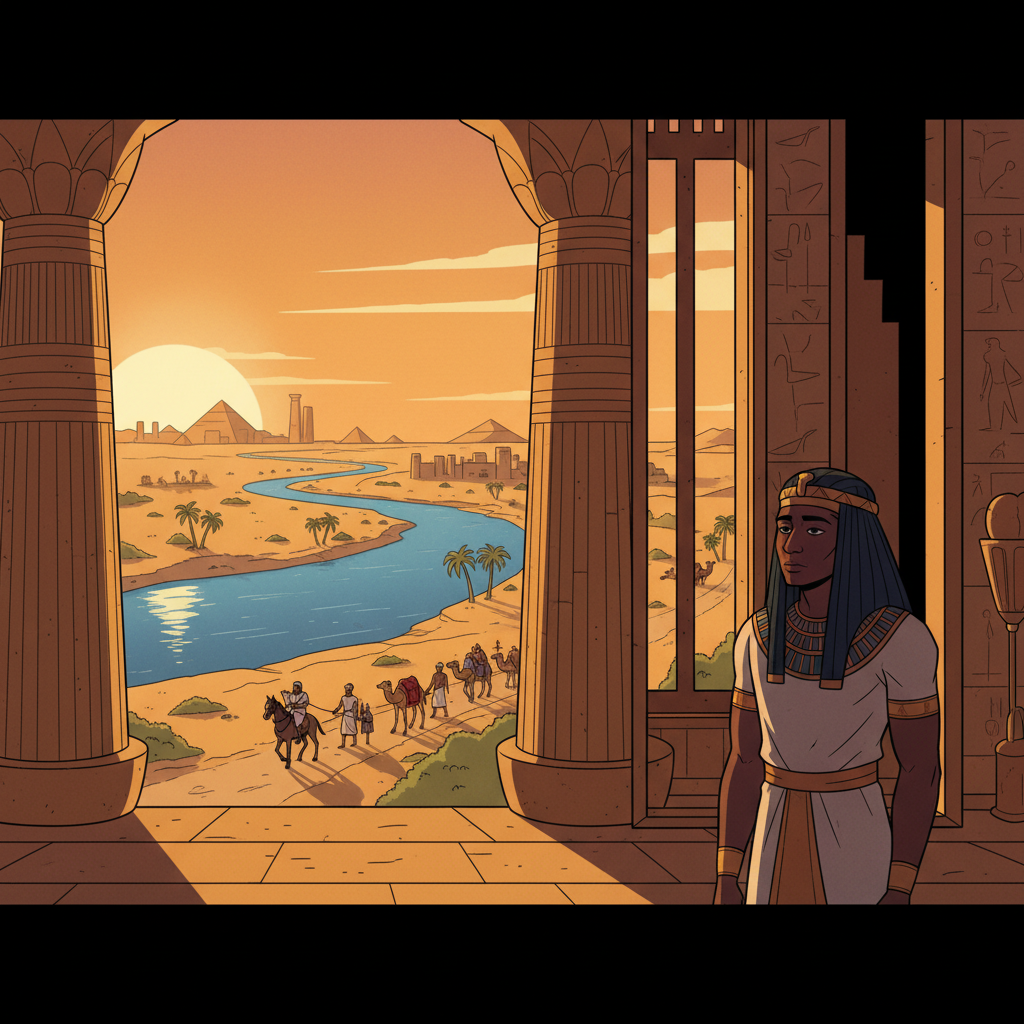
That evening, alone in the throne room with the last light of the sun painting the columns gold, Amenhotep made his decision. He sealed it in a scroll, stamped it with his cartouche, and gave it to his personal messenger with instructions to deliver copies to both the council and the governor of the southern provinces. He did not announce the decision publicly. He did not explain his reasoning. He simply acted, because that was what pharaohs did — they carried the weight of impossible choices so that their people did not have to. And as the messenger departed into the darkening streets of Waset, Amenhotep stood at the window and watched the Nile moving slowly southward, carrying the water of Kemet toward Kush, connecting two peoples who shared one river, one drought, and one impossible test of what trust and duty and Maat truly demanded of those who dared to govern.
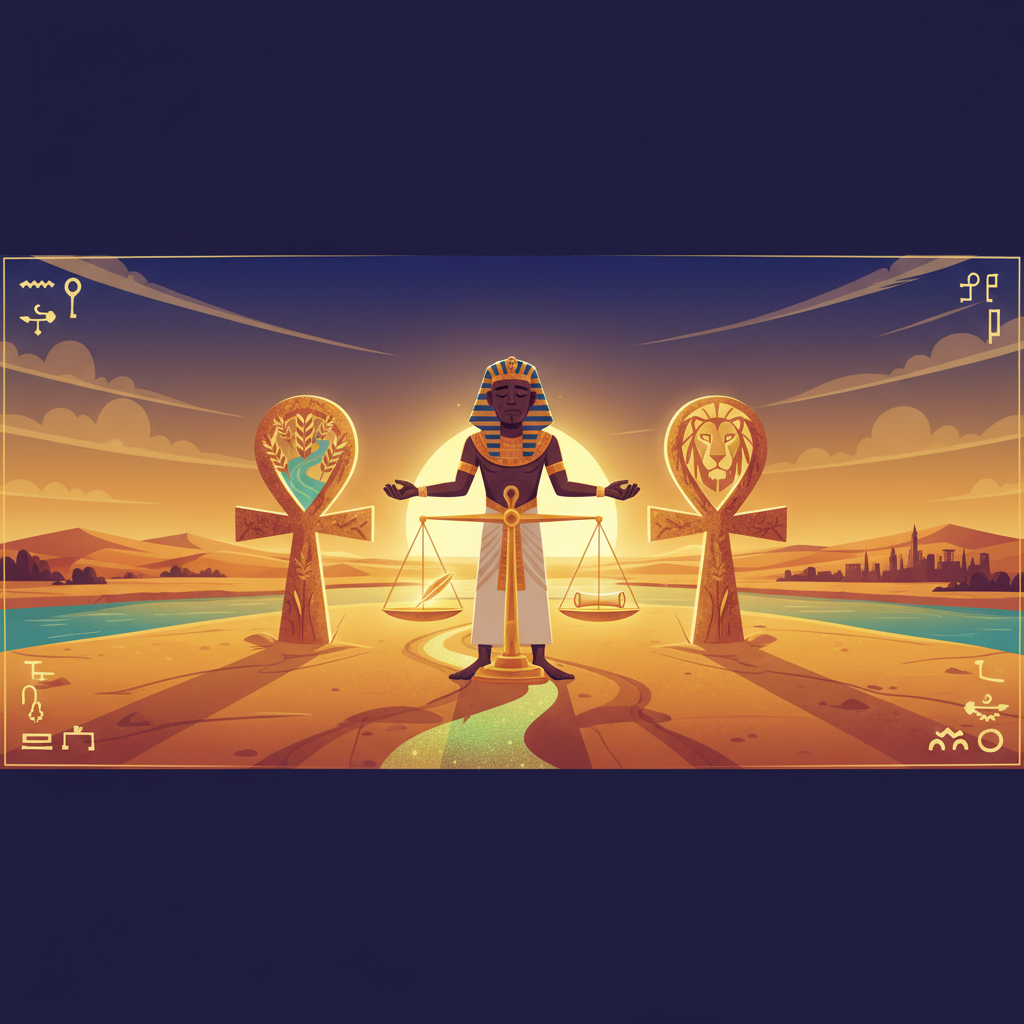
History does not record what Amenhotep decided. Perhaps he sent the grain and trusted Alara to return what was needed. Perhaps he kept the grain and trusted Alara to understand. Perhaps he found some middle path that satisfied no one completely but kept both peoples alive and both principles intact. What history records is this: that a pharaoh of Kemet stood at the intersection of two sacred obligations and did not pretend the choice was easy. He did not hide behind advisors or blame the drought or claim that one duty was obviously greater than the other. He stood at the center of the storm, weighed both truths on the Scale of Maat, and chose. And whatever he chose, he carried the cost of it in his ka for the rest of his reign — because that is what it means to lead. Not to have the right answer, but to carry the weight of the answer you chose, knowing that the other answer was also right, and someone, somewhere, is paying the price for the path you did not take.