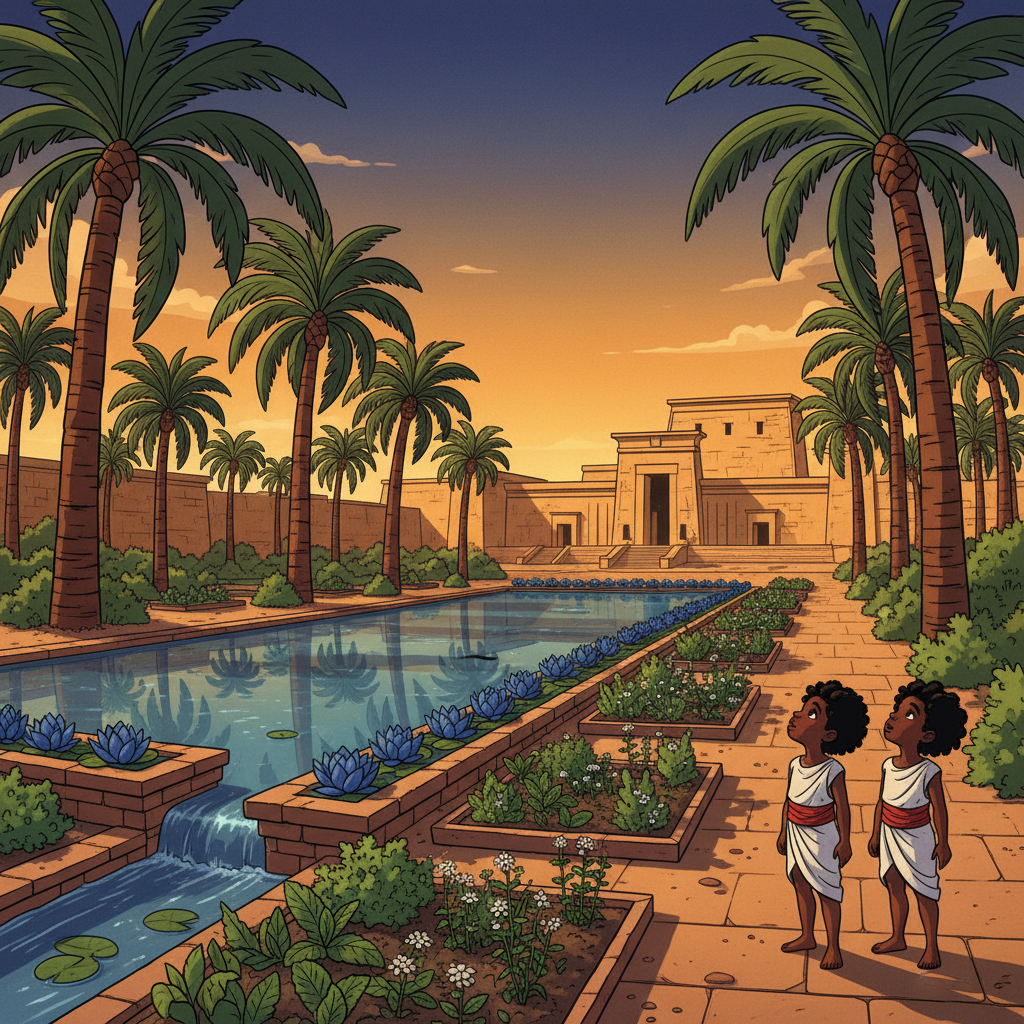
The temple garden of Ipet-Isut was the most beautiful place in the village, and everyone knew it. Rows of blue lotus flowers grew along the edges of a clear pool fed by a narrow channel from the Nile. Date palms stood tall against the sky, their fronds casting cool shadows across beds of mint, thyme, and coriander that perfumed the air so sweetly you wanted to stand still and breathe forever. But the garden had not always been beautiful. Six months ago, it had been a patch of dry, cracked earth behind the temple wall — forgotten and overgrown with thorns. Then two girls came forward with a plan to bring it back to life.
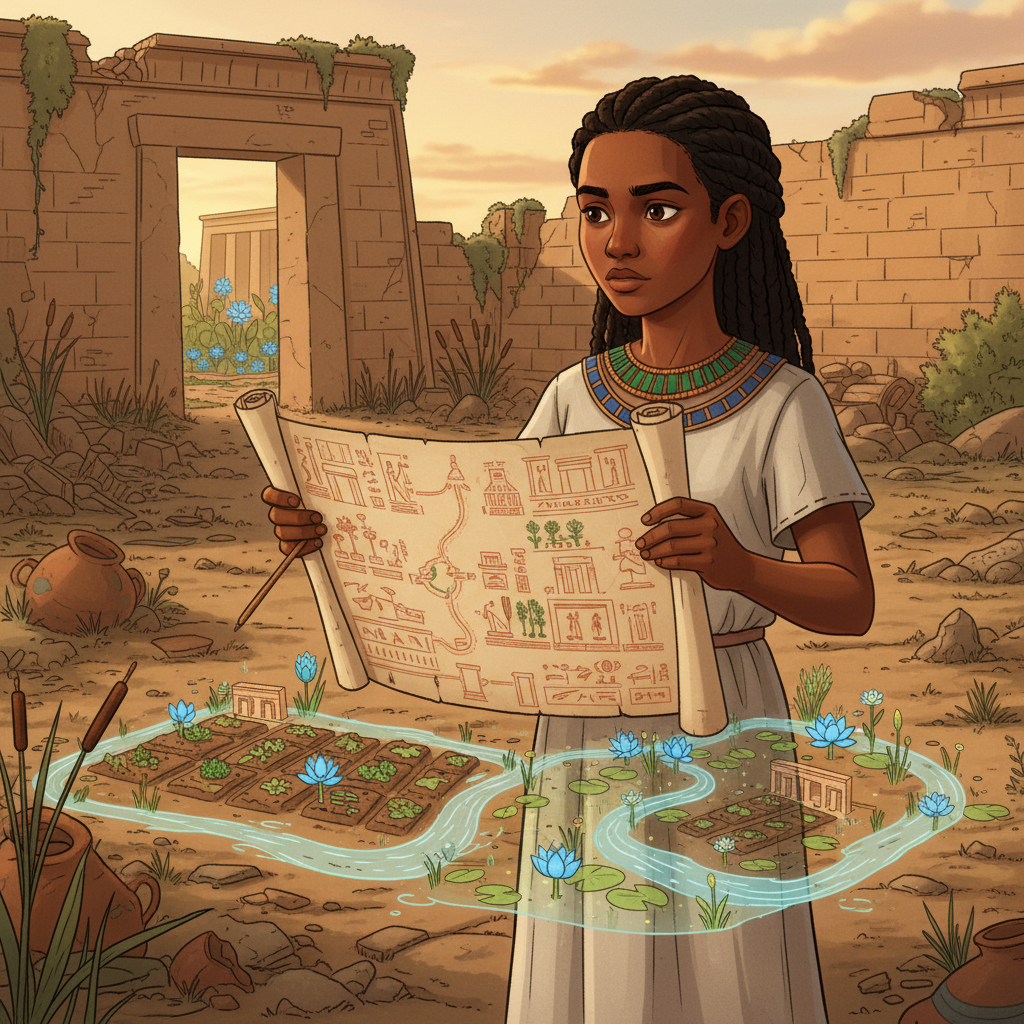
Afia was eleven years old, with skin the color of dark honey and strong hands calloused from digging. She was the one who first saw the neglected space behind the temple and imagined what it could become. She had drawn a plan on papyrus — where each plant would go, how the water channel would flow, which herbs the healers needed most. Afia was a planner, a thinker, a girl who saw possibility in every patch of bare earth. Nkiru was also eleven, with deep ebony skin and a laugh that could be heard from three houses away. Where Afia planned, Nkiru built. She hauled stones, dug trenches with a wooden hoe, and carried heavy baskets of rich river mud.
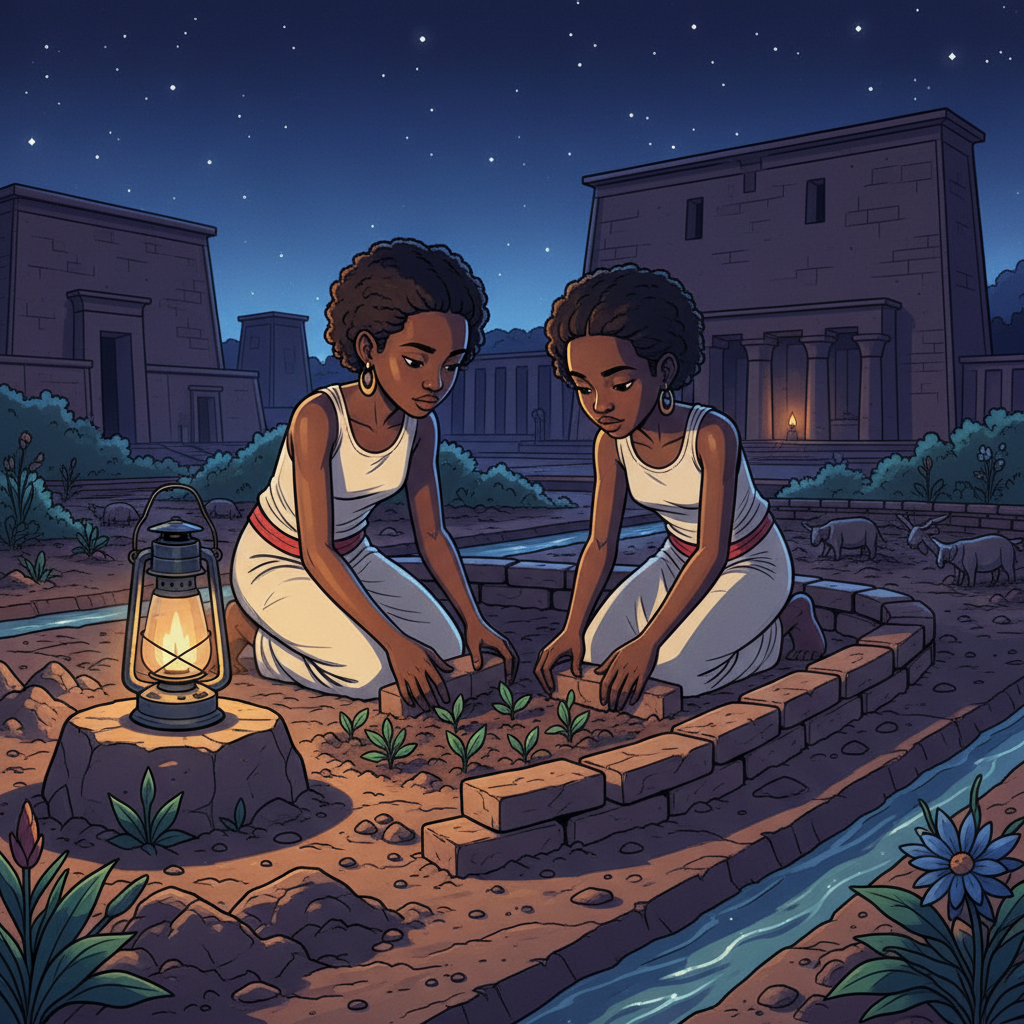
Together they worked every afternoon for six months. While other children played along the riverbank, Afia and Nkiru were on their knees in the dirt. They planted seeds and watered them daily. They built low walls of mud brick to protect young plants from wandering goats. They woke before dawn on the hottest days to water before the sun could scorch the soil. Slowly, the garden came alive. Green shoots pushed through the dark earth. Flowers opened their faces to the sun. The lotus bulbs sent up smooth stems that broke the surface and bloomed in shades of blue and white. Healers came to harvest herbs. Priests said prayers beside the pool. The garden became the pride of the whole village.
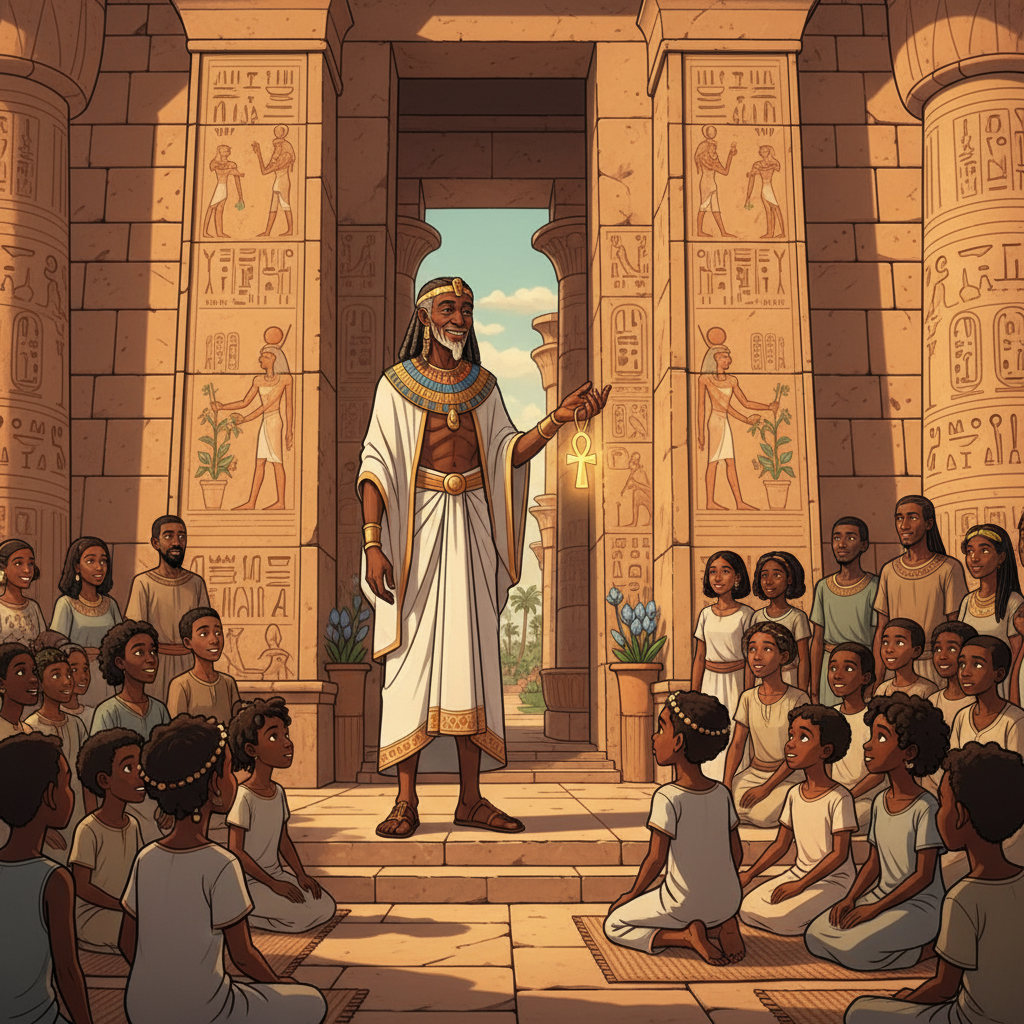
Now the day of the annual temple festival had arrived. Each year, the temple school awarded a single golden ankh pendant to the student who had contributed most to the life of the community. It was the highest honor a young person could receive — a symbol of Maat in action, worn around the neck for all to see. Seba Userhet, a tall man with deep brown skin creased by years of sun and study, stood before the gathered students. "This year, the golden ankh is awarded for the restoration of the temple garden — a gift to our community that will nourish and beautify this sacred space for years to come."
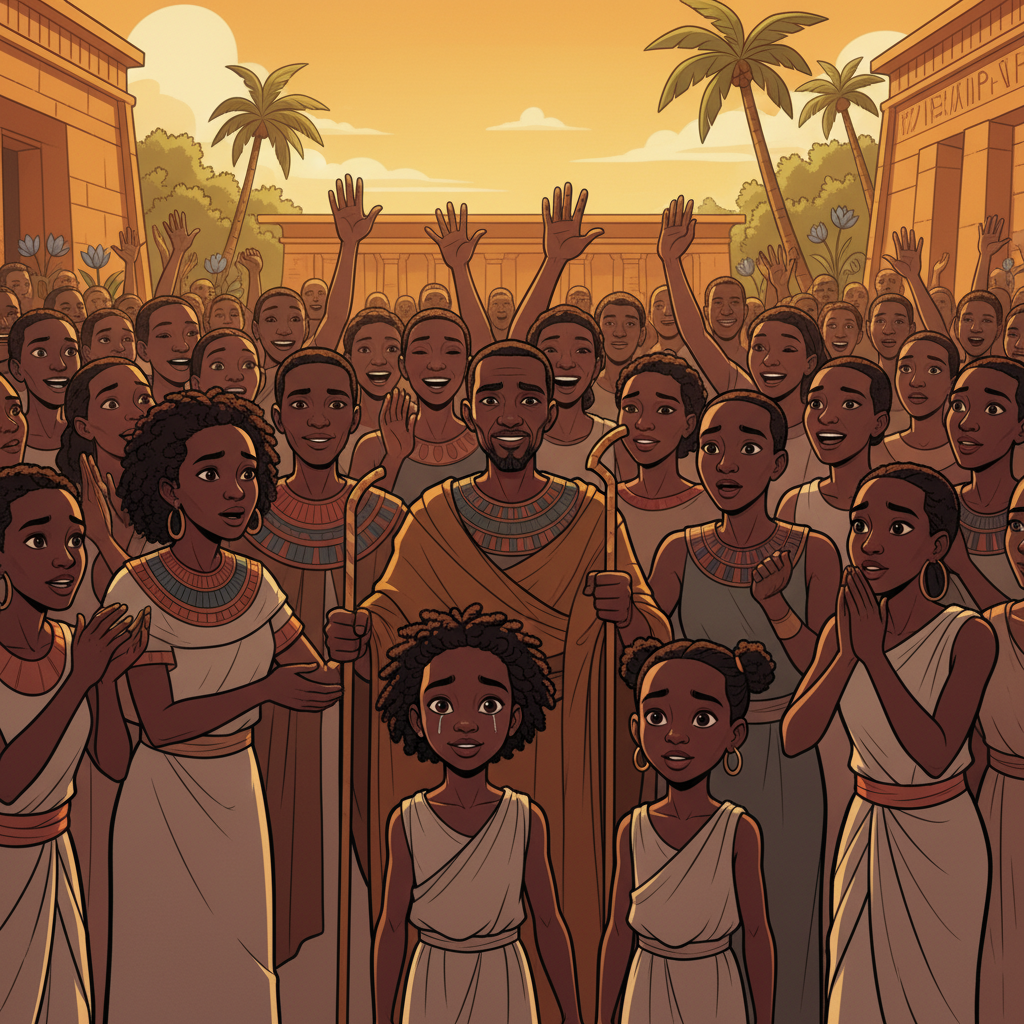
A murmur ran through the crowd. Everyone knew who created the garden. But then Userhet paused, and something shifted in his expression. "The golden ankh has always been given to one student," he said slowly. "There is only one pendant. But this year, two students contributed equally. Afia designed the garden with brilliant planning. Nkiru built it with tireless strength. I have watched them for six months, and I cannot say one gave more than the other. They are balanced, like two sides of a scale." The courtyard fell silent. Afia and Nkiru stood side by side, eyes wide. They had never thought about a prize. The work itself had been their reward.
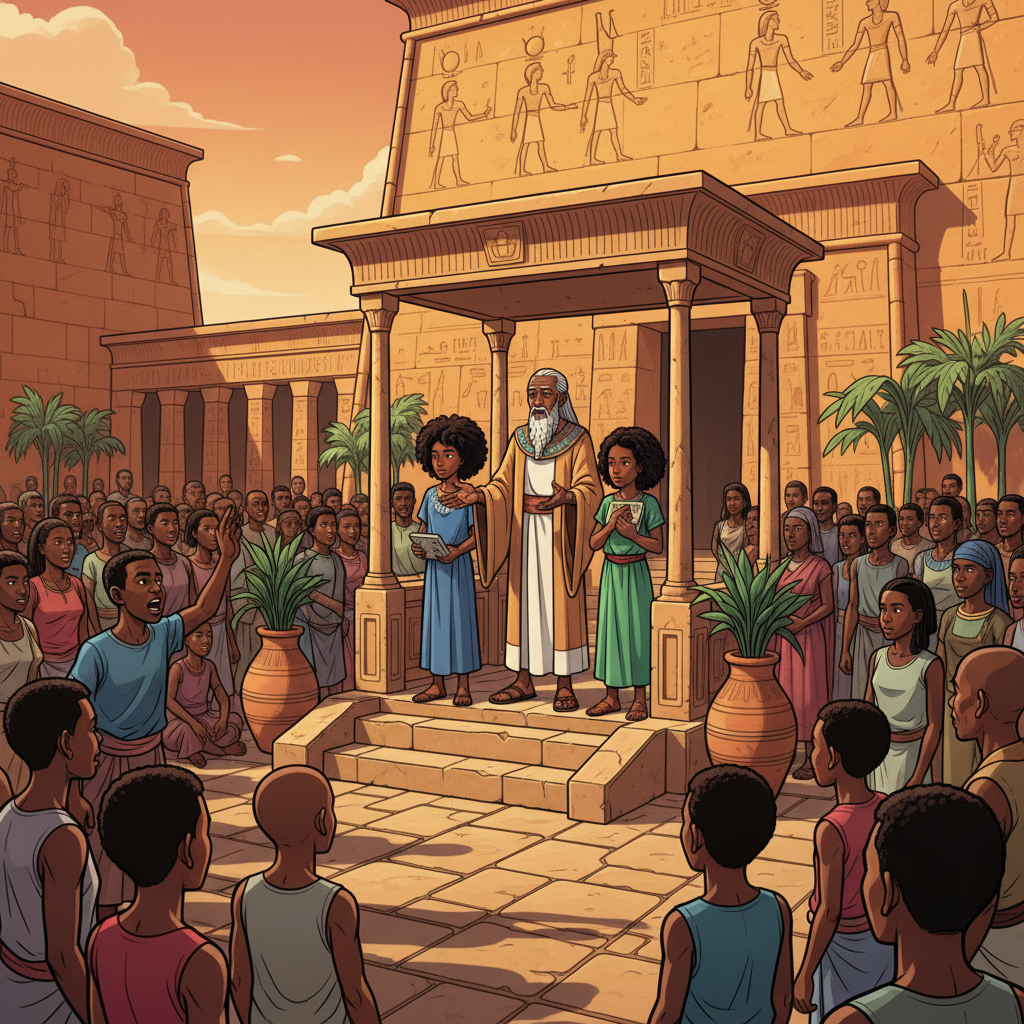
Userhet looked at the two girls. "I have spent many nights considering this," he said. "The rules say one pendant, one student. But Maat says fairness. And I am not certain what fairness looks like today. So I am asking you — all of you — to help me decide." The debate began immediately. Khofu, a boy with dark skin and a quick tongue, spoke first. "The rules are the rules. One pendant, one student. Flip a coin. That is fair because neither girl is chosen over the other." But Tanit, a quiet girl with ebony skin, shook her head. "Chance is not fairness. Luck should not decide what hard work created."
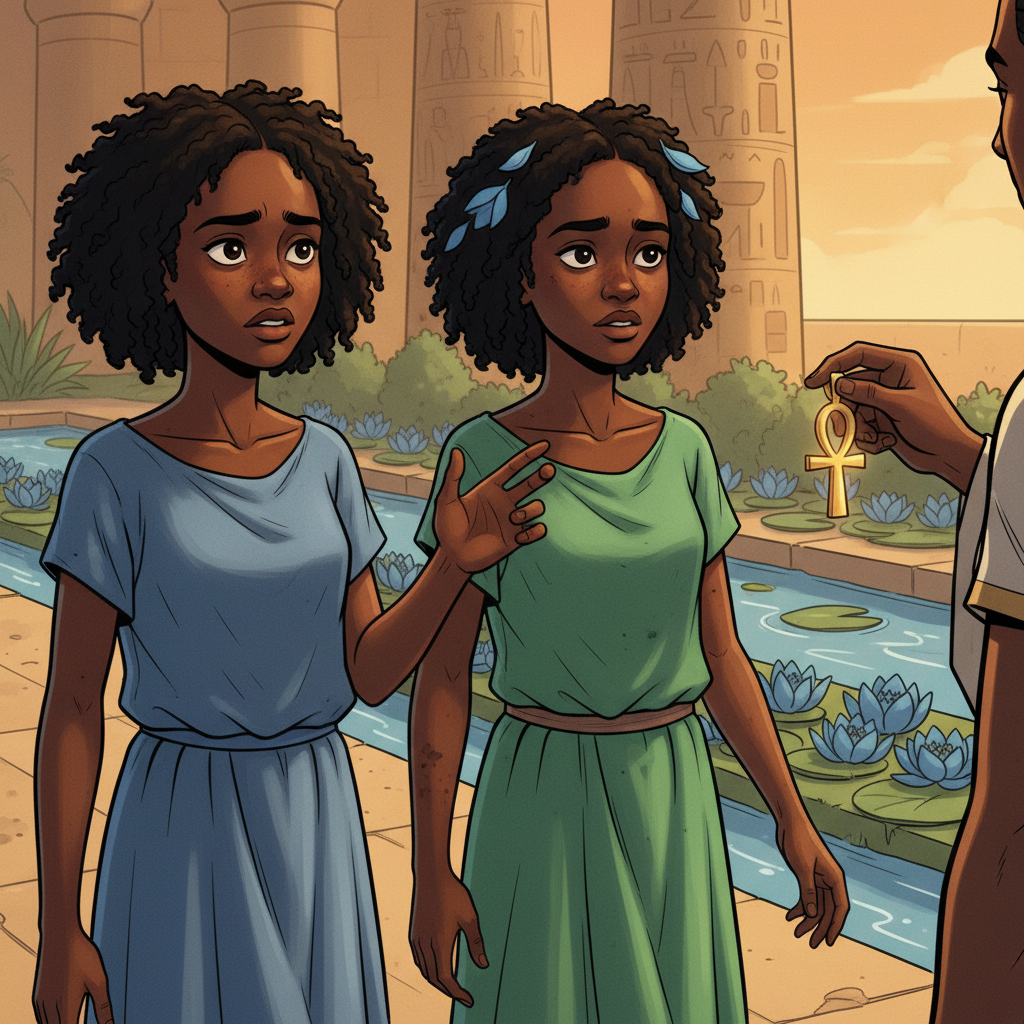
Afia listened to the debate with a knot tightening in her chest. She looked at Nkiru — her partner, her friend, the girl who had turned every plan into reality. The thought of receiving the ankh while Nkiru got nothing made her feel sick. But she also understood something uncomfortable: she wanted the prize. She had imagined wearing it. Was it wrong to want recognition for your effort? Nkiru felt the same conflict. She had carried every stone, dug every trench. She had earned the pendant. But the thought of taking it while Afia — who had the knowledge and vision — went without felt like a betrayal of their partnership.
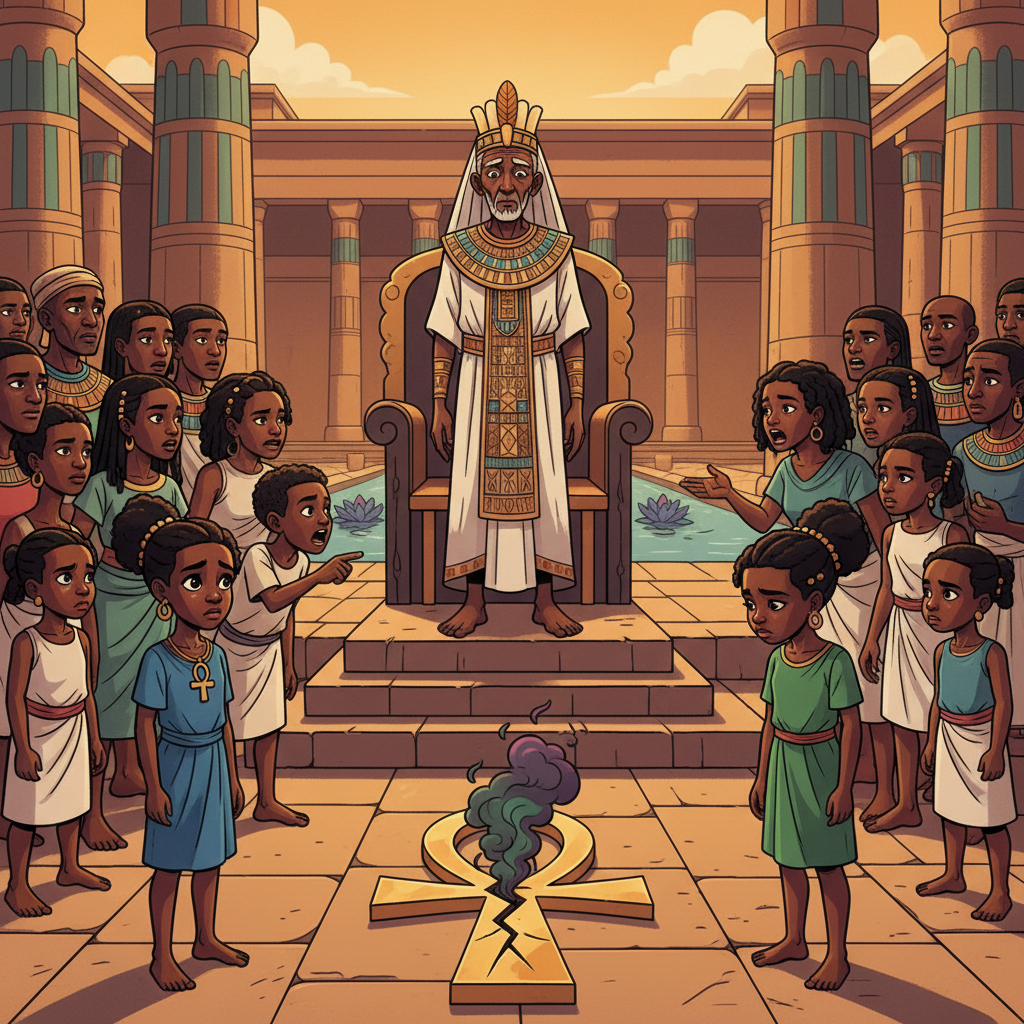
A boy named Sefu said, "Give it to Afia. She had the idea first." Nkiru flinched. Then a girl named Weret spoke up. "Give it to Nkiru. She did the hardest physical work. Ideas are easy — building is hard." Now Afia flinched. The crowd was splitting them apart, measuring their contributions against each other like grain on a merchant's scales. Userhet watched the pain creep into both girls' faces. A prize meant to honor them was driving a wedge between them. This was how Isfet could grow from something good — how a golden ankh could become a poison seed.
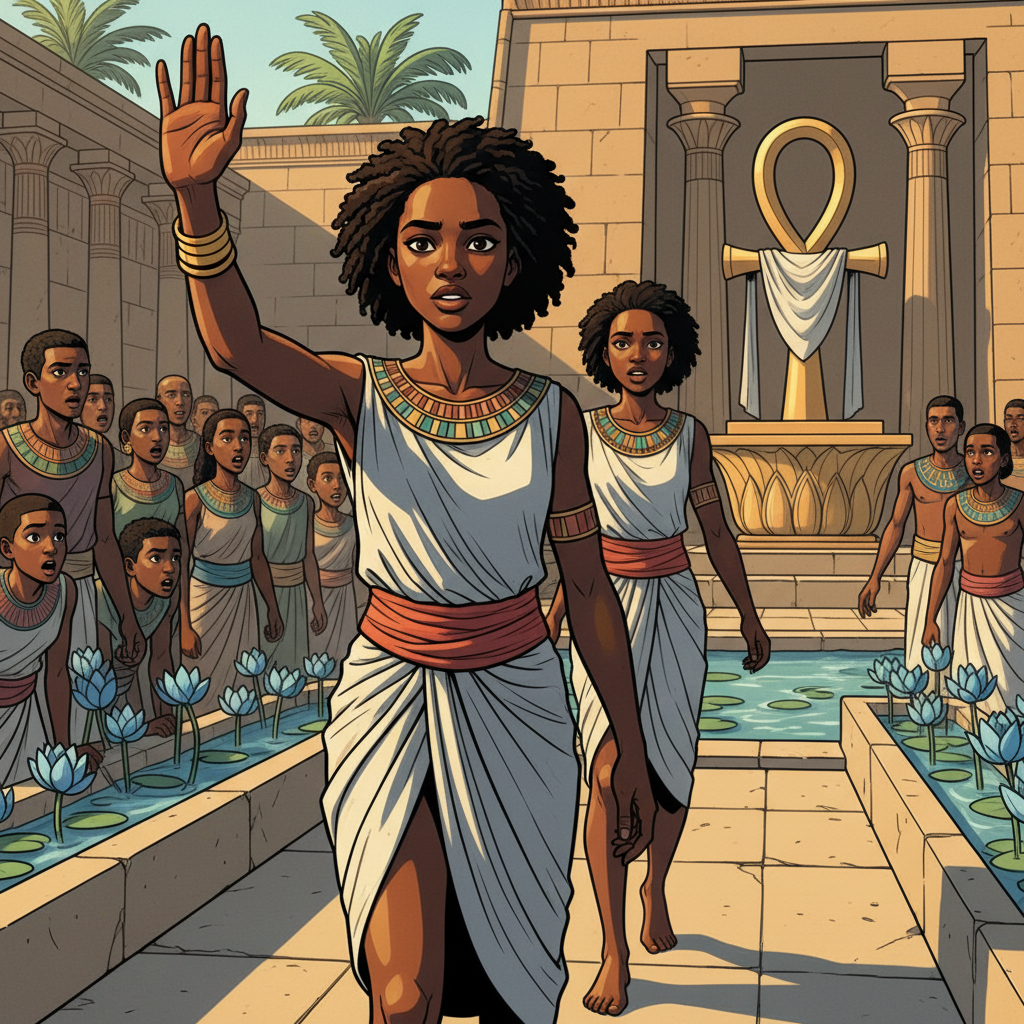
Then Nkiru did something no one expected. She stepped forward and raised her hand, and the courtyard fell quiet. Her deep ebony skin gleamed in the morning light. "I do not want the ankh if it means my friend gets nothing," she said. "Afia and I did this together. Her mind and my hands are not separate. They are one thing. You cannot give half a garden a prize." Afia stepped forward beside her. "Nkiru is right. We were never two people doing two jobs. We were one team doing one work. If the prize cannot be shared, then maybe the prize needs to change — not us."
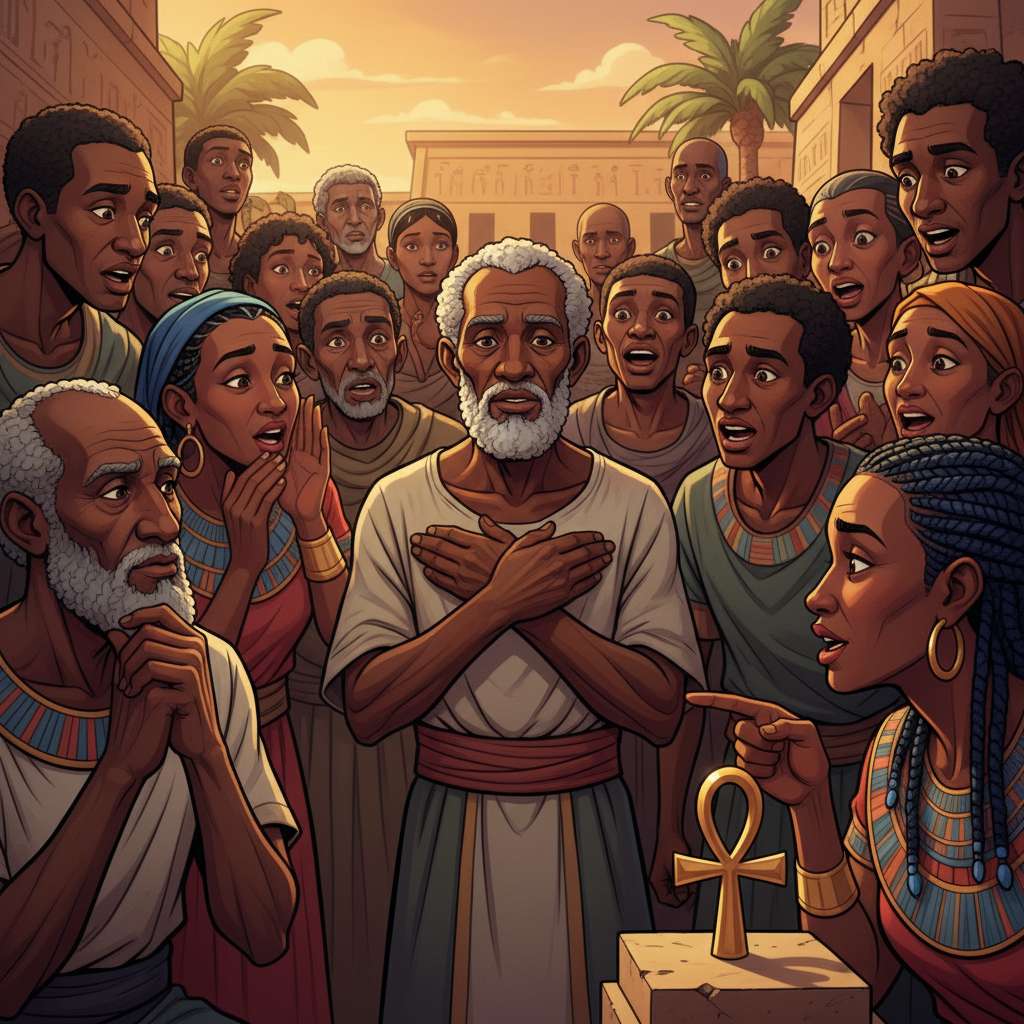
The courtyard buzzed with whispered conversation. Userhet stroked his chin. "The girls suggest the prize itself is the problem," he said. "What do we do when our rules and our reality do not match?" Old Huy, the master craftsman who had made the golden ankh, stepped forward. His dark weathered hands were folded across his chest. "I made one pendant," he said. "But I have gold left over. I could melt this one down and make two smaller ankhs from the same gold. Same honor. Same metal. Shared." The idea sparked fierce new debate.
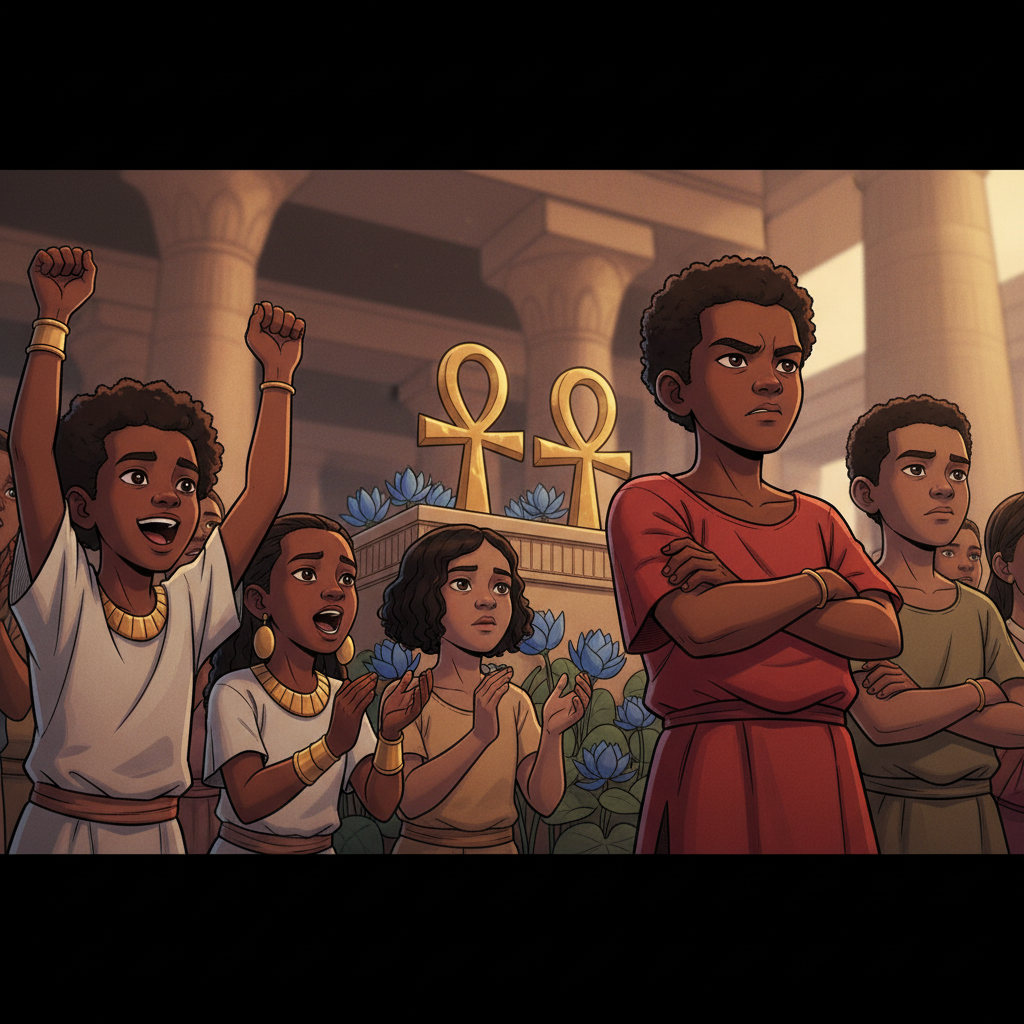
Some students loved it. "Two ankhs, two winners, same gold!" But Khofu crossed his arms. "If you change the prize every time someone complains, the prize loses its meaning. Next year you split it three ways. Four. Where does it end? One ankh means one extraordinary achievement. Making two makes each one worth half." Tanit spoke again. "Does the meaning of the ankh live in the gold or in the work it honors? If two people truly earned it equally, then two ankhs is not splitting the honor — it is doubling the truth." The students fell silent, turning her words over in their minds like smooth stones.
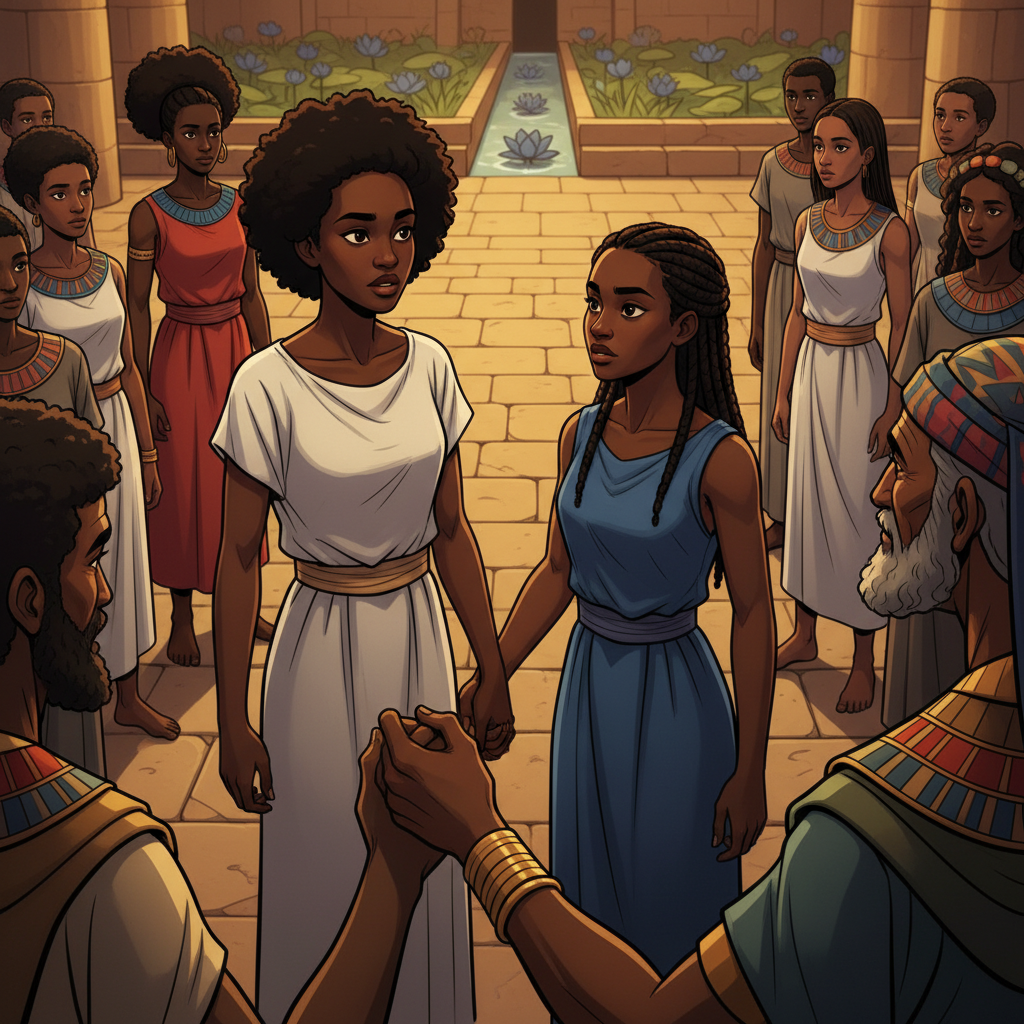
Nkiru turned to Afia and took her hand. Their dark fingers interlocked — the planner's hand and the builder's hand. "Whatever happens," Nkiru whispered, "this garden is ours. No pendant changes that." Afia squeezed back. "I know. But I want people to remember that working together matters as much as standing alone." She looked at Userhet. "Seba, we are not asking for more than we earned. We are asking for exactly what we earned — together." Her voice was steady, and several students nodded slowly, moved by her words.
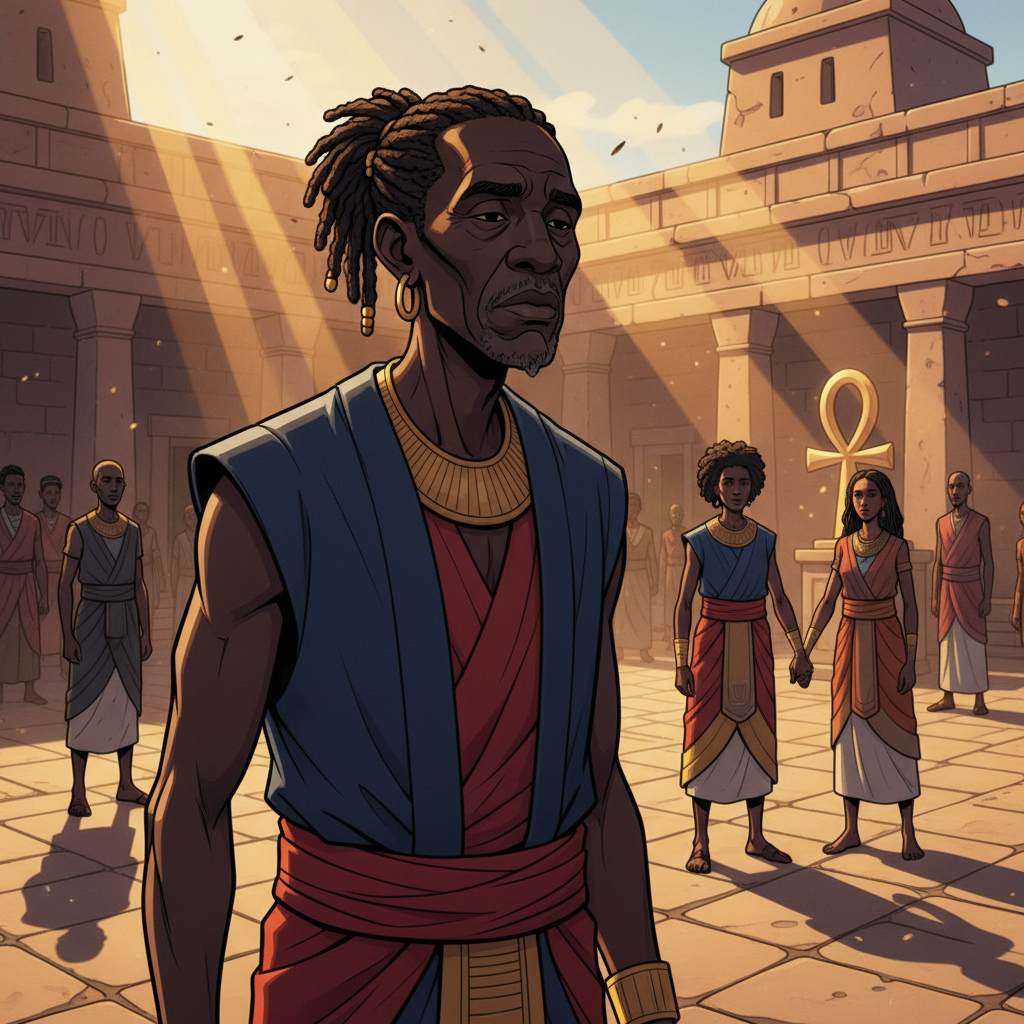
Userhet stood silent for a long time. The morning sun climbed higher, warming the stone courtyard. Finally he spoke. "I have been your Seba for twenty years. And this is the first time the prize has taught me more than the lesson. Afia and Nkiru, you are right. The tradition was made for a world where one person stands above the rest. But Maat is not about standing above. Maat is about standing in balance." He turned to old Huy. "Make two ankhs from the same gold. Let them be smaller, but let them be equal. And let us add a new tradition: the golden ankh may be given to a partnership — because no great work is ever done alone."
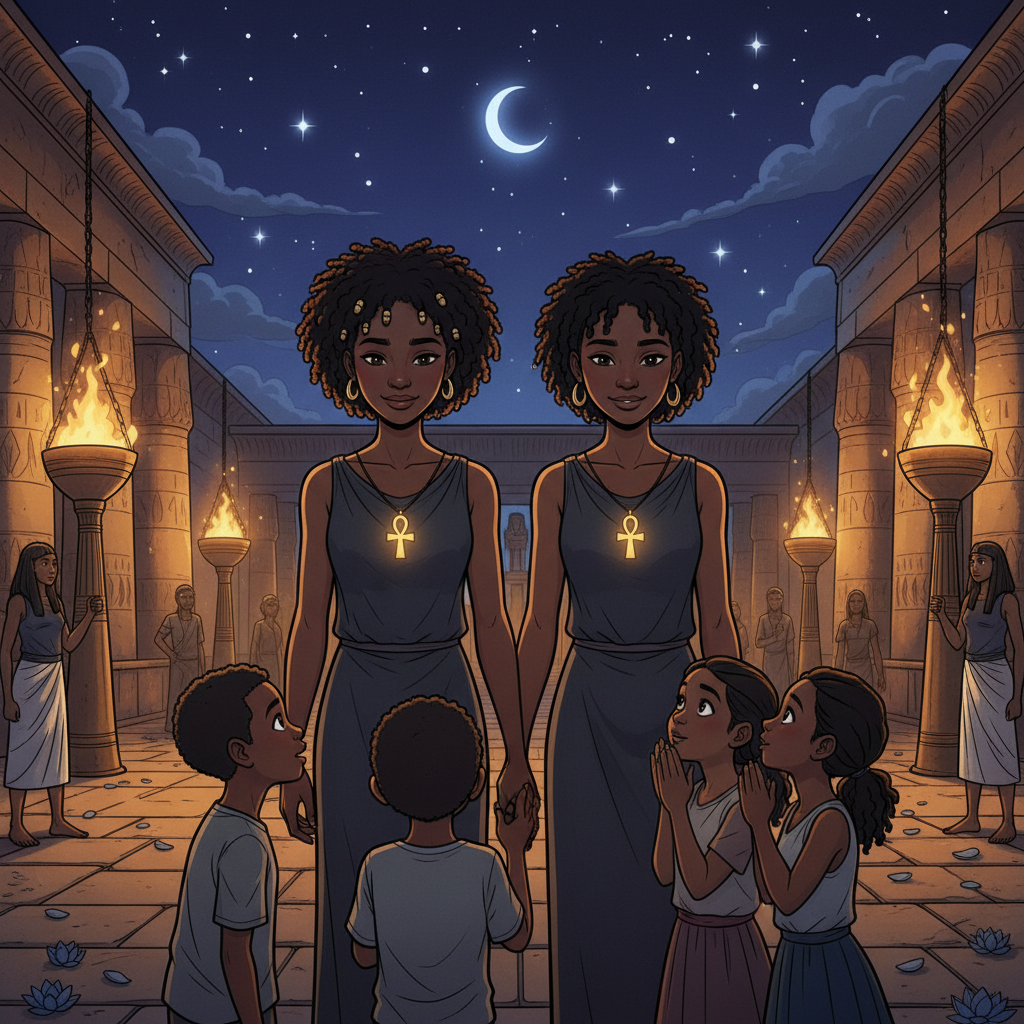
Not everyone was satisfied. Khofu muttered that traditions should not bend so easily. Some felt two smaller pendants cheapened the prize. But when Afia and Nkiru stood together at the festival that evening, each wearing a small golden ankh against their dark skin, something happened. Younger students looked at them — not as two half-winners, but as two whole partners — and something changed in their eyes. The next morning, three new pairs of students asked Userhet for permission to start projects together. The garden bloomed on, and the two small ankhs gleamed — not as halves of something broken, but as proof that balance, the very heart of Maat, is always worth fighting for.
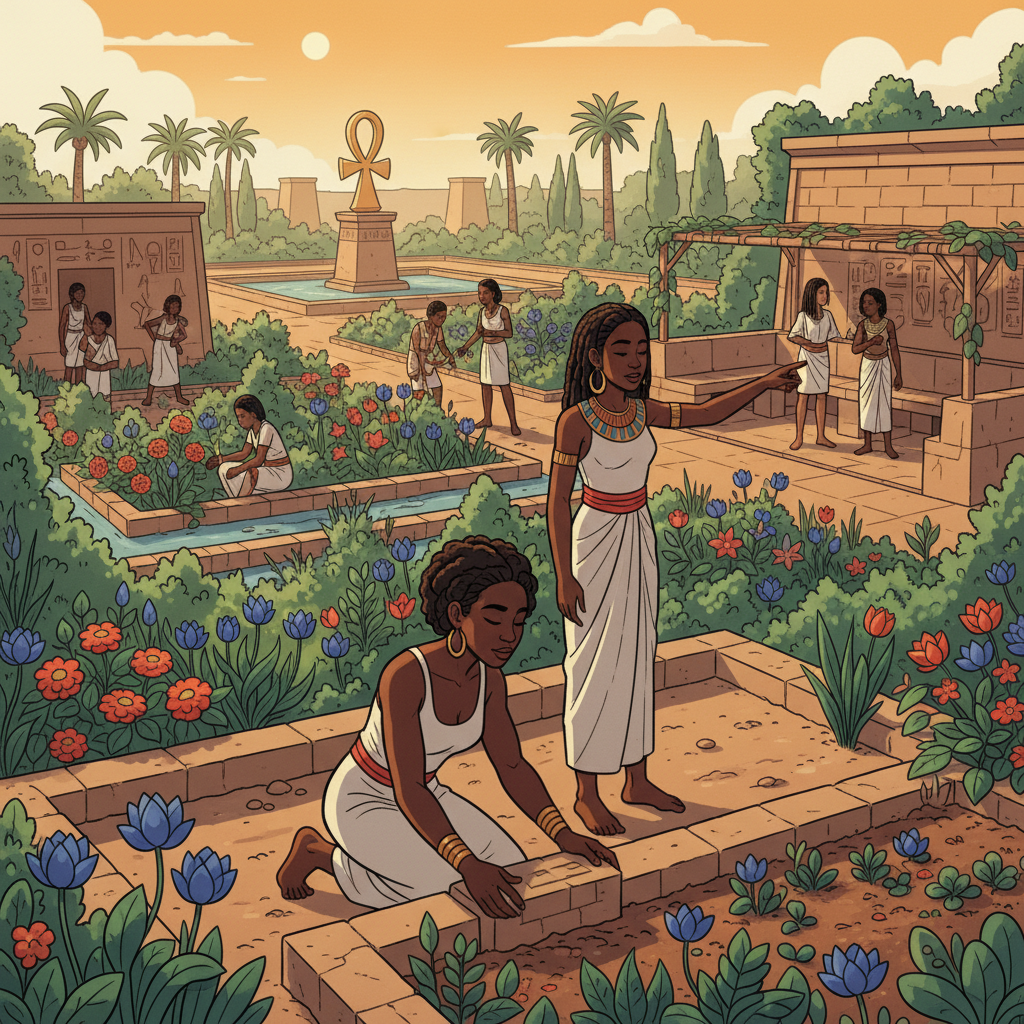
Seasons passed, and the garden became the heart of village life. Afia designed new sections — a medicinal herb corner for the healers, a shaded reading area for the temple scribes. Nkiru built them all, her strong dark hands shaping stone and earth with growing skill. Other student pairs joined, each contributing something unique. And every year at the festival, when the golden ankh was awarded, people remembered the year the prize split in two — not because the tradition broke, but because two girls had the courage to ask what fairness truly means when the old answers stop fitting. Maat, they learned, is a living river. It does not stay in one shape forever. It flows, and the wise flow with it.