
Queen Makeda stood at the prow of the royal barge as it cut through the waters of the Red Sea, her dark robes billowing behind her like the wings of a great bird. She was tall and regal, with skin as deep and rich as the volcanic soil of the Aksumite highlands and 4C hair woven into an elaborate crown of braids adorned with gold beads. She was traveling to meet King Solomon of Israel — and she was not going as a supplicant.
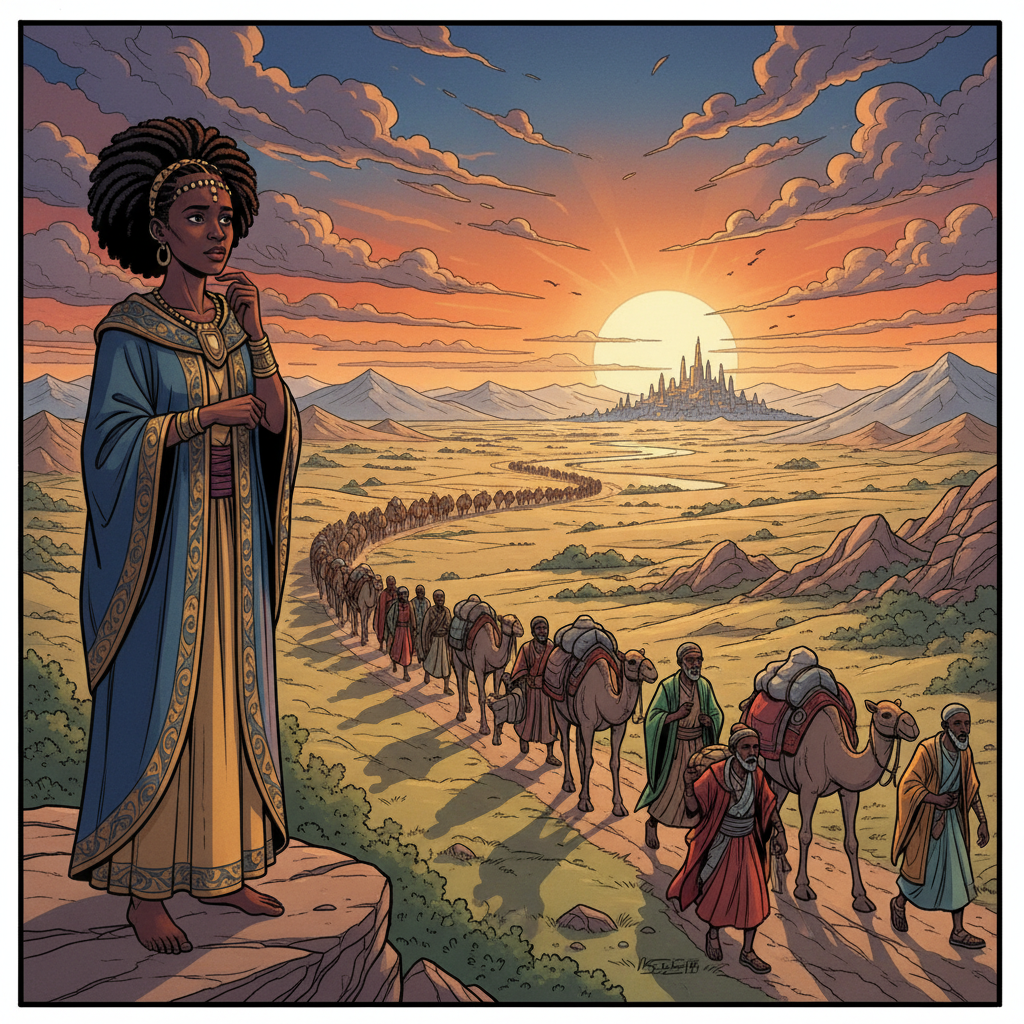
The idea for the journey had come from the griots and merchants who traveled the trade routes connecting Aksum to the lands of the north and east. They spoke of a king in Israel whose wisdom was legendary — a man who could settle any dispute, answer any riddle, and whose court attracted scholars from every corner of the known world. Makeda was intrigued, but she was also skeptical.
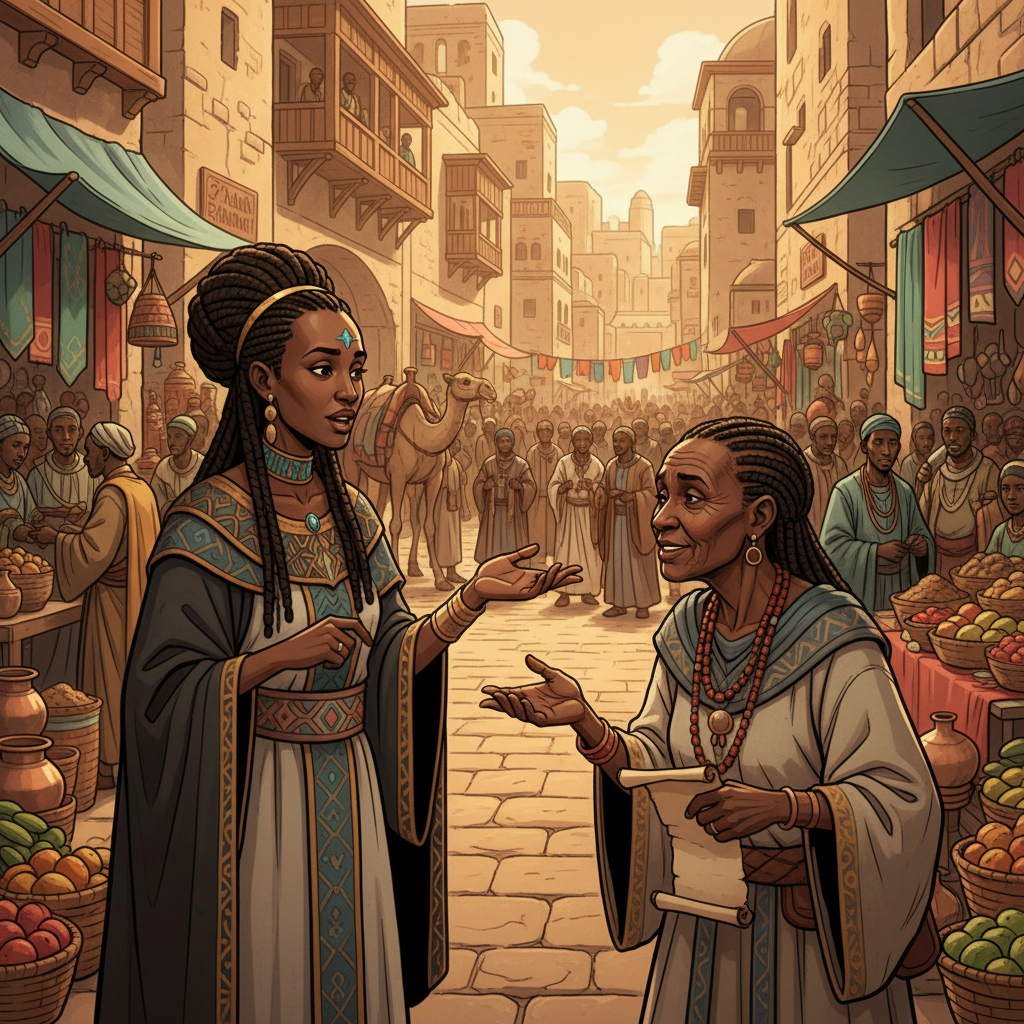
"Many kings are called wise," she told her chief advisor, an old woman named Tamrin who had traded with Solomon's kingdom for decades. "But wisdom is not the same as cleverness. A clever man can win an argument. A wise ruler builds a civilization that outlasts them. I will go and see for myself whether this Solomon is truly wise — or merely famous."
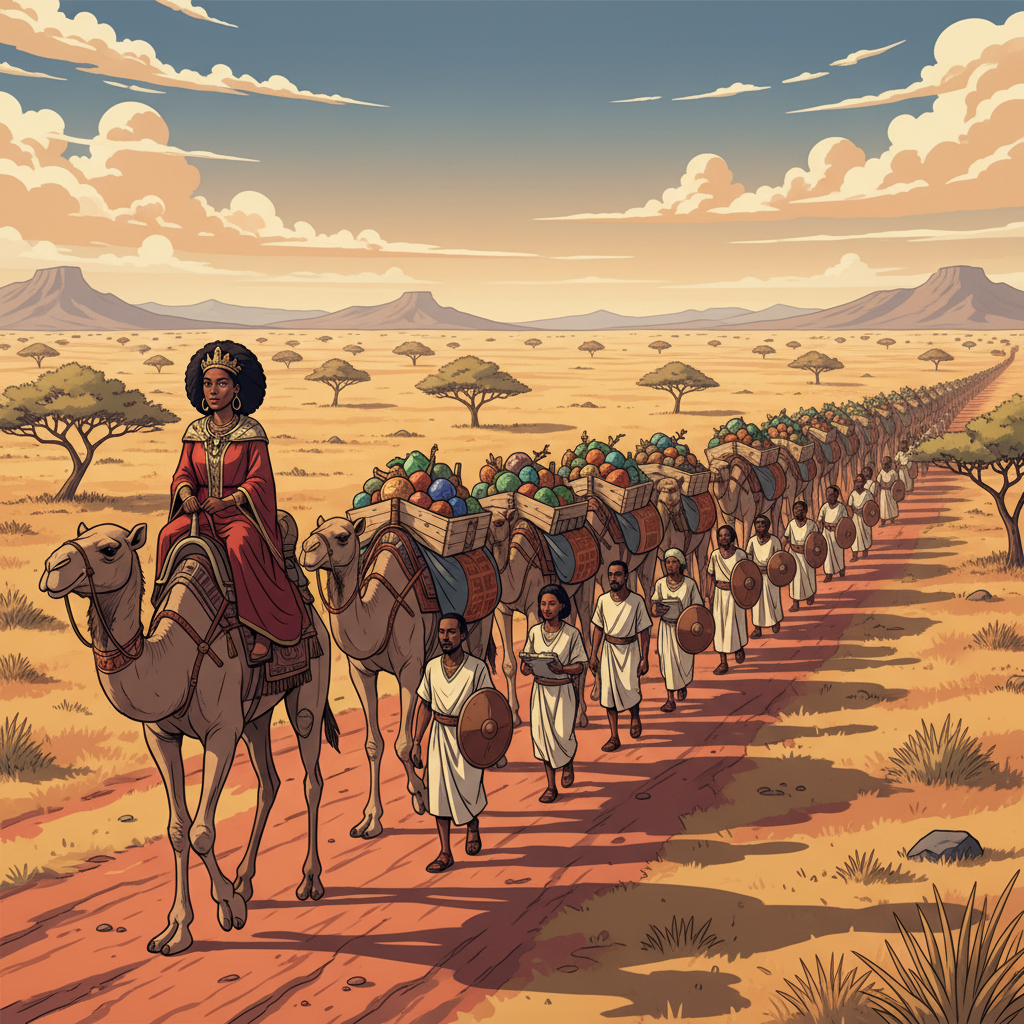
Makeda brought with her a caravan worthy of Aksum's greatness: one hundred camels loaded with gold, spices, and precious stones; fifty scribes to record everything they saw and learned; and a personal guard of warriors whose loyalty was absolute. She also brought something more valuable than any treasure — a collection of riddles designed to test the depth of Solomon's understanding.
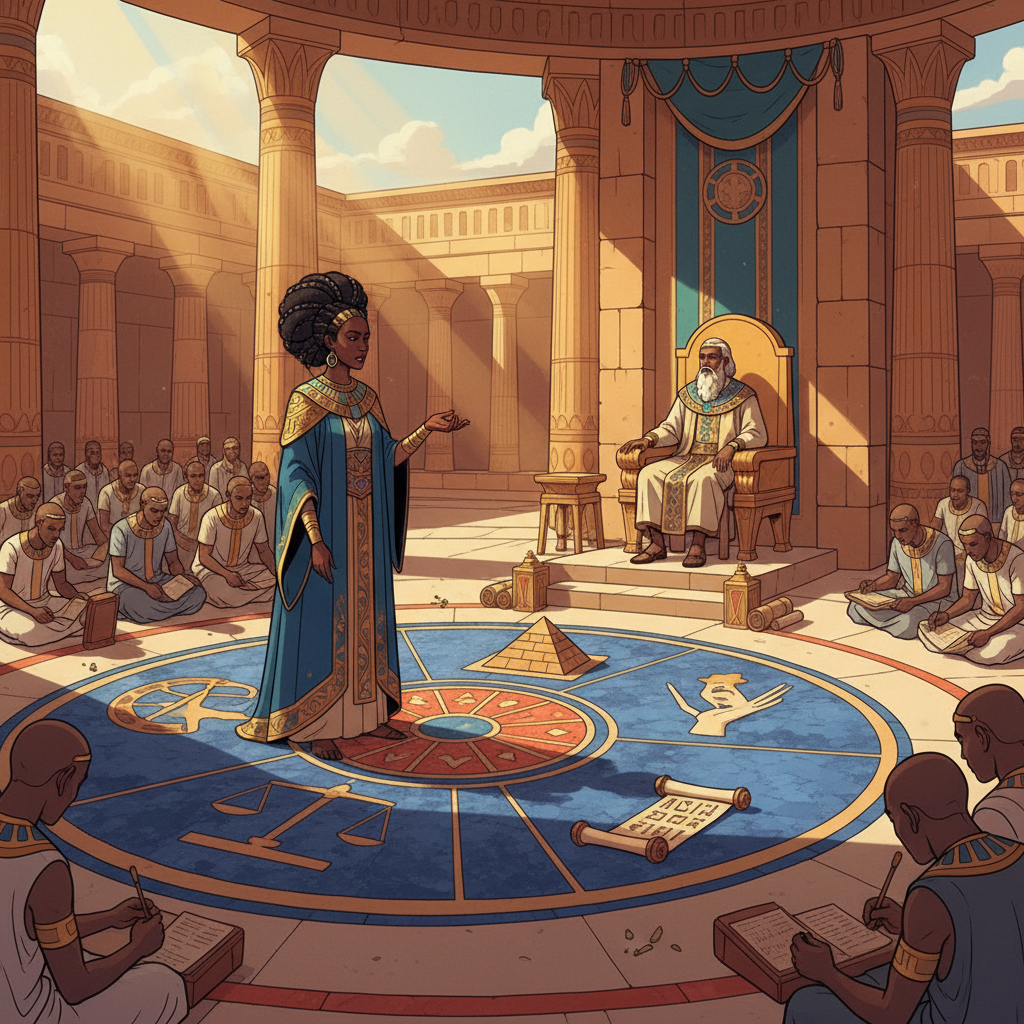
The riddles were not games. They were carefully crafted questions drawn from the philosophical traditions of Aksum, Kush, and Kemet — traditions that stretched back thousands of years before Solomon's kingdom existed. Each riddle tested a different aspect of wisdom: justice, mercy, the balance between power and humility, the relationship between knowledge and action.
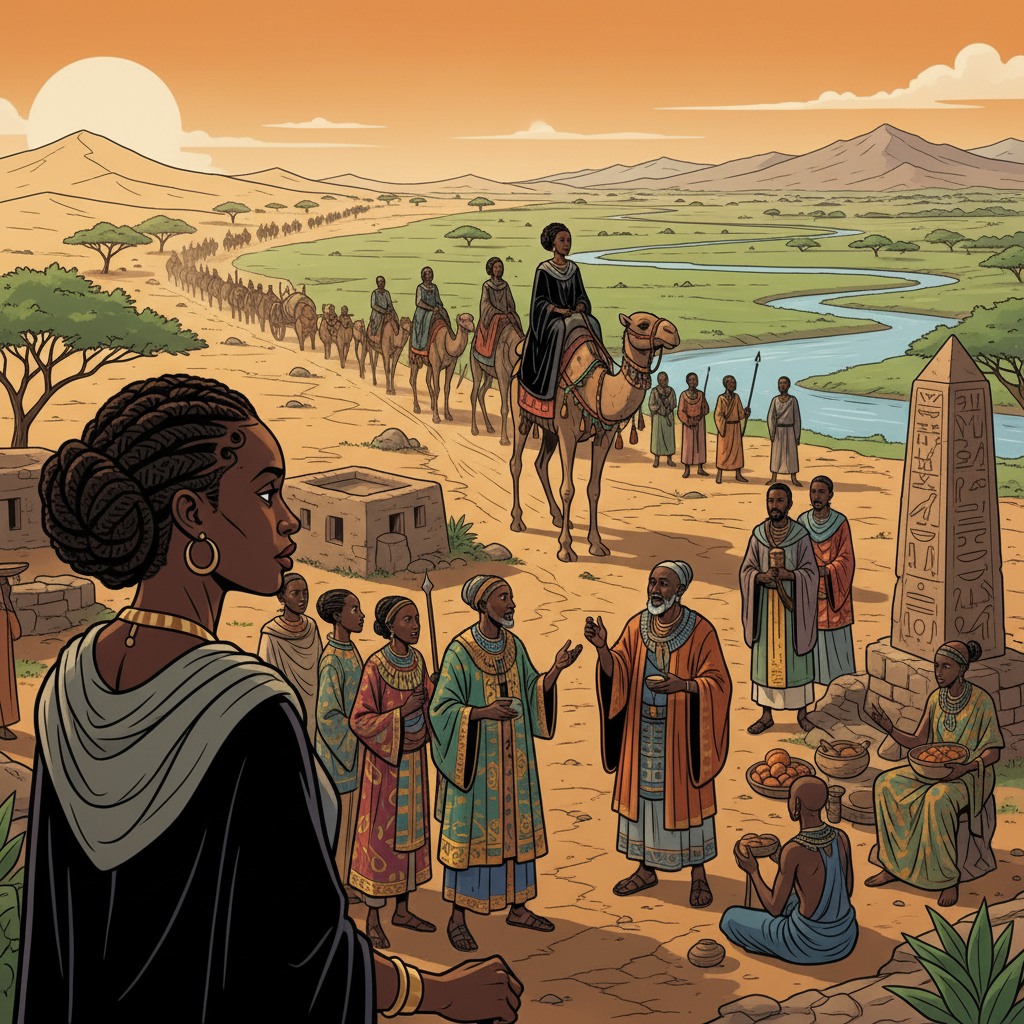
The journey took many weeks. As they traveled north through the lands of Kush and into the territories beyond, Makeda studied the peoples and kingdoms they passed through. She noted how they governed themselves, how they treated the poor and the stranger, how they preserved their histories. She was not merely traveling — she was learning. A true queen never stopped learning.
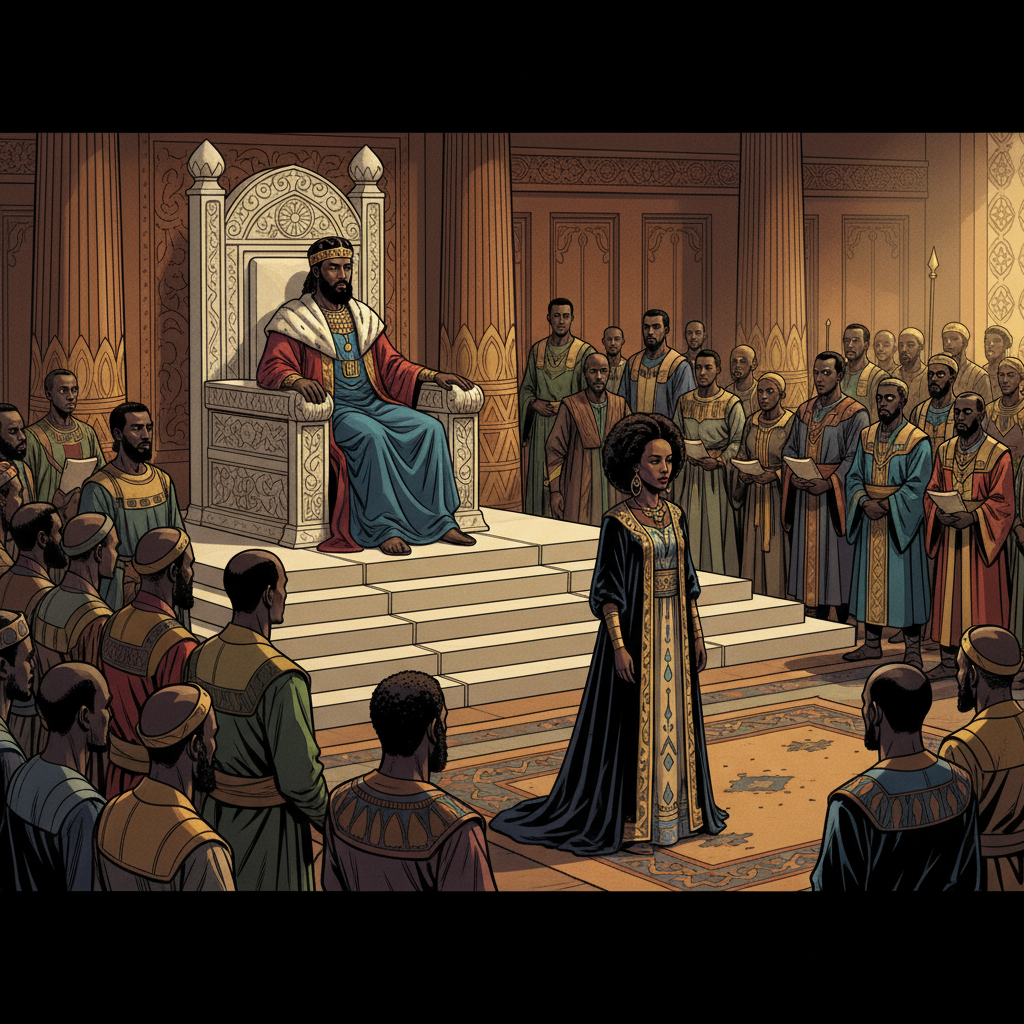
Solomon's court was magnificent. The palace gleamed with cedar and gold, and the throne room was filled with advisors, priests, and foreign dignitaries from a dozen kingdoms. Solomon himself sat on an elevated throne carved from ivory and overlaid with pure gold. He was handsome and sharp-eyed, and when Makeda entered, the entire court fell silent. They had never seen a queen arrive with such power and such poise.
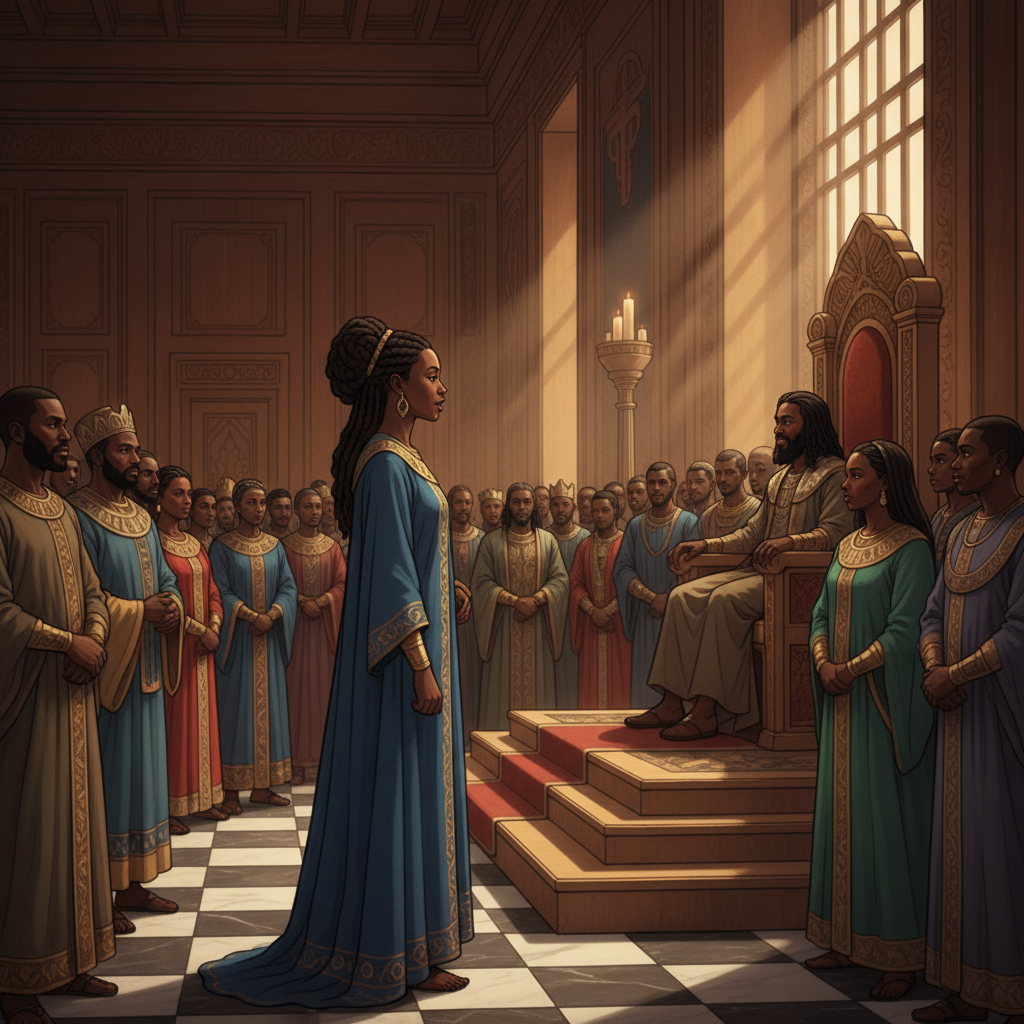
Makeda did not bow. She inclined her head — the greeting of an equal to an equal — and Solomon, to his credit, recognized the gesture and returned it. "I have heard of your wisdom," Makeda said, her voice carrying across the vast room. "I have come to test it. Not with armies or gold, but with questions. For it is said that the measure of a mind is not what it possesses, but what it can illuminate."
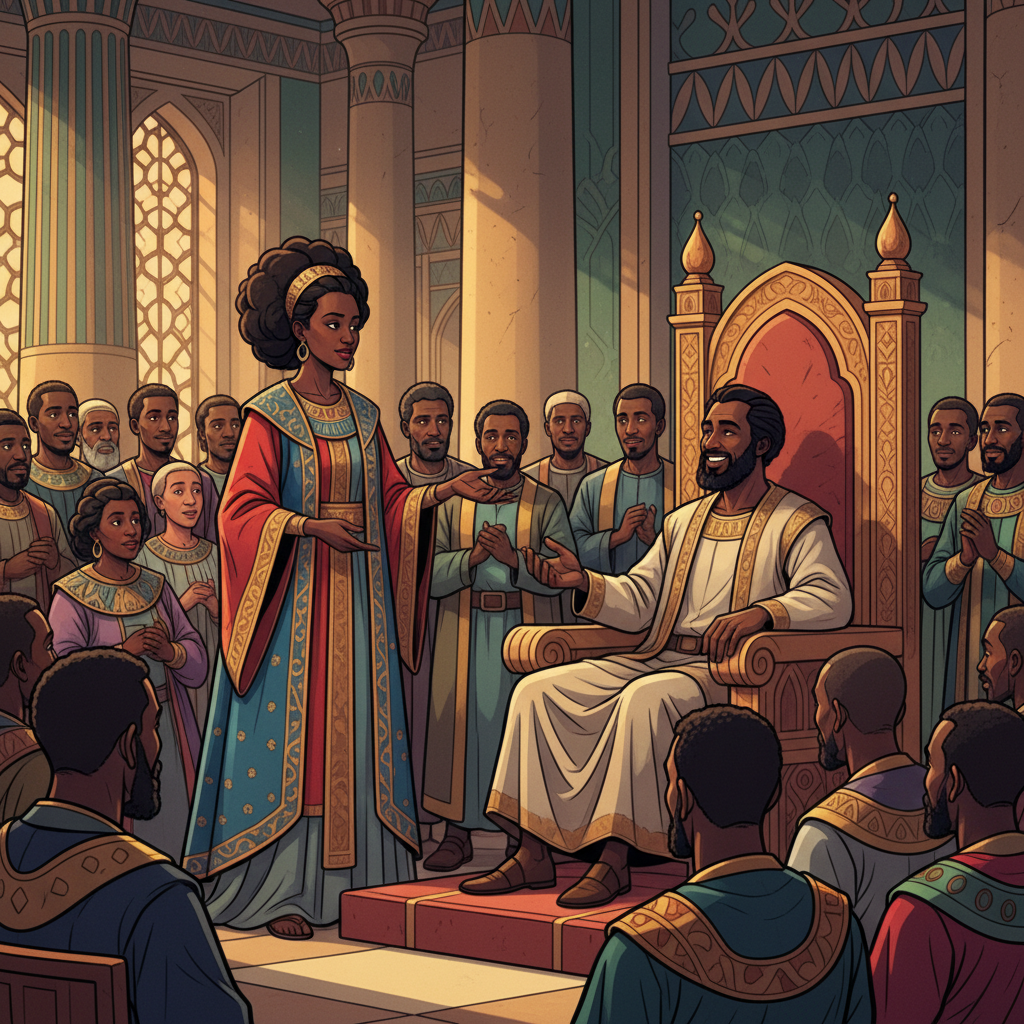
She began with her first riddle. "What is it that the rich need, the poor already have, and if you eat it, you die?" Solomon considered for a moment, then smiled. "Nothing," he answered. "The rich need nothing more. The poor have nothing. And if you eat nothing, you die." The court murmured in approval. Makeda nodded — it was correct, but it was a simple riddle. The real tests were yet to come.
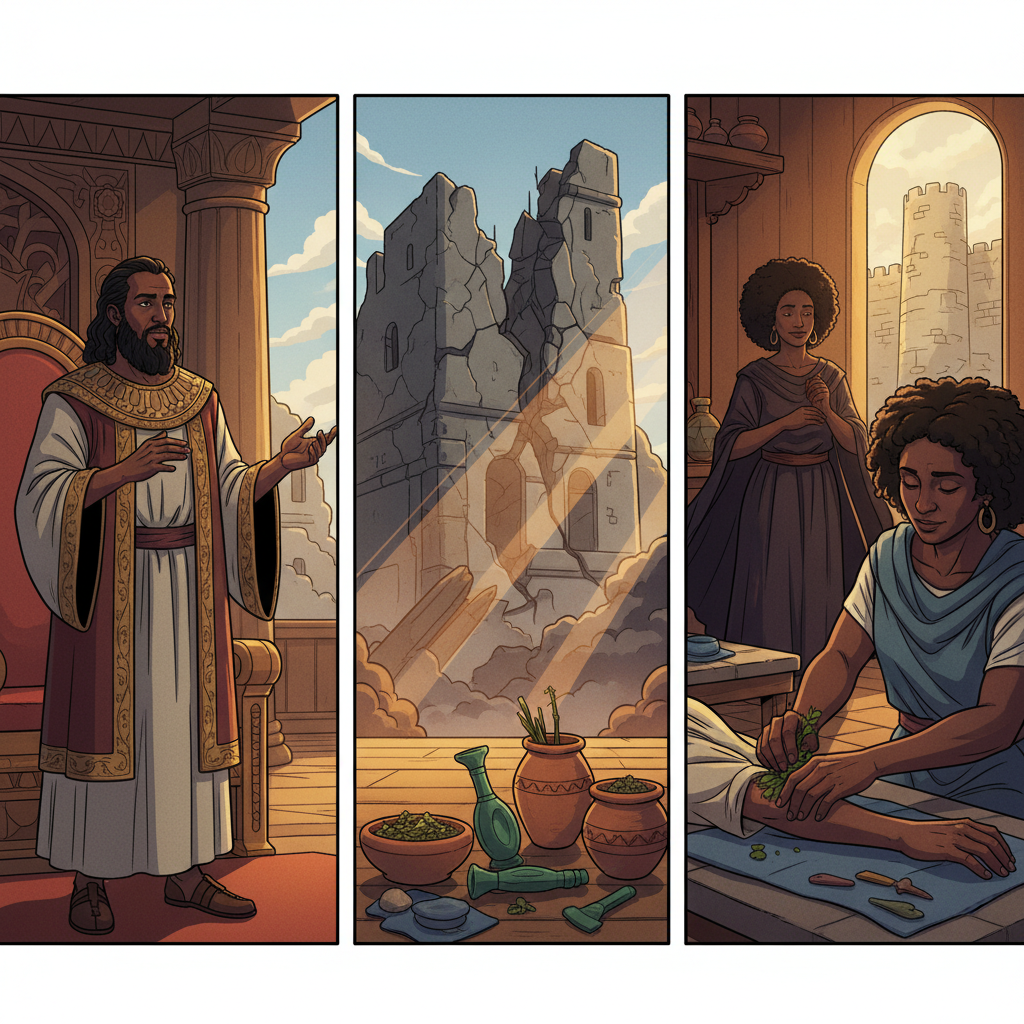
Her second riddle cut deeper. "A king has two advisors. One always tells the truth but his truths cause pain. The other always lies but his lies bring comfort. Which advisor should the king keep?" Solomon thought longer this time. "The king should keep the truthful advisor," he said, "for a kingdom built on comfortable lies will crumble, while one built on painful truths can be healed and strengthened."
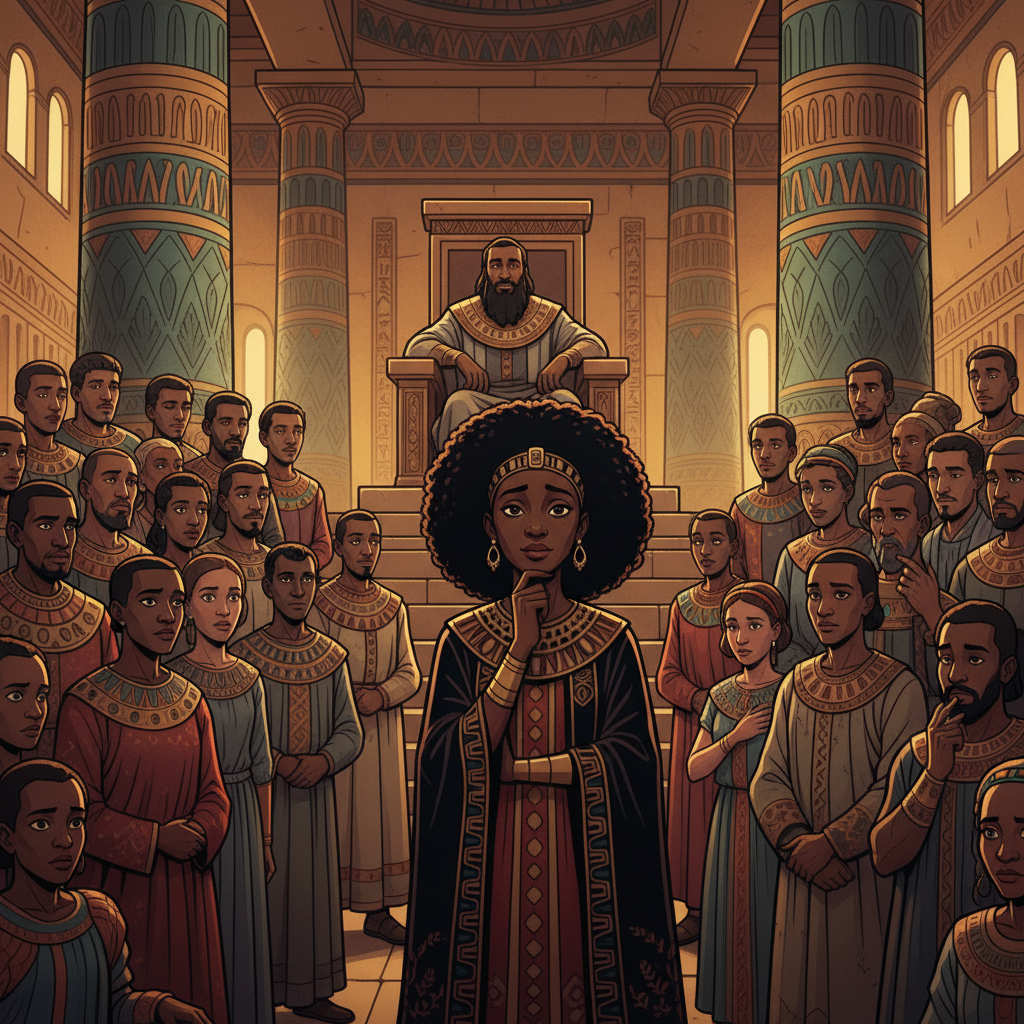
Makeda was impressed but not yet satisfied. "And if the truthful advisor's painful truths cause the people to rebel? If his honesty tears the kingdom apart?" Solomon paused. The court was utterly silent. "Then the king must learn to speak truth with compassion," he said slowly. "Truth without mercy is a weapon. Mercy without truth is a cage. Wisdom is knowing how to hold both."
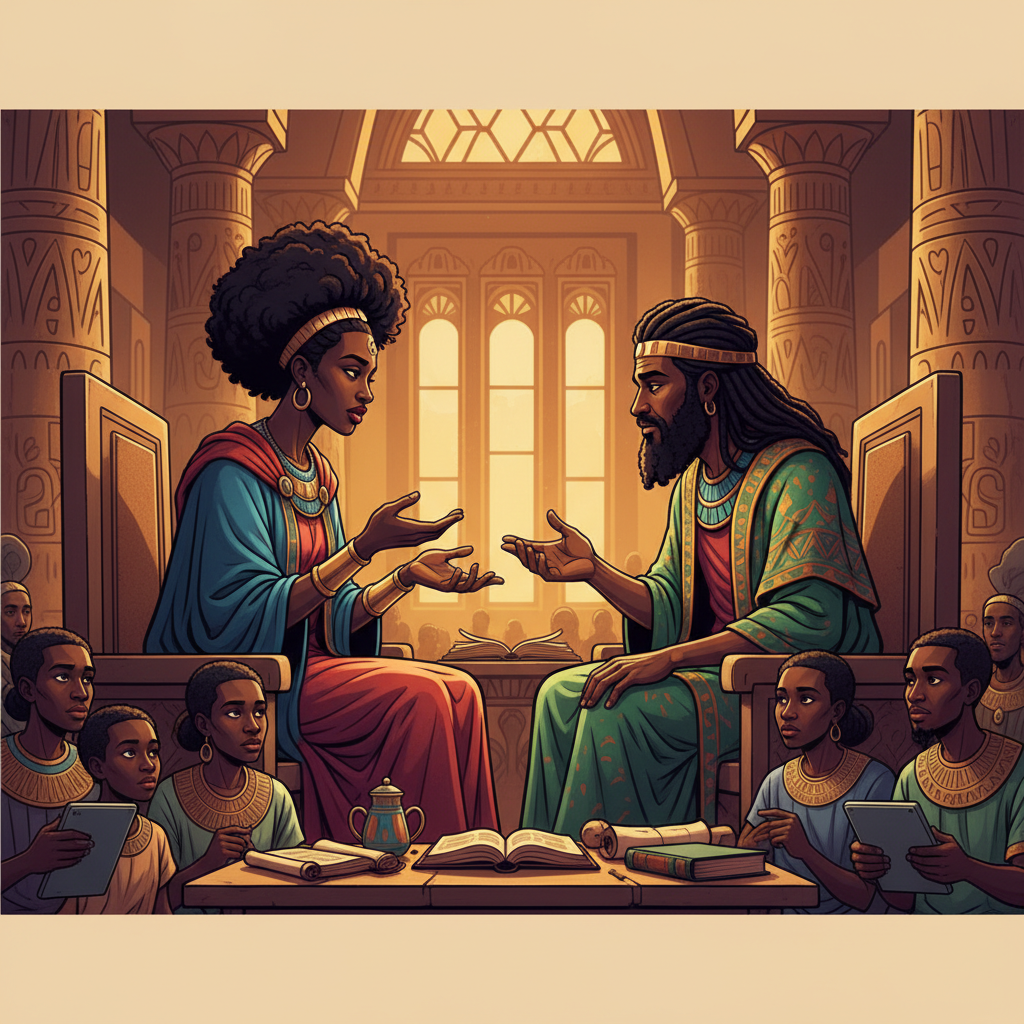
They spoke for days — not just in riddles but in long conversations about governance, justice, trade, and the nature of the divine. Makeda found Solomon to be genuinely wise in many ways. His understanding of law was impressive. His ability to see multiple sides of a dispute was remarkable. His knowledge of natural sciences — plants, animals, medicines — was vast.
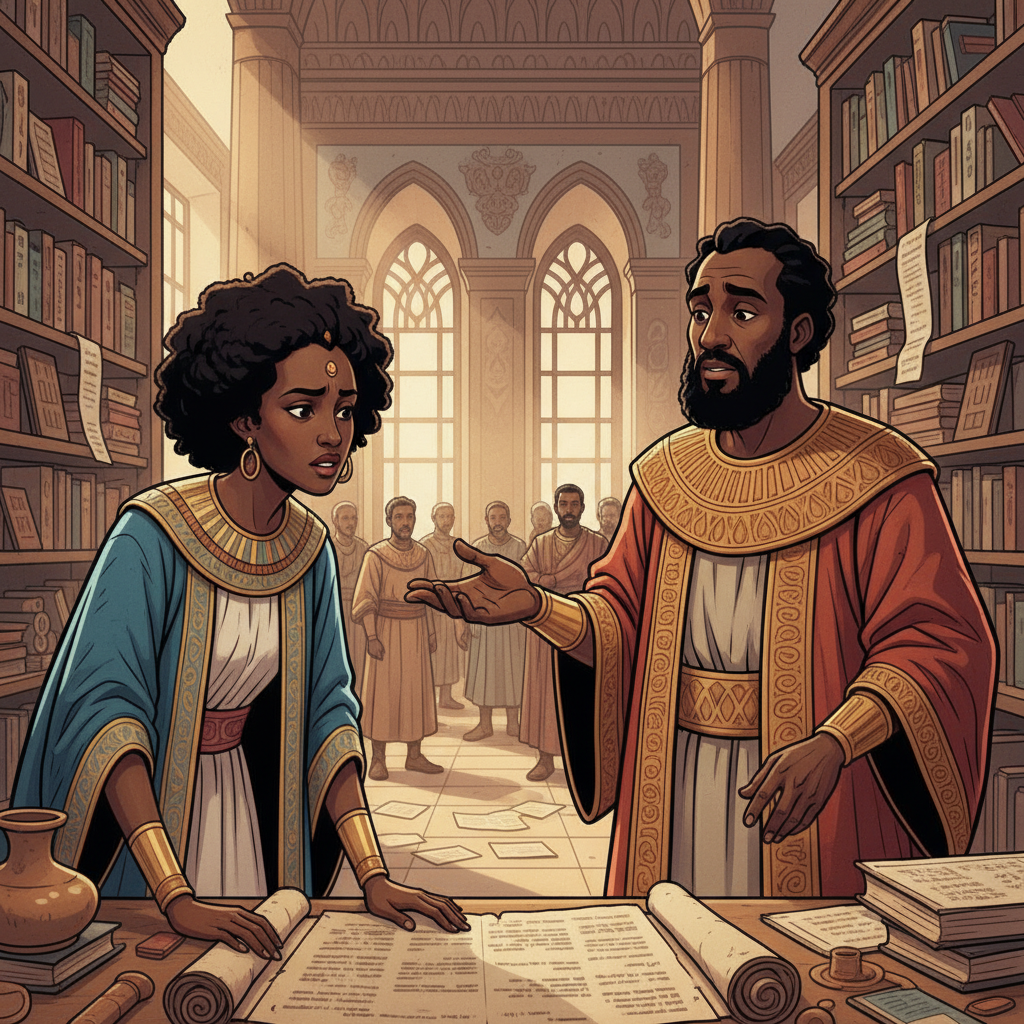
But Makeda also noticed something that troubled her. Solomon's wisdom was largely individual — it resided in him, in his extraordinary mind. When she asked about the institutions that would preserve this wisdom after his death, Solomon grew vague. His court depended on his personal brilliance. There was no system to ensure that the next king would be equally wise.
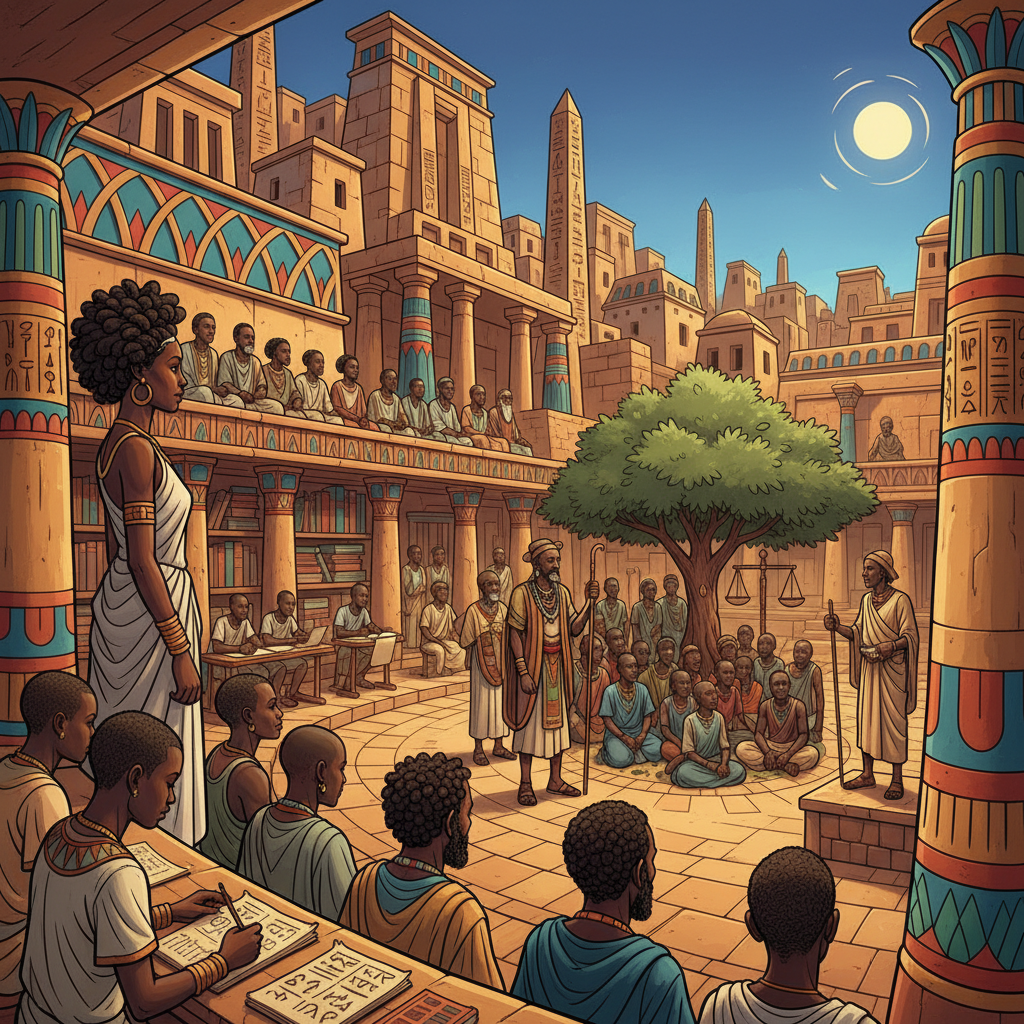
This was where Aksum differed. In Makeda's kingdom, wisdom was not the property of any single ruler. It was embedded in institutions — the councils of elders, the schools where scribes preserved knowledge in Ge'ez script, the griot traditions that passed moral teachings from generation to generation, the principles of Maat that governed every level of society from the queen to the poorest farmer.
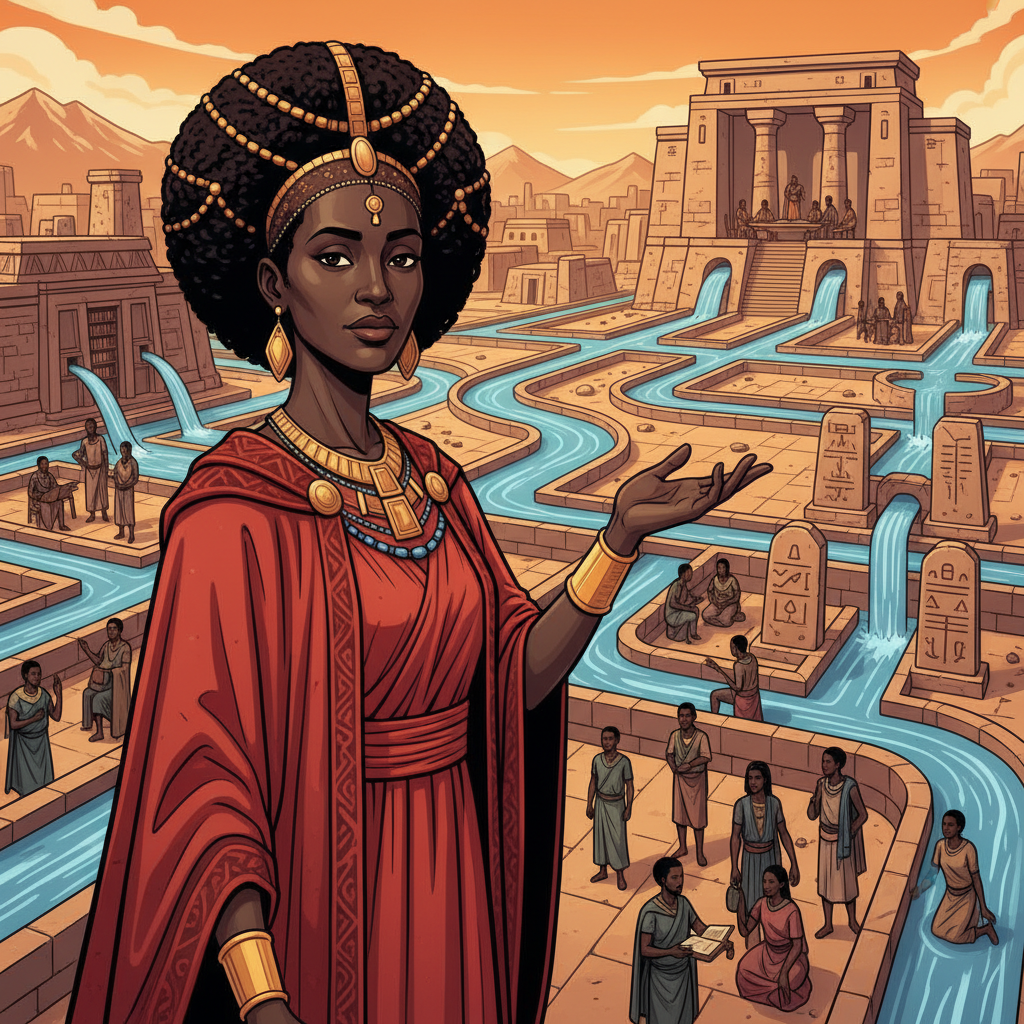
"Your wisdom is a river," Makeda told Solomon on their final evening together. "Wide and powerful, but it flows from a single source. When that source is gone, the river may dry up. In Aksum, we have built many streams — institutions, traditions, written laws — so that wisdom flows from a thousand sources. No single death can dry them all."
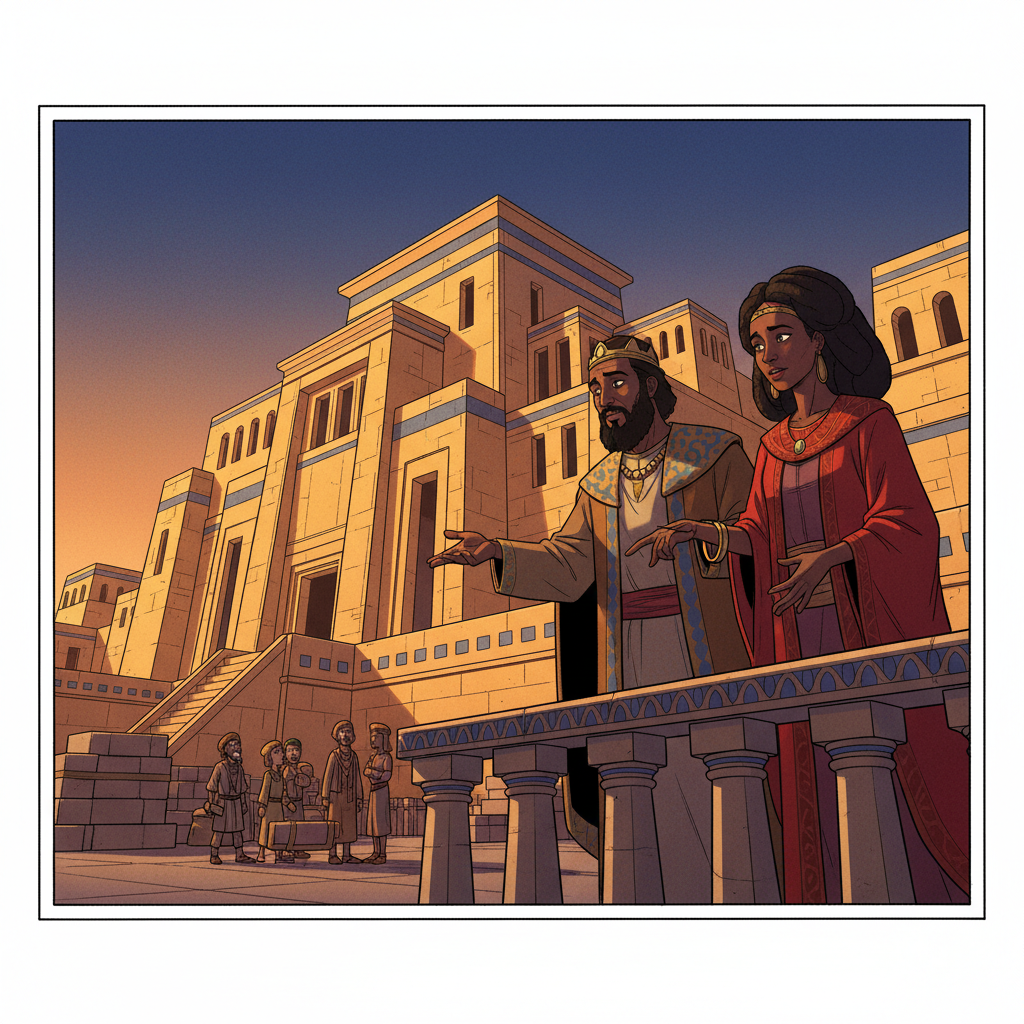
Solomon received this insight with grace. "You are right," he admitted. "I have built a magnificent house, but I have not taught others how to build houses. That is a flaw in my reign. You have shown me something today that I could not have seen alone." It was, Makeda reflected, perhaps the wisest thing he had said — acknowledging the limits of his own wisdom.
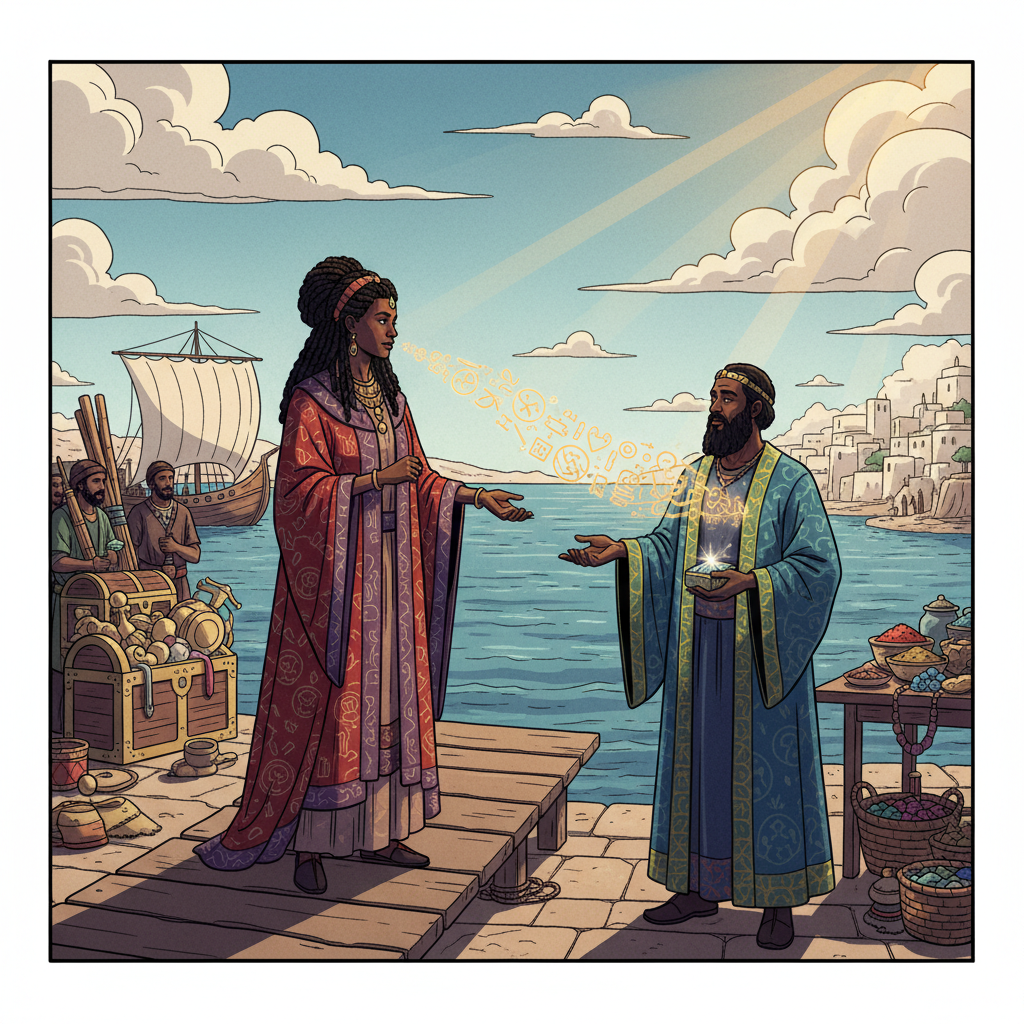
Makeda departed Israel with gifts of gold and rare woods from Solomon, and Solomon kept the spices and gems she had brought. But the most valuable exchange was invisible — ideas. Makeda had tested the greatest mind of the age and found it worthy of respect but not of imitation. Aksum did not need to copy Israel. It needed to strengthen its own traditions.

On the long journey home, Makeda dictated her thoughts to her scribes. She spoke of what she had learned — not just from Solomon, but from every kingdom she had passed through. She spoke of the danger of concentrating wisdom in a single person and the strength of distributing it across institutions. She spoke of the ancient principle that true sovereignty comes not from being the wisest person in the room, but from building a room where wisdom can thrive without you.
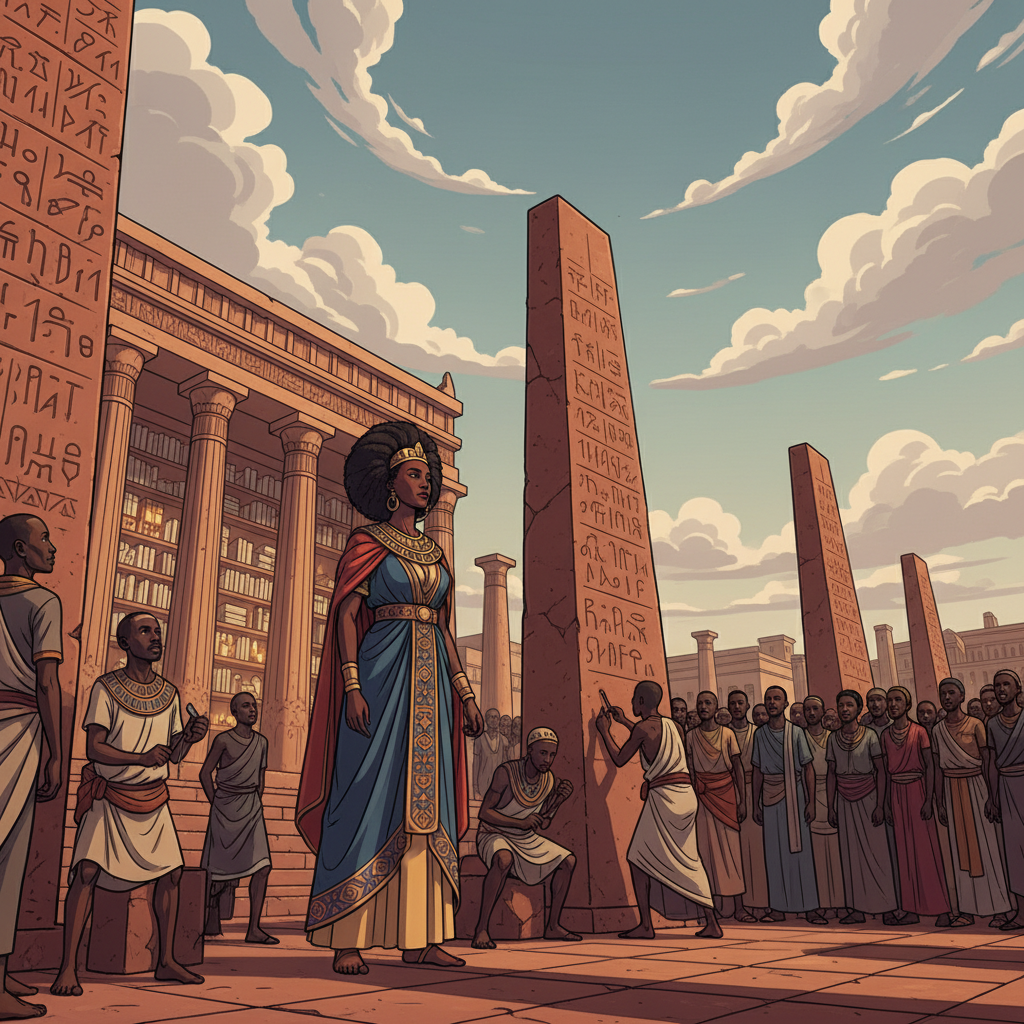
When she returned to Aksum, Makeda began the work that would define her legacy. She strengthened the council of elders, giving them authority that did not depend on the queen's personal approval. She expanded the schools where young scribes learned to read and write Ge'ez. She established new trade relationships that would outlast her reign. She carved her principles into the great stelae so that future generations could read them and remember.
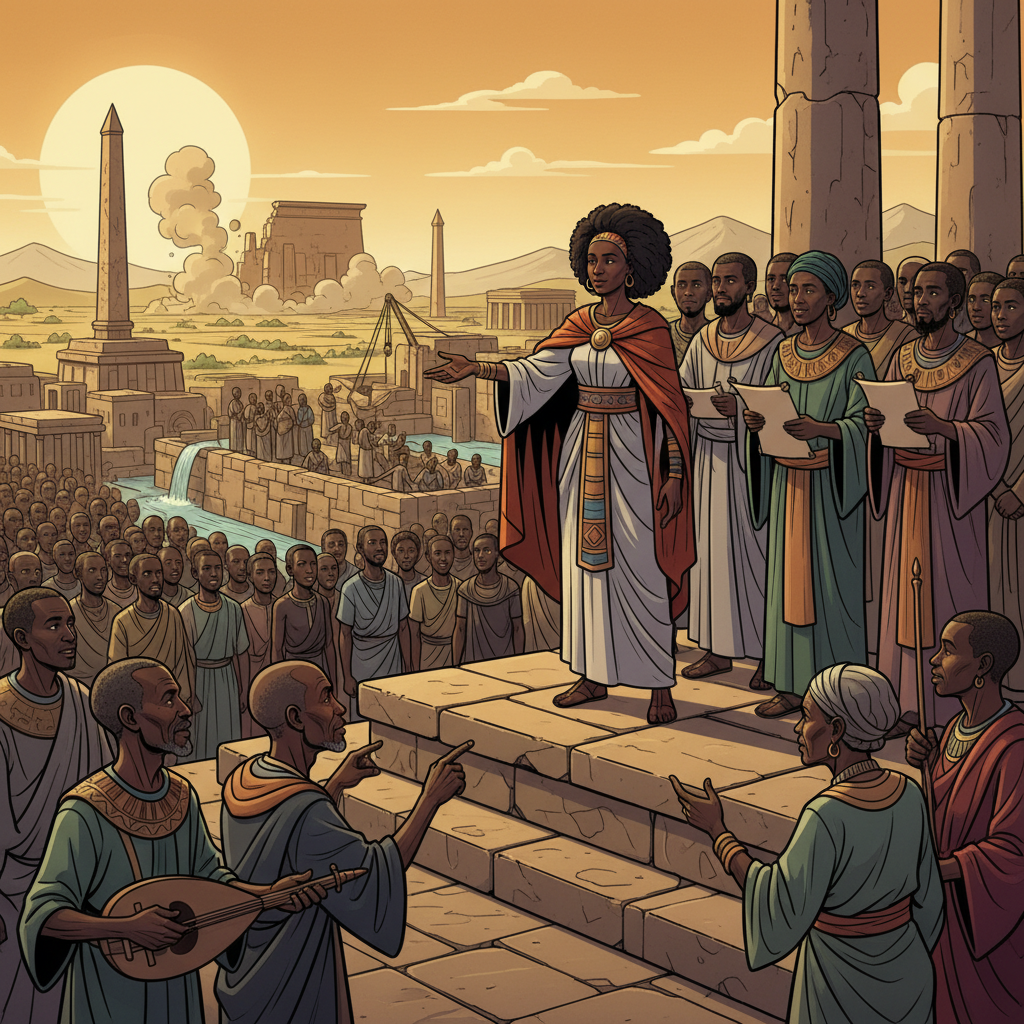
The griots who told Makeda's story in the centuries that followed always emphasized one thing: she went to Solomon as an equal and returned as something greater — a queen who understood that the highest form of wisdom is building systems that do not depend on any single person. Solomon's kingdom fractured after his death. Aksum endured for centuries.
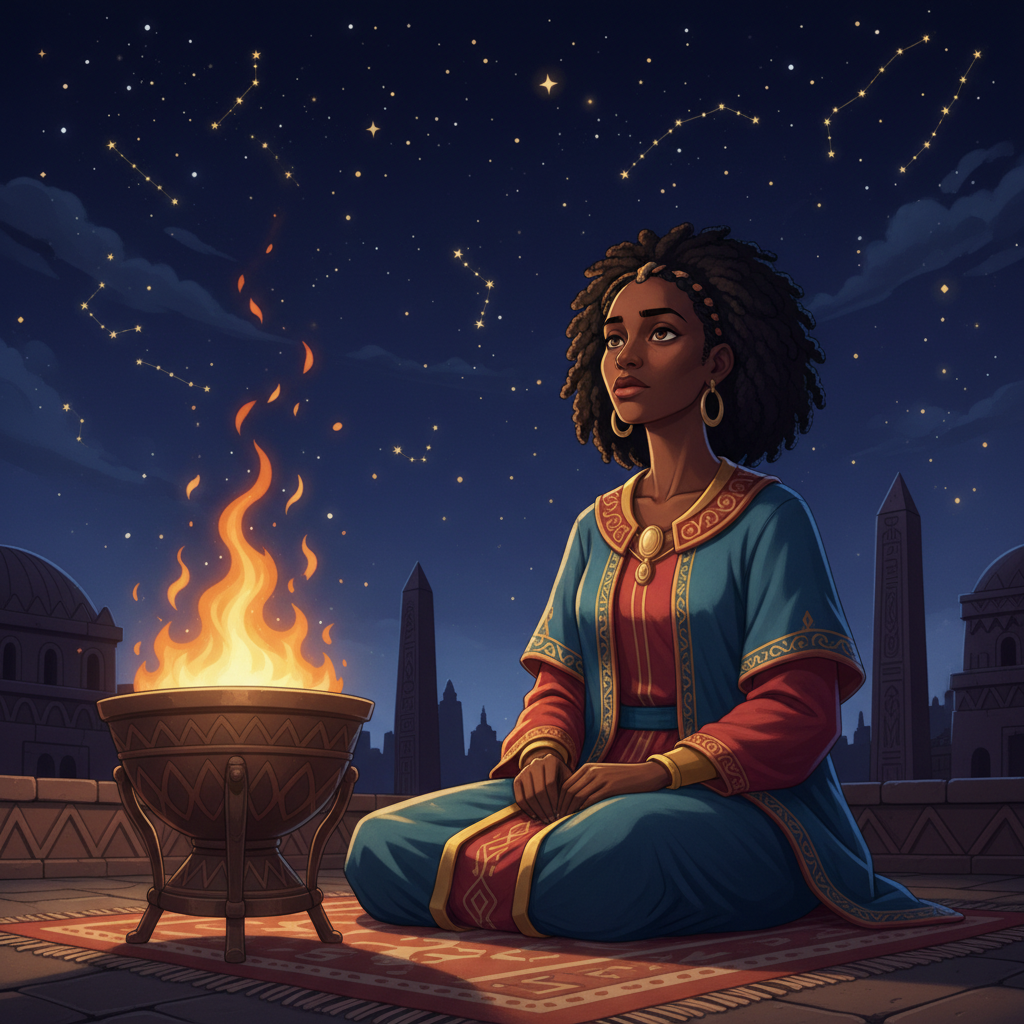
At night, when the stars blazed over the highlands of Aksum, Makeda would sometimes sit alone on the palace roof and think about the nature of wisdom. It could not be given, she had learned. Not truly. Solomon could share his insights, but wisdom itself had to be earned through experience, through struggle, through the slow and difficult work of governing justly. The traditions of Maat that her ancestors had practiced for millennia were not inferior to any wisdom she had found abroad. They were the foundation on which everything else was built.
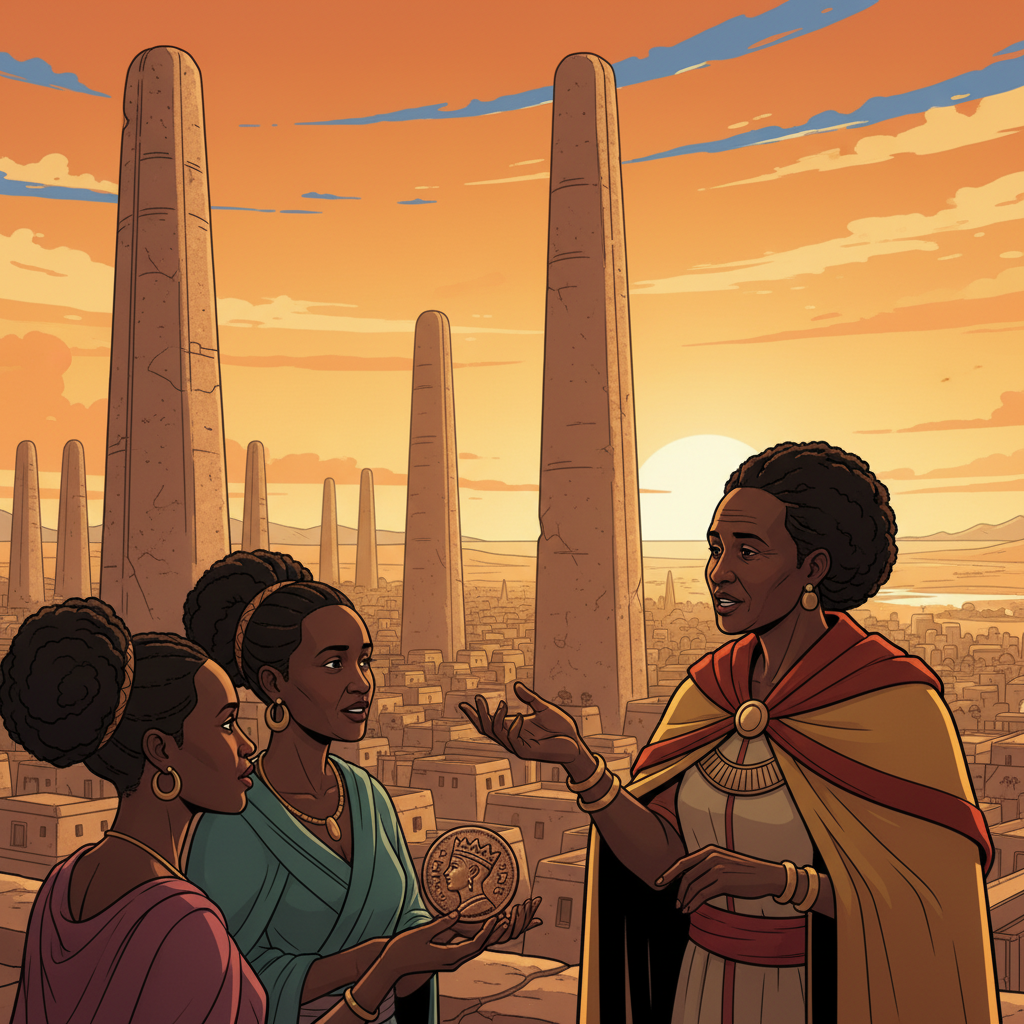
Generations later, when the stelae of Aksum towered over the city and the coins of the kingdom circulated across three continents, people still told the story of Queen Makeda — the queen who journeyed far to test a foreign king's wisdom, and who returned home knowing that the greatest wisdom was already in her own land, waiting to be honored, strengthened, and passed on.