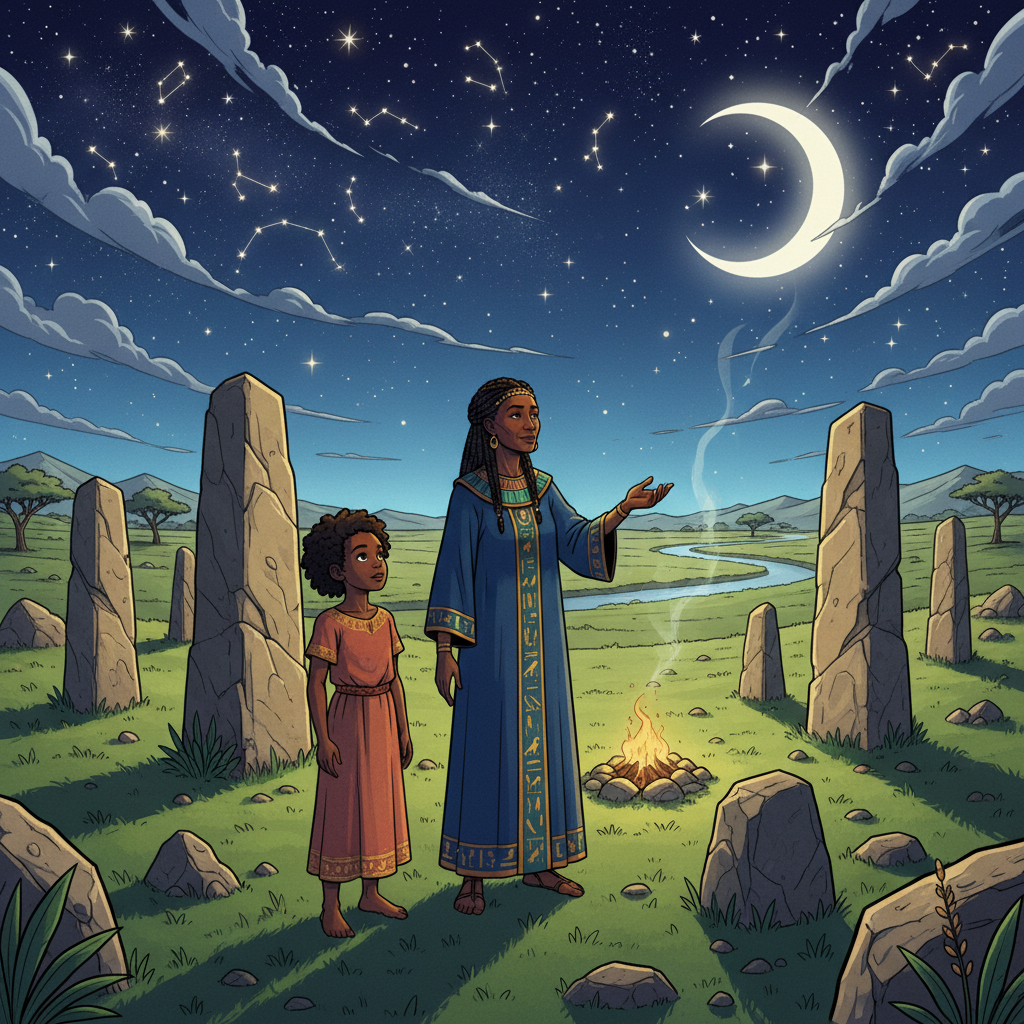
Long before the sand swallowed the green land, a girl named Nefertari stood among great stones in a place called Nabta Playa. Her deep brown skin glowed under a sky thick with stars. The air was cool and dry, carrying the faint smell of desert sage. Around her, tall stones rose from the earth like silent guardians, each one placed with a precision that seemed impossible for something so ancient. She was learning to read the heavens from her grandmother, Takhat, a star watcher whose ebony hands had mapped the sky for forty seasons. Takhat's voice was low and steady, like the hum of the earth itself. She did not rush. The stars, she always said, had been patient for thousands of years. The least a student could do was be patient in return.
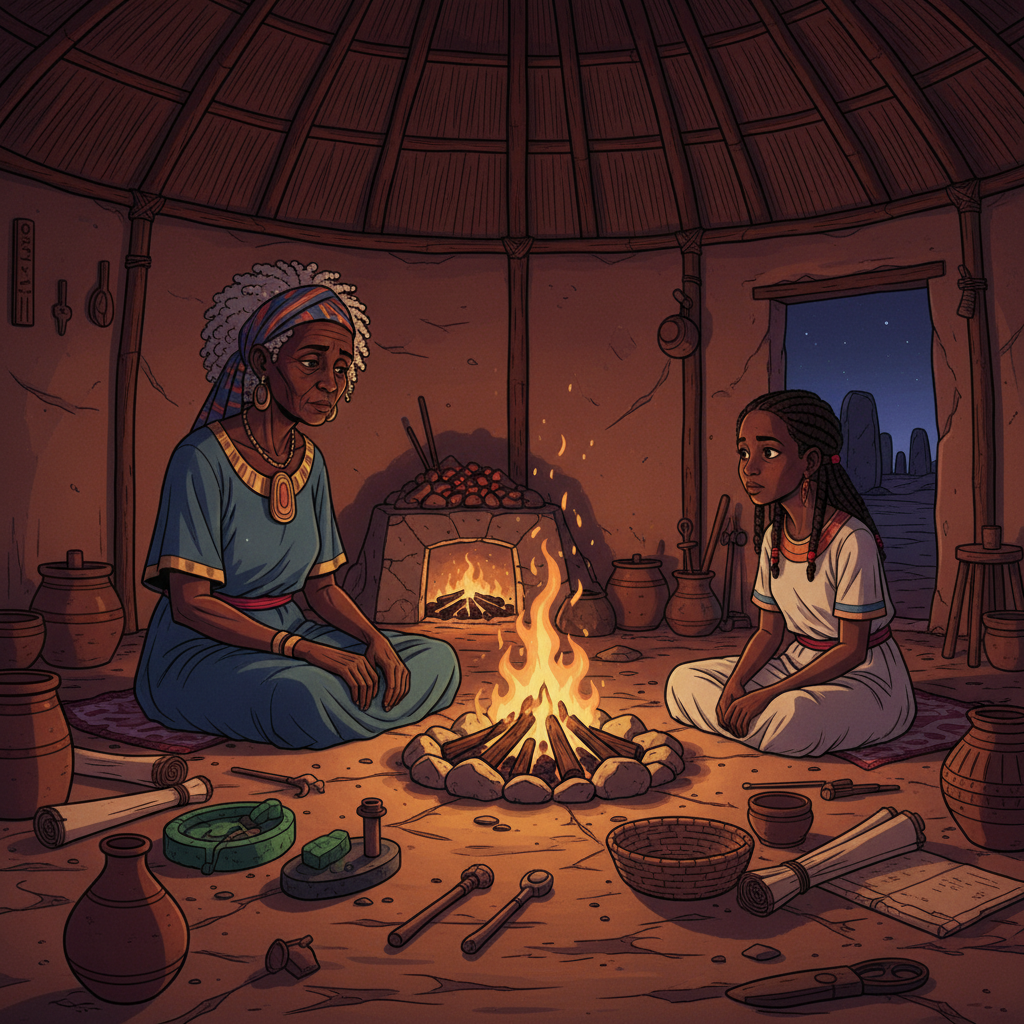
The stone circle before them was older than any pyramid. It had been built over seven thousand years ago by African astronomers — the first people in all of human history to build a structure to track the stars. While much of the world still wandered without calendars or clocks, these ancestors had already begun to measure time by the movement of light across the sky. The circle predated Stonehenge in faraway Britain by more than one thousand years. Yet how many people knew this? Nefertari had heard travelers speak of great monuments in distant lands as though nothing had come before them. Her grandmother would simply shake her head. "The stones remember," Takhat would say. "Even when people choose to forget."
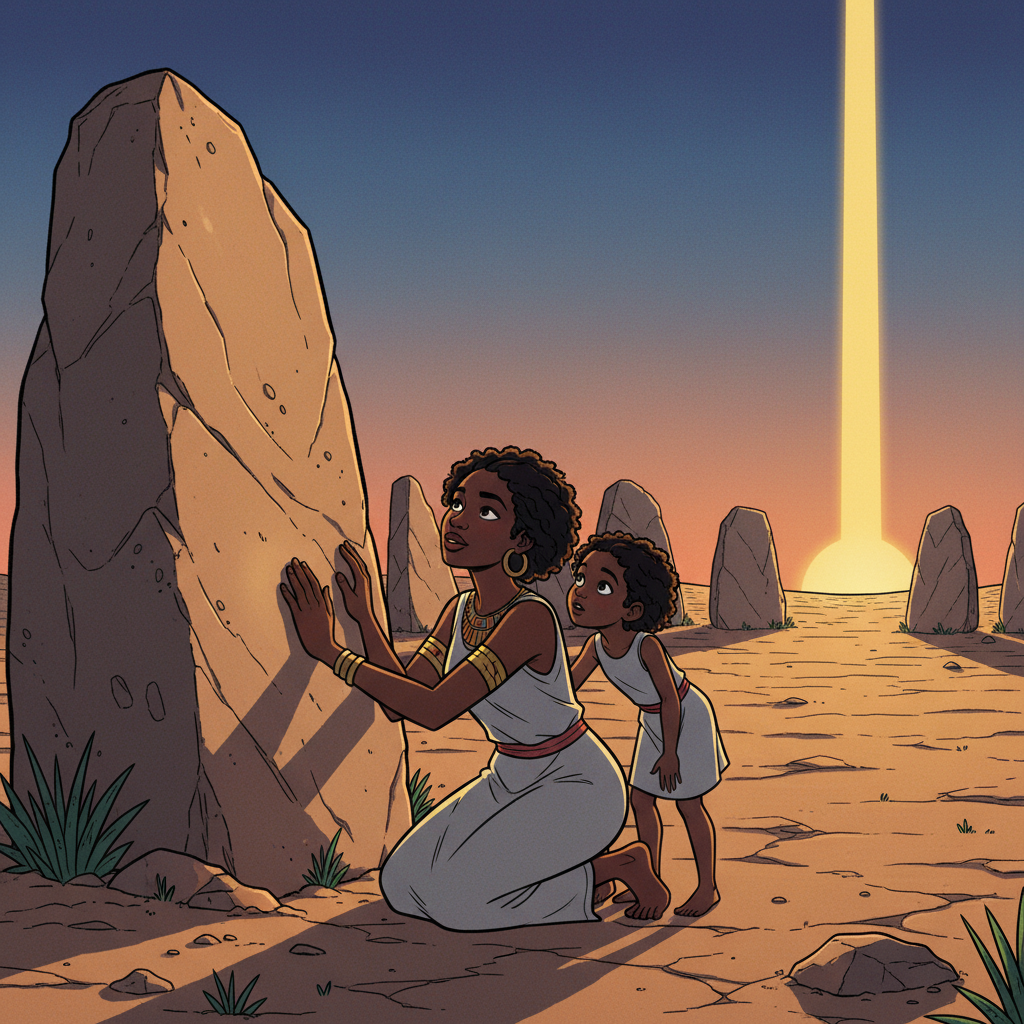
Takhat knelt beside one of the stones and placed her dark brown palm flat against its surface. "Feel this," she told Nefertari. The stone was warm, still holding the heat of the day. "Our ancestors shaped this with their hands and set it here to mark a single moment — the morning the sun rises at its highest point in the sky. The longest day of the year." This was the summer solstice. On that one day, sunlight would pour directly through a gap in the stones, casting a beam across the center of the circle like a golden finger pointing toward the future. The astronomers of Nabta Playa had understood the tilt of the earth and the journey of the sun thousands of years before such ideas were written in any book.
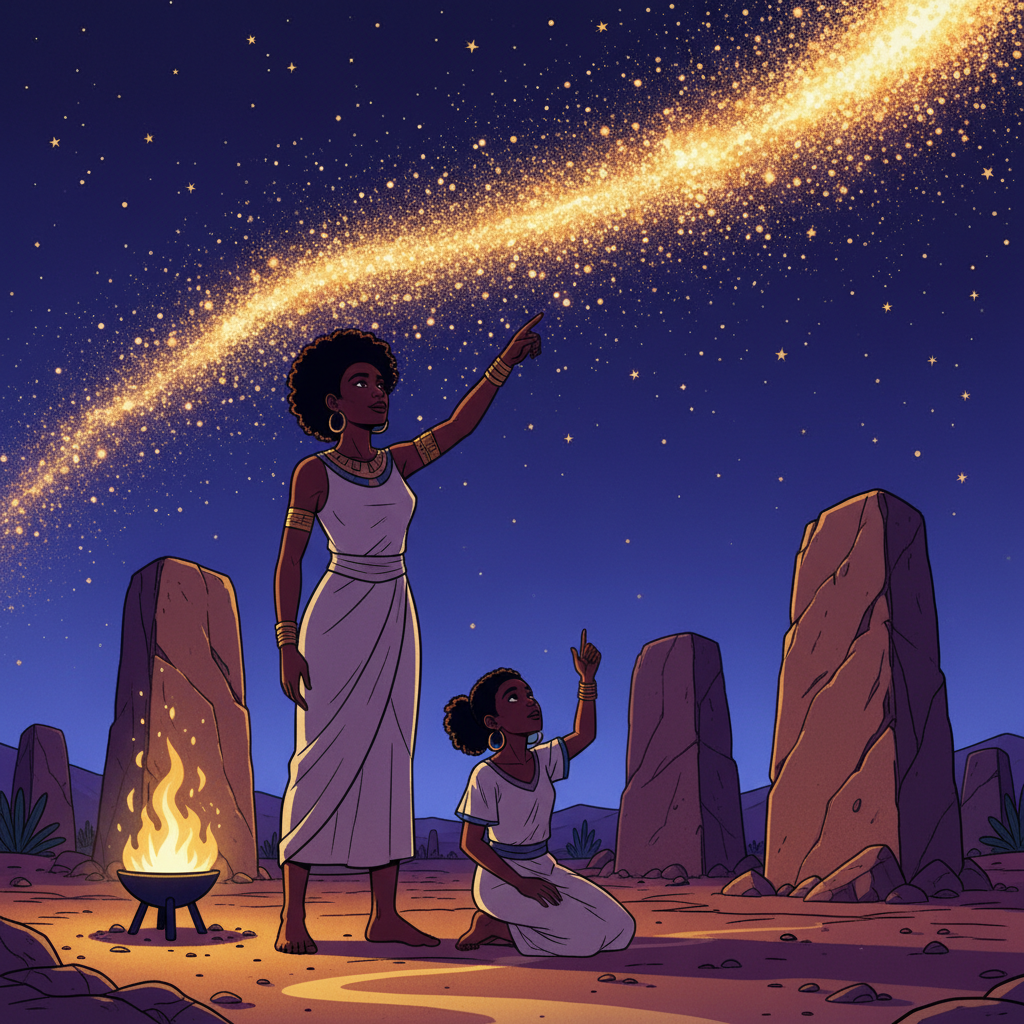
"Every star has a place," Takhat said, pointing to the bright band stretching across the darkness. "Just as every person has a place. This is maat — the great order that holds the world together. It is not something humans invented. It existed before us. It will exist after us. Our only task is to see it clearly and to live within it." Nefertari traced the patterns with her dark brown fingers, memorizing each one. She noticed how certain stars formed shapes — a great river of light pouring across the heavens, echoing the nile below. It was as though the sky and the land were mirrors of one another, each reflecting the same sacred order.
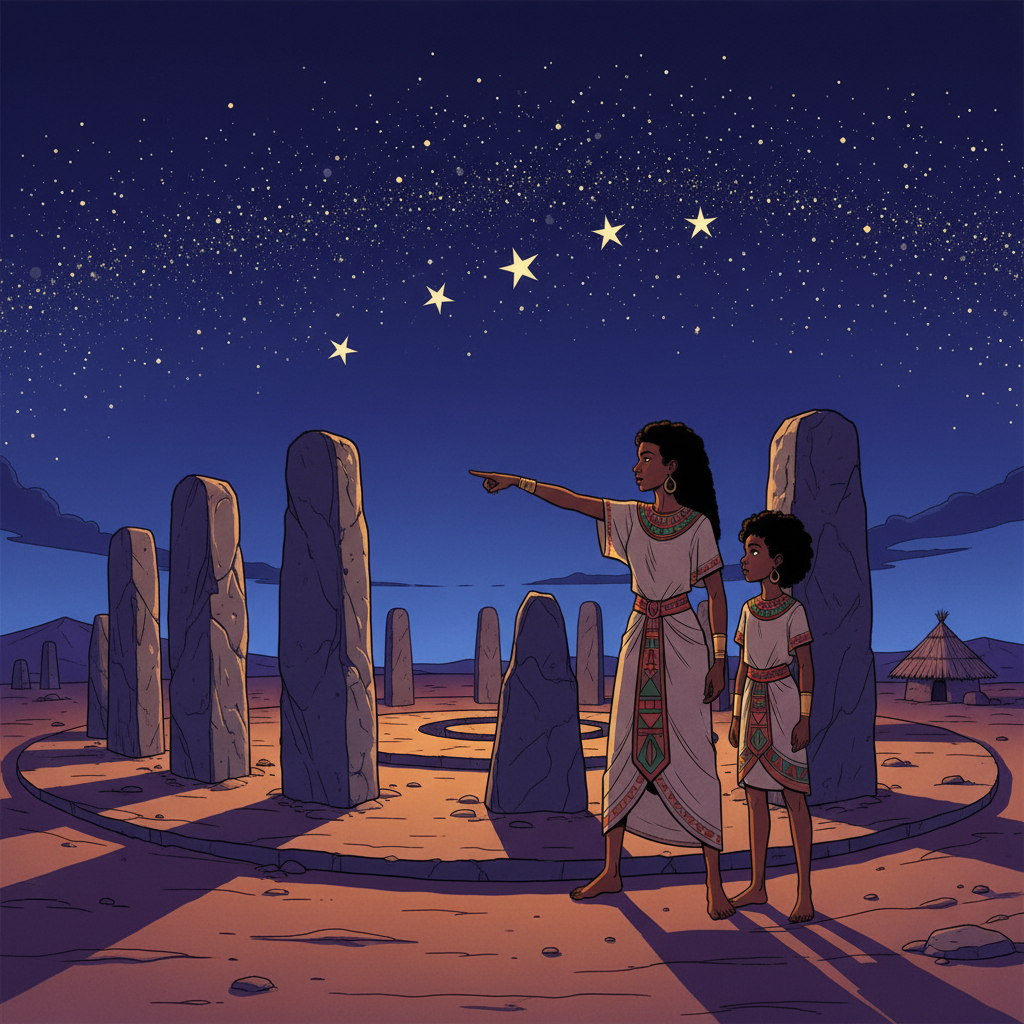
Takhat pointed to a row of stones set apart from the main circle. These megaliths did not mark the sun. They marked the stars. Specifically, they aligned with three stars in the belt of a constellation that would later be known to many cultures across the ancient world. The astronomers of Nabta Playa had tracked these stars as they shifted slowly across the sky over centuries. "The stars are not fixed," Takhat explained. "They drift, slowly, like a boat on a wide river. Our ancestors watched this drift and recorded it in stone. Each generation added to the knowledge of the last. That is how wisdom is built — not by one person alone, but by many hands across many lifetimes."
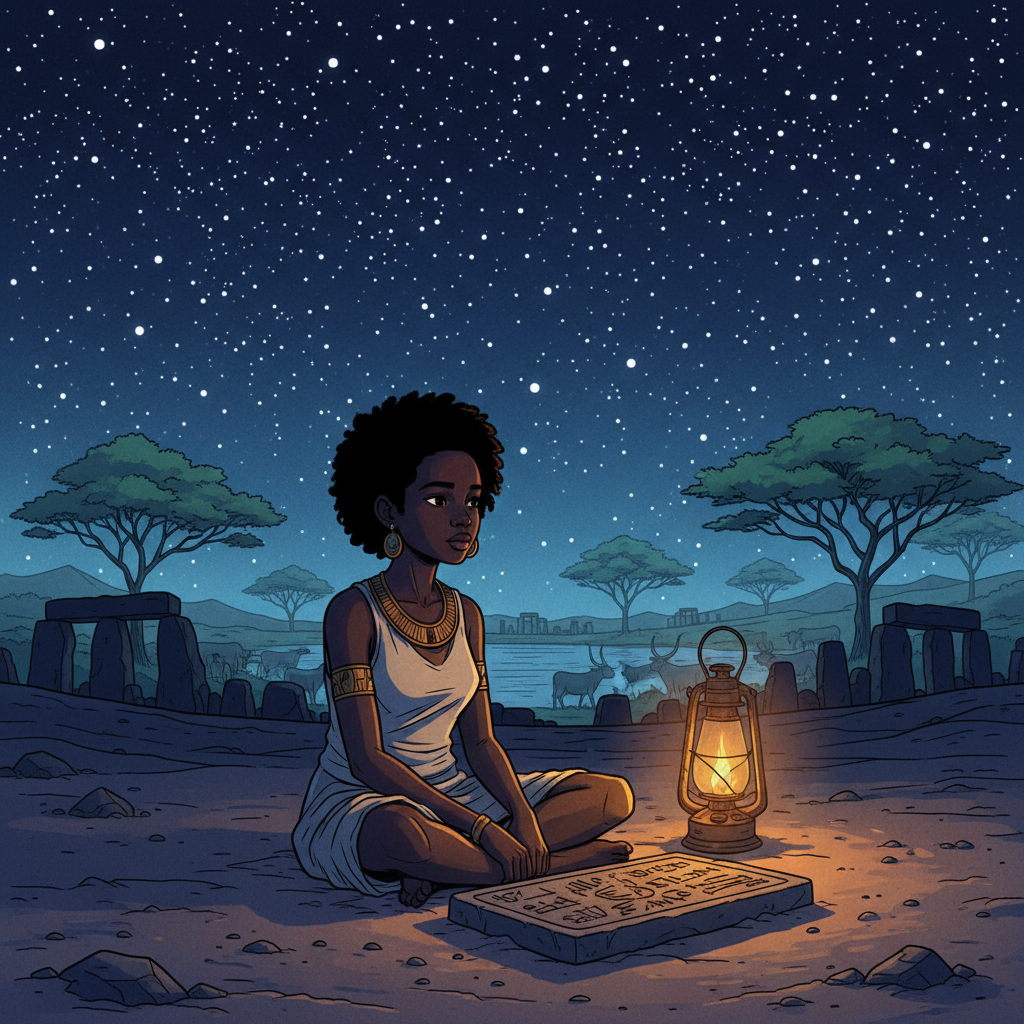
Nefertari sat cross-legged on the cool sand, her ebony skin blending with the dark of the desert night. She tried to imagine the people who had first placed these stones. They had lived when the land around Nabta Playa was not desert at all, but green savanna dotted with lakes and cattle. The rains came every summer then, and the stars told the people when the rains would arrive. This was why star watching mattered. It was not just wonder. It was survival. Knowing when the rains would come meant knowing when to plant, when to move the herds, when to store water. The sky was the first calendar, and the astronomers who read it held the life of their people in their understanding.
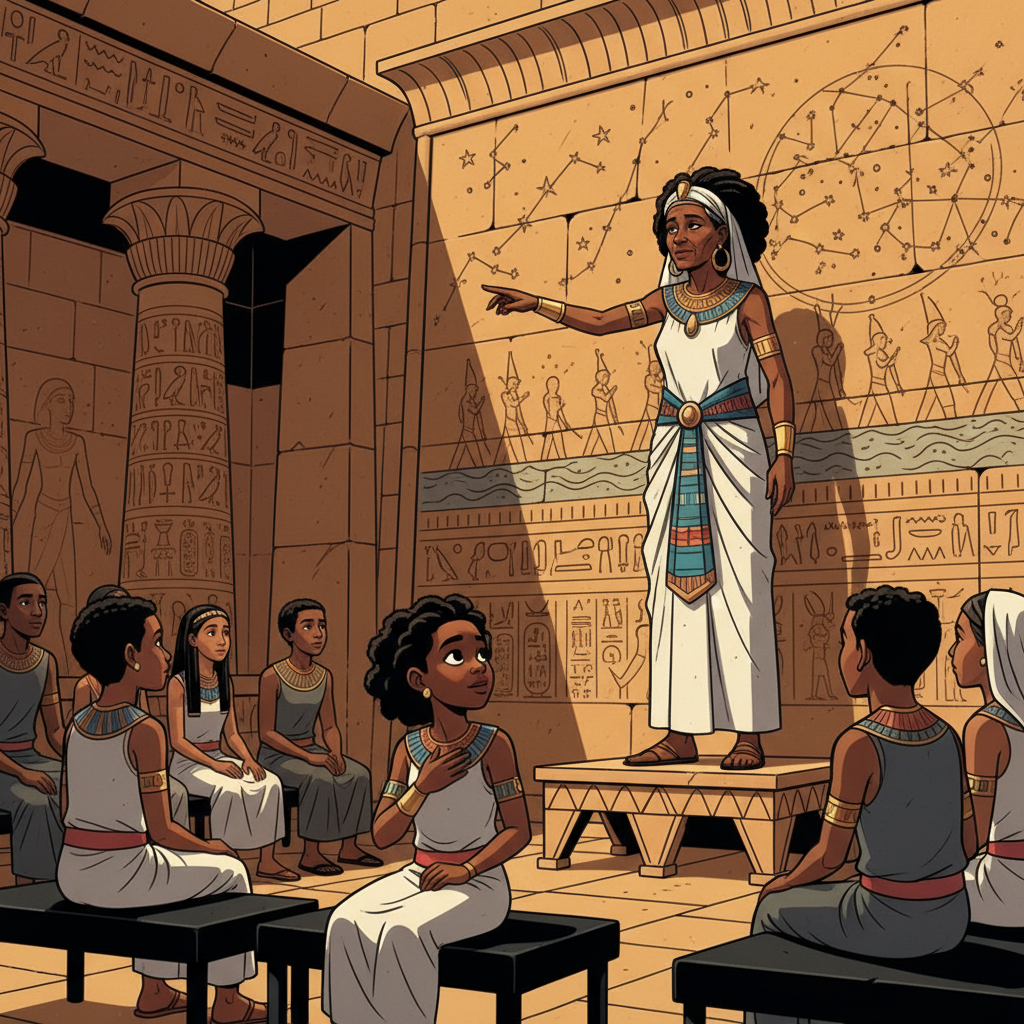
"When the rains began to fail," Takhat continued, her voice growing quieter, "our people followed the nile northward. They carried the knowledge of the stars with them. They carried the understanding of maat. And in the rich black soil of the river valley, they built kemet — the great civilization that the Greeks would one day call Egypt." Nefertari felt something stir in her chest, a warmth that had nothing to do with the desert heat. The connection was unbroken. The astronomers of Nabta Playa were not a separate, forgotten people. They were the root. Their knowledge of the solstice, of star alignments, of cosmic order — all of it flowed downriver into the temples and pyramids of kemet like water feeding the delta.
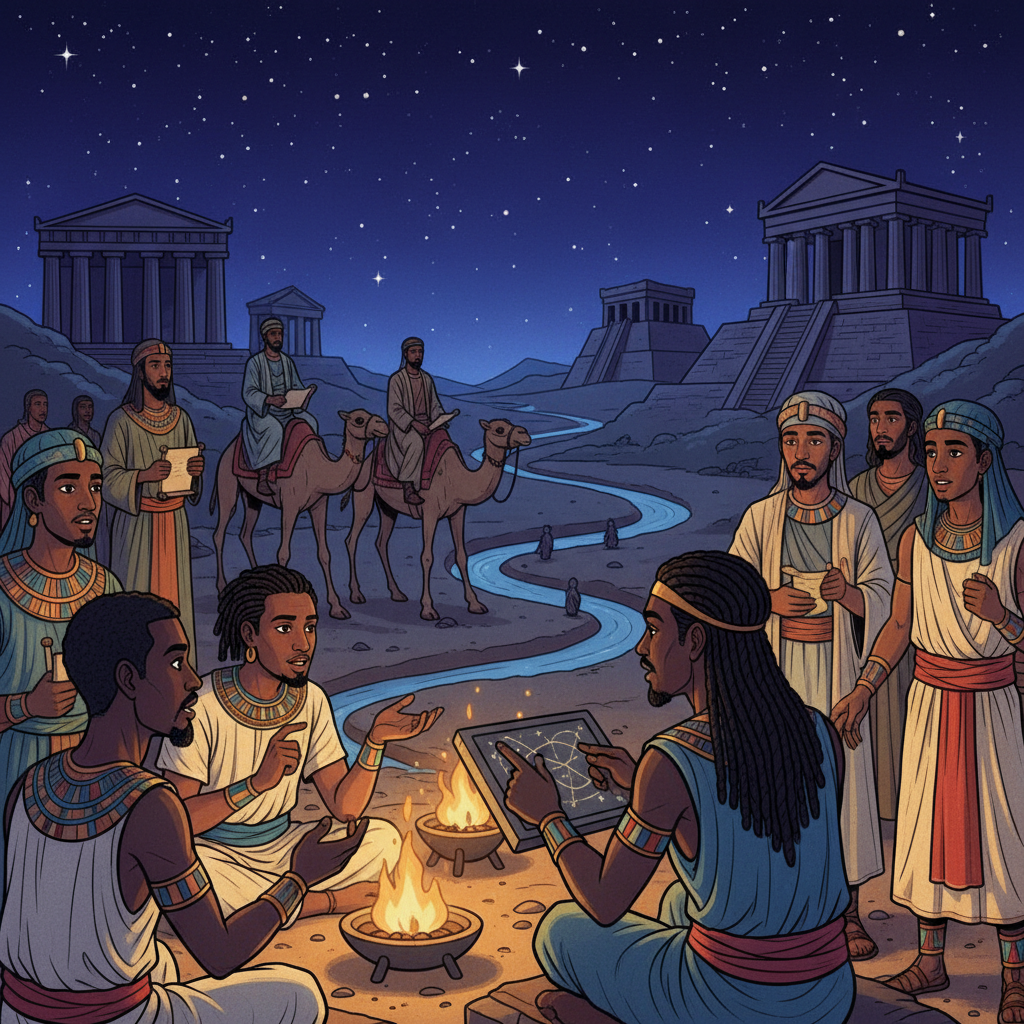
Travelers came from far down the nile and from the kingdom of kush to the south, and from lands beyond the western hills, to learn from the star watchers. There were no walls or borders to stop them. Knowledge was meant to flow like water, connecting all people under the same sky. Scholars arrived with questions and left with new ways of seeing the world. Some of these travelers carried the knowledge even further — across the sea to Greece, to Mesopotamia, to lands whose names have been lost to time. The great Greek thinkers who later wrote about astronomy learned from kemet. The concept of a year divided into three hundred and sixty-five days did not begin in Athens. It began in Africa, under these very stars.
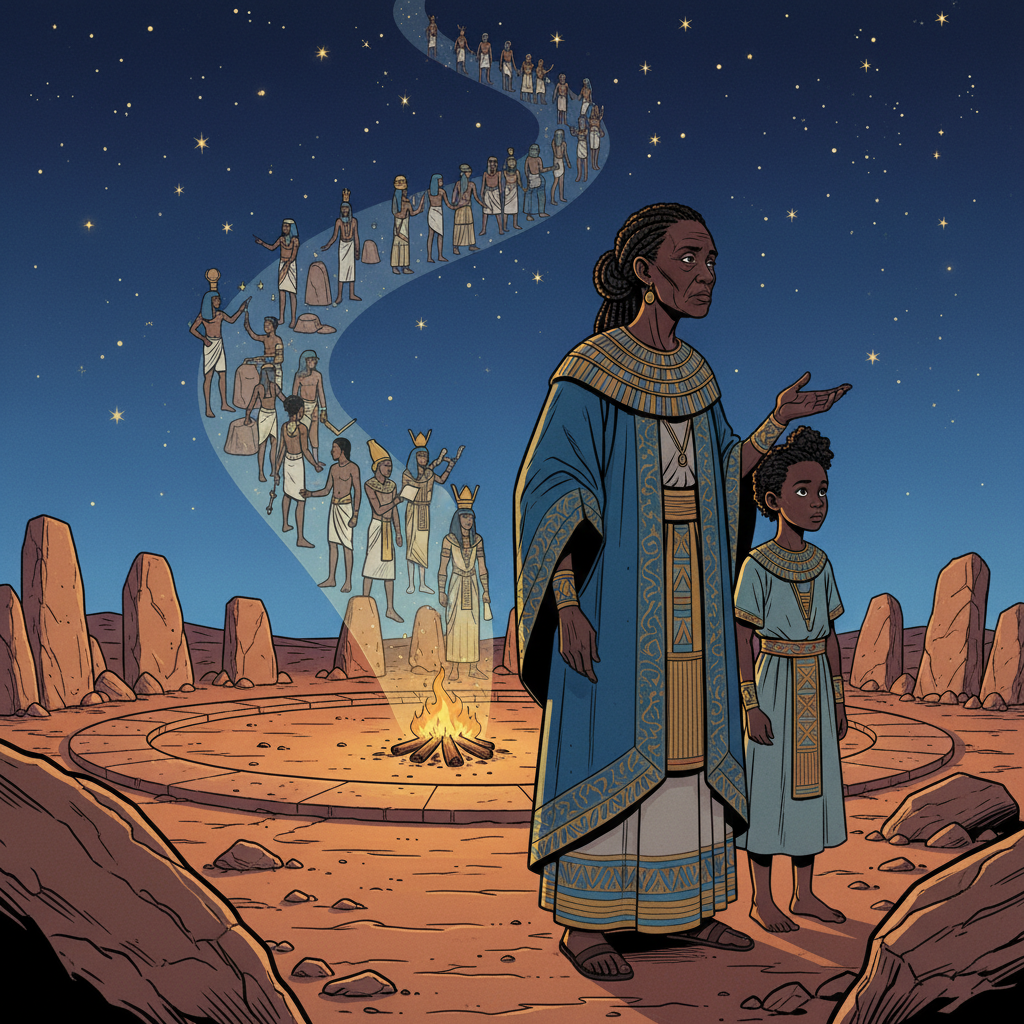
"What happens when people forget the stars?" Nefertari asked. Her grandmother's ebony face grew serious. The lines around her dark eyes deepened. She did not answer right away. Instead, she looked out across the stone circle as though she could see something Nefertari could not — a long procession of years, full of both remembering and forgetting. "That is isfet — chaos," Takhat finally said. "When people ignore the patterns of the universe, they lose their way. They forget that the same stars shine over every land and every people. They begin to believe that knowledge belongs only to them, that wisdom started with their own grandfathers. And that forgetting is a kind of violence, Nefertari. It erases the ka of those who came before."
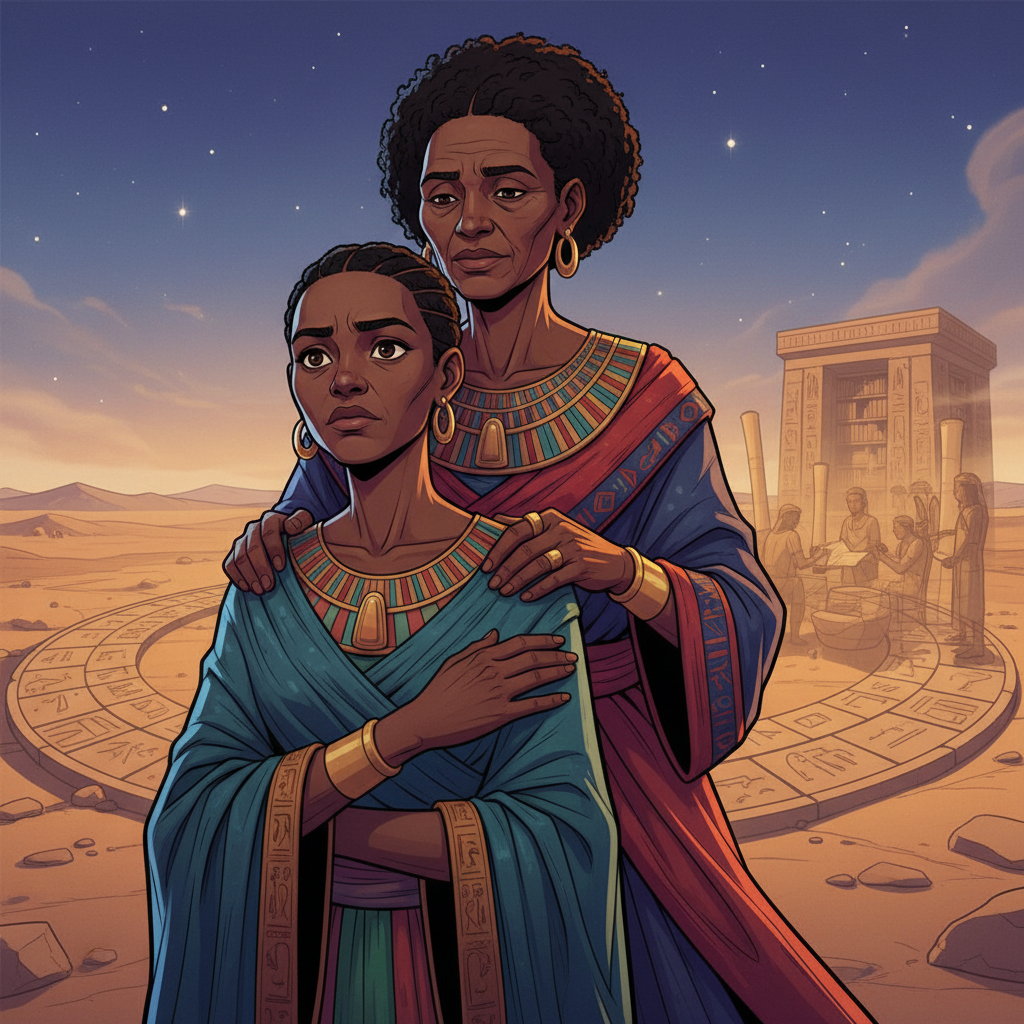
Nefertari felt a heaviness settle over her. She thought about the travelers who came to learn but did not always speak of where they had learned it. She thought about how easy it was for a story to be lost — not destroyed by fire or flood, but simply left out. Unmentioned. Passed over. A silence where there should have been a name. Takhat placed a hand on her granddaughter's shoulder. "Do not carry this as anger," she said gently. "Carry it as duty. The per ankh — the house of life where our scribes preserve all knowledge — teaches us that truth must be written down and spoken aloud in every generation. If one generation stays silent, the chain breaks. You must not be a silent generation."
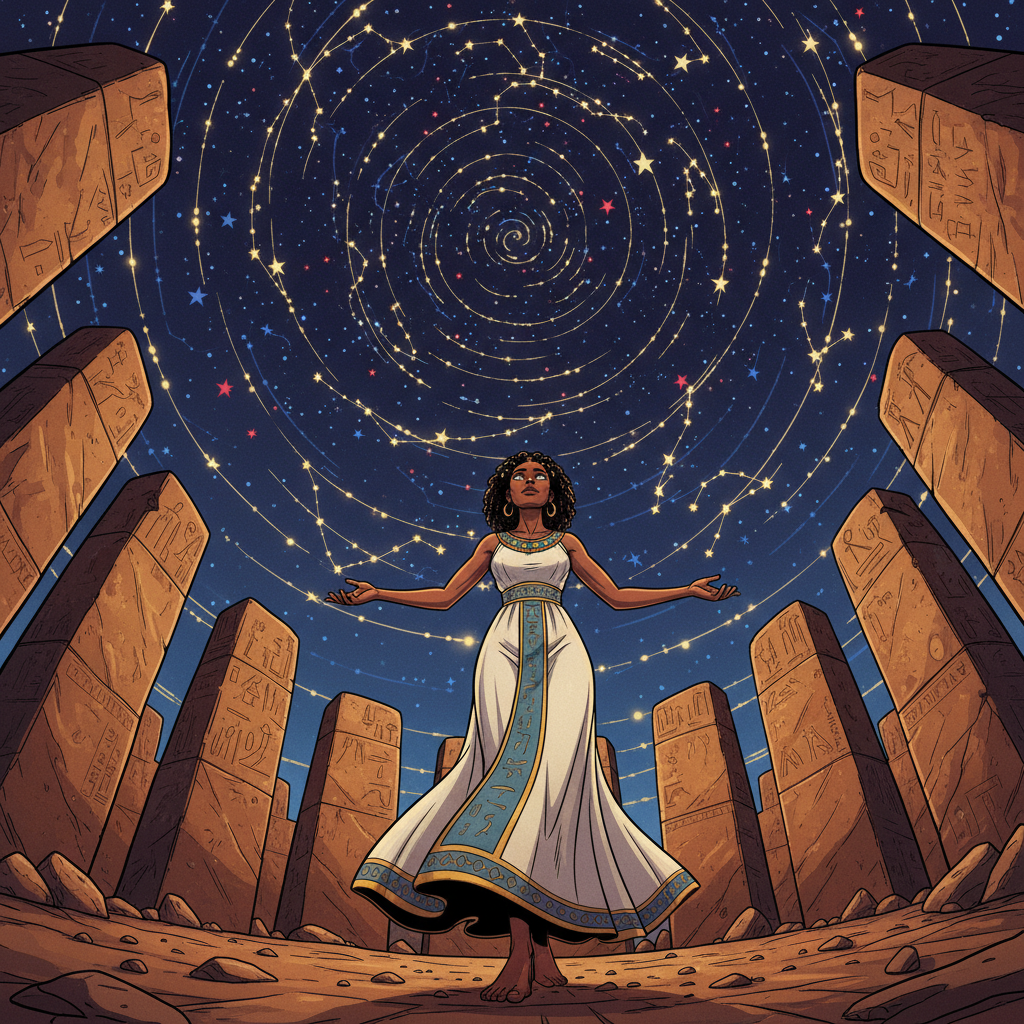
Nefertari stood and walked to the center of the stone circle. She turned slowly, looking at each stone in turn. She began to understand that this was not just an ancient ruin. It was a classroom. It was a temple. It was a library written in rock instead of papyrus. Every stone was a sentence. Every alignment was a paragraph. The whole circle was a book that had been open for seven thousand years, waiting for anyone willing to read it. She thought of the per ankh, the great houses of life in kemet where scribes recorded everything from medicine to mathematics. The roots of those houses were here, in this circle. The first per ankh had no walls. Its ceiling was the sky itself, and its pages were made of starlight and stone.
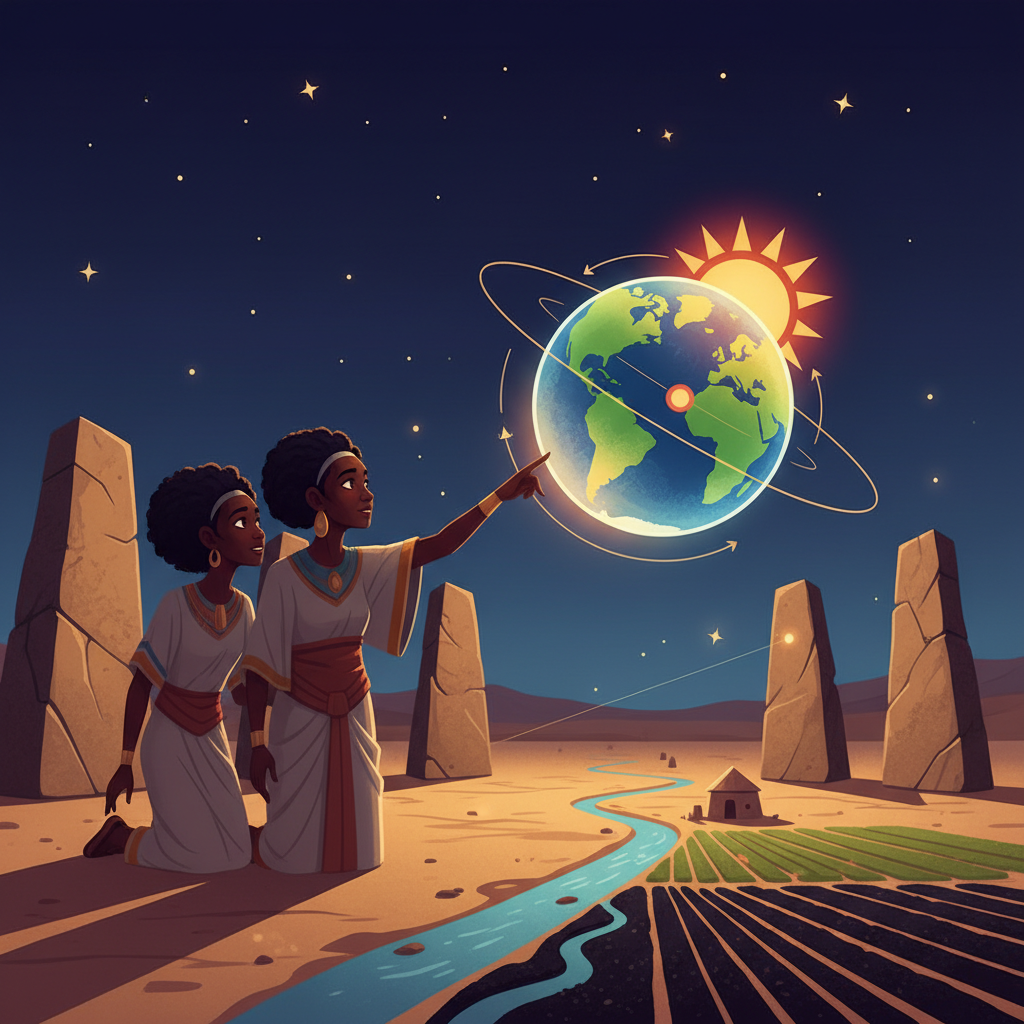
Takhat began to teach her the deeper science. She explained how the astronomers of Nabta Playa had understood that the earth tilted on its axis, and that this tilt was what created the seasons. She showed how certain stones marked not just the solstice, but the rising points of specific stars at specific times of year. By watching which stars appeared just before dawn, the ancient watchers could predict the flooding of the nile months in advance. "This knowledge fed millions," Takhat said. "The floods brought rich black soil to the farmlands. If you knew when the flood was coming, you could prepare. You could plant at the right time. You could store enough grain. Astronomy was not separate from life. It was the foundation of life."
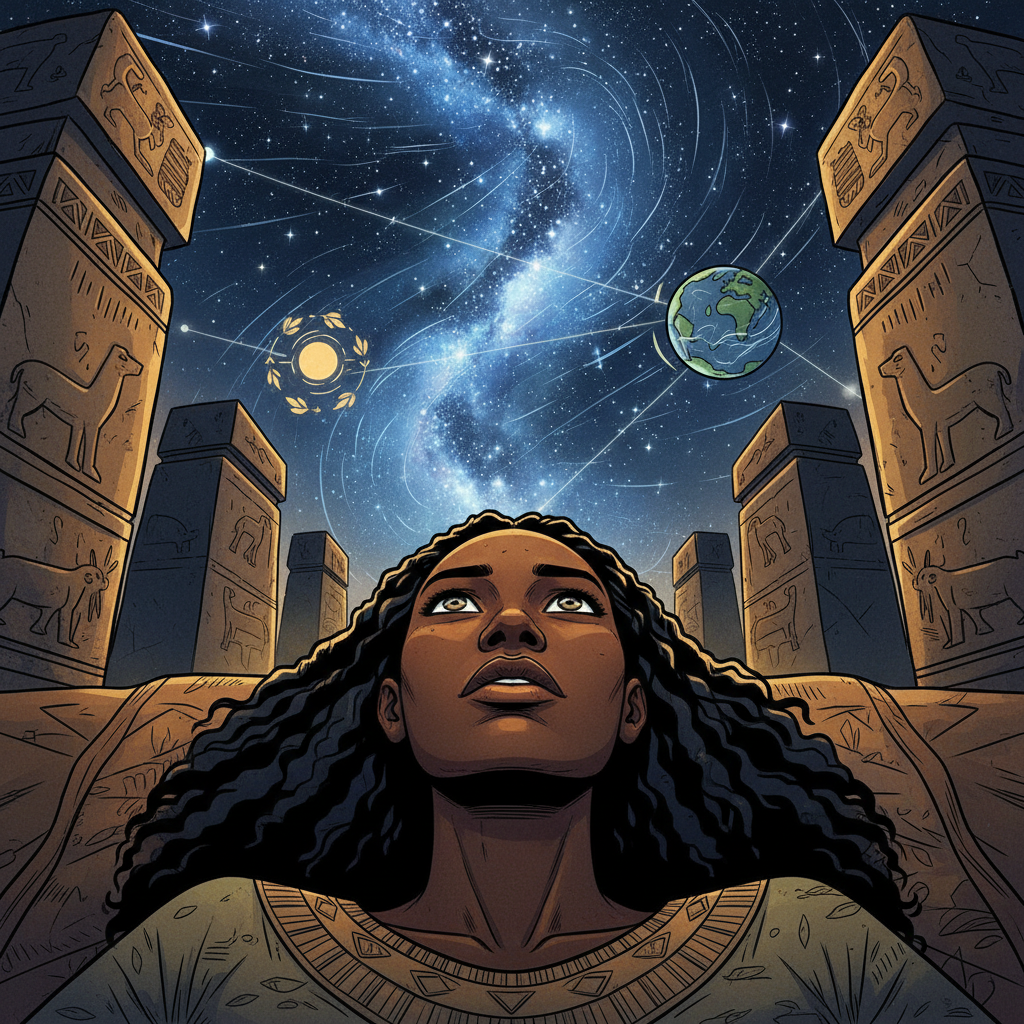
The night deepened. The bright river of stars — what some called the Milky Way — blazed overhead like a road made of light. Nefertari lay on her back and let the sky fill her vision entirely. For a moment, she felt very small. Then she felt something else — not smallness, but connection. She was part of the same order that turned the stars and pulled the tides and made the seasons change. This was maat at its deepest. Not just rules for people to follow, but the fundamental harmony of the universe itself. The stars moved in patterns. The planets followed paths. The floods came and went in cycles. Everything was connected, and the ancient astronomers had been the first to see those connections clearly and record them for those who would come after.
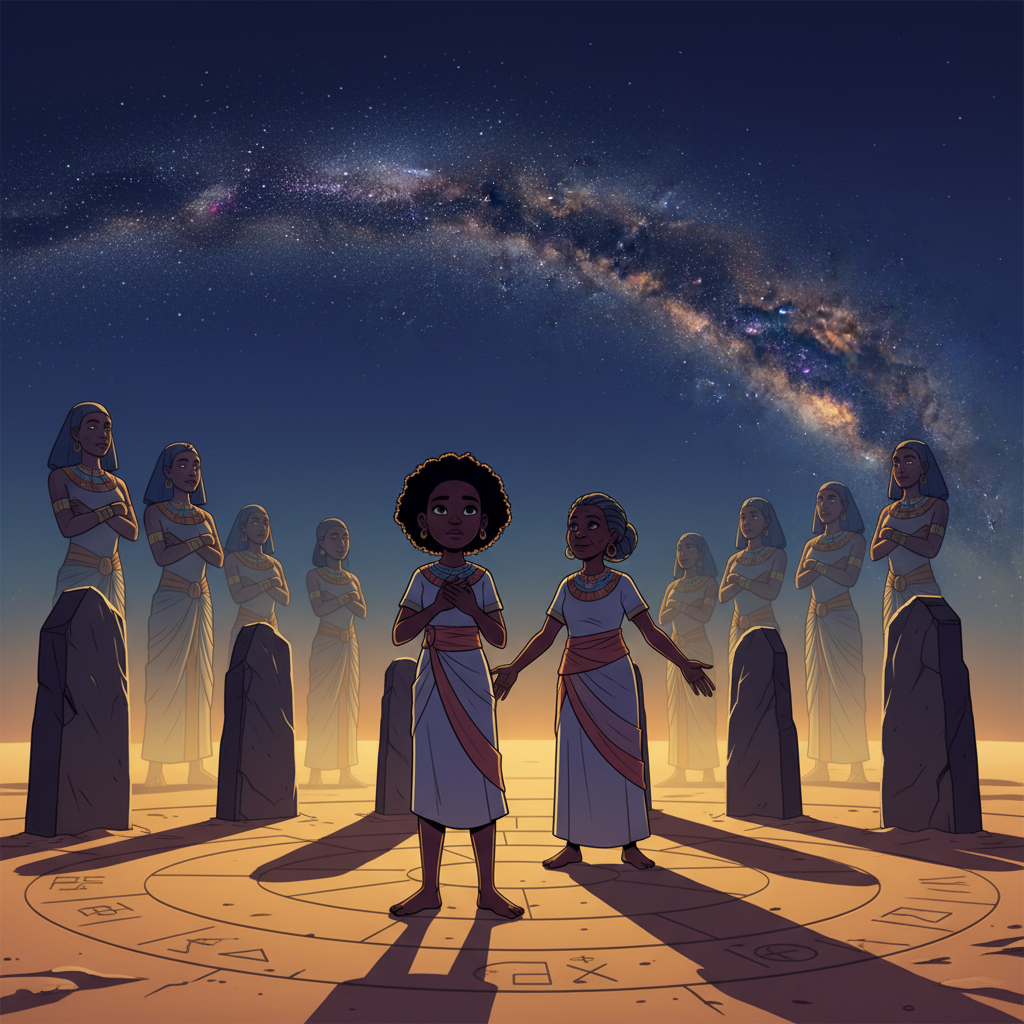
Nefertari looked up and made a promise beneath the ancient sky. She would carry this knowledge forward, just as her ancestors had carried it for thousands of years. She would speak the names that others left unspoken. She would teach her own children to read the heavens and to understand that the roots of astronomy grew from African soil. The stars did not belong to one people. They belonged to everyone willing to look up and learn. But the history of who watched them first — that belonged to the truth, and the truth must not be buried. "I will remember," she whispered to the stones, to her grandmother, to the sky. And somewhere in the silence that followed, she felt the ka of every ancestor who had ever stood in this circle whispering back: we know you will.
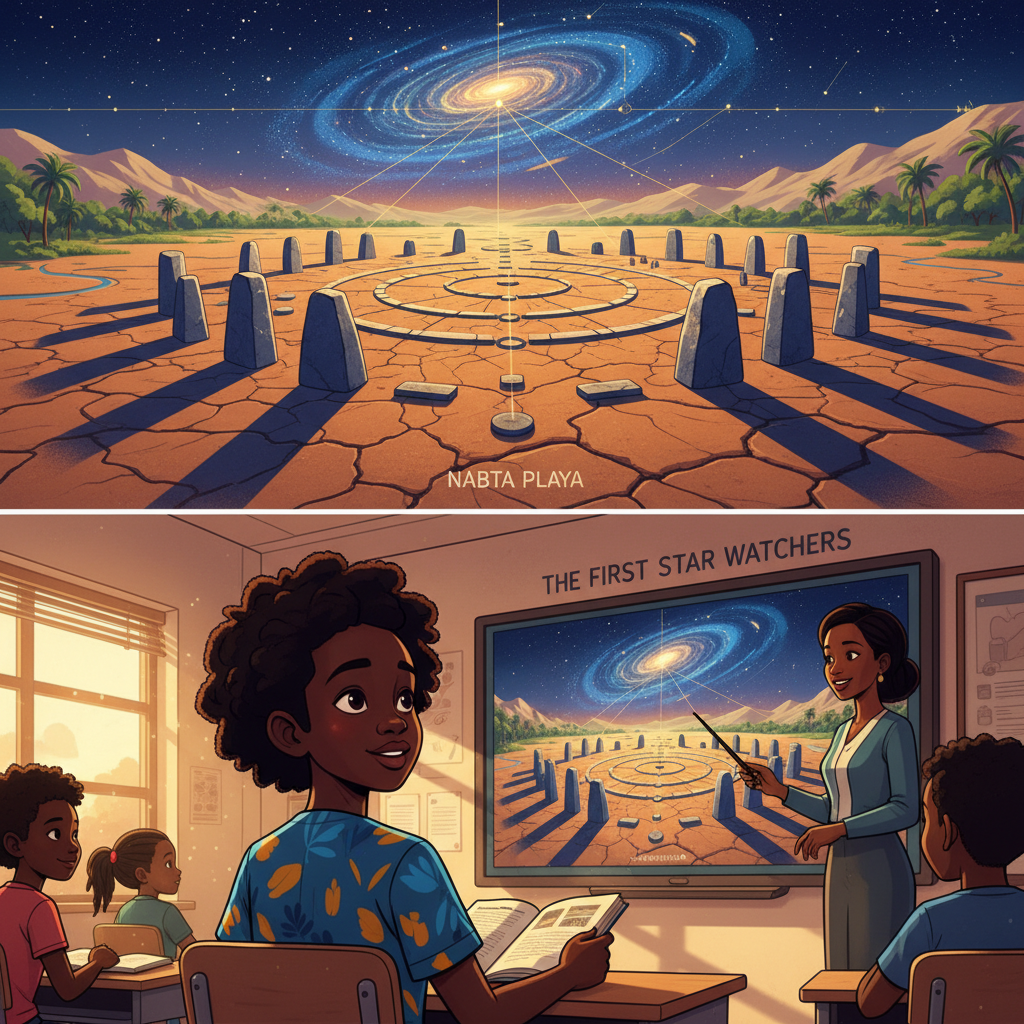
Today, scientists study the stones of Nabta Playa and marvel at what those ancient African astronomers knew. Satellite images reveal the precision of alignments that were laid out thousands of years before the first pyramid rose at Giza. Archaeologists have confirmed that these structures are among the oldest astronomical monuments on Earth. Yet many textbooks still skip their story. Many classrooms teach the history of science as though it began in Greece or Rome, leaping over the African foundations as though they were not there. Remembering the truth of who watched the stars first — that, too, is maat. And every time a young person learns this history, every time a teacher speaks these names, the chain that Nefertari promised to protect grows one link stronger. The stones still stand. The stars still turn. And the truth, like starlight, cannot be stopped — only delayed on its long journey to reach waiting eyes.