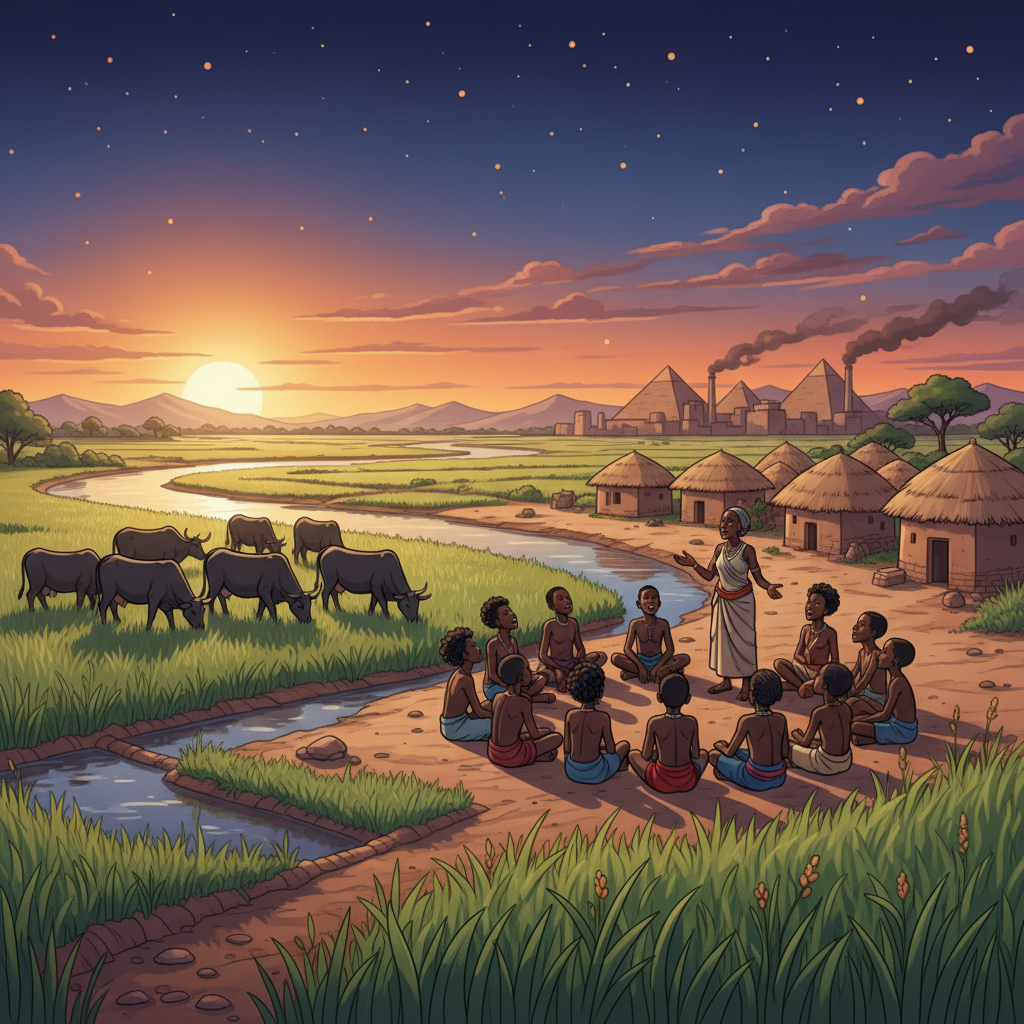
The village of Ayo's birth sat like a jewel in the curve of the Nile, not far from the ancient city of Meroe, where the great iron furnaces had once lit the night sky like captured stars. The people here had thrived for generations, their deep ebony skin glowing with health in the golden light of each new morning. The fields stretched green and abundant along the riverbank, irrigated by channels their ancestors had dug centuries ago, and the cattle moved in slow, fat herds through grass that grew tall enough to brush a child's shoulders. This was a village that lived in Maat. The elders settled disputes with wisdom passed down through oral tradition. The farmers read the sky and the soil the way scribes at the Per Ankh read papyrus — with patience, precision, and reverence. Children learned songs that held the names of every ancestor back seven generations, and those songs were sung each evening as the stars appeared above the Nile like diamonds scattered across dark cloth. No one here was hungry. No one here was forgotten.
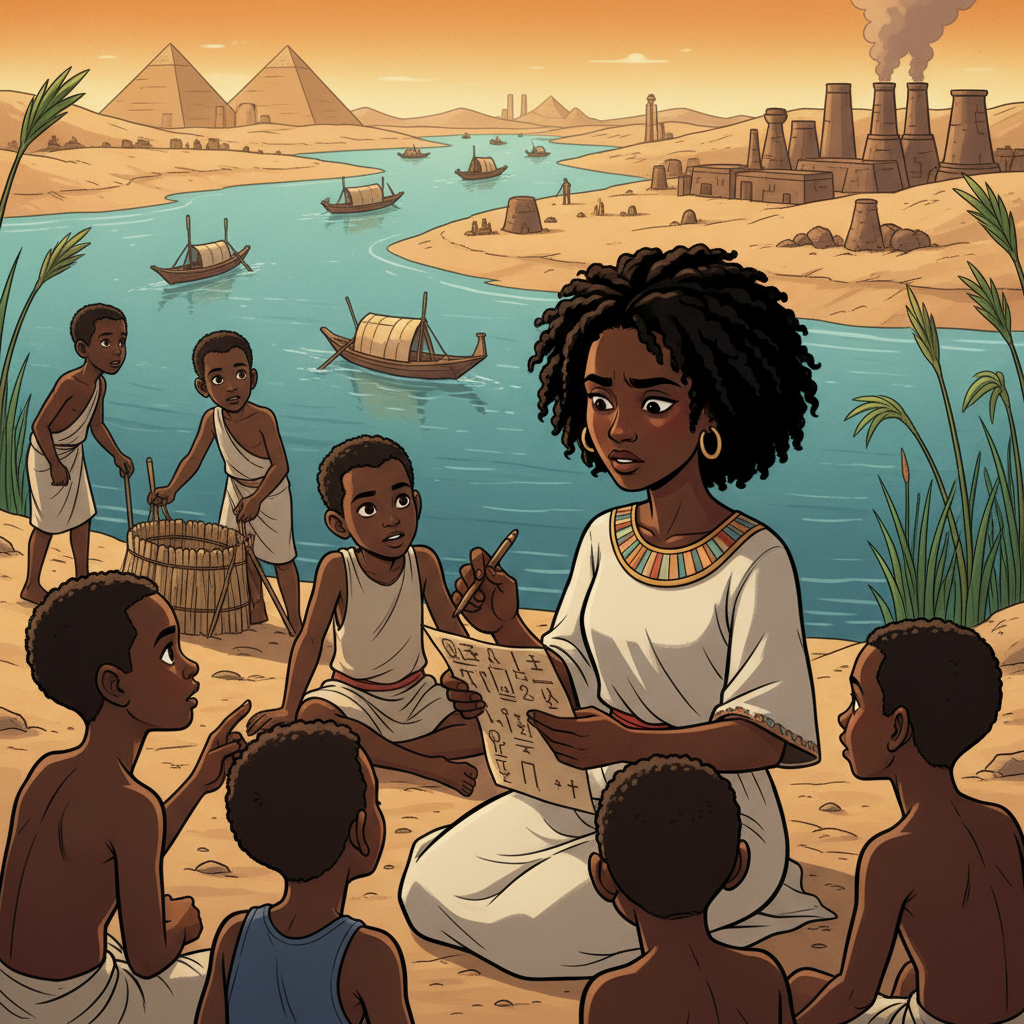
Sixteen-year-old Ayo moved through this world with the restless energy of someone whose mind was always reaching beyond the horizon. Her skin was like polished obsidian, so deep and luminous that sunlight seemed to sink into it and glow from within. She was the sharpest student the village school had ever produced — quick with numbers, fluent in three languages, and possessed of a memory that could hold an entire conversation and replay it word for word days later. But Ayo carried a quiet frustration that she shared with no one. She had begun to wonder whether the old ways were enough. Traders who passed through from Napata and beyond brought stories of new medicines, new tools, new ways of thinking that made Ayo's pulse quicken. She loved her village, but she sometimes felt that clinging to ancient traditions was like trying to hold the river in your hands — the world was flowing forward, and she wanted to flow with it.
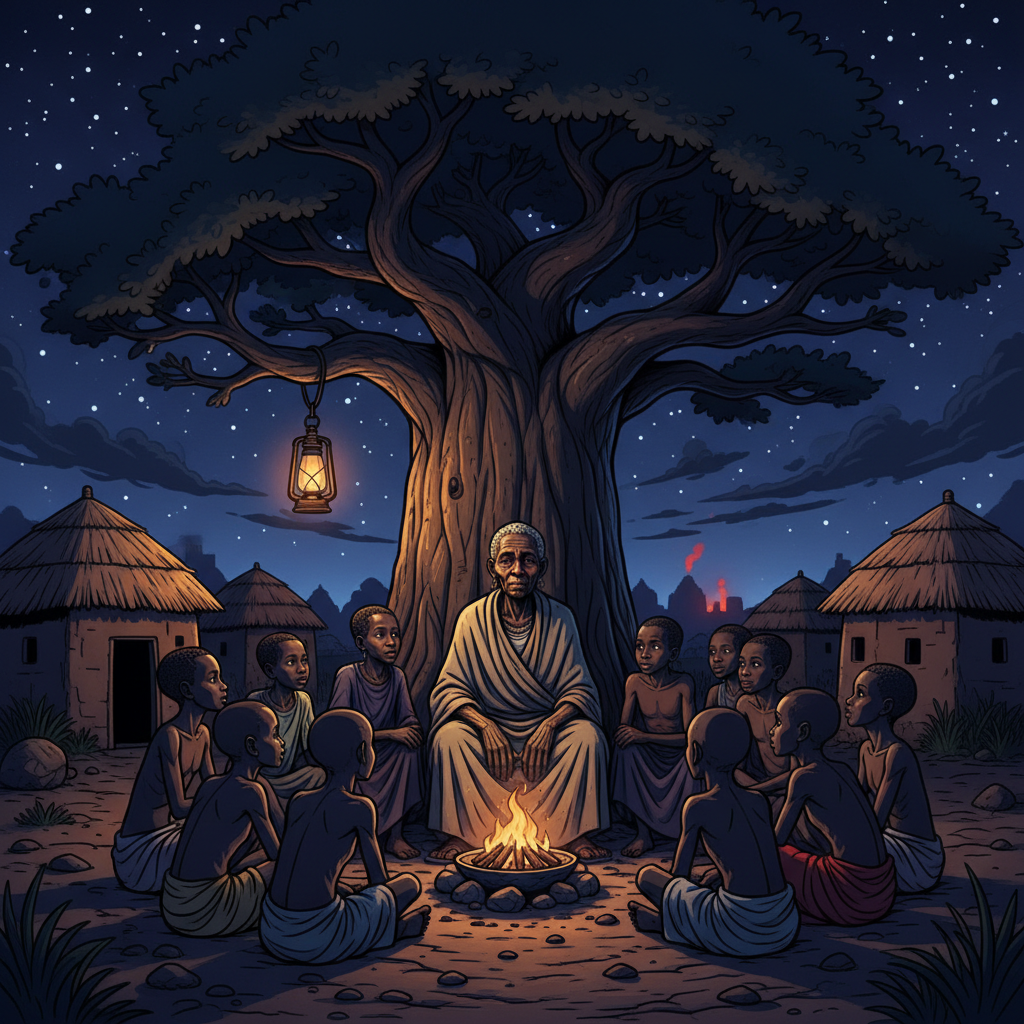
Grandmother Kamara sat beneath the great baobab tree at the village center, her ancient body still as carved stone, her ebony skin creased with one hundred and four years of living. Her hands, dark and weathered like the bark of the tree above her, rested in her lap with the calm of someone who had long ago made peace with time. Children gathered around her each afternoon, drawn to her the way moths are drawn to lamplight, for Kamara held something more valuable than gold or iron — she held the memory of the people. Kamara had been born when the village was half its current size. She had survived two droughts, a locust plague, the death of three husbands, and the birth of eleven children, seven of whom still lived. Her ka burned with a steady flame that nothing seemed able to extinguish. The healers said she was kept alive by purpose — that the ancestors would not call her home until her work of remembering was complete.
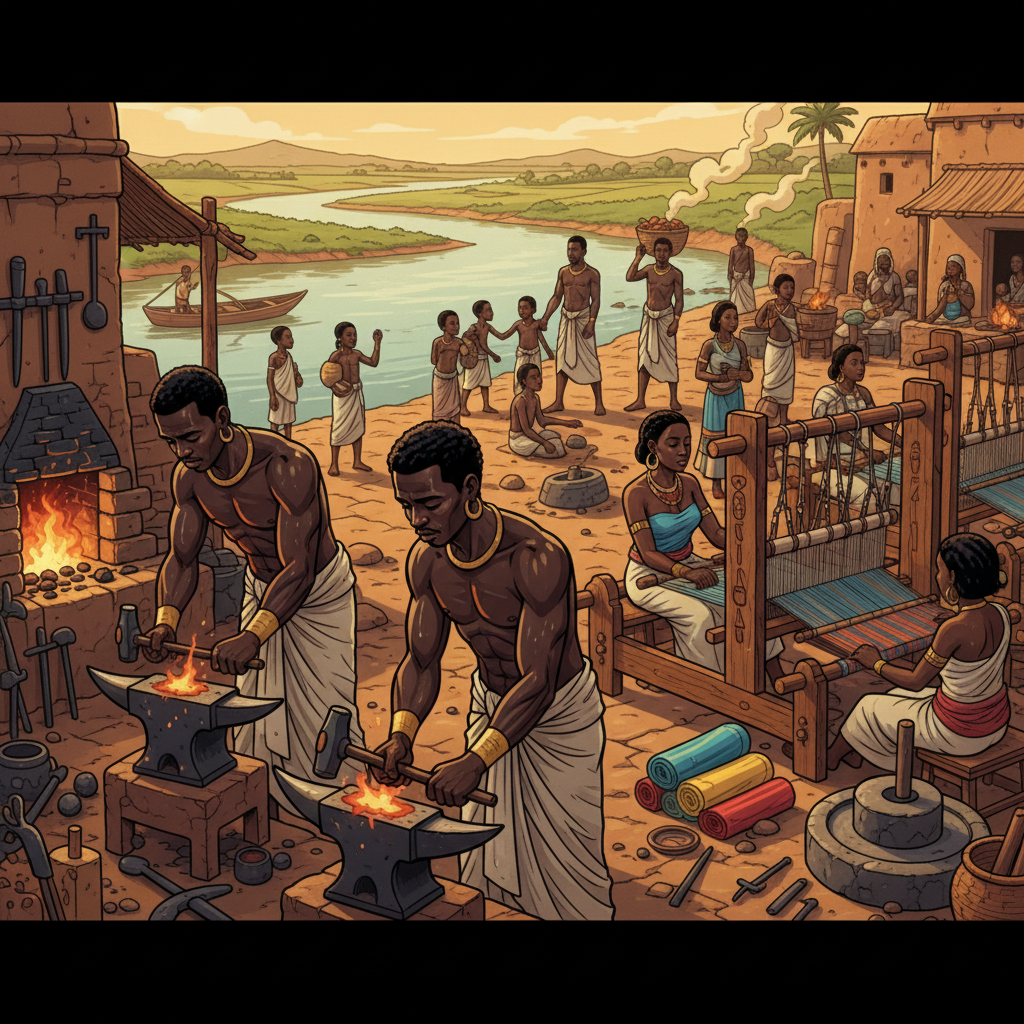
In those prosperous days, the village hummed with life like a well-tuned instrument. The blacksmiths hammered iron tools using techniques inherited from the master smelters of ancient Meroe, their dark muscular arms shining with sweat as sparks flew like tiny stars. The weavers produced cloth so fine that traders carried it all the way to the markets of Kemet. The brewers made a sorghum beer that was famous along the upper Nile, and visitors from distant villages would travel days just to taste it. The children played in the shallows of the river, their laughter carrying across the water like music. Mothers sang while grinding grain, their voices blending into harmonies that seemed to rise from the earth itself. The men returned from the fields each evening with baskets heavy with millet and sorghum, and the smell of cooking fires filled the air with warmth and promise. It was a life of abundance — not the abundance of excess, but the abundance of enough. This was Maat made visible.
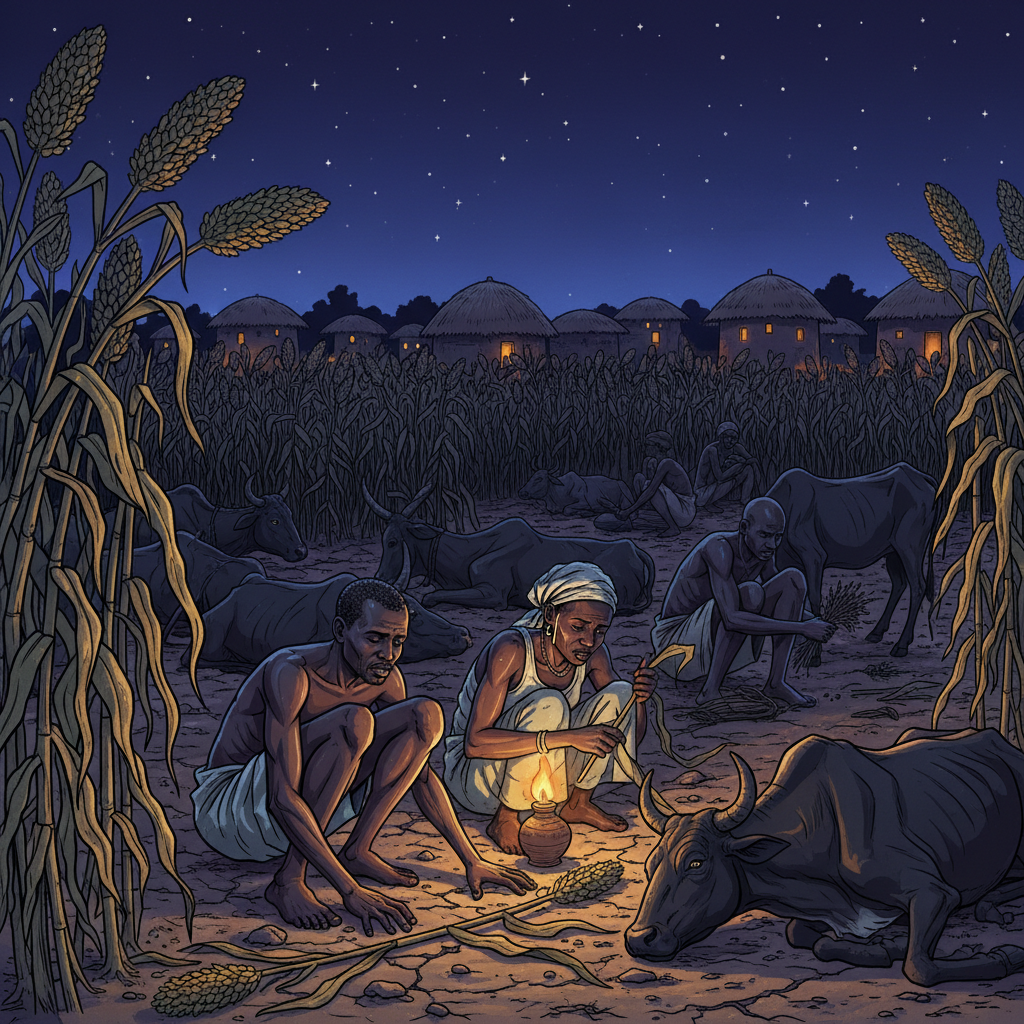
Then the sickness came. It arrived without announcement, without warning, like a thief slipping through an unlocked door. First it touched the cattle. Three cows refused to eat one morning, standing still with glassy eyes and trembling legs. By the next day, seven more had fallen. The herdsmen tried every remedy they knew — herbs, smoke, prayer — but the cattle continued to sicken, their dark bodies growing thin and weak until they could no longer stand. Within a week, the crops began to wither. The sorghum stalks that had stood tall and green turned yellow at the tips, then brown, then collapsed as if something invisible was pulling the life from their roots. The farmers dug into the soil with desperate hands, searching for insects or rot, but found nothing they could name. A silence fell over the fields that was more frightening than any sound — the silence of things dying without explanation.
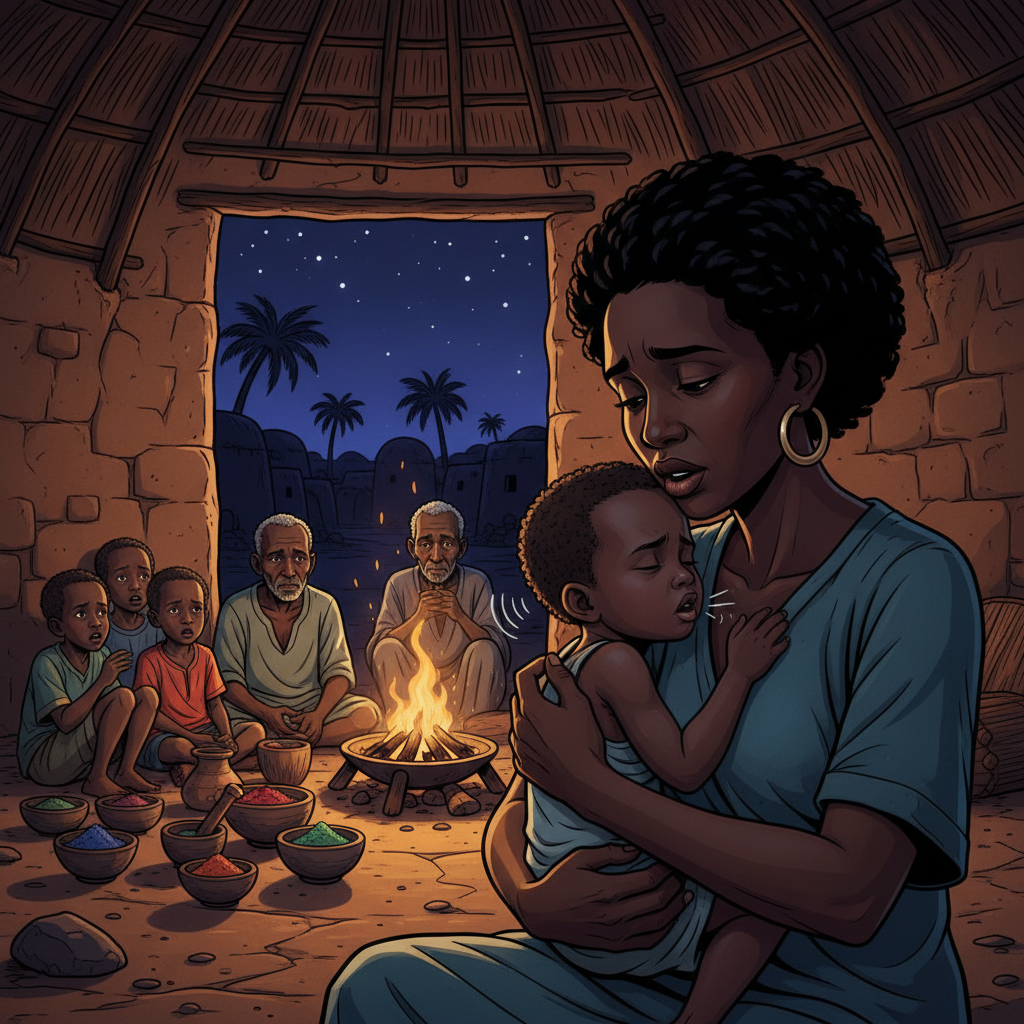
Then the children began to cough. It started with the youngest — little Kesi, barely three years old, whose deep brown skin had always glowed with health. One morning she woke with a rattling in her chest that sounded like dry seeds shaking in a gourd. Her mother held her close, dark arms wrapped tight around the small body, and whispered prayers into her daughter's ear. But by nightfall, four more children were coughing, and by the following dawn, the sound of sick children filled the village like a terrible chorus. The elders recognized Isfet when they saw it. This was not ordinary illness — this was chaos spreading through the fabric of their world, unraveling the order that had held for generations. The healers worked without rest, their ebony hands mixing every medicine they knew, but nothing slowed the sickness. Fear crept into the village like smoke under a door, filling every home, every heart, every whispered conversation with dread.
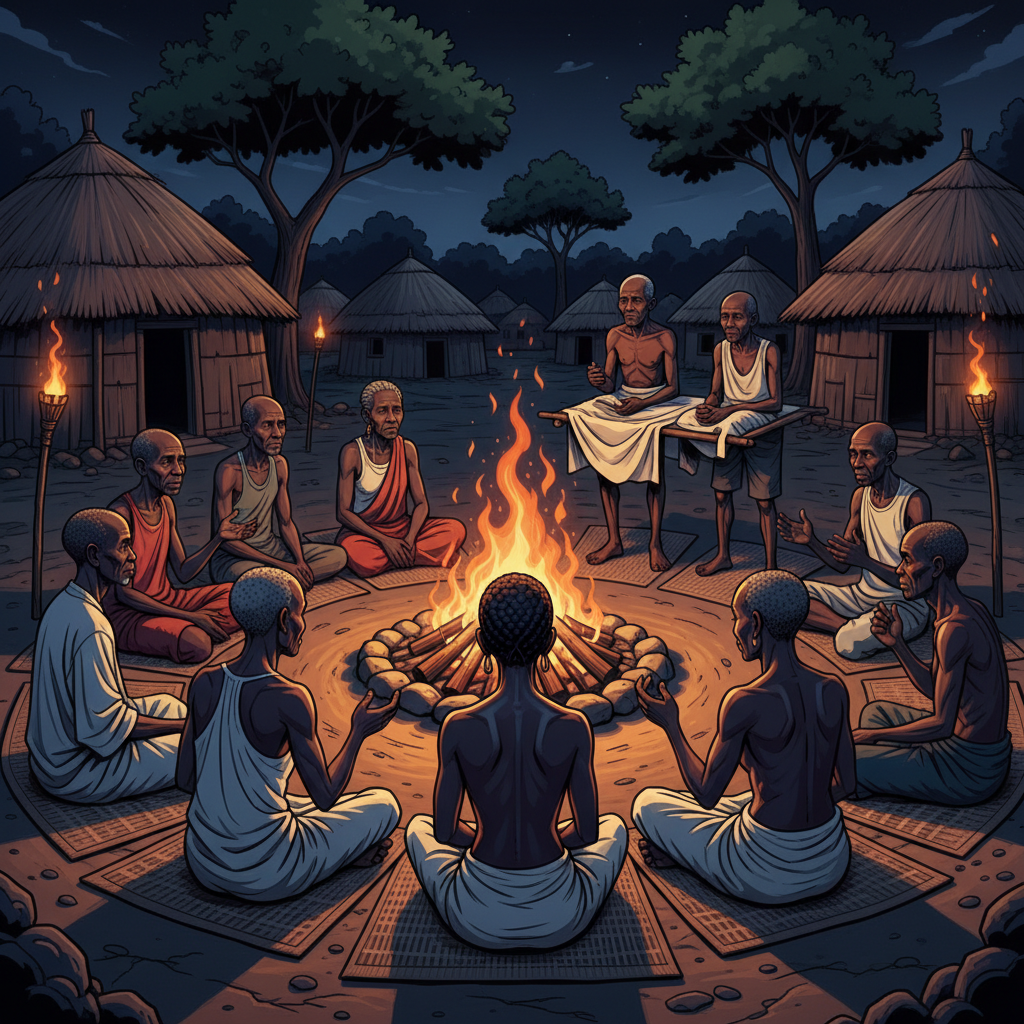
The village council gathered by torchlight on the seventh night of the sickness. Twelve elders sat in a circle around the central fire, their dark faces painted in flickering orange and shadow. The youngest among them was Ayo, who had earned her seat through brilliance and determination. She sat with her back straight and her obsidian skin gleaming, but her hands trembled in her lap. She had spent the day helping the healers, and the sound of children coughing still echoed in her ears. The eldest among them was Kamara, who had been carried to the council circle on a litter borne by her grandsons. She sat wrapped in a white cloth, her ancient frame so slight that the wind seemed capable of carrying her away. But her eyes — dark, deep, and sharp as obsidian blades — missed nothing. She watched each council member speak, and she listened with the patience of someone who understood that the most important words are often the last ones spoken.
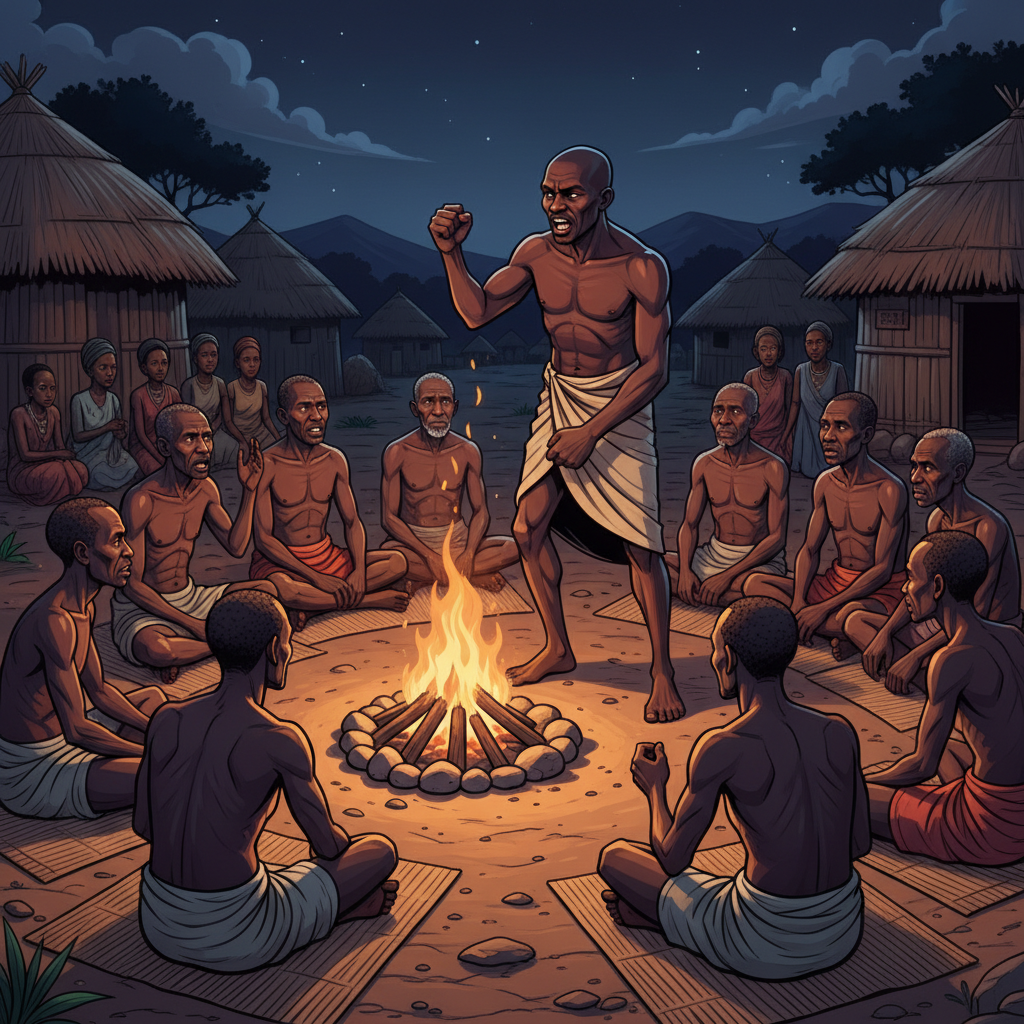
The debate that followed was fierce. Mensah, a broad-shouldered man with skin like dark river clay, argued that they should send runners to the nearest city for modern medicine. He had traveled to Khartoum in his youth and seen the clinics there — rooms full of bottles and instruments that could diagnose and cure ailments the village healers had never encountered. His deep voice shook with urgency as he spoke. "Our children are dying," Mensah said, his dark fist striking his knee. "This is not a time for stories and songs. We need medicine — real medicine, the kind that comes in bottles with labels, tested and proven. The old ways have failed us. Every hour we spend debating is an hour our children spend suffering." Several council members nodded. The fear in their eyes was plain, and Mensah's words gave that fear a direction — away from the past, toward something new.
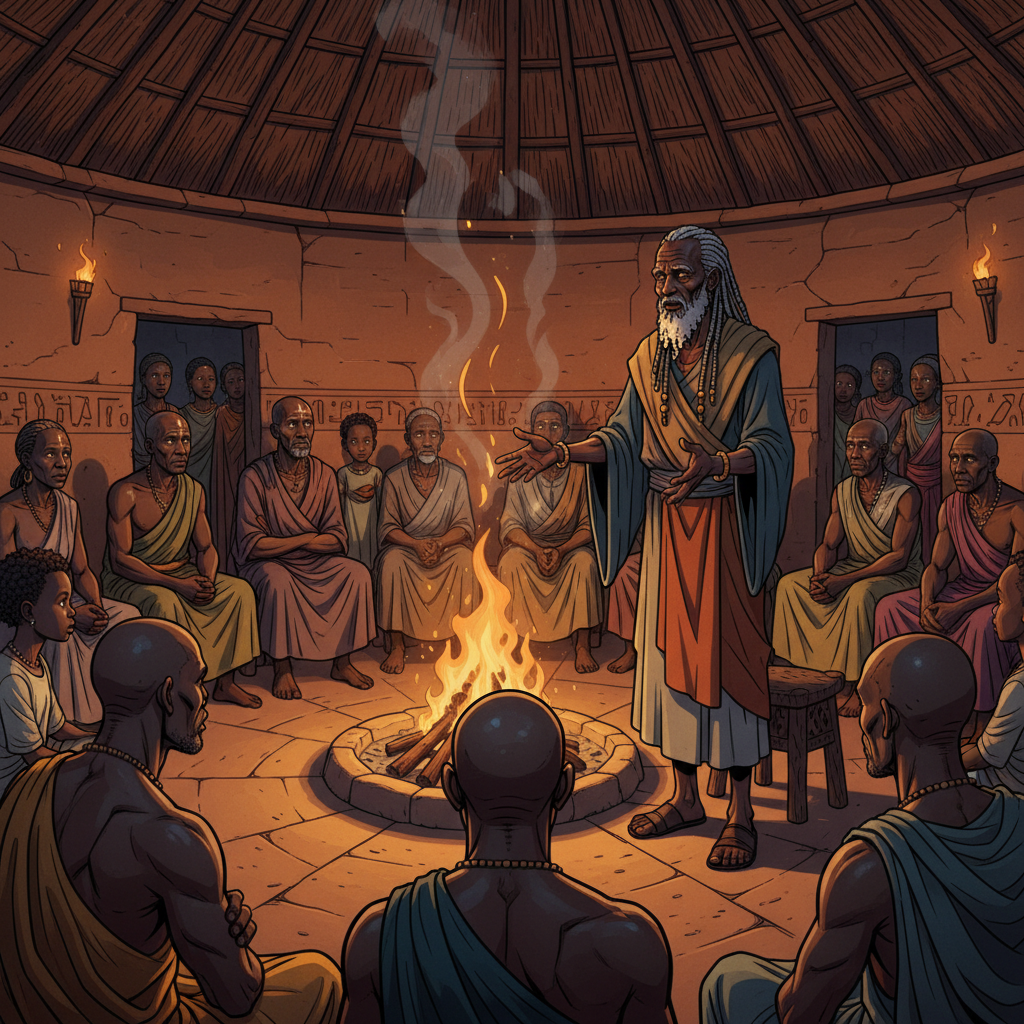
But old Diallo, the chief healer, rose to his feet with the careful slowness of a man whose joints had calcified around decades of purpose. His skin was deep mahogany, lined and scarred from a lifetime of service. His voice, when it came, was quiet but carried the weight of absolute conviction. He had treated every illness the village had faced for forty years, and he had never lost faith in the knowledge passed down through generations. "Mensah speaks from fear, and I do not blame him," Diallo said. "But the medicines of the city treat symptoms. They silence the cough without asking why the cough came. Our ancestors understood that illness is Isfet — an imbalance in the body, in the community, in the relationship between people and the land. You cannot cure Isfet with a bottle. You must restore Maat — the balance, the order, the harmony that holds everything together."
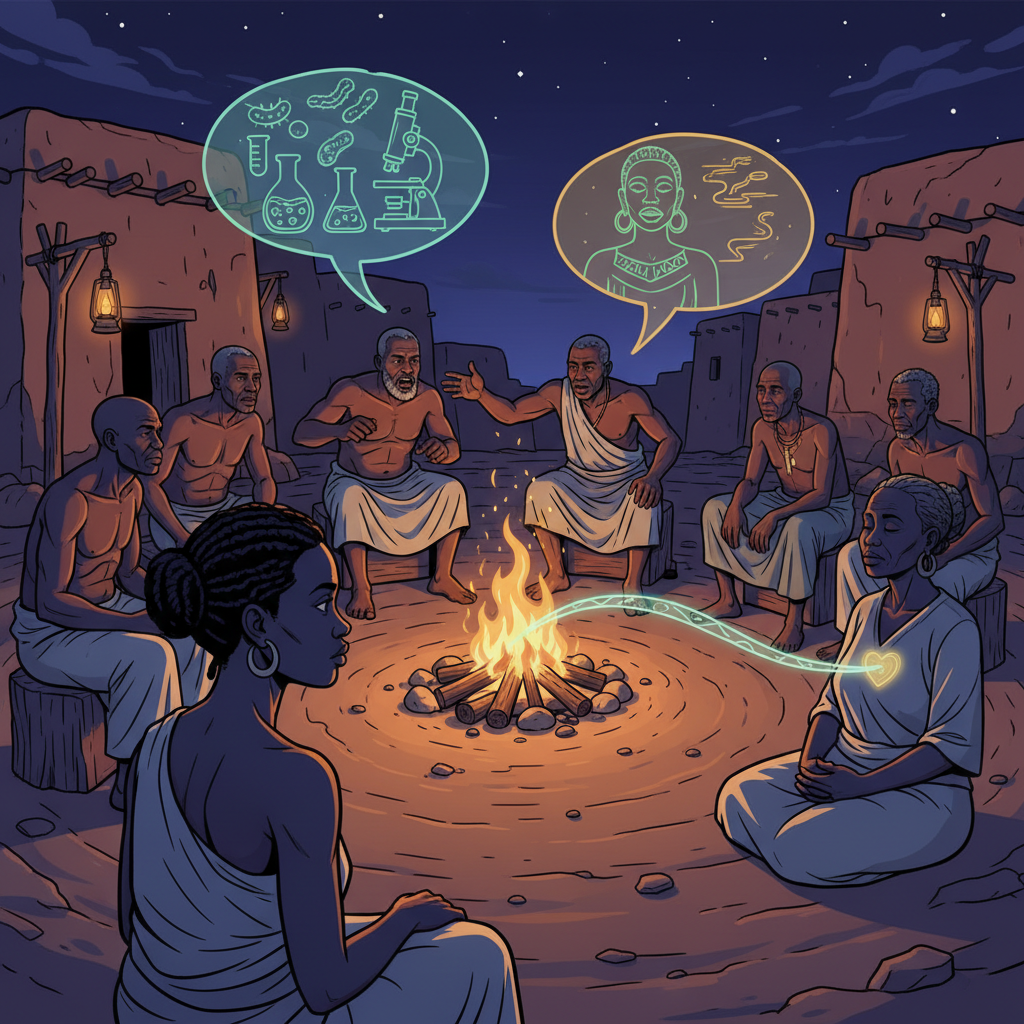
Ayo listened to both sides and felt herself torn in two. Part of her — the part that had always yearned for the world beyond the village — agreed with Mensah. She had read about modern medicine in books that traders brought. She knew about microscopes and bacteria and clinical trials. The scientific part of her mind whispered that oral tradition was unreliable, that memories distorted over time, that seven generations of retelling could transform a precise recipe into a fairy tale. But another part of her — the part connected to her ka, to the deep spiritual current that flowed through her people like the Nile itself — hesitated. She looked at Kamara, sitting silent and still as the others argued, and felt something she could not name. It was not logic. It was older than logic. It was the feeling of standing at the edge of a vast darkness and sensing, rather than seeing, a bridge.
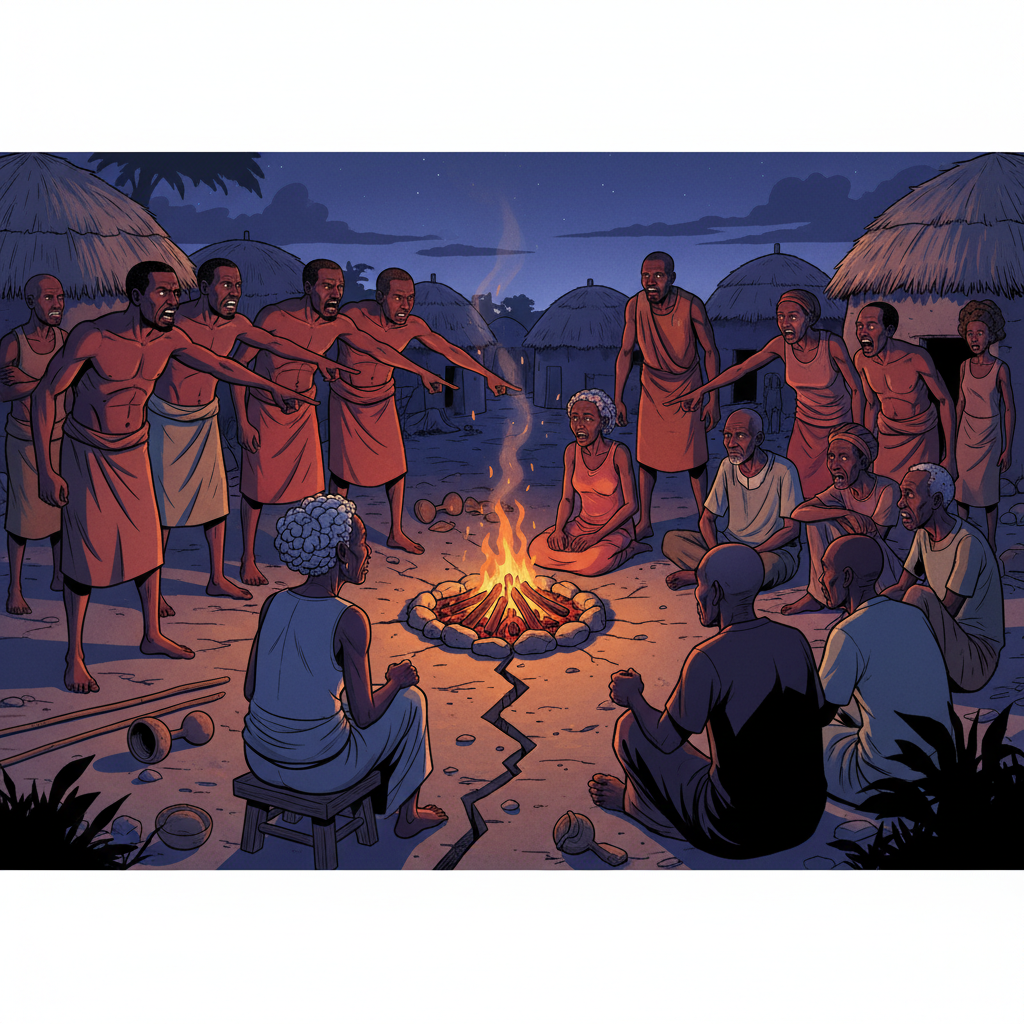
The argument continued until the torches burned low. Voices rose and fell. Tempers flared. Some council members accused others of cowardice, of superstition, of recklessness. The village was fracturing along a fault line that had always been there but had never been tested — the line between those who looked forward and those who looked back. Isfet was not only in the sickness. It was in the breaking of their unity. Finally, when the voices had exhausted themselves and the fire had burned down to glowing coals, Kamara spoke. She did not raise her voice. She did not stand. She simply opened her mouth, and the authority of one hundred and four years flowed out like water from a deep spring. Every person in the circle fell silent, because when Kamara spoke, the ancestors spoke through her.
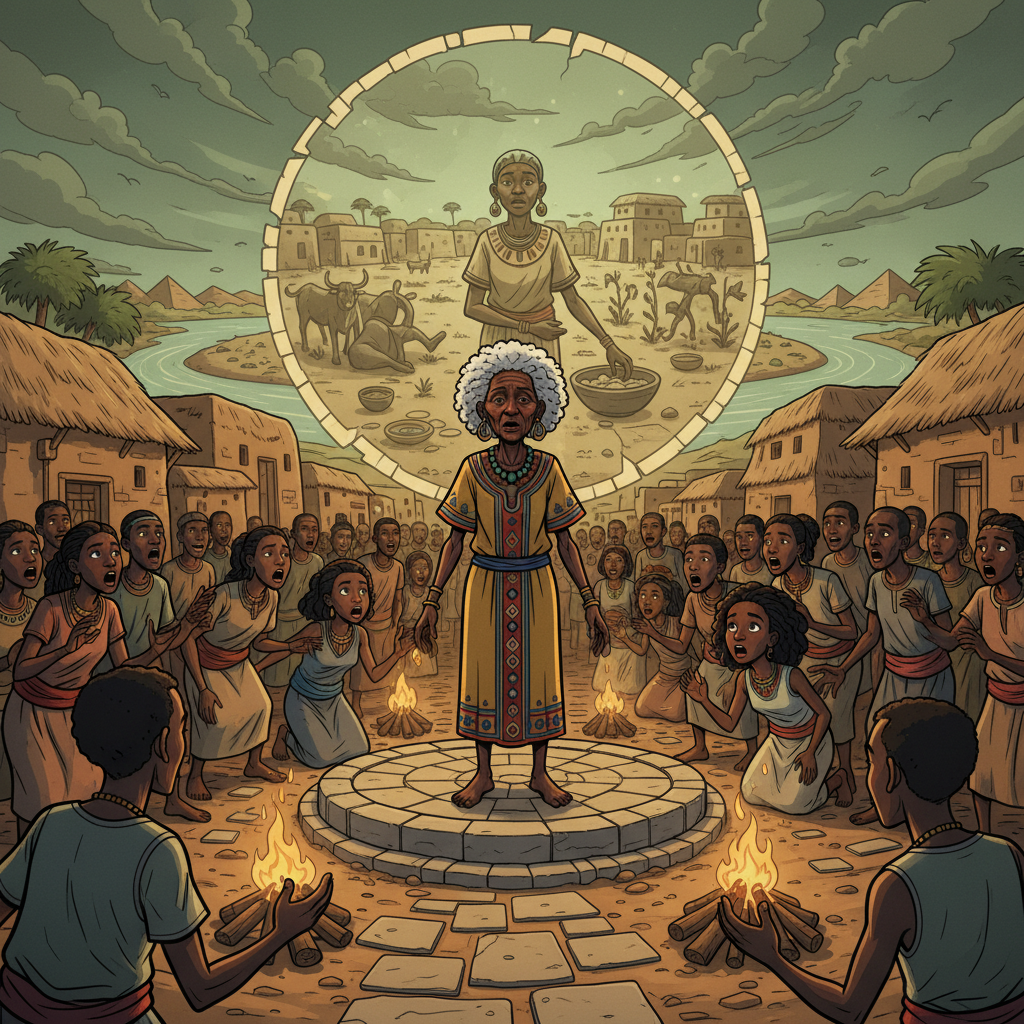
"I have been patient," Kamara said, her ancient voice cracking like dry wood but carrying clearly through the night air. "I have listened to you argue about old and new, about tradition and progress, as if these things were enemies. They are not. They are two legs of the same body. A person who walks on only one leg will fall." She paused, letting the silence do its work. "This sickness came before. My grandmother told me the story, and her grandmother told her. Seven generations ago, the same blight struck the village of our ancestors, near the great bend of the Nile. The cattle fell first, then the crops, then the children — exactly as it is happening now. And an ancestor named Makeda — a healer whose wisdom was broader than the river itself — found the cure."
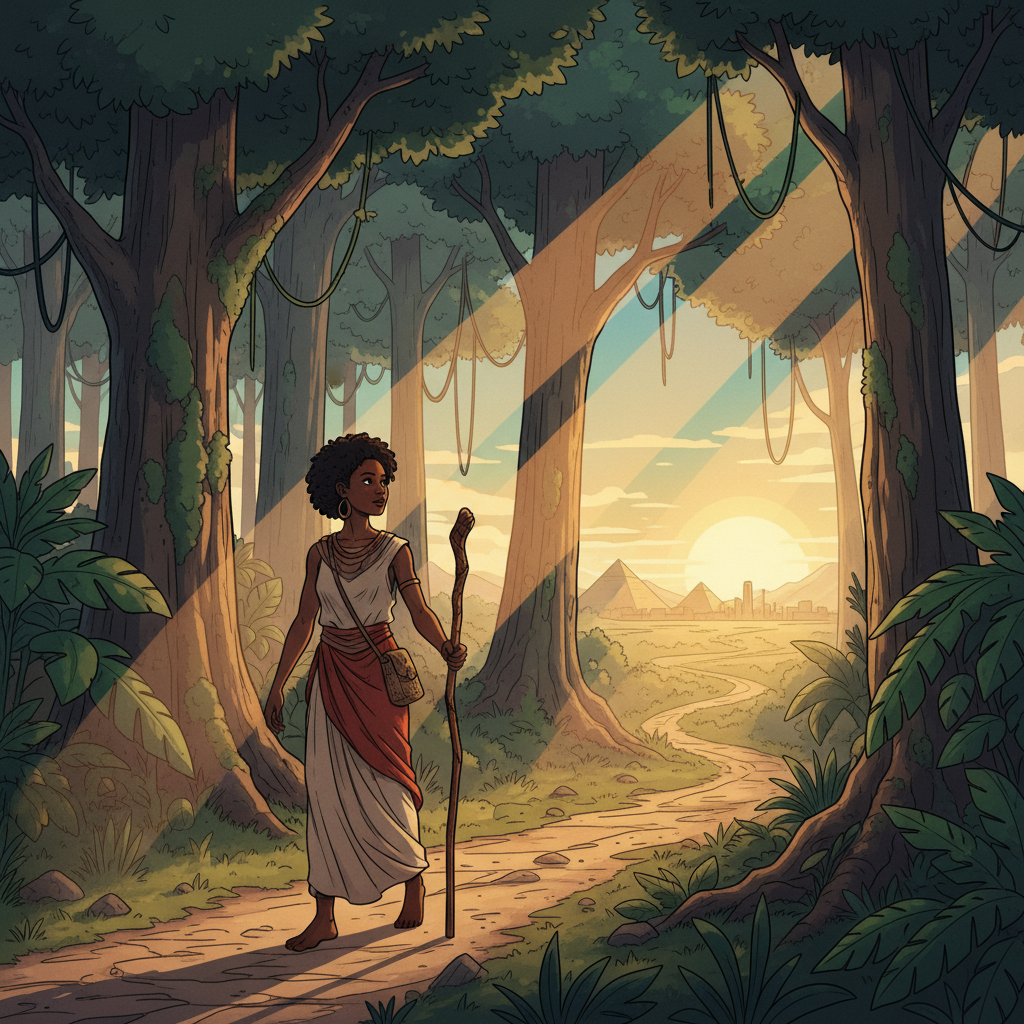
Kamara's dark eyes grew distant, as though she were looking not at the council fire but through it, into a past that burned brighter than any flame. "Makeda was born in the forests far to the west, where the trees grew so thick that sunlight had to fight its way to the ground. Her people were healers — they knew every root, every bark, every mushroom that grew in the green darkness of their homeland. Her mother had taught her, and her mother's mother before that, in a chain of knowledge stretching back to the beginning of memory. "But Makeda was restless, like our young Ayo." Kamara's gaze flickered to Ayo, and something passed between them — recognition, understanding, a bridge across ninety years. "Makeda wanted to learn what other peoples knew. So she left her village and walked east, following the trade routes that connected the western forests to the great civilizations of the Nile valley."
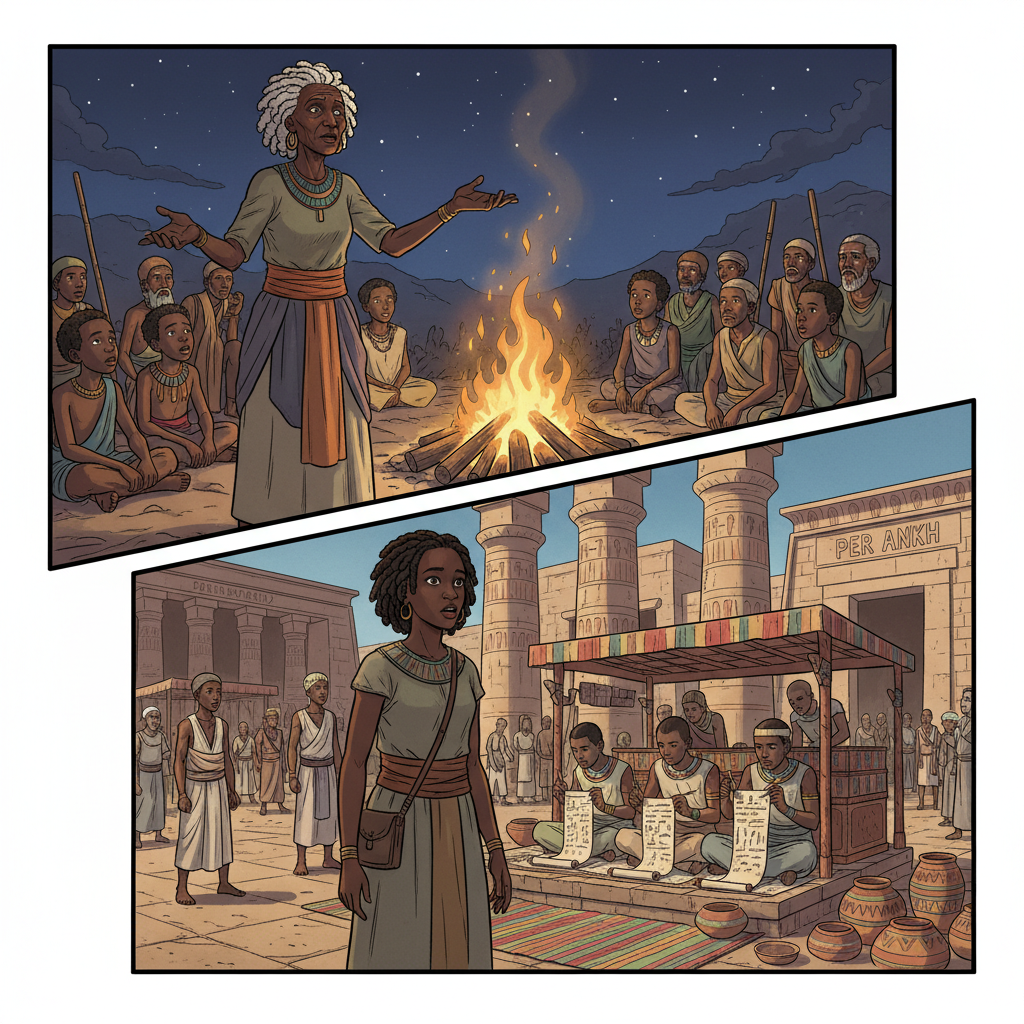
"Makeda traveled for two seasons," Kamara continued, her voice taking on the rhythmic cadence of a story told a thousand times — each word polished smooth by generations of retelling, like river stones worn by water. "She crossed grasslands where the horizon was so far away it seemed to curve. She forded rivers swollen with rain. She traded her healing skills for food and shelter, curing fevers in villages she passed through, setting broken bones for farmers who had never seen a healer with her knowledge. "When she reached the markets of Kemet, she was astonished. She saw scribes writing on papyrus — capturing words in symbols so they could be read by strangers a thousand years later. She visited a Per Ankh, a House of Life, where healers mixed medicines using measurements so precise they weighed ingredients on copper scales. She learned their techniques and shared her own, for in that age, no borders separated the wise. Knowledge flowed like the Nile — freely, nourishing everything it touched."
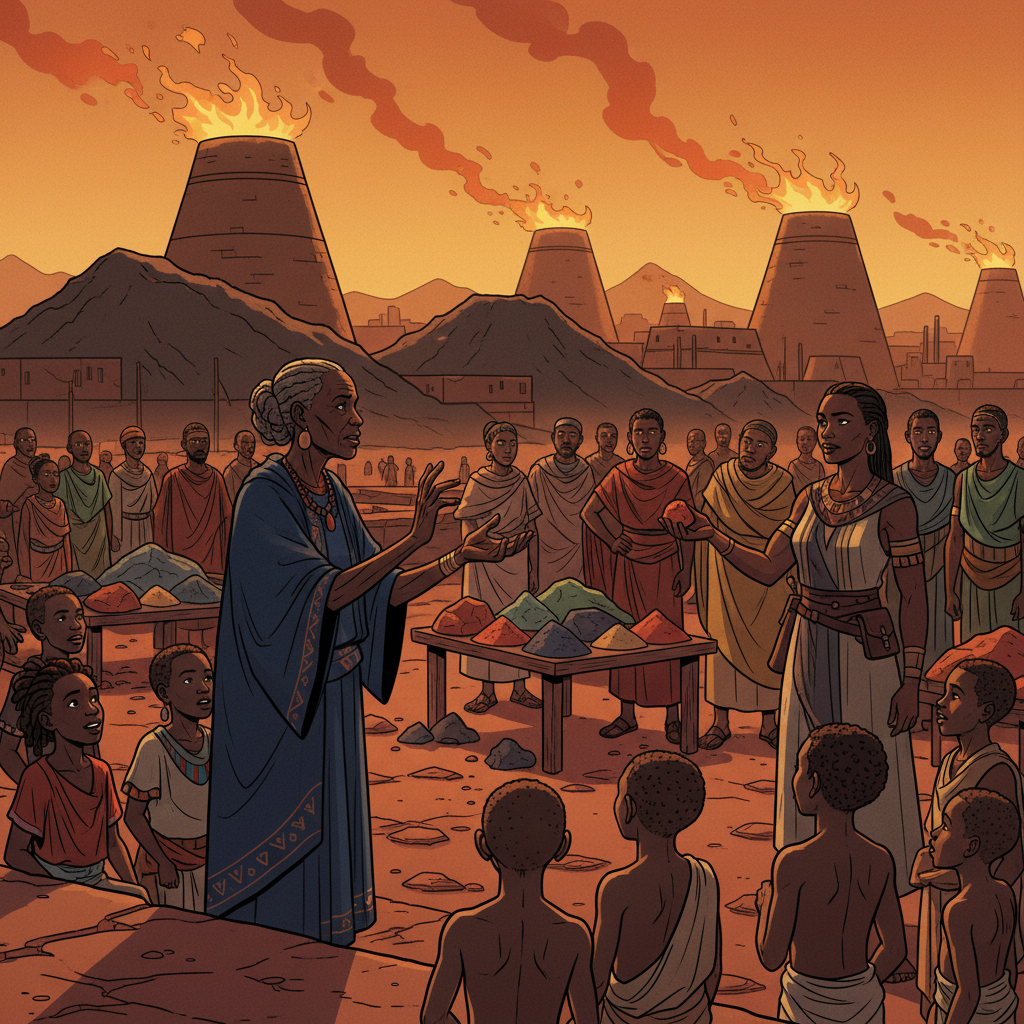
"From Kemet, Makeda traveled south into the lands of Kush," Kamara said, her ancient hands beginning to move as she spoke, tracing invisible maps in the air. "She came to the great city of Meroe, where the iron furnaces burned day and night and the slag heaps rose like black hills against the sky. There she met mineral traders from the eastern mountains — men and women with deep brown skin and knowledge of stones and earth that no forest healer or river physician possessed. "They showed her a mineral — a reddish powder drawn from deep veins in the eastern rock. They told her it could purify water, draw poison from wounds, and restore strength to weakened blood. Makeda recognized in this mineral a missing piece — a final element that could complete a cure she had been assembling in her mind across three lands and two seasons of travel."
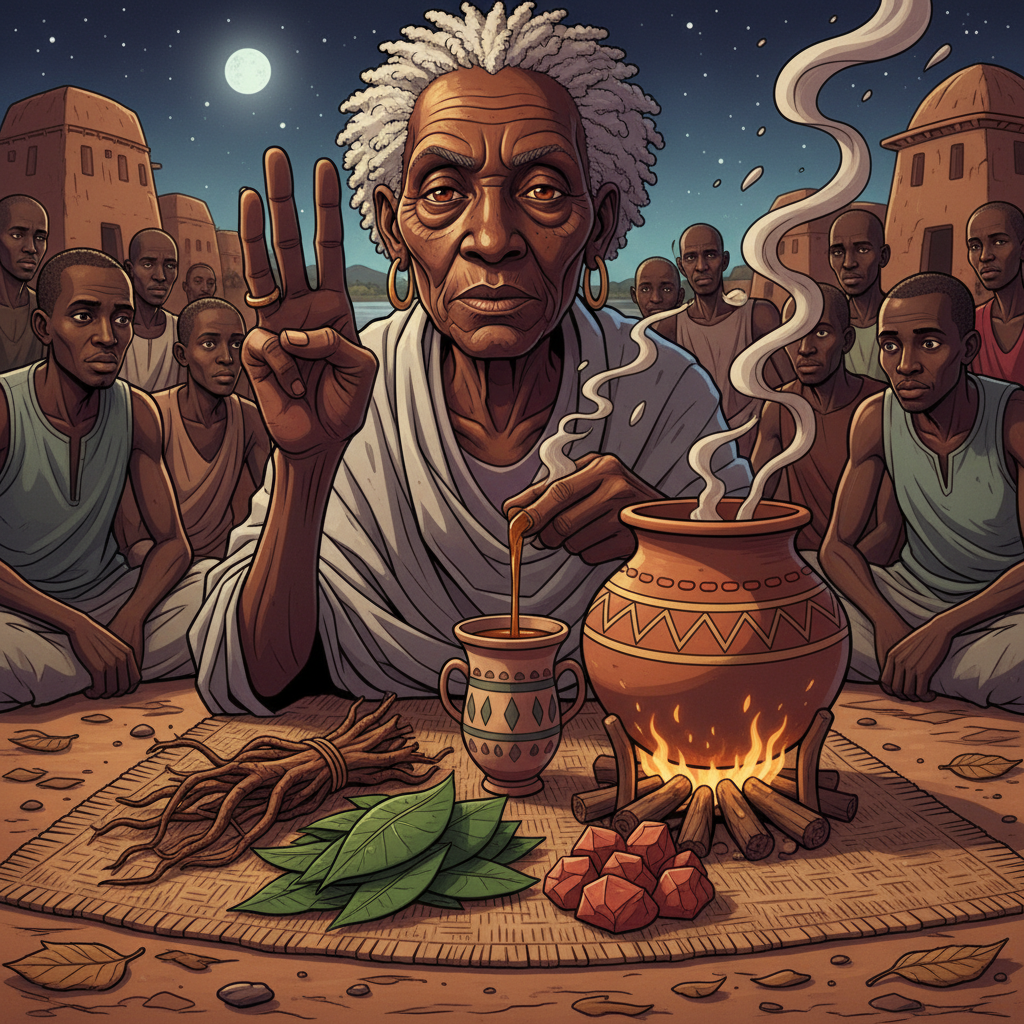
"Three medicines from three lands," Kamara said, holding up three dark, weathered fingers. "A root from the western forests that cooled the fever and calmed the cough. A leaf from the upper Nile that cleansed the blood and restored the body's balance. And a mineral from the eastern mountains that drew the poison out and gave the ka strength to fight. Makeda combined them in precise proportions — three parts root, two parts leaf, one part mineral, ground together and boiled in clean water until the liquid turned the color of dark honey." The council sat in absolute stillness. Even Mensah, who had argued so forcefully for modern medicine, leaned forward with his dark face intent. Kamara's words carried a specificity that was impossible to dismiss — this was not a fairy tale. This was a recipe, preserved with the precision of a scribe recording measurements on papyrus. Seven generations of grandmothers had memorized these proportions and passed them on, each one understanding that a single forgotten detail could mean the difference between life and death.
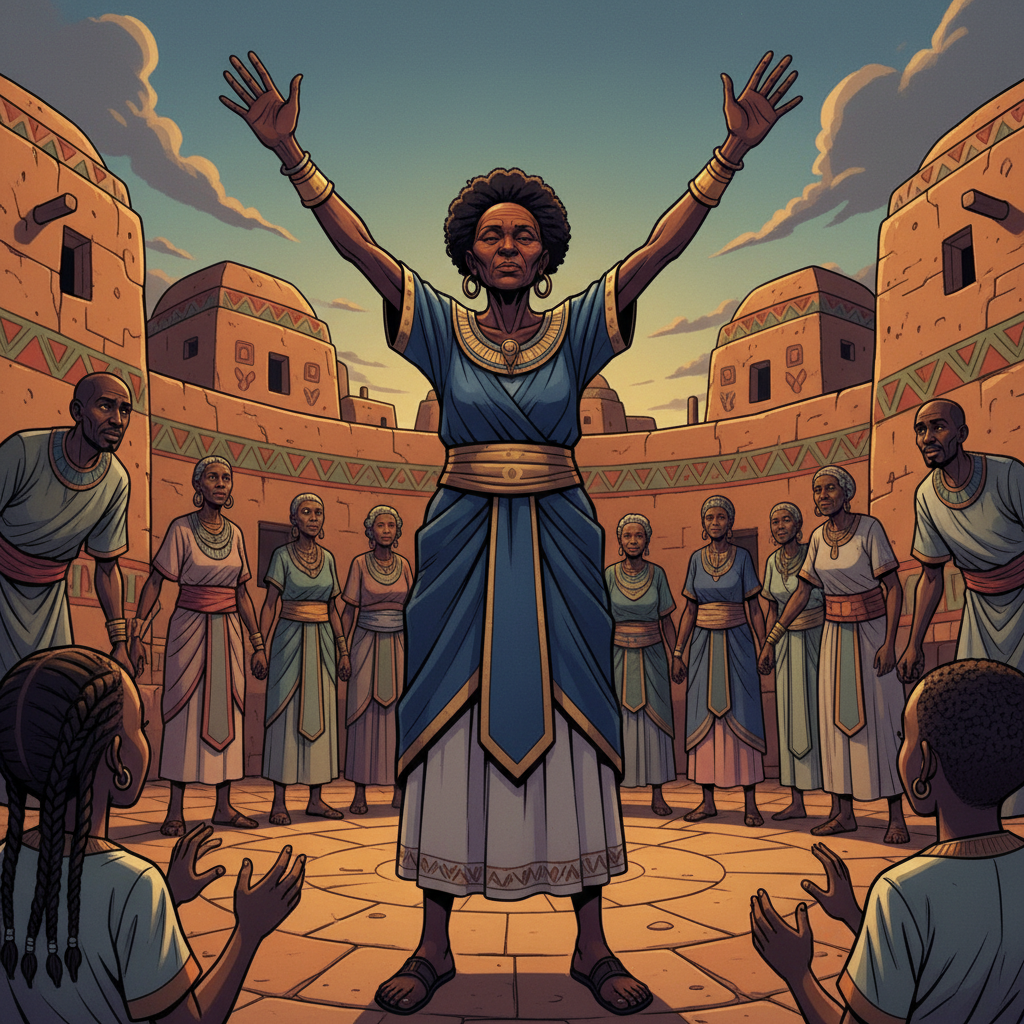
"Makeda saved her village," Kamara finished. "Every sick child recovered. Every weakened elder stood again. And Makeda made her daughter sit beside her and repeat the cure — the ingredients, the proportions, the preparation — until the girl could recite it in her sleep. That daughter told her daughter. That daughter told hers. Each grandmother in the chain understood that she carried not just a recipe but a responsibility. The knowledge was a living thing, and it would die if even one generation failed to pass it forward." Kamara looked around the circle, her ancient eyes burning with a fire that one hundred and four years had not dimmed. "I am the seventh grandmother in this chain. The recipe lives in me. And now I will speak it aloud for the first time in my life, because the sickness has returned, and the cure must answer." She turned to Diallo, the chief healer, and in a voice steady as stone, she began to describe exactly what they needed to find.
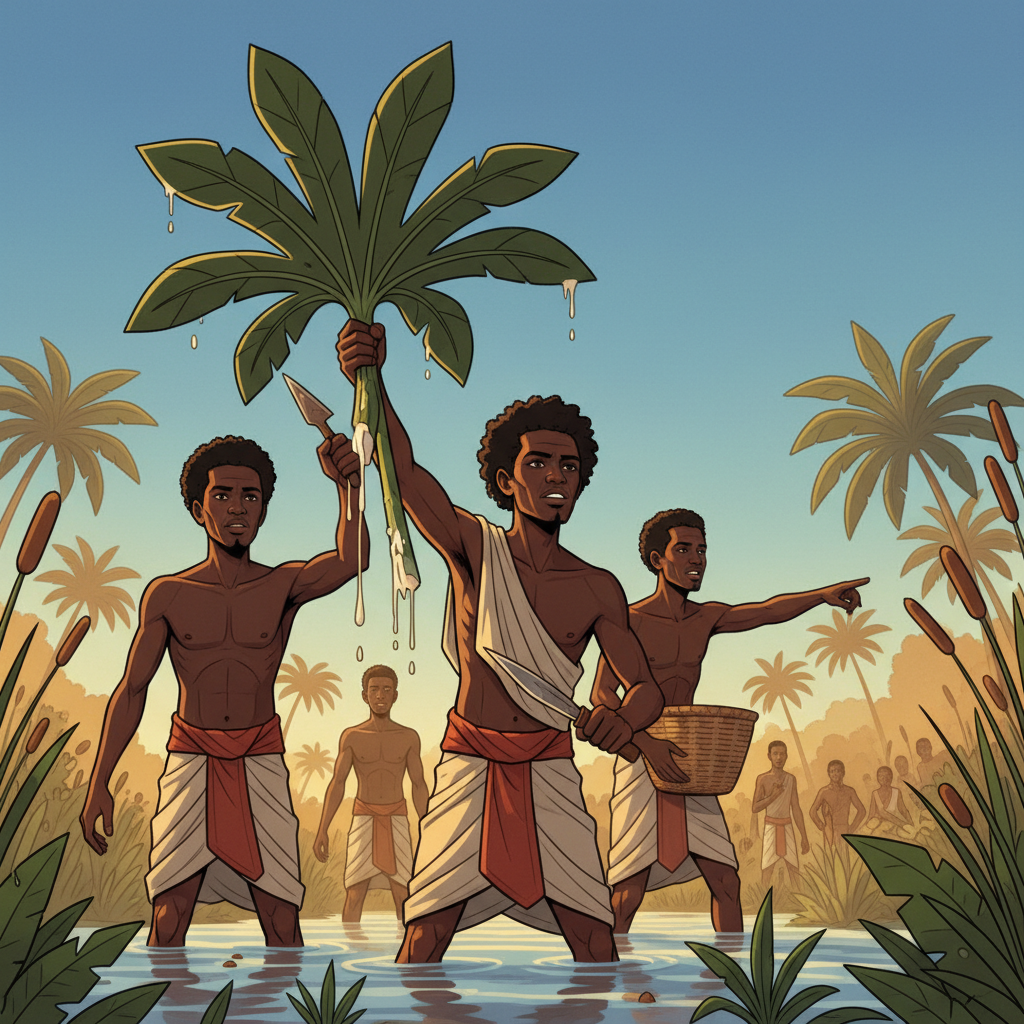
Ayo watched the village mobilize and felt something shift inside her chest, like a door opening onto a room she had not known existed. Diallo sent three parties out before dawn. The first went south along the Nile to find the leaf Kamara described — a plant that grew only in the marshy bends of the upper river, with broad dark leaves shaped like open hands and a stem that wept milky sap when cut. The second party went to the eastern trading post to acquire the mineral — a reddish powder that traders from the mountains still carried, though few remembered its medicinal use. The third task was the most difficult. The western root had to be found in the village's own stores. Kamara explained that their ancestors, knowing the sickness might return, had kept a supply of dried roots passed down through the generations — stored in a sealed clay jar buried beneath the floor of the oldest house in the village. When the diggers broke through the packed earth and lifted the jar, still sealed with beeswax after all those years, a gasp went through the crowd. Ayo felt her skepticism crack like a clay pot struck by a stone.
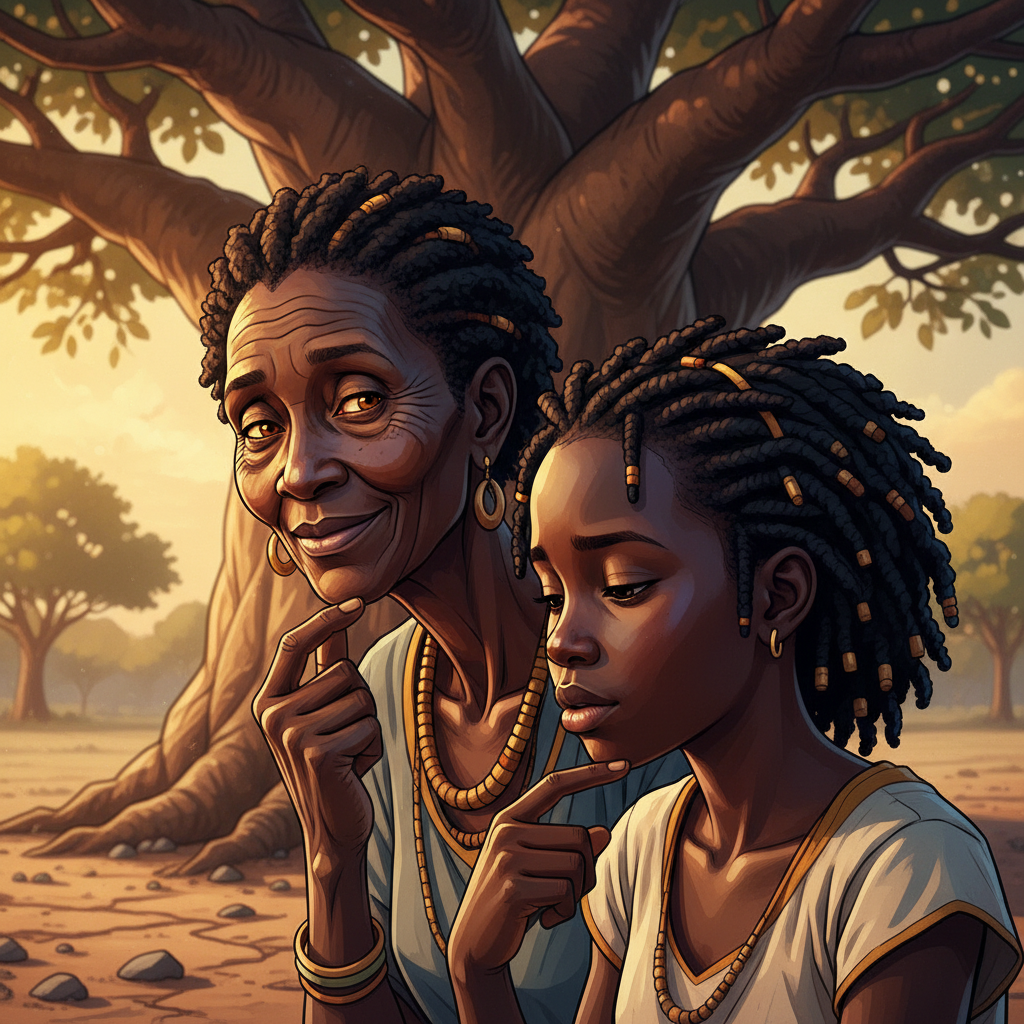
While they waited for the gathering parties to return, Kamara called Ayo to her side beneath the baobab tree. The old woman's ebony face was calm, but her eyes held a knowing light. "You doubted," she said. It was not a question. Ayo lowered her gaze, ashamed, but Kamara lifted her chin with one gentle finger. "Do not be ashamed of doubt," Kamara said. "Doubt is the beginning of wisdom, not its enemy. The Per Ankh scribes questioned everything — they tested their medicines, they debated their star charts, they challenged one another's calculations. Questioning is Maat. But there is a difference between questioning and dismissing. You were ready to dismiss the wisdom of your ancestors because it was not written in a book or stored in a machine. That is Isfet wearing the mask of progress."
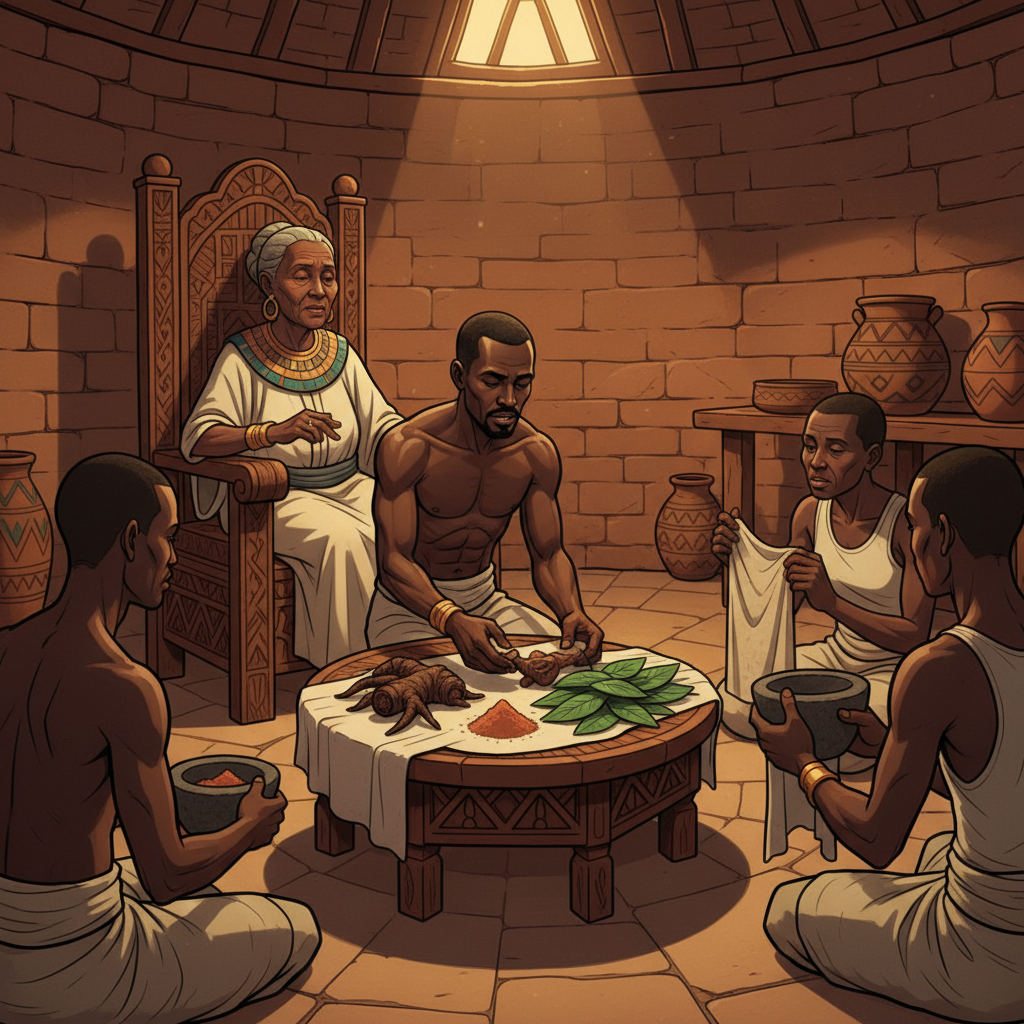
The gathering parties returned by the second day. Diallo laid the three ingredients on a clean white cloth in the center of the healing house — the dried western root, dark and gnarled like ancient fingers; the broad green leaves from the upper Nile, still damp and fragrant; and the reddish mineral powder from the eastern mountains, fine as ground pottery. The healers gathered around, their deep brown and ebony faces solemn with concentration. Kamara sat in a carved chair brought from her home and directed the preparation with the precision of a master architect supervising the construction of a temple. "Grind the root first," she instructed. "Use the stone mortar — never metal, for metal changes the medicine's nature. Grind until the powder is fine enough to pass through woven linen. Then the leaf — crush it fresh, do not dry it. The sap is where the healing lives. Finally, the mineral. One part only. Too much becomes poison. The balance is everything. Maat is not just a principle — in medicine, it is the difference between cure and death."
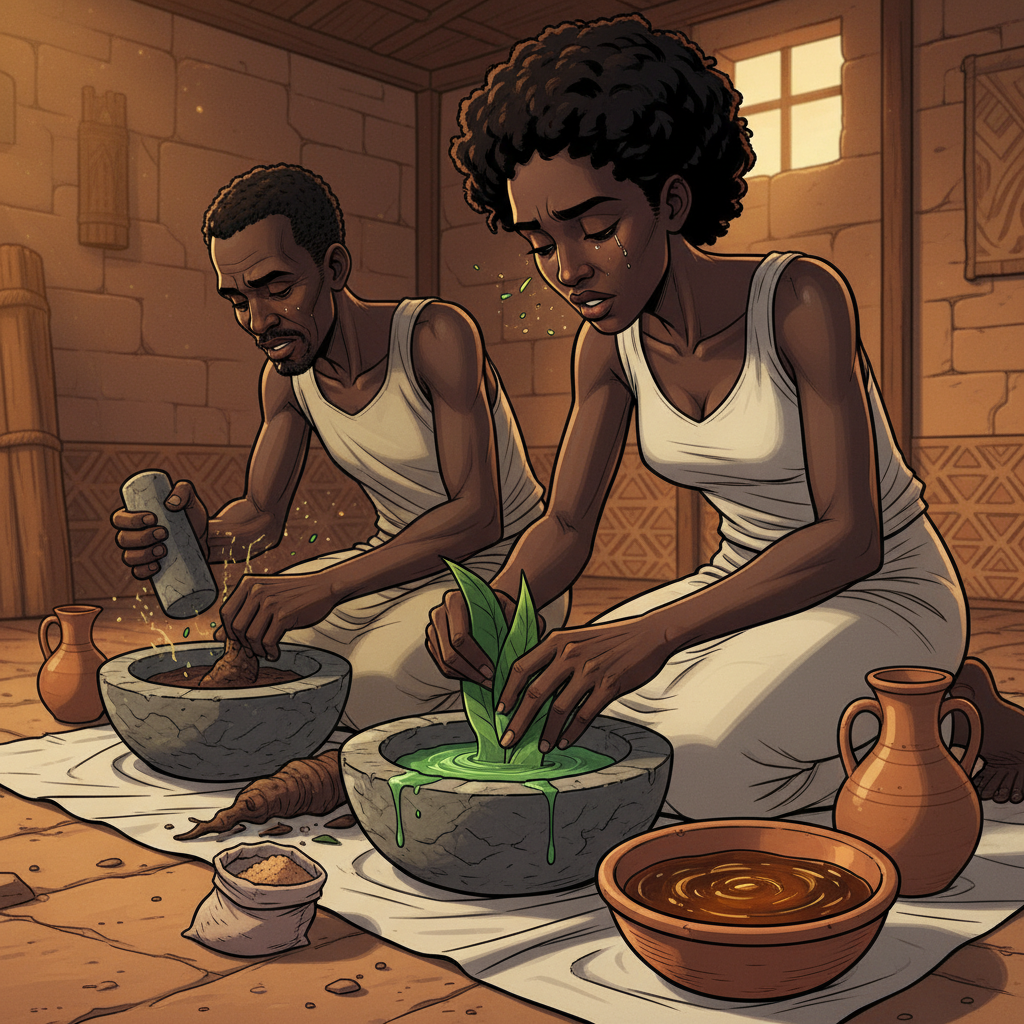
Ayo knelt beside Diallo and helped grind the root, her obsidian hands working the stone pestle in steady circles. The root released a sharp, bitter smell that stung her nostrils and made her eyes water, but she did not stop. She watched Diallo crush the fresh leaves, his dark fingers moving with the practiced grace of someone who had prepared medicines his entire life. The green sap pooled in the mortar like liquid emerald. When they added the mineral powder and poured clean water over the mixture, the liquid began to change color — shifting from murky green to a deep, warm amber that was exactly the color Kamara had described. Dark honey. Ayo stared at it and felt the last walls of her skepticism crumble. Seven generations of oral tradition had preserved not just a recipe but a precise chemical reaction, accurate enough to produce the correct color, the correct consistency, the correct cure. This was not superstition. This was a knowledge system as rigorous as anything she had read about in books.
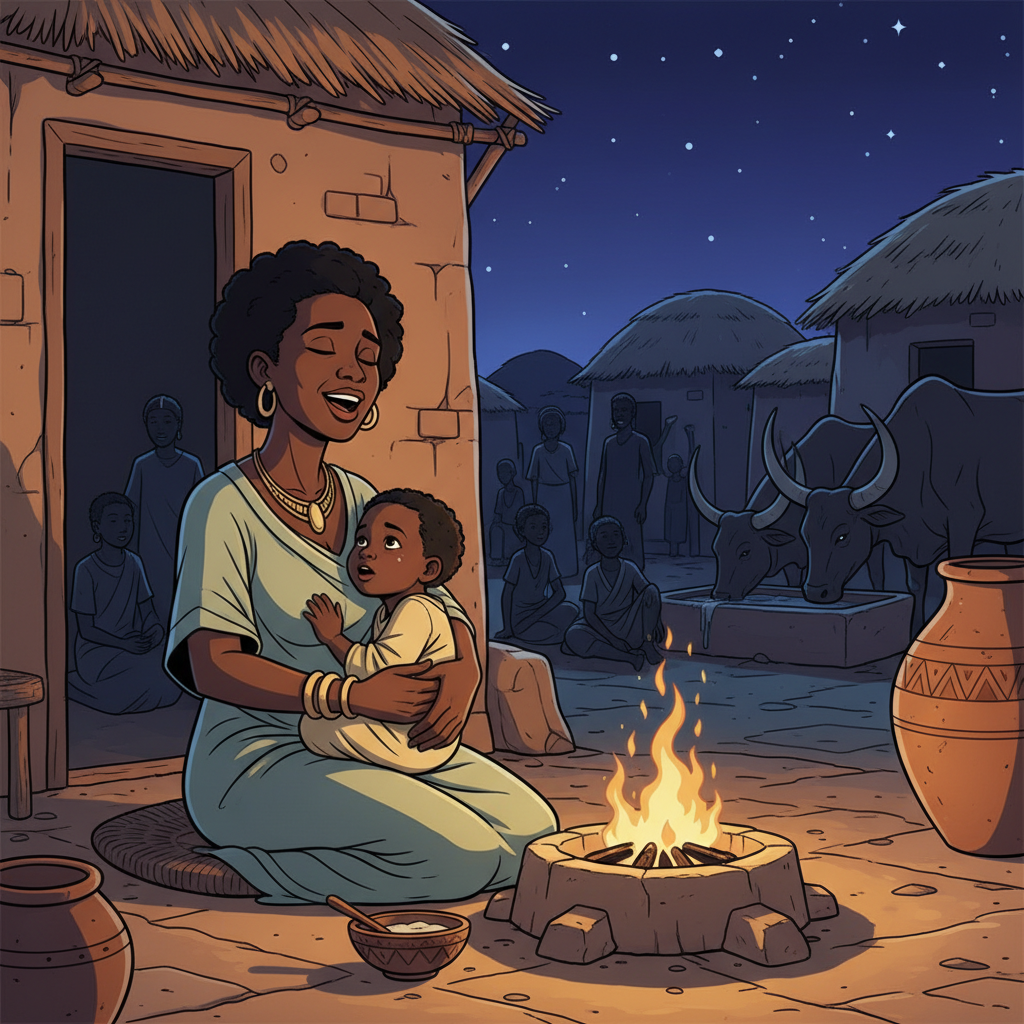
The healers administered the medicine to the sick children first, spooning the warm amber liquid into small mouths with infinite gentleness. Little Kesi, the first child to fall ill, received the first dose. Her mother held her, dark arms wrapped tight, rocking back and forth and singing a lullaby that was itself ancient — a song about the Nile carrying sickness away to the sea. By evening, Kesi's cough had softened. By the following morning, she opened her eyes and asked for food. A cry of joy went up from her mother that could be heard across the entire village. One by one, the other children improved — the rattling in their chests quieted, the fever broke, the color returned to their deep brown cheeks. The adults who had fallen ill recovered next. Even the cattle, treated with a stronger version of the same medicine mixed into their water, began to eat again. The cure worked exactly as Kamara had said it would, because Makeda's knowledge, carried faithfully across seven generations of memory, was exact.
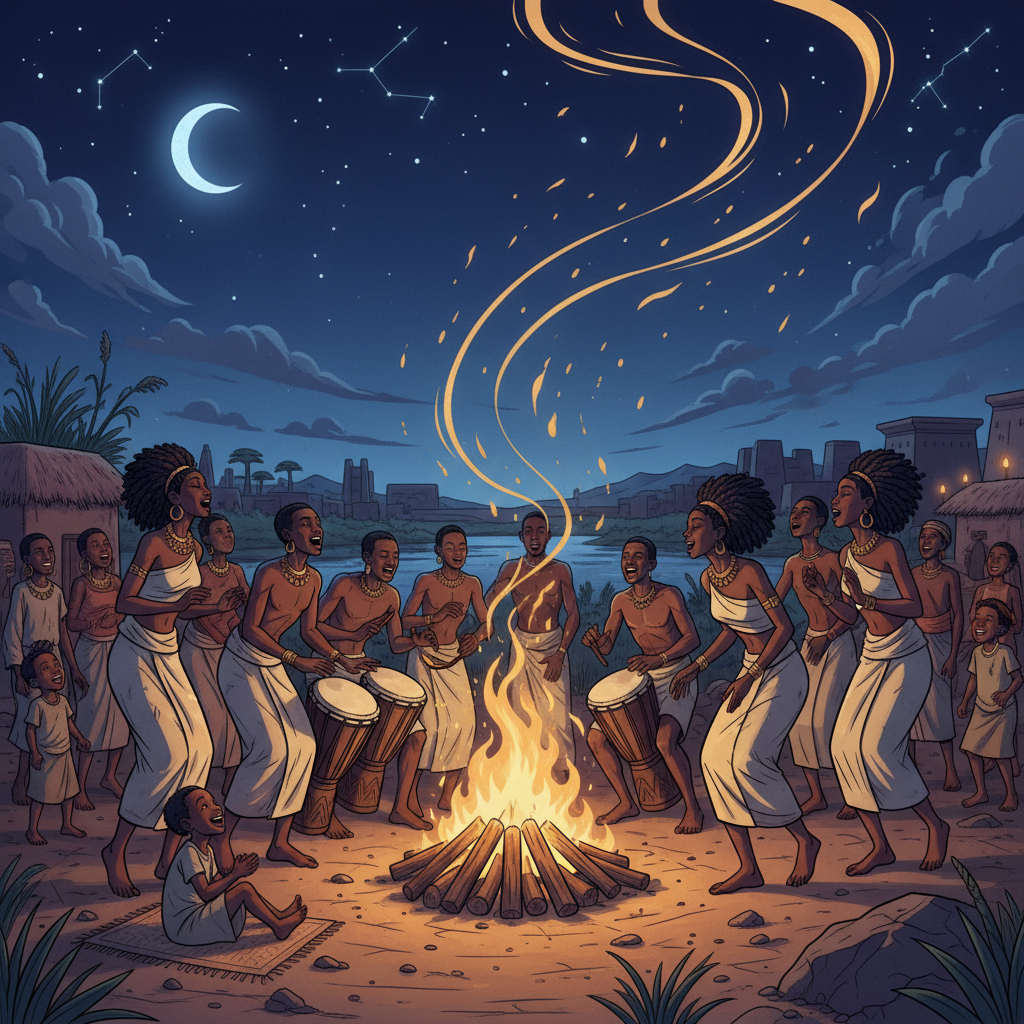
When the last sick child sat up and smiled, the village erupted in celebration. The drums came out first — great djembes carved from single logs, their goatskin heads producing rhythms that seemed to rise from the earth itself. The women began to sing, their voices weaving together in harmonies that carried across the river and into the night sky. The men danced in a circle around the central fire, their ebony bodies moving with a joy that was part gratitude, part defiance — defiance of the Isfet that had tried to destroy them. Ayo found herself dancing too, her obsidian skin gleaming in the firelight, her feet stamping patterns into the dust that her grandmother's grandmother had stamped before her. The stars wheeled overhead, and the Nile whispered its ancient song, and for the first time in her life, Ayo understood that tradition was not a chain holding her to the past. It was a rope — a lifeline thrown across the darkness of forgetting, connecting her to every ancestor who had ever lived and loved and learned.
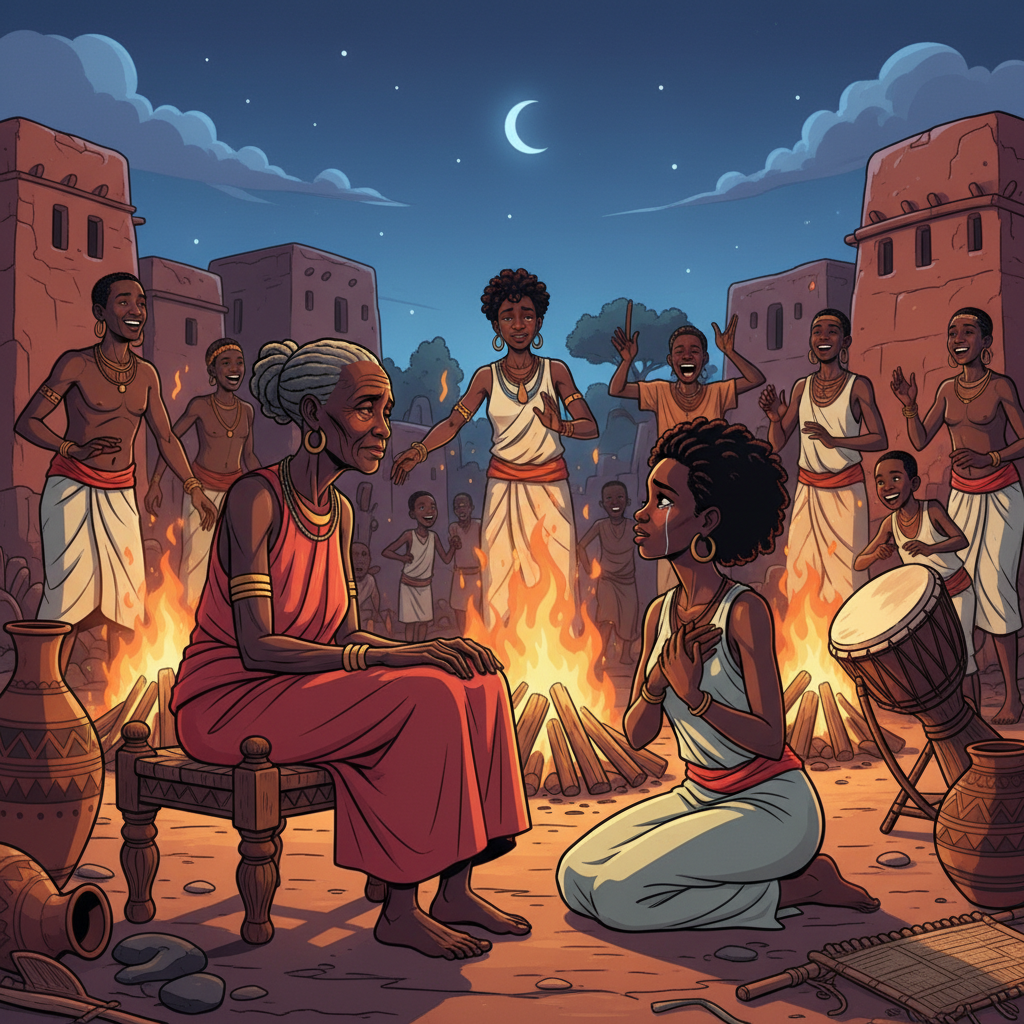
Ayo knelt before Kamara as the celebration continued around them. The old woman's face, ancient and dark as carved wood, was peaceful in the firelight. "I understand now," Ayo said, and her voice shook with emotion. "To forget your ancestors is Isfet. To dismiss their wisdom because it does not look like the wisdom in books — that is Isfet too. But to honor what they knew, to carry it forward, to add to it and pass it on — that is Maat." Kamara placed her weathered hand on Ayo's head. "You are beginning to see," she said. "But there is more. The modern world has much to offer — I do not deny this. Their microscopes can see what our eyes cannot. Their machines can calculate what our minds struggle with. But they make a fatal error when they believe that knowledge which is not written in their books does not exist. How many cures live in the memories of grandmothers and will die when those grandmothers die? How many medicines grow in forests that are being burned? The chain of memory is fragile, Ayo. One broken link, and centuries of wisdom vanish forever."
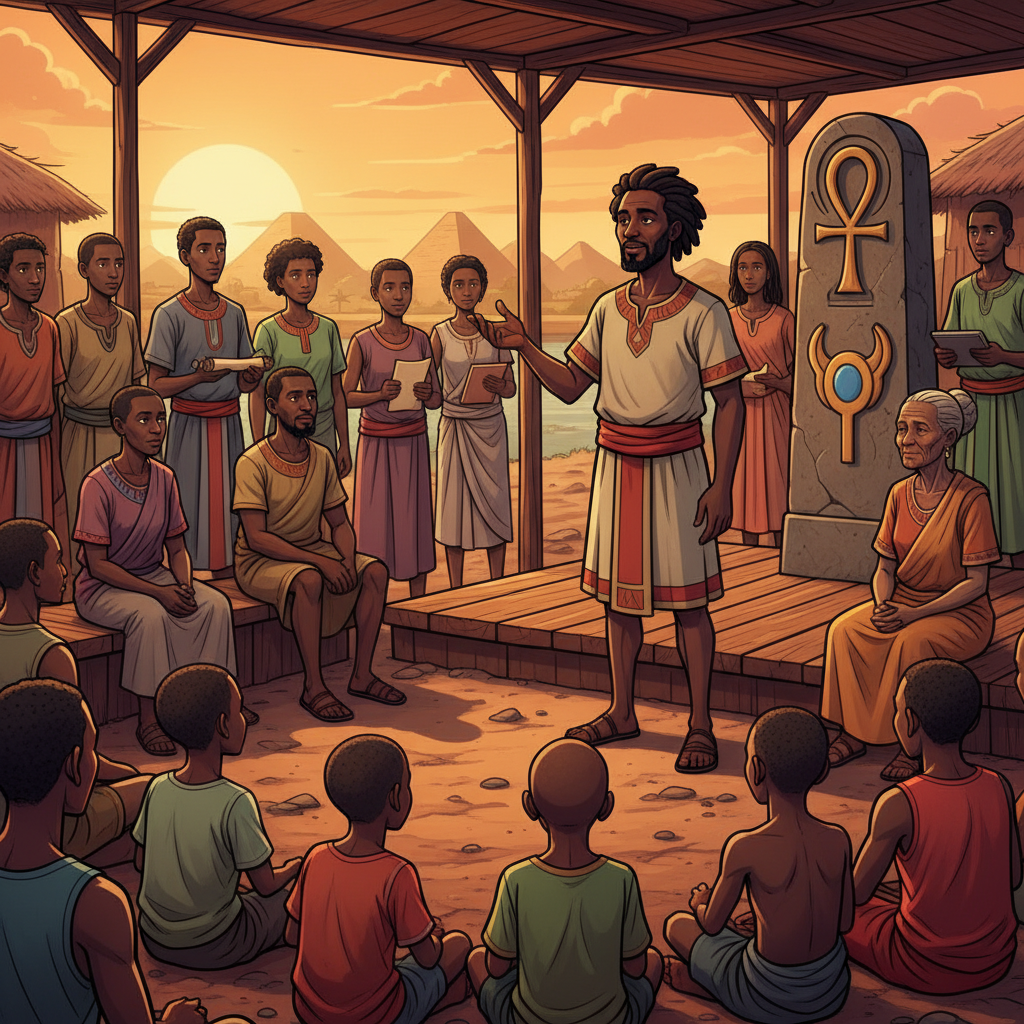
In the days that followed the healing, the village council met again — not in crisis this time, but in purpose. Mensah, who had argued so fiercely for modern medicine, stood and spoke first. His dark face was humble. "I was wrong to dismiss the old knowledge," he said. "But I was not wrong to value new knowledge. We need both. A bird with one wing cannot fly." The council agreed. They would send Ayo to study at the university, but they would also establish a new tradition — a council of memory, dedicated to preserving every piece of ancestral knowledge before it was lost. Ayo proposed that they record Kamara's knowledge — not to replace the oral tradition, but to protect it. They would write the cure on paper, yes, but they would also train young people to memorize it, to carry it in their minds as their ancestors had done. The written word and the spoken word would guard each other, like two sentinels watching the same gate. Kamara nodded slowly. "The Per Ankh scribes wrote on papyrus," she said. "But they also trained their students to memorize. They understood that papyrus can burn. Memory, properly tended, endures."
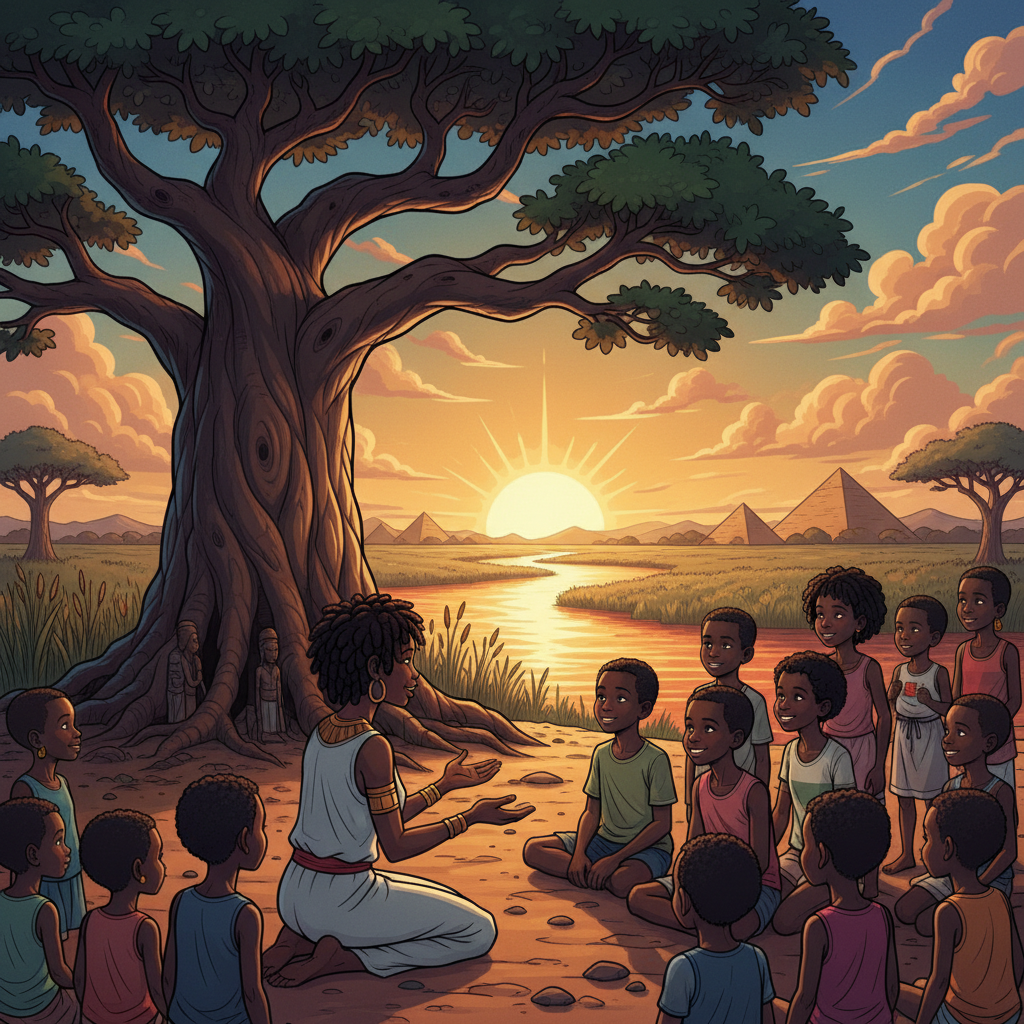
On the morning Ayo began to teach, the sun rose over the Nile in a blaze of gold that painted the river like molten metal. She gathered the village children beneath the baobab tree — the same tree where Kamara had sat for decades — and looked into their faces. They were beautiful faces, ranging from deep brown to richest ebony, each one carrying the features of ancestors stretching back beyond counting. These children were the next links in the chain. "I am going to tell you a story," Ayo began, and her voice carried the same steady rhythm she had heard in Kamara's voice, as if the old woman's cadence had passed into her like water into roots. "It is the story of a healer named Makeda, who traveled from the western forests to the markets of Kemet and the cities of Kush, and who carried knowledge from three lands to save one village. You will hear this story many times. You will memorize every detail. And one day, you will tell it to your own children and grandchildren, because the chain of memory must not break. Not with me. Not with you. Not ever." And beneath the ancient baobab, with the Nile flowing past and the ancestors listening from the other side of silence, Ayo opened her mouth and the story began again.