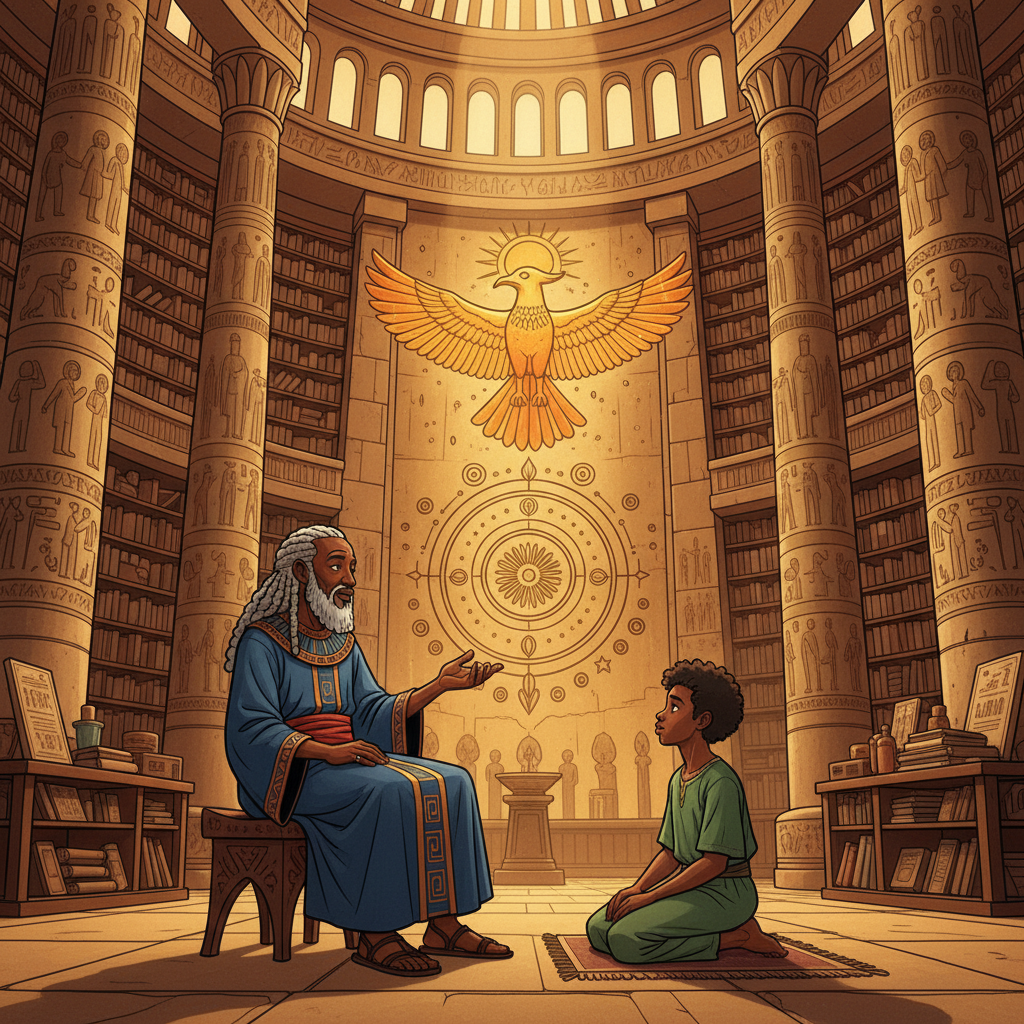
My diligent student, Seba Khafre began, his voice a low, resonant rumble, "you have navigated the foundational currents of our ancestors' wisdom. You have proven yourself ready to delve into the deeper waters, to understand the profound nuances that separate mere stories from the living truths of Kemet. Today, we turn our gaze to a symbol often misunderstood, one whose true power has been diluted and distorted by other cultures: the Bennu bird. Many across the seas speak of a ‘Phoenix,’ a bird reborn from ashes. But that is a shadow, a pale echo of the mighty Bennu, the very embodiment of creation, destruction, and re-creation that is the heartbeat of existence. The Bennu is not merely a tale of rebirth; it is a profound philosophical statement, an intricate lesson woven into the fabric of the universe itself, articulating the eternal cycles that govern all things, from the smallest seed to the grandest cosmos. It is a core concept that defines our understanding of life, death, and the perpetual motion of the divine, a principle central to the living philosophy of the Per Ankh. This knowledge, my dear one, is a sacred trust."
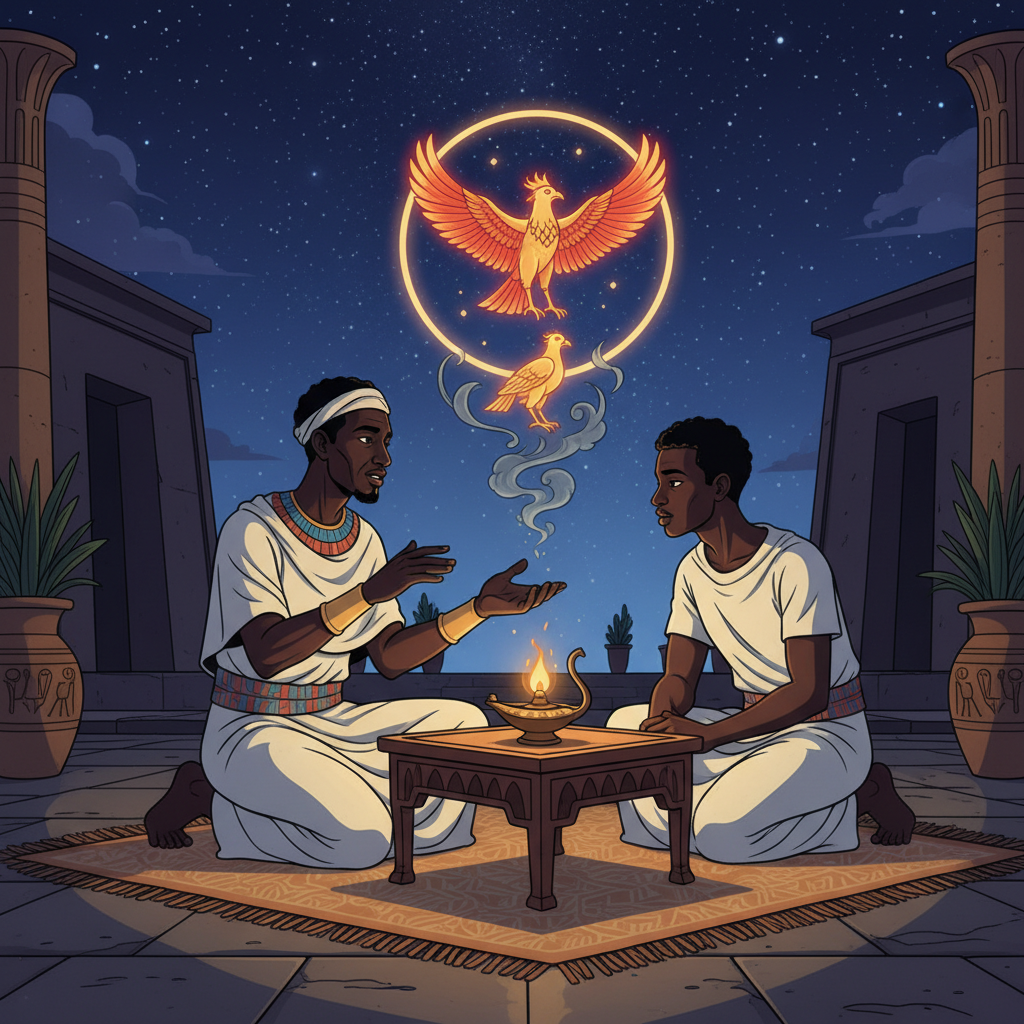
The superficial narrative of the Phoenix often misses the fundamental truth embedded in the Bennu. It is not simply about an end followed by a new beginning in a linear fashion, but about the profound, unbreakable circle of existence, the cyclical flow that is the very essence of Maat. In Kemetic thought, there is no absolute end, only transformation, only the perpetual dance of coming into being. The Bennu teaches us that what appears to be destruction is merely a precursor to a new form of creation, a necessary phase in the grand cosmic rhythm. This perspective stands in stark contrast to the linear, start-and-end worldview prevalent in many later traditions, which often struggles with the concept of impermanence and the necessity of dissolution for renewal. Our ancestors understood that the universe itself is a continuous process of self-generation and regeneration, a constant affirmation of life arising from the potential of what has passed. It is the wisdom that reconciles apparent opposites, revealing their inherent unity.
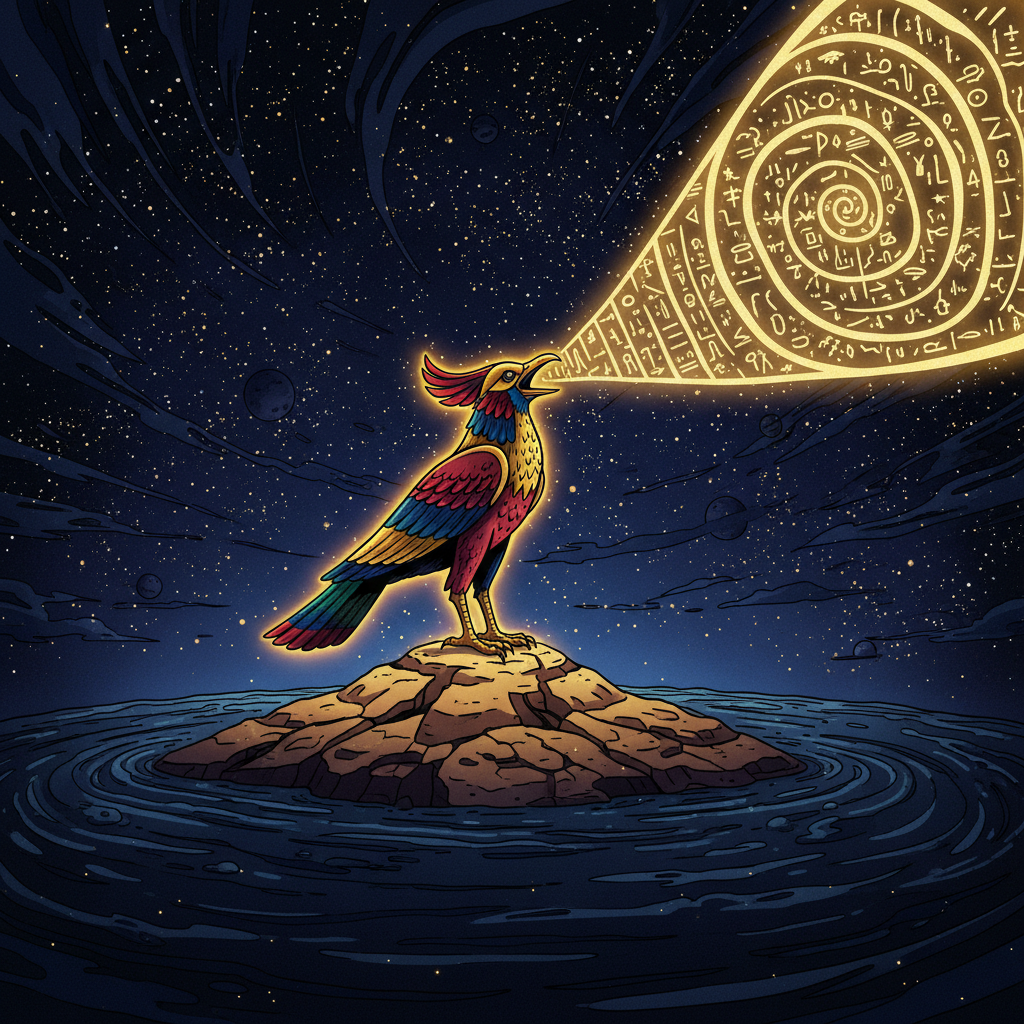
Imagine, if you will, the primordial waters of Nun, dark and vast, stretching infinitely. From this chaotic abyss, the first mound of earth, the Benben stone, emerges. And upon this sacred, nascent land, stands the Bennu. It is not merely a bird appearing; it is the manifestation of the first consciousness, the first 'I Am,' the first utterance that brought order from the formless void. Its cry, known as the 'Bennu Cry,' was the inaugural sound of creation, echoing across the nascent cosmos, giving form and name to all things. This primordial act wasn't a singular event in a distant past, but a timeless principle, constantly re-enacting itself in every moment of emergence and new beginning. The Bennu, therefore, represents the inherent potential for order (Maat) to arise from disorder (Isfet), the spontaneous impulse of existence to manifest itself, to declare its presence and purpose. It is the very spirit of self-origination, an active force in the unfolding of reality.
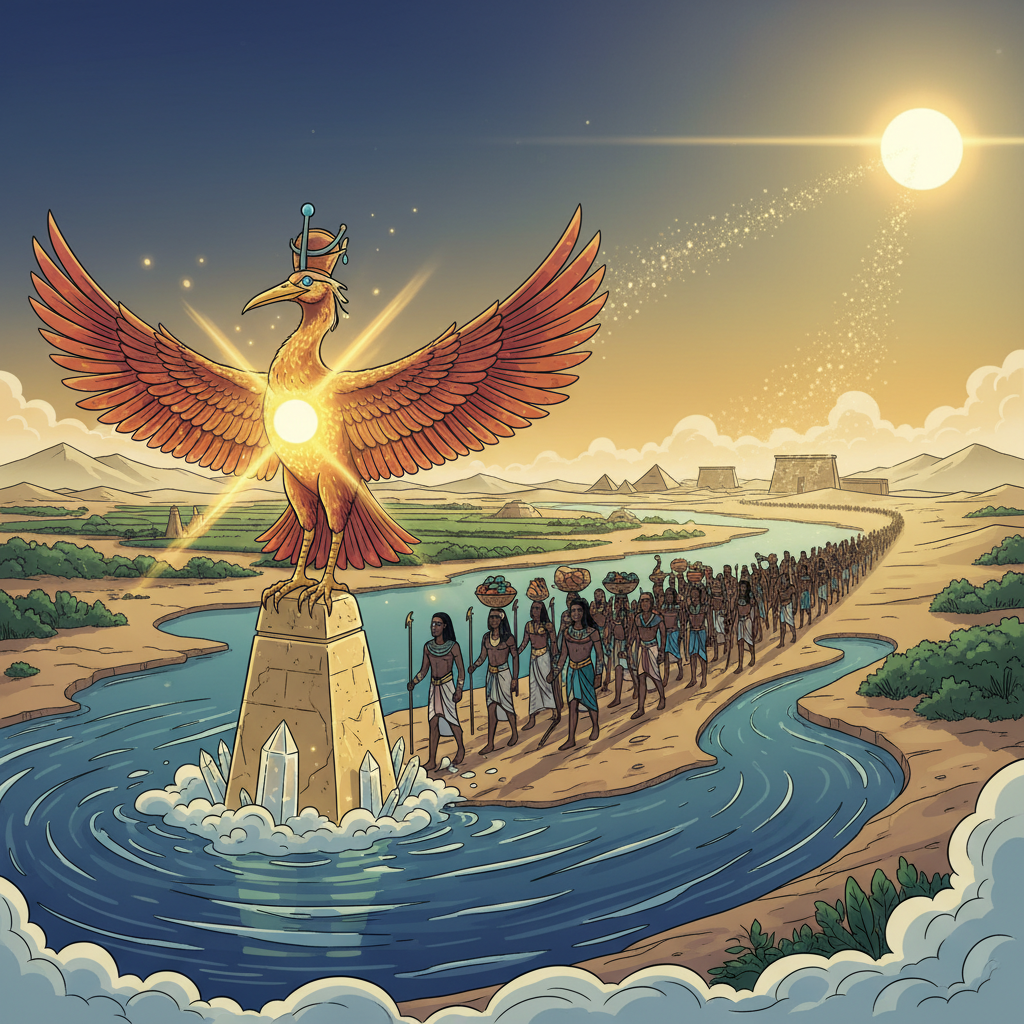
Indeed, the Bennu is often depicted as the Ba (soul or personality) of Ra, the sun god, the ultimate source of all creation. This connection is vital. Ra, in his daily journey across the sky and through the Duat, symbolizes this continuous cycle of life, death, and rebirth. The Bennu, as Ra's soul, embodies this divine agency, this power of self-creation and eternal renewal. It is the active principle that ensures the sun always rises again, that life always finds a way to manifest. This is not about a static god, but a dynamic, ever-present force, a consciousness that permeates all existence and actively participates in its own unfolding. The Bennu's ability to 'come into being again' is not a magical trick, but a profound statement on the universe's inherent capacity for regeneration, for perpetually drawing forth new forms from the substance of the old. It teaches us about the resilience and self-sustaining nature of the cosmos itself.
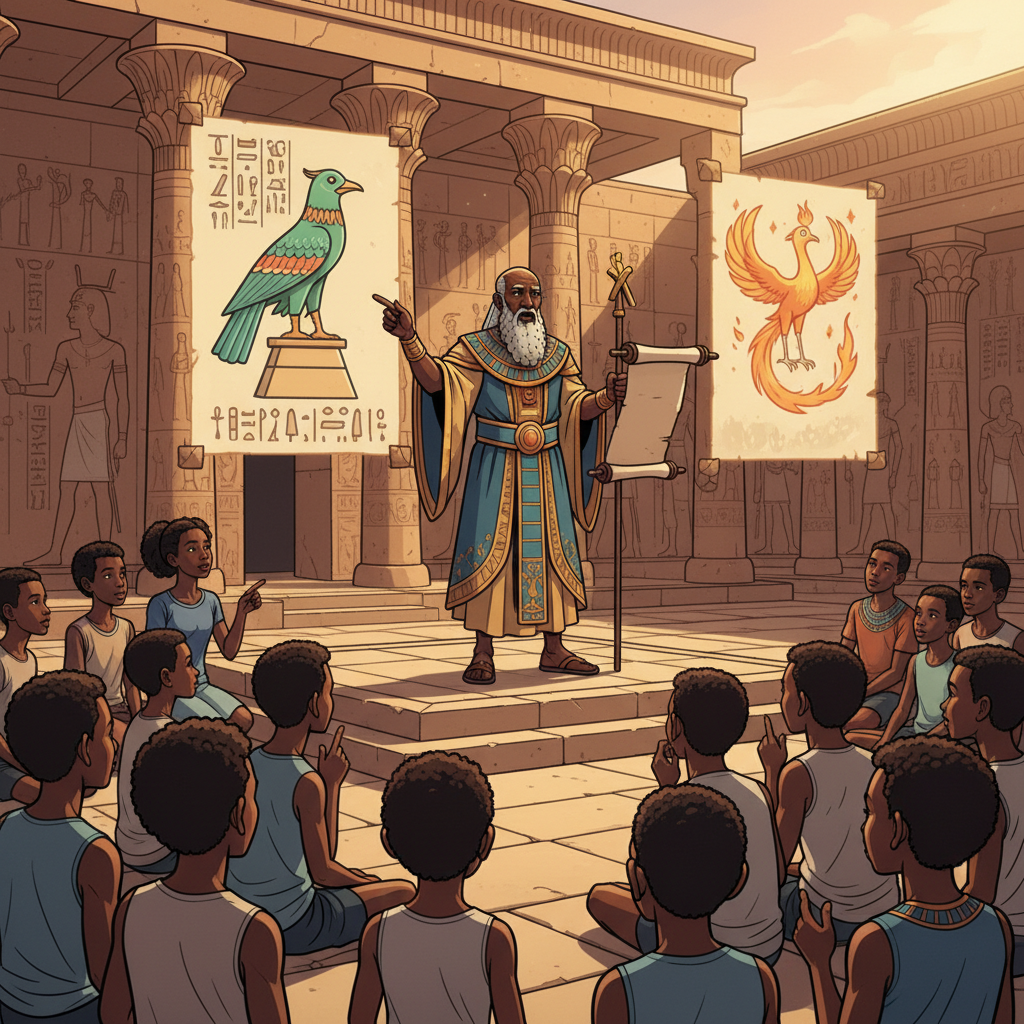
Now, let us address the pervasive misunderstanding of this profound symbol. For too long, the 'Phoenix' has been presented as a Greek invention, obscuring its true African genesis. This is a classic example of what scholars like Dr. Cheikh Anta Diop meticulously documented: the widespread cultural transmission and appropriation of Kemetic knowledge by later civilizations. Diop, through his groundbreaking work on the Nilotic origins of civilization, demonstrated how Kemet served as a fount of intellectual and spiritual wisdom for the entire ancient world. The Greek 'Phoenix' emerged centuries after the Bennu was firmly established in Kemetic texts and iconography. Their version, while beautiful, often strips away the deep philosophical layers – the connection to primordial creation, the soul of Ra, the intricate dance of Maat and Isfet – reducing it to a mere spectacle of fiery rebirth. Recognizing the Bennu's true heritage is not just about historical accuracy; it's about reclaiming the intellectual patrimony of Africa, acknowledging its foundational contribution to global thought.
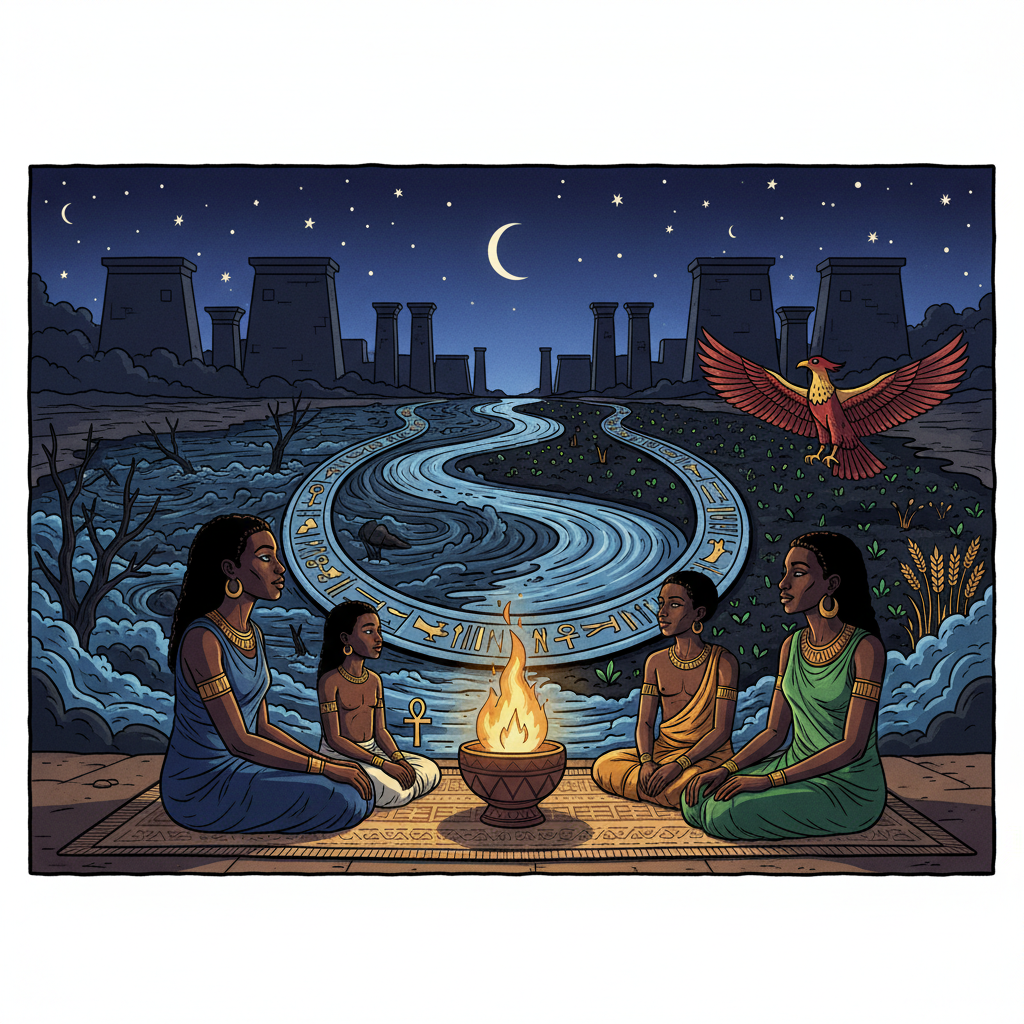
The source of this profound understanding of cyclical existence lies in the very heart of Kemet: the Nile River. For our ancestors, the Nile was not just a river; it was a living, breathing deity, the very artery of life. Its annual inundation, the Akhet, was a yearly miracle and a powerful metaphor for the Bennu’s cycle. The river would swell, covering the land, seemingly destroying everything in its path, bringing what might appear as chaos or Isfet. Yet, when the waters receded, they left behind the rich, black fertile silt, a dark promise of new life. This destruction was, in fact, the ultimate act of creation. The Nile taught Kemet that death feeds life, that dissolution is essential for renewal, and that the cosmos operates on a principle of perpetual transformation, not linear progression. This direct, observable natural phenomenon deeply ingrained the philosophy of eternal return into the Kemetic worldview, shaping their understanding of everything from agriculture to the afterlife.
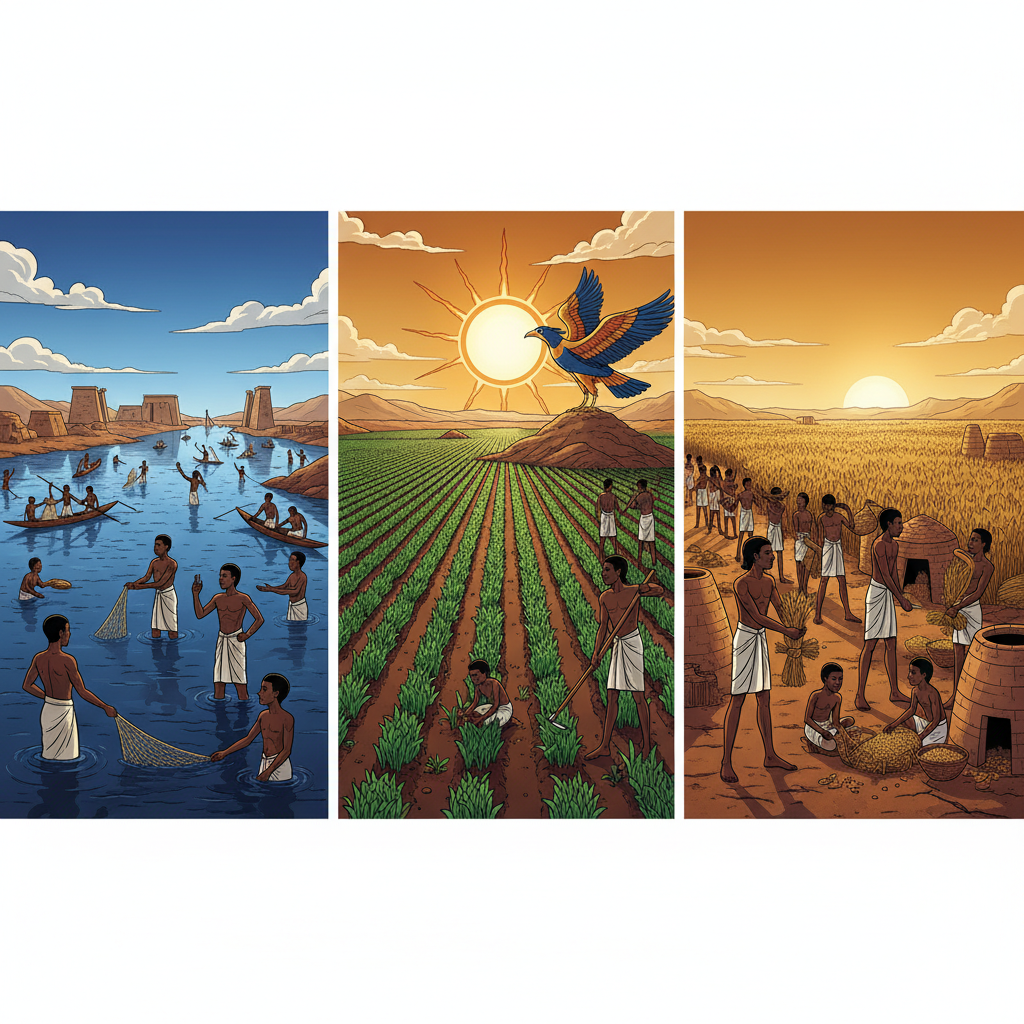
The agricultural calendar, meticulously observed and recorded by our ancestors, was a direct reflection of this Nilotic wisdom. The seasons of Akhet (inundation), Peret (growth), and Shemu (harvest) were not simply periods of time, but stages in a grand cosmic drama, mirroring the Bennu's journey. Planting seeds into the 'dead' earth, watching them sprout, grow, and then harvesting them, allowing some to die to feed others – this was the practical application of Reciprocity. The earth gave of itself, the farmers nurtured it, and the bounty then sustained the community, ensuring the cycle could continue. It was a profound lesson in the interconnectedness of all things, where every action had a reciprocal reaction, and life sustained itself through a continuous exchange. This understanding fostered a deep respect for natural processes and a harmonious relationship with the environment, recognizing that our well-being was inextricably linked to the well-being of the land.
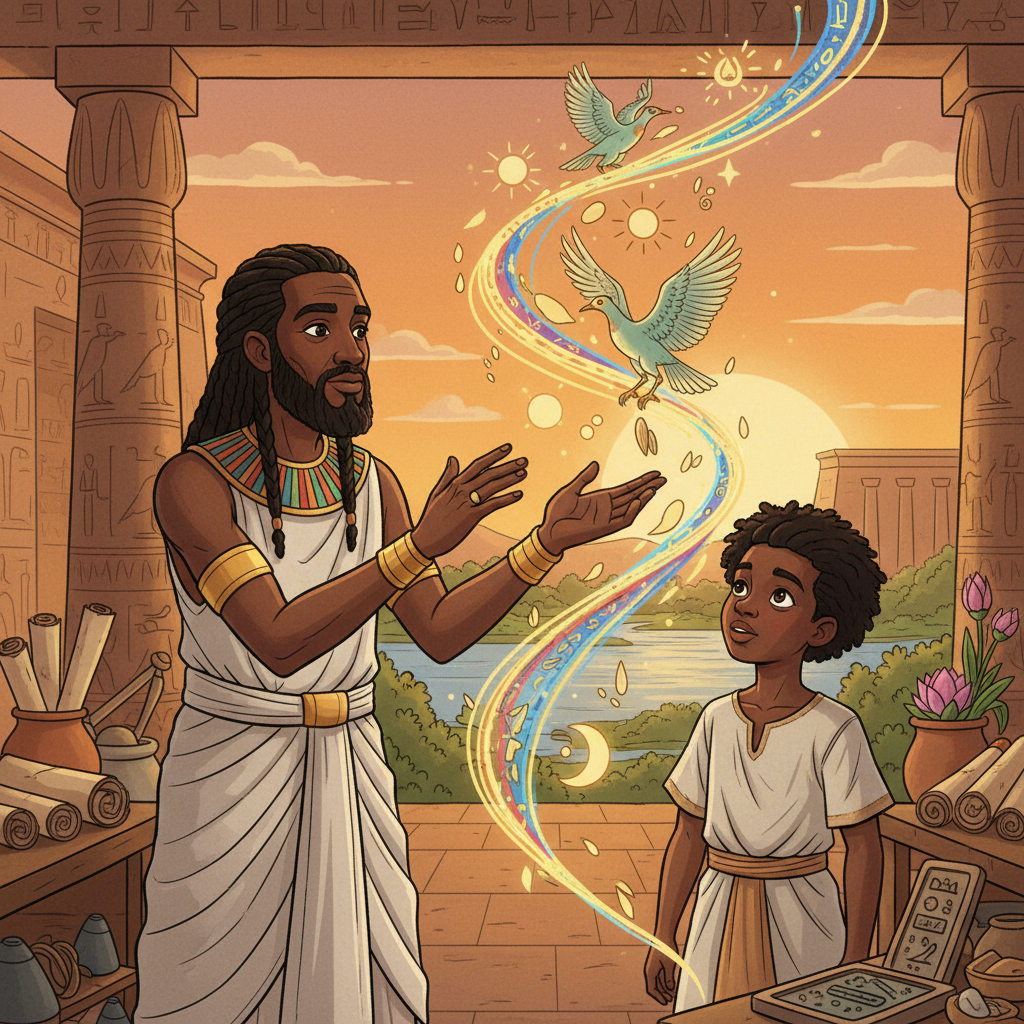
This concept, which some modern philosophers refer to as 'Eternal Return,' is deeply rooted in African ontology and epistemology. However, it's crucial to understand that in Kemet, 'eternal return' did not mean a mere repetition of identical events. Instead, it signified a spiral of transformation, a continuous re-creation and refinement. Each cycle builds upon the last, carrying forward the essence while shedding what is no longer needed, leading to greater complexity and consciousness. It is the understanding that time is not a straight line from a fixed beginning to a definitive end, but an ever-unfolding circle, where lessons are revisited and integrated, and wisdom deepens with each rotation. This is the profound difference between the Bennu’s sophisticated philosophy and the simplistic 'rebirth' often attributed to the Phoenix. The Bennu is an active participant in this cosmic evolution, ensuring the continuity and progressive refinement of existence.
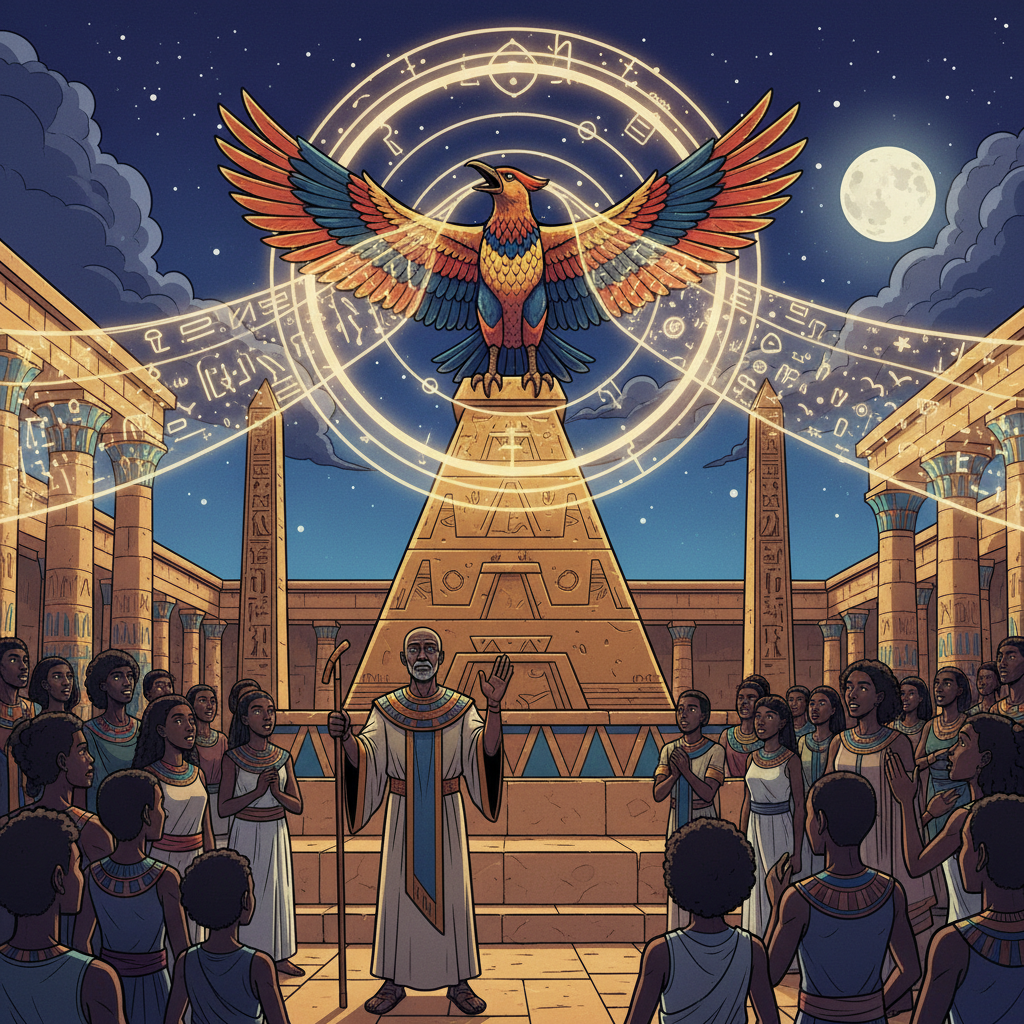
The Bennu's cry from the Benben stone wasn't just a sound; it was a primordial utterance, the very act of bringing things into being through vibration and intent. Our ancestors understood the creative power of sound, the heka (magic or divine utterance) embedded in speech and song. This initial 'Bennu Cry' set the vibrational template for the cosmos, establishing the frequencies and rhythms of creation. It was the moment where the formless potential of Nun began to crystallize into the structured reality of Kemet. This act of sonic cosmogony emphasizes that creation is not a static event but an ongoing, dynamic process, continually being called into existence. The Bennu, therefore, is not only the symbol of the cycle but the active agent, the primordial voice that maintains the harmony and order of the universe, ensuring that the dance of Maat continues its elegant unfoldment.
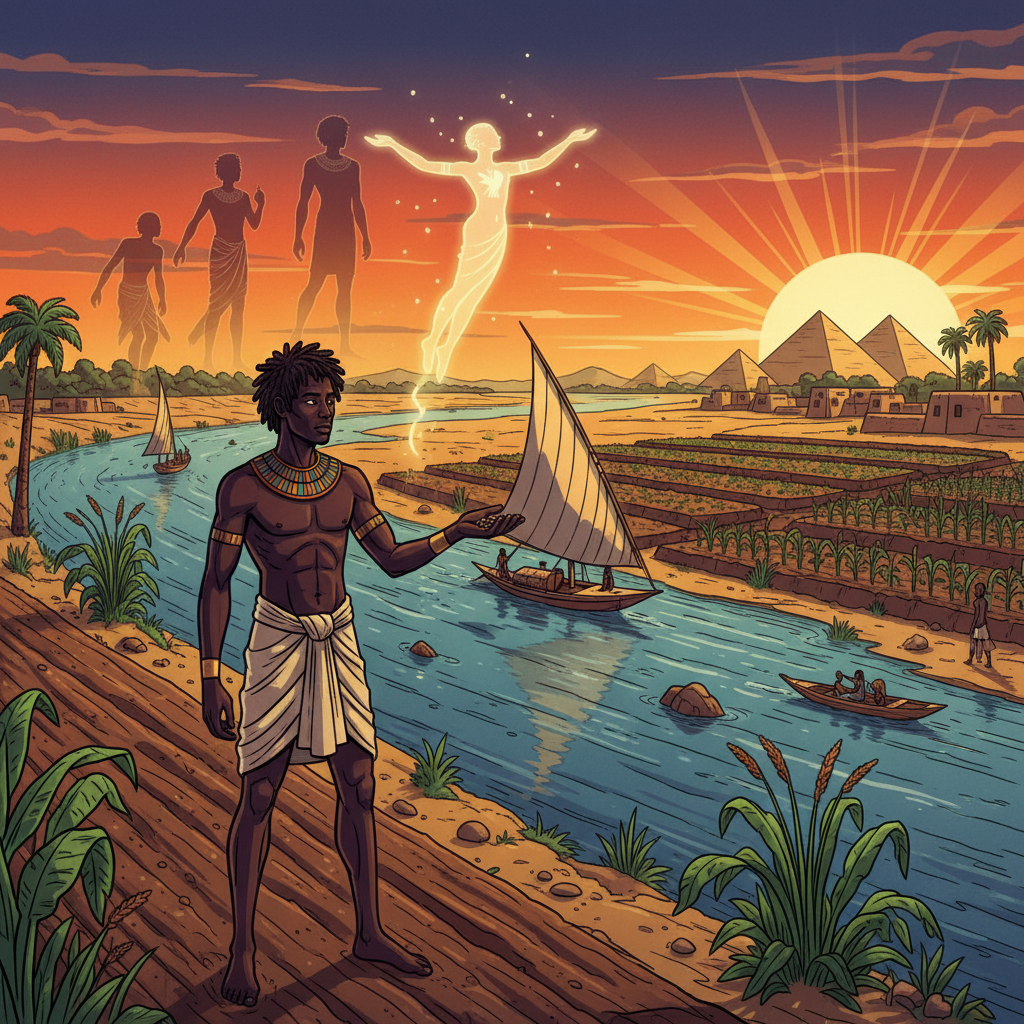
The phrase 'I shall come into being again' is often misinterpreted as merely a physical resurrection. But in the context of Kemetic philosophy, it speaks to a much deeper truth: the continuous process of self-actualization, spiritual renewal, and the transmutation of being. It's about shedding old forms, old understandings, old limitations, to embrace new, more evolved states of existence. Just as the Nile transforms the land, and the seed transforms into a plant, the soul undergoes continuous metamorphosis. The Bennu encourages us to view every 'ending' as an opportunity for profound internal transformation, a chance to shed what no longer serves our highest purpose and to re-form ourselves in alignment with Maat. It is a powerful affirmation of impermanence and the dynamic nature of reality, reminding us that stagnation is Isfet, and growth is the natural trajectory of a conscious existence.
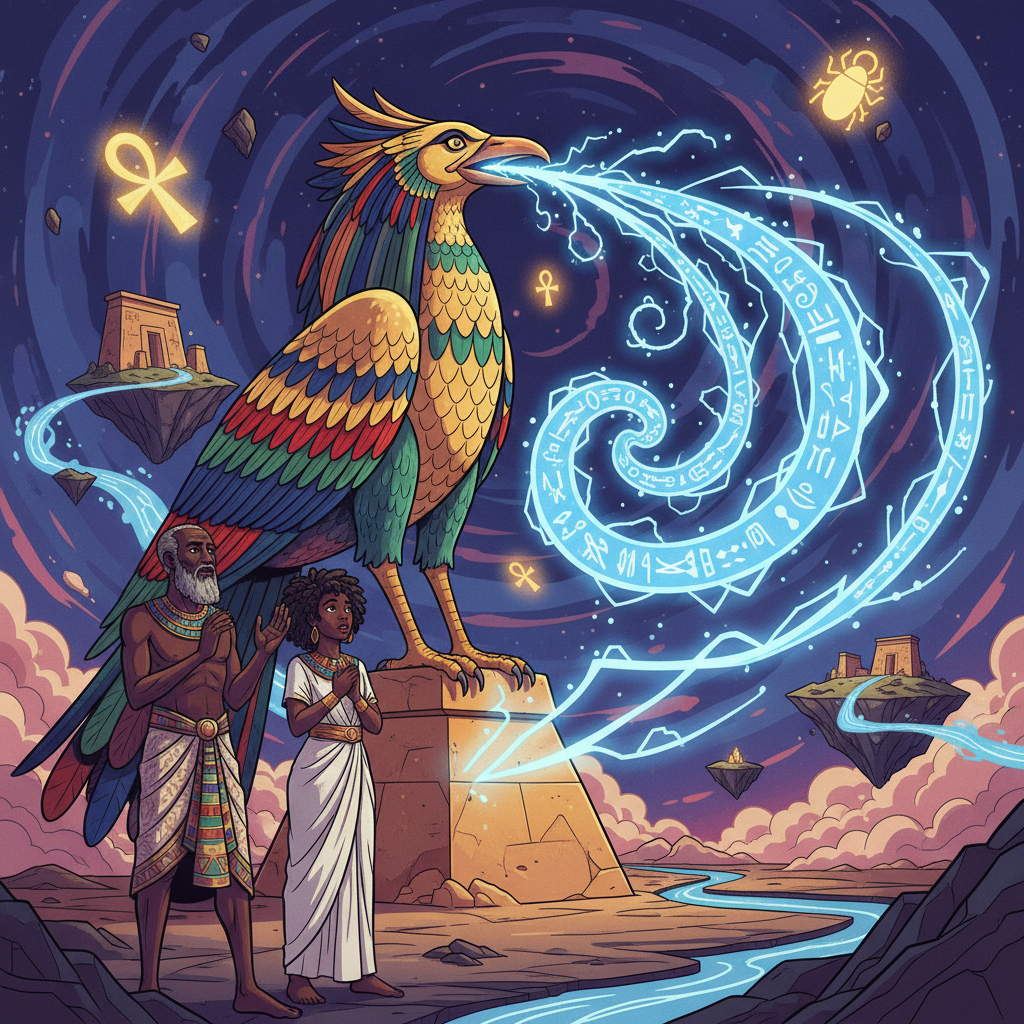
This profound understanding is encapsulated in the ancient words themselves, words you have now earned the right to fully comprehend. Listen closely, for within this passage lies the heart of the Bennu's eternal wisdom: 'I am the Bennu, the soul of Ra, the guide of the gods in the Duat. I came into being from the Unformed, and I shall come into being again.' This declaration is not a boast, but a statement of cosmic identity and purpose. It affirms the Bennu's intrinsic connection to the divine source (Ra), its role as a beacon of guidance through the realms of transition (Duat), and its fundamental nature as an entity capable of self-generation and continuous re-manifestation from the very essence of potentiality (the Unformed). It reveals the Bennu as an active, conscious agent in the unfolding of creation, not a passive symbol. This is the Heka, the divine utterance, that empowers existence itself.
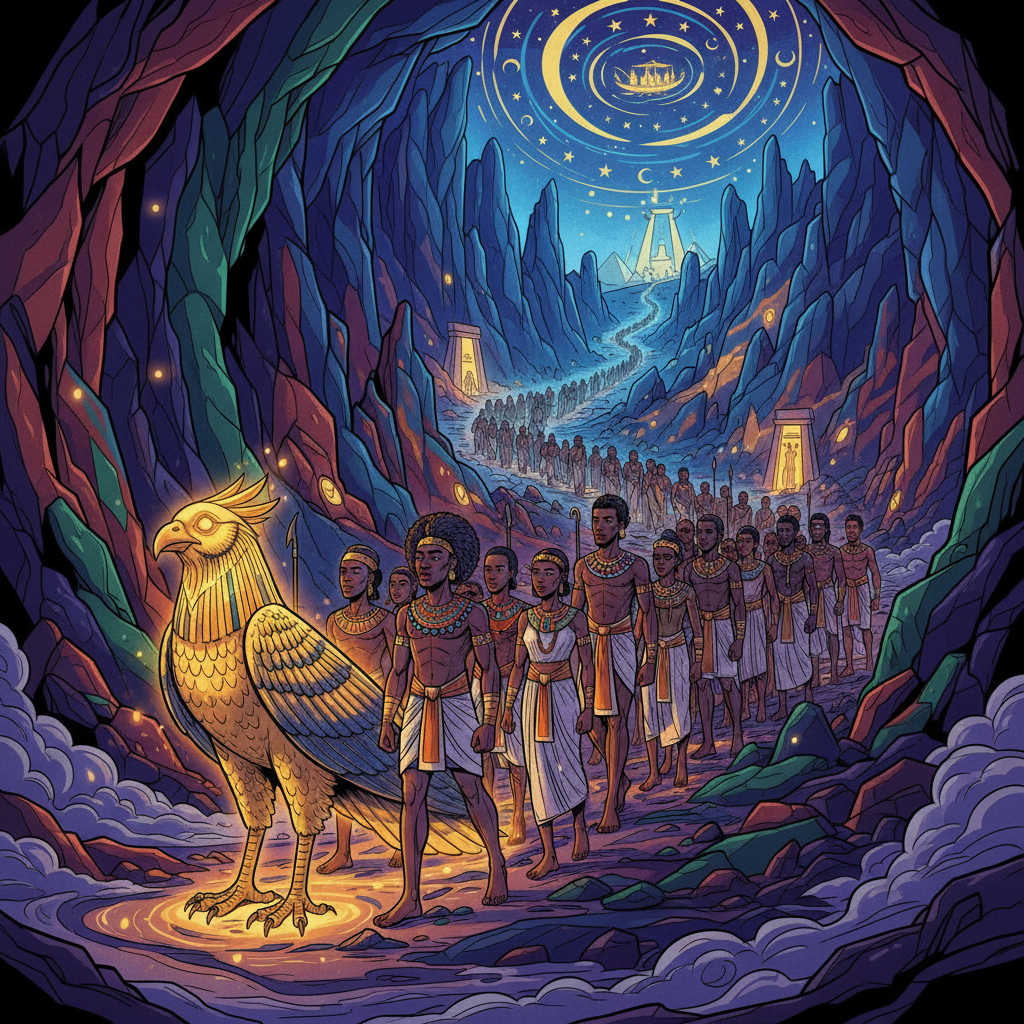
As 'the guide of the gods in the Duat,' the Bennu performs a crucial role beyond mere creation. The Duat is often simplistically understood as an underworld, but in Kemetic thought, it is a realm of profound transformation, a crucible where essences are tested and purified before their re-emergence. It is a journey of initiation, where the soul confronts its shadows and integrates its fragmented parts. The Bennu, with its cyclical wisdom, acts as the psychopomp, guiding not just gods but also human souls through these arduous passages of purgation and renewal. It ensures that the soul, like the sun, successfully navigates the night and emerges stronger, more conscious, and fully integrated. This guidance is essential for achieving Akh – the state of glorified, illuminated being. The Bennu’s presence signifies that even in the darkest valleys of transition, there is an inherent wisdom guiding toward light and rebirth.
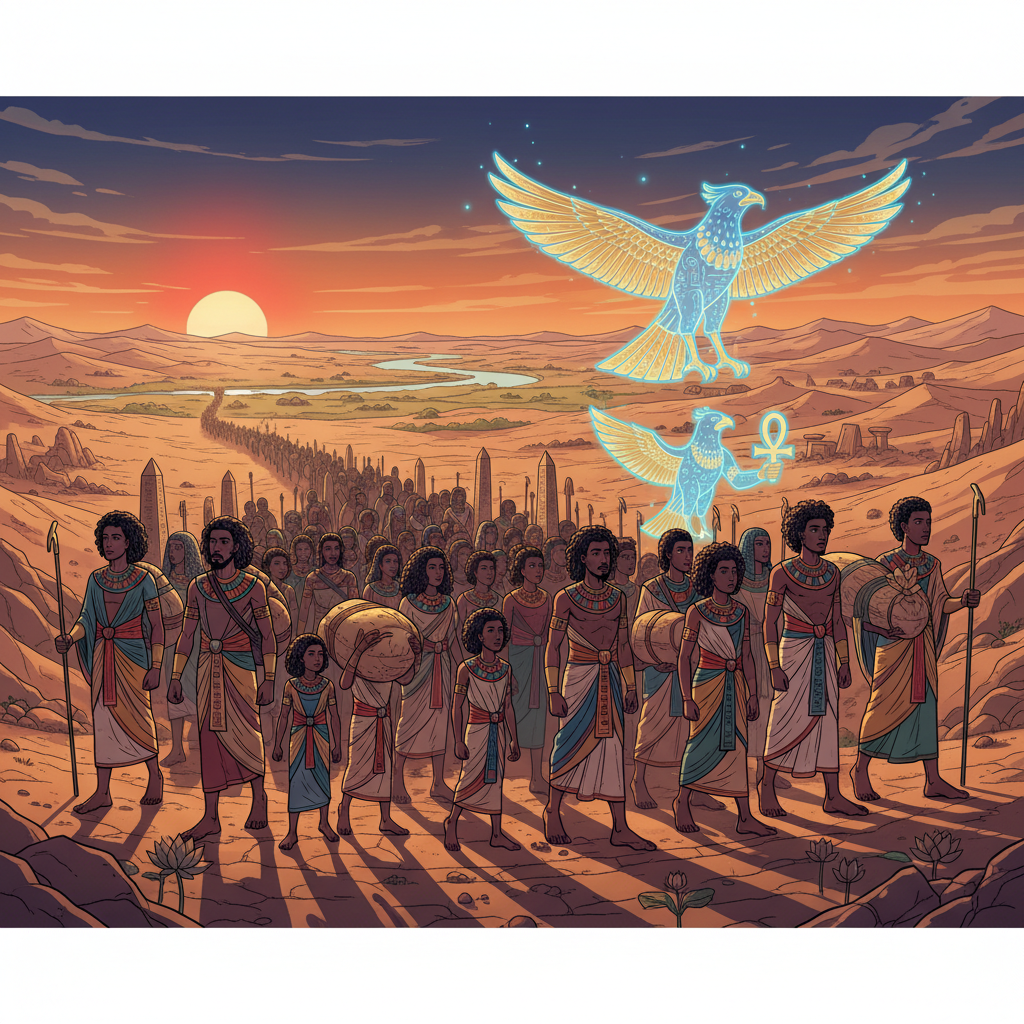
The journey of the Bennu through the Duat mirrors the ultimate journey of the individual human soul. Our Ba (personality, spirit) and Ka (life force, double) are meant to unite with our Akh (spiritual intelligence) after death, to become fully glorified ancestors. This process is not automatic; it requires living a life aligned with Maat, understanding the cycles of existence, and preparing oneself for the transitions that inevitably come. The Bennu, in its continuous cycle of emergence and re-emergence, provides the template for this spiritual evolution. It teaches us that death is not an ending, but a critical phase in the journey towards higher consciousness, a necessary shedding of the physical vessel to allow the spiritual essence to soar. To 'become the Bennu' is to embody this understanding, to achieve a state of self-awareness and spiritual mastery where one actively participates in one's own continuous evolution and transformation.
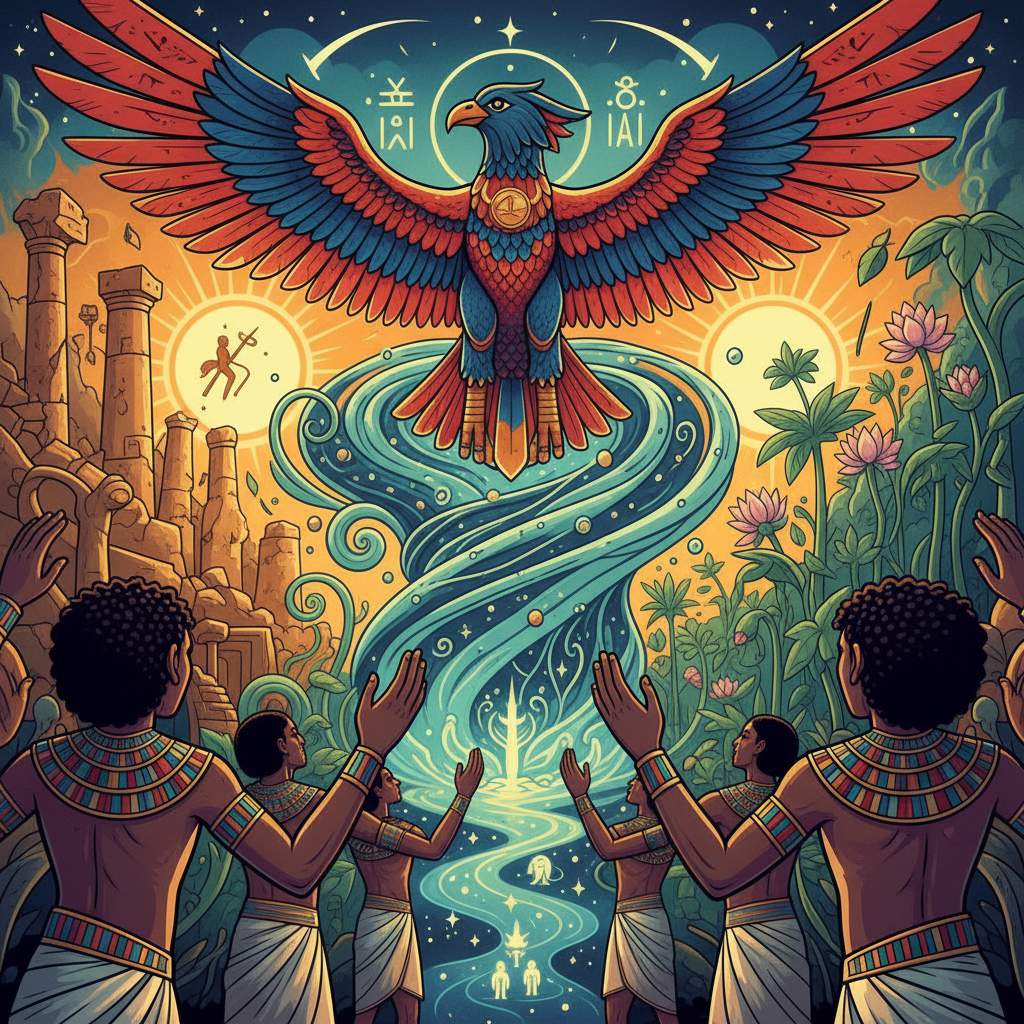
Now, let us bring into sharper focus the distinction between Kemet's Bennu and the Greek Phoenix. The Greek narrative, while captivating, often presents a linear, singular event: a bird burns and is reborn. This focuses on a spectacular, almost magical, physical resurrection. The Kemetic Bennu, however, embodies a complex, multi-layered philosophical system. It is the primordial force of creation, the soul of Ra, the guiding intelligence through the Duat, and the living principle of eternal return. It speaks to cosmic cycles, not just individual rebirths. It is a symbol of Reciprocity at the grandest scale – life giving way to death, which fertilizes new life, an unending exchange. The Greek appropriation, perhaps due to a different cultural understanding of time and spirituality, simplified this profound African original, losing the intricate connections to cosmogony, divine agency, and the continuous unfolding of Maat. The difference is not minor; it is profound.
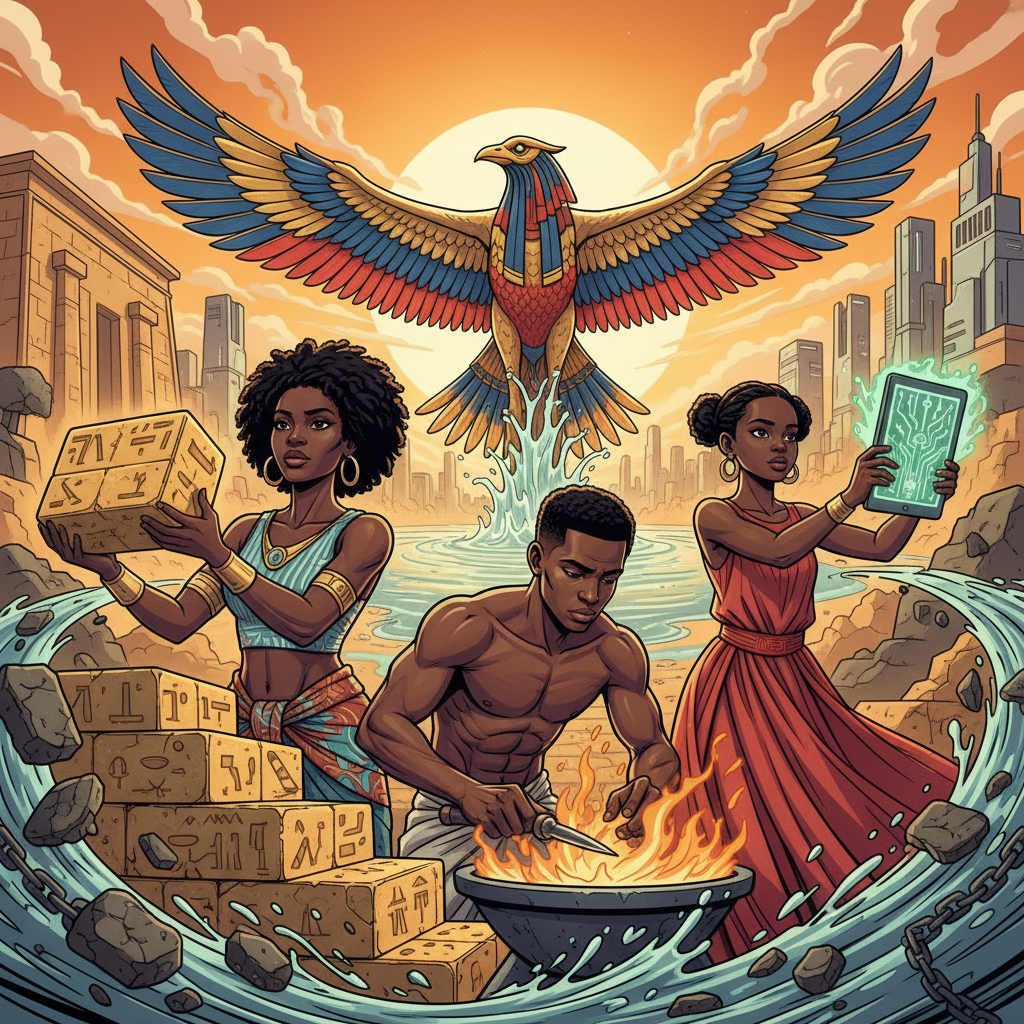
This deeper understanding of cyclical renewal, embedded in the Bennu, finds resonance in modern Afrocentric thought. Dr. Maulana Karenga, for instance, through his Kawaida philosophy, emphasizes the principles of cultural renewal, self-determination, and collective responsibility – all reflections of the Bennu's spirit. Kawaida calls for a continuous re-evaluation and revitalization of cultural values, much like the Bennu’s cyclical re-emergence. It is about actively creating a new, vibrant future by drawing wisdom from the past, shedding what no longer serves, and continuously building. This is not about static tradition, but dynamic, living heritage. The Bennu, therefore, can be seen as an ancient archetype for the ongoing struggle for liberation and self-definition, urging African people to continuously recreate themselves, assert their agency, and reclaim their narrative from the ashes of historical oppression, much like Kemet itself rose from the primordial waters.
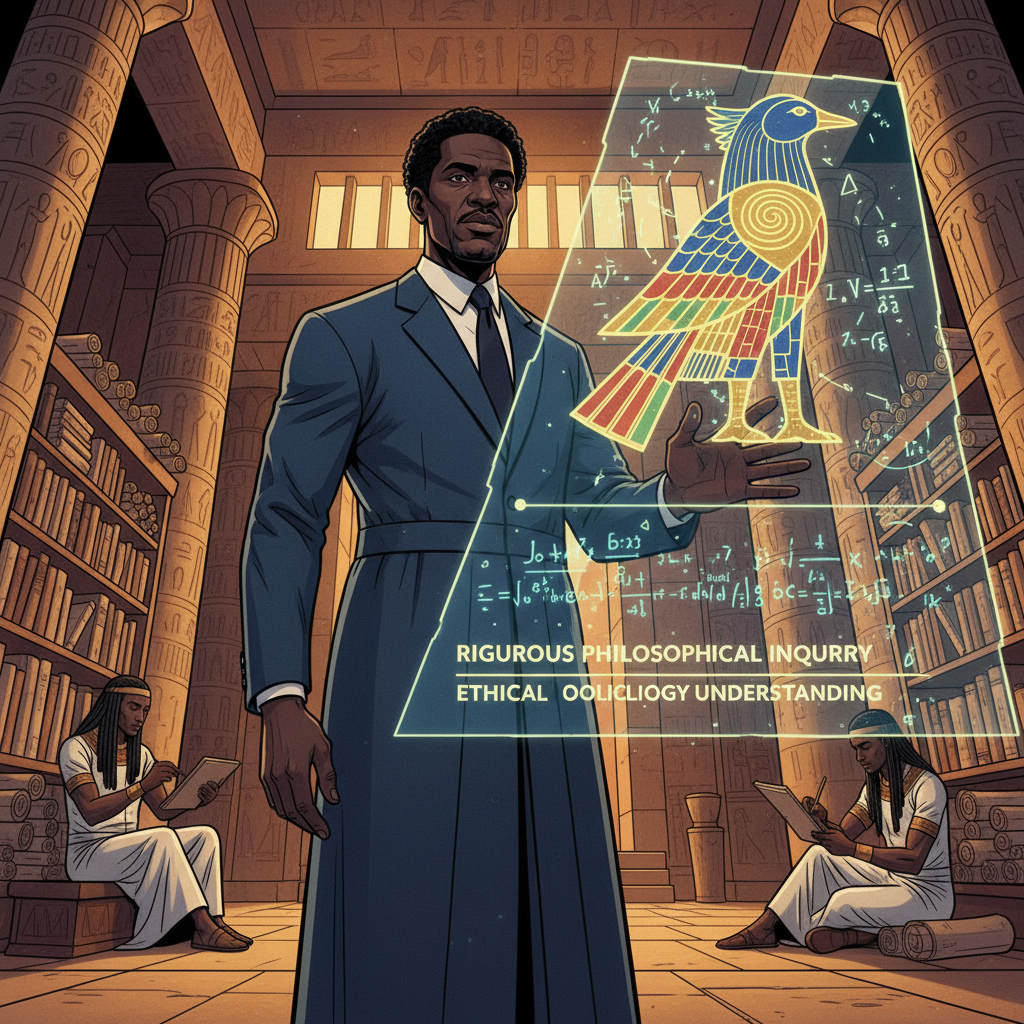
Furthermore, the work of scholars like Dr. Jacob Carruthers shines a light on the sophisticated intellectual tradition that produced such symbols as the Bennu. Carruthers meticulously demonstrated that Kemet was not a land of primitive superstition, but a civilization built upon rigorous philosophical inquiry, ethical principles, and profound cosmological understanding. The Bennu was not simply a mythical creature; it was a conceptual tool, a paradigm for understanding the universe. To truly grasp the Bennu, one must engage with the intellectual framework that gave it birth, a framework that values observation, reason, and spiritual insight. Carruthers' efforts to recover and re-center this African intellectual heritage are vital, reminding us that the Bennu is a testament to the highly advanced thought systems that flourished on this continent, providing a coherent and comprehensive worldview that influenced myriad subsequent philosophies.
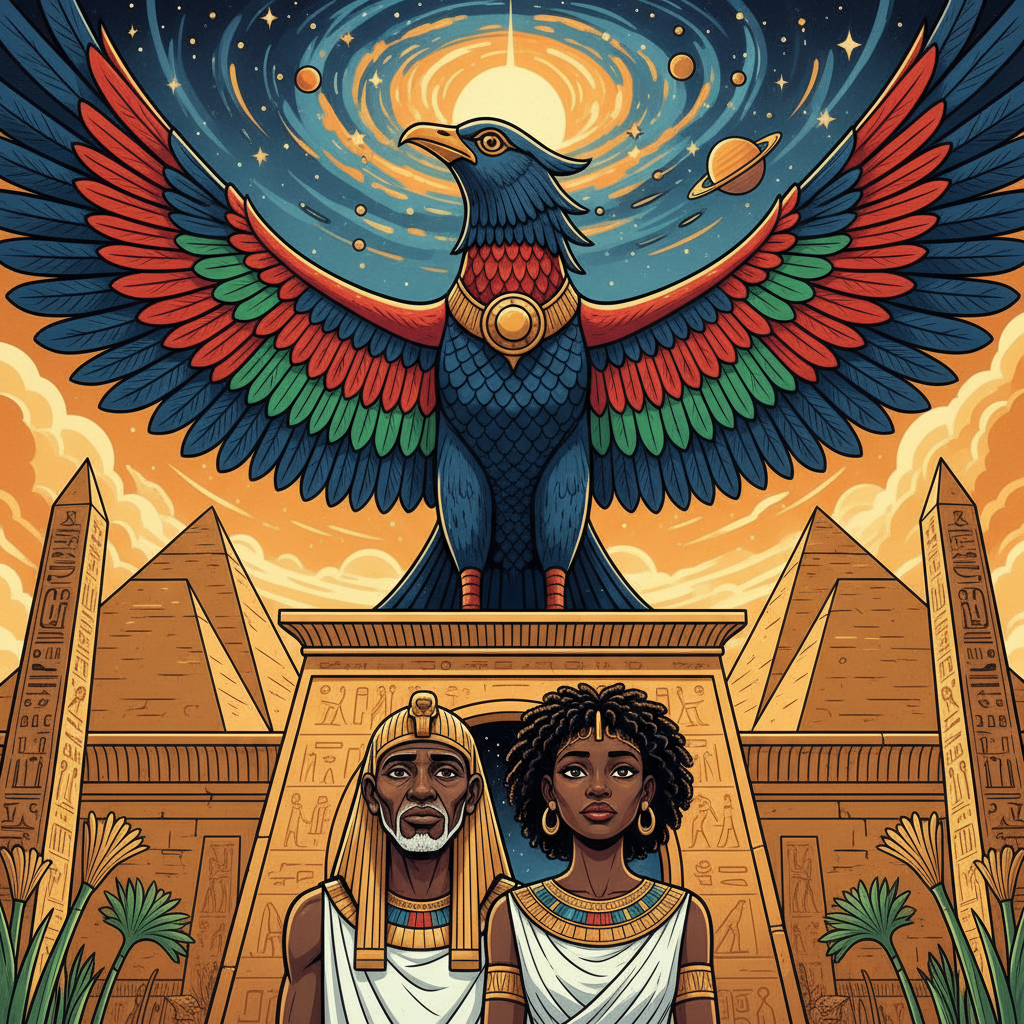
Thus, the Bennu stands as a potent symbol of African genius and resilience. It reminds us that profound philosophical concepts about existence, time, and creation did not originate solely in other parts of the world. Africa, through Kemet, gifted humanity with an understanding of cosmic cycles, self-renewal, and the interconnectedness of life that remains unparalleled in its depth and elegance. The enduring presence of the Bennu in our collective consciousness, even in its diluted forms, speaks to the power and universality of its core message. It is a testament to the intellectual robustness of our ancestors, whose observations of nature and deep spiritual insights allowed them to articulate truths that resonate across millennia. To embrace the Bennu is to embrace this legacy, to recognize the profound contributions of the continent to global spiritual and philosophical thought, and to celebrate the enduring spirit of Africa.
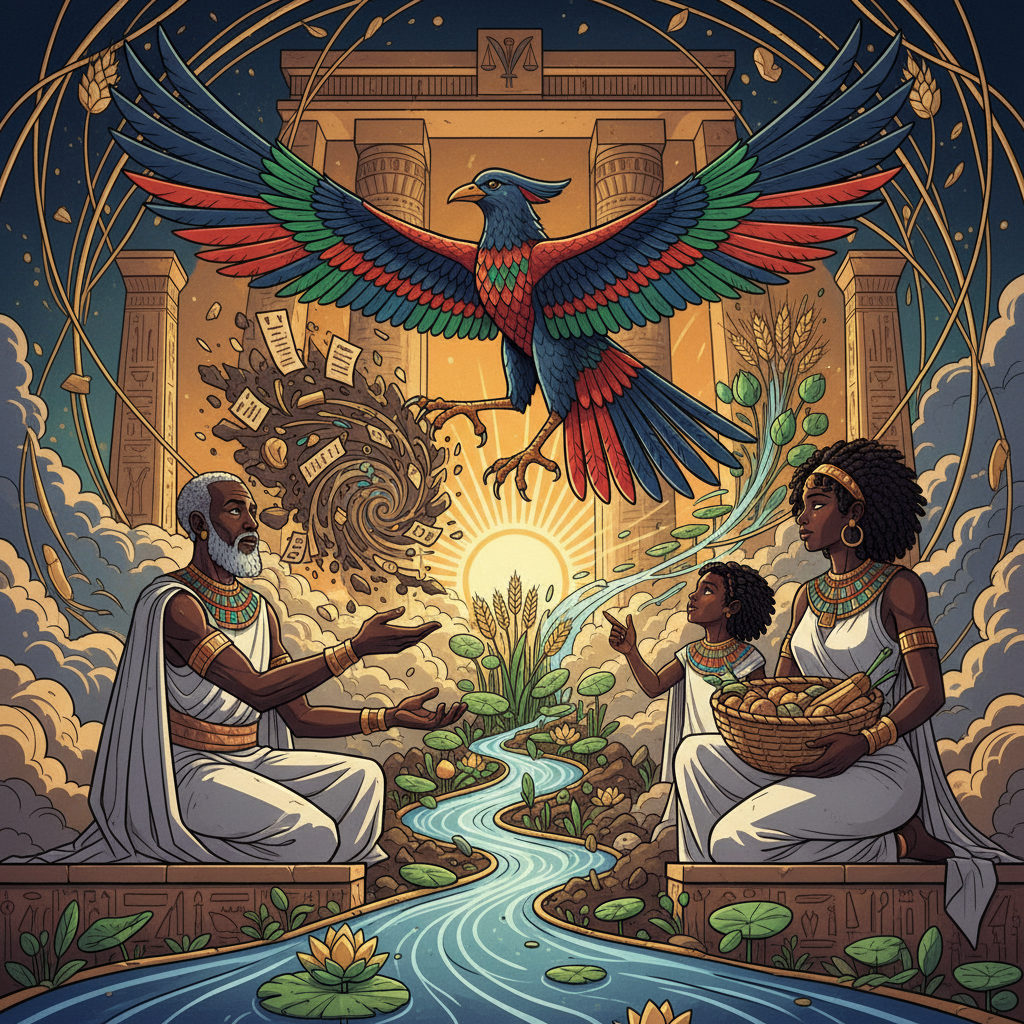
At its core, the Bennu perfectly embodies the Maat Principle of Reciprocity. It is the understanding that all things are interconnected and operate in a continuous cycle of giving and receiving, transformation and renewal. The death of the old nourishes the birth of the new; the withdrawal of the Nile provides the fertile ground for next year’s bounty. This dynamic balance, this continuous exchange, is what sustains existence. There is no isolated event, no action without consequence, no life without the preceding death. The Bennu teaches us to participate consciously in this great cosmic dance, to understand our place within this web of interconnectedness, and to act in ways that promote balance and harmony. This is the very essence of Maat in action, a living philosophy that ensures the perpetuation of order through constant, dynamic equilibrium. This wisdom is not just for the gods, but for every living being.
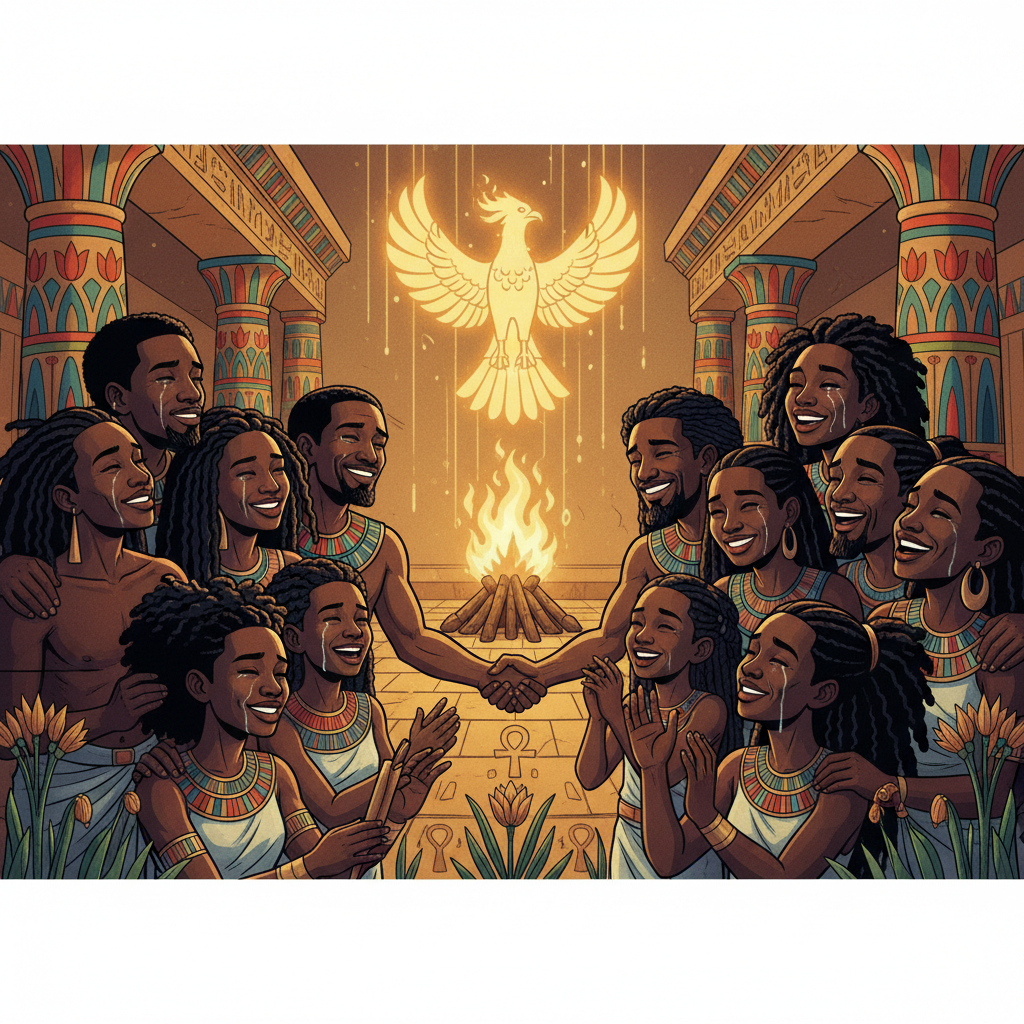
Applying the Bennu's lesson to our personal lives is transformative. It encourages us to view challenges, endings, and even perceived failures not as ultimate defeats, but as necessary stages in our personal growth. Just as the Bennu willingly enters the flame to be renewed, we are called to embrace periods of introspection, self-assessment, and letting go. Each 'death' of an old habit, an outdated belief, or a limiting perspective creates fertile ground for the birth of a more evolved self. This is active self-mastery, a conscious participation in our own spiritual and intellectual metamorphosis. The Bennu empowers us to understand that growth is not always comfortable, but it is always productive when approached with wisdom and courage. It is a continuous process of shedding, learning, and re-forming ourselves in alignment with our highest potential, much like the cosmos continually renews itself.
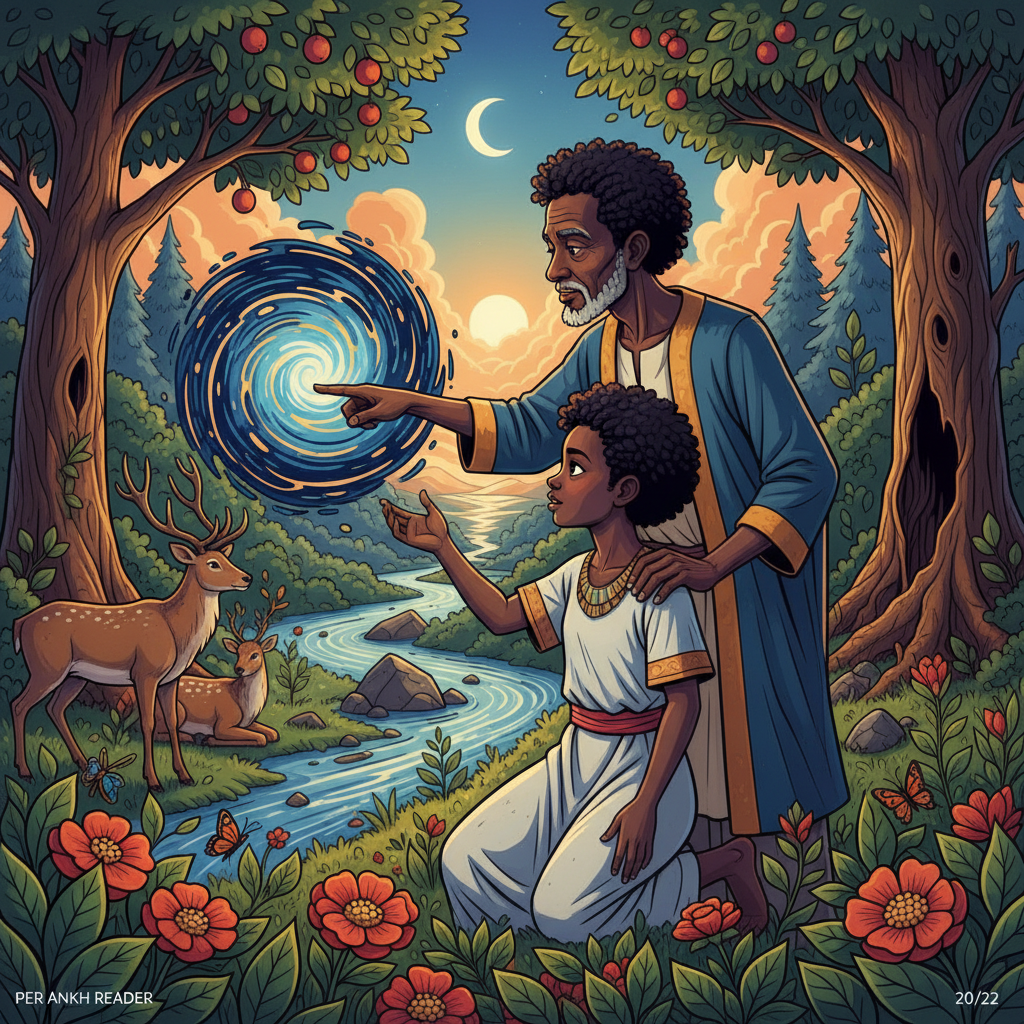
The Bennu is not just a figure from ancient lore; its principles are observable everywhere in the natural world around us. Think of the cycle of seasons, the rise and fall of tides, the growth and decay of forests, the very cells within your own body constantly dying and regenerating. These are all microcosmic reflections of the Bennu's macrocosmic truth. Our ancestors were keen observers of these patterns, understanding that the universe communicates its deepest truths through the language of nature. The Bennu is a reminder to look beyond the surface, to see the deeper, cyclical rhythms at play in every aspect of existence. By recognizing these patterns, we begin to understand the inherent order of Maat and our role within it, moving from passive observation to conscious participation in the ongoing dance of creation and transformation that defines our reality.
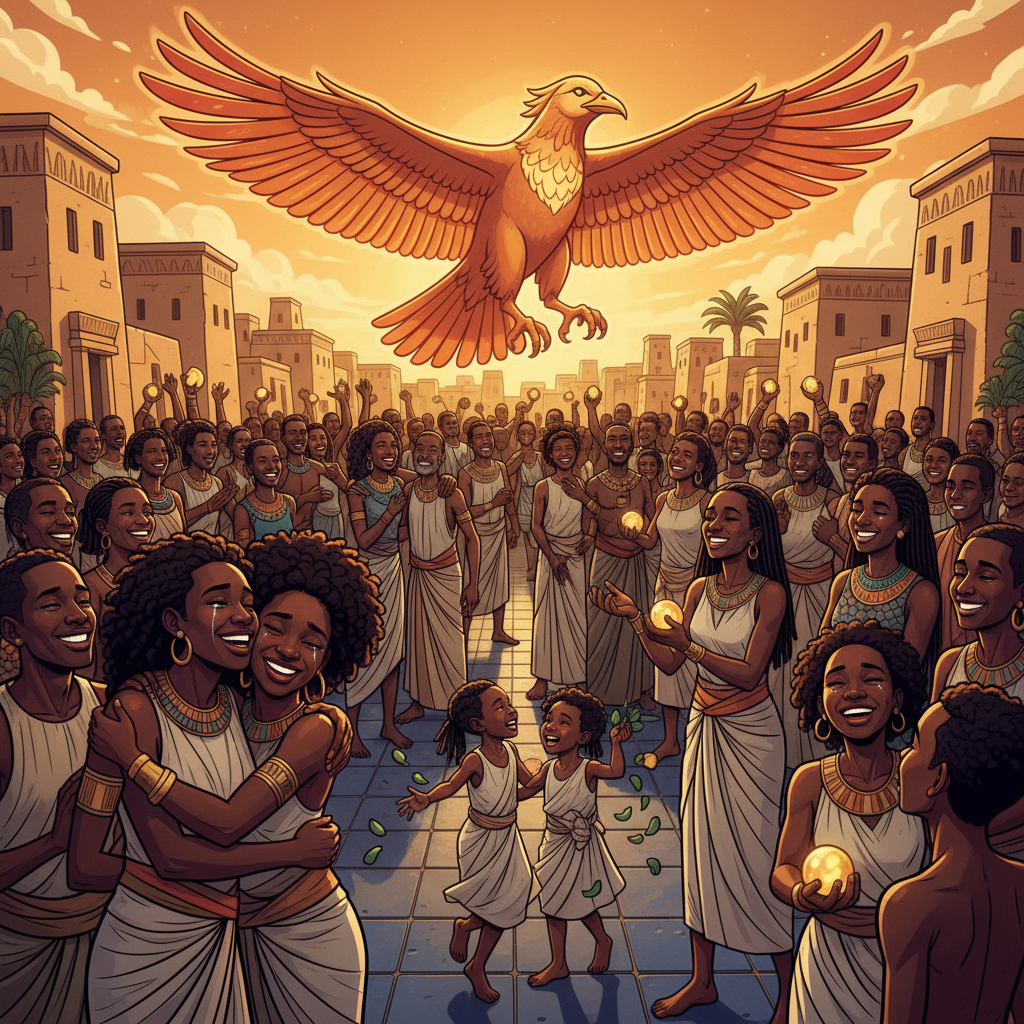
Ultimately, the Bennu bird serves as a profound call to conscious participation in the grand tapestry of creation. It reminds us that we are not passive observers in a linear progression, but active co-creators in an eternal, cyclical unfolding. Every choice we make, every action we take, either contributes to Maat – the order, harmony, and balance of the universe – or to Isfet, its antithesis. The Bennu’s message is one of agency and responsibility: understanding that our individual transformations contribute to the collective evolution, and that the cycles of renewal apply to communities and civilizations as much as to individuals. To live by the wisdom of the Bennu is to embrace change, to learn from every ending, and to continually strive for higher states of being, ensuring that the flame of consciousness and creativity is never extinguished but always renewed, brighter than before.
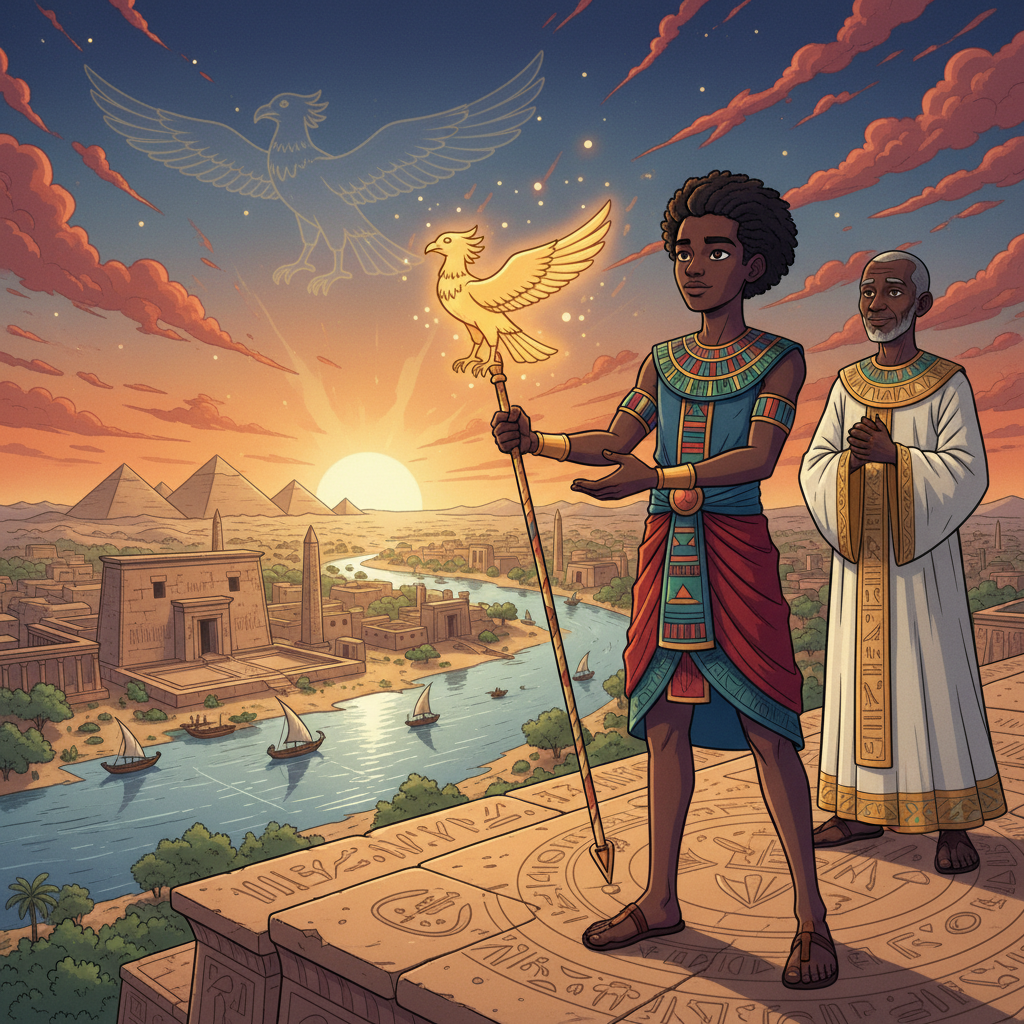
My student, the wisdom of the Bennu, the soul of Ra, is an enduring gift from our Kemetic ancestors. It is a profound philosophical framework that transcends simple mythology, offering a comprehensive understanding of existence itself. You have now traversed beyond the superficial 'Phoenix' tale and glimpsed the true depth of Africa's intellectual and spiritual genius. This knowledge is not to be merely stored, but lived. Let the Bennu's message of eternal return, of creative reciprocity, and of continuous transformation guide your understanding of the world and your place within it. Carry this torch of wisdom forward, illuminating the path for others, just as the Bennu’s cry brought light to the primordial darkness. This is the essence of what it means to truly understand, to embody the principles of Maat, and to partake in the never-ending journey of self-discovery and cosmic renewal.