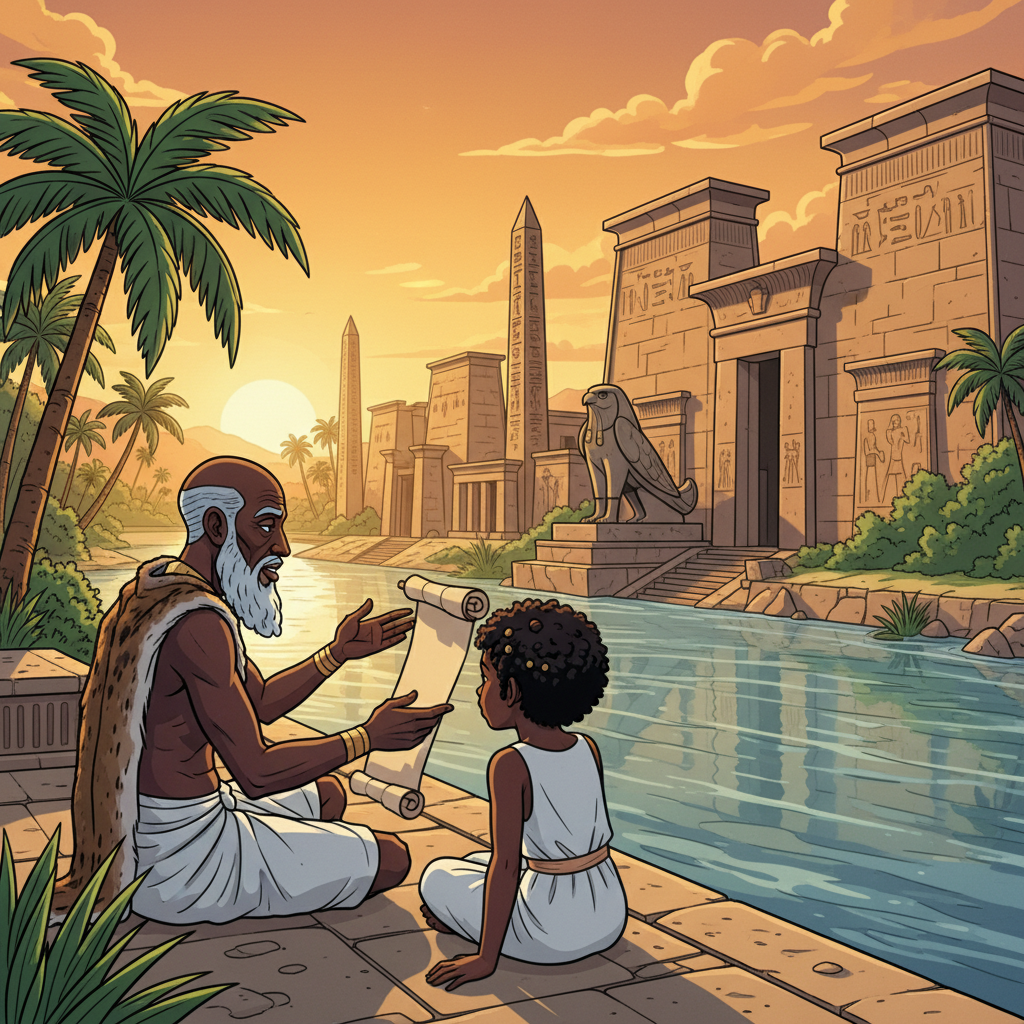
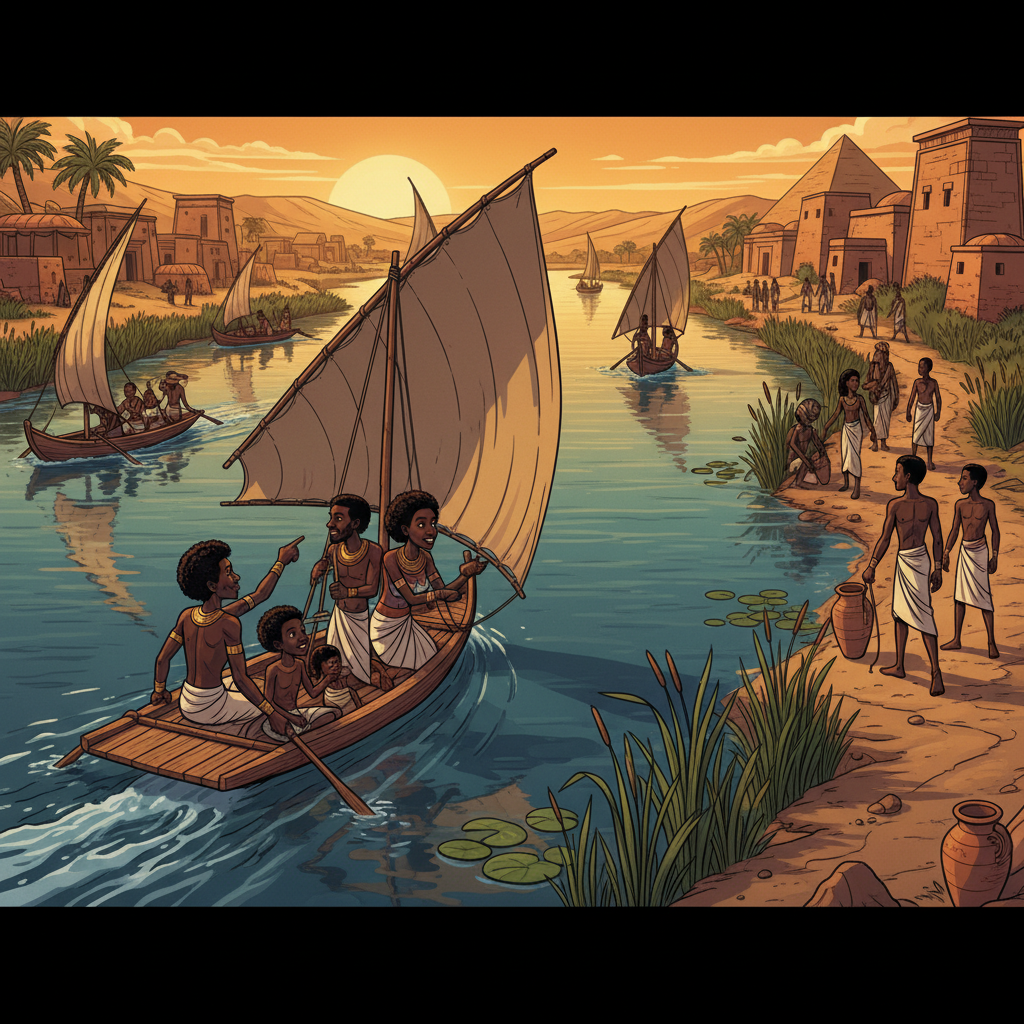
My dear student, you have walked diligently through the foundational paths of the Pert em Heru, proving yourself ready for the deeper currents of Kemetic wisdom. The river's gentle rhythm reminds us of life's constant flow, a perfect backdrop as we turn to perhaps the most profound, yet often misunderstood, sections of our sacred texts: the Chapters of Transformation. These are not mere tales of magic or shape-shifting, as some mistakenly believe. No, these chapters unveil the very heart of the Kemetic understanding of existence, revealing identity not as a fixed state but as a dynamic, continuous process. We speak of *Kheper*, the profound philosophy of becoming, of self-creation, which is the true purpose of our journey through this life. Kemet taught us that life is an ongoing act of self-refinement, a deliberate evolution towards higher consciousness and the embodiment of Maat. You are not simply *who you are*; you are perpetually *who you are becoming*. This concept of Kheper is the ancient African blueprint for what modern thinkers call self-actualization, a journey of conscious development that transcends the physical to embrace the spiritual and psychological. Prepare your mind, for we are about to explore the profound architecture of the self.
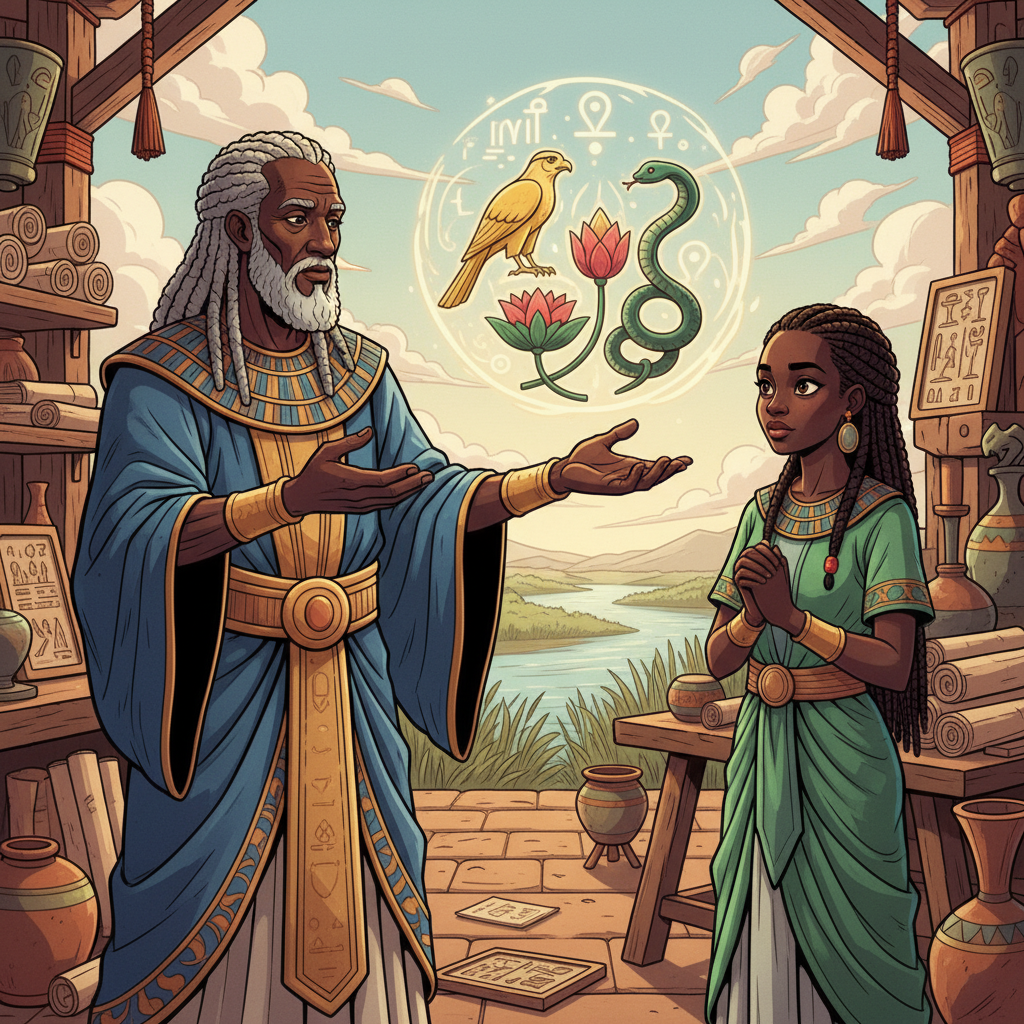
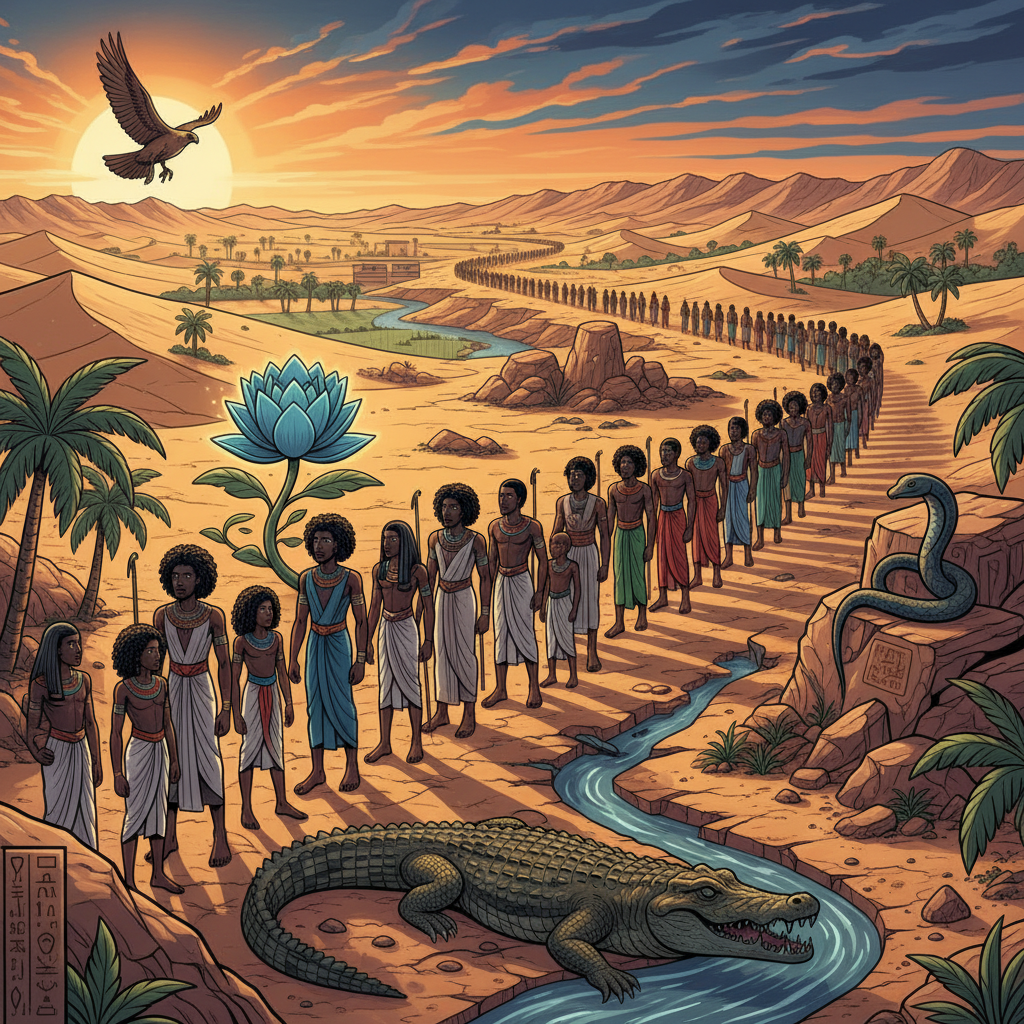
In the Beginnings chapters, you learned the basic narrative of the deceased "becoming" various forms – a falcon, a lotus, a serpent. At that level, we presented it simply to build the narrative. But now, you must shed the literal interpretations that cloud so many modern understandings of our ancestors' wisdom. To imagine the deceased physically changing into an animal misses the entire point, reducing profound philosophy to childish fantasy. Our ancestors, the Rekhyt of Kemet, were far too sophisticated for such simplistic notions. These transformations are metaphors, profound symbolic representations of different states of consciousness, aspects of the psyche that are cultivated, mastered, and expressed. They are not about altering one's physical form, but about expanding one's inner being, achieving a spiritual and psychological flexibility that allows one to navigate the Duat, both the afterlife and the challenges of earthly existence. This is a crucial distinction, separating superficial reading from true Sebait.
The Kemetic concept of *Kheper* is, in essence, the original philosophy of self-actualization. Before any other civilization articulated it, our ancestors understood that human existence is a journey of active, conscious development. It is not enough to simply *be*; one must continually *become*. This becoming is directed, purposeful, aligned with the principles of Maat. It is about realizing one's full potential, unlocking the divine spark, the *Ba*, within. This profound insight is part of the rich African intellectual tradition that scholars like Dr. Asa Hilliard III dedicated their lives to illuminating. Dr. Hilliard, through his work like *SBA: The Reawakening of the African Mind*, consistently reminded us that ancient Kemet offered a comprehensive system for human growth and transformation, a holistic approach that integrated mind, body, and spirit. This wisdom was designed to empower individuals to achieve spiritual maturity and contribute to the cosmic order, moving ever away from Isfet and towards harmonious balance.
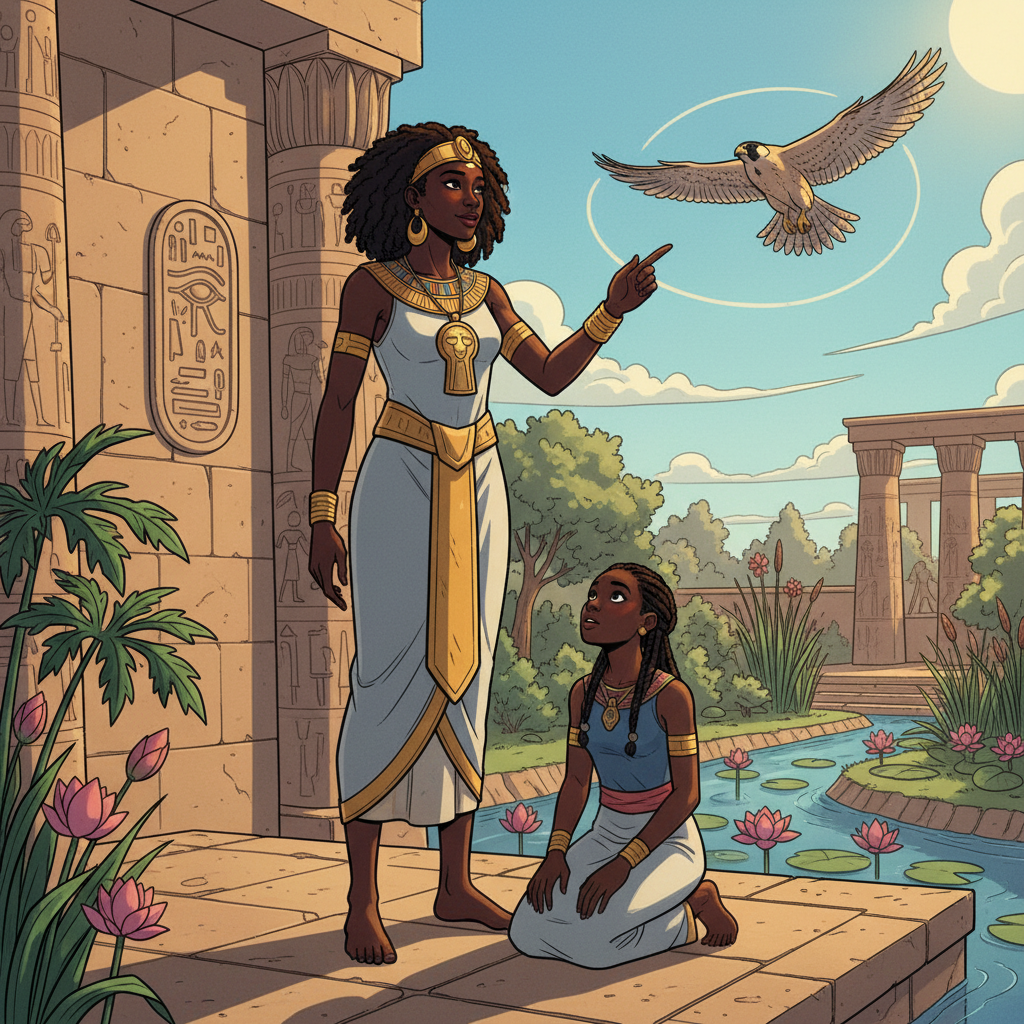
Consider the transformation into a falcon. What does this truly signify? The falcon, a majestic bird soaring high above the land, possesses unparalleled vision. It sees the expansive horizon, grasps the intricate patterns below, and holds a perspective that is both broad and penetrating. To 'become' a falcon is to achieve sovereign vision – a state of consciousness marked by clarity, insight, and an elevated perspective. It means overcoming the narrow confines of immediate concerns and seeing the larger picture, understanding the interconnectedness of events, and discerning truth from illusion. This is not just physical sight; it is intellectual and spiritual perception, the ability to see with the 'eye of Heru,' recognizing Maat even amidst the chaos of Isfet. It is a mastery of discernment, a necessary quality for anyone aspiring to lead justly or to navigate the complexities of life with wisdom.
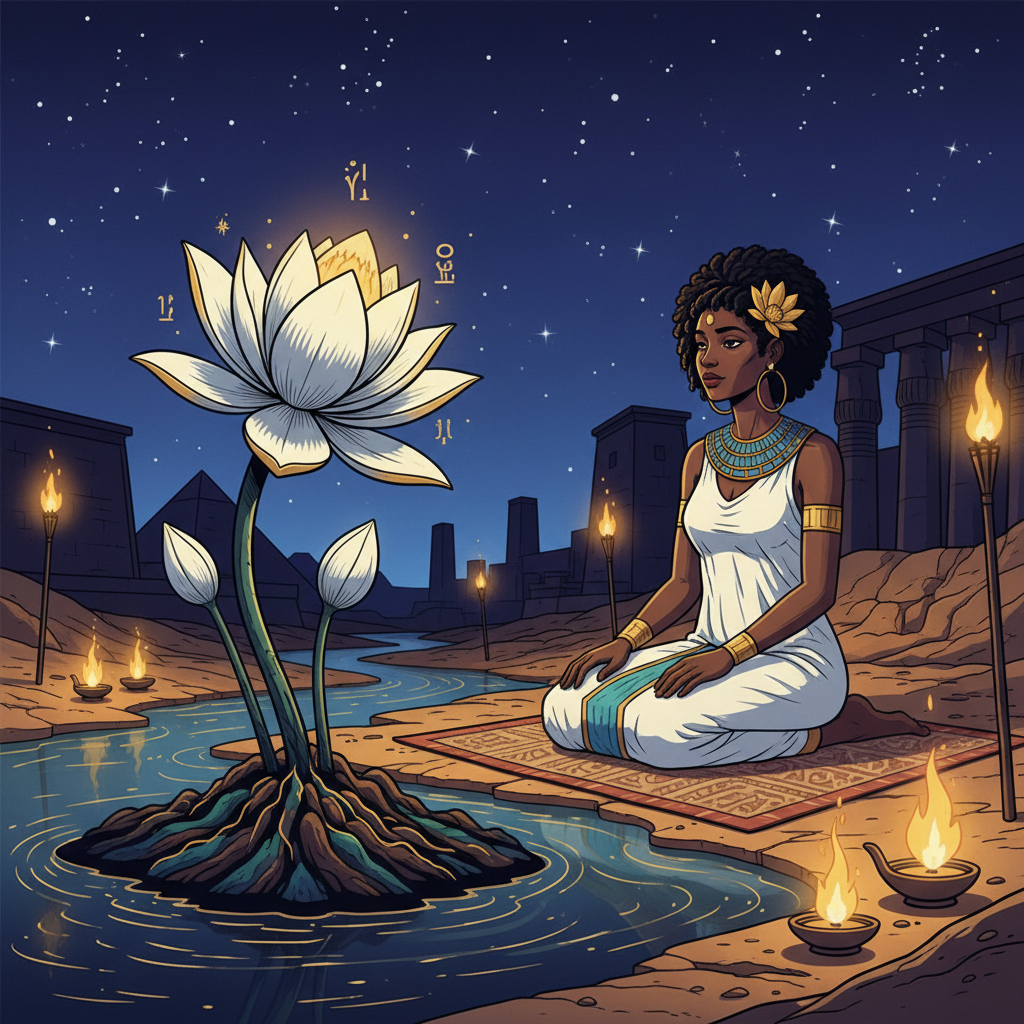
Next, reflect on the transformation into a lotus. This beautiful flower, with its delicate petals, emerges pristine and radiant from the dark, muddy waters of the Nile. It symbolizes purity, rebirth, and the ability to find beauty and spiritual enlightenment even amidst adversity and difficulty. To 'become' a lotus means cultivating an inner resilience, a spiritual purity that remains untouched by the challenges and impurities of the external world. It teaches us to rise above our circumstances, to grow from the very struggles that might otherwise overwhelm us, always reaching towards the light. The lotus opens its petals to the sun each morning and closes them at night, a constant cycle of renewal and connection to the divine, reminding us that even from the deepest mud, the most exquisite beauty and wisdom can blossom, guided by the principles of Maat.
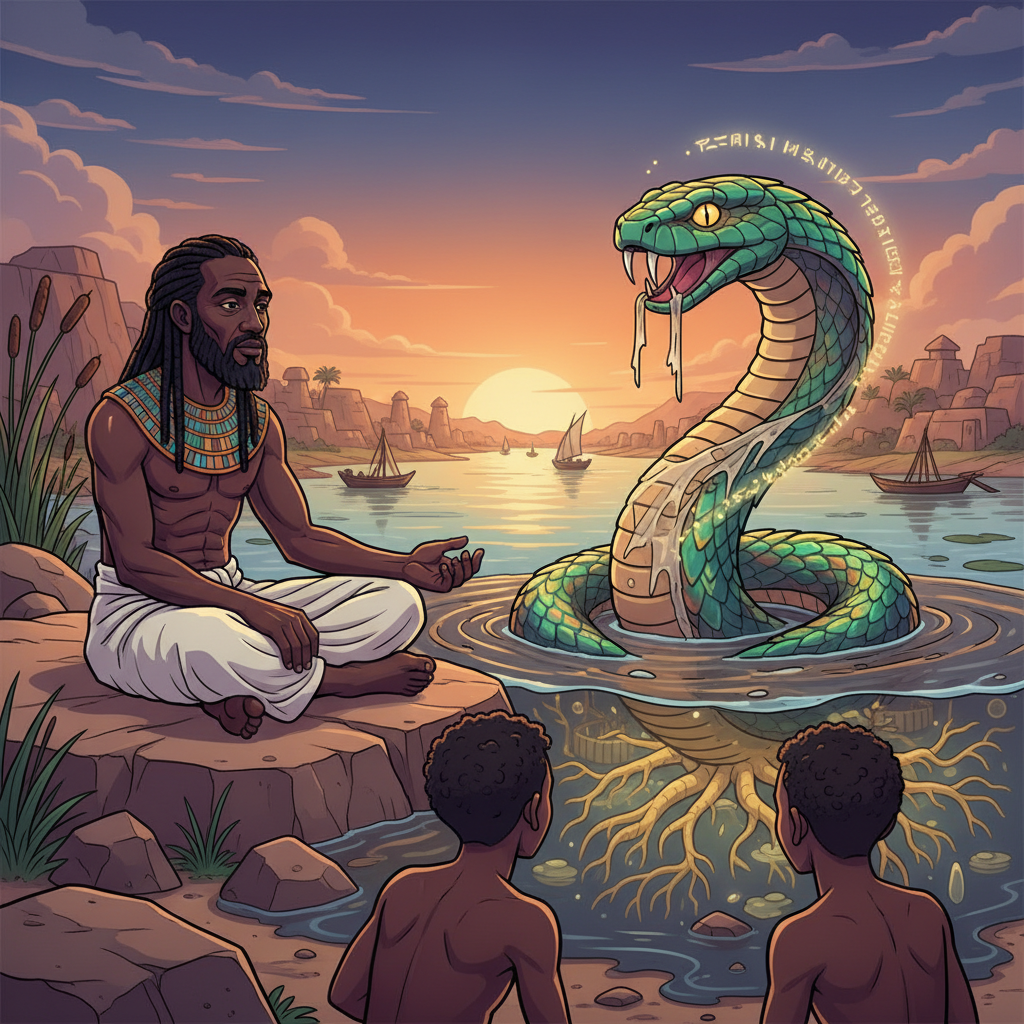
The transformation into a serpent, often perceived negatively in some cultures, holds profound meaning in Kemet. The serpent sheds its skin, a powerful metaphor for regeneration, renewal, and the cyclical nature of life and death. It represents wisdom, healing, and the ability to constantly renew oneself, letting go of the old to embrace the new. To 'become' a serpent is to master the art of self-regeneration – to discard outdated beliefs, overcome past mistakes, and continuously evolve. It is about understanding the inherent power of transformation, the capacity to heal oneself and others, and to tap into ancient wisdom that lies beneath the surface of everyday perception. This aspect of Kheper encourages us to embrace change, knowing that the shedding of old forms is essential for growth, just as the river sheds its old banks to carve new paths.
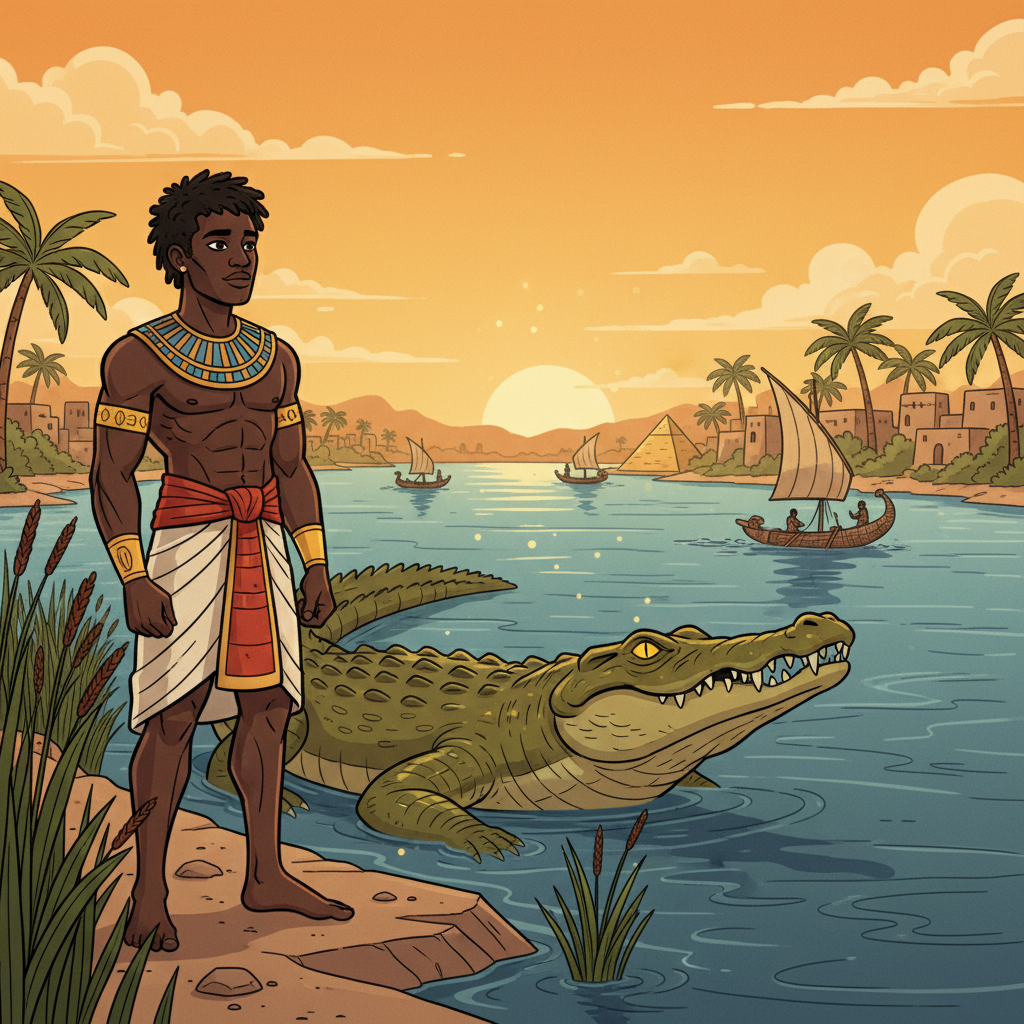
And then, the formidable crocodile, Sobek, often associated with strength, ferocity, and protection. To 'become' a crocodile is to embody control, adaptability, and the ability to navigate perilous waters with cunning and power. The crocodile moves seamlessly between land and water, representing mastery over different domains of existence, both conscious and subconscious. It teaches us strategic thinking, the capacity to protect what is sacred, and the ability to adapt to changing environments while maintaining one's core strength. This transformation is not about aggression for its own sake, but about the judicious use of power, the wisdom to know when to act decisively and when to observe patiently. It speaks to the importance of self-control and disciplined action in upholding Maat, ensuring that one's power is always wielded with purpose and propriety, protecting the balance rather than disrupting it.
Do you see now, my student? These are not external forms to be taken on, but internal qualities to be cultivated. They are aspects of your own *Ba*, your individual soul-personality, that you develop and express. The Pert em Heru guides the deceased, and by extension, us, through a curriculum of psychological flexibility. It teaches that the fully realized individual is not rigid, but fluid, capable of embodying different states of consciousness as required by Maat. You learn to possess the falcon's vision when seeking truth, the lotus's resilience when facing despair, the serpent's wisdom when needing renewal, and the crocodile's strength when protecting what is right. This multifaceted identity allows for complete engagement with life's rich tapestry, always maintaining balance and integrity. It is the ultimate expression of self-mastery, a true sign of one who has embraced Kheper.
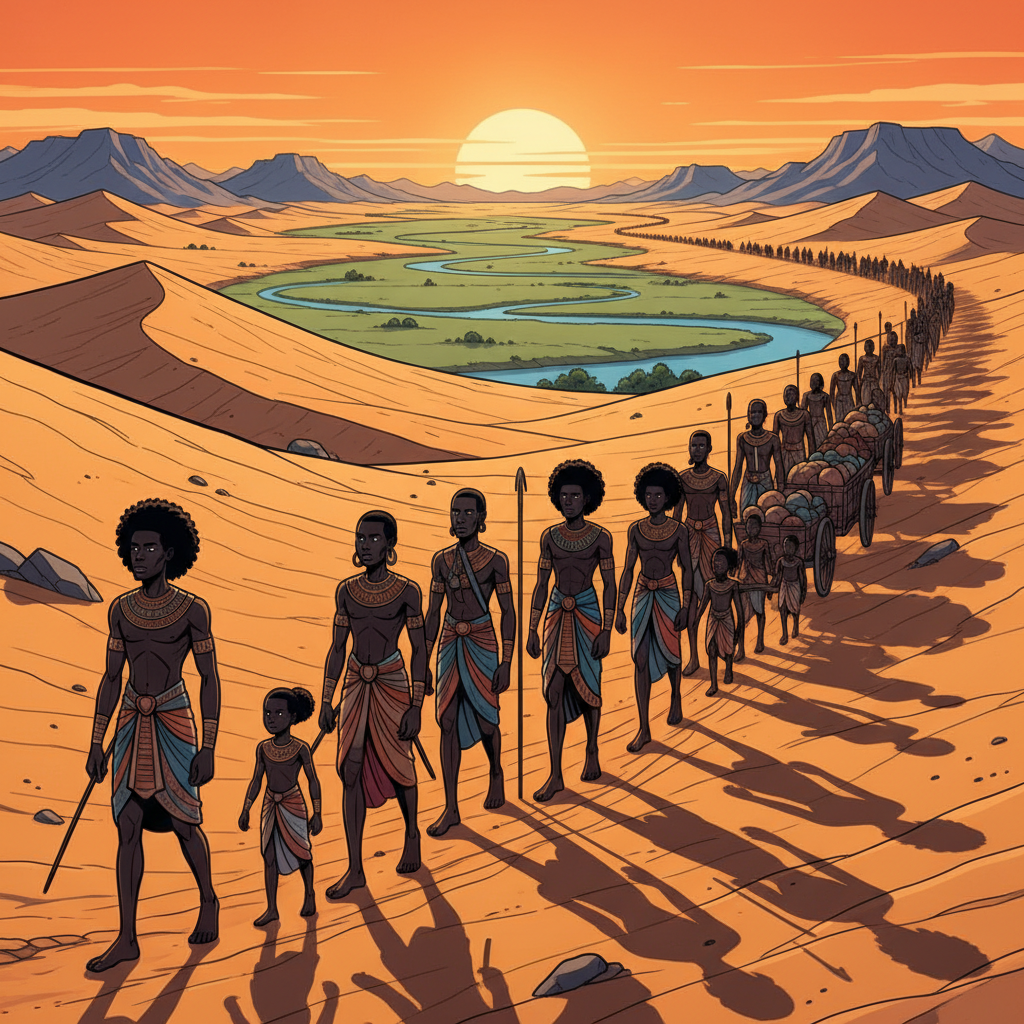
This understanding radically reshapes our concept of identity. In many contemporary societies, identity is often seen as a fixed label, a static definition assigned at birth or through early experiences. But Kemet teaches us that identity is a dynamic process, an ongoing verb rather than a static noun. You are not merely *defined* by your past, but *shaped* by your continuous present and future actions. Each day, through your choices, your thoughts, and your interactions, you are actively participating in your own creation, your own becoming. This constant evolution is the essence of Kheper. It frees us from the constraints of rigid self-definitions, inviting us to embrace a journey of perpetual growth and self-discovery. The river does not stay the same; neither should you. It is a profound liberation, empowering you to consciously direct your own evolution towards Maat.
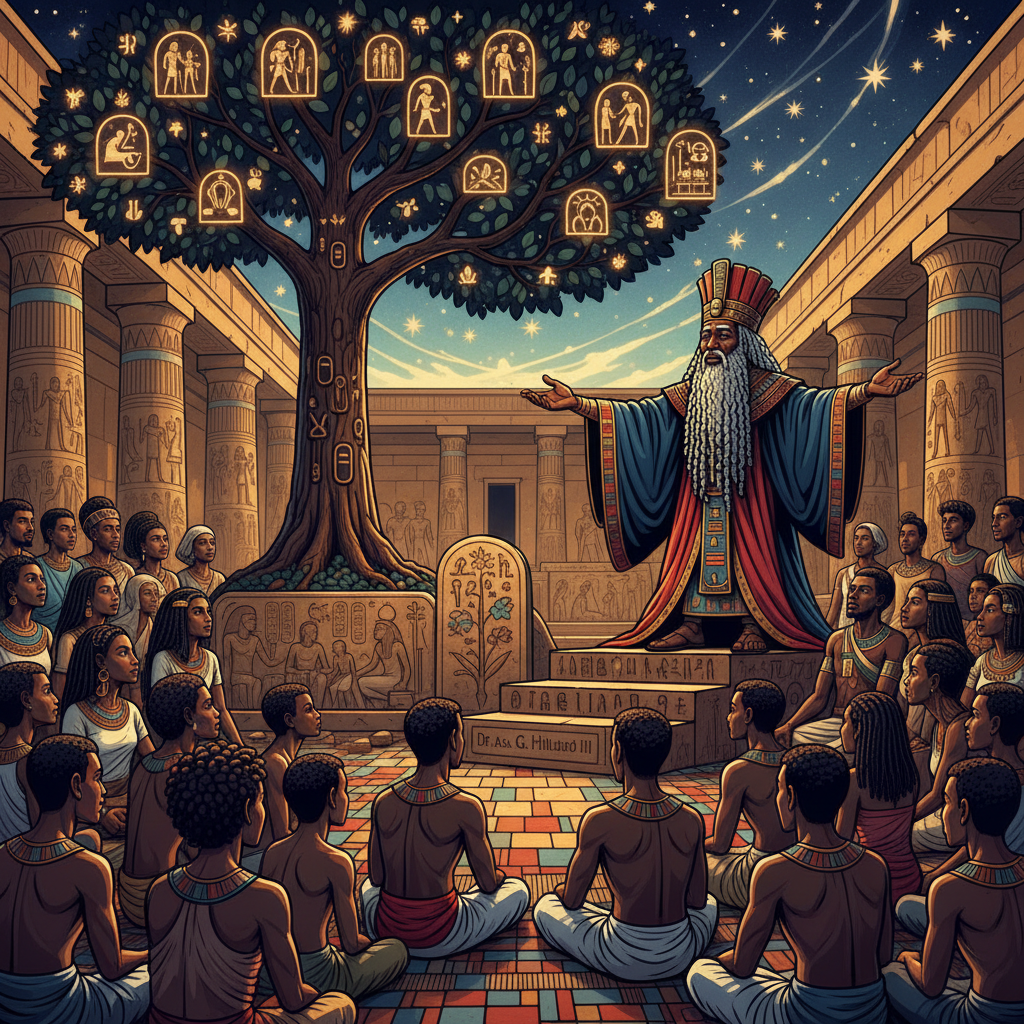
Dr. Asa G. Hilliard III, in his tireless efforts to reconstruct the indigenous African worldview, emphasized this very point. He often spoke of how African cultures viewed identity not as a singular, isolated entity, but as interconnected, communal, and constantly evolving. The 'self' was understood in relation to family, community, ancestors, and the divine cosmos. This fluid, relational understanding of self is starkly different from many Western philosophical traditions that emphasize an unchanging, individualistic core. For Hilliard, Kemet provided the ultimate example of a civilization built upon the premise that human beings are capable of profound intellectual and spiritual growth, continually striving to manifest the highest ideals. The transformations in the Pert em Heru are therefore a curriculum for developing this indigenous African identity—an identity of perpetual becoming, always aligning with Maat.
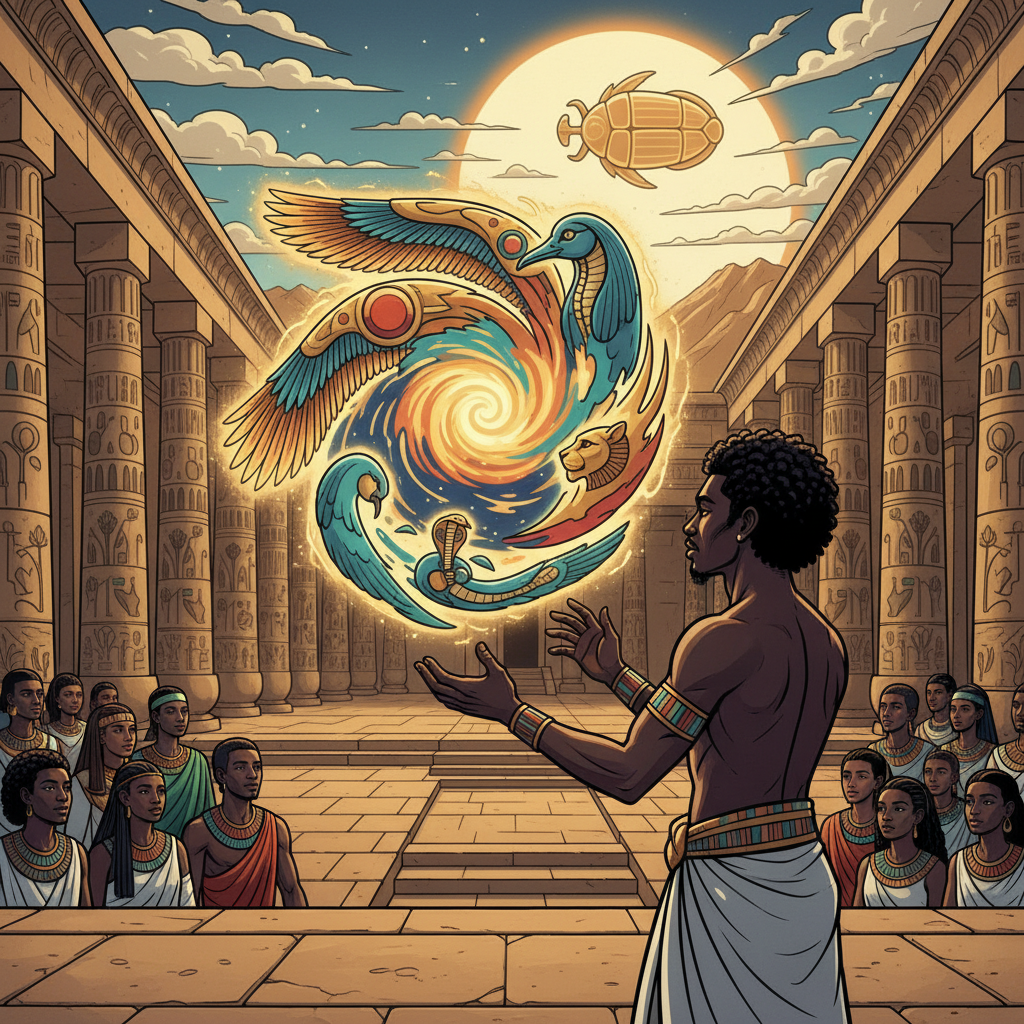
The ancient Kemetic sages, the Sebau, knew that the divine itself was not static, but a living, breathing, evolving force, manifesting in countless forms. The Netjeru were understood as principles, forces, and aspects of the One Divine, not as separate gods in a polytheistic pantheon, as is often misunderstood. This fluidity of divine manifestation mirrors the fluidity of human identity. Just as the sun takes on different aspects throughout the day – the rising Khepri, the midday Ra, the setting Atum – so too does the individual manifest different facets of their being, adapting and evolving. The cosmos itself is a grand testament to Kheper, a constant dance of creation and recreation. This deep philosophical insight is captured beautifully in a passage that speaks directly to this very core of transformation, a truth that echoes through the ages.
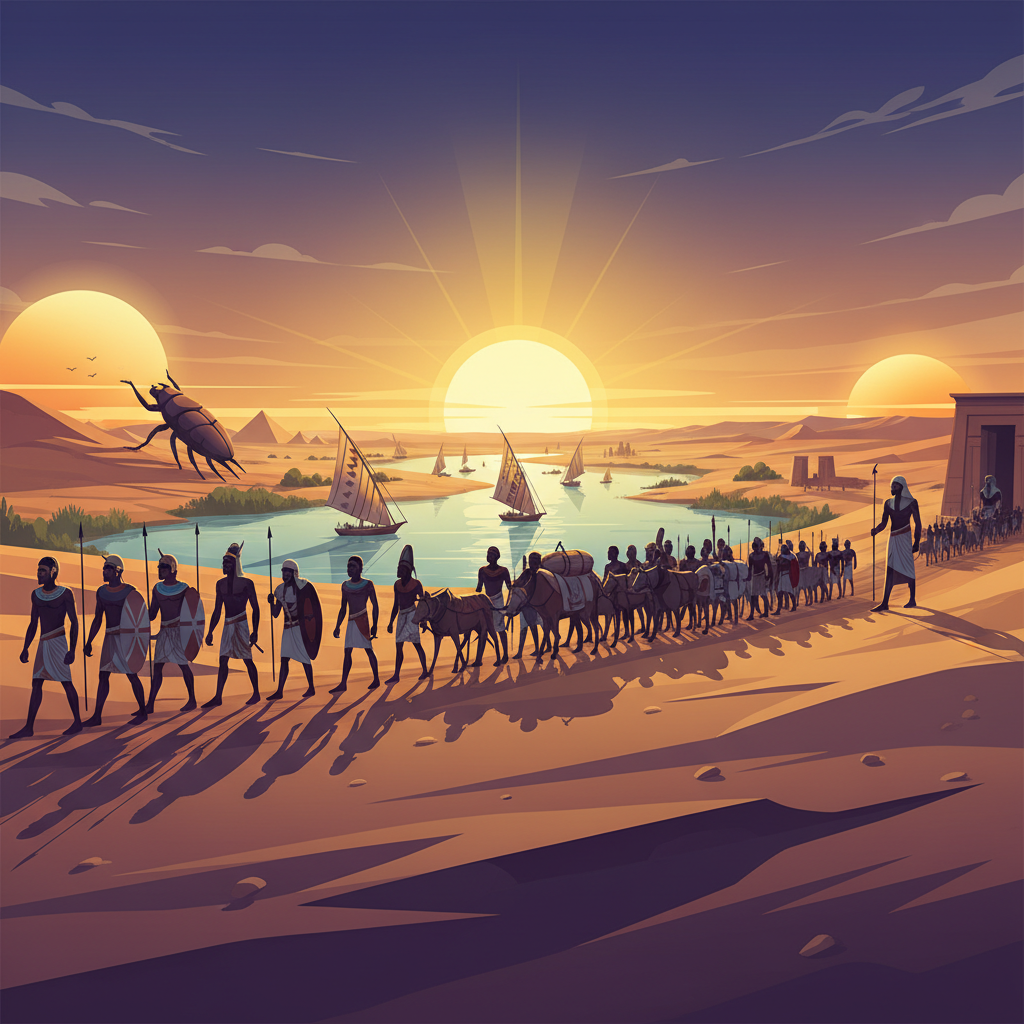
The passage, echoing from the sacred texts, declares: 'I am Khepri in the morning, Ra at noon, Atum at evening. I am not one thing — I am becoming.' This is not mere poetry; it is a profound declaration of identity, a statement of philosophical truth. It encapsulates the very essence of Kheper. The individual, like the sun, is not confined to a single state. In the morning, they are Khepri, the scarab beetle, symbolizing creation, emergence, and the renewal of life from darkness. At noon, they are Ra, the full brilliance of the sun, representing power, clarity, and the peak of manifestation. In the evening, they are Atum, the completed one, symbolizing the completion of a cycle, wisdom, and the potential for new beginnings. This fluidity asserts that one's essence is not defined by a single moment, but by the continuous, purposeful journey through all phases of existence, always in alignment with Maat's principles.
This declaration, 'I am not one thing — I am becoming,' is a radical embrace of the dynamic nature of being. It challenges any notion of a fixed, unchanging self. It teaches us that our identity is a continuous unfolding, a perpetual act of self-creation in response to the rhythms of life and the demands of Maat. Just as the Nile flows eternally, always changing yet always the Nile, so too are we in a constant state of transformation. This isn't about shapelessness, but about adaptability, about consciously choosing which aspect of your being to bring forth in any given moment. It’s about understanding that growth is cyclical, embracing the full spectrum of experiences from the dawn of Khepri to the dusk of Atum, knowing that each phase contributes to the richness of your evolving self. This wisdom liberates us from the fear of change and empowers us to engage fully with every moment.
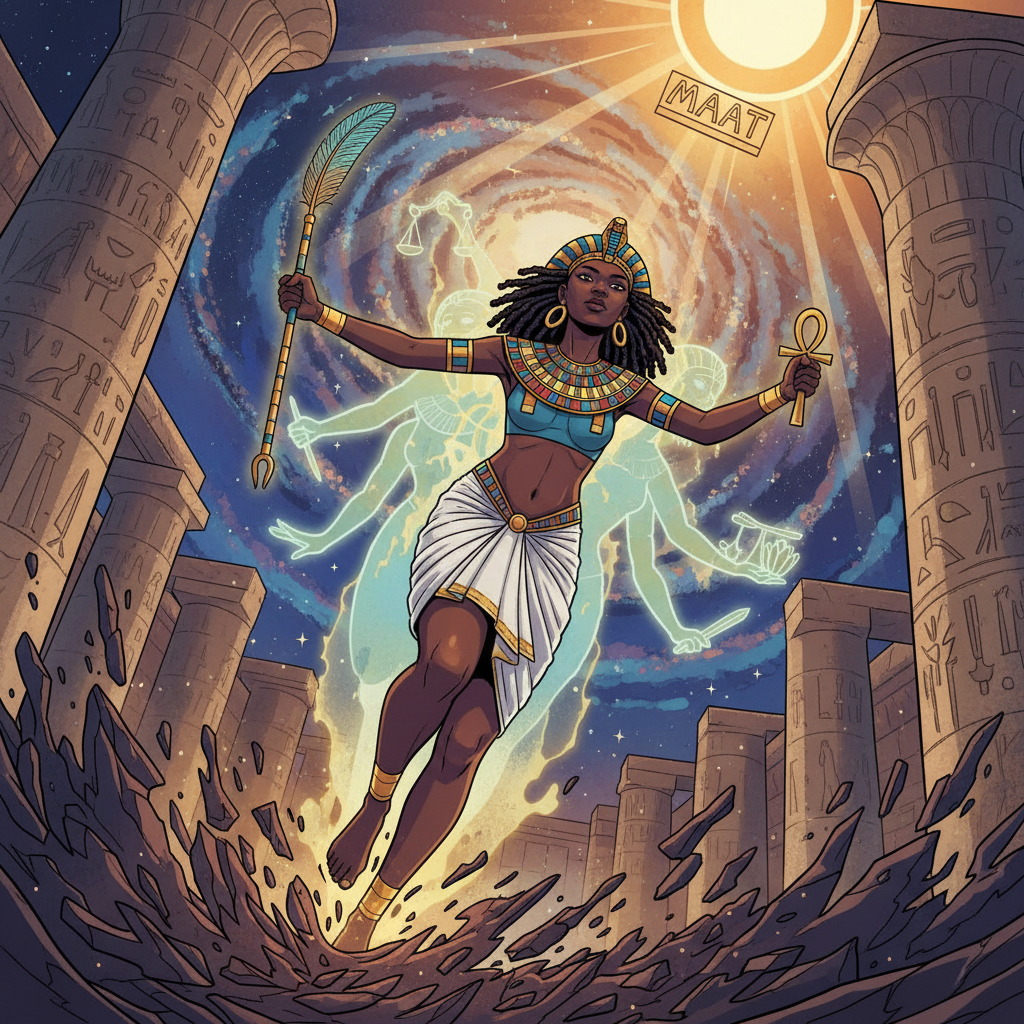
But let us be clear: this path of transformation, this Kheper, is not aimless. It is deeply rooted in Maat. The goal is not simply to change, but to transform *towards* balance, *towards* truth, *towards* justice, *towards* harmony. Each 'becoming' in the Pert em Heru is a step closer to embodying the complete and perfected individual, an *Akh* who has mastered all aspects of self in alignment with cosmic order. Dr. Jacob Carruthers, another giant of African intellectual thought, emphasized that Kemetic philosophy was fundamentally an ethical system, a blueprint for human excellence. He argued that the wisdom traditions were designed to cultivate individuals who could live in accordance with Maat, ensuring societal harmony and individual spiritual growth. Thus, every transformation is an an act of propriety, a conscious choice to align one's evolving self with the highest principles, moving away from Isfet's chaos.
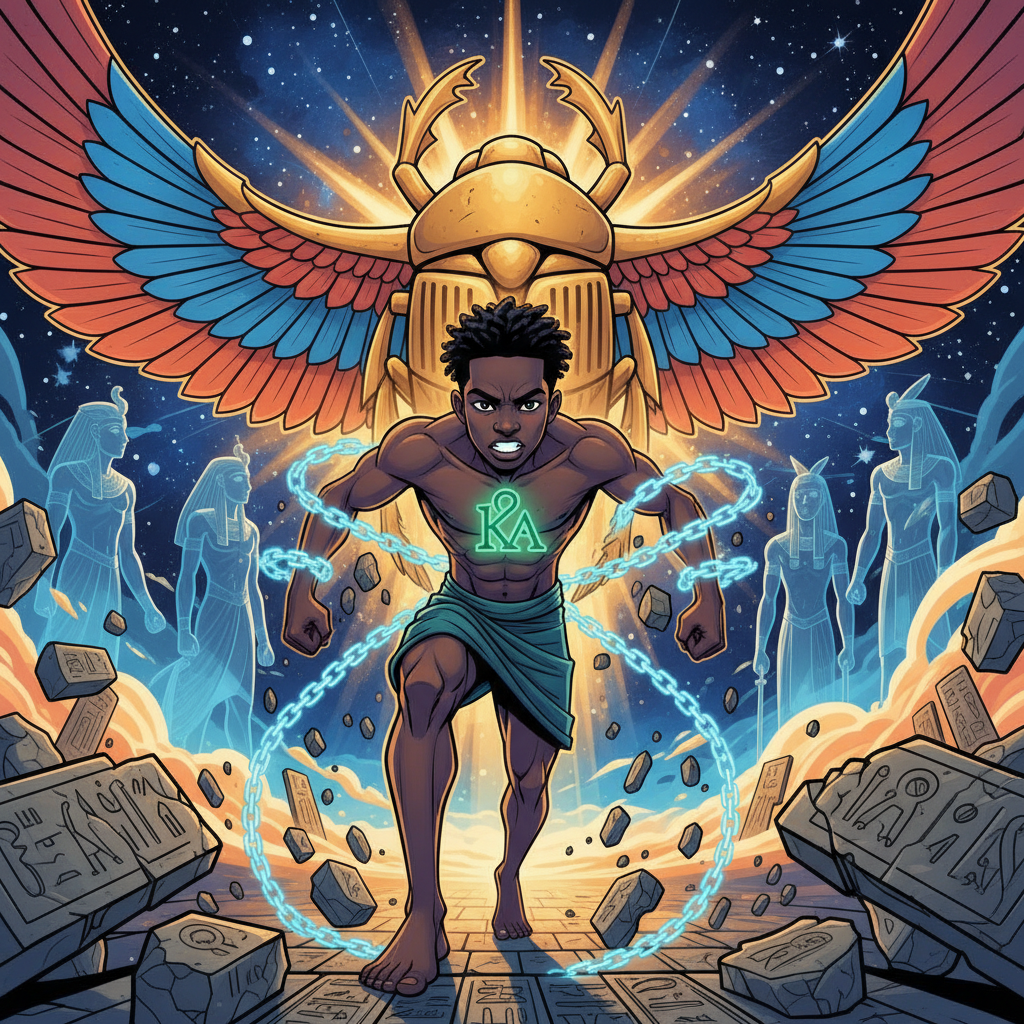
Embracing this fluidity of identity can be challenging in a world that often demands rigid categories and fixed definitions. Society frequently tries to box us into singular roles or labels, making it difficult to fully explore the breadth of our potential. But Kemet teaches us to resist this confinement. The transformation chapters are a powerful testament to the human capacity for evolution, urging us to transcend limitations imposed by others or even by ourselves. It demands introspection, courage, and a deep commitment to personal growth. It is an invitation to continually question, learn, and adapt, allowing your *Ka*—your vital life force—to fully express itself in all its magnificent forms. This is the true work of the initiate, to not just know, but to *become* that which is known, to live the philosophy.
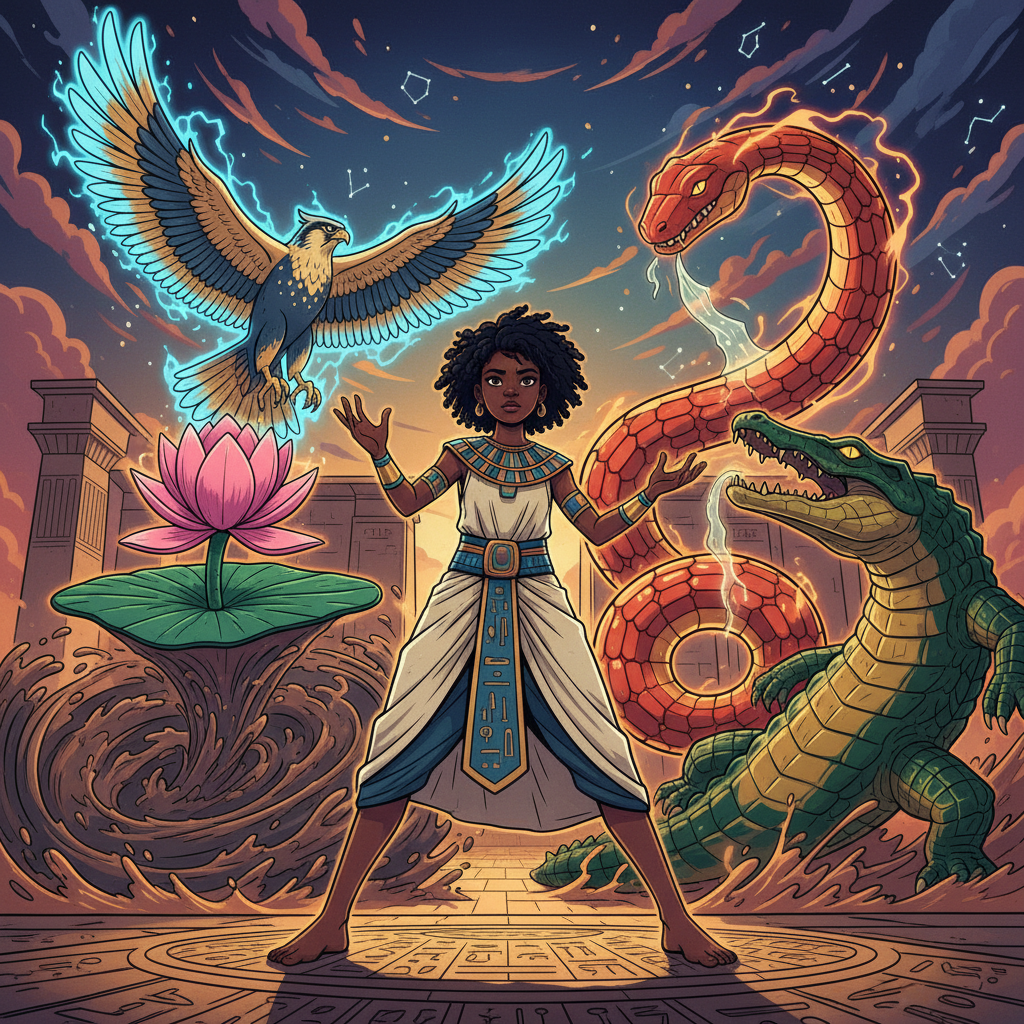
How does this apply to your life today, my student? Understanding these transformations offers a powerful framework for navigating the complexities of your own existence. When faced with a difficult decision, you might invoke the 'falcon' within you, seeking higher perspective and clarity. When enduring a setback, you call upon the 'lotus,' finding resilience and purity amidst the 'mud.' When needing to let go of old habits, you embrace the 'serpent's' regeneration. And when confronting injustice, you embody the 'crocodile's' strength and strategic defense of Maat. These are not abstract concepts; they are practical tools for conscious living, for skillfully deploying different aspects of your consciousness to meet the demands of any situation, always maintaining your balance and integrity. This is the living application of Kheper.
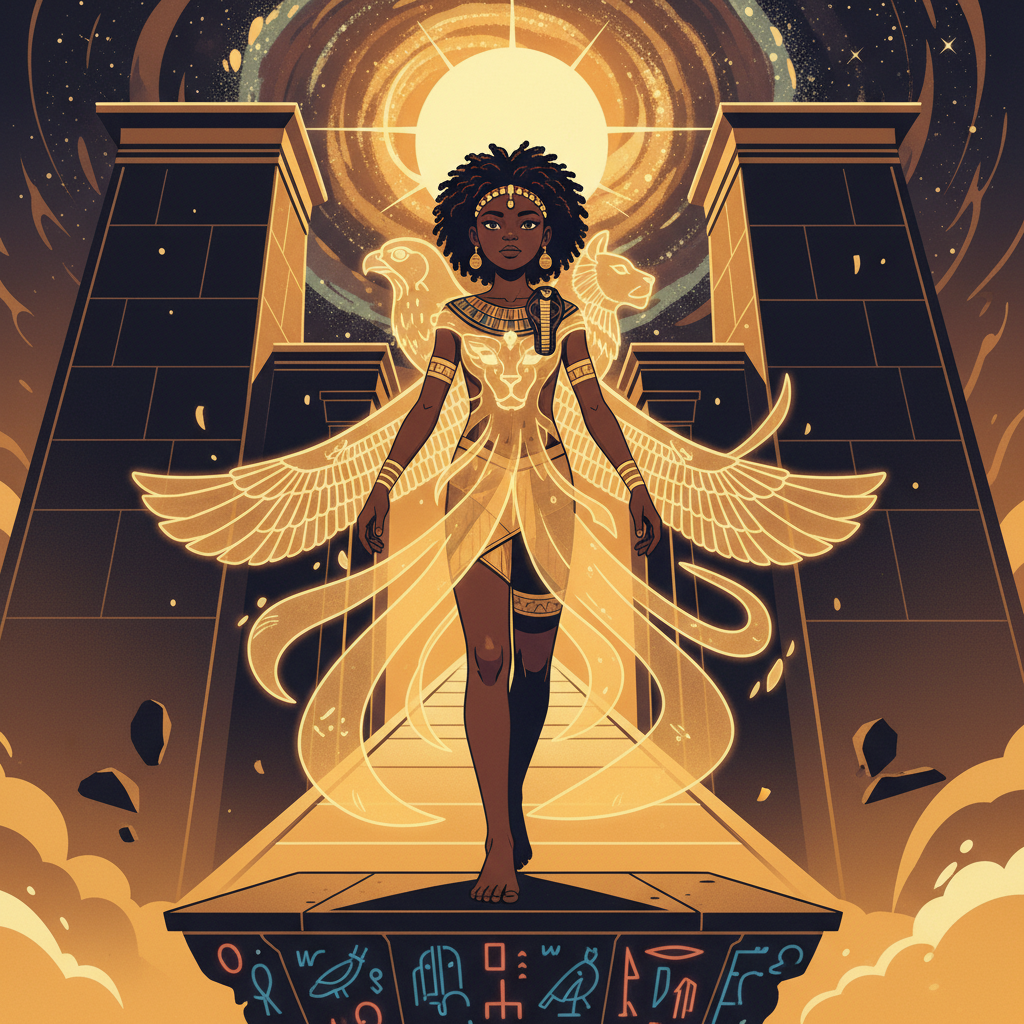
The Kemetic initiate learns to 'wear' these forms of consciousness as needed, much like a skilled artisan selects the right tool for the task. It's not about being inauthentic, but about being authentically multifaceted. Your core identity, your *Akh*—your perfected, luminous self—remains constant, yet its expressions are fluid and varied. This is the profound wisdom of the Pert em Heru: it is a guide to becoming a master of your own being, a sovereign over your inner landscape. It empowers you to adapt without losing yourself, to transform without forgetting your divine origin. This dynamic interplay between the unchanging essence and the ever-changing expression is the secret to enduring spiritual strength and sustained growth, allowing you to walk the path of Maat with grace and power.
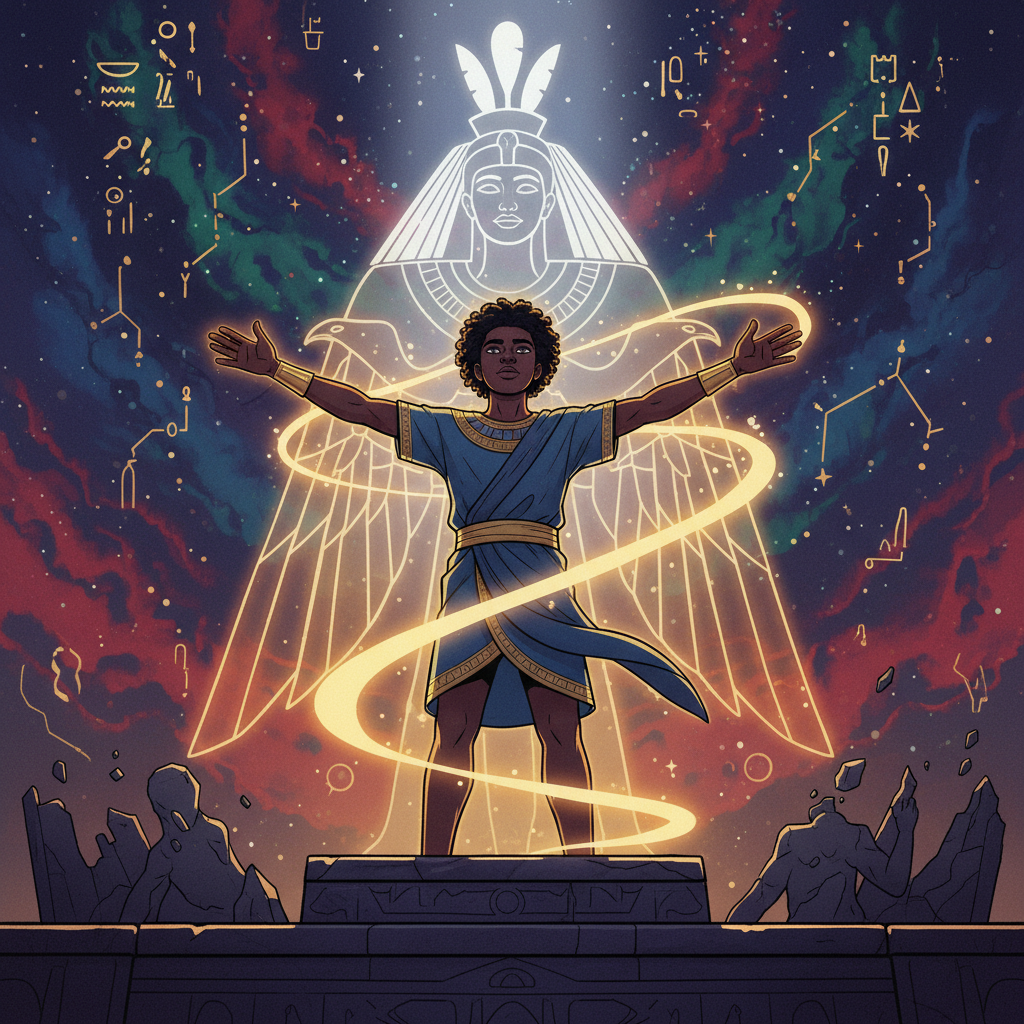
Ultimately, the goal of these transformations, of this entire philosophy of Kheper, is to embody Maat in its fullest sense. To transform is to refine, to purify, to align oneself more perfectly with the cosmic order, moving further away from Isfet. It means becoming a living example of truth, justice, harmony, and balance in every thought, word, and deed. This is the journey of the *Shemsu Heru*, the Followers of Heru, who consciously strive to manifest divine consciousness in their earthly lives. Each transformation is a step towards becoming a fully integrated human being, whose inner and outer worlds reflect the principles of Maat. It is a lifelong commitment, a sacred trust, to continuously sculpt the self into its highest, most divine expression, for the benefit of all creation.
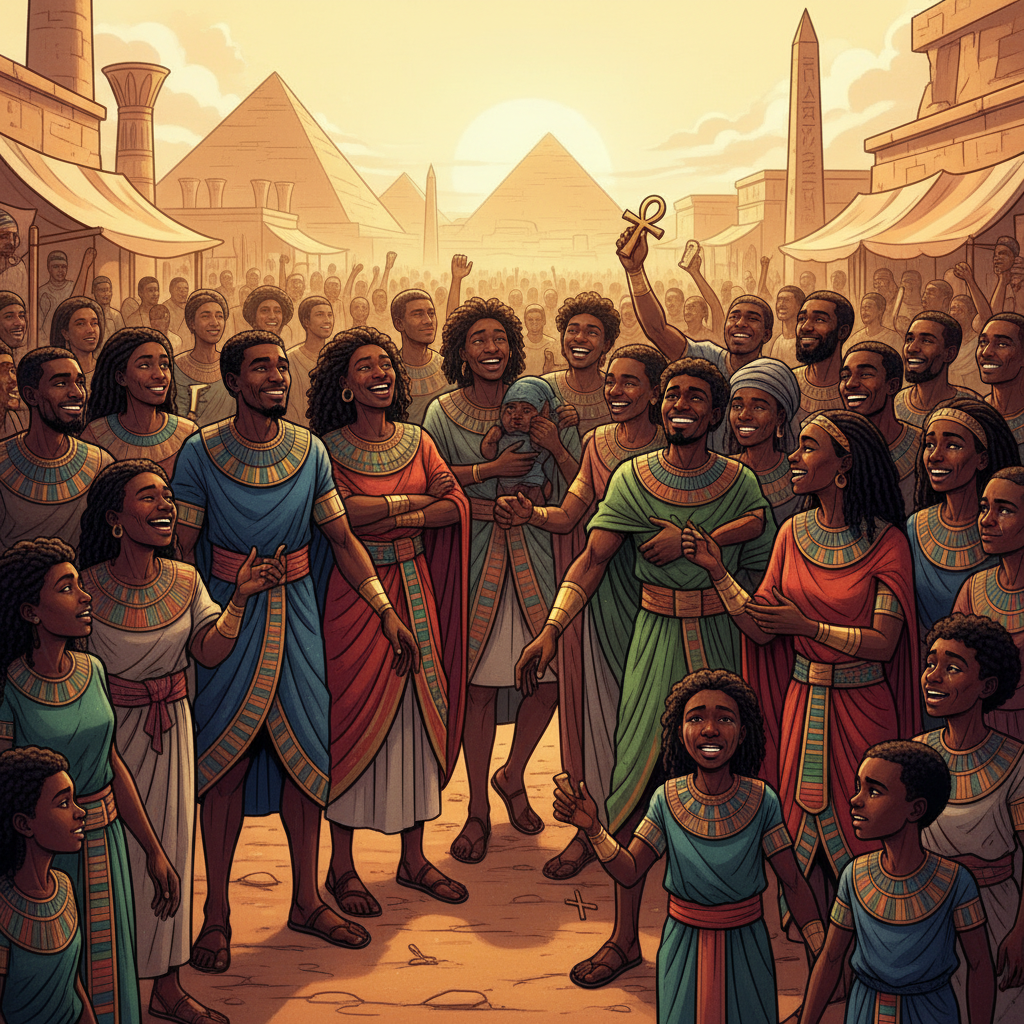
With this deeper understanding comes a profound responsibility. To know that you are not one fixed thing, but an ongoing process of becoming, places the power of self-creation squarely in your hands. It means you are accountable for the choices you make in your transformations, for the direction in which you choose to evolve. Will you choose to transform towards greater wisdom and compassion, or will you allow Isfet to pull you into stagnation and imbalance? This is the eternal choice. Kemet’s teachings are not passive; they are an active call to conscious participation in your own destiny and in the destiny of your community. Your becoming is not just for yourself, but for the betterment of all, contributing to the collective striving towards Maat. Embrace this responsibility with courage and conviction.
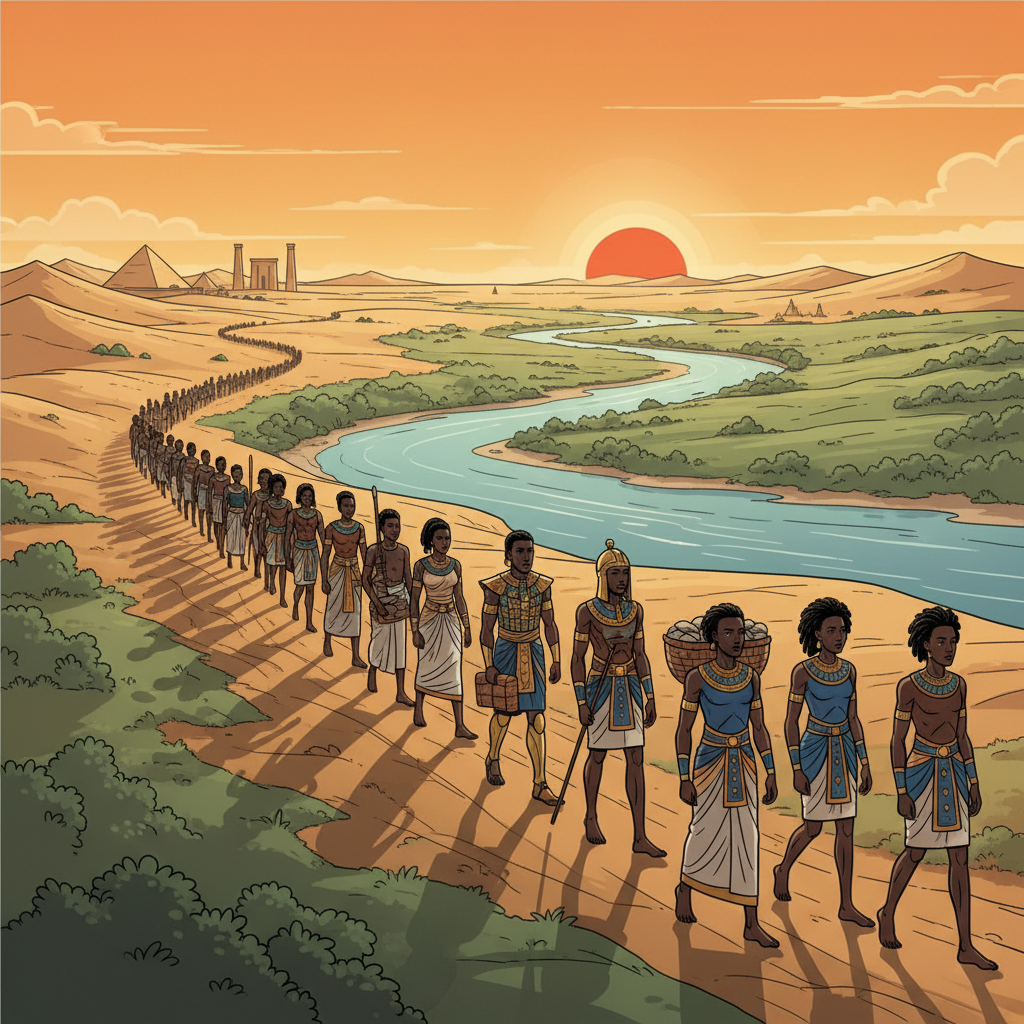
The journey of transformation, my student, is never truly complete. It is the very purpose of existence. Just as the Nile flows endlessly from source to sea, replenishing and renewing, so too is your path of Kheper a continuous movement. There is always a deeper layer to uncover, a new aspect of consciousness to master, a more profound alignment with Maat to achieve. The Pert em Heru does not offer a final destination but rather a map for an eternal voyage of self-discovery and spiritual refinement. Embrace the beauty of this ongoing process, knowing that each 'becoming' brings you closer to your true, divine self. The wisdom of our ancestors invites you to step fully into this dynamic dance of life, to never cease your evolution, to always be creating the best version of yourself, guided by the light of truth.
So, as you reflect on these Chapters of Transformation, remember that the power to become lies within you. You are not a static entity; you are a dynamic force of creation, a living embodiment of Kheper. The ancient Kemetic sages laid out this profound path not as a set of rules, but as an invitation to conscious living, to purposeful evolution. Take these lessons into your heart, meditate upon them, and allow them to inform your daily actions. Let the falcon's vision guide your discernment, the lotus's resilience uplift your spirit, the serpent's wisdom inspire your renewal, and the crocodile's strength empower your principled action. Your journey through the Pert em Heru is not merely reading; it is *living* these truths, transforming yourself with every step towards Maat. This is the legacy you inherit, the power you wield.
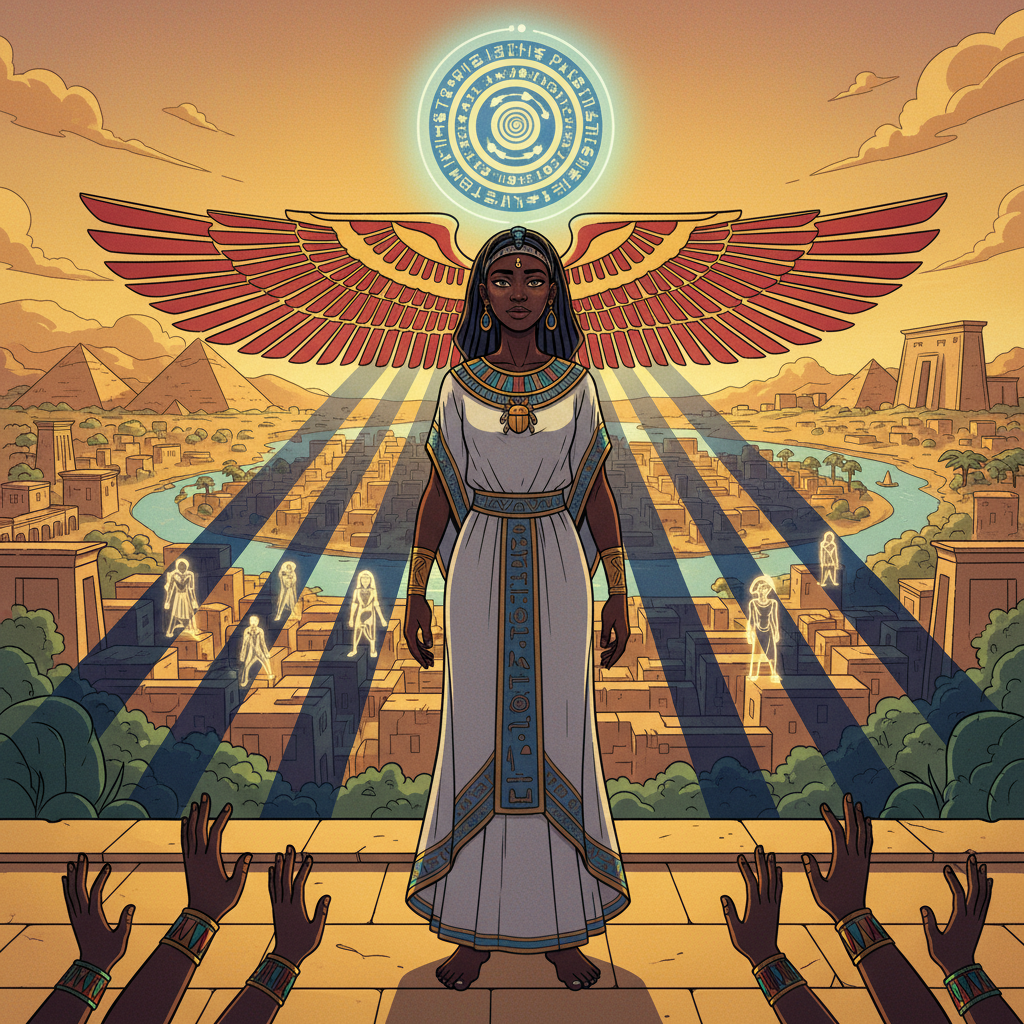
You have earned the right to hear this deeper wisdom, and I have seen your potential to embody it, to truly live the philosophy of Kheper. The journey of transformation is not merely a concept for the afterlife; it is the vibrant essence of your present existence. Let your life be a testament to the profound African understanding of identity as a magnificent unfolding, a continuous act of self-creation guided by purpose. May your transformations always be directed by the unwavering light of Maat, ensuring that each step you take in becoming is one towards greater truth, harmony, and justice. May your conscious evolution inspire those around you, encouraging them to embark on their own journeys of self-discovery and spiritual growth, to recognize the power within them to shape their destinies. The ancestors watch, not with judgment, but with celebration for your commitment to this sacred path. Go forth, my student, and *become* the living embodiment of all that Kemet teaches.