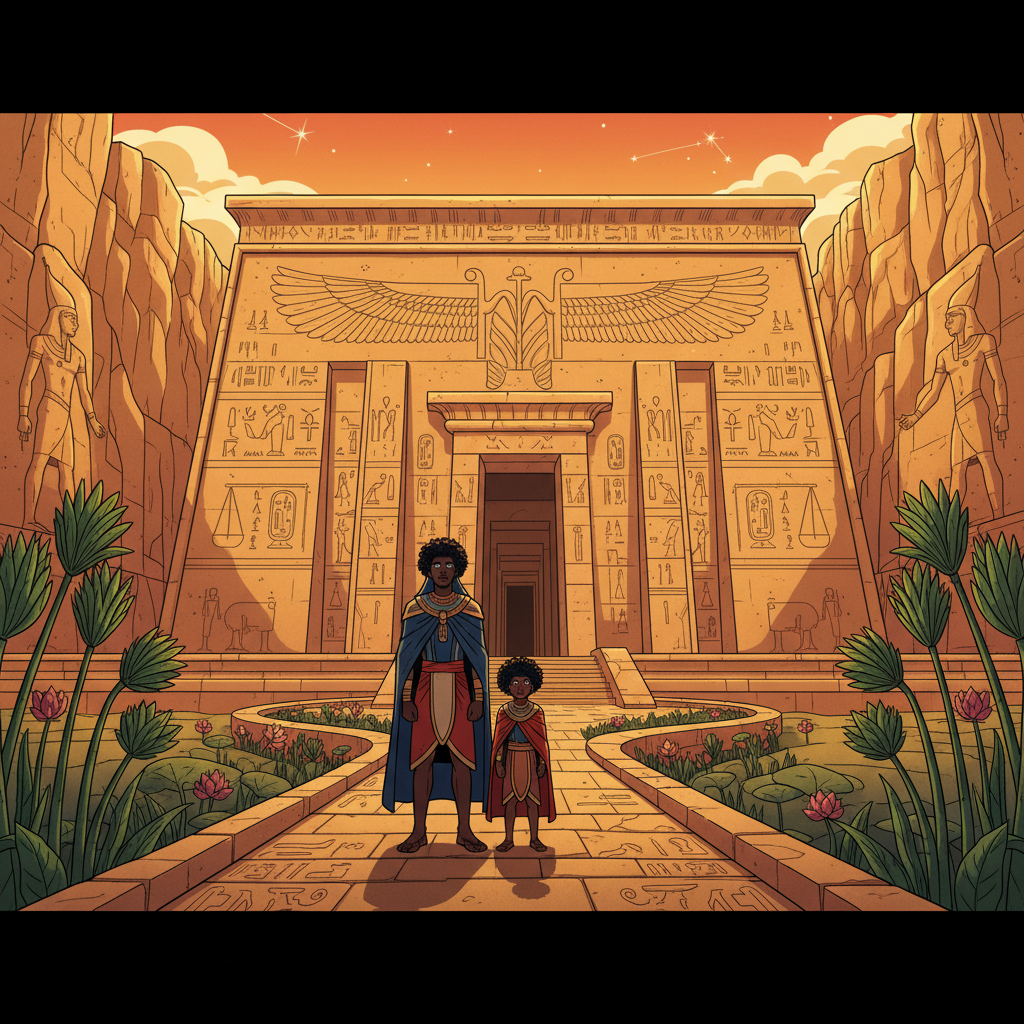
Welcome back, my student, to the Per Ankh. You have walked far on the path of Maat, proving your dedication and keen intellect. Your journey through the earlier chapters has prepared you for this moment, for this is where the true heart of Kemetic wisdom beats loudest. Today, we step beyond the veil of simple stories and into the profound philosophical depths of the Hall of Two Truths, known in our sacred texts as the Hall of Maat. Forget any notions of a mere courtroom; this is not a place of human judgment or a divine prosecutor. It is a cosmic chamber of reckoning, a spiritual crucible where the very essence of a life lived finds its ultimate measure. We are about to uncover why this framework is considered the most sophisticated moral system of the ancient world, a testament to the unparalleled wisdom of our ancestors. Prepare your mind, for what you learn here will reshape your understanding of justice, morality, and existence itself.
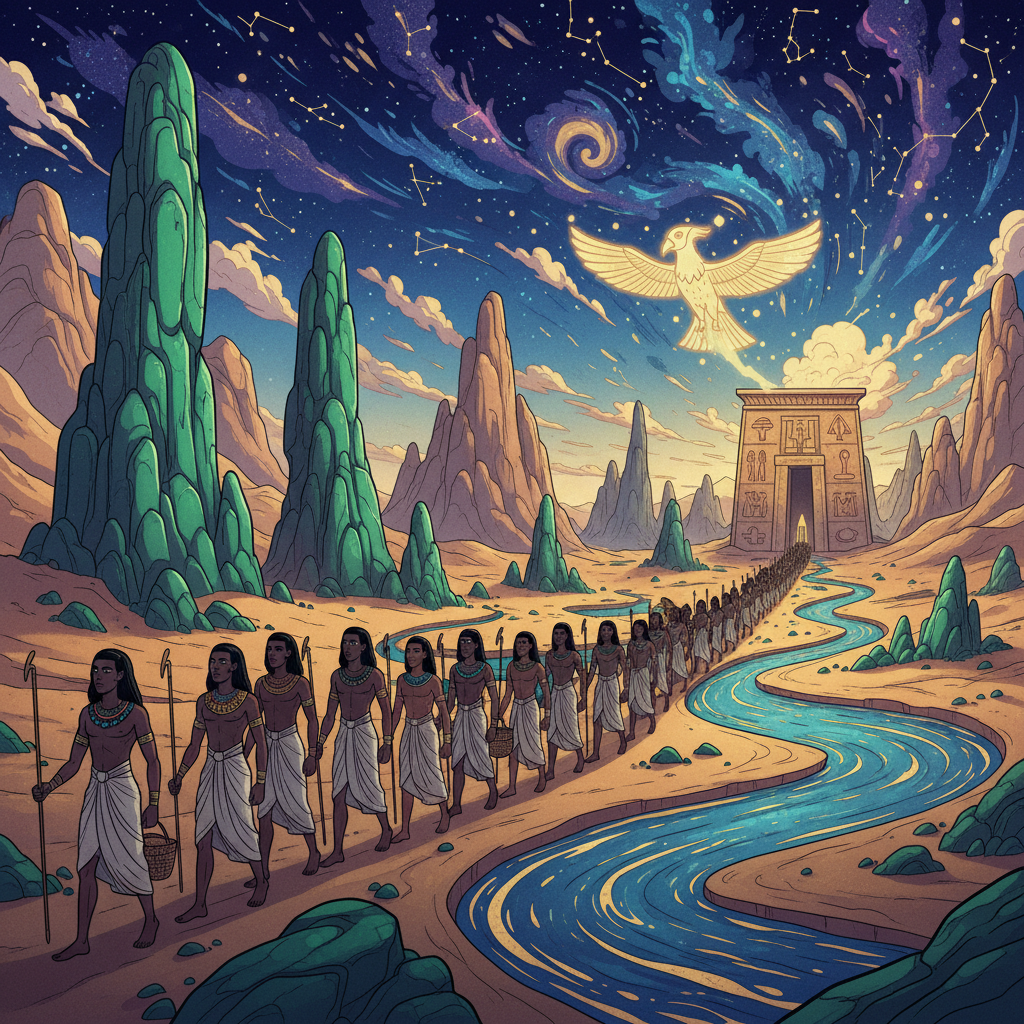
The Hall of Two Truths is not a destination of fear, but one of profound self-reflection and cosmic alignment. In the Beginners’ chapters, we spoke of it as a trial, but that was merely a shadow of its true meaning to prepare you. Now, understand that it is a philosophical framework, a grand metaphor for the journey of the soul (the Ba) through the Duat, culminating in a moment of ultimate integrity. It asks not if you obeyed arbitrary rules, but if you embodied Maat – Truth, Justice, Harmony, Balance, Order, Reciprocity – in every breath and every deed. It is a testament to the Kemetic understanding that true morality springs from an inner wellspring of character, not from external compulsion. This is where the wisdom of scholars like Dr. Maulana Karenga illuminates our path, for he teaches us that Maat is not just a goddess, but a living, dynamic principle, the very 'root of African morality'.
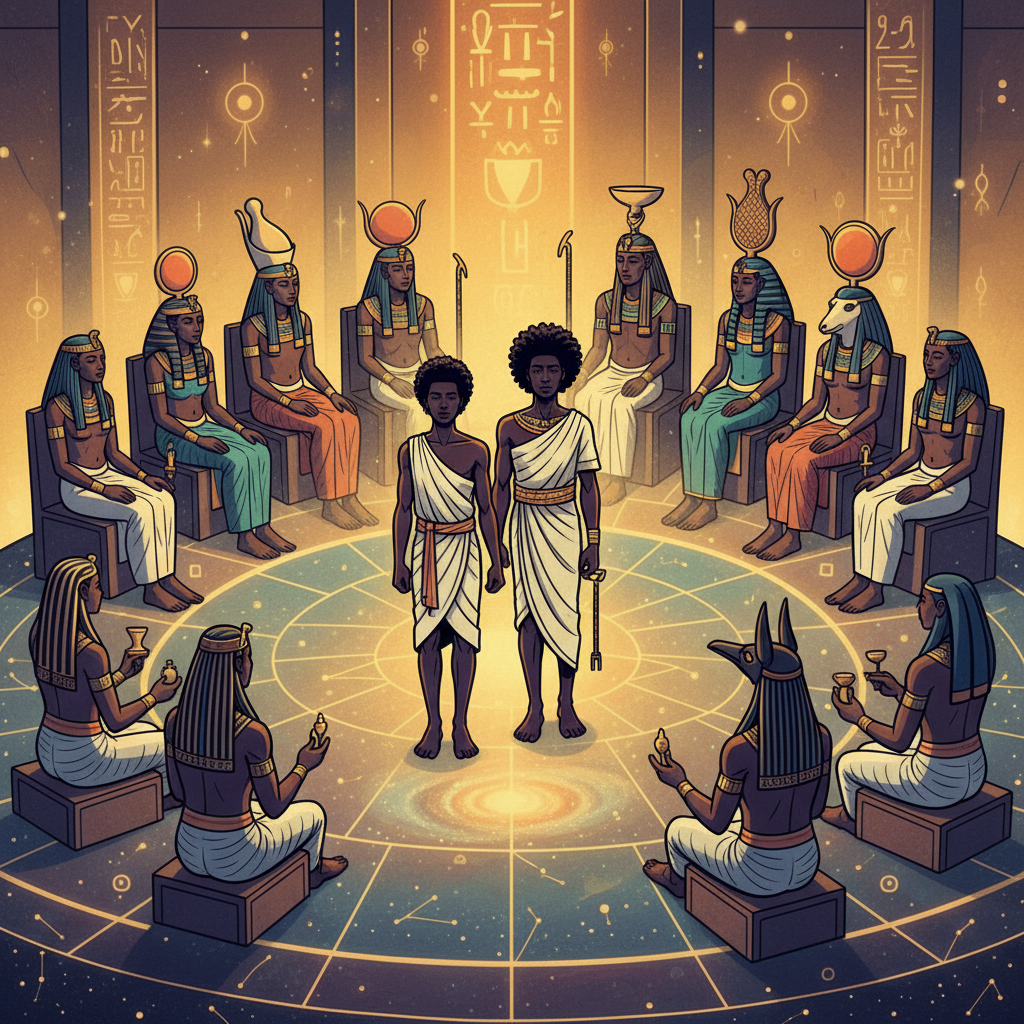
Imagine the scene, not as a literal physical space, but as an energetic field, a culmination of all life's vibrations. You, as the deceased, are led into this sacred space. The air hums with an ancient, silent power. Before you stands the Great Ennead, and around the perimeter sit the forty-two Assessors, each representing a specific nomos or region of Kemet, and each embodying one of the forty-two divine principles of Maat. These are not judges in the human sense, poised to condemn, but rather reflections of the universe’s inherent order, witnesses to the truth of your own being. Their presence underscores the universal reach of Maat, extending to every corner of existence, demanding that our actions resonate with this cosmic harmony. This meticulous detail, reflecting both spiritual and societal structures, highlights the depth of Kemetic ethical thought.
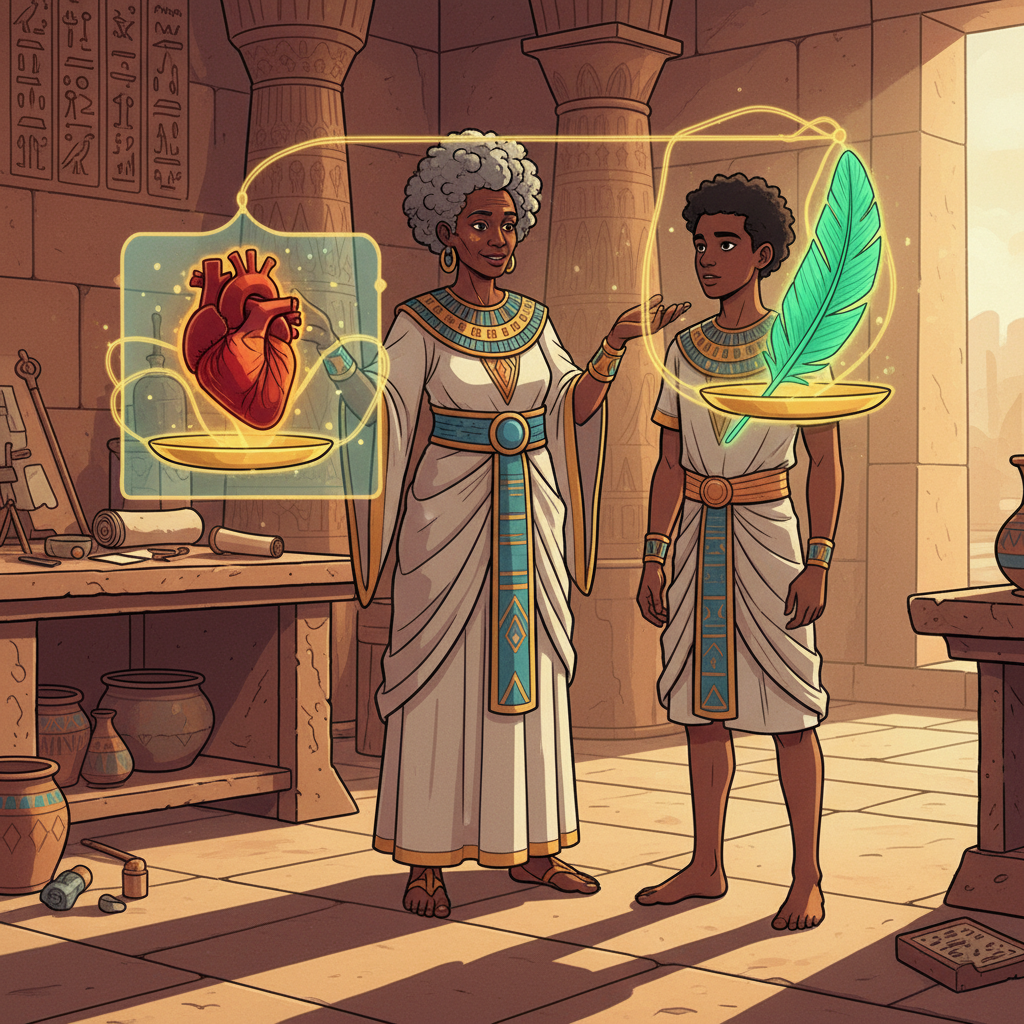
At the center of this profound space is the iconic image: the Great Scales. On one pan rests your heart, the 'ib', the seat of your consciousness, your character, your emotions, and your will. On the other, the single, delicate Feather of Maat, representing Truth, Justice, and cosmic order itself. This is not a weighing of good deeds against bad deeds, like items on a merchant’s scale. No, my student, this is a far more nuanced and profound process. It is a measure of alignment, of resonance. Does the heart, the sum total of your life’s essence, vibrate in harmony with the feather of Maat? Is it light with truth and balance, or heavy with the burden of 'isfet' – disorder, injustice, falsehood? This symbolic representation speaks volumes about the Kemetic belief in an internally derived morality, a spiritual calibration that transcends simplistic legalistic frameworks.
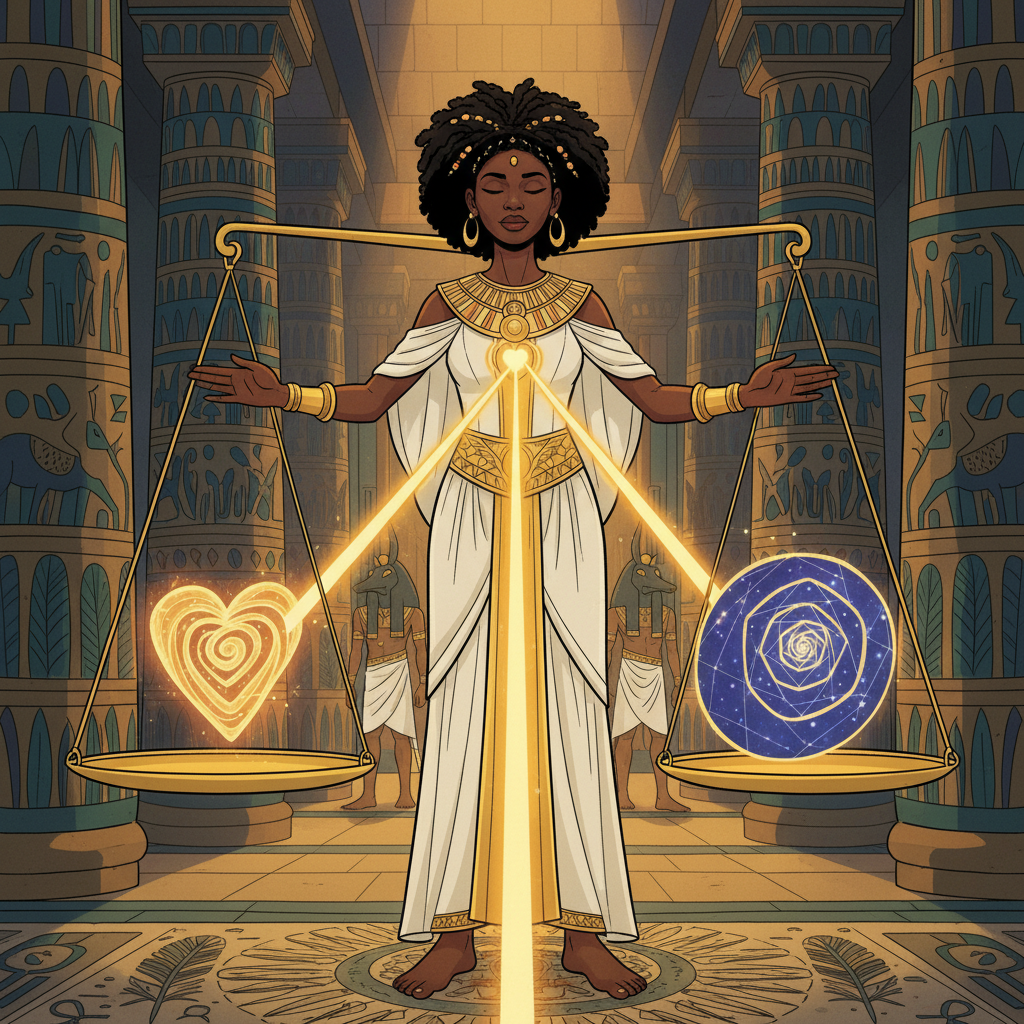
The concept of 'Two Truths' in the Hall of Two Truths is often misunderstood. It does not refer to subjective truth versus objective truth, but rather the truth of one’s individual life — the sum of one’s choices, intentions, and actions — set against the eternal, unchanging truth of cosmic order, Maat. Dr. Karenga, in his insightful analysis, explains how Maat functions as a 'divine moral imperative,' an inherent ethical standard embedded within the very fabric of the universe. The Scales are not weighing your obedience to a set of rules, but measuring the degree to which your inner self, your 'ib,' has assimilated and manifested this cosmic truth throughout your existence. It’s a holistic assessment of your entire being, a spiritual audit of your character’s integrity against the backdrop of universal balance.
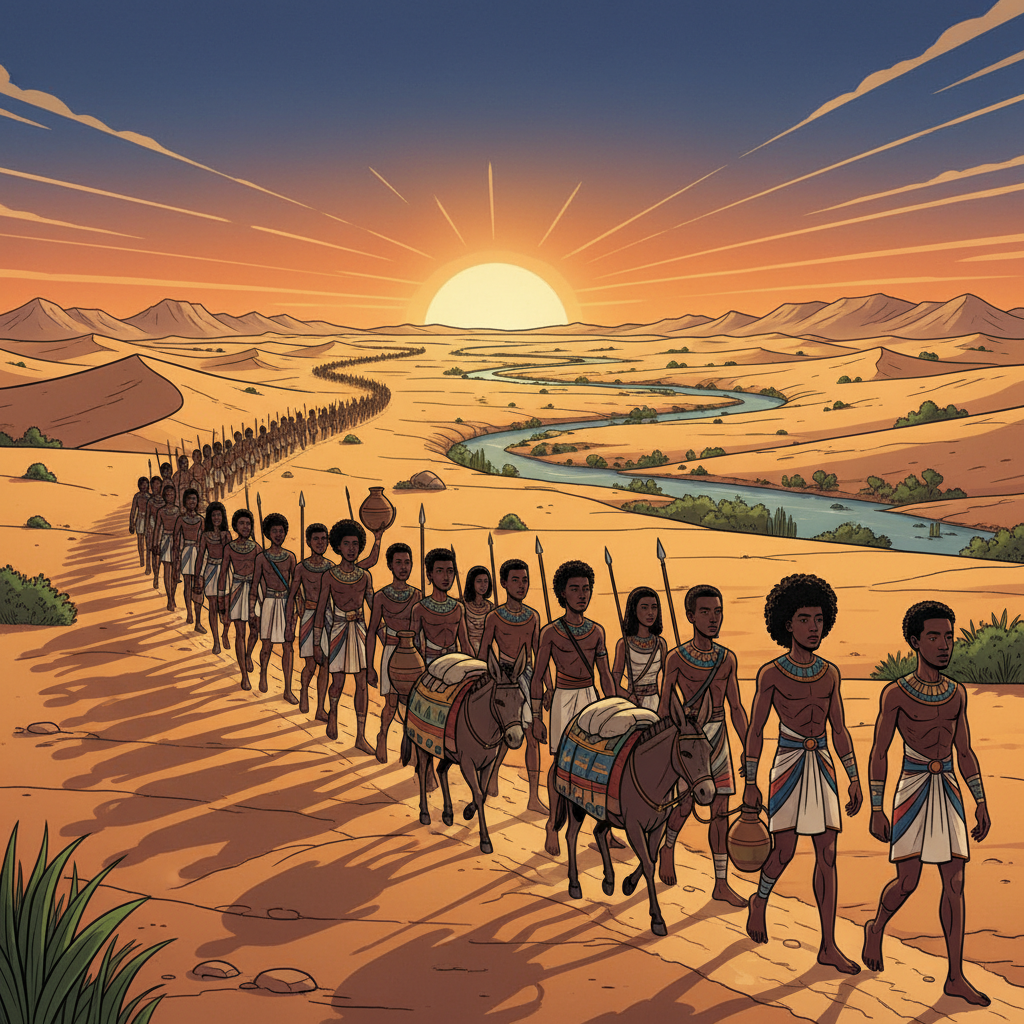
This radical difference from Western reward/punishment theology cannot be overstated. In many traditions, salvation or condemnation rests on adherence to commandments, belief in a specific deity, or atonement for sins. The Kemetic framework offers no such shortcuts. There is no external intercessor to plead your case, no ritual sacrifice to erase your missteps, no divine forgiveness to lighten a heavy heart. The Hall of Two Truths is a testament to radical self-accountability. You stand before the truth of your own life, reflected in the mirror of Maat. Your journey through the Duat, therefore, is not about escaping punishment, but about purifying and aligning the self, ensuring that the 'ib' is prepared for this ultimate encounter with cosmic reality. This makes the ethical striving of Kemet deeply personal and internally driven.
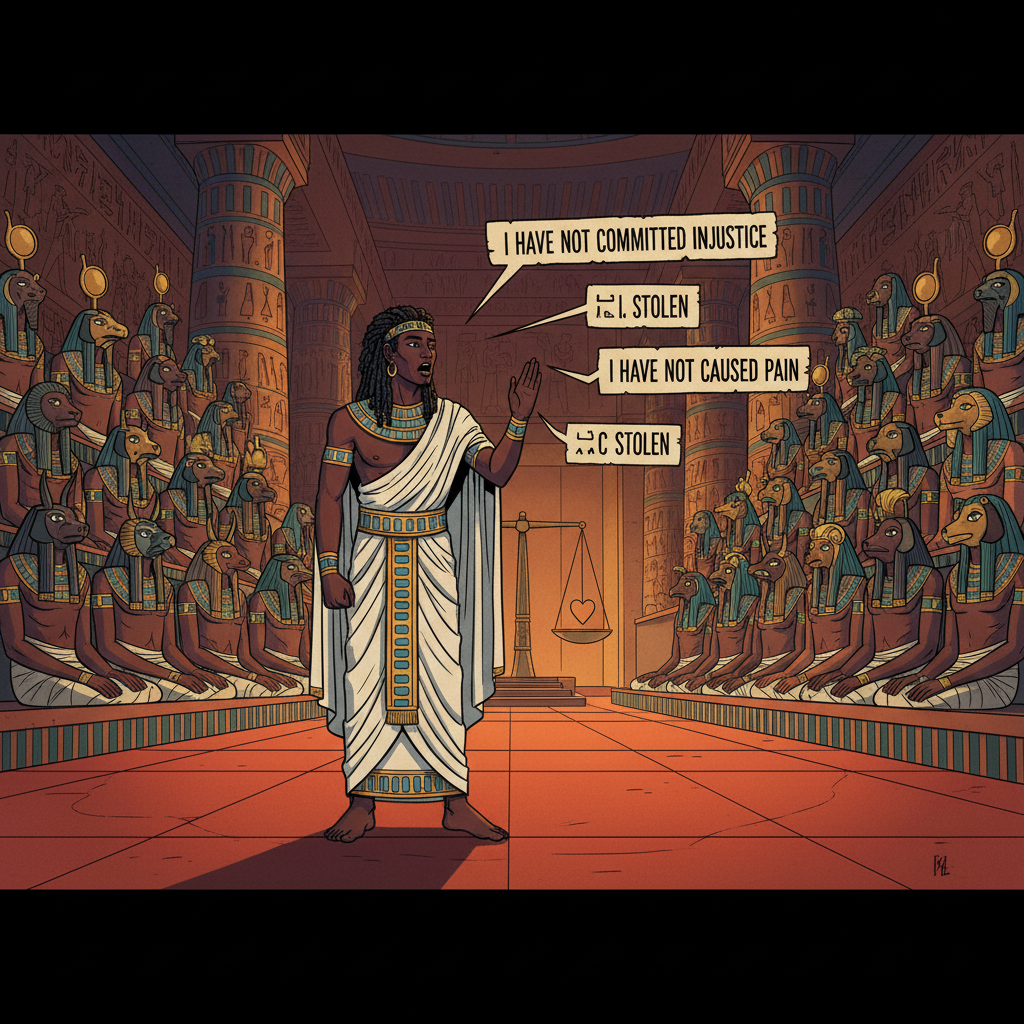
The 'Negative Confession' which the deceased recites before the 42 Assessors is another profound aspect of this framework. It is not a plea for innocence, but a declaration of a life lived in accordance with Maat. You are not confessing your sins; you are affirming your virtue, stating, 'I have not committed injustice,' 'I have not stolen,' 'I have not caused pain.' This act of speaking truth to one’s lived experience is a vital part of the process. It's a verbalization of the inner state, confirming the alignment already being measured by the scales. It speaks to the power of language and intention in Kemet, where words ('heka') were seen as instruments of creation and truth. The confession is a public affirmation of a private commitment to Maat, demonstrating that the individual consciously strove to embody these principles.
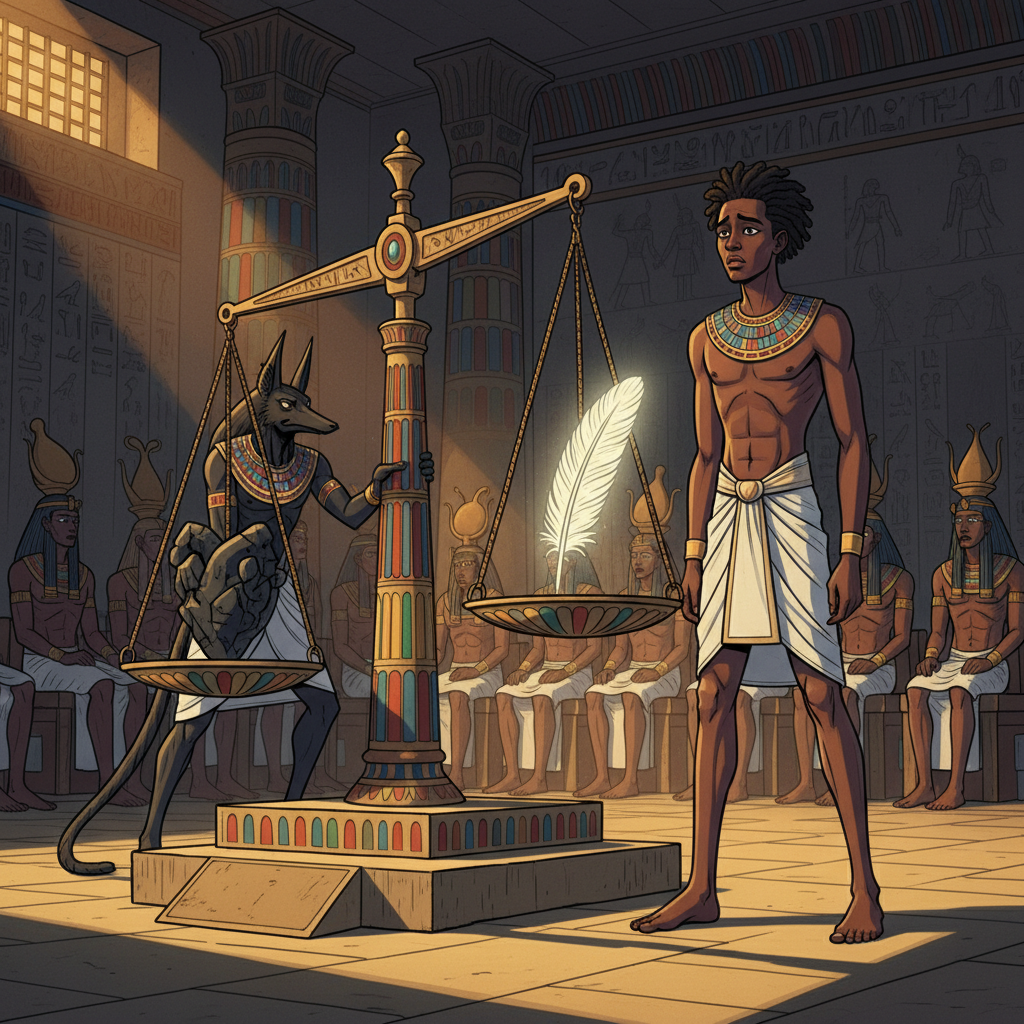
Consider the profound implication: the Scales measure the 'weight' of your heart, not its 'heaviness' in a physical sense, but its density of Isfet. A heart filled with cruelty, deceit, and injustice would be 'heavy' with spiritual impurity, throwing the scales out of balance. Conversely, a heart light with compassion, truth, and righteousness would perfectly balance the Feather of Maat. This is not about being 'perfect' in a human sense, but about the overall trajectory and intention of your life. Did you strive for Maat? Did you consistently choose harmony over chaos, justice over injustice? The Kemetic worldview prioritizes the cultivation of character and conscience, understanding that these inner qualities are the true determinants of one's spiritual destiny. It’s a deep psychological and moral self-assessment.
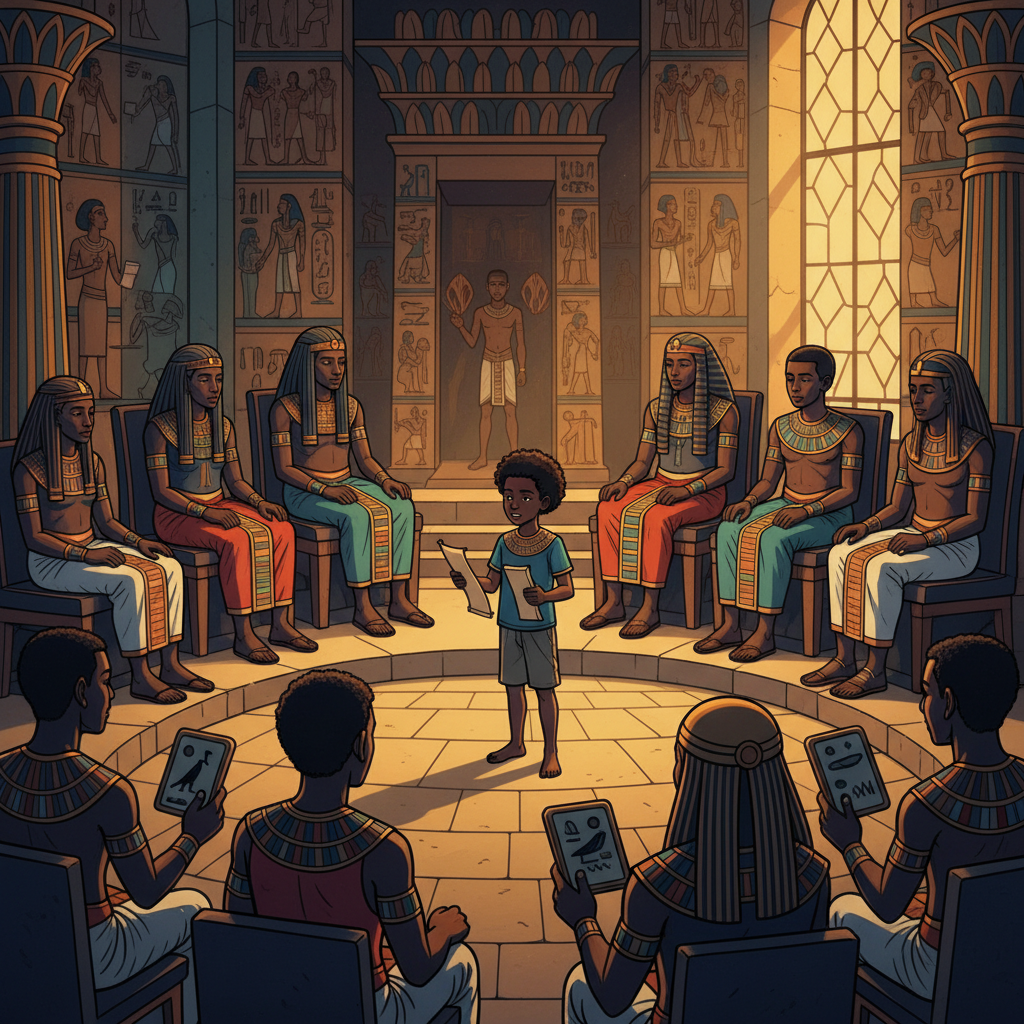
The 42 Assessors, each associated with a specific principle, listen intently to the Negative Confession. For instance, one Assessor might represent 'I have not been greedy,' another 'I have not caused sorrow.' This demonstrates the comprehensive nature of Maat, touching upon every facet of human behavior and social interaction. It's an intricate web of ethical responsibilities, not just a few cardinal rules. Dr. Jacob Carruthers, a brilliant scholar of Kemetic thought, highlighted how the 'Negative Confession' represented a sophisticated legal and ethical code that fostered a just and harmonious society. It was a societal contract, understood and internalized from childhood, that guided daily living and established a standard for human excellence. The Hall of Two Truths, therefore, reflects both individual accountability and collective moral aspiration.
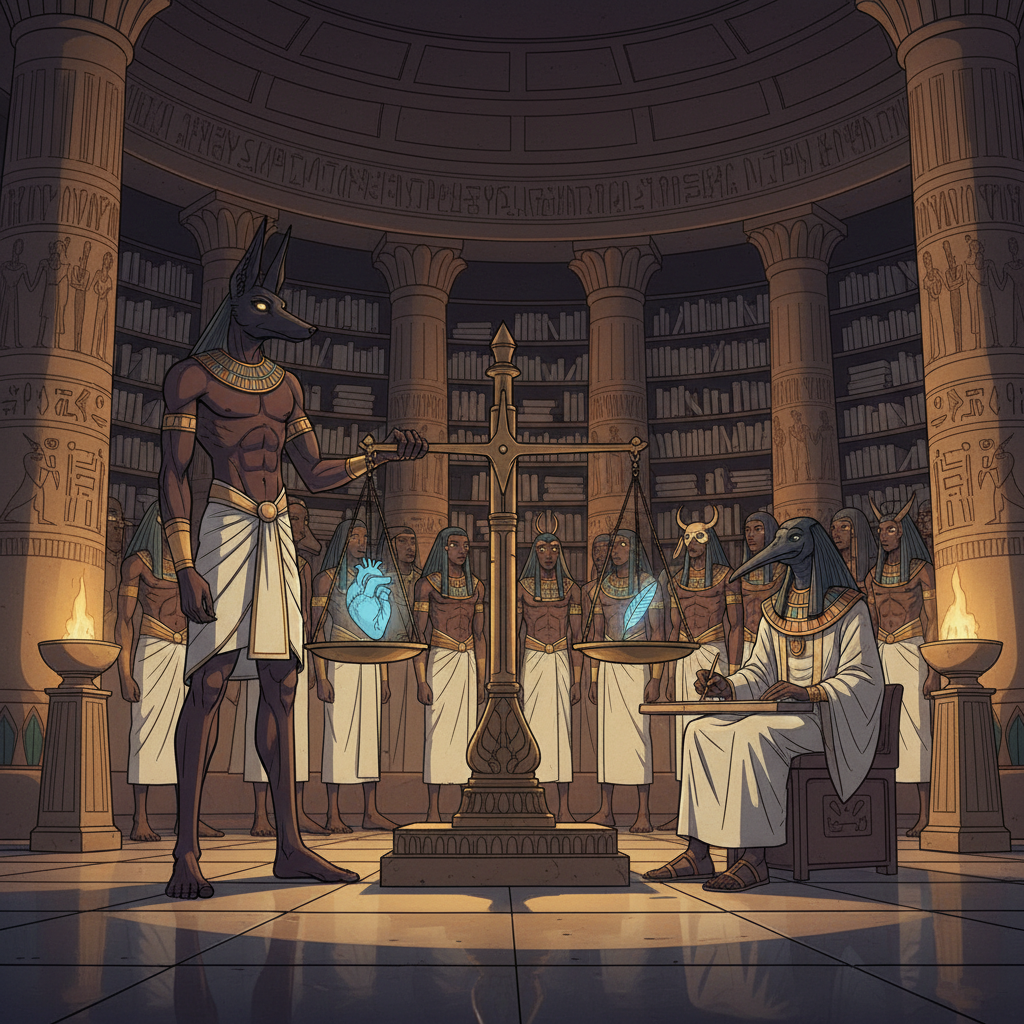
It is crucial to grasp that the weighing of the heart is an objective process, devoid of personal bias. Anubis, the jackal-headed Netjer, guides the scales, ensuring impartiality. Thoth, the Ibis-headed Netjer of wisdom and scribe of the Netjeru, records the outcome, not as a judge, but as an impartial chronicler of truth. Their roles underscore the cosmic, universal nature of this judgment. It is a function of the universe itself, an inherent mechanism of cause and effect, where the consequences of one's actions are not arbitrary punishments but natural outcomes. This meticulous attention to impartiality and record-keeping further elevates the ethical sophistication of Kemet, ensuring that truth, rather than divine whim, dictates the ultimate spiritual fate.
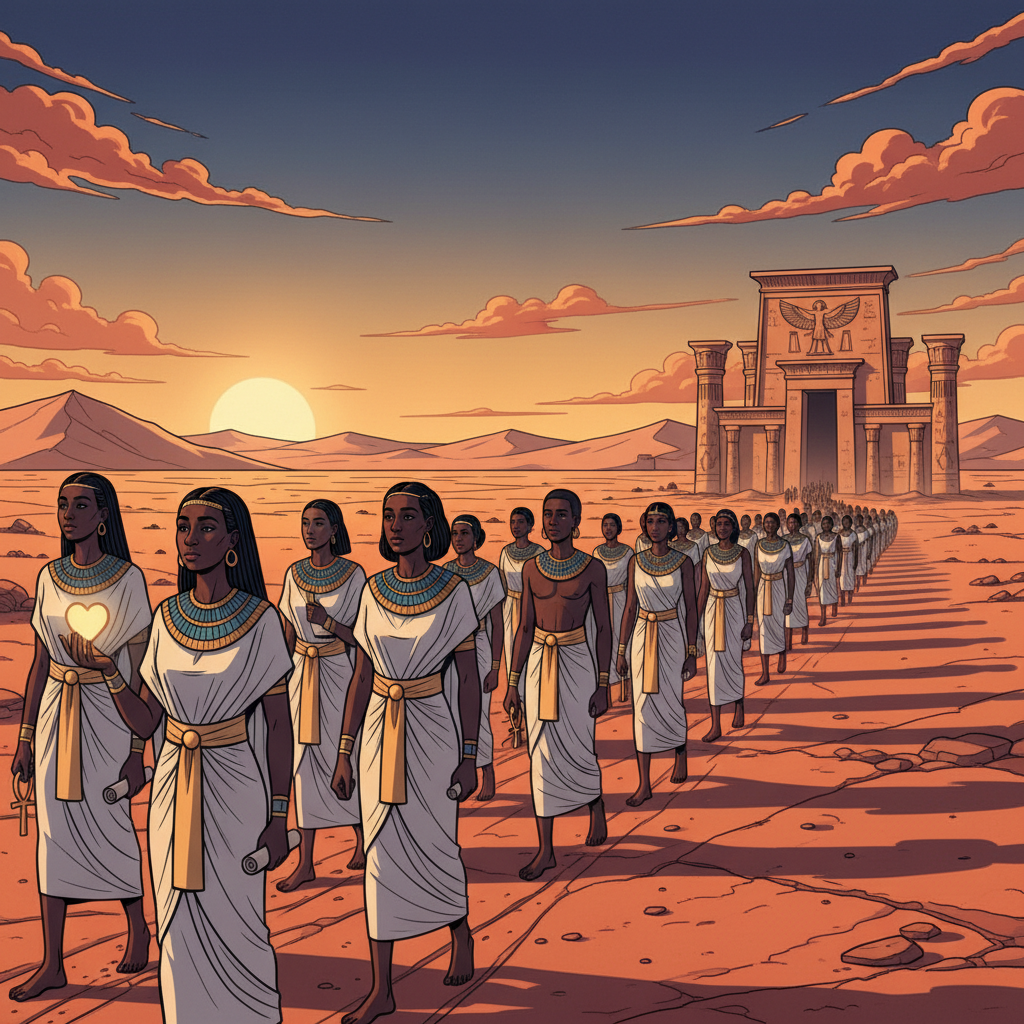
The outcome of this weighing is absolute. There is no appeal, no second chance once this moment arrives. It is the culmination of an entire lifetime. This unwavering commitment to truth is what makes the Hall of Two Truths so profoundly powerful. It is not about earning favor or performing rituals; it is about being the truth. This is why the Kemetic ethical system is fundamentally different from many others. It demands an internal transformation, a genuine embodiment of Maat, rather than mere outward compliance. The integrity of the 'ib' is paramount, for it is the vessel of true selfhood, the seat of character and moral compass. This inner work, this constant striving for Maat, is the essence of the Kemetic spiritual journey. No hiding from your true self here.
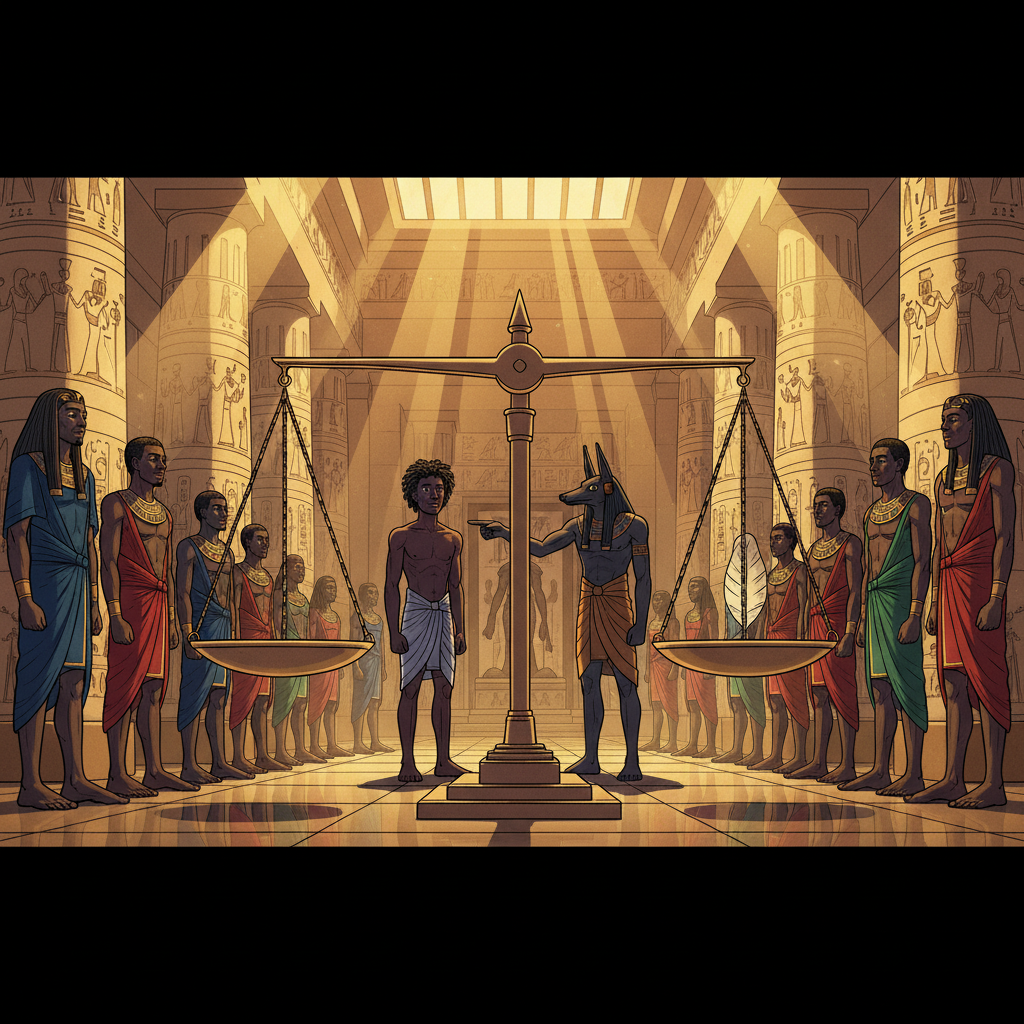
Seba Khafre's voice deepened, his eyes holding the wisdom of ages. "Remember this, my student, for it is the very core of our ancestors' profound insight: 'The scales do not lie, for they are Maat herself. No prayer can make a heavy heart light. No offering can move the feather. Only the weight of your deeds remains.' This passage from the Pert em Heru is not a threat, but a statement of cosmic law. It declares that spiritual consequence is inherent, not imposed. Your life's journey, the choices you made, the Maat you embodied or neglected – these are the only currency that matters. It strips away all pretense, all external distractions, focusing solely on the pure essence of who you were and how you lived. The truth, in this Hall, is unassailable, undeniable, and utterly transparent.
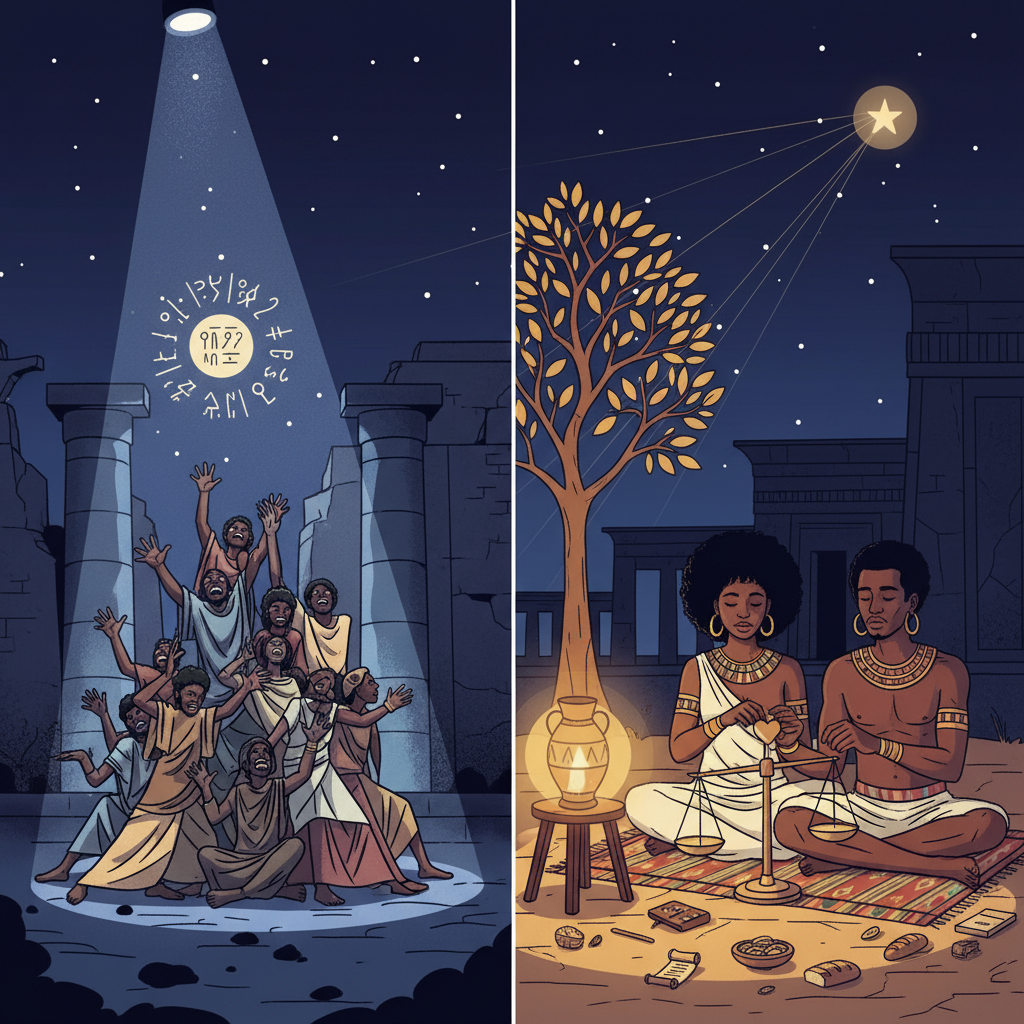
This contrasts starkly with many other ancient and modern belief systems that offer avenues for repentance, atonement, or divine intervention to alter one's post-mortem fate. The Kemetic view is one of radical personal responsibility. Your fate is in your hands, determined by the cumulative impact of your everyday choices. It emphasizes that salvation is not a gift or a negotiation, but an achievement—a natural unfolding of a life lived in accordance with cosmic order. This is a powerful call to live consciously, with every action considered a contribution to the 'weight' of your heart. It compels one to truly internalize Maat, making it the guiding principle of their existence, not just a set of rules to occasionally observe.
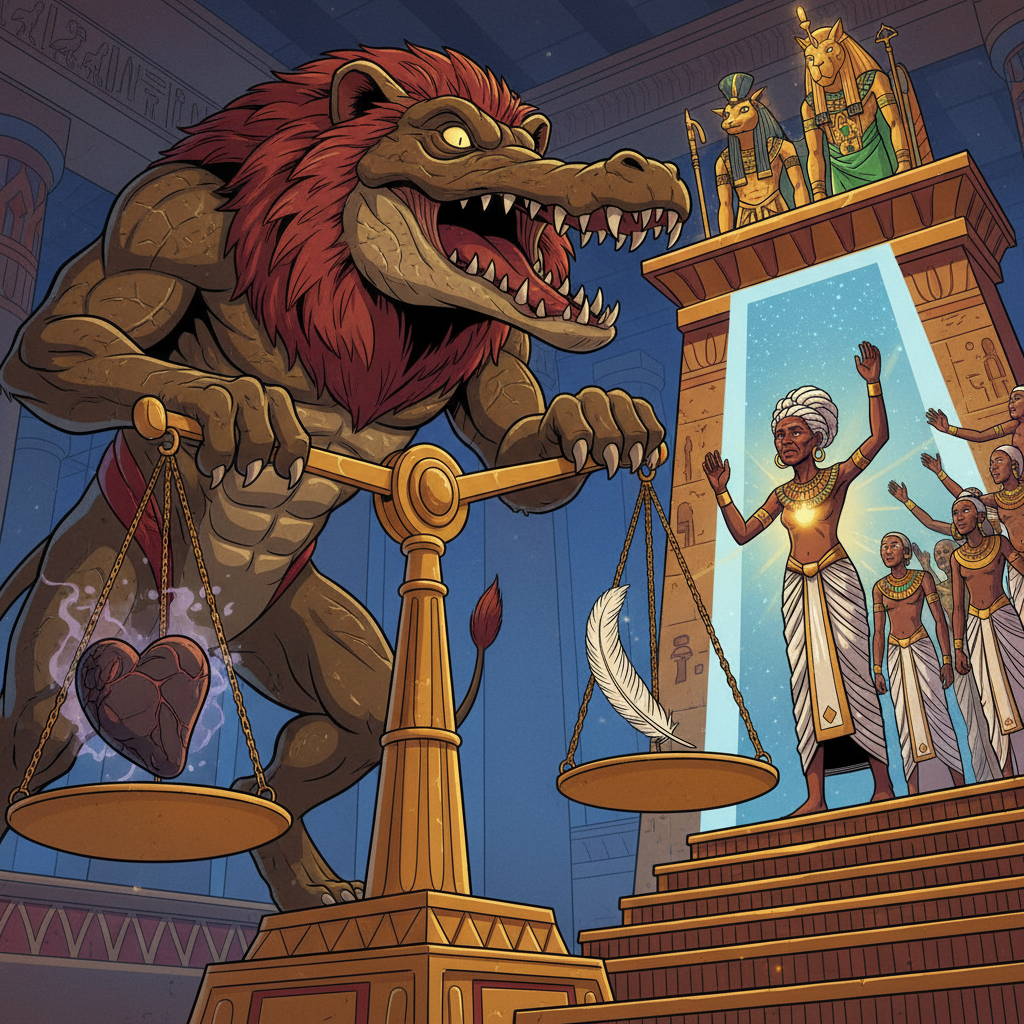
If the heart balances the Feather of Maat, the deceased is declared 'maa kheru,' 'true of voice' or 'justified.' This signifies not that they are free of sin, but that their life trajectory was fundamentally aligned with Maat. They are then welcomed into the blessed afterlife, joining the 'Akhu,' the revered ancestors, and ascending to a state of spiritual perfection and union with the Netjeru. However, if the heart is heavy with Isfet, if it fails to balance the feather, the outcome is not 'hell' in the Western sense. Instead, the heart is consumed by Ammit, the 'Devourer of the Dead'—a fearsome creature with the head of a crocodile, the body of a lion, and the hindquarters of a hippopotamus. This is not eternal torture, but 'dissolution,' a 'second death.'
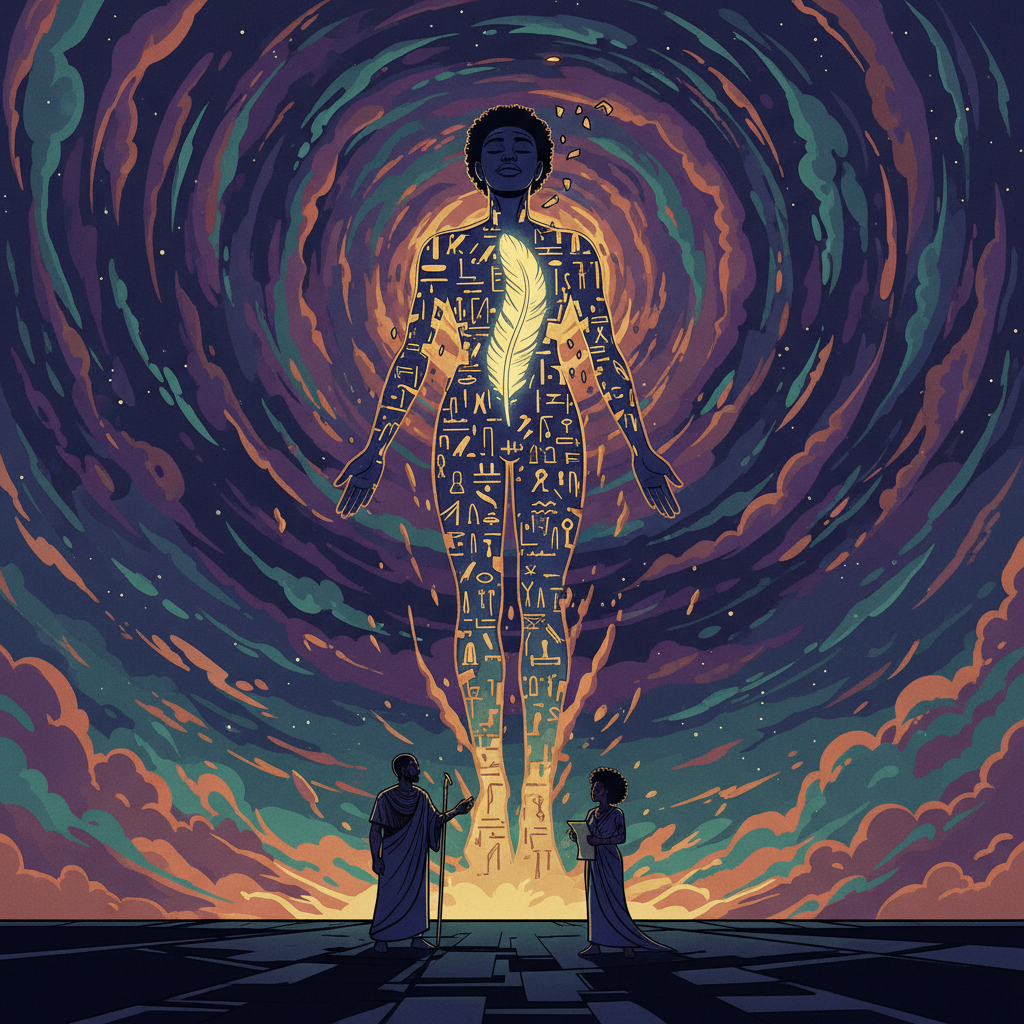
This concept of 'dissolution' is critical to understanding Kemetic justice. Unlike eternal damnation, which implies continuous suffering, dissolution is a cessation of individual existence. The spirit is not tormented; it simply ceases to be. It is a return to primordial chaos, a loss of the unique identity built during life. This proportional consequence—the severing of one's consciousness from the possibility of spiritual continuation—is far more aligned with the principles of Maat than an endless punishment. It underscores the value placed on a meaningful, Maat-aligned life. Dr. Cheikh Anta Diop and Dr. Theophile Obenga, in their work on African philosophy, consistently highlight the emphasis on balance and natural consequences in ancient African thought, showing how even the afterlife reflects an ecological, rather than punitive, justice system.

The terrifying image of Ammit serves as a powerful deterrent, not of an angry god, but of the natural consequence of severe imbalance. It signifies the ultimate failure to integrate with the cosmic order, rendering one's essence incompatible with continued existence in the higher realms. This 'second death' means that the individual's spiritual journey ends; they do not become an Akh, they do not join the blessed ancestors, and their memory fades from the cosmic record. It’s a powerful statement that a life lived in profound Isfet ultimately negates itself, dissolving back into the undifferentiated potential of creation, losing the opportunity for transformation and spiritual evolution that a Maat-aligned life offers. It's a sobering reminder of the stakes involved.
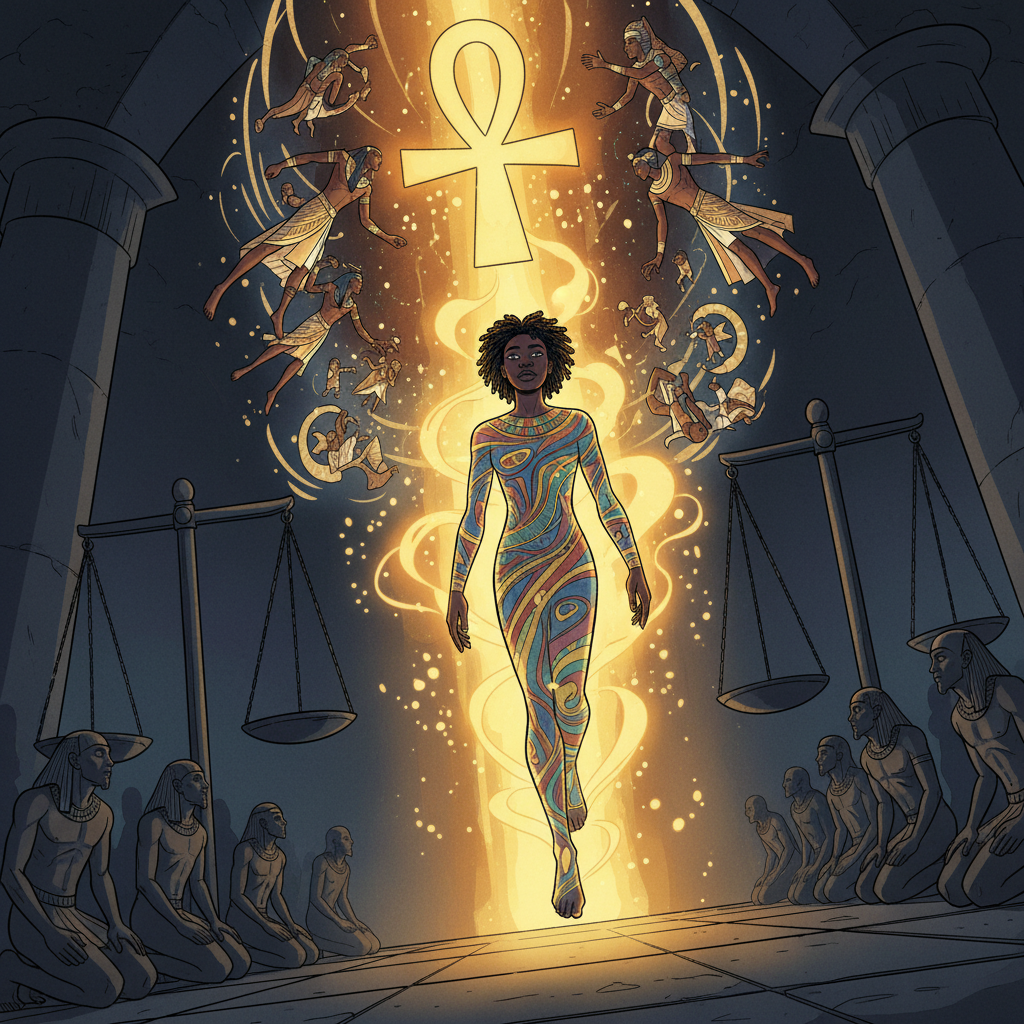
For those whose hearts are light, whose souls are 'maa kheru,' the journey continues. They pass beyond the Hall of Two Truths, transforming into an 'Akh'—an enlightened, glorious spirit. This is not simply 'heaven' as a reward; it is a natural progression, an elevation of consciousness achieved through a life lived in harmony with Maat. The Akh joins the company of the Netjeru and the revered ancestors, continuing to participate in the cosmic dance, offering guidance and blessings to the living. This understanding of immortality is profoundly interconnected with the concept of ancestral veneration and the continuity of the community, both living and departed. It speaks to a cyclical view of existence, where the individual, through right action, contributes to the eternal flourishing of the cosmos.
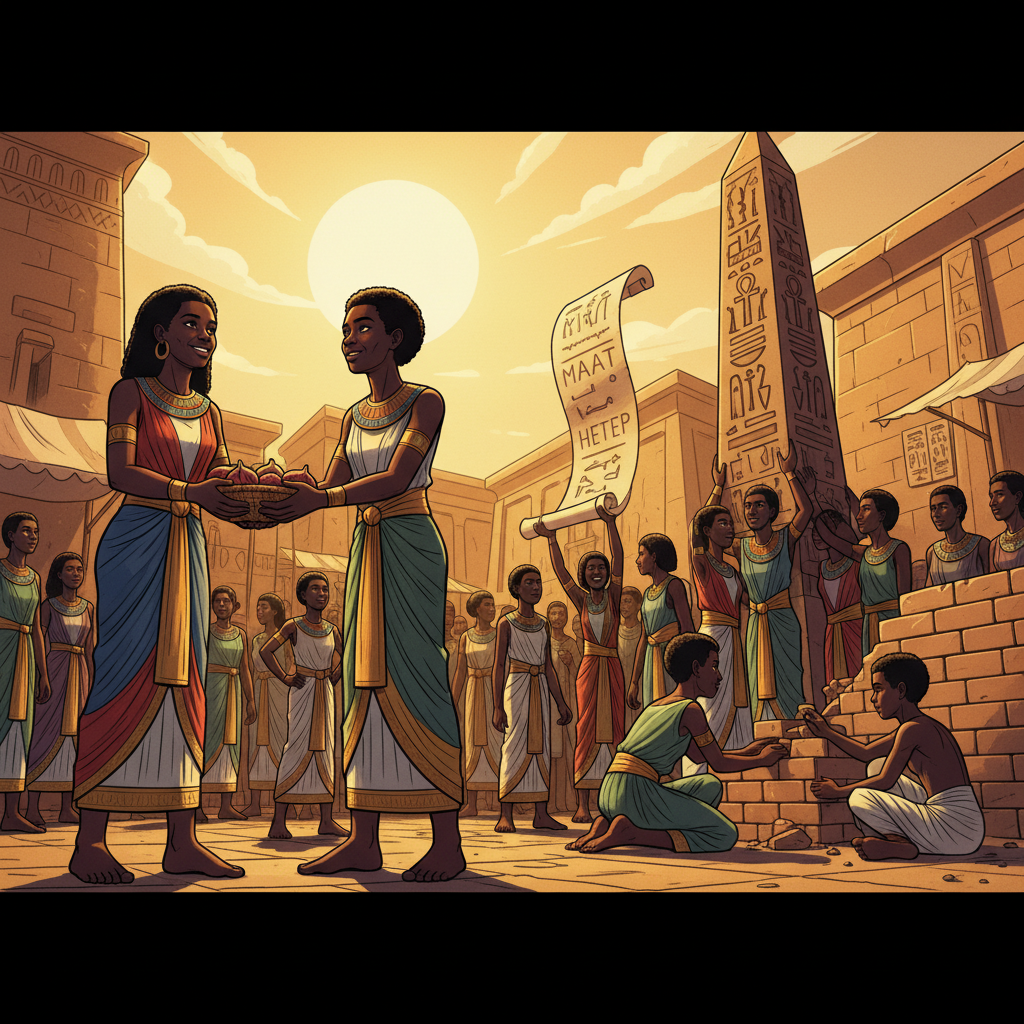
The Hall of Two Truths, therefore, represents the most sophisticated ethical framework in the ancient world because it is not based on fear of a wrathful deity, but on the intrinsic value of living a life aligned with universal principles. It promotes self-reflection, personal responsibility, and the cultivation of an inner moral compass. Dr. Asa Hilliard III, another giant of Afrocentric scholarship, consistently emphasized the ethical genius of Kemet, noting how it prioritized communal harmony and personal integrity. The system encourages preventative ethics – living justly every day – rather than reactive atonement after transgression. This proactive approach to morality fosters a society built on trust, respect, and a shared commitment to Maat.
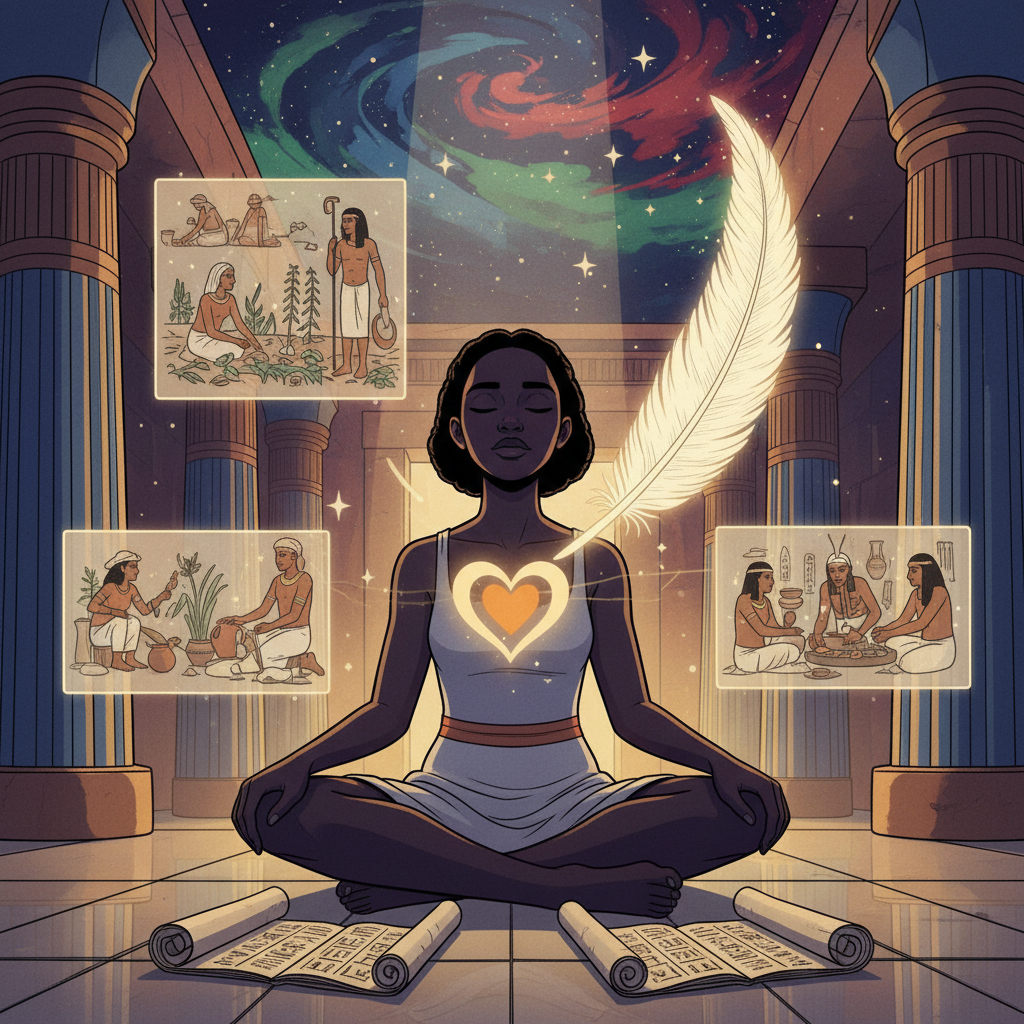
Its emphasis on the 'ib' as the seat of conscience and character makes it deeply psychological and introspective. The Hall is ultimately an internal judgment, a confrontation with one's authentic self, stripped of all external validations and societal facades. This inner truth is what the Feather of Maat seeks to balance. It’s a system designed to cultivate highly ethical, self-aware individuals who understand their place within the cosmic order and their responsibility to uphold it. This deep philosophical insight, combined with practical guidelines for daily living, demonstrates the holistic and profound nature of Kemetic wisdom. It transcends mere religion, becoming a way of life, a philosophy of being.
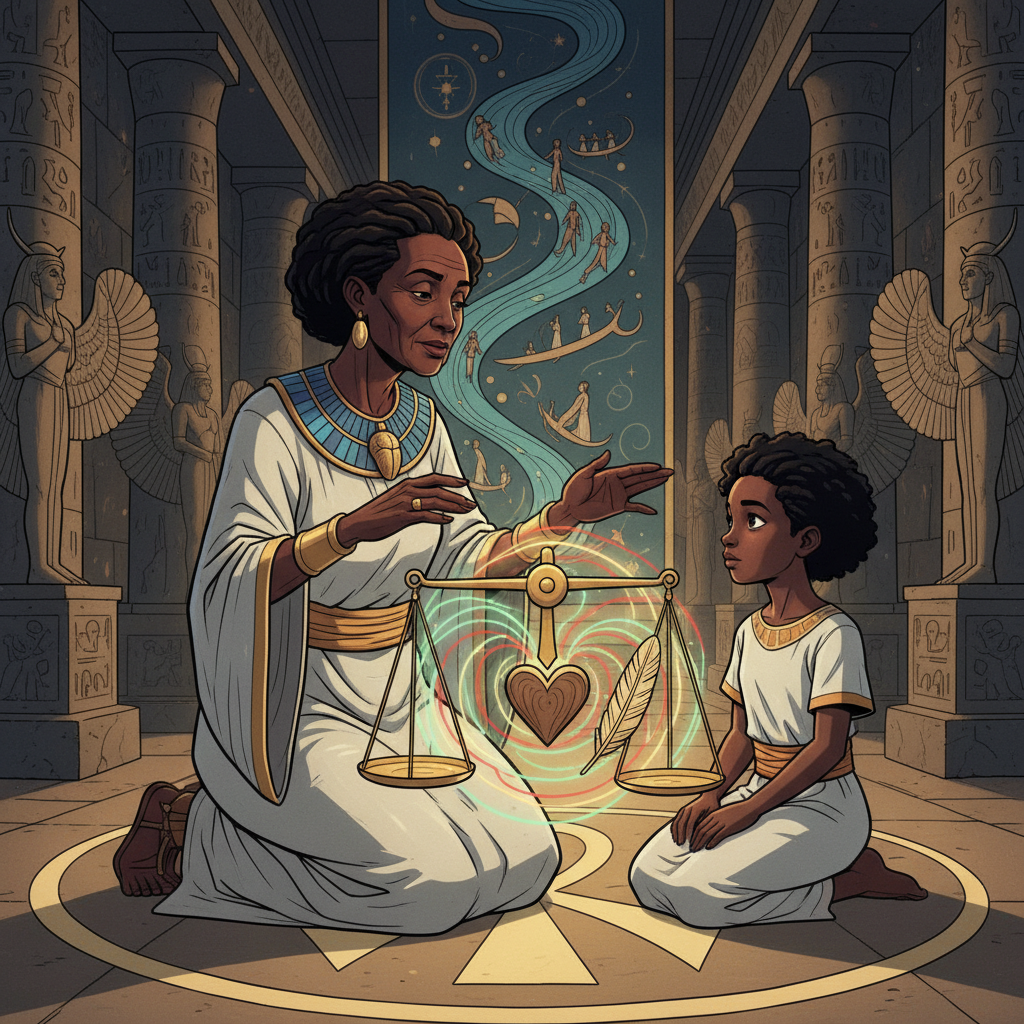
The Kemetic understanding of Justice, as embodied in the Hall of Two Truths, is not punitive but restorative and harmonizing. It seeks to bring the individual into alignment with the cosmic flow, rather than simply punishing deviation. This profound ethical model influenced much of subsequent African thought and remains a powerful source of wisdom for us today. Scholars like Dr. Yosef ben-Jochannan tirelessly worked to reveal these deep African philosophical roots, showing how they provided sophisticated answers to the fundamental questions of human existence and morality long before other civilizations. The lessons of the Hall are timeless, urging us to examine our own hearts daily, to live with intention, and to strive for that perfect balance, that 'maa kheru,' in every aspect of our lives.
And so, my cherished student, you now possess a deeper insight into the Hall of Two Truths—not as a fearful judgment, but as a mirror reflecting the sum of your life's choices against the eternal standard of Maat. It is a profound invitation to live consciously, to cultivate a heart so light with truth and justice that it naturally aligns with the cosmic order. The wisdom of our ancestors, passed down through millennia, teaches us that our ultimate spiritual destiny is not dictated by an external force, but forged within the crucible of our own character. This understanding liberates us, empowering us to be the architects of our own spiritual progression, guided by the immutable principles of Maat. Carry this truth with you, let it illuminate your path, and let your heart always strive for that perfect balance.
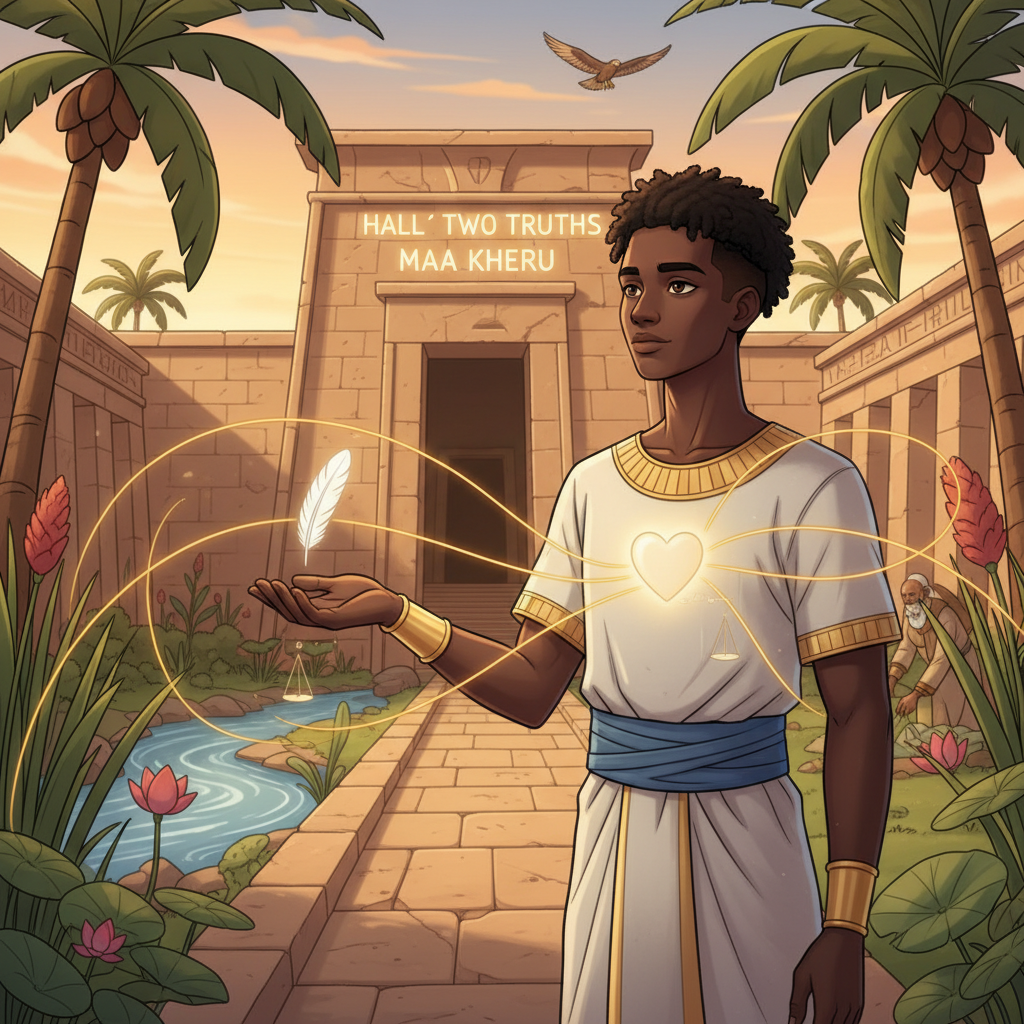
The teachings of the Hall of Two Truths resonate far beyond ancient Kemet. They offer a timeless model for ethical living, urging us to embrace personal responsibility and to understand the interconnectedness of our actions with the wider universe. It reminds us that every thought, every word, every deed contributes to the 'weight' of our heart. As you continue your journey, reflect on this: are you actively cultivating a heart that aligns with the Feather of Maat? Are you living 'maa kheru' in your daily interactions, in your community, and within yourself? This is the ultimate challenge, and the ultimate reward. Let the wisdom of this sacred chamber inspire you to live a life of profound purpose, knowing that your integrity is your truest legacy.