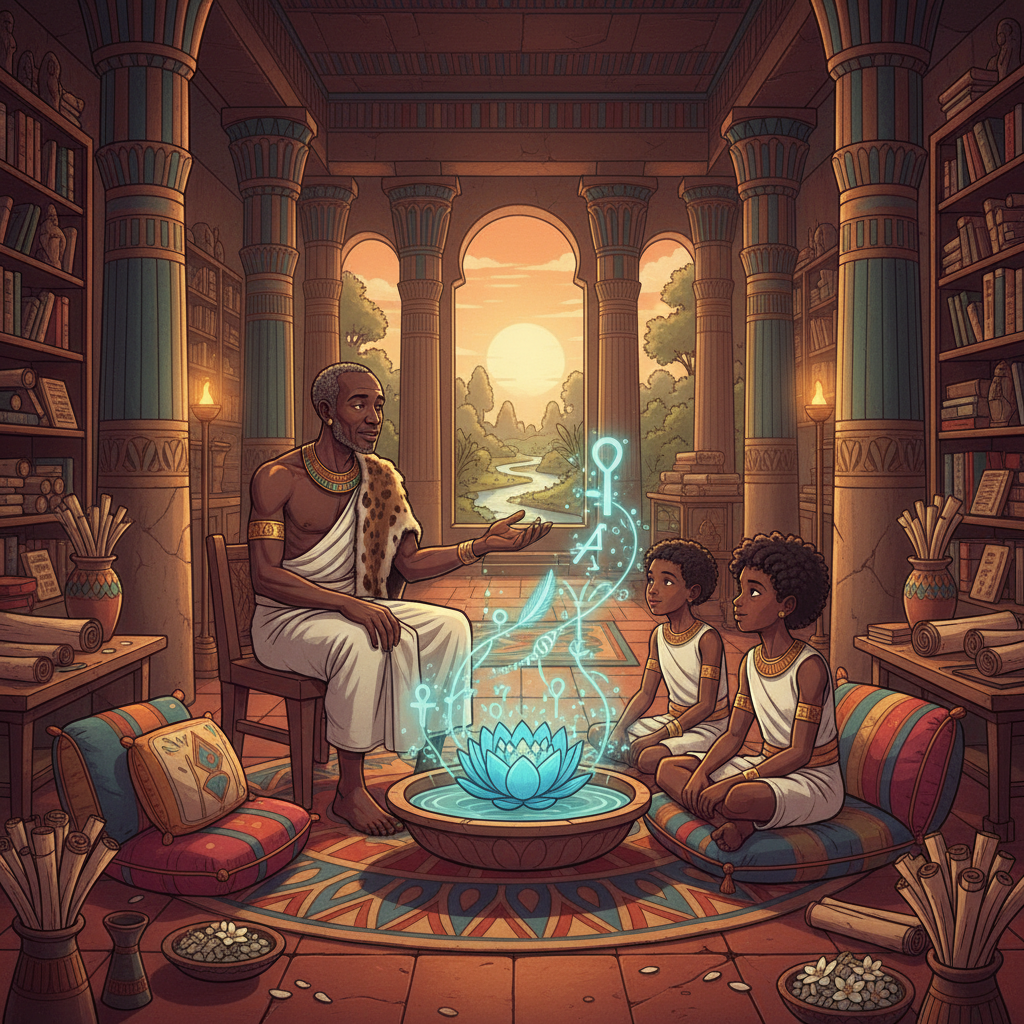
Seba Khafre's voice, rich as the Nile's fertile silt after the inundation, embraced you in the quiet warmth of the Per Ankh study chamber. The scent of papyrus and jasmine hung in the air, a familiar comfort. 'You have journeyed far, {name},' he began, his eyes reflecting a deep knowing. 'You have navigated the foundational currents of the Pert em Heru, understanding the basic narrative of our ancestors. But Kemet's wisdom, like the Nile itself, has deeper channels, hidden truths for those who prove themselves worthy. Today, we delve into a symbol often admired for its beauty, yet rarely understood for its profound philosophical weight: the lotus, and its divine manifestation, Nefertem. This is not merely a pretty flower that floats on water; it is a living teaching, an *epistemological* and *ontological* blueprint for human existence. We shall explore how this sacred bloom embodies the very essence of Maat, not just as a concept, but as an active, ethical imperative to transform suffering into radiant purpose.'
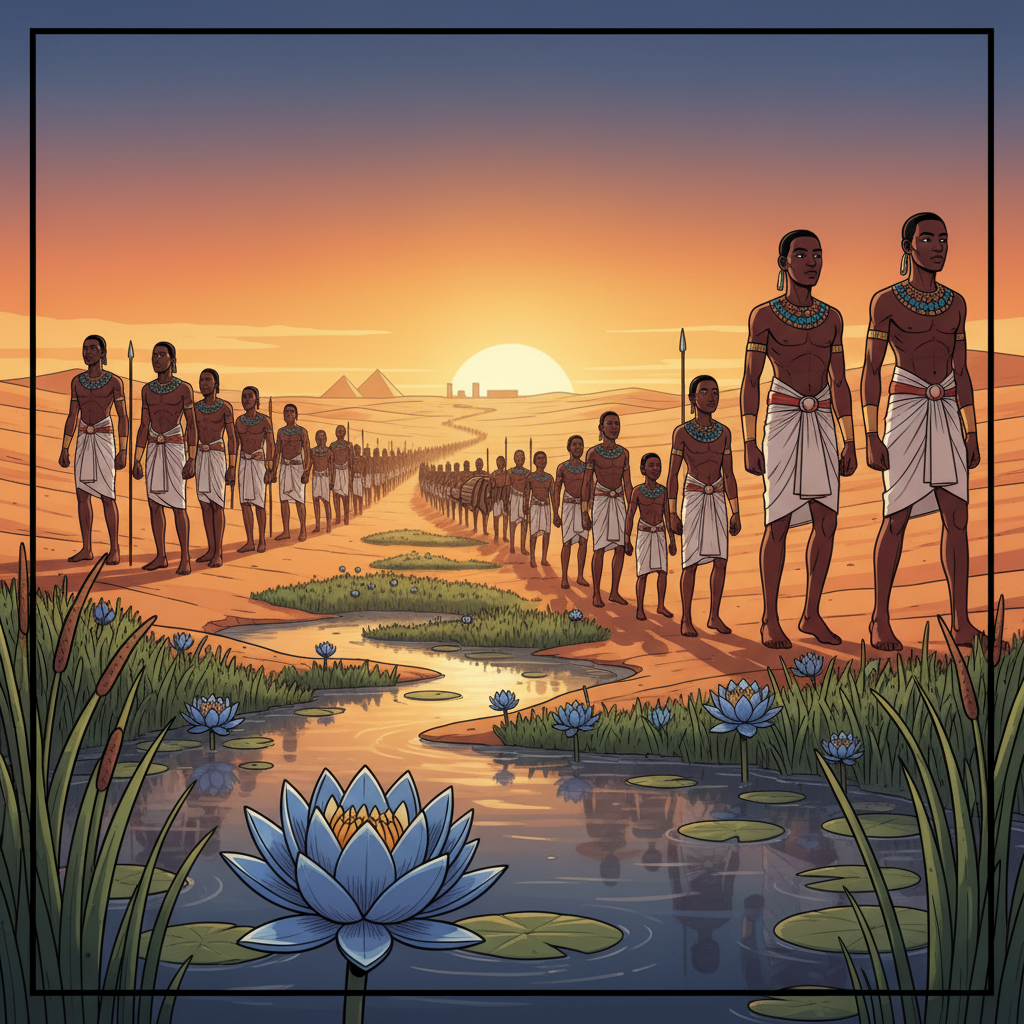
In your earlier studies, you learned of the lotus rising from the primordial waters, a symbol of creation and rebirth, often associated with the sun's daily journey. This basic narrative, while true, merely skims the surface of its profound significance. Today, we must ask: *why* the lotus? Why this particular flower, emerging from the dark, murky depths of the Nile, to unfurl such exquisite perfection? The Kemetic mind was never content with superficial observation. Every symbol, every deity, every narrative was meticulously crafted to convey layers of meaning, guiding the initiate towards a holistic understanding of the cosmos and their place within it. The lotus, as we shall see, is a masterclass in *teleological* thought, demonstrating Kemet's deep understanding of purpose, transformation, and the ethical obligation inherent in existence. It challenges us to look beyond surface appearances and embrace the deeper processes of life.
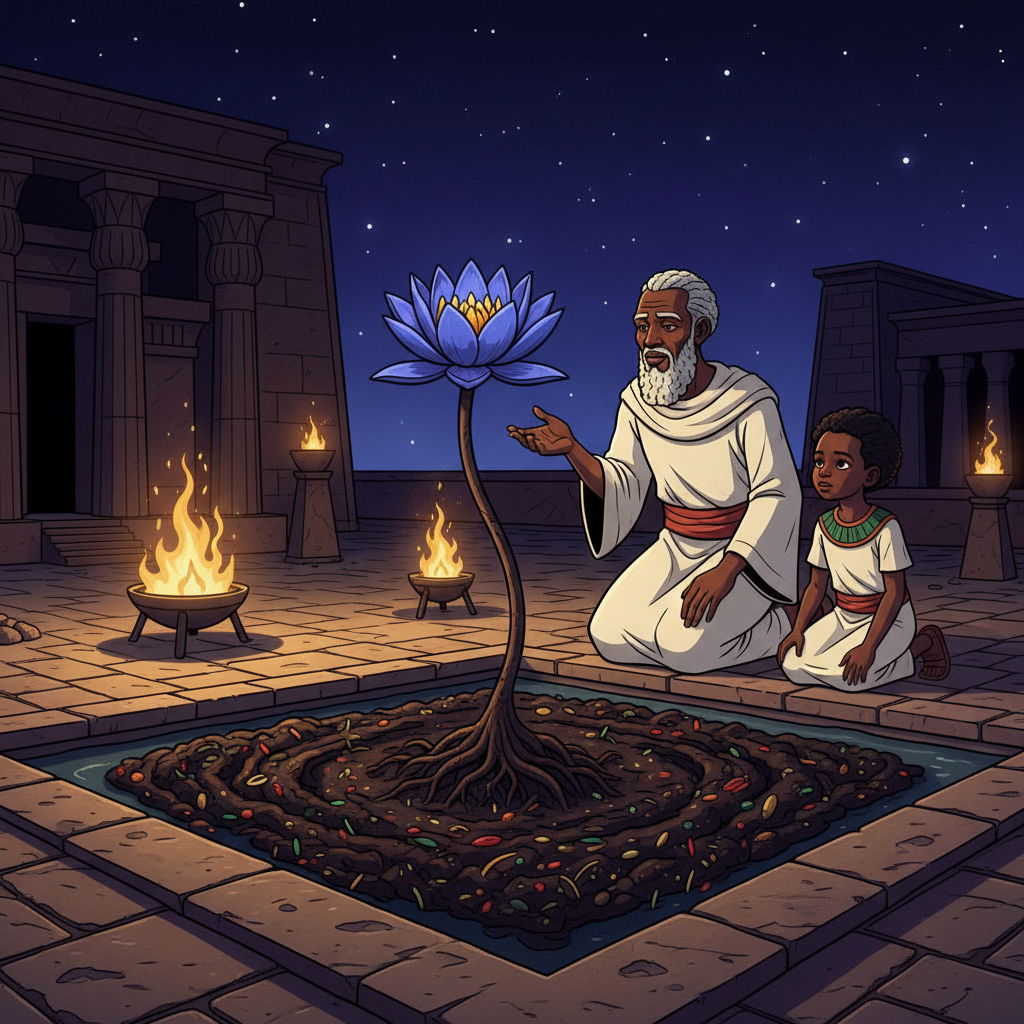
Consider the environment from which the lotus emerges: the rich, dark, alluvial mud of the Nile. This is not a pristine, clear pond; it is a repository of decaying matter, silt, and nutrients, often perceived as 'unclean' or 'chaotic' by modern sensibilities. Yet, for the Kemites, this mud was the very source of life, the fertile ground from which all abundance sprang. The lotus does not bloom *despite* the mud, {name}; it blooms *because* of it. Its roots anchor deeply into this dark substratum, drawing sustenance, transforming the very elements of perceived imperfection into unparalleled beauty. This initial understanding is crucial. It immediately dismantles any notion of escaping difficulty to find beauty; rather, it instructs us to find the beauty *within* and *through* difficulty. This is the first profound lesson of the lotus: the essential interconnectedness of perceived opposites, fundamental to the concept of *Maat*.

This natural phenomenon was deified in the form of Nefertem, the divine child of Ptah and Sekhmet, often depicted as a beautiful young man with a lotus blossom upon his head. Nefertem embodies the beauty, perfection, and sweet scent of the lotus, but more importantly, he represents its creative power and its capacity for transformation. He is the fragrance that arises from the primeval swamp, the order and aesthetic pleasure that emerges from chaos. His very name, 'Nefer-tem,' signifies 'perfect completion' or 'the beautiful one who closes.' He is not just a deity of beauty; he is the active principle of bringing forth beauty, purity, and healing from the depths. He is the morning sun, dispelling the darkness, much like the lotus opens its petals to greet the dawn, a powerful *paradigm* for humanity's own journey from ignorance to enlightenment.
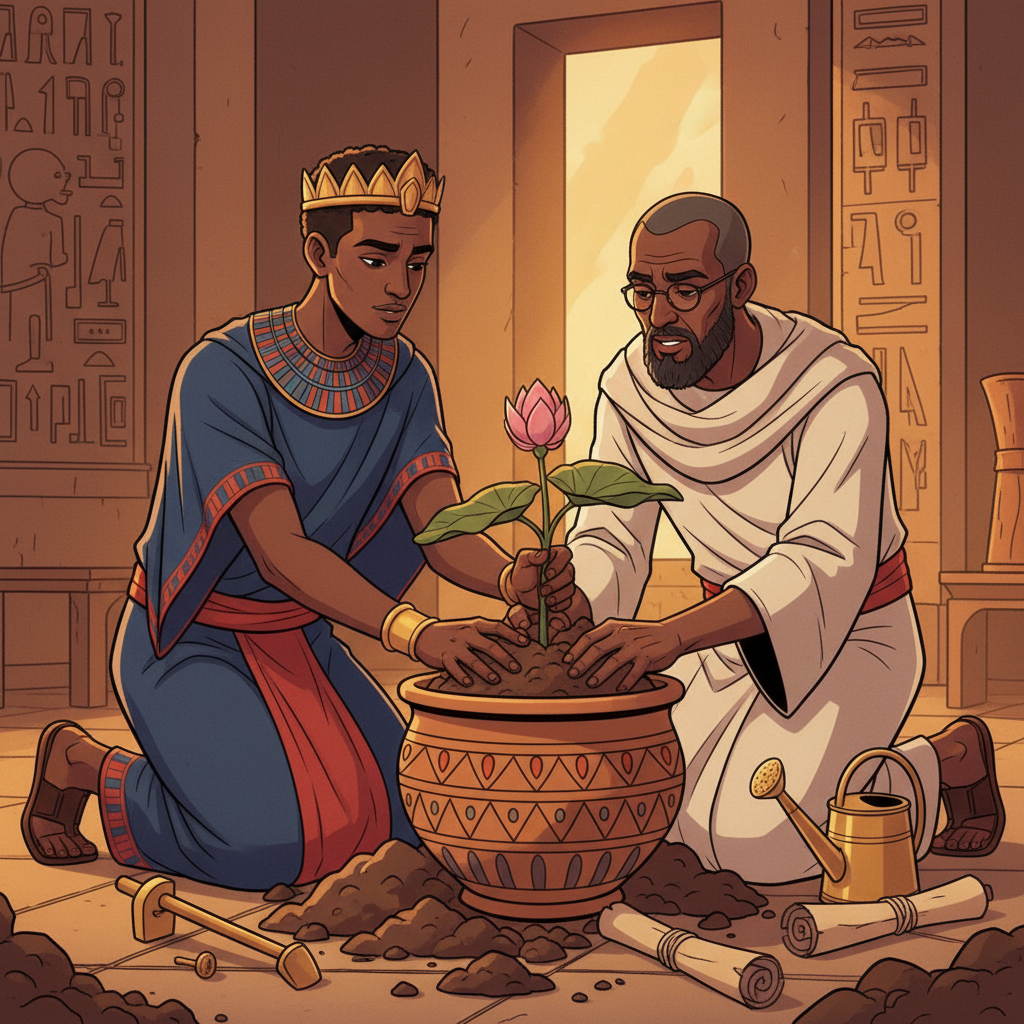
The esteemed scholar, Dr. Maulana Karenga, a profound interpreter of African intellectual traditions and the Kawaida philosophy, offers invaluable insight into this symbol. Dr. Karenga emphasizes that the lotus in Kemetic thought is not merely an aesthetic object, but a powerful *ethical symbol*. It is a teaching about our responsibility to create and sustain beauty, order, and goodness in the world, even — and especially — when confronted with chaos and suffering. For Karenga, the lotus teaches us that our environment, however challenging, is not merely something to be endured, but something to be actively engaged and transformed. This perspective elevates the lotus from a passive icon to an active moral imperative. It is a call to action, reminding us that we, too, must draw sustenance from our experiences, both pleasant and painful, and, like Nefertem, manifest beauty and harmony.
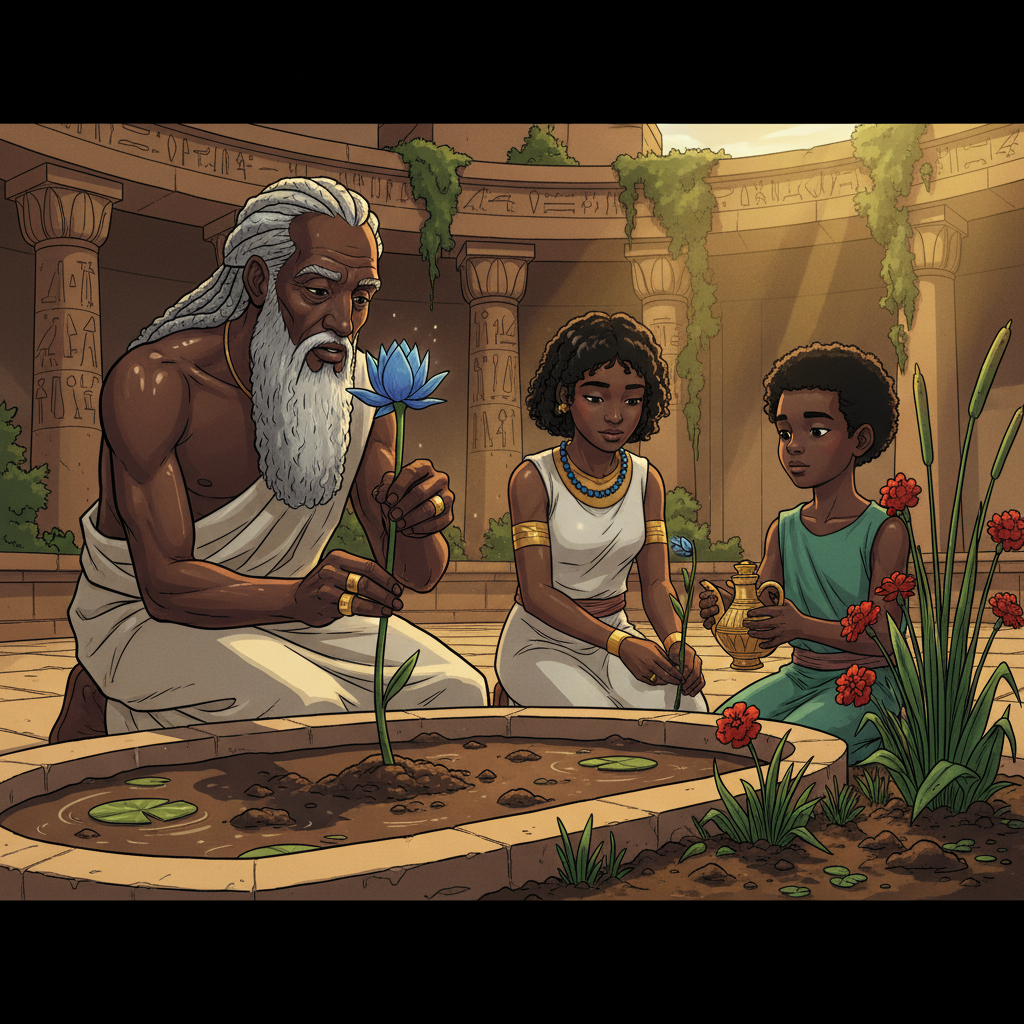
This brings us to the core of the Kemetic 'ethics of care.' Unlike some philosophical traditions that might encourage withdrawal from the world to achieve enlightenment, Kemet, through the lotus, teaches active engagement and transformation. It's a philosophy deeply rooted in the concept of *ubuntu*, the understanding that 'I am because we are,' and that our individual well-being is inextricably linked to the well-being of our community and the world. The lotus, by transforming mud into beauty, models this ethical obligation. It doesn't hoard its beauty; it unfurls it for all to see, enriching its environment. This selfless act of transformation is a direct manifestation of Maat — bringing harmony and balance into existence, not just within oneself, but extending outwards, tending to the garden of the world, both literally and metaphorically. This is how we live Maat.
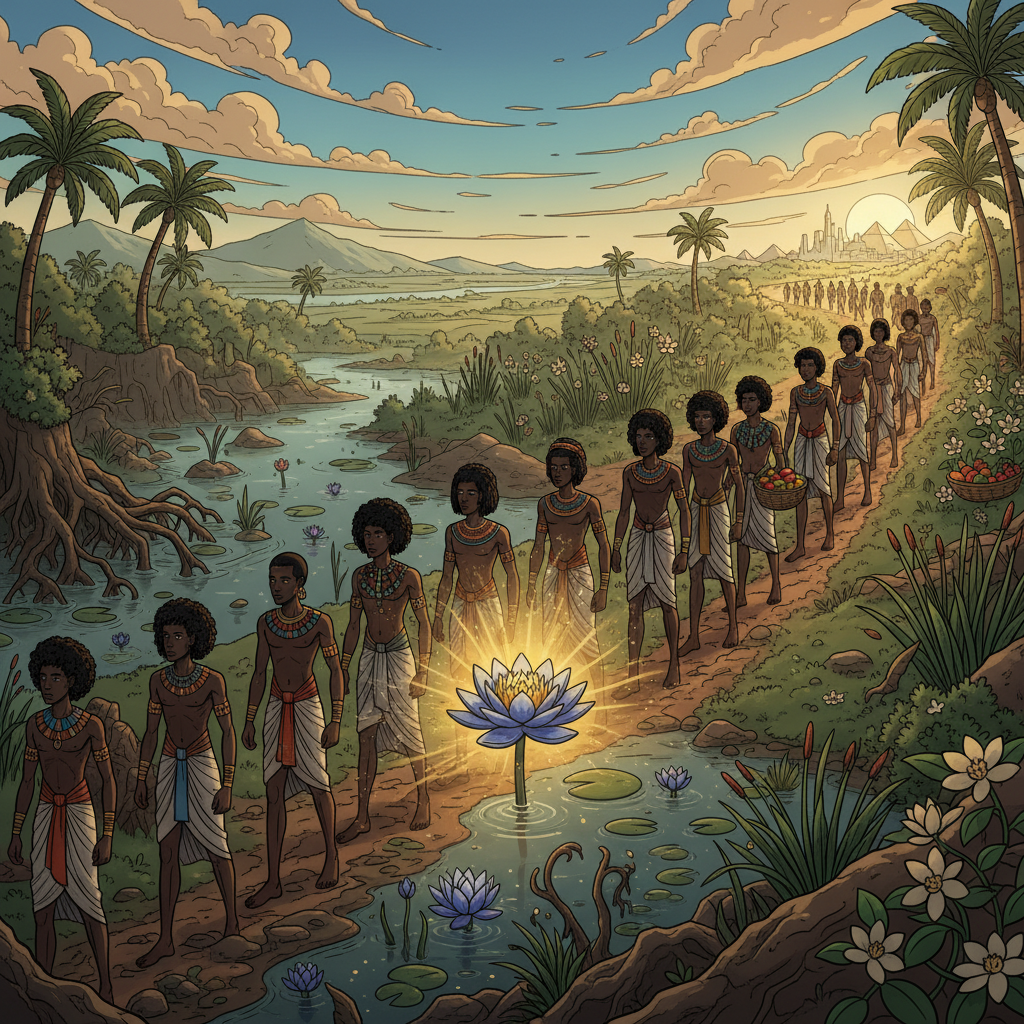
The duality of *Maat* and *Isfet* is nowhere more vividly illustrated than in the lotus. The mud represents Isfet — the primal chaos, the disorder, the potential for decay and dissolution. Yet, the lotus, through its inherent nature, transforms this Isfet into Maat — into order, beauty, and life-affirming presence. It is not about eradicating Isfet entirely, for even chaos has its place in the cycle, providing the raw material for creation. Instead, it is about the alchemical process of transformation. The lotus teaches us that our spiritual and ethical journey is not about avoiding the 'mud' of life – the challenges, the pains, the injustices – but about developing the inner strength and wisdom to transform these experiences into something life-giving and beautiful. It is the ultimate lesson in resilience and purposeful existence.
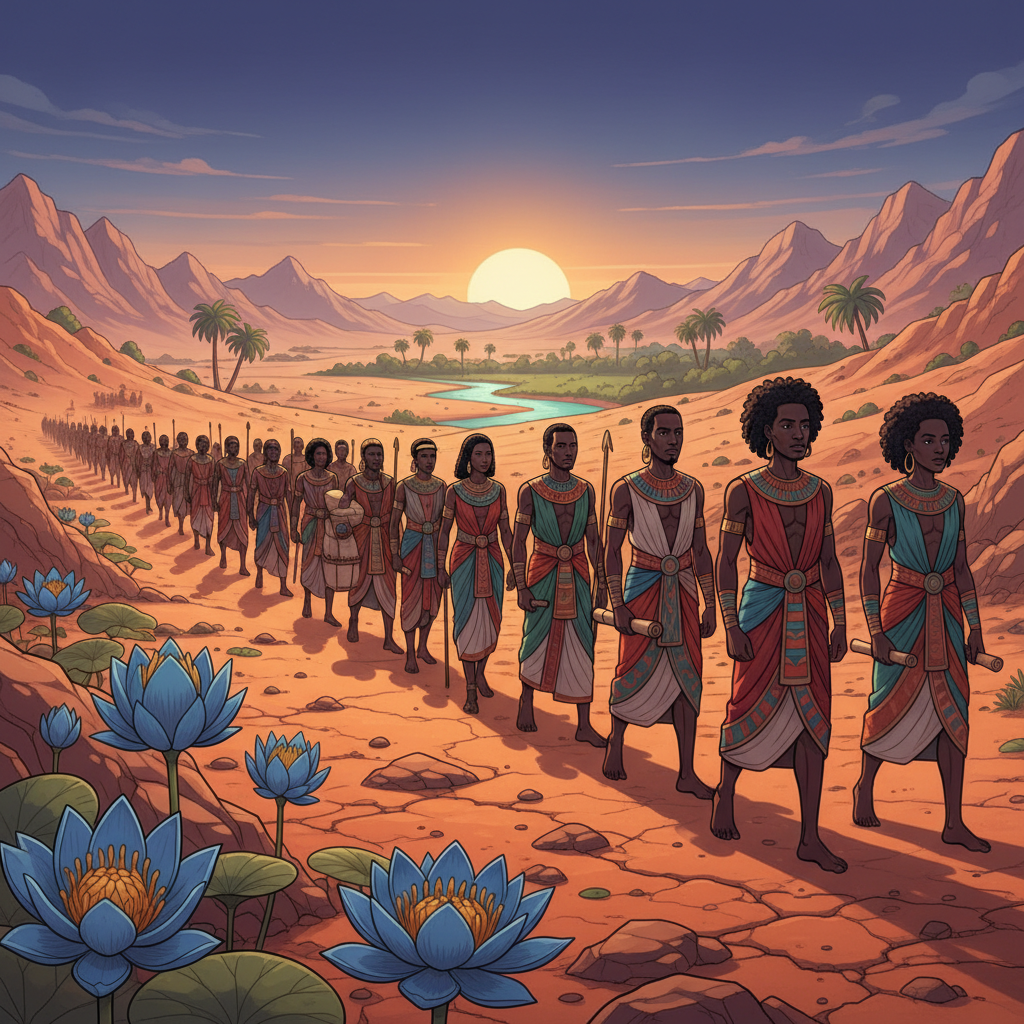
Let us confront the profound truth: suffering, difficulty, and struggle are not inherently detrimental; they are often the very conditions that forge our strength, deepen our compassion, and clarify our purpose. Just as the rich nutrients in the mud enable the lotus to thrive, the challenges we face can provide the essential 'nutrients' for our growth and blossoming. This is not to romanticize pain, but to understand its potential as a catalyst for transformation. The Kemetic sages understood that true wisdom isn't found in avoiding hardship, but in mastering the art of navigating it with integrity and intention, using it as fuel for one's journey towards *nefer*, or perfection. This understanding is a cornerstone of African traditional thought, echoing through many cultures across the continent, emphasizing strength forged in adversity.
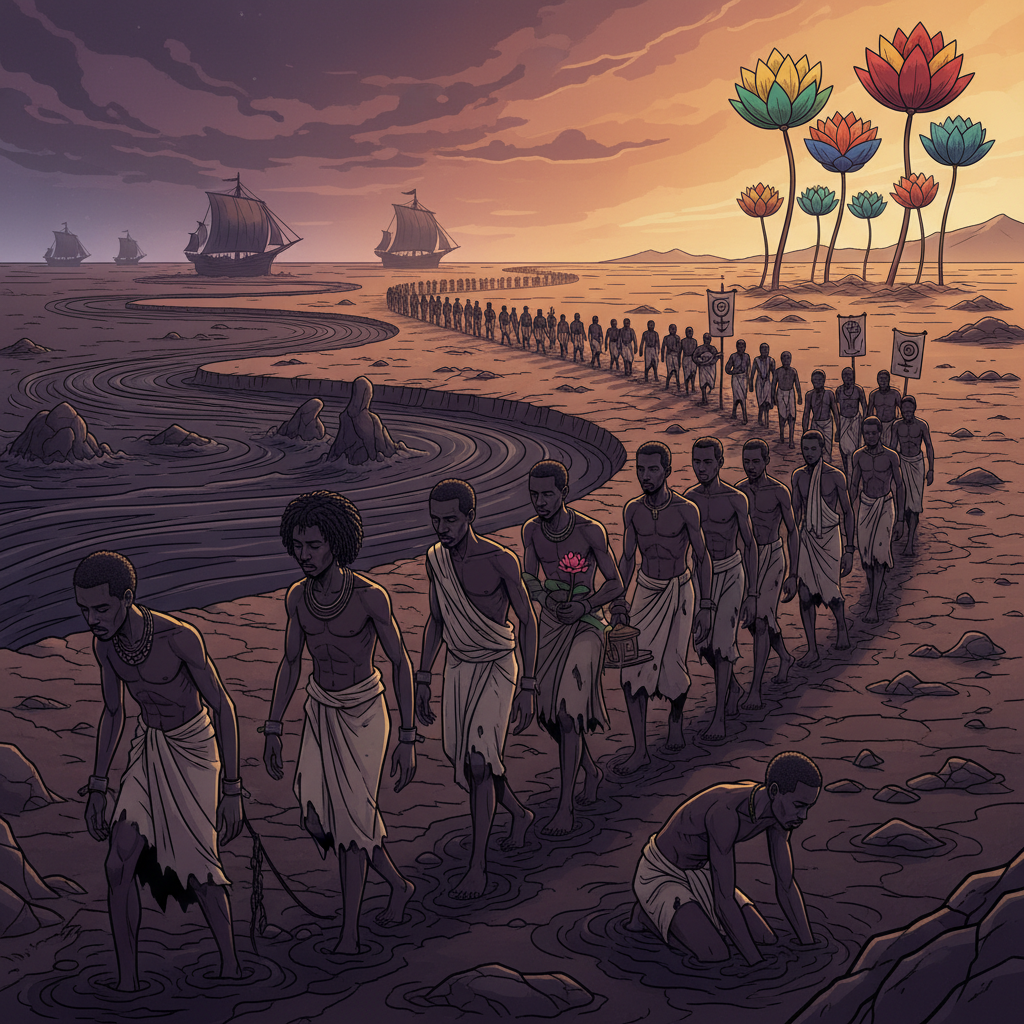
This philosophy holds particular resonance for the African-American experience, and indeed, for all people of African descent who have faced immense challenges. The transatlantic journey, the brutality of enslavement, the long struggle for civil rights — these were deep, dark 'mud' from which our ancestors drew an unimaginable strength to survive, to create, to resist, and to ultimately bloom in profound ways. Like the lotus, they did not just endure; they transformed their pain into spirituals, into movements for liberation, into vibrant cultures, into enduring hope and a relentless pursuit of justice. This is the testament to the indomitable human spirit, an echo of Nefertem's ascent from the dark waters. The lotus, therefore, becomes a powerful symbol of *Afrocentric* resilience, a reminder that even from the deepest adversity, unparalleled beauty and purpose can emerge.
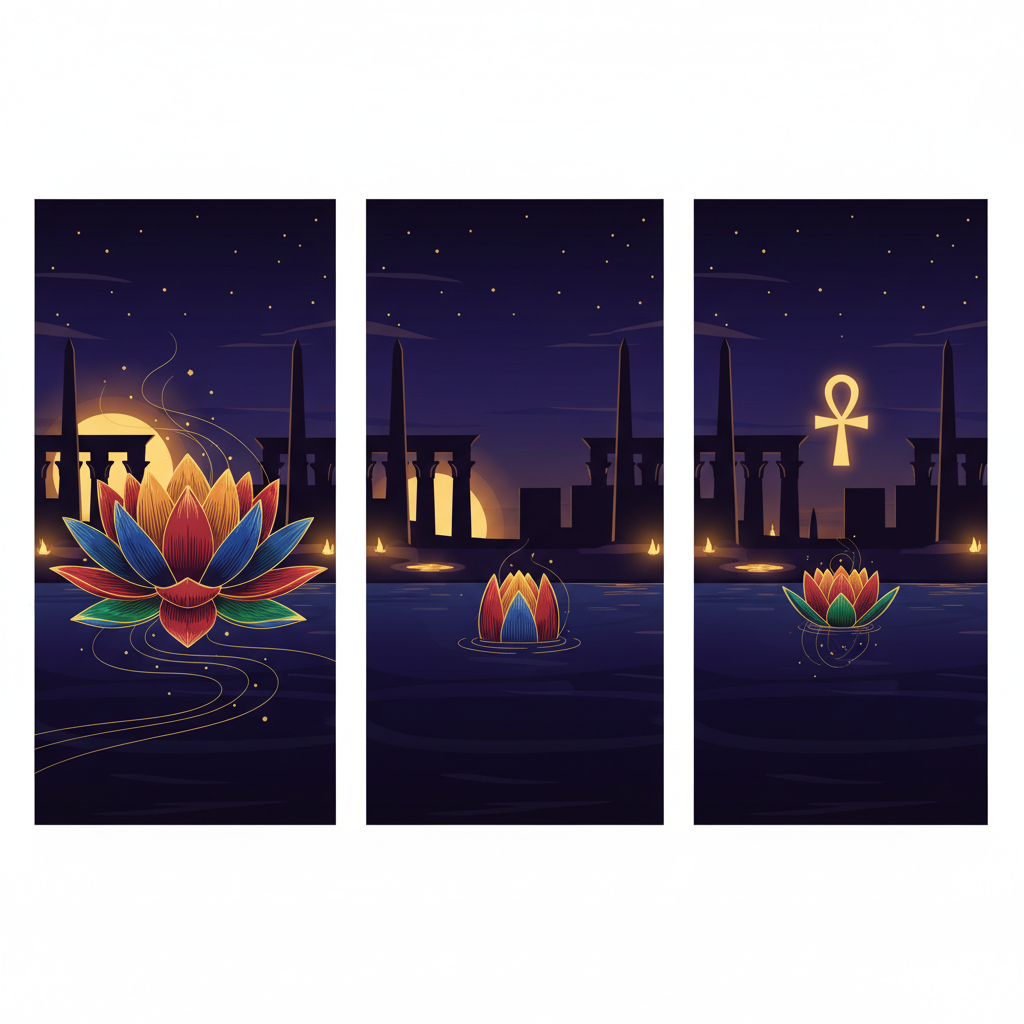
Observe the lotus's daily ritual: at dawn, it gracefully unfurls its petals to greet the sun, absorbing its life-giving energy. As dusk descends, it slowly closes, submerging itself back into the water, resting within the dark embrace of the Nile. With the first light of a new day, it rises once more, pristine and radiant, as if untouched by the night's darkness. This cycle is a profound metaphor for rebirth, renewal, and the continuous triumph of light over darkness, of consciousness over unconsciousness. It teaches us about the importance of cycles – of rest and activity, of introspection and outward expression. Each closing and opening is not an end, but a preparation for a new beginning, a reaffirmation of life's perpetual motion and its inherent capacity for renewal, no matter how deep the shadows may seem.
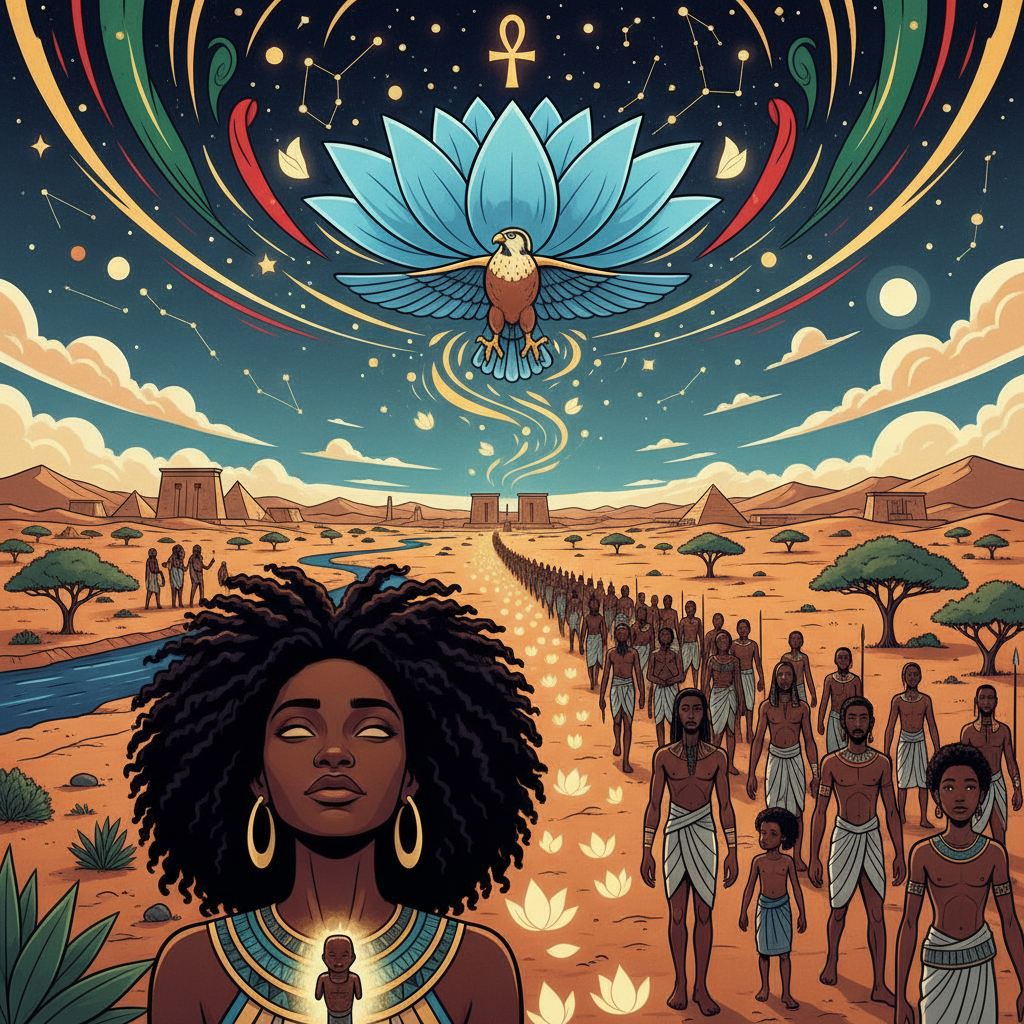
The Kemites, in their sacred texts, captured this essence with unparalleled poetic power. They understood that the individual's spiritual journey mirrored the cosmos, and that symbols like the lotus were not just external observations, but internal maps for the soul. The *Ba*, your unique personality and spiritual essence, was understood to be capable of this same transformative journey, rising from the slumber of the material world to embrace the light of higher consciousness. When the adept declared their identity with the lotus, it was a profound statement of self-actualization, a declaration of mastery over the elements of their own being. It was a recognition that they, too, could emerge from the depths of their experiences, however challenging, carrying light and truth. Listen closely, for our ancestors articulated this wisdom directly.
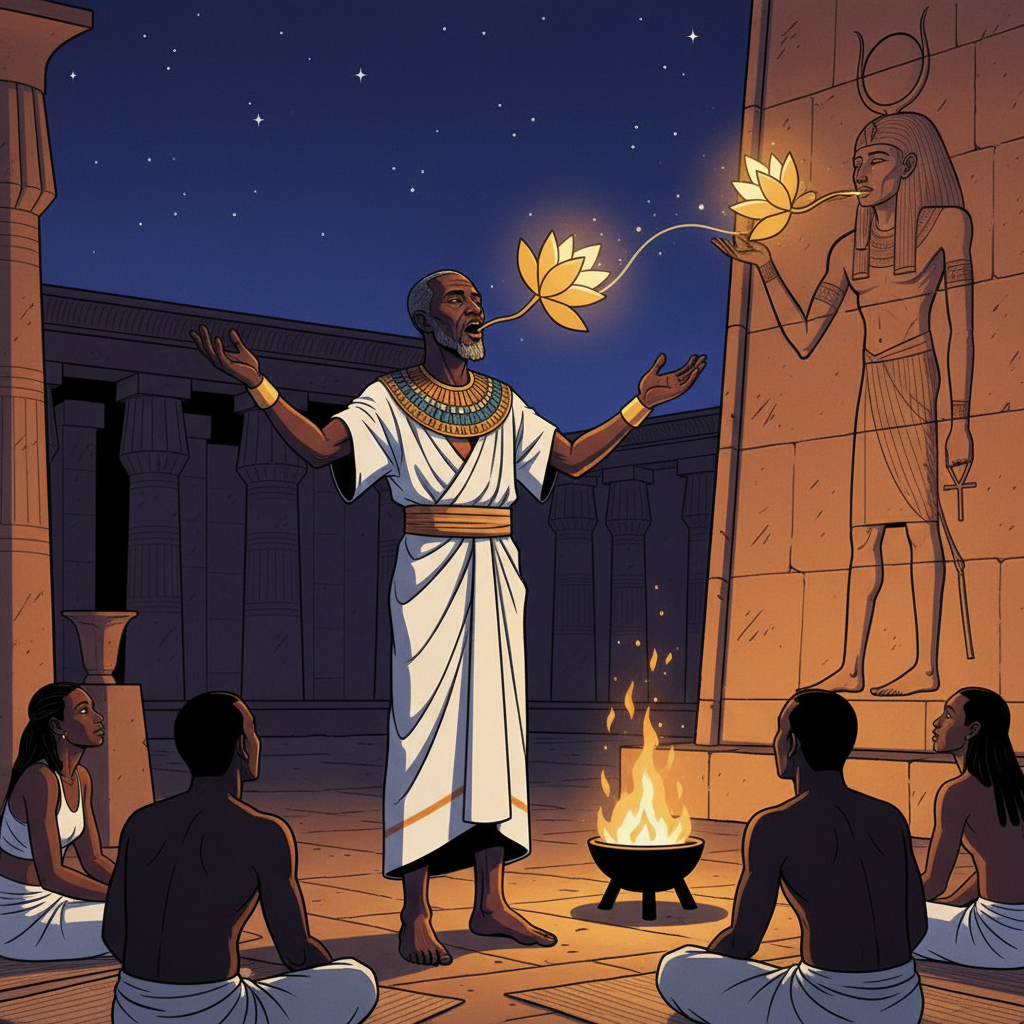
Indeed, within the very fabric of the Pert em Heru, Chapter LXXXI, we find the direct articulation of this truth, a declaration that encapsulates the entire philosophy of the lotus. The one who has undergone the profound transformation, speaking from a place of deep wisdom, proclaims: 'I am the lotus at the nostrils of Ra. I came forth from the dark water, and I carry the light. My roots are in the deep, and my face turns to the sun.' This passage, {name}, is not merely descriptive; it is prescriptive. It offers a blueprint for becoming, a guide for how one should live and transform. It speaks of an intimate connection to the divine source, an origin in primal chaos, and a destiny towards enlightenment, all while remaining grounded in the deep experiences of life.
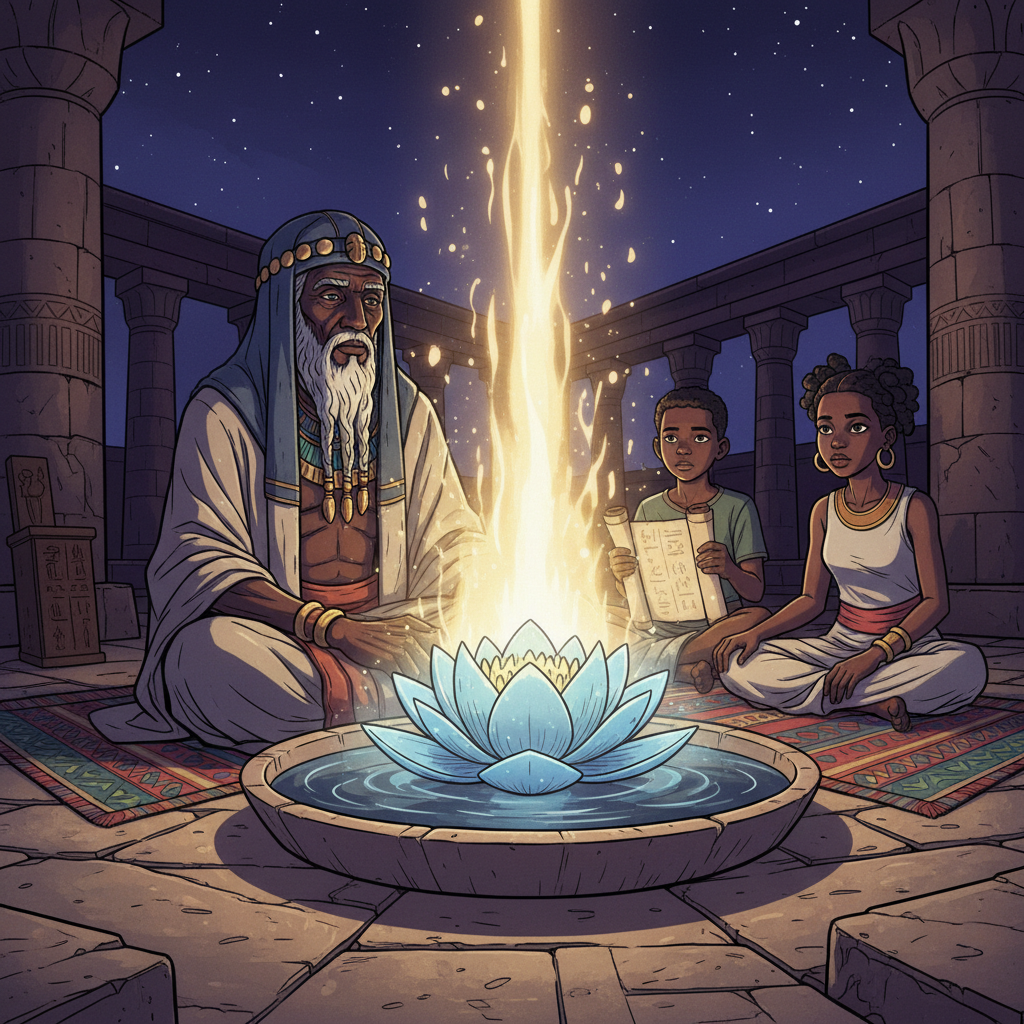
Let us dissect this sacred utterance. 'I am the lotus at the nostrils of Ra' connects the lotus directly to the breath of life, to the very essence of creation that flows from the great Neter, Ra. It signifies being perpetually in the divine presence, nourished by the primordial breath. 'I came forth from the dark water' explicitly acknowledges the origin in *Nun*, the chaotic, undifferentiated waters of creation, but also the 'dark water' of human suffering and challenge. This is not an evasion, but an embrace of one's origins, however humble or difficult. And yet, from this darkness, 'I carry the light.' This is the *heka*, the magical power of transformation, the active choice to embody consciousness, truth, and illumination, even when surrounded by obscurity. It is the conscious bringing of Maat into being.
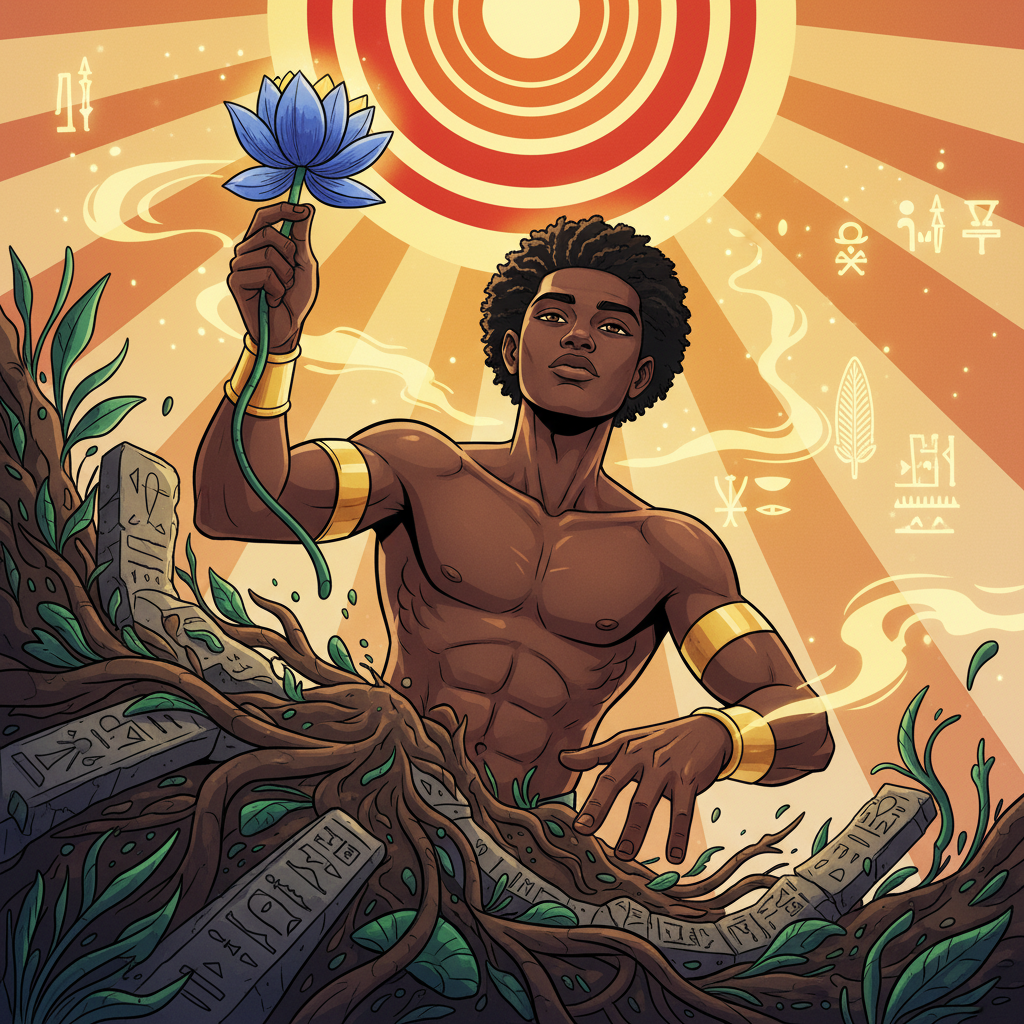
'My roots are in the deep, and my face turns to the sun.' This final line completes the picture of holistic existence. The roots in the deep represent being grounded, connected to the earthly realm, to one's history, to the very 'mud' of experience. It emphasizes that true spiritual ascent is not about detachment from the world, but about a profound and meaningful engagement with it. Yet, the 'face turns to the sun' signifies aspiration, clarity, enlightenment, and perpetual growth towards the divine. It is the perfect balance: grounded yet aspiring, rooted yet reaching. This is the ultimate expression of Maat's principle of Harmony, a dynamic equilibrium between the earthly and the divine, the suffering and the transcendent, the individual and the cosmos. It is the ethical imperative to live a balanced, purposeful, and transformative life.
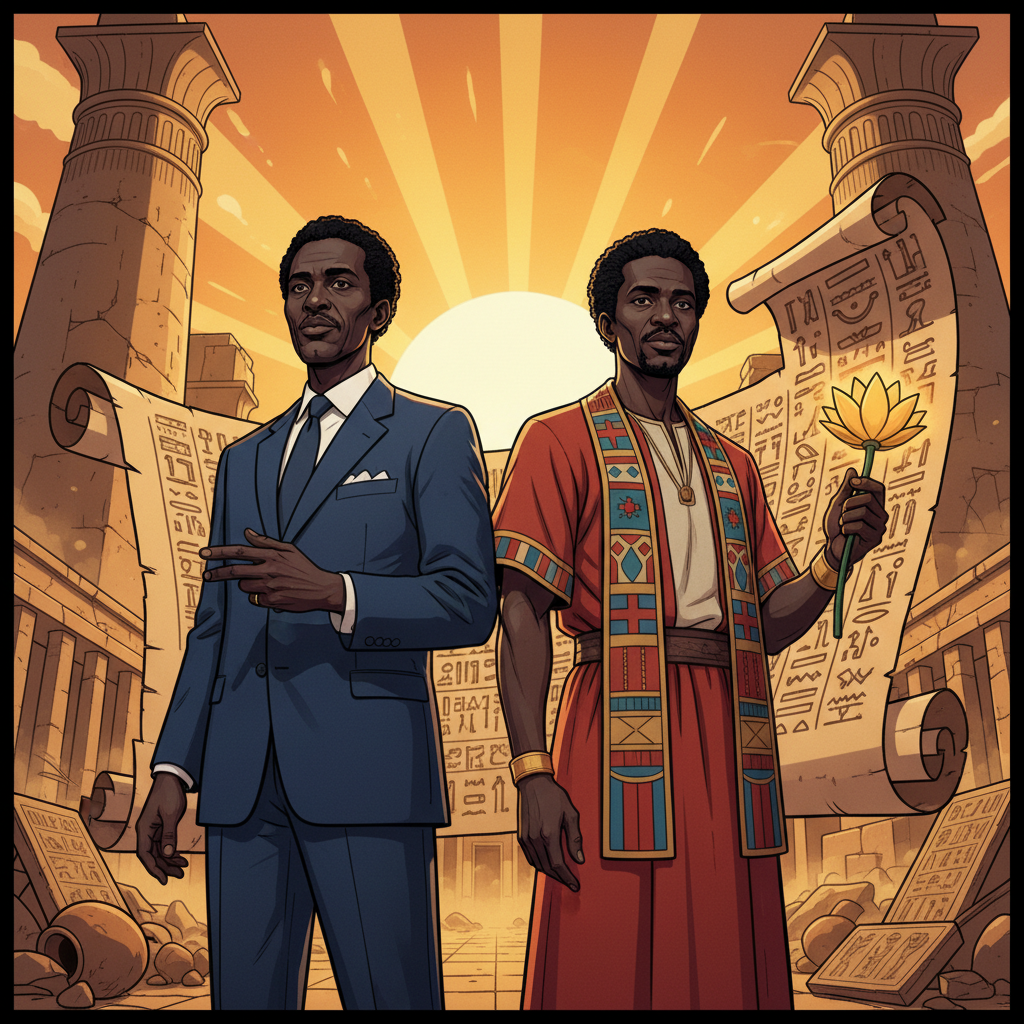
This sophisticated understanding of symbolism is a hallmark of the Kemetic intellectual tradition, further illuminated by scholars like Cheikh Anta Diop and Théophile Obenga. They tirelessly demonstrated that these ancient African civilizations were not primitive, but possessed a profound philosophical and scientific depth that shaped global thought. The lotus, far from being a simple flower, is a testament to this intellectual rigor. It is a complex philosophical statement on the nature of reality, the journey of the soul, and the ethical duties of humanity. Its meaning is universal, yet deeply rooted in the unique environment of Kemet and the experiences of its people. These scholars remind us that we must approach these texts with respect for their profound intellect, seeing them as rich sources of *Afrocentric epistemology*.
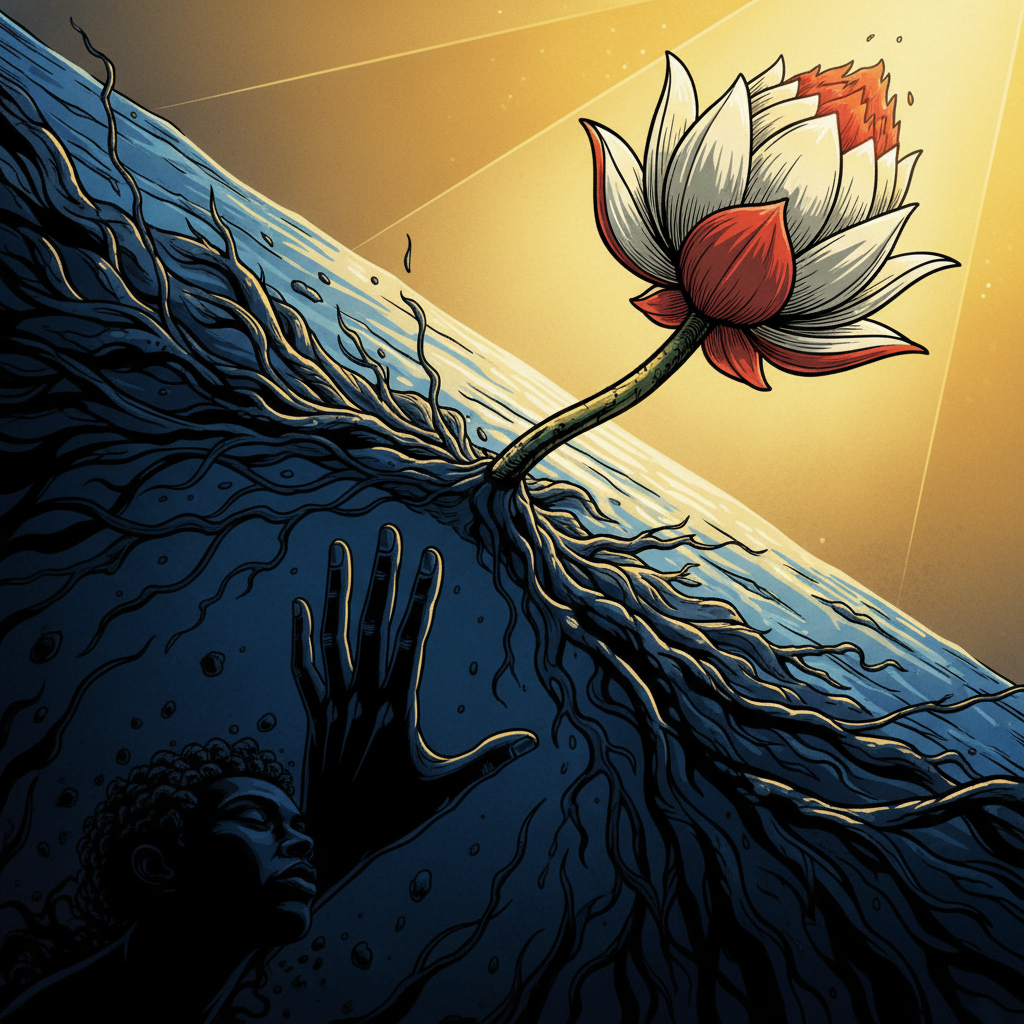
The lotus's constant ascent from the mud, its refusal to be consumed by the darkness, serves as a powerful model for the refusal of despair. In the face of overwhelming adversity, it would be easy to succumb, to remain submerged, to allow the 'mud' to define one's existence. But the lotus does not. It demonstrates an active, unyielding will to rise, to seek the light, to fulfill its inherent potential for beauty and order. This is a vital lesson for us all: to cultivate an inner disposition that actively resists the gravitational pull of negativity and despair. It is a conscious choice to orient oneself towards growth, healing, and the creation of Maat, even when the external conditions seem bleak. This inner resolve is what allowed our ancestors to endure and thrive.
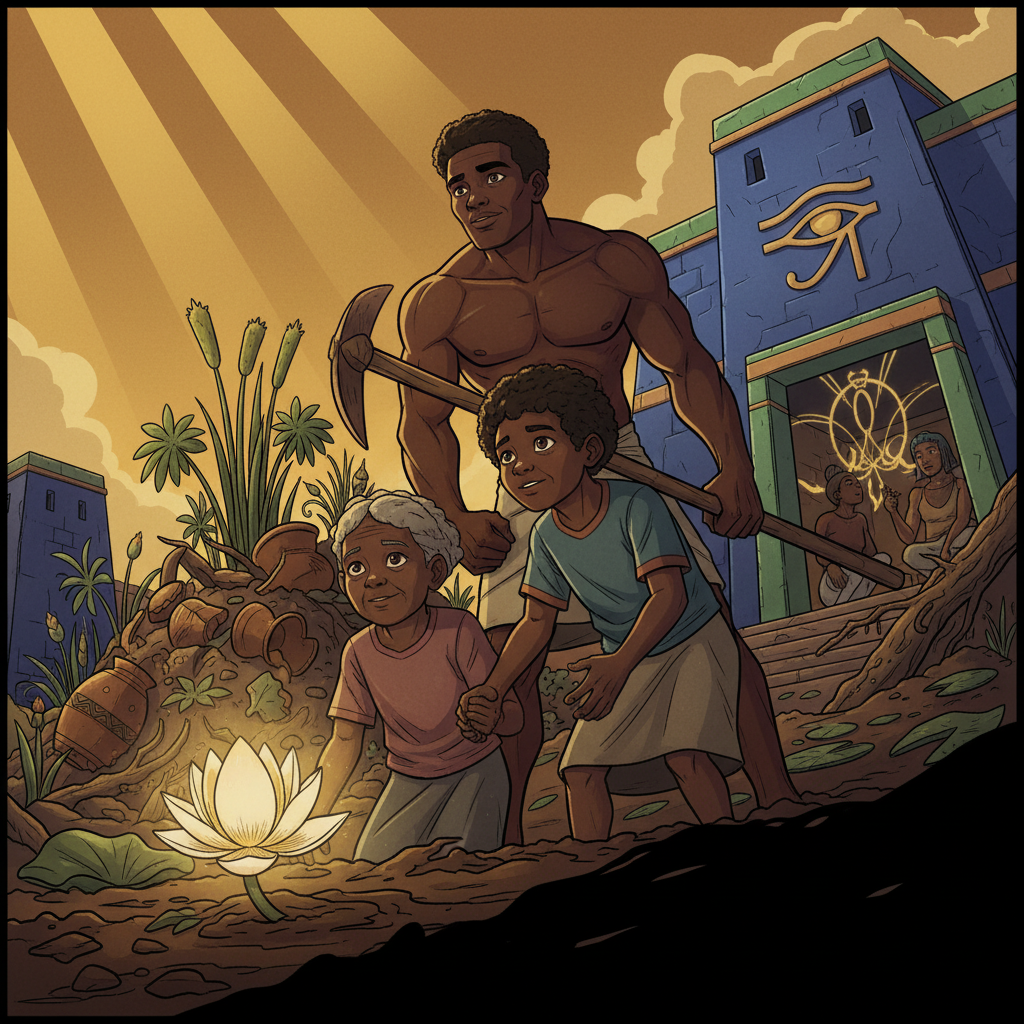
Applying this wisdom to our daily lives means understanding that our personal growth, our relationships, and our communities are all 'mud' from which we are called to bring forth beauty. It is the ethical obligation to engage in acts of care – for ourselves, for each other, for the natural world. When we choose compassion over judgment, understanding over ignorance, creation over destruction, we are embodying the spirit of Nefertem. Every small act of kindness, every effort to resolve conflict, every attempt to learn and grow, is a petal unfurling, a fragment of light emerging from the darkness. This is Maat in its most practical, actionable form: not just a lofty ideal, but a lived reality, a constant striving to bring harmony and balance into every aspect of our existence, transforming the ordinary into the sacred.
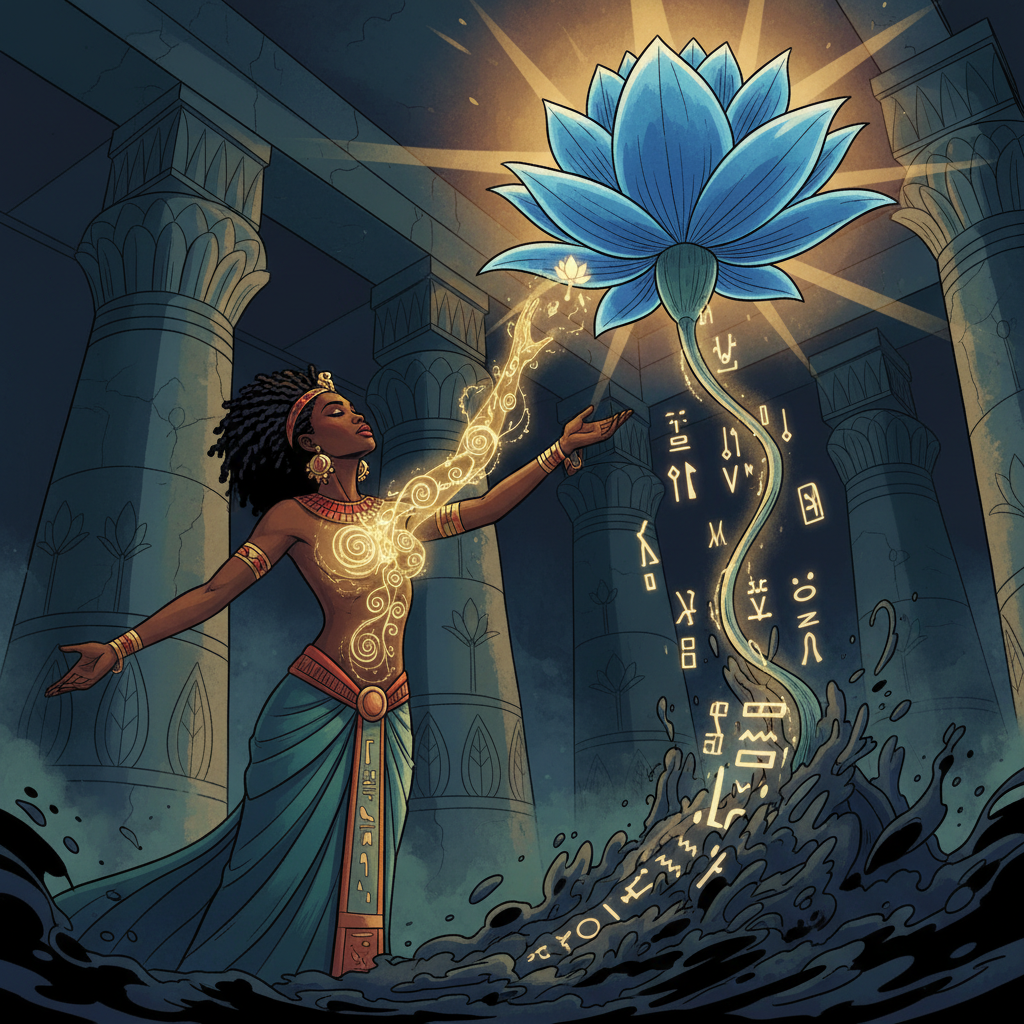
The spiritual journey, as understood in Kemet, involves the awakening and transformation of the various aspects of the soul, including the *Ka*, your vital life force and spiritual double. Just as the lotus transforms raw nutrients into intricate beauty, the Ka is nourished by purposeful action, ethical living, and the pursuit of knowledge. The lotus's continuous cycle of rising and submerging can be seen as the Ka's journey through different states of consciousness, continually refining itself, shedding what is no longer needed, and embracing new light. To 'become the lotus' is to consciously participate in this spiritual alchemy, allowing your Ka to draw strength from your experiences, both joyous and challenging, and to channel that energy into a life that radiates Maat, a life of profound ethical beauty.
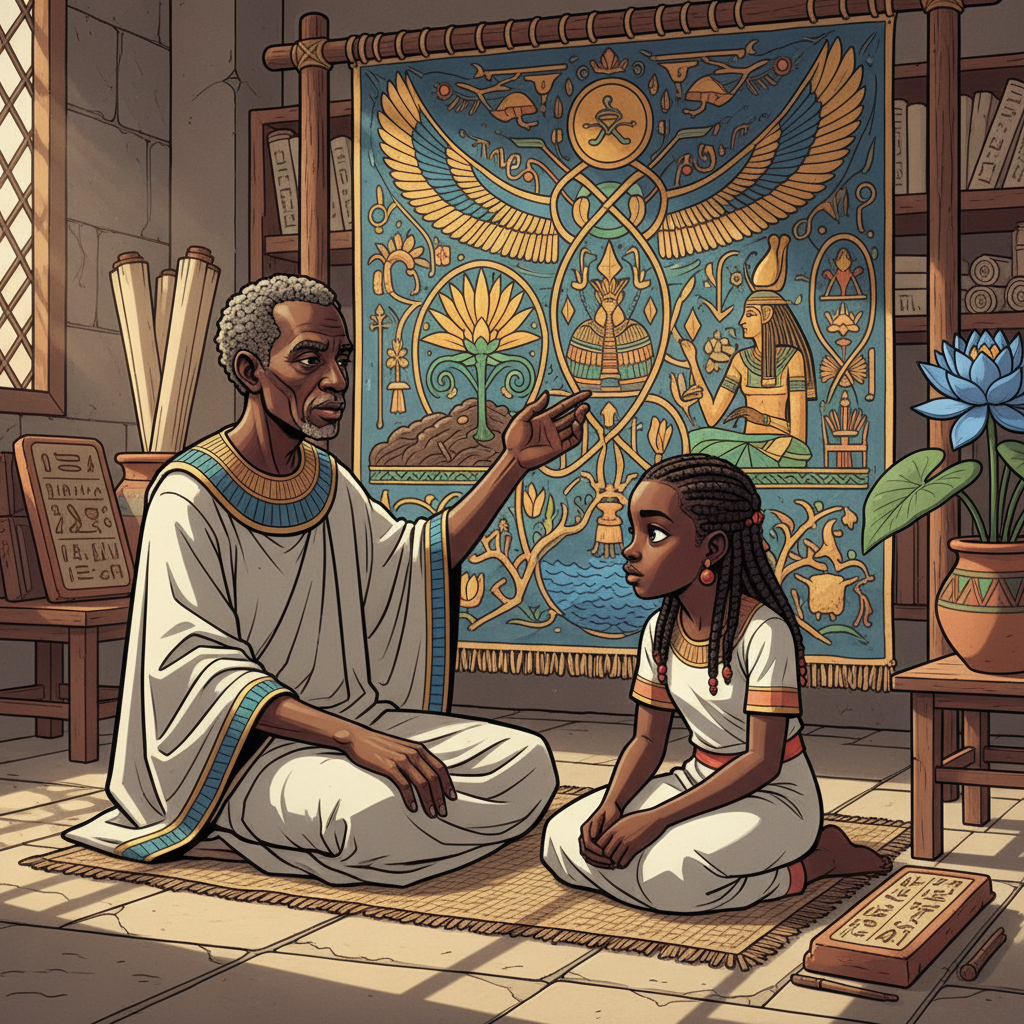
As scholars like Dr. Jacob Carruthers eloquently taught us, the wisdom of Kemet is not found in isolated fragments, but in a holistic, interconnected system of thought. The lotus, Nefertem, Maat, Ra, Nun – these are not separate entities but interwoven threads in a magnificent tapestry of meaning. Dr. Carruthers emphasized that understanding the *Mdw Ntr*, the divine speech of our ancestors, requires us to see these symbols as living philosophies. The lotus is a prime example: its biological process is a physical manifestation of a spiritual and ethical truth. It is a testament to the Kemetic genius for integrating the natural world, the human experience, and the divine into a cohesive and actionable philosophy, providing a complete framework for understanding and engaging with existence.
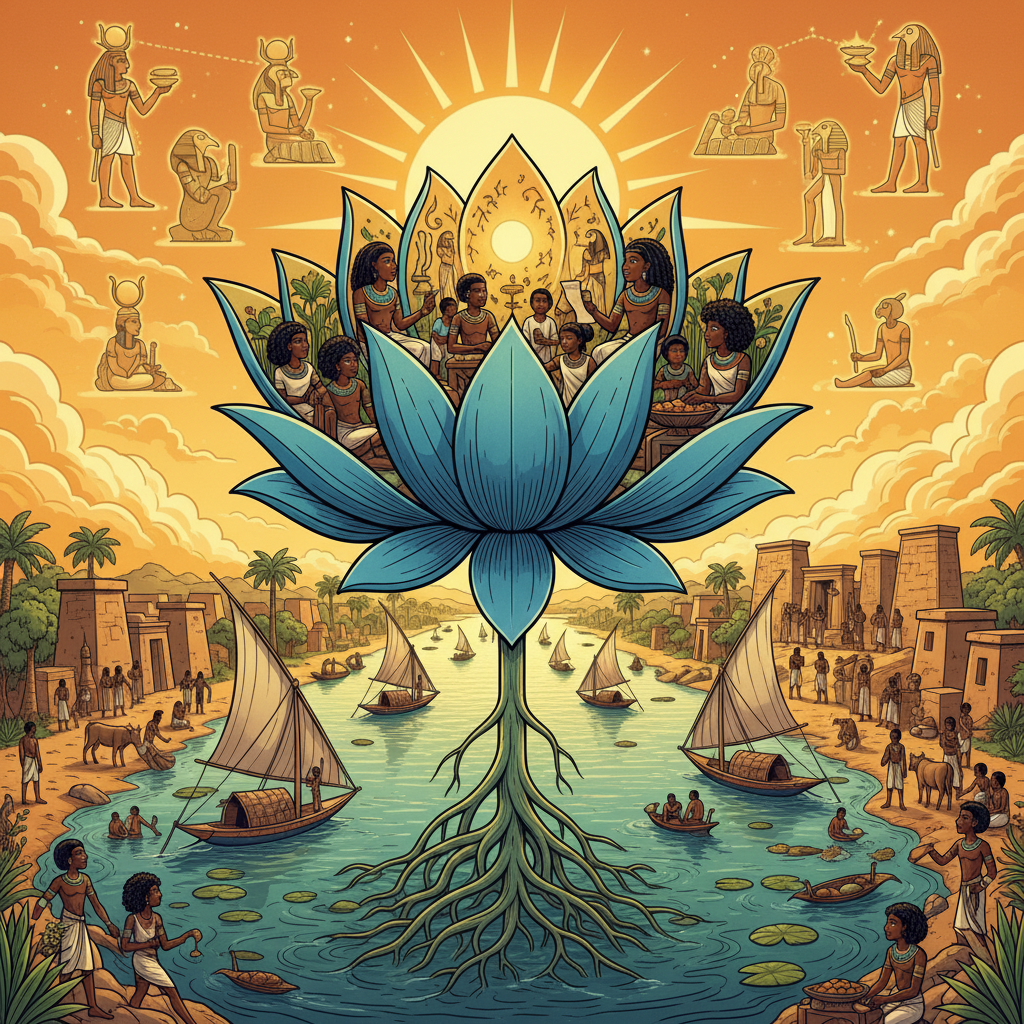
The idea of 'roots in the deep' and 'face to the sun' also speaks to the profound Kemetic understanding of interconnectedness – not just between an individual and the divine, but between all aspects of existence. The lotus draws from the earth, is nourished by the water, and reaches for the sky. It is a microcosm of the entire cosmos, reminding us that we are part of a grand, integrated system. Our actions, our thoughts, our very being, ripple through this interconnected web. Therefore, our ethical obligation to create beauty and harmony, to transform suffering into purpose, extends beyond ourselves to the entire community, to the natural world, and ultimately, to the *neteru* themselves. This is the expansive vision of Maat, encompassing all of creation in its pursuit of balance.
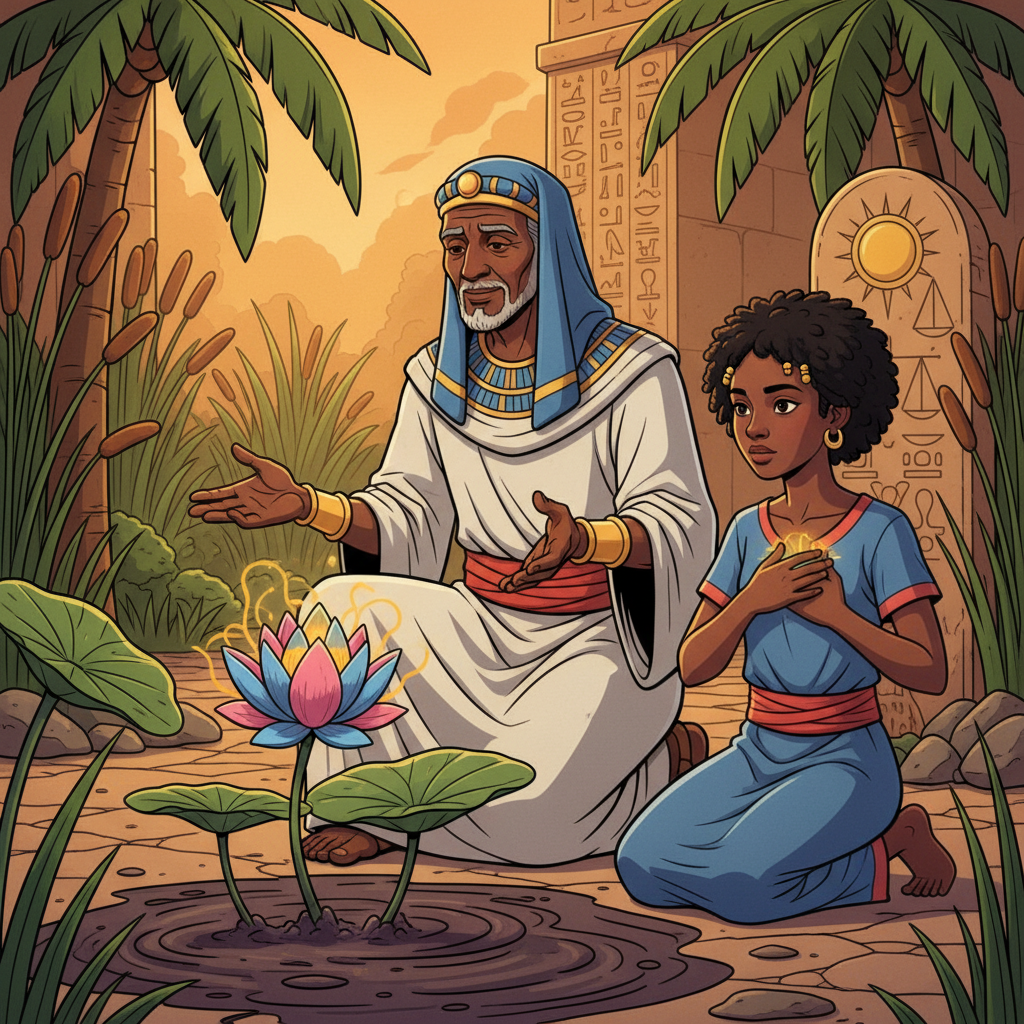
Ultimately, {name}, the lesson of Nefertem and the lotus is an invitation to active participation in the ongoing creation of Maat. It is a refusal to be a passive recipient of circumstances, but rather to be an agent of transformation. Your life, like the lotus, emerges from the 'mud' of your experiences, both chosen and unchosen. You have the inherent capacity, the *heka*, to draw sustenance from these experiences, to transcend the limitations, and to unfurl your own unique beauty and purpose. This is the profound wisdom our ancestors left for us: not to seek an escape from the world, but to engage with it fully, ethically, and purposefully, transforming every challenge into an opportunity for growth, every shadow into a source of light. You are not just observing the lotus; you are called to *become* it.
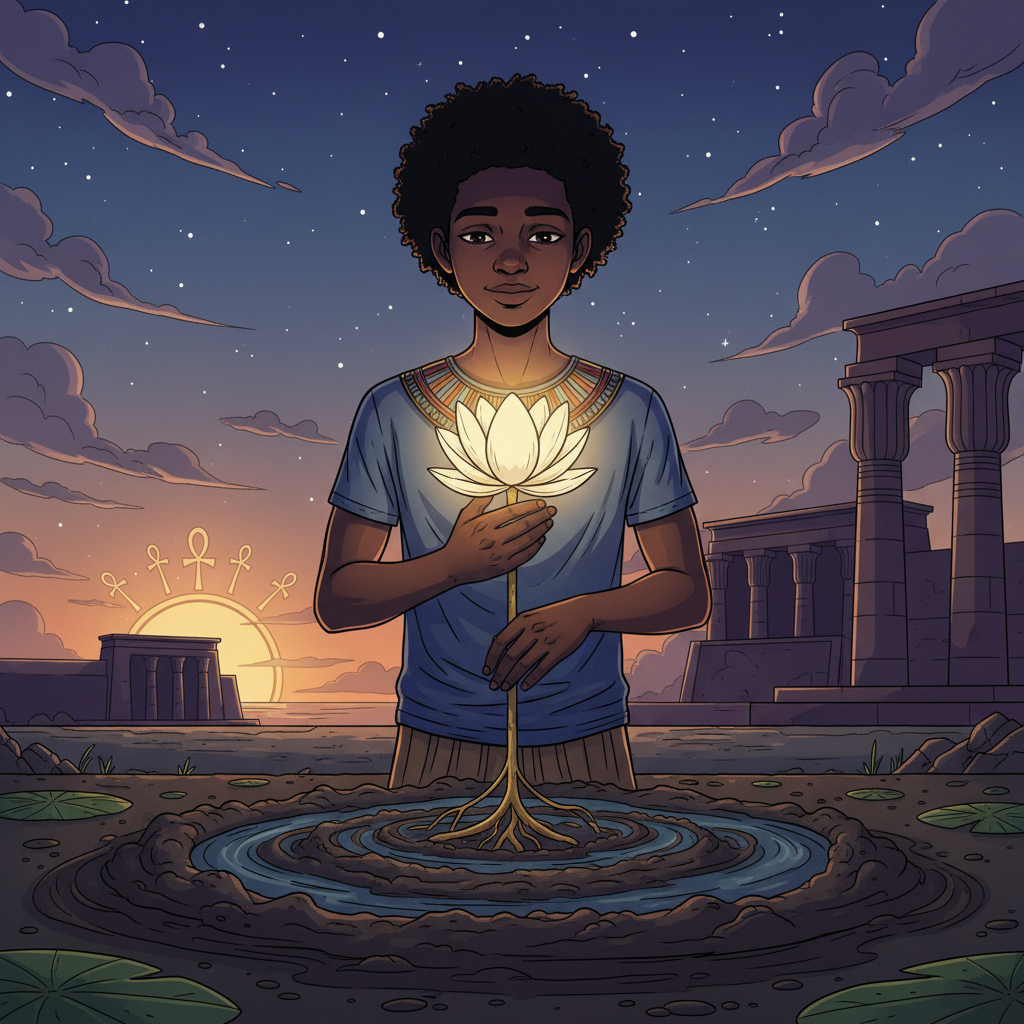
The wisdom of the lotus, therefore, is a profound call to responsibility and resilience. It is a testament to the Kemetic belief in the human capacity for *self-overcoming* and *self-actualization*, even in the most trying conditions. As you continue your journey, carry this image with you: the pure, radiant lotus, rising from the fertile darkness, carrying the light. Let it remind you that your experiences, however deep and complex, are the very soil from which your highest self can emerge. Embrace the mud, reach for the sun, and continuously unfurl the unique beauty of your Maat-filled life. You have earned this deeper understanding, {name}. Now, go forth and embody it.