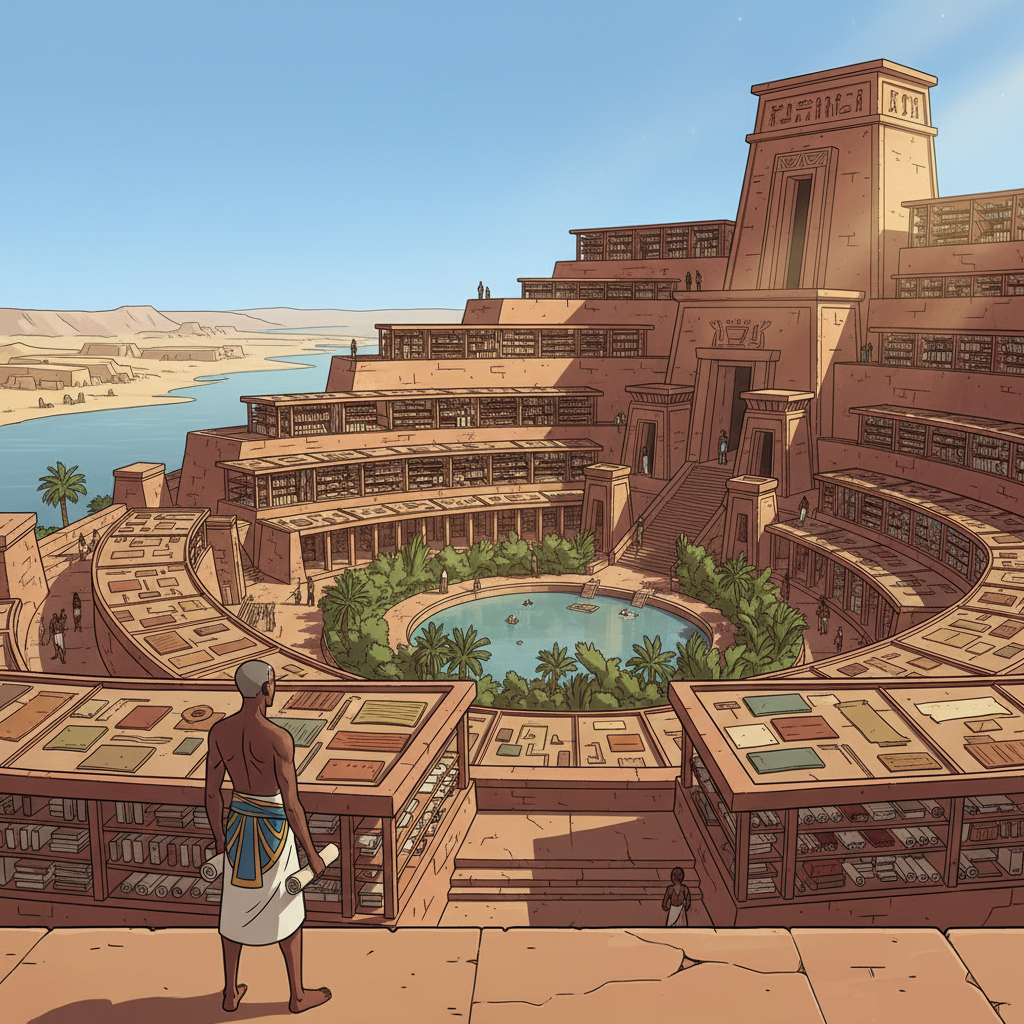
The Per Ankh of Waset was the largest house of knowledge in all of Kemet — a labyrinth of mudbrick chambers stacked with papyrus scrolls, clay tablets, and leather folios that held the accumulated memory of two thousand years of civilization. It smelled of old ink and cedar oil and the faint mineral tang of the limestone dust that drifted in from the quarries across the river. Kheti had served as a senior scribe in the legal archive for twenty-three years, and every scratch of every reed pen in those chambers was as familiar to him as his own breathing. He was fifty-one years old, with deep ebony skin creased by decades of squinting at faded texts, and large, careful hands that could unroll a brittle papyrus without cracking a single fiber.

On this particular morning, the fourth day of Peret — the growing season when the fields along the Nile turned green with new wheat — Kheti was cataloguing a cache of legal records that had been discovered behind a collapsed wall in the archive's oldest wing. A water pipe had burst during the previous inundation, and when the repair crews tore open the wall, they found a sealed alcove containing forty-seven scrolls that had been bricked up and forgotten for at least fifteen years. Most were routine — land surveys, tax calculations, grain inventories. But one scroll, sealed with the wax stamp of the kenbet court of Waset, stopped Kheti's hands mid-motion.
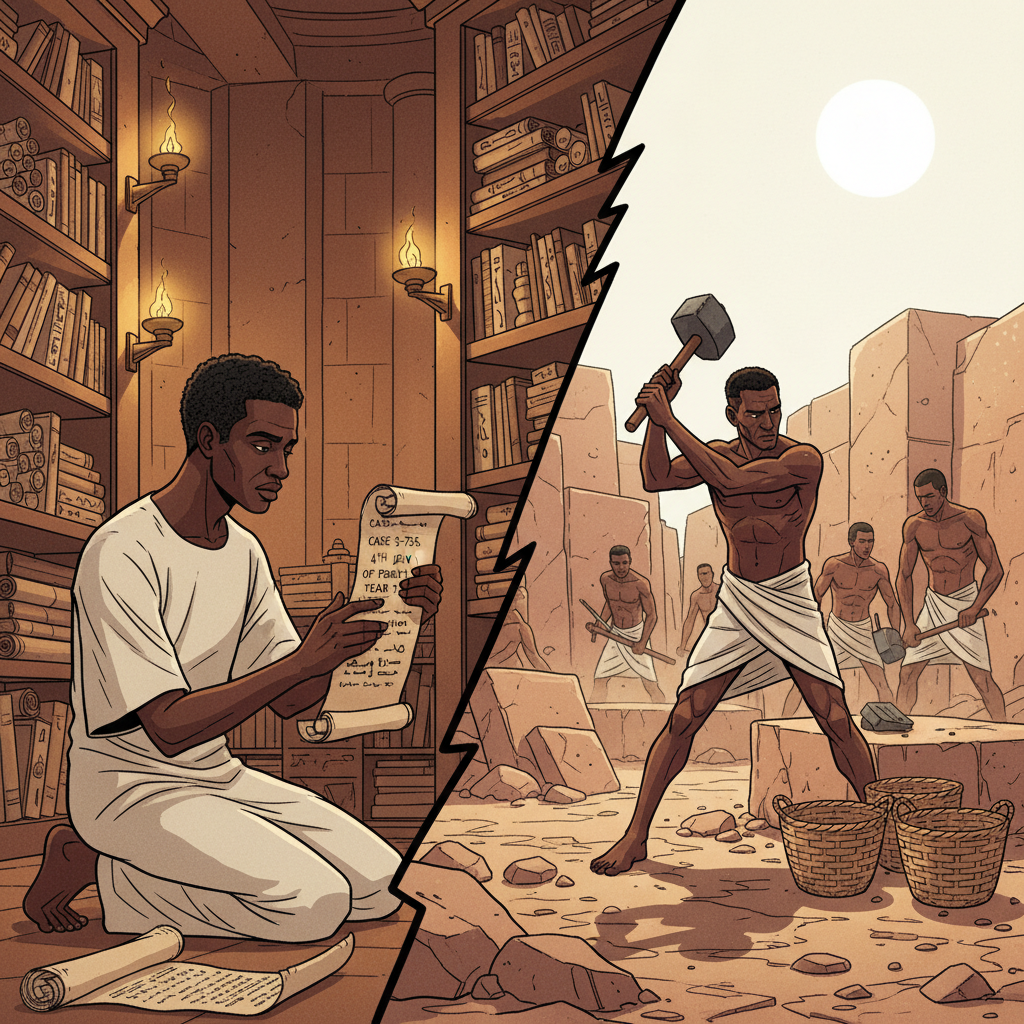
The scroll bore the case number and date of a criminal trial from fifteen years ago: the conviction of a man named Semerkhet for the theft of sacred grain from the Temple of Amun. Kheti remembered the case — not in detail, but in the way that significant events leave shadows in memory. Semerkhet had been a minor temple worker, accused of stealing three baskets of consecrated emmer wheat from the inner sanctum granary. The theft of sacred grain was a grave offense in Kemet, a violation not only of law but of divine trust. Semerkhet had been sentenced to five years of hard labor in the granite quarries east of Waset, where men broke their backs splitting stone under the merciless sun.
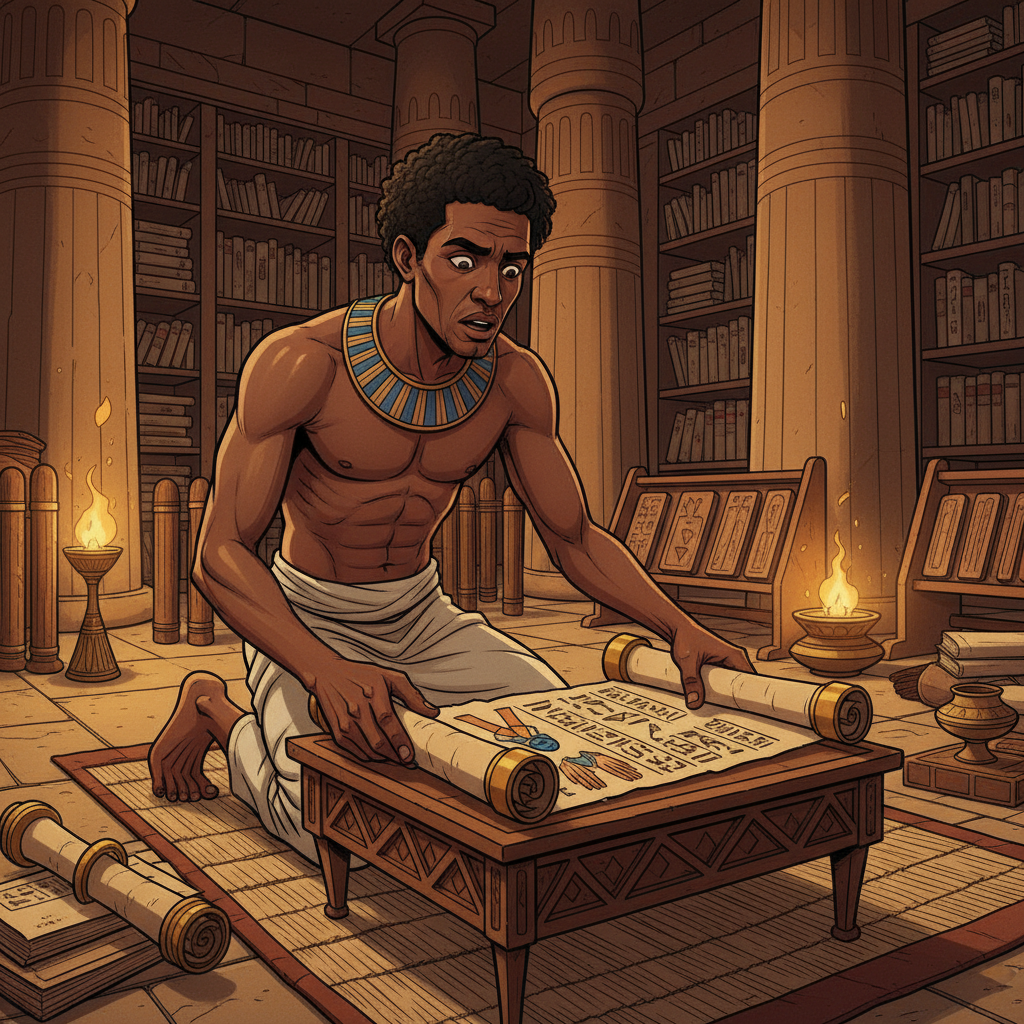
Kheti unrolled the scroll with the practiced delicacy of a man who understood that papyrus was not merely a writing surface but a vessel of truth. What he found inside made his stomach clench. The scroll contained the original testimony of a temple guard named Mahu — testimony that had been recorded by a junior scribe during the investigation but never presented at the kenbet trial. In that testimony, Mahu described seeing not Semerkhet but another man entirely — a senior temple attendant named Djedhor — entering the inner sanctum on the night of the theft. Mahu described Djedhor's distinctive limp, his scarred left hand, and the blue amulet he always wore around his neck.
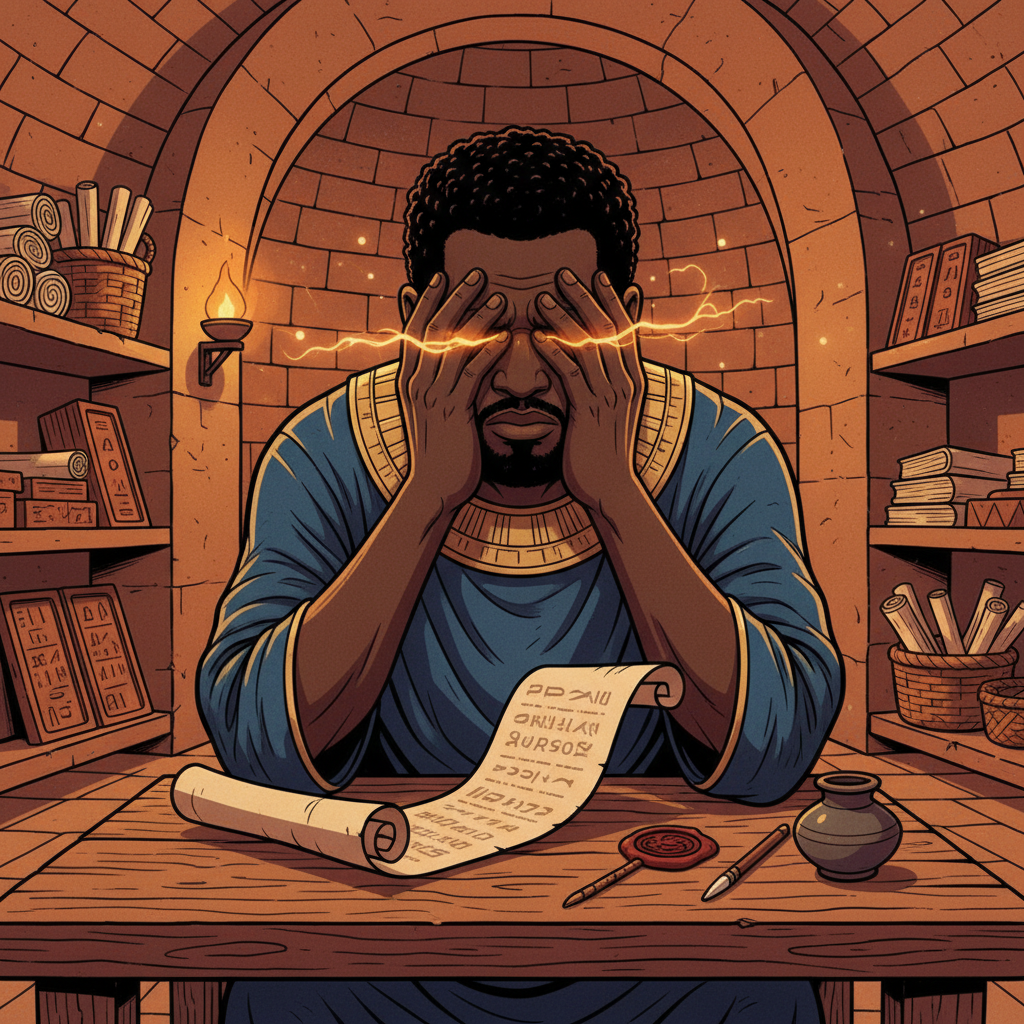
Kheti read the testimony three times, his heart hammering against his ribs like a fist against a locked door. The implications were devastating. If Mahu's testimony was accurate — and the level of specific detail suggested it was — then Semerkhet had been convicted for a crime he did not commit. An innocent man had spent five years splitting granite in the quarries, his body broken, his name destroyed, his family scattered. Kheti set the scroll down on his reading table and pressed his palms against his eyes until he saw stars. He was a scribe. He served the truth. And the truth had been sitting behind a bricked-up wall for fifteen years, sealed in wax and silence.
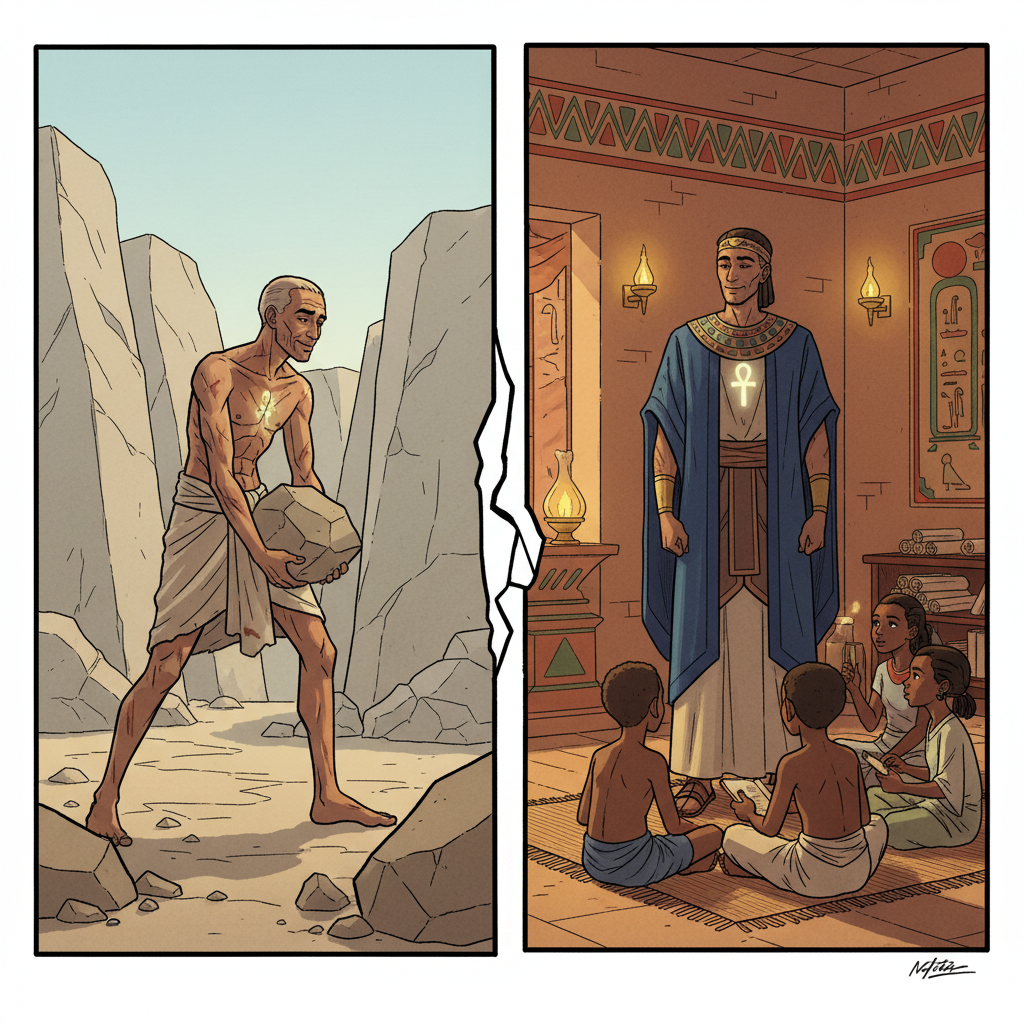
But the truth, Kheti was about to discover, was not simple. It never was. He spent the next two days quietly investigating what had happened to the people involved in the case. Semerkhet, he learned, had survived his five years in the quarries — barely. He had emerged thin, scarred, and aged beyond his years. But rather than collapse into bitterness, Semerkhet had rebuilt his life with a discipline that bordered on the miraculous. He had become a teacher of children in the western district, running a small school where he taught reading, mathematics, and the principles of Maat to boys and girls whose families could not afford the Per Ankh.
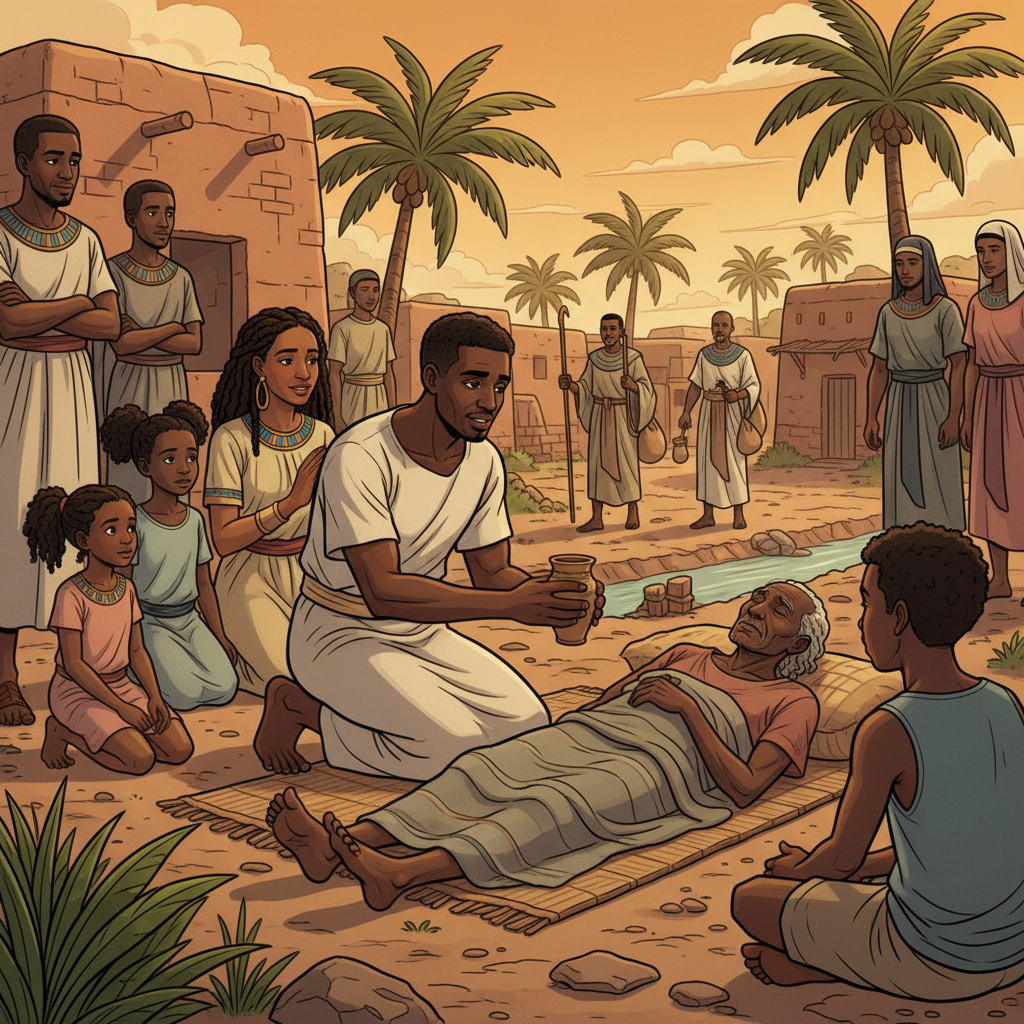
In the ten years since his release, Semerkhet had married a woman named Henuttawy, a potter's daughter with warm brown skin and quick, clever hands. They had three children — two daughters and a son — and lived in a modest but clean mudbrick house near the canal. The neighbors spoke of Semerkhet with genuine respect. He was the man who mended the canal wall when it cracked during the flood season. He was the man who sat with the sick until healers arrived. He was the man who had taken in his wife's elderly father when the old man could no longer care for himself.

But here was the complication that kept Kheti awake at night. The real thief — if Mahu's testimony was correct — was Djedhor, a senior temple attendant. And Djedhor was dead, claimed by fever seven years ago. Before he died, Djedhor had apparently confessed his guilt to a priest during his final rites — a deathbed unburdening. But the priest had also died, and no written record of the confession existed. Except now the scroll changed everything. Mahu's testimony was physical evidence that another man, not Semerkhet, had been at the scene. Kheti held this forgotten piece of papyrus and felt its moral weight — enormous, crushing. He was a scribe of the Per Ankh. Truth was the backbone of Maat. Truth was not optional. Truth was oxygen.
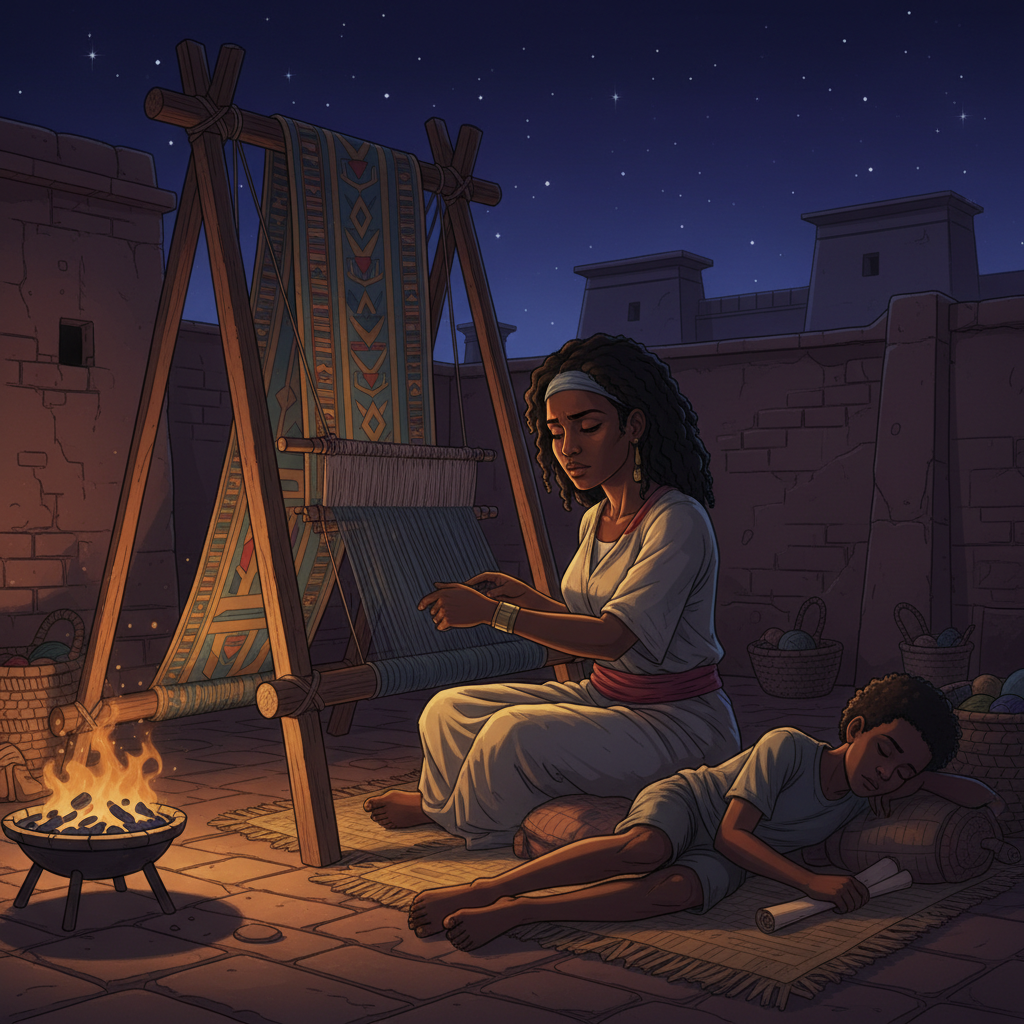
And yet. Djedhor had a family. His widow, Itet, was a weaver who had struggled to raise their two sons alone after his death. She had spent the past seven years rebuilding the family's reputation, which had been tarnished even before the theft by Djedhor's drinking and gambling. Itet had worked tirelessly — weaving through the night, selling cloth at market, scripting and saving — to give her boys a chance at apprenticeships. The elder son, Amenhotep, had just been accepted as a trainee in the temple administration. It was the proudest moment of Itet's life, the vindication of seven years of sacrifice.
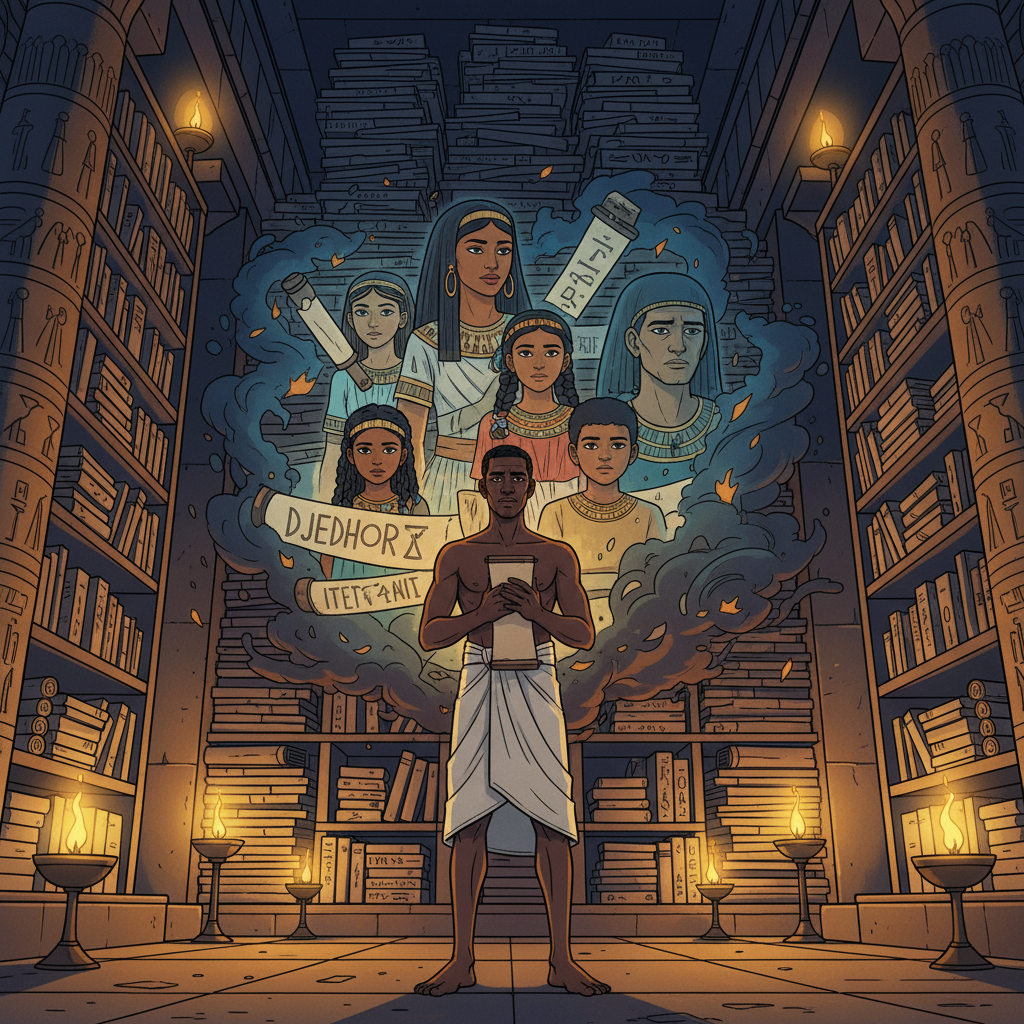
If Kheti revealed the scroll, everything Itet had built would be destroyed. The name of Djedhor would be publicly condemned as a thief and a liar. His sons would carry the stigma of their father's crime. Amenhotep would almost certainly lose his temple apprenticeship — the administration would not employ the son of a convicted temple thief. Itet's seven years of work would evaporate like morning dew on hot sand. And Djedhor himself was beyond punishment. He was dead. Justice could not reach him. It could only reach his family — the innocent survivors who had already paid a heavy price for his failures in life.
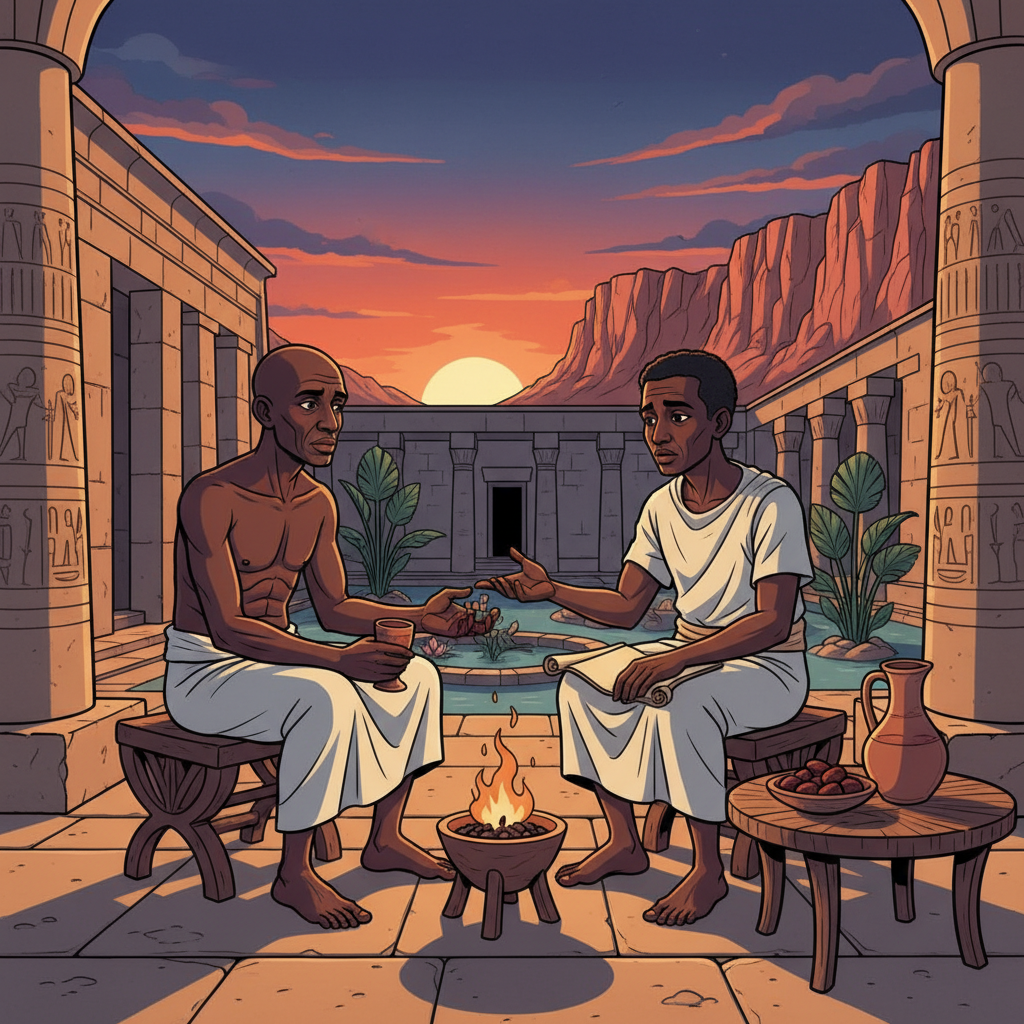
Kheti brought his dilemma to the only person he trusted completely: his oldest friend, a priest of Thoth named Nebamun. They sat together in the courtyard of Nebamun's small temple on the evening of the sixth day, drinking date wine as the sun painted the western cliffs in shades of copper and blood. Nebamun was sixty years old, bald as a river stone, with skin so dark it seemed to absorb the firelight. He listened without interruption as Kheti laid out the entire situation — the scroll, Semerkhet's wrongful conviction, Djedhor's apparent guilt, and the devastating consequences that revelation would bring to both families.
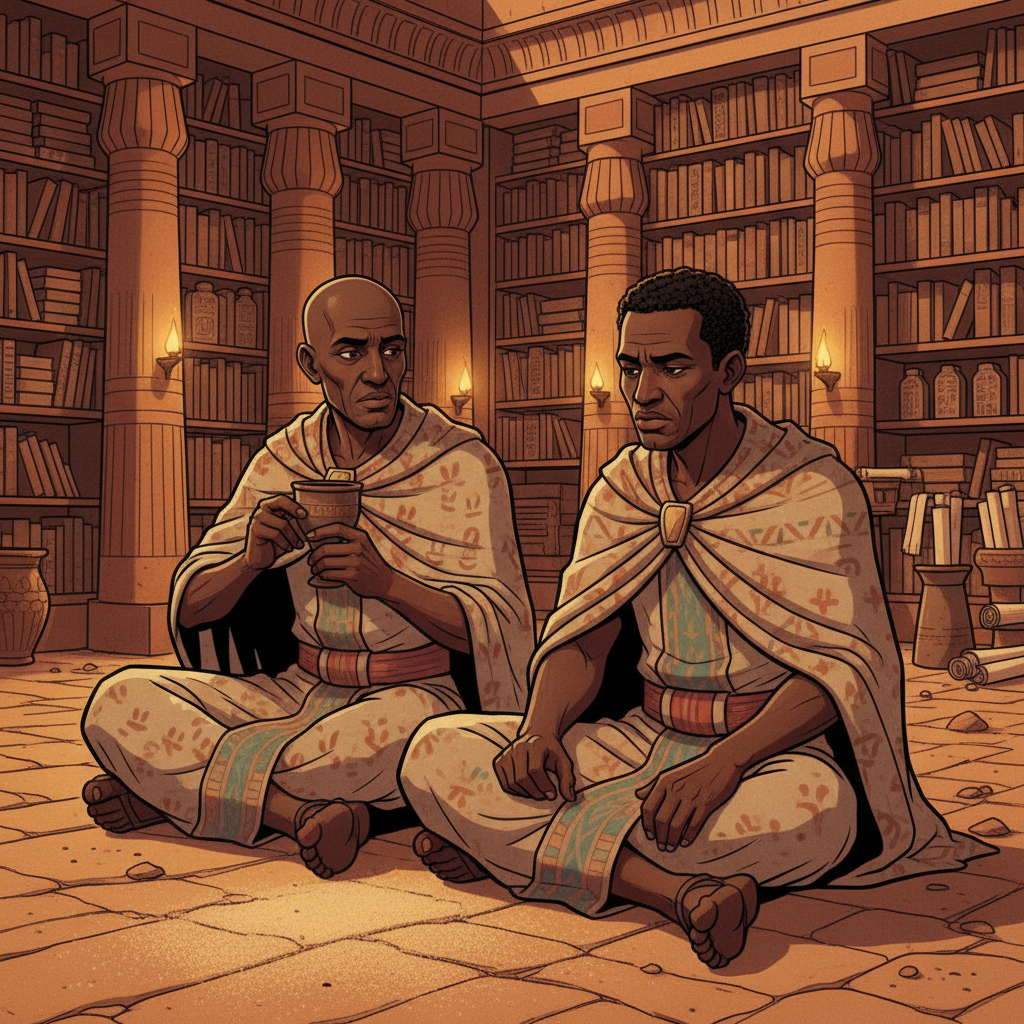
"You already know what Maat demands," Nebamun said quietly, turning his wine cup in his weathered hands. "Truth is the foundation. Without truth, every judgment, every record, every law is built on sand. If you suppress this scroll, you are doing exactly what someone did fifteen years ago — burying evidence to protect a convenient outcome. You would become the next link in a chain of Isfet." Kheti winced, because the words struck like stones. "But what about Itet?" he asked. "What about her boys? They are innocent. They had nothing to do with this."

Nebamun set down his cup and looked at Kheti with eyes that held both compassion and an unyielding clarity. "Let me ask you this, old friend. What is Semerkhet's suffering worth? He lost five years of his life. He was branded a thief. He was separated from the world, broken in body, and left to rebuild from nothing. He did all of that — magnificently, I might add — but does his suffering simply disappear because he survived it? Does the injustice shrink because he managed to build something beautiful on top of it? If a man is beaten and recovers, was he not still beaten?"

Kheti had no answer for that. But there was another voice in his head, equally insistent. He walked home through the darkened streets of Waset, past the temple walls where the carved gods watched with their eternal painted eyes, and he thought about something his own teacher had told him decades ago, when he was a young apprentice learning the sacred art of writing. "A scribe who changes a record," old Master Hori had said, leaning on his cedar staff, "changes the world. This is our power and our burden. Every mark you make on papyrus outlives you. Every truth you record, and every truth you fail to record, echoes forward through time."
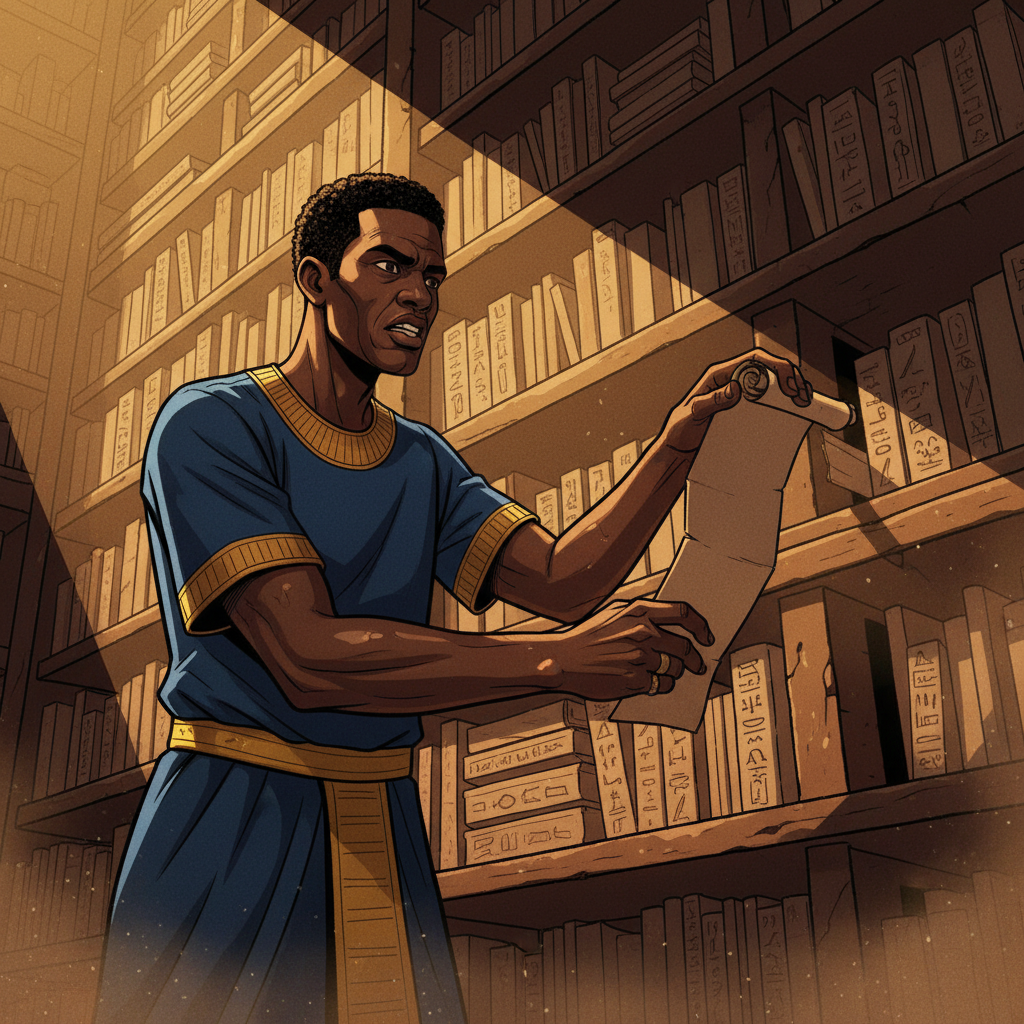
Failing to record was itself a form of change. If Kheti filed the scroll back into the archive without acting on it, he was not simply doing nothing — he was actively choosing to perpetuate a false record. The kenbet judgment that convicted Semerkhet would remain the official truth. Future scribes consulting the legal archives would find only the conviction, never the exculpatory evidence. The lie would calcify into permanence, becoming harder and harder to challenge with each passing year. In fifty years, in a hundred years, the false conviction would be as solid as the limestone walls of the Per Ankh itself.
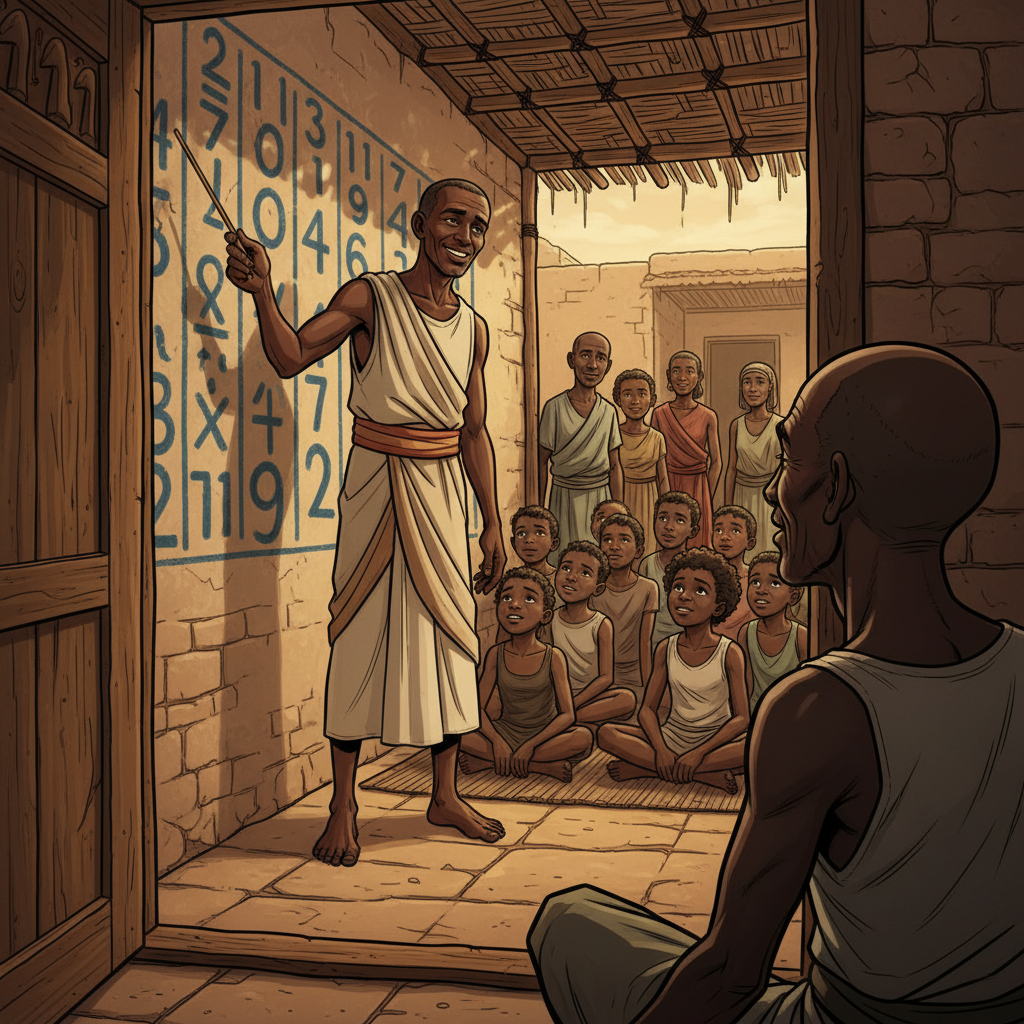
But the alternative terrified him equally. Kheti visited Semerkhet's school on the eighth day, standing in the doorway unnoticed as the former convict taught fifteen children the hieratic numerals. Semerkhet was patient, gentle, funny — his deep brown skin weathered from the quarry years, his left hand slightly crooked where stone had broken his fingers, but his smile was genuine. The children adored him. Their parents trusted him. Semerkhet had built something precious — a reputation earned through years of quiet, consistent goodness. He had never spoken publicly about his conviction, never proclaimed his innocence. He had simply lived in a way that made the conviction irrelevant. If Kheti revealed the scroll, that hard-won silence would break. Semerkhet would be declared innocent, his name restored in the kenbet records.
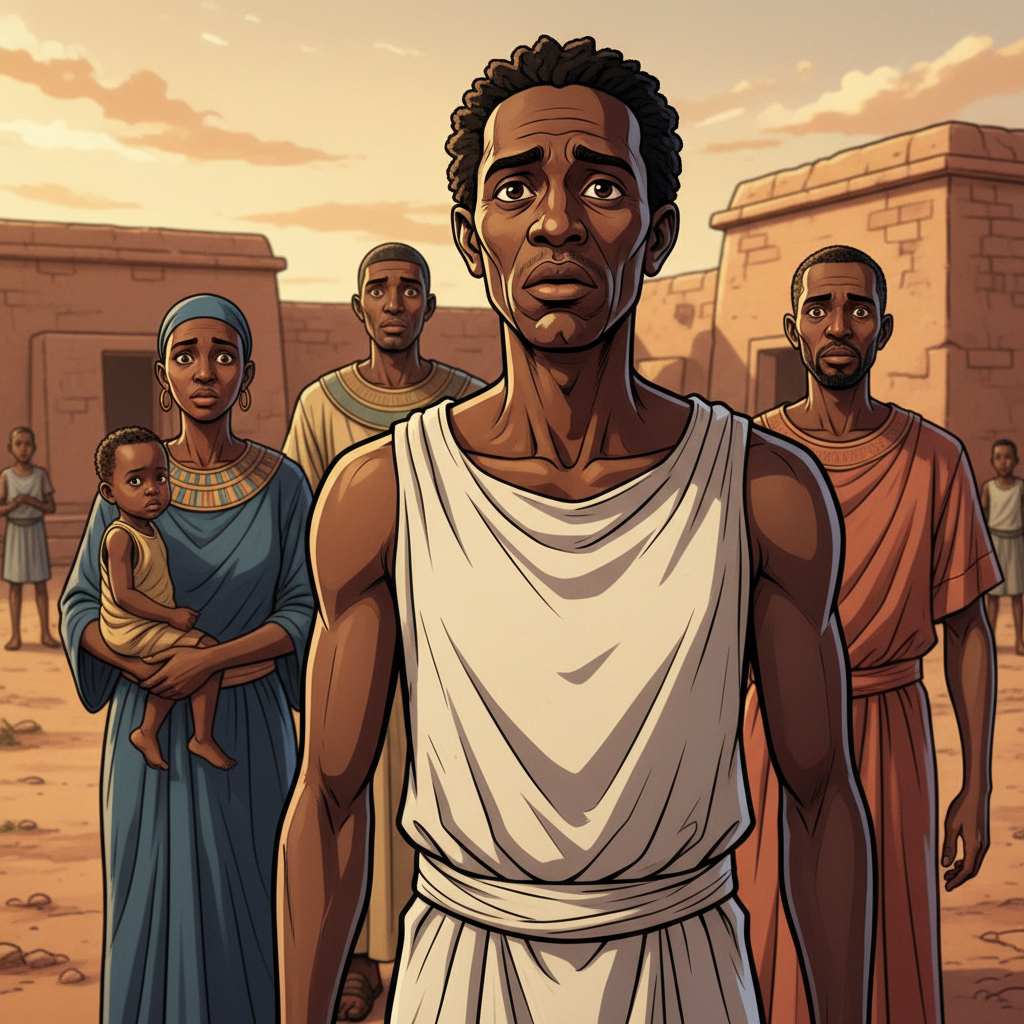
But what would restoration cost? The community that had accepted Semerkhet as a reformed man would now see him as a victim — pitied rather than respected. The parents who sent their children to his school because they trusted his character would now wonder about the system that had failed him. And Semerkhet himself — quiet, stoic, private Semerkhet — would be forced to relive the worst five years of his life in the public arena of a kenbet review. Every detail of his suffering would become a matter of official record, examined and debated by judges and scribes and curious neighbors.
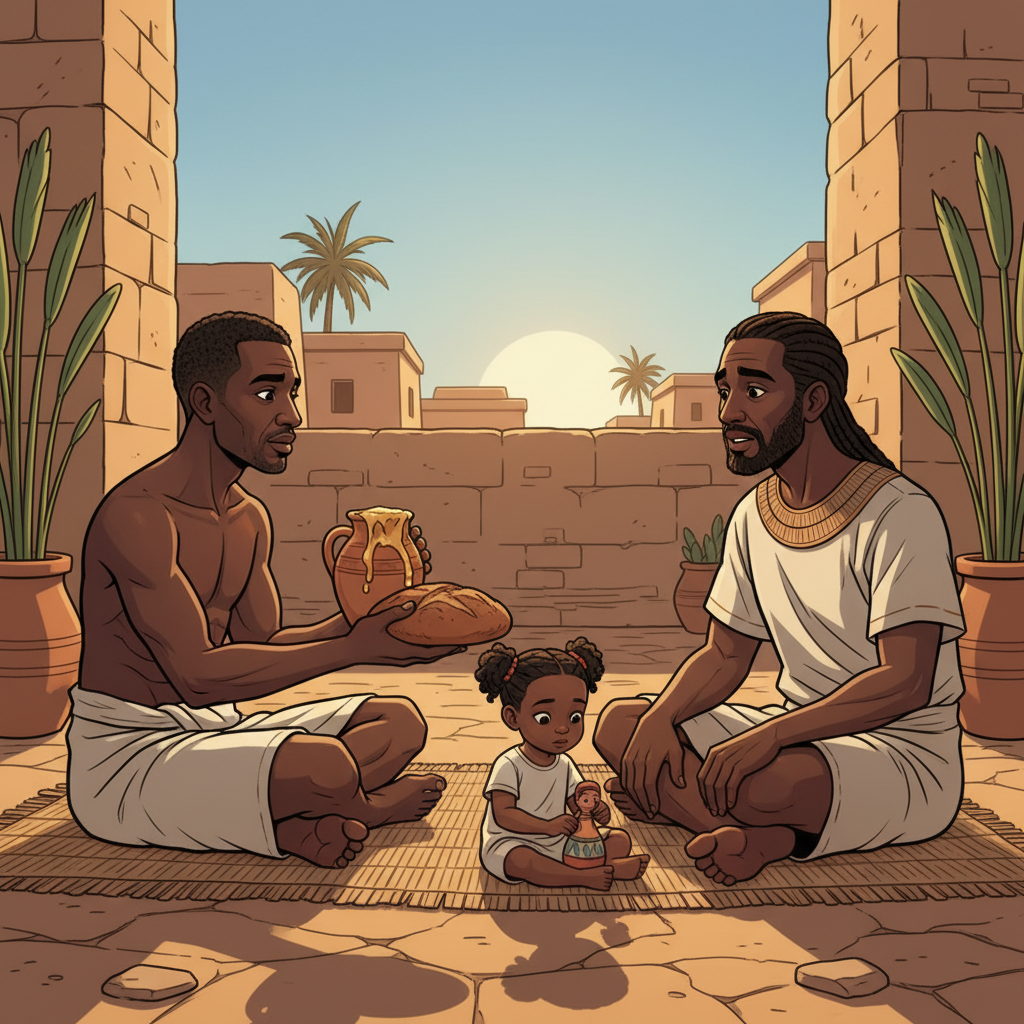
On the tenth day, Kheti did something he had not planned. He went to see Semerkhet directly. Not as a scribe bearing official news, but as a man visiting another man. He brought a jar of honey and a loaf of bread — the traditional offering of goodwill — and sat in Semerkhet's courtyard while the teacher's youngest daughter, a bright-eyed girl of four, played with a clay doll at their feet. Semerkhet was gracious but wary. Scribes from the Per Ankh did not visit former convicts without reason.
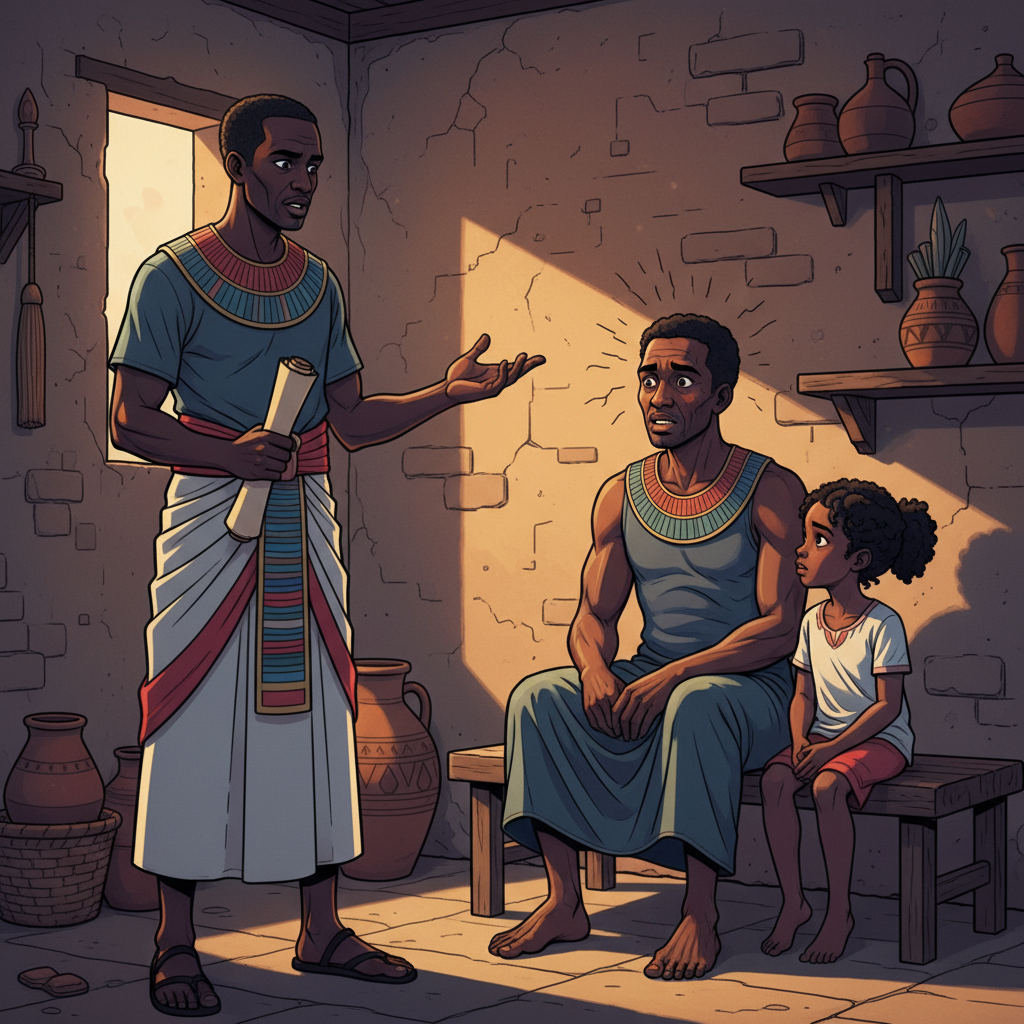
"I will not pretend this is a social call," Kheti said, because a scribe who could not be direct was a scribe who had lost his way. He told Semerkhet everything — the collapsed wall, the hidden alcove, Mahu's testimony, and the devastating truth it contained. He watched Semerkhet's face as the information landed, watched the careful architecture of the man's composure crack and shift like mudbrick walls in an earthquake. Semerkhet did not cry. He did not rage. He sat very still for a long time, looking at his daughter, and when he finally spoke, his voice was steady but thin, like a rope pulled taut to its breaking point.
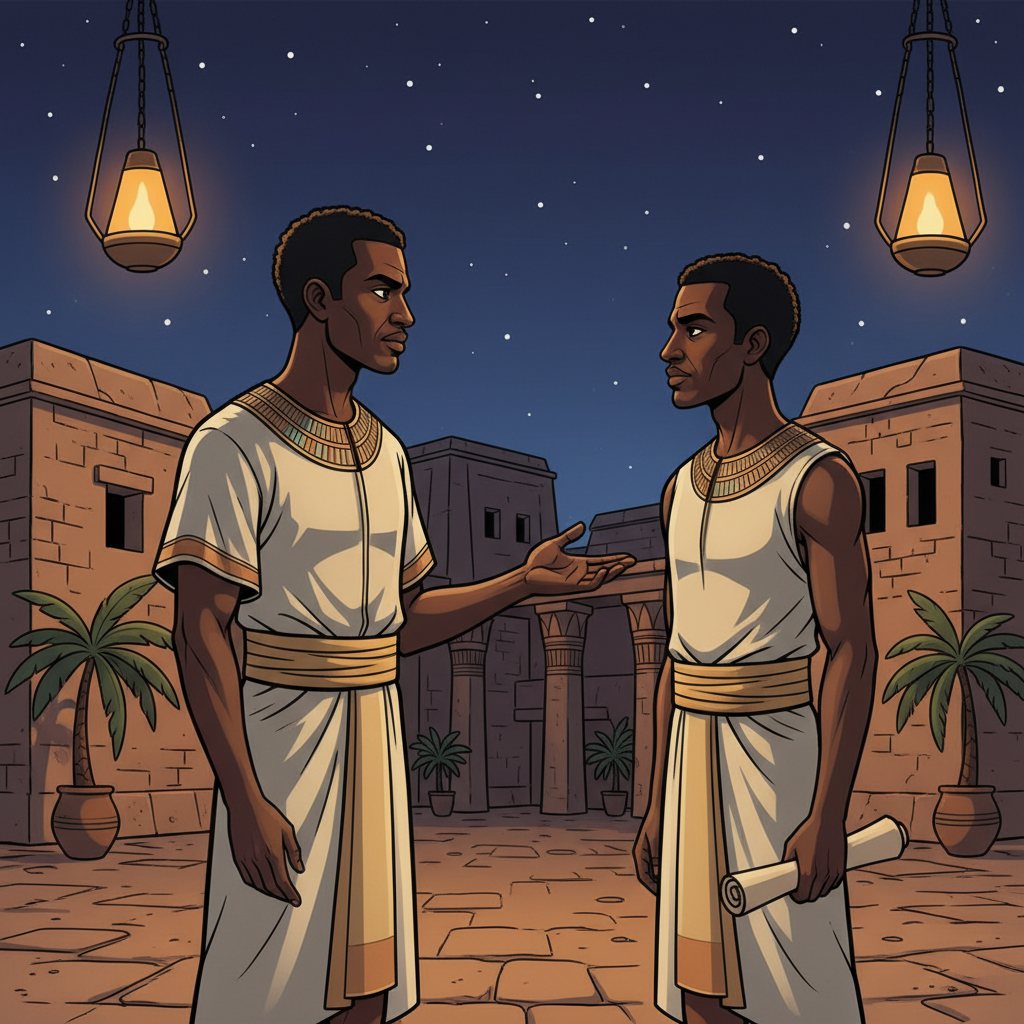
"I have known for ten years that I was innocent," Semerkhet said. "Not suspected — known. On my third day in the quarries, a guard named Rensi told me, drunkenly, that everyone in the temple district knew Djedhor was the real thief but that no one would testify against a senior attendant to save a minor worker. I survived the quarries by making myself a promise: I would not let their injustice define my life. I would build something true on top of their lie." He looked at Kheti with dark, steady eyes. "I did that. I built this school. I built this family. I am not the man they convicted. That man died in the quarries. I am someone new."
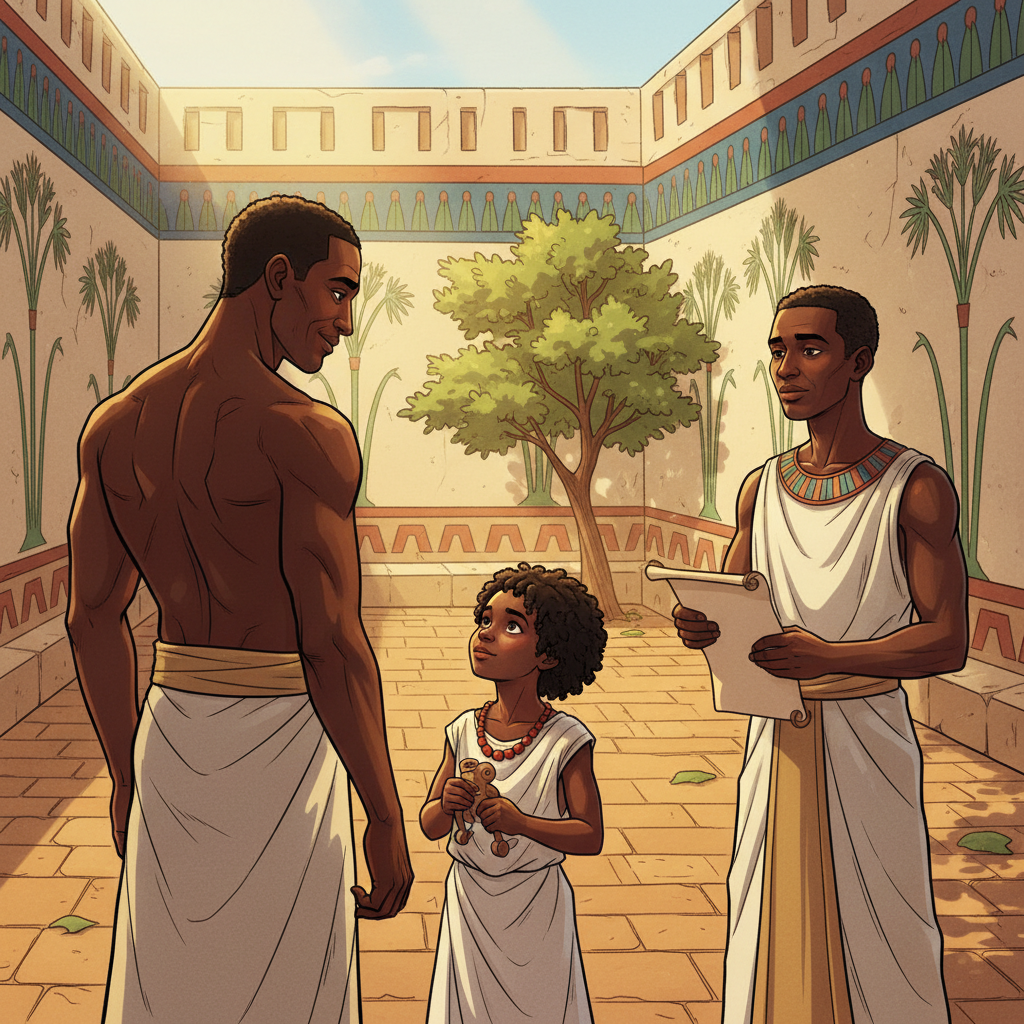
"Then what do you want me to do with the scroll?" Kheti asked, and the question hung in the courtyard air like smoke, curling and shifting, impossible to grasp. Semerkhet looked at his daughter again — this child who knew her father only as a teacher, a man of gentleness and purpose, not as a convict with quarry scars and a crooked hand. "I want you to understand what you are really asking," Semerkhet said. "You are not asking whether to reveal the truth. You are asking whose suffering matters more — mine, which is past, or theirs, which would be future. You are asking whether justice for yesterday is worth Isfet for tomorrow. That is not a question I can answer for you, scribe. That is a question for Maat."