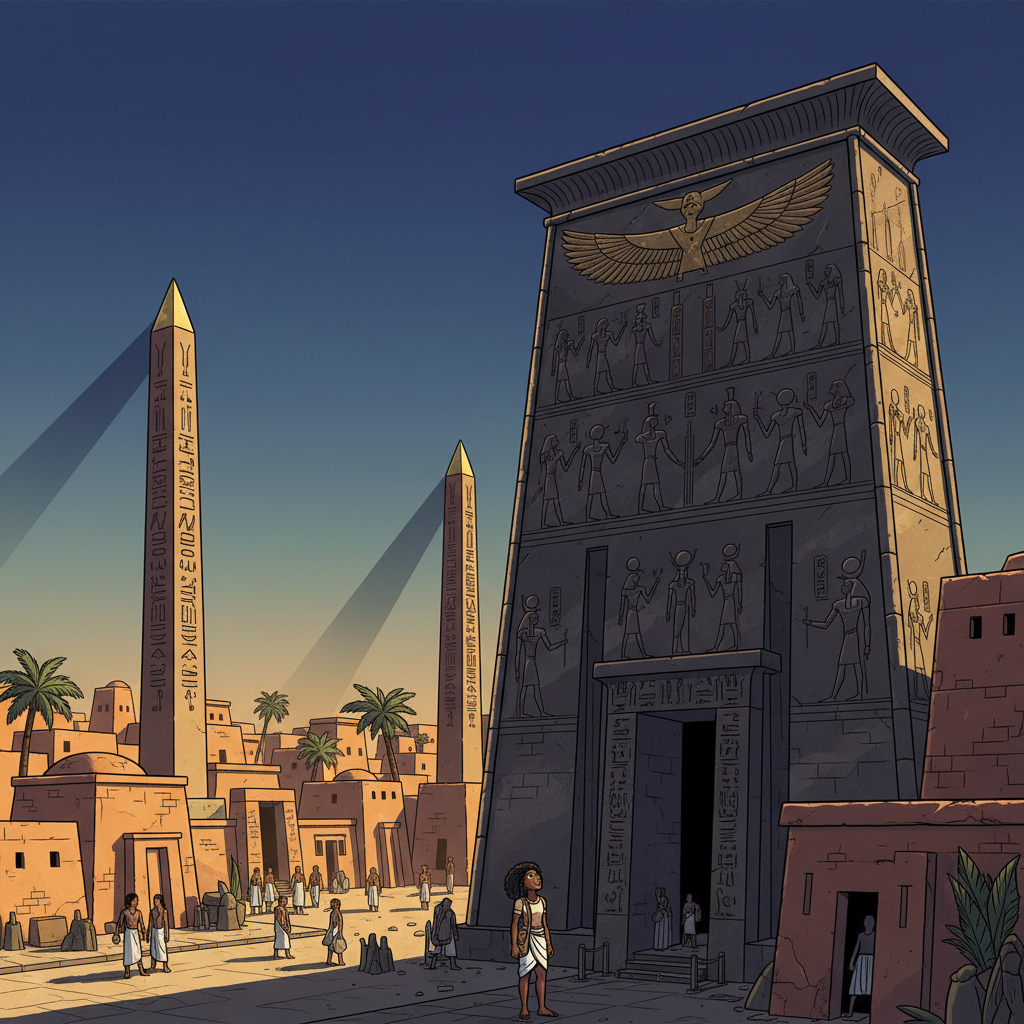
The Temple of Eternal Voices stood at the heart of Waset like a jewel set in dark stone, its massive pylons rising forty cubits above the surrounding streets, their faces carved with scenes of offerings and prayers that the morning sun illuminated in sequences of shadow and gold. Four towering obelisks — two at each entrance — caught the first light of dawn and held it like torches, their electrum-capped tips blazing against the deep blue sky. For forty years, this temple had been the center of community life in the southern quarter of the great city, and the people who lived in its shadow considered it as essential as the Nile itself. Young scribe Nefer stood at the base of the eastern pylon and tilted her head back until she could see the carved image of Maat at its peak — the goddess with outstretched wings and the feather of truth upon her brow. Nefer was seventeen, with skin like polished obsidian and sharp, intelligent eyes that missed nothing. She had been training at the Per Ankh for three years, specializing in the study of ancient land records — the dry, meticulous documents that recorded who owned what, who had transferred what to whom, and when. Most scribes found land records tedious. Nefer found them fascinating, because land records told the secret history of power.
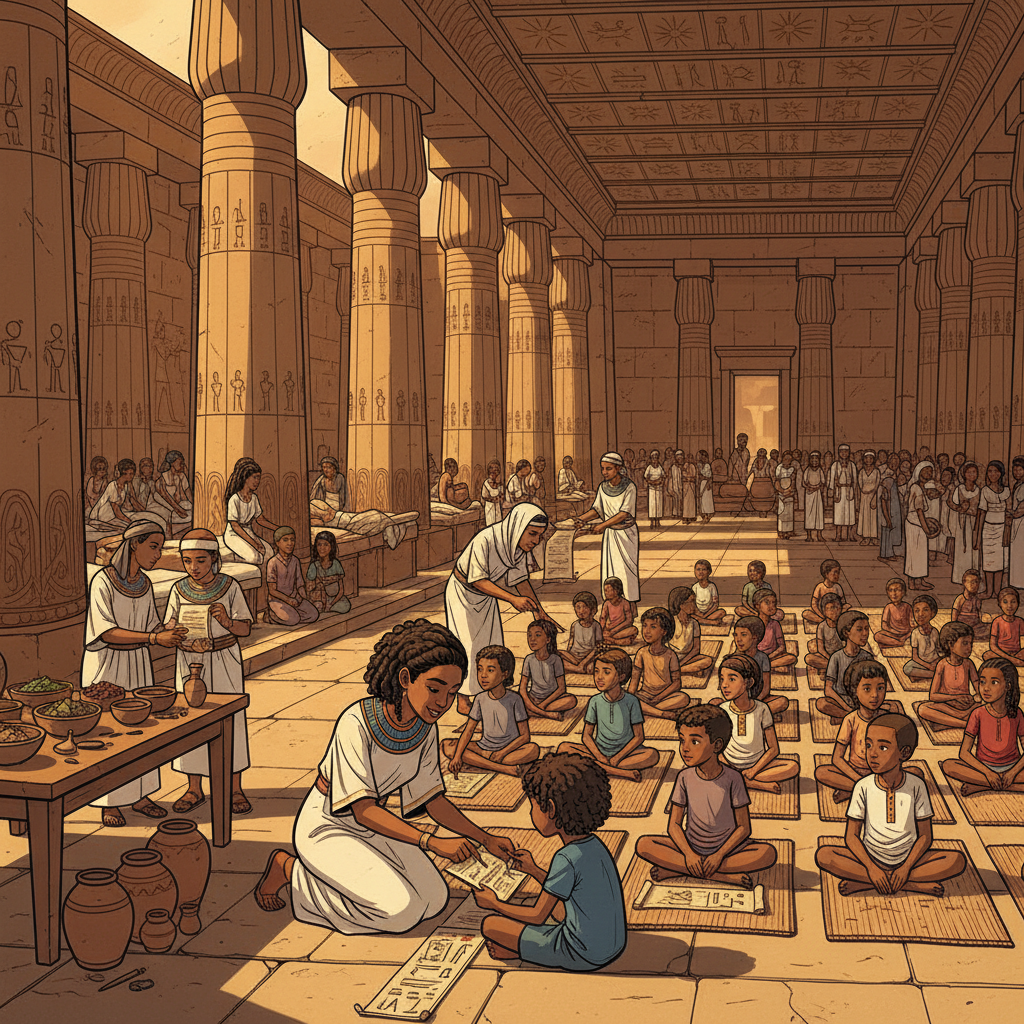
The temple was magnificent, and not merely in its architecture. Inside its walls, a school educated two hundred children from families across the southern quarter — teaching them to read and write, to calculate, to understand the movements of the stars, and to recite the principles of Maat that governed all righteous life. The temple healers treated the sick regardless of their ability to pay, using medicines and techniques passed down from the great physicians of earlier dynasties. During the annual Festival of the Beautiful Reunion, the temple opened its kitchens and fed the entire quarter for three days — an act of communal generosity that was the highlight of the year. Nefer herself had been educated in the temple school. It was here, sitting cross-legged on a reed mat in the columned hall, that a teacher named Iput had first placed a reed pen in her small dark hand and shown her how to form the hieroglyph for Maat — the feather, the seated figure, the steady line of truth. That moment had changed her life. She owed the temple everything. Which made what she was about to discover all the more devastating.
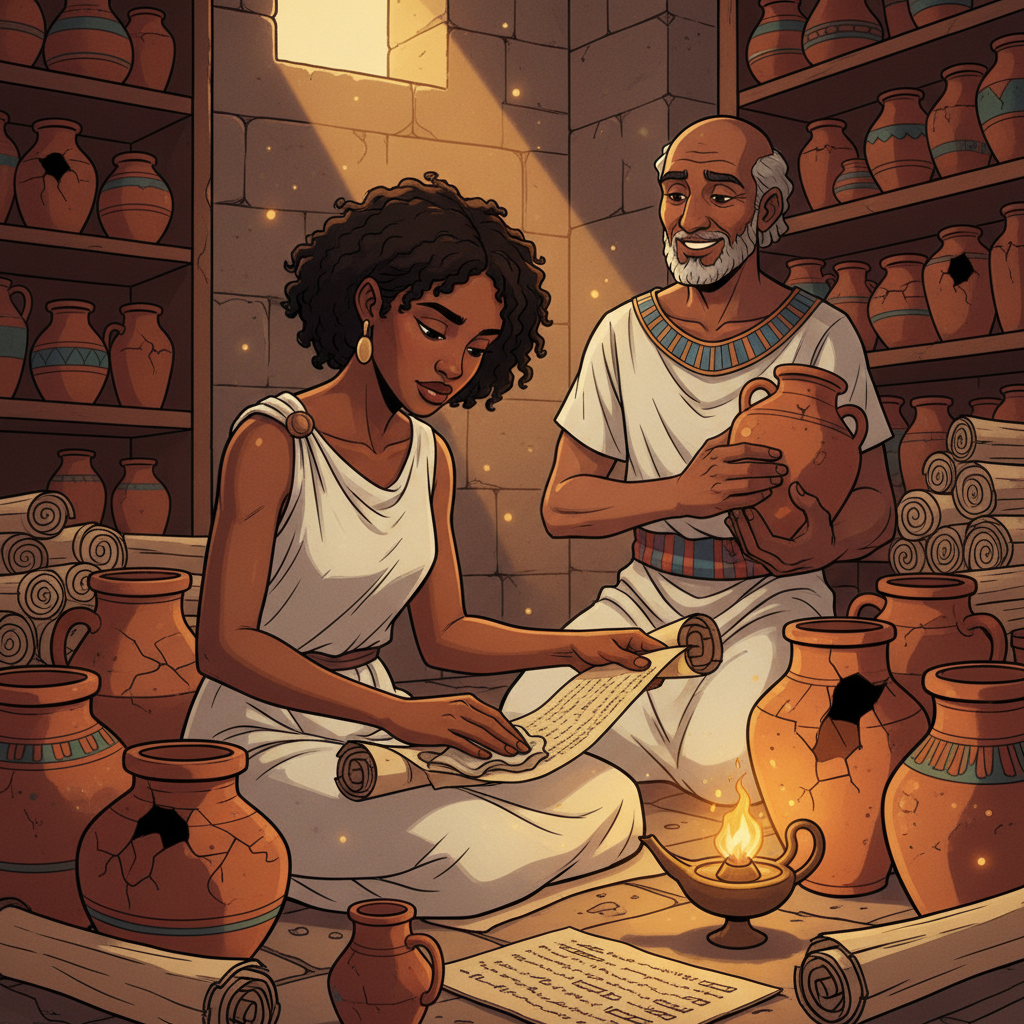
The discovery began with a routine assignment. Nefer's instructor at the Per Ankh, a meticulous old scribe named Ptahshepses, had tasked her with organizing a collection of land records from the archive of the southern quarter — documents spanning roughly seventy years, stored in clay jars that had been neglected and were beginning to deteriorate. It was preservation work, the kind of careful, patient labor that the Per Ankh valued above all. "These records are the memory of the land," Ptahshepses told her. "Without them, the earth forgets who belongs to it, and Isfet creeps in through the cracks." Nefer spent weeks in the cool dimness of the archive chamber, carefully unrolling papyrus scrolls, cleaning them with soft linen cloths, and copying deteriorated sections onto fresh papyrus before the old ink faded completely. She organized the records chronologically, cross-referenced property boundaries with the master survey maps maintained by the vizier's office, and noted discrepancies for further investigation. It was during one of these cross-references that she found the first anomaly.
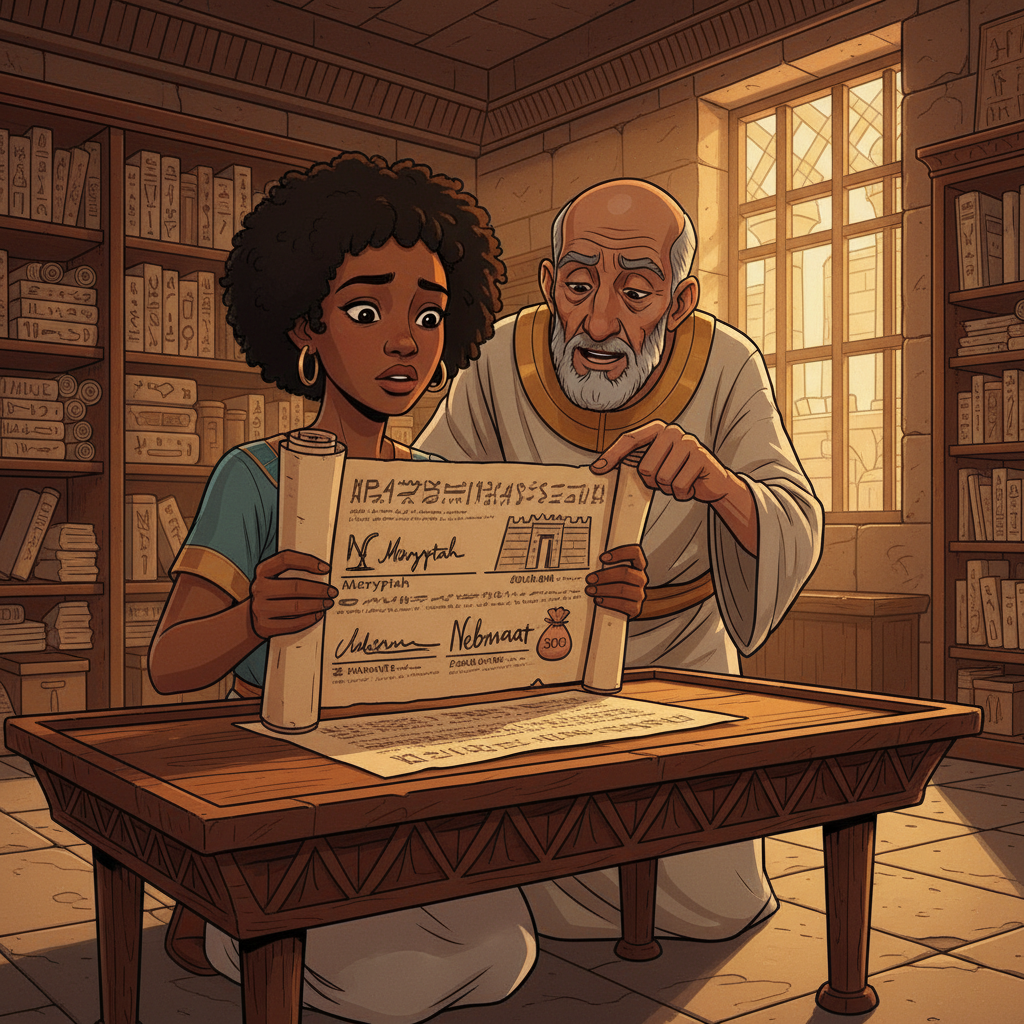
The anomaly was in a land transfer document dated fifty years earlier. The document recorded the sale of a large plot of fertile land in the southern quarter — the exact plot where the Temple of Eternal Voices now stood — from a farming family named Meryptah to the temple council. The sale price was listed as three hundred deben of copper, which Nefer recognized as far below the market value for a plot that size in that location. But what caught her eye was not the price. It was the signatures. The seller's signature — the mark of Meryptah, head of the farming family — was shaky and irregular, as if written by a hand under duress. And beside it, where a witness signature should have been, was the cartouche of Overseer Nebmaat, the regional official responsible for land administration at the time. Nefer knew that name. Every student of southern quarter history knew it. Overseer Nebmaat had been removed from office thirty-eight years ago for corruption — bribery, falsified records, and the abuse of his position to seize land from families who could not fight back.
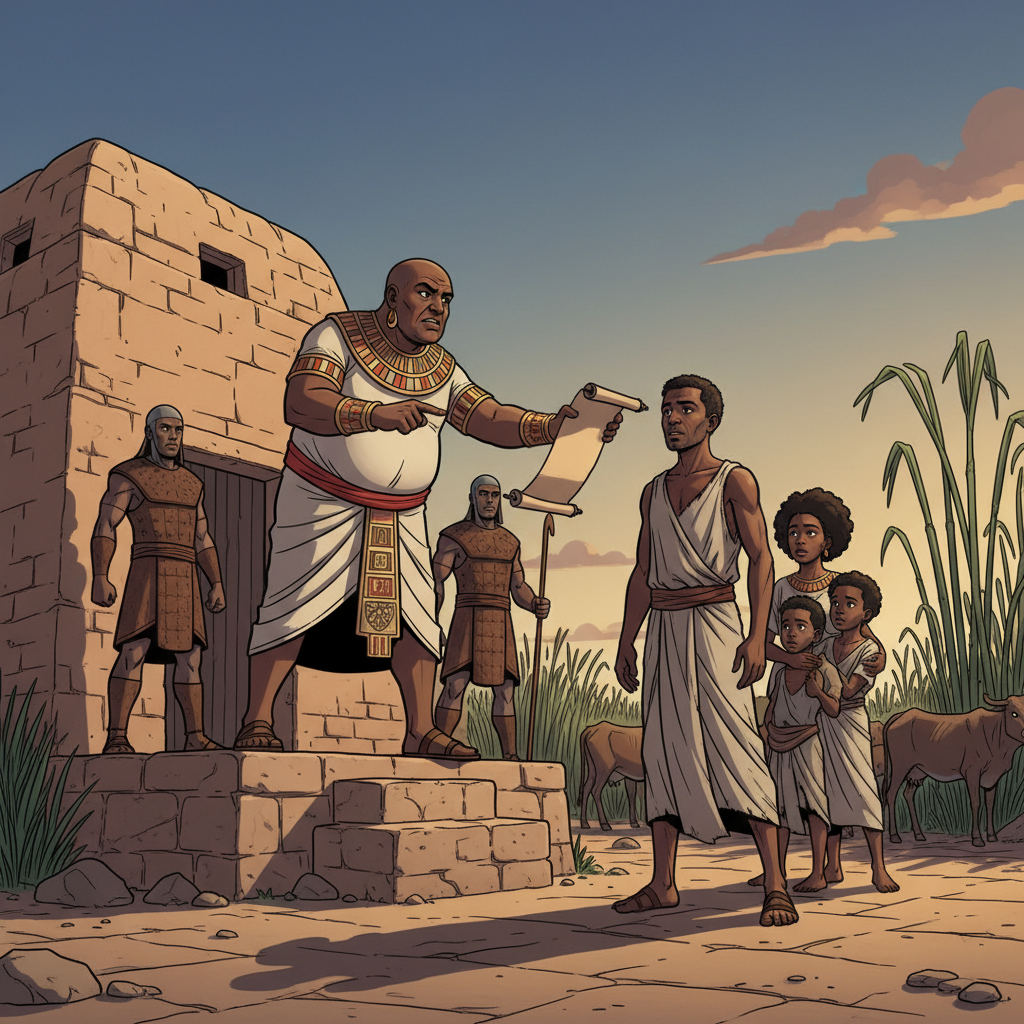
Nefer's hands trembled as she reached for the next document in the sequence. It was a petition — written on rough papyrus in the unsteady hand of someone who was not a trained scribe — from Meryptah himself, addressed to the vizier's court. The petition accused Overseer Nebmaat of forcing the sale of his family's land through intimidation and threats. Meryptah wrote that Nebmaat had told him his farm would be condemned for tax arrears — arrears that Meryptah claimed were fabricated — and that the only way to avoid imprisonment was to sign the sale document immediately. "I beg the vizier to examine the records," Meryptah had written, his words cramped and desperate on the rough papyrus. "My family has worked this land for six generations. We have paid every tax, fulfilled every labor obligation, and served this community with honest hands. Overseer Nebmaat has stolen our birthright with a false document and the threat of chains. I ask for justice in the name of Maat." The petition was dated one month after the forced sale. It bore no response. No action had been taken. The vizier's court had filed it and forgotten it.
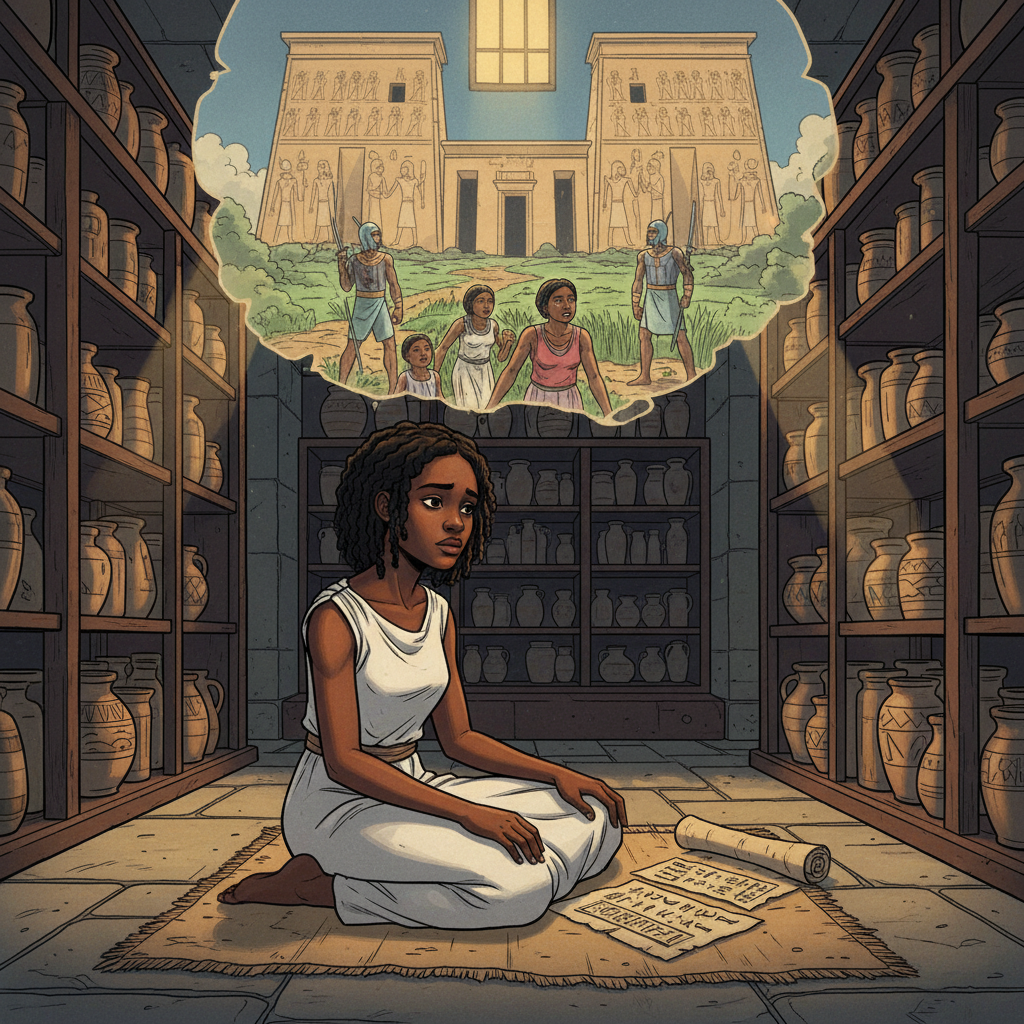
Nefer sat in the archive chamber for a long time, staring at the two documents — the fraudulent sale and the unanswered petition. Her mind worked through the implications with the precise logic of a trained scribe. Fifty years ago, a corrupt official had forced a farming family off their ancestral land through fabricated charges and threats. The family had petitioned for justice and been ignored. On that stolen land, the temple council — perhaps knowingly, perhaps not — had built the Temple of Eternal Voices. For forty years, the temple had served the community, educated children, healed the sick, and become the spiritual center of the southern quarter. And all of it stood on a foundation of injustice. She thought about what Ptahshepses had said: "Without these records, the earth forgets who belongs to it." The earth had not forgotten. The records had been here all along, sealed in their clay jars, waiting for someone to read them. The question was: now that someone had, what was to be done?
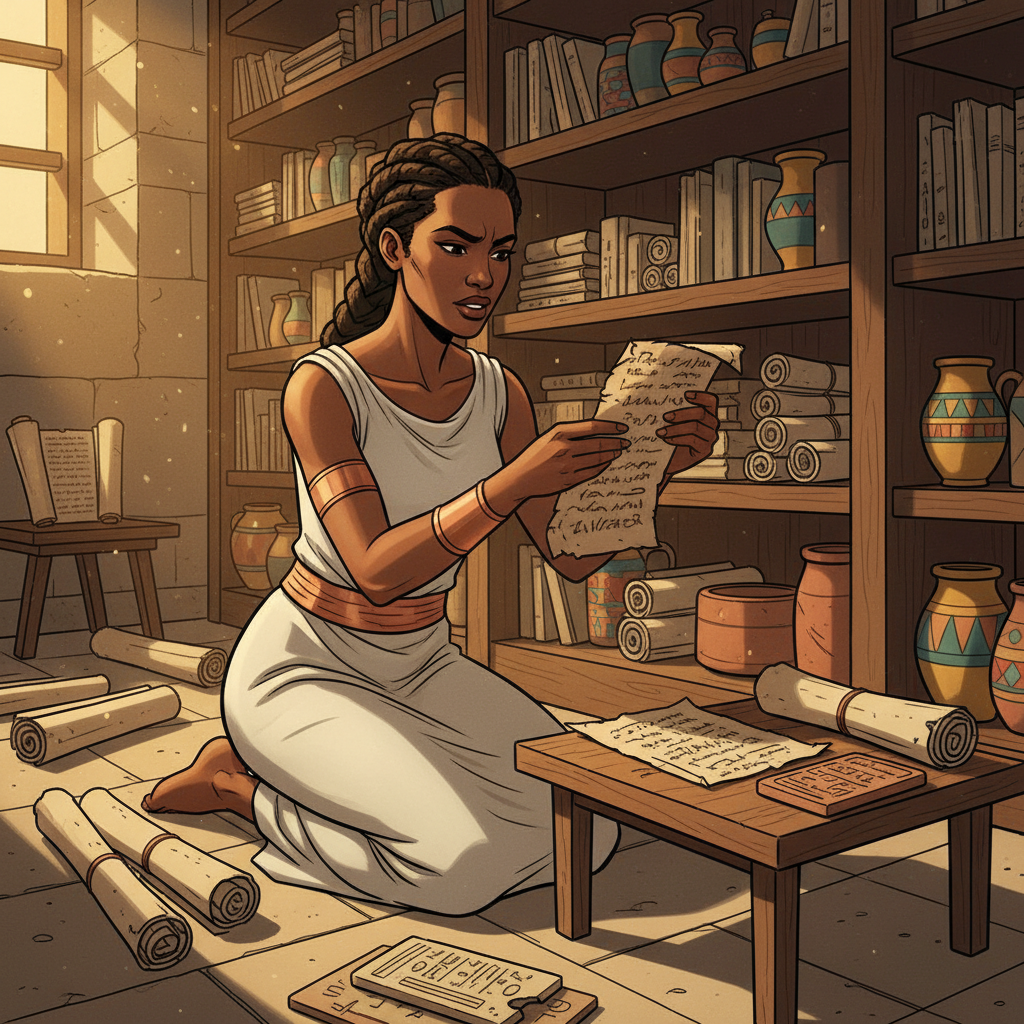
Nefer began a deeper investigation, moving carefully through the archive with the methodical thoroughness her training demanded. She found three more documents related to the case. The first was a second petition from Meryptah, written six months after the first, more desperate in tone, begging the vizier to intervene before his family was forced to leave the district entirely. This petition also bore no response. The second was a brief administrative note recording Overseer Nebmaat's removal from office — not for the Meryptah case specifically, but for a pattern of corruption that had finally become too brazen to ignore. The note mentioned seven families whose land had been improperly seized, but there was no record of restitution to any of them. The third document was the most painful. It was a census record from forty-five years ago listing the Meryptah family — father, mother, four children — as residents of a small settlement on the outskirts of the city, classified as landless laborers. A family that had farmed their own land for six generations had been reduced to working other people's fields. The trajectory was clear: from landowners to laborers in a single act of corruption.
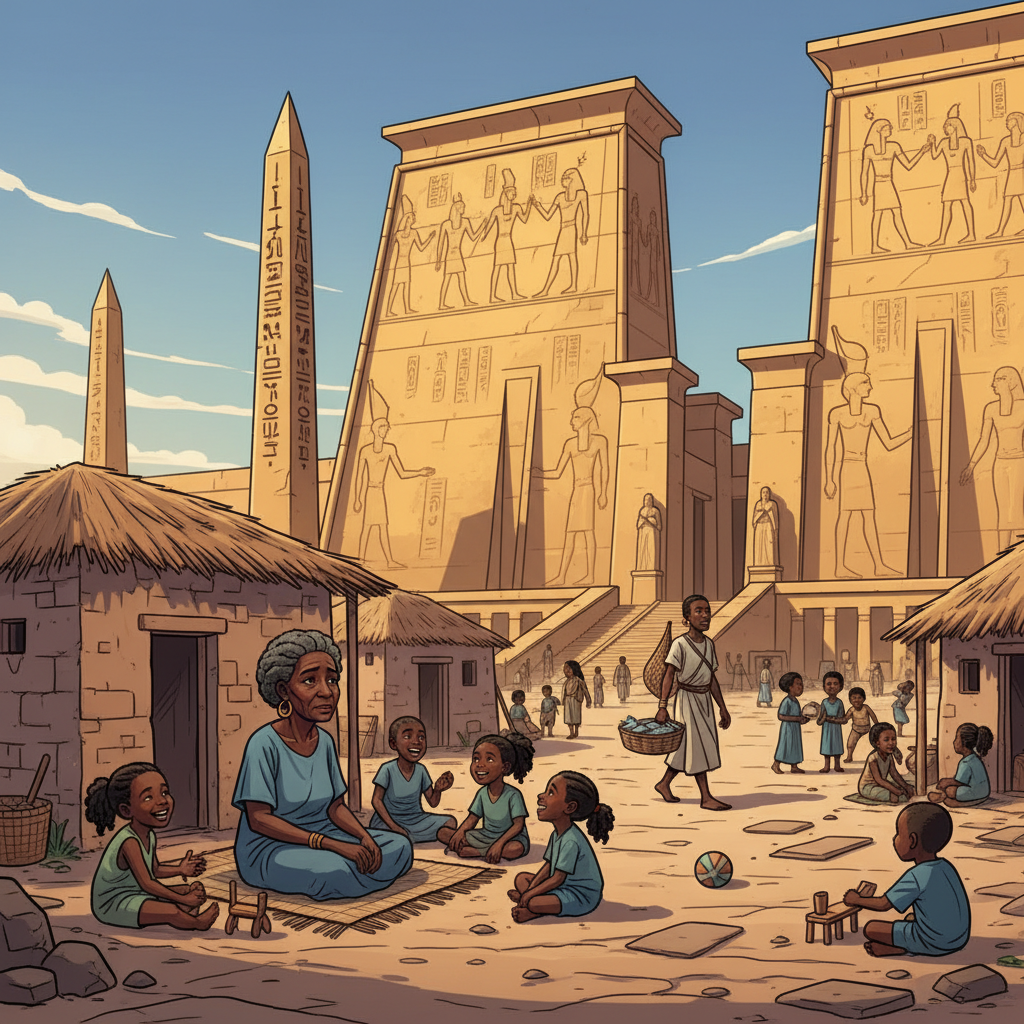
Nefer knew she needed to find out what had become of the Meryptah family. She searched the census records forward through the decades, tracing the family through marriages, births, and deaths. The trail was not hard to follow. Meryptah himself had died twenty years after losing his land — the census noted cause of death as "failing health," the administrative euphemism for poverty-related illness. His wife had died three years later. Of their four children, two had left the district entirely, their trails disappearing into the vast population of Kemet. One had died young. But the fourth — a daughter named Kiya — had survived and remained in the southern quarter. Kiya had married a fisherman and raised three children in a small mudbrick house less than four hundred cubits from the temple that stood on her family's stolen land. She was now sixty-two years old, and her own children had children — grandchildren who played in the temple school, unaware that the ground beneath their feet had once belonged to their family. The irony was exquisite and terrible.
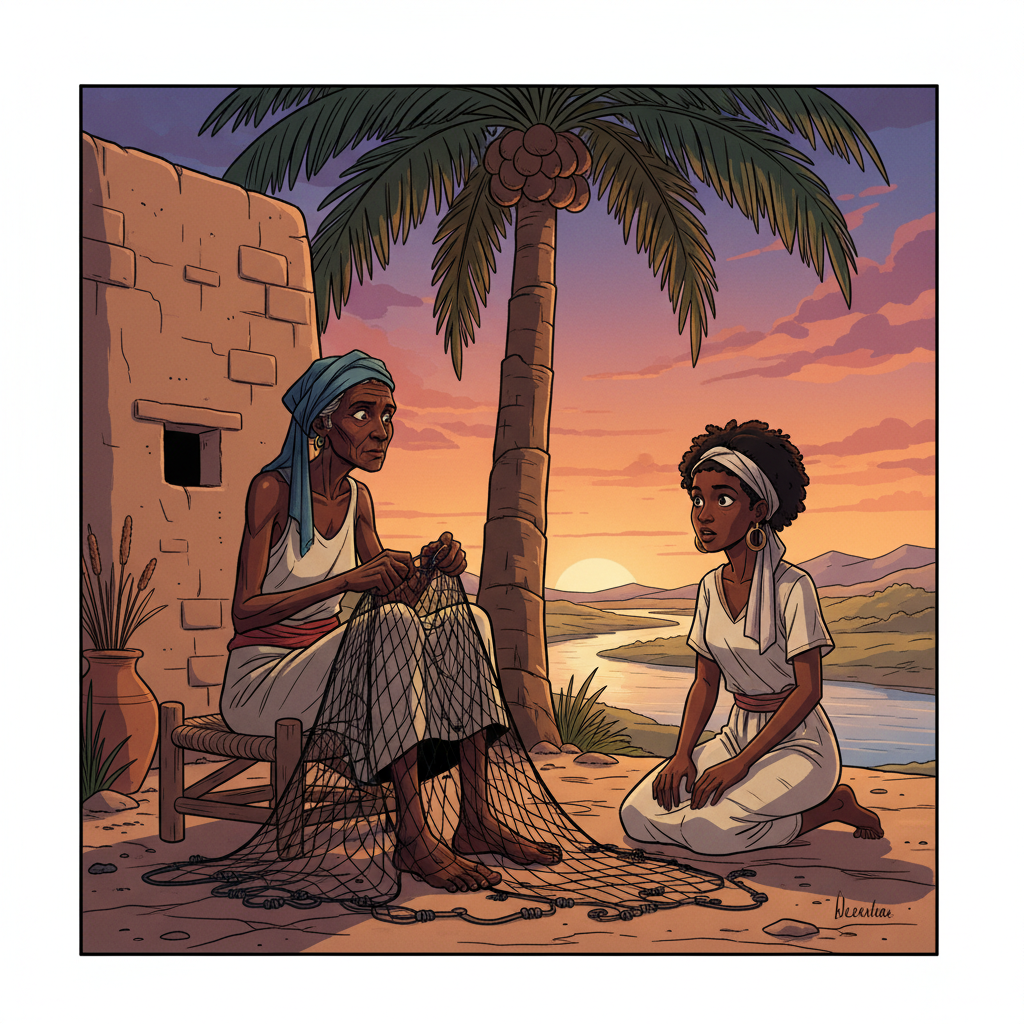
Nefer found Kiya on a late afternoon, sitting in the shade of a dom palm tree outside her small house, mending a fishing net with dark, weathered hands that moved with the automatic precision of decades of practice. Kiya was lean and strong despite her years, with deep ebony skin and the sharp features that Nefer had seen in the portrait of Meryptah included in one of the archive documents. Her grey hair was wrapped in a faded blue cloth, and her feet were bare and calloused. "I know why you are here," Kiya said before Nefer could speak, and her voice carried the calm resignation of someone who had been expecting this conversation for forty years. "Someone finally found the records." She did not look up from her net. Her dark fingers continued weaving the knots with unwavering steadiness. "Sit down, child. This is a long story, and I am tired of carrying it alone."
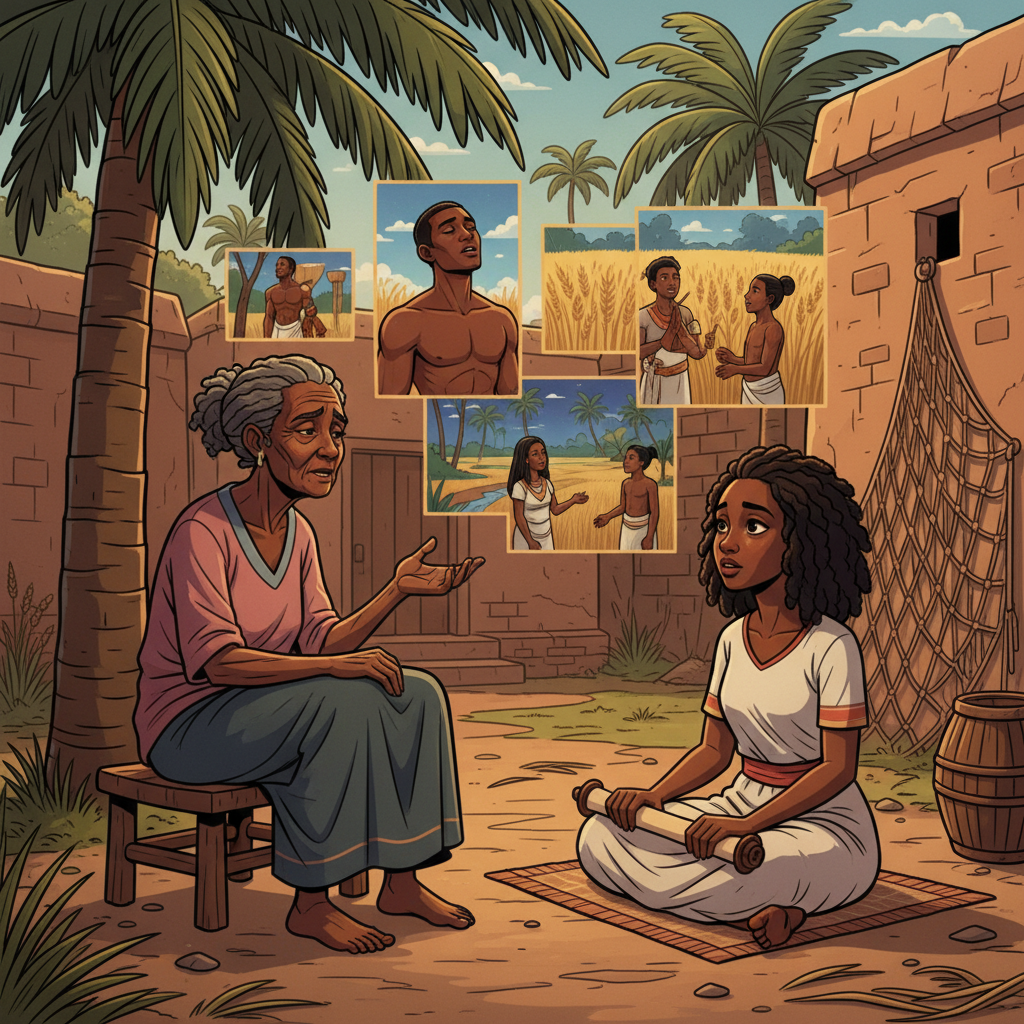
Kiya told Nefer everything — not just the facts, which the documents had already revealed, but the human cost that no papyrus could capture. She described her father Meryptah as a proud, quiet man whose entire identity was rooted in the land his family had worked for generations. He had known every palm tree on the property by its planting date, every irrigation channel by the ancestor who had dug it, every corner of the field by the crop it grew best. Losing the land had not just impoverished him — it had unmade him. "He stopped speaking the morning we left," Kiya said. "Not completely — he could still talk. But the man who had sung while he worked, who told us stories at night, who laughed with our neighbors at the harvest festival — that man was gone. What remained was a shadow that moved through the world without touching it. He worked other men's fields and came home with his wages and ate his food and slept. But he was already dead in every way that mattered. The land was his ka, and they took it."
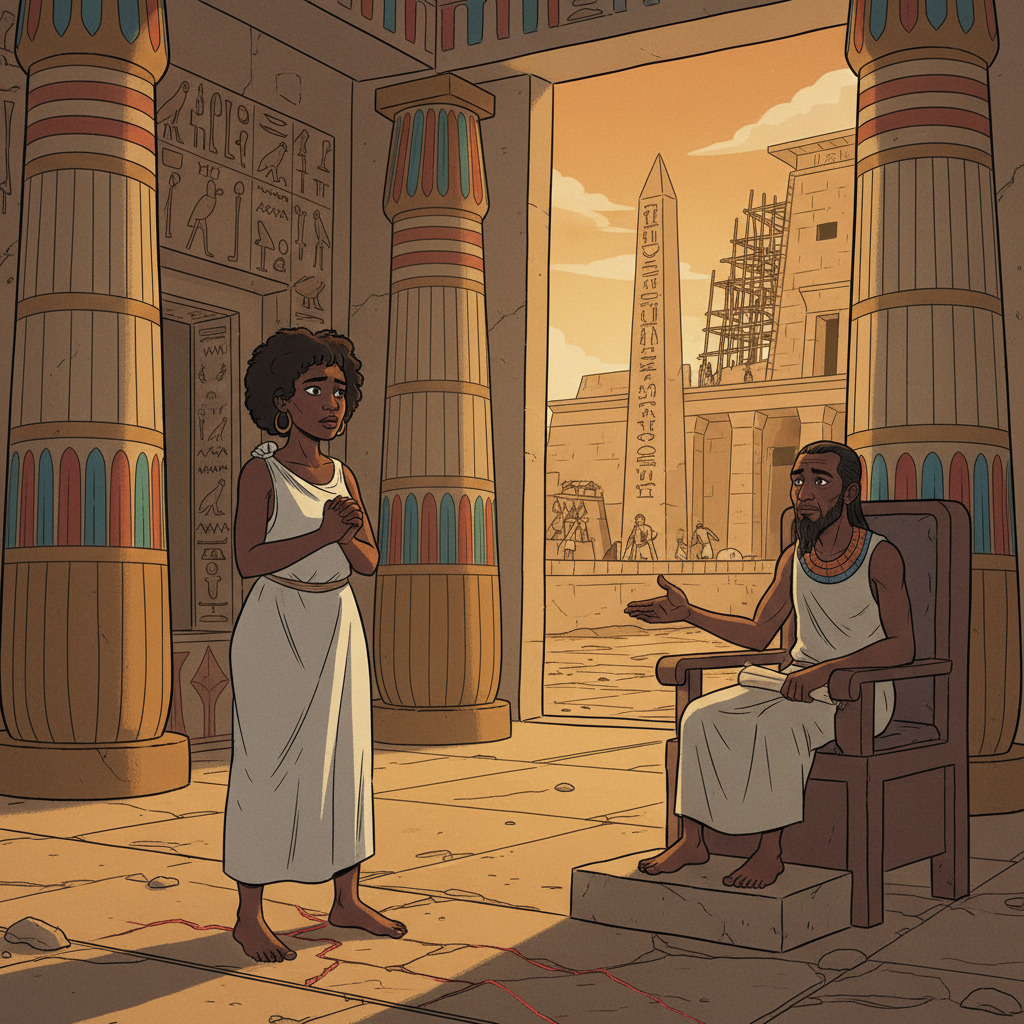
"My mother fought," Kiya continued. "She went to the vizier's court three times. The first two petitions were ignored. The third time, a clerk told her — not unkindly — that the temple had already been built on the land, that the sale document was legal on its face, and that pursuing the matter further would be fruitless. He said, 'The past cannot be unbuilt.' My mother never went back." Kiya looked up from her net, and for the first time Nefer saw the anger that lived behind the old woman's calm facade — not hot anger, not the kind that burns and fades, but a cold, mineral anger compressed by decades of silence into something harder than stone. "I have watched that temple rise from the earth my family watered with our sweat," Kiya said. "I have watched my grandchildren play in its school. I have eaten the food it serves at festivals. And every time I pass through its gates, I feel the ground crying beneath my feet. Stolen land does not forget, child. It remembers. And it waits."

Nefer returned to the Per Ankh in a state of turmoil. She sat in the archive chamber surrounded by the documents she had found — the fraudulent sale, the unanswered petitions, the census records tracking a family's descent from landownership to poverty — and she understood for the first time that the past was not a sealed room. The past was a river that flowed through the present, carrying its injustices forward like sediment, depositing them in the foundations of everything built upon them. She took her findings to Ptahshepses, her instructor. The old scribe read the documents with the careful attention he gave to everything, his dark, age-spotted hands turning the papyrus with reverence. When he finished, he was quiet for a long time. Then he said: "You have found a truth that many people have worked very hard to keep buried. The question now is not whether this truth is real — it clearly is. The question is what you do with it. And that question, young scribe, has no clean answer."
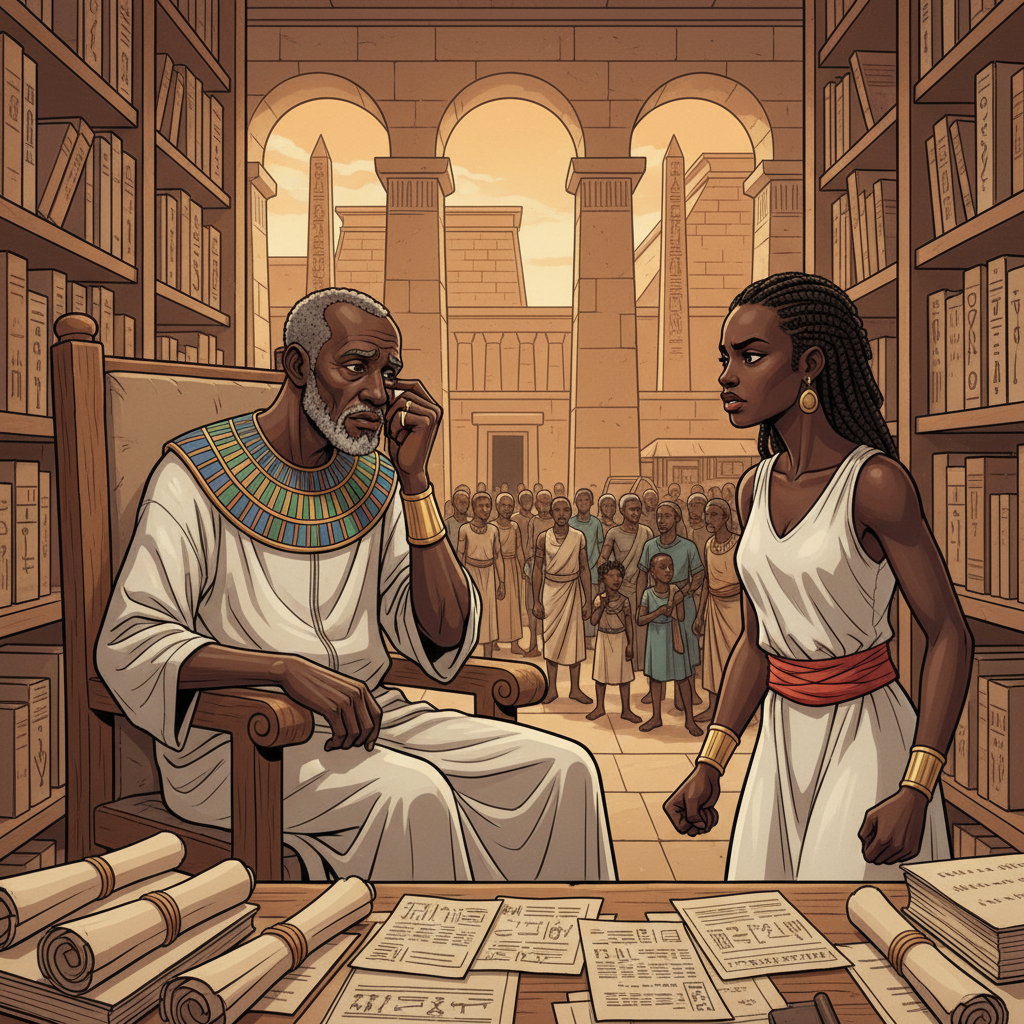
Ptahshepses removed his reading spectacles and rubbed the bridge of his nose. "You must understand what is at stake," he said. "The Temple of Eternal Voices serves four thousand people in this quarter. Two hundred children attend its school — including children from the Meryptah family itself. The healers treat over a thousand patients each season. The kitchens feed the poorest families during the Festival of the Beautiful Reunion. If the temple were demolished or relocated to return the land to the Meryptah family, all of that would be lost. Not temporarily — permanently. The resources to build another temple do not exist. The community would be wounded in ways that might not heal for a generation." Nefer absorbed this. She had known it, of course — she had grown up in the temple's shadow, been educated in its school, been healed by its physicians when she was sick as a child. But hearing Ptahshepses lay out the numbers made the stakes visceral. "So we do nothing?" she asked, and she could hear the anger in her own voice — not at Ptahshepses, but at the impossible geometry of the situation.

"I did not say that," Ptahshepses replied. "I said there is no clean answer. That is different from no answer at all." He paused. "The kenbet will need to hear this case. The vizier will need to be involved. And you, Nefer, will need to present both sides — the family's claim and the community's need — with the fairness and precision that Maat demands. Can you do that?" Nefer nodded, but inside she was already struggling with the weight of what "both sides" meant. She had seen Kiya's face. She had heard the old woman describe her father's silence, her mother's futile petitions, the decades of watching her family's land serve everyone except her family. How could she stand before the kenbet and present the temple's case — the case for keeping the stolen land — without feeling that she was participating in the same injustice that had created this problem?
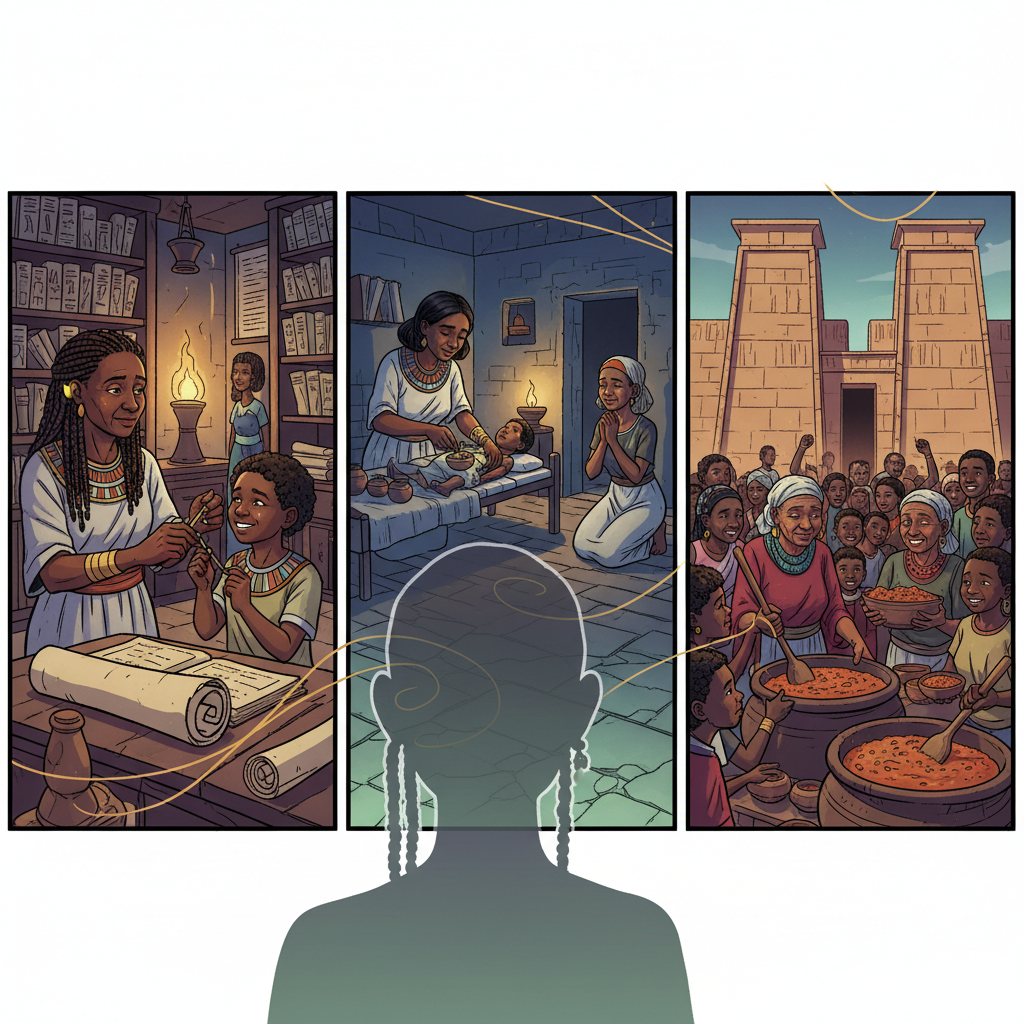
But she also understood the other side. She thought about Iput, the teacher who had placed a reed pen in her hand and changed her life. Iput had taught in that temple for twenty-five years, educating hundreds of children who might otherwise have grown up illiterate. She thought about Healer Meritaten, who had saved Nefer's own brother from a fever when he was five — mixing medicines by lamplight while Nefer's mother wept in the corridor. She thought about the Festival kitchens, where old women stirred enormous pots of lentil stew and served it to anyone who came, no questions asked. All of these good things existed because of the temple. And the temple existed because of an act of corruption. The goodness and the injustice were not separate things that could be neatly divided — they were woven together like threads in a cloth, and pulling one thread would unravel the other. This was systemic Isfet — not the Isfet of a single bad act, but the Isfet that embeds itself in institutions, in structures, in the very ground beneath your feet, so that good people can benefit from injustice without ever knowing it.
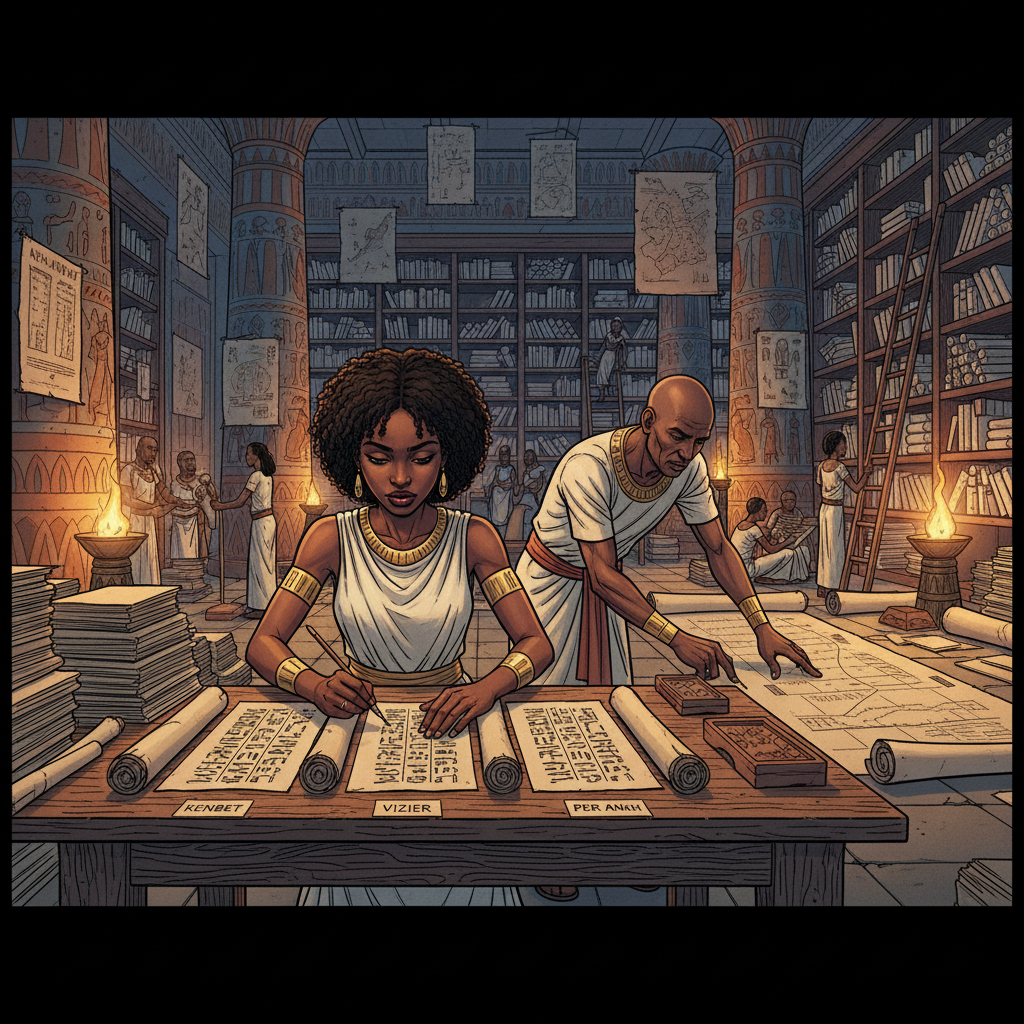
Nefer spent three weeks preparing for the kenbet hearing, working day and night in the archive chamber with Ptahshepses's guidance. She organized the evidence chronologically, copied every document in triplicate — one for the kenbet, one for the vizier, and one for the Per Ankh archive — and wrote a detailed summary of both the family's claim and the temple's contribution to the community. She interviewed fifteen people: Kiya and her children, the temple council members, the current administrators, community leaders, and three families who depended on the temple's services. What she found made the case more complicated, not less. The temple council, she learned, had not been aware of the forced sale when they acquired the land fifty years ago. They had bought it in good faith from Overseer Nebmaat, who had presented the sale as legitimate. The current council members were entirely innocent of the original crime — they had inherited a situation, not created it. This meant that the injustice could not be cleanly attributed to any living person. The guilty party — Nebmaat — was dead. The system that had enabled him — the vizier's court that ignored the petitions — had changed. The wrong persisted, but the wrongdoers did not.
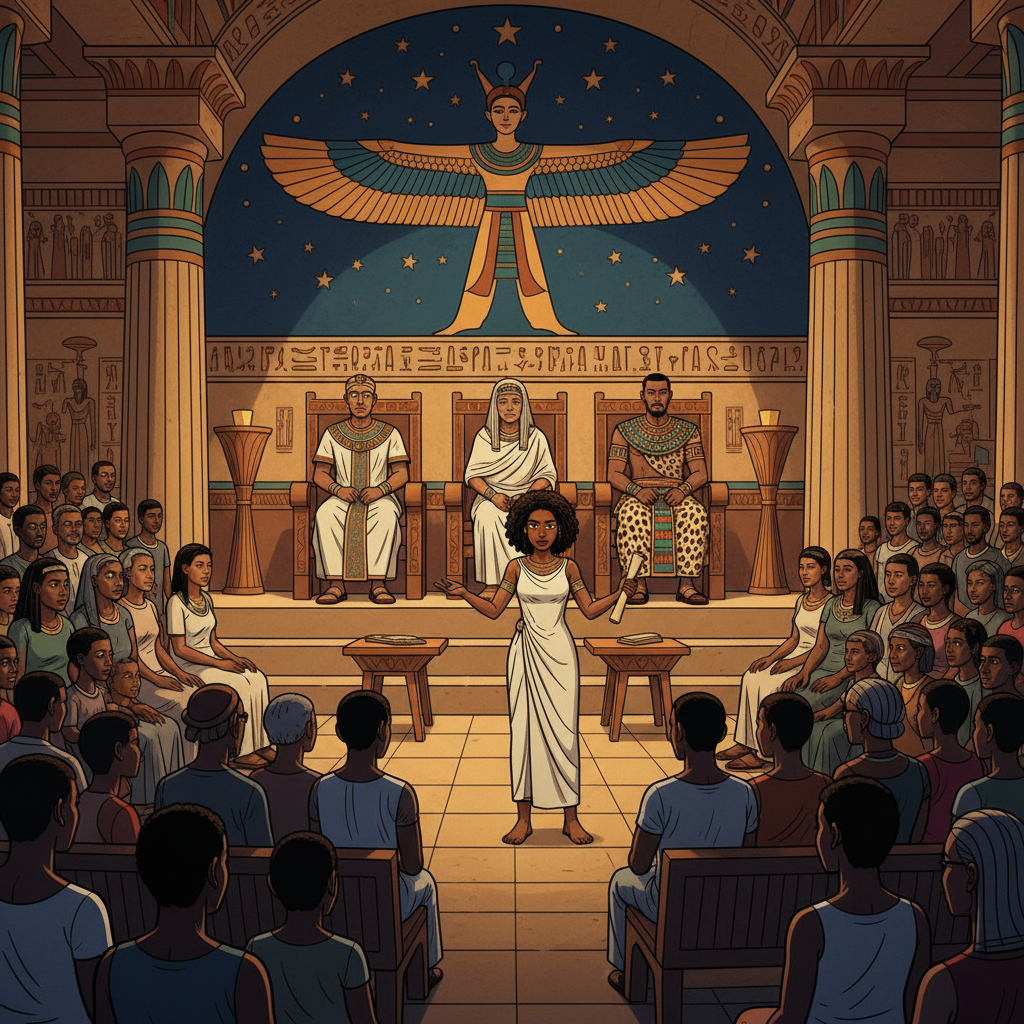
The hearing was held in the grand hall of the kenbet, beneath a ceiling painted with stars and the outstretched wings of Maat. Three senior judges sat on a raised platform — Vizier Amenemhat, who had traveled from the capital to oversee this case personally; Judge Meryt, a woman of seventy renowned for her impartiality; and Priest Khety, who represented the interests of the temple. The hall was packed with spectators from across the southern quarter — families who used the temple, families who knew Kiya, scribes and students and elders who understood that whatever was decided here would ripple through the community for decades. Nefer stood between the two parties, serving as the presenter of evidence — a role that the kenbet assigned to scribes when the case was too complex for either side to present fairly. She was terrified, but her hands were steady and her voice, when she spoke, carried the clarity that three years of Per Ankh training had forged in her.
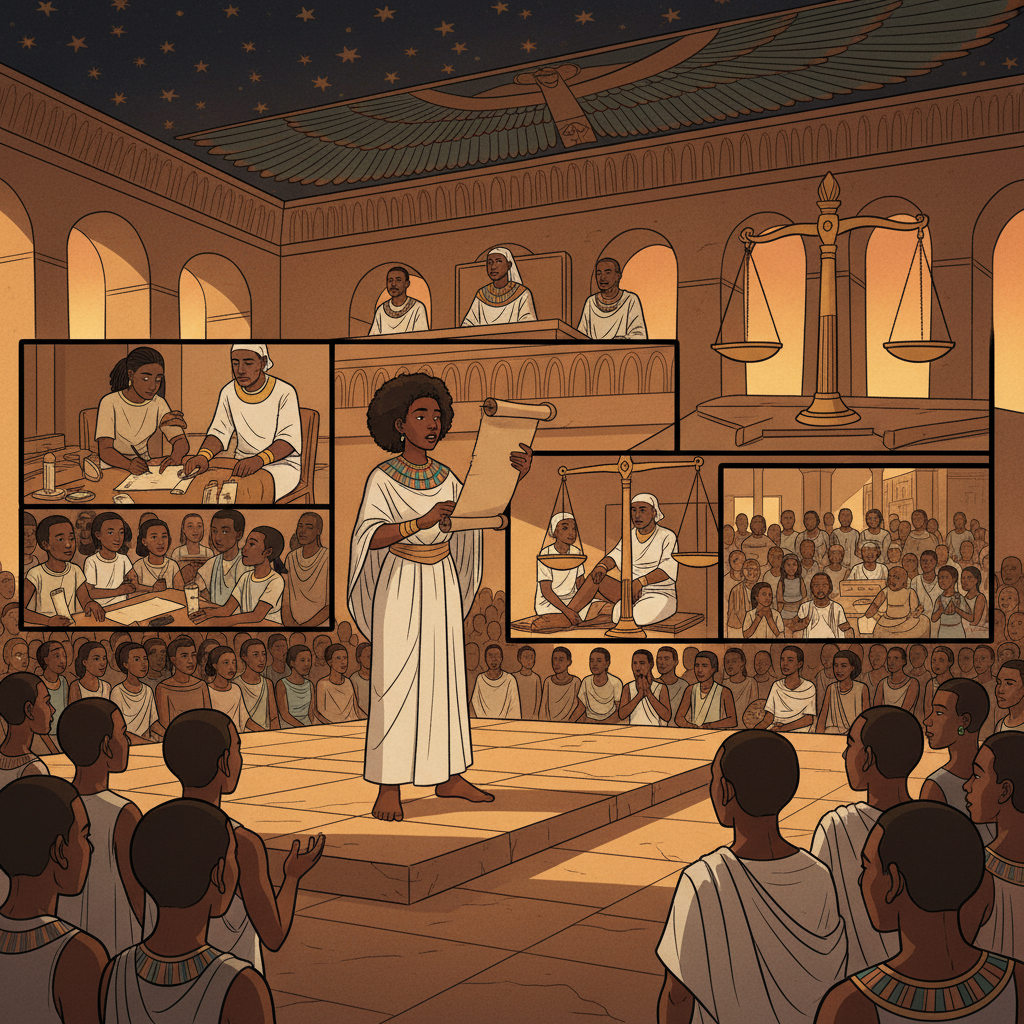
She began with the facts. She read the original sale document aloud, noting the irregularities — the below-market price, the shaky signature, the involvement of a later-disgraced official. She read Meryptah's two petitions, letting his desperate words fill the great hall. She presented the census records showing the family's decline. And then she presented the temple's record — forty years of service, two hundred children in its school, a thousand patients treated by its healers, an entire community sustained by its existence. "The kenbet faces a case where both justice and community are real," Nefer said, her dark face steady and her voice even. "The Meryptah family's land was stolen. That is established fact. The temple built on that land has served thousands. That is also established fact. One truth does not erase the other. Both exist at the same time, and the kenbet must weigh them on the Scale of Maat knowing that the scale may not tip cleanly to either side."
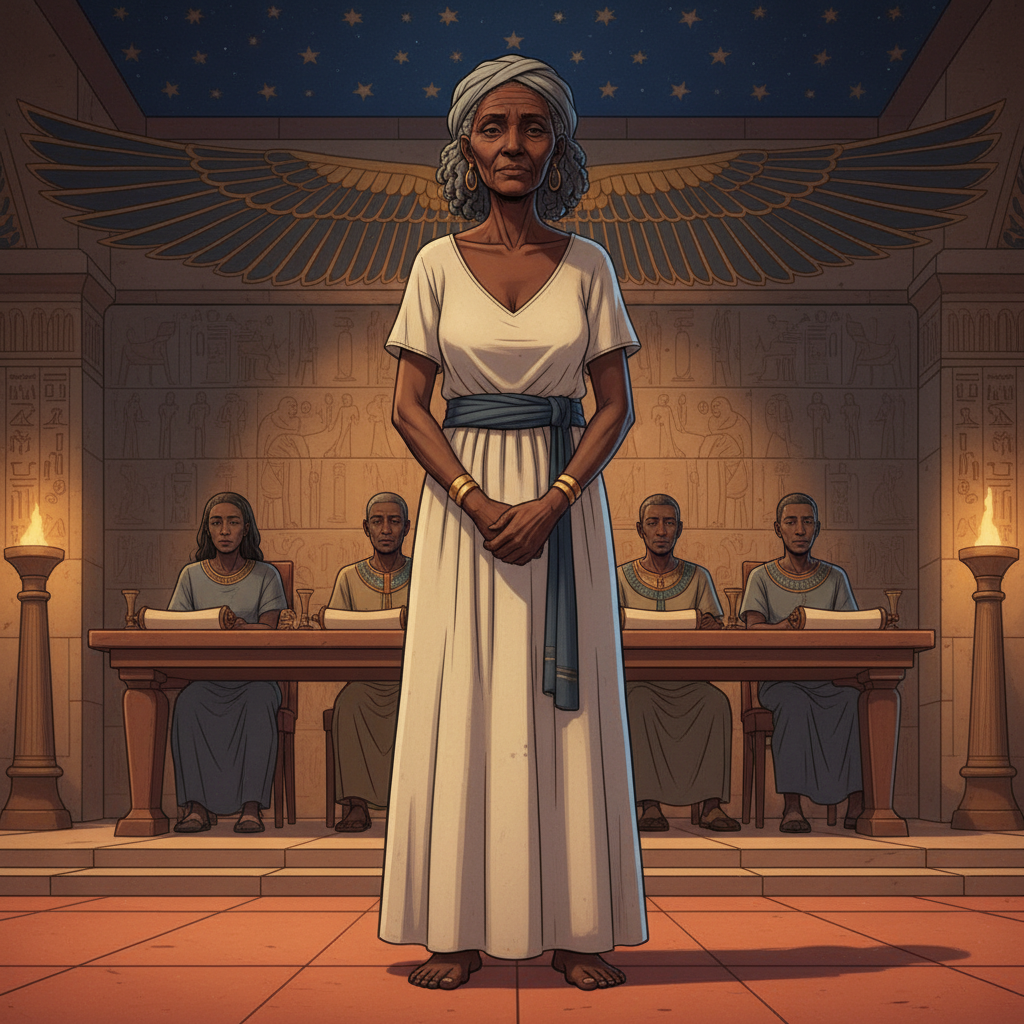
Kiya spoke first. She stood before the judges with the straight-backed dignity of a woman who had waited forty years for this moment, her dark hands clasped before her, her grey-wrapped head held high. She did not speak of herself. She spoke of her father. "Meryptah was a quiet man," Kiya said, and her voice trembled only once before steadying. "He did not ask for much. He worked his land, he fed his family, he paid his taxes, and he trusted that the system protected the honest. When Overseer Nebmaat came to him with threats and false charges, my father did not understand what was happening. He was a farmer, not a politician. He signed the document because he was told his family would be imprisoned if he did not. He spent the rest of his life trying to undo what was done. He failed. The system that was supposed to protect him had already been corrupted by the man who robbed him."

Kiya paused, and when she continued, her voice was harder. "I hear the argument that the temple serves the community. I know it does. My own grandchildren attend its school. But let me ask this: if someone stole your house, and then built a beautiful garden on the land, and the whole neighborhood enjoyed the garden — would that make the theft acceptable? Would the beauty of the garden erase the crime of the stealing? And if you came forward with proof that the land was yours, would the neighbors tell you to be quiet because they enjoyed the flowers?" She looked directly at the judges. "Justice delayed is still justice. Stolen land is stolen land, no matter what was built on it. My family has been patient for fifty years. We are not asking for the temple to be destroyed. We are asking for the truth to be acknowledged and for justice — in whatever form the kenbet deems appropriate — to finally be served."

The temple council's representative, a priest named Ahmose, spoke next. He was a man of fifty with deep brown skin and the calm, measured voice of someone accustomed to speaking in sacred spaces. He did not dispute the evidence. He could not — Nefer's documentation was thorough and irrefutable. Instead, he spoke of consequences. "The kenbet has heard the truth about the land," Ahmose said. "We do not contest it. What was done to the Meryptah family fifty years ago was wrong. It was Isfet — pure and clear. Overseer Nebmaat was a corrupt man, and the system that enabled him failed. But the temple that stands on that land today is not Nebmaat's creation. It is the creation of hundreds of good people who have poured their lives into serving this community for four decades. The teachers, the healers, the administrators — they built something sacred on stolen ground, yes. But their work was real. Their dedication was real. The children they educated are real."
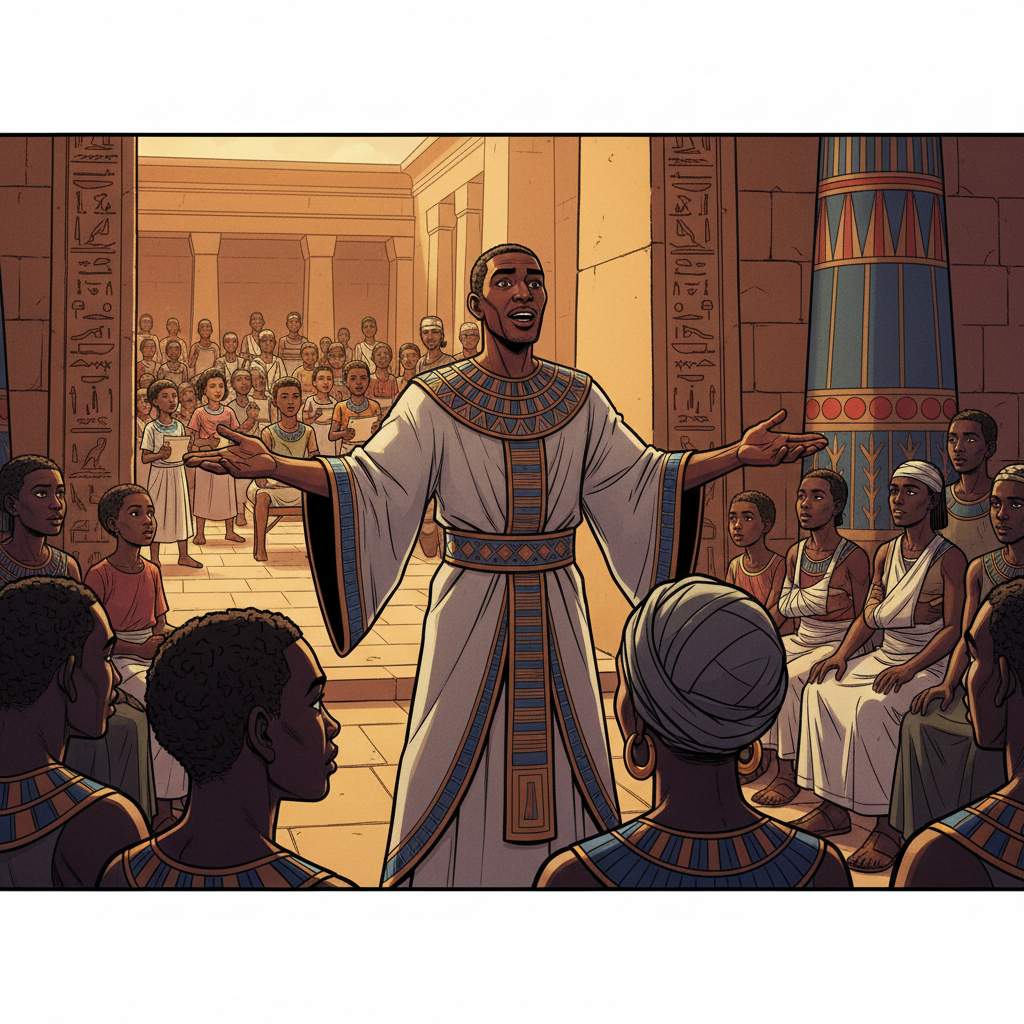
Ahmose continued with careful precision. "If the temple is removed — if the land is returned and the building dismantled — two hundred children lose their school. A thousand patients lose their healers. The poorest families in this quarter lose the only institution that feeds them during the lean months. And the Meryptah family receives a plot of bare earth that will take years and resources they do not have to develop. Everyone loses. No one wins." He turned to Kiya with genuine respect. "I understand the weight of what was done to your family. No acknowledgment can undo it. No payment can restore what was taken. But I ask the kenbet to consider: does justice require us to destroy something that serves the living in order to correct something done to the dead? Can we find a form of justice that acknowledges the wrong without creating a new wrong? The temple did not steal this land. The temple inherited a situation. And the question before us is not who was guilty fifty years ago — we know the answer to that. The question is what serves Maat today."
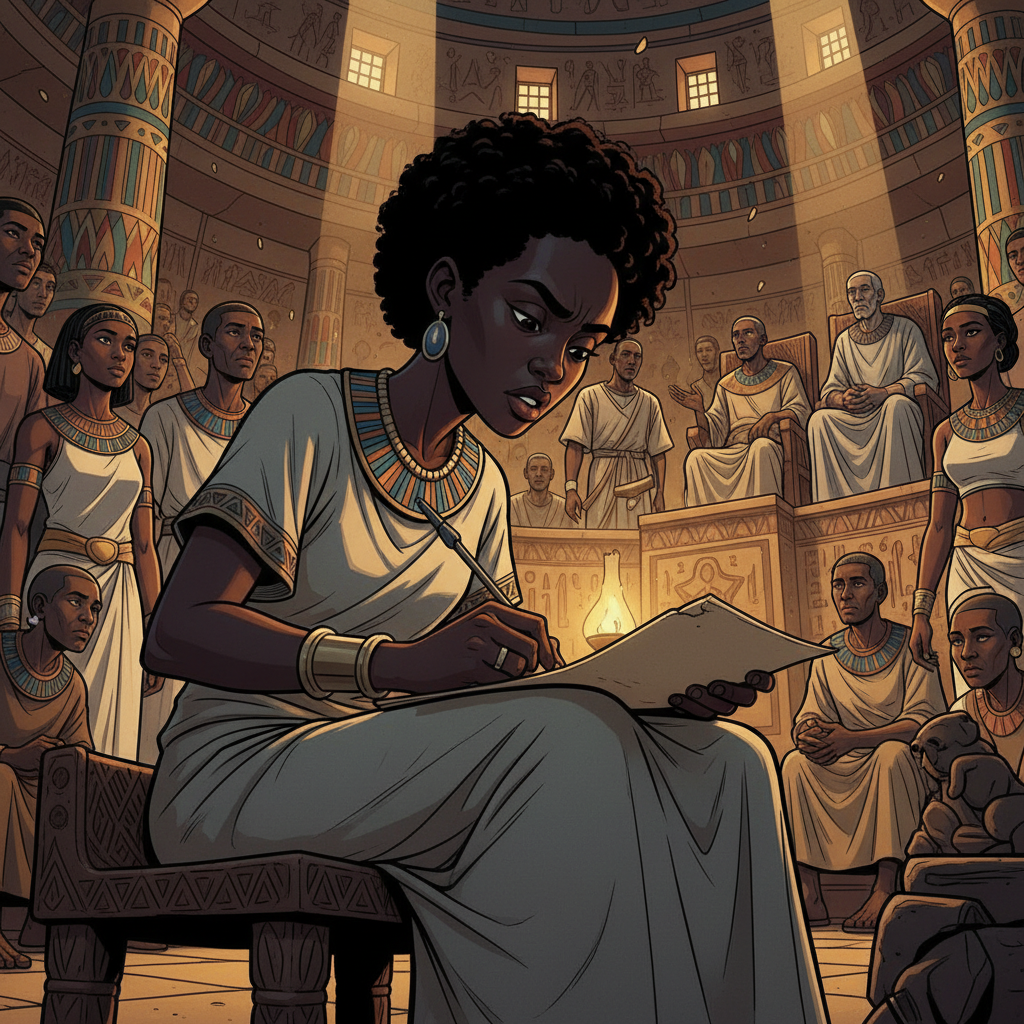
The debate that followed lasted three days. Witnesses spoke. Community members testified. Scholars of Maat were consulted. The arguments spiraled outward from the specific case into the deepest questions of justice and social order. If injustice was committed in the past and the fruits of that injustice benefited the present community, who was responsible? Could the descendants of victims claim restitution from institutions that benefited from the original crime but did not commit it? Was there a statute of time beyond which old wrongs could no longer be corrected? And if so, who drew that line, and by what authority? Nefer sat through every hour of the debate, taking careful notes on her papyrus. She listened to argument and counter-argument, watched the judges' faces as they weighed each point, and felt the impossible tension of a case where both sides spoke truth. Kiya was right: stolen land was stolen land. Ahmose was right: destroying the temple helped no one. Both truths existed simultaneously, and the kenbet had to find a way to honor both or accept that it could not.
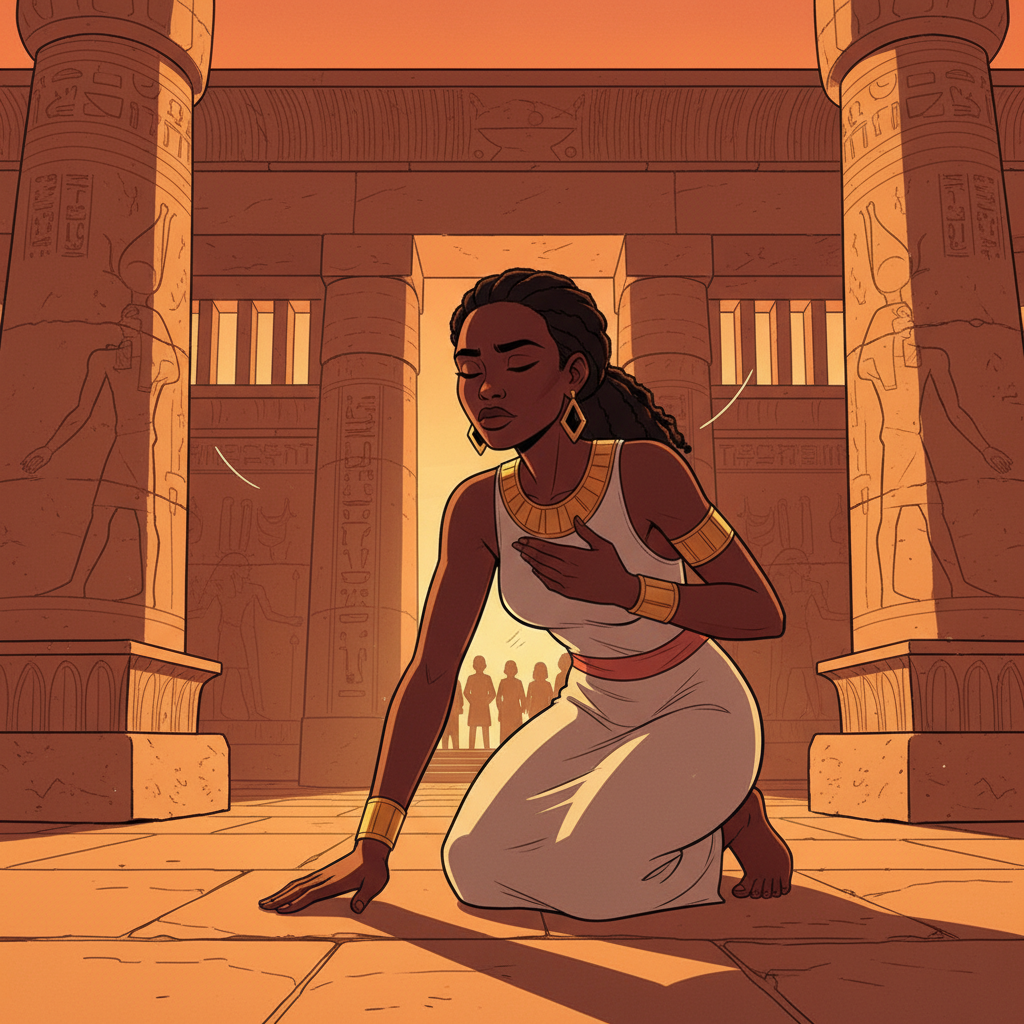
On the third evening, after the formal proceedings had adjourned, Nefer walked alone through the temple grounds. The columns threw long shadows in the orange light of sunset, and the sound of children reciting their lessons drifted from the school hall — young voices chanting the forty-two declarations of Maat, the same declarations Nefer had learned here as a child. She stopped at the eastern courtyard and looked down at the ground beneath her feet. This had been a sorghum field once. Meryptah had planted it. Kiya had played here as a girl. Nefer knelt and pressed her palm flat against the warm stone of the courtyard. She could feel the pulse of the temple above — the hum of activity, the vibration of life. And she could feel, or imagined she could feel, something older and quieter beneath it — the memory of the soil, the echo of seeds planted and harvested by hands that had been robbed of their work. Two realities occupied the same space. The temple and the field. The community and the family. Maat and the Isfet that Maat had been built upon.
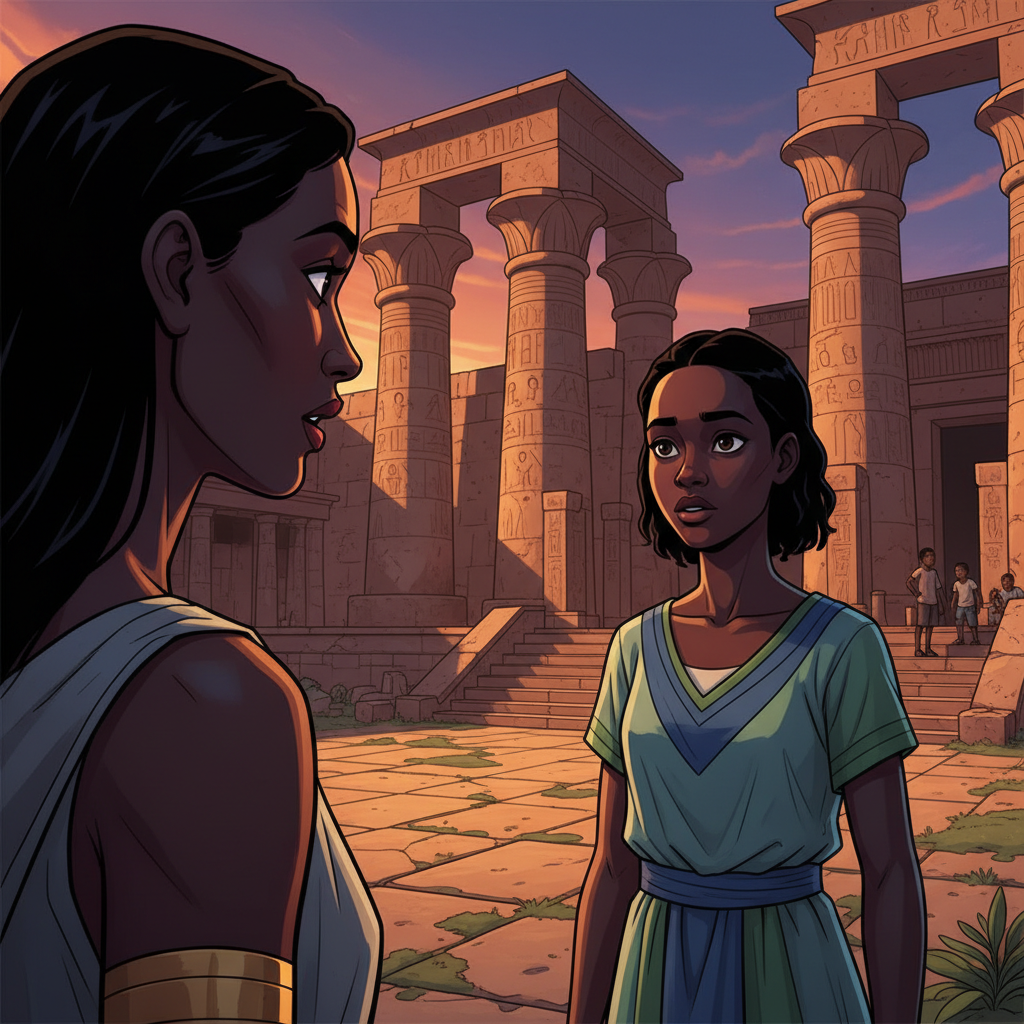
A voice behind her said: "You feel it too." Nefer turned to find Kawit standing in the courtyard — Kiya's granddaughter, a girl of fifteen with deep ebony skin and fierce, intelligent eyes. Kawit attended the temple school. She was one of its best students. She was also, Nefer now knew, the descendant of the family whose land had been stolen to build the school she loved. "I have known for years," Kawit said, sitting down beside Nefer. "My grandmother told me when I was twelve. She said I should know the truth about where I learn. It has been strange, carrying that knowledge while sitting in these halls." She was quiet for a moment. "I love this temple. It taught me to read. It is teaching me to think. And it was built on something my family lost. I do not know how to hold both of those things at the same time. But I hold them anyway, because they are both true."

Kawit looked at Nefer with eyes that were older than her years. "What do you think the kenbet will decide?" she asked. Nefer shook her head. "I do not know. I have presented both sides as fairly as I could. But I do not think there is a decision that will satisfy everyone. If the land is returned, the community loses its heart. If it is not returned, my grandmother's family is told — again — that their suffering does not matter enough." Kawit considered this. "What if the question is not about the land at all?" she said slowly, as if the thought were forming itself as she spoke. "What if the question is about what justice looks like when perfect justice is impossible? My grandmother says stolen land is stolen land. The temple council says the community needs outweigh the family's claim. But what if both sides are asking for the same thing — to be seen? To be told that their truth matters? My grandmother has never been told, by anyone with authority, that what happened to her family was wrong. Maybe that is where justice starts."
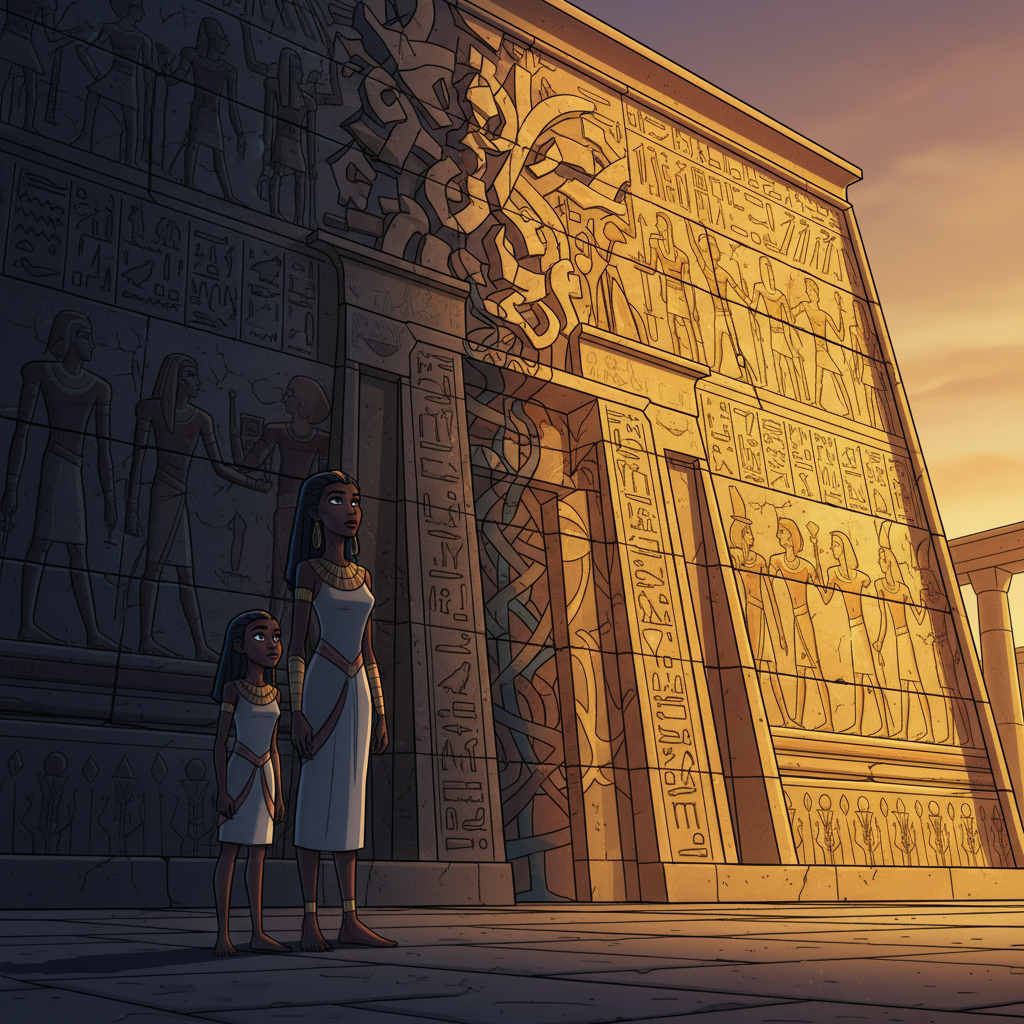
Nefer felt something shift inside her — not a resolution, not an answer, but a widening of the frame. She had been thinking about this case as a binary: return the land or keep it. Kiya's claim or the temple's need. But Kawit was pointing toward something more complex — the possibility that justice in a case like this was not a single decision but a process, an ongoing reckoning that acknowledged the wrong without pretending it could be fully undone. She thought about systemic Isfet — the kind of chaos that does not announce itself with a villain's laugh but instead weaves quietly into institutions, into structures, into the foundations of things that look beautiful from the outside. Nebmaat's corruption had not died with him. It had become architecture. It had become education, healing, community service. The Isfet had transmuted into something that looked like Maat, and that was what made it so hard to untangle. You could not simply cut out the injustice without cutting into the good it had produced.
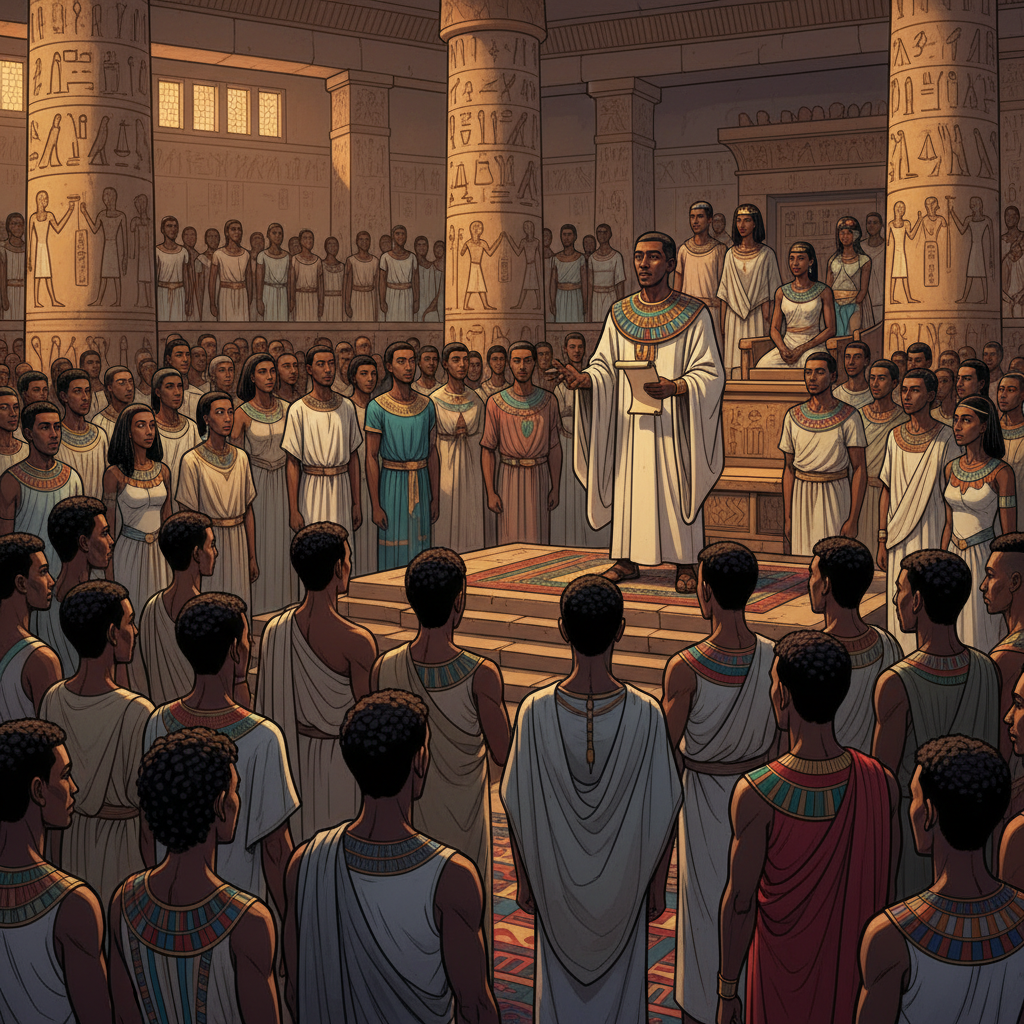
The kenbet reconvened on the fourth day. The great hall was even more crowded than before — word had spread through the city, and people who had no direct connection to the case came to watch, understanding that the principles being debated here touched every community built on land that had ever changed hands, every institution that had ever inherited a questionable legacy. The judges took their seats. The hall fell silent. Vizier Amenemhat spoke first. His voice was measured and carried the weight of his office. "This kenbet has heard testimony that forces us to confront a truth that many would prefer to leave buried: that good things can grow from corrupt roots, and that the passage of time does not transform Isfet into Maat. What was done to the Meryptah family was wrong. The records are clear. The system that should have protected them failed. And the temple that now serves this community, for all its undeniable good, stands on a foundation that was never justly laid."
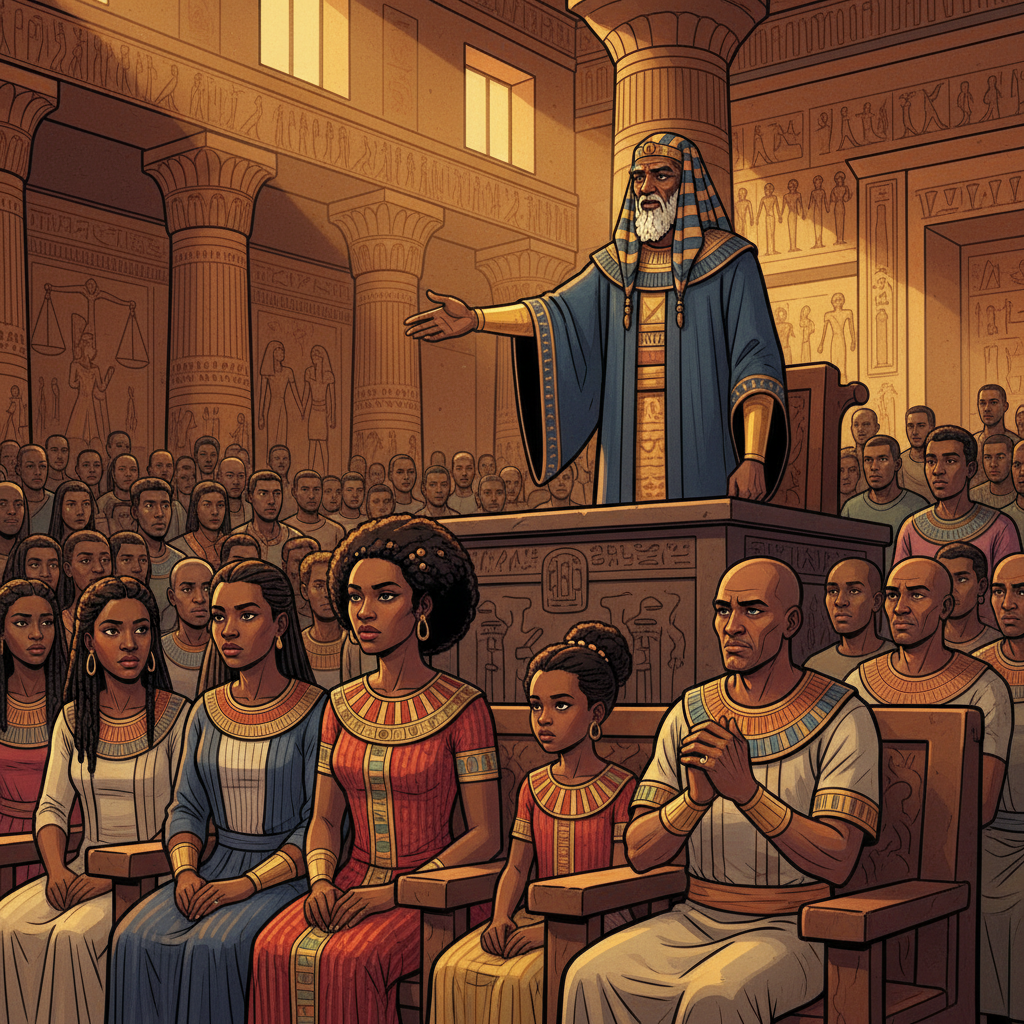
The vizier continued: "The question before us is not simple, and we will not pretend it is. Perfect justice would require us to return the land and restore the family to their rightful position — but perfect justice would also require us to unwind fifty years of history, to unbuild a temple that has educated and healed thousands, and to punish a dead man whose corruption seeded a living community. We cannot do these things. Time flows in one direction, and the kenbet cannot turn it back." He paused and looked at Kiya, who sat with her family in the front row, her dark face unreadable. Then he looked at Priest Ahmose, who sat with the temple council, his hands folded and his expression tense. "What we can do is this: we can speak the truth that was silenced fifty years ago. We can acknowledge, on the record and before the gods, that the land on which the Temple of Eternal Voices stands was taken from the Meryptah family through corruption and fraud, and that the petitions for justice filed by Meryptah were wrongly ignored by the vizier's court."
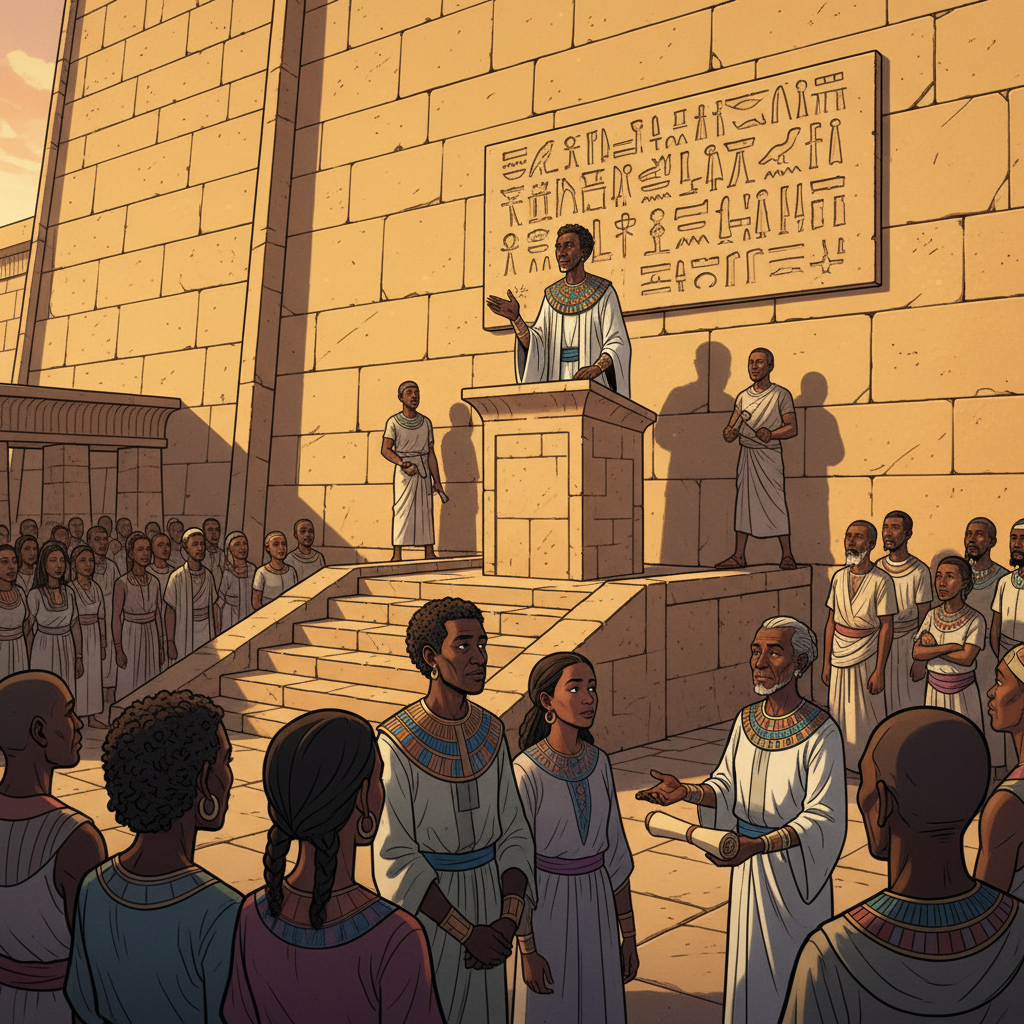
The vizier's ruling continued with specific provisions. The temple would not be demolished — the community's need was real and immediate. But the Meryptah family would receive formal recognition as the original owners of the land. A permanent inscription would be carved into the temple's eastern wall, recording the history of the land and the injustice done to the family. The temple would pay an annual stipend to the Meryptah descendants — not as rent, which would imply the family had agreed to the arrangement, but as restitution, which acknowledged that the arrangement had been imposed upon them. Additionally, a seat on the temple council would be reserved for a Meryptah descendant in perpetuity, ensuring that the family's voice was heard in the governance of the institution that occupied their land. And a scholarship fund would be established in Meryptah's name, guaranteeing that any child of the family would receive education at the temple school for as long as the temple stood. These were not solutions. They were acknowledgments — formal, permanent, and inscribed in stone.
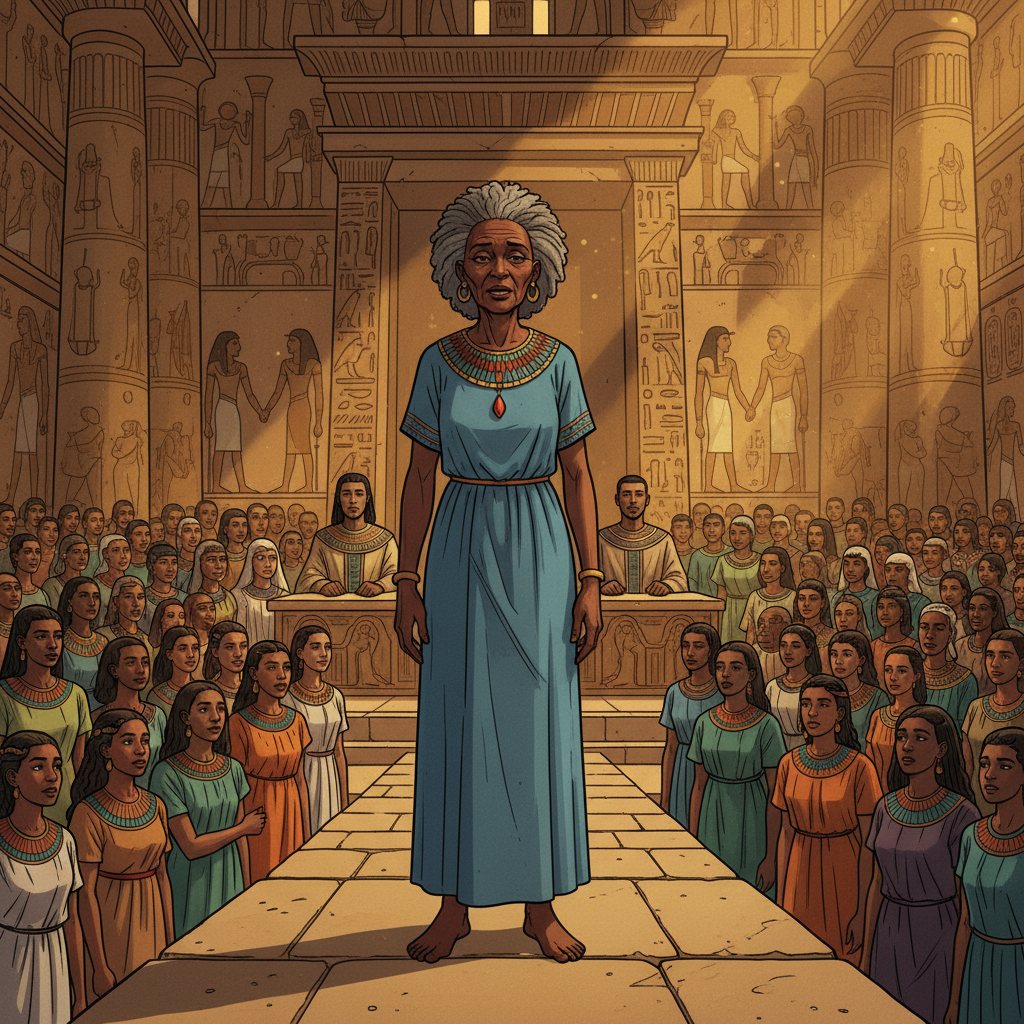
Kiya listened to the verdict with her hands clasped in her lap and her dark eyes fixed on the judges. When the vizier finished, the hall waited for her response. The old woman was quiet for a long time — so long that some in the audience shifted uncomfortably. Then she stood, slowly, and spoke in a voice that carried through the great hall like the Nile carries water to the sea. "I have waited fifty years to hear someone with authority say that what was done to my family was wrong," Kiya said. "I did not expect to hear it in my lifetime. I am grateful that I have." She paused. "I accept this ruling. Not because it is perfect — it is not. My father's land is still beneath that temple, and no inscription can give it back to him. But the truth has been spoken. My father's name has been said aloud in a court of law, and the lie that buried him has been uprooted. For the first time in fifty years, the record is straight. That is not everything. But it is something. And something is more than we have had."
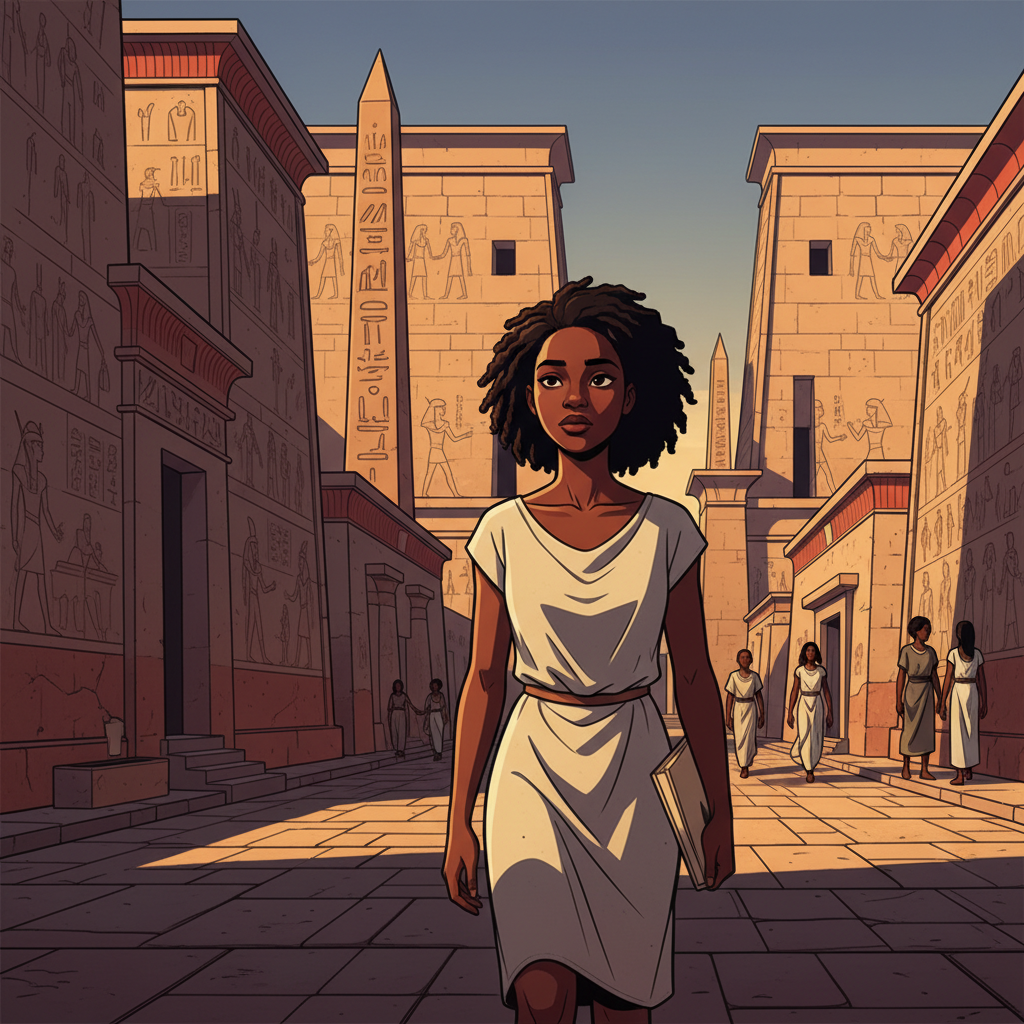
Priest Ahmose bowed to Kiya, deeply and without reservation. "The temple accepts this ruling," he said, "and we accept the truth it contains. We will carry this history in our walls and in our governance, not as a burden but as a reminder that the ground we serve on was not always ours, and that the community we have built has a debt it must continually honor." His words were sincere, and Nefer could see that they cost him something — the comfortable certainty that the temple's good work was untainted had been permanently altered. The hearing ended, but the questions it raised did not. Nefer walked home through the evening streets of Waset, her papyrus case under her arm, her mind full of unresolved thoughts. She had presented both sides faithfully. The kenbet had rendered a judgment that was thoughtful and human and imperfect. But she could not shake the feeling that something fundamental had been exposed — not just about this case, but about every case like it, every community built on unexamined foundations, every good thing that grew from a seed of injustice.