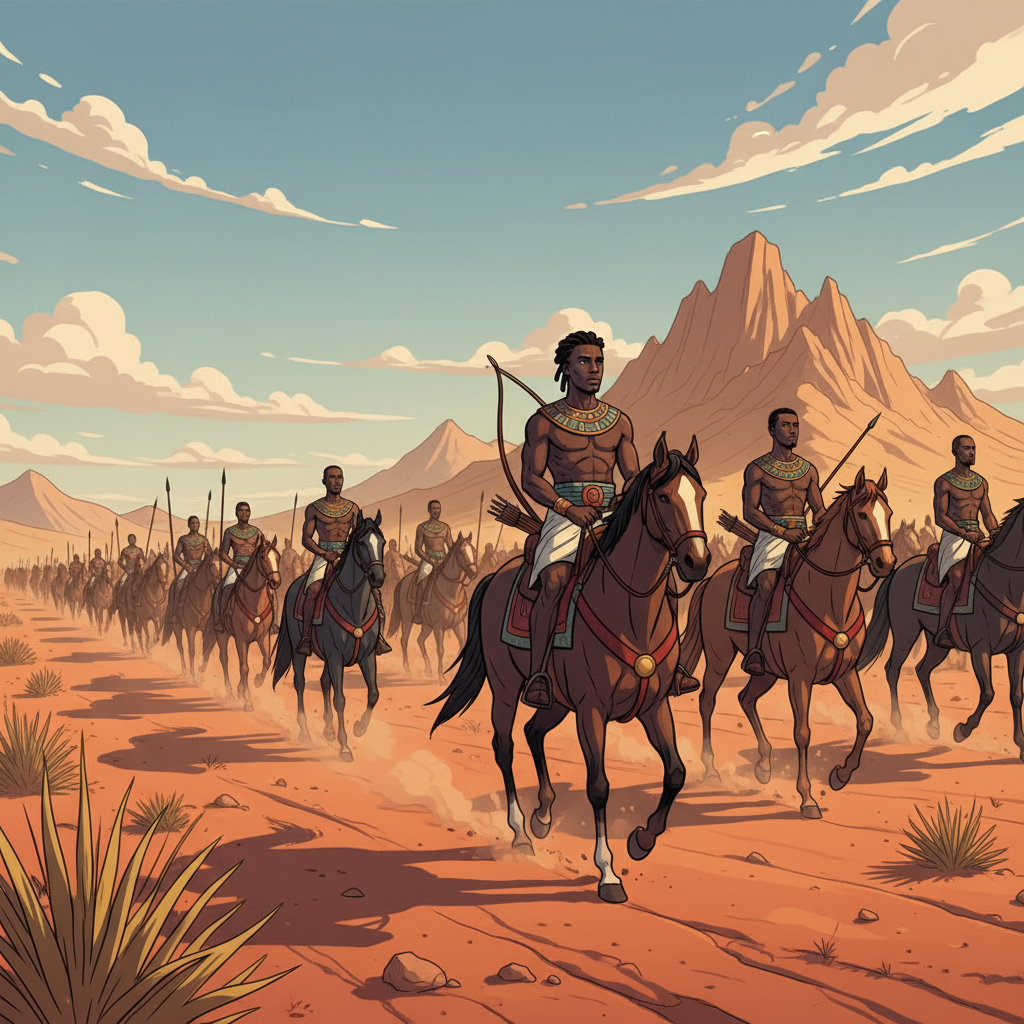
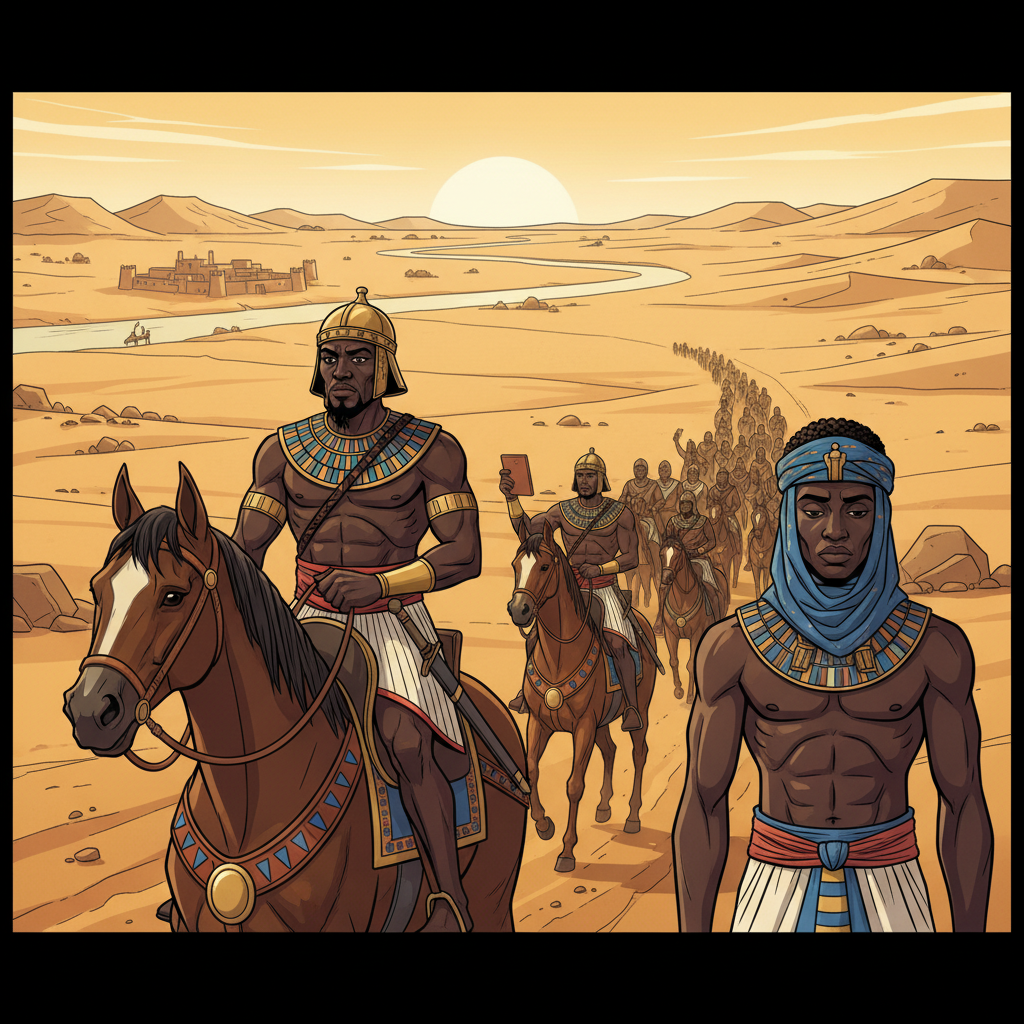
The column had been marching south for nineteen days when Khaba first recognized the shape of the hills. He was twenty-five, deep brown of skin, his hair kept in short braids the way the men of his birth-village had always worn it, and a southern-pattern belt cinched his Medjay kilt at the hip. The belt was a small disobedience the officers permitted because Khaba was Kushite-born, and the Medjay of Kemet had always drawn heavily from the south. He rode near the middle of the column with his bow slung and his eyes moving across the scrub the way any good scout's eyes moved — not hunting for anything in particular, only reading. The hills on the eastern horizon had a shape he knew. He had grown up half a day's walk from them. He said nothing to the man beside him.
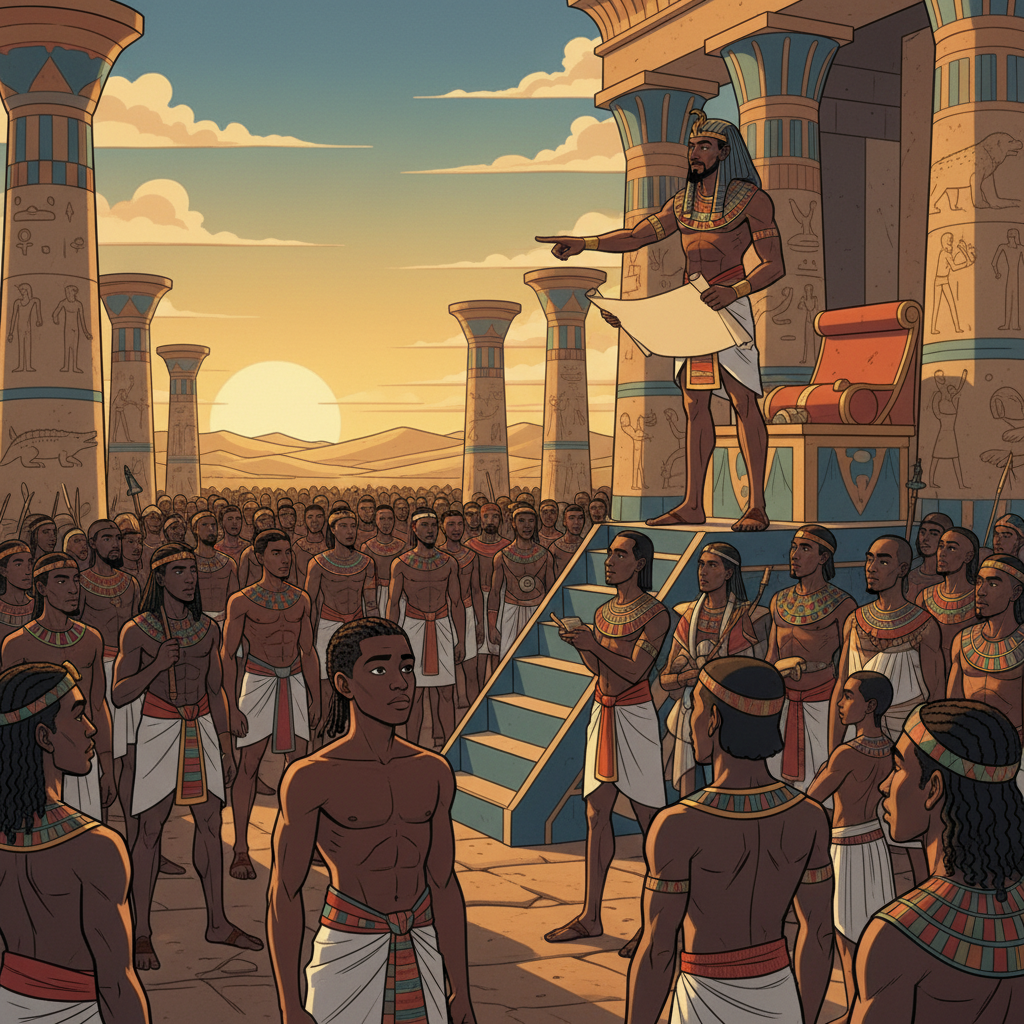
Thutmose I had ordered this campaign in the first year of his reign. The stated goal was to push the southern boundary of Kemet farther than any pharaoh before him, all the way to a place called Kurgus, where a boundary stele would be carved and set into the living rock to mark the limit of pharaoh's reach. The soldiers and the Medjay and the supply clerks and the scribes all spoke of Kurgus the way men speak of a distant wife — something not yet seen but already owned. Khaba had heard the name a hundred times on the road. To the officers it was a word on a map. To him it was ground he had walked as a boy on visits to his mother's sister. The stele and the boundary would be planted in soil his grandfather had hoed.
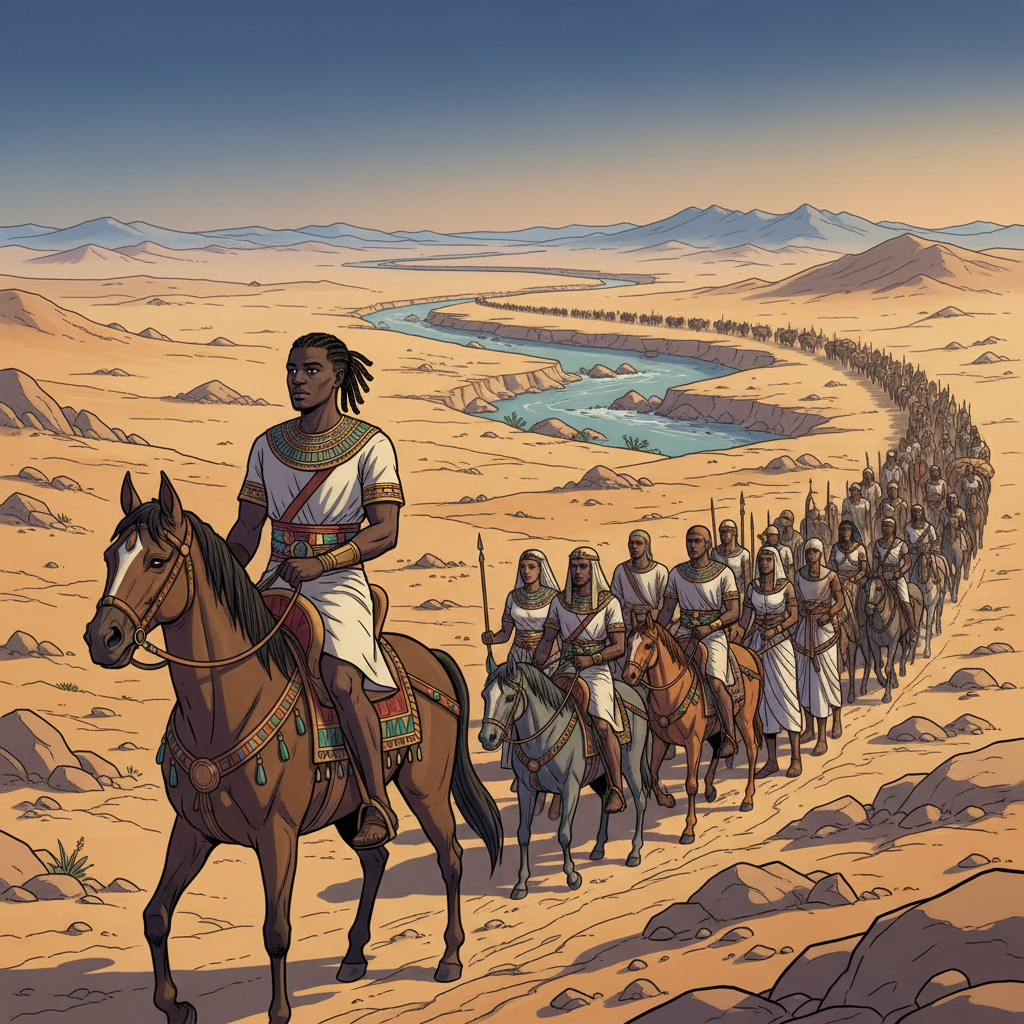
He had sworn the Medjay oath at twenty-one, in Waset, in front of a captain who had looked him in the eye and said the oath was the same for southern-born and northern-born — the same Maat, the same duty, the same cost if broken. Khaba had meant every word. He still meant it. But an oath sworn in a courtyard in Waset and an oath tested on the road to Kurgus were not quite the same oath. He had begun to understand this somewhere around the tenth day of the march, when the column crossed the second cataract and the air itself began to smell like his boyhood. He rode quietly and kept his composure. Composure, his father had taught him, was the first tool a man used when the ground beneath him began to shift.
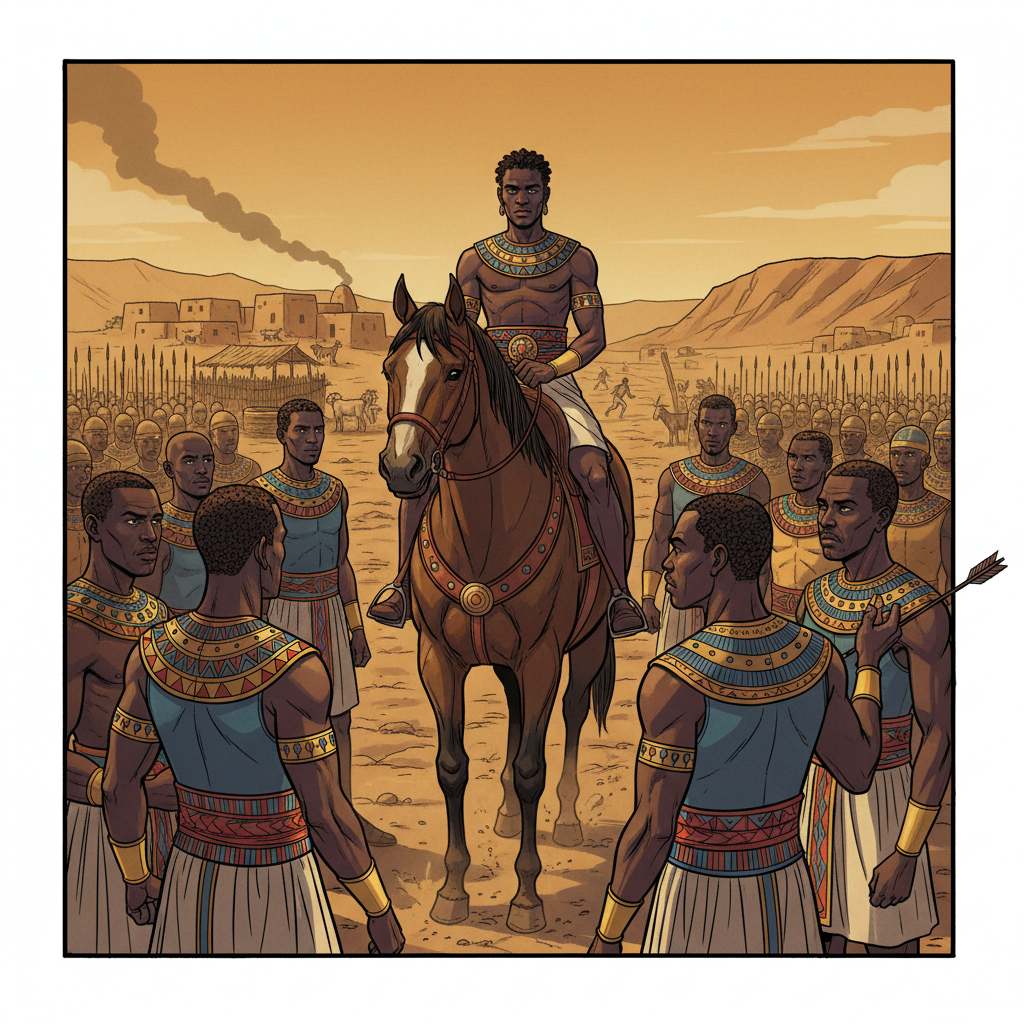
On the afternoon of the nineteenth day the column halted at a small village set against a low ridge. It was a place of perhaps forty mud-brick houses, a shared well, a handful of goats penned in a thorn kraal. The villagers had chosen, against all advice their elders could have offered, to resist the column's approach. Three young men had loosed arrows from the ridge at the Kemetic scouts the day before. One scout took a shaft in the shoulder. It was not a battle. It was barely a skirmish. But in the ledger of a pharaoh pushing a new boundary, it was an offense that had to be answered. The officers gathered at the head of the column, and Khaba, riding up to receive orders, saw the set of their jaws and understood what was coming.
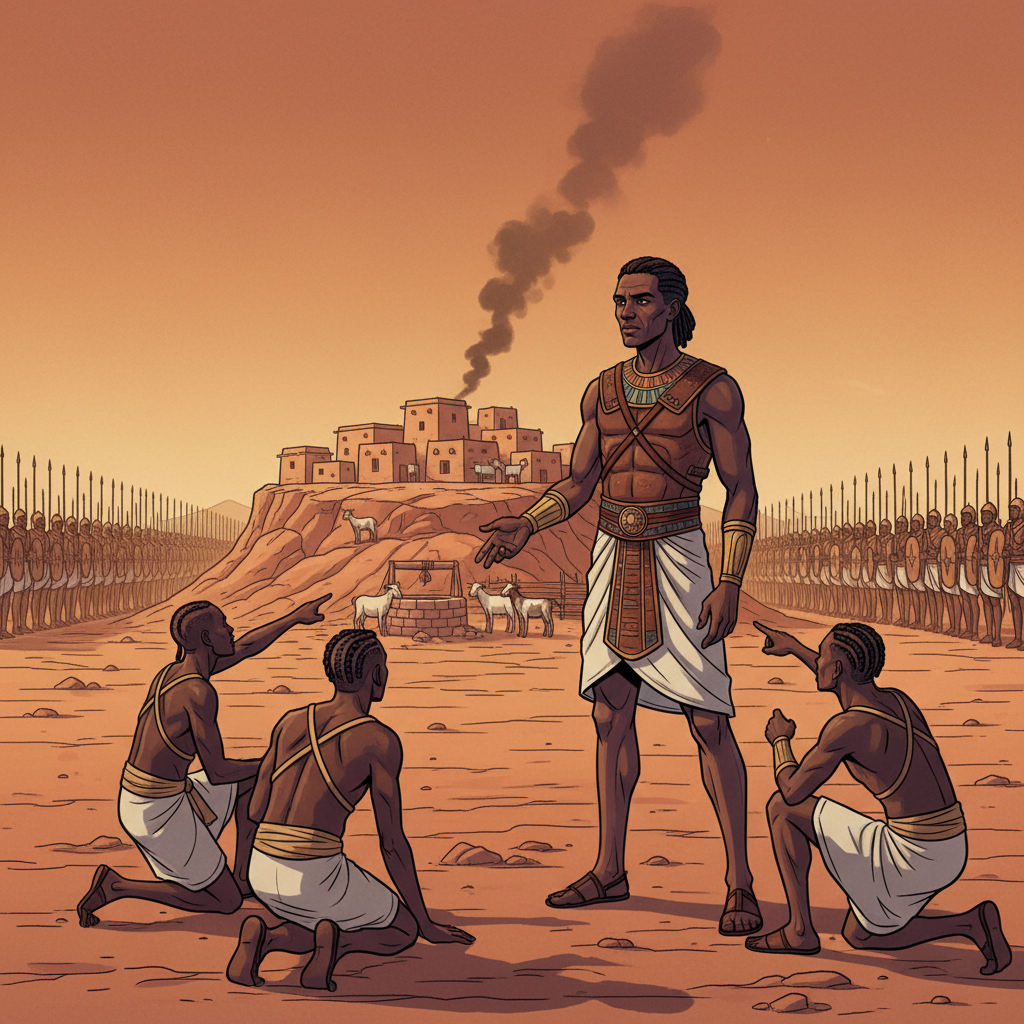
The senior officer on the field was a man named Iry-user, a Kemetic of perhaps forty, hard-faced, with the lean build of someone who had eaten regular-but-small for a long time. He had a reputation for reading a campaign the way a scribe read a ledger — balances, debts, examples. He listened to the scouts' report, looked up the ridge at the small houses, and issued his order without any particular heat in his voice. The village was to be razed. Every house. The wells filled. The goats driven off. A column of smoke to be left rising for a full day so that any other village along the route to Kurgus would read the smoke and understand what resistance cost. The order was cruel but not unusual by the customs of the age. It was received without surprise.
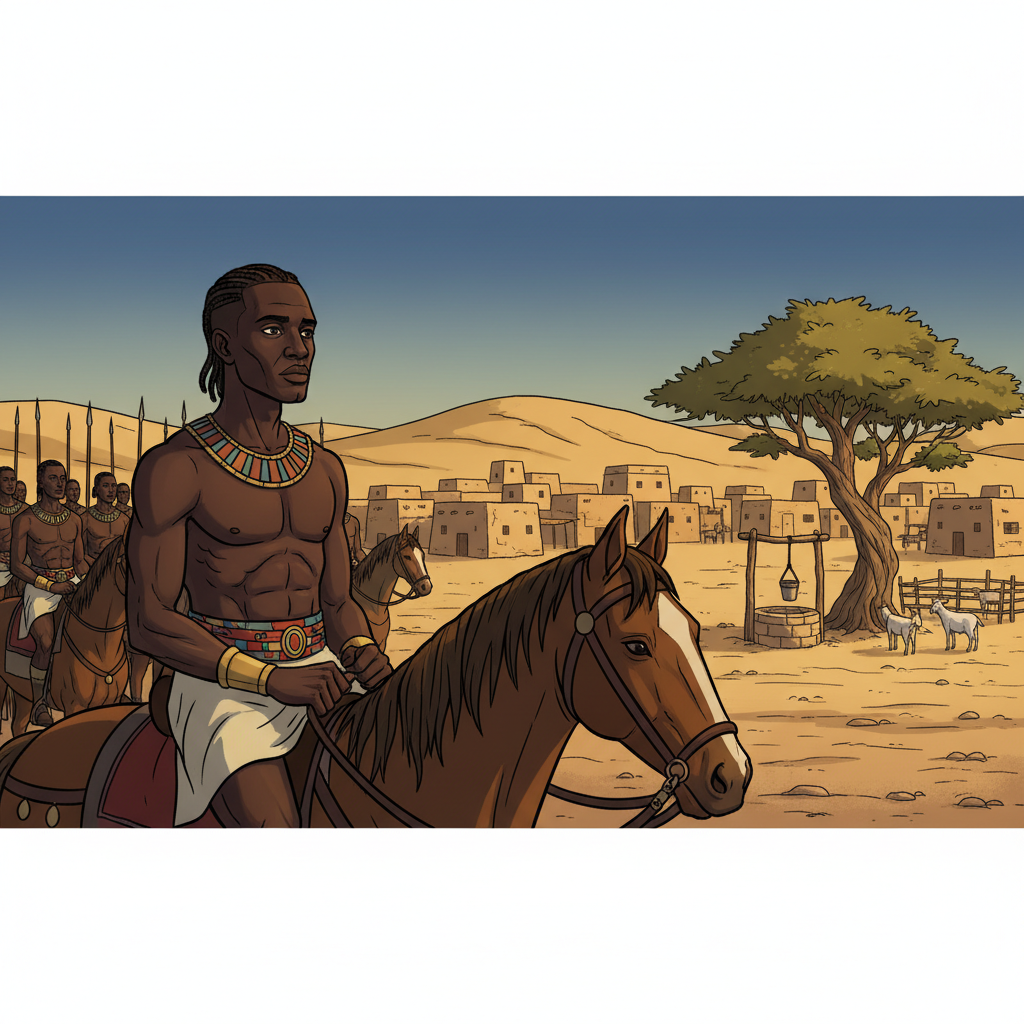
Khaba sat his horse in the second rank and felt the order settle into him like cold water into cloth. He looked at the village. He looked at the shape of the ridge behind it. He looked at the goat pen, at the single ancient tamarisk at the edge of the well, at the roofline of one particular house set slightly apart from the others on the western side. His chest did a slow, bad thing. He had been here. Not to this village — he had never walked its paths — but to a village very like it, with an ancient tamarisk and a western-set house, where his aunt had lived when he was a boy. He had not thought of her in two years. He thought of her now, very suddenly, and his hands on the reins went still.
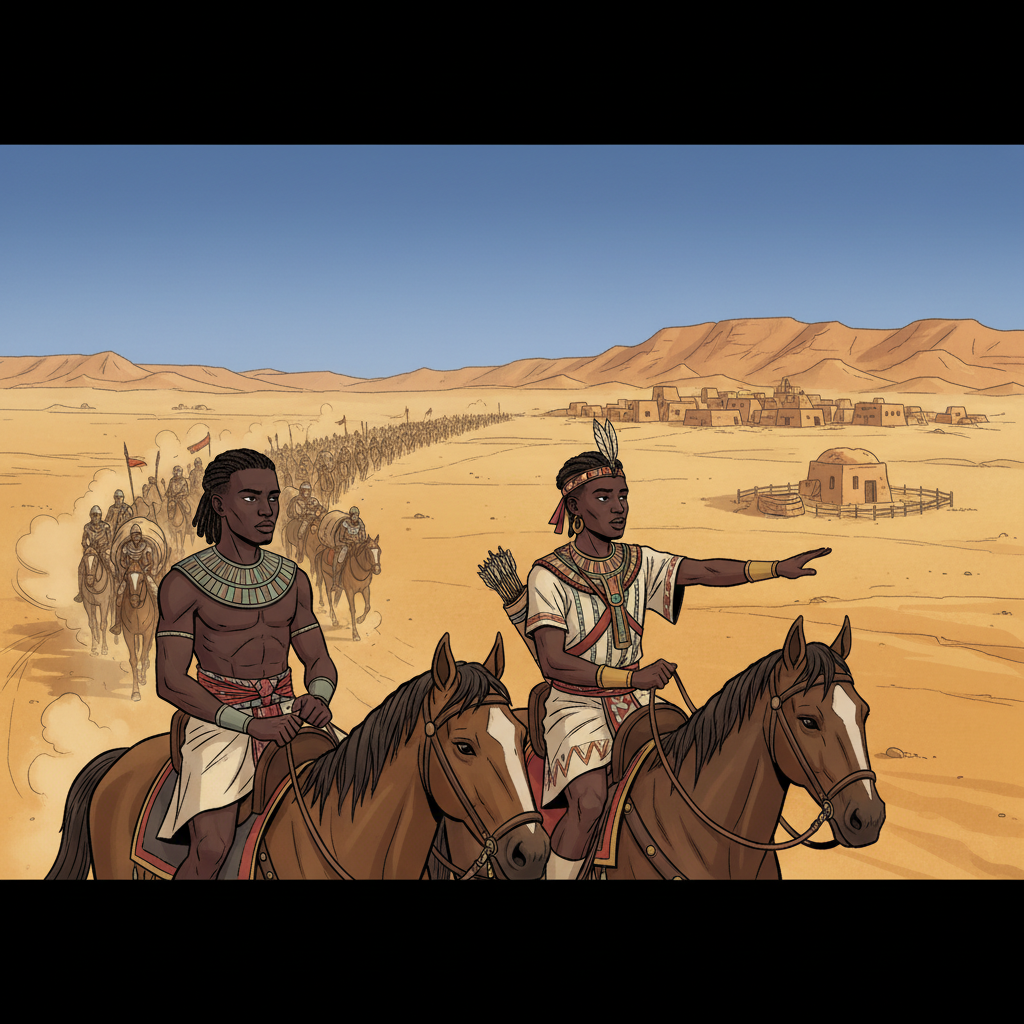
He asked one of the local auxiliaries, a Wawat man who rode with the column as a guide, for the name of the village. The auxiliary gave him a short word in the southern tongue. Khaba recognized the word. His aunt had spoken it at his mother's table when he was six, describing where her husband's people came from, the ridge-village where her son would one day inherit a share of goats and a room in the western house. Khaba kept his face still. The auxiliary did not notice anything and rode on. Khaba sat his horse and did the arithmetic, very quietly, inside his own skull. His aunt's son. The cousin he had not seen in fifteen years. If the boy had lived — and there was no reason to think he had not — he was in the village below them now.
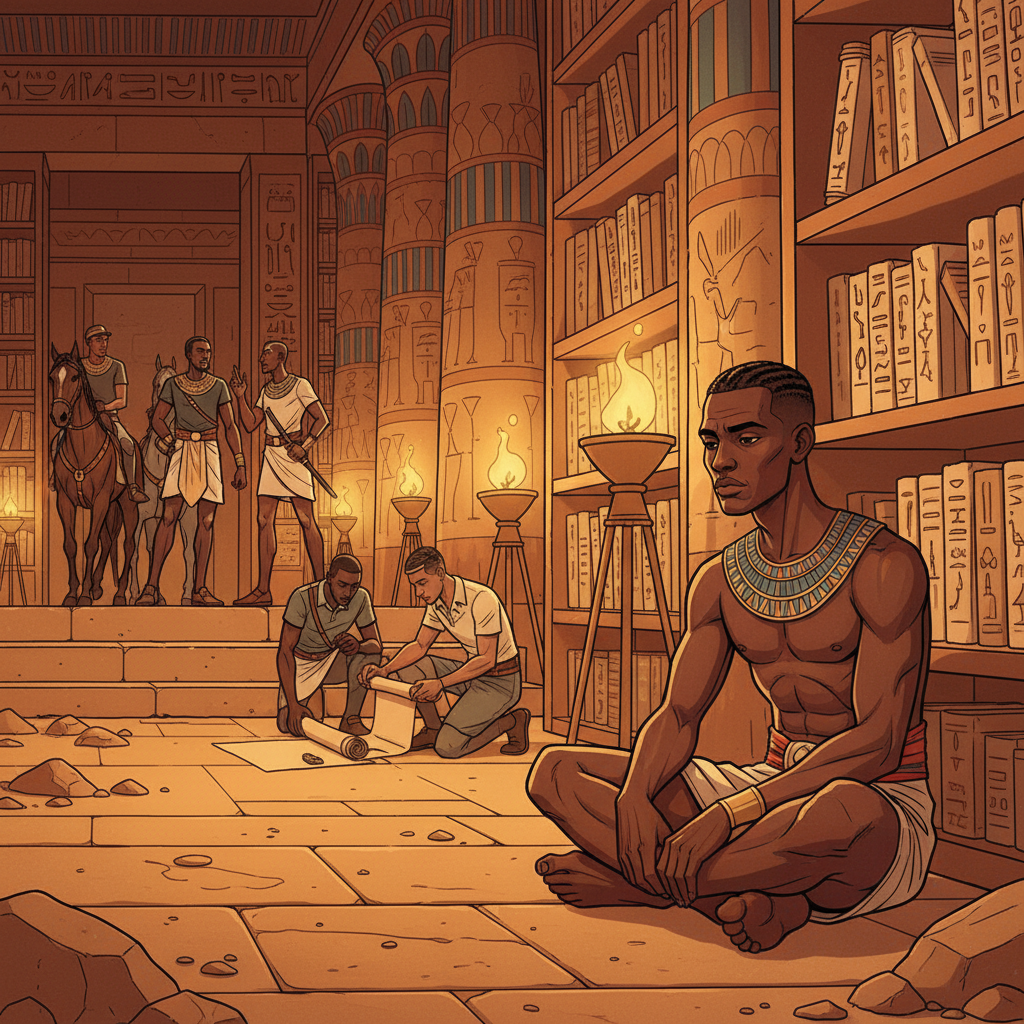
Khaba did not move for a long breath. He let nothing show. A Medjay who let panic show in front of an officer like Iry-user was a Medjay who lost his usefulness inside an hour. He watched the officers finish their conference. He watched the sergeants begin to dismount for the approach. He watched the junior scribes unroll a small length of papyrus to record the action. And he did what his father had taught him to do whenever the ground inside him moved too fast — he named each thing he was feeling, silently, as if labeling pots. Fear. That was the first one. Grief, also, though the grief was for a cousin not yet dead. Anger at Iry-user. Shame at himself, for not knowing whether he would act. He named them and set them down.
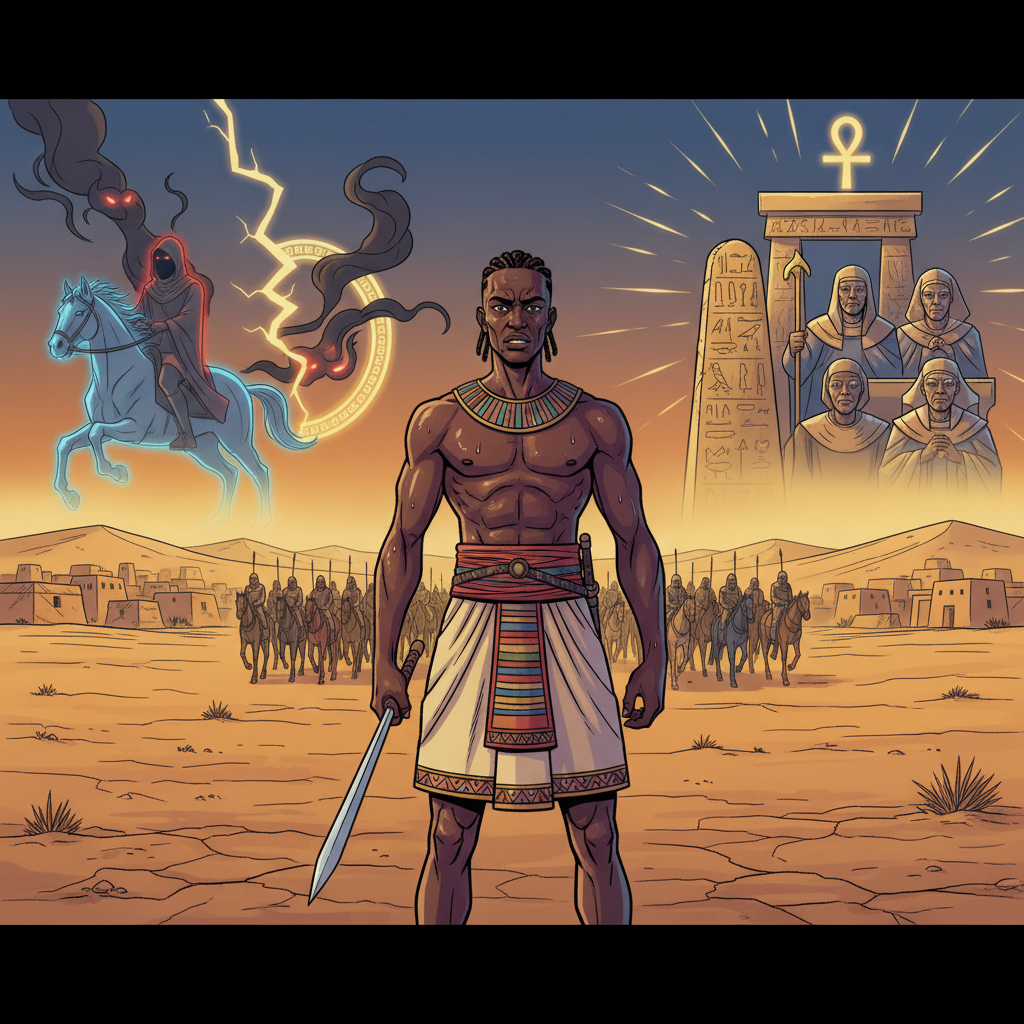
Then he did the harder work, which was to look at the options with the eyes of a man who had sworn an oath. He considered desertion first — the clean break, the fast horse, the ride south at dusk to warn the village and then vanish into the Wawat hills where his aunt's kin still lived. A part of him wanted that badly. But desertion broke his Medjay oath, and worse than that — he understood this on the hot plain in a way he had never understood it in Waset — desertion would take him out of the structure that might still save the village. A broken oath, he knew, was a small opening for Isfet to enter, and Isfet, once inside the ranks, did not leave quietly. A deserter could not speak. A deserter was nothing. His voice in the ranks, such as it was, was the only instrument he actually had.
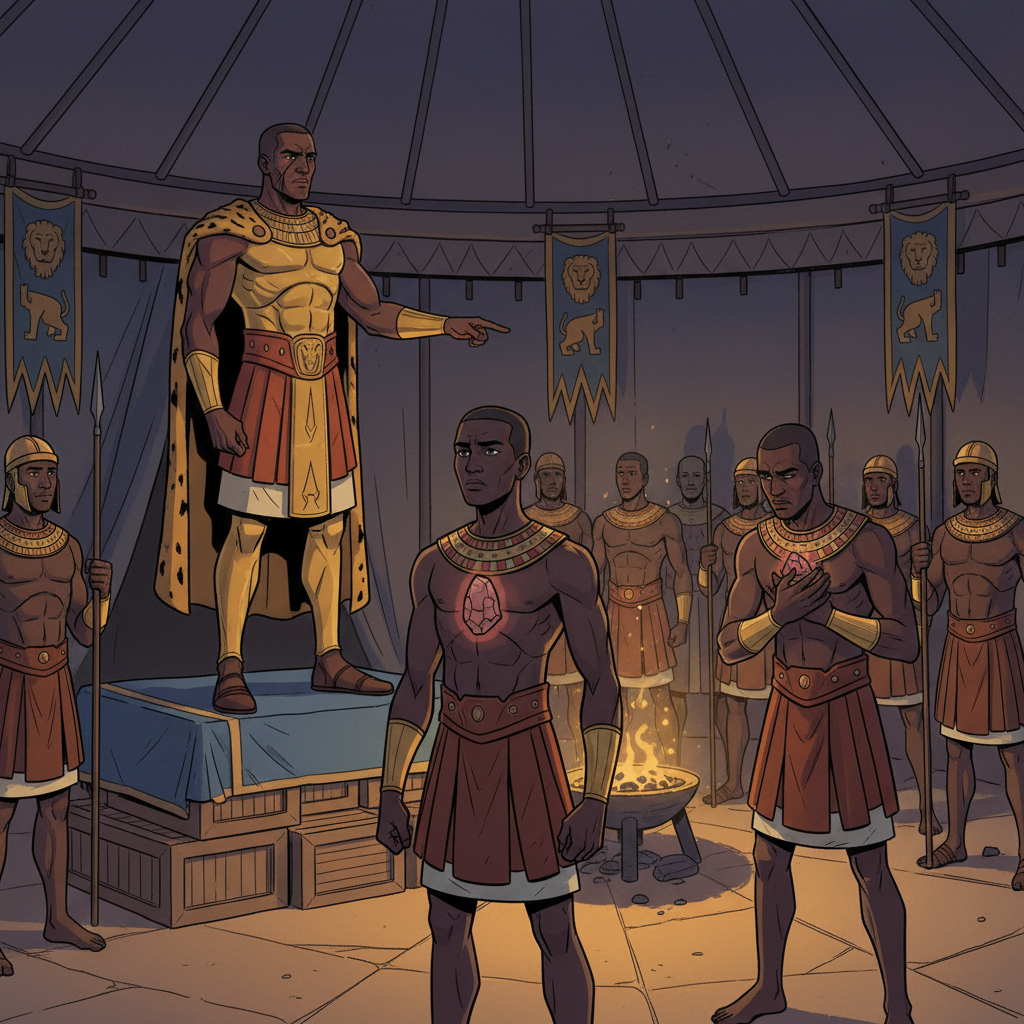
He considered obedience. Obedience was the quiet path. He could ride down the ridge with the rest, do the work with his face set, and live afterward with what that would mean. Many men did exactly that, and many of them carried it as a small stone in the chest for the rest of their lives, and some of them did not carry it at all and became the kind of officers who could issue the next order without hesitating. Khaba did not want to become Iry-user. He also did not want to become the man who had watched his aunt's son be killed because the chain of command had been convenient. Obedience here, he realized slowly, was not actually obedience to Maat. It was obedience to the loudest voice in the tent. Those were different things.
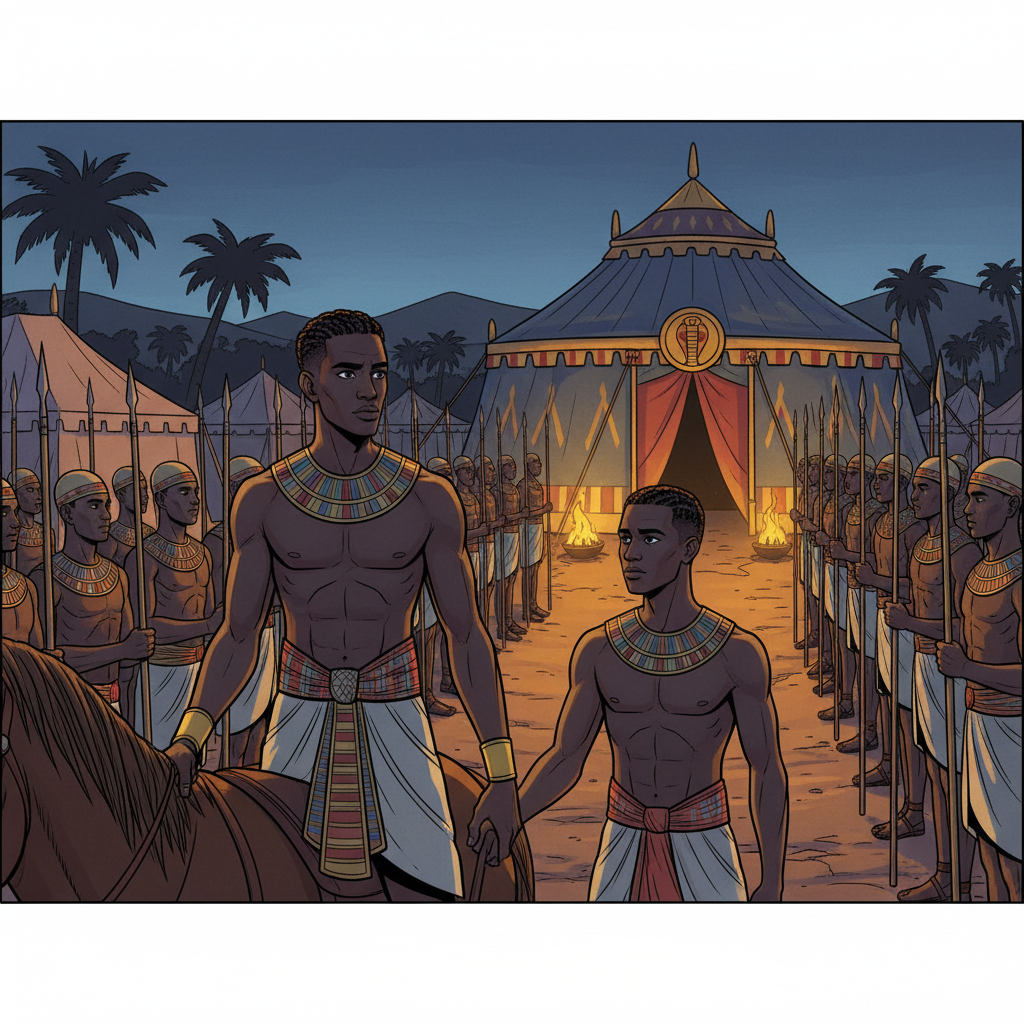
He considered speaking. Not around the ranks — not deserting to some outside priest or scribe with a complaint — but through them. Up the chain. To a senior officer who had the authority to countermand Iry-user. The thought frightened him in a different way than desertion had. Desertion was fast and clean and probably fatal. Speaking upward was slow, uncertain, required him to trust that the senior ranks still held Maat somewhere inside them, and risked his career and his posting even if it worked. It was the hardest of the three paths precisely because it kept him inside the oath and asked more of the oath than he had ever asked of it before. He sat his horse a moment longer. Then he swung down, handed the reins to a younger Medjay, and began to walk toward the senior tent.
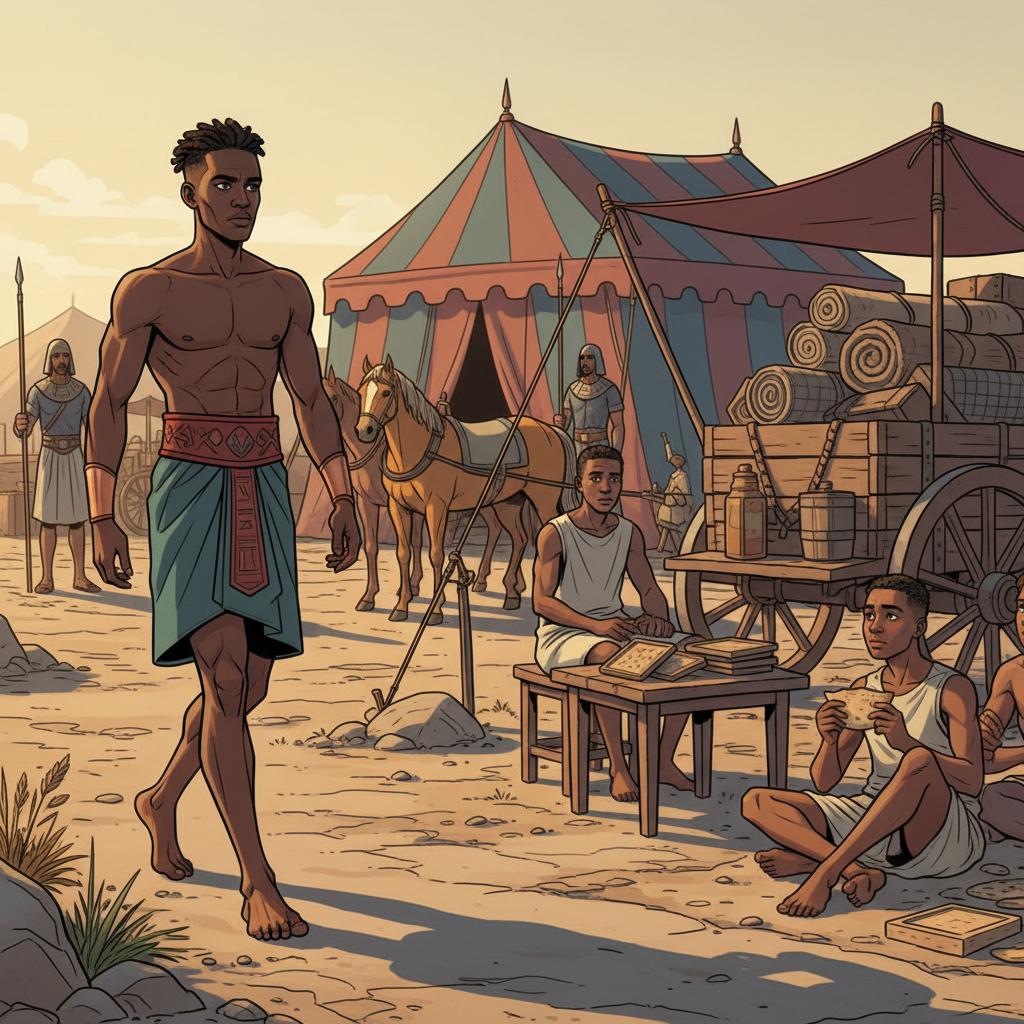
The walk took him perhaps two hundred paces across uneven ground. He did not hurry. Hurrying, at this point, would have looked like panic, and panic in front of Iry-user's sergeants would have ended the attempt before it began. He passed the picket line of horses, past a clerk stacking wax tablets, past two junior scouts eating flatbread in the shade of a supply cart. One of them looked up, saw Khaba's face, and did not say hello, which Khaba noticed but did not allow himself to interpret. He was not thinking yet about what he would say. He knew from his father that the words would arrive when they had to arrive. He was thinking only about putting one foot in front of the other, in the direction of the senior tent, without turning around.
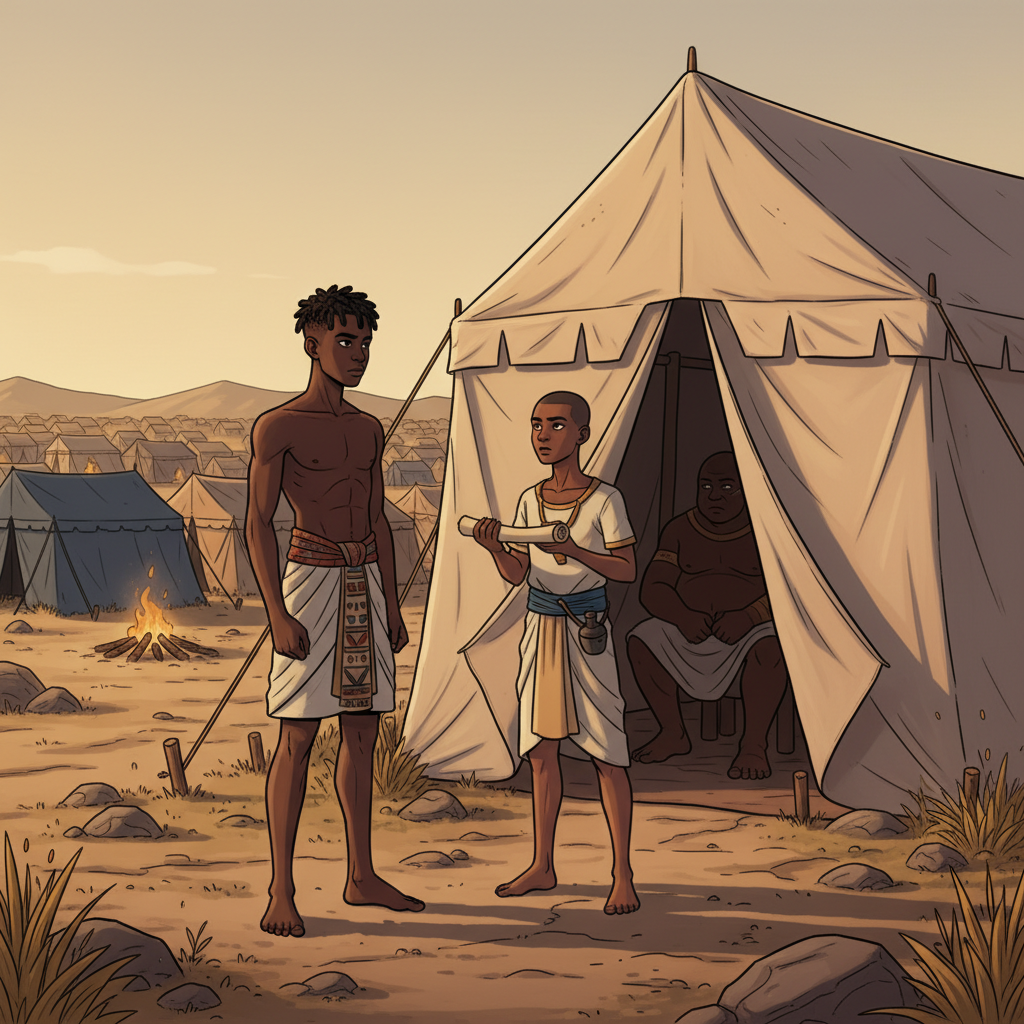
The senior tent stood apart from the field command, on slightly higher ground, its pale canvas catching the late-afternoon light. It belonged to the officer in overall charge of this march element — the man to whom Iry-user reported, and to whom even Iry-user would, by custom, defer. Khaba had not spoken to him directly in the nineteen days of the column. He had only seen him at two dawn briefings, seated at the back, a heavy figure with a shaved head and the slow watchful eyes of a man who had served a very long time. Khaba reached the tent flap. The adjutant there, a young scribe with an inkwell hooked to his belt, looked up with the mild annoyance of a man about to turn a Medjay away. Then the voice inside the tent said, quietly, "Let him in."
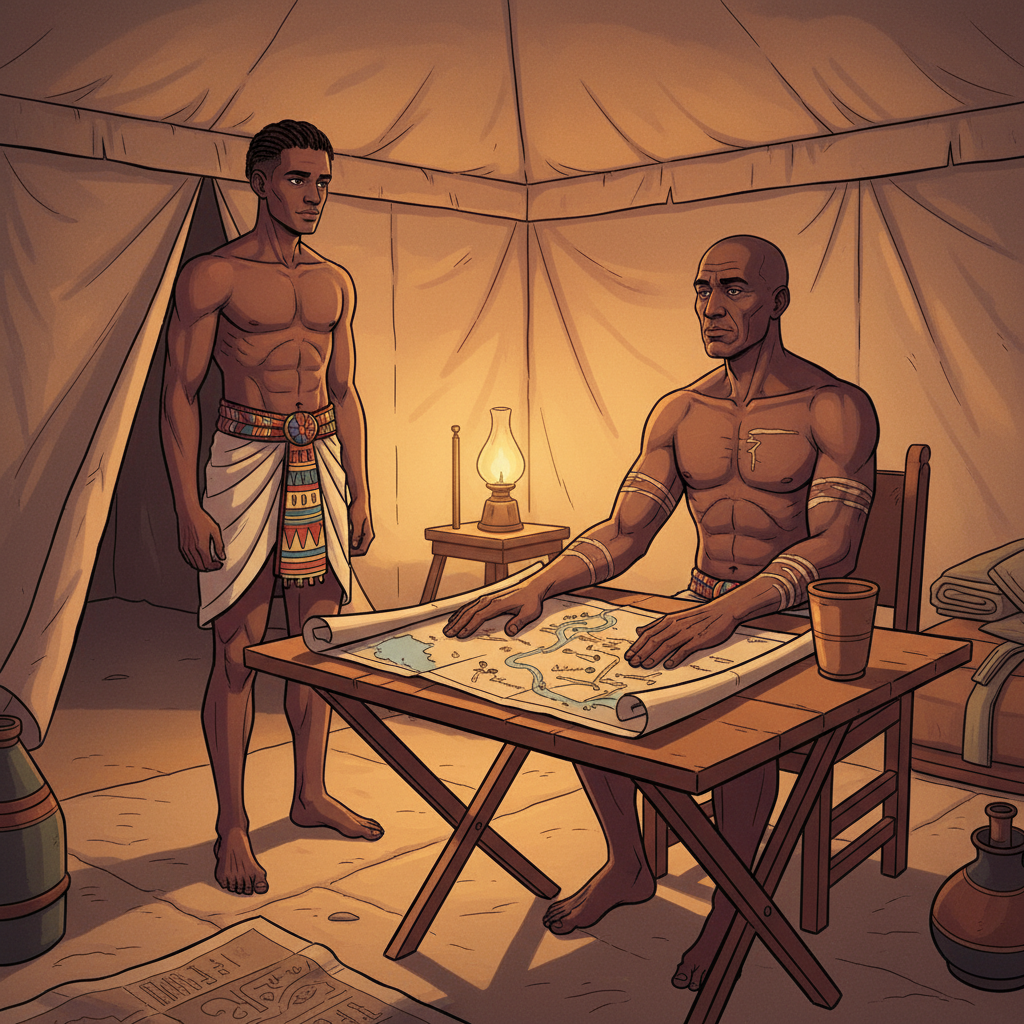
Khaba stepped through the flap and into the dim interior. The captain was seated at a folding camp table with a campaign map unrolled in front of him and a clay cup of water at his elbow. He was older than Khaba remembered from the briefings — fifties, perhaps, though his posture was still that of a man who rode a full day without complaint. His skin was deep ebony. His head was shaved clean. Across both forearms, laid flat on the table, ran the long pale ritual scars of a Medjay initiation. Khaba had seen scars like those on older Medjay all his life, but these particular scars he recognized — the pattern and the depth, the way the left arm's lower mark hooked at the wrist. This was Captain Amun-her-khepeshef. Khaba had heard the name in Waset. He had not known the captain was here.
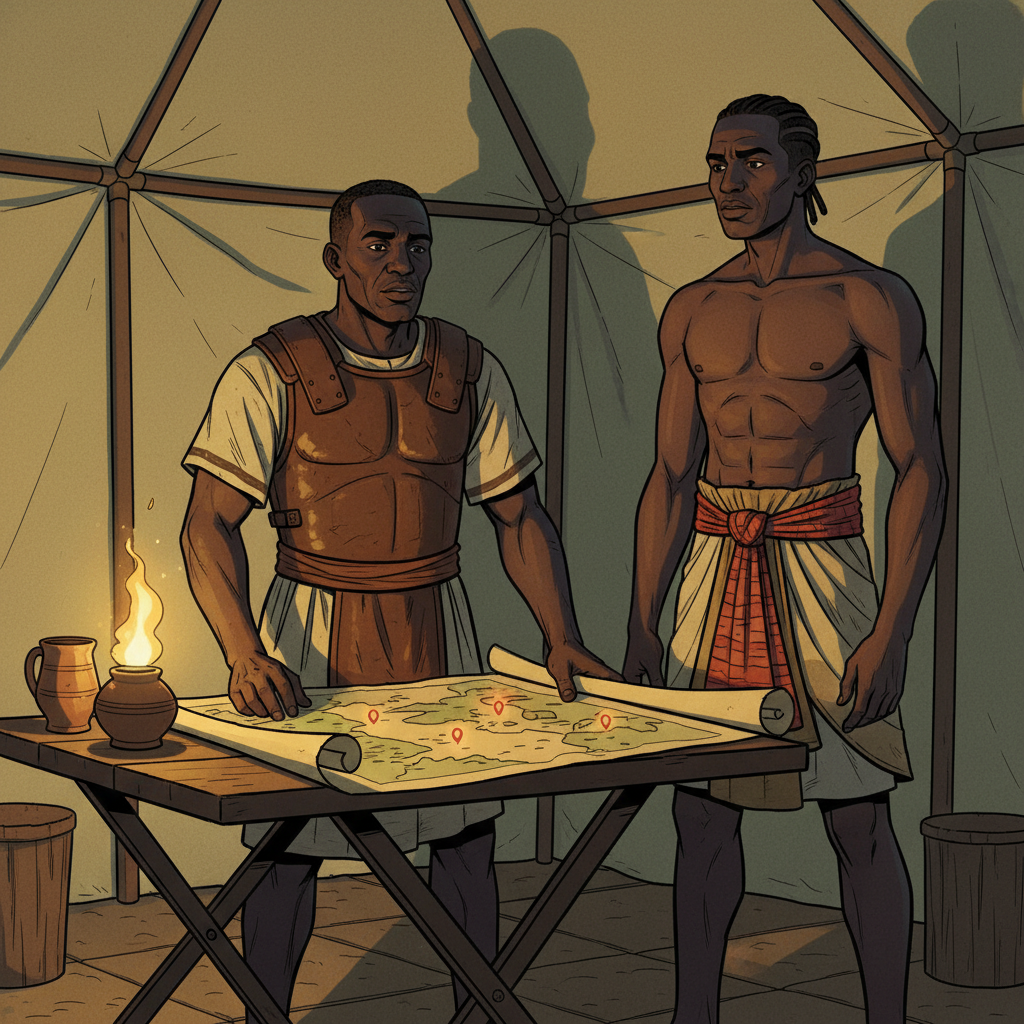
Amun-her-khepeshef looked up from the map. His eyes were tired but not unkind. He did not stand. He did not smile. He simply said, "Medjay. Speak." Khaba had rehearsed nothing, and so he did not perform anything. He stood with his hands at his sides and told the captain, plainly, what he knew. Officer Iry-user had ordered the village below razed. The resistance had been three young men with bows. The example was larger than the offense. And — here he did not look away, though a part of him wanted to — his aunt's son lived in that village. He was Kushite-born. He was asking not for his cousin alone. He was asking because the order itself was wrong under Maat, and he had no other way to say so that did not break his oath.
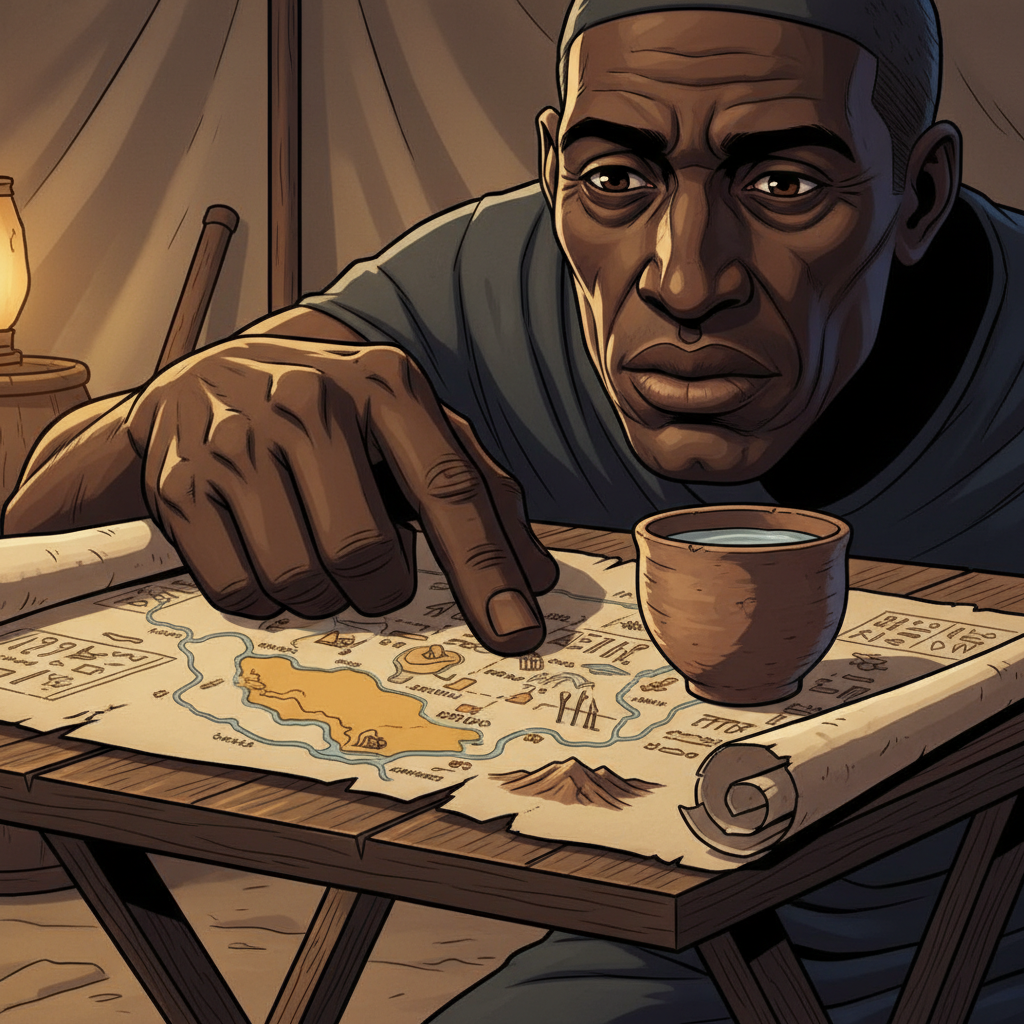
He finished speaking and waited. The captain did not answer for what felt like a long time. He looked down at the map. He looked at the cup of water. He looked at Khaba's face with the steady watchful gaze Khaba had seen at the briefings — not cold, not warm, simply measuring. Khaba understood that he was being weighed. He understood that Amun-her-khepeshef had heard a hundred requests in his life, most of them self-serving, many of them cowardly, a few of them honest, and that the captain was deciding which kind this one was. Khaba did not try to help him decide. He had told the truth as cleanly as he knew how. The rest was not his to shape. He kept his hands at his sides and his eyes on the older man's face and waited.
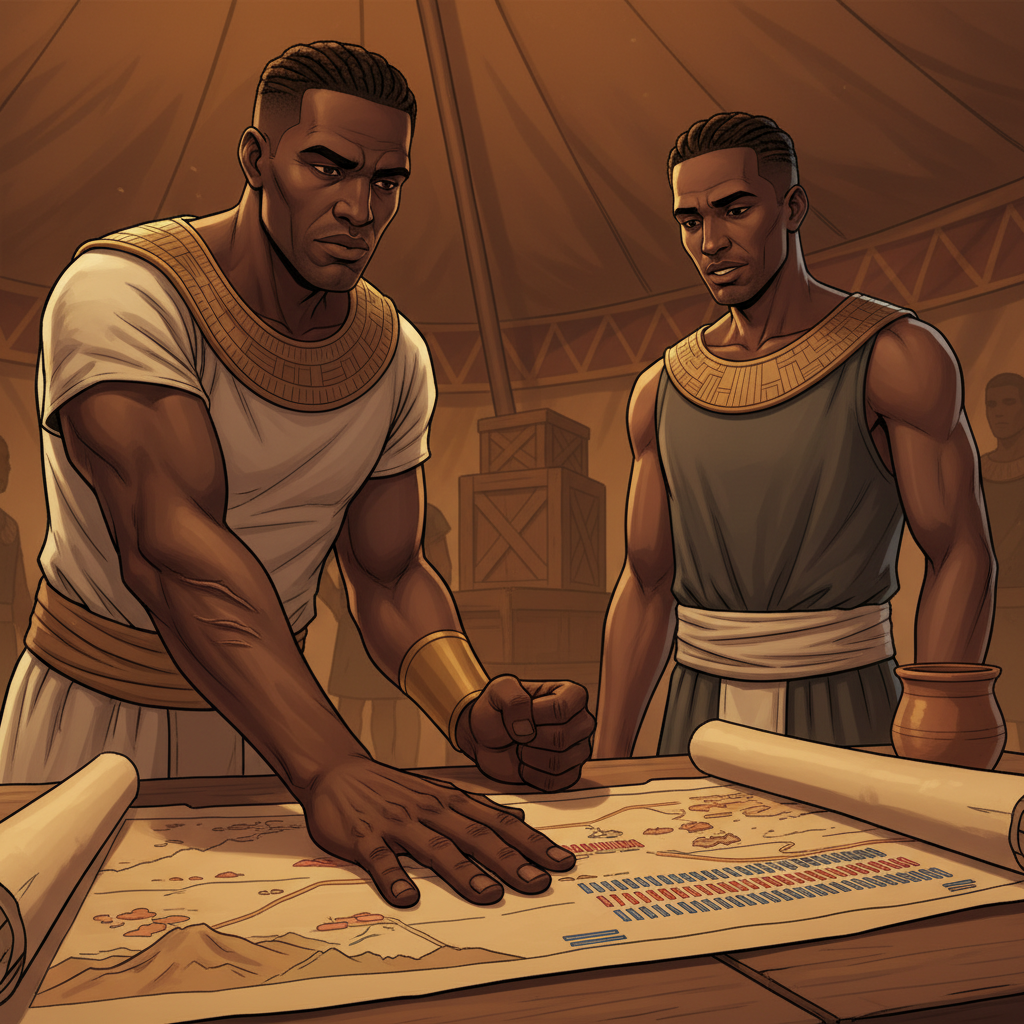
Amun-her-khepeshef set his hand flat on the map. His forearm scars caught the dim tent light. When he finally spoke, his voice was lower than Khaba expected, and quieter. "You have come the right way, Medjay. Not around the ranks. Through them." He paused. He did not smile. "I cannot promise you your village. I cannot promise your cousin. Iry-user has authority on this march, and the order he gave is within the customs of this campaign. You understand that." Khaba nodded. He did understand. The captain continued. "But the order is heavier than the offense, and you have seen a face in it. That is worth hearing. I will not tell you it will change. I will tell you this — I will carry this upward." He met Khaba's eyes. "That is what I can do."
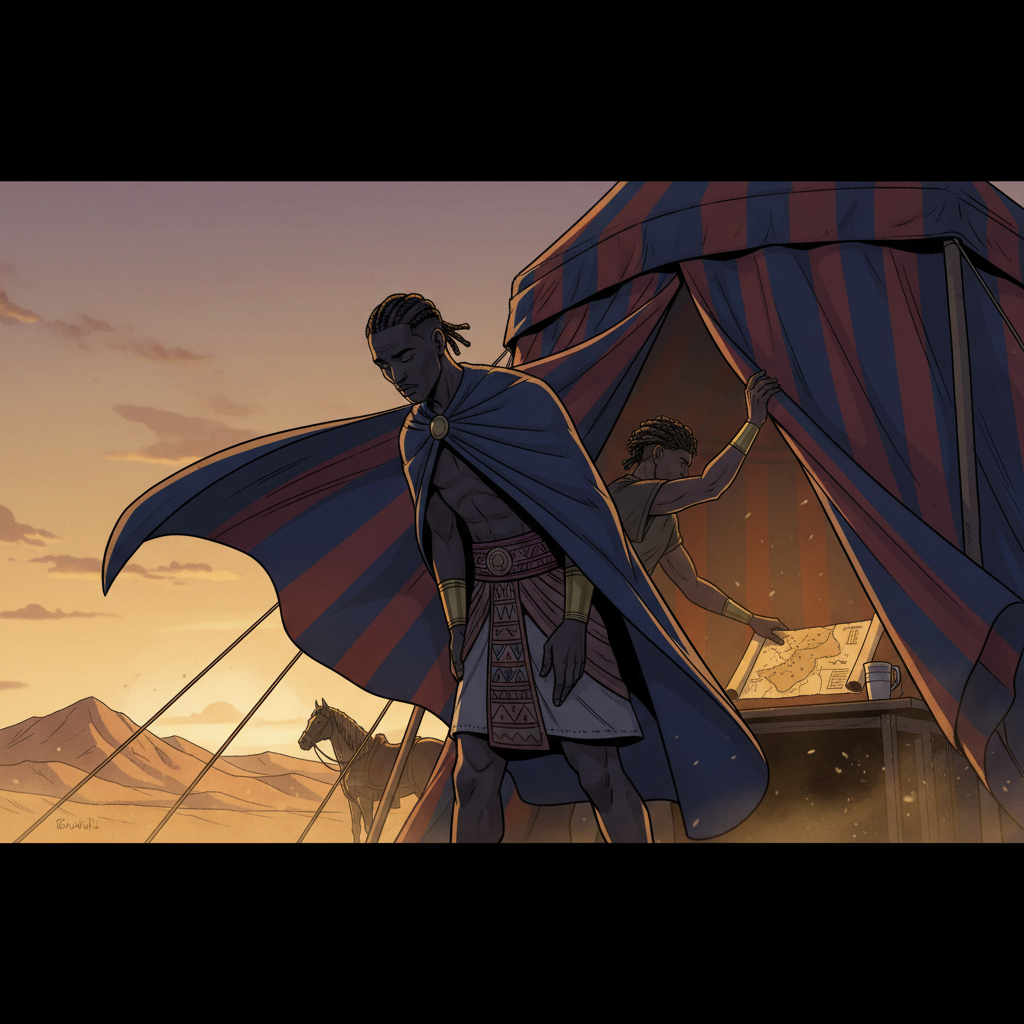
Khaba bowed his head once, the short Medjay bow that meant understood, received, thanked. He did not speak again. There was nothing else the situation required. The captain turned back to the map and the cup of water, and the adjutant at the flap pulled it aside, and Khaba stepped out into the late light of the ridge. He walked back to the picket line the same way he had walked to the tent — without hurry, without display. A part of him was shaking. He did not let it reach his hands. He mounted his horse and rejoined the second rank and sat there in the column and waited. Whatever was going to happen next was now in the slow machinery of the senior command, and the slow machinery did not move for anyone's urgency, including his.
The order came down perhaps an hour later. Khaba could not hear it given — the messenger went to Iry-user's station first, not his — but he saw it land. Iry-user read the tablet, read it a second time, and his face did a small rigid thing that Khaba recognized from officers who had been overruled in front of their sergeants. The razing was countermanded. The column would pass the village. A small fine of grain and two goats would be taken as answer to the arrows, and a warning given that any further resistance along the road to Kurgus would be met in full. That was all. No speech. No explanation. The order simply changed. Iry-user mounted and rode forward to adjust the line. Khaba kept his eyes low and his face composed, the way a man keeps his face when he has won something he cannot be seen to have won.
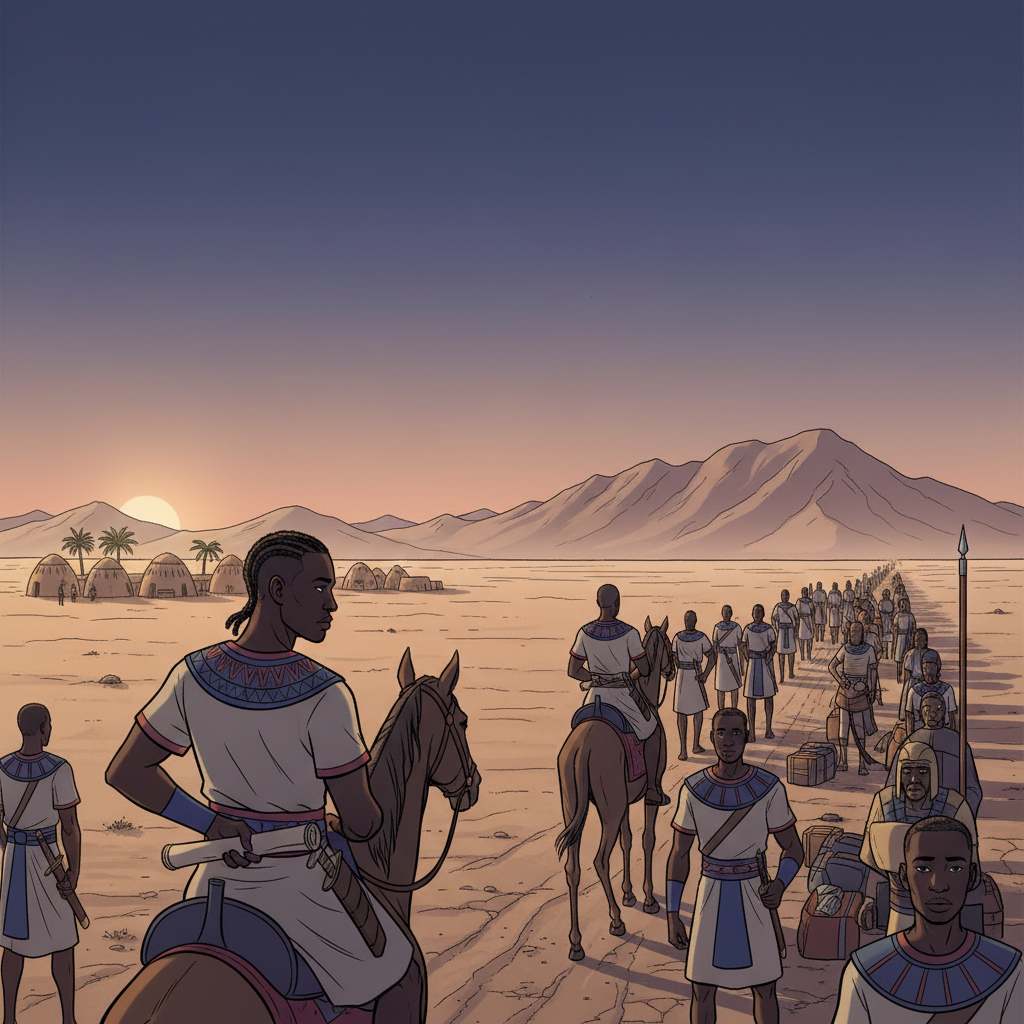
Two dawns later the transfer order arrived with the morning dispatches. Khaba was to be reassigned to a different column — a supply escort route north toward the third cataract, far from this march, far from Iry-user, far from the village he had not visited. The dispatch did not name the reason. It did not need to. He was not demoted. He was not punished. He was moved. A Medjay whose face had become a complication in an officer's tent was a Medjay better placed elsewhere, and everyone along the chain knew it without needing to say it aloud. Khaba read the dispatch in the pre-dawn light, rolled it carefully, and slid it into his belt. He packed his kit. He saddled his horse. He did not go and ask to see the village he had saved. He understood that part was over.
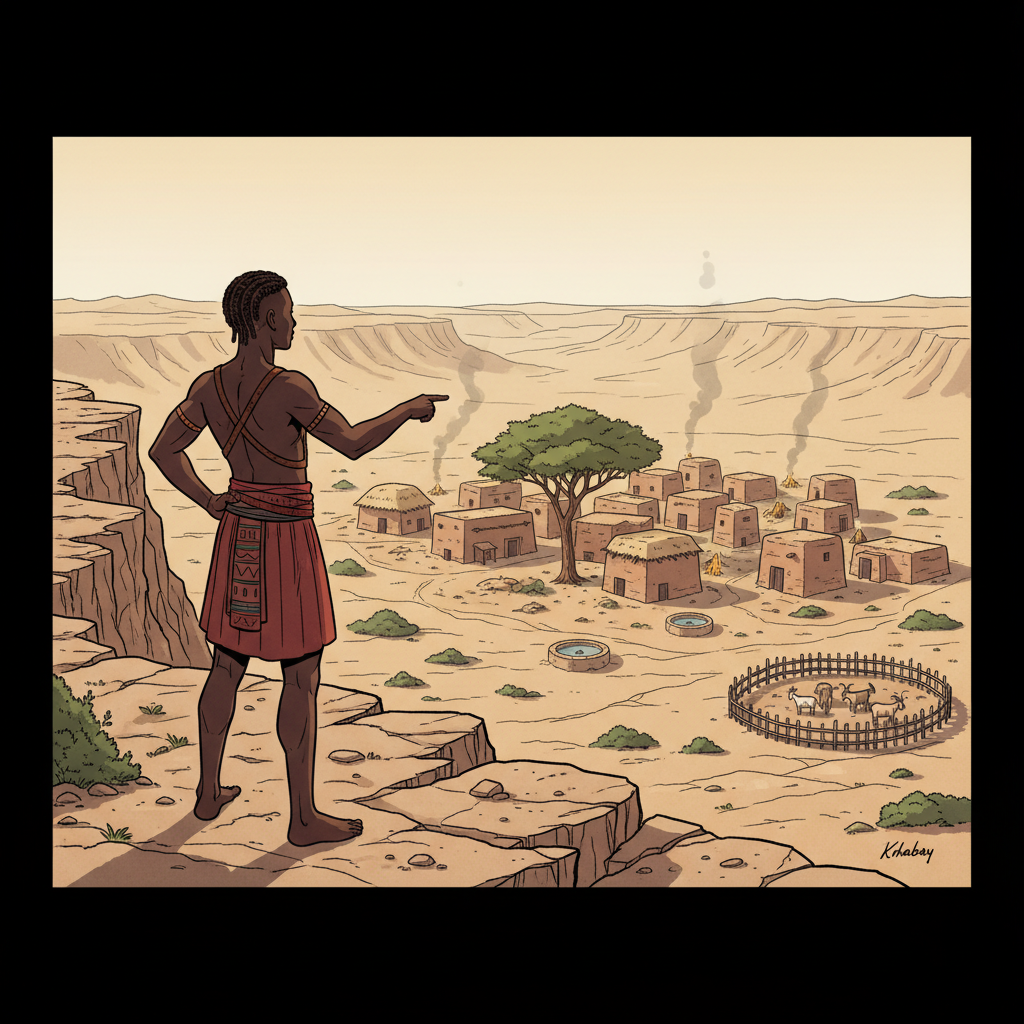
Before he rode out he walked once, alone, to the edge of the ridge and looked south. The village was still there in the middle distance, small and intact, its single tamarisk standing against the pale sky. Smoke rose from the cooking fires as it would any morning. He did not know which roof belonged to his aunt's son. He did not know if the boy was still alive at all, or if he had been one of the three with the bows. He only knew that the houses stood, that the wells were whole, that the goats were still penned. A village stood because he had spoken through the ranks. He himself would not stand here tomorrow. Maat had kept the village. It had not kept his posting. He thought about that for a long breath, and then he turned and walked back to his horse.
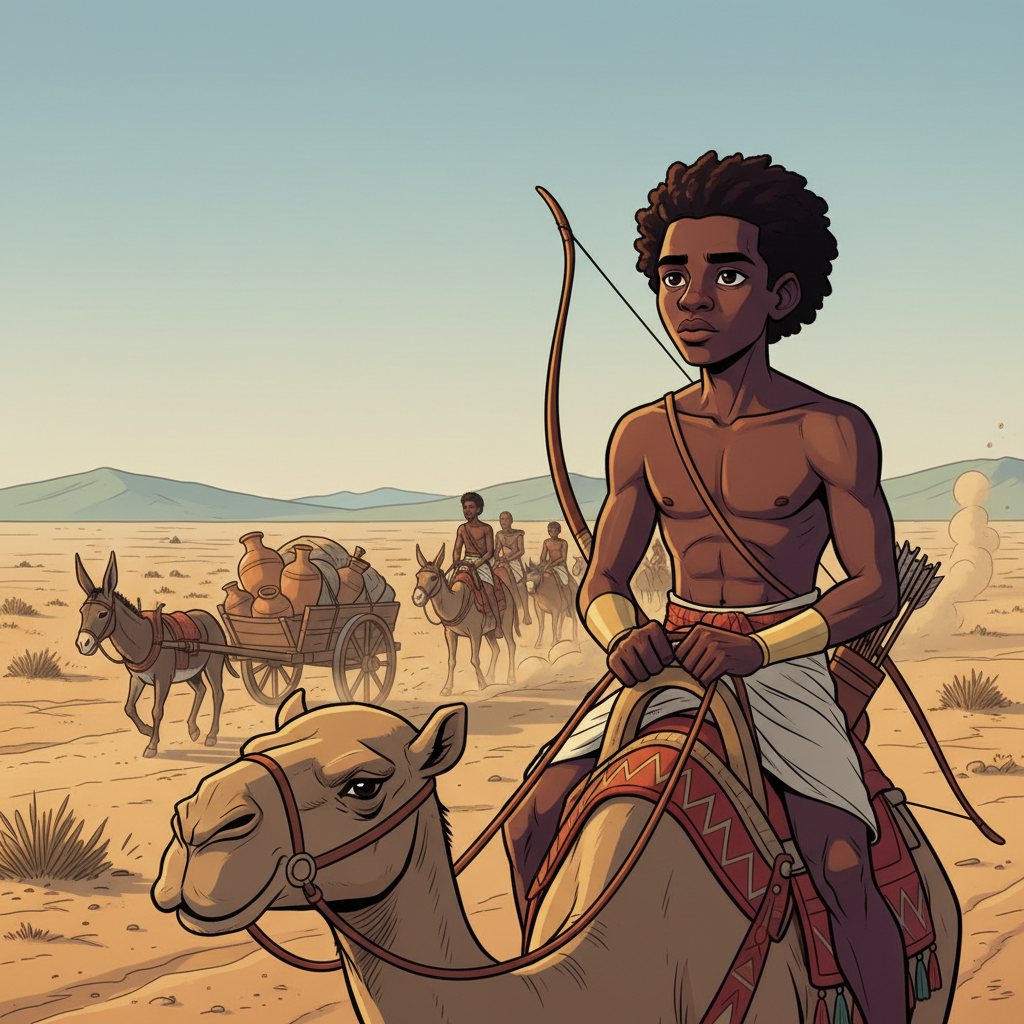
The new column moved north in the cool of the morning. Khaba rode quietly, the way he had always ridden, his bow slung and his eyes on the scrub. The other Medjay in this escort did not know his story, and he did not offer it. A supply run was a kind of small, unglamorous work that suited him well at this moment in his life. He thought sometimes, in the long empty hours of the march, about what he had learned. Truth through the ranks was slow. It required trust in men you did not know, in a senior command that might or might not hold Maat, in a process that cost you the ground you had been standing on. But it was a path. Maat lived in the ranks, not around them. He would carry that now. It was enough.