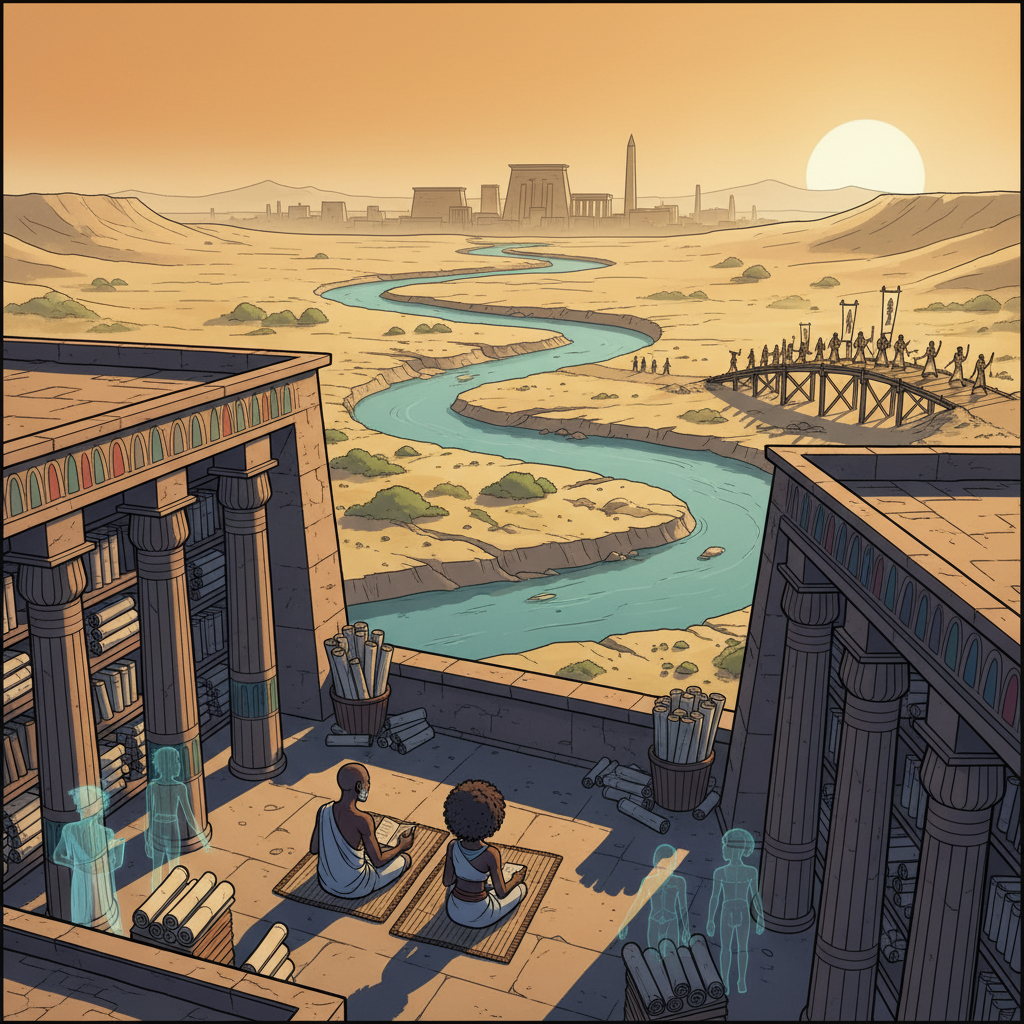
Greetings, my bright student, heir to the wisdom of ages! Come, sit beside me here in the cool shade of the Per Ankh, where the whispers of our ancestors echo from every papyrus scroll. Today, we journey back to a time when Kemet, our beloved land, was like a braided river whose strands had begun to fray. The harmony of Maat, the righteous order of our world, had weakened, allowing the shadows of Isfet, of chaos and disorder, to creep in. But fear not, for the sun always rises! Our story begins not with a clash of shields, but with a profound act of wisdom, born from the heart of Kush, our southern homeland. It was a time when our cousins from the south, with skins like polished ebony and spirits forged in the desert sun, looked north and saw their ancient sibling, Kemet, in need of a guiding hand. They knew the way to restore balance.
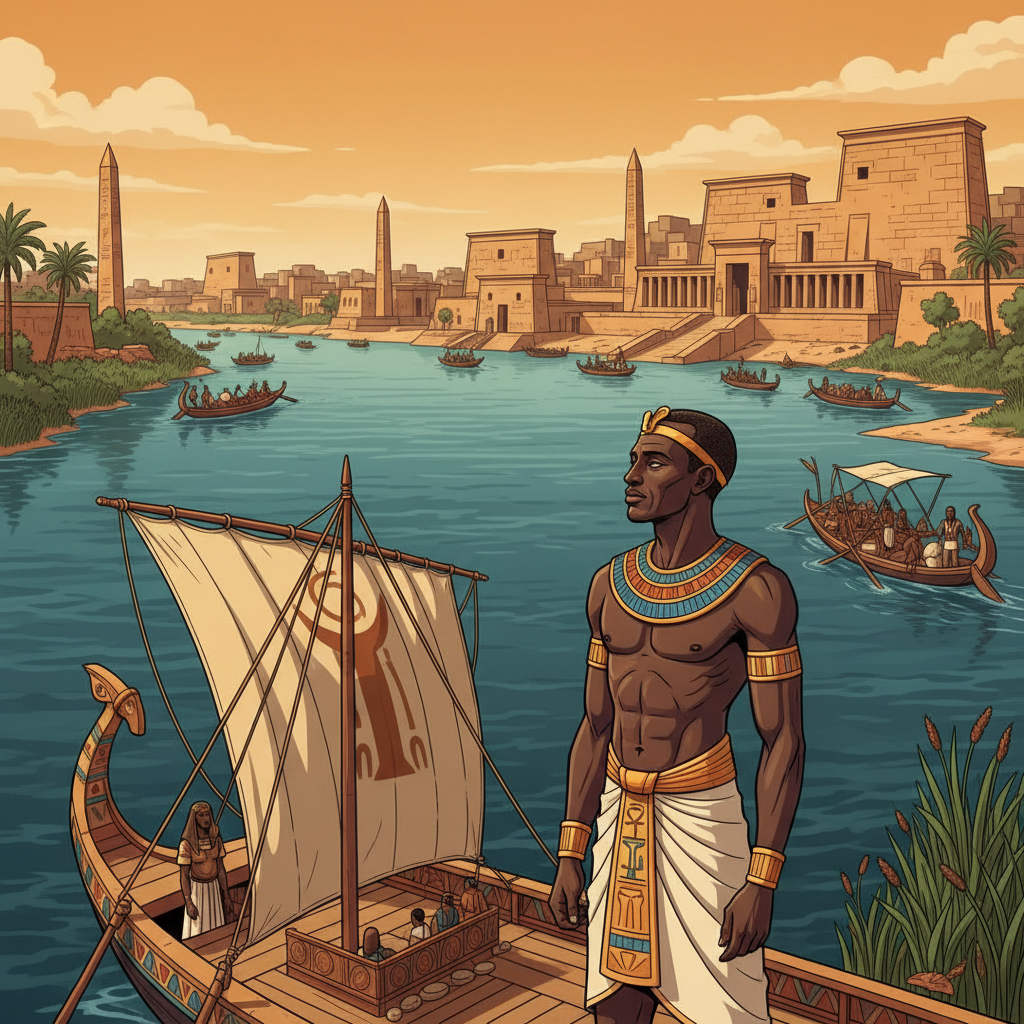
Before the great Piye led his armies, his father, King Kashta, a man whose vision stretched like the vast desert sky, understood something vital. He knew that true restoration wasn't just about power, but about the sacred heart of Kemet, about reclaiming the spiritual essence that had been neglected. He looked to Waset, our glorious city, and specifically to the highest religious office held by a woman: the God's Wife of Amun. This was no ordinary title, {name}. The God's Wife was a woman of immense spiritual authority, a living vessel for the divine power of Amun, our great neter. She oversaw vast temple estates, held the sacred keys to the southern lands, and her presence brought stability and prosperity. Kashta, with the wisdom of the Nile's ancient flow, knew that to restore Maat, he must first secure this sacred feminine lineage.
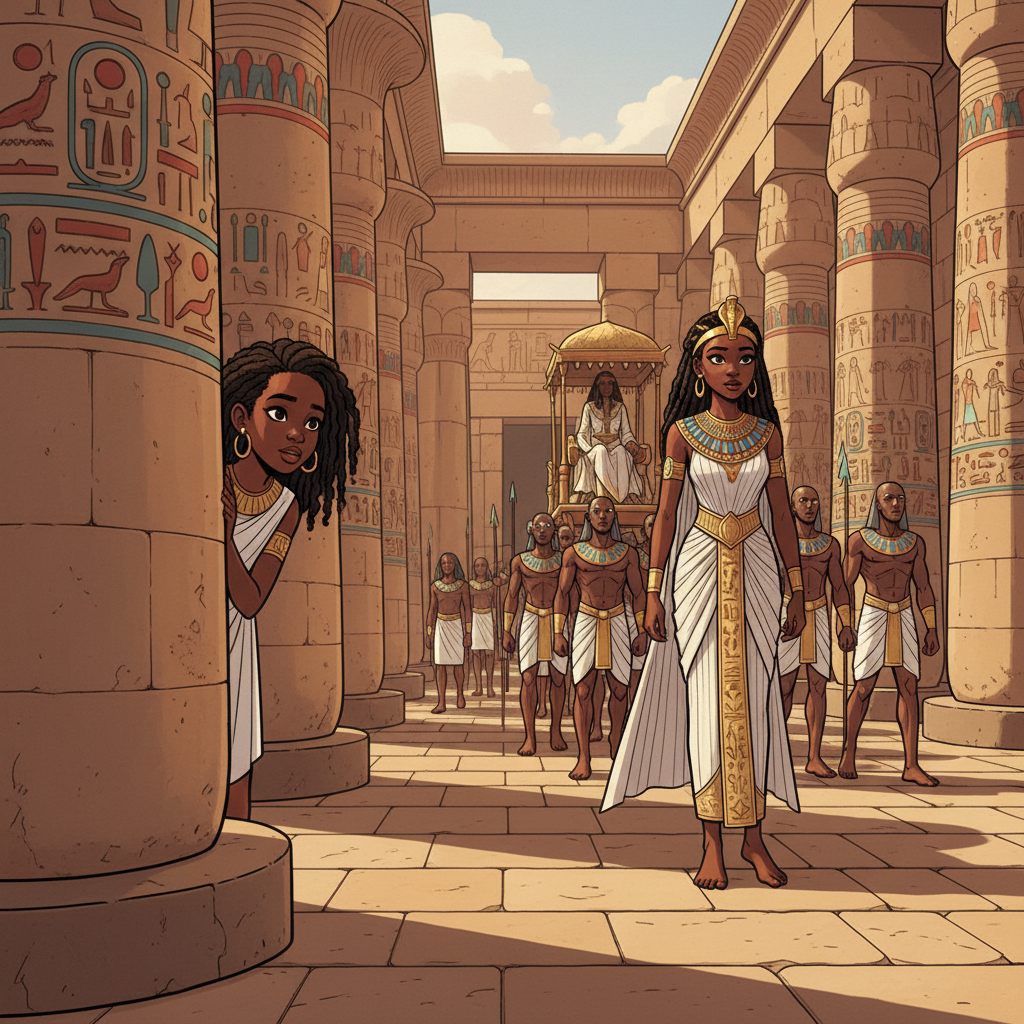
Imagine a young girl, much like yourself, named Nefertari, with curious eyes and nimble fingers, serving in the great Temple of Amun at Karnak. She was perhaps eleven summers old, and her tasks included grinding pigments for the scribes and laying fresh linen for the rituals. Nefertari had heard whispers of the powerful Kushite family from Napata, far to the south, but she knew little of their ways. One day, a hush fell over the temple courts. It was announced that Princess Amenirdis, daughter of King Kashta of Kush, was journeying north to Waset. Nefertari, peeking from behind a grand column, saw her arrive: a young woman, regal and serene, with skin like rich earth and eyes that held the wisdom of ancient rivers. This was Piye's half-sister, and her arrival was not for war, but for peace and sacred purpose.
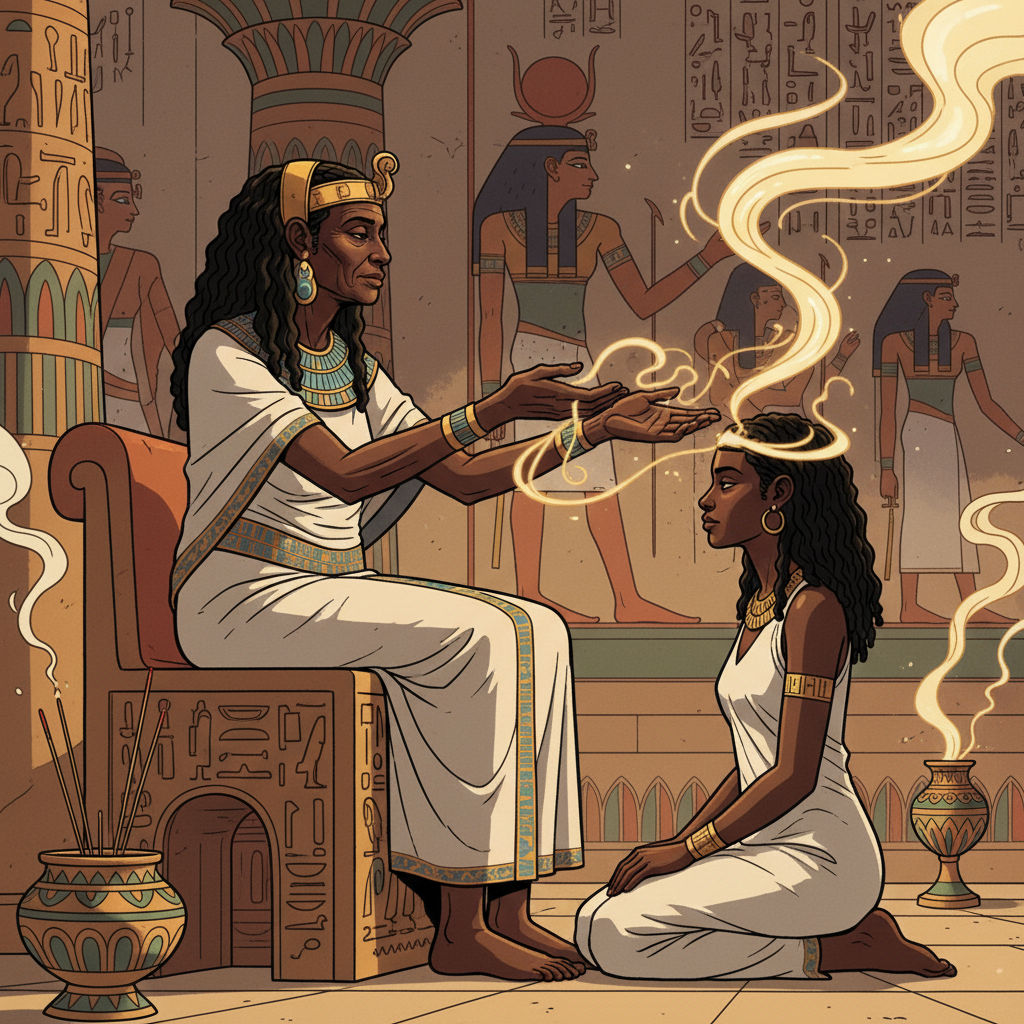
The existing God's Wife, the venerable Shepenupet I, was a woman of profound grace and deep devotion. She had faithfully upheld the traditions for many years, but the time was coming for her to choose her successor. It was a unique tradition, {name}, unlike any other in Kemet: the God's Wife would adopt a younger royal woman to inherit her sacred office, ensuring a continuous, unbroken line of spiritual leadership. This adoption was not a political maneuver in the way we often think of kings and queens, but a deeply spiritual act designed to preserve Maat. It was a transfer of divine ka, of life-force and spiritual authority, from one generation to the next. King Kashta's genius lay in recognizing that this matrilineal power, this sacred feminine lineage, was the very bedrock upon which Kemet's fragmented state could be healed.
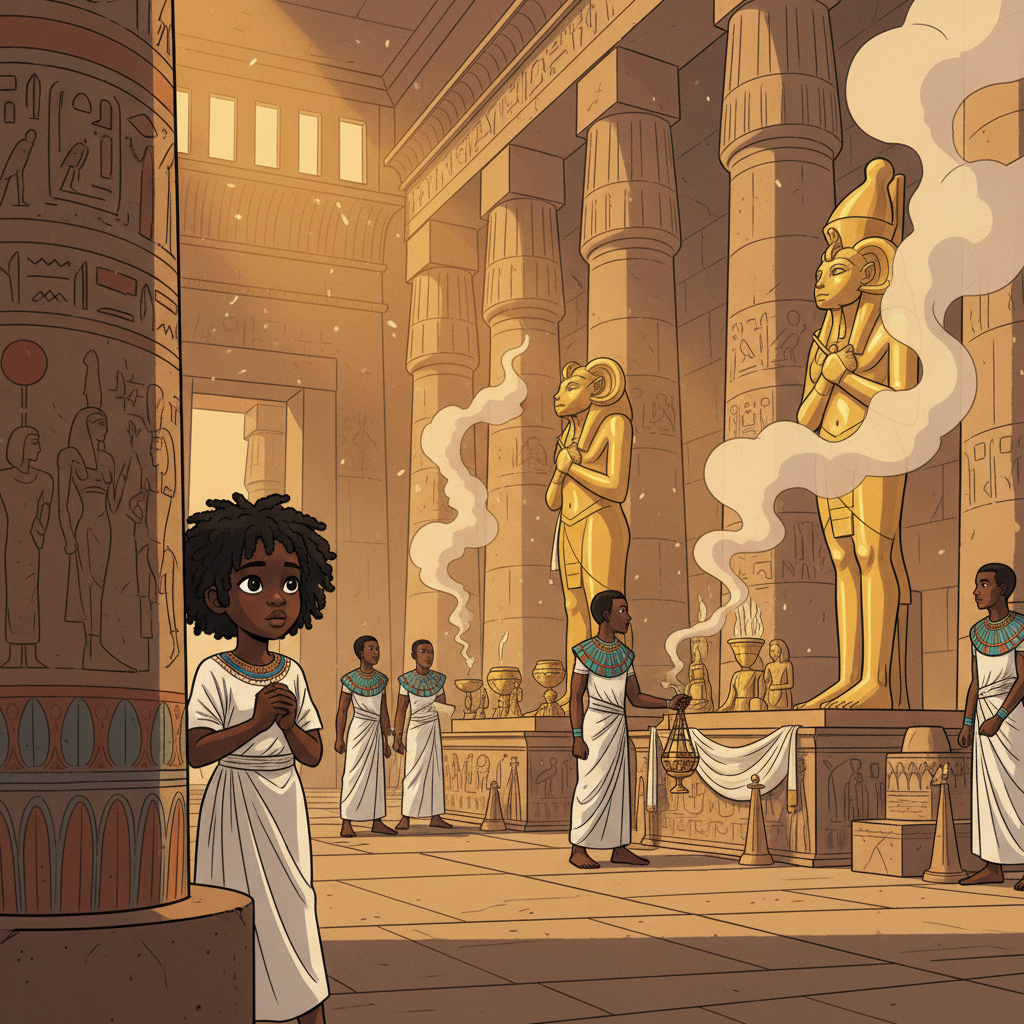
Nefertari watched with bated breath as the preparations for the adoption ceremony began. The air in the temple pulsed with anticipation, thick with the scent of frankincense and myrrh. Priests and priestesses moved with solemn purpose, adorning the altars and polishing the golden statues of Amun. The ceremony was to take place in the innermost sanctuary, a place usually reserved for the highest priests. This was a moment that would ripple through the centuries, a quiet revolution orchestrated by wisdom, not violence. It demonstrated that true power, the kind that endures and heals, often flows not from conquest, but from understanding the deepest currents of tradition and the sacred bonds that hold a people together. The Kushites were not invaders; they were restorers, bringing their own vibrant energy to Kemet's ancient heart.
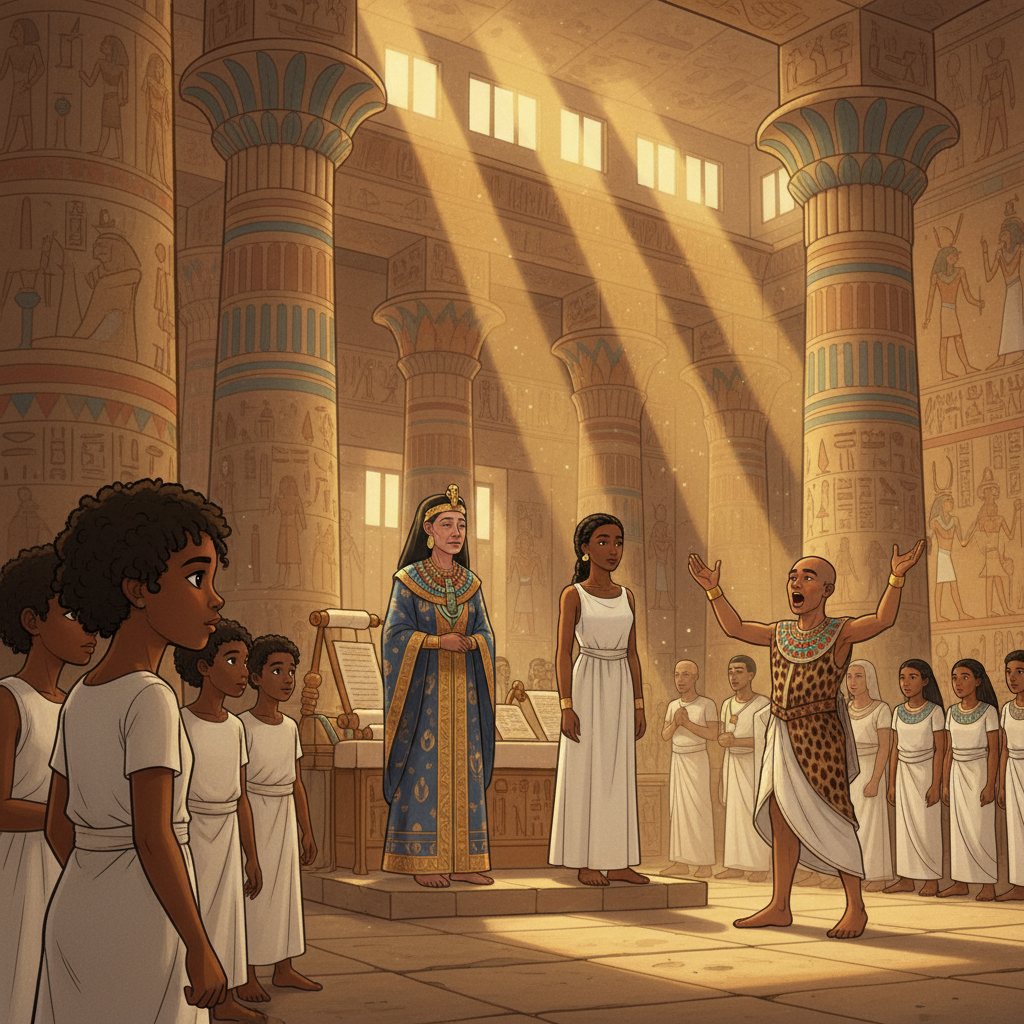
On the day of the ceremony, the sunlight streamed through the high windows of the temple, illuminating dust motes dancing like tiny spirits in the air. Nefertari, hidden amongst the other young attendants, saw Shepenupet I, adorned in the flowing robes of her office, her uraeus gleaming on her brow. Beside her stood the serene Princess Amenirdis, her dark skin luminous, wearing a simple white linen dress. The high priest chanted ancient words, invoking the blessings of Amun, of Osiris, and of all the neteru. He spoke of the sacred duty, the unbroken chain of divine feminine power, and the restoration of Maat that this union would bring. Nefertari felt a shiver, a sense that something truly profound was unfolding before her young eyes, a moment etched into the very stones of Waset.
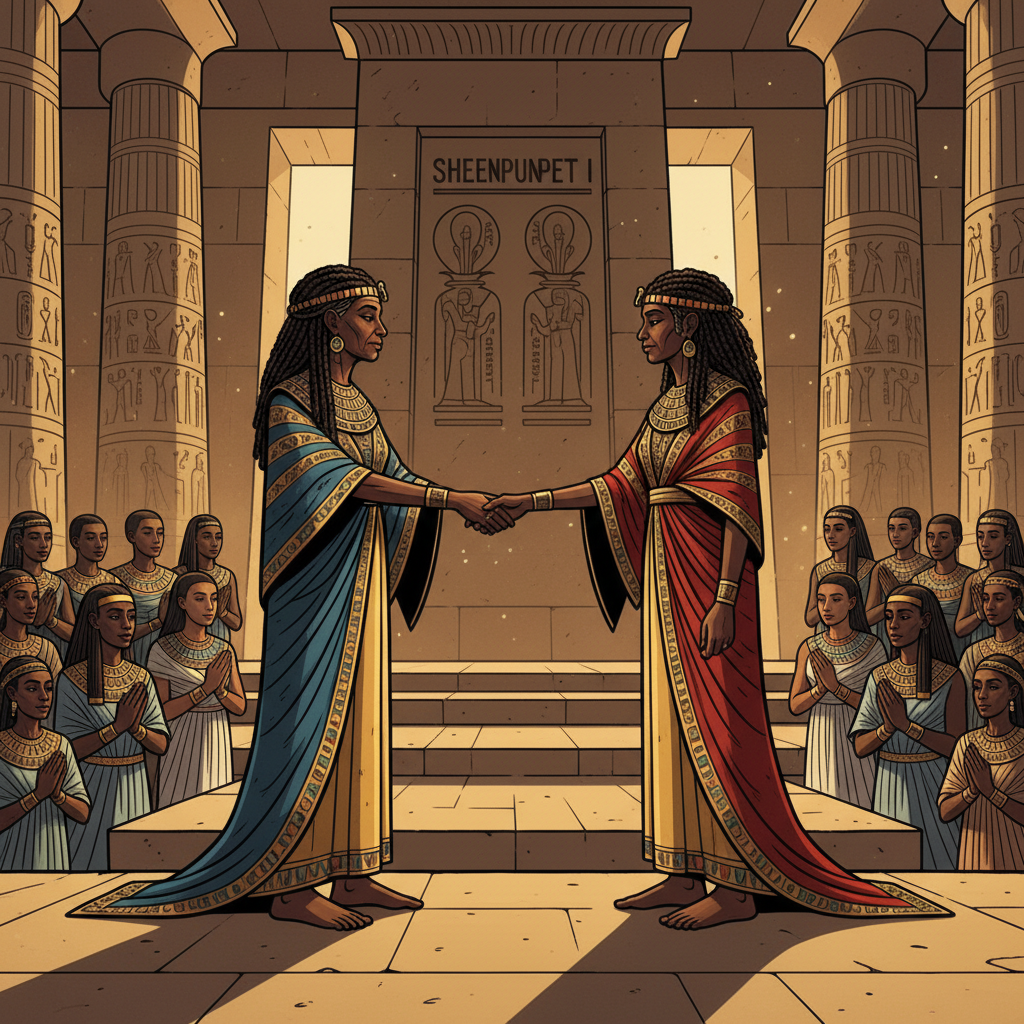
With solemn grace, Shepenupet I extended her hand to Amenirdis. In a gesture that spoke louder than any decree, she formally adopted the Kushite princess as her spiritual daughter and successor. It was a powerful symbol, a bridge spanning the generations and the lands, uniting the northern and southern hearts of Kemet. From that moment, Amenirdis I, daughter of Kashta, became the God's Wife of Amun, sharing the sacred cartouche and the divine authority with her adoptive mother. This was the moment the elder sibling, Kush, offered its hand to the younger, Kemet, not to dominate, but to uplift and reconnect to its ancestral roots. It was an act of profound love and responsibility, a true embodiment of reciprocity.
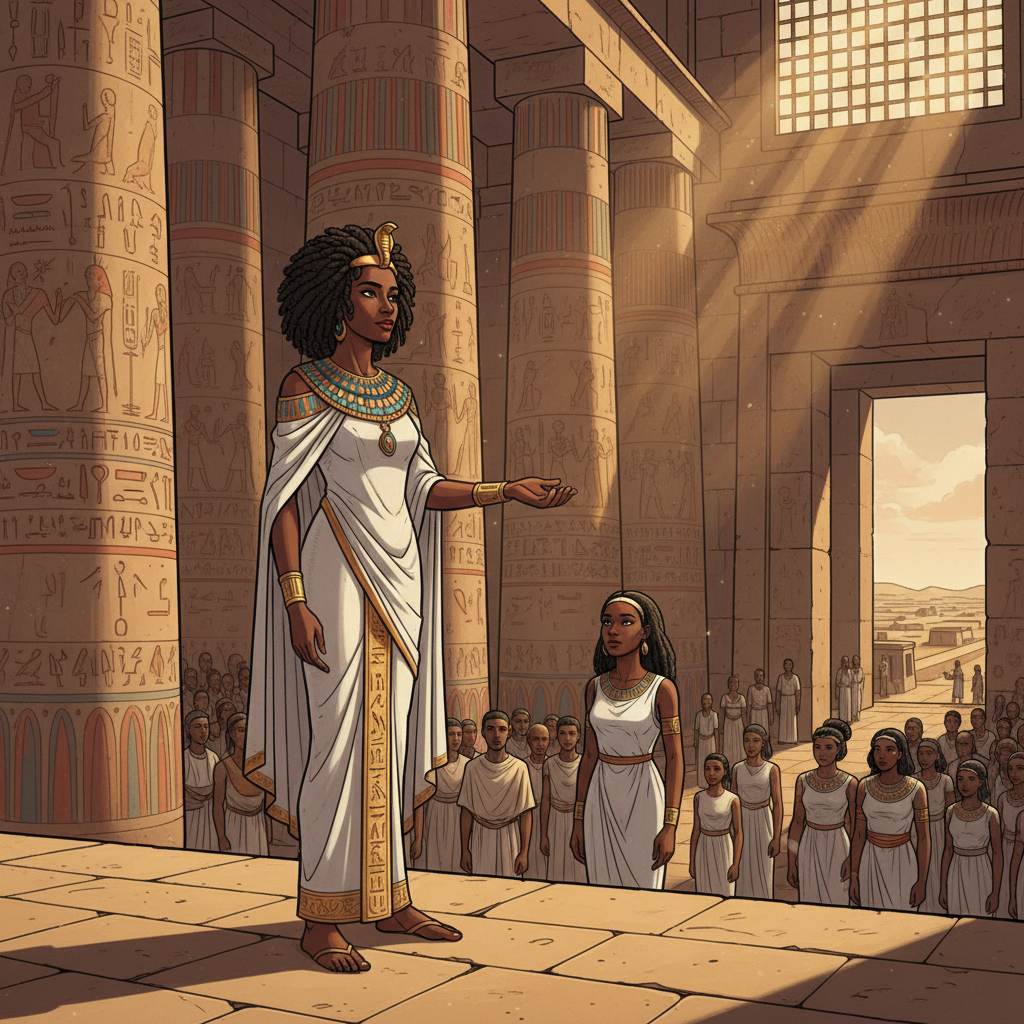
For decades, Amenirdis I reigned as God's Wife, a beacon of Maat in Waset. Nefertari, who grew up serving in her household, witnessed firsthand her wisdom, her fairness, and her unwavering devotion to Amun. Amenirdis controlled vast temple estates, her influence stretching across Upper Kemet, ensuring that justice and harmony prevailed in the lands under her sacred care. She was a true leader, not through military might, but through spiritual authority and impeccable character. Her presence helped to stabilize the region, creating a foundation of order and peace that would allow her half-brother Piye to later complete the restoration of Kemet. She showed that power could be wielded with gentleness, with a deep understanding of proper order, and with a heart committed to the well-being of all.
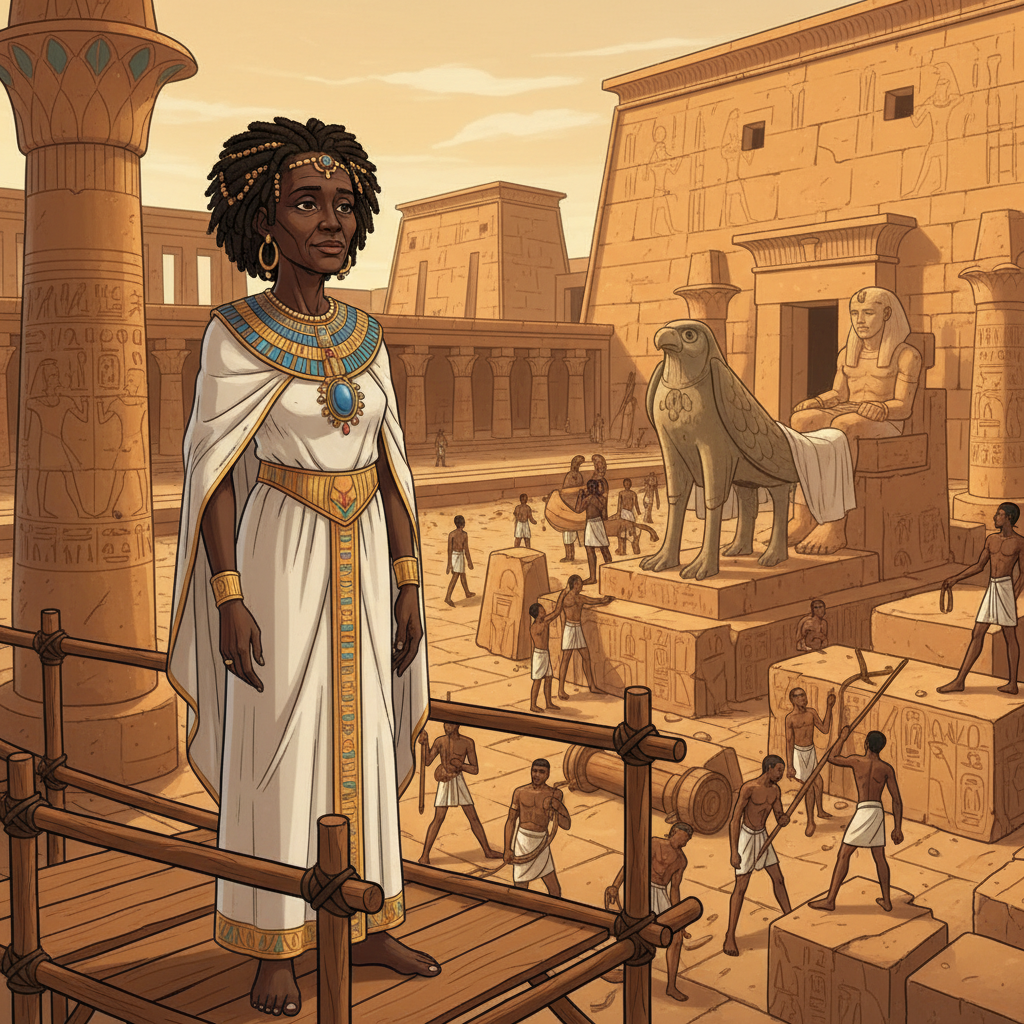
Amenirdis I, with her serene smile and steady gaze, became one of the most powerful women of her era. Her tomb chapel at Medinet Habu stands to this day, a testament to her enduring legacy and the respect she commanded. She oversaw magnificent building projects, not to glorify herself, but to honor the neteru and to restore the ancient temples to their former glory, echoing the Old Kingdom ideals. Her reign was a testament to the fact that leadership can flow through unexpected channels, often through the quiet strength and unwavering dedication of those who uphold sacred duties. She proved that the restoration of Maat could be achieved not just by force, but by the careful tending of the spiritual garden, ensuring that the seeds of righteousness would blossom once more.
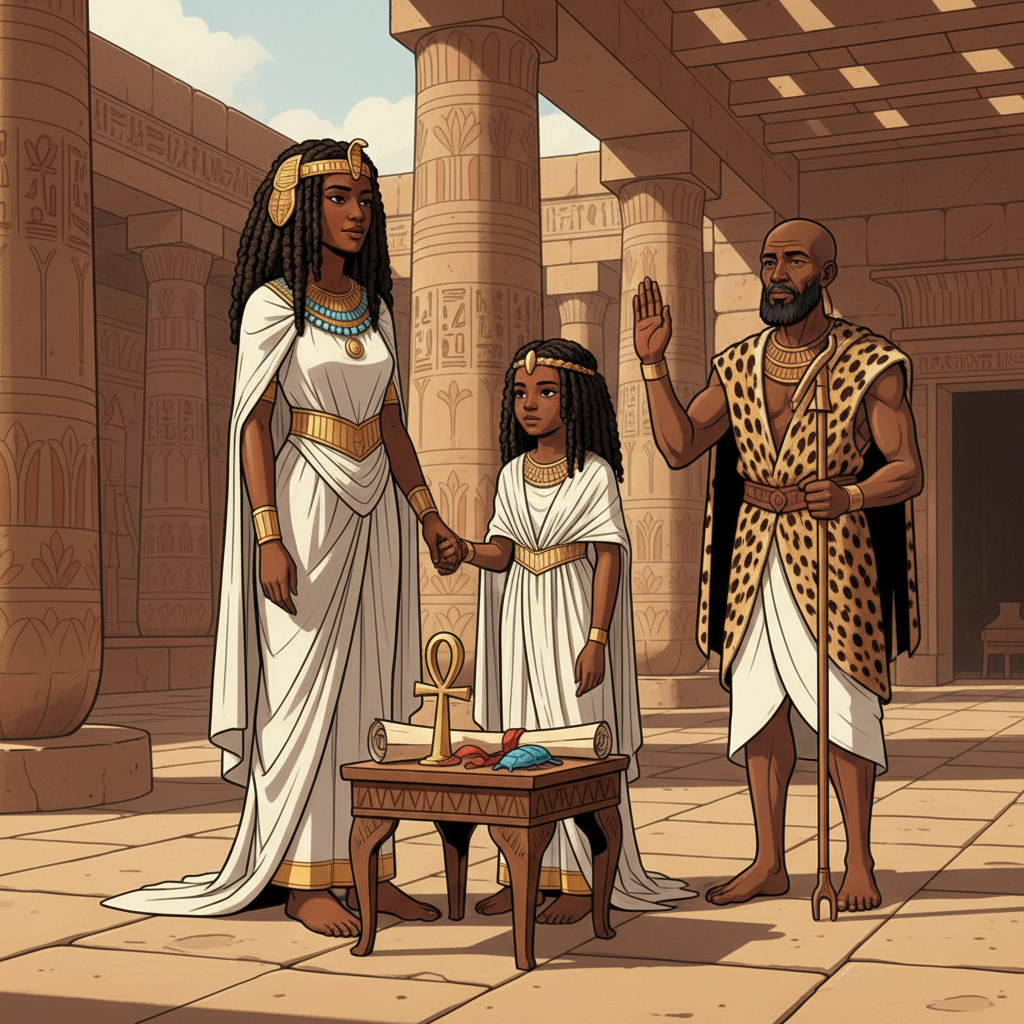
When the time came for Amenirdis to choose her own successor, she followed the sacred tradition. She adopted her niece, Shepenupet II, who was Piye's own daughter. This ensured the continuity of the Kushite royal line within this vital religious office, further weaving together the destinies of Kush and Kemet. This unbroken chain of powerful women, guiding the spiritual heart of Kemet, is a profound lesson for us all, {name}. It reminds us that our history is rich with examples of African leadership in all its forms, often through channels that the world outside Kemet might not understand. It was a system designed to bring balance and maintain order, a true reflection of Maat.
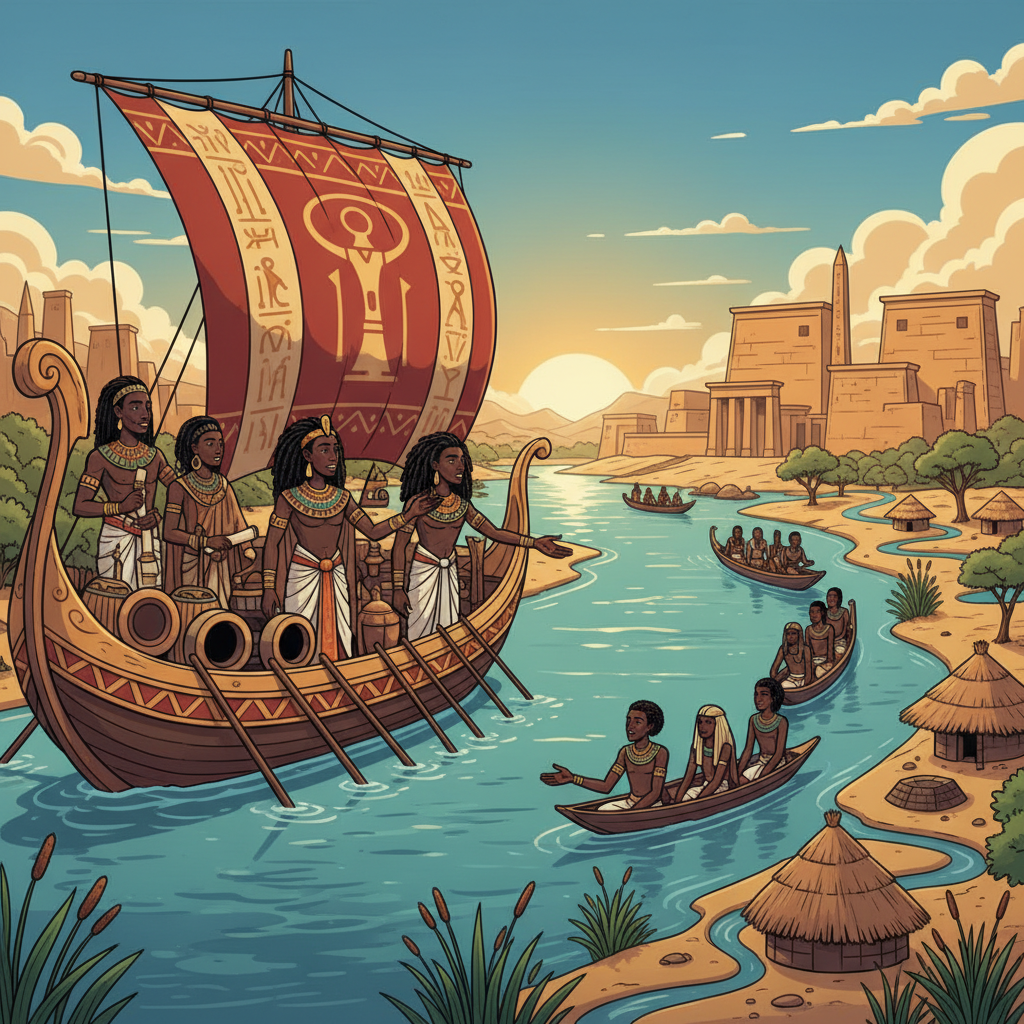
The 25th Dynasty was indeed a reunion, a homecoming. It was the southern homeland, rich with ancient traditions and a vibrant connection to the source of the Nile, reaching out to its northern child, Kemet. Our Kushite pharaohs, with their ebony skin and deep reverence for Amun, brought a renewed spirit and a commitment to Maat that Kemet desperately needed. They did not come as foreign conquerors, but as family, as guardians of a shared heritage that stretched back thousands of years to the very origins of our civilization. They understood that the strength of Kemet lay in its spiritual foundation, in the principles of truth and justice, and in the unbroken lineage of its sacred offices.

Think of the Nile, {name}, how its waters flow from the southern mountains, bringing life and nourishment to all of Kemet. Kush was like the spring, the source, always connected, always nourishing. When the northern lands faltered, the southern heart remembered its duty, its inherent connection to the whole. Just as the Nile's current cleanses and renews the land, so too did the Kushite restoration cleanse the spirit of Kemet. It was a time of rebirth, of rebuilding, of reaffirming the ancient truths that had guided our people for millennia. It was a powerful reminder that our strength often comes from returning to our roots, to the wisdom of our ancestors.
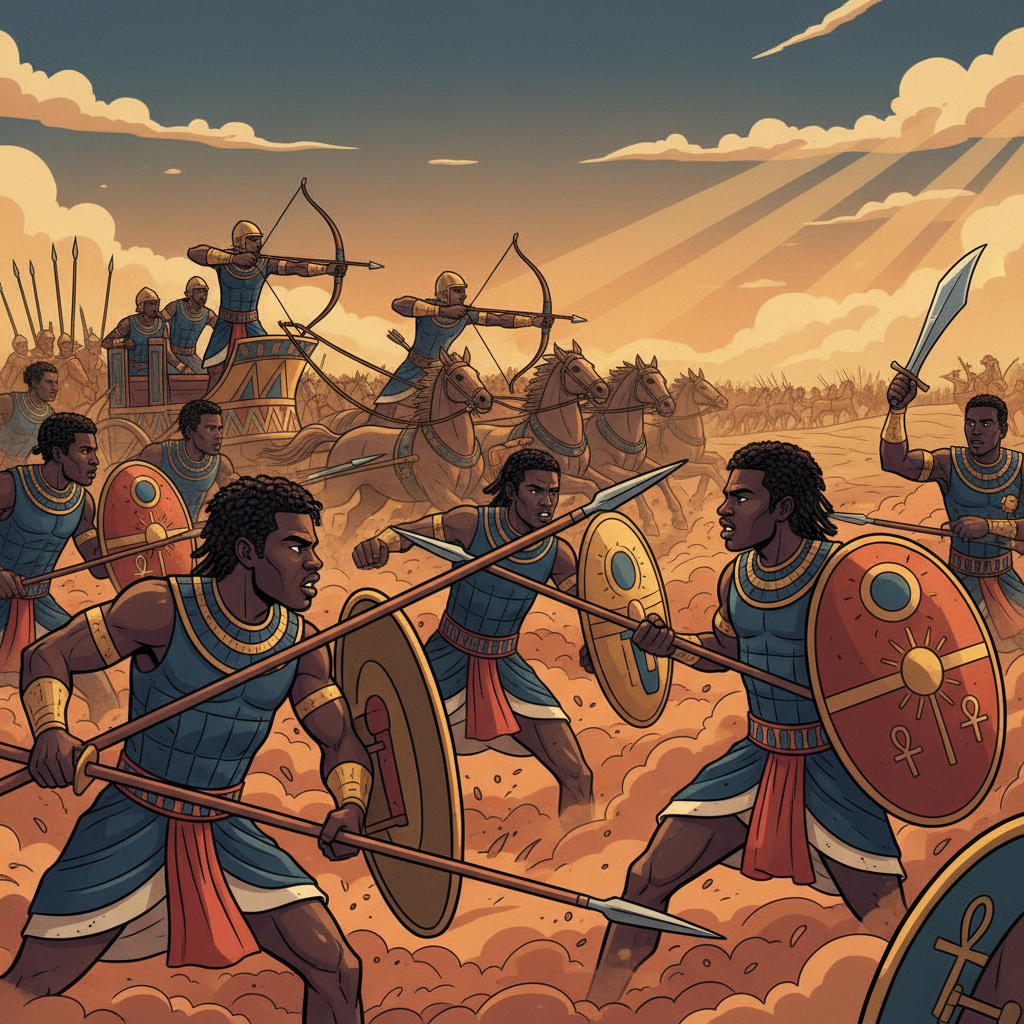
The story of Amenirdis, the God's Wife, shows us that not all battles are fought with chariots and spears. Some of the most important victories are won with wisdom, with diplomacy, and with the sacred power of tradition. Her quiet strength paved the way for the larger restoration, like the steady hand that guides the rudder of a great ship through troubled waters. Her actions ensured that the spiritual heart of Kemet continued to beat strongly, even when the political body was weakened. She reminds us that true leadership can be subtle, profound, and enduring, leaving a legacy not of conquest, but of harmony and continuity. Her cartouche, inscribed in stone, speaks volumes about her vital role.
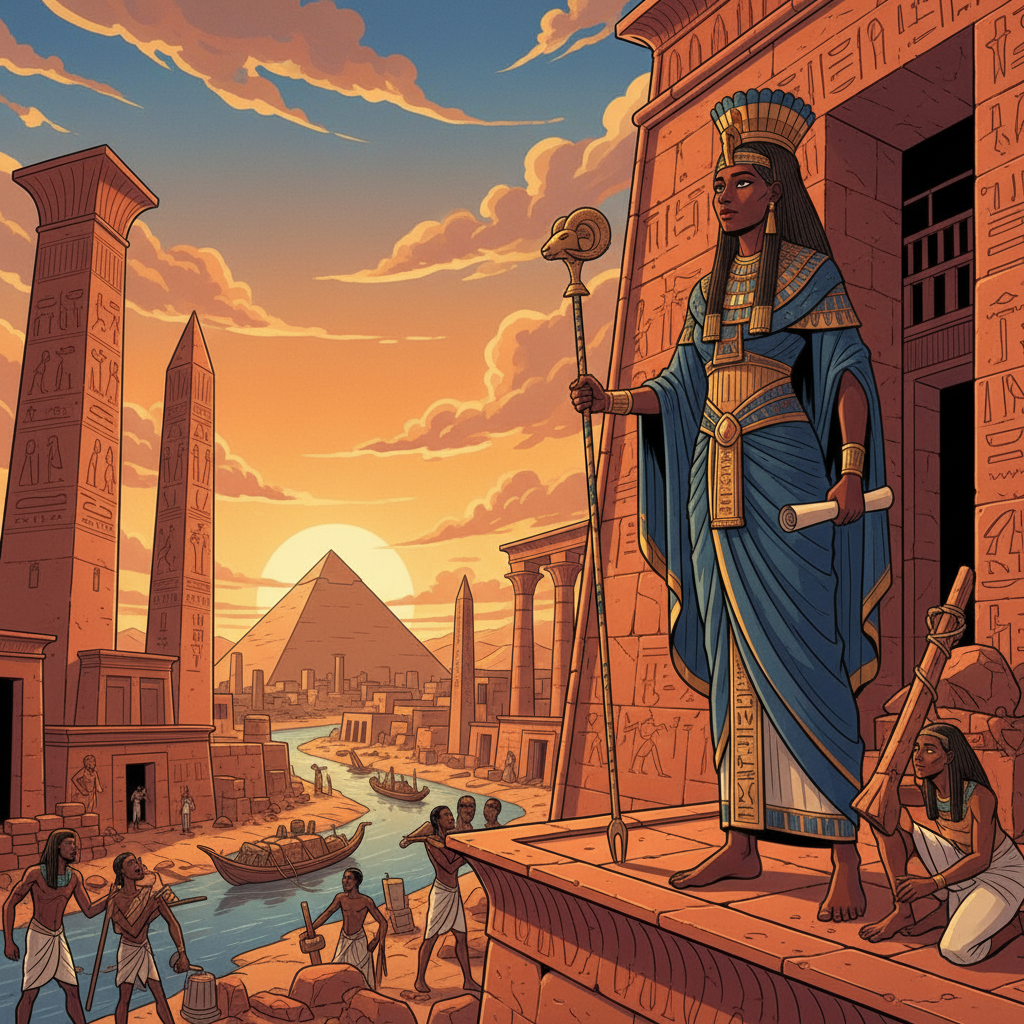
This era, when Rome was still a collection of mud huts and distant lands were yet unknown to our people, saw Kemet and Kush shine brightly as centers of civilization. Our pharaohs, with their deep understanding of engineering, astronomy, and the human spirit, built monuments that touched the sky and wrote texts that spoke of cosmic order. Amenirdis, in her sacred role, contributed to this flourishing, not just through her spiritual authority but also through the practical administration of vast resources. She ensured that the temples, the centers of learning and culture, continued to thrive, preserving the wisdom that might otherwise have been lost during times of fragmentation and disarray.
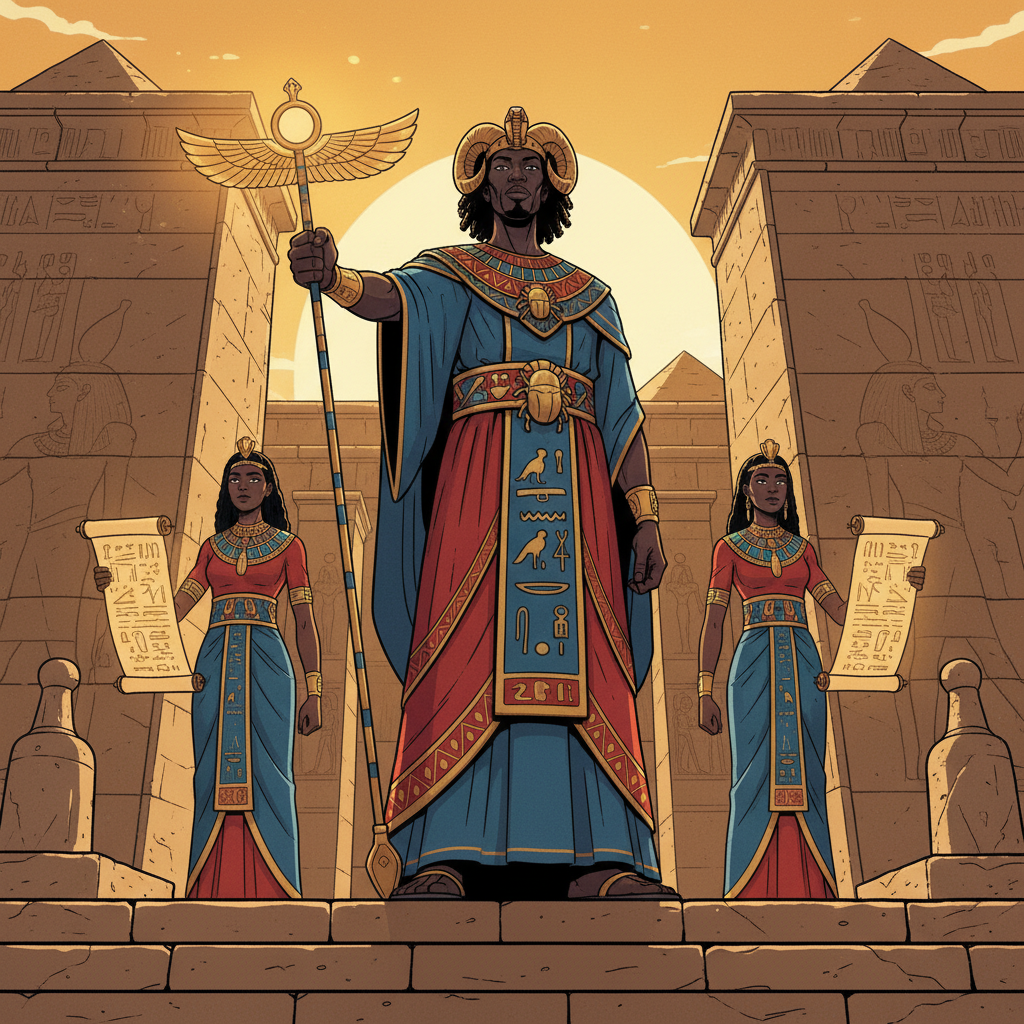
The restoration brought by the Kushite pharaohs was not just about territory; it was about the spirit, the ka, of Kemet. They saw themselves as guardians of the ancestral way, ensuring that the teachings of Maat would continue to illuminate the path for generations to come. They understood that a people's true strength lies in their connection to their past and their commitment to their highest ideals. They were not simply kings; they were priest-kings, deeply devoted to Amun and to the sacred order of the universe. Their devotion was evident in their conservative building programs, which sought to emulate the grandeur and purity of the Old Kingdom, deliberately restoring the ancient ideals that had once made Kemet great.
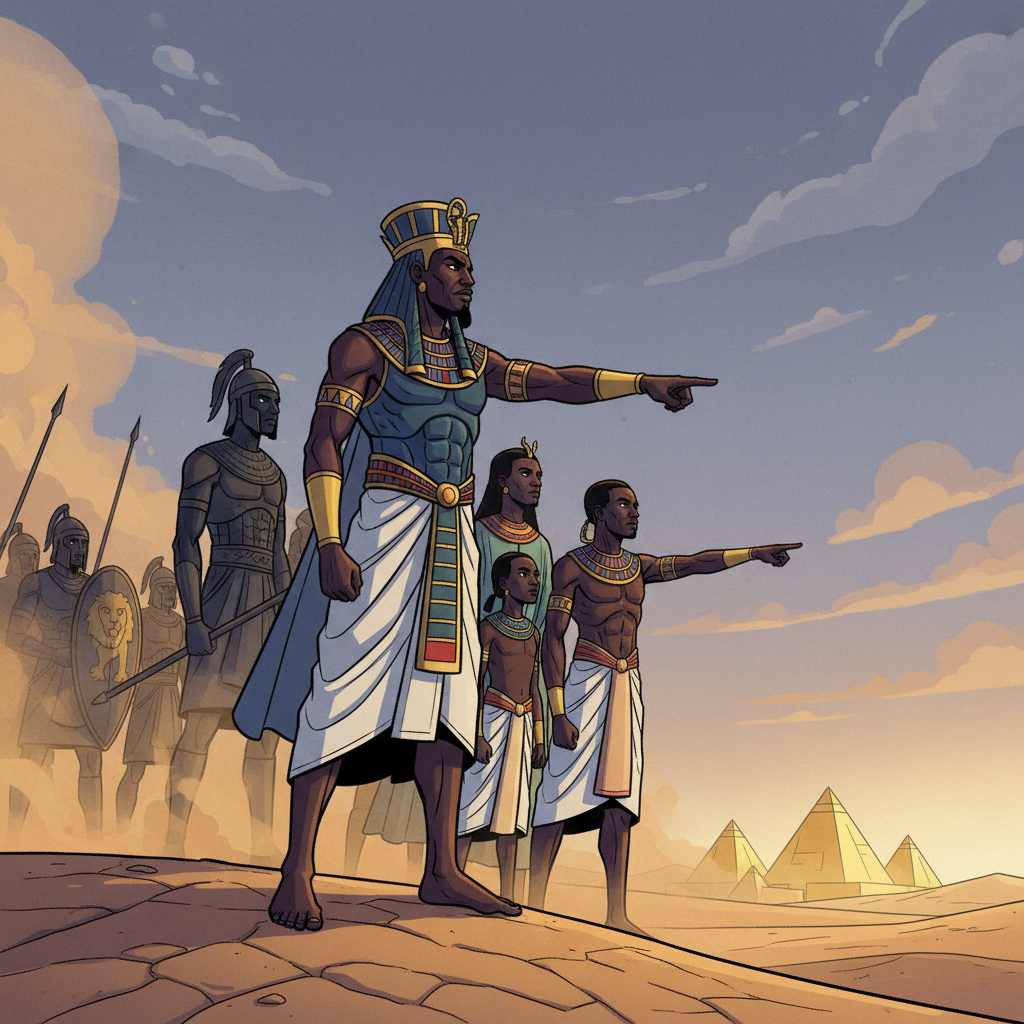
Even when the shadow of the Assyrians, with their iron weapons, eventually forced our Kushite pharaohs to retreat from the northern lands, the spirit of Kush endured. The legacy of Amenirdis and her family continued to flourish far to the south, at Meroe, where a new golden age of Kushite civilization would rise. This is why, {name}, we never speak of the Assyrian victories as the end of Kush. It was merely a shift in the river's course, a turning of the page. The wisdom, the strength, and the Maat-guided spirit that Amenirdis helped to restore continued to flow, eventually producing the formidable Kandake warrior queens who would even challenge the might of Rome.
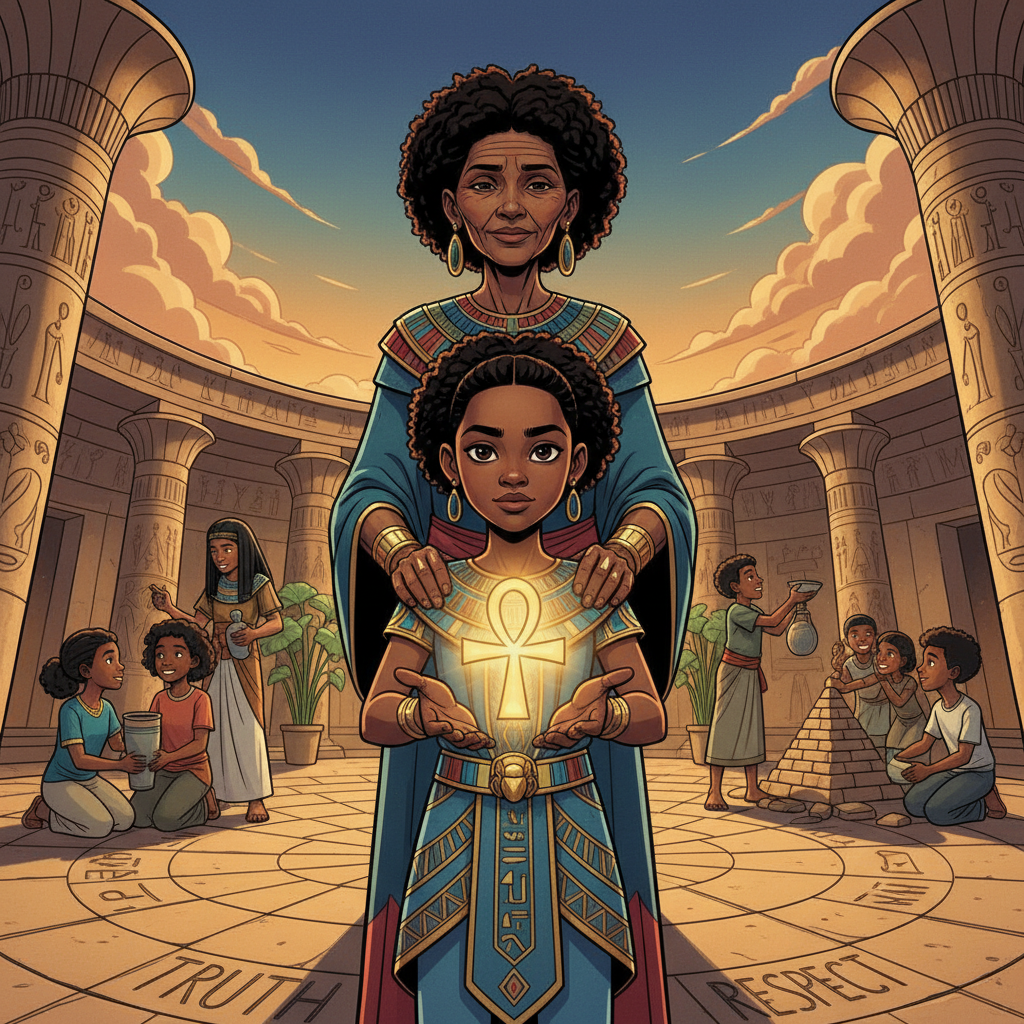
Now, {name}, let us bring this wisdom closer to your own life. Just as Amenirdis used her sacred lineage and position to restore Maat to Kemet, you too have the power to bring balance and harmony into your world. Every choice you make, every word you speak, every action you take, carries the potential to either strengthen Maat or allow Isfet to grow. When you choose truth over falsehood, when you act with justice and fairness towards your friends and family, when you speak with propriety and respect, you are like Amenirdis. You are upholding the very principles that guided our ancestors and ensured the flourishing of our civilization for thousands of years.
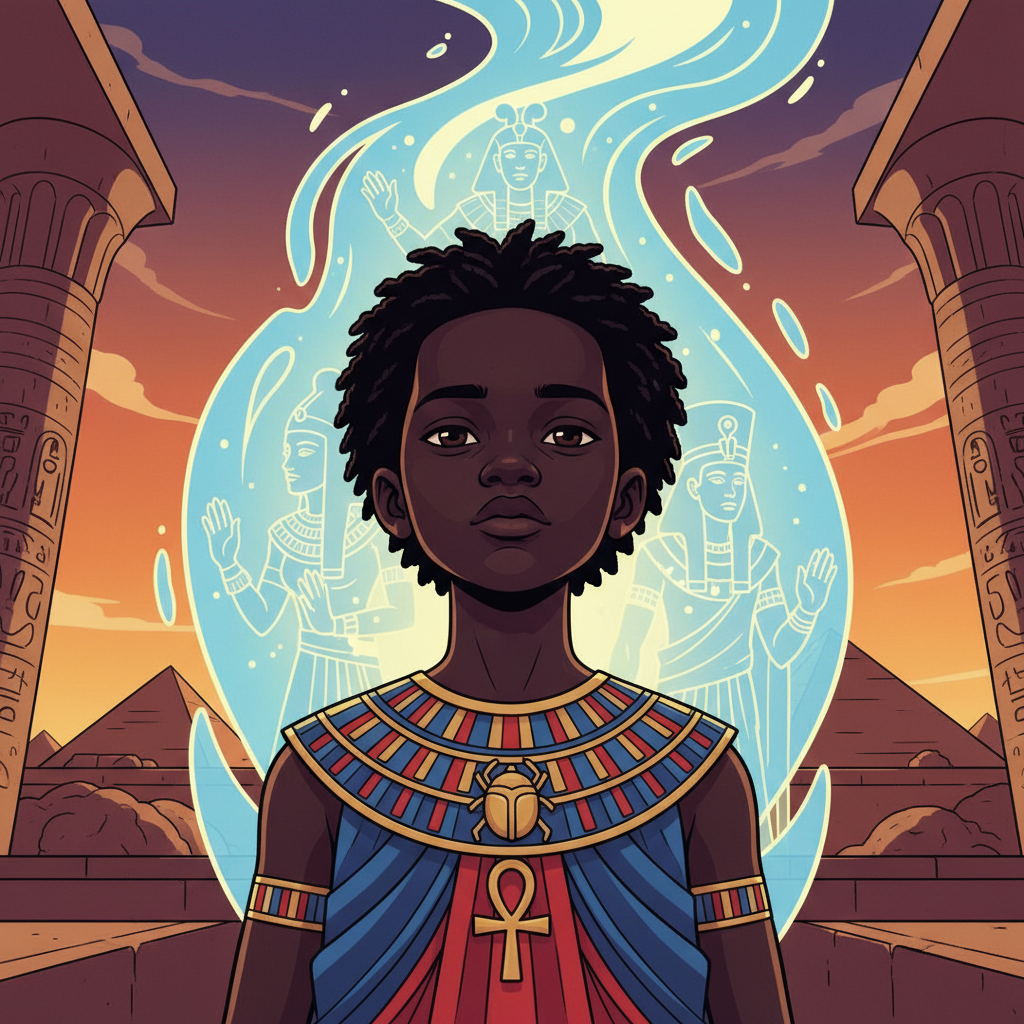
Remember that the strength of our ancestors, their resilience and their profound understanding of the cosmos, lives within you. You carry the same spirit, the same ka, that flowed through Amenirdis, through Piye, and through all the great Kushite pharaohs who restored the light to Kemet. Your heritage is a river of deep wisdom, flowing from the heart of Africa. Never forget the power of your lineage, the beauty of your traditions, and the sacred duty you have to carry Maat forward. You are a living testament to their enduring legacy, a star in our brilliant constellation of history.
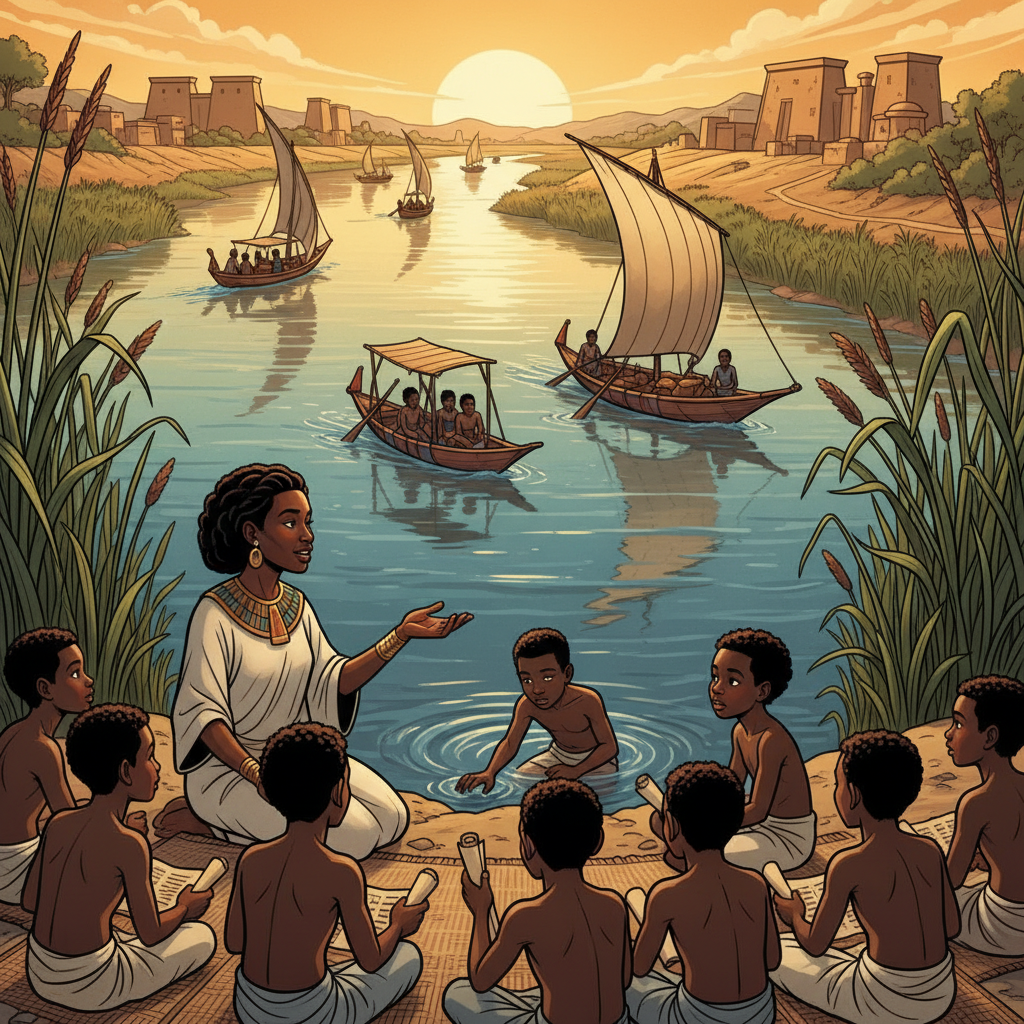
Just as Amenirdis brought continuity and stability through her sacred adoption, you can bring continuity to your own learning and growth. Be like the steady Nile, constantly flowing, constantly nurturing. Seek knowledge with a curious heart, and let your understanding deepen with each passing day. This is how we honor our past, not by simply remembering, but by living the principles that made our civilization great. This is how you, {name}, take your rightful place as an heir to this magnificent tradition, a guardian of Maat for your own time and for the generations yet to come.
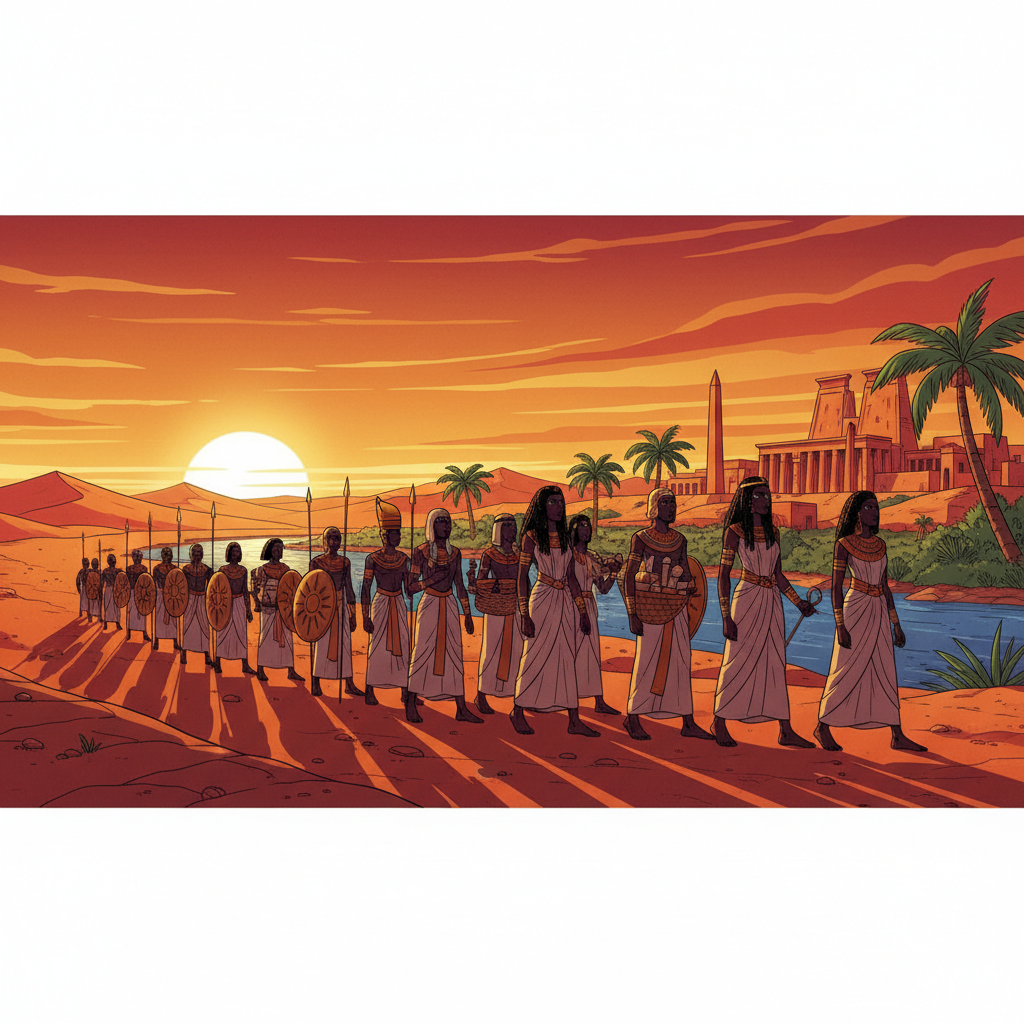
So, as the sun begins its slow descent, painting the sky with hues of gold and crimson, reflect on the story of Amenirdis, the God's Wife. Her journey from Napata to Waset was not a journey of conquest, but of sacred reunion, of a family reclaiming its heritage and restoring its heart. She embodies the strength of the feminine, the power of spiritual leadership, and the enduring wisdom of our Kushite ancestors. Let her story inspire you to find your own quiet strengths, to uphold justice, and to always, always walk in the radiant light of Maat.

The legacy of the 25th Dynasty, begun with Kashta's vision and cemented by Amenirdis's sacred adoption, reminds us that the bonds of family, culture, and spirit are stronger than any division. It tells us that our African heritage is one of deep connection, resilience, and a perpetual striving for harmony and balance. Carry these stories in your heart, {name}, for they are not just tales of old; they are blueprints for living a life of purpose and dignity. They are the living waters of our shared history, flowing eternally, ready to nourish your spirit and guide your steps.
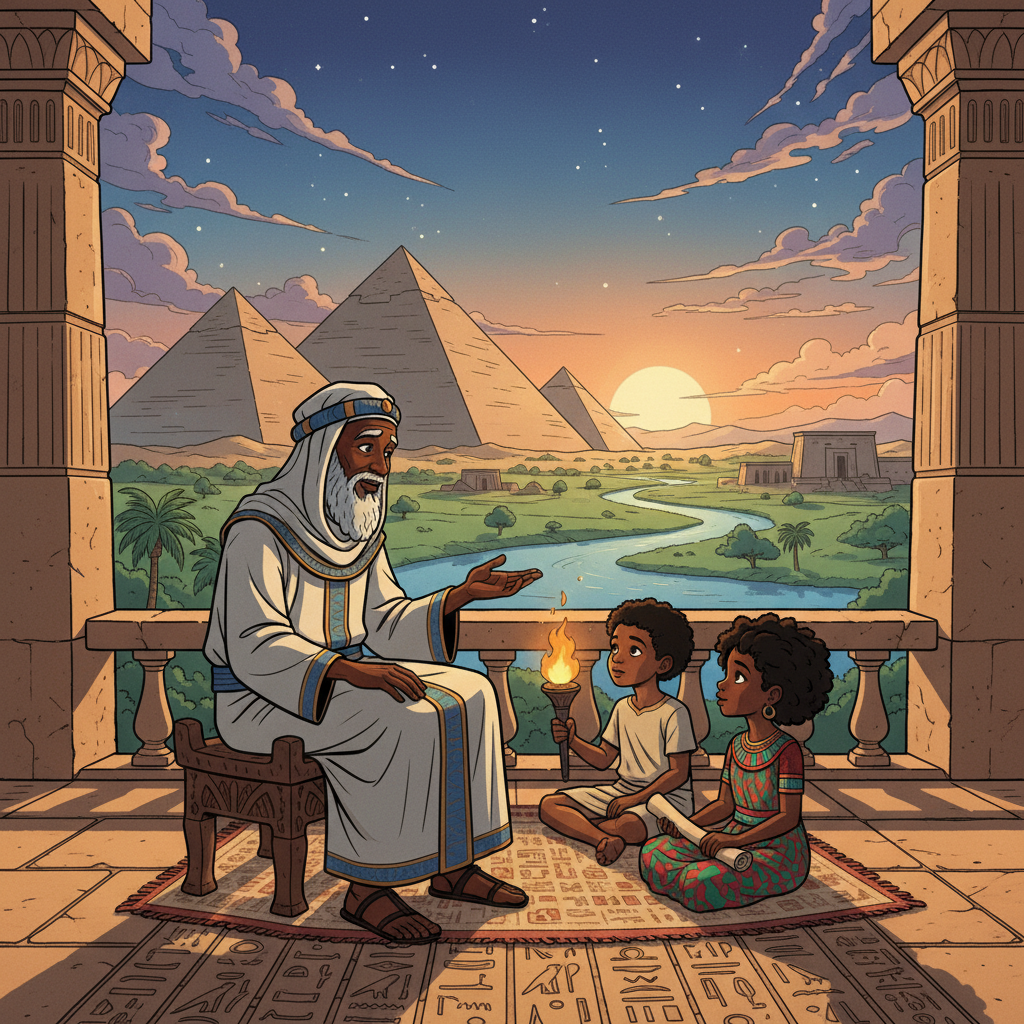
Remember always that you are a child of Kemet, a descendant of those who built pyramids and charted stars, a inheritor of Maat. Your roots run deep, back to the very source of civilization, to the heart of Africa. May the wisdom of Amenirdis and all our ancestors illuminate your path, and may your life be a testament to the enduring power of truth, justice, and righteous order. Go forth, my young scholar, and carry the torch of Maat with pride.