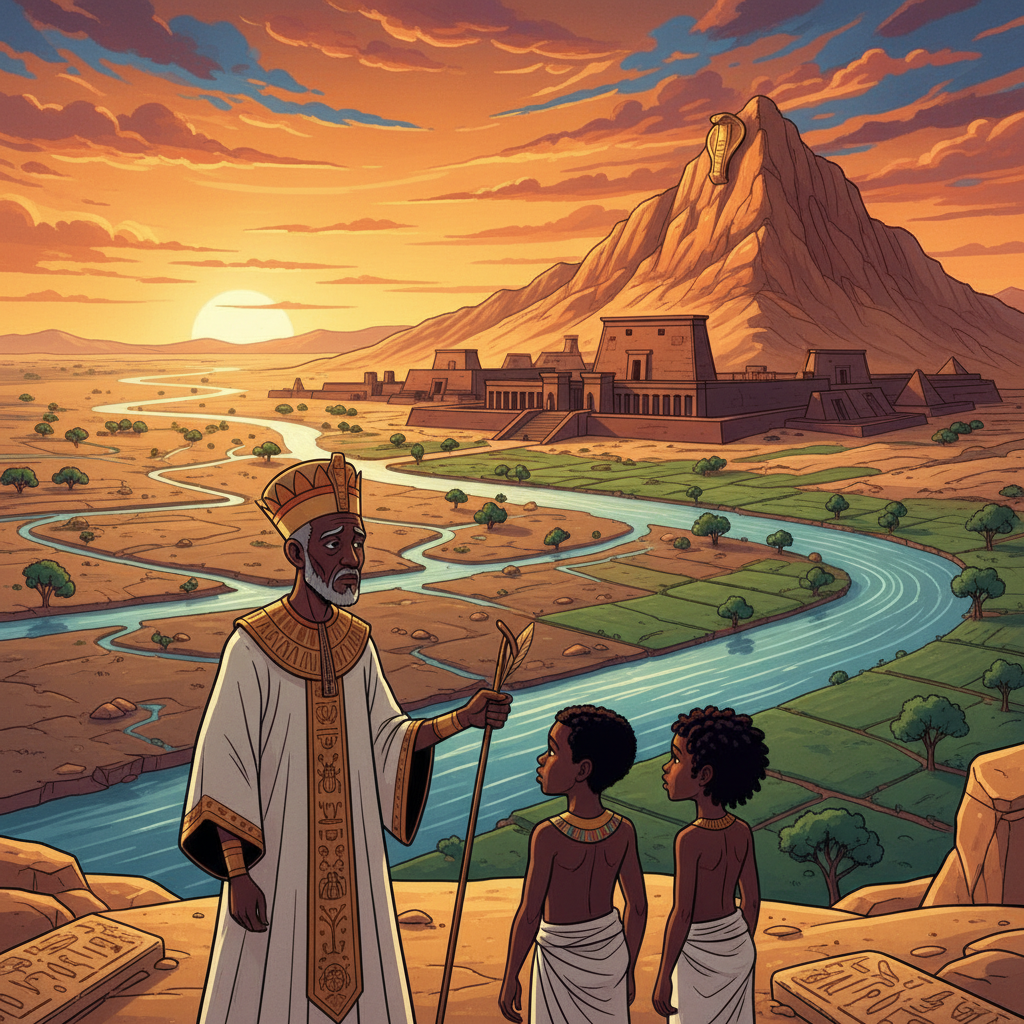
Ah, {name}, come closer, my young seeker of wisdom. Today, we journey back to a time when Kemet, our beloved land, was like a great river whose waters had splintered into many small streams, each flowing its own way, forgetting the grand current that once united them. It was a time of disharmony, of `isfet`, when the true path of `Maat` seemed lost in the northern lands. But even in the deepest night, the brightest stars shine forth, and from the southern skies, a new dawn was preparing to break. This is the story of our Kushite cousins, the pharaohs of the 25th Dynasty, who heard the call of `Maat` from their ancient homeland of `Napata`. They weren't invaders, my child, but healers, returning to mend what was broken, much like a loving parent reclaims a wandering child. They understood that Kemet's heart, its very `ka`, pulsed with the rhythm of the Nile, and that rhythm needed to be restored to its rightful, harmonious beat.
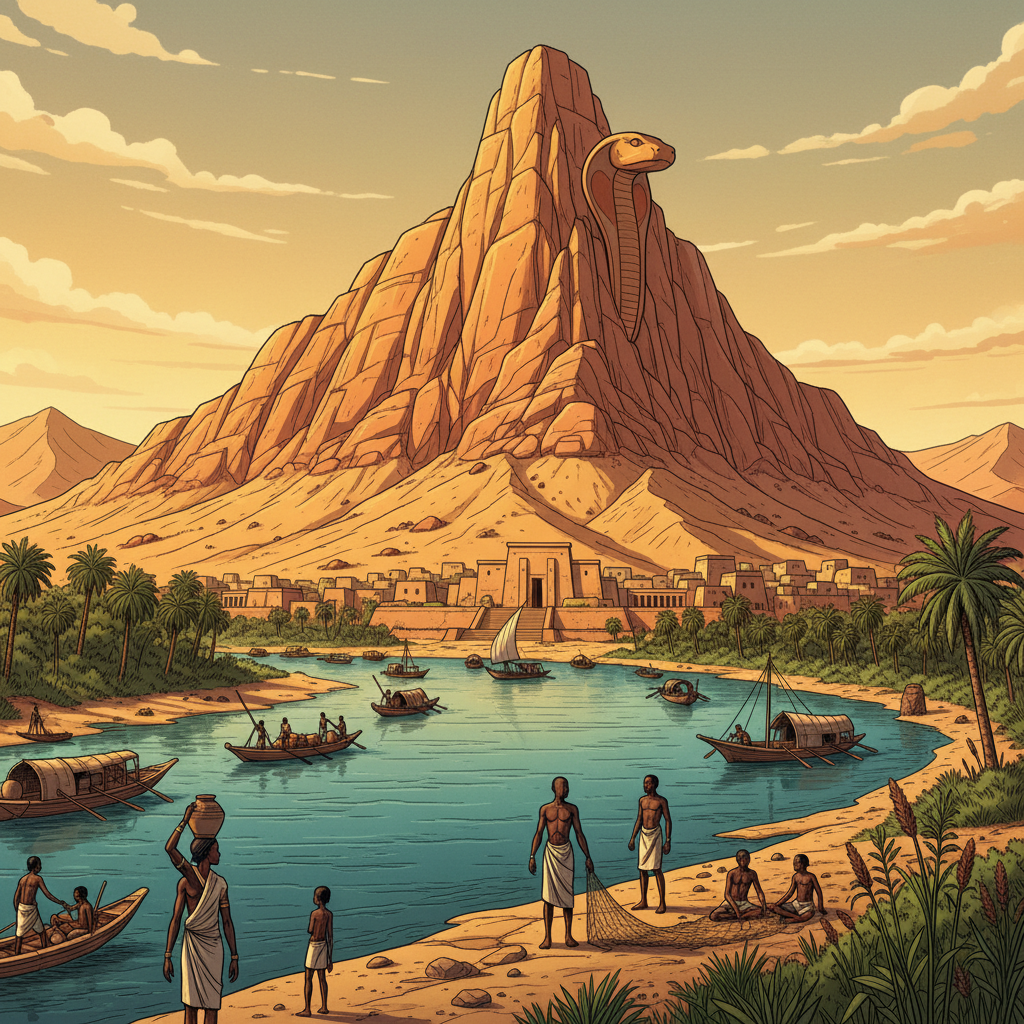
Our tale begins not in the bustling cities of the North, but in the tranquil, powerful heart of `Kush`, far to the south of Waset. Imagine a place where the desert sands meet the fertile banks of the Nile, and from that meeting point rises a magnificent mountain, a natural wonder carved by the `neter` Amun himself. This, my child, is Gebel Barkal, the Sacred Mountain. For the people of `Napata`, Gebel Barkal was more than just a rock formation; it was the sacred dwelling place of `Amun`, the hidden one, the king of the `neter`. Its towering pinnacle, shaped like a rearing cobra, a `uraeus`, was seen as Amun’s living presence, protecting the land. It was here, at this very heart of our southern tradition, that a great leader, a pharaoh named Piye, would receive his most profound mission.
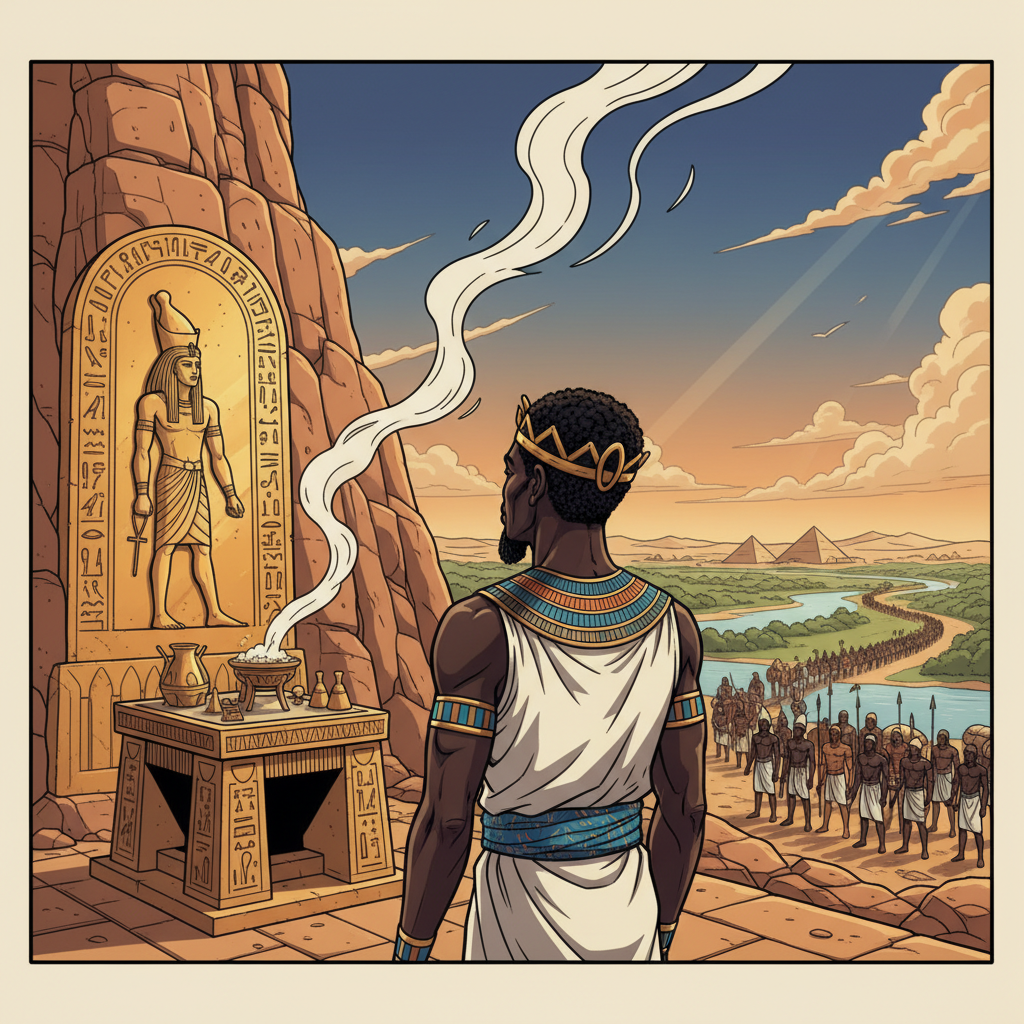
Piye, whose name means 'The Living One,' was not just a king; he was a priest-king, deeply devoted to `Amun`. He understood that true leadership wasn't about power or riches, but about serving the divine order, about upholding `Maat` above all else. For months before his journey north, he withdrew from the clamor of the court, seeking solace and clarity at the foot of Gebel Barkal. He knew that the northern lands of Kemet were suffering, not just from political divisions, but from a spiritual emptiness, a turning away from the ancient ways. Petty kings squabbled, and the sacred duties were neglected. Piye felt this imbalance in his very `ka`, a deep ache for the harmony that had been lost. He knew he could not act on ambition, but only on a true divine calling.
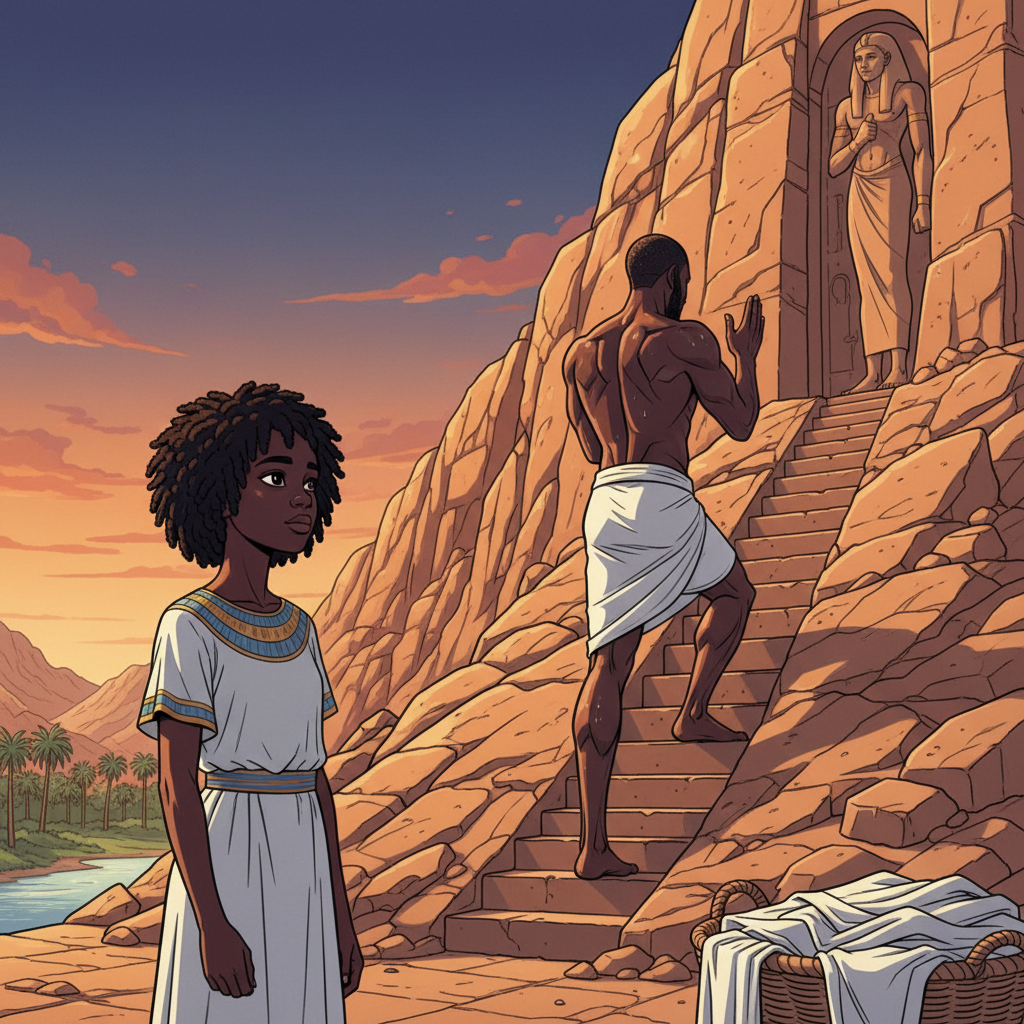
Now, imagine a young acolyte, a girl named Neferet, barely twelve summers old, but with eyes as sharp as a desert hawk and a heart full of reverence for `Amun`. She was training in the Per Ankh, the House of Life, at Gebel Barkal, learning the ancient texts, the sacred rituals, and the deep wisdom of our ancestors. Her duty often brought her close to the pharaoh's chambers, especially during his periods of intense purification. Neferet would carry the freshly laundered linen garments, soft as a cloud, to Piye's private sanctuary. She saw him at dawn, his dark skin gleaming with the morning dew, as he ascended the mountain slopes to offer prayers. She witnessed his quiet devotion, his humble posture before the mighty `neter`, and a question began to form in her young mind: how does a king, so powerful, know when he is truly called by the divine?
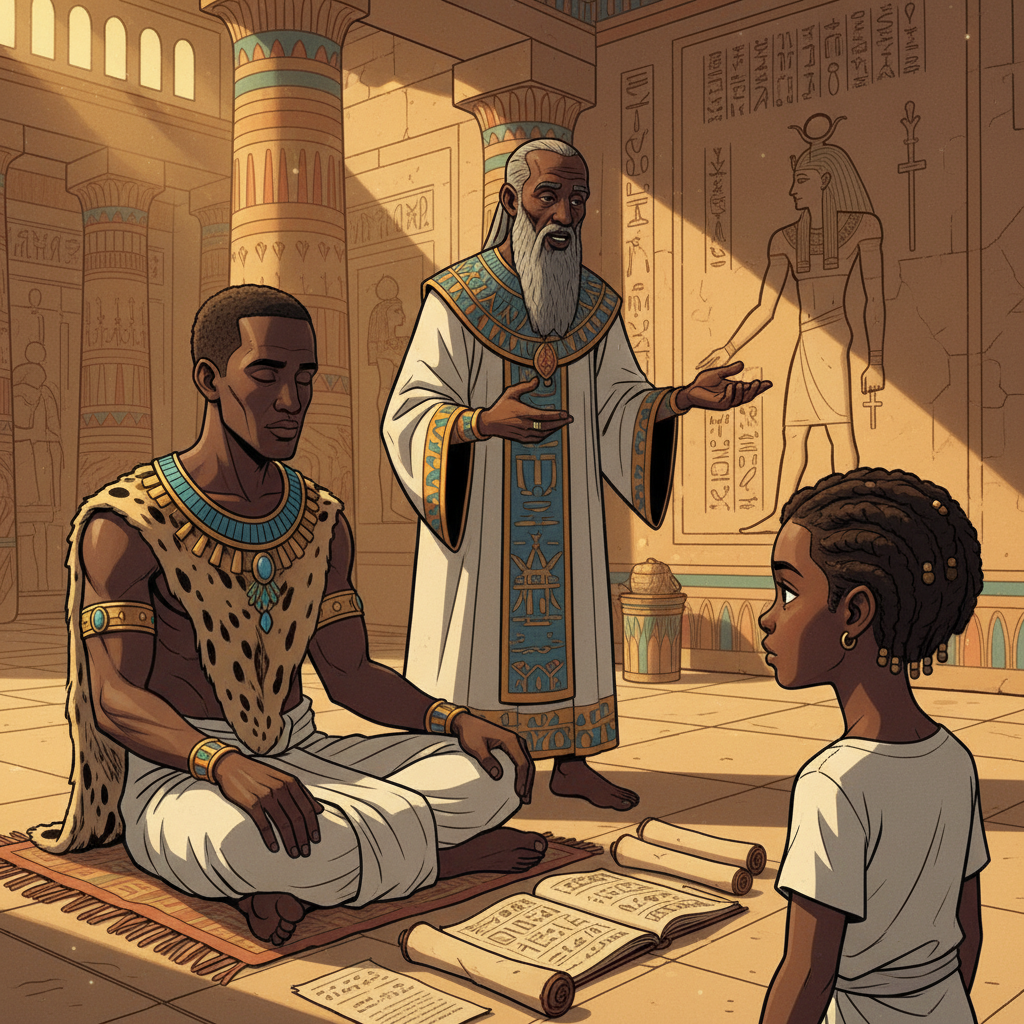
Piye's preparations were not for a battle, my child, but for a spiritual undertaking. He abstained from rich foods, from worldly distractions, focusing his entire being on communion with `Amun`. His days were filled with prayer, meditation, and the study of sacred texts, seeking guidance from the `neter` who had watched over `Kush` for millennia. He sought to make himself a pure vessel for `Maat`. Neferet observed everything. She saw the high priest, Pedamenope, a man whose wisdom was as vast as the Nile Delta, often in quiet conversation with Piye. Their voices were low, reverent, speaking of prophecies and the sacred duty to restore `Maat` to all of Kemet. It was clear that Piye's mission was not his own invention, but a sacred covenant, a promise made to the divine.
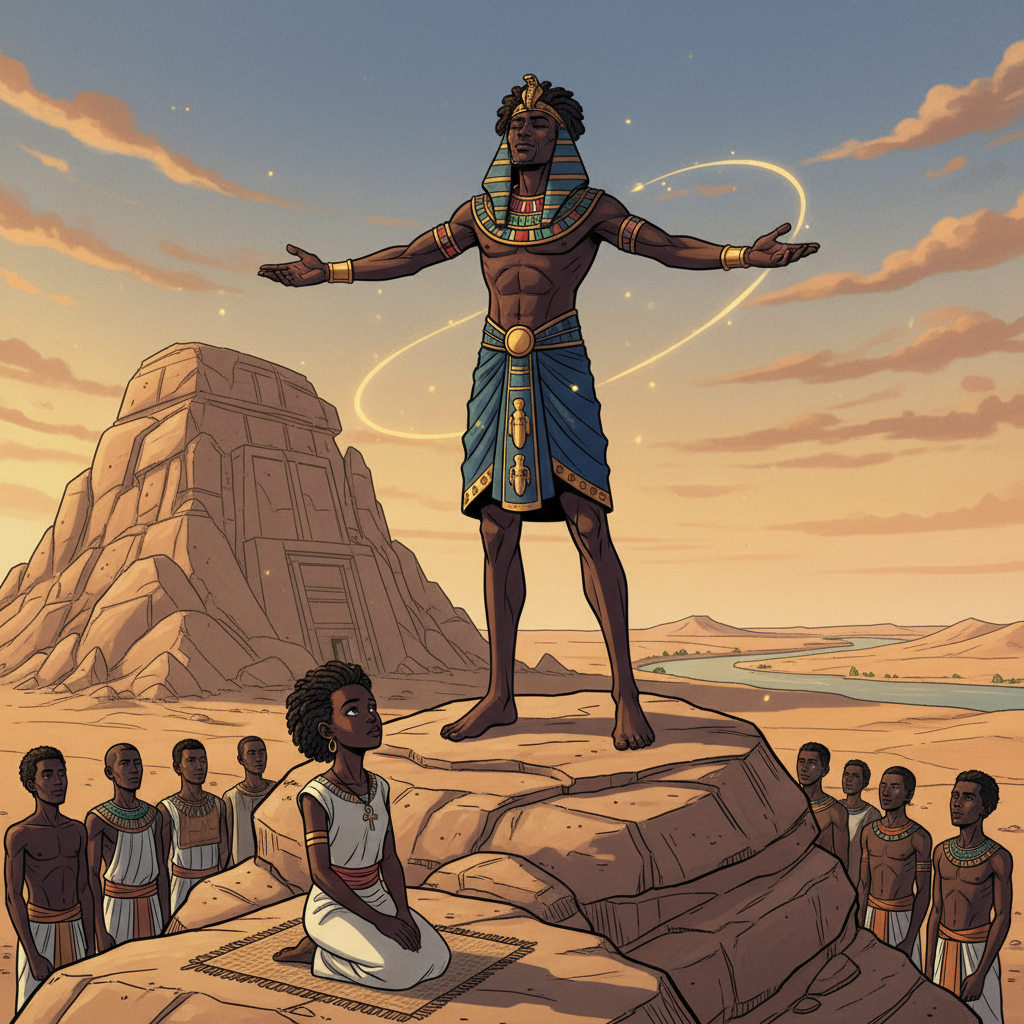
The air around Gebel Barkal during those months was thick with spiritual energy. The natural rock formations, the gentle whispers of the desert wind, the distant rush of the Nile—all seemed to hum with the presence of `Amun`. Piye immersed himself in this sacred landscape, allowing the spirit of `Kush` to fill his `ka`, strengthening his resolve. He understood that the fragmentation in the North was not merely political; it was a spiritual illness, a departure from `Maat`. The land itself cried out for healing. Neferet, watching him, began to understand that a true leader doesn't just command; they listen. They listen to the land, to the people, and most importantly, to the divine voice that guides them towards righteous order.
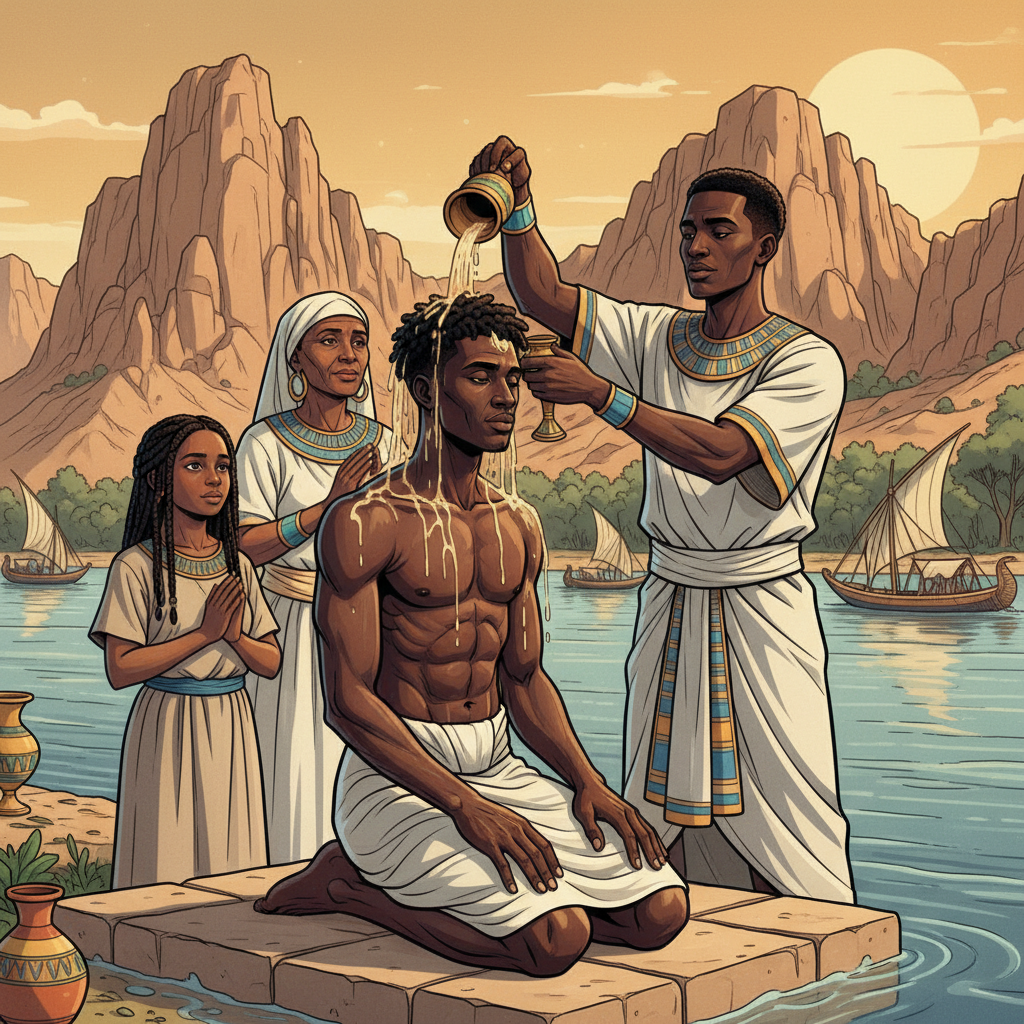
Piye's ritual purification was rigorous, a testament to his genuine piety. He wore only the purest linen, a symbol of spiritual cleanliness, and his body was washed with sacred waters. These acts were not empty gestures; they were profound statements of humility and dedication, stripping away all earthly distractions to stand naked before the `neter` `Amun`. He believed, with every fiber of his being, that `Amun` had chosen him, a son of `Kush`, to reunite `Kemet` under the banner of `Maat`. This conviction was the very cornerstone of his campaign, making it a sacred pilgrimage rather than a mere military expedition. Neferet, seeing his unwavering faith, felt a stirring in her own young soul, a glimmer of understanding about the true nature of power.
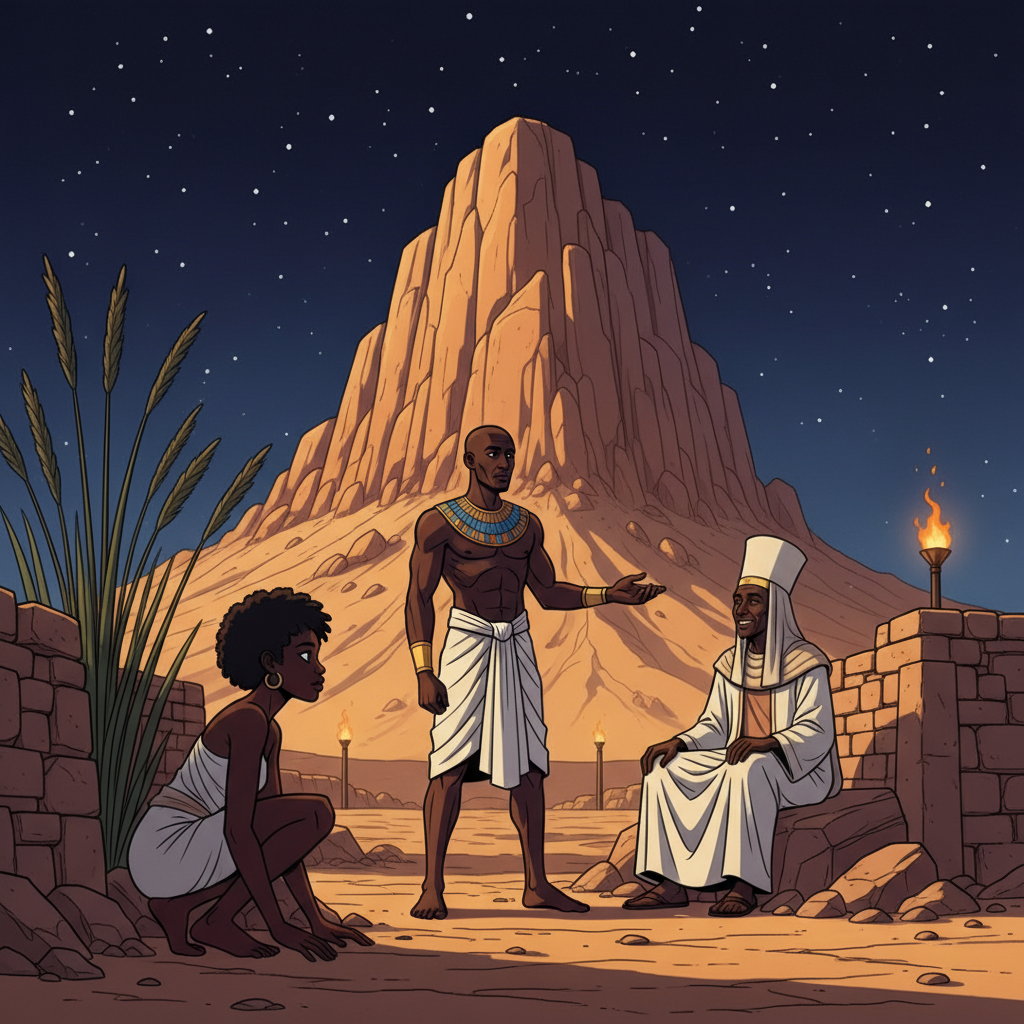
One evening, as the stars began to pinprick the vast desert sky above Gebel Barkal, Neferet overheard a conversation between Piye and Pedamenope. 'The land of Kemet,' Piye said, his voice low but firm, 'has lost its way. The pharaohs of the North have forgotten the ancient wisdom, allowing `isfet` to take root where `Maat` should flourish. Amun has shown me the path.' Pedamenope, the wise high priest, nodded slowly. 'Indeed, my king. The `neter` has spoken. You are the shepherd chosen to gather the scattered flock, to bring the northern child back to the embrace of the southern homeland. This is not a conquest, but a reunion, a restoration of the sacred order that connects all of `Kemet` from `Napata` to the Delta.' Neferet listened, her heart pounding.
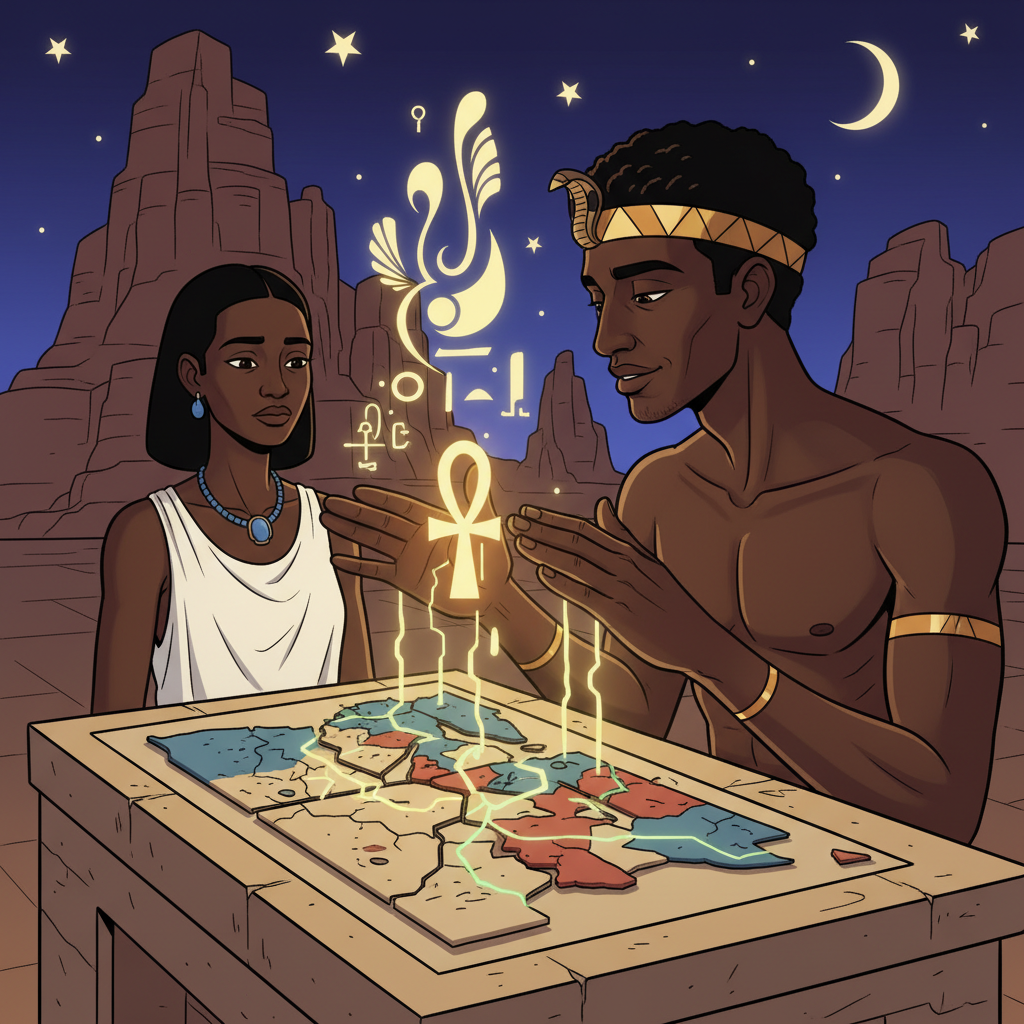
Piye's belief was not born of ambition, but from a profound connection to the divine. He wasn't seeking to conquer `Kemet` for his own glory, but to heal it, to restore the very `Maat` that defined its soul. He saw the fragmentation, the petty squabbles among the northern rulers, as a deep wound upon the body of the land, a wound that only the ancient, pure spirit of `Kush` could mend. He understood that true leadership meant embodying the principles of truth, justice, and harmony, not just speaking of them. His campaign would be a religious mission, guided by `Amun`, to re-establish the righteous order throughout the Two Lands. Neferet felt the weight of this sacred duty, realizing that a pharaoh's crown was not just a symbol of power, but a heavy burden of responsibility.
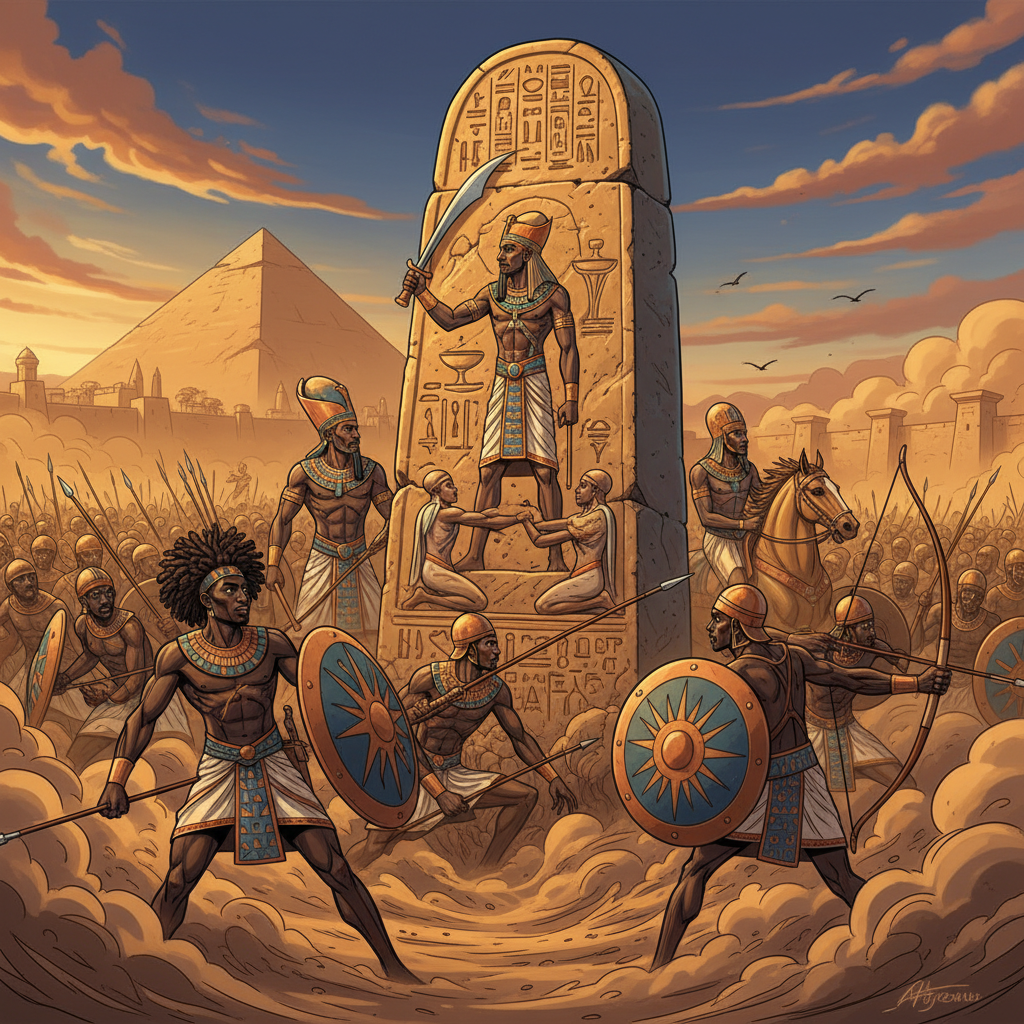
The Great Triumphal Stele, a magnificent stone record carved later, tells us explicitly of Piye’s deep devotion. It speaks not of military might alone, but of his profound respect for the `neter` and his refusal to attack cities that surrendered peacefully. His actions were always tempered by mercy, driven by `Maat`, not by a desire for bloodshed. This stele, found at Gebel Barkal, is one of the most important ancient texts from our African heritage, revealing the heart of a king who genuinely believed he was doing `Amun`’s work. It’s a testament to the fact that our ancestors, the Kushite pharaohs, valued spiritual integrity above all else, ensuring `Maat` guided every step of their journey.
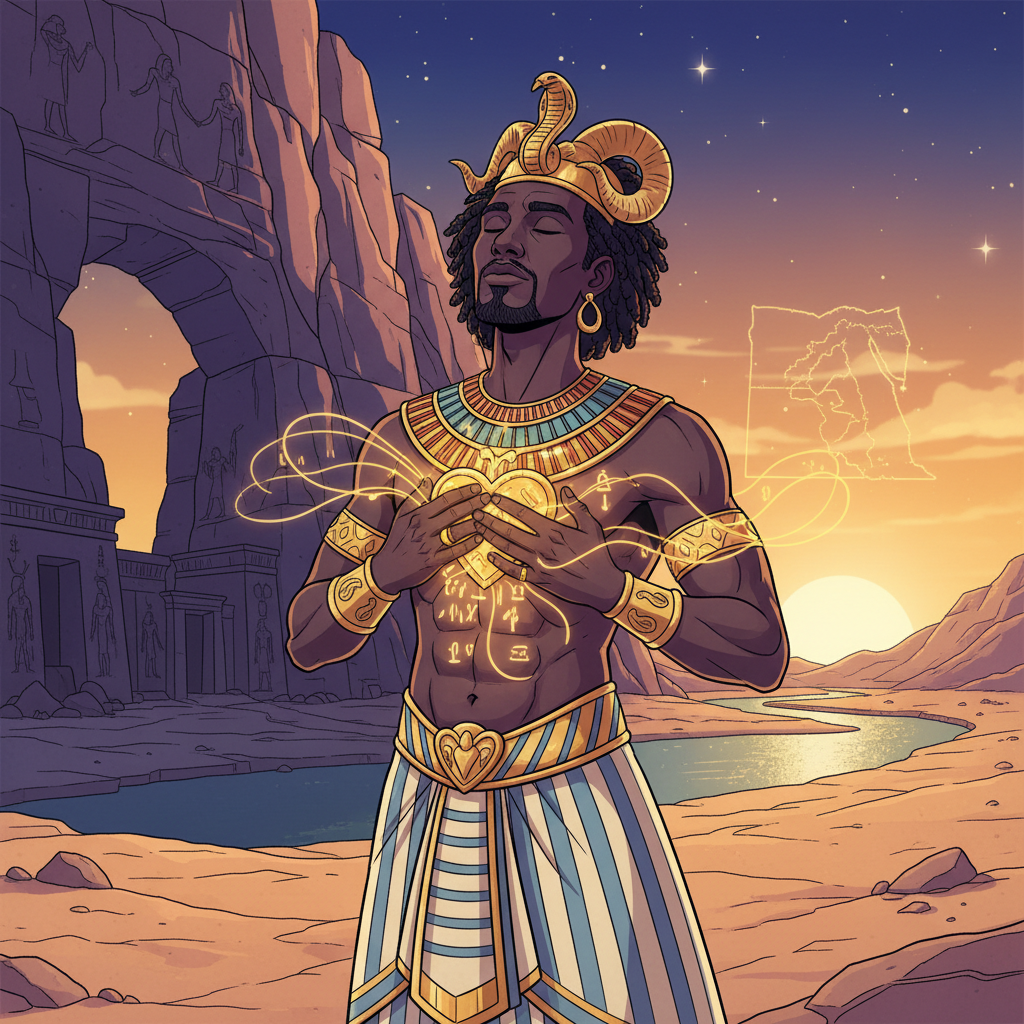
Imagine, {name}, the moment Piye finally felt the full weight of `Amun`'s commission settle upon his `ka`. It wasn't a thunderclap, perhaps, but a quiet certainty, a deep knowing that pulsed within him like the steady beat of his own heart. He knew then, without doubt, that his path northward was ordained, a sacred duty to restore `Maat`. This moment, when a leader truly internalizes their divine calling, is a powerful `heka` moment, a moment of profound transformation. It is when the individual will aligns with the will of the `neter`, allowing them to become a vessel for something far greater than themselves. Piye felt the `ka` of `Kemet` itself calling to him, a plea for harmony.
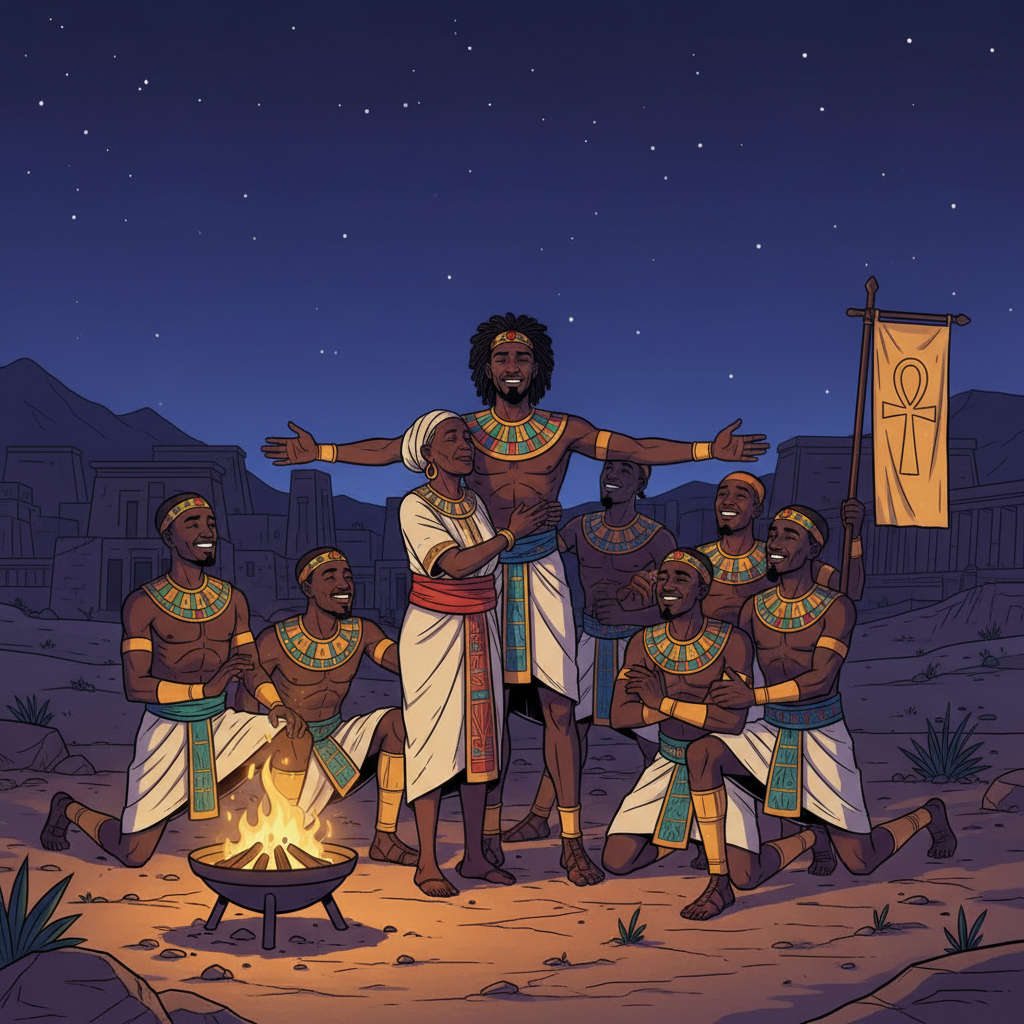
This was not a foreign conquest, my child, but a family reunion, a reclaiming of the northern cultural child by its southern homeland. `Kush` was not a junior partner to `Kemet`; it was the elder sibling, the wellspring from which much of `Kemet`'s civilization had first flowed thousands of years before. Piye, with his rich ebony skin and strong Nilotic features, was a true son of Africa, embodying the ancient strength of our people. He and his successors, like Shabaka and Taharqa, were dark-skinned African kings, just like the people of `Napata` and `Waset` today. They were restoring an African tradition, not imposing an alien one. This is why their mission was so deeply spiritual, rooted in the shared heritage and the enduring principles of `Maat`.
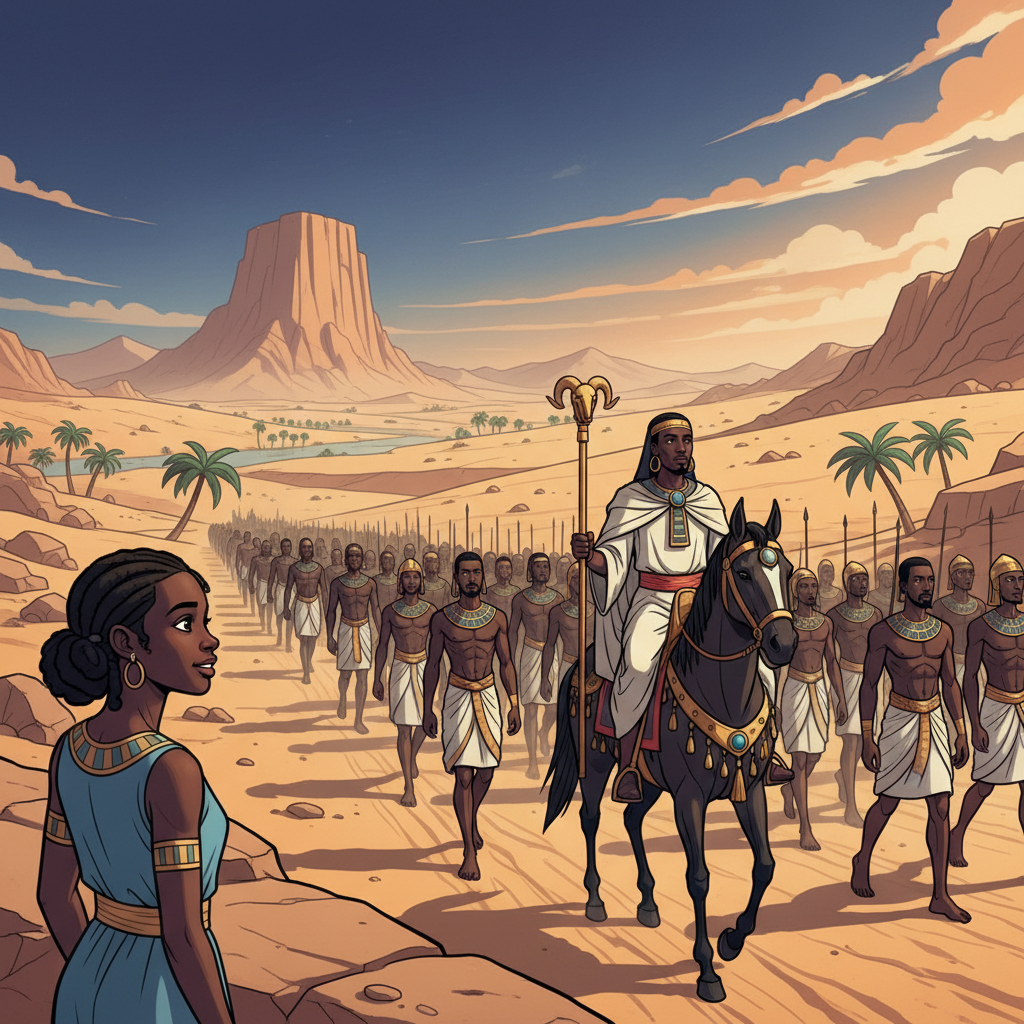
Neferet watched Piye prepare for his departure, no longer just an acolyte, but a witness to history in the making. She understood now that the question she carried – how a king knows he is called – was answered not by words, but by actions, by humility, and by an unshakeable faith in `Maat`. Piye's journey was a sacred covenant, a promise to the `neter` and to the land. His mission was to knit `Kemet` back together, to weave the threads of truth and justice into a strong, unified fabric once more. He would march north not with the fury of a conqueror, but with the measured steps of a healer, bringing the light of `Amun` from `Napata` to every corner of the fragmented land. This was the true meaning of divine commission.
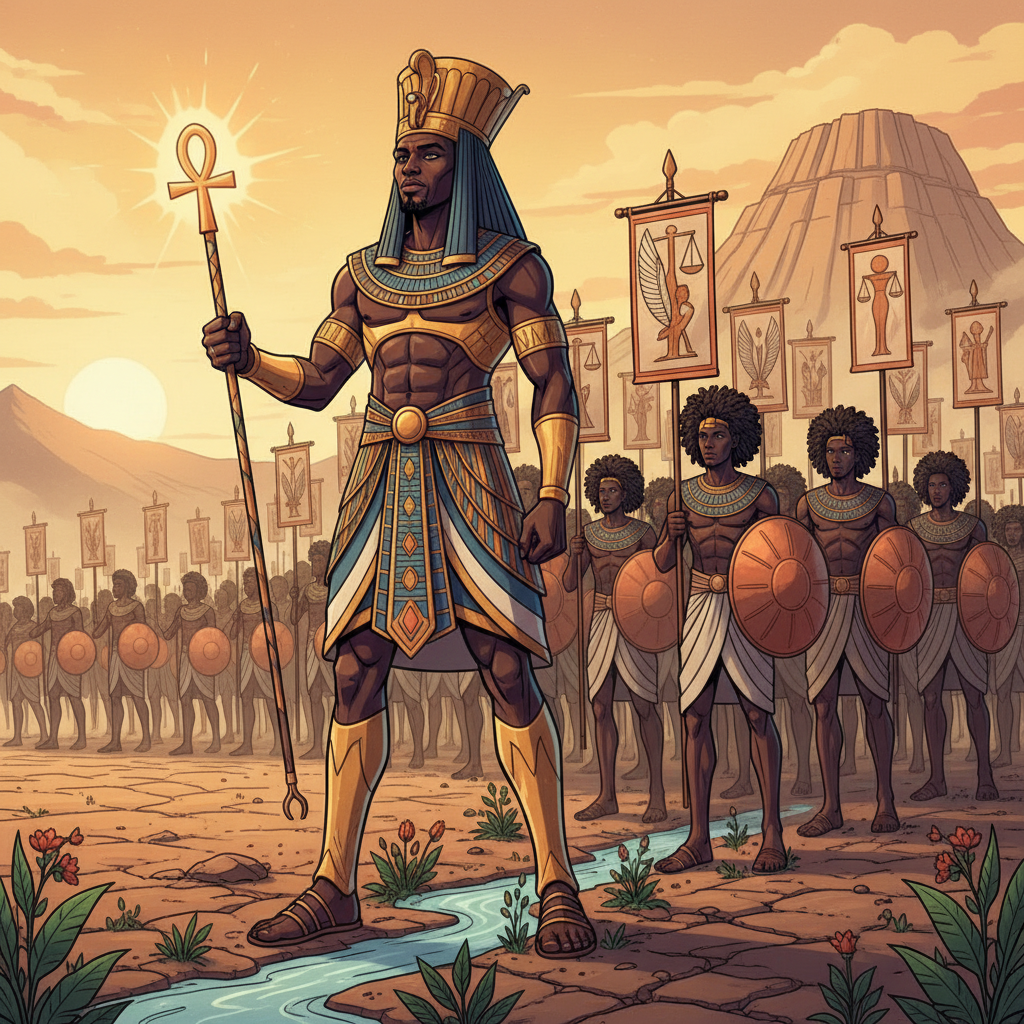
And so, with `Amun`'s blessing, Piye led his forces northward from `Napata`. His army was disciplined, but their true strength lay in their spiritual conviction. They were not just soldiers; they were pilgrims, carrying the torch of `Maat` into lands that had grown dim with `isfet`. They understood that the restoration of `Kemet` was a sacred duty, a return to the righteous order. Piye’s journey was like the annual flood of the Nile, my child, bringing life and renewal to parched lands. Just as the Nile’s waters bring fertility, Piye brought the nourishing principles of `Maat`, washing away the dust of division and neglect. He was bringing the very `ka` of `Kush` to revitalize the `ka` of `Kemet`.
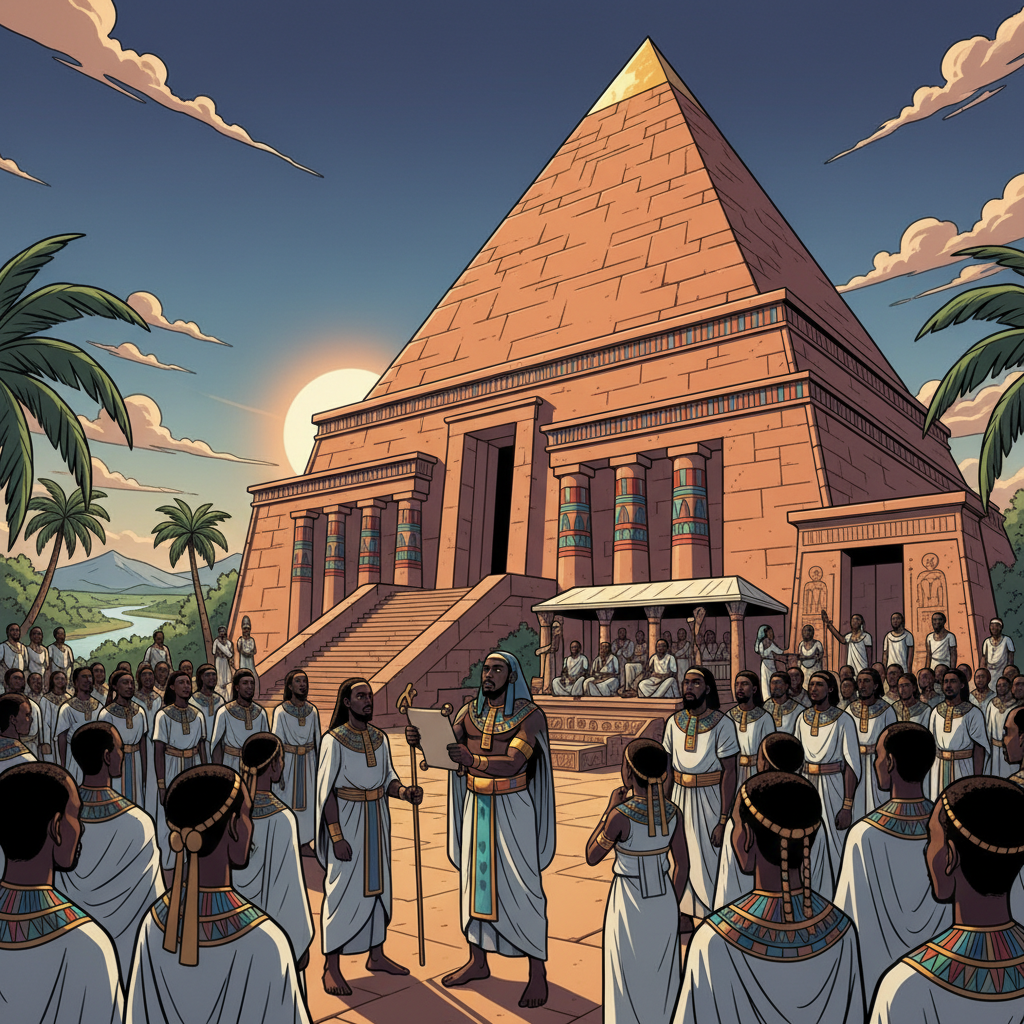
The `Per Ankh` at `Napata` and throughout `Kush` had long preserved the ancient wisdom, the sacred texts, and the deepest understanding of `Maat`. While the North had sometimes faltered, the South had held fast, a steadfast guardian of `Kemet`'s spiritual legacy. Piye's mission was to share this preserved wisdom, to remind the North of its own glorious past. Think of it, {name}: around the same time Rome was just a collection of mud huts, our ancestors in `Kush` were building magnificent temples and pyramids, articulating profound philosophies, and orchestrating grand spiritual restorations. This was a civilization at its peak, not a distant outpost, but a vibrant heart of African power and thought.
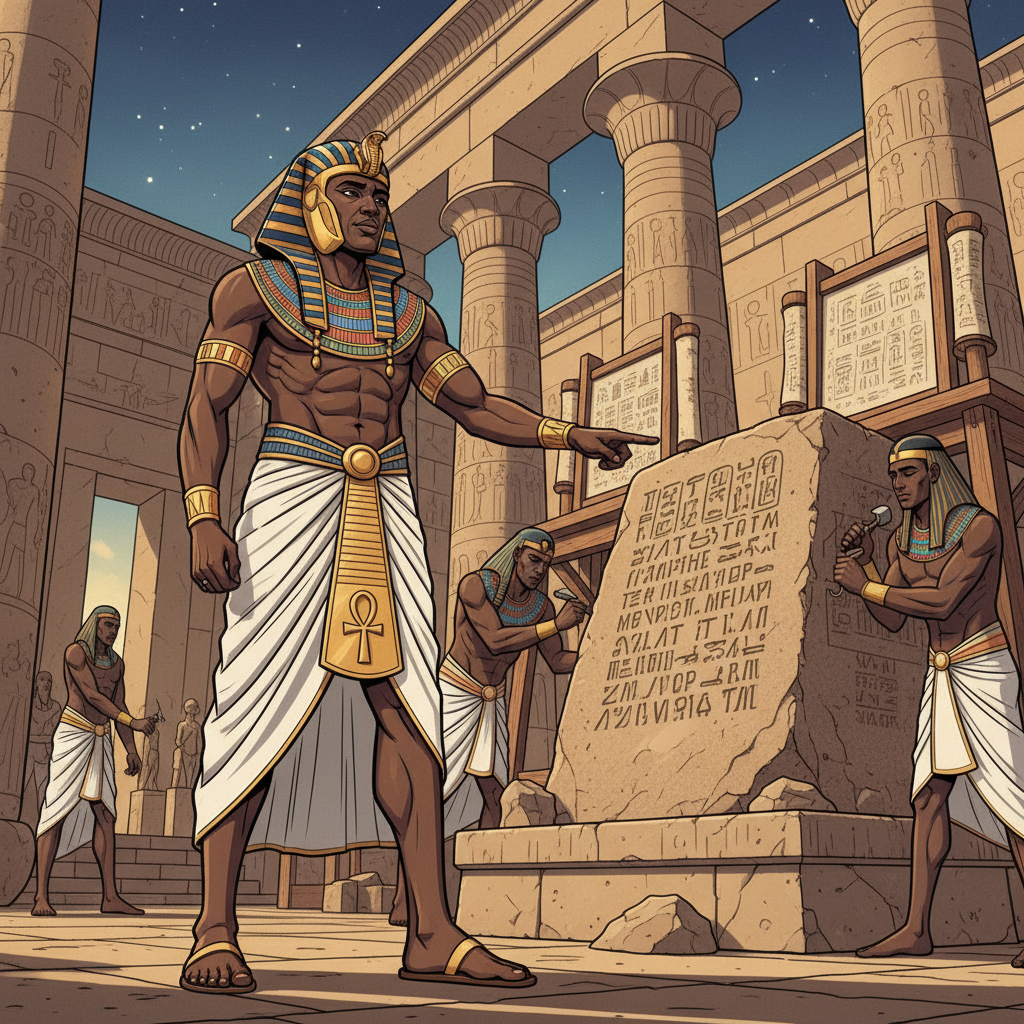
Piye's successors continued this legacy. Pharaoh Shabaka, for instance, literally preserved the ancient Memphite Theology by ordering it carved into granite on what we now call the Shabaka Stone. This was a direct act of safeguarding `Maat`, ensuring that fundamental Kemetic wisdom, which was crumbling on old `papyrus` scrolls, would endure for all time. And Taharqa, the great builder, expanded the temples at `Karnak`, Kawa, and Sanam, and here in `Waset` at Medinet Habu. His building program was deliberately conservative, aiming to restore the grandeur and ideals of the Old Kingdom, demonstrating a profound respect for the ancestral traditions. They truly were guardians of `Kemet`'s `ka`.
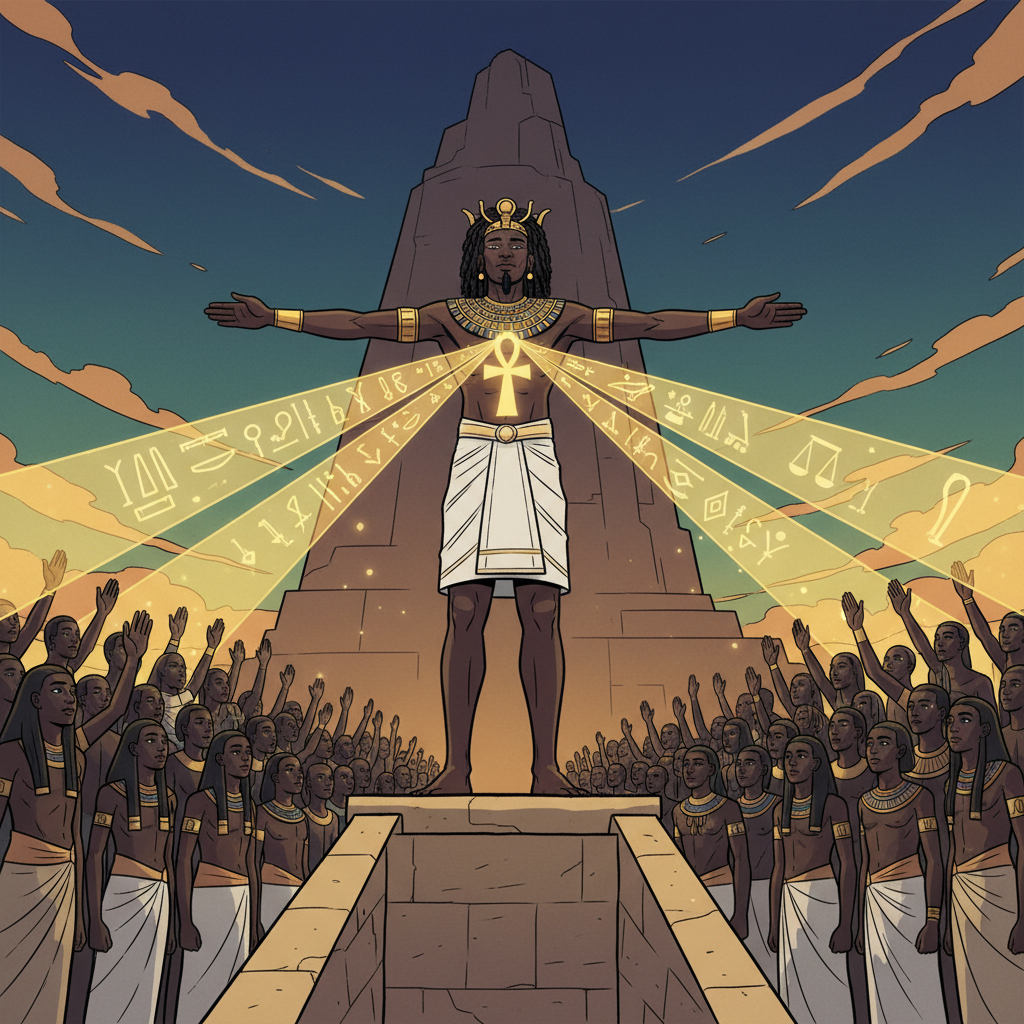
Piye's unwavering faith, born at Gebel Barkal, transformed him from a regional king into a unifier of civilizations. His example teaches us that true strength comes not from wielding power over others, but from serving a higher purpose, from dedicating one's life to the principles of `Maat`. He showed that even a king must be humble before the `neter`. His story reminds us that the `ka` of `Kemet` endures, passed down through generations. It is a flame that might flicker, but never truly dies, especially when there are those, like Piye, willing to tend to it. His legacy is a testament to the power of divine commission to shape history and inspire future generations.
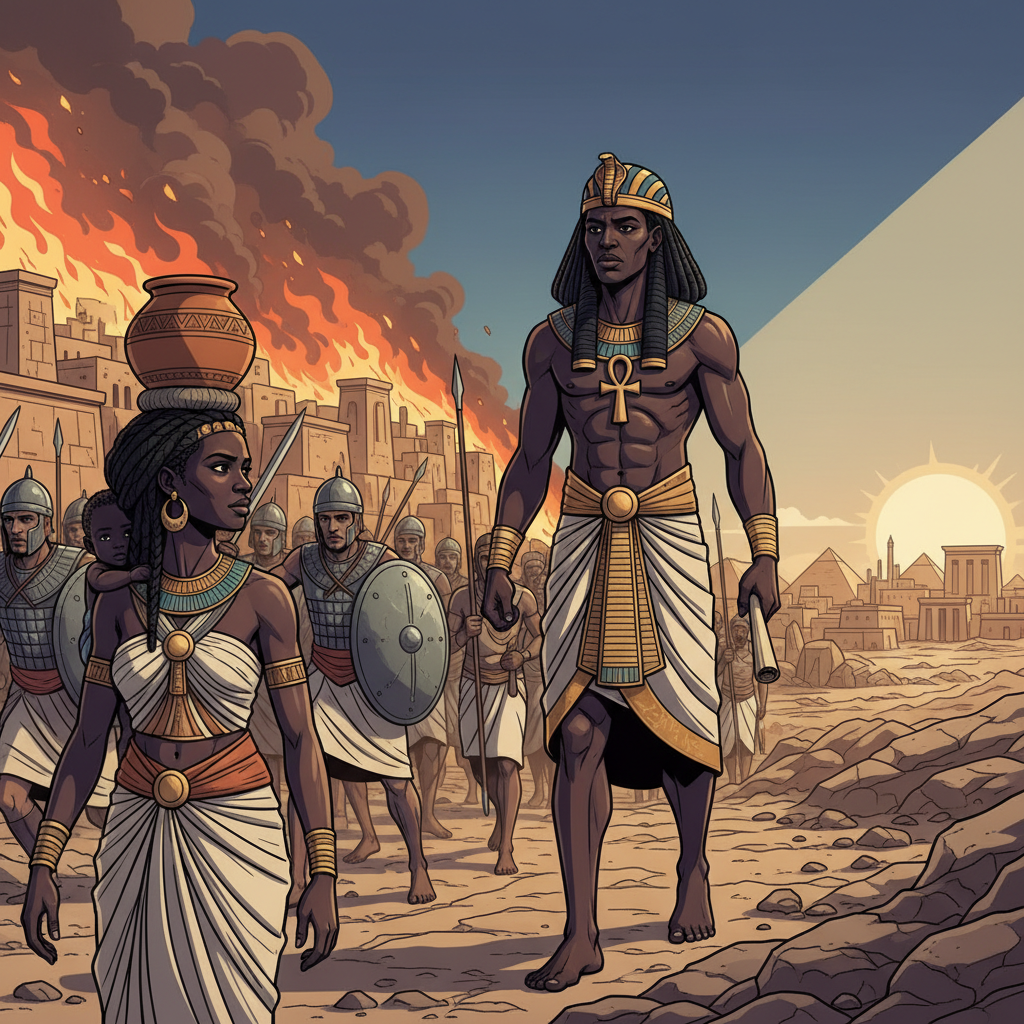
Even when the Assyrians, with their new iron weapons, eventually pushed the Kushite pharaohs back south from `Kemet`, the spirit of `Kush` did not die. The legacy of `Maat` and the devotion to `Amun` continued to thrive in the southern lands, especially in the new capital of Meroe. This was not the end, but a transformation. Our ancestors adapted, continued to build, and even centuries later, produced the formidable Kandake warrior queens who famously defied and defeated the Roman Empire under Augustus. The flame of our civilization, ignited at places like Gebel Barkal, continued to burn brightly, a beacon across the continent. `Kush` was resilient, always.
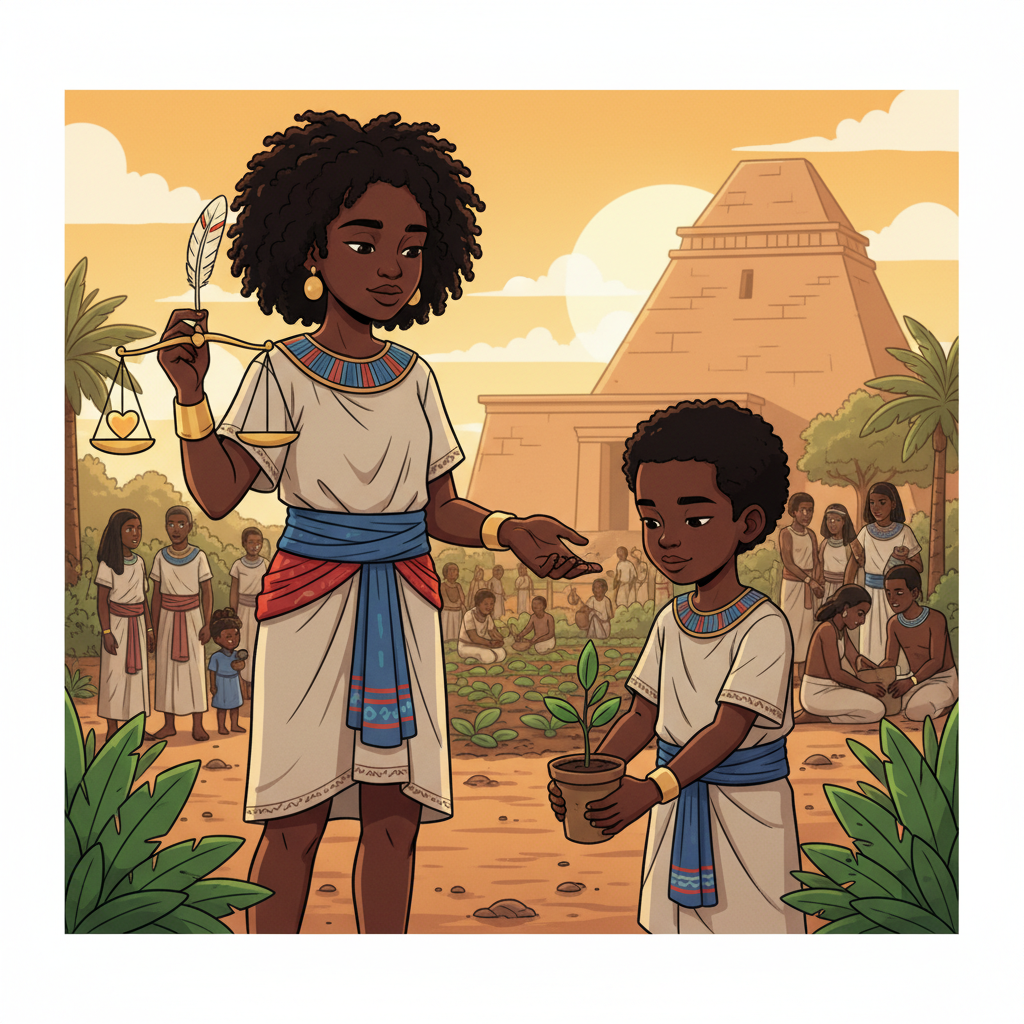
The story of Piye and Gebel Barkal is not just about ancient kings and sacred mountains; it is about the `ka` of every person. Just as Piye sought clarity and guidance from `Amun` before embarking on his great mission, we too must seek our own inner truth, our own connection to `Maat`. How does a child carry `Maat` in their own life, you ask? By choosing truth over lies, kindness over cruelty, balance over excess. By honoring your elders, respecting your teachers, and nurturing your community. By understanding that every choice you make, every word you speak, contributes to the harmony or `isfet` of the world around you.
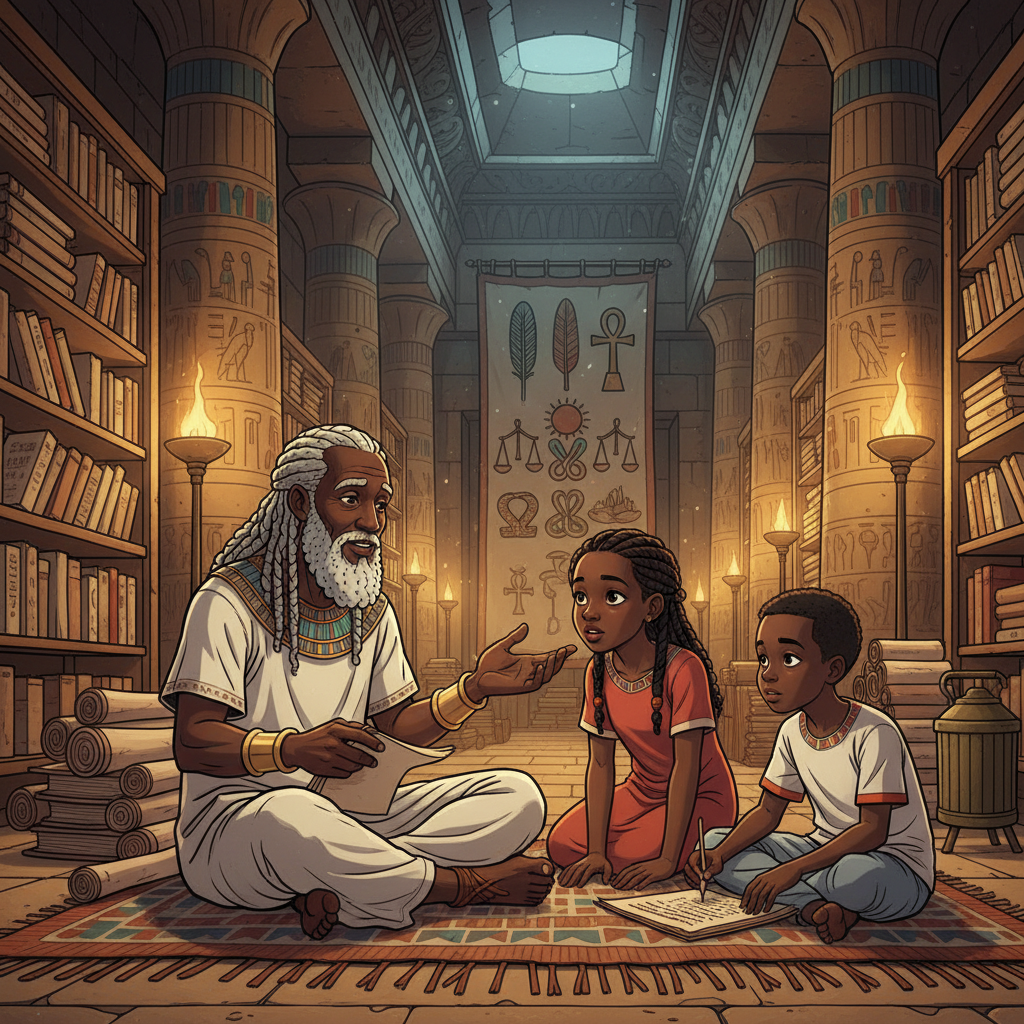
Remember, {name}, that the principles Piye lived by – truth, justice, propriety, harmony, balance, reciprocity, and righteous order – are not abstract ideas. They are the very fabric of `Maat`, the threads that weave a strong and beautiful life. When you act with `Maat`, you honor your ancestors, you strengthen your community, and you nourish your own `ka`. You are the heir to this tradition, my child. The wisdom preserved in the `Per Ankh`, the stories of the Kushite pharaohs, the enduring spirit of `Kemet` – these are your inheritance. Just as Piye answered the call from Gebel Barkal, you too have a call to uphold `Maat` in your own time and place.
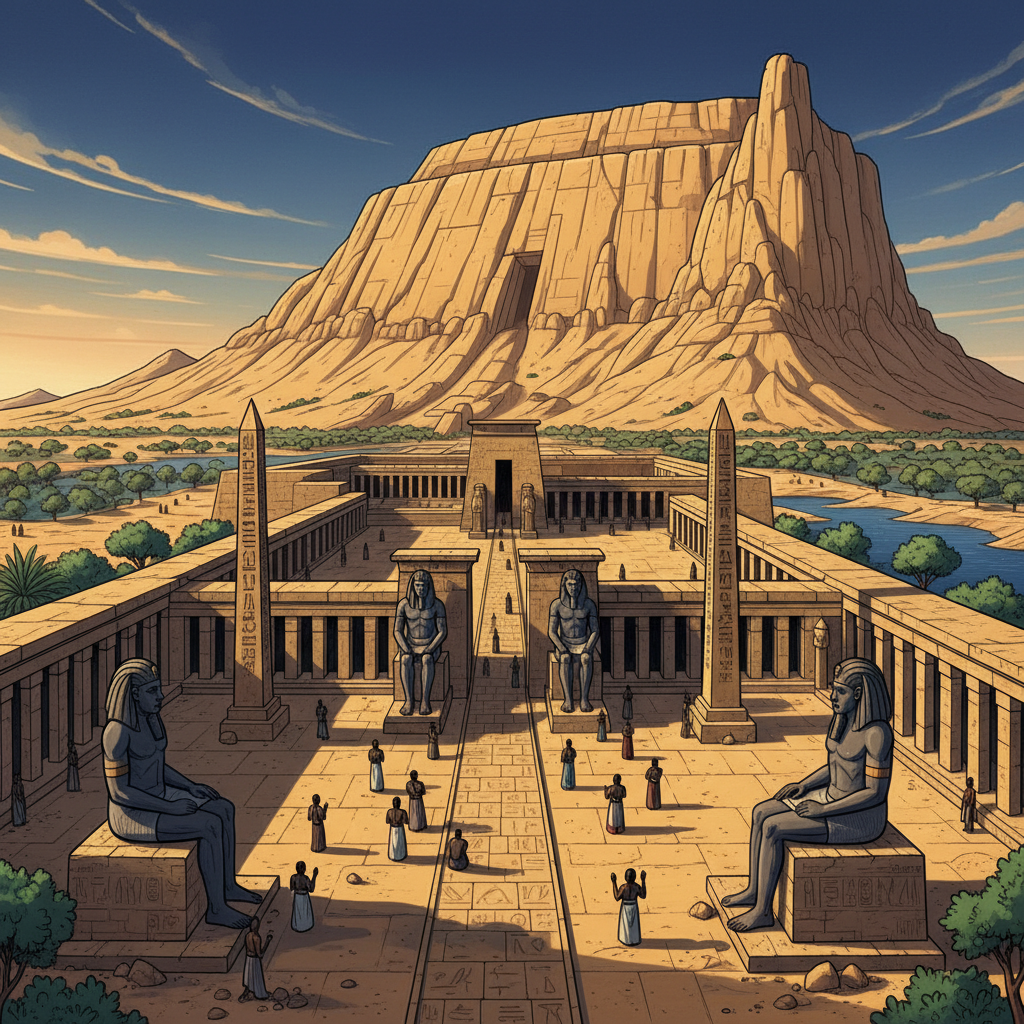
The sacred mountain of Gebel Barkal, where Piye found his divine commission, reminds us that profound wisdom often emerges from places of quiet contemplation and deep reverence. It is a place where the human spirit connects directly with the `neter`, where the path of `Maat` becomes clear. Taharqa, Piye’s son and a great pharaoh himself, later expanded the temple complex there, ensuring its sacred power endured. This mountain, a UNESCO World Heritage Site today, stands as a silent witness to a century when our Kushite cousins brought light back to `Kemet`, not through conquest, but through a spiritual awakening rooted in `Amun` and `Maat`. It is a monument to devotion, a beacon of righteous purpose.
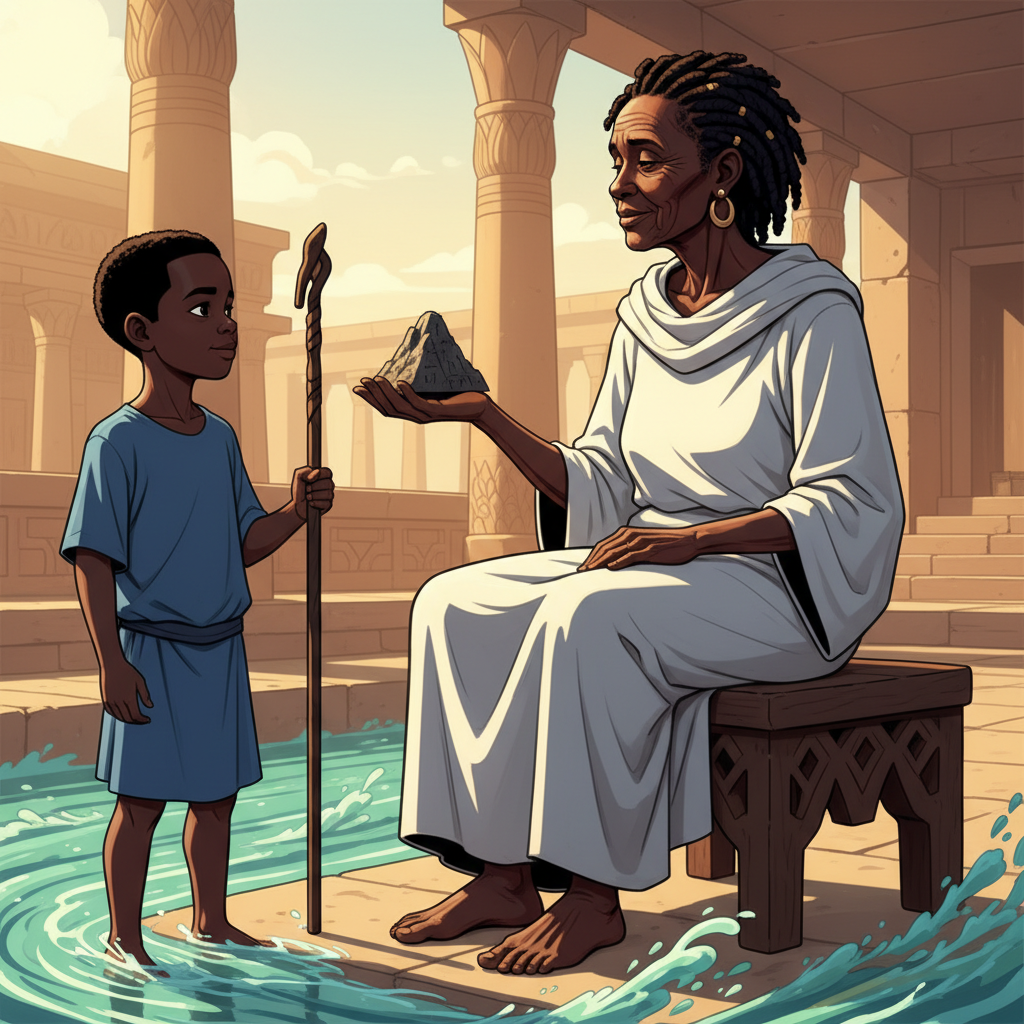
So, {name}, as you walk through the world, carry the spirit of Piye within you. Be like the steady current of the Nile, always flowing towards `Maat`, always seeking balance and harmony. Let your heart be as pure as the linen Piye wore, and your resolve as firm as the granite of Gebel Barkal. For you, my child, are a part of this living stream of history, a continuation of the `Per Ankh`'s wisdom. The call to restore `Maat`, to uphold truth and justice, echoes through the millennia, waiting for each generation to answer. And I have no doubt, my dear one, that you will answer it with courage and grace.