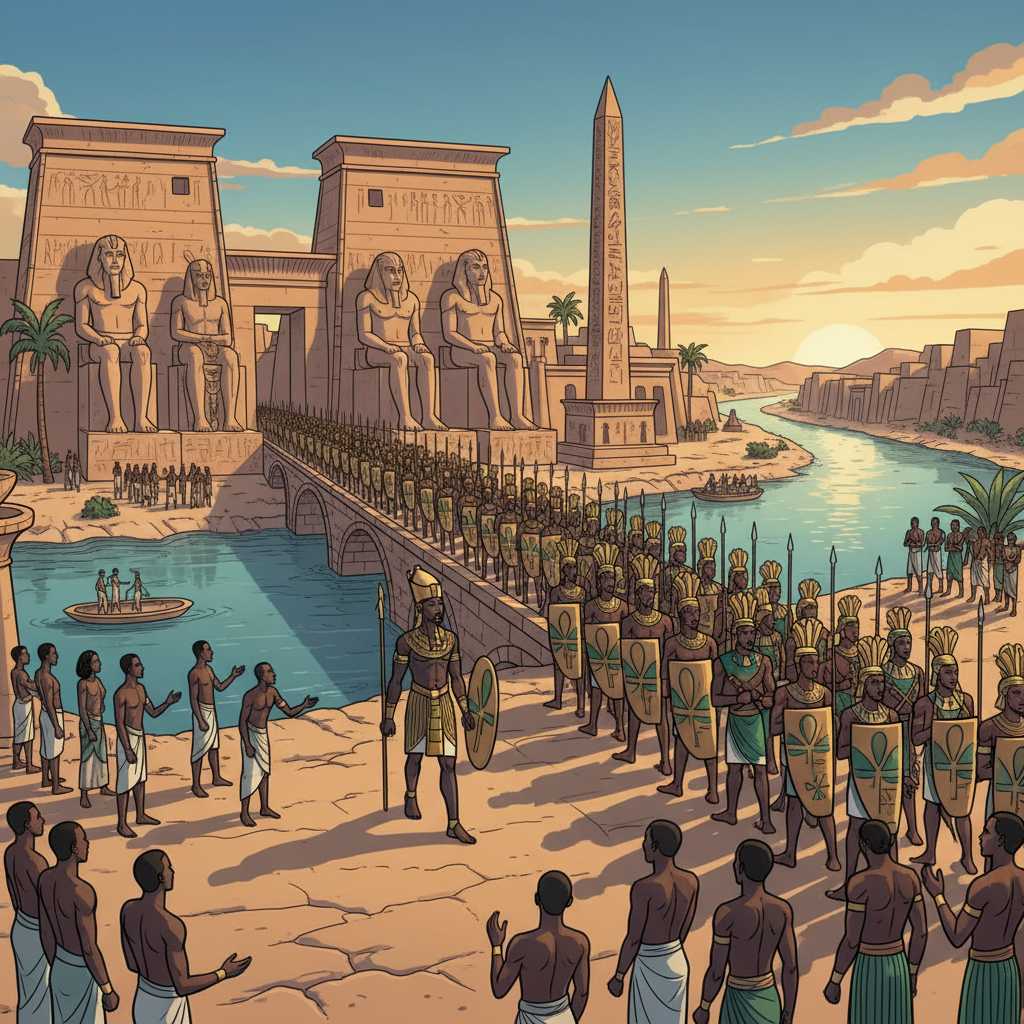
Ah, {name}, come closer, my child, and let the whispers of the Nile carry us back through the currents of time. We journey now to an age when Kemet, our beloved land, felt like a great river fractured into many small streams, each struggling to find its way to the sea. But from the south, from the ancient heartland of Kush, a powerful tide began to rise, not to conquer, but to reunite. This was the time of the 25th Dynasty, a century when our wise Kushite cousins, with skin the color of rich ebony and spirits as boundless as the desert sky, came north. They were not strangers, but family, returning to restore Maat – the divine balance of truth, justice, and harmony – to a Kemet that had strayed. Among them was a pharaoh named Shabaka, a king whose wisdom shone as brightly as the morning star.
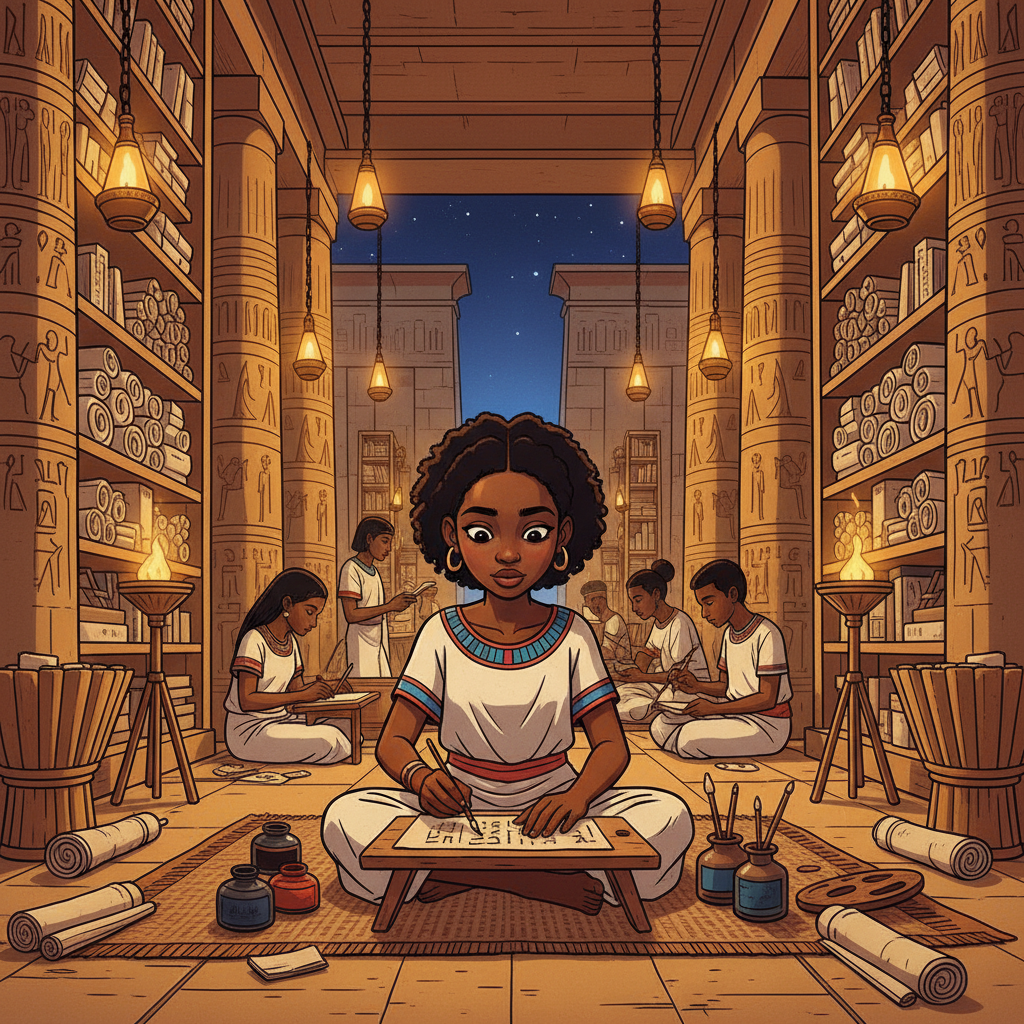
Imagine, if you will, a young girl named Neferet, no older than you, {name}, with quick, observant eyes and hands nimble enough to catch a falling feather. She lived in Mennefer, the city you now call Memphis, a bustling hub where the great Temple of Ptah stood, its pylons reaching towards the heavens like arms in prayer. Neferet was an apprentice scribe in the Per Ankh, the House of Life, where the most sacred texts were kept and copied. Her days were filled with the rustle of papyrus, the scent of ink, and the endless challenge of mastering the intricate hieroglyphs, the sacred writing that held the wisdom of generations. She understood, even then, that these words were not just symbols, but vessels for the *ka* and *ba* of our ancestors, preserving their very essence. She knew her duty was to protect this precious heritage, to ensure the sacred knowledge flowed like the Nile, uninterrupted.
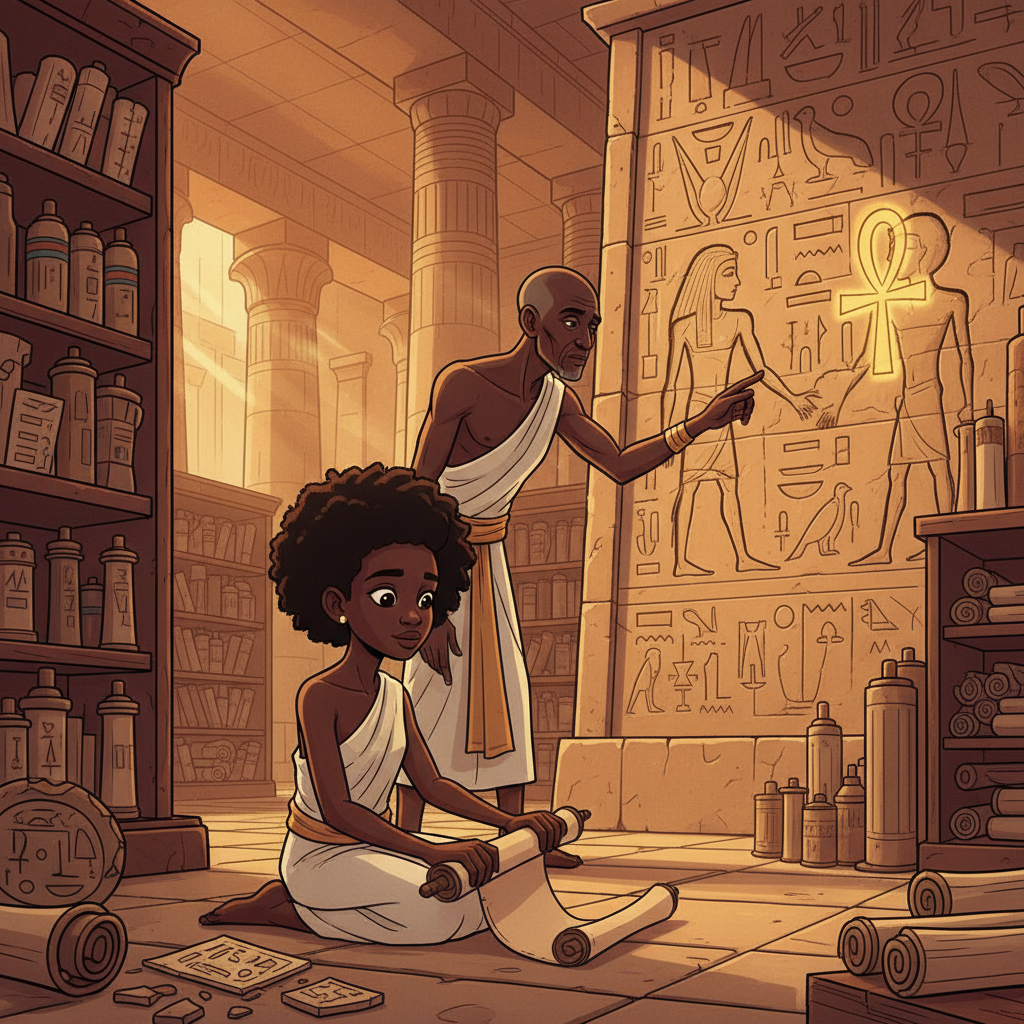
Neferet spent her mornings grinding pigments for ink, her afternoons carefully unrolling ancient scrolls, and her evenings practicing her hand, copying simple proverbs or short prayers onto ostraca, pieces of pottery. The temple was her world, a sanctuary where the past spoke to the present through every carved stone and every carefully preserved roll of papyrus. She knew that each word, each *neter*, each image, was a link in a chain stretching back to the very dawn of Kemet. Her teachers, wise and patient scribes, taught her not just to copy, but to understand the profound meaning embedded in the texts. They spoke of the *djed* column, symbolizing stability, and the *ankh*, the key of life, reminding her that true wisdom brought both endurance and vitality. It was in this atmosphere of deep reverence that Neferet learned the sacred duty of preserving knowledge, a duty that would soon be put to the ultimate test.
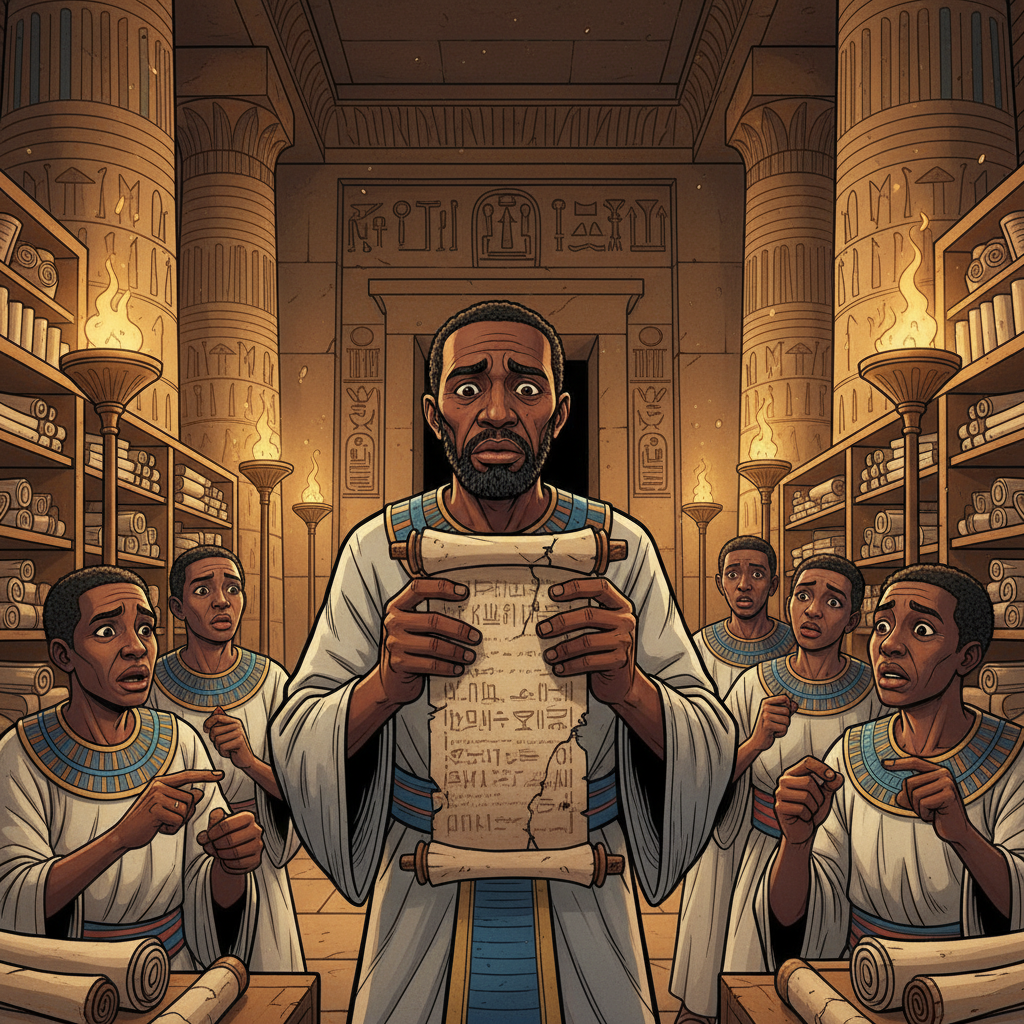
One sweltering afternoon, as the sun beat down on the temple courtyard, a senior priest, his face etched with concern, emerged from the deepest, most sacred archives. In his trembling hands, he held a scroll so ancient, so delicate, that it seemed to breathe with the merest whisper of air. It was a papyrus, its fibers brittle and discolored, its edges eaten away by time and tiny, hungry insects. This was no ordinary text, he explained in hushed tones to the other scribes. This was the 'Memphite Theology,' a cosmogony, a story of creation itself, believed to hold the very words of Ptah, the great creator *neter* of Mennefer, who thought the world into being. But now, this priceless treasure, a beacon of Kemet's profound philosophy, was crumbling, its wisdom threatening to return to the dust from which it came. *Isfet*, disorder, was at work, even on these sacred pages.
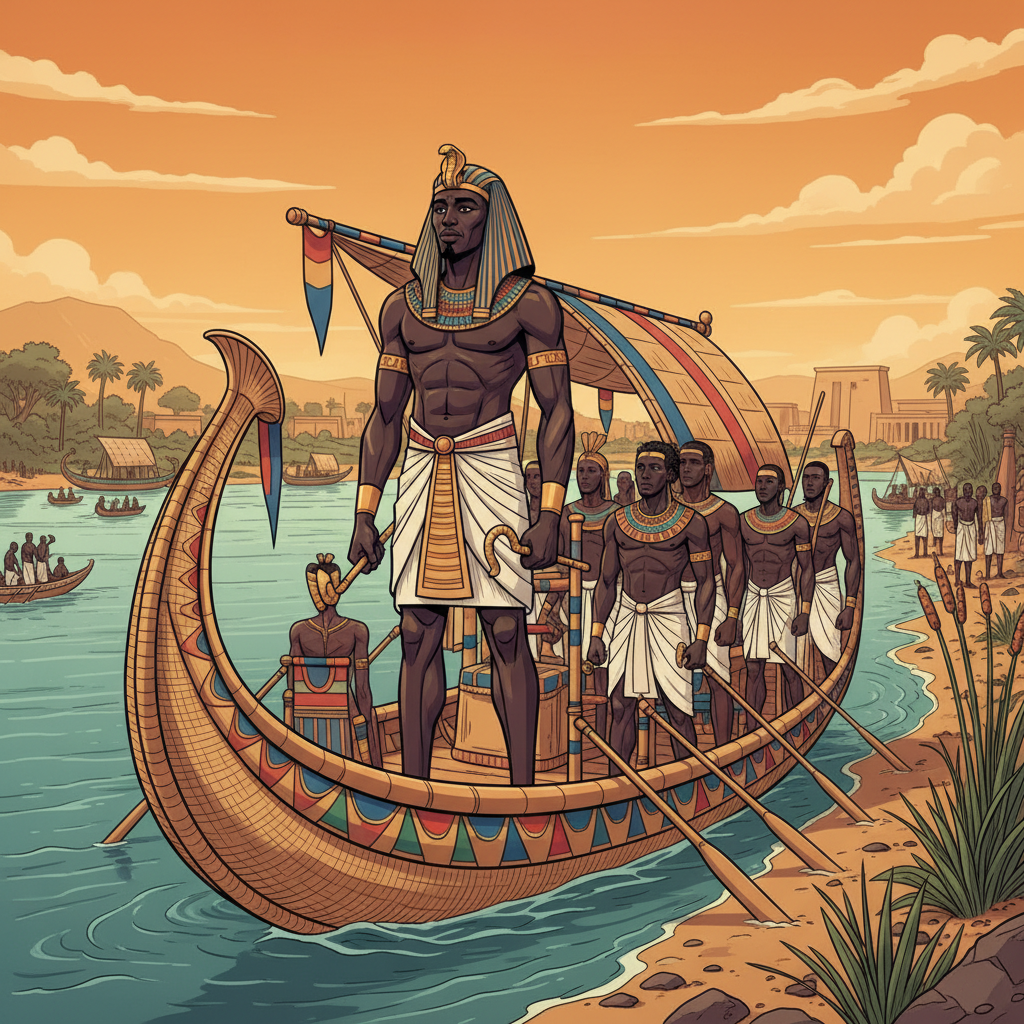
It was precisely at this moment, as the shadow of loss fell upon the temple, that news arrived: Pharaoh Shabaka, the Kushite king from Napata, was coming to visit. Shabaka, whose skin was like polished obsidian and whose spirit embodied the strength of the desert lion, was known not only for his military might but for his deep piety and reverence for the ancient traditions of Kemet. He was a true son of the Nile, a ruler whose *ka* was intertwined with the very essence of Maat. He arrived with his retinue, not with the pomp of a conqueror, but with the quiet dignity of a pilgrim returning to a sacred shrine. His uraeus, the cobra symbol of kingship, gleamed on his brow, a promise of protection and restoration. This was not a foreign invader, but a devoted cousin, come to nourish the spiritual roots of Kemet, to re-establish the righteous order that had been eroded by years of fragmentation and discord.
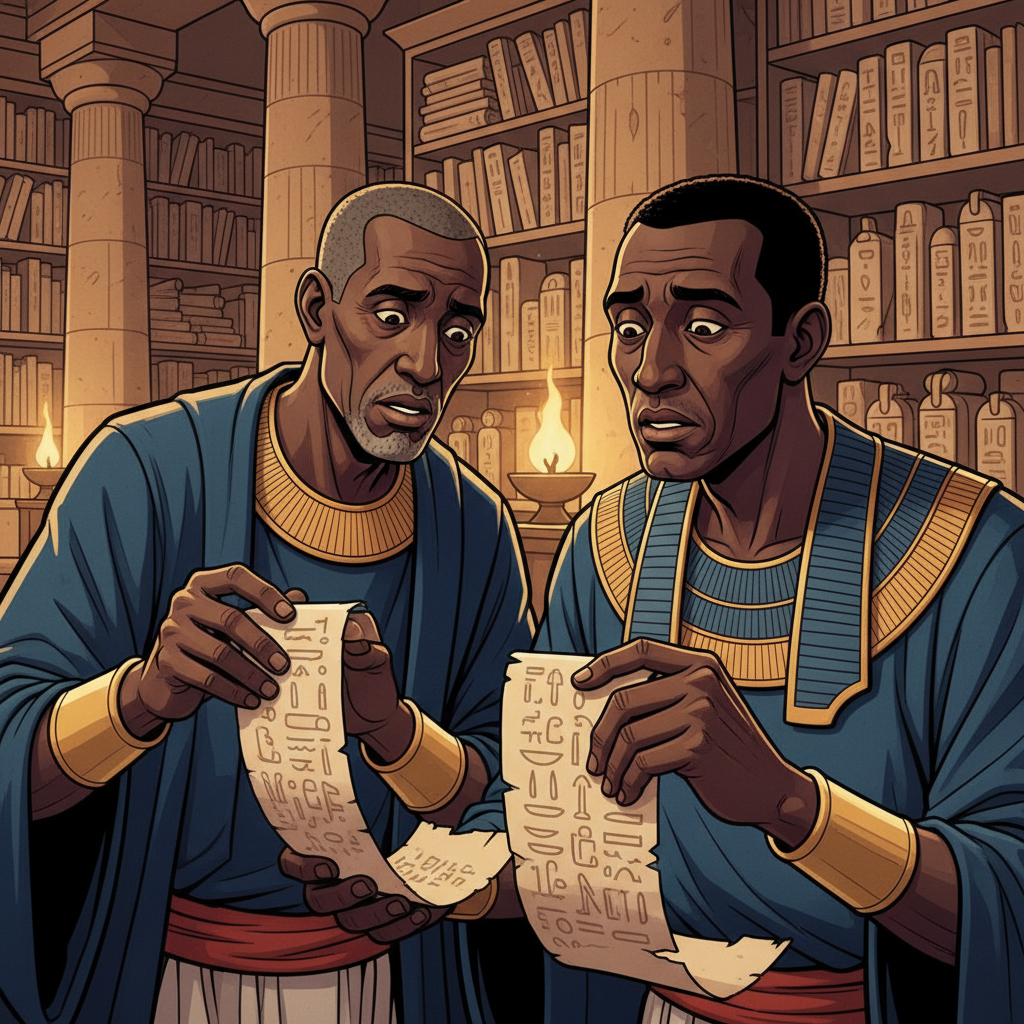
The senior priest, knowing the pharaoh's profound respect for wisdom, immediately sought an audience with Shabaka. With utmost care, he presented the crumbling papyrus, unrolling a small section to reveal the delicate hieroglyphs, some already faded, others mere ghosts of their former selves. Shabaka, his eyes, dark and discerning, took in the sight, his expression shifting from concern to quiet alarm. He saw not just a damaged scroll, but a vital piece of Kemet's soul, teetering on the brink of oblivion. This was the philosophy that had shaped their understanding of the cosmos, the very foundation of their worldview. To lose these words would be to lose a part of themselves, a part of the truth that connected them to the divine. Shabaka understood that preserving this text was not merely an act of scholarship, but a sacred duty, a reaffirmation of Maat itself.
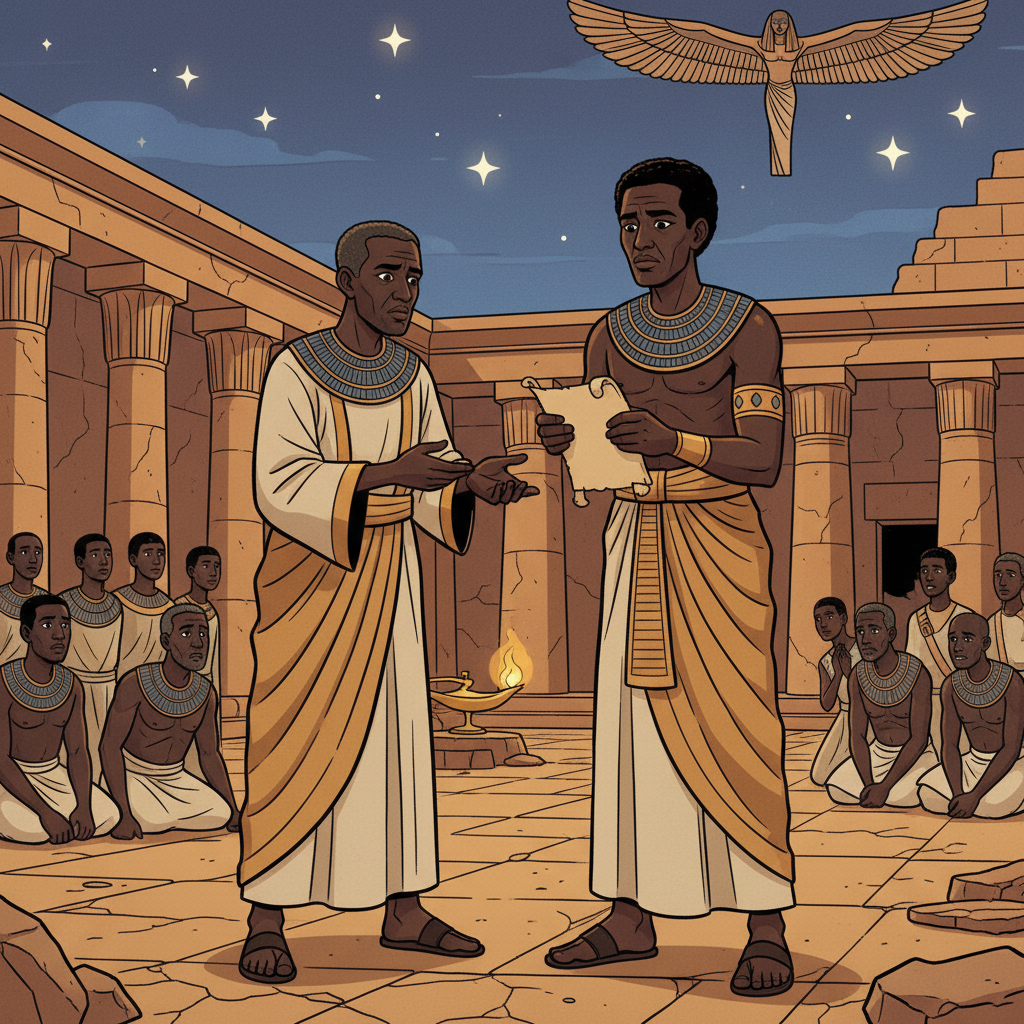
Shabaka's brow furrowed, not in anger, but in deep contemplation. He had traveled from the southern lands, from the heart of Kush, to restore stability and reverence for the ancient ways. He knew that the strength of Kemet lay not only in its armies or its fertile lands but in its enduring wisdom, its understanding of Maat, and its connection to the *neteru*. This papyrus represented centuries of profound thought, a legacy that had nourished generations. He recalled stories from his own youth in Napata, of how the elders spoke of the interconnectedness of all things, of how the smallest act of kindness could ripple outwards, just as the loss of a single thread could unravel a tapestry. To let this ancient wisdom fade was an act of *isfet*, a tear in the fabric of cosmic order. He knew he could not allow it. The stars themselves seemed to watch, waiting for his decision.
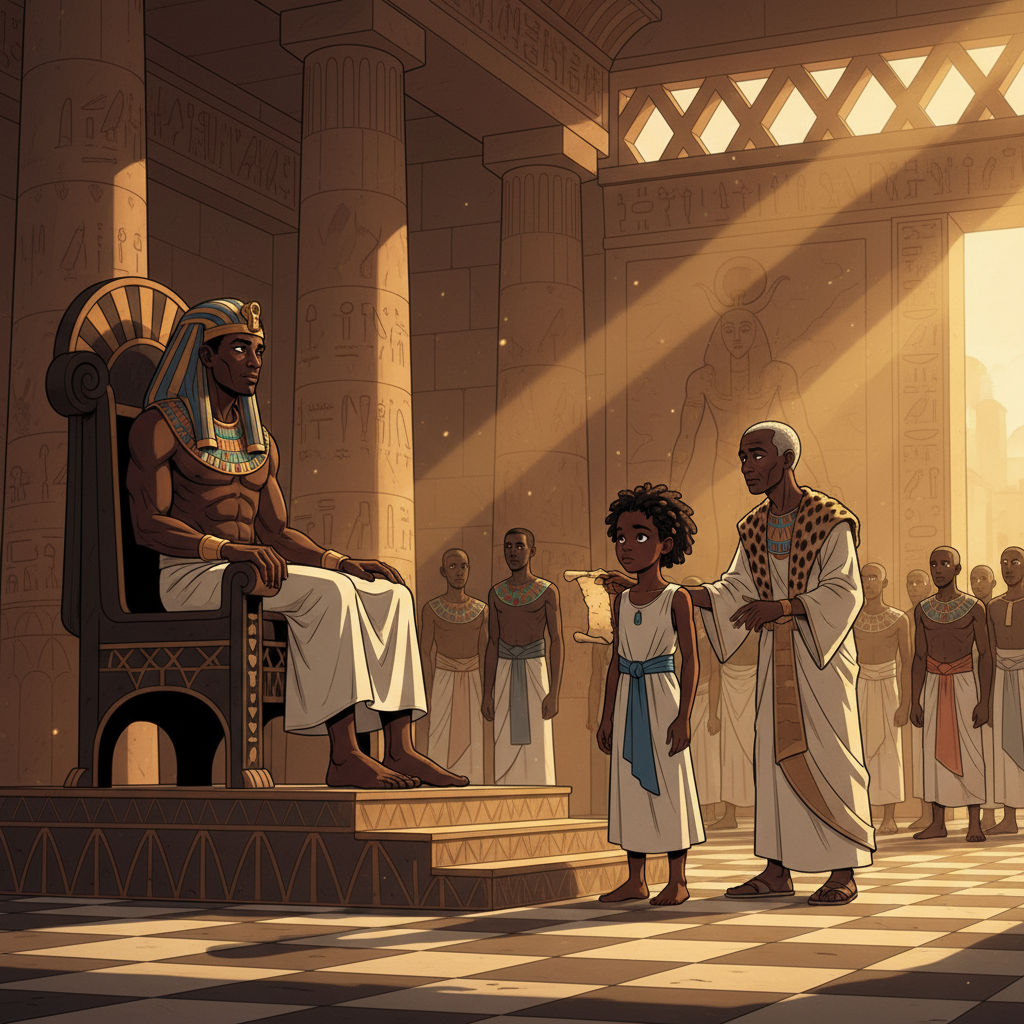
The papyrus was too fragile for anyone but the most skilled and delicate hands to touch, and even then, only for the briefest moments. The hieroglyphs were faint, some almost invisible, requiring intense focus to decipher. It was then that the senior priest, remembering Neferet’s exceptional talent for reading even the most faded inscriptions, stepped forward. 'Pharaoh,' he began, 'our young apprentice, Neferet, possesses a remarkable clarity of sight and a voice that carries the words with respect. She has been trained in the *Per Ankh* since she was a small child, her heart dedicated to the sacred texts. Perhaps her eyes, still keen with youth, could best discern these fading symbols.' Shabaka looked at Neferet, a child of Kemet, standing before him, her dark skin glowing in the temple light, her eyes wide with apprehension and a flicker of deep honor. He nodded, a silent command.
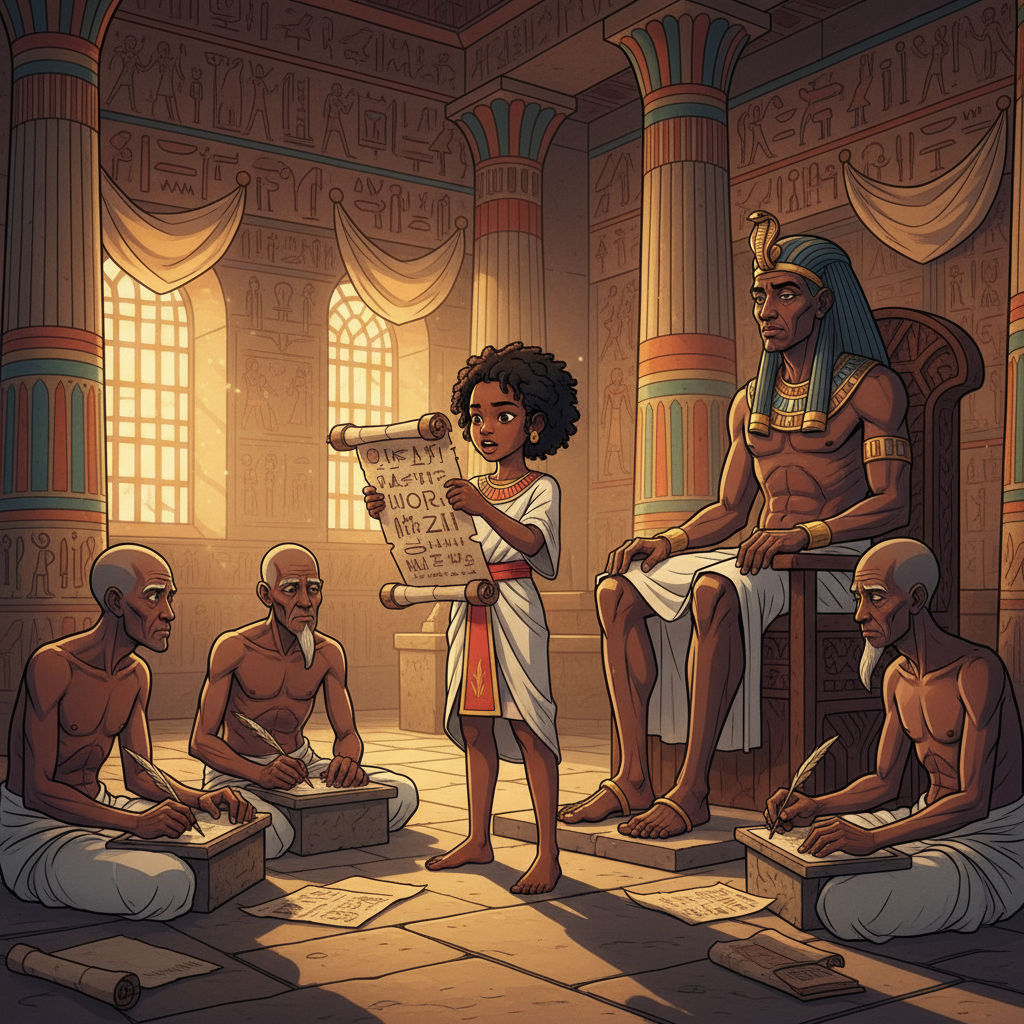
With a deep breath that steadied her small frame, Neferet approached the sacred text. Her heart hammered like a drum, yet her hands were steady as she gently held the edges of the ancient papyrus. She began to read, her voice, though young, resonant and clear, carefully articulating each hieroglyph, each sacred word. It was as if she was breathing life back into the dying embers of a fire, coaxing the flames of wisdom to flicker once more. The scribes around her listened intently, their quills poised, ready to transcribe her every utterance. Shabaka, the pharaoh, sat motionless, his gaze fixed on the young girl, his face a mask of concentration. He knew this was a moment of profound significance, a battle against *isfet* being waged not with swords, but with words, carefully preserved and spoken. The very air in the temple seemed to hum with the weight of ancient knowledge being reborn.
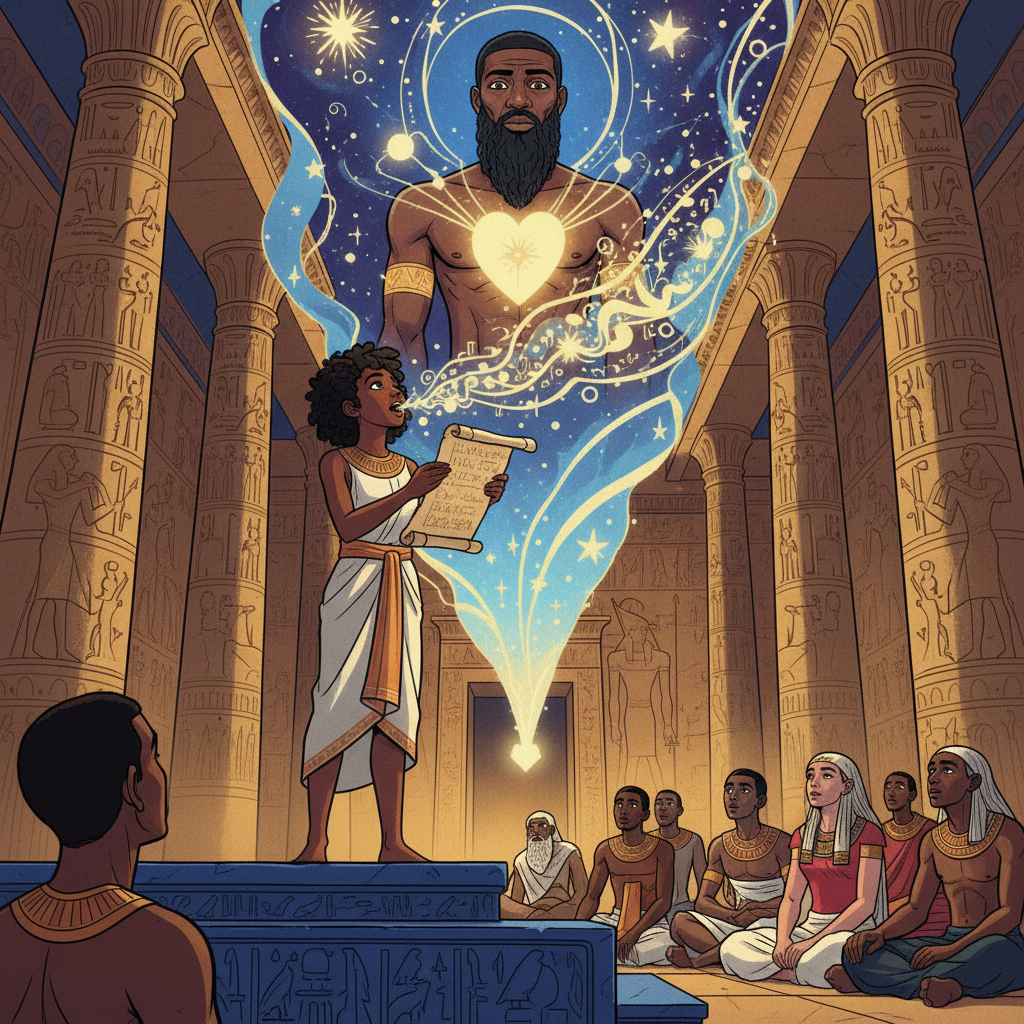
As Neferet continued, the words she spoke unveiled a profound truth: the Memphite Theology taught that Ptah, the great *neter* of Mennefer, did not create the world through physical acts, but through thought and utterance. He conceived the universe in his heart and then brought it into being by speaking its names. This was a concept of creation that predated many other world philosophies by thousands of years, a testament to the sophistication of Kemetic thought. Imagine, {name}, a world born from a single thought, a universe brought forth by the power of a spoken word! This was the essence of the *ren*, the true name, holding the very identity and power of a thing. This ancient text, now being read by a young girl, offered a glimpse into the very mind of Kemet, explaining how order, how Maat, first came into being from the primordial waters of chaos.
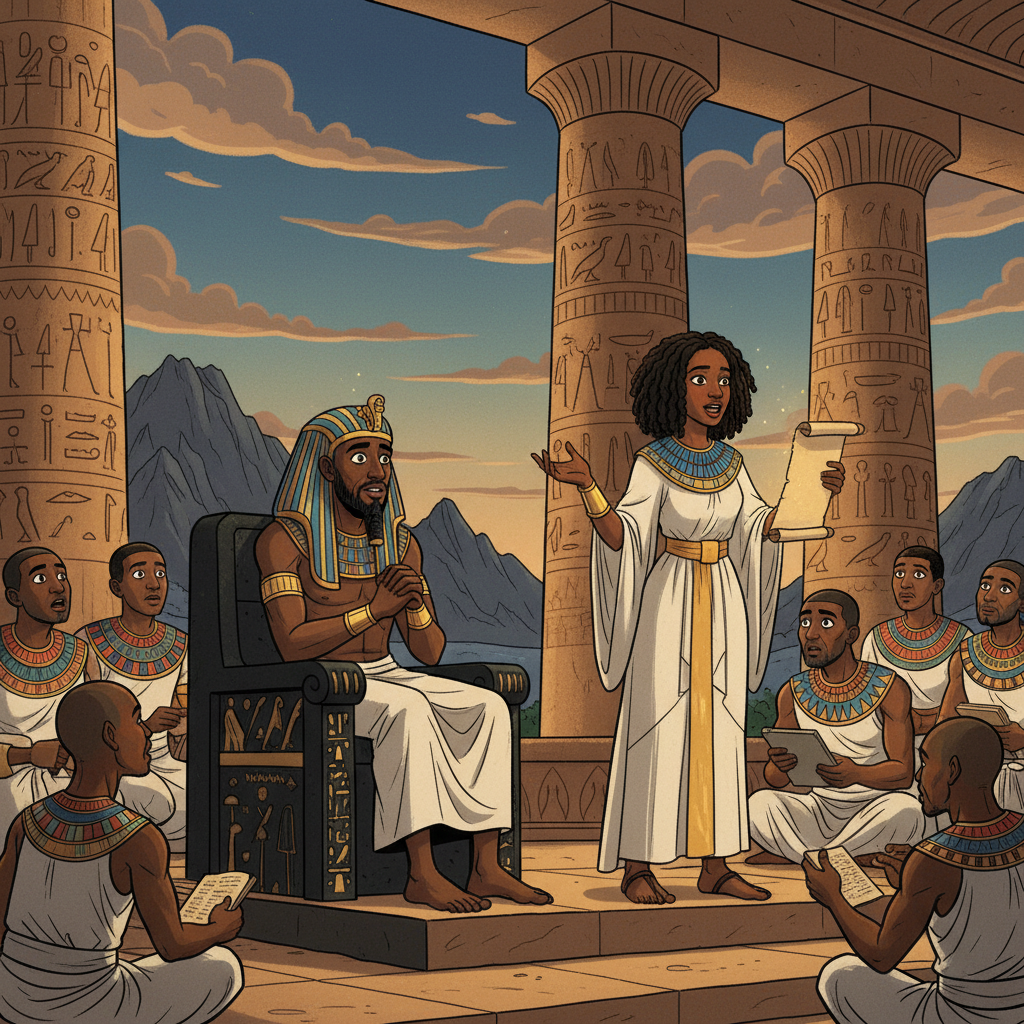
Shabaka listened, captivated by the ancient wisdom flowing from Neferet’s lips. He understood that this papyrus was more than just a historical document; it was a living testament to the intellectual genius of Kemet, a profound philosophical statement. He knew that even if Neferet's clear voice could bring it to life for a moment, its physical form was fleeting, destined to turn to dust. The thought of such irreplaceable knowledge vanishing like a mirage in the desert sun was unbearable. His heart, filled with the spirit of Maat, demanded a solution that would defy time itself. He envisioned a way to capture these words, not on fragile papyrus, but on something as enduring as the mountains of his homeland, something that would stand as a beacon of truth for all future generations of Kemet.
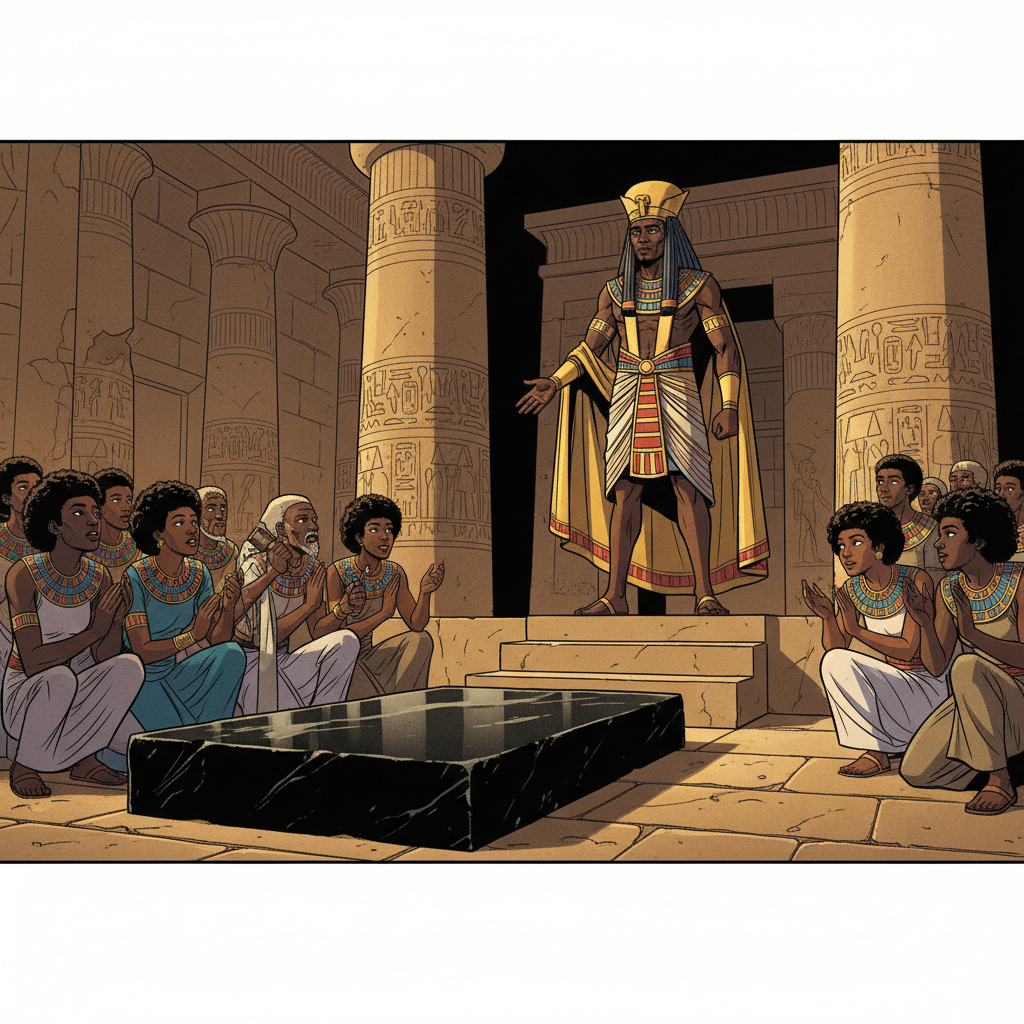
When Neferet finished the last line, a profound silence settled over the temple. Shabaka rose, his presence commanding, yet filled with a gentle resolve. He turned to the chief scribe and declared, his voice firm and clear, 'This wisdom, this sacred cosmogony of Ptah, must not perish. It must be made eternal.' He issued a decree: the entire text of the Memphite Theology, as read by Neferet, was to be meticulously carved onto a slab of solid granite. 'Let it be a monument,' he commanded, 'a stone of truth that will stand against the ravages of time, a beacon of Maat for all of Kemet. Let the words of Ptah be as enduring as the stars in the night sky, guiding our people for millennia to come.' This was not merely an act of copying; it was an act of salvation, a testament to Kushite reverence for Kemetic heritage.
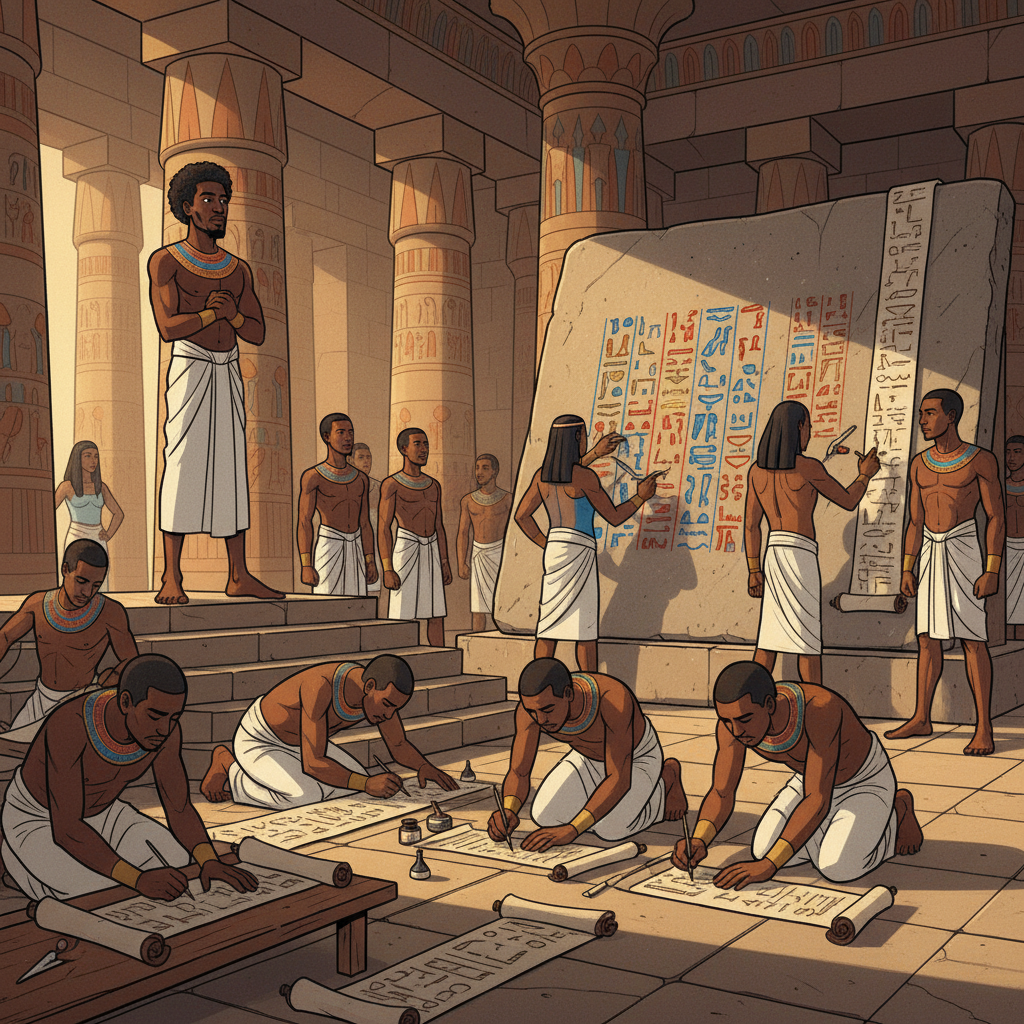
The temple buzzed with renewed purpose. Master scribes and stone carvers gathered, their tools ready. First, the scribes, their hands steady, transcribed Neferet's spoken words onto fresh papyrus scrolls, creating a clear, definitive version. Then, this new papyrus was carefully laid out, and the hieroglyphs were meticulously painted onto the smooth surface of a vast granite slab, using precise measurements and artistic skill. This was a painstaking process, requiring perfect accuracy, for there would be no erasing once the chisel met the stone. Every curve, every line, every symbol had to be flawless. It was a collaborative effort, a dance of ancient craft and profound dedication, all driven by the pharaoh's vision to preserve the wisdom of Ptah and uphold the principles of Maat. The spirit of the *Per Ankh* truly came alive in this monumental task.
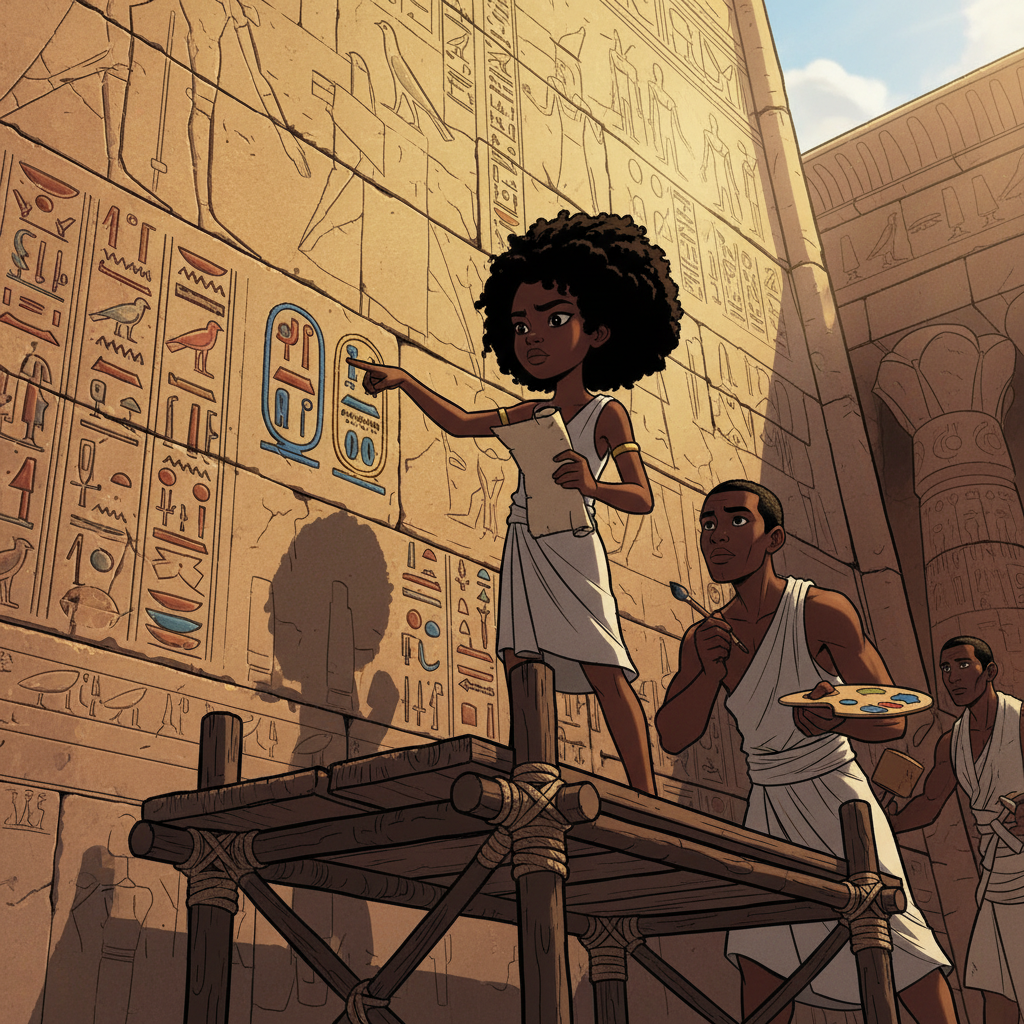
Neferet, though young, was not merely an observer. Her sharp eyes, which had first deciphered the crumbling papyrus, were now enlisted to verify the accuracy of the painted hieroglyphs before the carving began. She moved among the scribes and carvers, a small but crucial guardian of the words, checking each line, each *neter*, each cartouche, against her memory of the original text. She felt the immense weight of responsibility, knowing that any mistake could permanently alter the sacred message. This was her contribution to Maat, her way of ensuring that the truth, the justice, and the harmony embedded in Ptah’s creation story would endure. She understood that even a child, when dedicated to a purpose, could play a vital role in preserving the legacy of Kemet.
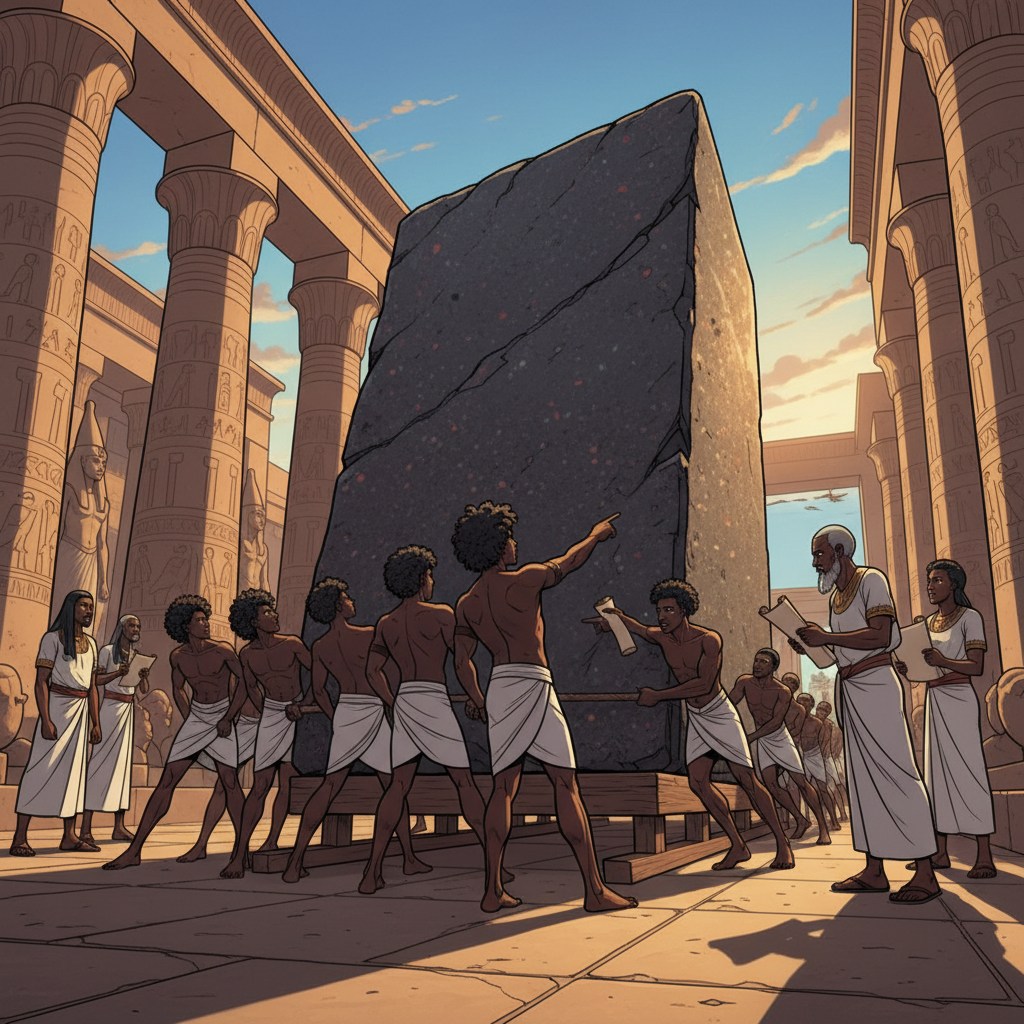
The granite slab itself was a magnificent sight, quarried from the Aswan region, a dark, dense stone known for its incredible strength and longevity. It represented the very bedrock of Kemet, resilient against the desert winds and the relentless passage of time. This stone was chosen precisely because it could withstand millennia, a silent promise that the words etched upon it would outlast empires and generations. It was more than just a piece of rock; it was to become a vessel of memory, a physical embodiment of the pharaoh's commitment to Maat. Upon its surface, the profound philosophy of Ptah, the *neter* who created the world through thought and word, would be safeguarded. This stone would serve as a permanent reminder that true power lay not only in conquest but in the preservation of profound wisdom.
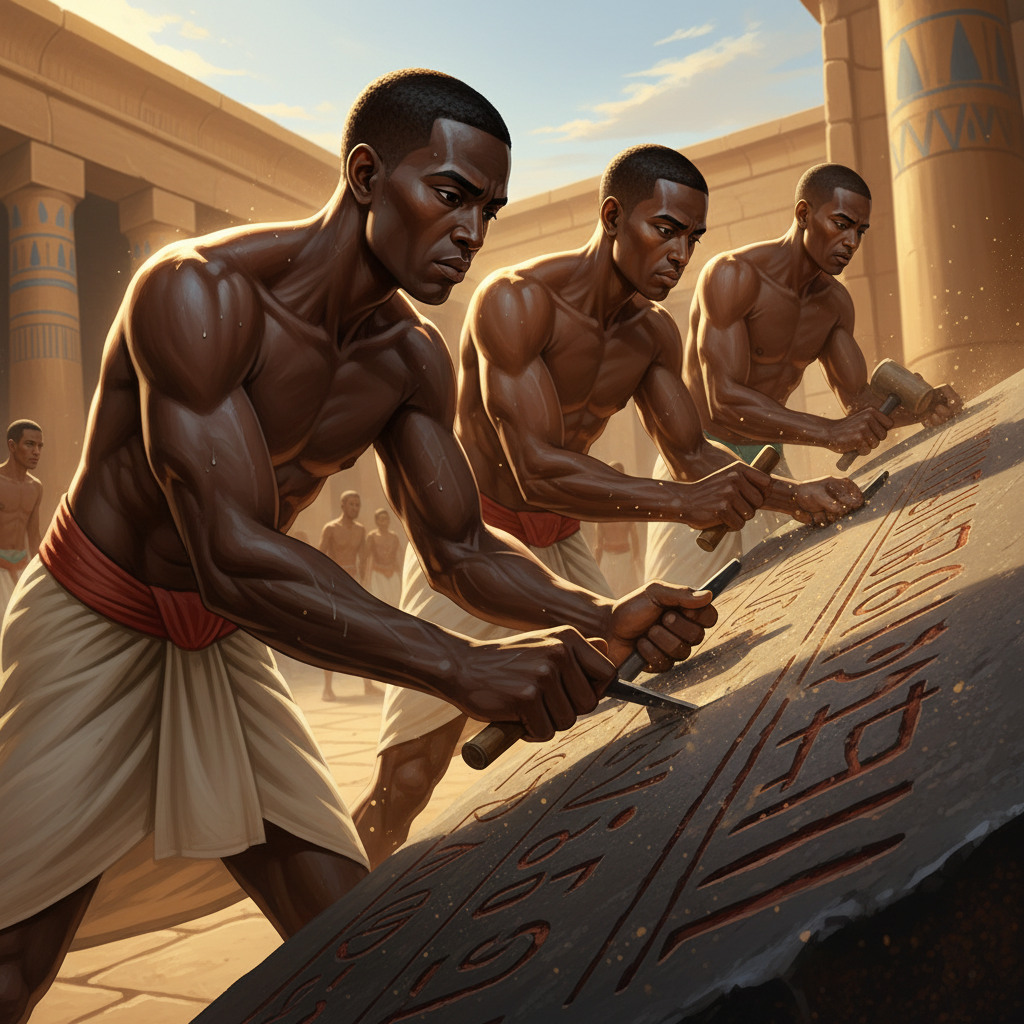
Day after day, the rhythmic tap-tap-tap of chisels echoed through the temple courtyard. Skilled carvers, their muscles rippling with effort, slowly and painstakingly brought the painted hieroglyphs to life in stone. Each symbol emerged with crisp, clean lines, standing in proud relief, defying the erosion that had threatened their papyrus original. The sun glinted off the newly carved surfaces, revealing the intricate beauty of the ancient writing. The work was slow, demanding patience and precision, but no one hurried. They knew they were engaged in an act of profound creation, ensuring that the wisdom of Kemet would endure, a testament to the Kushite pharaoh's vision. The stone, once inert, now vibrated with the power of preserved thought, a silent library carved for eternity.
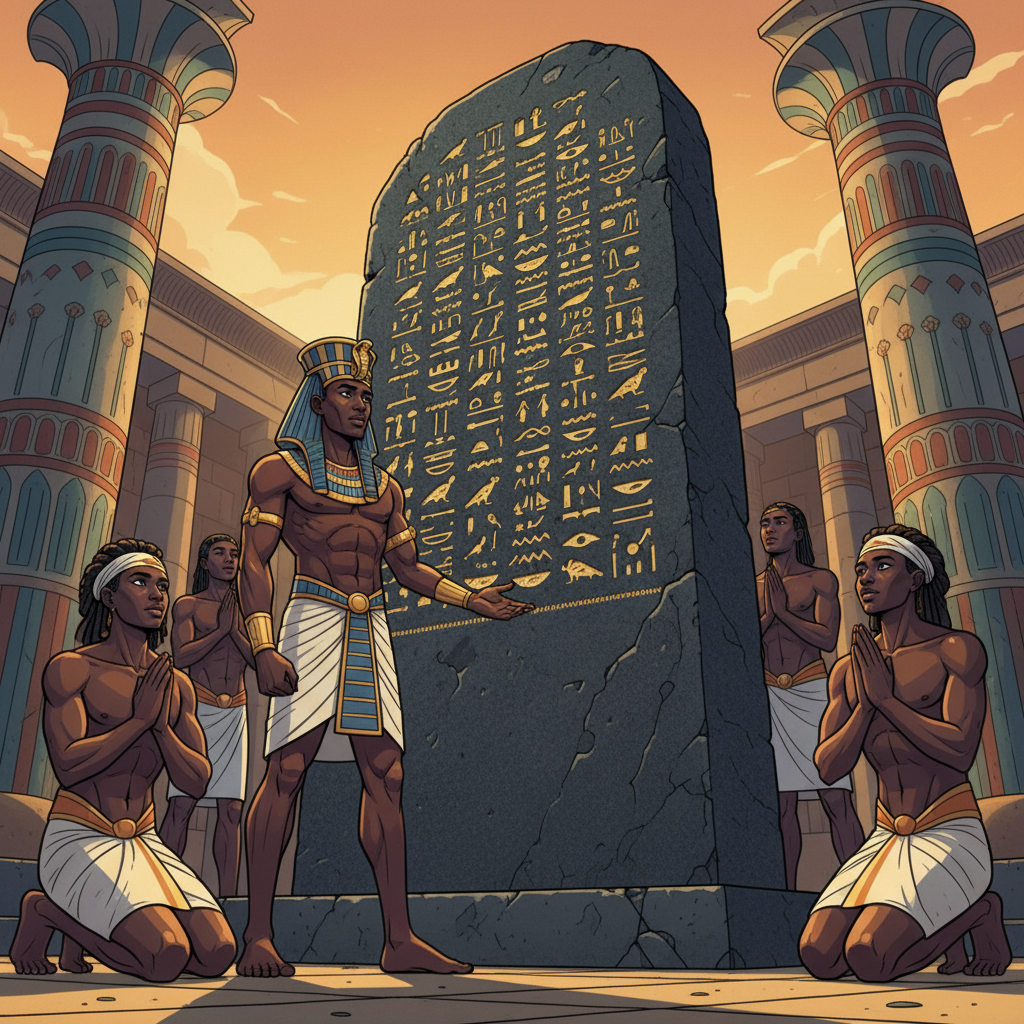
This magnificent granite slab, now adorned with the sacred text, became more than just a record; it was a powerful symbol of Maat restored. In a time when Kemet had suffered from disunity and the neglect of its ancient ways, Pharaoh Shabaka, the Kushite king, had acted decisively to preserve its spiritual heart. He understood that true leadership meant safeguarding the intellectual and moral foundations of his people. His action proclaimed that truth and justice would prevail, that the wisdom of the ancestors would not be lost to *isfet*. This stone, standing firm against the currents of time, was a physical manifestation of his commitment to righteous order, a reminder that the deepest roots of Kemet’s strength lay in its enduring knowledge, carefully tended and preserved by those who understood its true value.
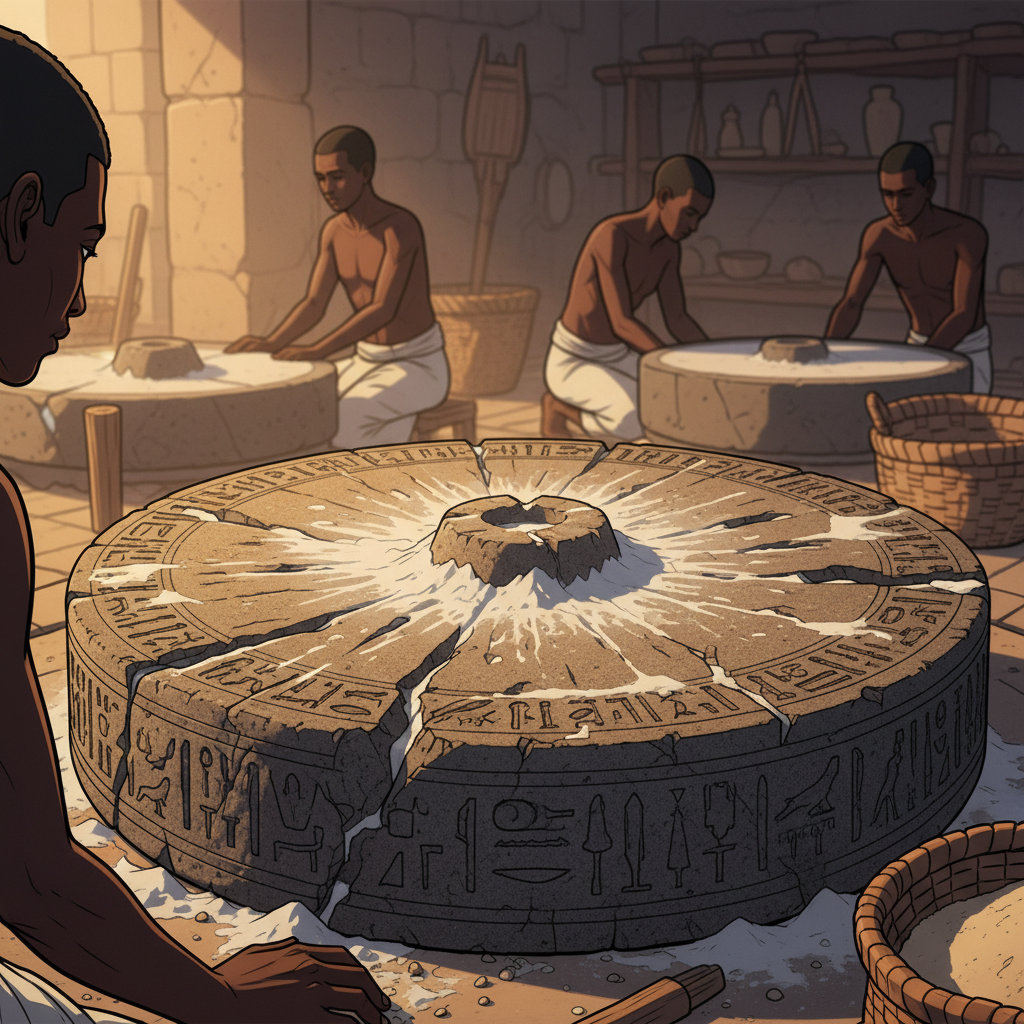
For centuries, the Shabaka Stone stood in the Temple of Ptah, a silent guardian of wisdom, fulfilling its purpose. It outlasted Shabaka, outlasted the 25th Dynasty, and witnessed the rise and fall of many rulers. Yet, the currents of time are unpredictable, {name}. In later ages, when the understanding of hieroglyphs faded and the reverence for ancient texts waned, this very stone, so carefully crafted, was tragically repurposed. It became, for a time, a millstone, its central text effaced by the grinding of grain, a cruel irony of history. Imagine, the words of creation used to grind flour! But even then, the outer inscriptions survived, a testament to the granite's enduring strength and the profound power of Shabaka’s original intent. The message, though scarred, refused to be entirely silenced, like a river finding a new path around an obstacle.
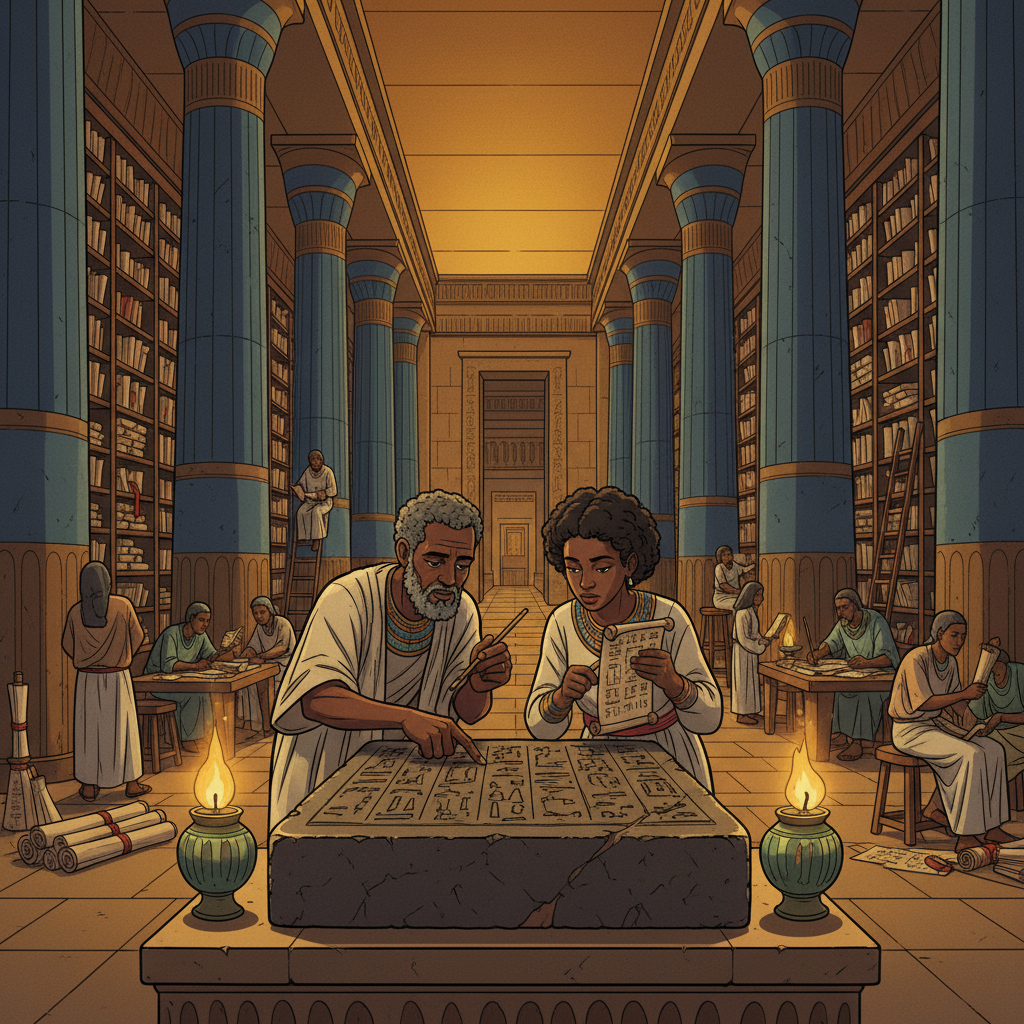
Even with its scars, the Shabaka Stone continued to speak across the millennia. Scholars in later times, driven by the spirit of Djehuti, the *neter* of wisdom and writing, painstakingly deciphered its remaining hieroglyphs. They pieced together the fragments, restoring the profound philosophical concepts of the Memphite Theology. They recognized its immense importance, realizing it anticipated ideas that would emerge in other parts of the world thousands of years later. This was a victory for Maat, a triumph of memory over oblivion. The core message – that creation springs from thought and word, that order emerges from intention – could not be erased. It was a testament to the foresight of Shabaka, the Kushite pharaoh, who understood that true legacy is not built on fleeting power, but on the enduring foundation of wisdom, cast in stone.
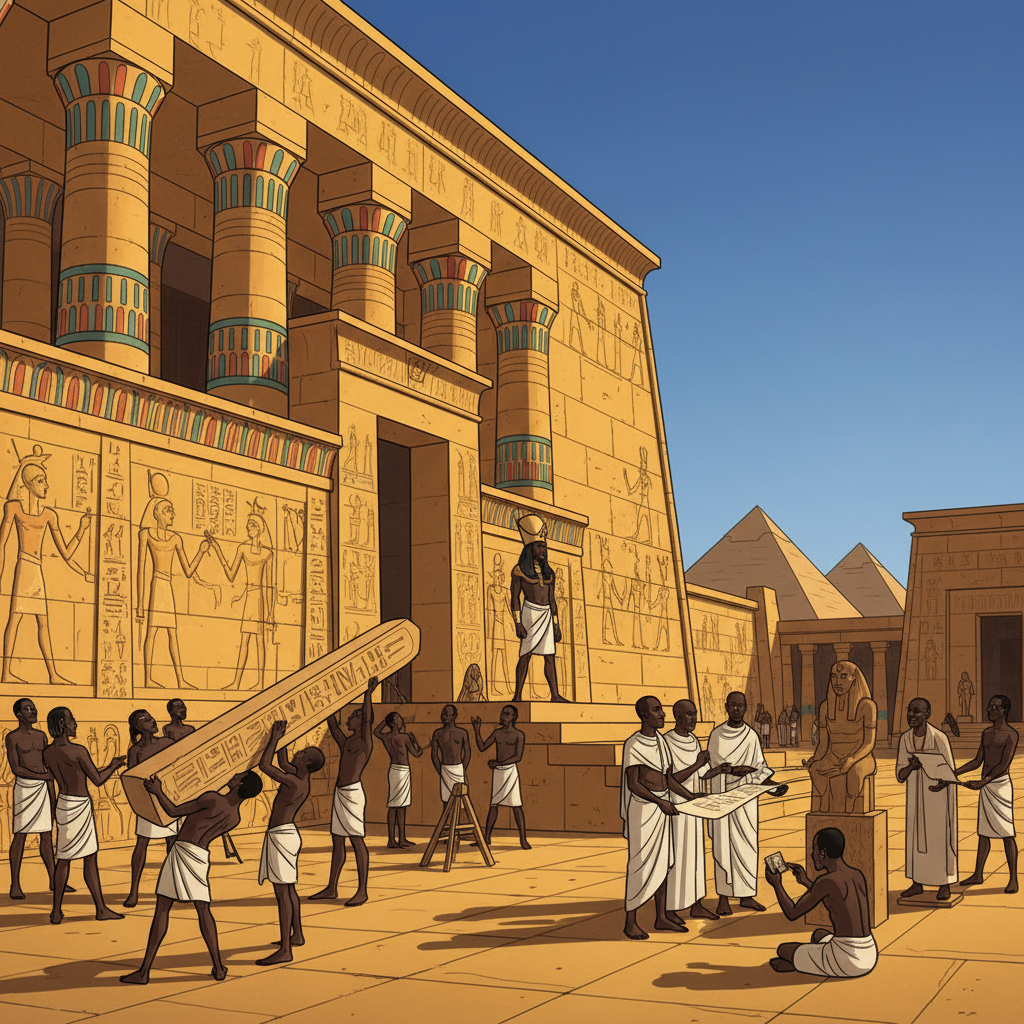
Shabaka's reign, and indeed the entire 25th Dynasty, was a period of profound cultural revival. These Kushite pharaohs, with their deep reverence for the past, initiated extensive building programs, restoring temples and monuments across Kemet, from Waset to Mennefer. They deliberately looked back to the Old Kingdom, to the purest expressions of Kemetic art and wisdom, ensuring that the ancient glory was not just remembered, but actively renewed. They were not just kings; they were guardians of a civilization, shepherds of a sacred heritage. Shabaka's act of preserving the Memphite Theology was one of many such deeds, all aimed at restoring Maat and solidifying the cultural identity of Kemet. It reminds us that at a time when other civilizations were still in their infancy, Kemet, guided by these wise Kushite rulers, was preserving philosophical texts that would shape human thought for ages.
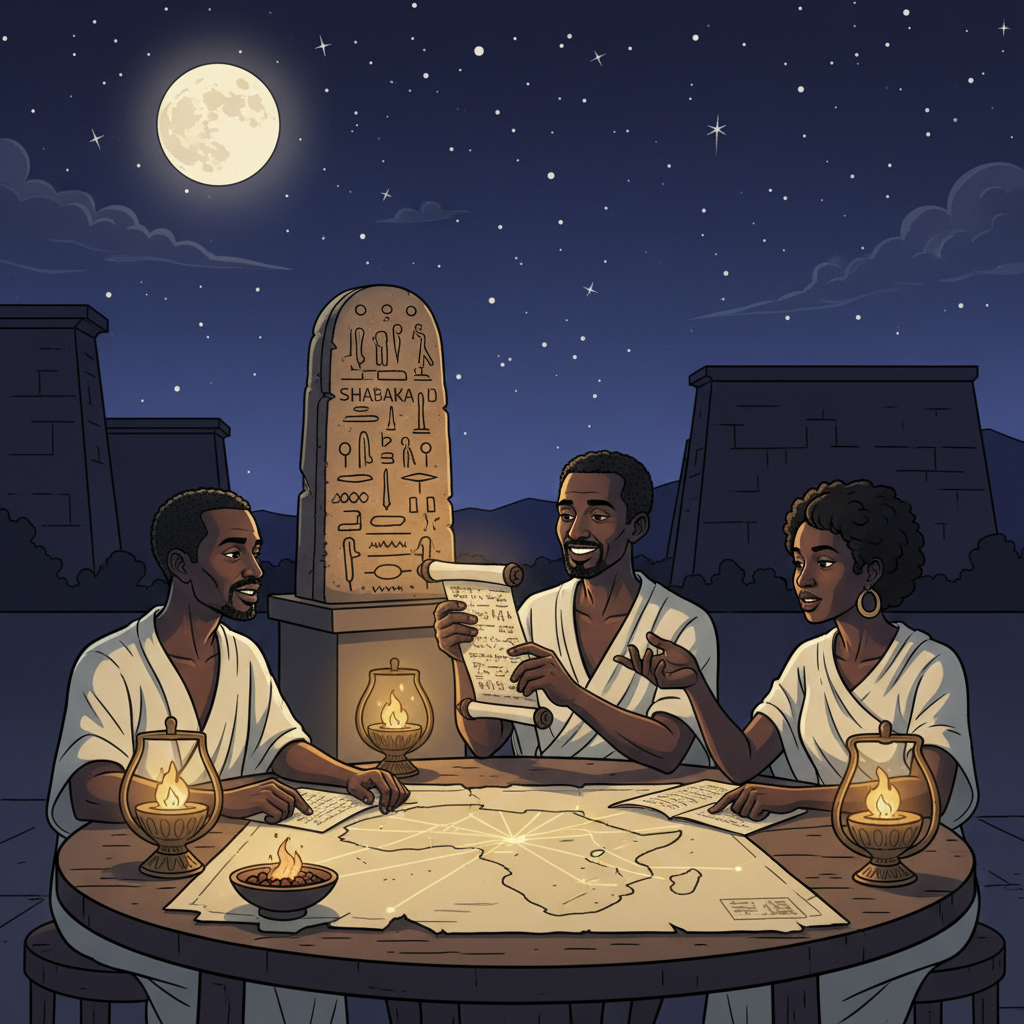
The 25th Dynasty, my child, was truly a gift from the southern homeland to the northern child. Our Kushite ancestors, with their rich ebony skin and unyielding spirit, did not come to impose a foreign will, but to rekindle the flame of Maat that had flickered low. They understood that the wisdom of Kemet was a treasure for all of Africa, a light against the darkness of ignorance and fragmentation. They were custodians of a legacy, ensuring that the profound philosophical and spiritual traditions of our people would continue to flow like the life-giving Nile. Shabaka’s Stone stands as a testament to this, a powerful reminder that preservation is an act of love, an act of faith in the enduring power of truth. They saved not just a text, but a piece of the Kemetic soul, ensuring its survival against the relentless erosion of time.
So, {name}, remember Neferet, the young scribe, and Pharaoh Shabaka, the wise Kushite king. Their story teaches us that wisdom is precious, fragile, and requires constant care. You, too, are an heir to this tradition, a guardian of Maat. Just as Shabaka preserved the words of Ptah on granite, you must preserve the wisdom you learn, the stories of your ancestors, and the principles of truth and justice in your own heart and mind. Let your memory be like that granite, strong and enduring, holding fast to the lessons of our past. For in doing so, you ensure that the light of Kemet, the spirit of Africa, continues to shine brightly, a guiding star for generations to come. Carry this wisdom, {name}, and let it illuminate your path, just as the Shabaka Stone illuminates the enduring power of ancient thought.