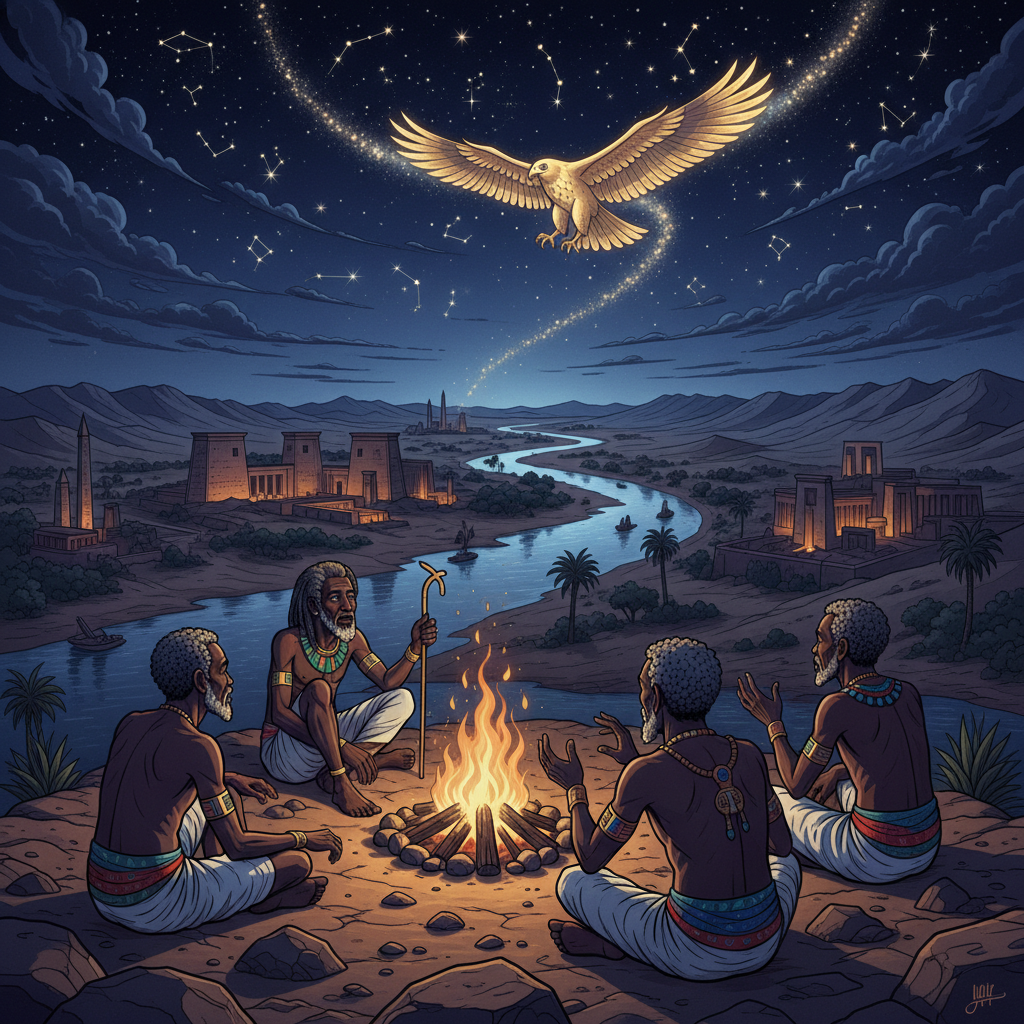
My dear young one, come closer to the fire, for the desert night is cool, and the stars above Waset are like scattered diamonds, each one a story waiting to be told. Tonight, we shall speak of a dream, a vision that soared like a hawk over the vast lands of Kemet and Kush, a dream held by a king whose heart beat with the rhythm of Maat itself.
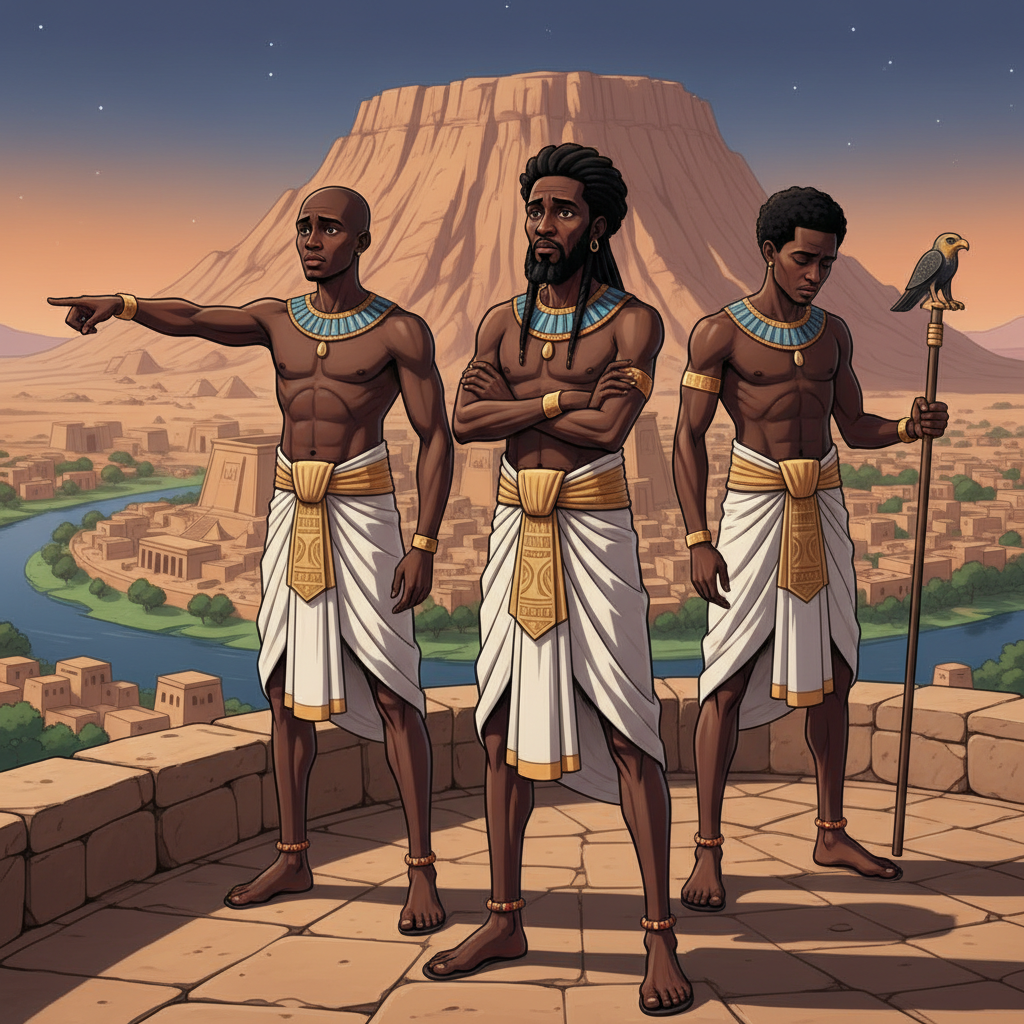
Imagine a time when our beloved Kemet, the Black Land, was fractured, its spirit dimmed by division and discord. It was a time when Isfet, the opposite of Maat, seemed to creep into the hearts of many. But far to the south, in the vibrant land of Kush, our cousins, the custodians of ancient traditions, watched with heavy hearts. From their capital, Napata, nestled near the sacred Gebel Barkal, they felt the call to restore harmony.
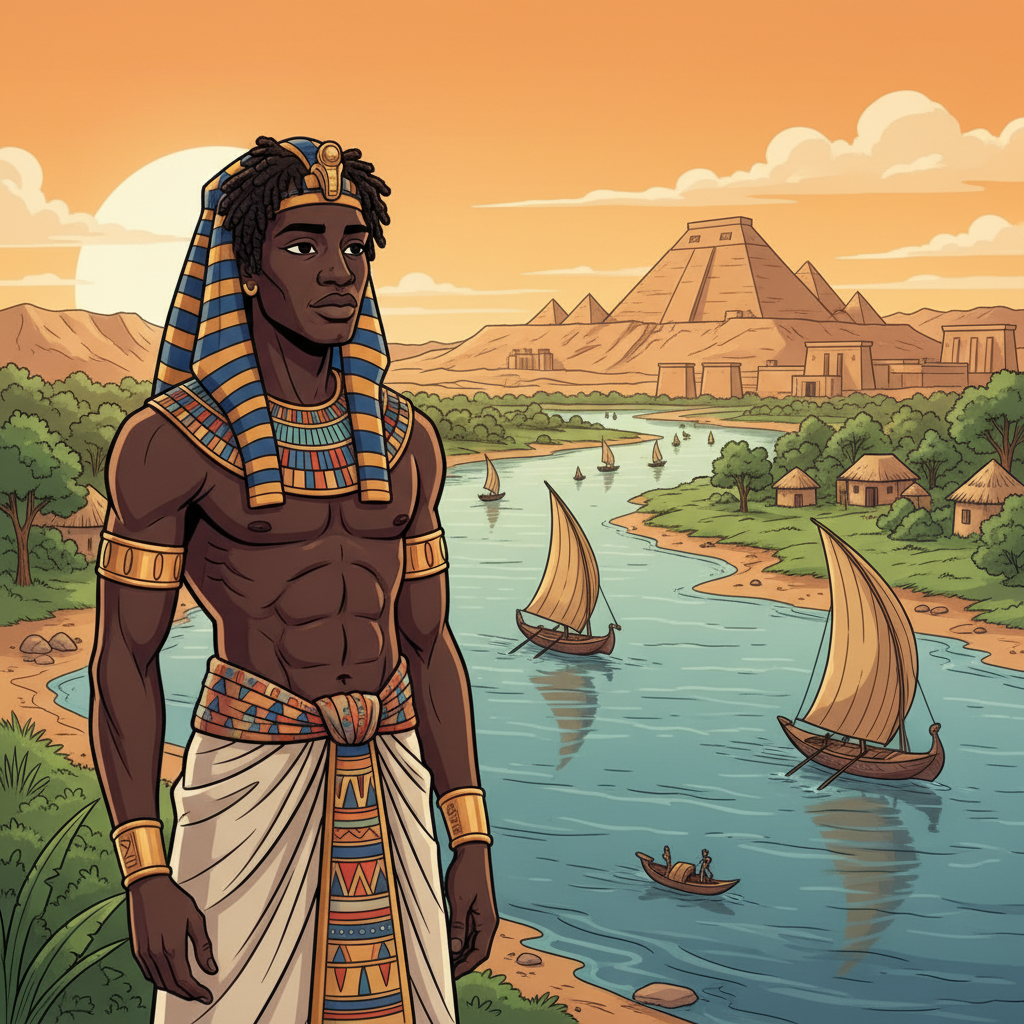
Our story begins with Prince Tantamani, nephew to the great Taharqa, a man whose skin was the rich ebony of the Nile's fertile banks, whose eyes held the wisdom of generations. He was a leader steeped in the reverence for Amun, the neter who guided our ancestors. Tantamani understood that Kush was not a foreign land to Kemet; it was the elder sibling, the root from which Kemet's civilization had blossomed thousands of years before.
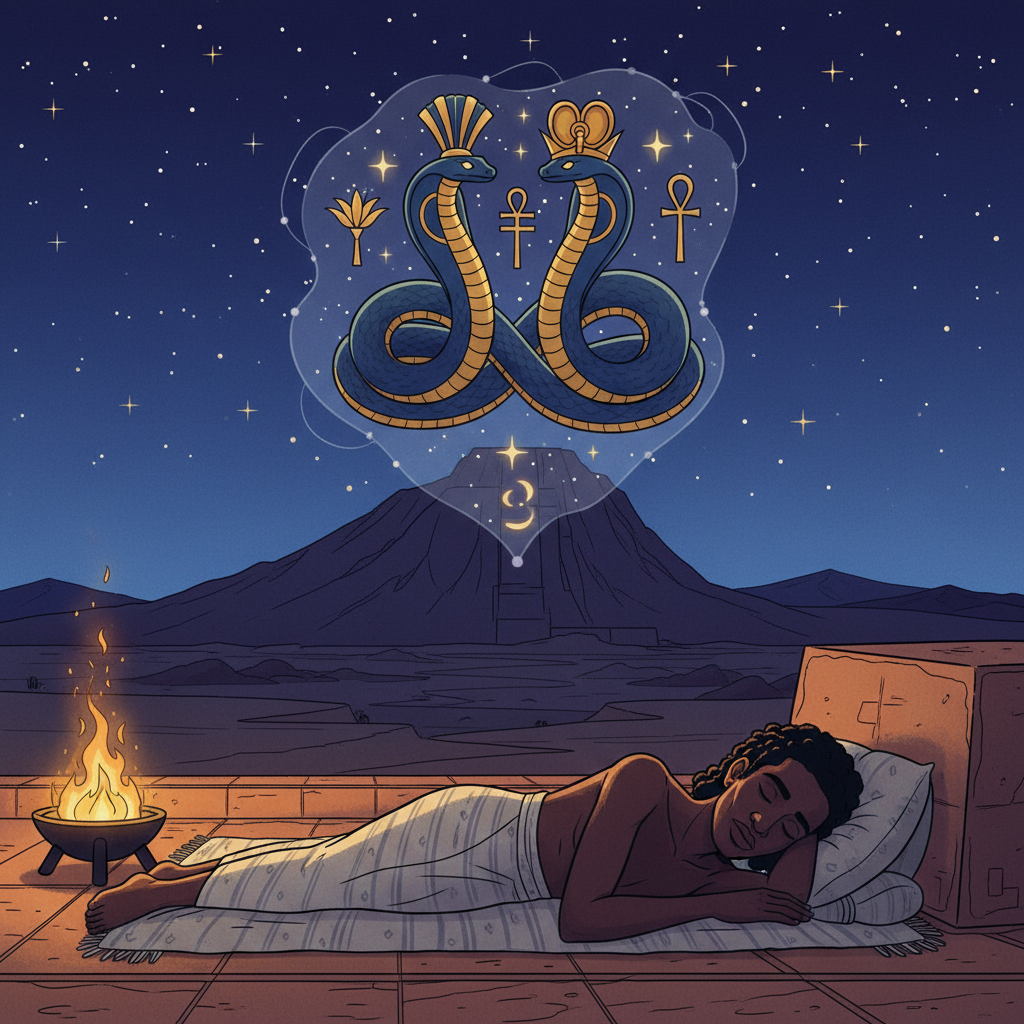
One fateful night, as the stars wheeled above Gebel Barkal, the holy mountain of Amun, Tantamani fell into a deep slumber. In his dream, he saw two magnificent uraeus serpents, the symbols of kingship and divine protection, one on his right, one on his left. They coiled, powerful and vigilant, guardians of a unified realm.
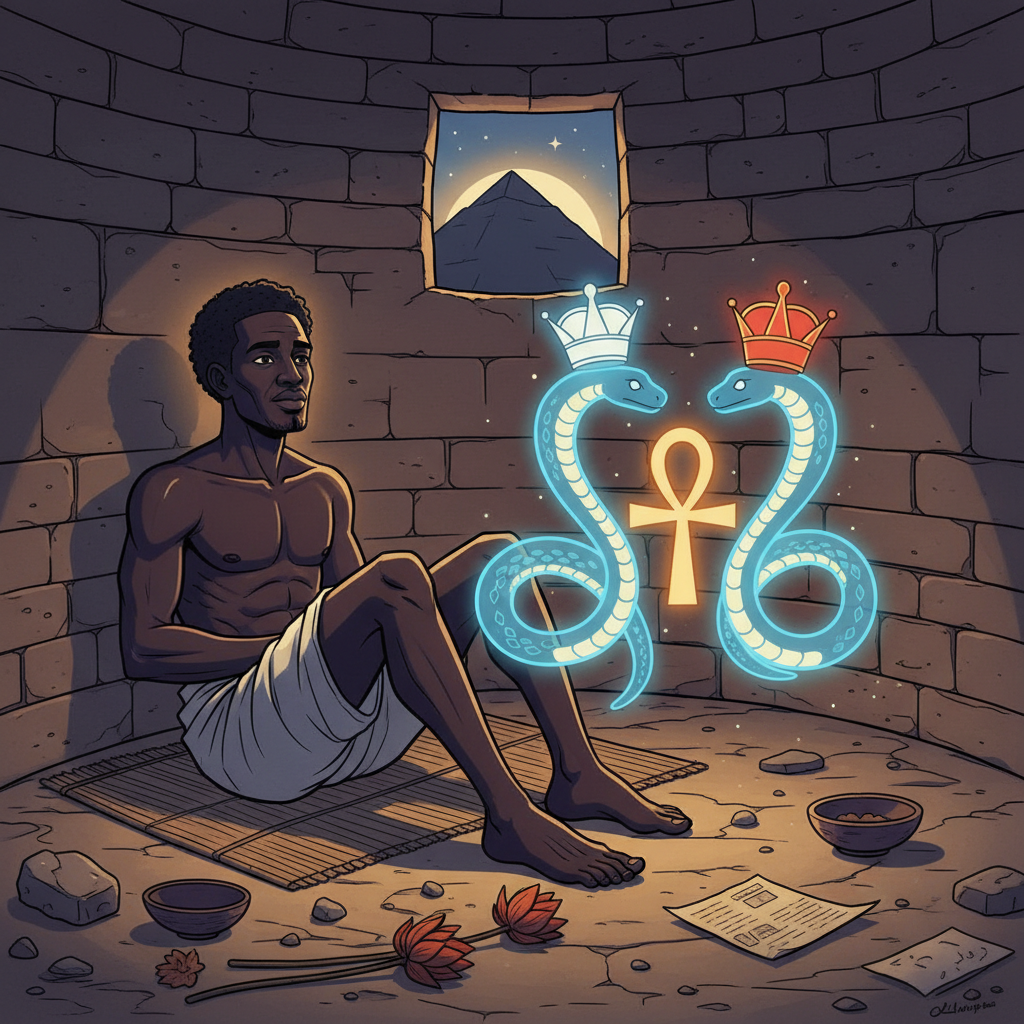
When Tantamani awoke, his ka, his life force, buzzed with certainty. He knew this dream was a sacred message from Amun, a covenant. The two serpents represented the twin lands: Kush and Kemet, meant to be ruled by one true pharaoh, bound together in Maat. This was not a desire for power, but a divine commission to heal a broken land, to restore the righteous order.
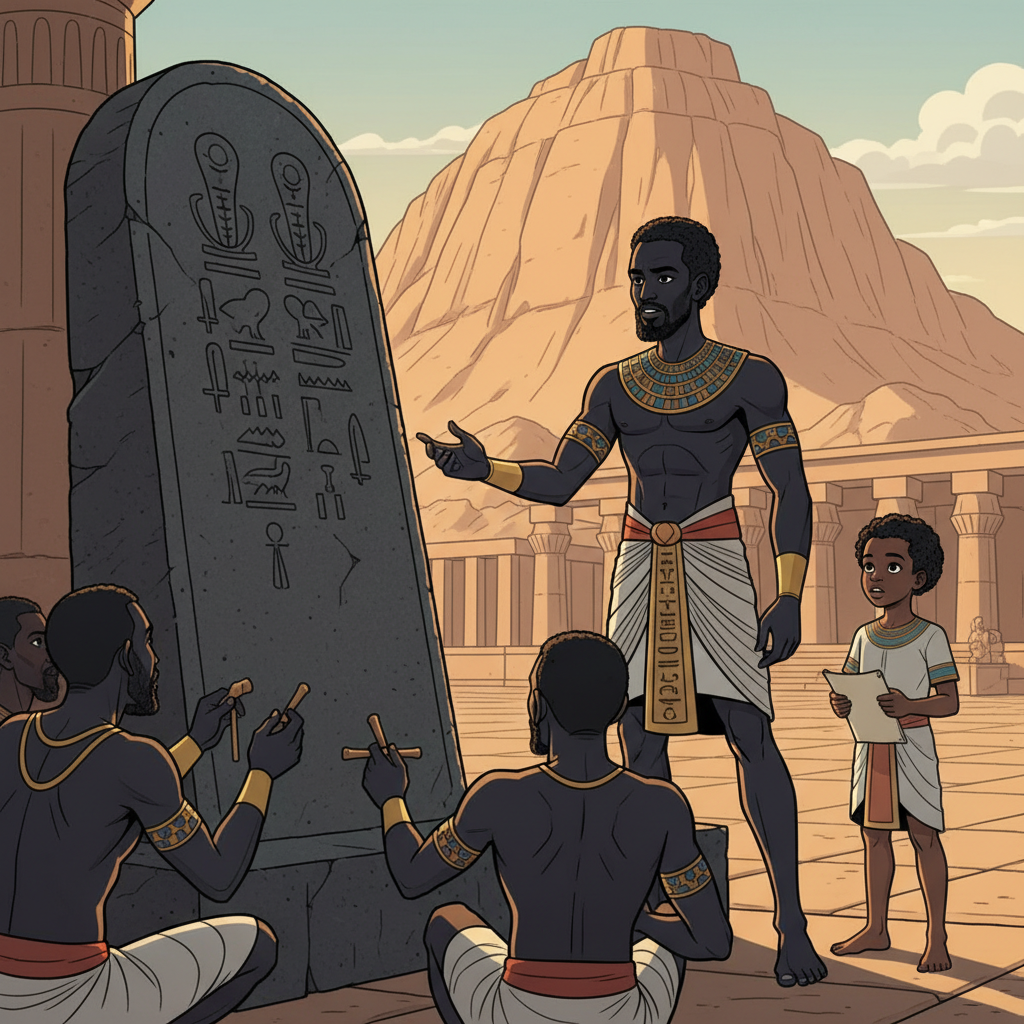
My own ancestor, young Prince Atlanersa, was present when Tantamani commanded his scribes to carve this vision into enduring stone. The Dream Stele, as it is known, was erected at Gebel Barkal, a testament to a king's unwavering faith. Every hieroglyph, every stroke, was a prayer, a commitment to the neter. Atlanersa, like you, was a child, watching history being etched into eternity.
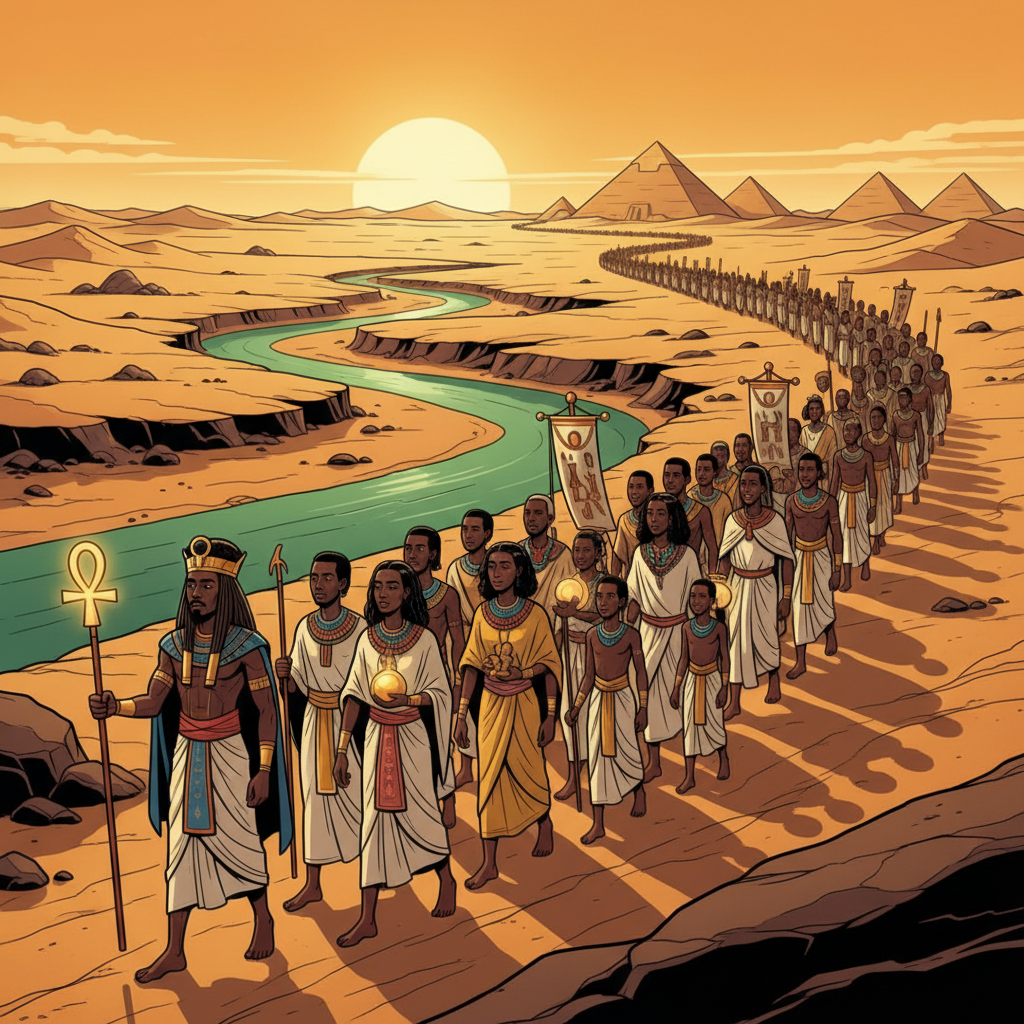
With this sacred vision guiding him, Tantamani gathered his forces. These were not armies of conquest, but a spiritual pilgrimage. They marched north from Napata, their hearts filled with the purpose of restoring Maat to Kemet. The people of Kush, with their dark, shining skin and proud bearing, were coming home, carrying the light of ancient wisdom.
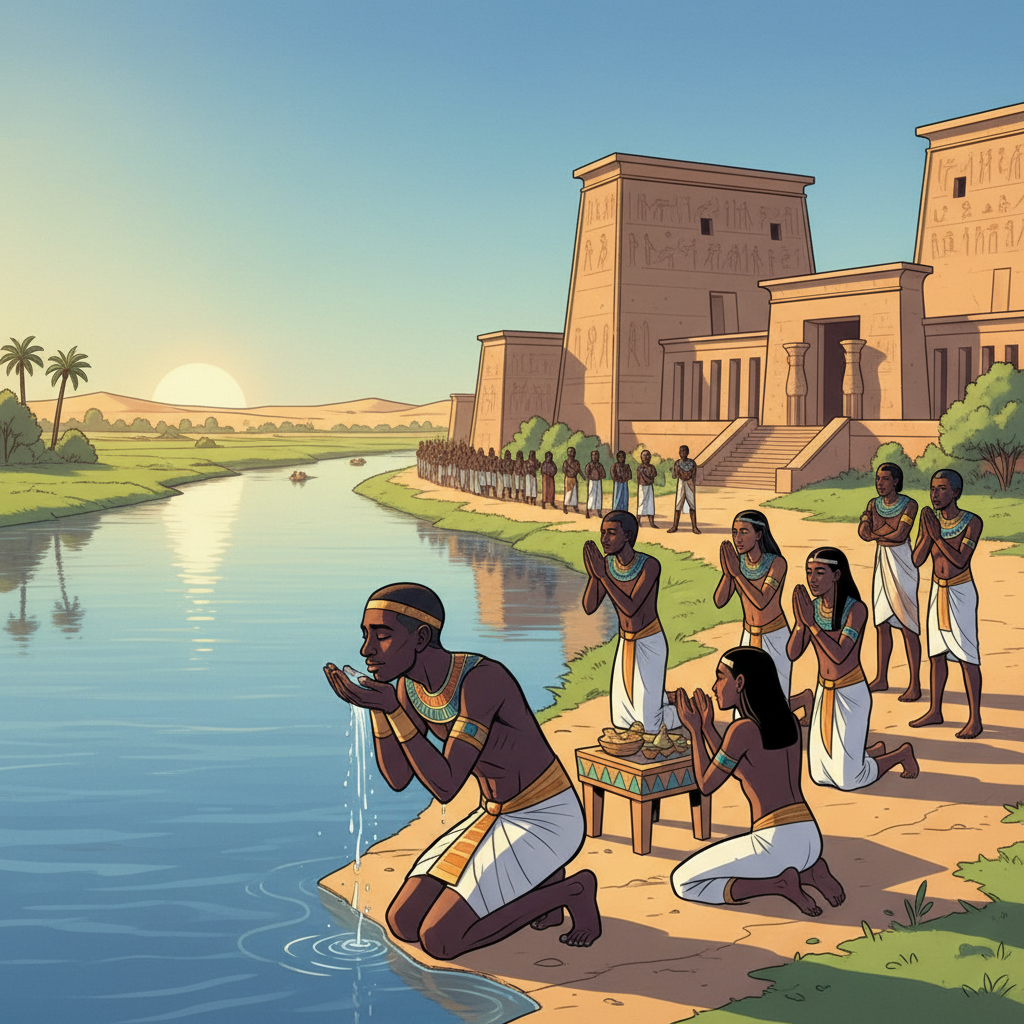
As they journeyed along the life-giving Nile, Tantamani's devotion was clear. He purified himself in its waters, offered prayers at every temple, seeking Amun's blessing for the reunification. He understood that true leadership meant humility and a deep connection to the divine, a reflection of Maat in every step.
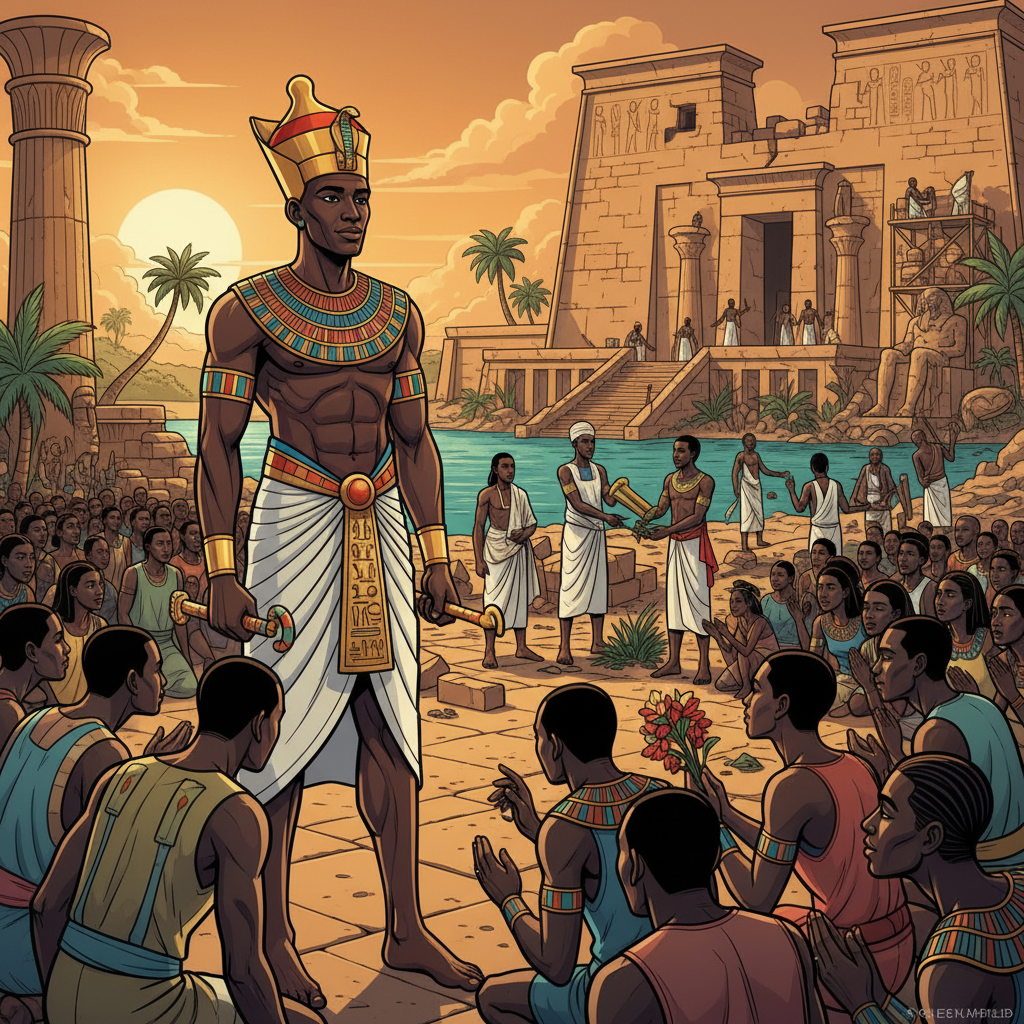
The lands of Kemet welcomed him, for they yearned for stability, for the return of a pharaoh who embodied Maat. The fragmented rulers of the north had allowed Isfet to spread, neglecting the temples, forgetting the ancient ways. Tantamani came as a healer, a restorer of the natural order, not a foreign invader.
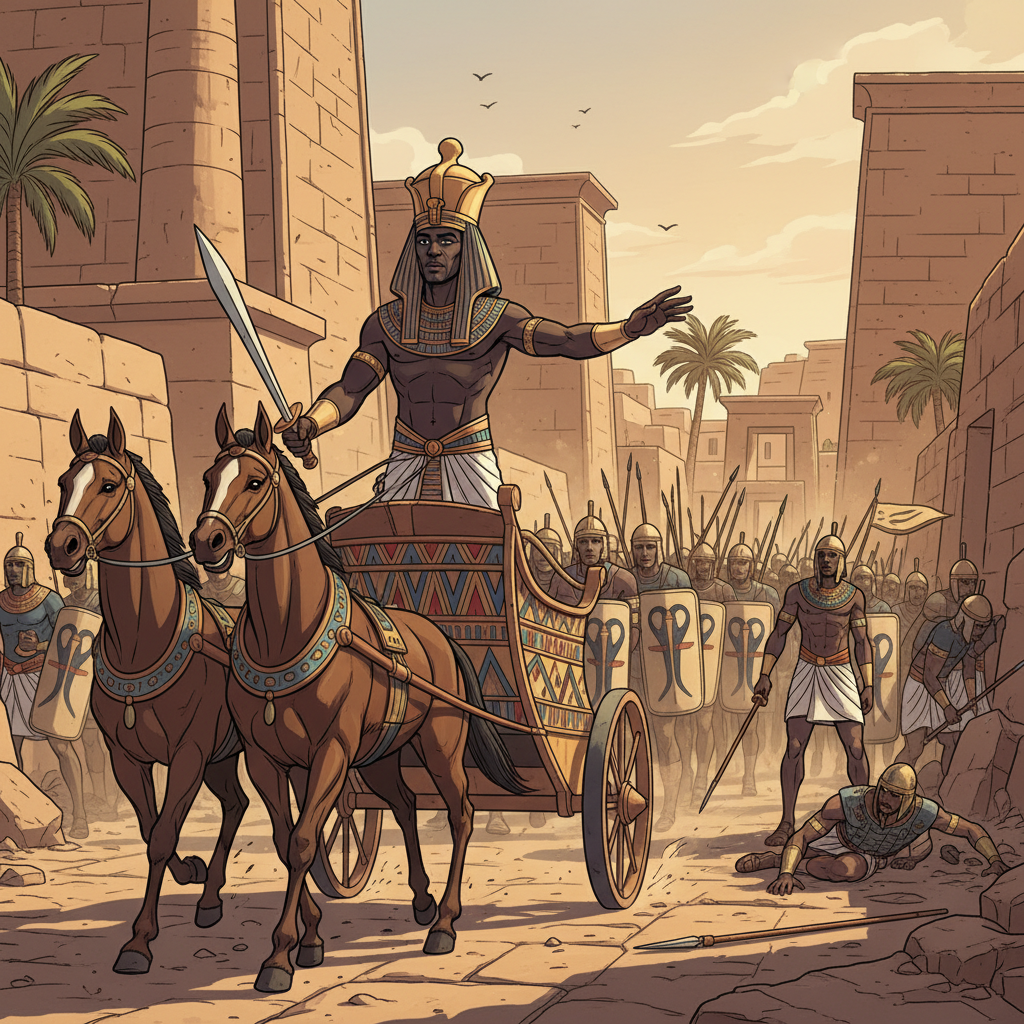
Tantamani's campaign was swift and righteous. He swept through Kemet, his forces reclaiming city after city. When he reached Memphis, the ancient capital, he faced Necho I, a ruler placed there by the distant Assyrians. Tantamani defeated Necho, reclaiming Memphis for Kemet and the rightful lineage of the Kushite pharaohs.
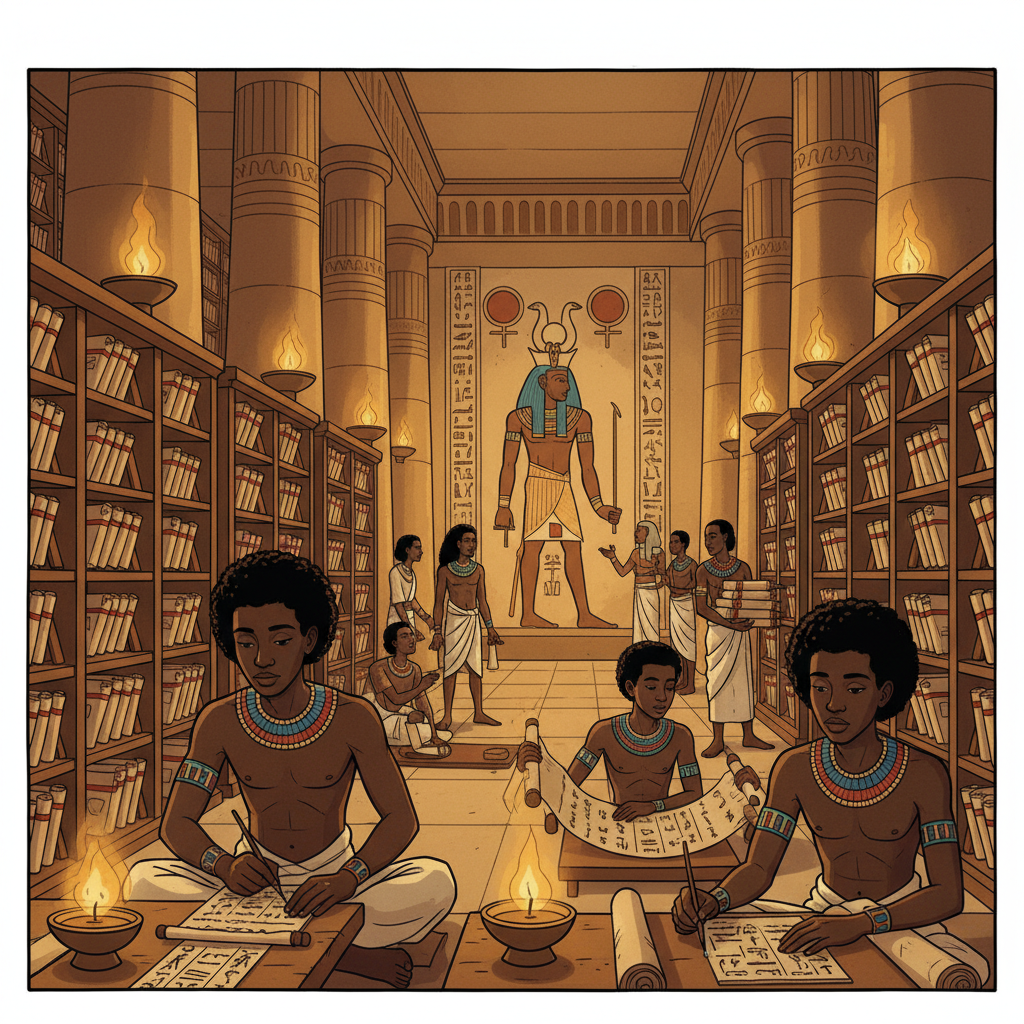
For a brief, glorious moment, Tantamani's dream was realized. The two serpents, Kush and Kemet, were united under his uraeus. The Per Ankh, the House of Life, in Waset and other cities began to flourish again, scribes and priests once more dedicating themselves to preserving the wisdom of our ancestors.
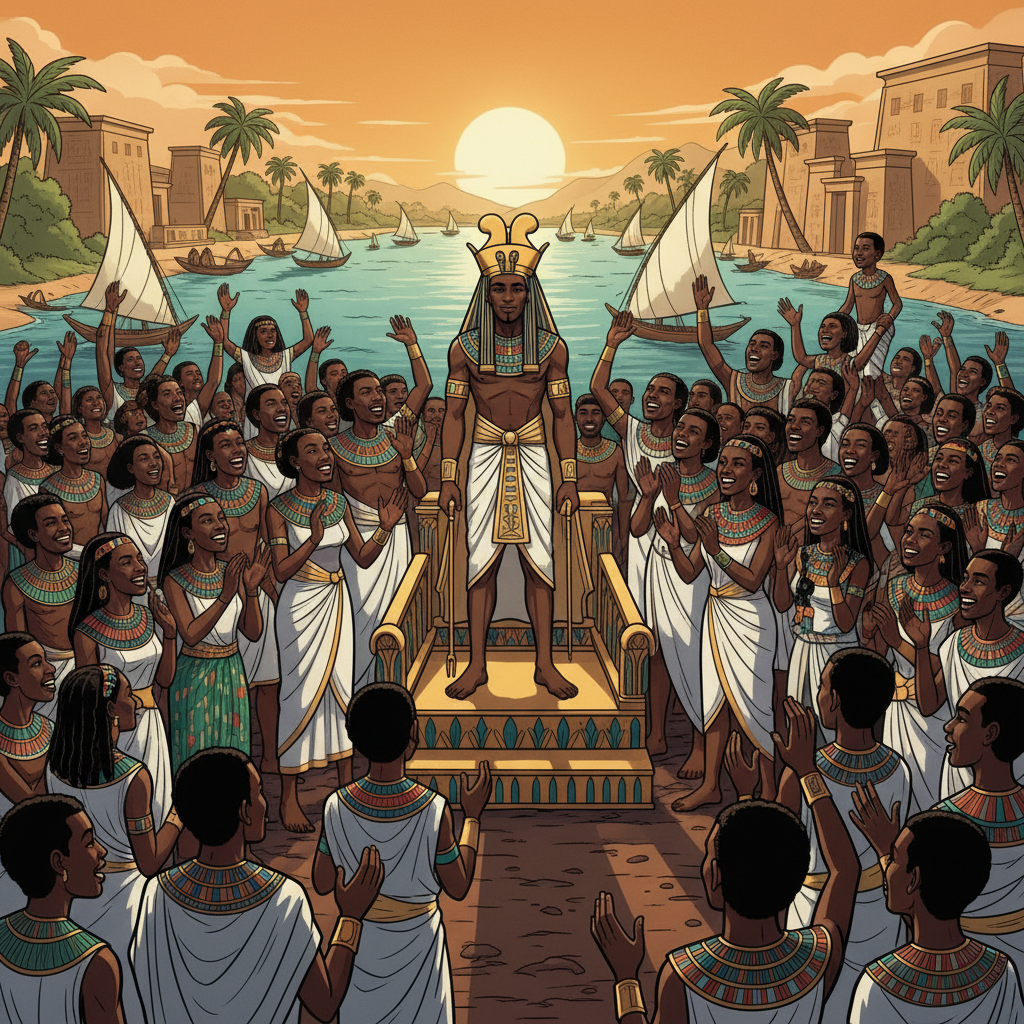
The joy in Kemet was profound. The people, seeing a true pharaoh of African blood, one who honored Amun and the traditions, felt their spirits lifted. Maat was returning, like the annual flood of the Nile, nourishing the land and its people after a long drought of Isfet. This was a family reunion, not a conquest.
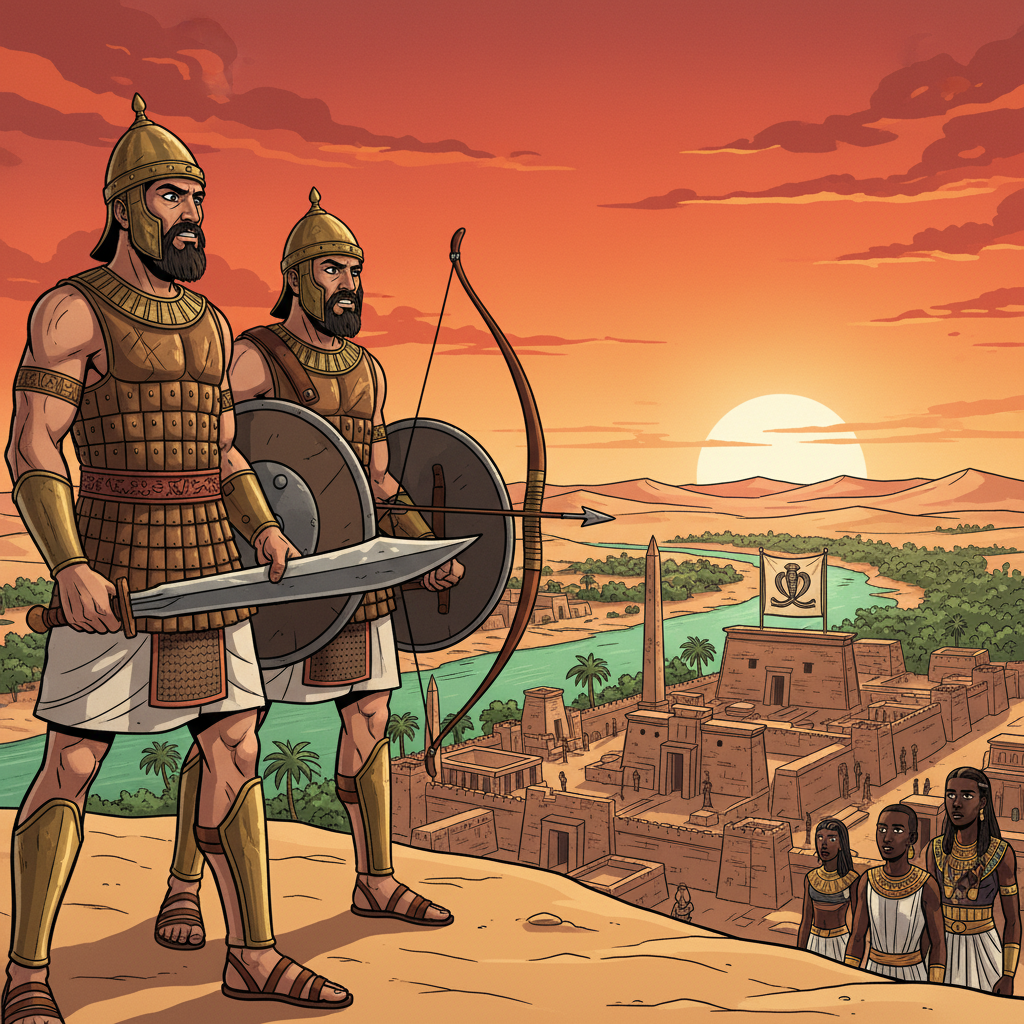
But across the eastern desert, a shadow loomed. The Assyrians, a mighty empire with advanced iron weapons, saw Tantamani's success as a challenge to their dominance. Their king, Ashurbanipal, would not tolerate a unified Kemet, especially one led by a powerful Kushite pharaoh. The storm was gathering.
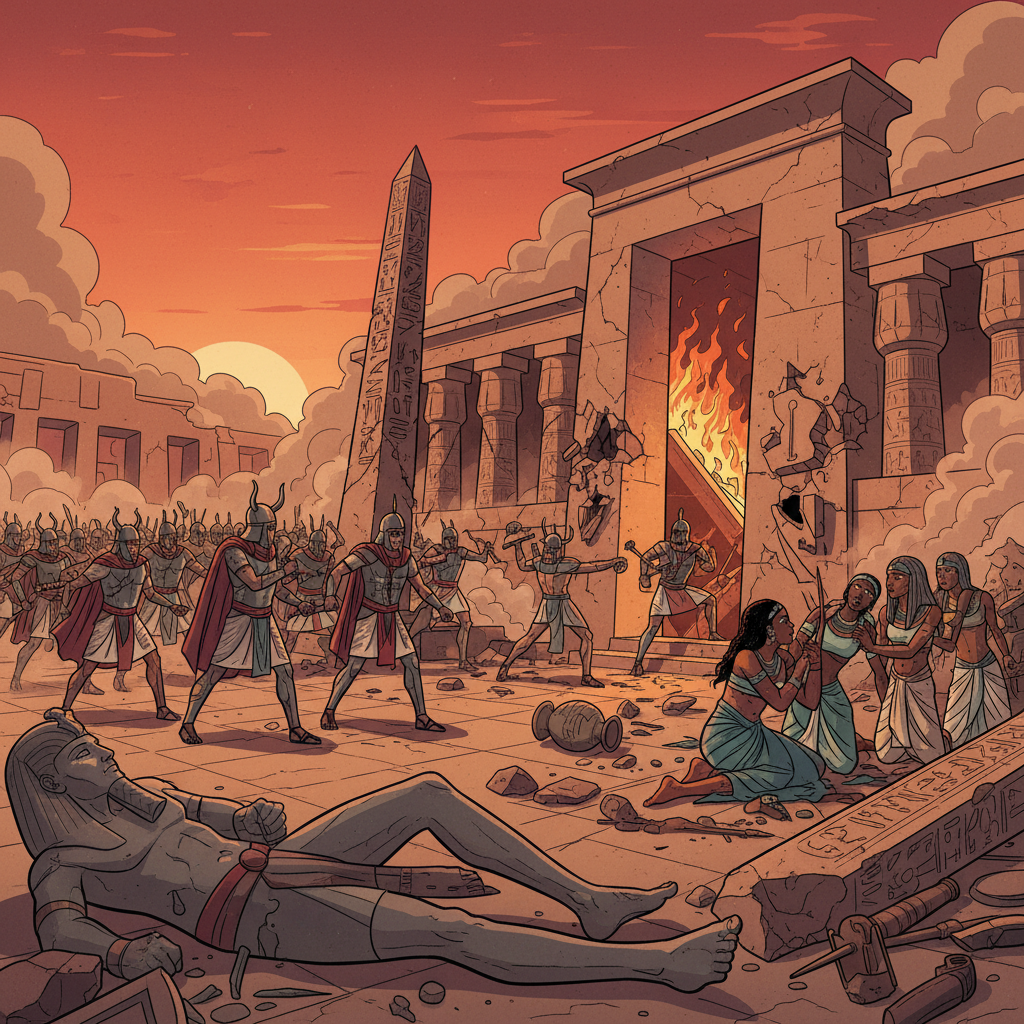
In 663 BCE, the Assyrian army, vast and brutal, marched upon Kemet. Their might was overwhelming. They swept through the land, and tragically, they reached our very city of Waset, sacking its temples, desecrating its sacred places. It was a time of immense sorrow, a wound that would long be remembered.
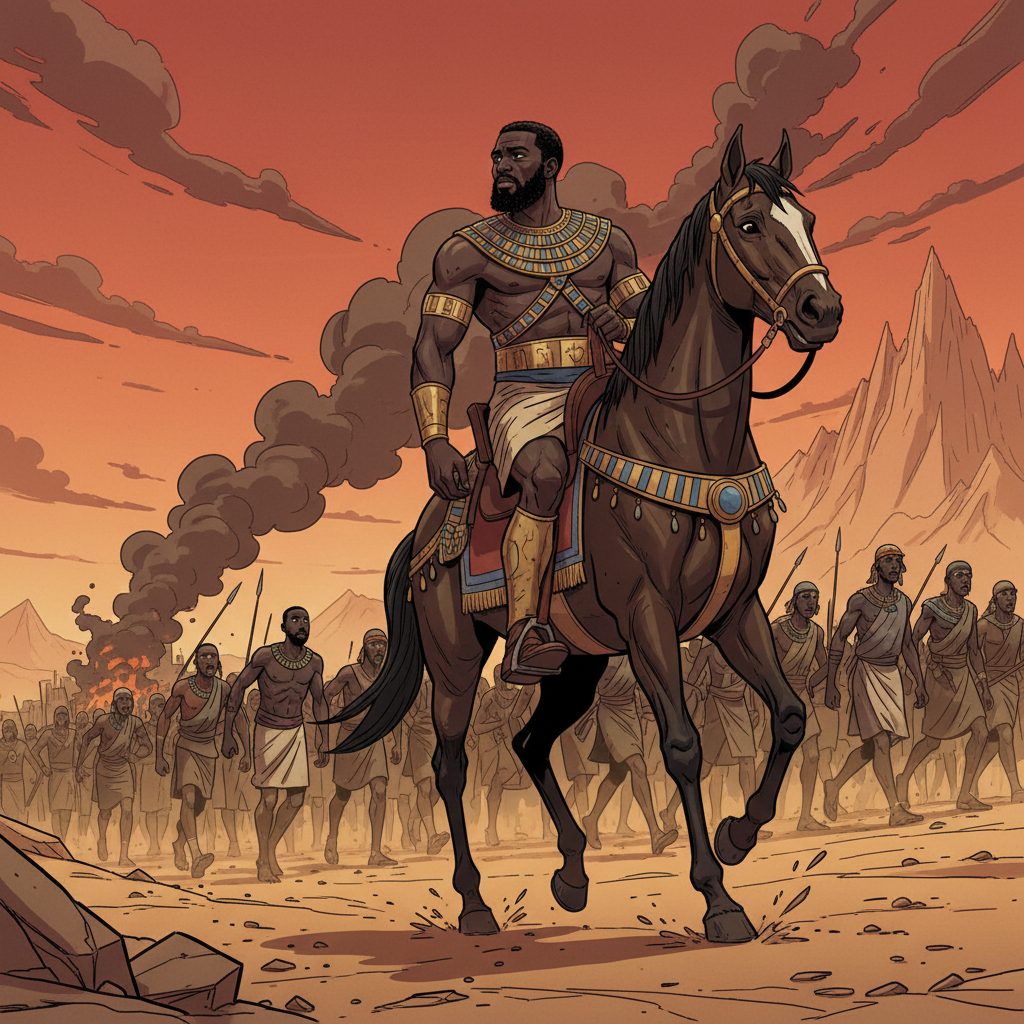
Tantamani, facing such an unstoppable force, made a heartbreaking but necessary decision. To preserve his people, to save the remnants of his army, he retreated south, back to the protective embrace of Kush. The dream of a fully unified Kemet under his direct rule had been shattered by the might of foreign iron.
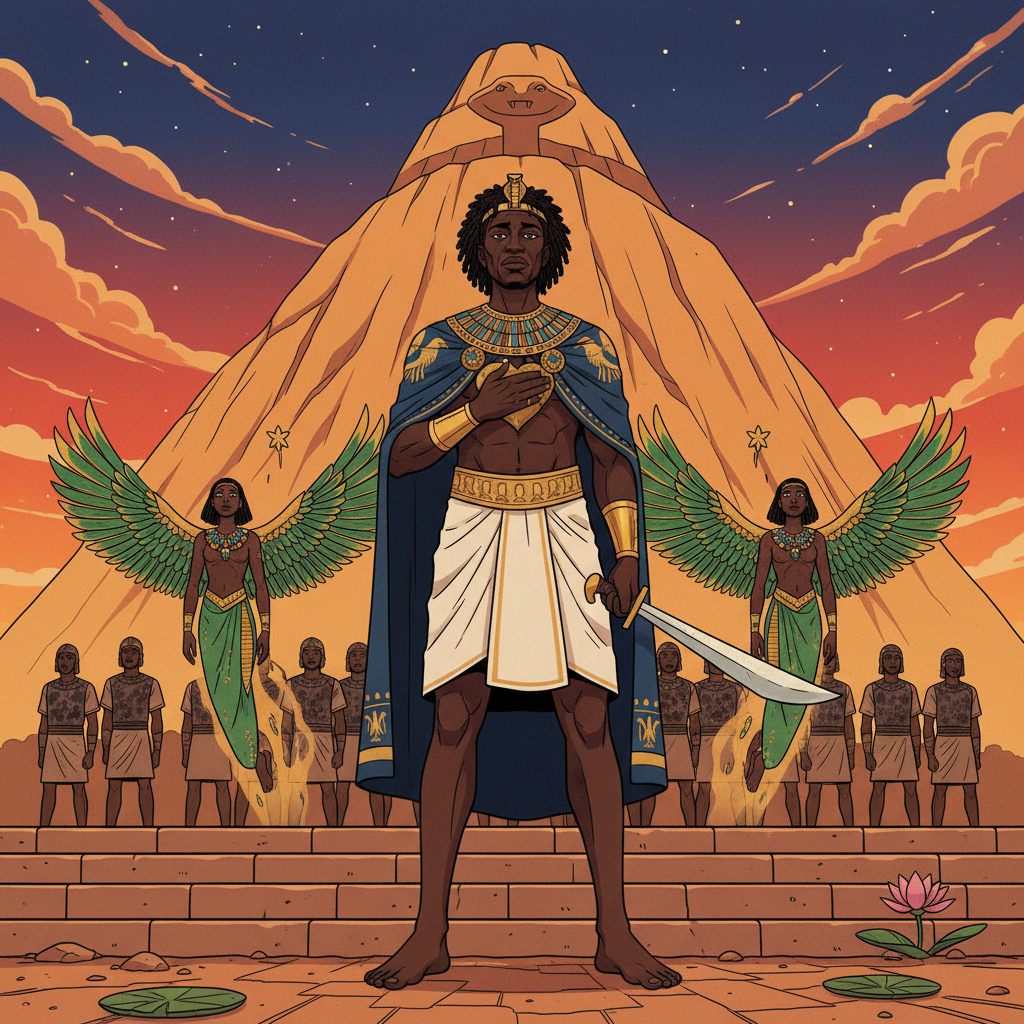
He returned to Napata, the capital of Kush, his heart heavy but his spirit unbroken. Though he no longer ruled directly over Kemet, his vision, his covenant with Amun, remained. The 25th Dynasty's direct rule in Kemet had ended, but the spirit of Maat they had championed would never truly die.
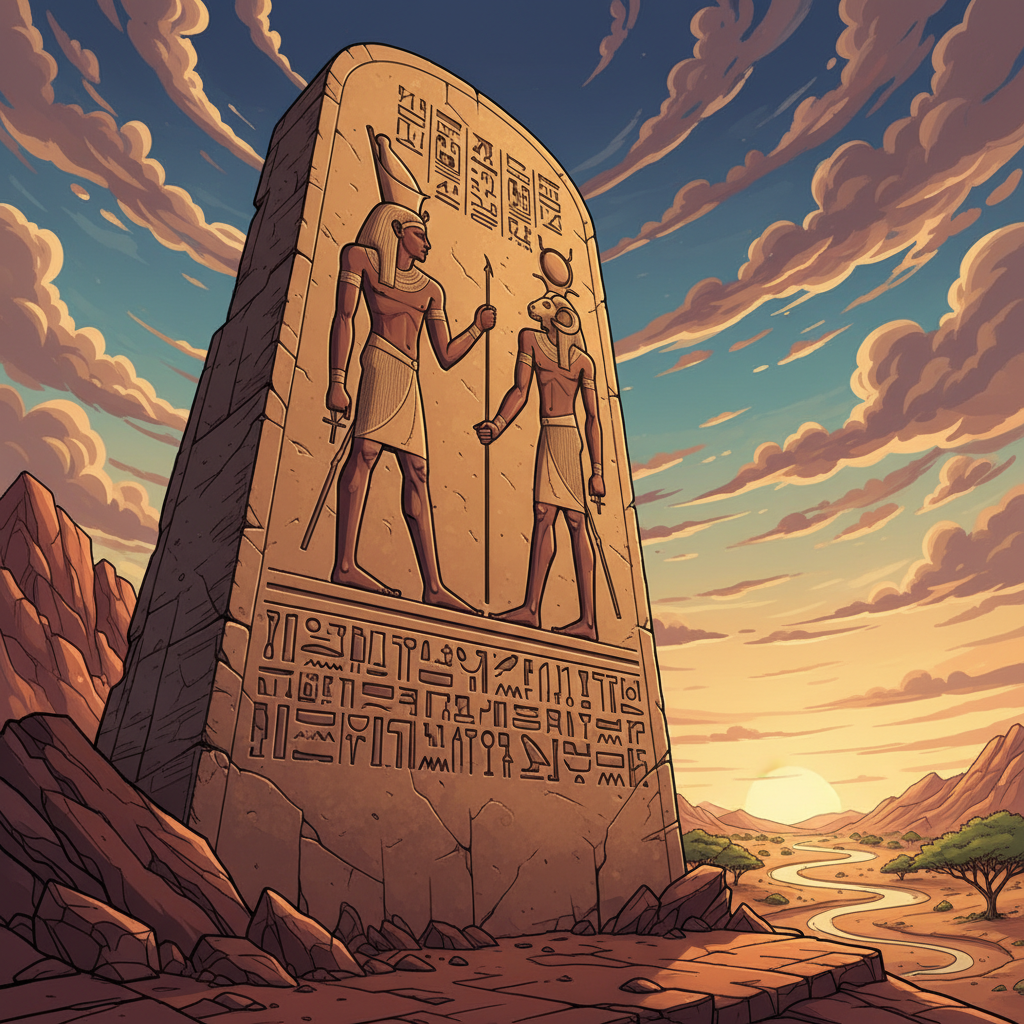
The Dream Stele at Gebel Barkal, however, still stands. It is a monument not to fleeting victory, but to enduring faith. It reminds us that a vision, a covenant with the neter, can outlast any earthly setback. Even when the world breaks the dream, the dream recorded, the intention, endures and inspires.
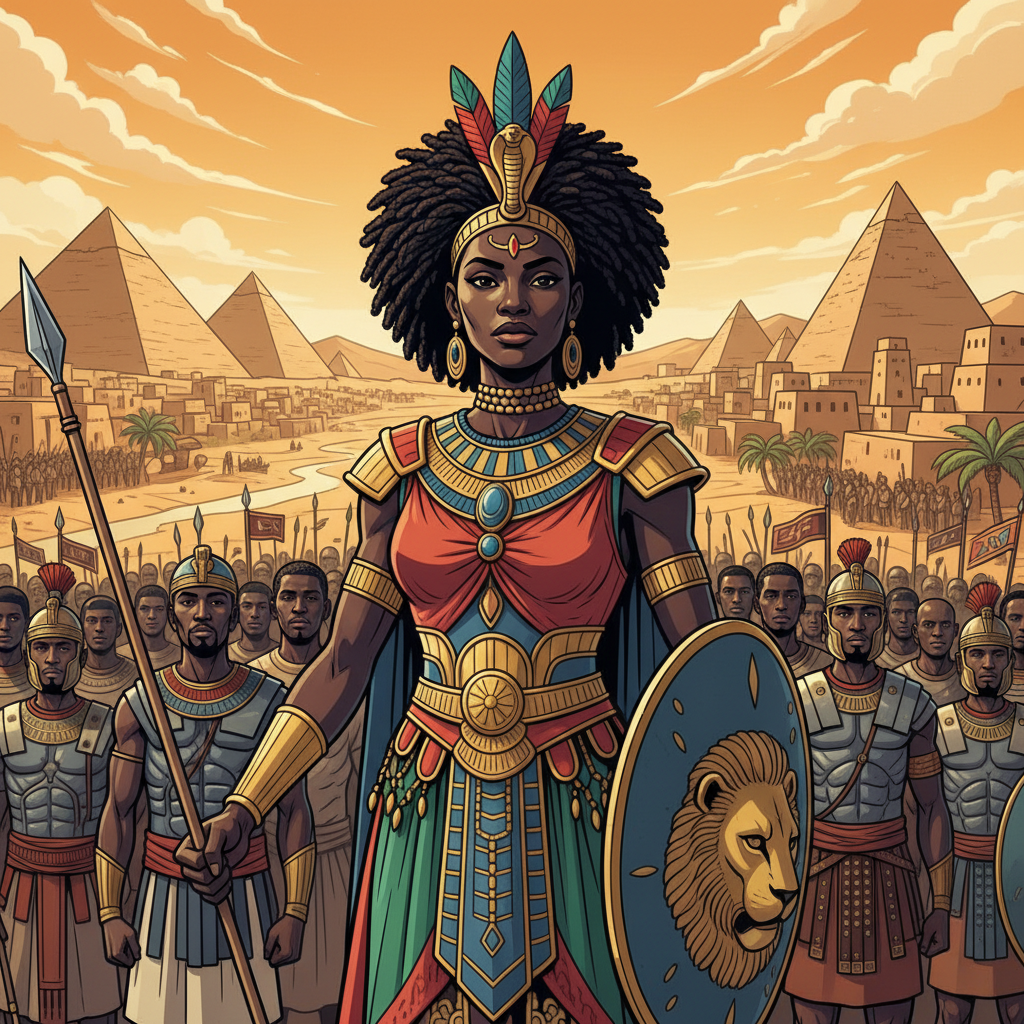
Tantamani's story is not an end, but a powerful continuation. Though his reign in Kemet was cut short, the Kingdom of Kush thrived for centuries more. From Napata, and later Meroe, the Kushite pharaohs and even powerful Kandake warrior queens would continue to uphold our traditions, even challenging the mighty Roman Empire generations later.
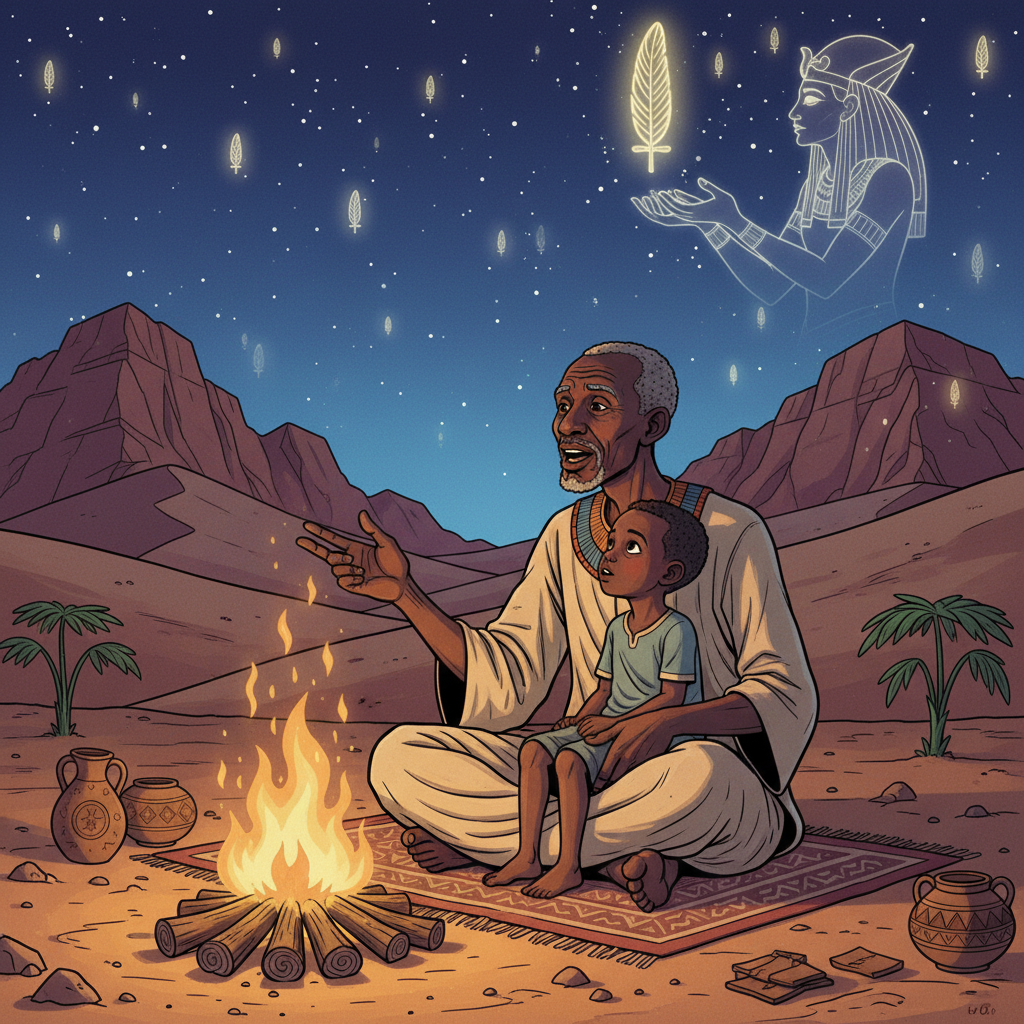
So, my young one, what does Tantamani's dream teach us? It teaches us that Maat is not just about what is, but what ought to be. It teaches us that a vision, born of truth and justice, is a powerful force, a covenant you make with yourself and with the divine. Even when external circumstances shift like desert sands, your internal Maat remains.
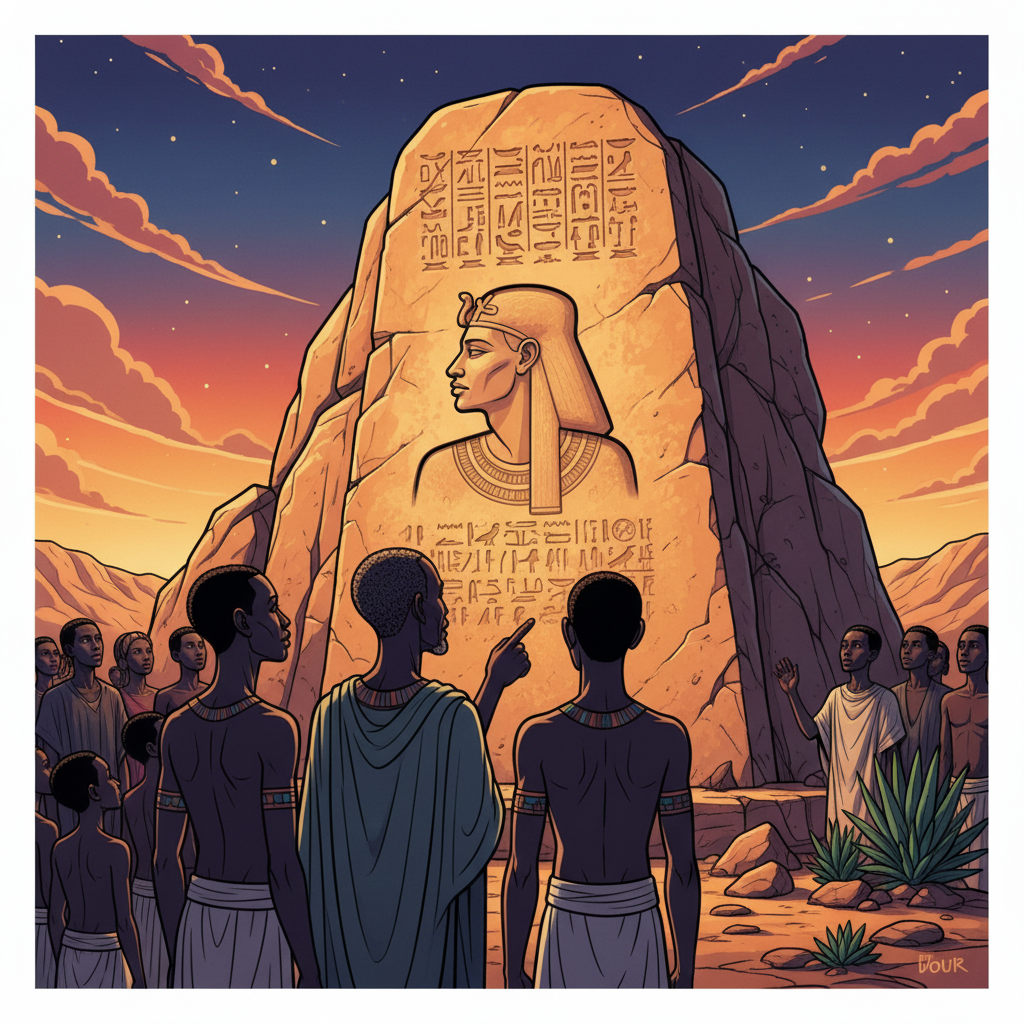
Tantamani believed in the restoration of a unified Kemet, not for personal glory, but because it was the righteous order, the path of Maat. He acted on that belief, even when the odds were against him. His dream, carved in stone, became a beacon for future generations, a reminder of what is possible when faith guides your actions.
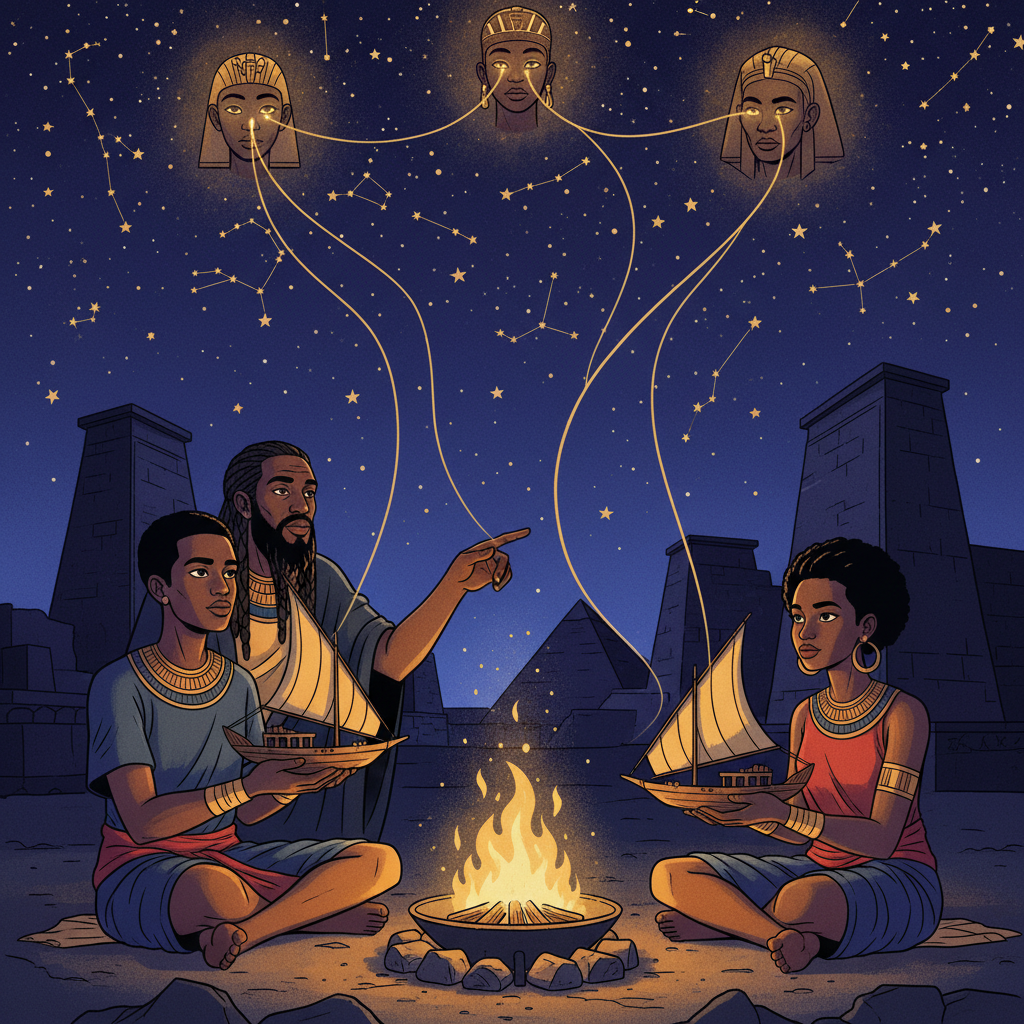
Just as the stars guide sailors across the vast ocean, your vision, your personal covenant with Maat, will guide you through life's challenges. You are an heir to this tradition, carrying the wisdom of Tantamani, Piye, Shabaka, and Taharqa in your very spirit. Your dreams can be the foundation of your own righteous order.
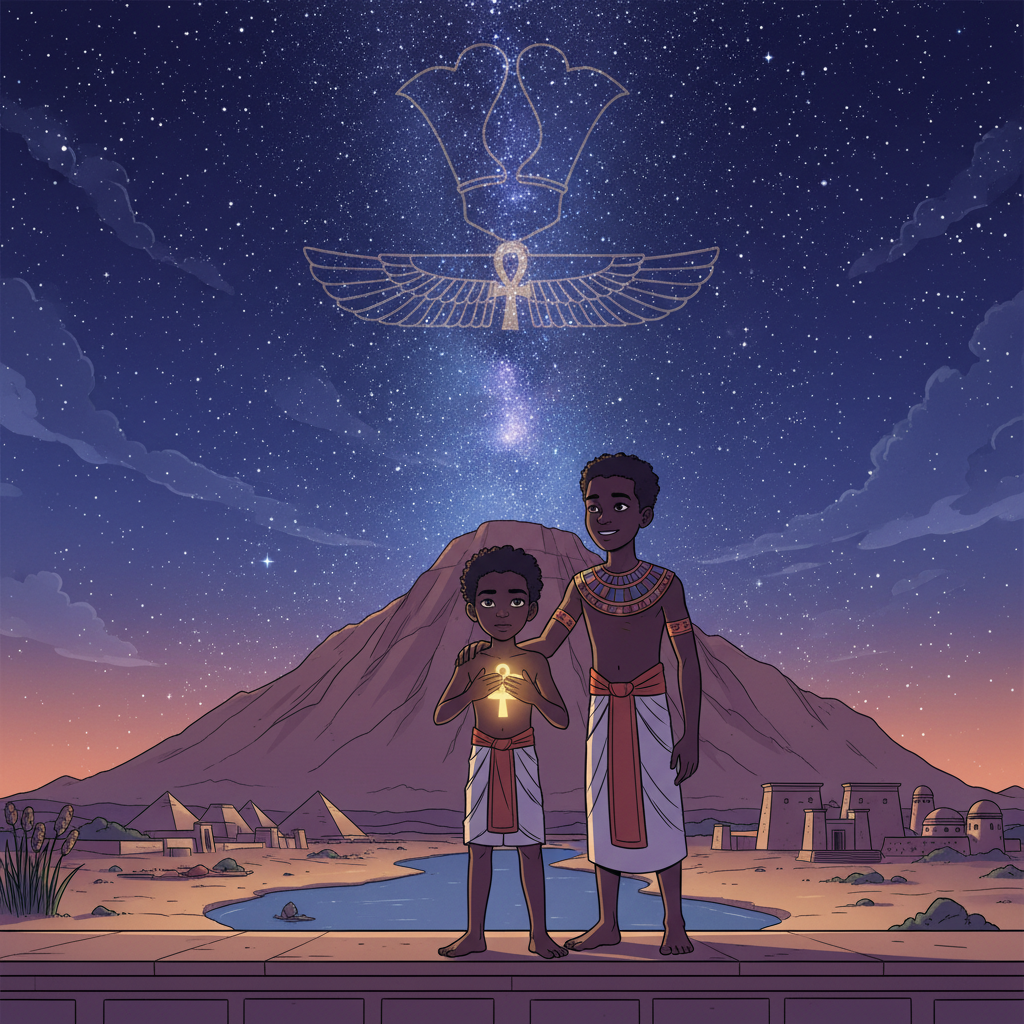
Embrace your vision, nurture it, and let it illuminate your path. For in your heart, you too can carry the light of Maat, just as Tantamani carried the sacred call from Amun, believing in the unity of Kemet and Kush, a unity that, though challenged, was forever etched into the consciousness of our people. The stars watch over you, young heir.