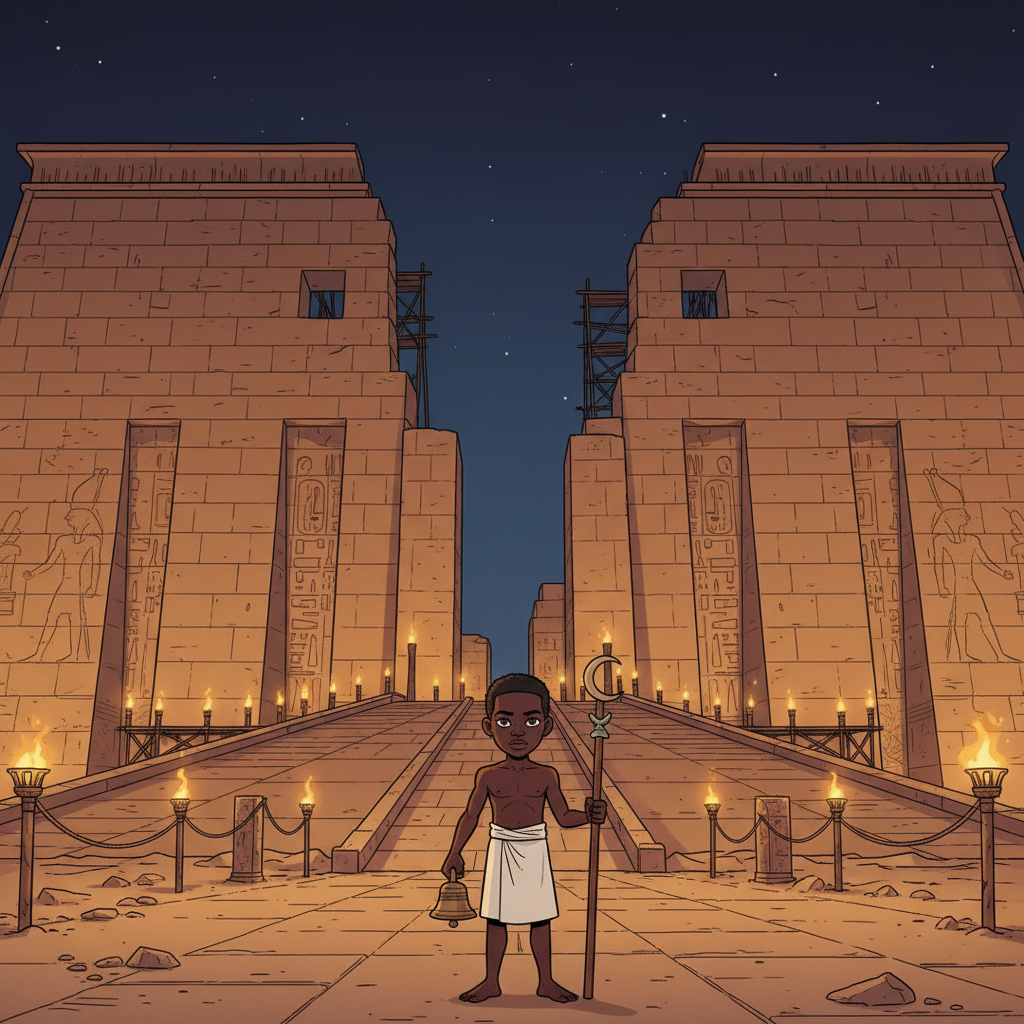
Seti was sixteen years old when they put him on the night rotation at Karnak. He stood at the base of the unfinished southern pylon with a bronze bell in one hand and a temple-watcher staff in the other, and he tried to look older than he was. It did not work. Seti was slight, barely past boyhood muscle, his dark brown skin still smooth across his cheekbones, his close-cropped 4C hair cut that morning by his mother so he would not shame the Medjay on his first real post. He wore the plain trainee kilt — no bronze plate yet, no insignia, nothing that marked him as more than a shadow walking between torches. His older brother, Khonsu, was a decorated Medjay with a story everyone in Waset knew. Seti's story had not started yet.
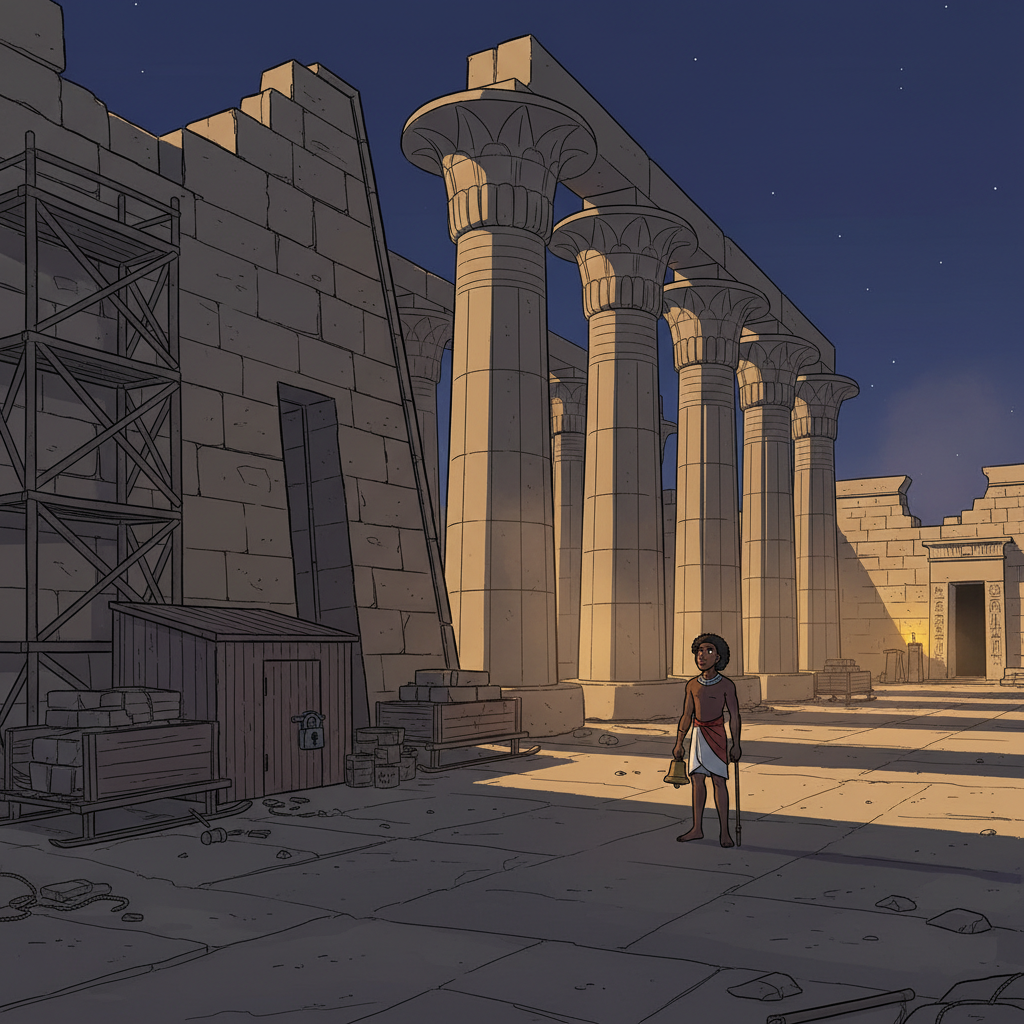
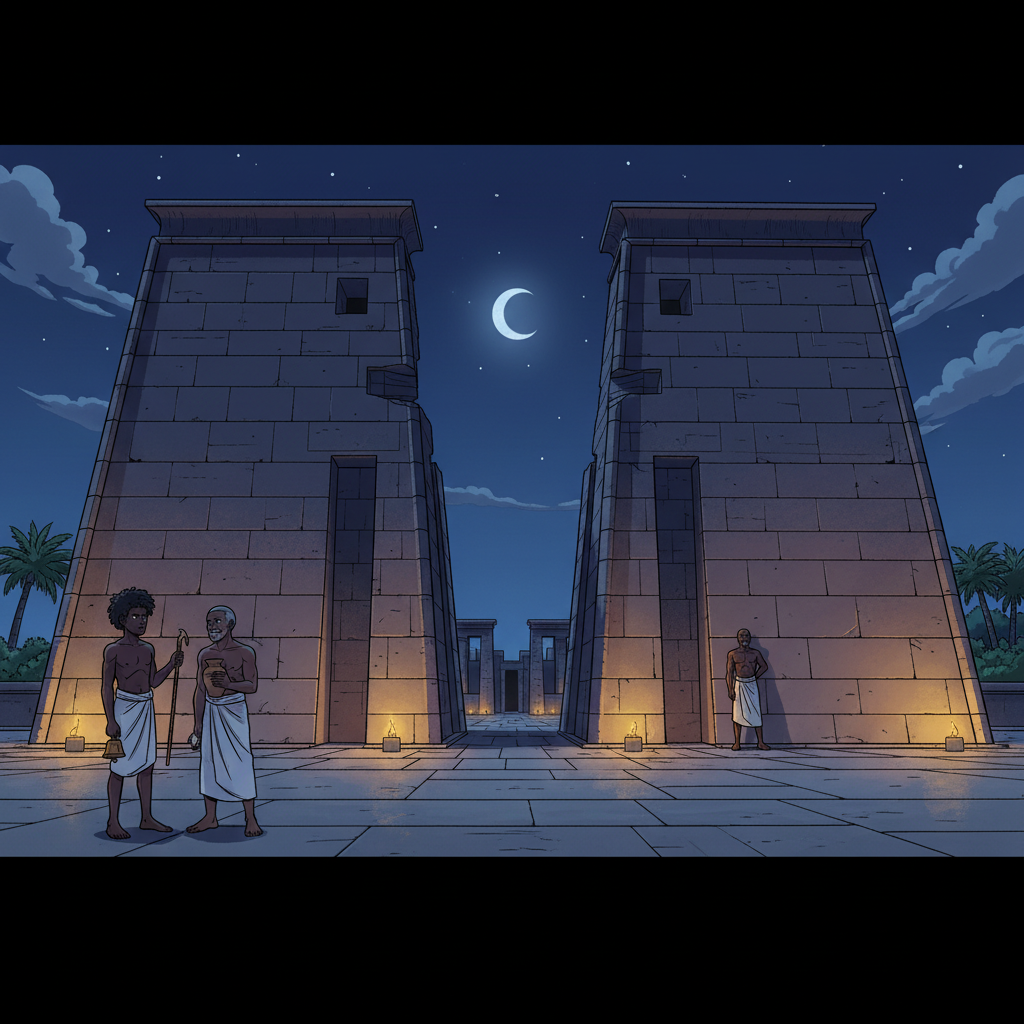
Karnak was not one building. Under the pharaoh Thutmose I, Karnak was a whole precinct of temples being grown like a forest of stone. The southern pylon was going up that year — scaffolding stacked against half-finished walls, stone blocks lashed to sledges, a wooden shed by the pylon base where the priest-craftsmen locked their tools at dusk. Mallets, copper chisels, ropes of woven palm, drafting papyrus sealed in clay tubes — all of it kept inside the shed under a single bronze padlock. Inside the older chambers, priests slept and prayed and rose before dawn. Outside, the expansion works lay still in the dark. The air smelled of stone dust and lamp oil. The great columns above Seti caught starlight on their carved edges and threw long shadows across the packed earth of the unfinished court.
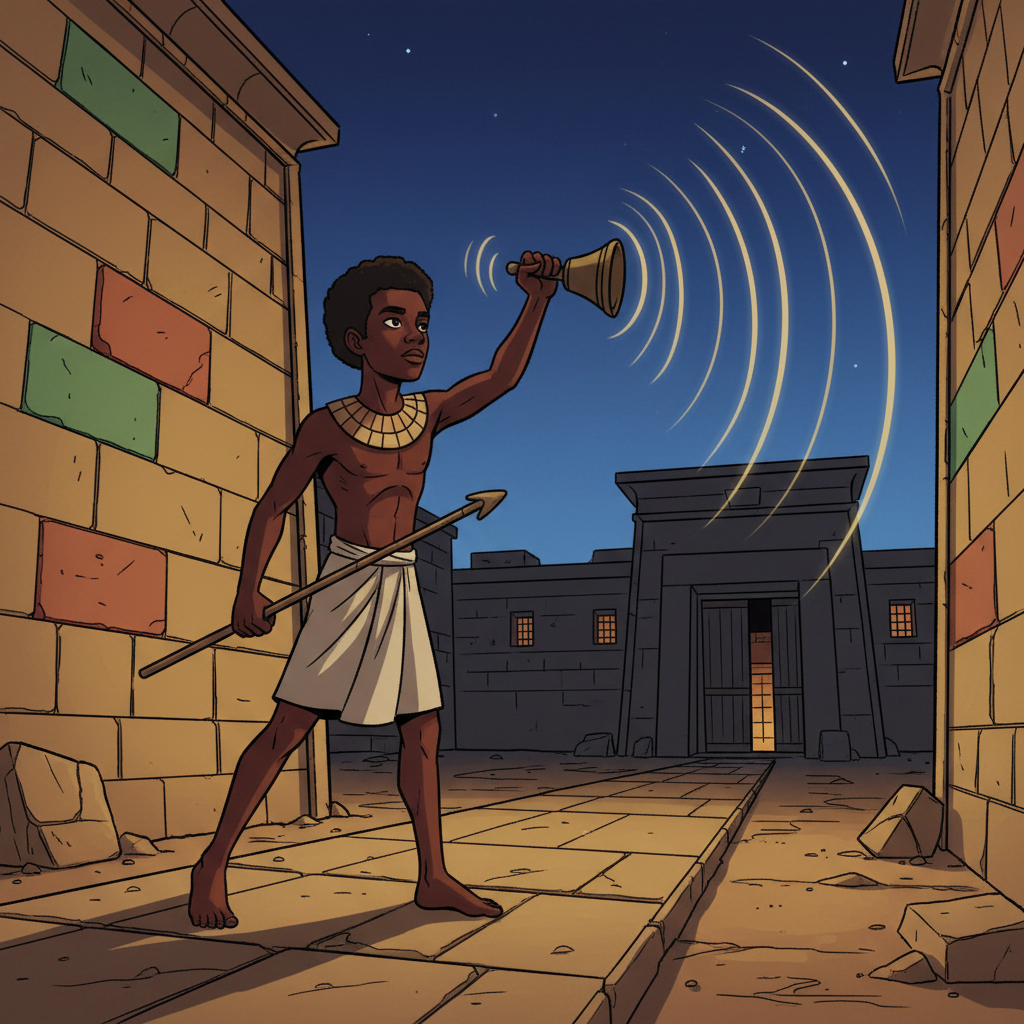
Seti's duty was simple enough that the captain had explained it once and walked away. Walk the perimeter of the southern works twice every hour. Rattle the bronze bell at each of the four corners. The sound carried into the older chambers where the priests slept, and the priests would know — without opening their eyes, without rising — that a watcher was on his feet. That was the whole point of the bell. It was a sign of presence. It was a promise. No one came out to check on Seti. No officer walked behind him to count his laps. Nobody watched Seti watch. The perimeter was his. The bell was his. The silence between the ringing was his. Maat, his mother had once told him, is what you do inside that silence.

The first hours of the shift were the hardest because nothing happened. Seti walked. Seti rang the bell. Seti walked. The bronze note rose thin and clear between the scaffolds and died fast against the stone. Boredom came in waves. Loneliness came in waves. A small voice in the back of his throat kept suggesting he sit for a moment — only a moment — against the base of the pylon and rest his eyes. He did not sit. He did not rest his eyes. His mother's teaching ran through him like a second spine: watchfulness is prayer, Seti. The gods do not ask for spectacle. They ask that you stand where you are told to stand. So he stood. So he walked. So he rang. And his feet, which had already begun to hurt, learned to hurt quietly.
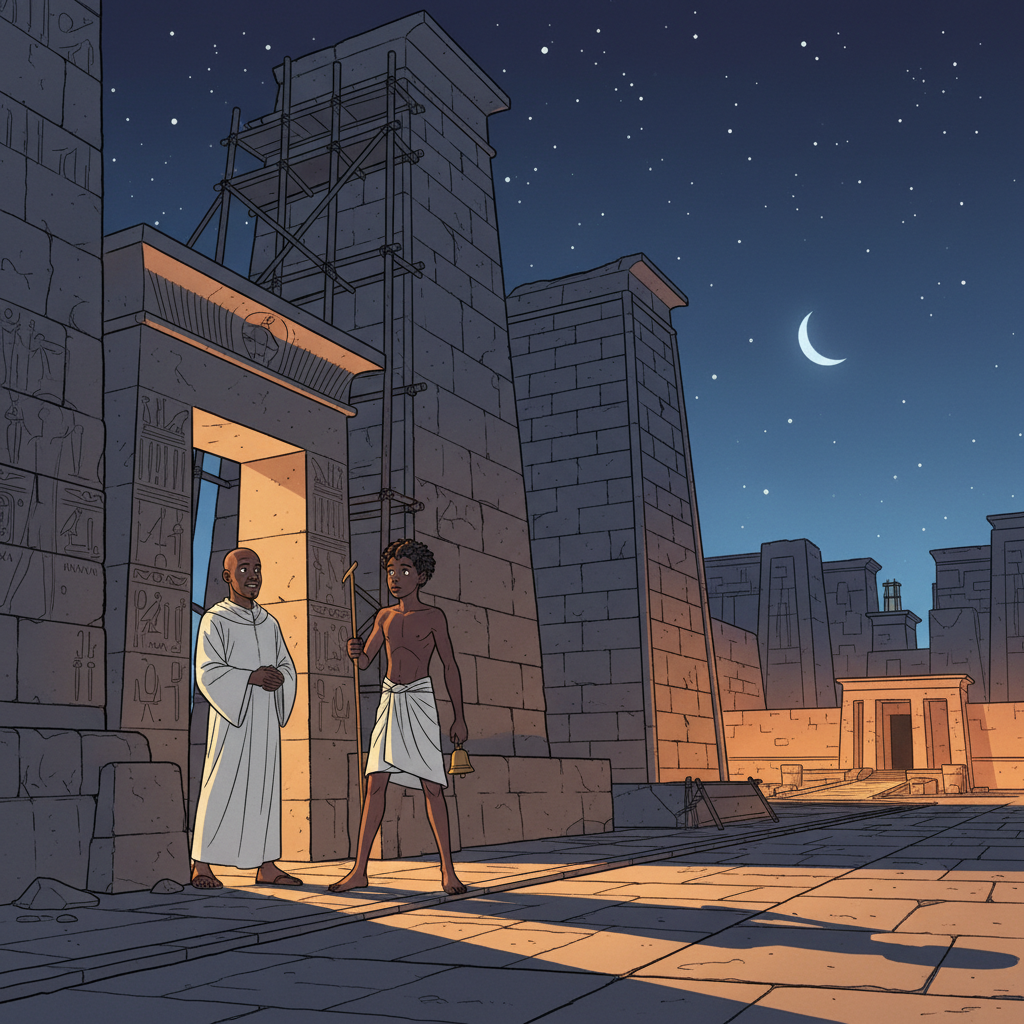
He was walking the eastern face, halfway between the third corner and the fourth, when a priest stepped out of the dark and spoke his name. "Seti." The voice was soft and middle-aged, the kind that did not need to raise itself. Seti turned. The priest was a man he had seen in daylight — Hori, one of the older temple administrators, not a senior but not a novice either, comfortable in the precinct the way a cat is comfortable in a courtyard. Hori wore the plain white linen of a working priest, his shaved head catching a little starlight. "You are Khonsu's brother," Hori said, smiling. "The new one. Sixteen, I think? How is your mother keeping? I knew her when she used to bring honey to the temple before your father died."
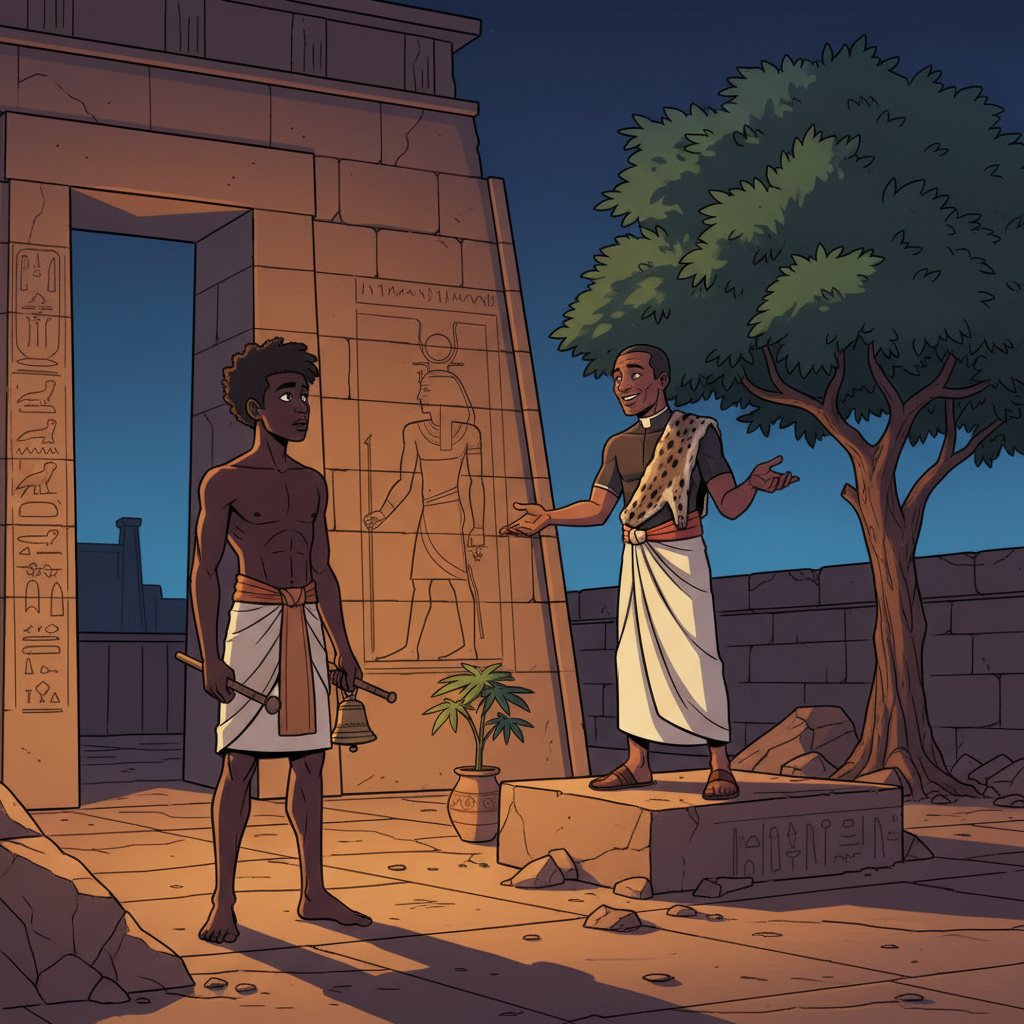
The small talk was easy. Too easy, maybe. Hori asked about Seti's brother in the northern garrison, about the house, about the old mango tree in the courtyard that Seti's mother had planted the year Khonsu was born. Then, in the same easy voice, Hori said: "Listen, friend. I have a favor I wonder if you would consider. Tomorrow morning I am supposed to take the watch at the north pylon — short shift, easier walk, nobody troubles you. It is a better post than this one. You swap with me — cover my morning, I take your next night — and I will see to it that a ration of imported beer finds its way to your mother's door. From the priestly stores. The good stuff. Nobody would even notice."
Seti did not answer right away. He let the words settle. The offer was not cruel. Hori was not leering. The beer was a real thing — a jar of imported brew from the priestly stores was a gift that would feed a small celebration, maybe two, and Seti's mother had not tasted anything imported since his father had died. The shift-swap would not leave a post empty. Both pylons would still be watched, just by different men. The only people who would know were the two of them. His training captain would glance at the roster in the morning, see two names in two places, and move on. It was small. It was invisible. It was a gift wrapped in convenience. And still, something in Seti's chest tightened.
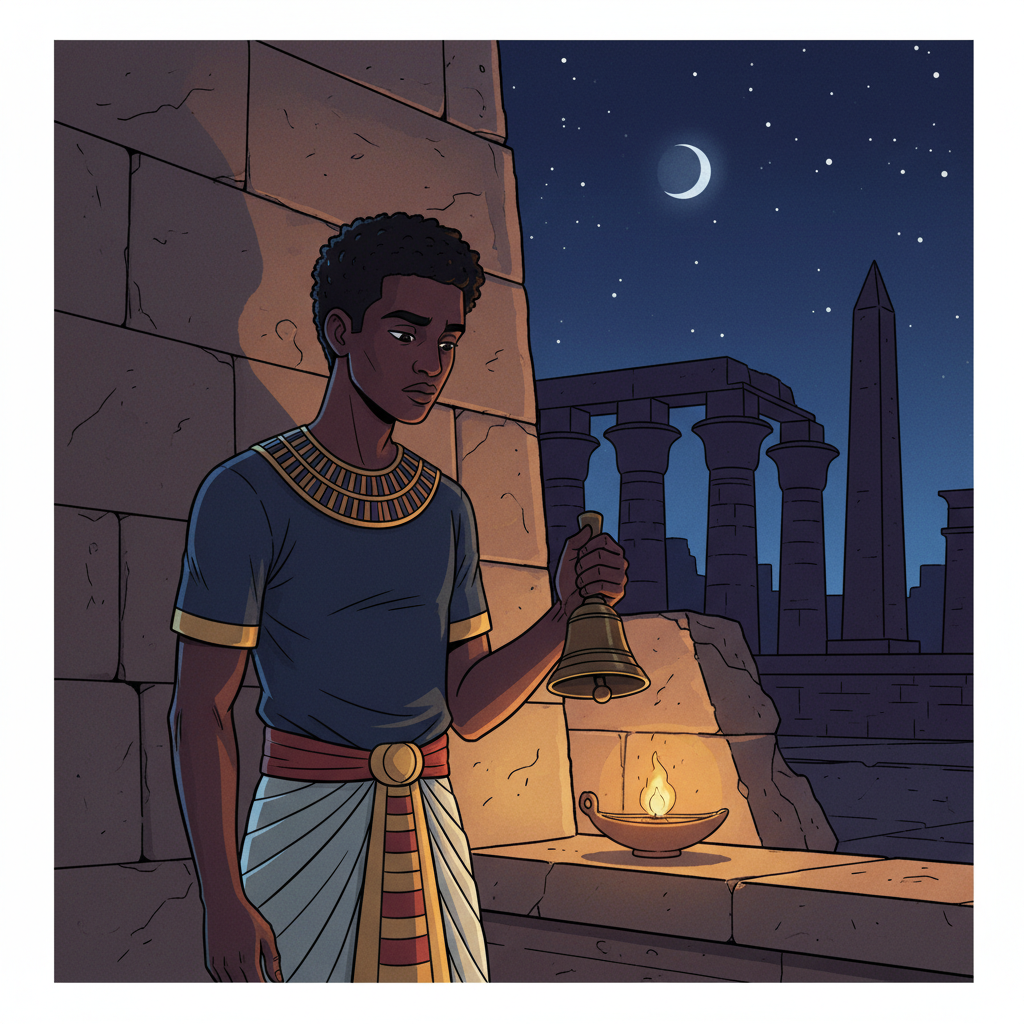
He stood in the dark with the bronze bell cool in his palm and felt the shape of the dilemma. No one would be harmed. No one would know. The shift-swap was not his to give — a trainee did not reassign his own rotation, not officially — but the infraction was tiny, the kind of thing senior Medjay probably did all the time when they traded nights to visit a sick cousin. And the beer? Priestly stores were priestly stores. If Hori could pull a jar loose, that was Hori's problem, not his. He could already hear himself telling his brother the story someday — a good laugh, a small bend, a gift for the family. It sounded almost reasonable in his own head. That was what scared him.
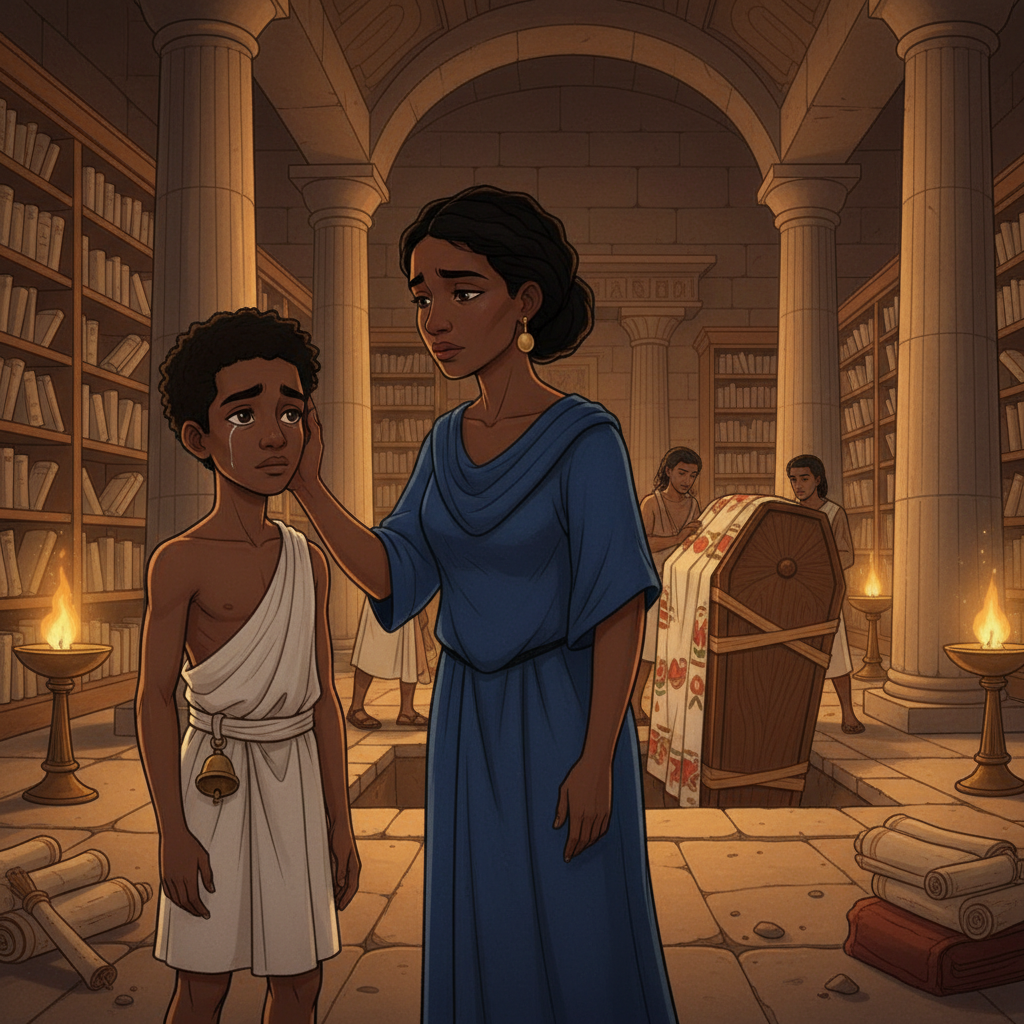
He thought of his mother. She had said many things in sixteen years, but one teaching kept rising now like a bubble through dark water. Maat is watchfulness even when no one else watches. She had said it the first day he came home in his trainee kilt. She had said it the night his father was buried, with her hand pressed against the side of his face. She had said it again in the early dawn before this very shift, handing him a folded square of papyrus with dried dates tucked inside. Maat is watchfulness, Seti. Not only of the temple. Of yourself. Isfet does not usually come as a monster. Isfet mostly comes as a small favor, with a smile, offering something you can excuse. Do not excuse it. Do not begin.
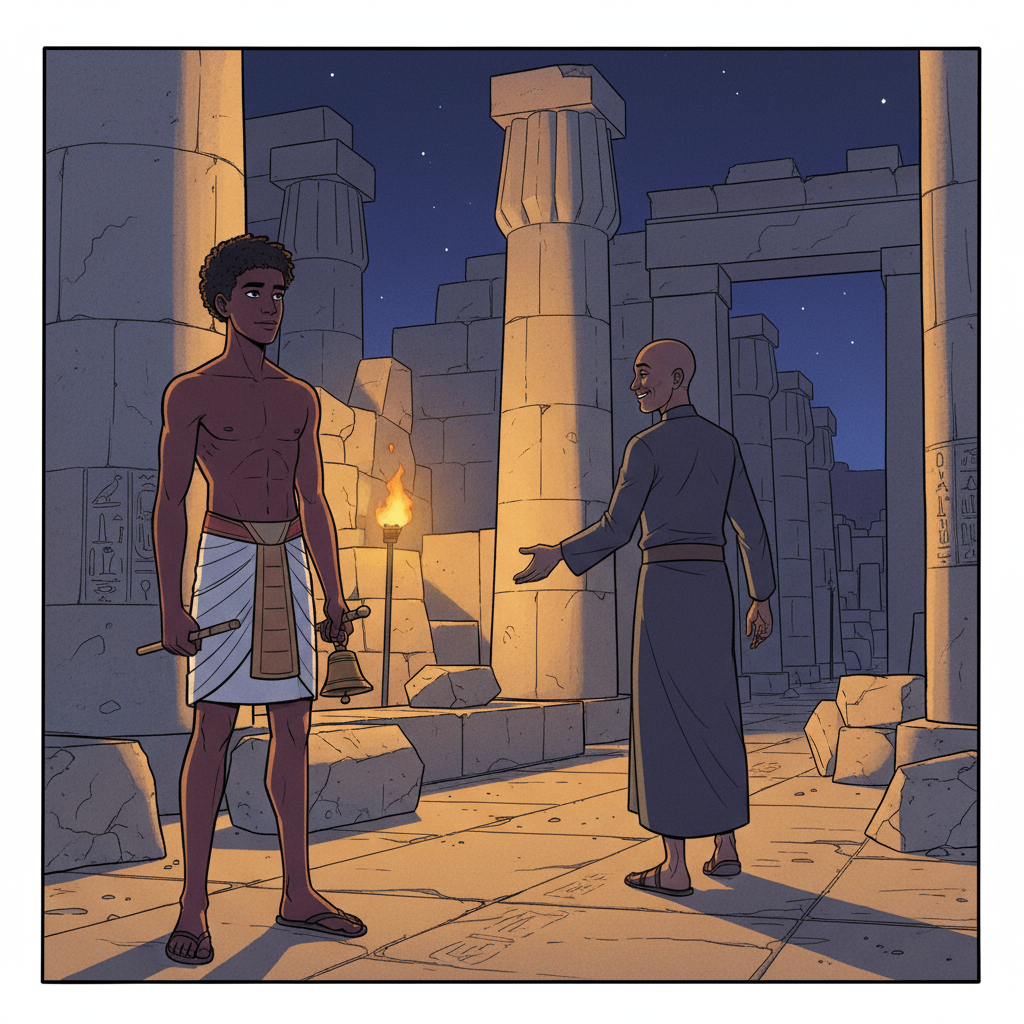
Seti cleared his throat. "I thank you, priest," he said. His voice came out steadier than he expected. "But I was placed on this rotation, and I will keep this rotation. I cannot swap the shift. I cannot take the beer." He did not say it sharply. He did not moralize. He simply declined, the way his mother declined offers of pity — with courtesy and a straight back. Hori studied him for a moment. There was no flash of anger, no wounded pride. Only a small shrug, the kind a man gives when he has tossed a line in a pond and felt nothing bite. "As you like, friend," Hori said. "Give my greetings to your mother." Then he turned and walked back into the dark toward the older chambers, sandals whispering on stone.
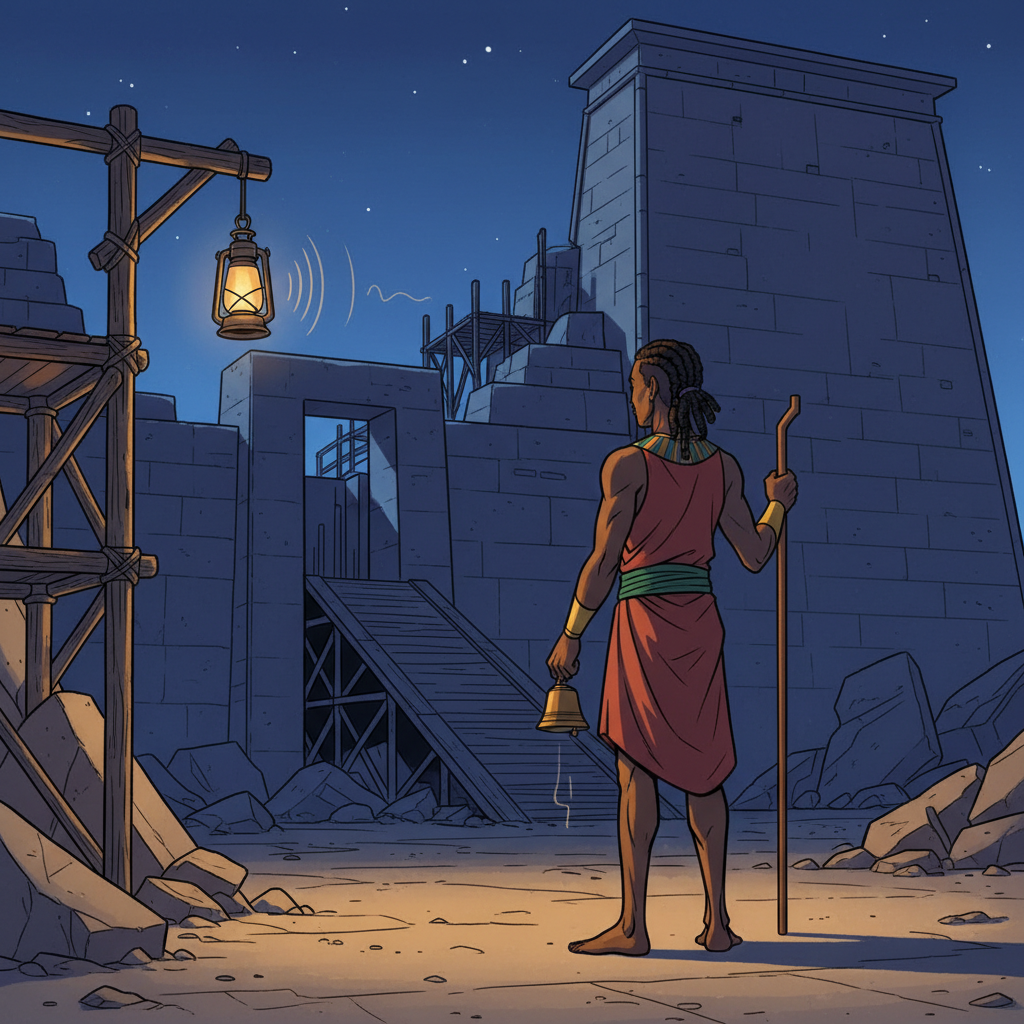
Seti stood where he was for a long moment after Hori's footsteps faded. His heart was beating too fast for how little had happened. No one had been arrested. No blow had landed. A soft-voiced man had offered him a small favor, and he had said no, and the night had resumed as if nothing had passed. The bronze bell in his palm felt suddenly very small. Had he done the right thing, or had he just turned down a gift for his mother because he was scared to bend a rule? He did not know. He would not know for weeks. He rang the bell at the fourth corner, heard the thin note die against the unfinished pylon, and kept walking. The hours after that were the loneliest Seti had ever spent.
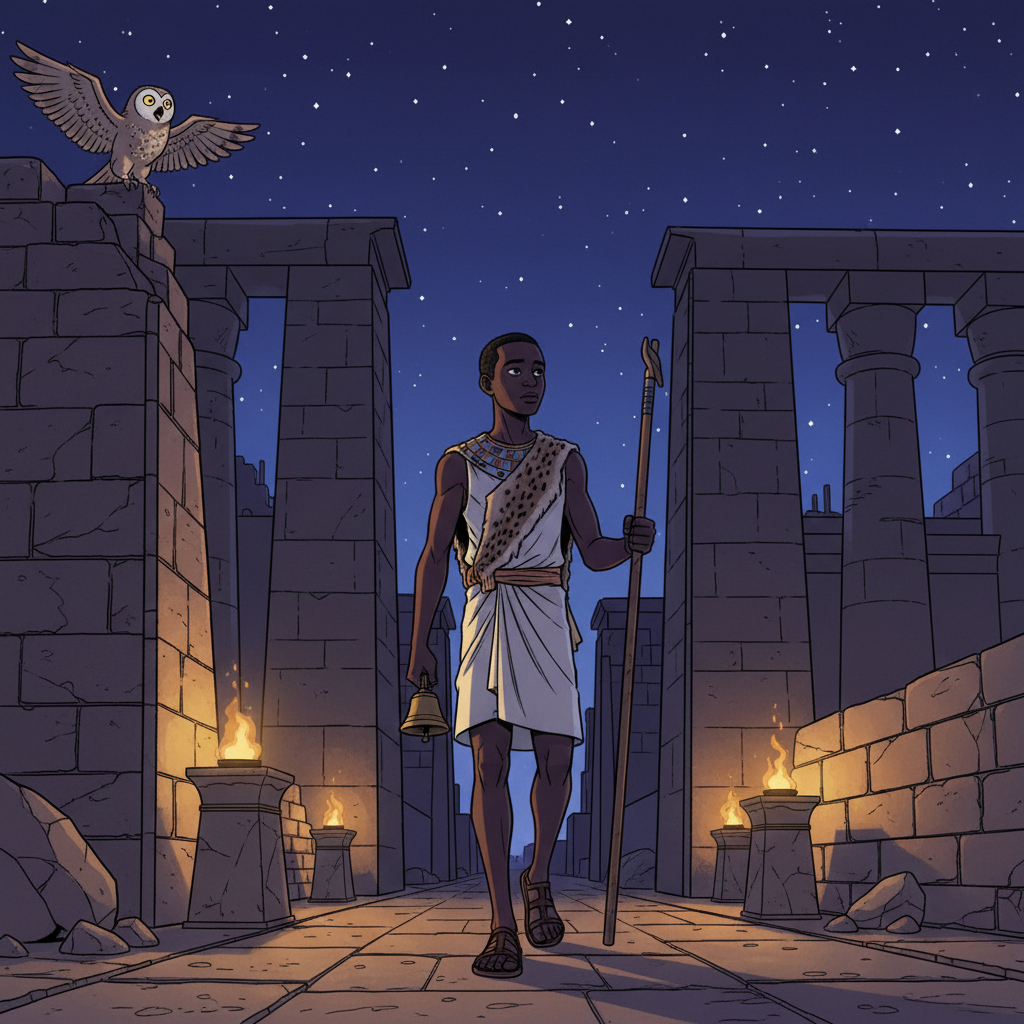
Nothing else happened. That was the truth of the rest of the shift, and the truth of a watcher's life in general — nothing else happened. Seti walked. Seti rang. Seti walked. A desert owl called twice from somewhere beyond the wall and fell silent. The stars wheeled the slow way they always did over Waset. His feet progressed from hurting to aching to numb to hurting again, and he learned that pain in the feet comes in seasons. There was no reward waiting. There was no sign from the gods. There was no secret lesson folded into the stillness. There was just a sixteen-year-old with a bell and a staff, and a promise he had made to nobody but himself, and the long slow passage of a Kemetic night that asked only that he keep walking.
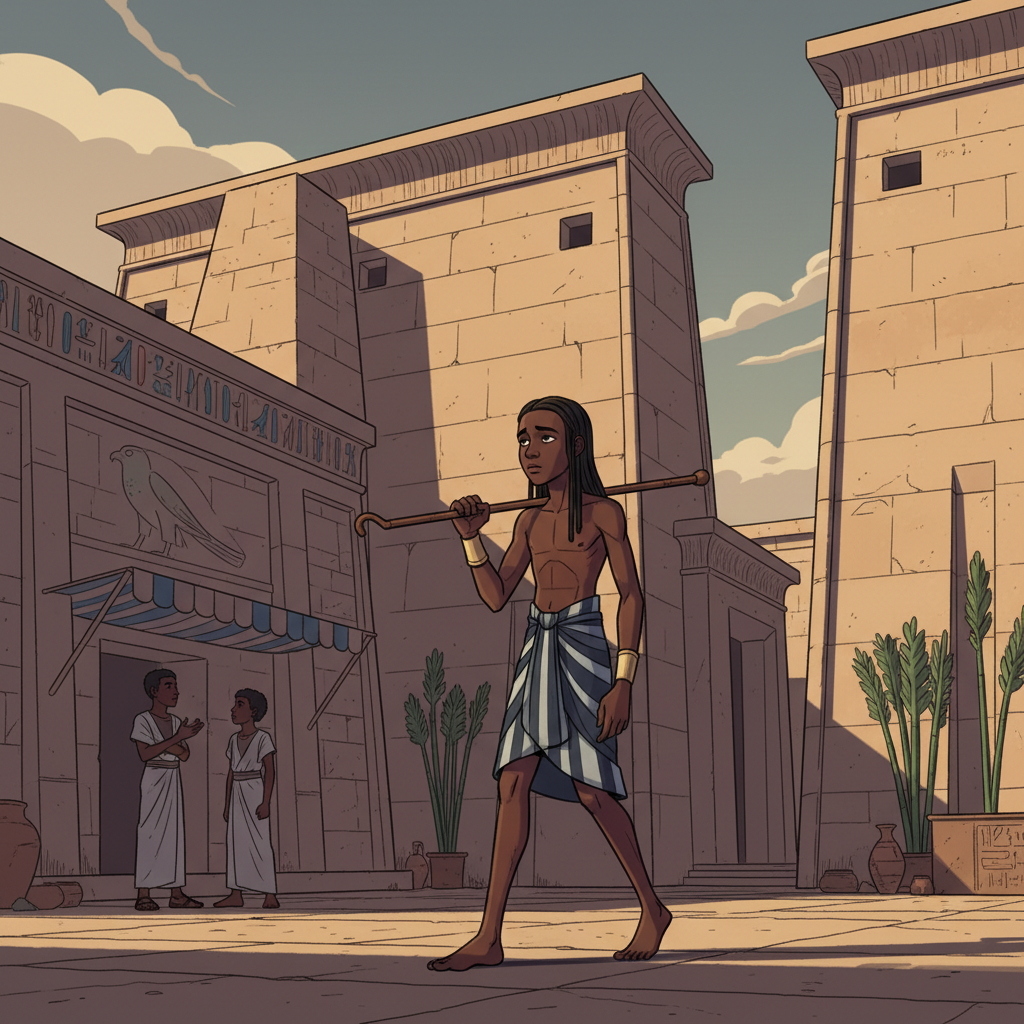
Dawn came gray behind the pylon. The relief watcher arrived, nodded, took the bell, and sent Seti home. Seti walked out through the priestly quarter with his staff across his shoulders and his legs feeling like wet rope. Near the corner of the administrative court, he saw Hori standing under an awning talking quietly with another trainee — a boy Seti did not know well, a little younger, face turned up and attentive. Seti could not hear what they were saying. He did not need to. Something in his chest dropped. Maybe the other boy would take the offer. Maybe the other boy was smarter than him, or hungrier, or less afraid. Maybe in a week the other boy's mother would have imported beer and Seti's would not. He looked away and kept walking.
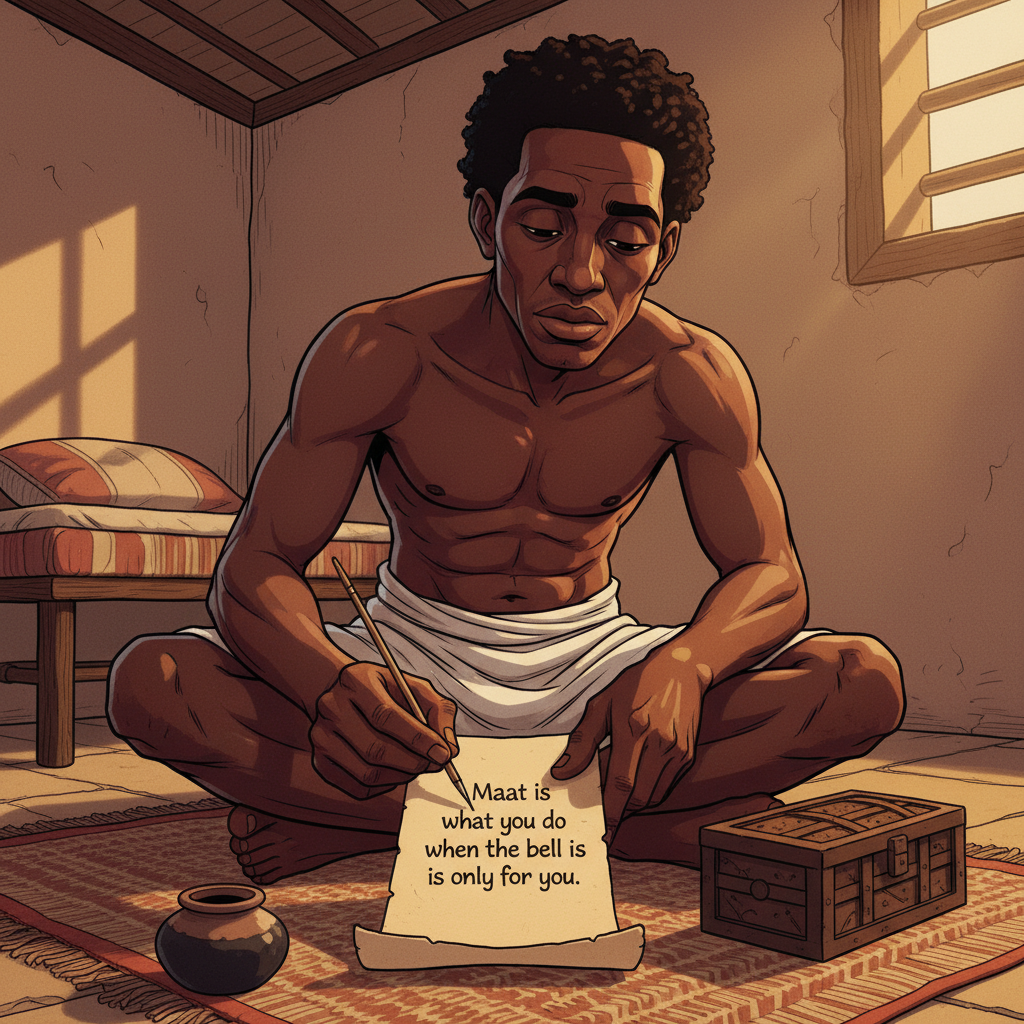
At home, Seti could not sleep. His mother was at the market. The house was quiet. He sat on the mat where he usually took his mid-morning meal, pulled a scrap of papyrus from the small chest under his sleeping bench, and borrowed his father's old reed pen and a pot of lampblack ink. He wrote one line. His script was careful — not a scribe's script, but legible, taught to him by a priest who had been kind to trainees. Maat is what you do when the bell is only for you. He looked at the line for a while. He did not show it to anyone. He folded the papyrus into a small square and tucked it inside the cloth band at his waist, against his skin, where he could feel it under his kilt for the rest of the day.
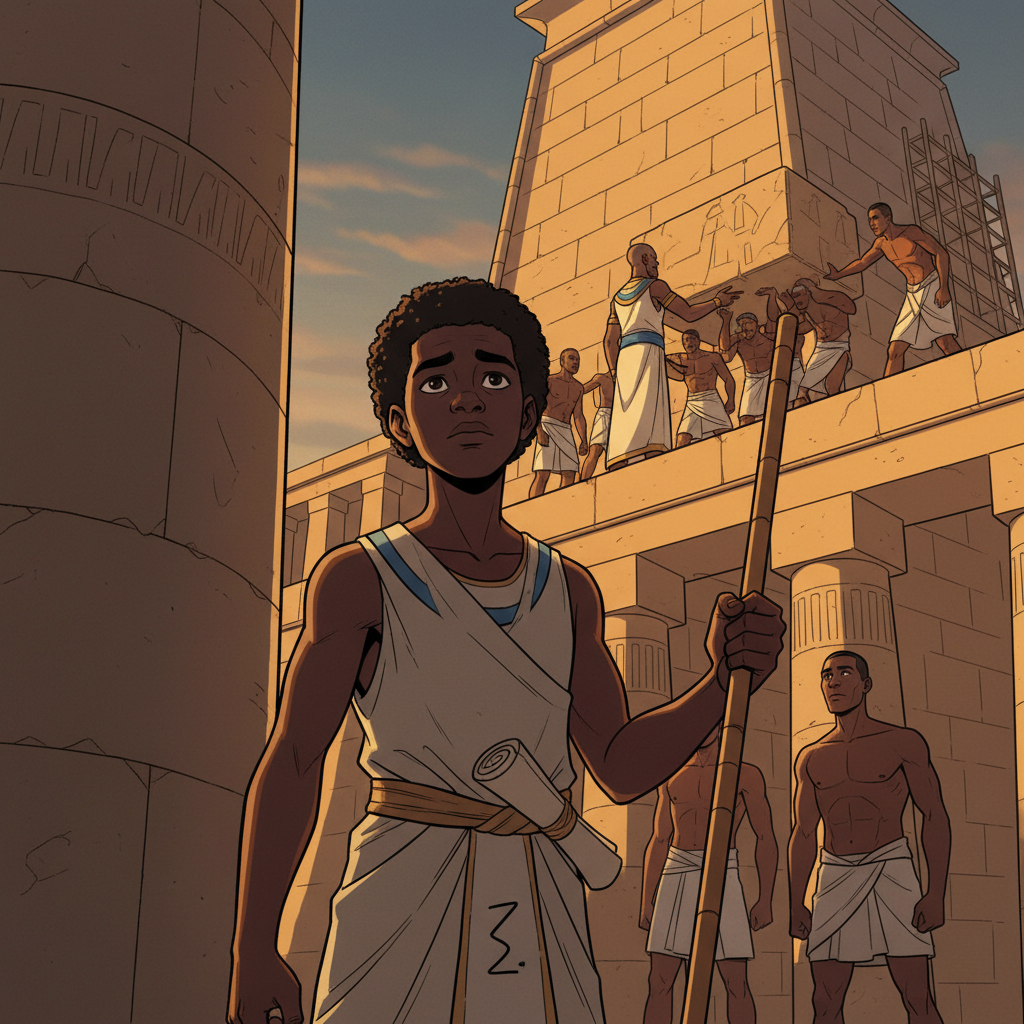
Weeks passed. The season turned. Seti kept the rotation. He walked the perimeter. He rang the bell. The priest Hori did not approach him again, and Seti did not seek him out. He saw Hori once at a distance near the new pylon, supervising the movement of a stone block, and Hori did not acknowledge him. That was fine. It was what Seti expected. But the doubt did not leave. Some nights, walking the fourth corner, Seti caught himself running the offer through his mind again and wondering whether he had simply been timid. Nothing had come of his refusal. Nothing had come of any of it. He was still invisible. He was still the watcher nobody watched. The line on his folded papyrus had not grown louder or quieter. It was just there.
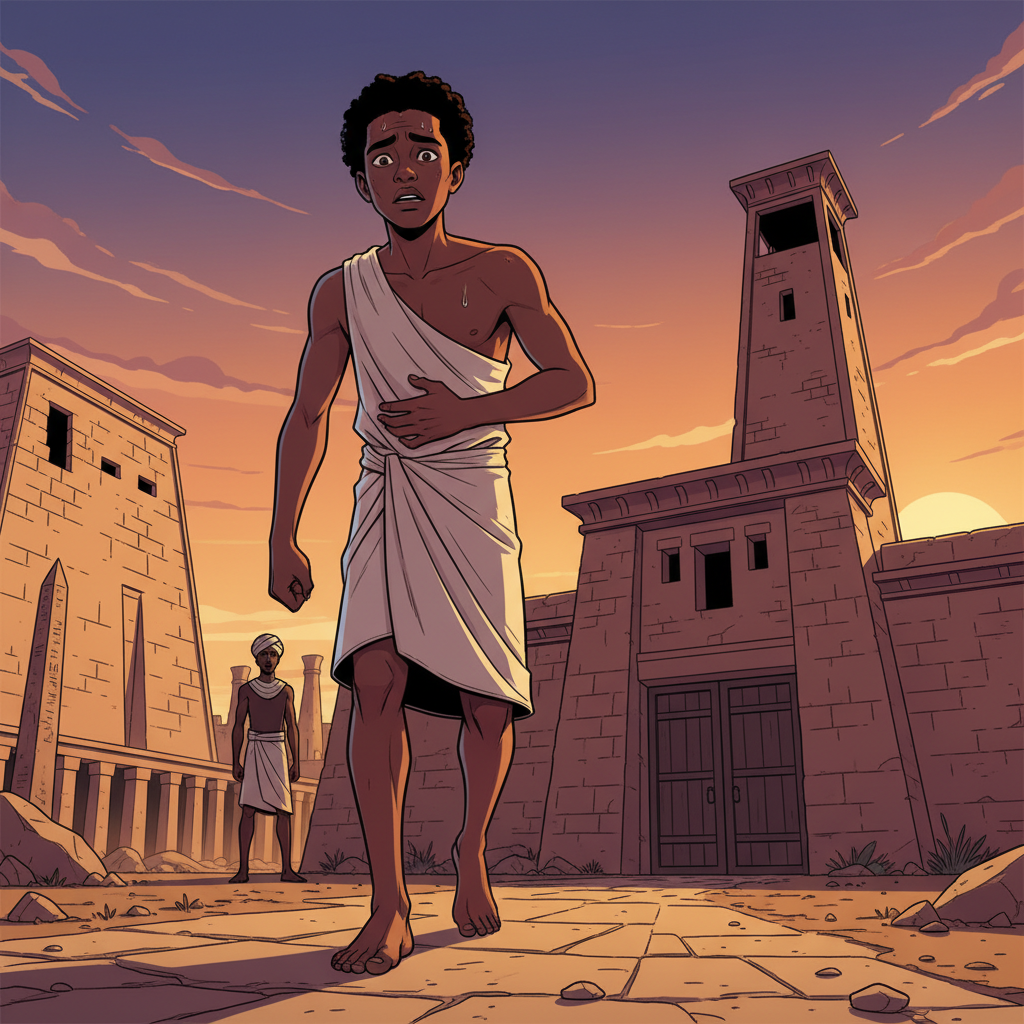
One evening, as Seti was pulling on his kilt for the night shift, a runner came from the Medjay station. The captain wanted to see him. Immediately. Seti felt the cold sweat break across his back before the runner had finished speaking. He walked to the station trying to remember every small thing he might have done wrong in the last month. He had been late to a change of watch once. He had miscounted his laps on a tired night. He had, on one bad evening, leaned his staff against the pylon instead of carrying it properly. Surely one of those had reached the captain's ear. Surely this was the end of his posting at Karnak. Surely his brother would have to hear that Seti had been dismissed from the training rolls before his first year was out.
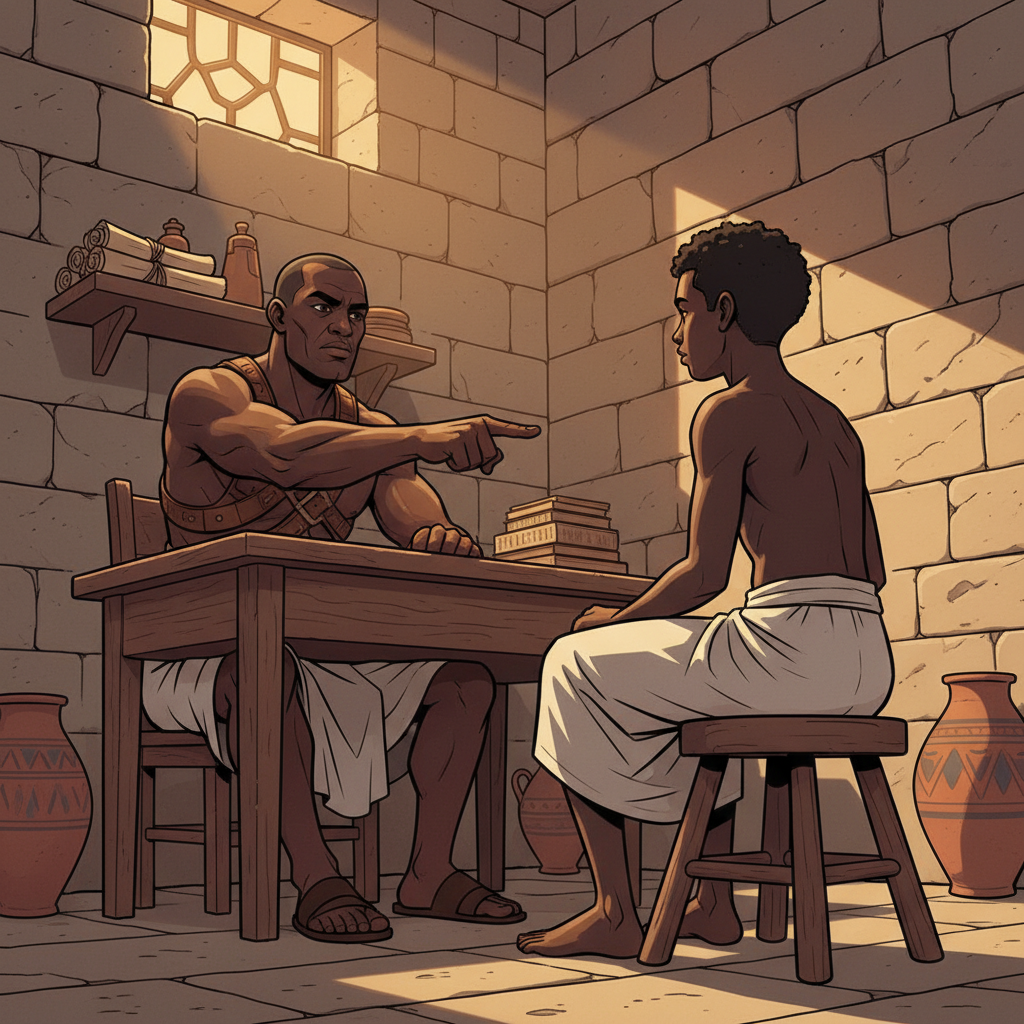
The captain was a broad man named Menna, with a scarred chin and eyes that did not waste movement. He did not stand when Seti entered. He pointed to the stool opposite his small desk. "Sit." Seti sat. Menna studied him for a long moment, then spoke plainly. "An investigation has been underway for some months. The priest Hori, at Karnak. You know him." Seti nodded. "We have been watching him. Small items from the temple — chisels, copper fittings, a roll of fine papyrus here and there — have been moving out of the precinct and into private hands. Not much. Not yet. But the pattern was a test. Shift-swaps were how he did it. He would ask a trainee to swap a post, so his own movements would go unrecorded. Three trainees took his offers. Two have been dismissed."
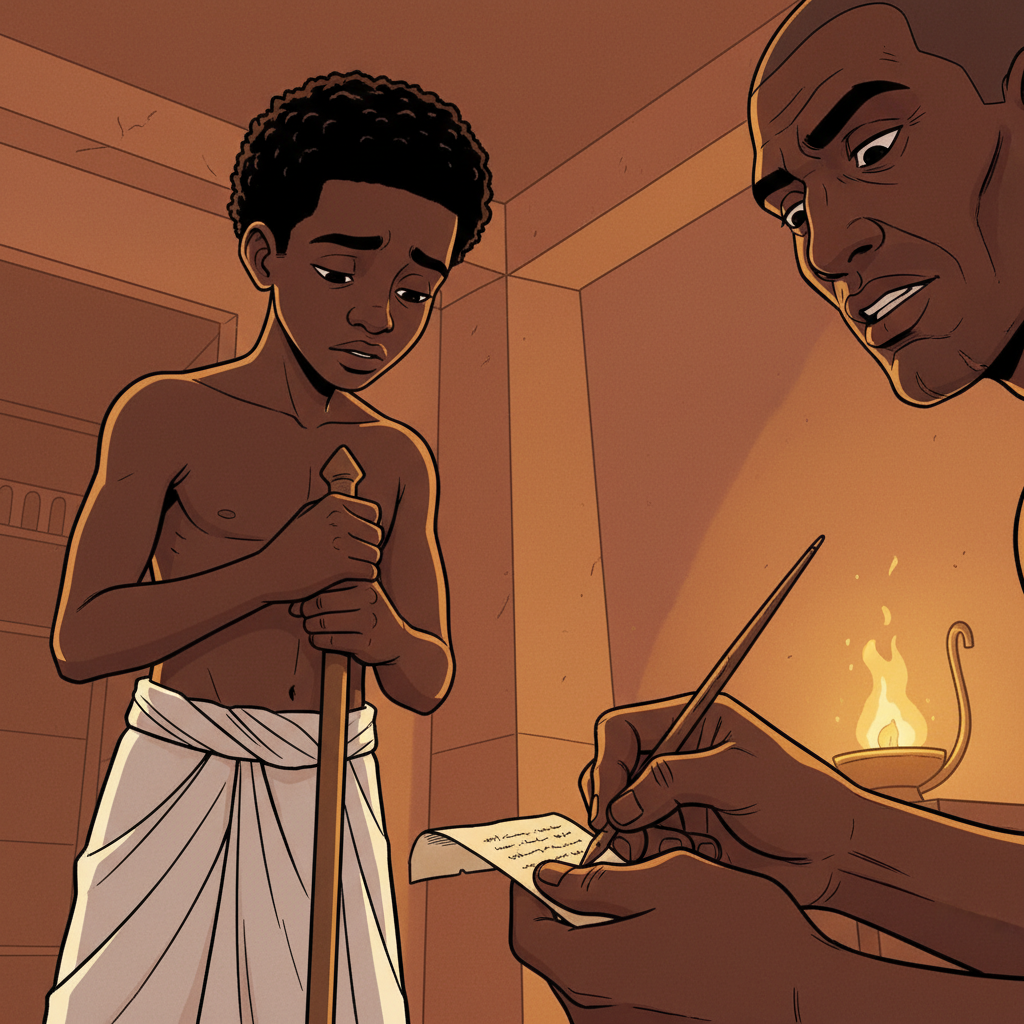
Seti opened his mouth and closed it. Menna watched him, not unkindly. "He offered you a swap," Menna said. "Beer from the stores, I think, was the sweetener. You refused. Why?" Seti wanted to say something that sounded like a Medjay. He wanted to speak of duty, of Maat, of the law of the precinct. What came out was smaller and truer. "My mother said... that Maat is watchfulness even when no one else watches. I remembered her saying it. That is all." He looked down. He felt sixteen and foolish. Menna did not laugh. Menna did not even smile. He wrote something on a small piece of papyrus with the blunt practicality of a man who has heard many answers in his life and recognizes the real ones. "Good," was all he said.
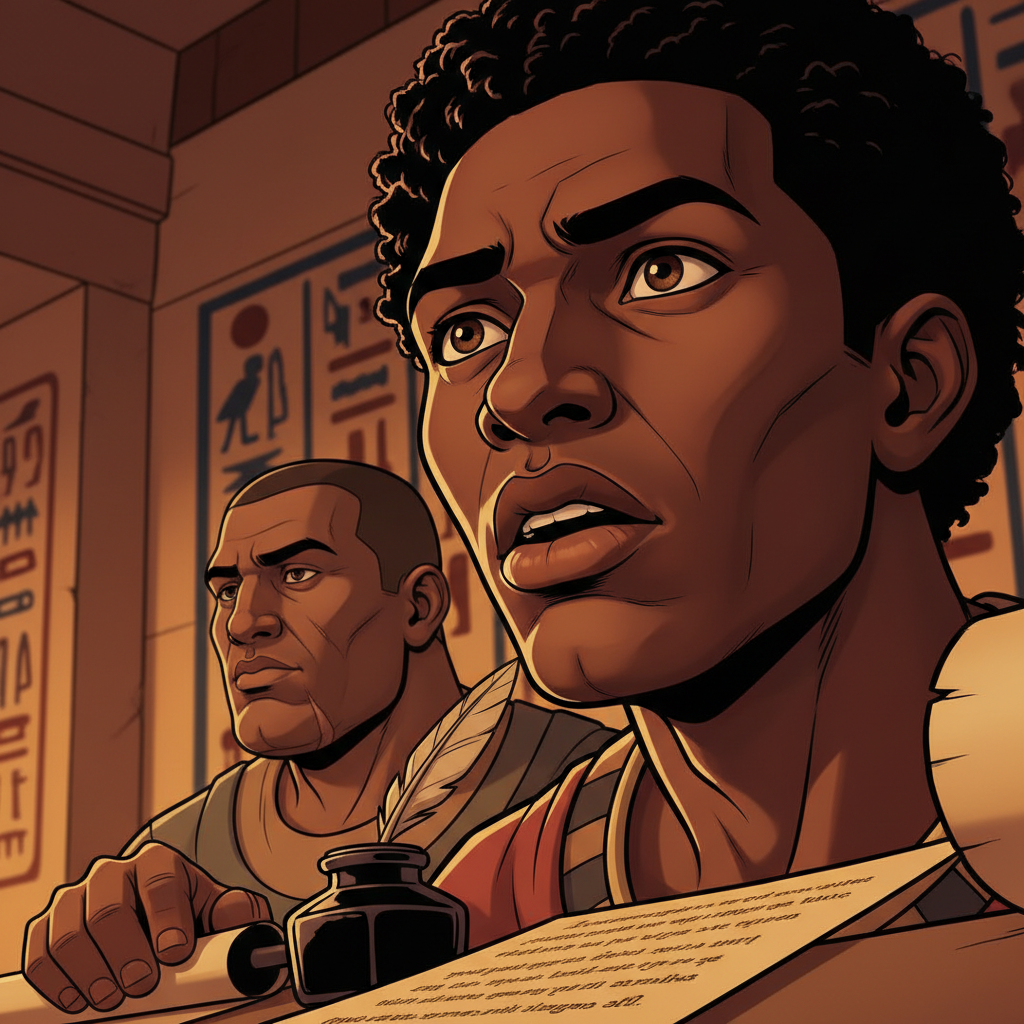
Menna set the pen down. "You should know," he said, "that your refusal was part of how we caught him. The investigation worked by watching responses. Trainees who accepted his trades became part of the pattern. Trainees who refused were also part of the pattern — their refusals narrowed the field. We followed who Hori approached, and who said yes, and who said no. You were a data point, Seti. A quiet one. But a real one." Seti sat very still. He felt something rearrange itself inside his chest — not pride, exactly, something quieter than pride. His refusal had mattered. It had mattered in a shape he had not been able to see from the fourth corner of the pylon. Maat had been keeping count of him the whole time he had believed no one was.

He thought of all the nights he had walked the perimeter wondering if his choice had been foolish. All the times he had stared at the line on his folded papyrus and felt nothing move. All the times he had imagined the other trainee's mother drinking the beer that should have been his mother's. The unseen had still been seen. Not by Hori. Not by Seti himself, whose doubt had run him ragged for weeks. But by Menna, who had been quietly logging every refusal, and by the order of Maat itself, which counted even the small refusals nobody announced. Propriety, Seti realized, is not a lonely thing. It only feels lonely from the inside. From above — from wherever the gods watched — it was part of the long, patient defense of the temple.
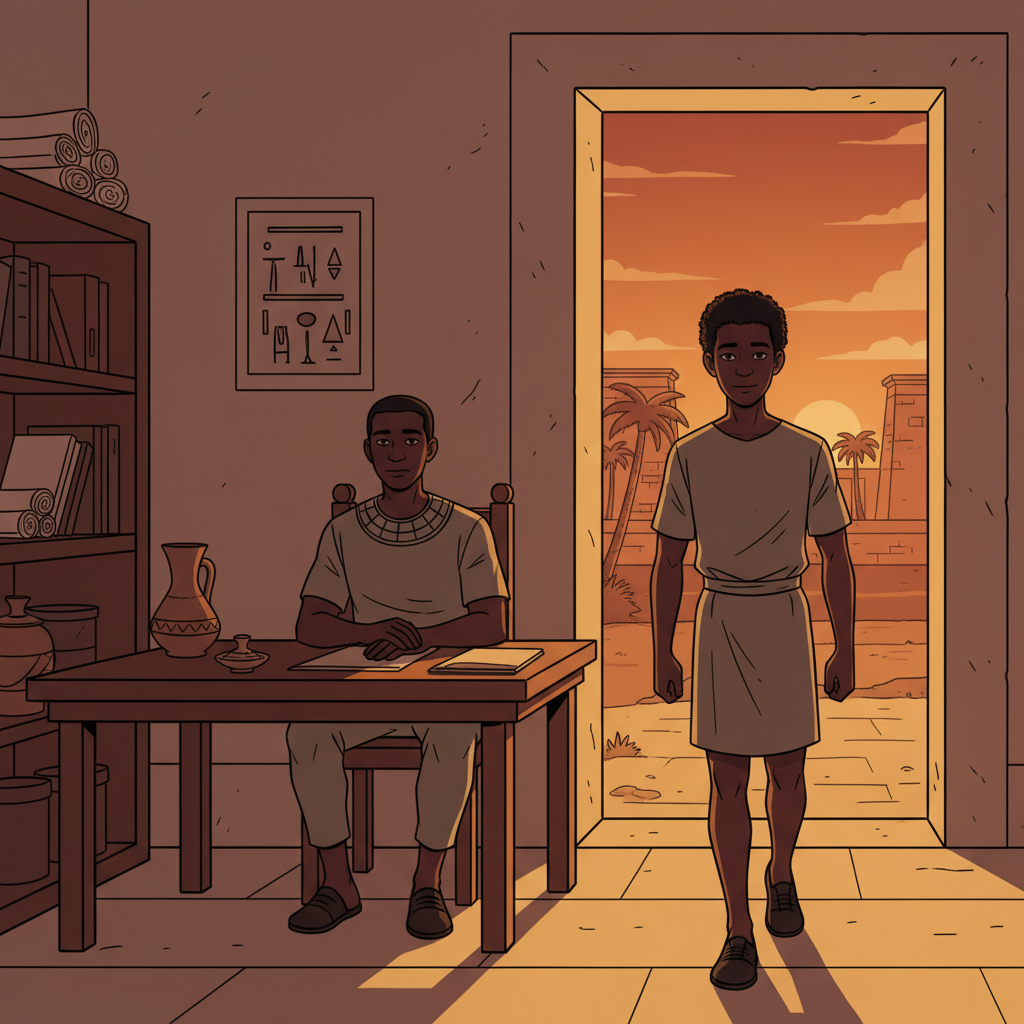
Menna did not promote him. Menna did not take him into the outer room to tell the other officers what Seti had done. Menna did not press a new insignia into his palm or clap him on the shoulder. Menna did exactly what a Medjay captain was supposed to do — he closed the papyrus file in front of him, folded his hands, and gave Seti one sentence, flat and unornamented: "Walk the perimeter tonight. Nothing has changed for you." Seti stood, bowed his head the correct number of degrees for a trainee addressing his captain, and walked out of the station into the early evening. The sky above Waset was turning the color of beaten copper. He realized, halfway home, that he was smiling. It was not a broad smile. It was a private one.
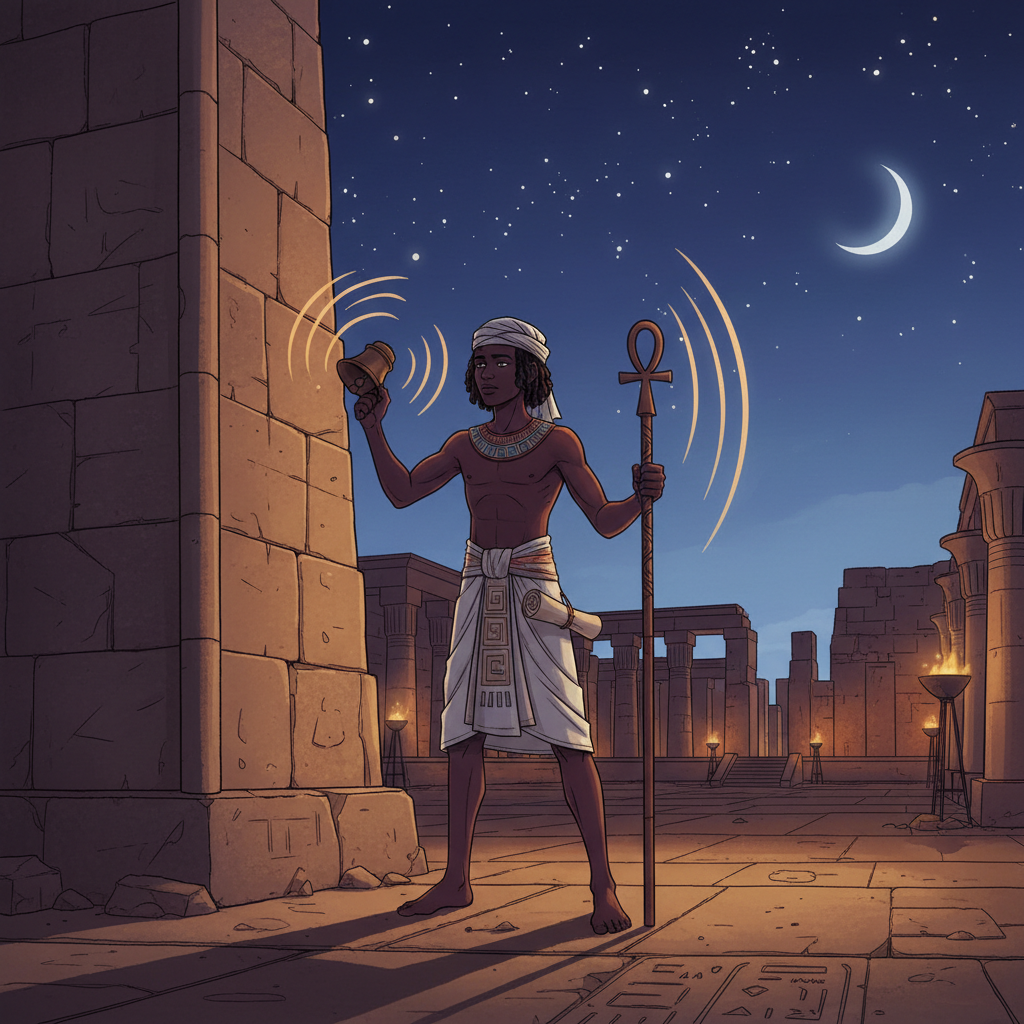
That night, Seti was back on the rotation. Same bell. Same staff. Same four corners of the southern pylon. Same long hours between the ringing when nothing happened and the silence had to be kept. His feet still hurt. His face still went unseen by anyone but the stars. To a stranger walking past, nothing about Seti would have looked different. He was still a sixteen-year-old trainee of slight build in a plain kilt, carrying a bronze bell through a Kemetic night. But inside, something had quietly moved. The doubt was gone. The line on his folded papyrus did not need to be read anymore. He knew it. It had been tested. The bell rang at the first corner. Seti's feet carried him toward the second. His heart was no longer uncertain.
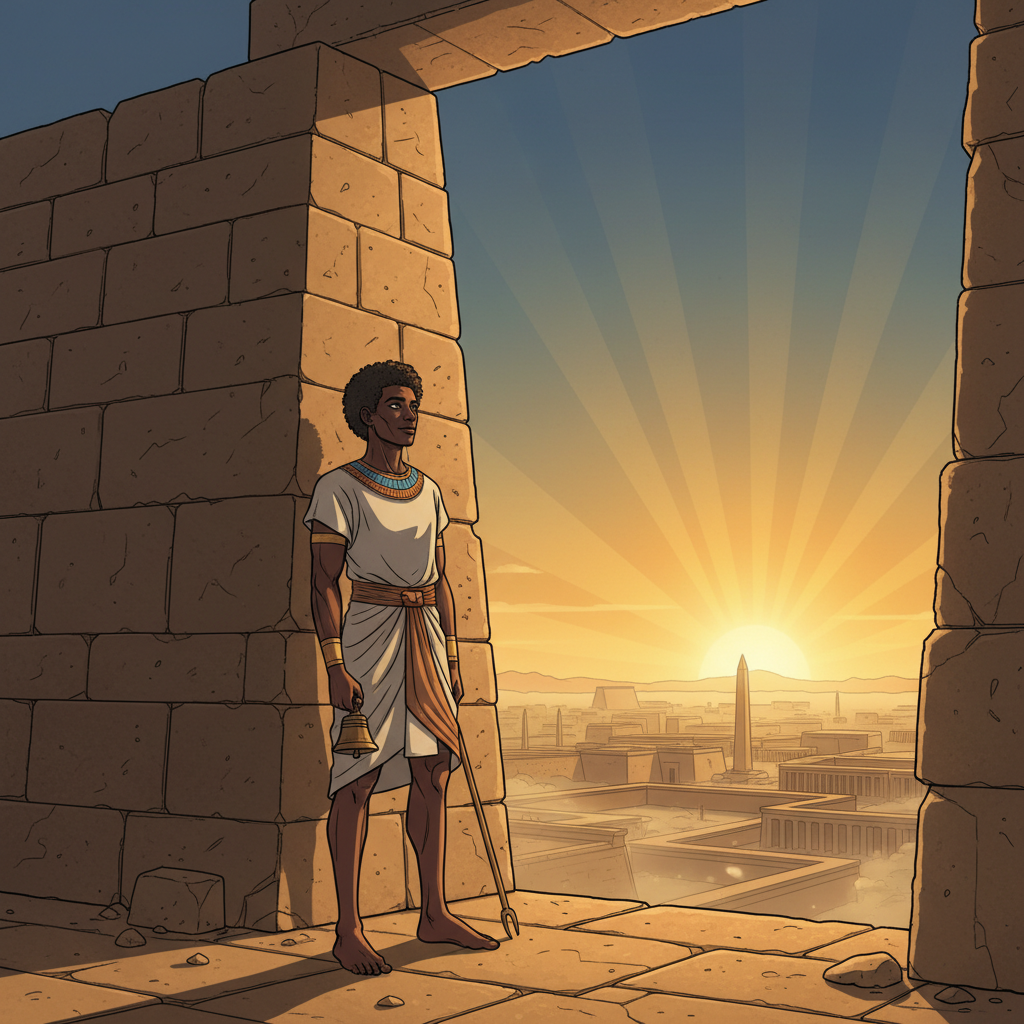
Dawn rose slow behind the unfinished pylon. The sun lifted over Karnak the way it had lifted since the first pharaoh laid the first stone, the way it would lift over Waset and over Kemet long after Seti was forgotten. Seti stood at the fourth corner with the bell at his side and watched the light climb the uncarved faces of the stone. He was not thinking of his brother anymore. He was not thinking about being invisible. He understood, as clearly as he had ever understood anything, the shape of the virtue his mother had been trying to teach him all these years. Propriety. The virtue that looks like nothing and is everything. The thing you do inside the silence when the bell is only for you. He rang the bell one last time. Maat heard him.