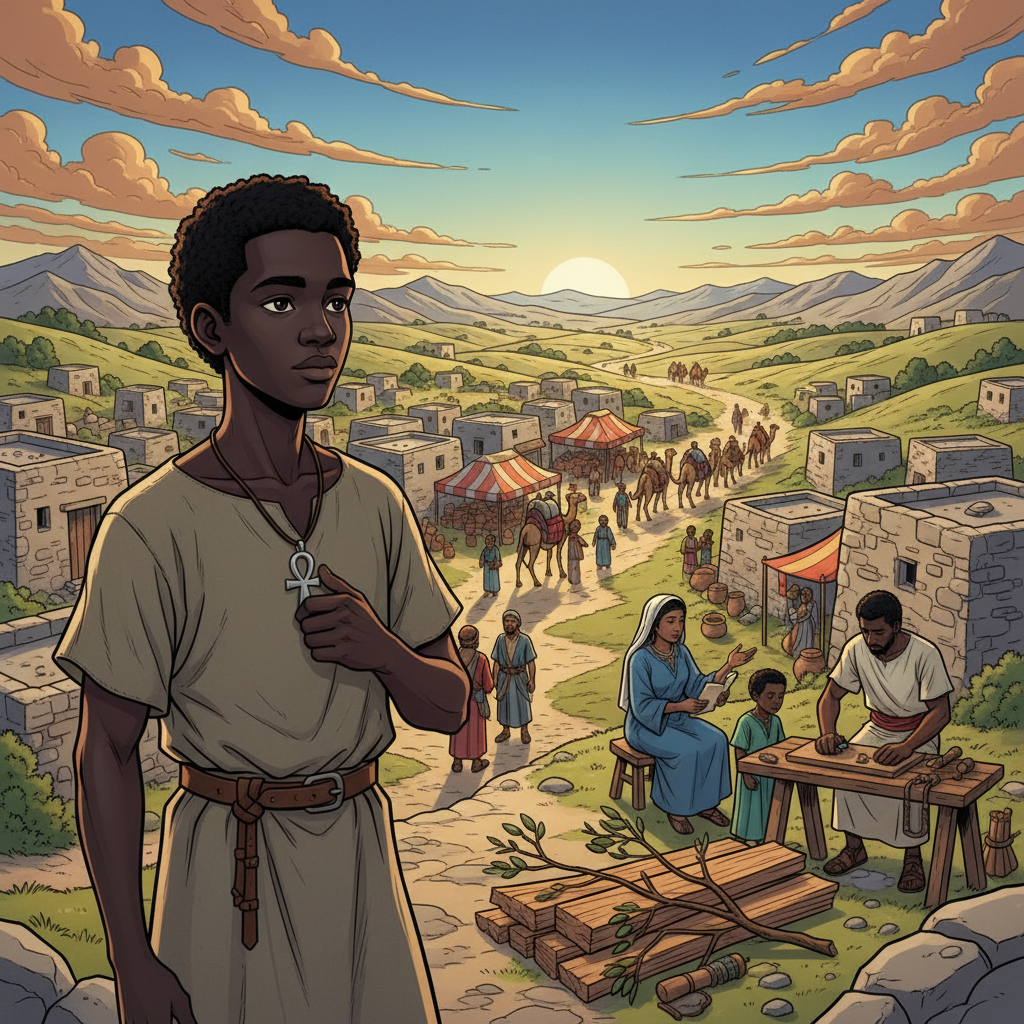
Five years had passed since Yeshua walked home from Kemet. He was eleven now, tall for his age, with hands that had learned his father's trade. Each morning Yosef taught him to shape cedar and olive wood. Each evening Miriam taught him the Psalms and the old stories of their people. But Yeshua carried something else. The silver ankh from Seba Setka hung on a leather cord beneath his tunic. When he touched it, he remembered the Nile, the great stone lions of Waset, and the words that had become his compass: Maat above all things. Nazareth was a small village. The hills rolled green in spring and baked gold in summer. Traders passed through often, for Galilee sat on the road between On and Damascus. Yeshua watched them come, watched them go, and listened to every tongue they spoke.
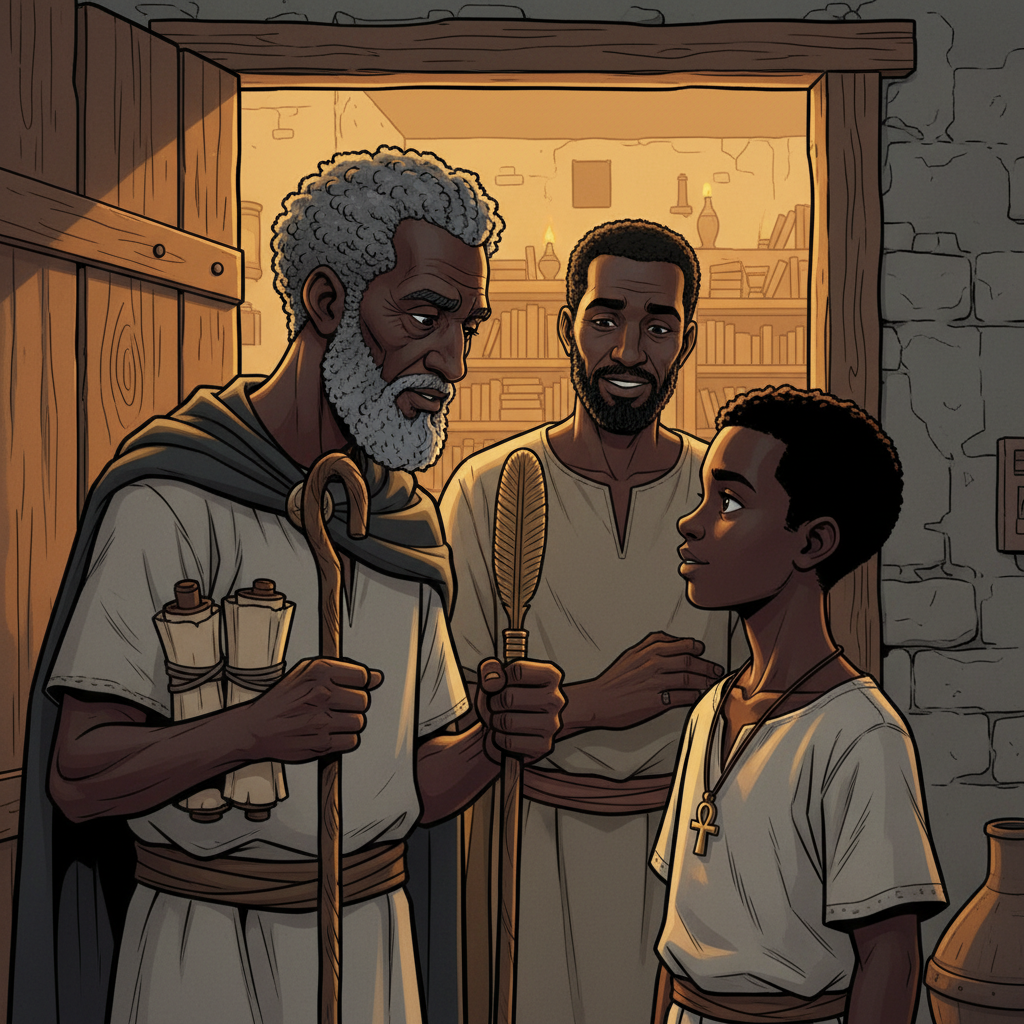
One evening a traveler arrived at their door. He was old and Afro-Asiatic, his beard streaked with silver, his skin the deep brown of riverbank clay. He carried scrolls wrapped in linen and a staff carved with the feather of Maat. "I am Seba Benu," he told Yosef. "I teach at the house of learning in the next valley. I was trained at On, what the Greeks now call Heliopolis. Word has reached me that your son studied in Kemet as a small child. I would like to meet him." Yeshua stepped forward. Seba Benu looked at him a long time, then at the leather cord that held the ankh beneath his tunic. The old teacher smiled. "The Per Ankh has already touched this boy," he said quietly. "Let me help finish what was begun."
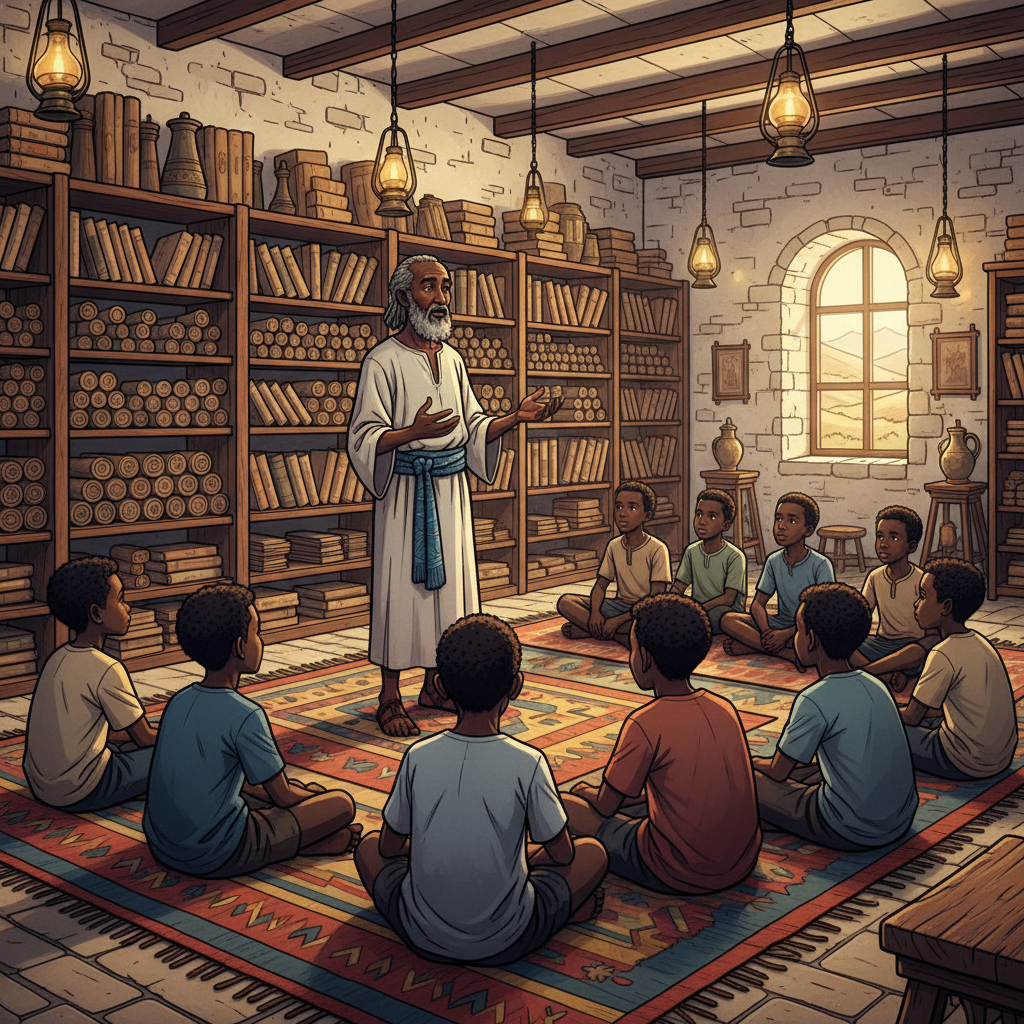
The house of learning sat on a low hill outside Nazareth. It was not grand. It was a long room of whitewashed stone with mats on the floor, lamps of olive oil, and shelves lined with scrolls. Twelve students met there each morning before the sun grew hot. Seba Benu taught what the mystery schools of Kemet had taught for thousands of years. He taught the Maxims of Ptahhotep, the wisdom of Imhotep, and the forty-two Negative Confessions that named the ways a person could stay in Maat. "You are not here to become clever," he told the students on the first day. "You are here to become balanced. Learning without Maat is a sword in the hand of a child. It cuts the one who holds it." Yeshua sat on the floor and listened. His heart was quiet and wide open.

The other students were the sons of traders and farmers and a few Nubian scholars who had settled in Galilee after leaving Meroe. They ranged from ten to fourteen years old. Most were kind. One was not. His name was Shimon. He was thirteen, sharp-eyed, with a quick tongue. His father was wealthy, and Shimon believed he had been born to shine. He answered every question before anyone else could breathe. He quoted Ptahhotep as if the old sage had written the Maxims only for him. On the fourth day, Seba Benu asked, "What does it mean to speak truly?" Shimon's hand shot up. "To never tell a lie, teacher." Seba Benu nodded slowly. "That is part of it. Yeshua, what do you say?" Yeshua thought for a long breath. Shimon stared at him, already smirking.
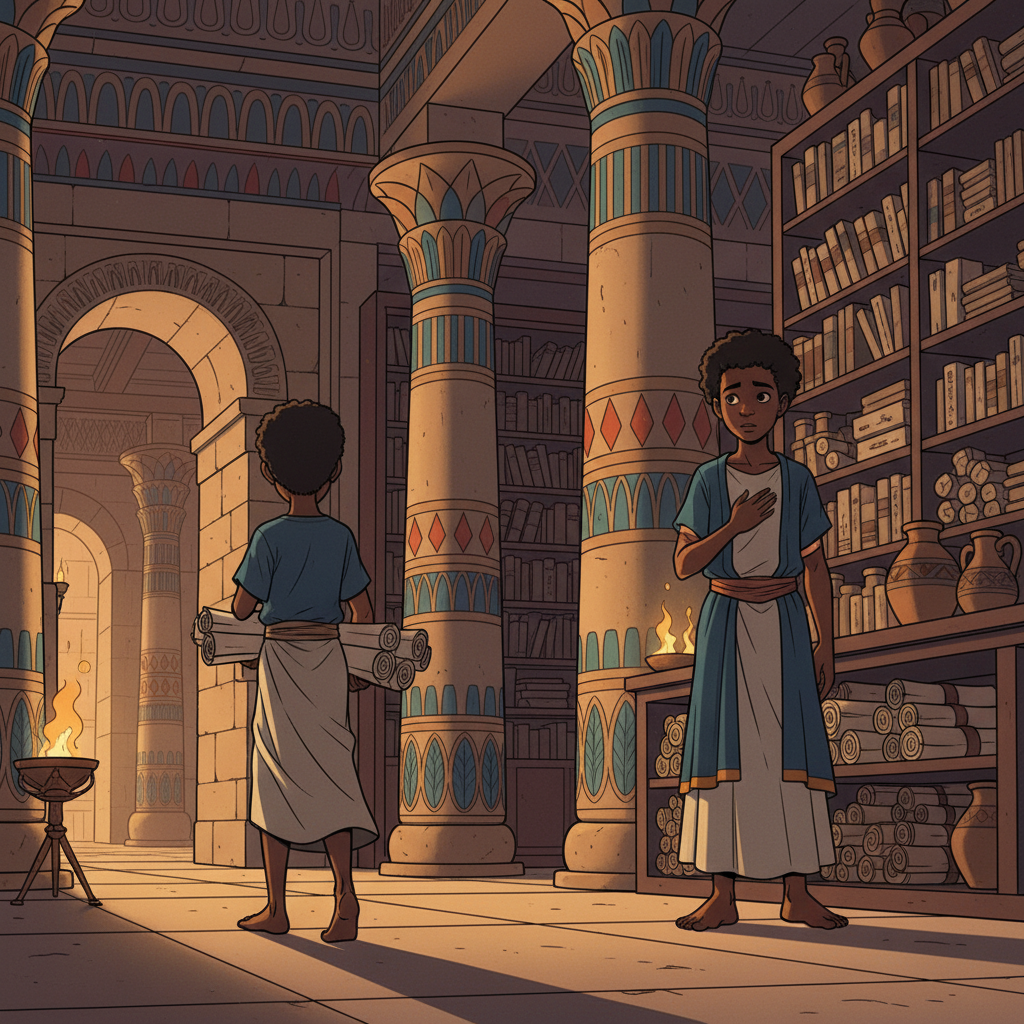
"To speak truly," Yeshua said softly, "is to say only what keeps the other person's ka steady. A true word can still wound, if it is thrown without love. Ptahhotep taught that the tongue is a rudder. It must steer, not stab." The room was silent. Seba Benu closed his eyes for a moment, as if he were tasting something good. "Yes," the old teacher said. "That is the deeper teaching." Shimon's smirk was gone. His cheeks burned. He had given the correct answer from the book. Yeshua had given the answer from Maat. And Shimon knew, for the first time, that there was a difference. After the lesson, Shimon did not speak to Yeshua. He gathered his scrolls quickly and walked home alone. Yeshua watched him go and felt a small, uneasy weight settle in his chest.
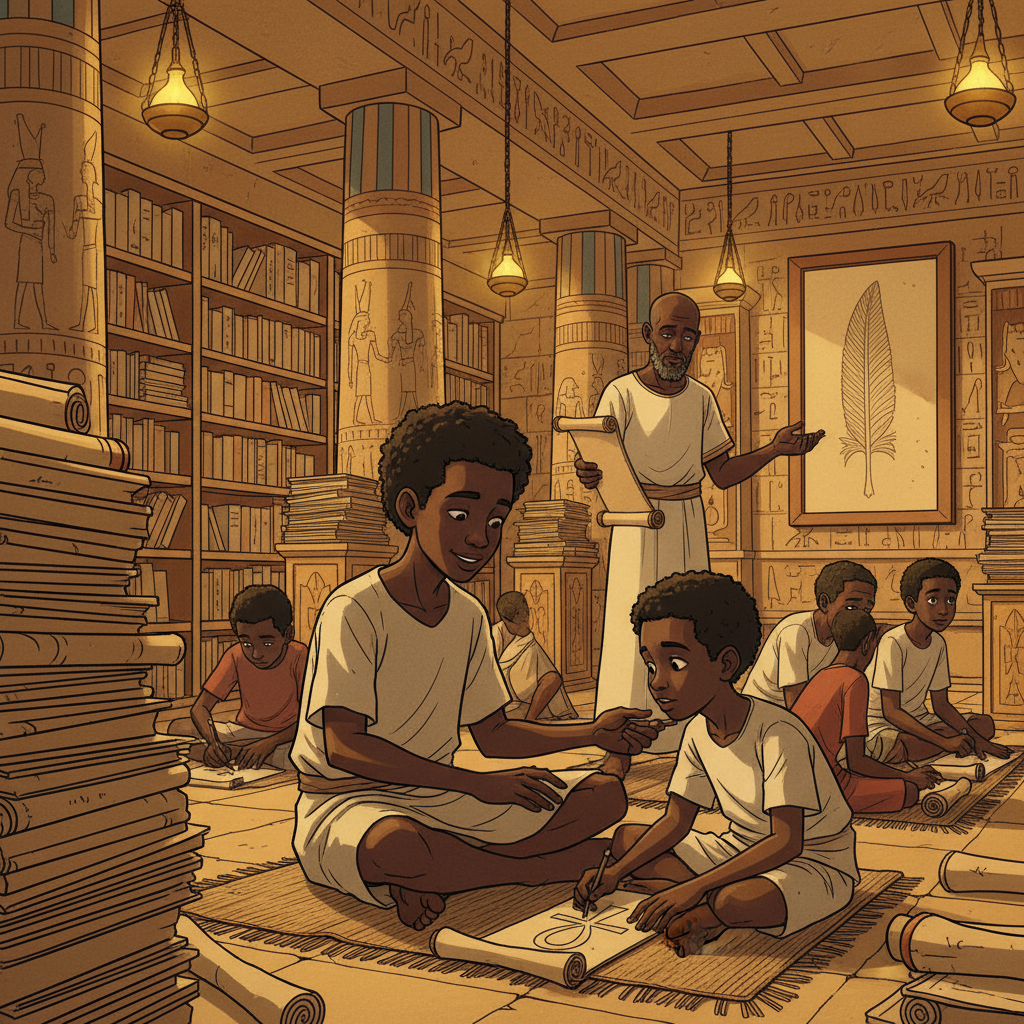
Weeks became months. Yeshua walked the two miles to the house of learning each morning and home again each evening. Seba Benu taught the students to write in three scripts: Aramaic for daily life, Hebrew for the scriptures, and the old hieroglyphs of Kemet for the deepest wisdom. "The picture-writing of Kemet is not dead," Seba Benu said. "It is sleeping in us. When you draw the ankh, you are drawing life itself. When you draw the feather of Maat, you are drawing the weight of a truthful heart." Yeshua learned quickly. His hand was steady. His memory was long. But he did not boast, and when other students struggled, he sat beside them and drew the shapes slowly, again and again, until their hands remembered too. Shimon watched this from across the room and could not understand it.
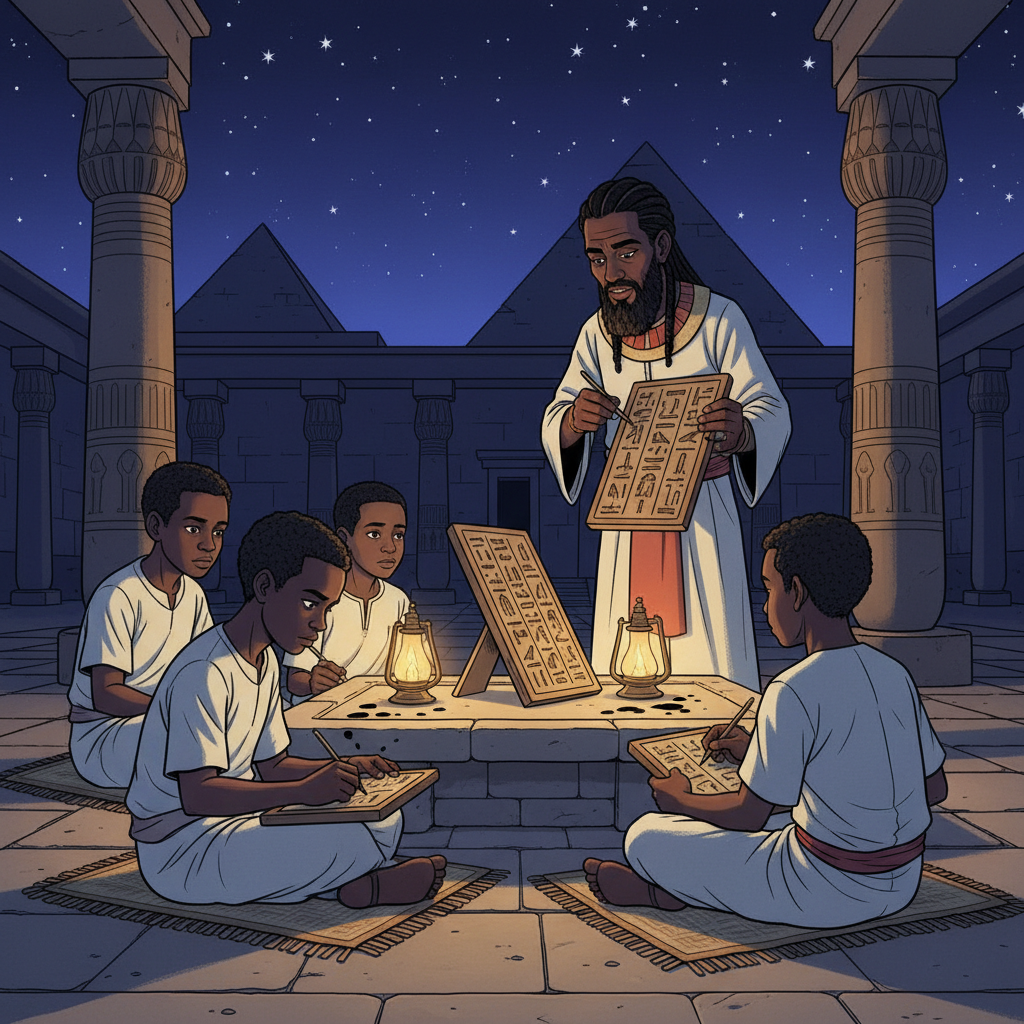
One afternoon Seba Benu gave the students a test. He wrote twenty questions on a wooden tablet and told them to answer in silence. The best paper would earn the honor of reading aloud at the next gathering of elders. Shimon wrote furiously. He finished first and sat back, proud. Yeshua took his time. When Seba Benu read the papers that night by lamplight, he saw that both boys had answered every question correctly. But Yeshua had done something more. Beside each answer, he had written a small note explaining how the teaching kept a person in Maat. He had not been asked to. He simply could not separate knowing from living. The next morning, Seba Benu named Yeshua to read at the gathering. Shimon's face turned to stone. He did not cry. He did not argue. He simply went very cold.
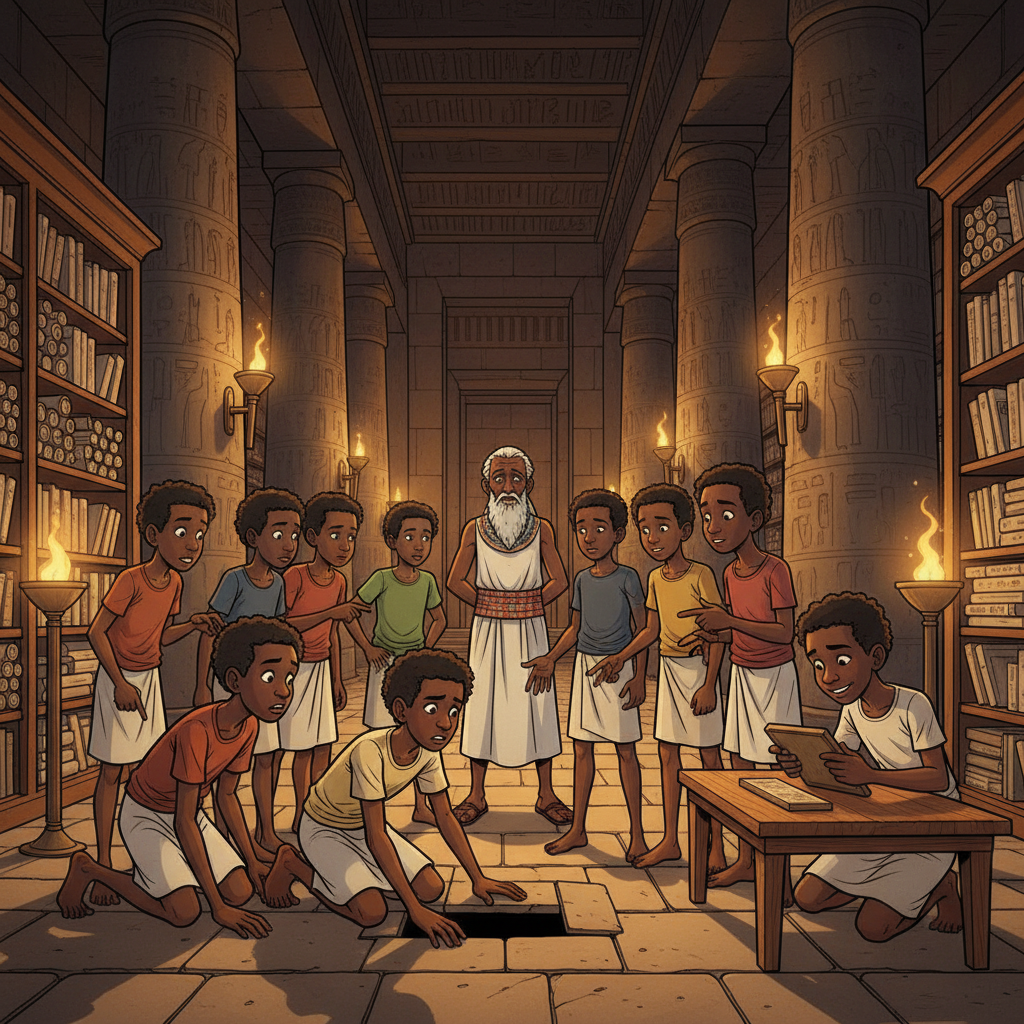
That night, Shimon did something small and ugly. He slipped into the house of learning after dark and took Yeshua's scroll of practice writing, the one with the careful hieroglyphs. He hid it beneath a loose floor stone near the door. In the morning, when Seba Benu asked for the scrolls, Yeshua could not find his. He searched everywhere. His face grew hot with confusion. Some students whispered that he had lost it out of carelessness. Shimon kept his eyes on his own tablet and said nothing. Seba Benu watched the whole scene. The old teacher had seen many boys in many years. He knew the shape of envy when it walked into a room. But he did not name the thief. He waited. "Yeshua," he said gently. "Sit down. We will find it when the hour is right."
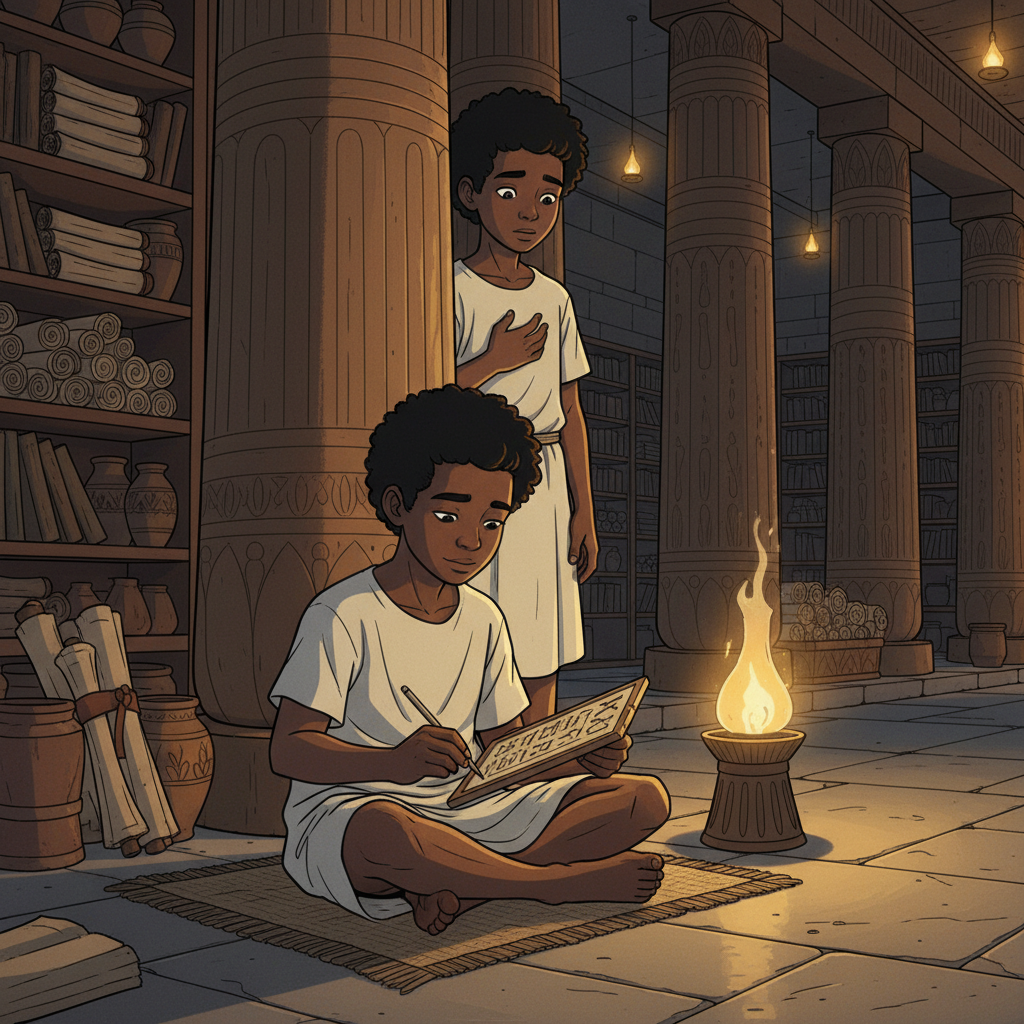
For three days the scroll stayed hidden. Yeshua did not accuse anyone. He rewrote his work from memory, slowly, without complaint. Shimon watched him do it and felt something crack open inside his own chest. On the fourth morning, Shimon arrived before anyone else. He lifted the floor stone, took out the scroll, and laid it on Seba Benu's mat. Then he sat and waited, trembling. When Seba Benu came in and saw the scroll, he looked at Shimon for a long moment. He did not shout. He did not summon the other students to shame him. "You have returned it yourself," the teacher said. "That is Maat waking inside you. Sit with me today. We will read together." Shimon wept without sound. Yeshua came in, saw the scroll returned, and said nothing. He only smiled at Shimon. Nothing more was needed.
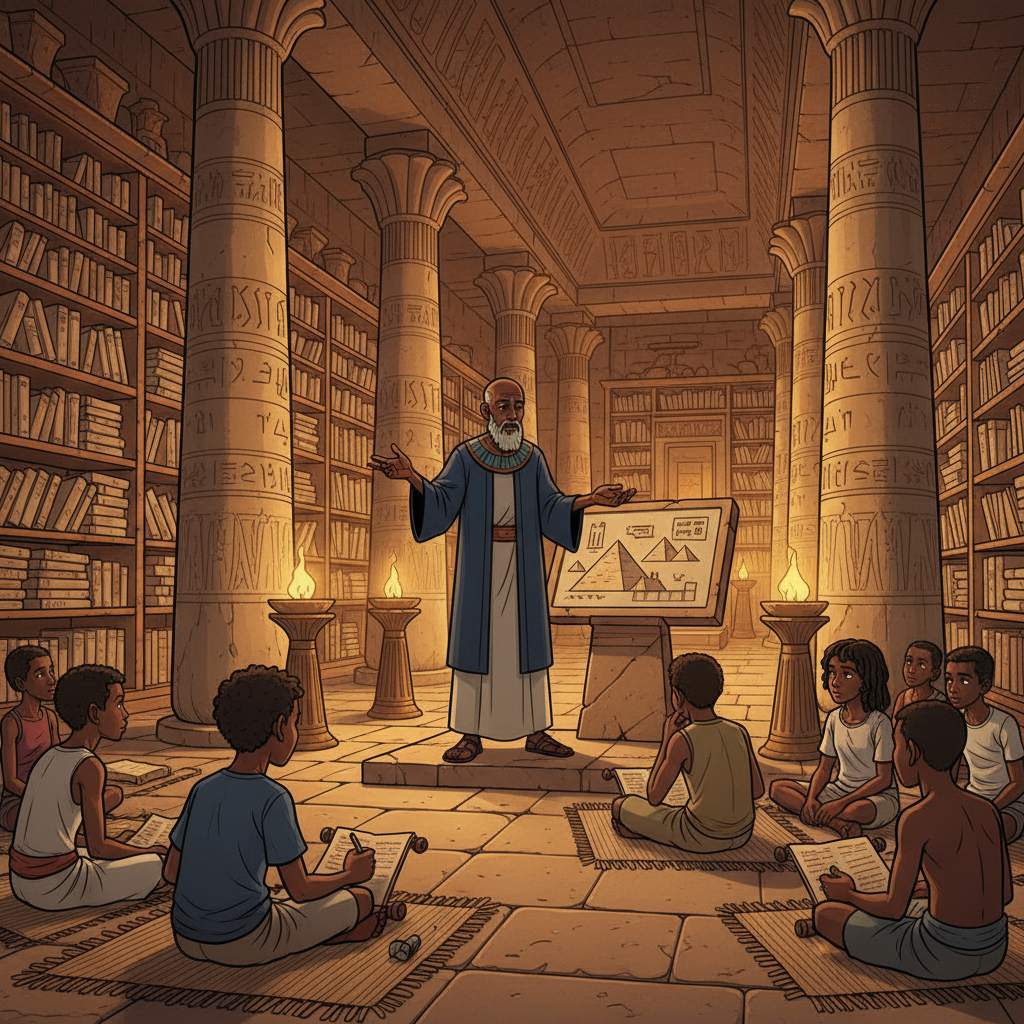
From that day, Shimon changed. Not all at once. Pride does not leave a boy the way a guest leaves a house. It leaves the way winter leaves a hill, slowly, in patches. But Shimon began to ask questions instead of shouting answers. He began to sit with the younger students. He began to listen. Seba Benu taught the class the writings of Imhotep, the great healer and architect of Kemet who had lived thousands of years before. "Imhotep built the first stone temple," the old teacher said. "But more than stone, he built a way of thinking. He said that wisdom is a fountain that flows only when you bow your head to drink. The proud cannot drink. Their mouths are too high." Yeshua wrote the saying on his own scroll. He would carry those words for the rest of his life.
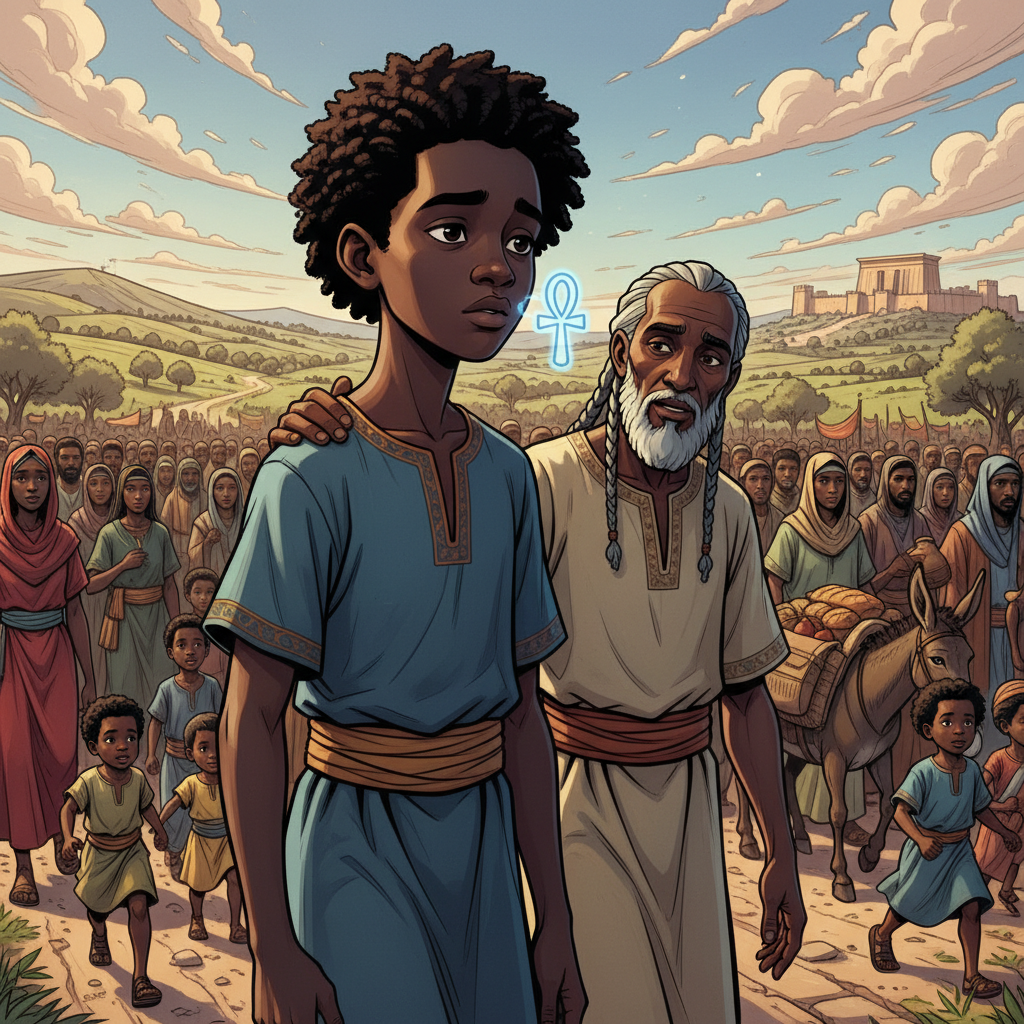
The year passed. Yeshua turned twelve. Miriam noticed he was growing tall like Yosef, and his voice was beginning to deepen. She noticed also that he spoke less and listened more, and that when he did speak, the words came out shaped and careful, as if he had weighed each one on the feather of Maat before letting it go. That spring, the whole family prepared for the long walk to Jerusalem for Passover. It was the custom. Travelers from Galilee joined other travelers from Samaria and from the coast. They walked in large groups for safety. Children ran between the adults. Donkeys carried bundles of bread and dried fish. Yeshua walked beside Seba Benu, who had decided to make the journey with them. The old teacher wanted to visit certain scribes in the Jerusalem temple. He said there were matters he needed to correct.
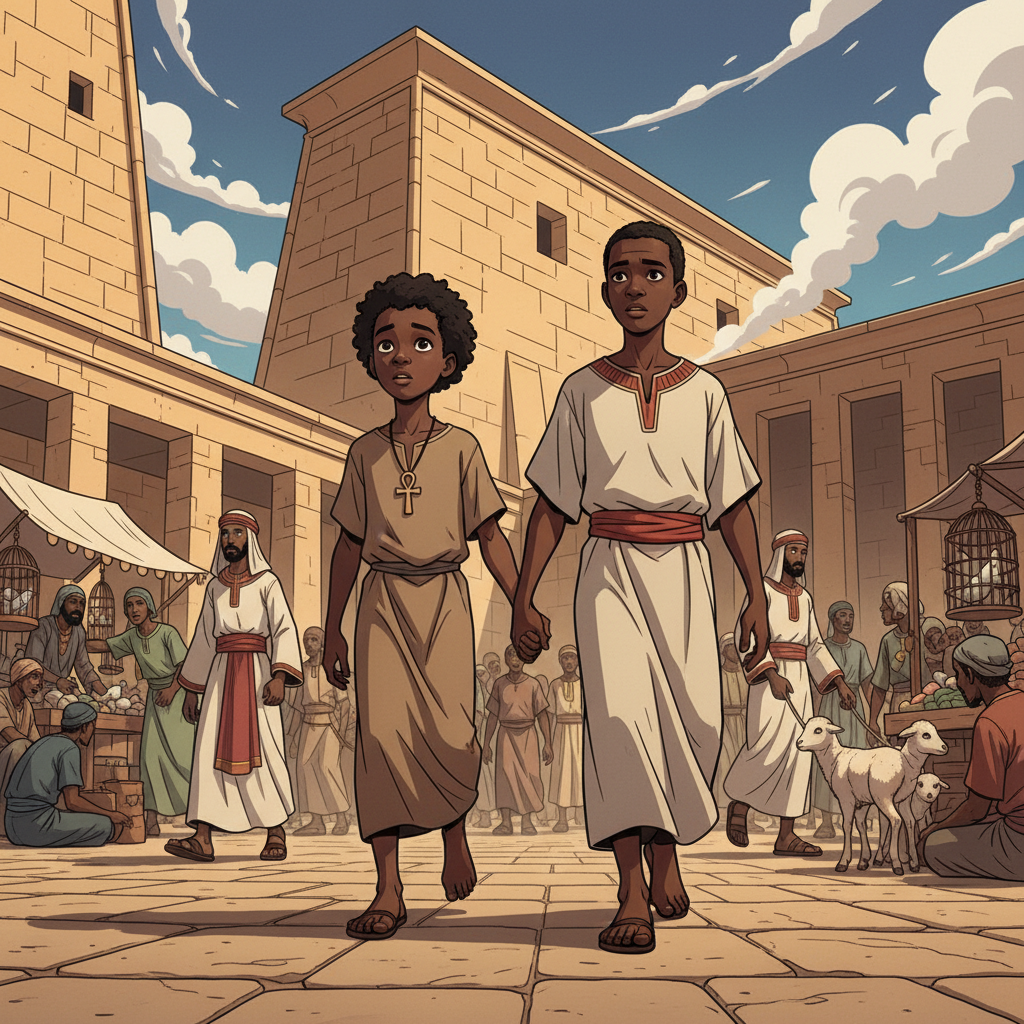
Jerusalem rose up from the hills like a fortress of honey-colored stone. The temple at its heart was huge, the largest building Yeshua had ever seen outside of Kemet. Priests in white moved through its courts. Merchants sold doves and lambs for sacrifice. Smoke from the altars rose into the sky. Yeshua walked with his parents through the outer courts, his ankh hidden beneath his tunic. His eyes were wide but steady. He was remembering the temples of Waset and the Per Ankh where Seba Setka had first taught him. This place was grand, but something in it felt off-balance. The buyers and sellers shouted. The priests hurried past the poor without looking. "Miriam," he said quietly, "this house has forgotten something." Miriam squeezed his hand. "Then listen carefully, my son. And do not speak until you understand."
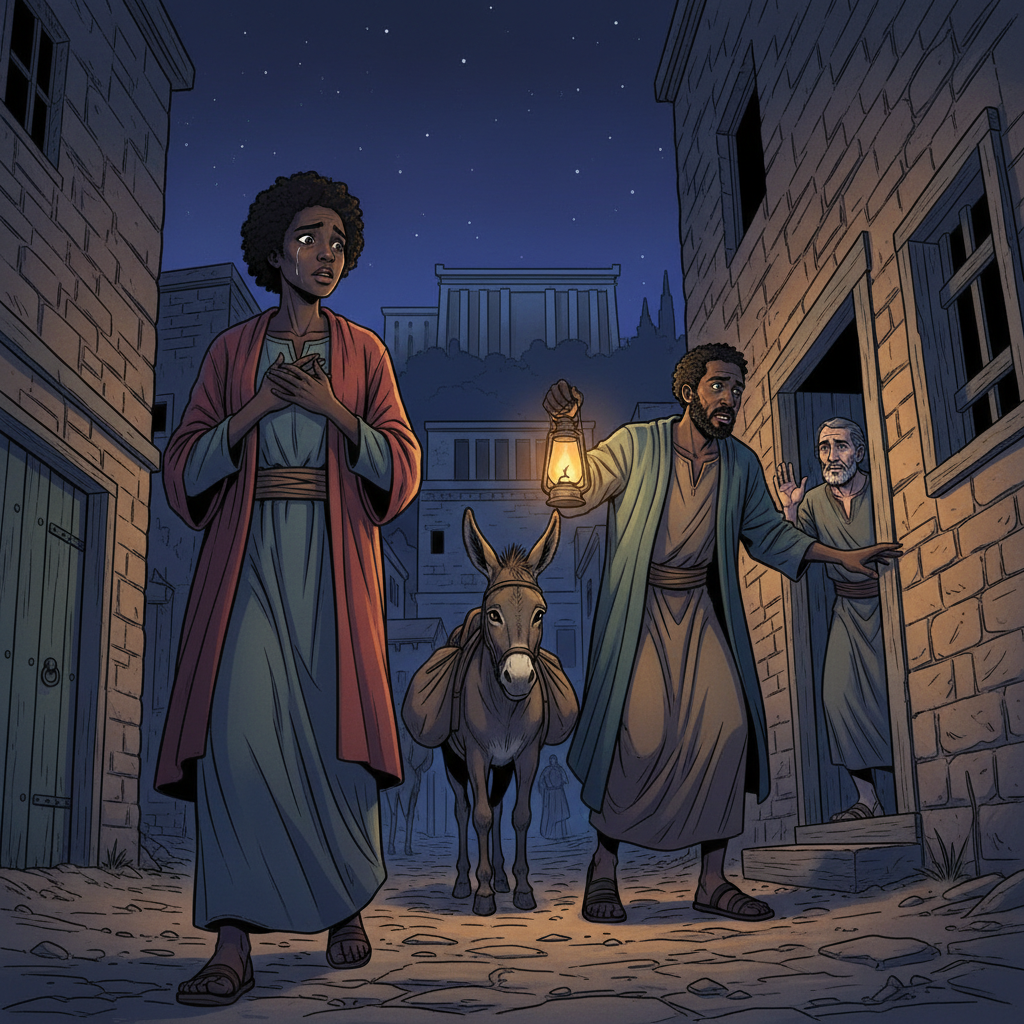
On the third day of the festival, Miriam and Yosef began the long walk home with the caravan. They assumed Yeshua was walking with cousins. By nightfall, when the caravan stopped to camp, they could not find him. Miriam's heart seized. Yosef turned the donkey around without a word. They walked back to Jerusalem through the dark, a full day's journey, asking at every inn. For three days they searched the city. On the third day, they came to the temple court where the great scribes taught. A crowd had gathered. In the center of the crowd, sitting on the stone floor, was their son. He was twelve years old. His ankh was no longer hidden. It rested on his tunic in plain sight. And the scribes, the learned men of Jerusalem, were leaning forward to listen to him.
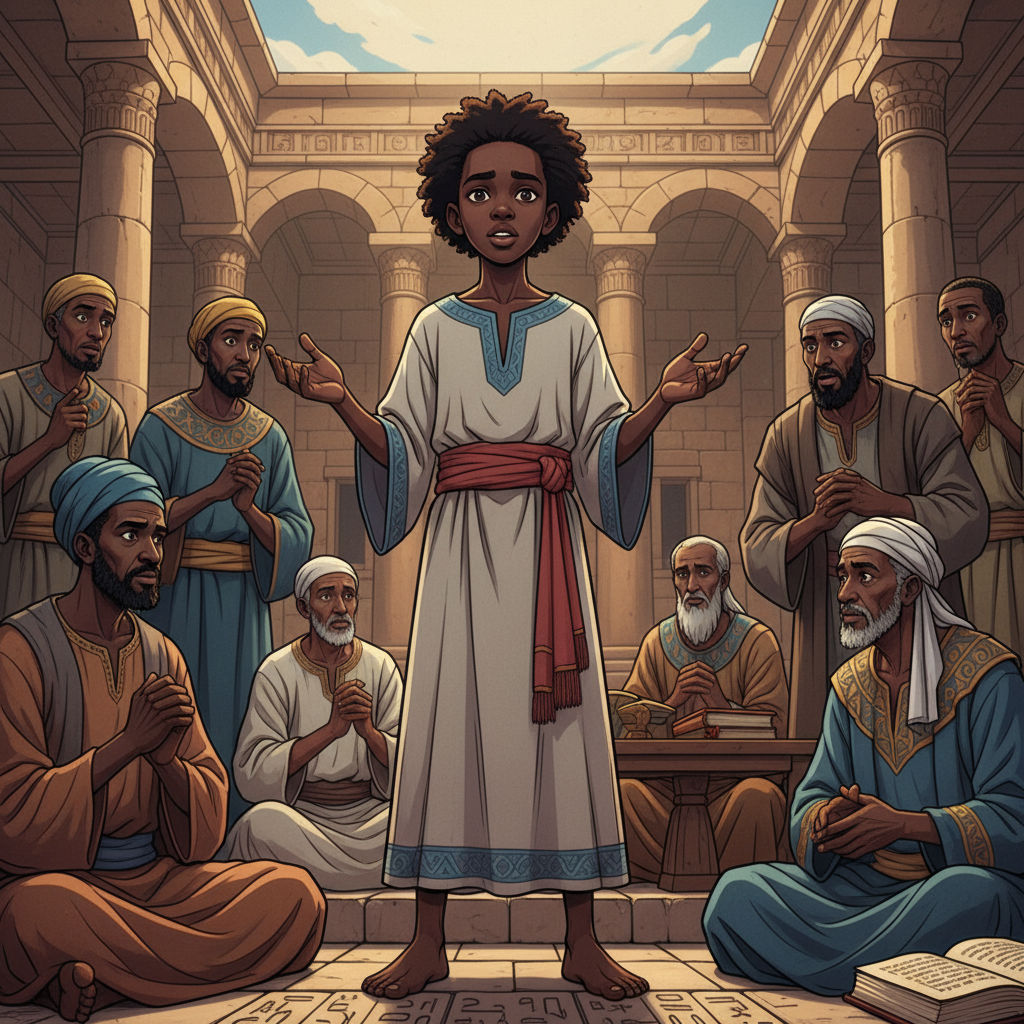
Yeshua was not showing off. He was asking questions. But his questions were so precise that they were turning the scribes' own answers inside out. He was asking, "If the Most High is One, as our fathers taught, is this One not the same One the Kemetic sages called the hidden Amun, the unseen Yah? Did not Ptahhotep teach that a ruler is weighed by Maat, not by gold? Why then do we weigh our neighbors by their purses?" One old scribe, gentler than the rest, said, "Boy, where did you learn these things?" Yeshua answered, "I was taught in Kemet when I was small. I am taught now by Seba Benu, who was trained at On. But the teaching does not belong to them. It belongs to the House of Life, which is the temple of my Father, the hidden One." The scribes were silent.
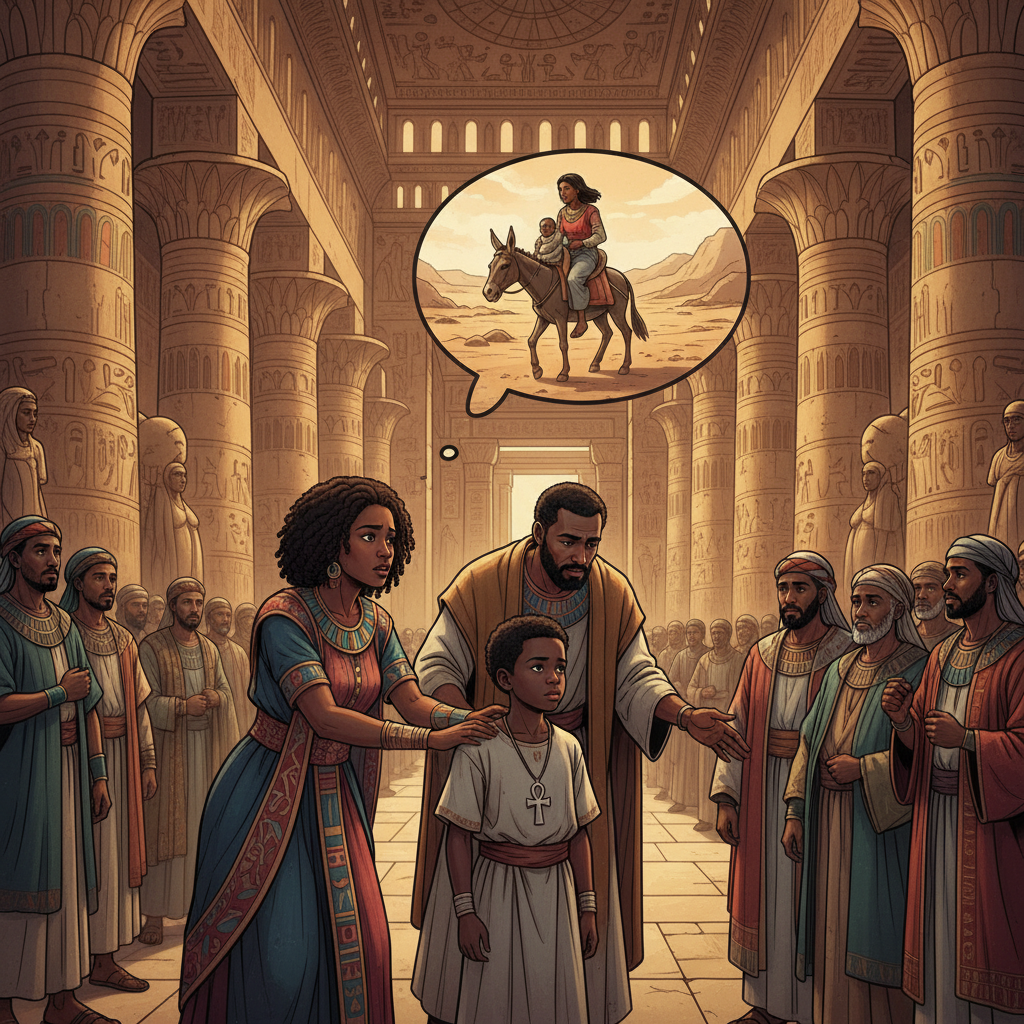
Miriam pushed through the crowd. "Yeshua! My son! Why have you treated us this way? Your father and I have been searching for you in sorrow." Yeshua rose. He was not ashamed, but he bowed his head in respect. "Mother," he said, "did you not know I would be about the House of Life of my Father? This temple is not the House of Life yet. It has drifted from Maat. I had to ask the questions so that those who could hear them might begin to remember." Miriam did not understand every word. But she had carried this boy from Kemet on a donkey when he was small. She had watched Seba Setka place the silver ankh around his neck. She understood enough. She took his hand. Yosef placed a hand on his shoulder. Together they walked out of the temple, into the light.
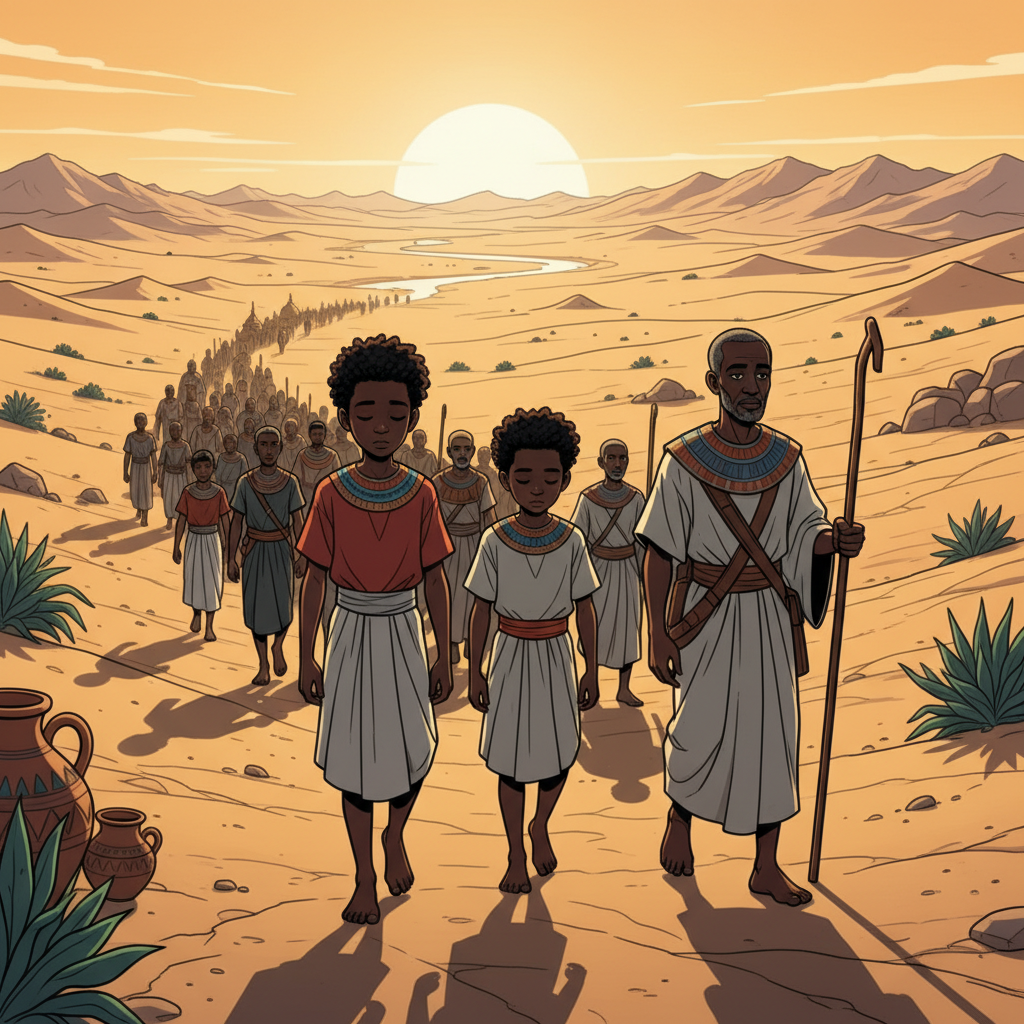
The journey back to Nazareth was slow. Yeshua walked between his parents and said little. Seba Benu joined them outside the city gates. The old teacher had heard what happened in the temple court. He walked in silence for a long while before he spoke. "You did not shame them, Yeshua," Seba Benu said at last. "You corrected them. There is a great difference. A boy who shames his elders makes enemies. A boy who corrects them with Maat makes a seed. Some of those scribes will remember today for the rest of their lives. One or two may even change." Yeshua looked up at his teacher. "Was I wrong to speak, Seba?" "No, my son. You were right to speak. But remember this. Learning is a sharp blade. Use it only to clear the path, never to cut the traveler."
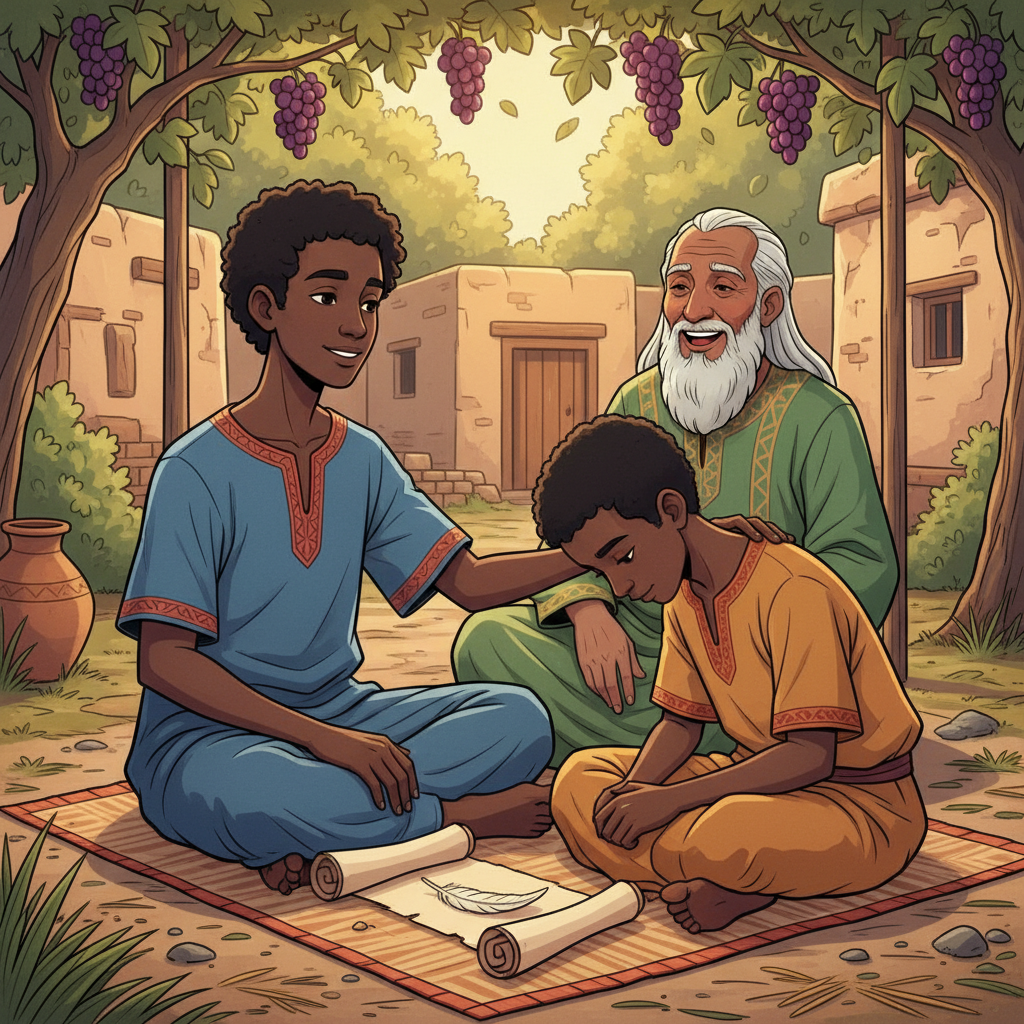
They reached Nazareth in the days before the summer heat. Yeshua went back to his father's workshop in the mornings and to Seba Benu's house of learning in the afternoons. He was quieter than before, and somehow larger. Shimon was waiting at the learning house on the first day back. He had heard the story from other travelers. He walked up to Yeshua and bowed his head, just a little. "Teach me," Shimon said. "I was proud. You were wise. I want to learn the way you learn." Yeshua put a hand on Shimon's shoulder. "We will learn together. Seba Benu is our teacher. I am only a student, like you." And so they sat down on the same mat. Two boys, two scrolls, one feather of Maat resting quietly between them. And the old teacher watched, and was glad.