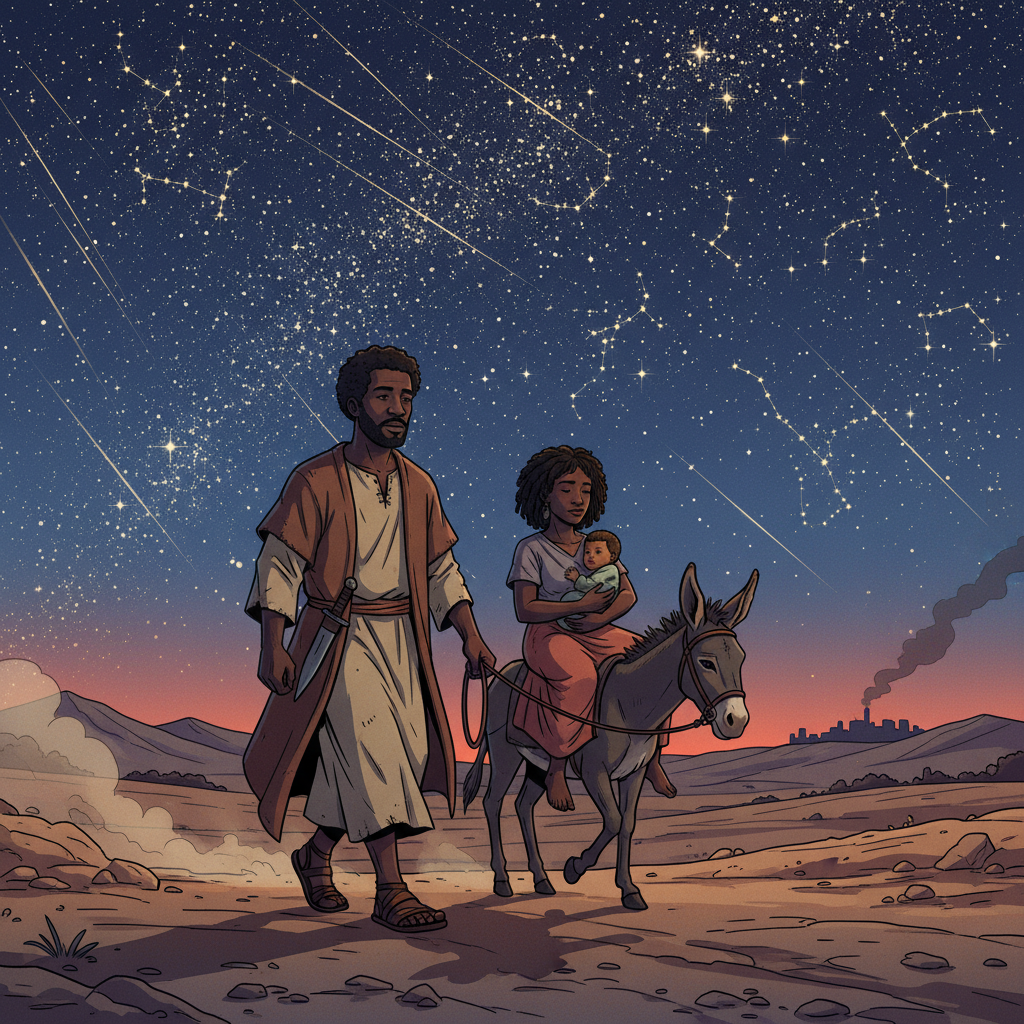
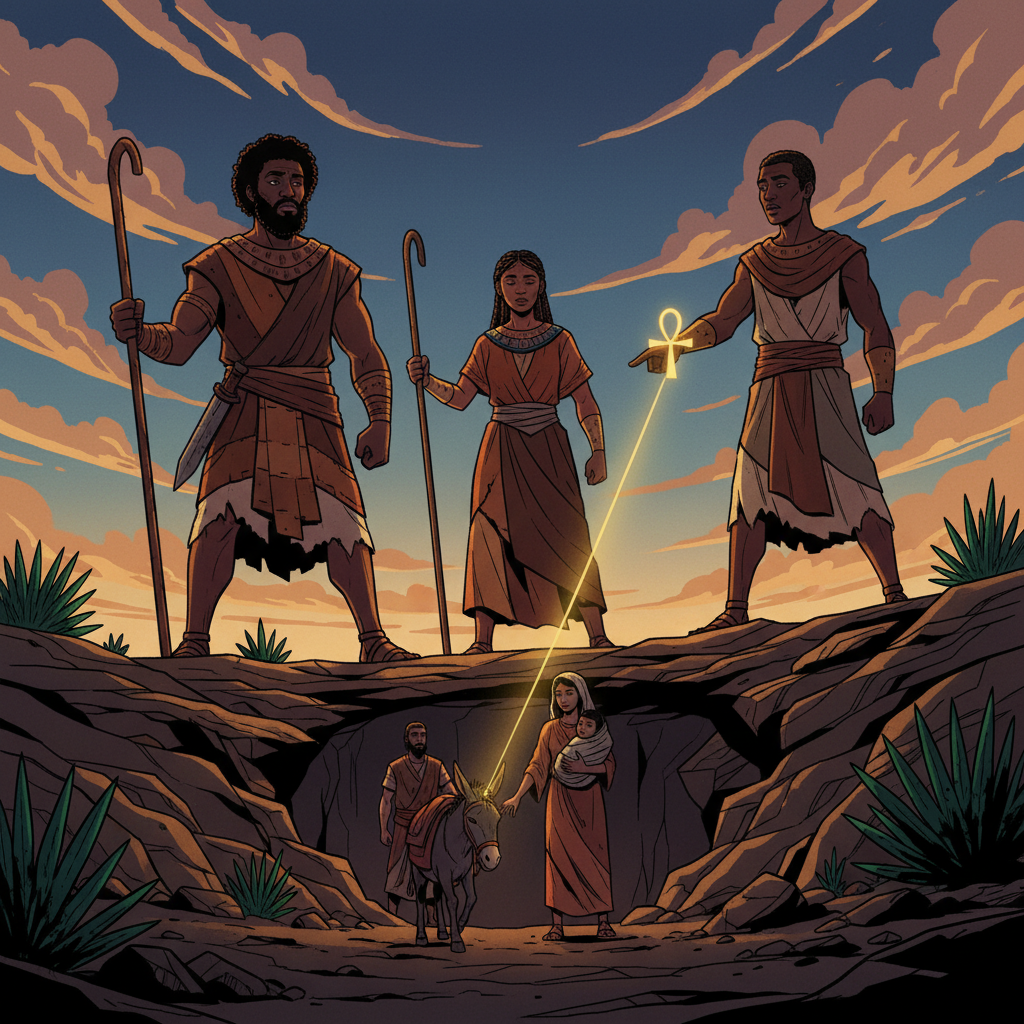
The night they fled Bethlehem, the stars above the Judean hills burned so bright they seemed to watch the family run. Yosef the carpenter walked first, leading the small grey donkey. His robe was patched, his sandals worn, and the knife at his belt was a short tool, not a soldier's blade. On the donkey sat Miriam, her dark arms wrapped around their baby boy. The child was only a few months old. His skin was the colour of warm clay, and his small fist was closed tight against his mother's chest. Behind them, Bethlehem was silent except for distant weeping. Herod the king, mad with fear, had sent soldiers that night to kill every boy under two years old. Yosef did not look back. He had been warned in a dream. The dream had spoken one word: Kemet.
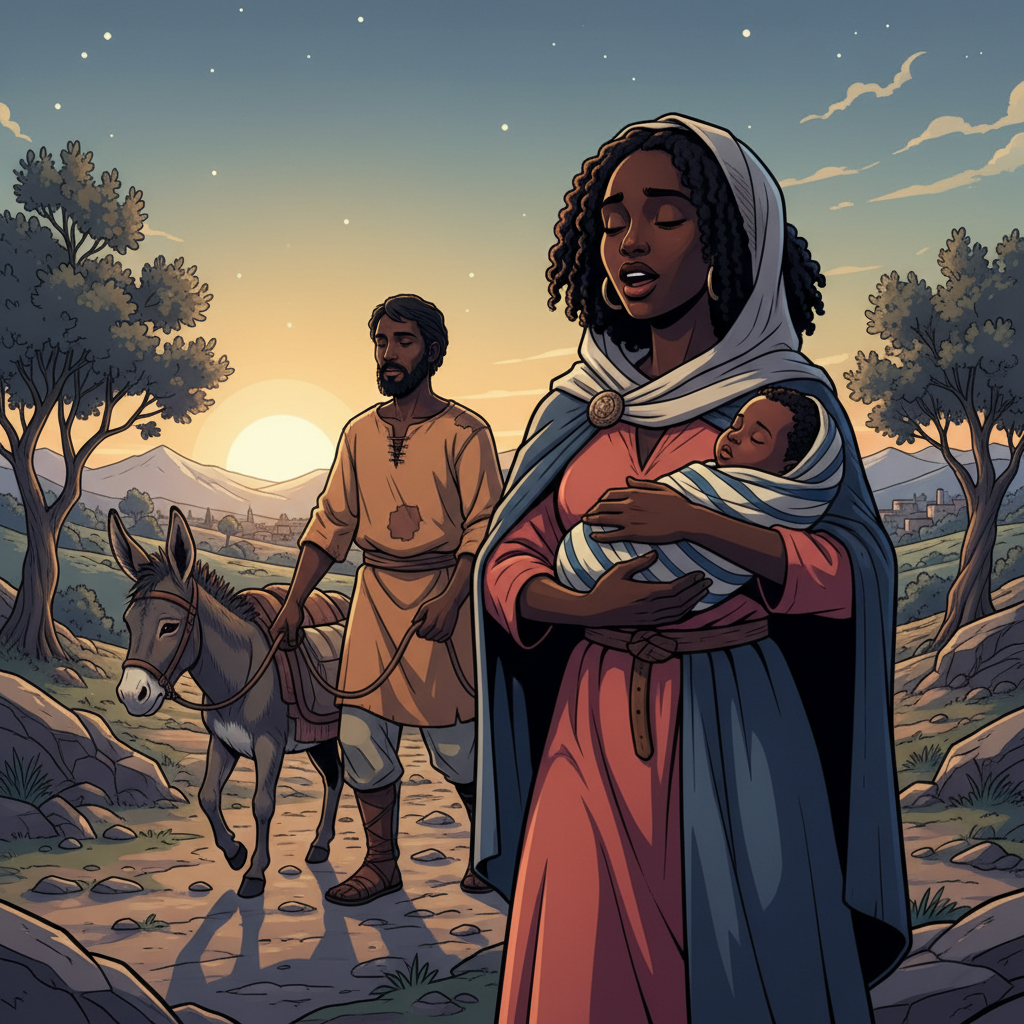
His wife Miriam was strong. Her skin was deep brown like the olive wood of her father's cart, and her eyes held the steady light of a woman who had already faced many hard roads. She sang softly to the baby as they walked, songs from her grandmother — old songs that spoke of Yah and of Maat, of the God of Heaven and of the sacred balance that held the world together. Her people were Galileans, which meant they were close kin to the dark-skinned folk of the south, those who still spoke of the great houses of Kemet as if of close relatives. The baby in her arms was named Yeshua, which meant "Yah saves." In later years, strangers would twist his name into Jesus, but that was not what his mother called him. His mother called him Yeshua, and she sang to him in the tongue her people had carried out of the hills.
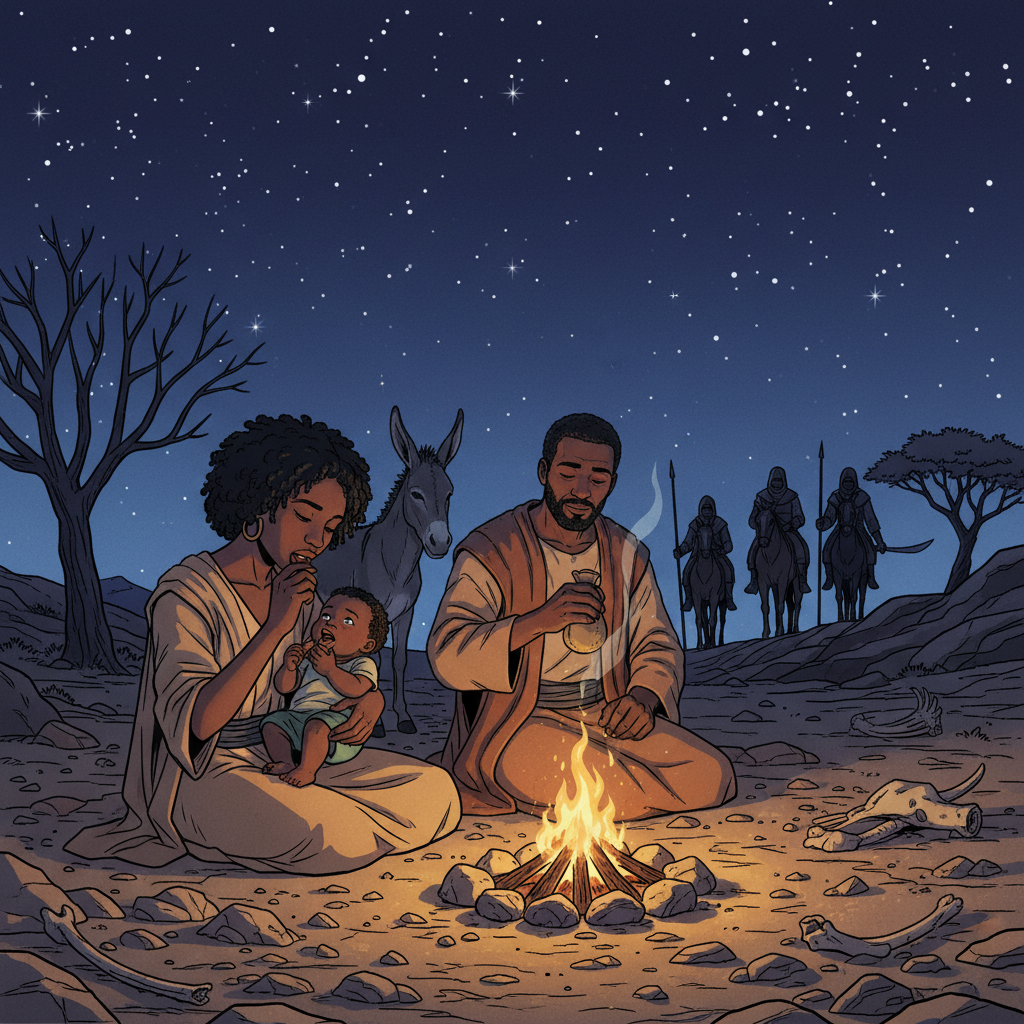
For many days they crossed the wilderness of the Negev, and the wilderness had no mercy. The sun burned by day. The wind cut by night. They drank from small leather skins of brackish water, and Miriam chewed dates and spat the warm pulp into the baby's mouth so he would swallow. Once a band of raiders watched them from a ridge, but something — perhaps the patience in Yosef's face, perhaps the baby's soft cry on the wind — turned the raiders away. Maat walks with the poor, Miriam thought, and she pressed her son closer. They saw no cities, only stones and thin acacia trees and the bones of long-dead goats. Yosef whispered to the donkey and fed him the last of the grain. At night they slept beneath the stars, a family of three under a sky that did not sleep.
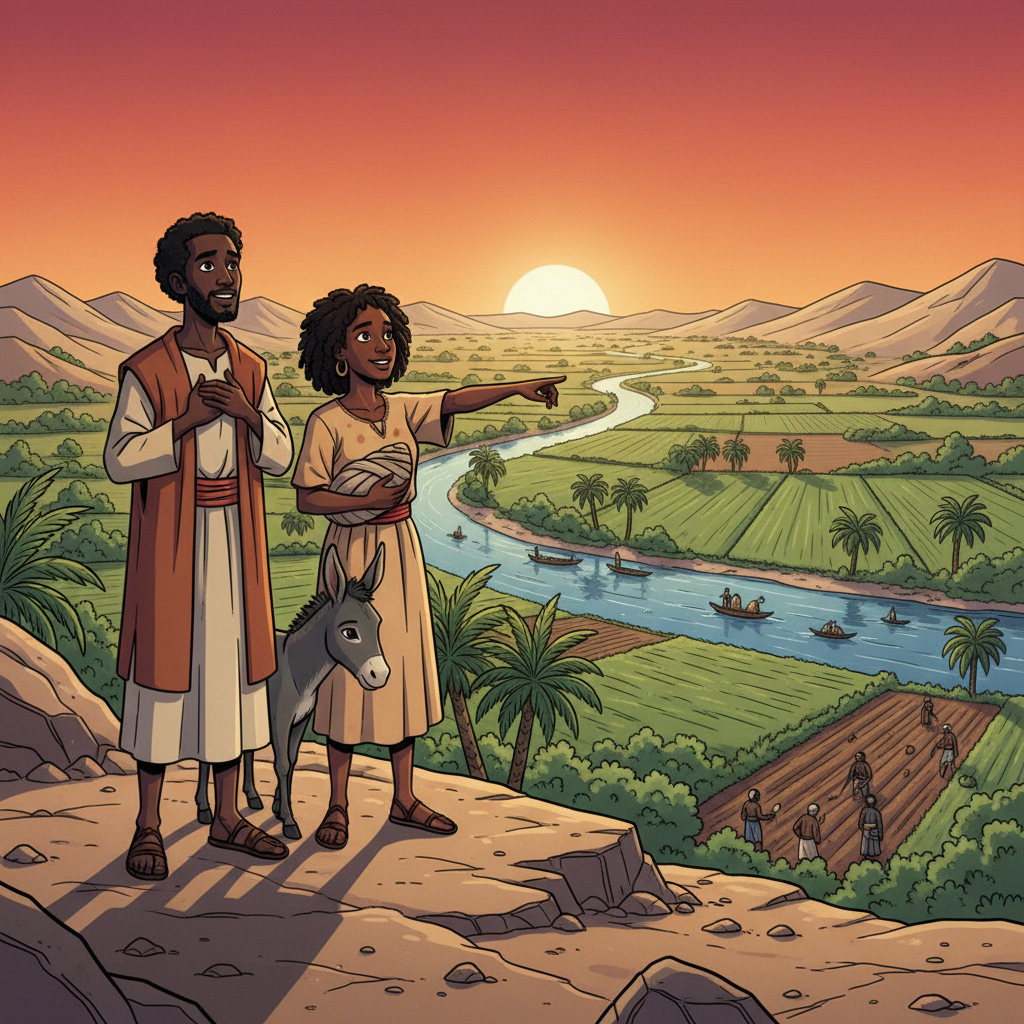
On the morning of the tenth day, they reached a low ridge and saw what they had been walking toward. The wilderness fell away, and below them stretched a green valley so wide it seemed to hold the whole world. The Nile — mother river, the river that Ethiopians called Hapi and Kushites called Iteru — rolled northward, slow and enormous, her banks painted with date palms and fields of emerald grain. Small white egrets stood in the shallows like marks of chalk. Fishermen poled their reed boats, and farmers bent over their furrows, their dark backs gleaming. Yosef let out a long breath. He had heard of Kemet all his life. Every prophet of his people had spoken of it — some with fear, some with thanks. Now he saw it with his own eyes, and the land did not look like exile. It looked like home returning.
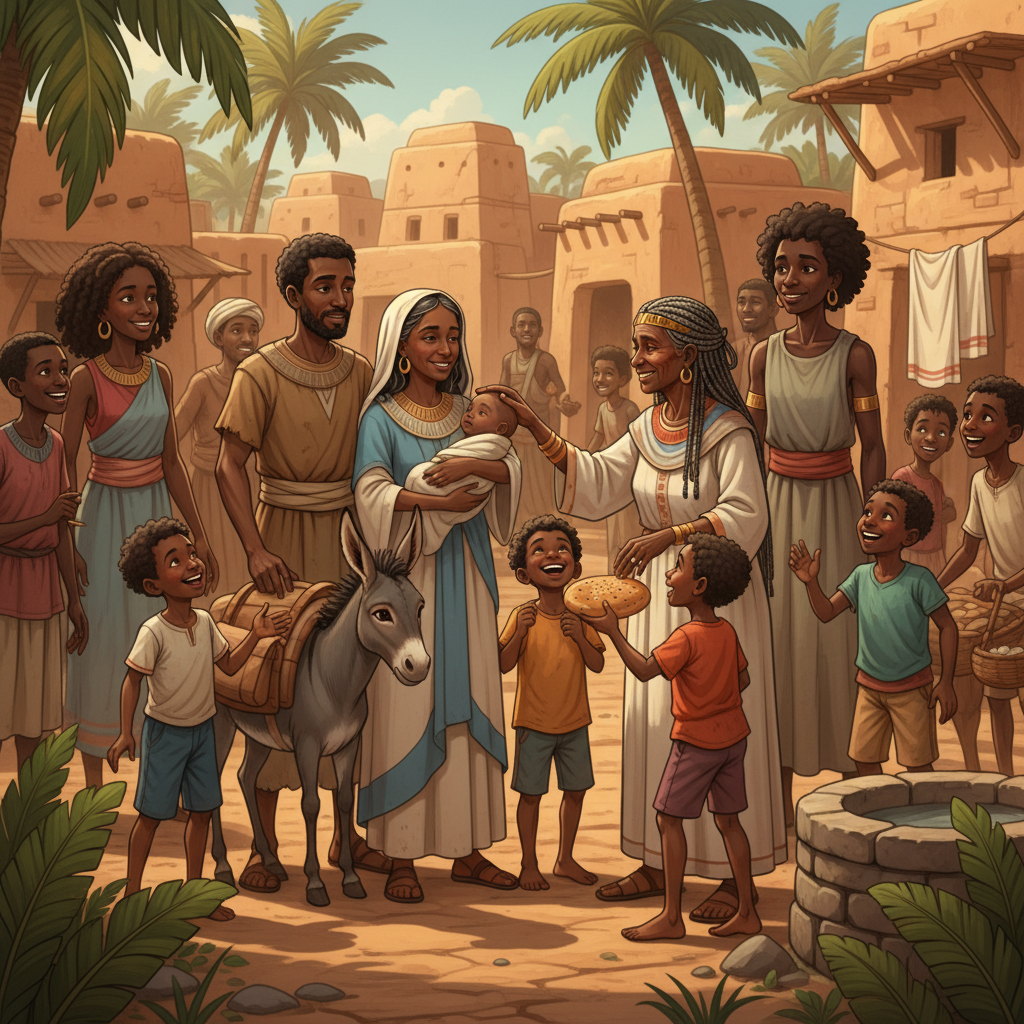
They came down into a village called Leontopolis — a place the Kushites had once built and the Kemetic people had kept. The people who met them at the well were tall and deep-skinned, like the people of Judea and Galilee, only darker still. Old men wore white linen. Children stared at the baby with wide curious eyes, then laughed and offered bread with sesame seeds pressed into the crust. An elder of the village came forward, a woman named Nebet, whose grey hair was braided with gold rings. She placed her palm flat on Yeshua's small head and smiled. "Another son of the Afro-Asiatic road," she said, using words her ancestors had spoken for a thousand years. "You are safe in the land of Maat. We have taken in many of your people. Stay as long as you need, and longer."
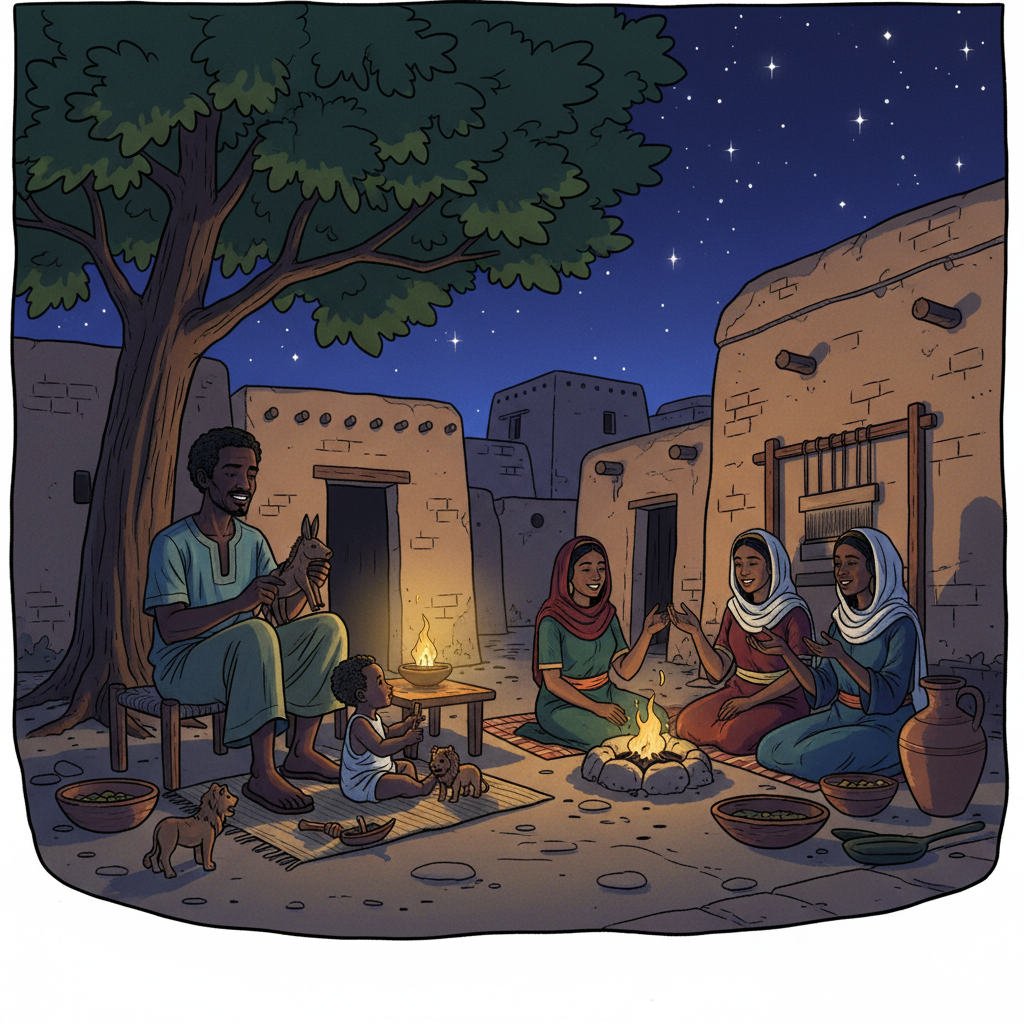
The family settled in a small white house of mud-brick with a flat roof and a courtyard shaded by a fig tree. Yosef found work quickly — every village needed a carpenter, and his hands were skilled. He built doors for the temple priests. He repaired the wooden frames of the looms on which the women wove linen. He carved small wooden toys for Yeshua. Miriam made friends at the well with other women. Some were Judean like her, exiled from the wars. Some were Kemetic, daughters of the Two Lands. Some were Kushite, dark as deep water, and some were Hebrew women who had lived in Kemet for a dozen generations. They sat in the cool of evening and mixed their tongues — Aramaic, Hebrew, Kemetic, Greek — and they learned each other's songs. The baby Yeshua learned them all.
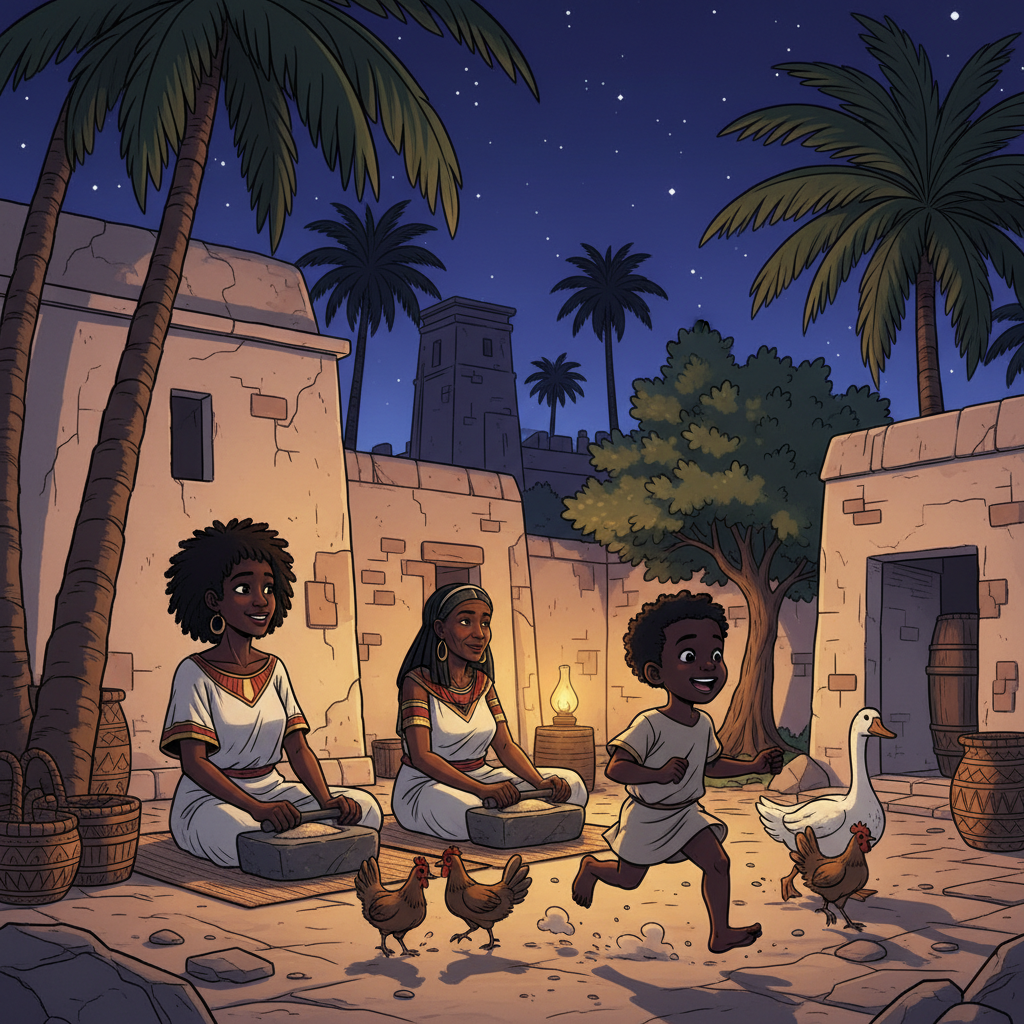
The boy grew quickly. He walked before his first year was out, and by two he was running under the palms, chasing chickens and geese. His feet were always bare, and his skin grew darker under the Kemetic sun. When he laughed, he laughed like a boy of the river, not a boy of the cold Judean hills. Miriam watched him from the shade of the fig tree. She saw him help an old woman lift a basket of dates. She saw him pause to watch a line of ants carrying a seed. "This one has the ka of the Nile in him," Nebet said one evening, sitting beside Miriam and grinding emmer wheat. "He pays attention. The ones who pay attention become wise." Miriam only smiled and kept working. But she hid the words in her heart.
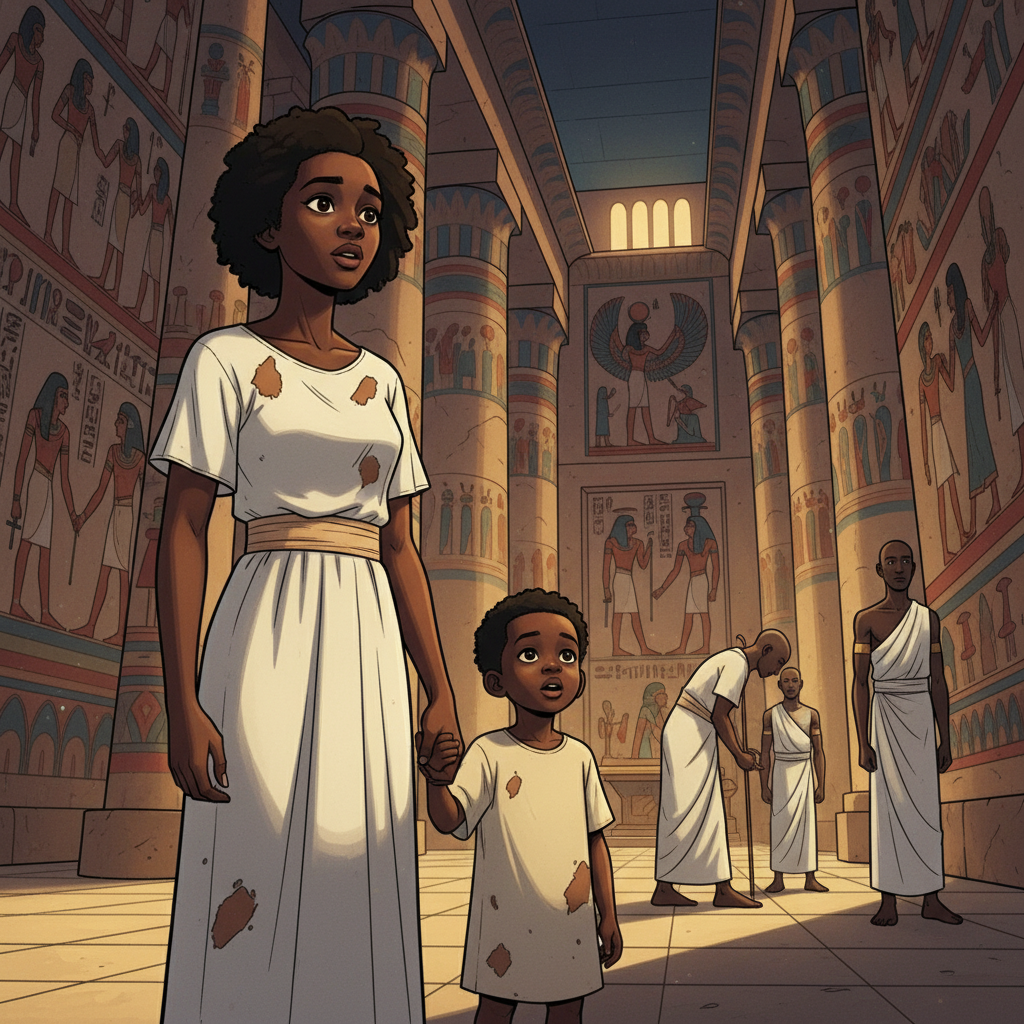
When Yeshua was four, his mother first led him into the great temple at Leontopolis. The pillars were taller than any tree he had ever seen, and the walls were painted in deep lapis and carnelian — blue as the sky at dusk, red as the fruit of the pomegranate. Priests moved quietly through the halls. They wore white robes and shaved their heads, and their skin was the deep brown of the river mud, the same as Yeshua's own. Miriam held her son's hand tightly. She had never been in a sacred place like this. In her own country, foreign soldiers ruled the temple, and priests worked for the powerful. Here, the priests bowed to no king. They bowed only to Maat — to truth, to balance, to the order that held up the sky.
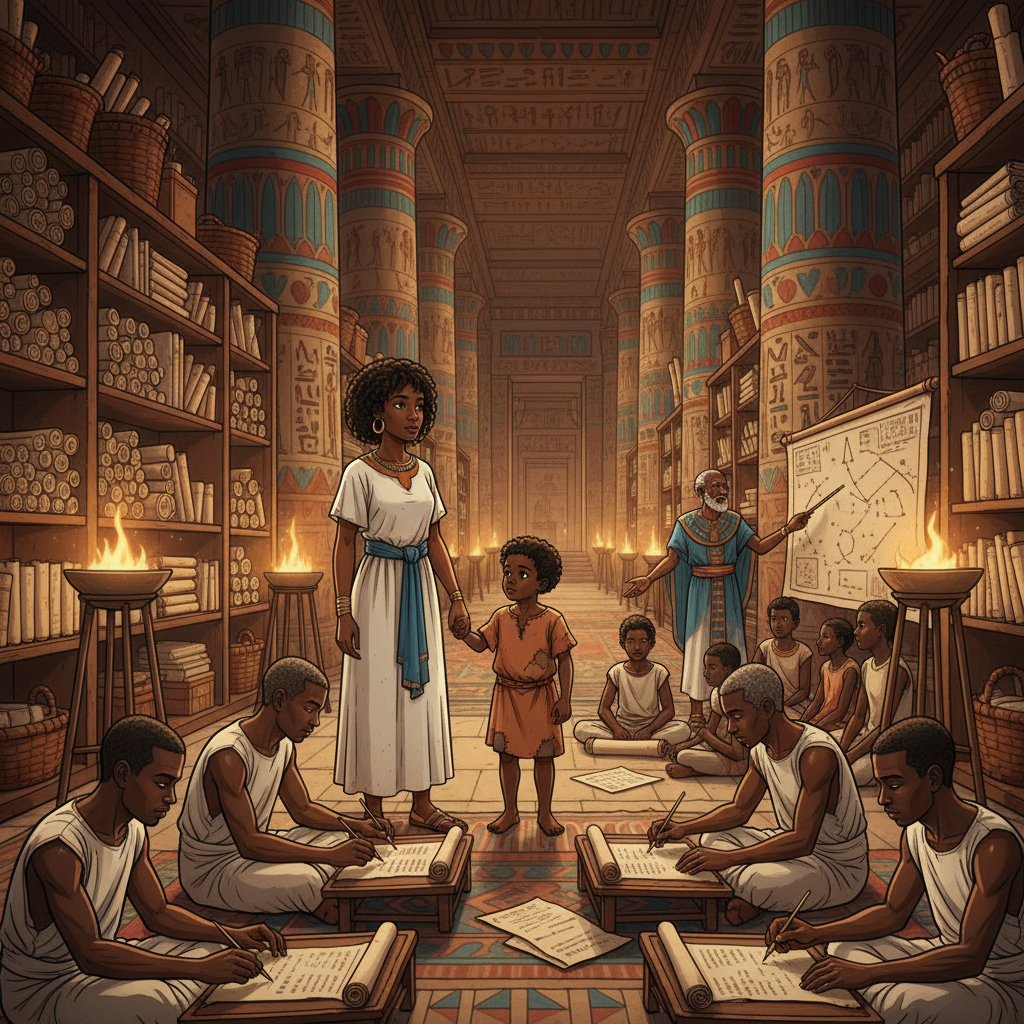
Deeper in the temple was a place called the Per Ankh — the House of Life. It was a school, a library, a hospital, and a place of prayer all at once. The floor was stacked with long shelves of scrolls. Scribes sat cross-legged, their reed pens moving in careful strokes. Old men argued gently over a piece of papyrus. A younger scholar read aloud to a small group of children, pointing at a map of the stars. Yeshua's eyes went wide. He had heard words before. He had never seen so many words kept in one place. Miriam felt his small hand tighten. She knew, then, that her son would have to come back here. A boy who was made for words could not be kept away from the great House of Life.
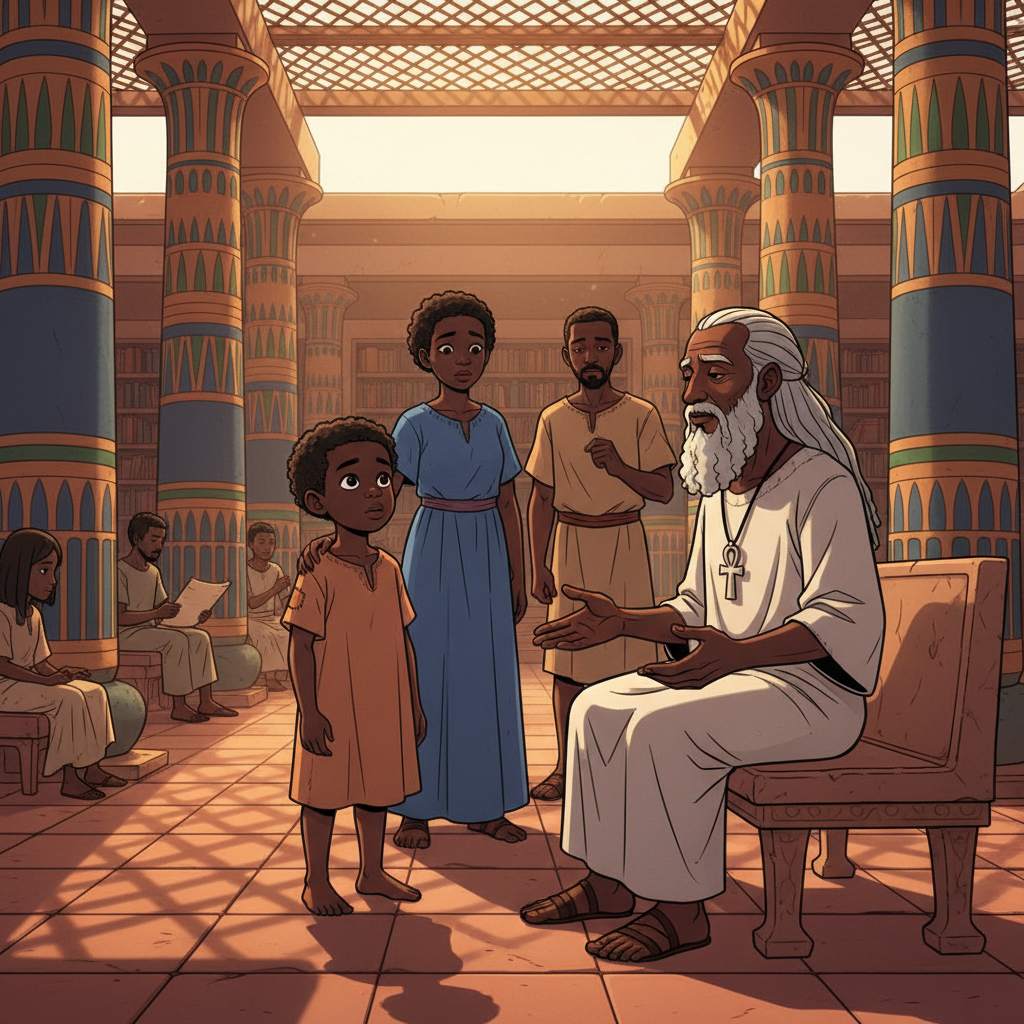
So when Yeshua was five, his parents walked him to the Per Ankh and left him in the care of a teacher — a Kemetic elder named Seba Setka, whose beard was white as bone and whose eyes were kind but unblinking. Seba Setka wore a simple linen wrap. A silver ankh hung from a cord at his neck. He was the kind of teacher who never raised his voice, and when he looked at a boy, the boy felt looked at. "What is your name, small one?" Seba Setka asked. "Yeshua," said the boy. "Yeshua," the elder repeated, turning the sound in his mouth. "A good name. It means Yah saves. Yah is the name your people give to the hidden one. We call that one Amun — the hidden — in our tongue. Different names. One truth. Welcome."
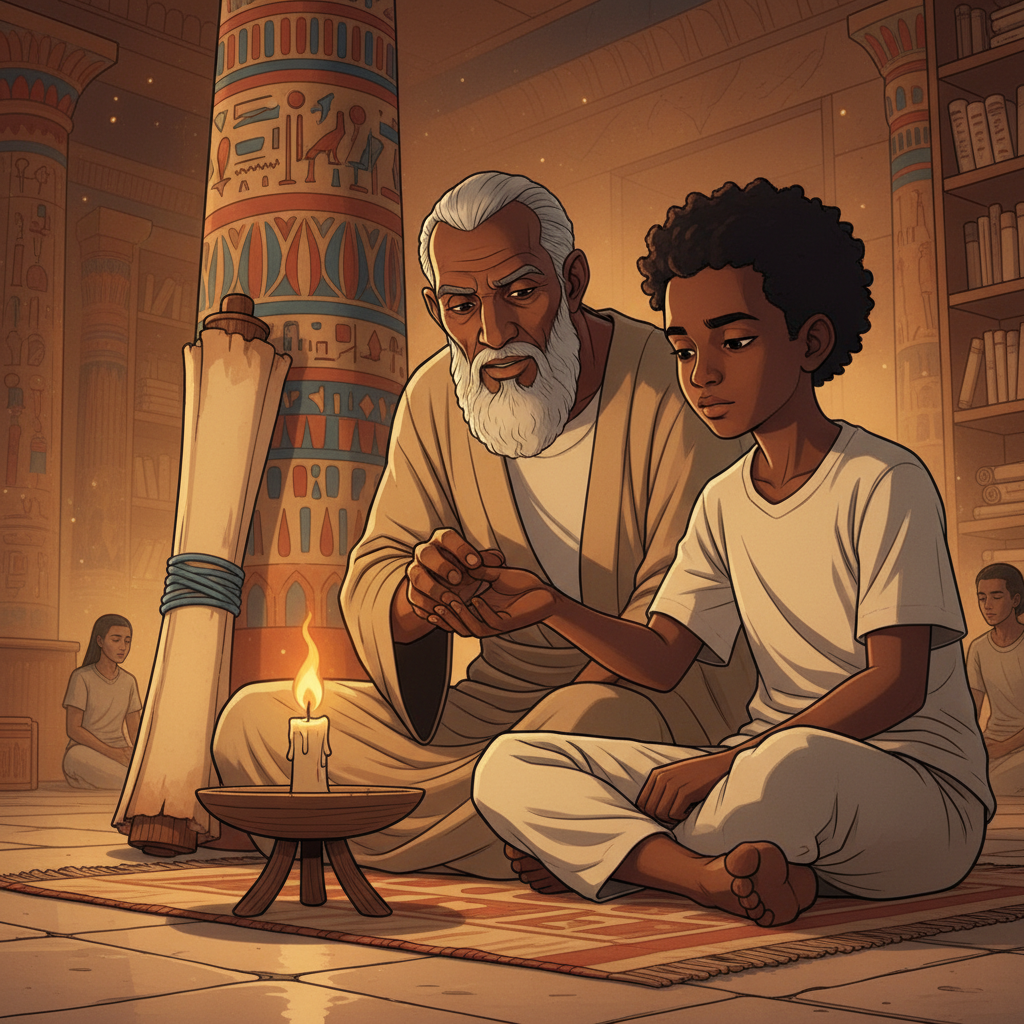
Seba Setka taught Yeshua the first things first. He taught him to sit still. He taught him to breathe. He taught him to watch a candle flame without letting his mind jump like a grasshopper. And then, when the boy was ready — no sooner — Seba Setka brought out a scroll of long papyrus, rolled carefully and tied with blue cord. "This scroll," the elder said quietly, "is older than any kingdom you know. It was written down when the world was still young. It is called the 42 Maat." He unrolled the scroll and showed Yeshua the long list of statements, each one beginning with the same words: I have not. I have not stolen. I have not lied. I have not hurt the helpless. I have not closed my ears to the truth.
"Maat is not a list of rules," Seba Setka explained, running his finger along the ancient symbols. "Maat is the balance of the world. It is the order that keeps the stars from falling. It is the promise between the strong and the weak — that the strong will not devour the weak. It is the agreement between neighbors — that you will not take what is not yours. It is the honest word between mother and child — that the world can be trusted." Yeshua, small on the floor with his legs crossed, thought about this. He thought about his own mother's songs. He thought about the raiders who had watched them from the ridge and then let them pass. He thought about Nebet placing her palm on his baby head. "Maat lives in the heart," he said finally. Seba Setka smiled.
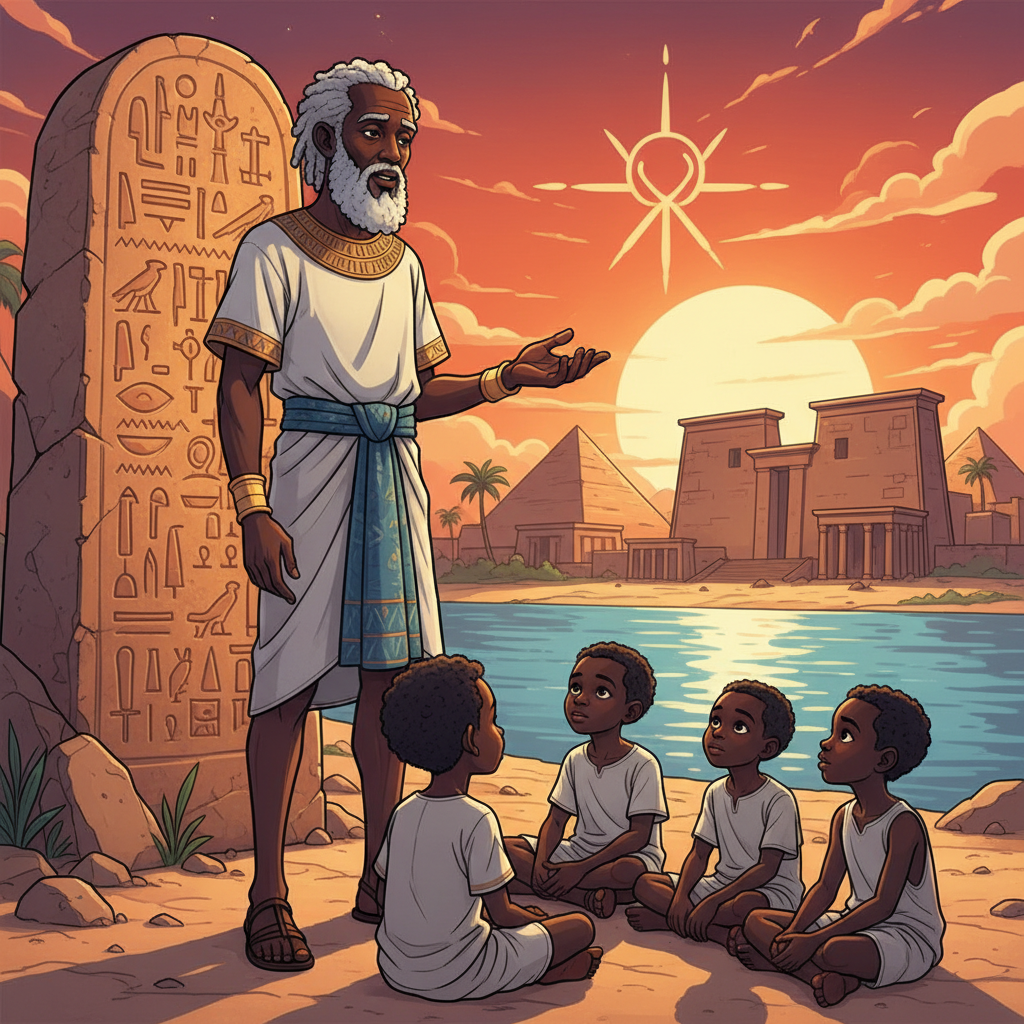
Some afternoons, Seba Setka took the children out of the Per Ankh and down to the banks of the Nile. There he told them the old stories — the story of Ausar and Auset, the story of Heru and the hidden battle, the story of Djehuty who carried the pen of truth. He told them of the Hall of Two Truths, where every soul one day must stand, and where every heart was weighed on a golden scale against a single feather. "What does the feather mean?" Yeshua asked. "It is the feather of Maat," said Seba Setka. "Light as truth. Heavy as lies. If your heart is heavy with Isfet — with chaos, with cruelty, with selfishness — the feather wins. If your heart is light with love and justice, the feather and the heart are equal. And the soul goes on, Yeshua. The soul goes on into the light."
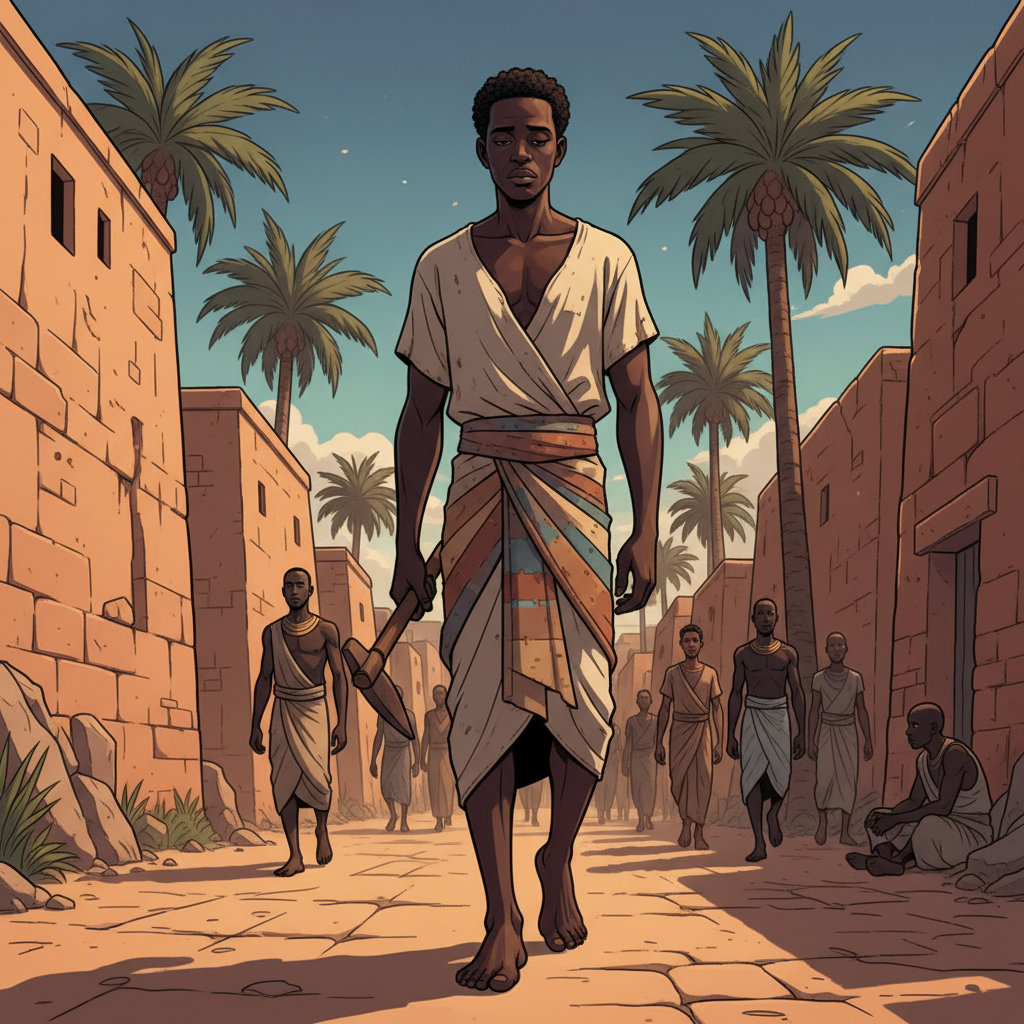
Six years passed this way. Yeshua learned to read the Kemetic script, and the Aramaic his mother spoke, and the Greek the merchants used. He learned the names of the stars and the seasons of the Nile flood. He learned to sing the hymn that greeted Ra at dawn. He learned the prayer said at the lighting of the evening lamp. And he learned Maat — not as a lesson, but as the shape of his own breath. And then, one spring morning, a traveler arrived in Leontopolis with news. Herod the king was dead. The wicked one who had tried to kill the children of Bethlehem had fallen. Yosef heard the news at the carpenter's bench. He set down his adze. He walked home slowly. That evening, he told Miriam, and Miriam told Yeshua. The boy did not speak.
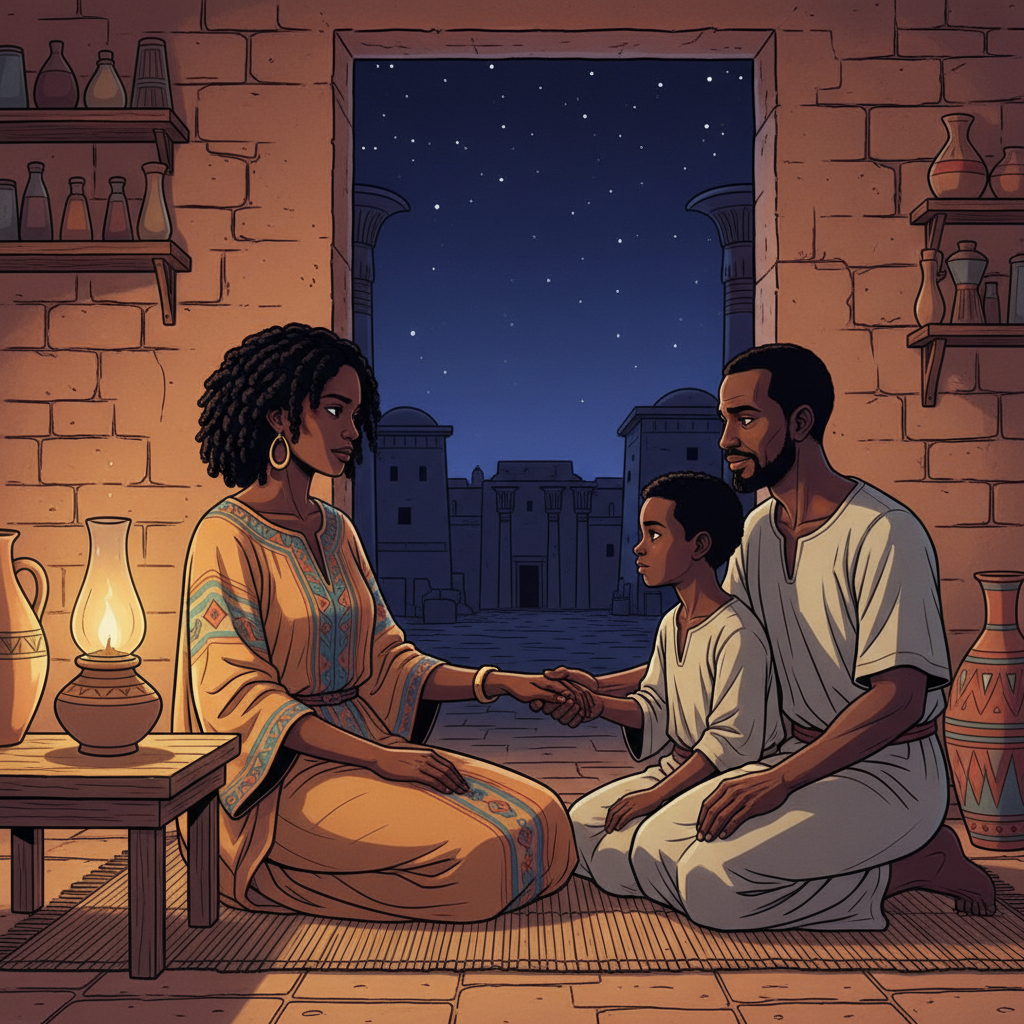
"We must go home," Yosef said gently. "The danger has passed. Your uncles still live in Nazareth. Your cousins are waiting." "This is home," Yeshua said quietly. Miriam held her son's hand. "It can be more than one home, little heart. A tree that has grown in two kinds of soil carries both kinds inside its wood. You do not leave Kemet. You carry Kemet with you." The next morning, Yeshua went to Seba Setka one last time. The old teacher did not cry. He placed a small silver ankh in Yeshua's palm, the same one he had worn around his own neck for forty years. "Take this," he said. "The ankh is life. When the road is dark and the roads are cruel, remember the scale. Remember the feather. Remember Maat. You are a son of Maat."
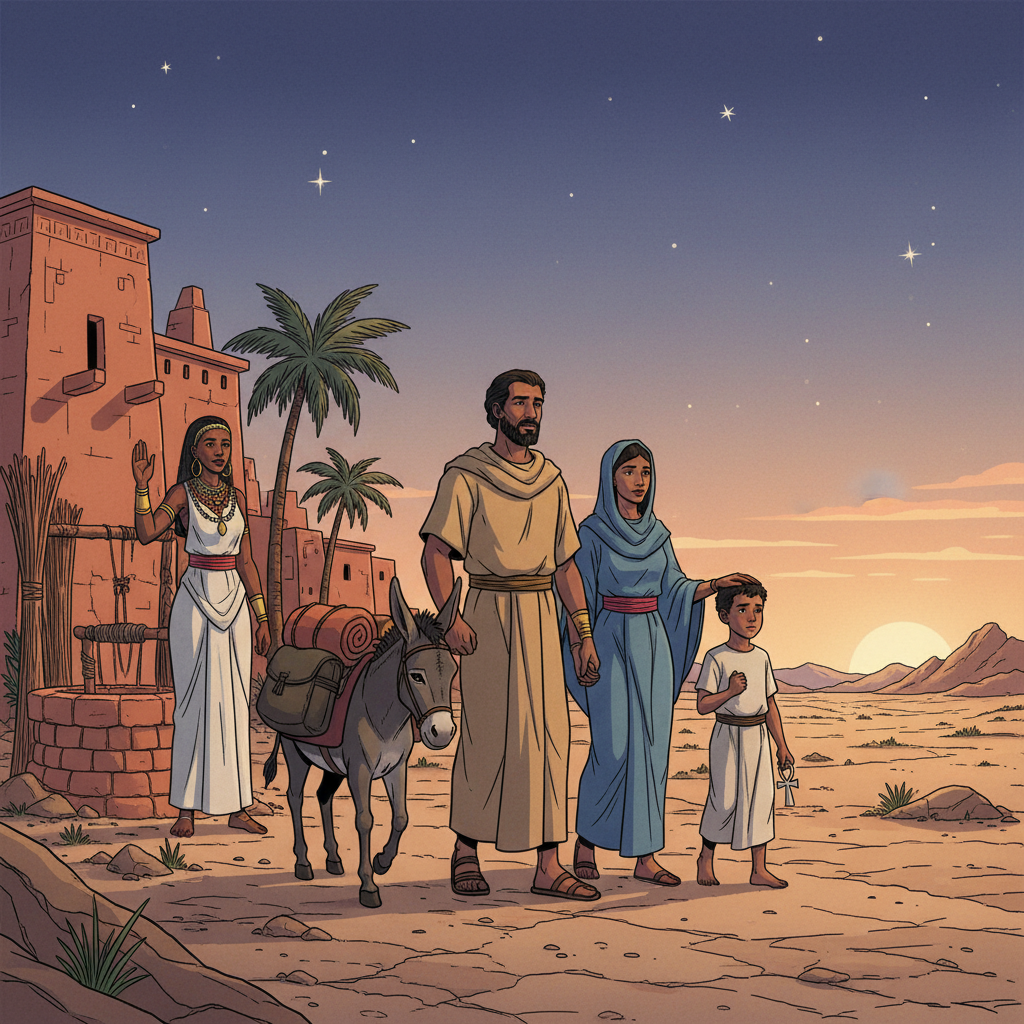
The family walked out of Leontopolis in the cool of an early morning. Nebet stood at the well and watched them go. She raised her right hand, palm open, the way the Kemetic people blessed the travelers. Yosef raised his hand back. Miriam placed her palm on Yeshua's head the way Nebet had done six years before. Yeshua held the silver ankh in his fist so tight it left a small mark in his skin. For many days they walked eastward, away from the green valley, back into the wilderness of the Negev. Yeshua did not look back often — Miriam had told him not to. But at night he sat beside the small fire and repeated to himself, under his breath, the 42 words he had learned: I have not stolen. I have not lied. I have not hurt the helpless.
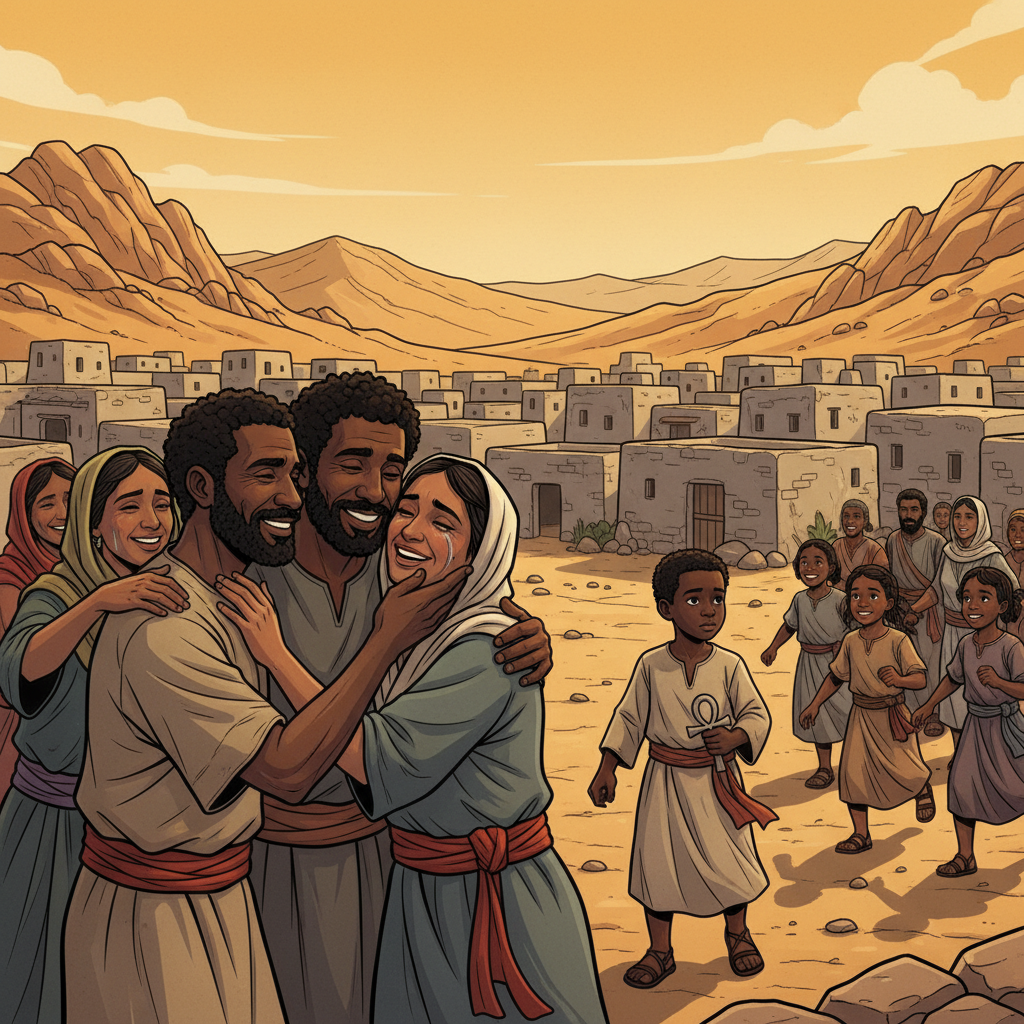
When the family arrived at last in Nazareth, the village looked small. The houses were hewn of grey stone, not white mud-brick. The hills were dry and rocky where the Nile valley had been green. Cousins ran out to meet them, and the uncles clasped Yosef and kissed his cheeks. Miriam wept, because she had missed her sisters for a long time. Yeshua stood apart, a small boy in a dusty robe, holding tight to the silver ankh hidden in his palm. He was six years old. He could read three languages. He carried in his memory the 42 Maat of Kemet, and the feather of truth, and the sacred balance that held up the sky. He did not yet know what he was born to do. But Kemet had already taught him the first thing — that Maat is real, and Maat is worth a life.