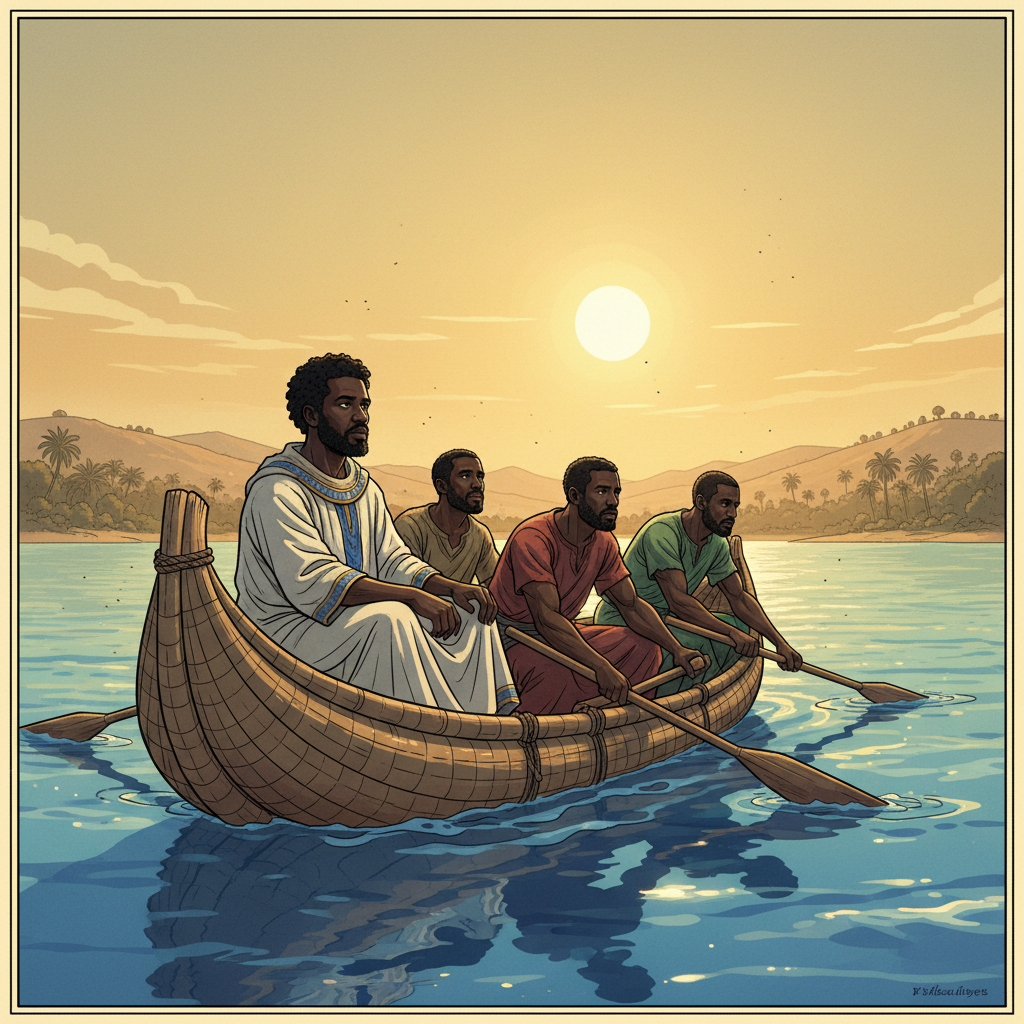
The small reed boat cut a path through the shimmering water of the Kinneret, the Sea of Galilee. Yeshua sat in the stern, his eyes on the eastern shore. His disciples, their faces etched with the dust of many journeys, rowed with heavy arms. They had come from Capernaum, teaching and healing without pause. Sleep was a forgotten luxury. Yeshua sought a lonely place, a quiet cove where the wind would speak only to the palms, where their tired minds could rest and their spirits could mend. The sun, a burning eye in the sky, promised a long, hot afternoon. Each stroke of the oar was a prayer for peace, a yearning for the stillness that only the wilderness could offer. The boat moved steadily toward the distant hills, promising respite.
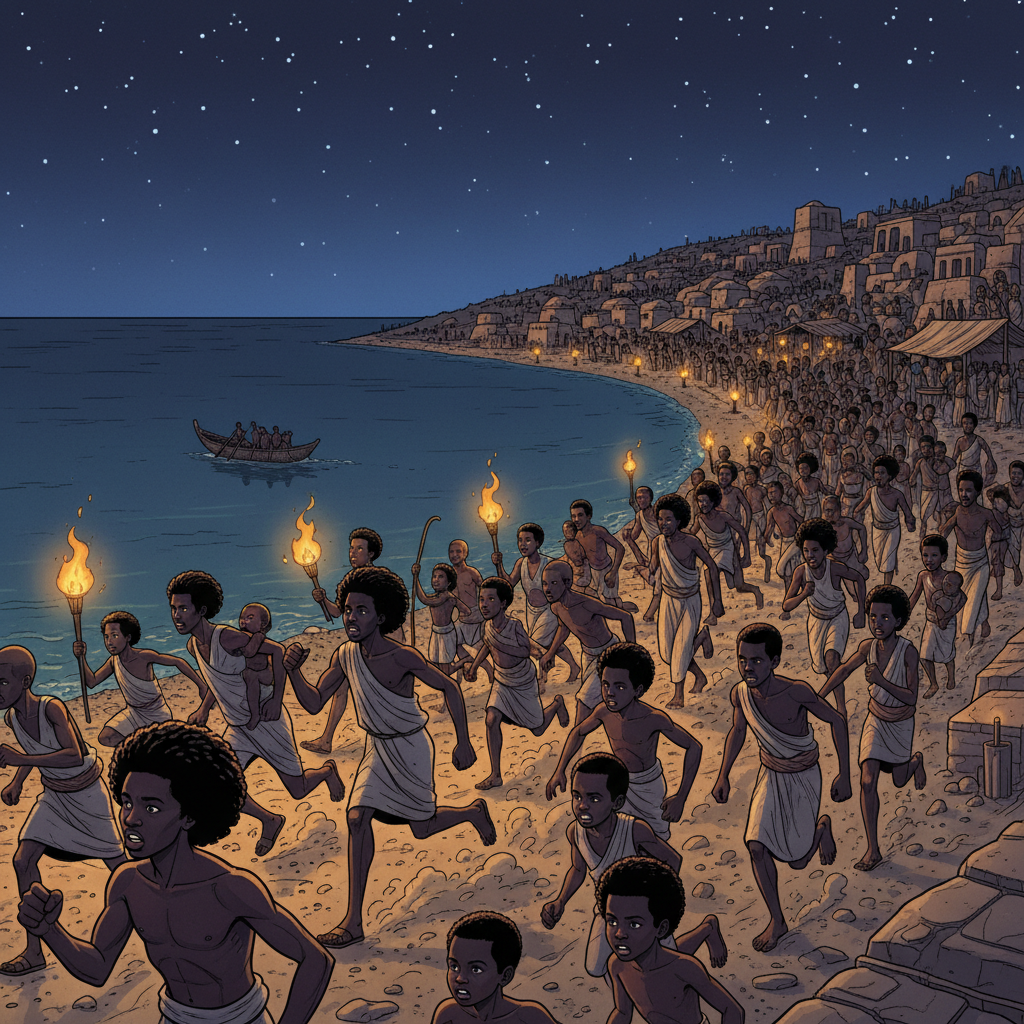
But the people of Galilee were not to be outrun. As the boat neared the shore, a dark mass appeared on the distant hillside, moving like a river of humanity. They had seen the boat depart, or heard the whispers of its destination. Along the curving path of the lake, thousands ran on foot, their sandals kicking up small clouds of earth. They were men, women, and children, a multitude driven by hunger for the Word, a yearning for healing. By the time Yeshua’s boat scraped against the pebbled beach, the hillside above was already a tapestry of waiting faces. Five thousand souls, perhaps more, had outpaced them, transforming the lonely place into a vibrant, expectant city.
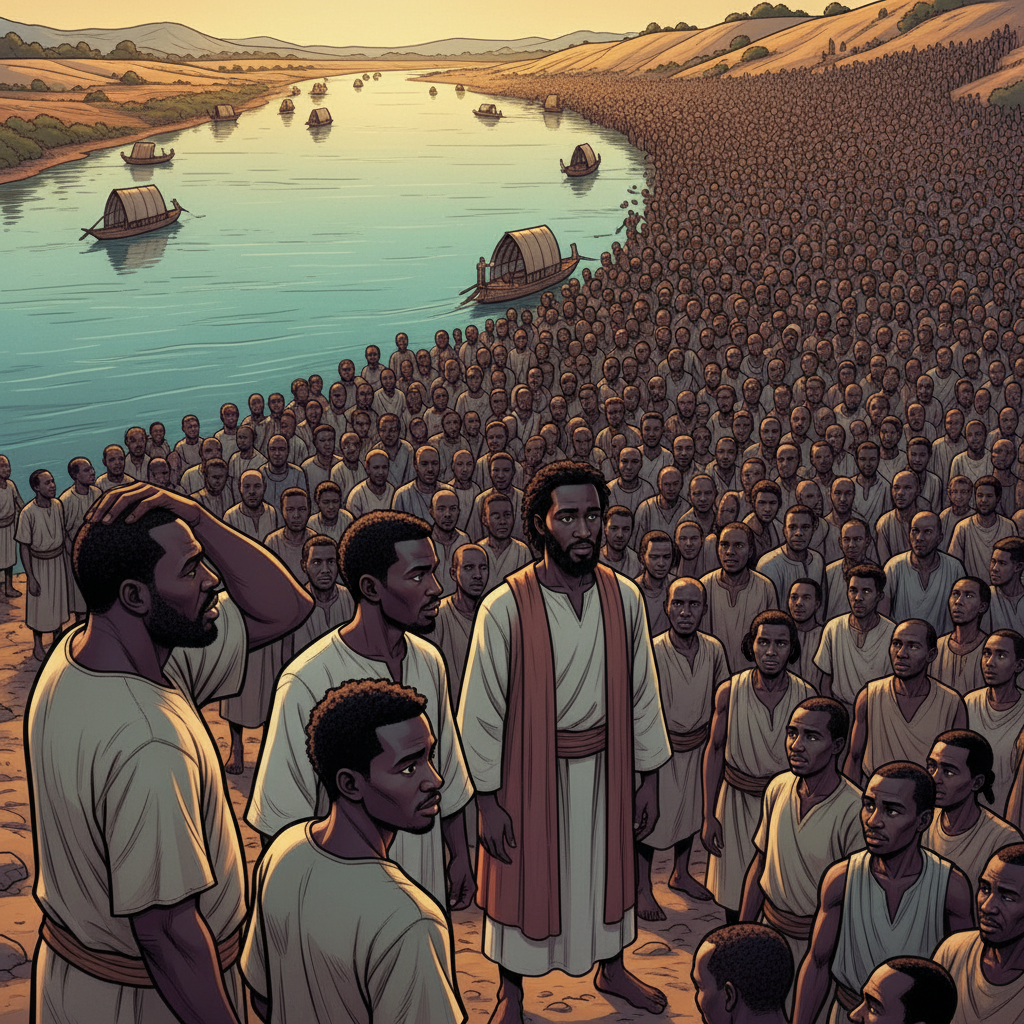
Petros, his broad shoulders slumped, let out a groan that was more like the sound of a weary beast. "Not again," he muttered, running a hand over his close-cropped hair. Andreas, ever the pragmatist, cursed softly under his breath, his eyes scanning the impossible expanse of the crowd. Yochanan, the youngest, his face usually alight with quiet devotion, looked at Yeshua with a silent question. Would he turn back? Would he get back into the boat and seek another, truly lonely, place? The disciples’ hope for rest had evaporated like morning mist under the rising sun. The weight of the multitude pressed down on them, heavy and undeniable.
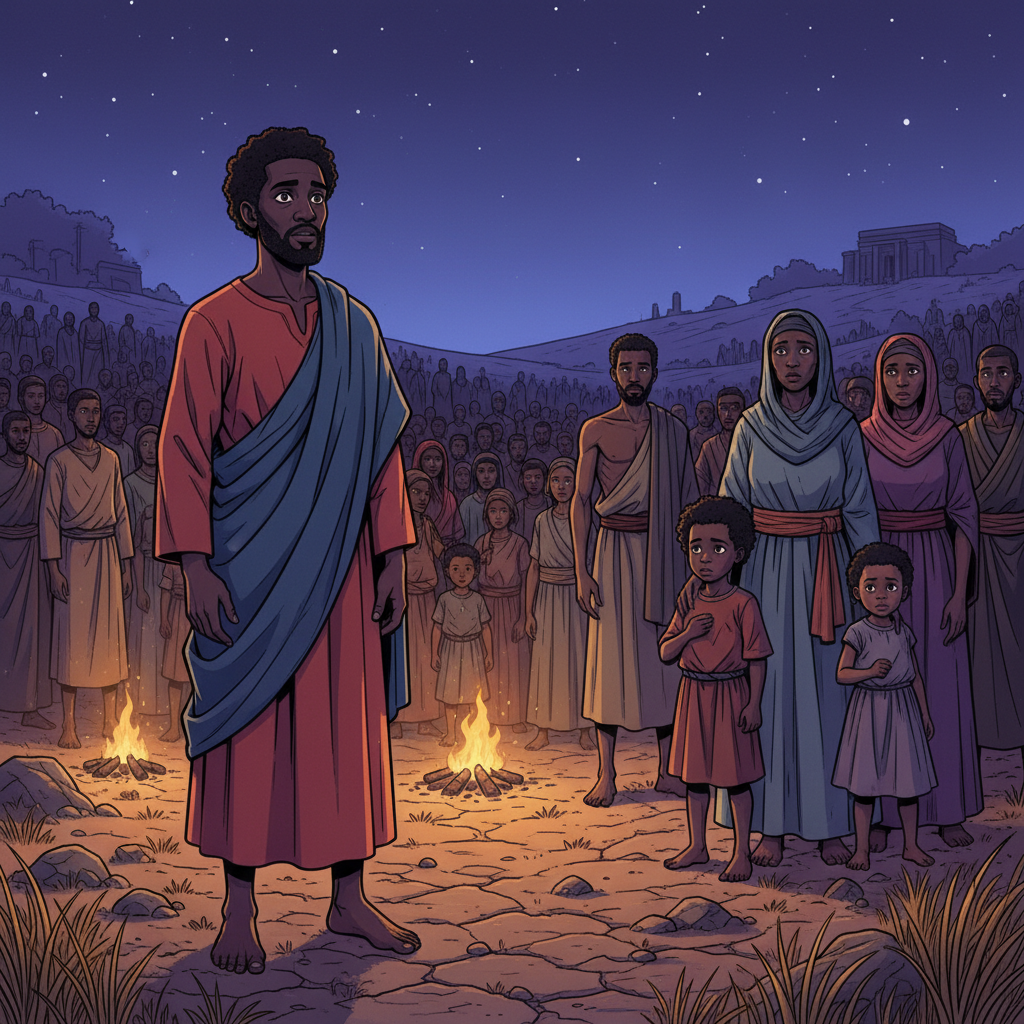
Yeshua did not move toward the boat. His feet found the firm earth. He stood for a long moment, his dark eyes sweeping over the vast gathering. He saw the dusty hillside, the dry grass brittle underfoot. He saw the tired children, their small hands clutching at their mothers’ robes, their faces smudged with travel. He saw the hungry mothers, their eyes holding a deep weariness, a perpetual concern for their little ones. He saw the men, their shoulders stooped, who had walked far, their bodies thin from labor and scarcity. These were the people of the country, the ones who knew the taste of dust and the ache of an empty stomach. Yeshua saw them, truly saw them, not as a burden, but as sheep without a shepherd.
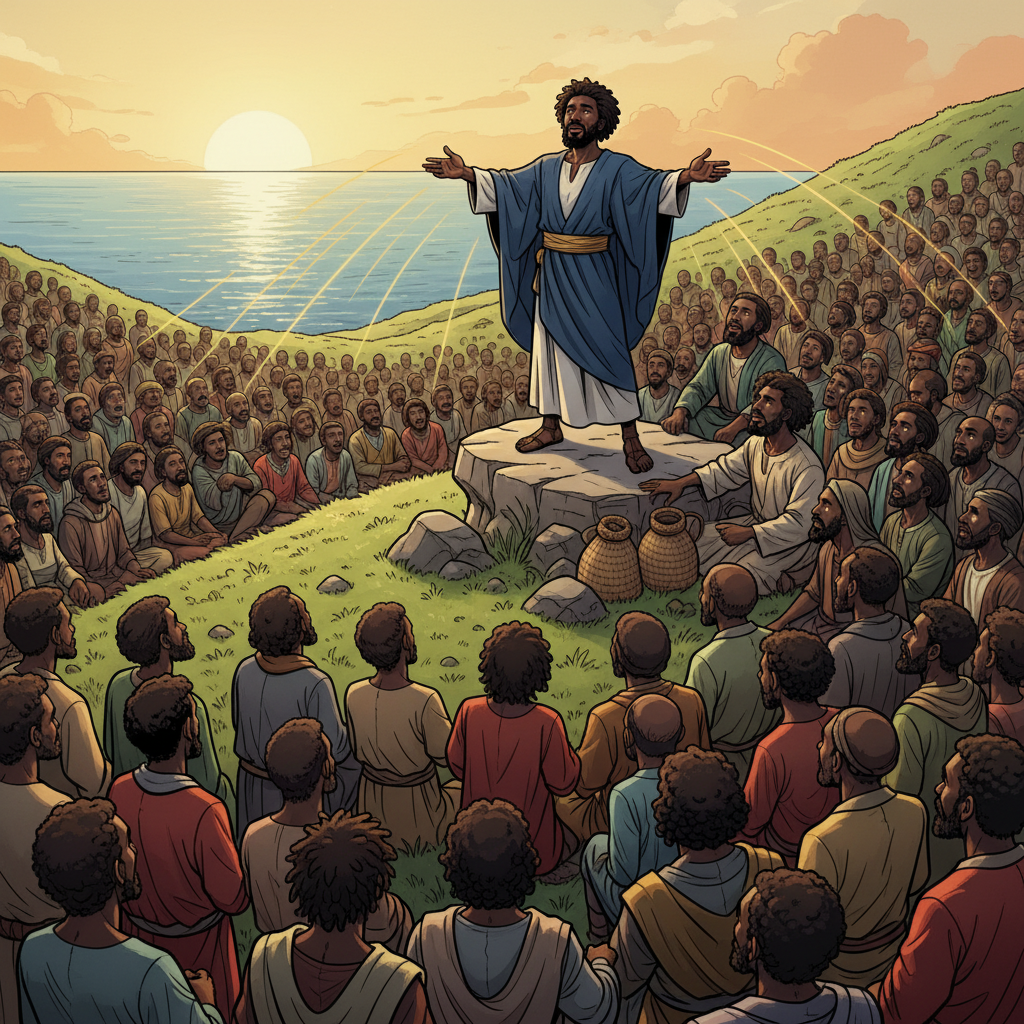
And so, Yeshua began to teach. His voice, clear and strong, carried across the hillside, reaching the furthest ears. The disciples, their desire for rest momentarily forgotten, set down their bags, their initial frustration giving way to the familiar rhythm of their Master’s wisdom. The great crowd, restless moments before, began to settle on the green grass, forming clusters and arcs, their murmurs fading into a deep, attentive silence. They leaned forward, eager to absorb every word, every parable, every lesson that flowed from the Rabbi’s lips. It was as if the very air itself grew quiet, holding its breath to listen, for the truth that Yeshua spoke was like water to a thirsty land.
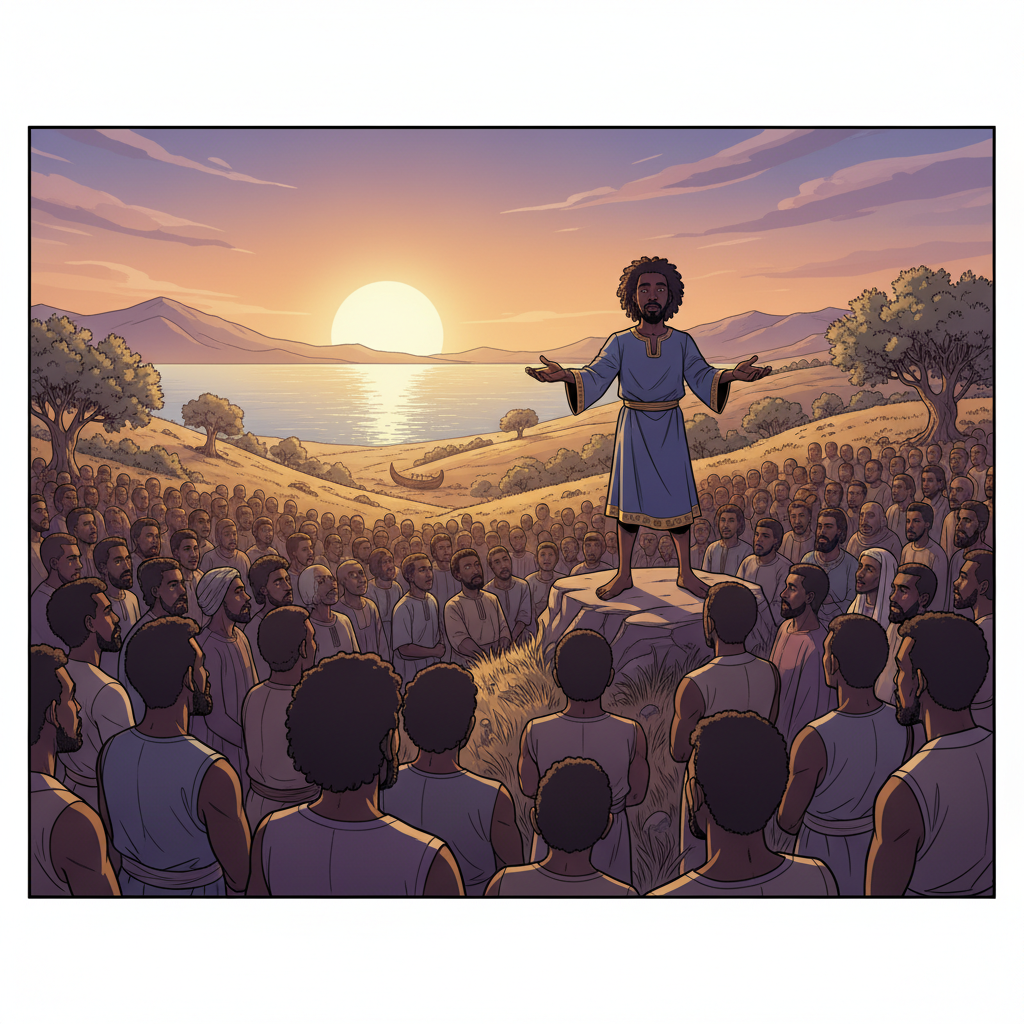
Hours passed like the slow turning of a great cosmic wheel. Yeshua spoke of the ancient ways, of Maat, the divine order that governed all things, of reciprocity between humanity and the Creator, between each soul and its kin. He spoke of the kingdom of heaven, not as a distant realm, but as a way of living now, a seed planted in the heart. The sun, which had been a fiery orb directly overhead, began its long, deliberate journey toward the west, casting longer shadows across the hillside. The golden light softened, painting the faces of the listening multitude with hues of amber and rose. Still, they did not stir, held captive by the profound depth of his words, by the vision of a world where justice and compassion reigned supreme.
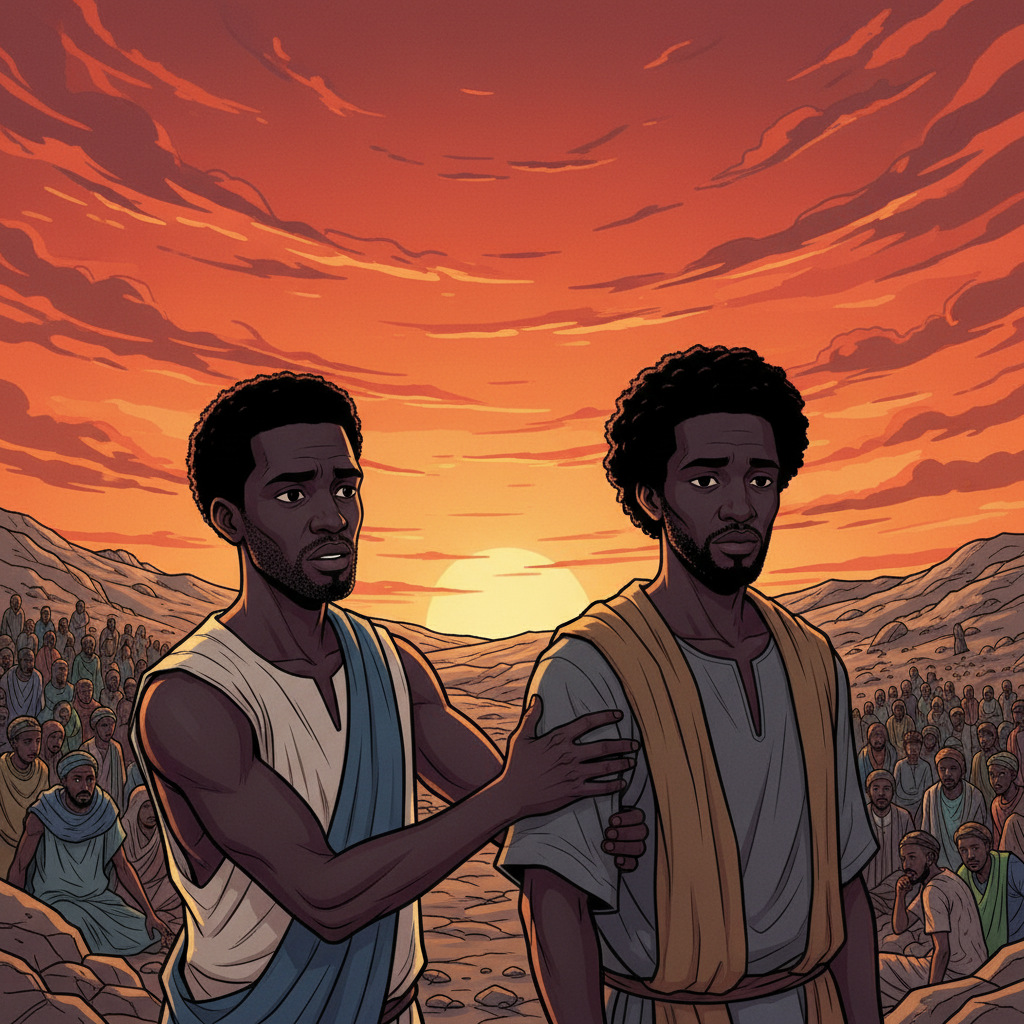
As the sun dipped lower, painting the western sky in fiery strokes, Petros, ever practical, pulled Yeshua gently aside. His brow was furrowed with concern. "Rabbi," he began, his voice low and urgent, "the day is late. The light will soon fail. We are in a desolate place, with no village near. Send them away, so they can go into the surrounding hamlets and buy themselves something to eat. There is nothing here for such a multitude, and they have been with us all day without sustenance. Their hunger will soon turn to desperation." The vastness of the crowd weighed heavily on his mind, a problem too immense to solve.
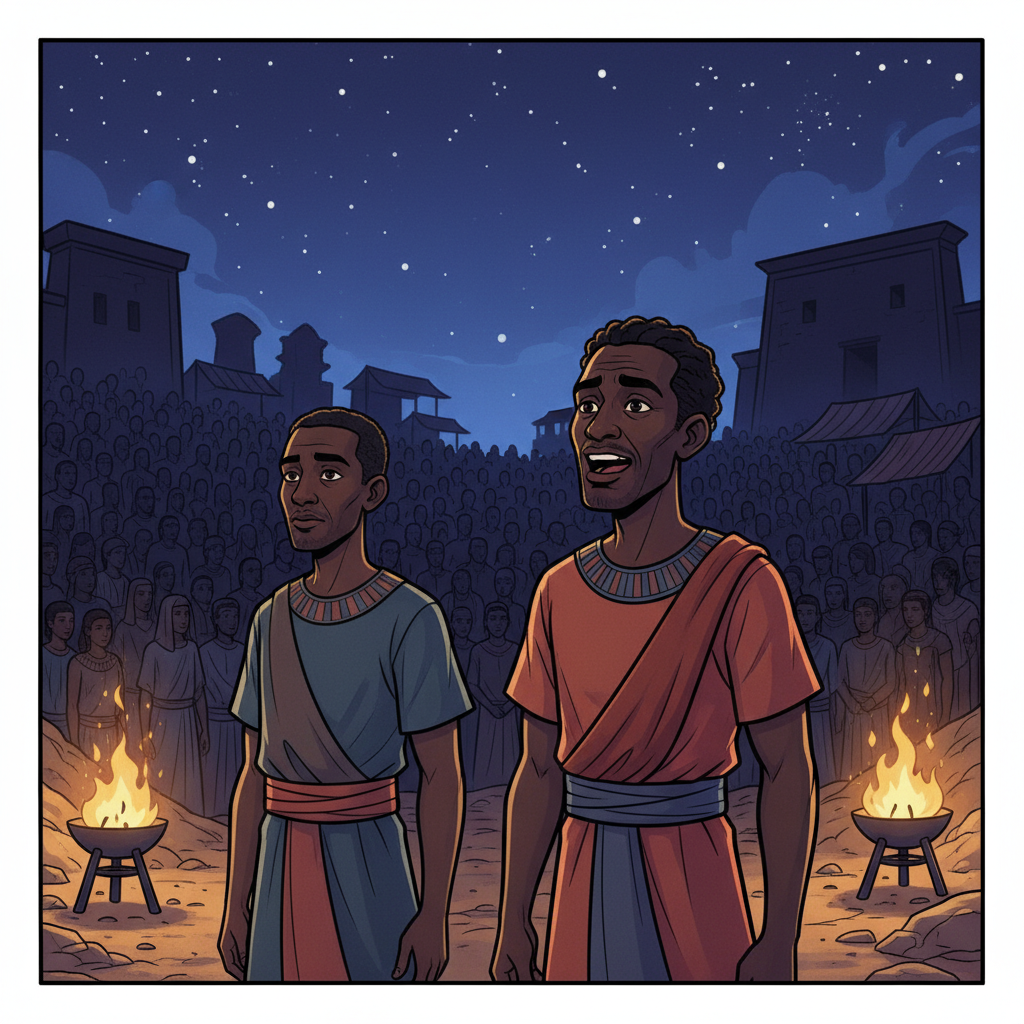
Yeshua turned to Petros, his gaze steady. "You give them something to eat." The words hung in the air, a challenge, not a command. Petros stared, then let out a short, bitter laugh that held no humor, only the sound of impossible reality. "Two hundred denarii would not buy enough bread for each of them to have even a small piece! Rabbi, we barely have enough for ourselves. Look at this place, look at these numbers. It is not possible. There is no market, no bakery, no storehouse that could feed such a throng. We are faced with an emptiness that money cannot fill, and resources we do not possess."
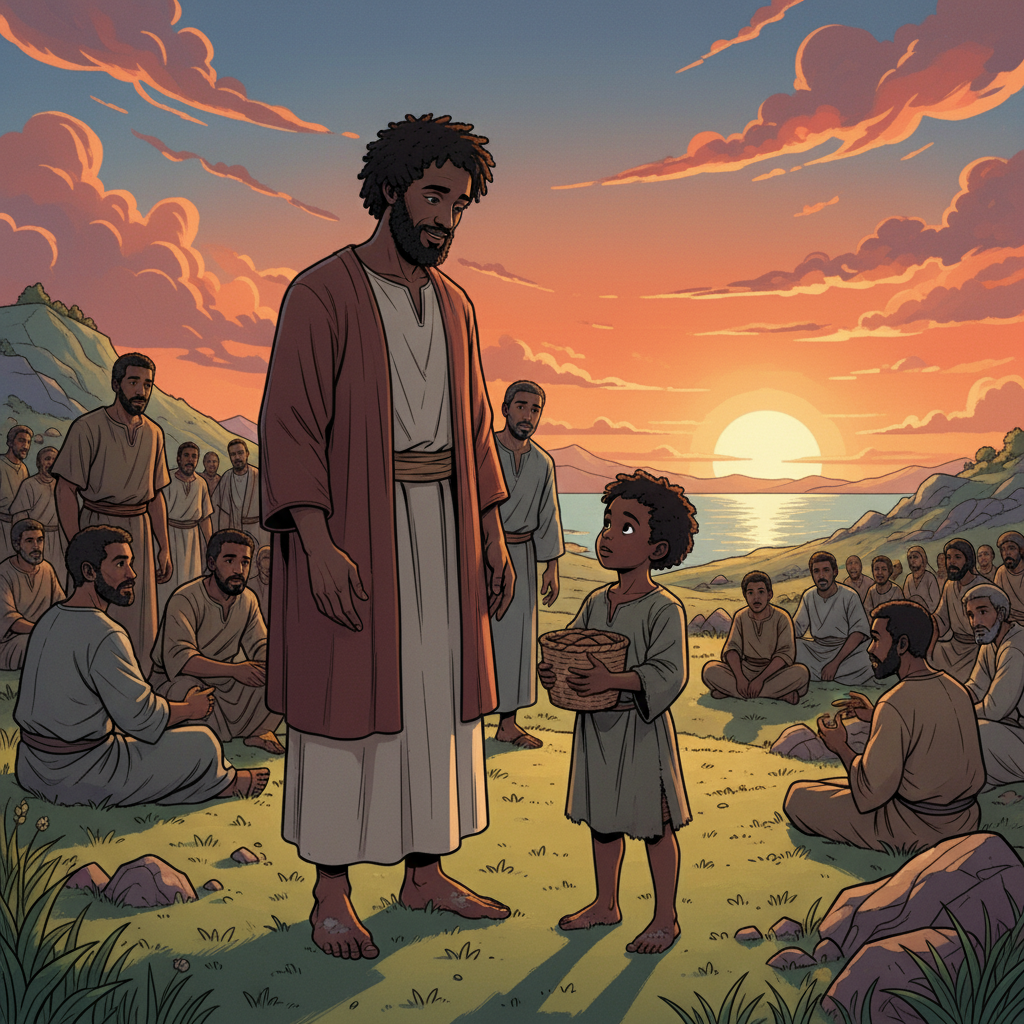
Yeshua’s gaze did not waver. "How many loaves do we have? Go and see." The disciples exchanged glances. This was not the practical solution Petros had sought. Andreas, always ready to act, began to move through the scattered groups of their company, asking quietly. He returned shortly, leading a small boy by the hand. The boy, his eyes wide and curious, clutched a small woven basket close to his chest. He was a child of the country, his tunic simple, his feet bare, his face open to the world. He stood before Yeshua, a silent offering in his small hands.
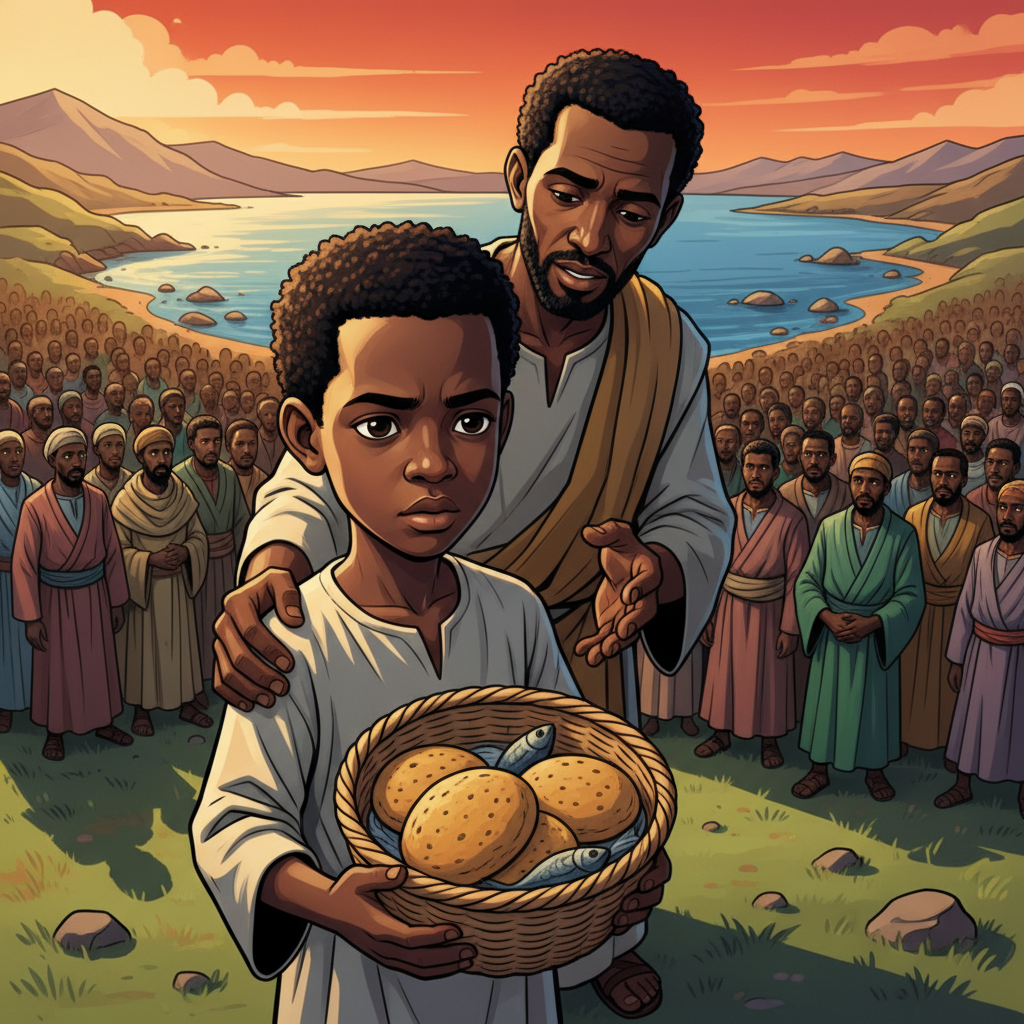
The boy, Yair, held his humble meal. Inside the basket were five barley loaves, flat and dense, the staple food of the poor, and two small dried fish, preserved against hunger on a journey. It was the kind of meal a child of the common people carried, a sustenance for a day’s travel, a small comfort. Andreas presented the meager offering to Yeshua, his voice tinged with resignation. "Rabbi, here is what we have found. Five barley loaves and two small fish." He gestured to the vast crowd, then back to the basket. "But what is this among so many? It is less than a single bite for each person. It is a drop in the ocean of their need."
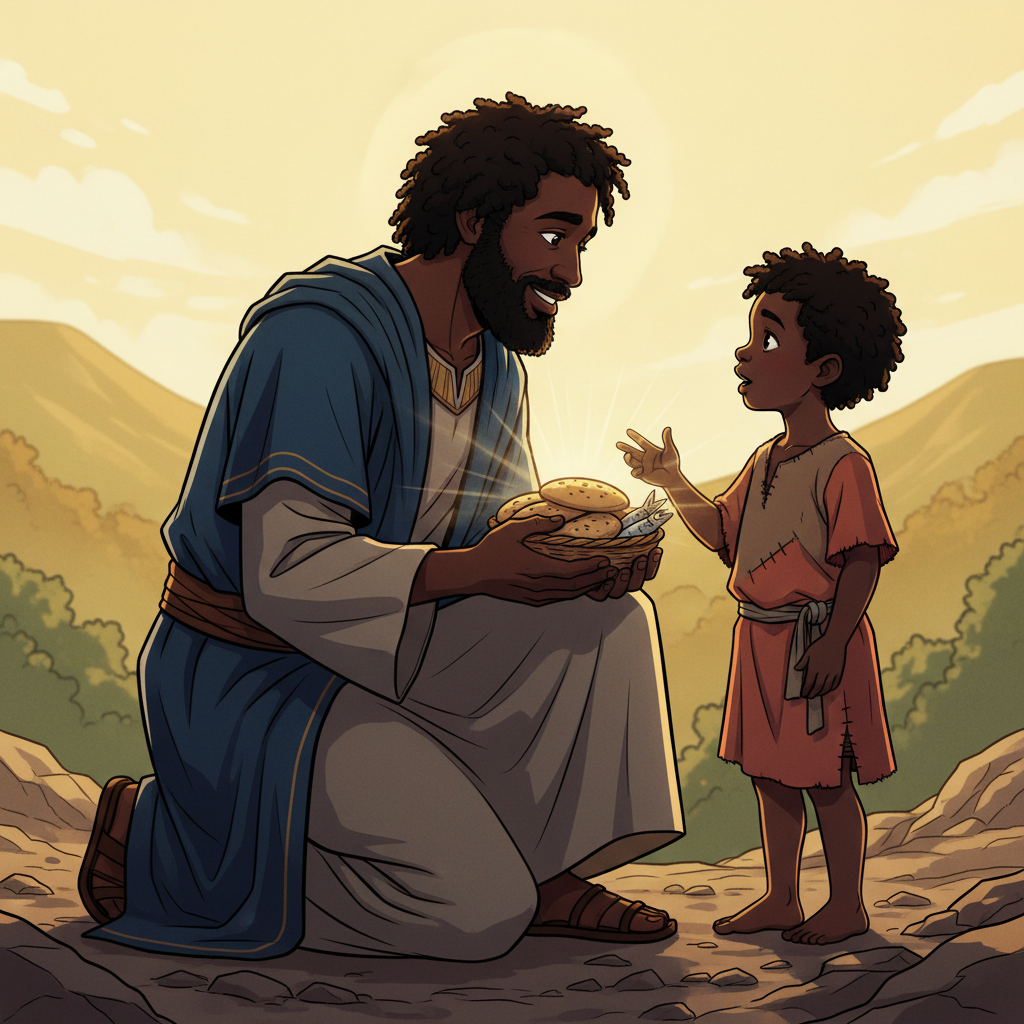
Yeshua took the boy’s lunch. He knelt for a moment, his eyes level with Yair’s. "What is your name, son?" he asked softly. "Yair," the boy whispered, his voice barely audible, awestruck by the Rabbi’s attention. Yeshua smiled, a profound warmth in his eyes. "Thank you, Yair, for sharing what you have. Your generosity is a light in this place." The boy was wide-eyed, not quite understanding the weight of the moment, only knowing that the great Rabbi had looked at him, spoken his name, and accepted his small offering. In that exchange, a seed of something vast and ancient was planted, a testament to the power of giving.
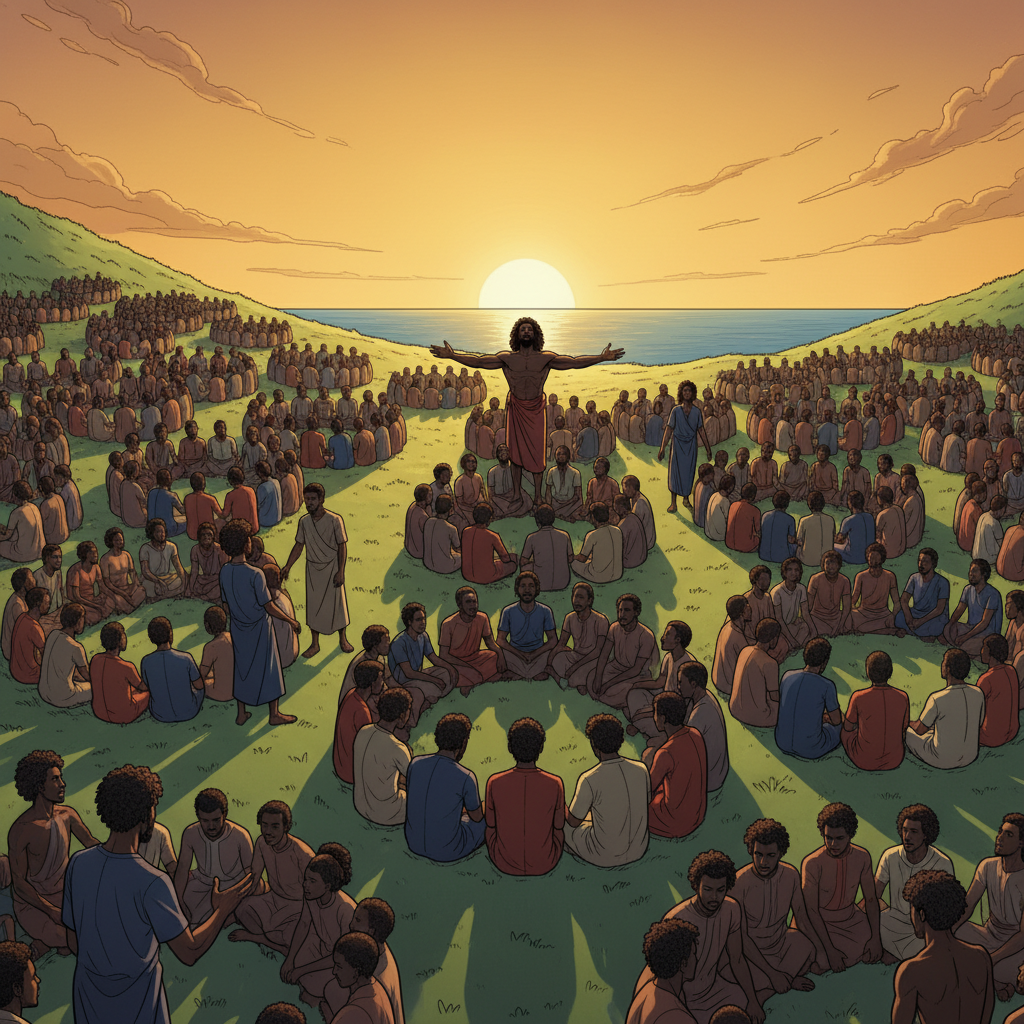
Yeshua then turned to his disciples, his voice resonating with quiet authority. "Tell the people to sit down in groups, on the green grass." He instructed them to arrange the multitude in circles, groups of fifty and a hundred, spread across the hillside. The disciples, no longer questioning, began to move among the vast crowd. The hillside, which had been a chaotic gathering, transformed under their guidance. It became patterned with circles, like flower beds blossoming in a field, each group an island of expectant faces on the green expanse. This order, this structuring of the community, was an echo of Maat, the Kemetic principle of cosmic harmony and balance, preparing the ground for a truth to be revealed.
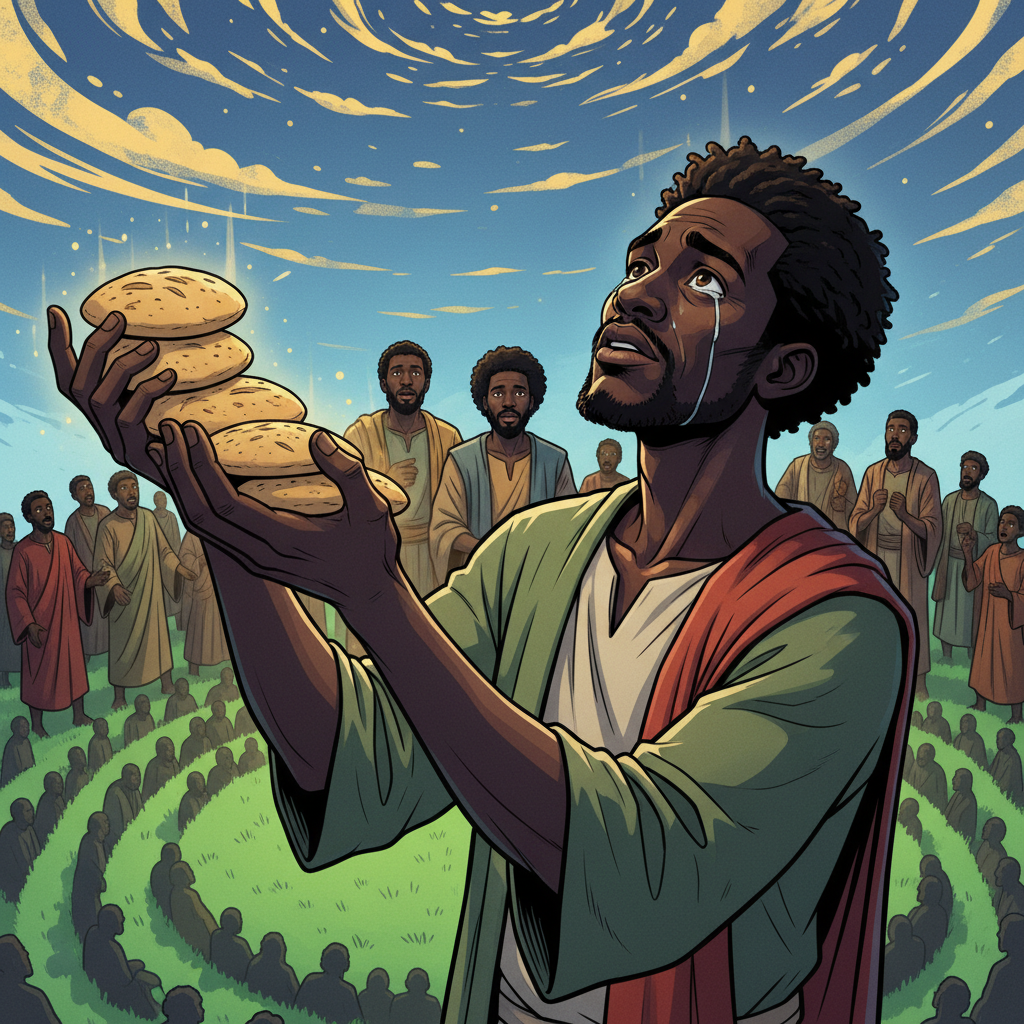
With the multitude settled in ordered rows, Yeshua took the five barley loaves into his hands. He looked up at the vast expanse of the sky, his eyes piercing beyond the blue, toward the source of all giving. He gave thanks, a prayer of profound gratitude for the meager offering, for the boy’s generosity, for the bounty of the earth. His voice was a deep current, connecting the small loaves to the infinite. Then, he began to break the bread. He tore a piece, then another, and another. He handed the pieces to the disciples to distribute, their faces a mixture of wonder and bewilderment. The simple act of breaking, of giving thanks, felt weighty, pregnant with unseen possibility.
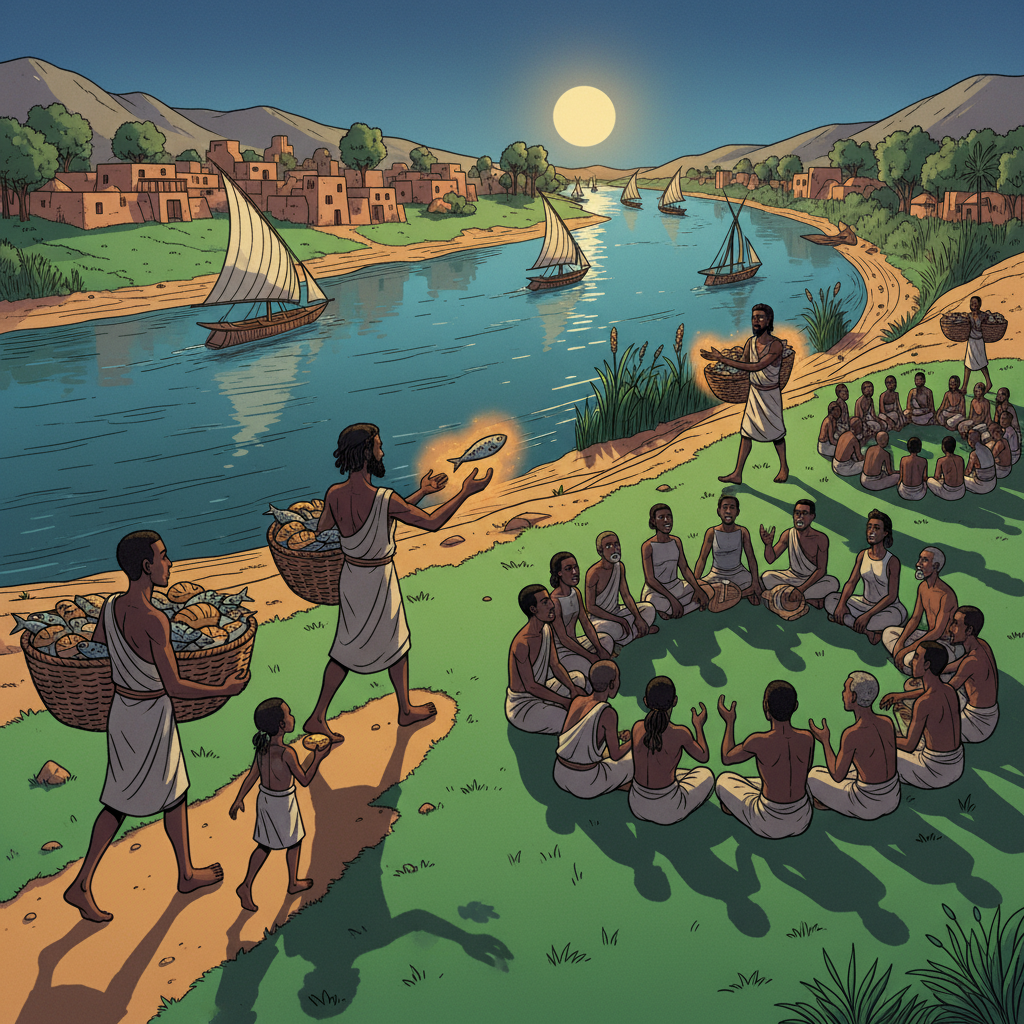
The disciples carried what was in their hands to the first circle of fifty. They began to distribute the bread. A piece for one, a piece for another. But the bread did not run out. They went back to Yeshua, their hands empty, yet he placed more pieces into them. They returned to the next circle, and distributed again. The bread did not run out. They continued this impossible dance, moving from group to group, their initial skepticism replaced by a dawning awe. The fish too, from the boy’s small basket, multiplied in their hands. They stopped counting, stopped questioning. From that humble offering, every hand on the hillside received, everyone ate. The supply was endless, flowing like the Nile itself, a testament to abundant reciprocity.
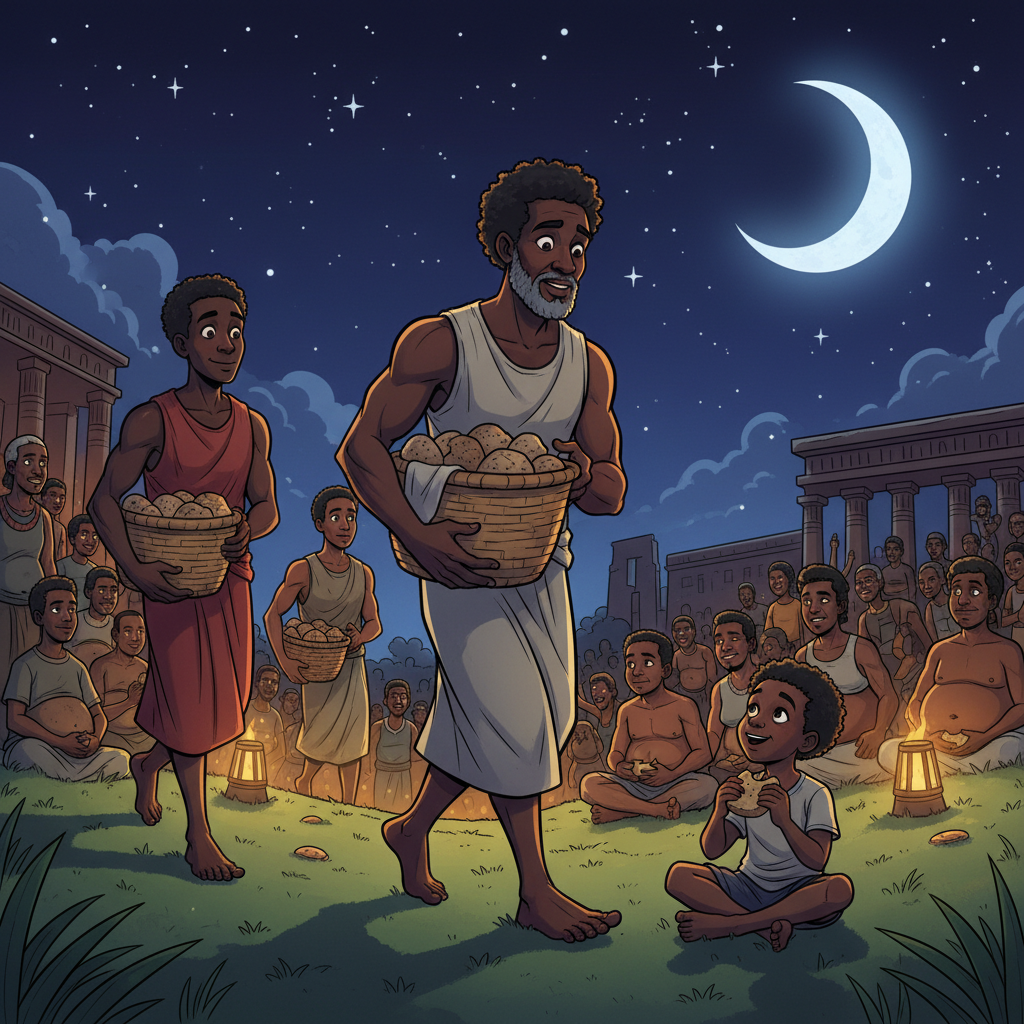
Everyone had eaten. Every stomach on the hillside was full, their hunger satisfied. Yet, the miracle was not complete. Yeshua instructed them: "Gather up the leftover pieces, that nothing is lost. For waste is a violation of Maat, and abundance must be honored." The disciples, still reeling, took up twelve large baskets. They walked through the circles, collecting the fragments that remained. Twelve baskets, filled to overflowing, from a meal that had started with five loaves and two small fish. Petros stood, holding his basket, heavy with bread he had not baked, bread that had come from nothing. He looked at the boy, Yair, who was now eating his own piece, utterly oblivious to having become the seed of an Africana parable, a living echo of Elisha’s ancient feeding.
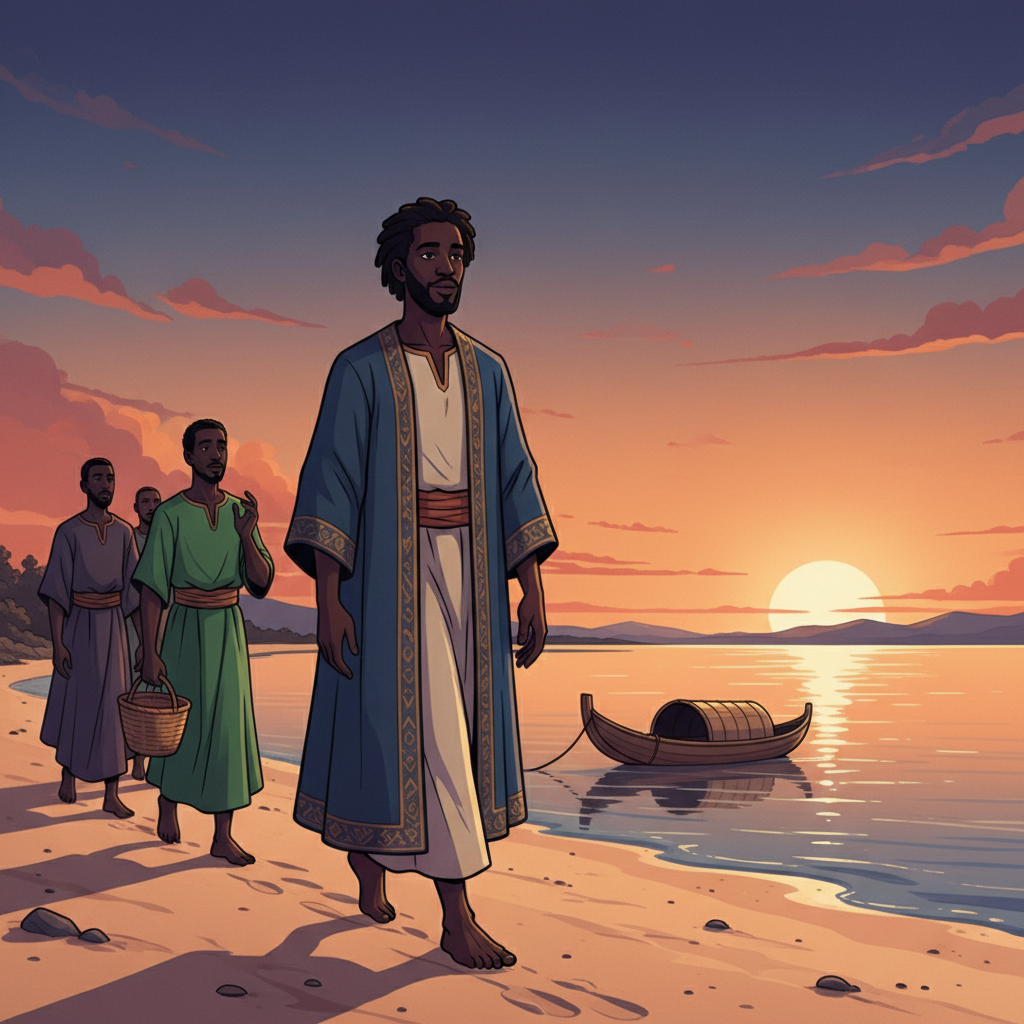
Walking back to the boat in the gathering evening, the disciples were quiet, their minds wrestling with what they had witnessed. Andreas, his voice hushed, finally broke the silence. "Rabbi," he began, "was that Heka, like at Qana, when you turned the water into wine? Was it a showing of your power over matter?" Yeshua walked for a moment in silence, his footsteps soft on the sand. Then he spoke, his voice carrying the wisdom of the ages. "Heka is the priest helping a thing remember what it is, yes. The bread remembered something, indeed. It remembered its potential, its connection to the Great All. But more profoundly, the people remembered something. They remembered to share what they had, even if it was small. They remembered their inherent Maat, their communal bond. That is the bigger Heka, Andreas. The bread was just the first wave, the catalyst for a greater remembering of reciprocity within humanity itself."