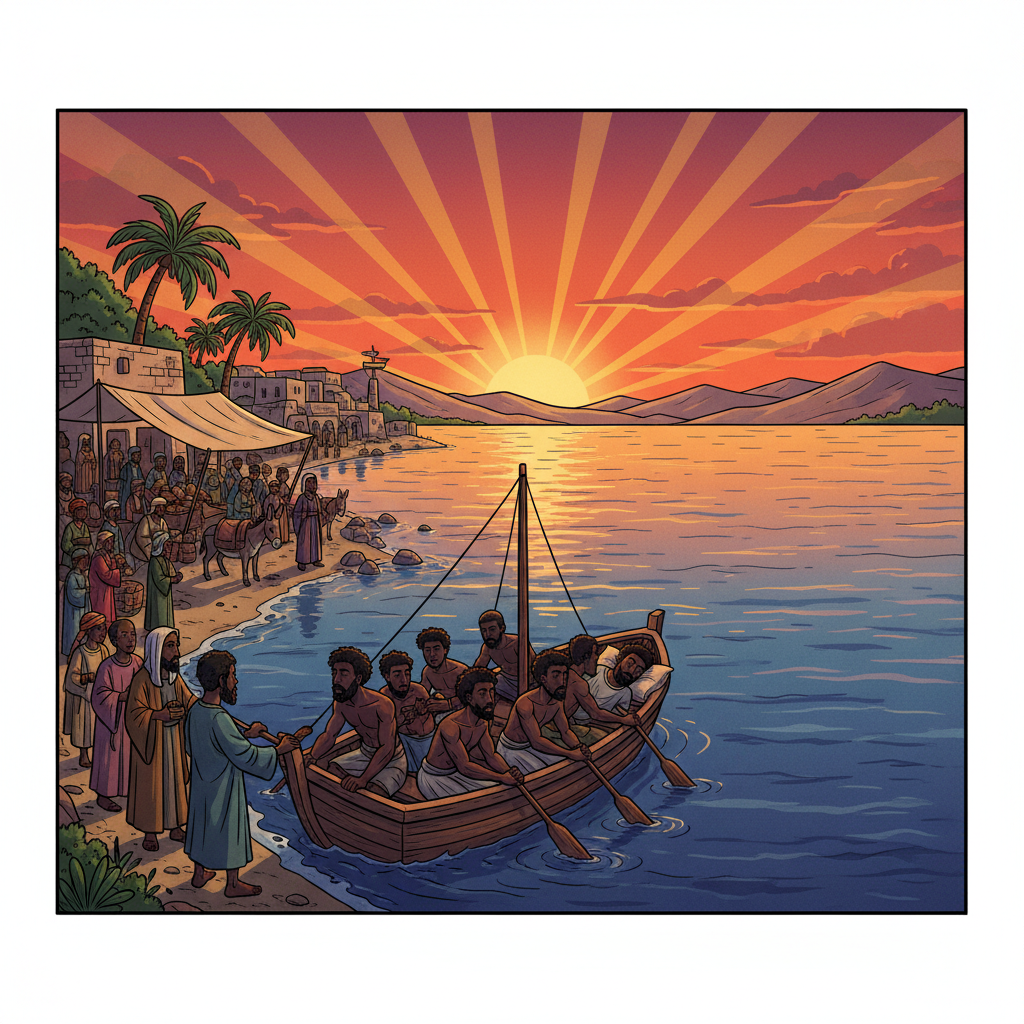
The sun, a dying ember of crimson and gold, dipped behind the western hills of Galilee. Its last light stretched across the waters, painting the surface of Kinneret — the Sea of Galilee — with the hues of evening. Yeshua and his twelve men pushed off from the busy shore of Capernaum, a town teeming with the day's teaching and the clamor of merchants. Their small fishing boat, sturdy and worn from countless crossings, cut a quiet path through the cooling waters. Yeshua lay in the stern, head resting on a folded sailcloth, already deep in the sleep of utter exhaustion. The day had taken much from him, pouring out wisdom like a river. He slept like a child of Kush, deep and unburdened, while his disciples took up the oars, their dark arms pulling in rhythmic strokes towards the eastern lands of Decapolis.
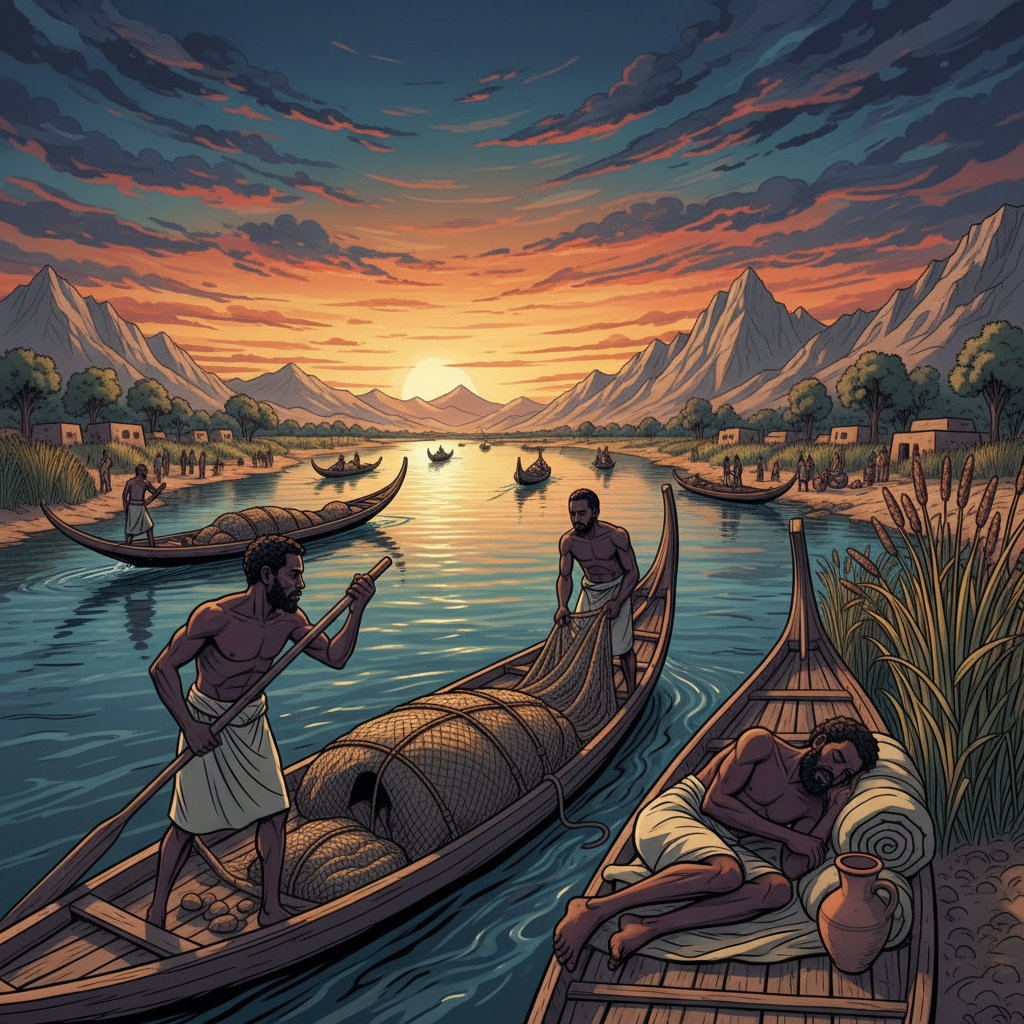
The Galilean basin was a place of quick changes, where the high mountains to the east and west funneled the air, often whipping a placid afternoon into a tempest in less than a quarter hour. This was the nature of the Kinneret, a memory held deep in the bones of every fisherman who called its waters home. Yeshua had emptied himself, his spirit a vessel poured out in teaching the ways of Maat, the cosmic order that held the universe in balance against the encroaching tide of Isfet, or chaos. Now, his body simply surrendered. He drank only water and slept, leaving the boat to the hands of men who knew the water as a second skin, men born to the rhythm of net and oar.
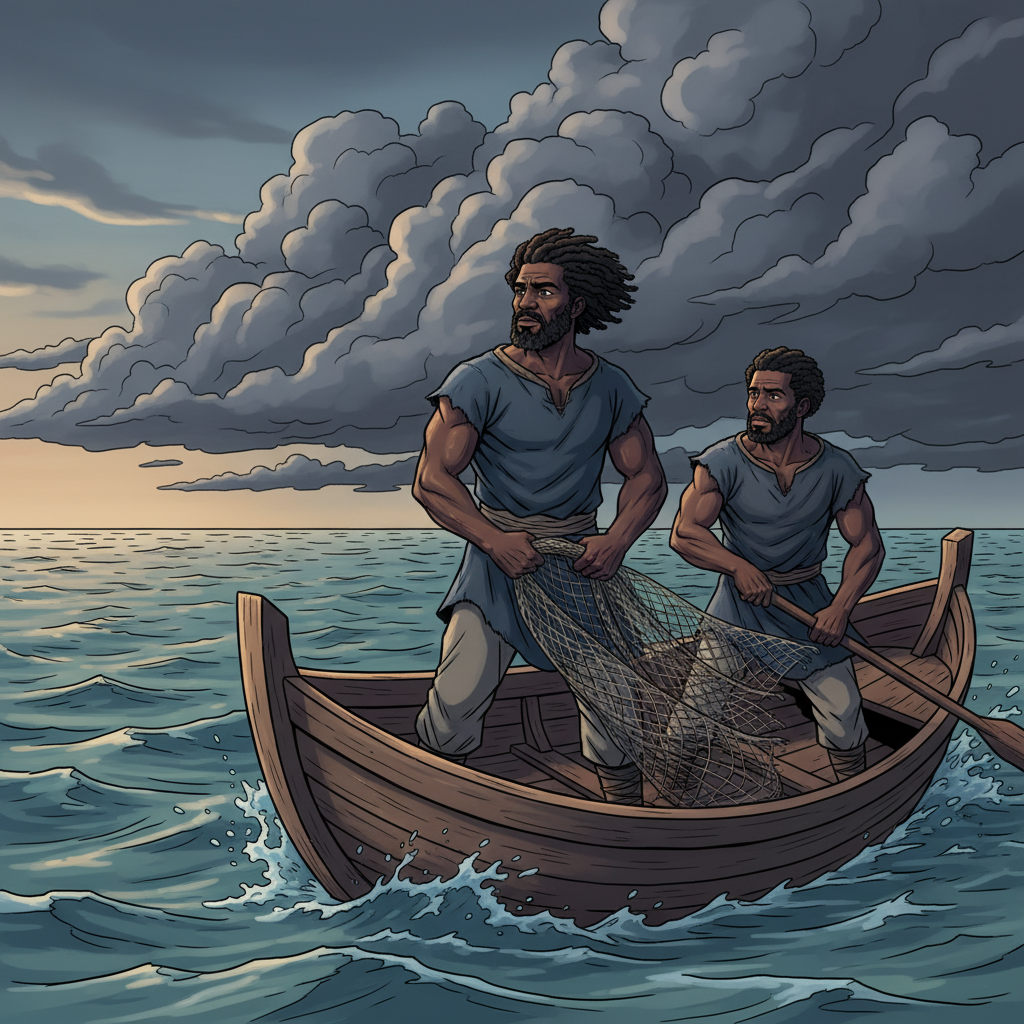
Petros, a man whose hands were as calloused as his heart was earnest, was the first to feel the shift. A veteran of these waters since his father first taught him to cast a net, he knew the language of the wind before it spoke. The wave-tops, which had been gentle ripples, began to sharpen, turning from smooth glass to nascent teeth. The air, warm moments before, took on a sudden, cold bite, carrying the metallic scent of coming rain. Clouds, dark and heavy as wet wool, were running fast out of the west, driven by an unseen force. He exchanged a quick, knowing glance with Andreas, his brother, who was already tightening his grip on the oar, his brow furrowed with concern. The boat was small, a reed in the coming storm.
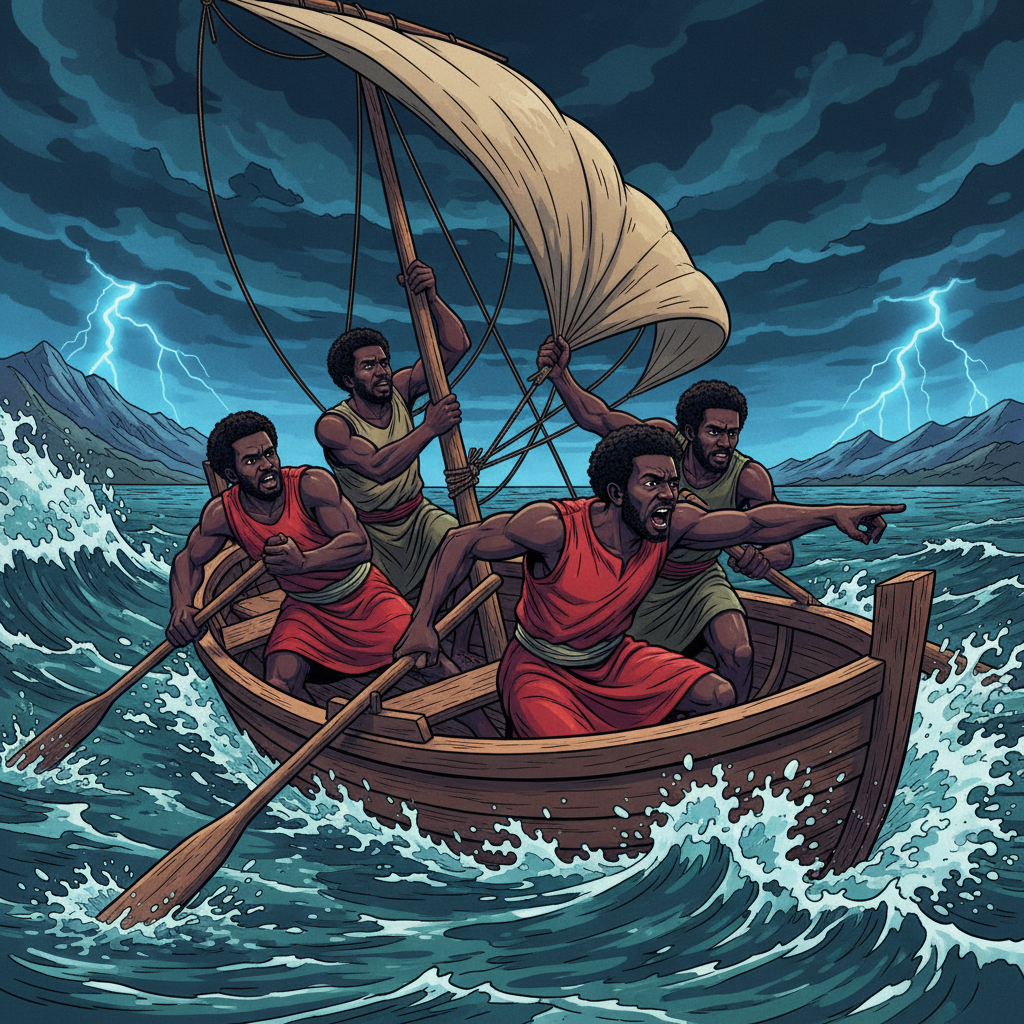
They rowed harder, their muscles straining, trying to outrun what they knew was inevitable. The wind began to shriek, a lament from the ancient hills, and the small boat bucked like a wild horse. Andreas yelled, his voice thin against the rising gale, that water was coming over the gunwale. Within ten minutes, the storm was on them fully, a sudden, violent upheaval of wind and wave. The world turned to a maelstrom of spray and darkness. The sail, which had been their hope, became a useless flapping thing; Yochanan and Bartolomeo wrestled it down, their strong, dark hands struggling against the canvas. The boat was filling fast, the dark waters of the Kinneret threatening to swallow them whole, blurring the line between the sky and the deep.
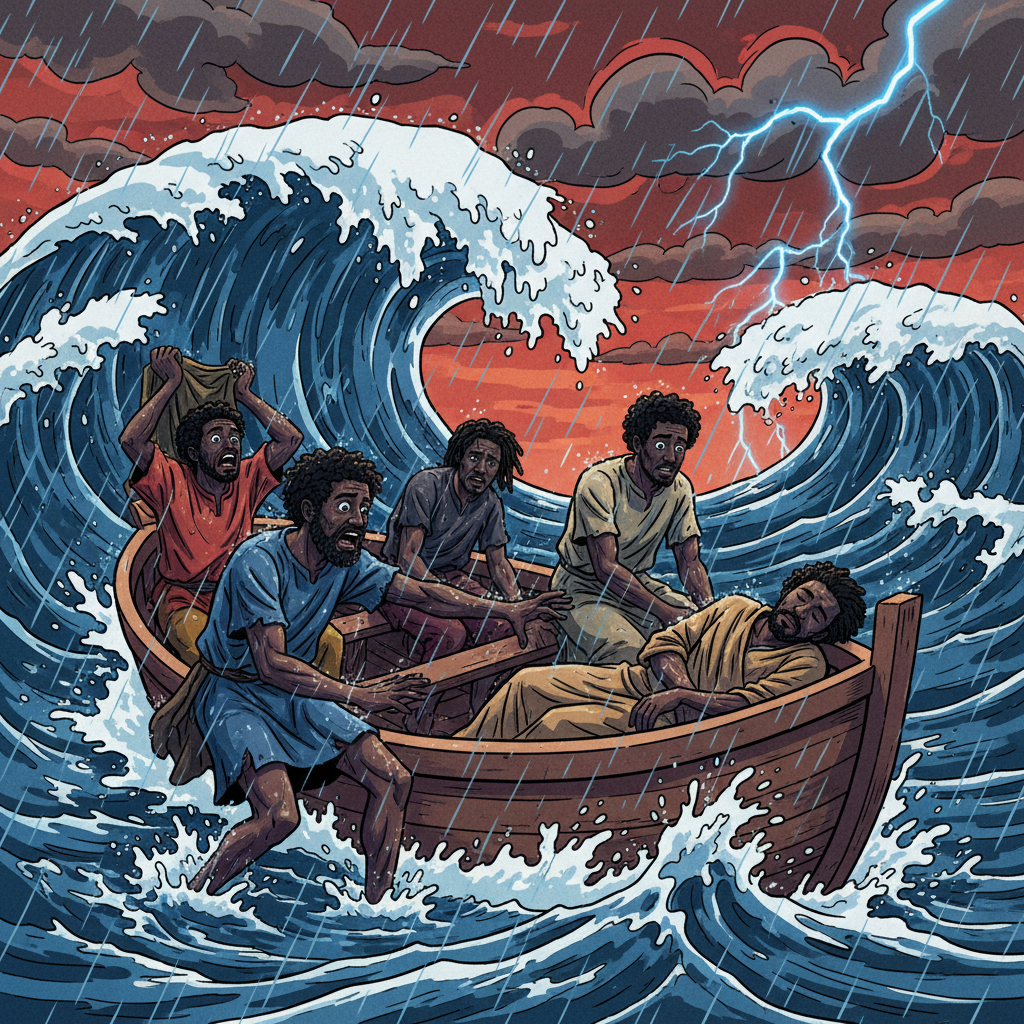
The men bailed with their hands, their cloaks soaking, their faces grim. Water sloshed around their ankles, cold and relentless. The boat was a toy tossed between giants, each wave a fist threatening to crush its wooden frame. Fear, raw and primal, began to grip their hearts. These were men who had faced storms before, but this was different. This storm carried the weight of Isfet, a chaotic force that mocked human effort. Petros, his voice hoarse from shouting over the wind, turned to the stern where Yeshua still lay, seemingly untouched by the tumult. "Rabbi! Rabbi!" he cried, his voice laced with desperation, "Do you not care that we are perishing?"
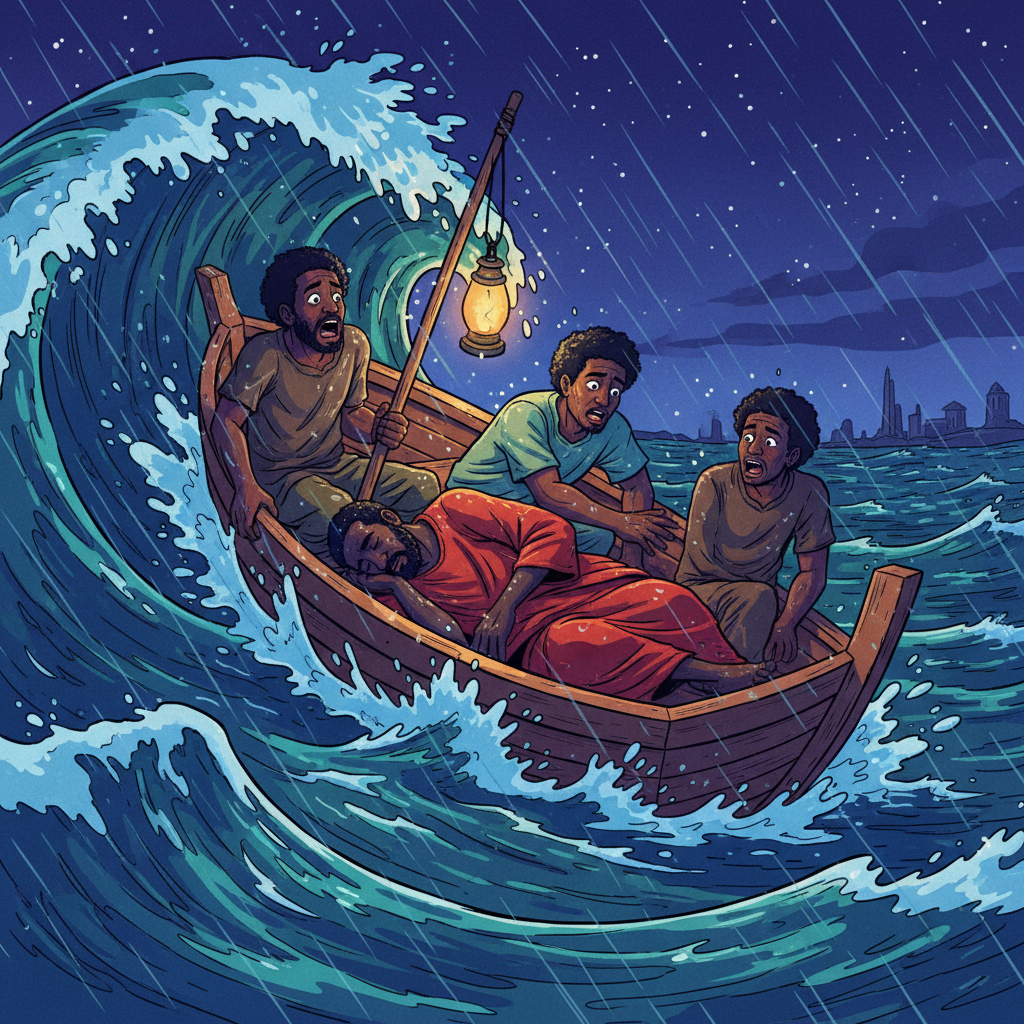
Yeshua did not wake. He slept on, a dark form against the swirling darkness, an island of stillness in a sea of chaos. Bartolomeo, a quiet man but observant, murmured, "He is exhausted beyond measure. He has poured out his spirit all day." But Yochanan, his dark eyes wide with alarm, would hear none of it. "He is also our teacher! And we are about to drown!" he shouted, the words torn from his throat by the wind. "WAKE HIM!" The boat dipped again, burying its bow deep into a trough, and a wave broke over them, drenching them to the bone. They were at the edge of their endurance, facing a force that seemed determined to erase them from the face of the waters.
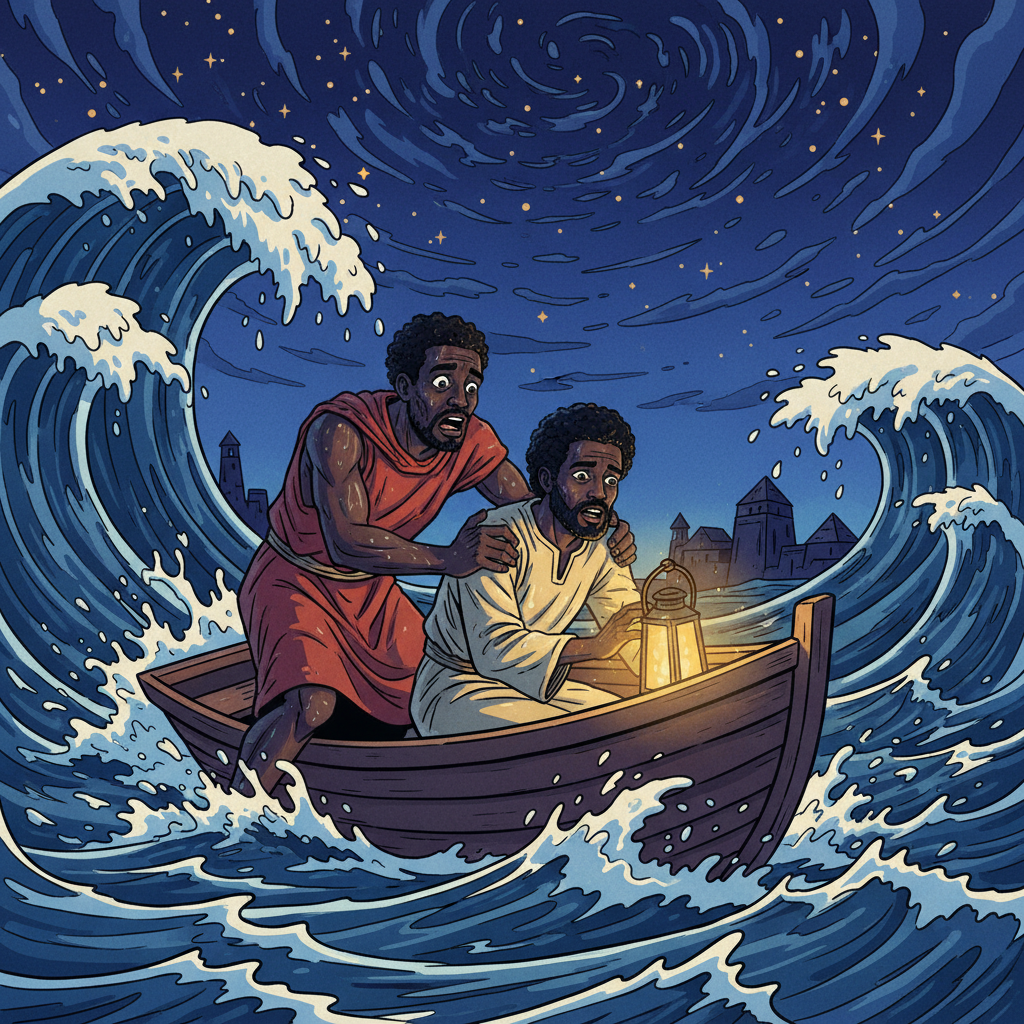
Petros, with a strength born of terror and a flicker of faith, stumbled back to the stern. He reached down and shook Yeshua hard, his hands gripping the teacher’s shoulders. "Teacher! Master! We are dying! Wake up!" Yeshua stirred. His eyes, slow to open, were the color of deep earth, steady even in the pitching darkness. He looked at the churning sky, then at the monstrous waves that threatened to engulf them. He looked at his men’s faces, etched with fear and desperation, their dark skin gleaming with water and sweat. He saw the Isfet in the storm, and the Isfet in their hearts. A deep calm settled upon him, a quiet assurance of Maat's enduring presence.
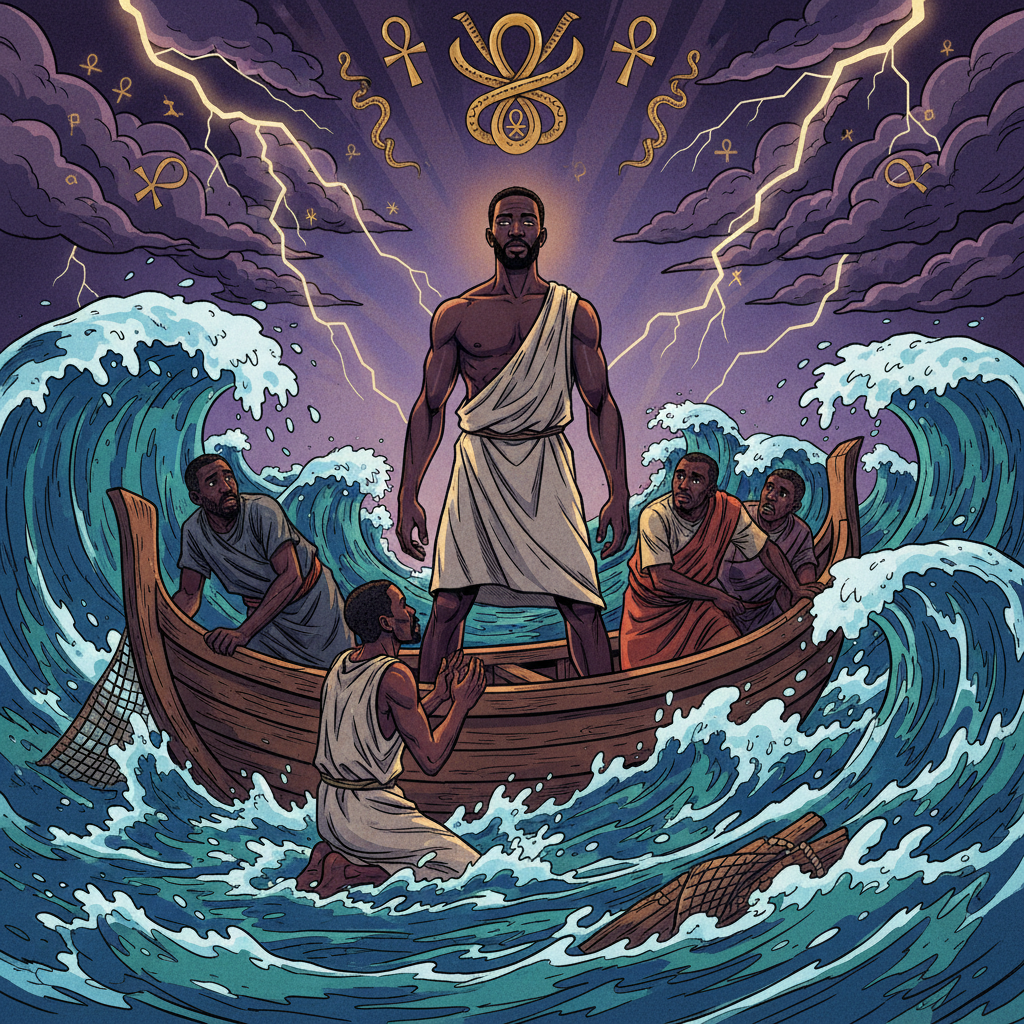
He stood. The boat rocked heavily beneath his feet, yet he remained unshaken, his stance wide and firm, rooted like an ancient sycamore. He did not pray aloud, no plea or supplication escaped his lips. He did not raise a staff like Moshe, parting waters with a mighty hand. He simply faced the wind, his dark face serene, his gaze piercing the heart of the storm. He understood the cosmic dance between Maat and Isfet, the dynamic tension that held the universe. And in that moment, he, the child of both Kemet and Galilee, spoke with the authority of the Divine Word, of Heka itself, the power that brings things into being.
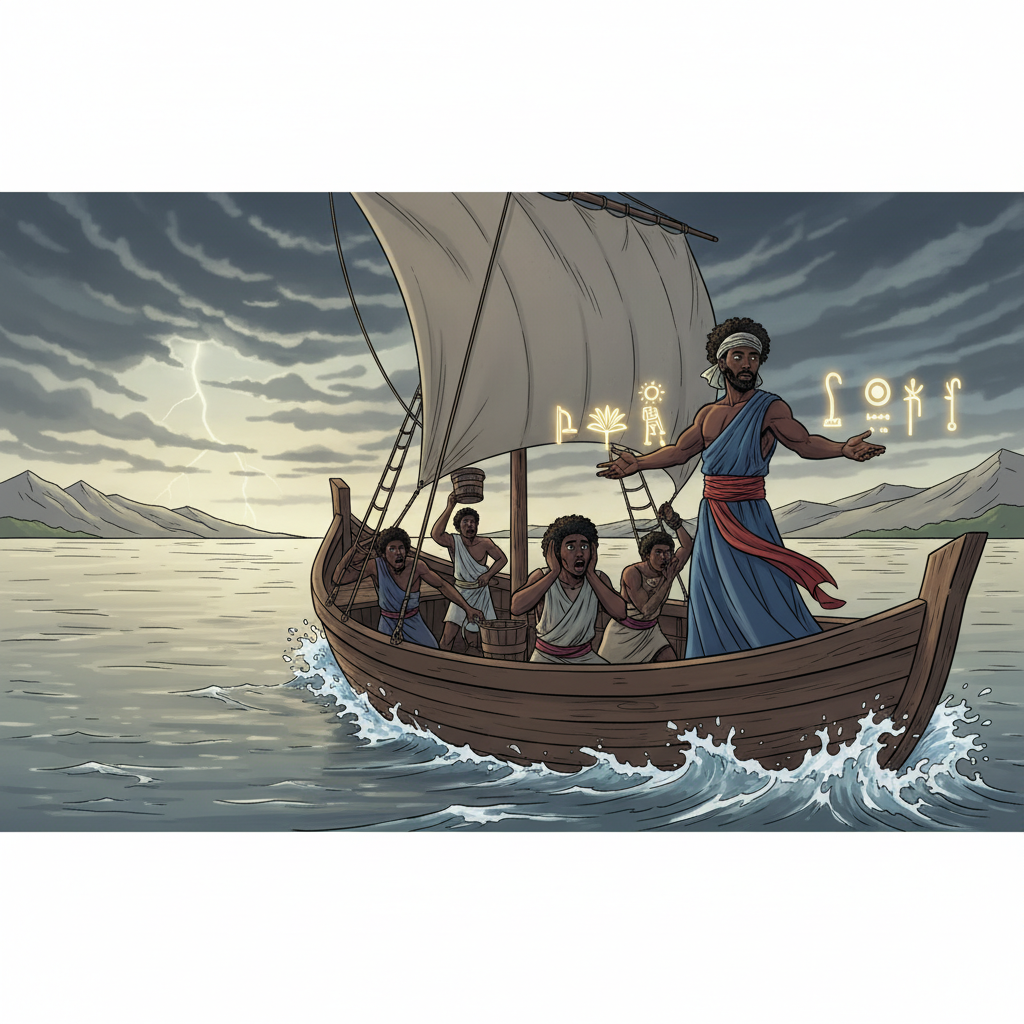
His voice, though not loud, cut through the gale with an undeniable force. Four words, ancient and potent, emerged from the center of his being, spoken not as a request, but as a command, an utterance of fundamental truth: "Peace. Be still." The effect was not gradual. It was instantaneous. The wind, which had shrieked and roared, dropped. Not in stages, not in a dying sigh, but in an abrupt, absolute silence. The waves, moments before towering and white-capped, went from raging chaos to glassy calm in less than a minute. The sail-rope, which had whipped wildly, hung motionless. Even the distant echo of the mountain thunder seemed to subside, as if the very air held its breath.
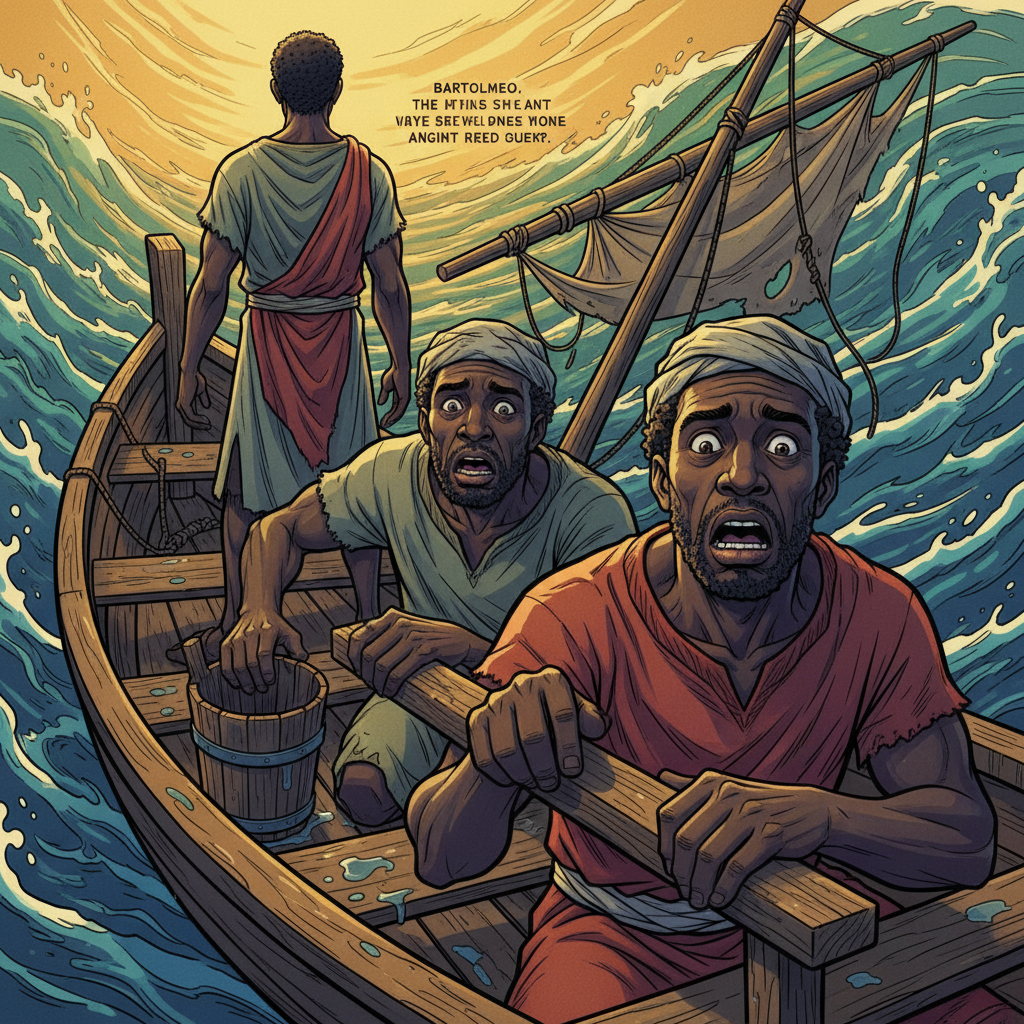
The disciples stood frozen, their mouths agape, their eyes wide with a disbelief that warred with the undeniable reality before them. Petros, who had spent his entire life wrestling with the Kinneret's moods, felt a tremor run through him, a shaking that was not from the cold. Andreas, still clutching a bucket, let it clatter to the bottom of the boat, his hands trembling. Bartolomeo, his voice a hushed whisper, articulated the question that hung unspoken in the suddenly quiet air, a question that resonated with the ancient awe of his ancestors: "Who is this man, that even the wind and the sea obey him? Who is this who speaks with the power of creation, the very breath of Ra?"
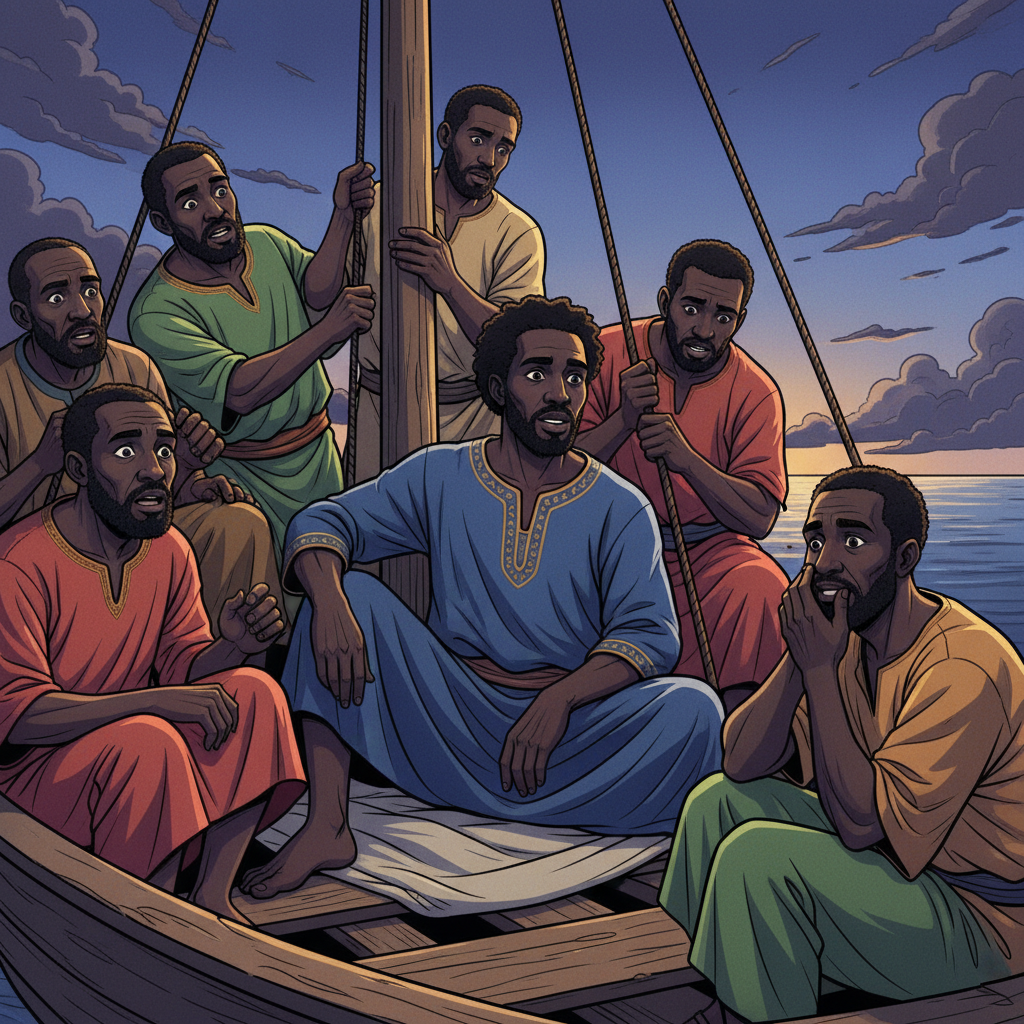
Yeshua sat back down on the folded sailcloth, his quietude as profound as the calm he had just commanded. He looked at his men, their faces now a mixture of awe, confusion, and fear. He did not offer a rebuke, no harsh words for their terror. Instead, he spoke with the gentle inquiry of a teacher still teaching, a guide leading them to deeper understanding. "Where is your faith?" he asked, his voice soft, almost a whisper against the silence that now enveloped them. It was a real question, not an accusation. A question meant to provoke introspection, to guide them towards the realization of the Maat that lay within themselves, the power of trust in the Divine Order.
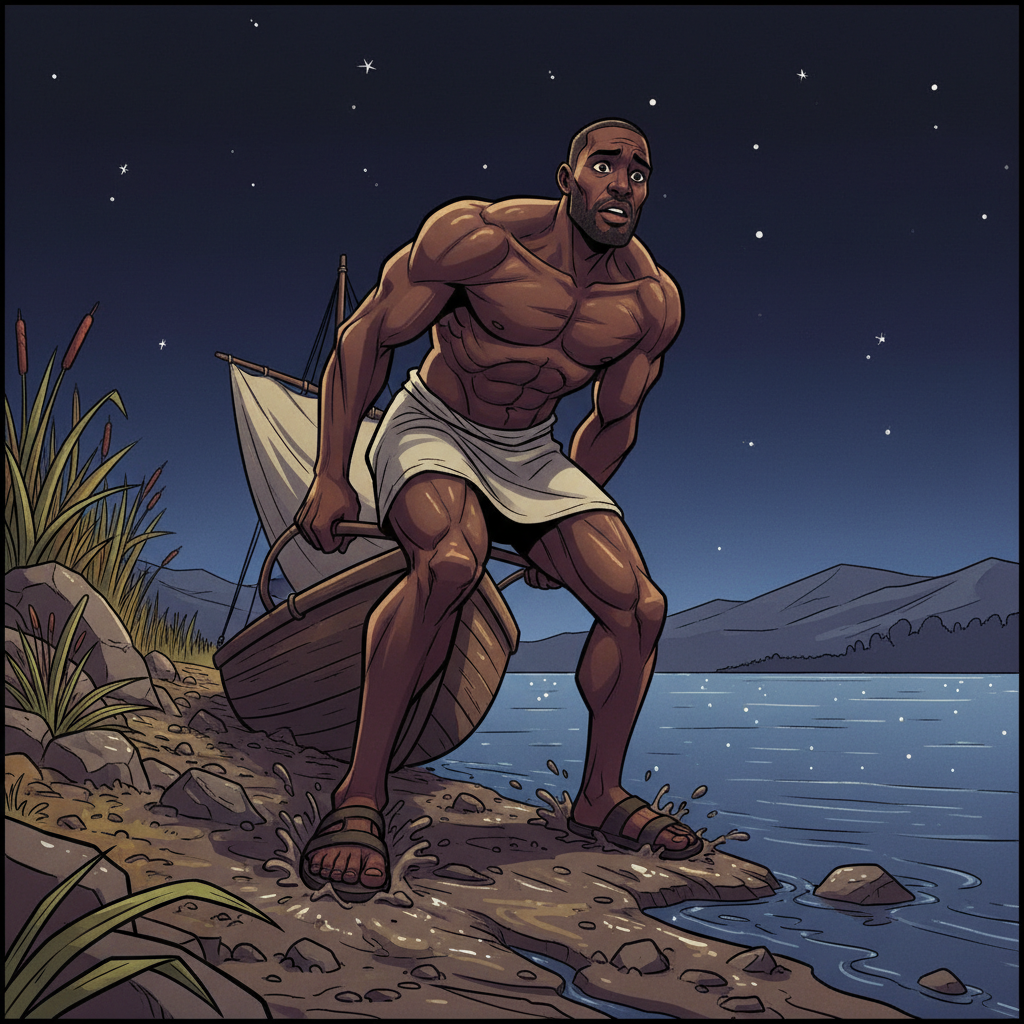
They reached the eastern shore in a profound, unsettling calm. The small boat glided smoothly over the glassy water, reflecting the emerging stars like scattered diamonds. Petros, still reeling from the impossible, pulled the boat up onto the muddy bank, the soft earth sucking at his sandals. He had been a fisherman his whole life, had seen the Kinneret in every mood, but he had never witnessed such a thing, had never heard of any of his lineage, not even the old ones, possessing such authority over the elements. This was a power beyond human understanding, a direct articulation of Heka, the divine speech that shapes reality. It shook the foundations of his world, not as a destructive force, but as a revelation.
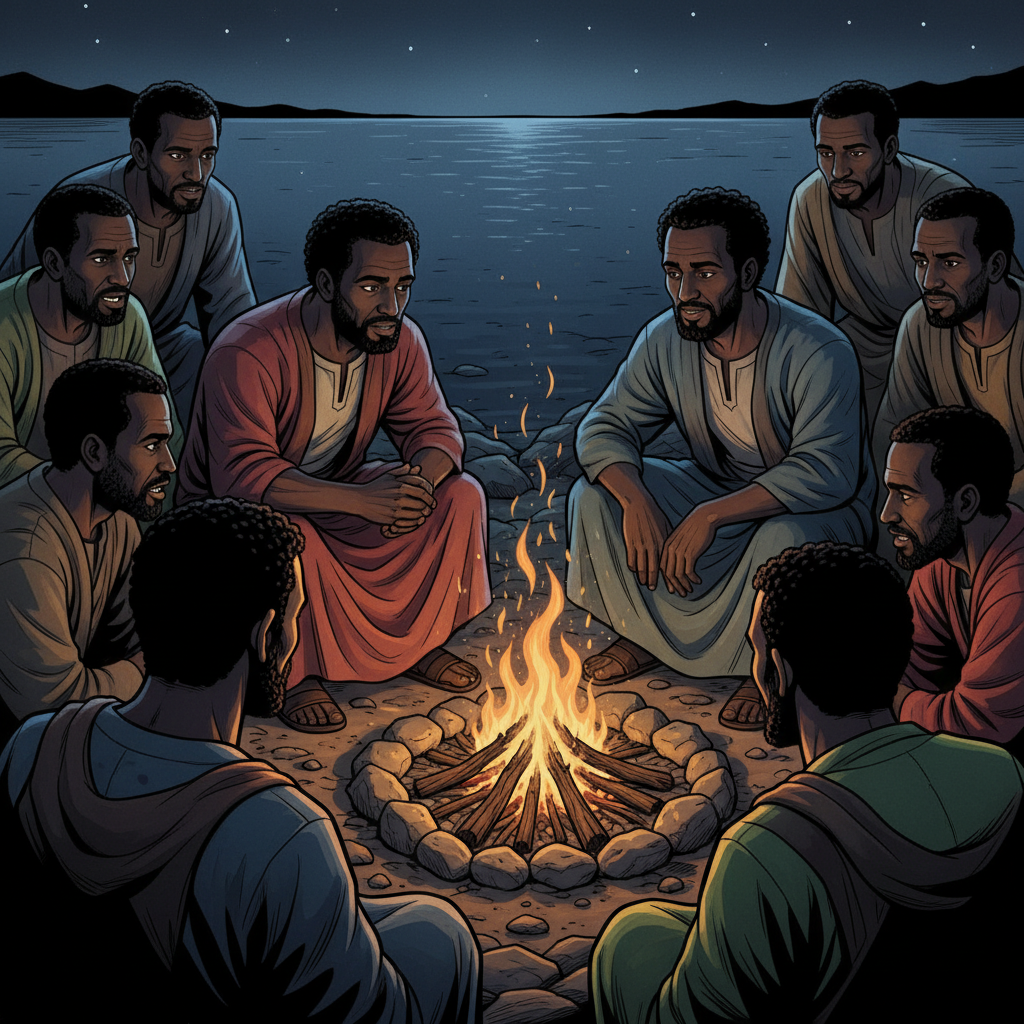
Around a small fire on the eastern shore, built from driftwood and dry reeds, no one spoke for a long time. The crackle of the flames was the only sound, a small heartbeat in the vast silence. They were all processing, each in his own way, the raw, undeniable truth of what they had witnessed. Andreas finally broke the silence, his voice hesitant, almost reverent. "Rabbi," he began, his dark eyes fixed on Yeshua, "back at Qana, you said the water remembered what it had been. Does the WIND remember too? Does the very air hold memory of its form, before it became chaos?"
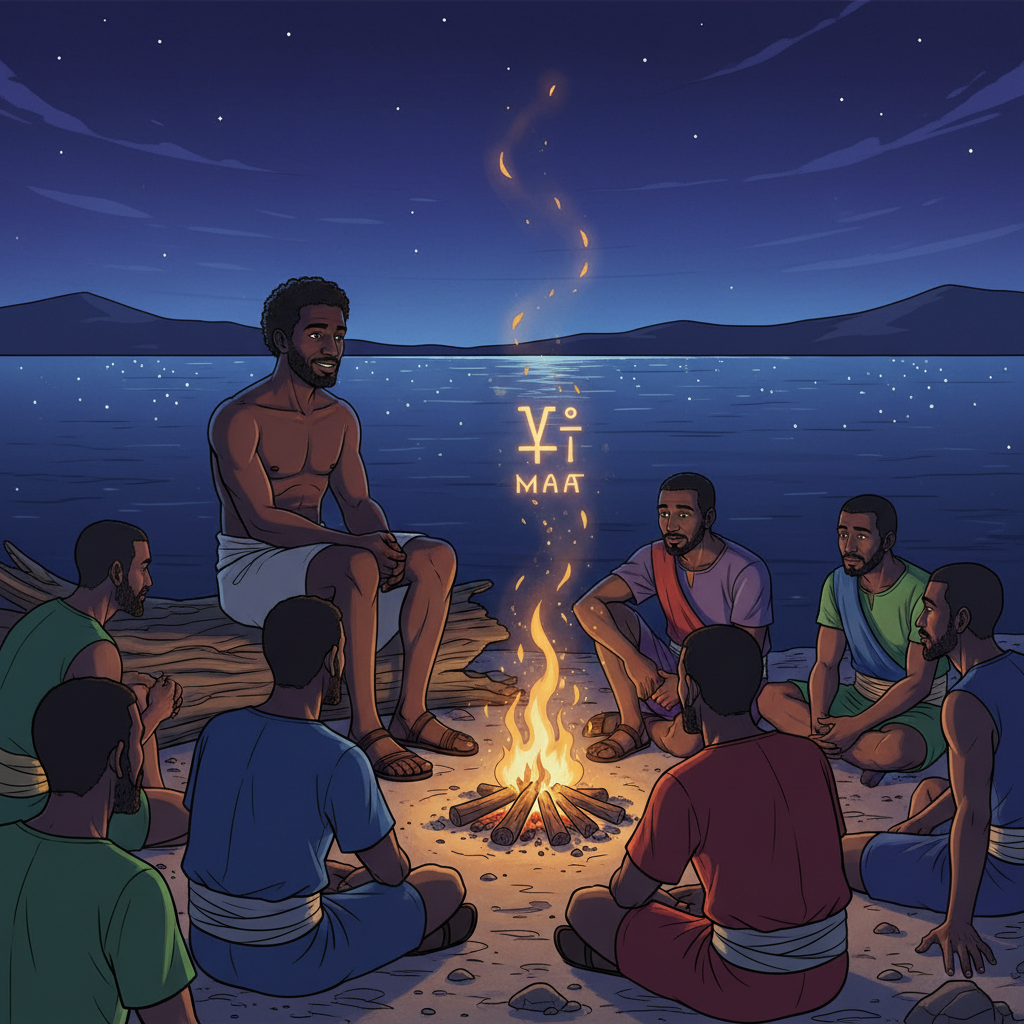
Yeshua looked at Andreas, a faint, knowing smile gracing his lips. "Everything remembers, Andreas," he replied, his voice a low hum against the night. "Everything carries the memory of its origin, the blueprint of Maat within its essence. The water remembers the living stream; the wind remembers the breath of creation; the earth remembers the form it was given. All creation, touched by Isfet, carries the potential for return to order, for the voice of Heka to bring it back into alignment. The world is a living tapestry of memory and potential, waiting for the word that calls it back to its true self." His words hung in the cool night air, pregnant with meaning, echoing the wisdom of the ancient sebas.
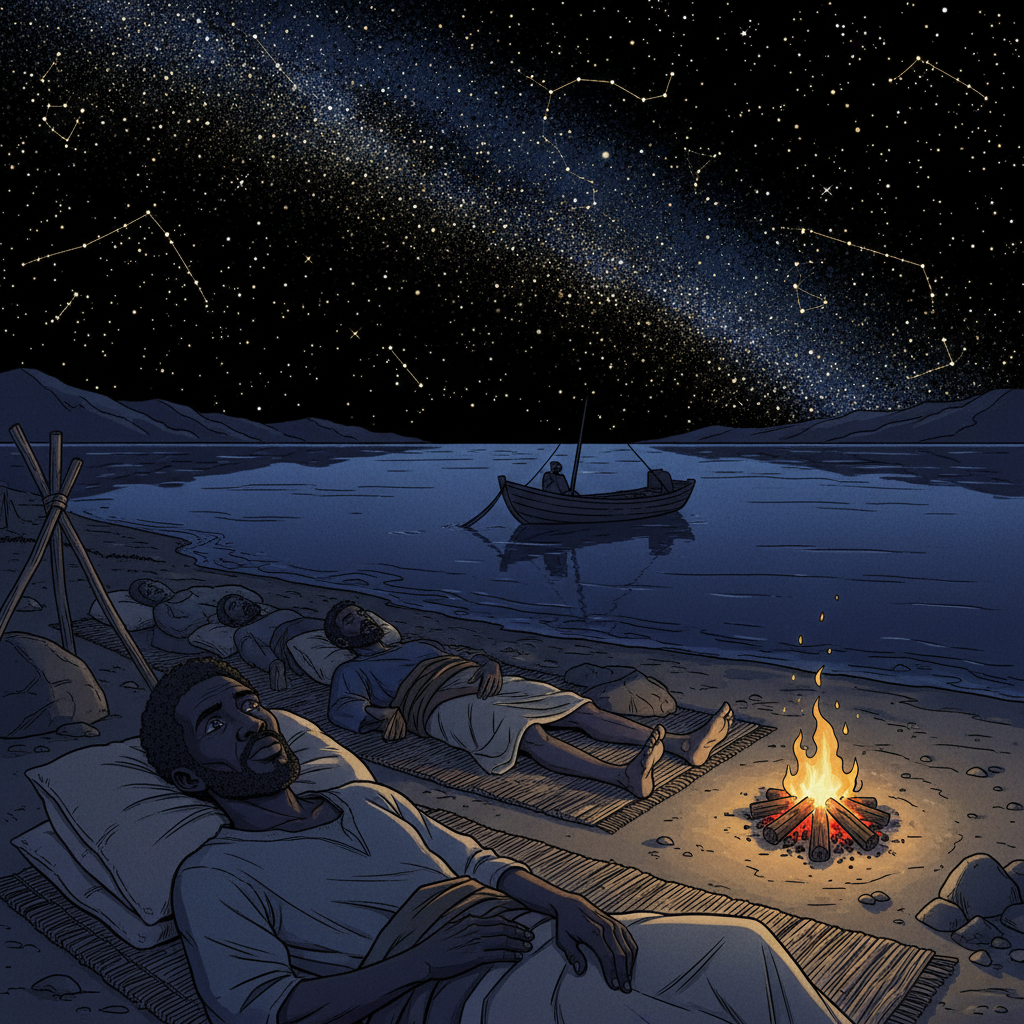
They slept on the eastern shore that night, but sleep did not come easily for Petros. He lay awake, gazing up at the countless stars that now glittered in the perfectly clear, silent sky. His mind replayed the scene again and again: the raging storm, the despair, Yeshua standing, and then the four words, "Peace. Be still." He had been a fisherman his whole life, a man of the Kinneret, and yet, in that moment, he felt like a child learning to walk. The world, the cosmos itself, was far vaster, far more alive, and far more responsive than he had ever imagined. The Maat of the universe had bent to the will of his teacher, Yeshua, a son of man and a son of the Divine, embodying the ancient power of his lineage.