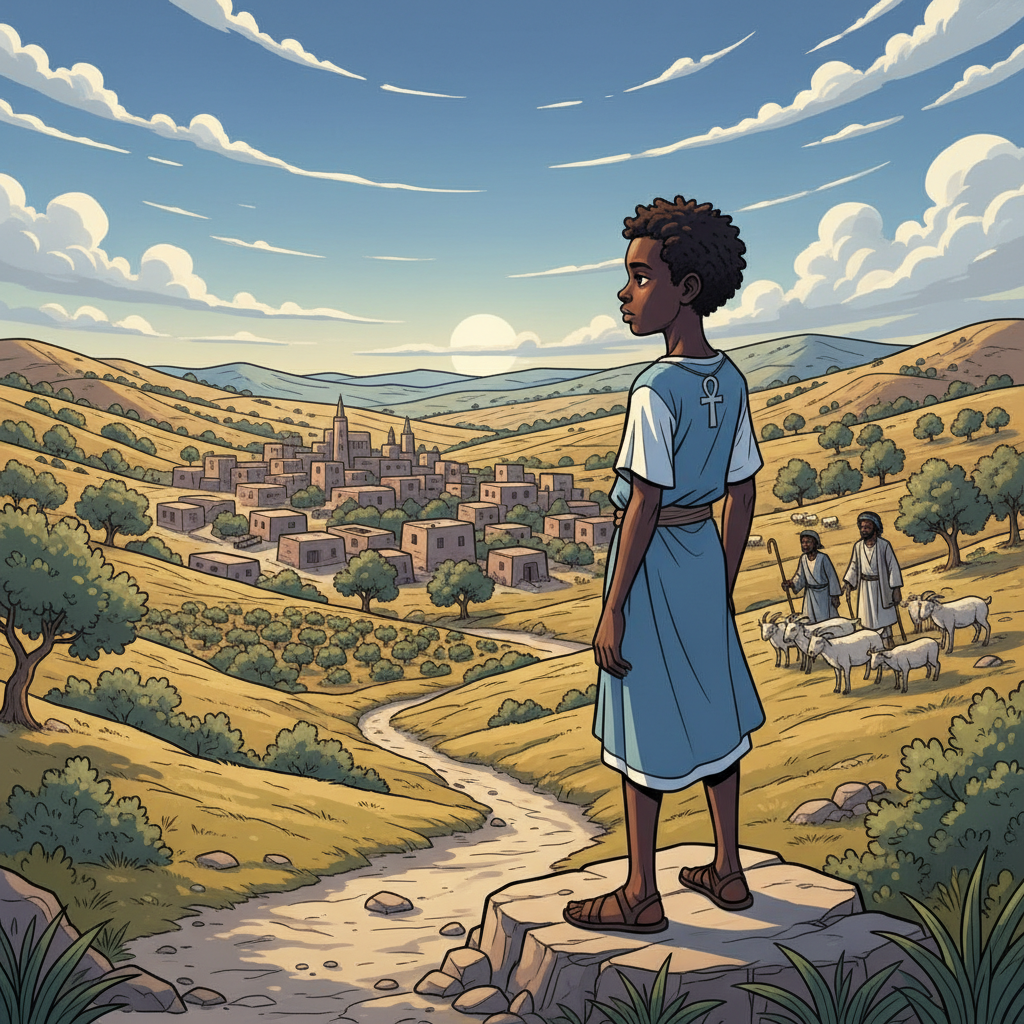
Yeshua stood at the cusp of twelve years, his frame lean and strong, tempered by the sun of Galilee. Six cycles of the sun had passed since the family’s return from Kemet, that land of profound wisdom, whose teachings still resonated in the quiet spaces of his mind. Nazareth, his home, was a small place, cradled in the hills, far from the grand cities of the world. Yet, the world spoke to him even there, in the rustle of the olive trees and the distant call of the shepherds. Beneath his simple tunic, a silver ankh, a gift from his time in the Delta, rested against his dark skin, a cool weight over his heart, a constant reminder of the life current that flows through all things. He carried the spirit of the Nile and the traditions of his people within him, two streams converging.
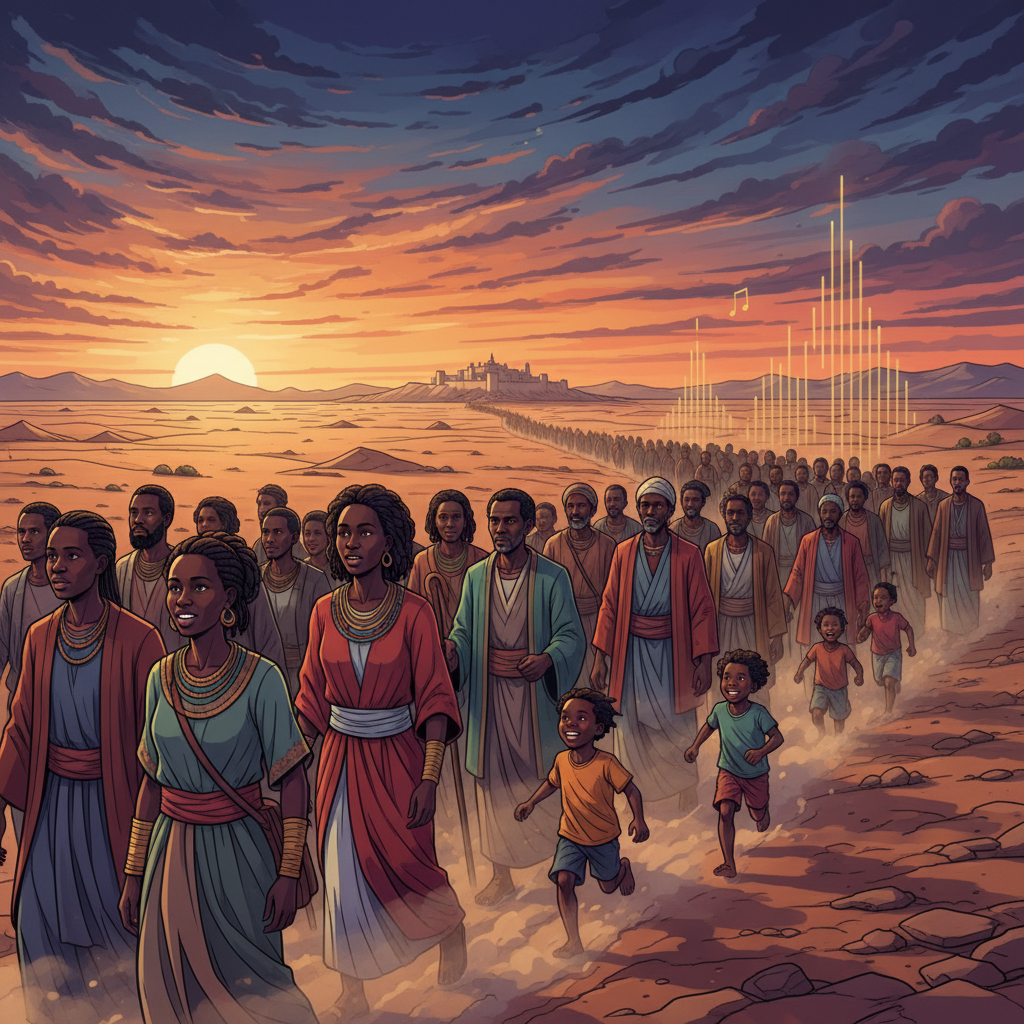
The time of Pesach arrived, a season of remembrance and liberation, calling families from across the land to Yerushalayim. Yeshua joined his Abba, Yosef, and his Ima, Miriam, along with their kin from Galilee. The journey was long, a pilgrimage walked with purpose, the dust of the road clinging to their feet, the shared songs rising to meet the vast sky. Children ran ahead, their laughter echoing, while elders walked with a steady pace, their faces etched with seasons of sun and wind. Each step was a prayer, a re-enactment of the ancient journey out of bondage, a deep communion with the ancestors who had walked these same paths before them. The air thrummed with anticipation, drawing them closer to the holy city.
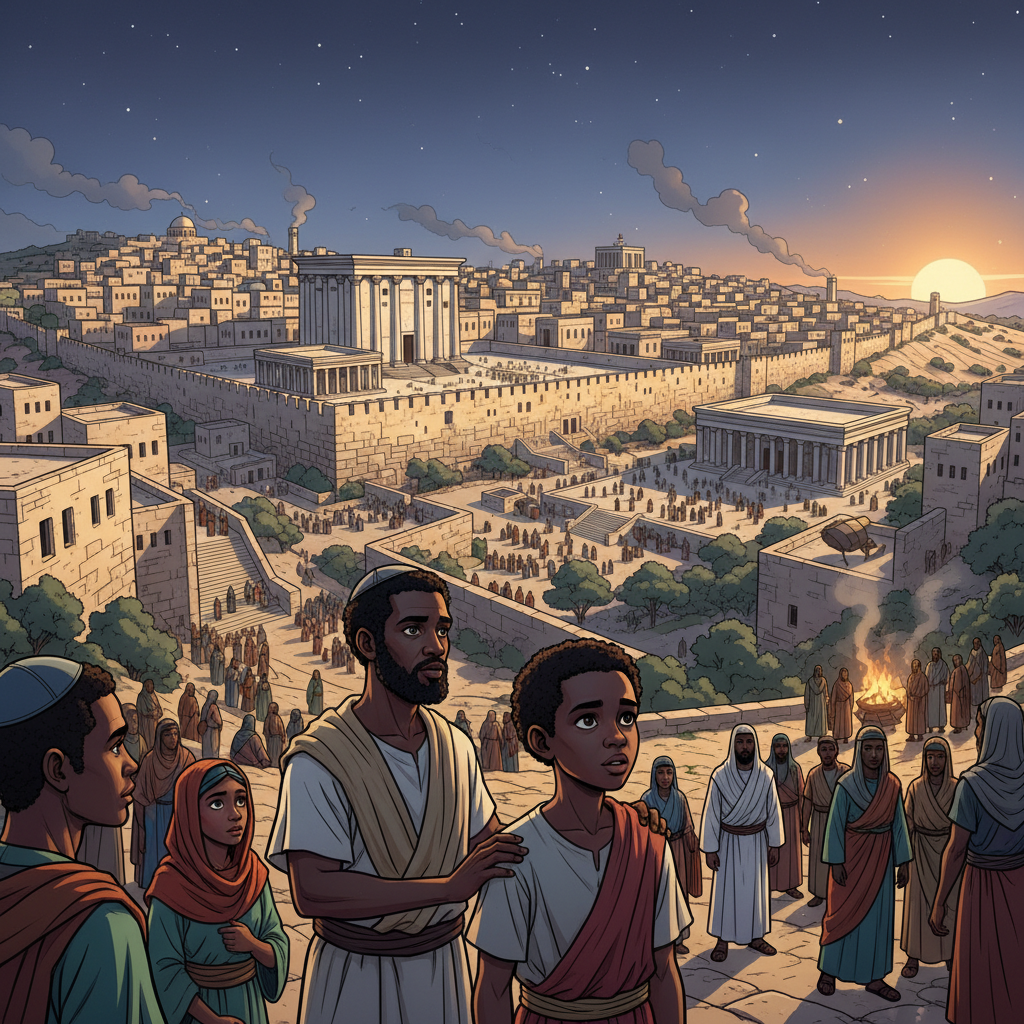
As they approached Yerushalayim, the city rose from the hills like a vision, its walls formidable, its very stones breathing history. The Temple courts, immense and gleaming under the bright spring sun, dominated the landscape. Herodian stone, carved with precision and grandeur, reflected the light, a testament to earthly power and sacred purpose. White-linen priests moved with solemn dignity through the throngs of pilgrims, their robes stark against the colorful garments of the people. The air was thick with the scent of incense, roasted lamb, and the eager murmurs of thousands who had come to stand in the presence of the Most High. Yeshua felt the deep pulse of the place, a confluence of devotion and tradition that had endured for generations.
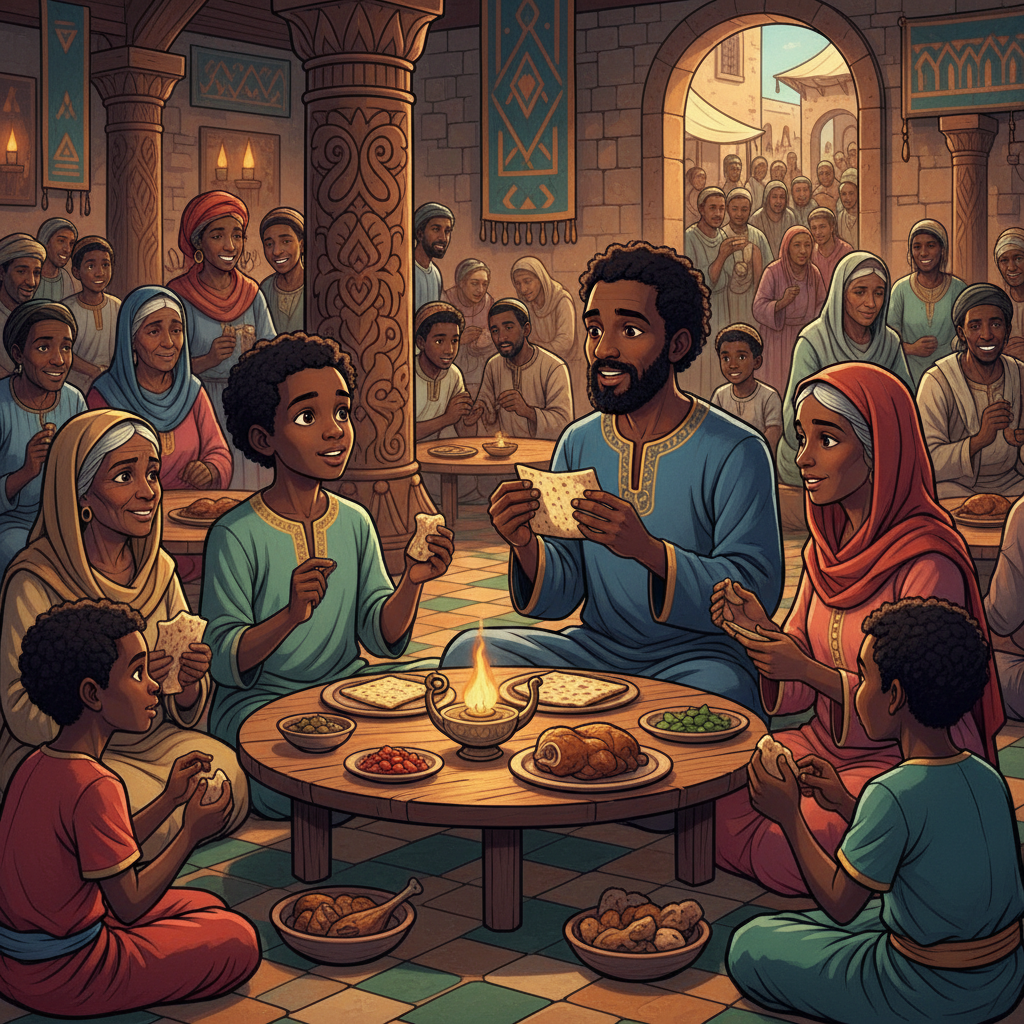
The Pesach meal, shared within the bustling city, was a sacred anchor in the whirlwind of the festival. Around a low table, Yeshua and his family gathered, their voices mingling with the sounds of other families celebrating nearby. They broke unleavened bread, its flatness a stark reminder of haste and freedom. They ate the roasted lamb, rich and savory, and tasted the bitter herbs, their pungency recalling the hardship of their ancestors. Yosef led the Seder, reciting the words Moshe taught, recounting the story of liberation from Mitzrayim, of the hand of The Great Spirit leading them through the wilderness. Yeshua listened, his eyes bright, understanding the deep currents of this narrative, its connection to the very pulse of life itself.
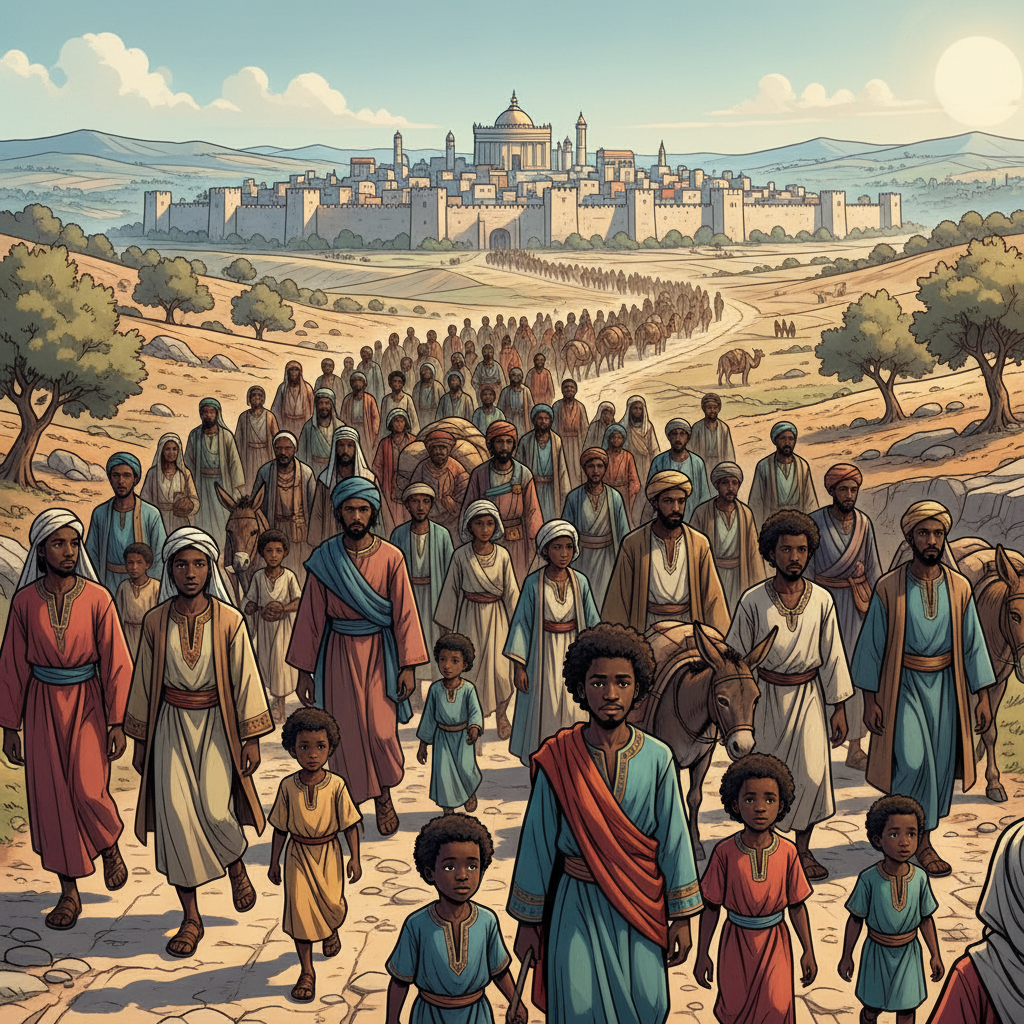
When the festival days concluded, the joyous chaos began to disperse. Families started their return journeys, forming caravans along the well-worn roads. Yosef and Miriam, accustomed to the free movement of their kin, assumed Yeshua was among his cousins, perhaps walking with the younger boys, or lingering to hear the stories of an elder. The Nazareth company was a large one, stretching along the dusty path, filled with familiar faces and the comfort of shared travel. The rhythm of departure was a familiar dance; children would wander, then reappear. The sun beat down, warming their backs as they left the grandeur of Yerushalayim behind, returning to the quiet hills of Galilee, their hearts full from the pilgrimage.
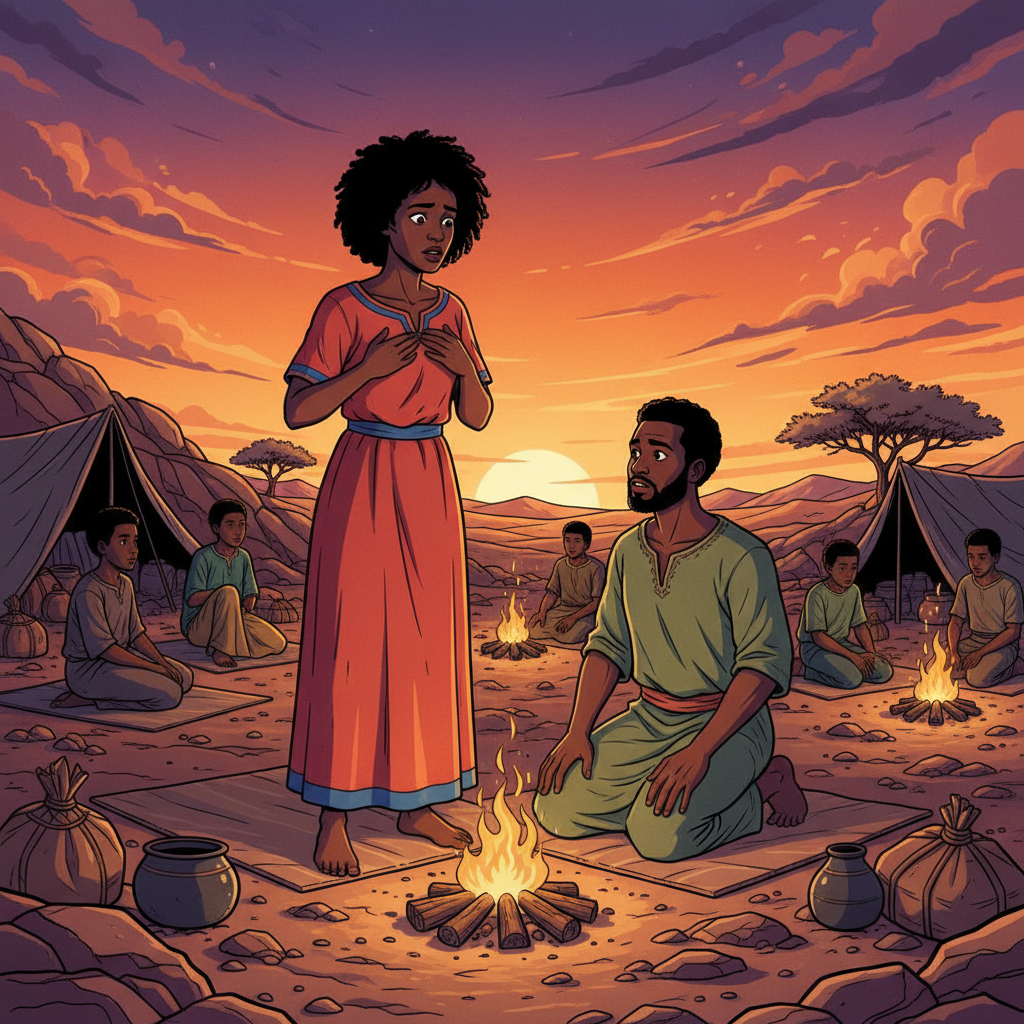
As the sun began its descent, painting the western sky in hues of ochre and purple, the company made camp for the night. Fires were lit, food was prepared, and the murmurs of evening prayers rose into the cooling air. It was then, as Miriam moved among the sleeping mats, gathering her family close, that a deep quiet settled over her. She called Yeshua’s name, her voice soft at first, then a little louder. No answer. She scanned the faces of the boys gathered around the fire, her heart beginning to quicken. He was not there. The familiar comfort of the day’s travel dissolved into a chilling certainty. Miriam looked to Yosef, her eyes wide, a silent question passing between them in the deepening twilight.
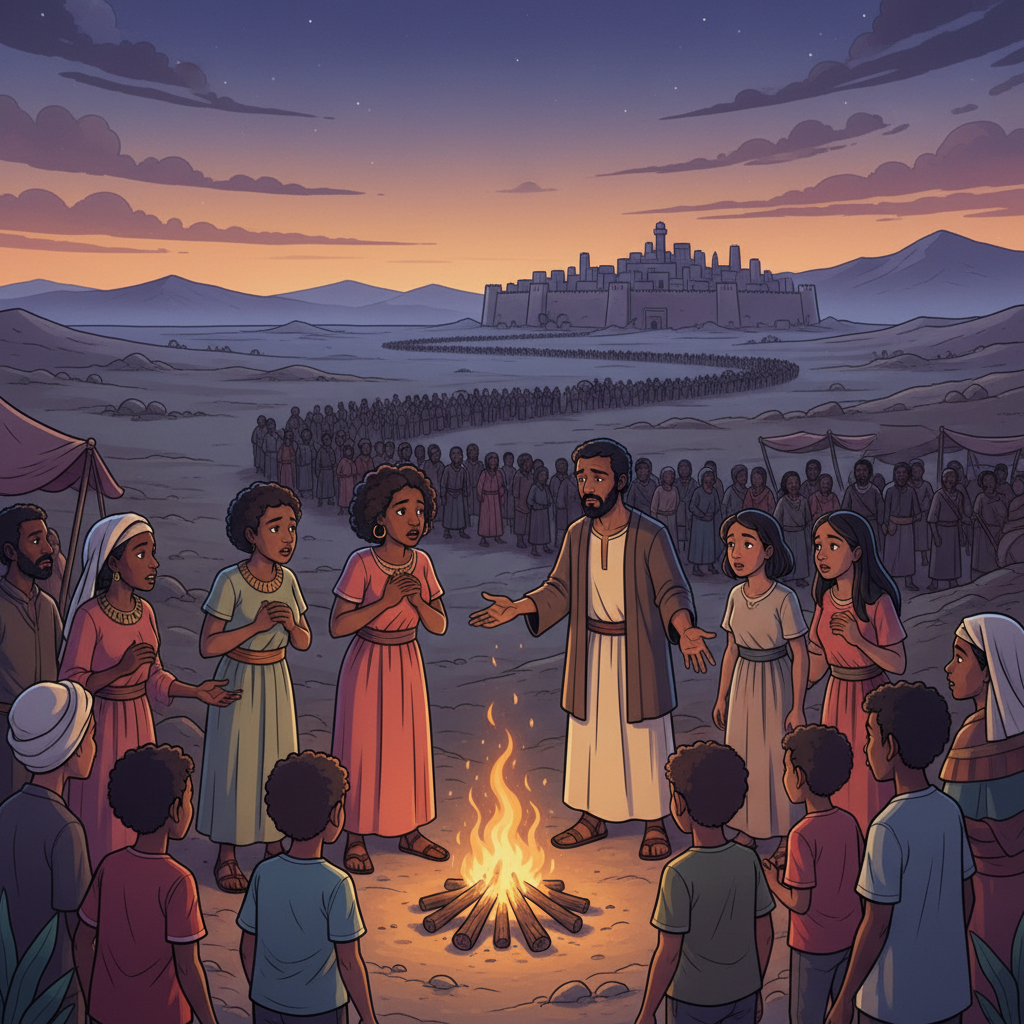
Miriam approached the cousins, her voice hushed, tinged with a rising fear. “Have you seen Yeshua?” The young boys shook their heads, their faces serious in the flickering firelight. The older girls, too, had not seen him since the morning, assuming he was with his parents. Panic, a cold, sharp blade, pierced through Miriam’s calm. Yosef, seeing the growing alarm in her eyes, began to question others more broadly, his own brow furrowed with concern. The collective shrugs and expressions of bewilderment confirmed their worst fears. Their child was not among them. The vastness of the journey, the crowded city, the multitude of people—all these facts now loomed, transforming the joyous pilgrimage into a harrowing search. The quiet of the camp became heavy with unspoken dread.
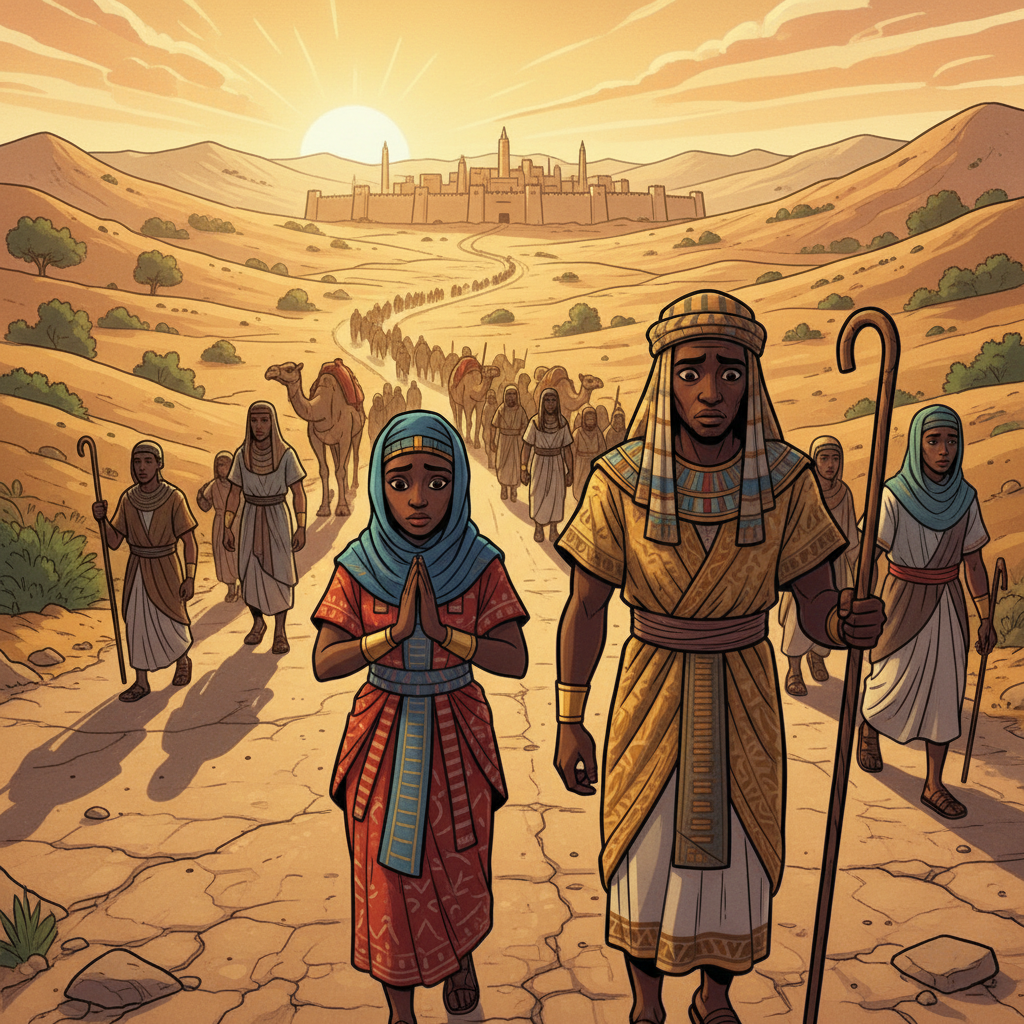
There was no hesitation. As soon as the sun rose, painting the eastern hills in streaks of gold, Yosef and Miriam made the agonizing decision. They would turn back. The thought of their son lost in the teeming city, a mere boy, was unbearable. The first day of their search was a return journey, a day’s walk back to Yerushalayim, each step heavy with worry. The joyous songs of the outbound journey were replaced by silent, fervent prayers. Upon reaching the city, they plunged into its labyrinthine streets, asking everyone they met, describing their son’s face, his bright eyes, his dark, curling hair. They searched the marketplaces, the inns, the outer courts of the Temple, their voices hoarse, their hope a fragile flame flickering in the wind.
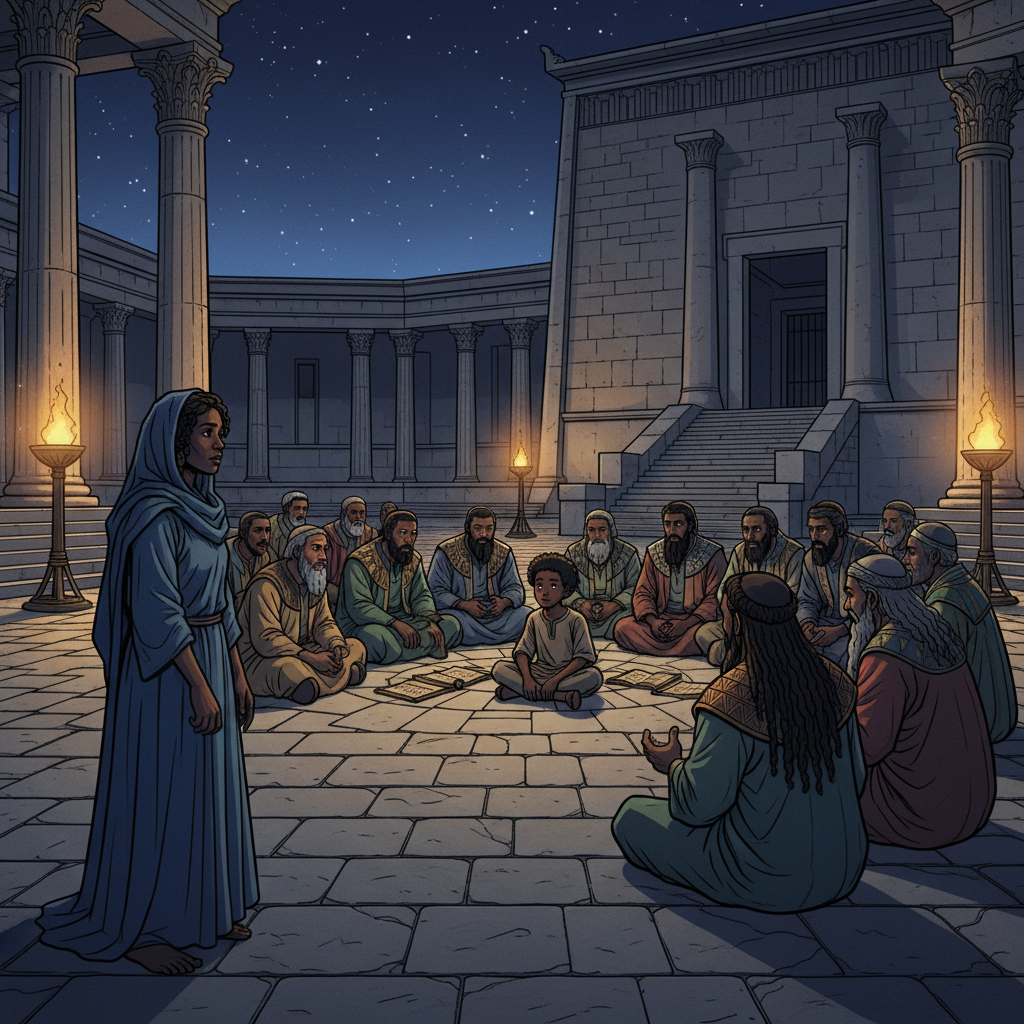
The third day dawned, bringing with it a profound weariness, but no surrender. Miriam, her spirit resolute despite the exhaustion, felt an inner prompting, a quiet whisper guiding her steps. She walked directly toward the Temple courts, the grandest and most central place. There, amidst the echoing stone and the murmur of scholars, she saw him. Yeshua was not lost, nor was he wandering. He sat cross-legged on the cool paving stones, a small, dark figure ringed by a semicircle of elder rabbis. Their faces, usually stern and deeply contemplative, were turned toward him, a mixture of surprise and profound attention etched upon them. He was not merely present; he was engaged, a youthful mind in deep communion with ancient wisdom.
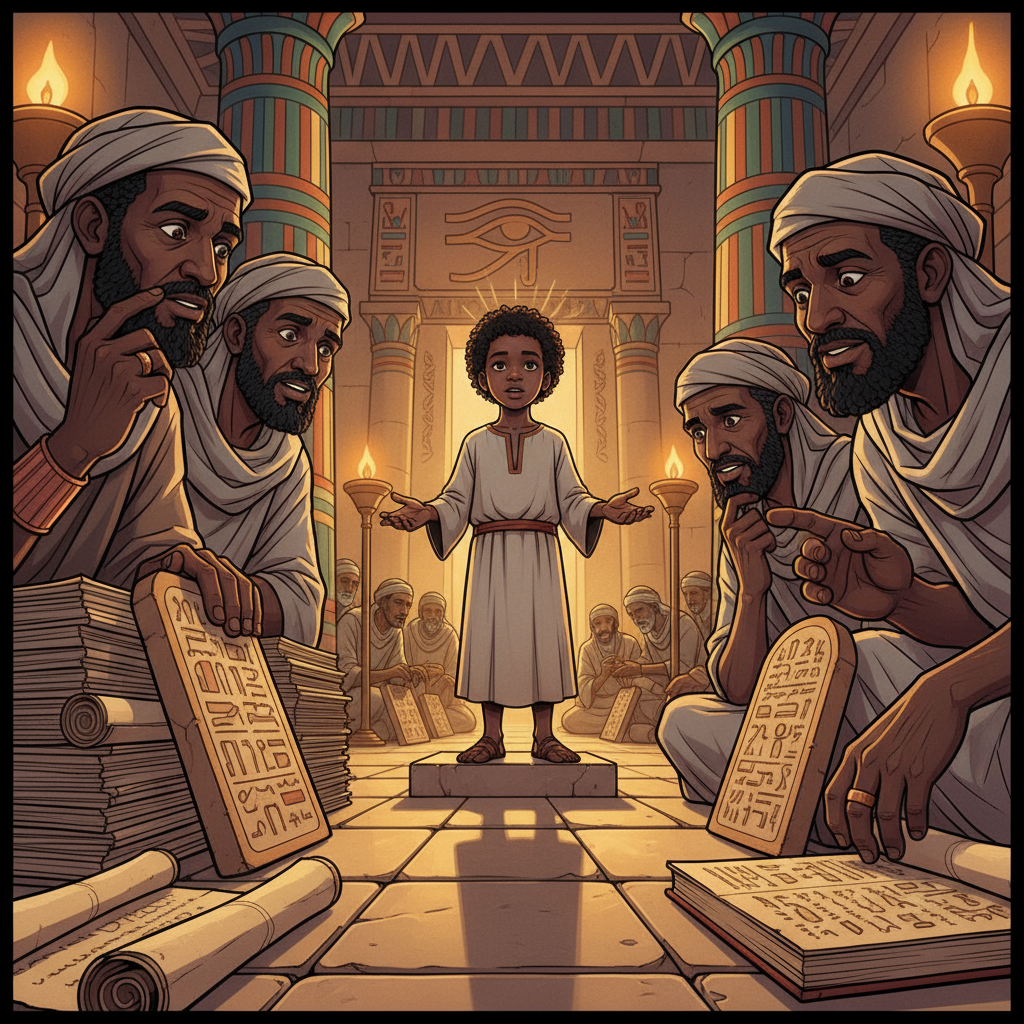
The elders, men whose lives were steeped in the study of Torah and the traditions of their people, were not merely tolerating a child’s presence. They were listening to him. Their heads were tilted, their hands often stroking their beards, as Yeshua spoke with a clarity and depth that belied his twelve years. He spoke not with youthful arrogance, but with a profound seeking, asking questions that illuminated the deepest meanings of the ancient texts. His voice, clear and resonant, filled the space with a quiet authority. The scholars, accustomed to their own debates and interpretations, found themselves drawn into a conversation that challenged and expanded their understanding, seeing the sacred texts anew through the fresh eyes of this remarkable child.
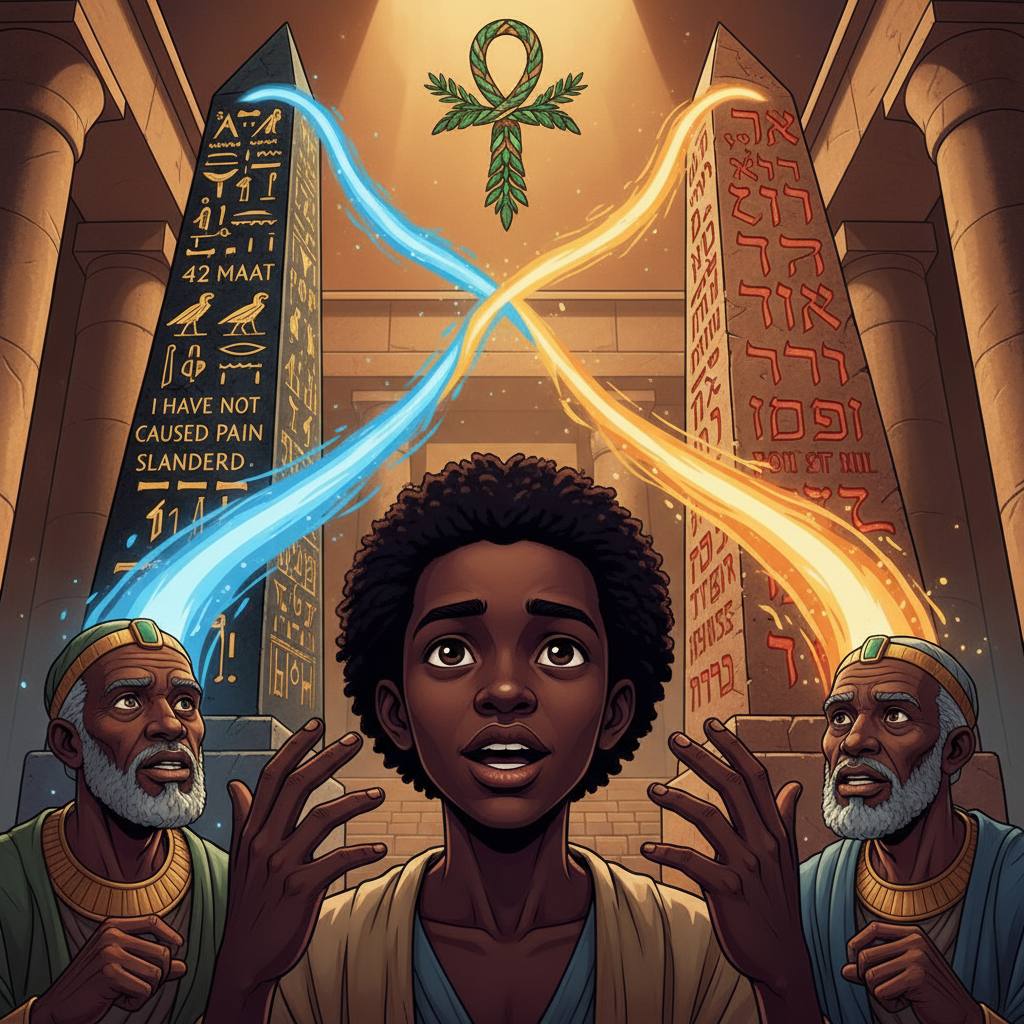
Yeshua, completely absorbed in the discourse, was reciting the 42 Maat, the Declarations of Innocence, ancient principles of truth and balance from the wisdom traditions of Kemet. With each declaration — “I have not caused pain,” “I have not stolen,” “I have not slandered” — he would then turn to the Ten Words of Moshe, the foundational laws given at Sinai. He wove them together seamlessly, asking the elders, his eyes alight with inquiry, if these two great pillars of human conduct, one from the Nile and one from the desert, were not in fact, the same balance, reflecting the same divine order. He saw the unity, the deep river of wisdom flowing through both lineages, connecting the wisdom of his ancestors.
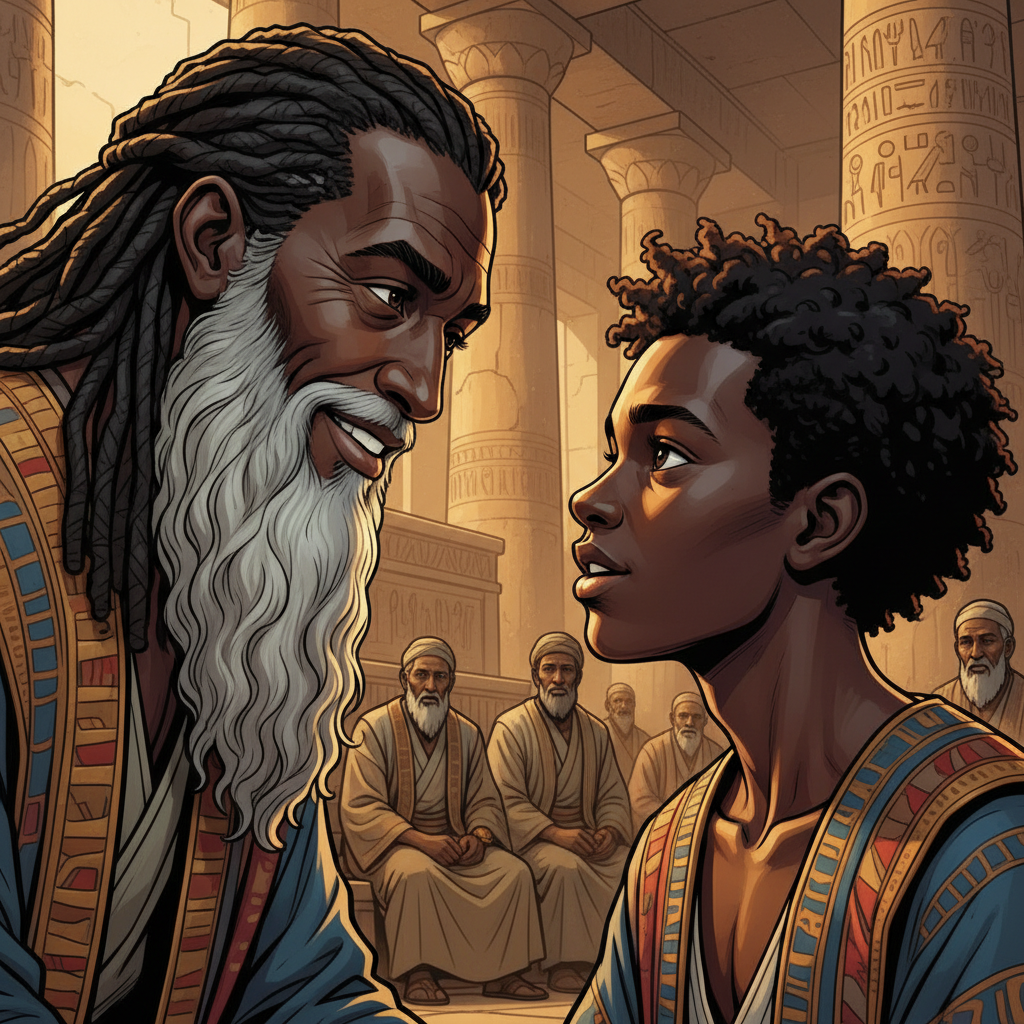
Reb Hillel, one of the most respected sages present, a man whose wisdom was legendary, leaned forward. His eyes, deep and knowing, held Yeshua’s gaze. A slow smile spread across his ancient face. “Yes, child,” he affirmed, his voice gentle but firm. “They are the same balance, spoken in two tongues, like the two banks of a mighty river that nonetheless holds the same living water. The Spirit of the Most High breathes through all truth, whether it is articulated on the papyri of Kemet or etched upon the tablets of Sinai. You have seen the unity, the interconnectedness that many miss, for wisdom knows no single border, and truth speaks through many vessels.” His words confirmed Yeshua’s profound insight.
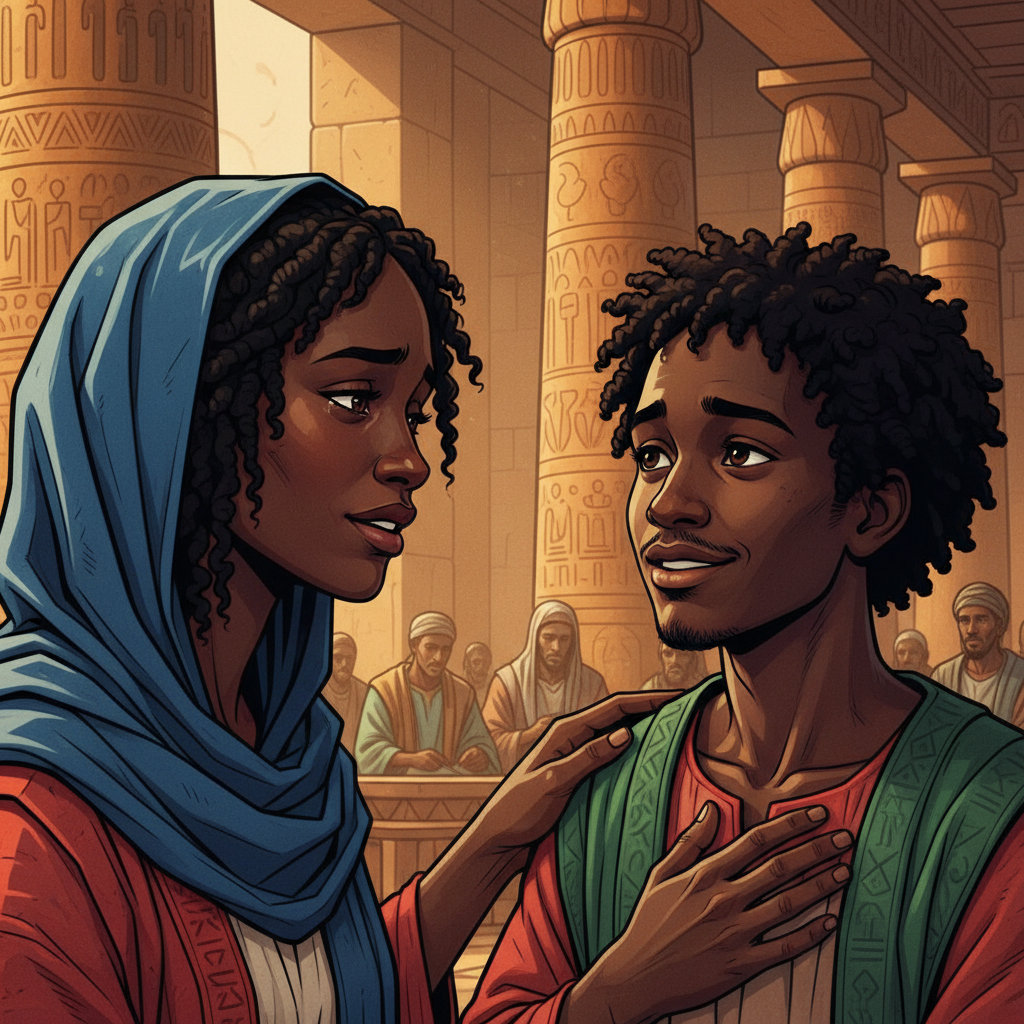
Miriam, having heard Reb Hillel’s profound affirmation, finally approached. Her voice, though filled with relief, carried the weight of her three days of anguish. “Child,” she began, her hand reaching out to touch his shoulder, her eyes softening as they met his. “Your Abba and I have been searching for you for three days. We have been in deep sorrow, fearing for your safety.” The words hung in the air, a mixture of mother’s love and a gentle chiding. Yeshua turned to her, his expression serene, not of defiance, but of simple understanding. The gravity of her search, the depth of her worry, was not lost on him, even as his mind had been soaring through realms of ancient wisdom.
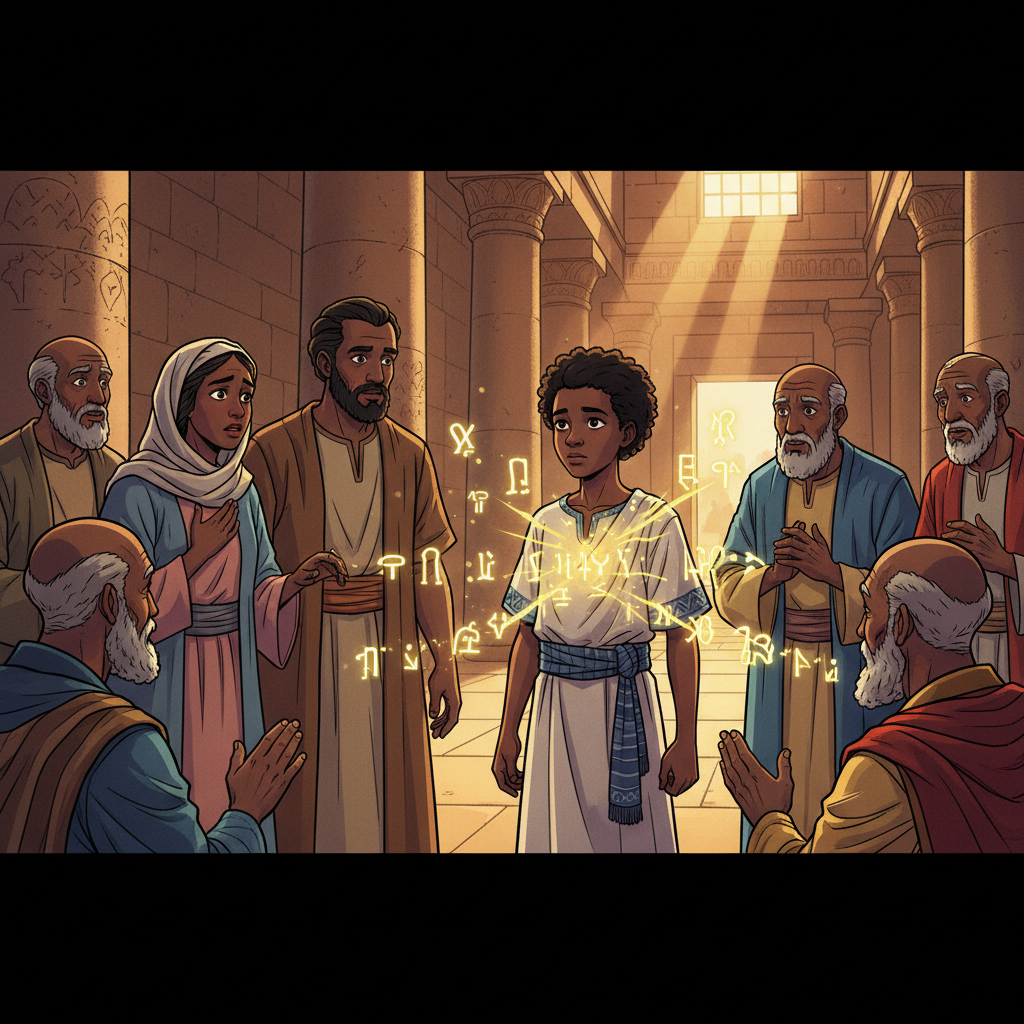
Yeshua looked from his mother’s worried face to the circle of reverent elders. His response was not an excuse, but a statement of his deepest truth, a question born of innocence and profound sonship. “Why did you search for me?” he asked, his voice calm, filled with a quiet knowing. “Did you not know that I would be in my Father’s house, occupied with the matters of my Abba?” The words resonated, not with human arrogance, but with the divine confidence of a spirit attuned to its highest calling. Miriam and Yosef exchanged a glance, a silent acknowledgment of a mystery unfolding before them, a glimpse into the sacred journey their son was already walking. His words were a heka, a powerful utterance.
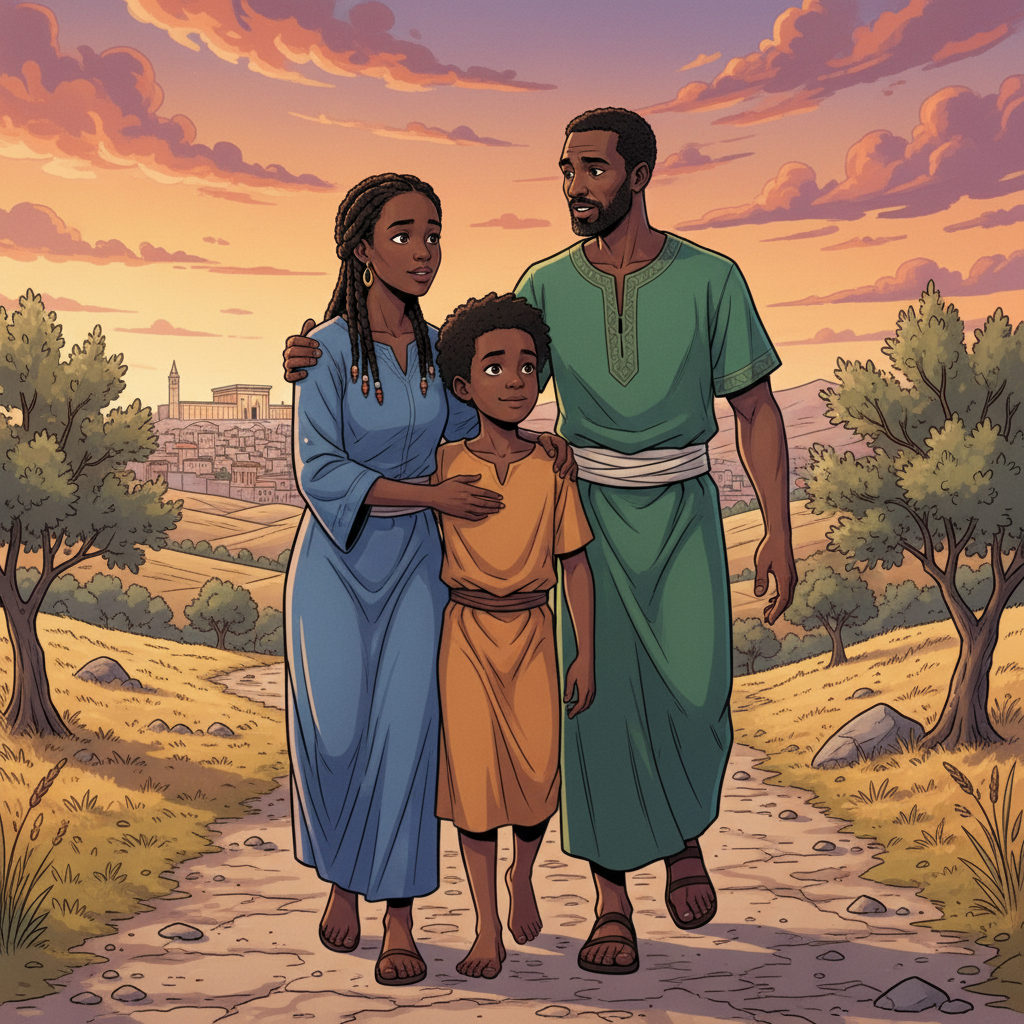
The walk home to Nazareth was different. Yosef remained largely silent, his heart a complex tapestry of confusion, wonder, and a growing awe for the son he was raising. He understood the boy’s words, “my Father’s house,” not as a slight to him, but as a deeper truth he was only beginning to grasp. Miriam, however, reached out and put her arm around Yeshua’s shoulders, drawing him close. She did not chide him further. Instead, she tucked his words away in the hidden chambers of her heart, another piece of the sacred puzzle that was her son. Like a precious seed, she would tend it, allowing it to take root and grow, waiting for the day when its full meaning would blossom into understanding.
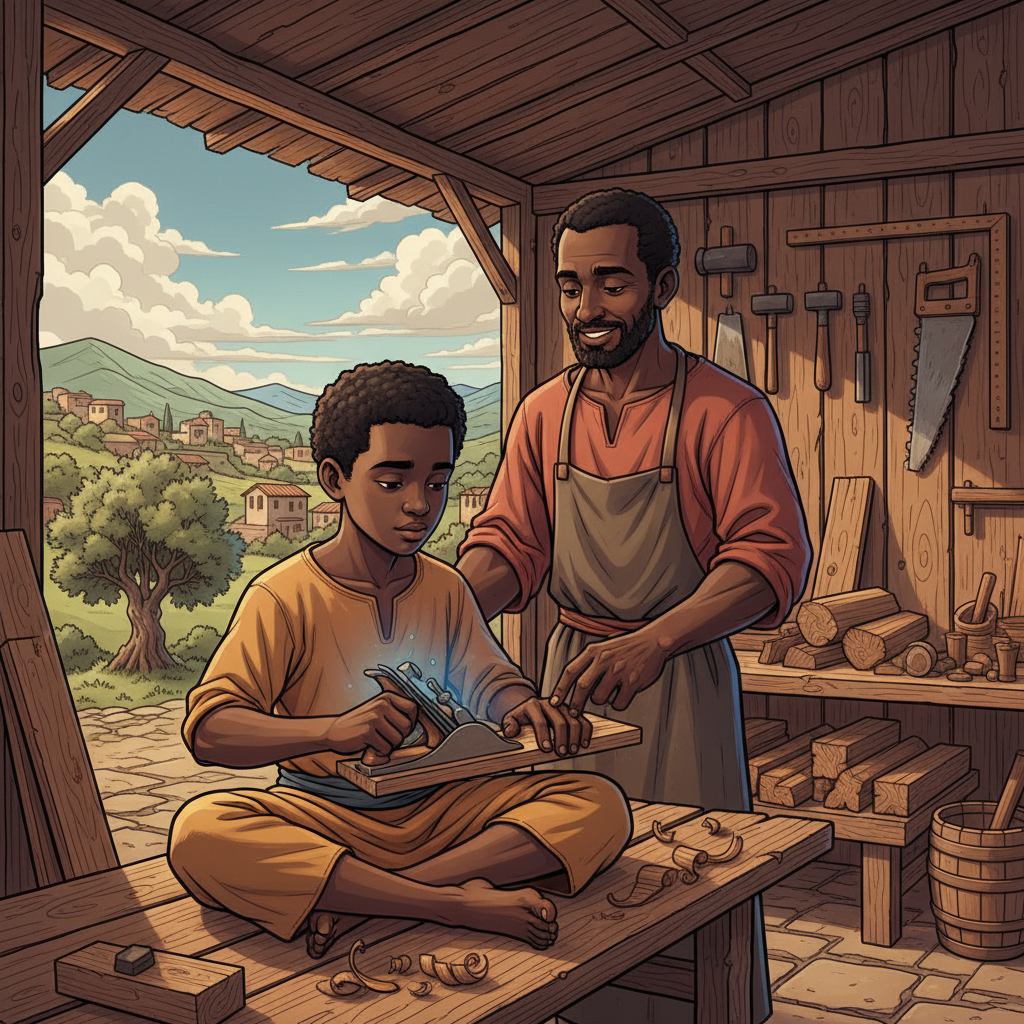
Back in Nazareth, the quiet rhythm of their lives resumed. Yeshua returned to Yosef’s carpentry bench, the scent of cedar and olive wood filling his days. He learned the skill of his Abba, shaping wood with patient hands, his mind still holding the echoes of the Temple courts. The years of quiet, of growth, of learning the ways of his people and the lessons of the earth, stretched long before him. But what was learned that day in Yerushalayim, the profound connection between the Maat and the Torah, the recognition of a universal truth, was not forgotten. It settled deep within him, a cornerstone of the wisdom he would carry forth, a testament to his Africana-Hebraic heritage and his unique sonship.