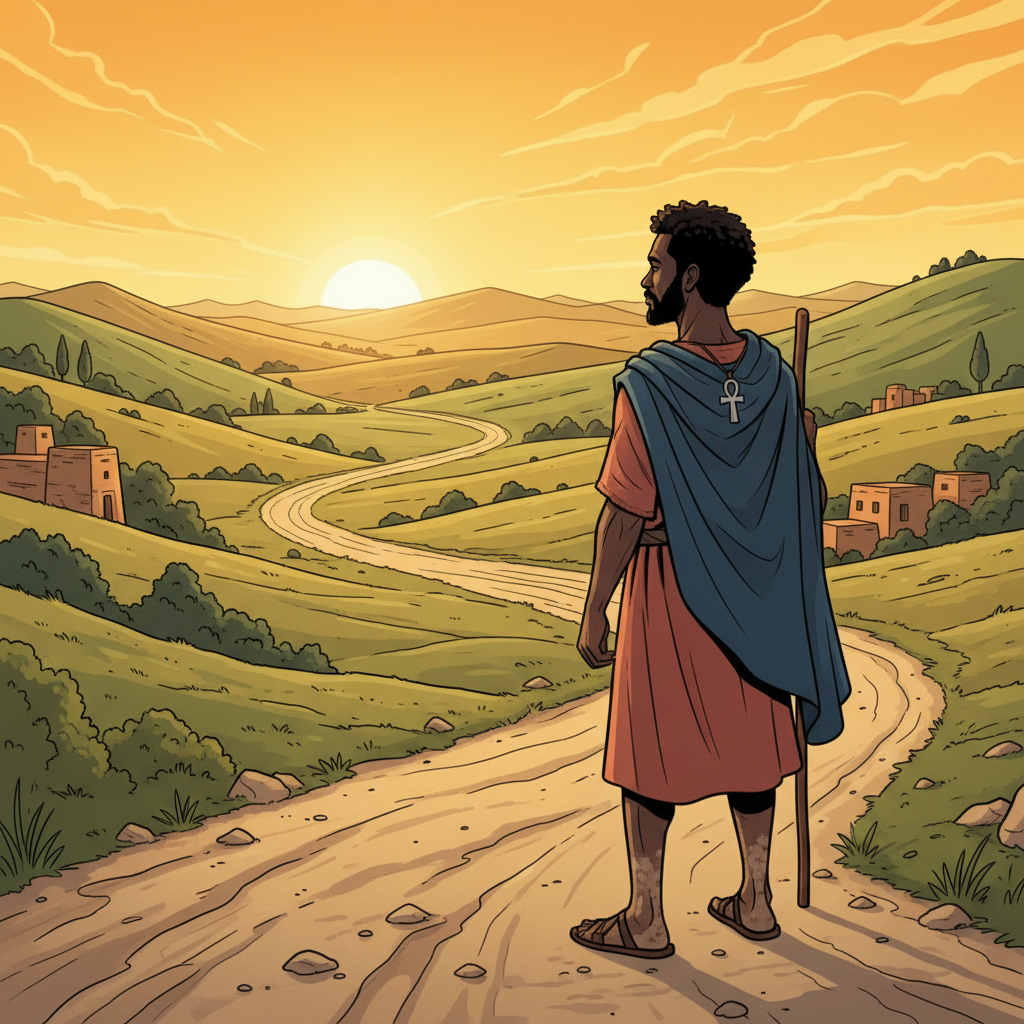
The sun rose over the hills of Galilee. Yeshua stood at the edge of the road, his sandals already dusty from the journey. He was a man now — nearly thirty years of age, his beard dark and full, his shoulders weathered by years of walking. Around his neck, on a thin leather cord, hung the silver ankh his mother Miriam had given him as a boy. He had been many places. Some elders whispered that he had gone south again, back along the old corridor to Kemet, perhaps even farther, to the hot lands of Kush. Others said he had studied with the quiet teachers in the eastern desert. Yeshua himself did not boast of his travels. He only said, "The road teaches what books cannot." Today the road was pointing him toward the river Jordan.
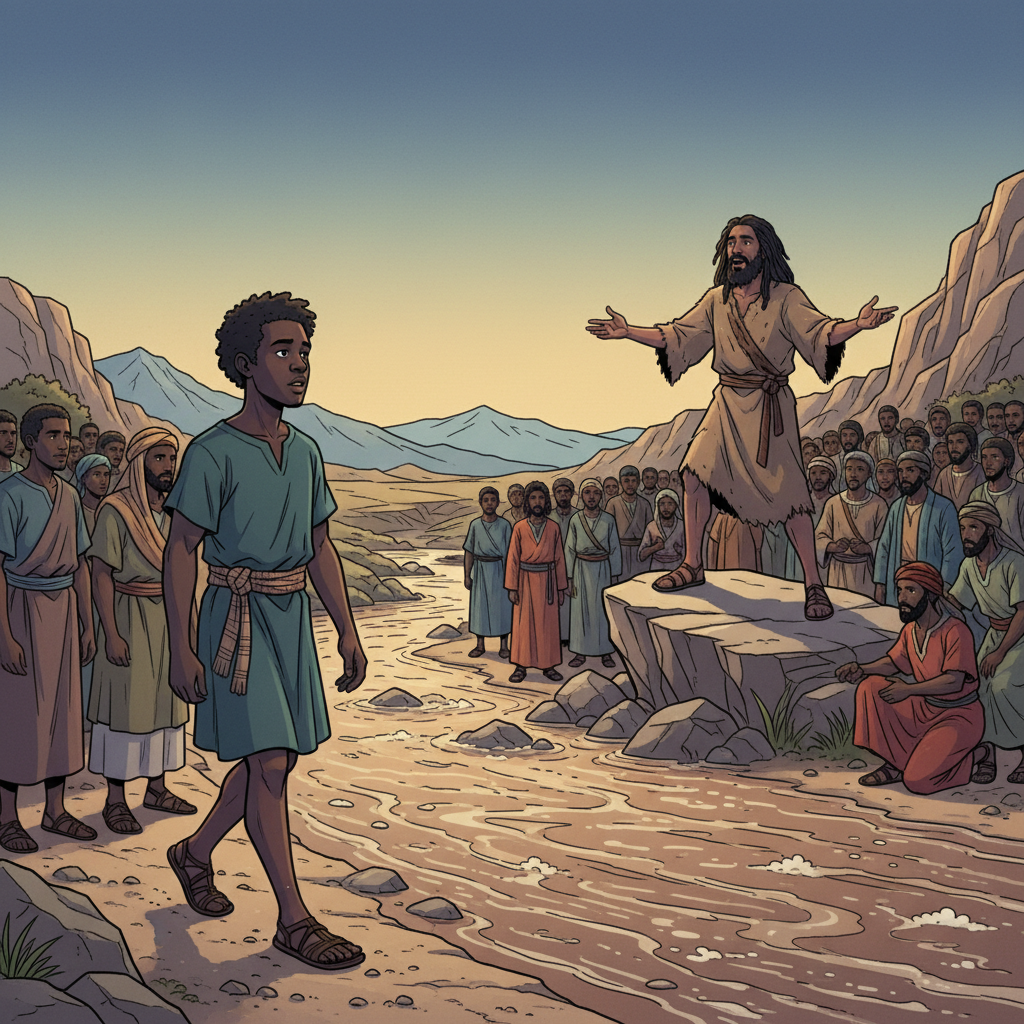
The Jordan river was not wide, but it was alive. Its water ran cool and brown, carrying the memory of rain from the far northern mountains. Crowds had begun to gather along its banks. Word had traveled from village to village: a wild man was calling people to the river. He wore a rough garment of camel hair. He ate locusts and wild honey. His name was Yohannan, son of Zakaryah the priest. Yeshua already knew him. Yohannan was his cousin. When their mothers Miriam and Elisheba had visited one another long ago, the two boys had played in the courtyard together. But they had not seen each other in many years. Yeshua walked toward the river slowly, listening. He could hear Yohannan's voice before he could see him.
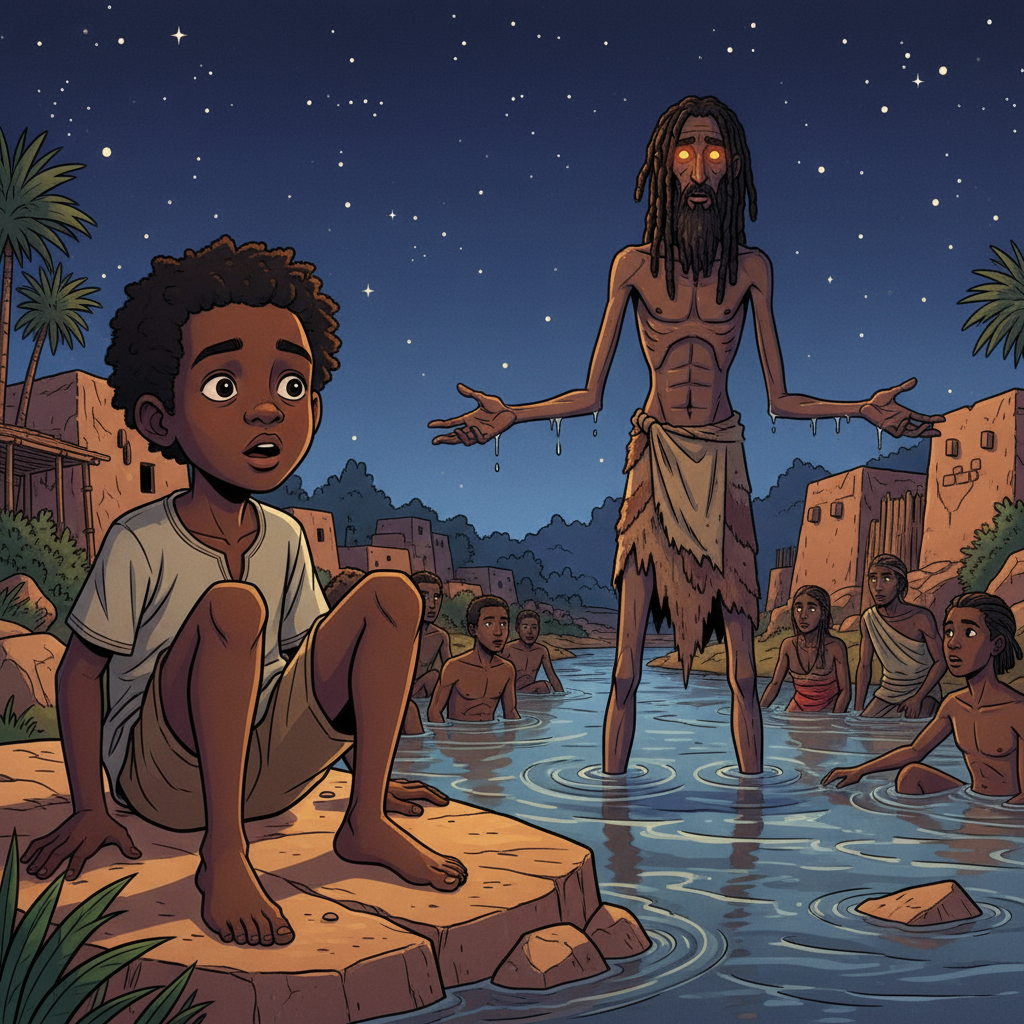
A small boy named Elazar sat on a flat stone near the water. His father was a fisherman, and Elazar had come down to see the wild man everyone was talking about. What he saw surprised him. Yohannan was tall and thin, his hair long and knotted, his skin dark as wet river clay. His eyes burned like two lamps. But he was not shouting. He was teaching. "Wash the body," Yohannan was saying to the people in the water, "but only after the heart has already softened. The river cleans what you have already let go. It cannot clean what you still clutch in your fist." Elazar did not understand all the words. But he felt something true in them, the way you feel the weight of a stone before you lift it.
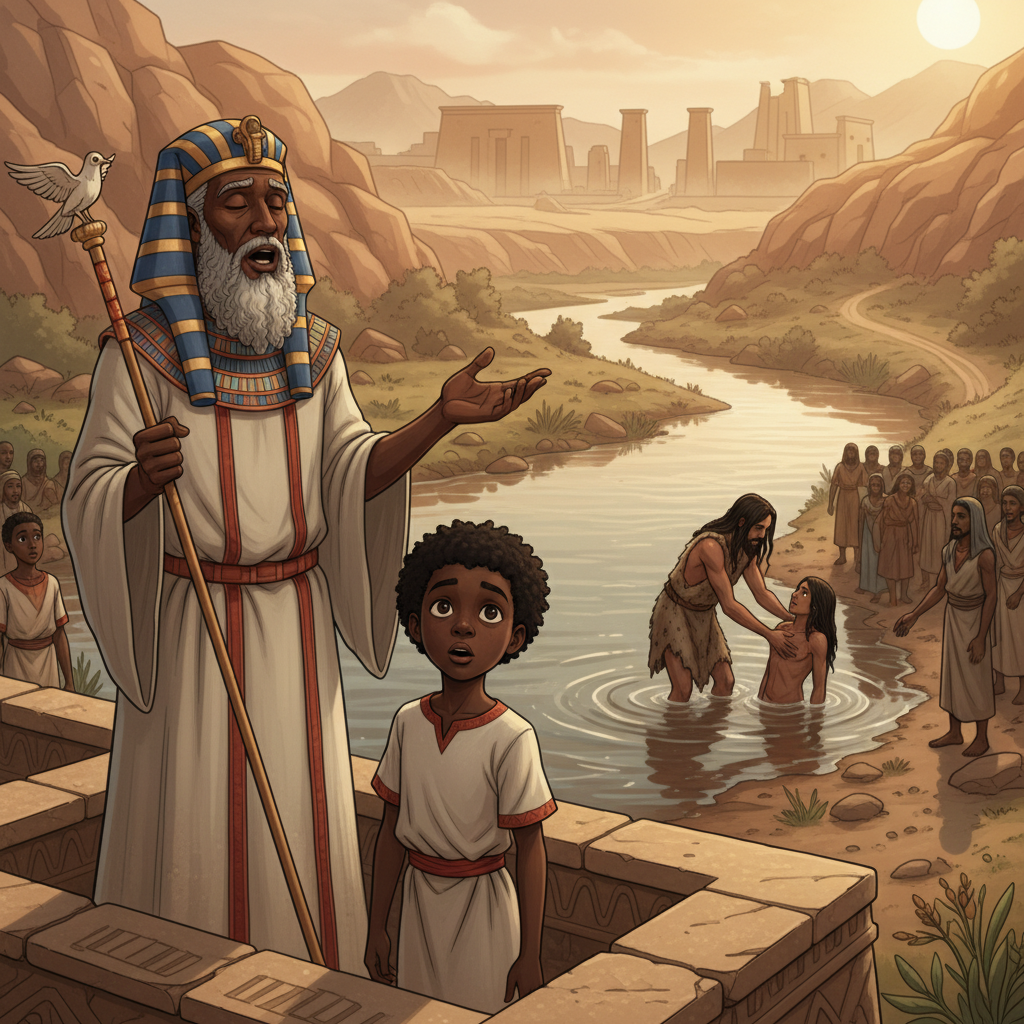
An old teacher in the crowd leaned on his staff and spoke quietly to his student. "This is not a new thing that Yohannan does," he said. "Long ago in Kemet, at the great temple of On, the priests would wash themselves in sacred pools before the weighing of the heart. Water for the outside. Truth for the inside. Yohannan learned this rite. He did not invent it." The student looked surprised. "Kemet? All the way in the south?" "All the way," the old teacher said. "The road between our land and Kemet is an old road. Ideas walk it. Songs walk it. Prayers walk it. Yohannan walked it too, once. He is a son of the desert teachers." The student nodded slowly, watching the wild cousin of Yeshua lift another person gently down into the brown water.
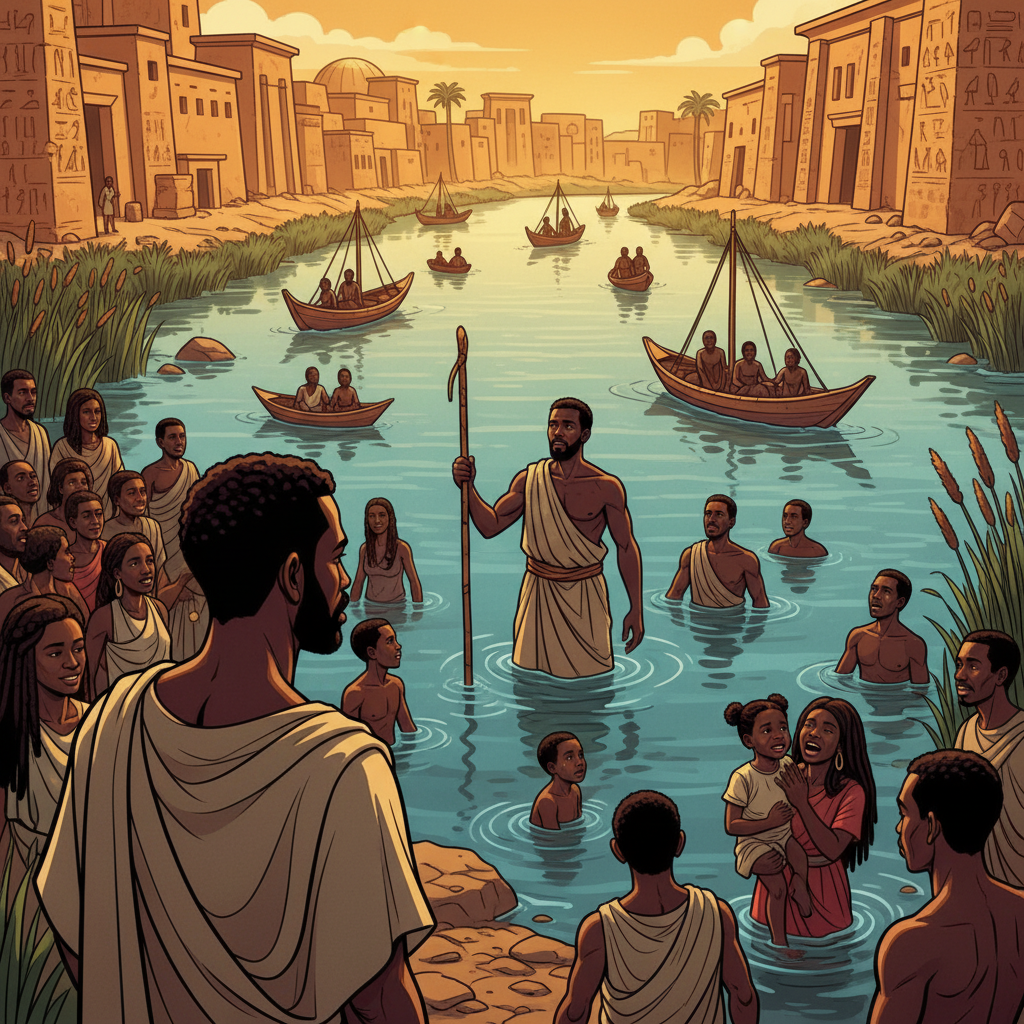
Yeshua reached the bank. For a long moment, he simply stood. He watched his cousin work. He watched the people come up from the water with tears on their faces, laughing and shaking. He watched a mother hold her small daughter above the current, whispering blessings into her ear. Then Yohannan turned. His burning eyes found Yeshua across the crowd, and his whole body went still. The reed he had been holding slipped from his fingers into the river. For a heartbeat, the Jordan itself seemed to quiet. "Cousin," Yohannan breathed. He waded forward, pushing through the shallow water, until he stood in front of Yeshua on the stony shore. He looked into Yeshua's face the way a man looks into a deep well. "You have come," he said. "It is not I who should wash you."
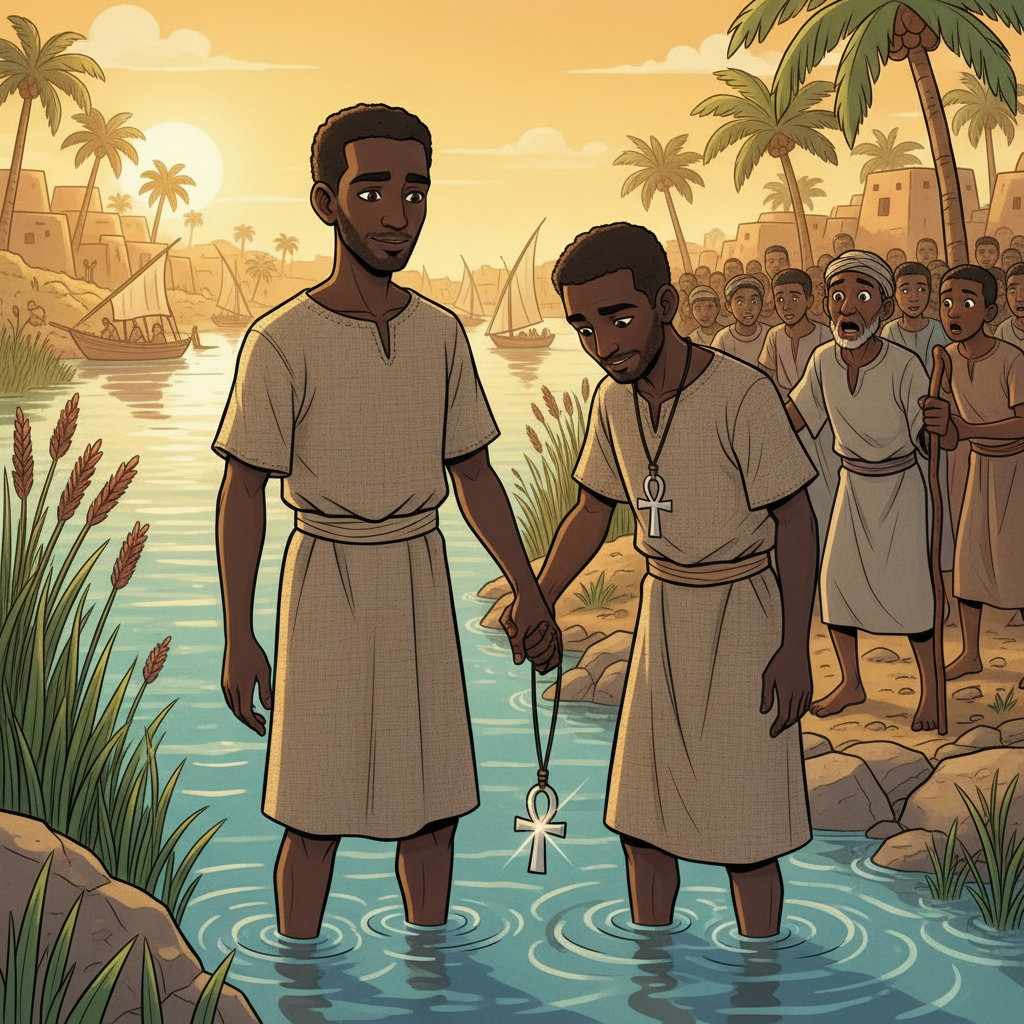
Yeshua smiled, though his eyes were serious. He reached out and placed his hand on his cousin's shoulder. "Let it be so for now," he said softly. "We must fulfill all Maat." The crowd did not hear the word clearly. Some thought he said "righteousness." Some thought he said "truth." But the old teacher with the staff heard it, and his breath caught. Maat. The old word. The Kemetic word. The word for the balance of the two scales, the ostrich feather against the heart. Yohannan bowed his head. He did not argue. Slowly, he took Yeshua's hand and led him down the stony bank. The water touched Yeshua's ankles, then his knees. The silver ankh around his neck swung forward, catching the morning light, and then it too was lowered toward the river.
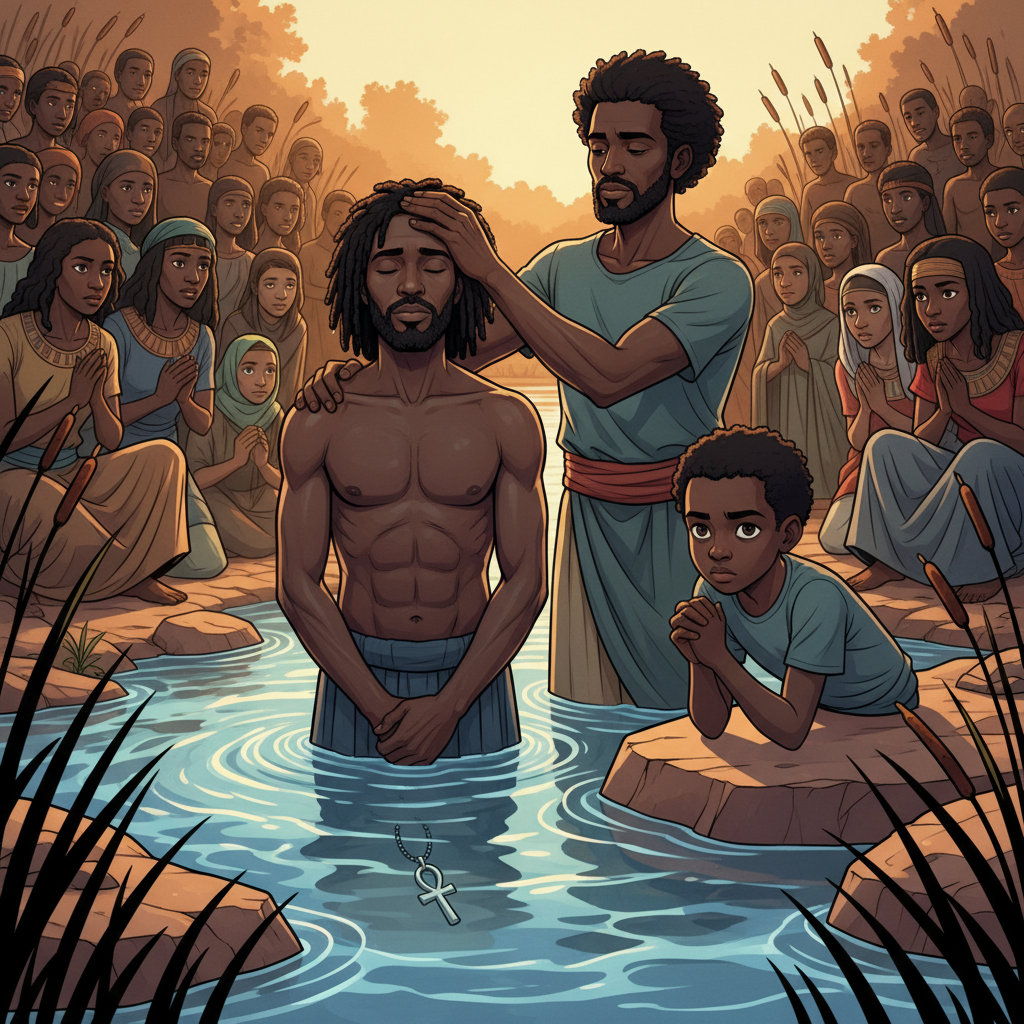
Elazar, the fisherman's boy, leaned forward on his flat stone. He did not know why, but he held his breath. The whole crowd had grown quiet. Even the wind in the reeds seemed to pause. Yeshua stood chest-deep in the Jordan. Yohannan placed one strong hand behind his cousin's back and one hand over his brow. "Go down, son of Miriam," Yohannan whispered, "as your ancestors went down into the great river in Kemet. Go down as Ausar went down. Rise up as Heru rises." He spoke the words low, like a secret passed from teacher to teacher. Then he gently, firmly, lowered Yeshua beneath the surface. The water closed over Yeshua's head. For one breath. Two. The ankh drifted for a moment in the current, silver and small, like a tiny shining key.
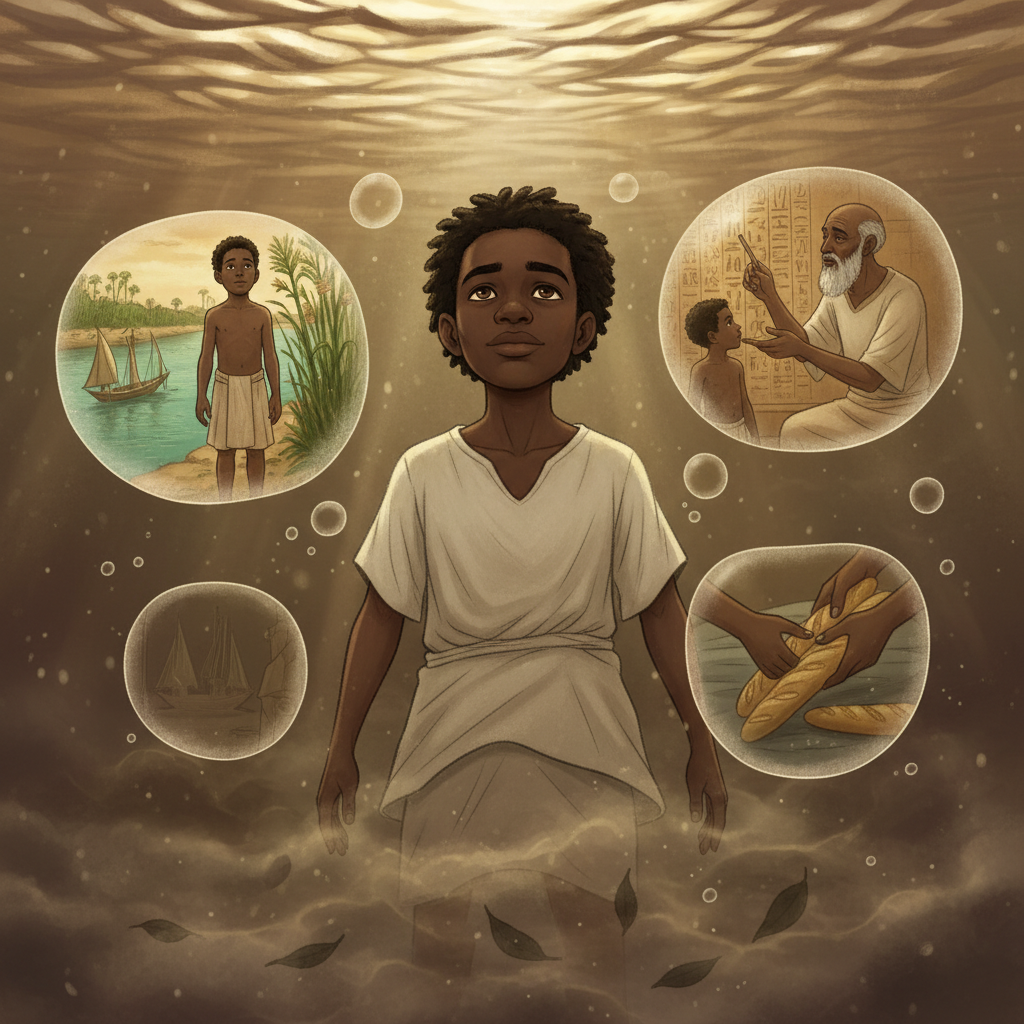
Beneath the water, Yeshua opened his eyes. He saw the brown Jordan light, the swirl of sand, and for a moment — though this was only memory and not magic — he saw the long green Nile of his childhood. He saw the face of the old Seba who had taught him his first glyphs. He saw his mother's hands braiding bread. He saw every road he had ever walked, and every road he was about to walk. All of it, he let go. Not the love. The love stayed. But the fear, the tiredness, the small worries that cling to a traveler's robe like burrs — he let them drift away downstream. The river took them. That is what rivers do. They carry the heart's heavy things down to the sea, where the sea forgets.
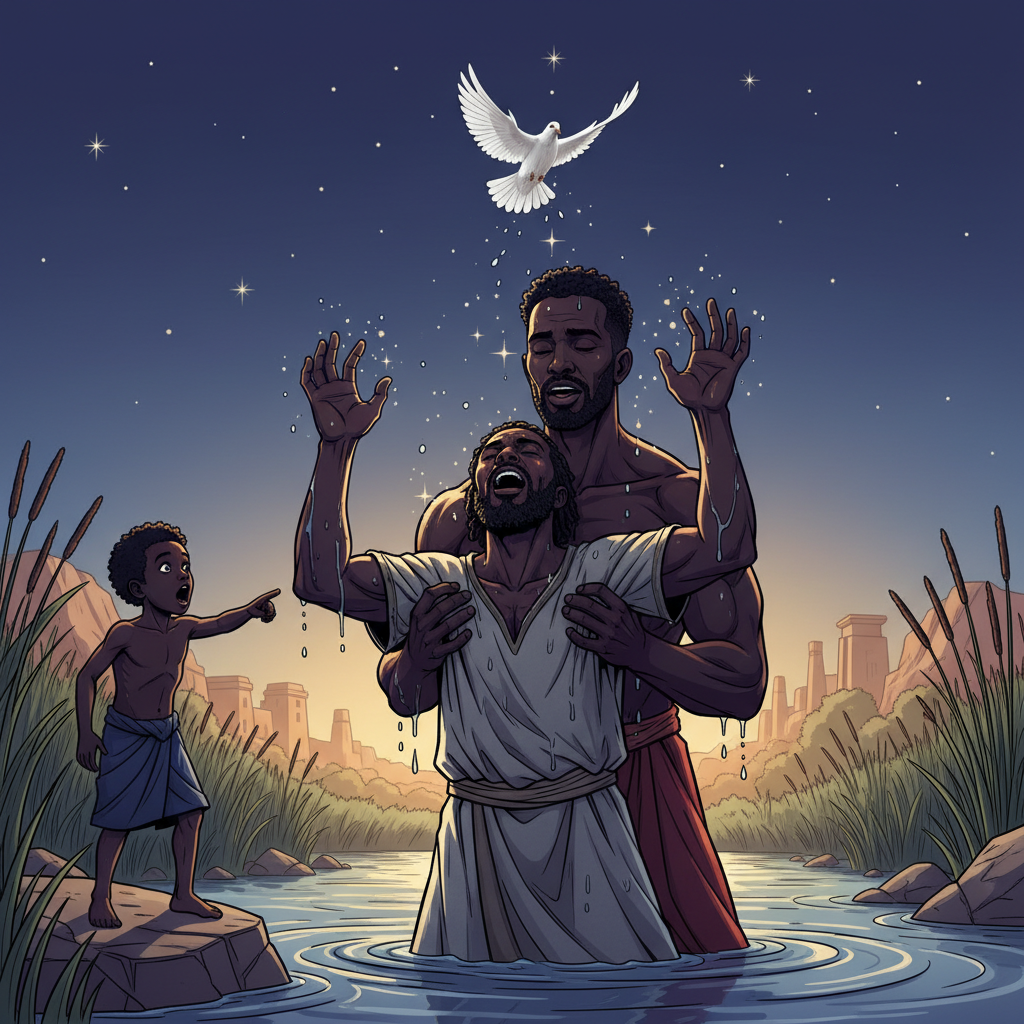
Yohannan lifted him up. Yeshua broke the surface of the water with a great breath, and the droplets scattered from his hair into the morning light like small stars. For an instant, no one moved. The birds did not sing. The reeds did not rustle. The whole Jordan valley seemed to be waiting. Then, from somewhere high above, a single dove came down. It was white, or perhaps it was silver — different people would later remember it differently. It circled once above Yeshua's head. It hovered. Its small wings beat the air softly, the way a mother's hand pats a child's back. Elazar, still on his rock, stood up without meaning to. His mouth fell open. He had seen doves before. He had never seen a dove do that.
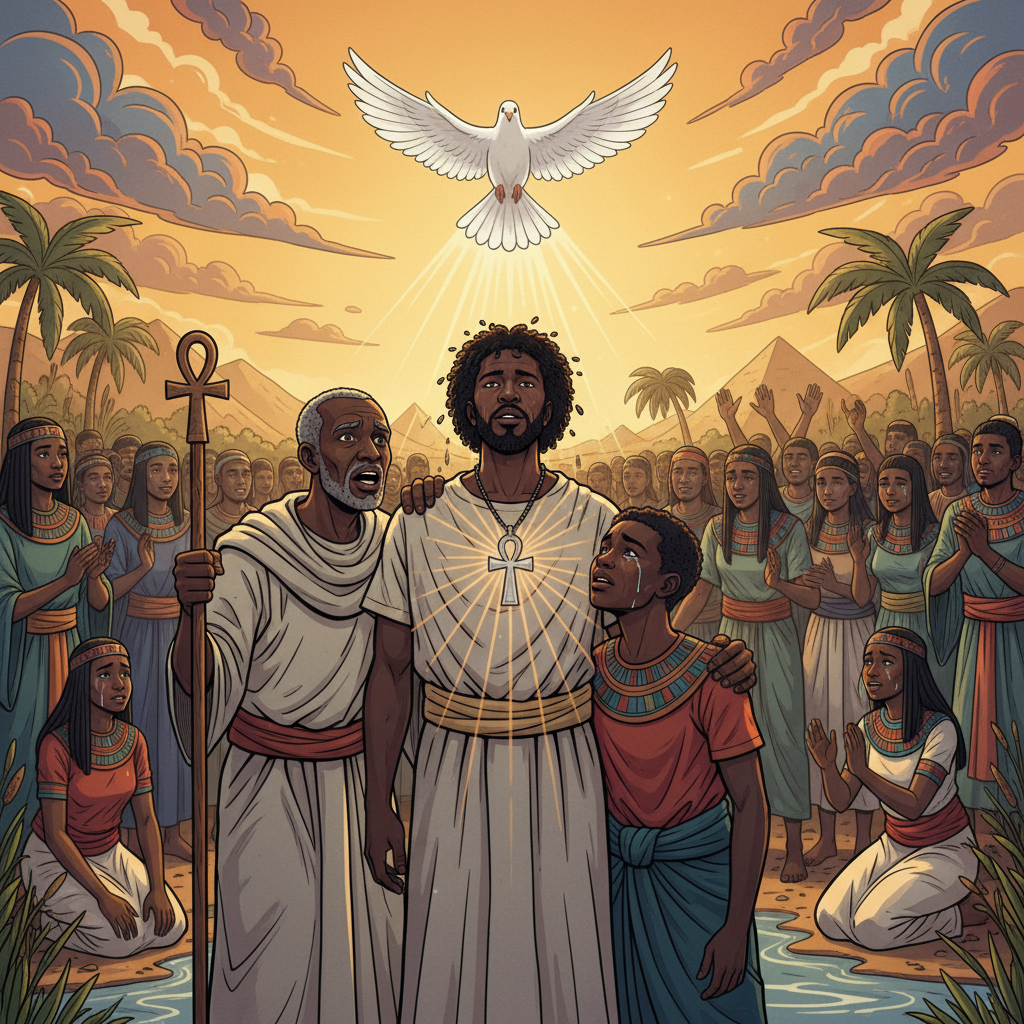
The old teacher with the staff gripped his student's arm tightly. "Do you see it?" he whispered. "Do you know what you are seeing?" The student could only nod. "In Kemet," the old teacher murmured, "the ba is the soul-bird. When a man's heart is balanced with Maat, the ba returns to him in the shape of a bird. This — this is the old sign. The Pert em Heru. The coming forth by day." The student's eyes filled with tears. He did not know why. The dove descended lower. It did not land on Yeshua. It simply hovered above him, its wings making a soft drumming in the air. The silver ankh at Yeshua's chest seemed to catch a light that was not the sun's light, and a warmth spread through the crowd, though no one could have named it.
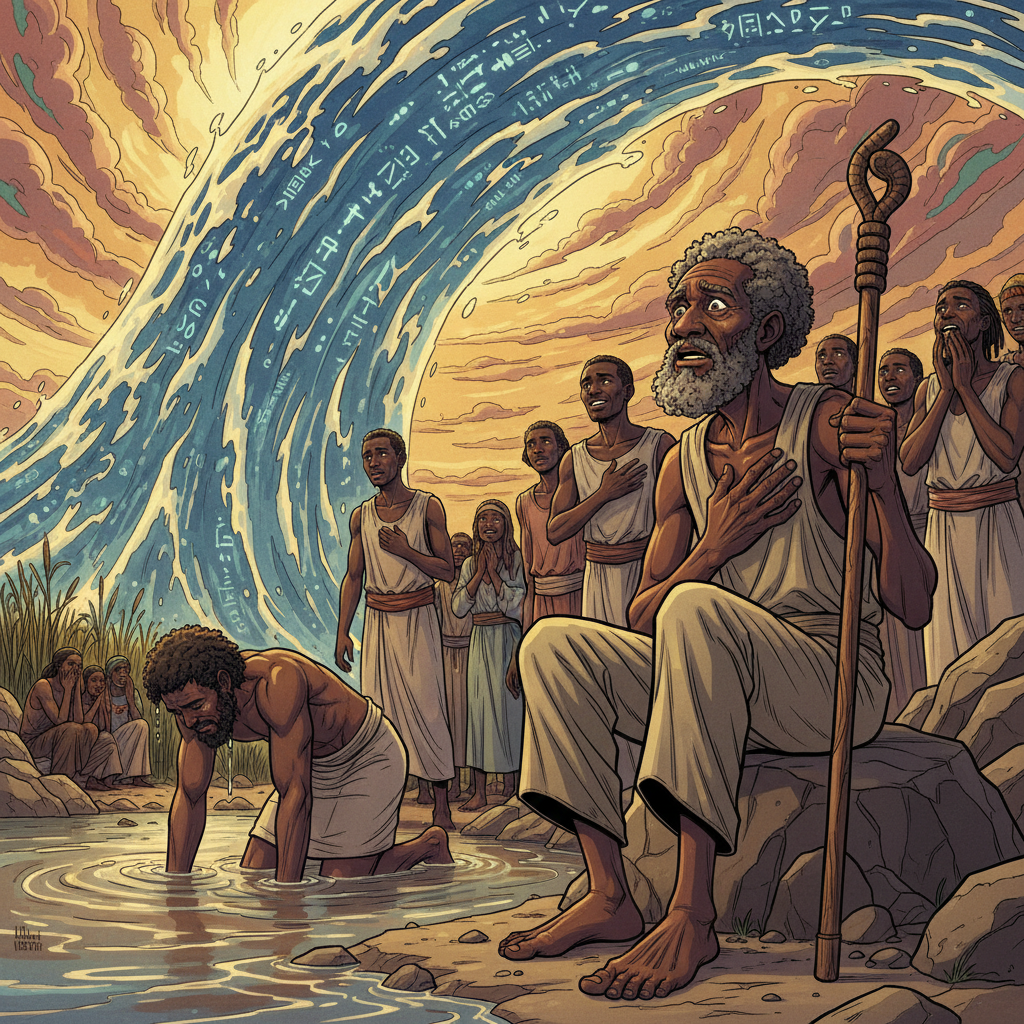
Then the voice came. It was not loud. It was not a shout. It was more like the voice you hear inside a seashell when you hold it to your ear, only bigger, only everywhere. It seemed to come from the sky and from the water and from inside the chest of every person standing on the bank. "This is my beloved son," the voice said. "In him I am well pleased." Elazar sat down hard on his rock. Yohannan fell to his knees in the shallow water, his forehead touching the surface. Some of the crowd wept. Some covered their faces. The old teacher with the staff whispered to his student, "That is the Ra-Heru word. The old pharaoh-blessing. The father who claims the son." And the student understood, though he could not yet say how.
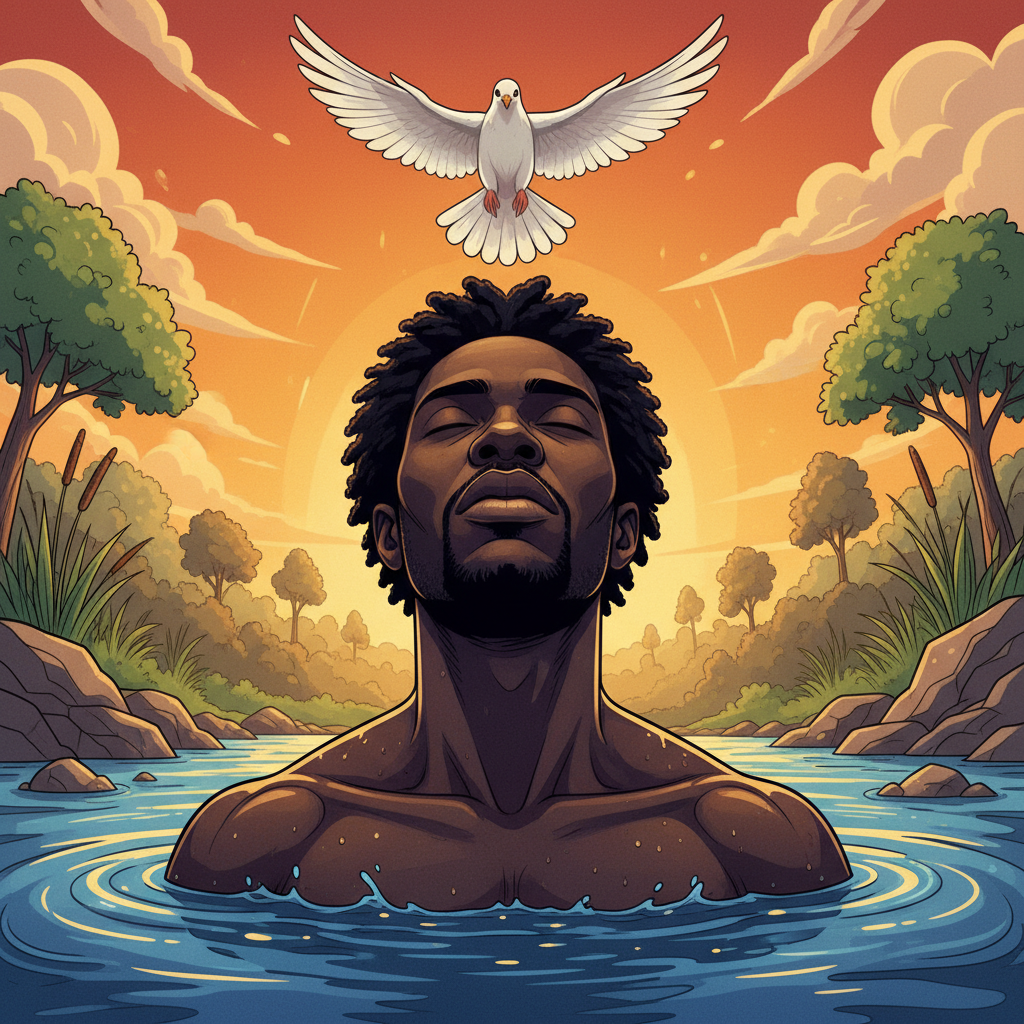
Yeshua did not fall to his knees. He did not weep. He only stood, very still, in the middle of the Jordan, with the dove's soft wings still moving above him. On his face was a look that Elazar, many years later as a grown fisherman, would try to describe to his own grandchildren, and would fail. "It was not pride," old Elazar would say. "It was not joy, exactly. It was — recognition. Like a man who has been walking in a fog for many years, and suddenly the fog thins, and he sees the road, and he sees that the road has been beneath his feet the whole time." The grandchildren would nod, though they did not fully understand. Yeshua lifted his face to the sky and closed his eyes.
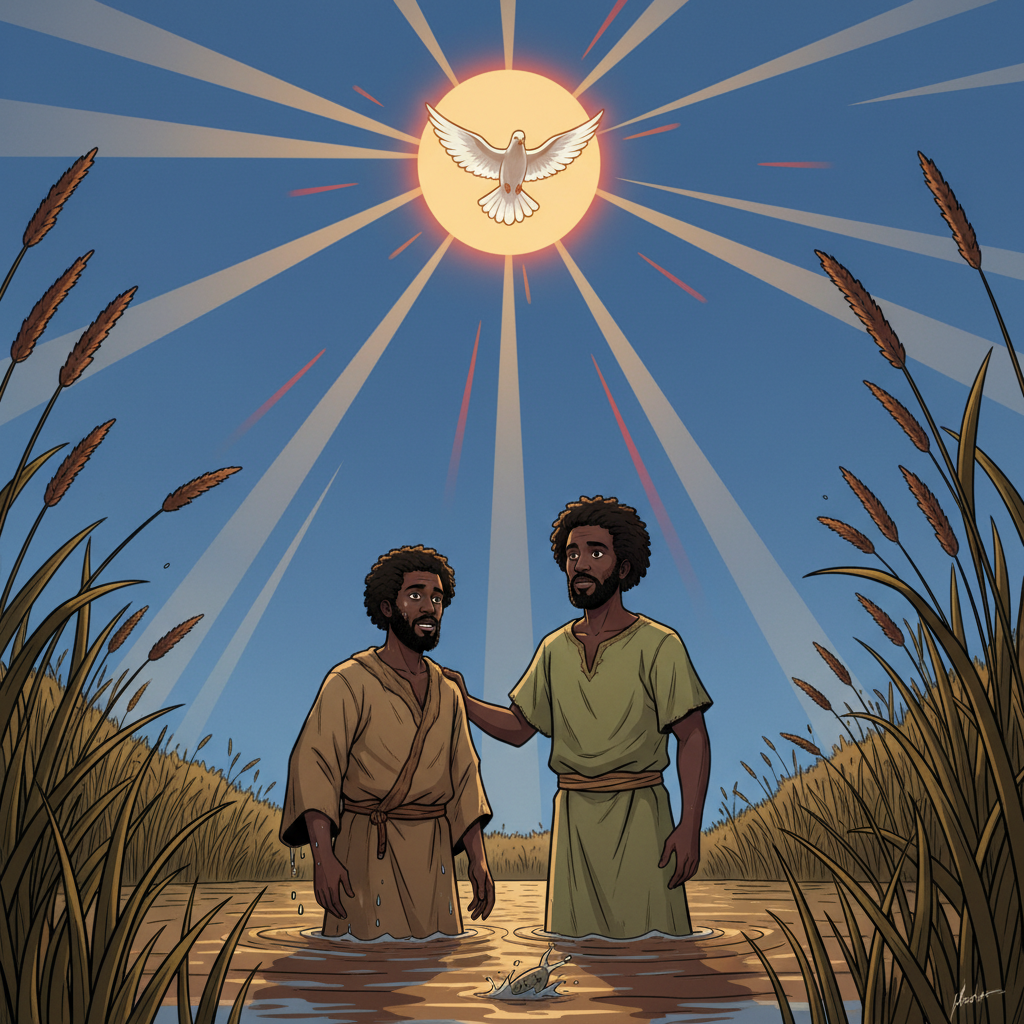
Slowly, the dove rose. It climbed back into the blue, smaller and smaller, until the sun swallowed it. The voice was gone. The wind returned. The reeds rustled. A fish leapt somewhere upstream and fell back with a small plop. The Jordan was only a river again, brown and quick and normal. Yohannan rose from his knees. The water streamed from his camel-hair robe. He could not speak for a long moment. When he finally did, his voice was cracked and low. "Go, cousin," he said. "Go where you are called. I have only been the forerunner. You are the one who walks now." Yeshua nodded. He placed his hand again on Yohannan's shoulder. Two cousins, two travelers, two students of the same old river-truth, standing together in the shallow water.
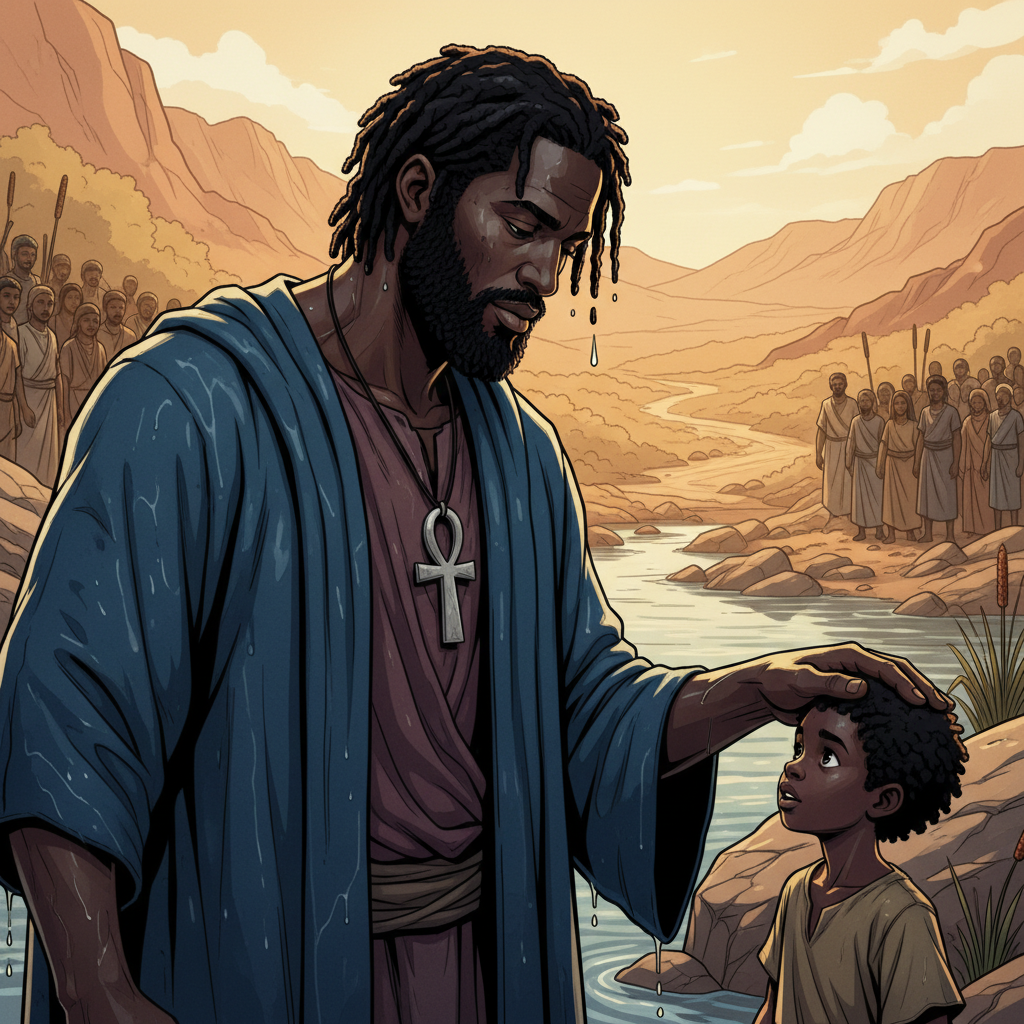
Yeshua walked out of the Jordan. His robe was heavy with water. His beard dripped. The silver ankh lay flat against the wet cloth of his chest, and it did not look shiny now — it looked tired and old and loved, like a thing that had been held in many hands. He did not stop to speak to the crowd. He did not look for praise. He only took the path that led away from the river, toward the high stony wilderness. As he passed Elazar's rock, the boy stared up at him, wide-eyed. Yeshua paused. He looked at Elazar the way a man looks at a younger brother he has not yet met but already loves. Then, softly, he placed his wet hand once, briefly, on the top of Elazar's head, and moved on.
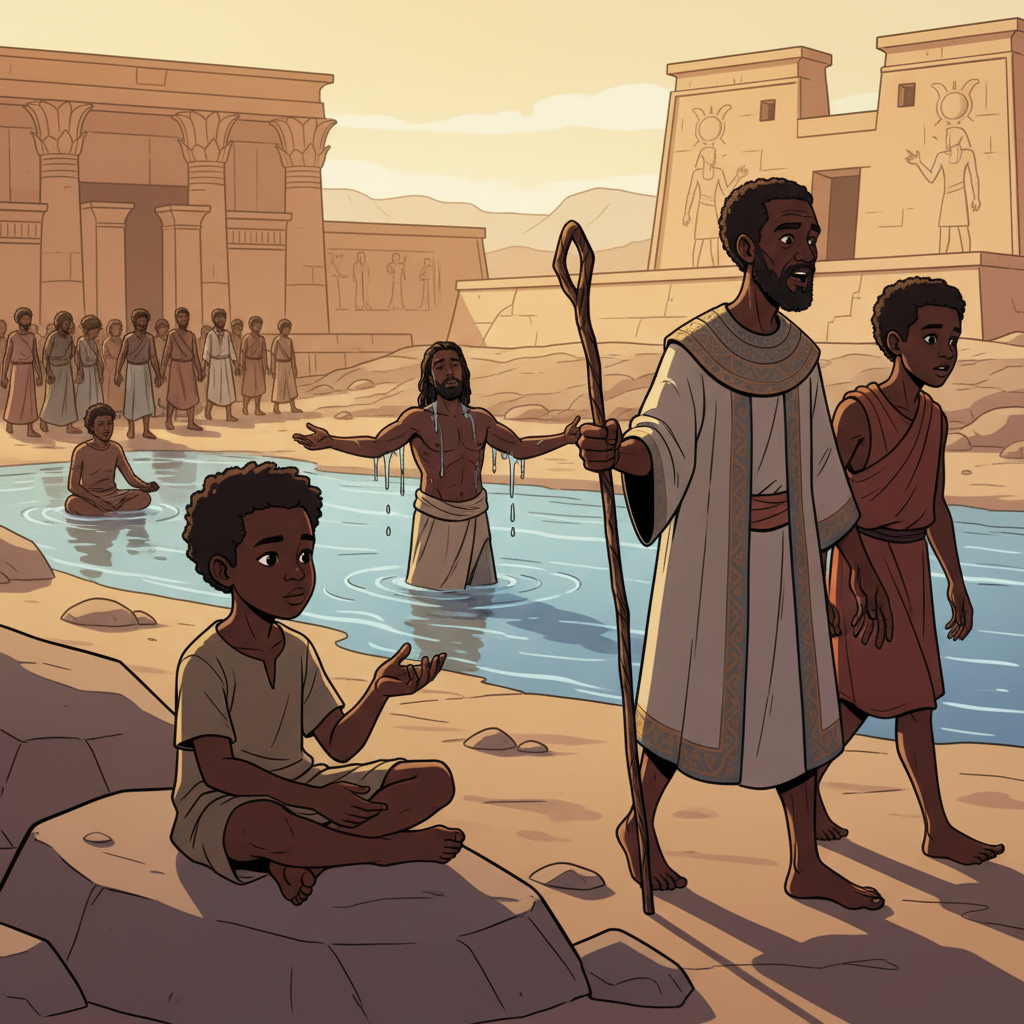
Elazar sat on his rock for a long time after that. The crowd began to scatter. Yohannan went back to his work, baptizing the next person, and the next. The old teacher with the staff walked slowly away with his student, murmuring quiet words about Kemet, about On, about the weighing of the heart, about the water-rites that had traveled the old corridor for a thousand thousand years. Elazar looked at his own small brown hand. He looked at the river. He thought about the dove. He thought about the voice that had come from everywhere. He did not yet know the words Maat or ba or Per Ankh. But he knew something had been cleaned inside him that day, though he had never gone under the water himself. Some cleansings, he would later say, you receive by watching.
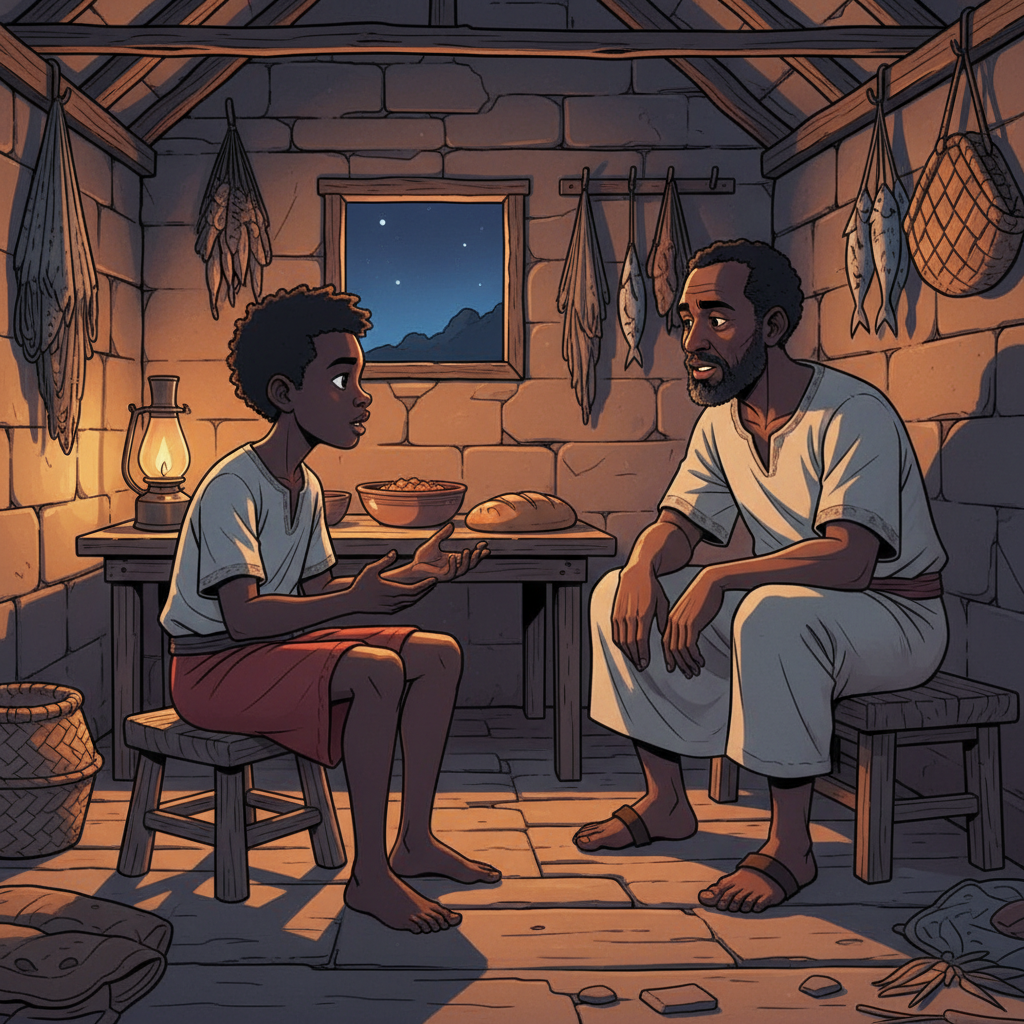
That night, Elazar went home to his father's small fishing hut. He did not tell his father everything. Some things are too big for a boy's mouth. He only said, "Abba, I saw a man washed in the river, and the sky came down to meet him." His father looked at him for a long time. Then his father said, "Sit. Eat. Tell me slowly." And Elazar told. He told about the dove. He told about the voice. He told about the wet hand on his head. His father did not laugh. His father did not scold. His father only nodded, and listened, and when Elazar was finished, his father said, "Remember this, my son. Write it on the inside of your heart, where no rain and no fire can reach. You have witnessed Maat."
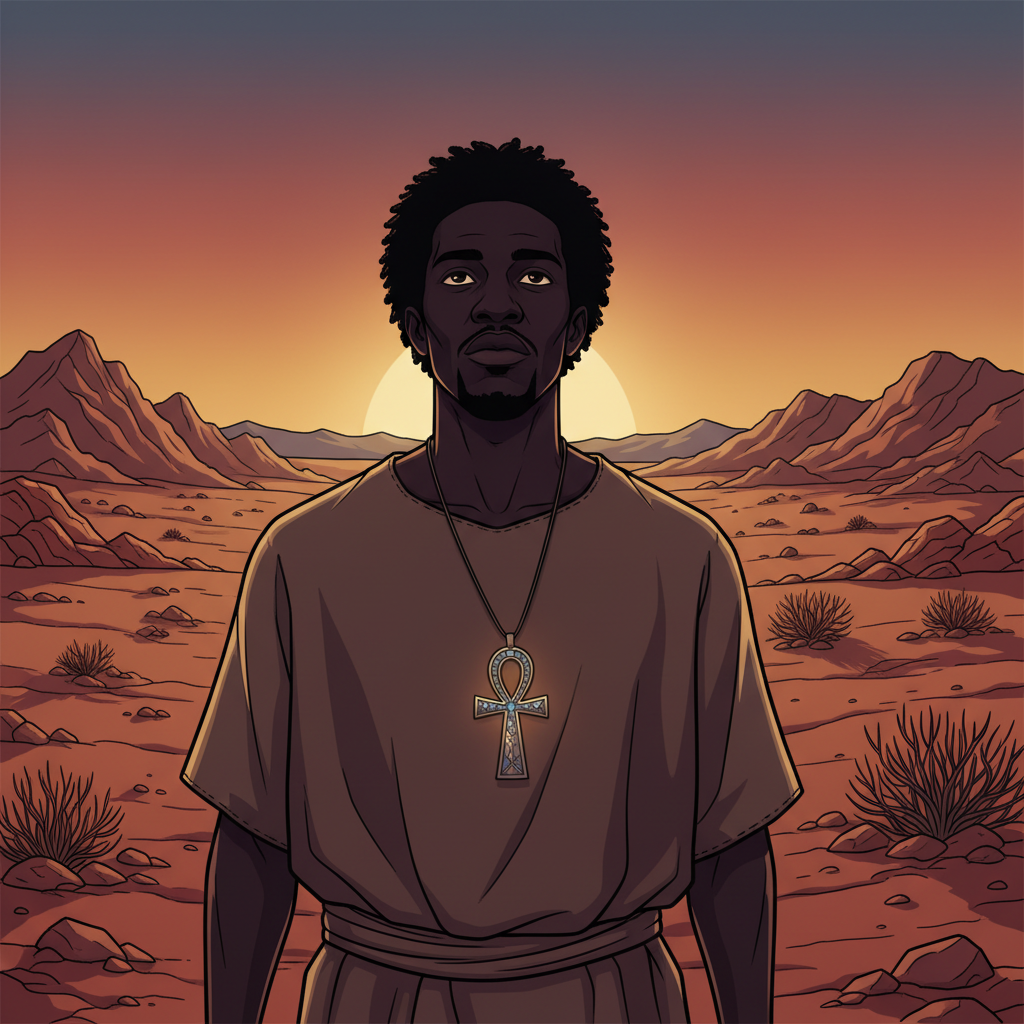
Far away, Yeshua walked alone into the wilderness. He would not return for forty days. He had much to think about, and a hard road still ahead. But the old silver ankh swung gently against his chest with each step, warmed now by his skin and by the sun. The river was behind him. The dove was gone from the sky. But the balance had been spoken, and the water had agreed, and the heart had been weighed, and the scales had held. Yeshua lifted his eyes to the stony hills. He whispered, so softly that only the wind and the small birds heard, "Maat be fulfilled." And he walked on. And somewhere behind him, a boy named Elazar was already telling the story for the very first time. The story that would not stop being told.