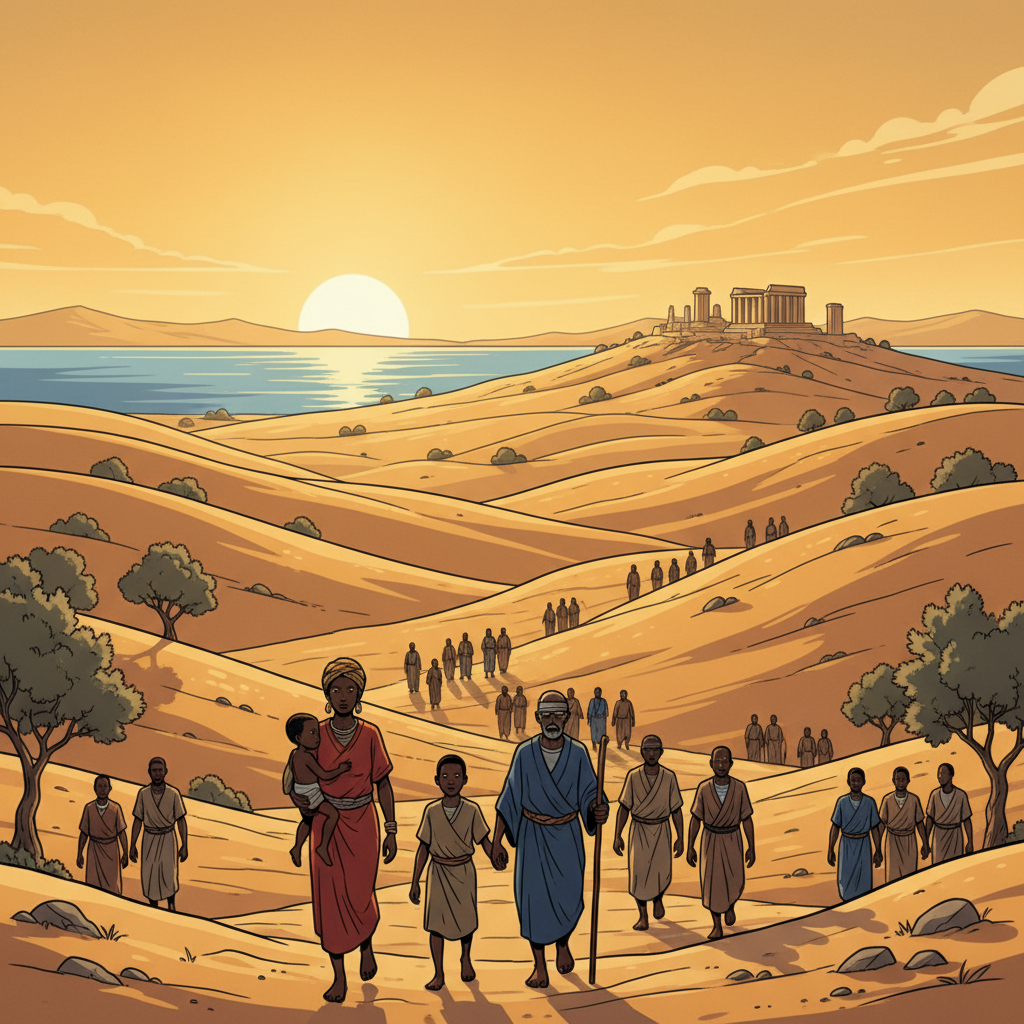
The sun climbed over the Sea of Galilee, and the hills turned the color of honey. On the lower slopes, people were already walking. They came from fishing villages and farm huts. They came from olive groves and from dusty roads. Some had walked through the night. A widow carried a thin child on her hip. A blind man held the shoulder of his son. Lepers walked at the edges, keeping their distance. Roman tax collectors had taken the harvest, and many bellies were empty. But they had heard that the Galilean was speaking today. The one who had studied in Kemet. The one who healed without coin. The one whose words felt like old words — older than Rome, older than the temples they could see from this hill. They climbed toward him, because hunger for bread is one thing, but hunger for maat is another.
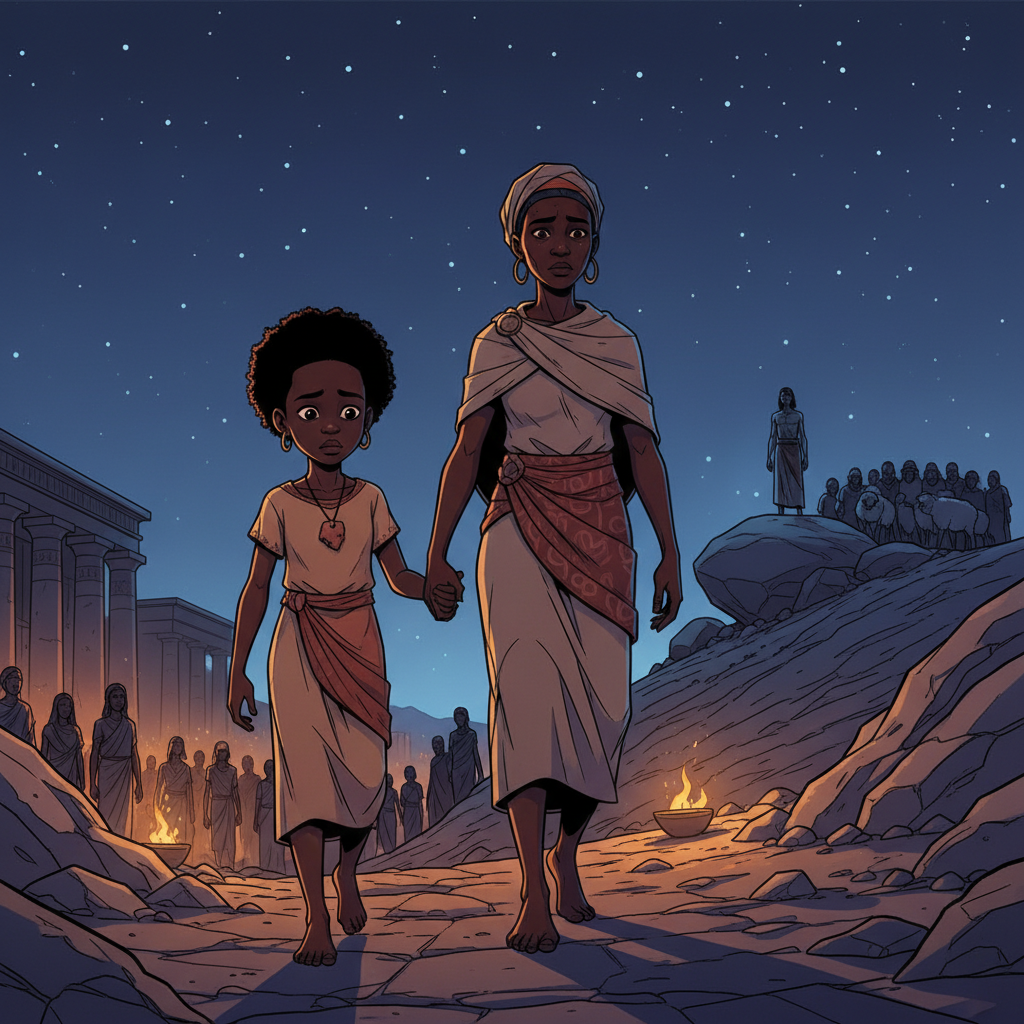
Among the climbers was a girl named Salma. She was ten years old, brown as river clay, with eyes too serious for her age. Her mother walked beside her, holding her hand tight. Salma's father had died the year before. Her little brother, Yusuf, had broken her mother's clay water jar that very morning, and Salma had shouted at him until he cried. She carried the shouting inside her now, heavy as a stone. Her ka felt tangled. “Mama,” she said, “why are we climbing? I am tired.” “Because the teacher speaks today,” her mother answered. “And I have no bread to give you. But his words — people say his words feed the heart.” Salma looked up the hill. She could see a thin figure standing near a boulder, robe darkened by sweat. A crowd was gathering like sheep around a shepherd. She kept climbing.
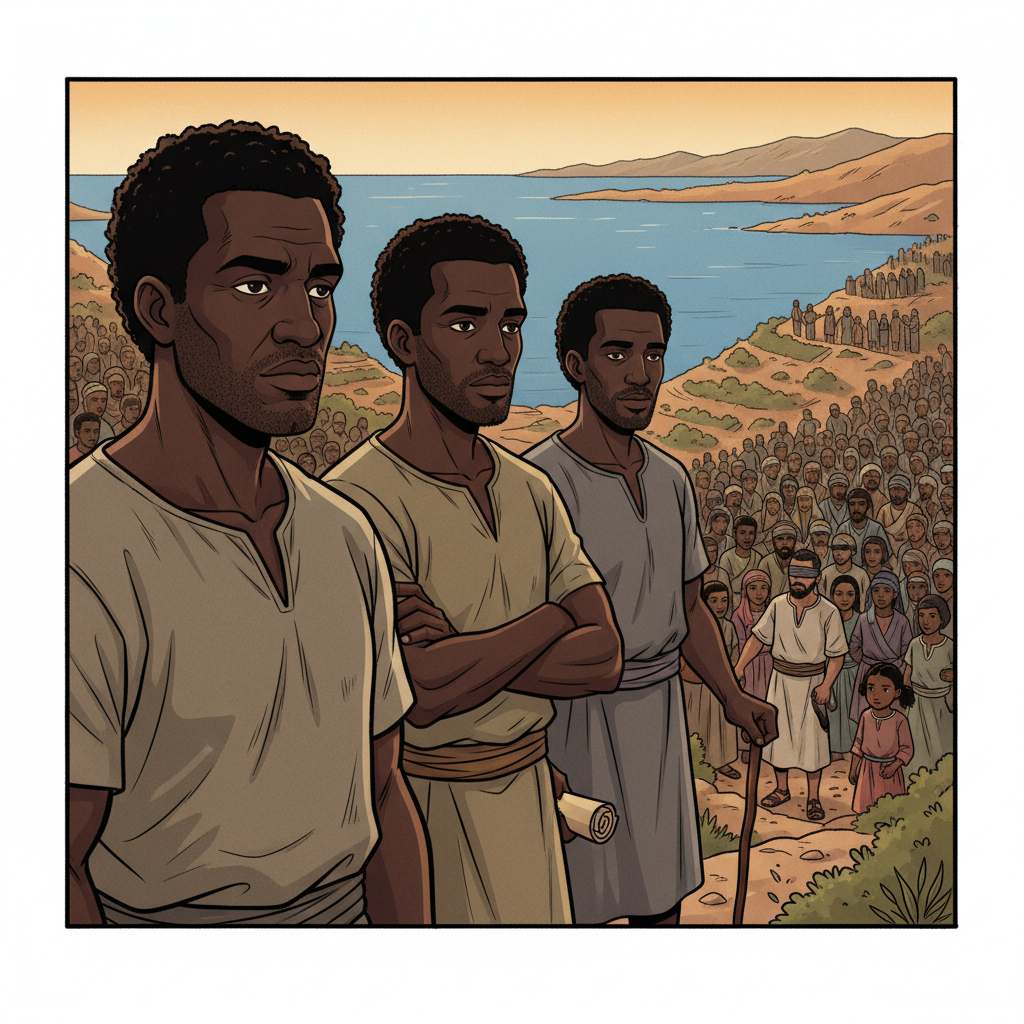
Near the top, three men stood close to the teacher. Kepha was broad-shouldered, sunburned, smelling of fish and lake water. He had once been a loud man, but today he was quiet, watching the crowd swell below. Yaakov, his brother’s friend, stood with arms folded. He had a fisherman’s calluses and a warrior’s stillness. The youngest was Yohanan — not the Baptizer, but another Yohanan, barely twenty, with a thin beard and kind eyes. He held a small scroll to his chest. All three were dark-skinned Galileans. All three had left their nets. All three watched their teacher the way students watch a seba — an instructor whose words carve the heart. “There must be five thousand,” Kepha murmured. Yeshua did not answer. He was looking at a blind man being led up the path, and at Salma, small among the grown-ups.
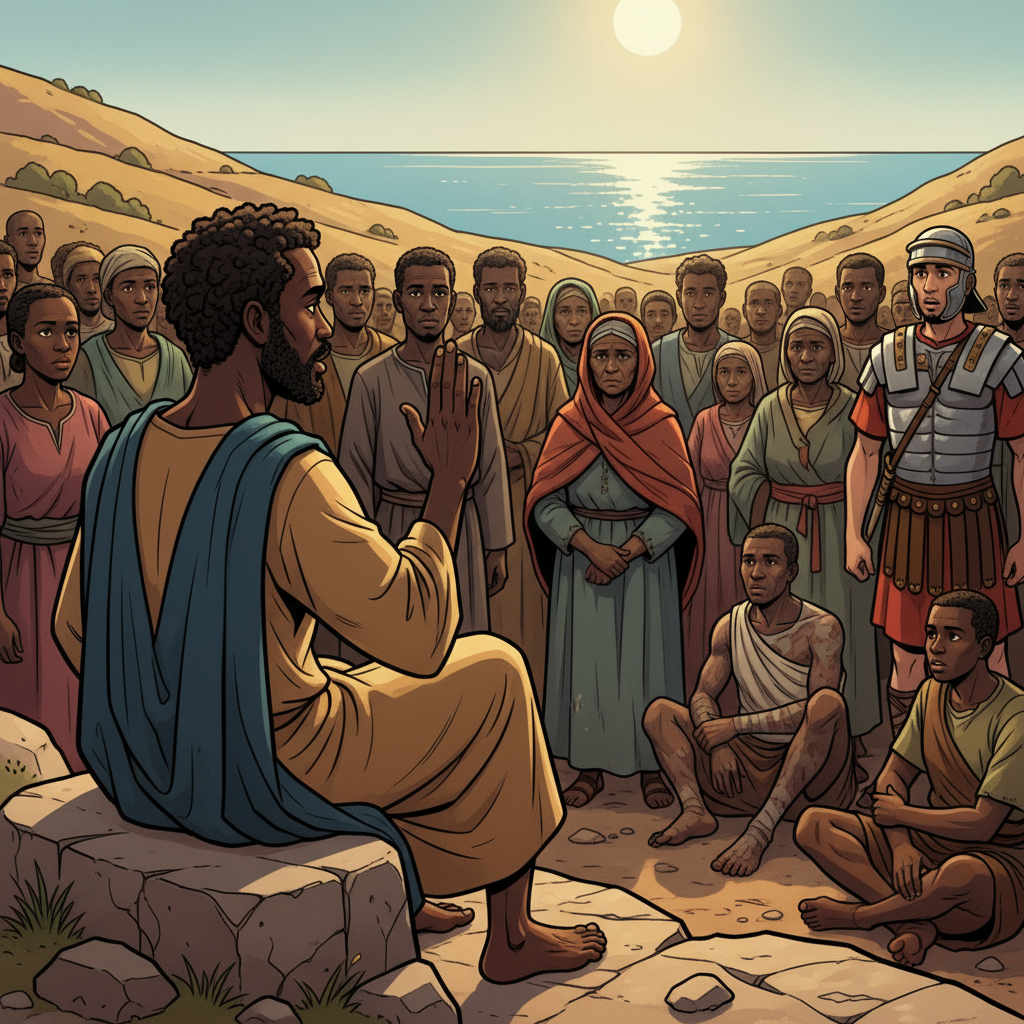
When the sun was high, Yeshua turned to face the crowd. He was not tall. His beard was dusted with road-dirt. His feet were cracked from walking. His skin was the deep brown of the Nile valley where he had once studied. He lifted his hand, and the crowd — fishermen, widows, lepers, even the Roman soldier standing at the edge in his iron and leather — grew quiet. Then Yeshua sat down on a stone. In the tradition of the old teachers, a seba sat to teach. A Roman commander stood to order. But a seba sat, because truth does not need to tower over you. He looked at Salma. He looked at the widow. He looked at the leper at the back of the crowd. He looked last at the Roman soldier. Then he began.
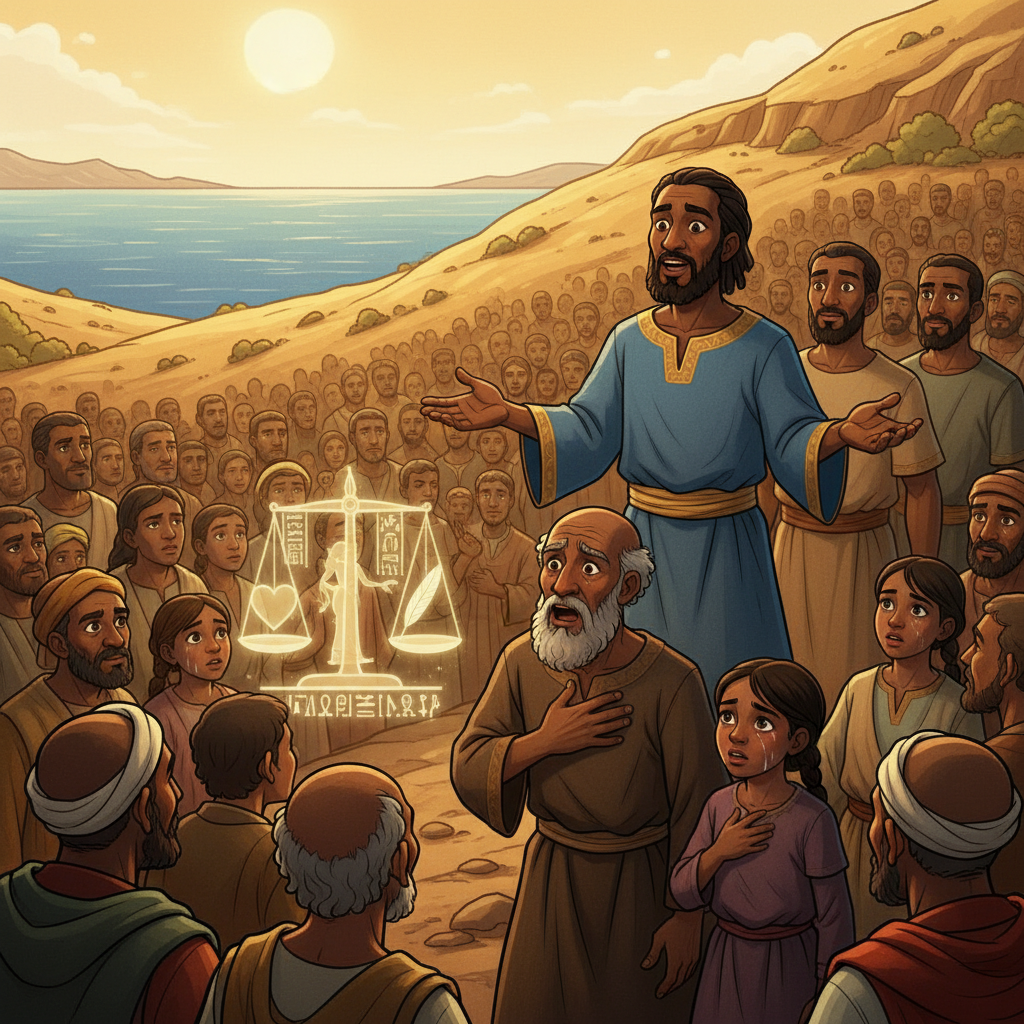
“Blessed,” he said, and his voice was not loud, but it carried, “are the poor in spirit.” He paused. “For their hearts are light enough to balance the feather.” On the hillside, an old man drew in breath. He knew that image. Every child of Kemet knew it. In the Hall of Two Truths, the heart of the dead was weighed against the feather of Maat. A heart heavy with pride sank the scale. A heart emptied of arrogance — poor in spirit — floated level. Yeshua was not speaking a new doctrine. He was speaking the oldest one. “Blessed are those who mourn,” he continued, “for they have known isfet — the breaking of things — and have not become the breakers themselves. Comfort will find them.” Salma thought of her father, and her eyes filled. But she did not look away.
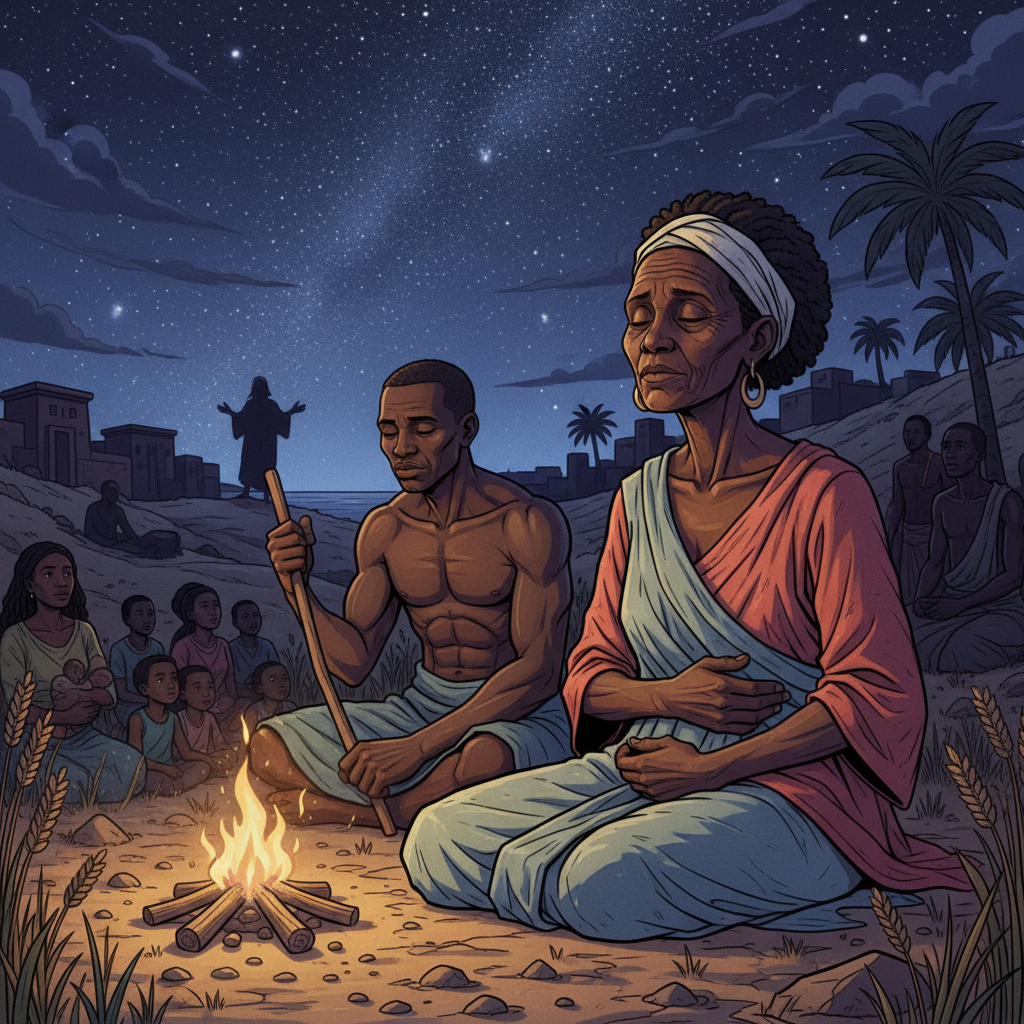
“Blessed are the meek,” Yeshua said. “For they carry hetep — harmony — wherever they walk. They will inherit the earth, because the arrogant devour the earth, but the meek tend it.” A farmer near the front nodded slowly. He had seen Roman officers ride through his wheat and crush it. He had seen greedy men dam the streams until the low fields dried. He had seen hetep broken again and again by those who shouted loudest. “Blessed are those who hunger and thirst for righteousness,” Yeshua went on. “For they hunger for maat itself. And maat will feed them.” The widow closed her eyes. Her stomach ached with real hunger, but she understood him. She had seen people fed in the belly and starved in the heart. She whispered, “Yes. Yes, teacher.”
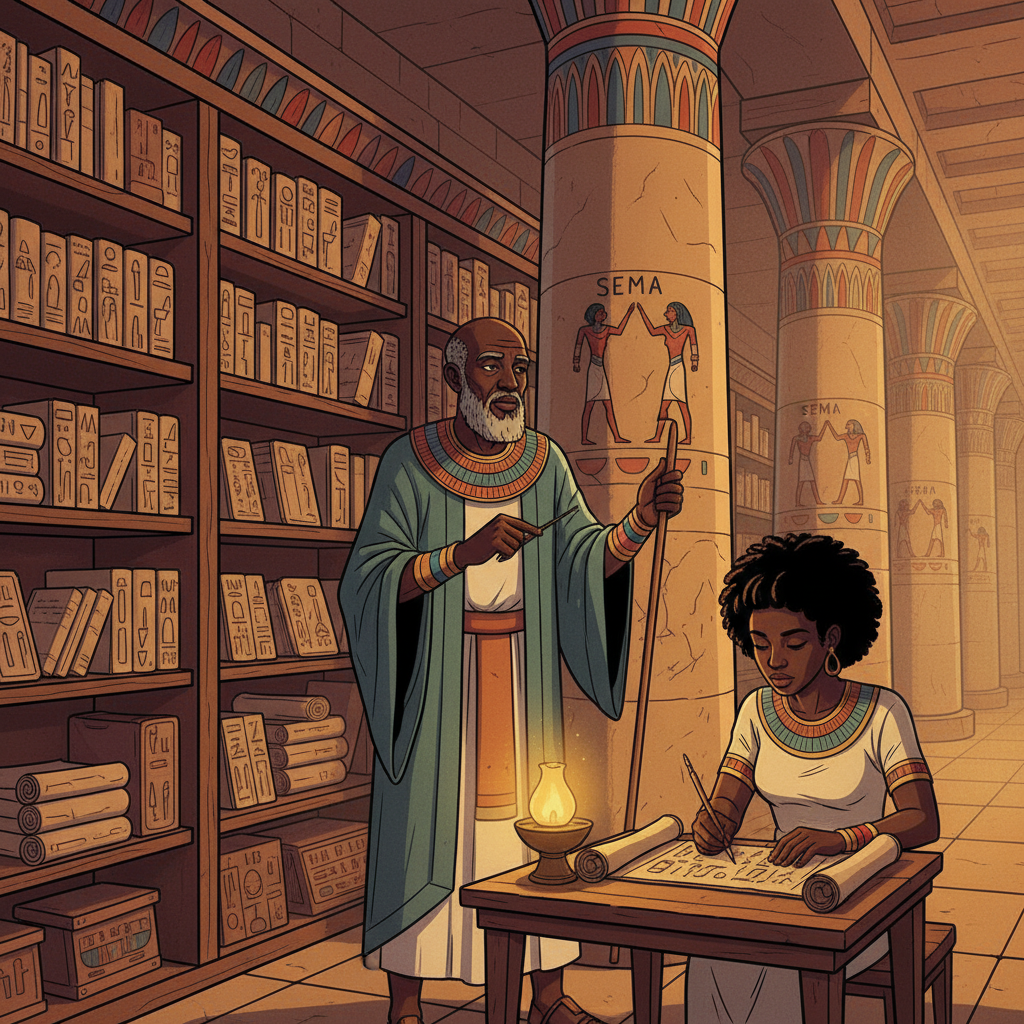
“Blessed are the merciful,” he said, “for they show sema — the reciprocity between soul and soul. And what they give, the Hidden One will return to them.” Yohanan the young disciple was writing on his small scroll now, stylus shaking. Sema. The old word. The binding word. The teachers of Kemet had carved it into temple walls long before Rome knew how to build a road. You lift another, and you are lifted. You crush another, and you are crushed by your own weight. “Blessed are the pure in heart,” Yeshua continued, “for they shall see God.” And then, more softly: “Blessed are the peacemakers. They are the scales-keepers. They shall be called children of the Most High — because the Most High is the one who holds all scales in balance.”
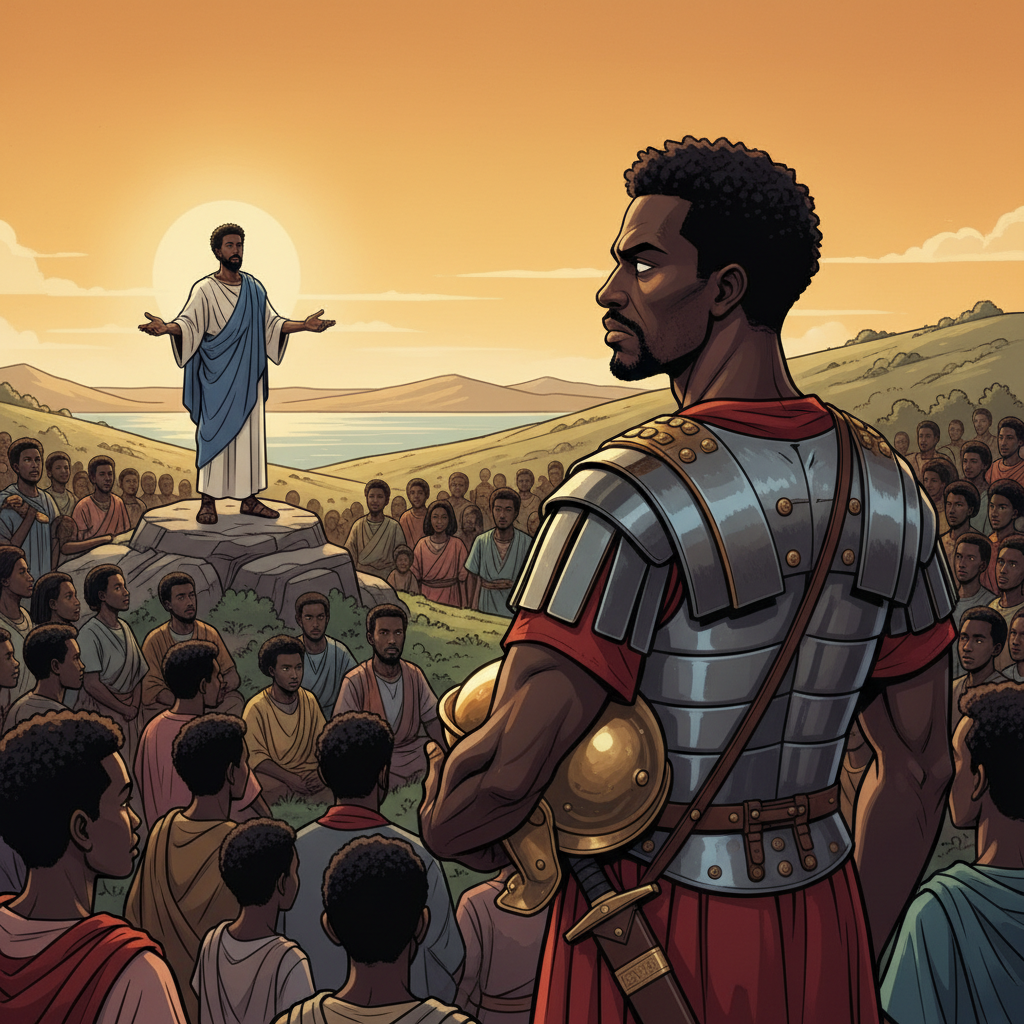
A Roman soldier stood at the far edge of the crowd. His name was not given, and no one asked. He had a short sword at his hip and a bronze helmet under his arm. His eyes were the gray of cold stone. He had been posted to watch this gathering — to listen for words against Caesar. But the teacher had not spoken against Caesar. The teacher had spoken against something older and wider — the disease of arrogance, the habit of crushing. The soldier’s jaw tightened. He had crushed people. He had broken doors. He had dragged men away from weeping wives. He had called it duty. “Blessed are the peacemakers,” the teacher had said. The words bent inside him like a blade cooling in water. He did not leave. He stayed, listening. He did not yet know why.
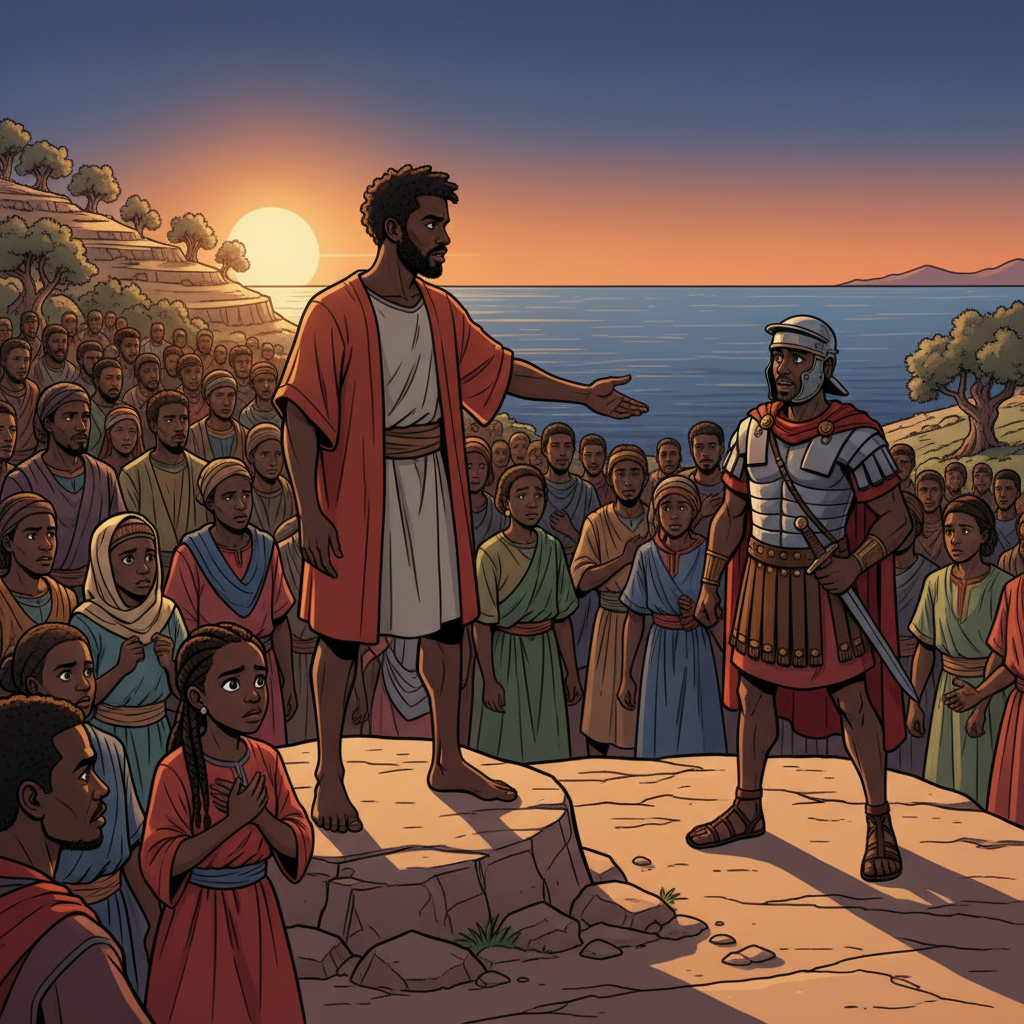
Yeshua’s voice lifted. “You have heard it said: love your neighbor and hate your enemy.” He paused, and looked directly at the Roman soldier. “But I say to you — love your enemies. Bless those who curse you. Pray for those who persecute you. For if you love only those who love you, what reward is that? Even the tax-takers love their own.” The crowd shifted. This was hard. Salma felt it in her chest. Love the soldiers who took her father’s wheat? Love the Romans who had raised taxes until her mother cried at night? But Yeshua was not finished. “Ancient Ptahhotep taught this,” he said. “The wise man turns his face toward the one who insults him, and answers with silence, so that insult falls back on itself. My ancestors taught this. I do not bring new words. I return the old words.”
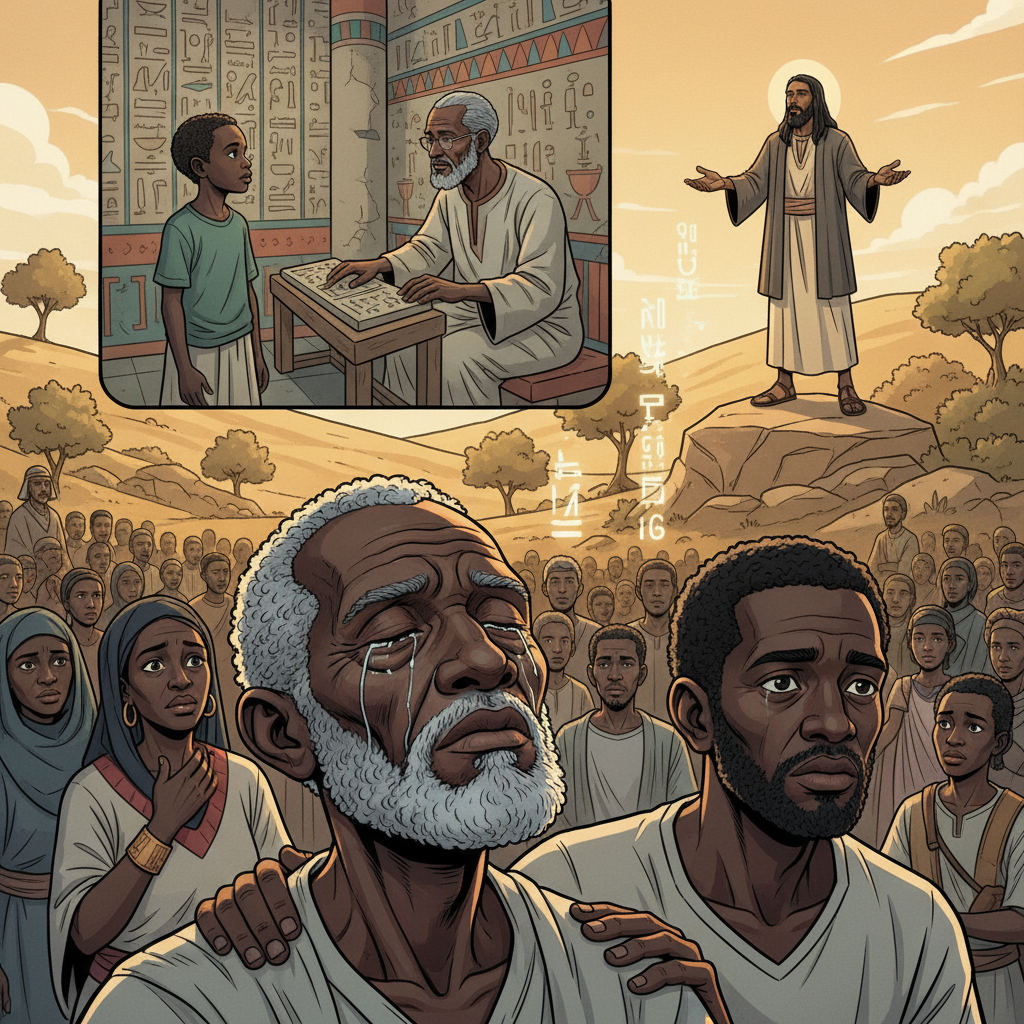
On the hillside, the old blind man tilted his face to the sky. He had heard the name Ptahhotep spoken in his grandfather’s house, long ago, before sight had left him. His grandfather had been a scribe who knew the Maxims — the old African wisdom carved on Kemetic stone four thousand years before Yeshua’s sandals touched this hill. And now, a bearded Galilean was speaking those Maxims back into the air, as if he had studied in the temples of Waset and walked home through the desert carrying them. The blind man began to weep. His son asked, “Father, what is wrong?” He only said, “Nothing is wrong. Something is very right. The words have come home, my son. The words have come home.” Salma watched him weep, and her own throat tightened.
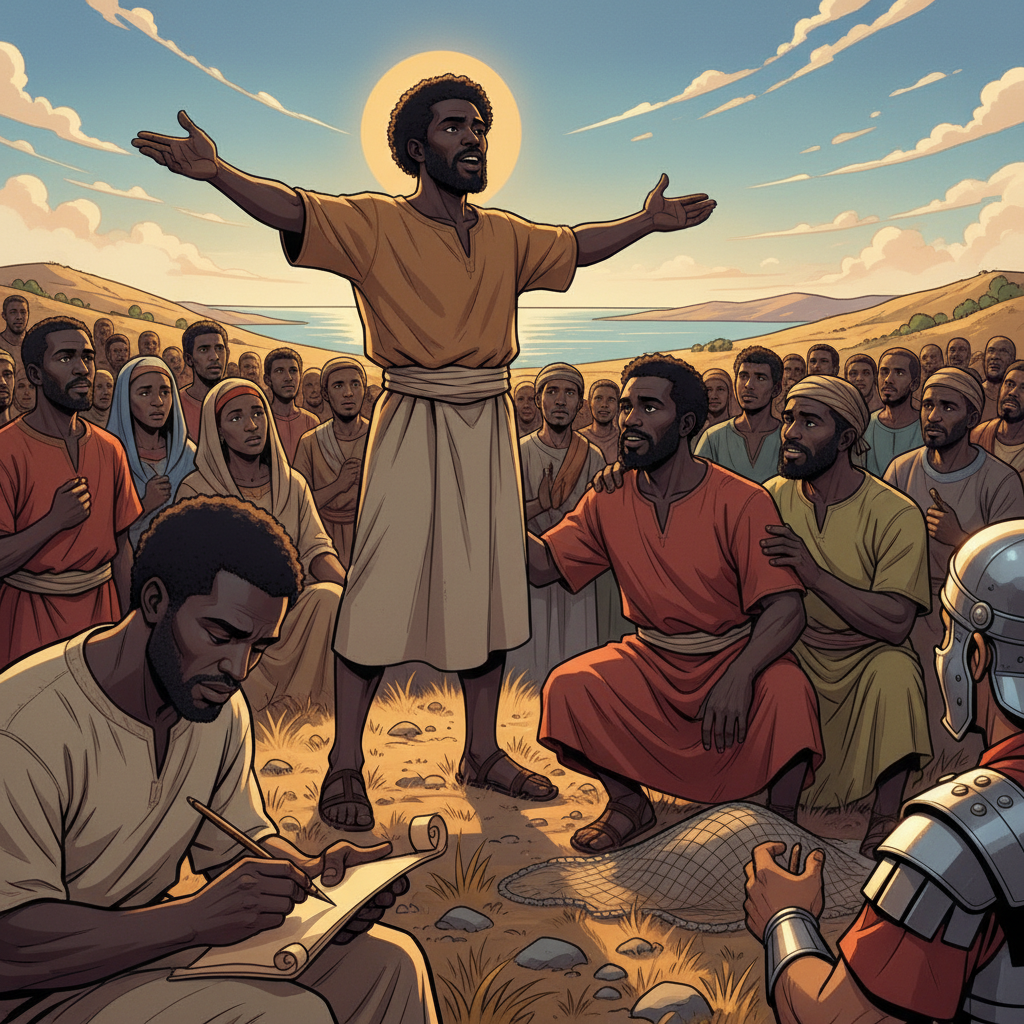
“Do not store up treasures on earth,” Yeshua said, “where moths eat and rust destroys and thieves break in. Store up treasures in the Ka — in the inner life — where no moth eats and no Roman can tax. For where your treasure is, there your heart will be also. And your heart is the thing you will weigh at the end.” Kepha glanced at Yaakov. Both of them had left their fishing nets on the shore months ago. Neither had regretted it. But hearing it now, spoken this way, something settled in them. They were not poor. They were storing something else. Yohanan, the young one, kept writing. Later he would wonder how he had managed to catch any of it, because his hands had shaken the whole time. The crowd did not move. No one wanted the teaching to end.
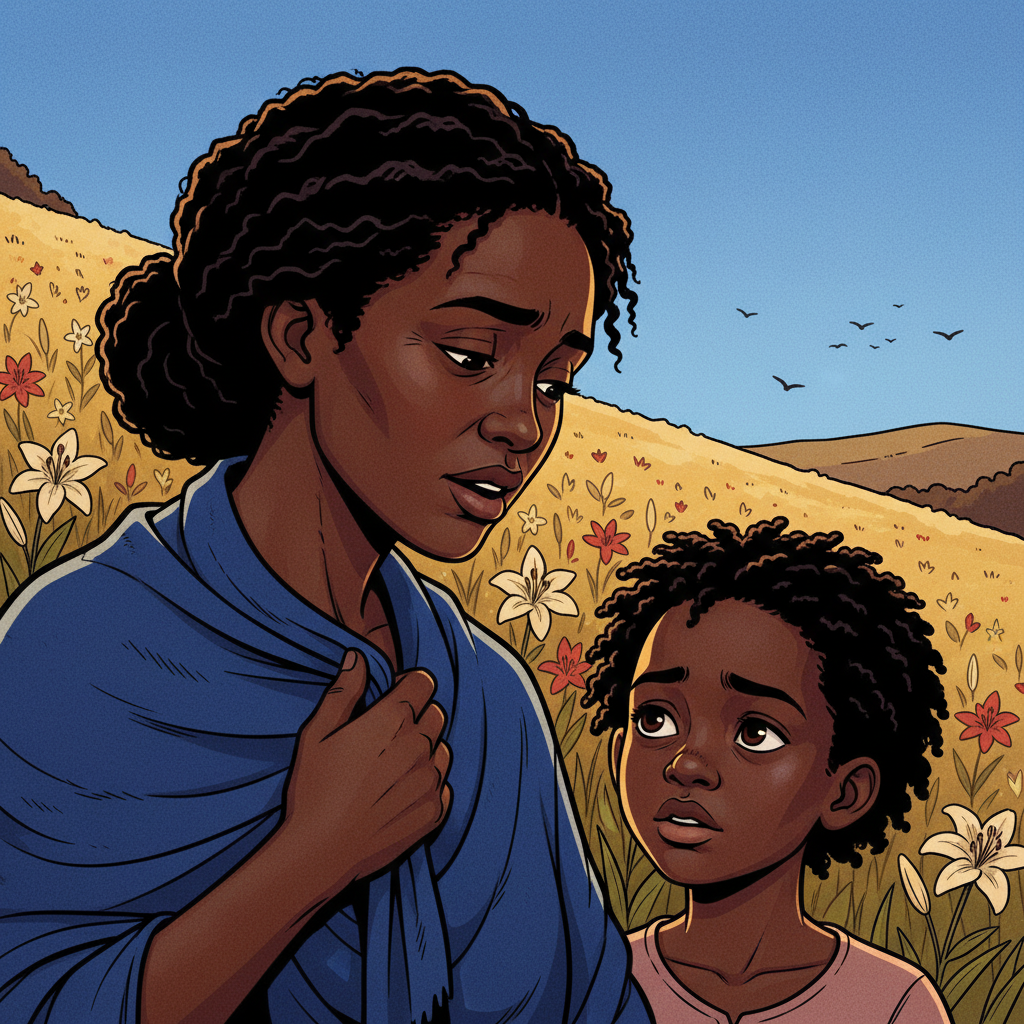
“Do not worry about tomorrow,” he said gently. “Tomorrow has its own troubles. Today has enough.” He lifted his eyes. “Look at the birds. They do not plant, they do not harvest, yet Amun-Yah, the Hidden Source, feeds them. Look at the lilies on this hillside. They do not weave cloth, yet they are dressed more beautifully than any ruler. If the Hidden One clothes the grass of the field, how much more will He clothe you?” The widow’s hand went to her threadbare shawl. She pulled it tighter, but not in shame. In acceptance. She whispered to Salma, “Listen, child. Listen hard.” Salma was listening. She was also thinking about her brother Yusuf at home, and the broken jar, and how she had shouted. She was beginning to feel the stone inside her get lighter.
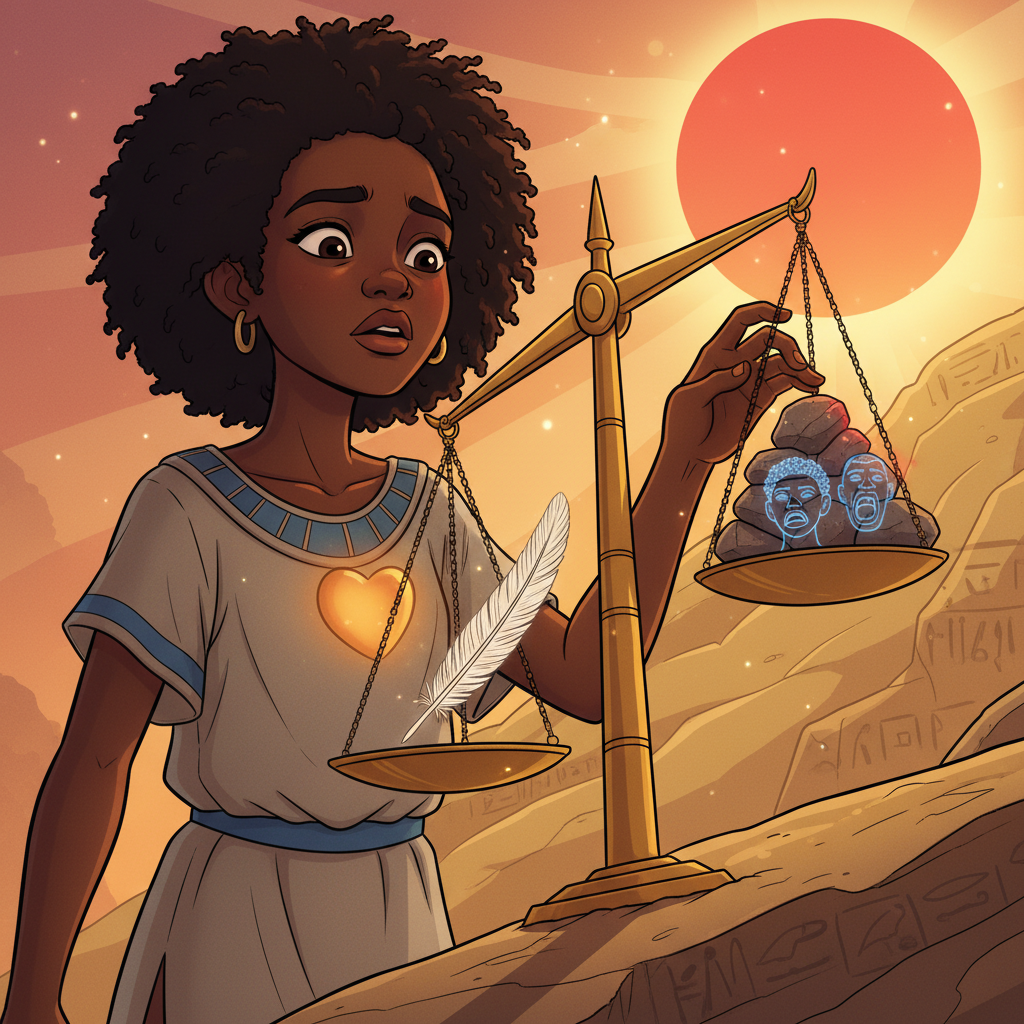
“Do not judge,” Yeshua said, “lest you be judged by the same measure. Why do you stare at the splinter in your brother’s eye, when there is a beam of wood in your own? First, take the beam out of your own eye. Then you will see clearly enough to help your brother with his splinter.” Salma dropped her gaze. The beam. The shouting. The way she had made Yusuf cry. She pictured the scales — the way her mother had once described them to her. The feather on one side. Your heart on the other. And suddenly Salma understood: when she shouted at Yusuf, she was adding stones to her own side. She thought: I want my heart to be light enough. Light enough to balance the feather. She did not know she was thinking the oldest prayer in Kemet. But she was.
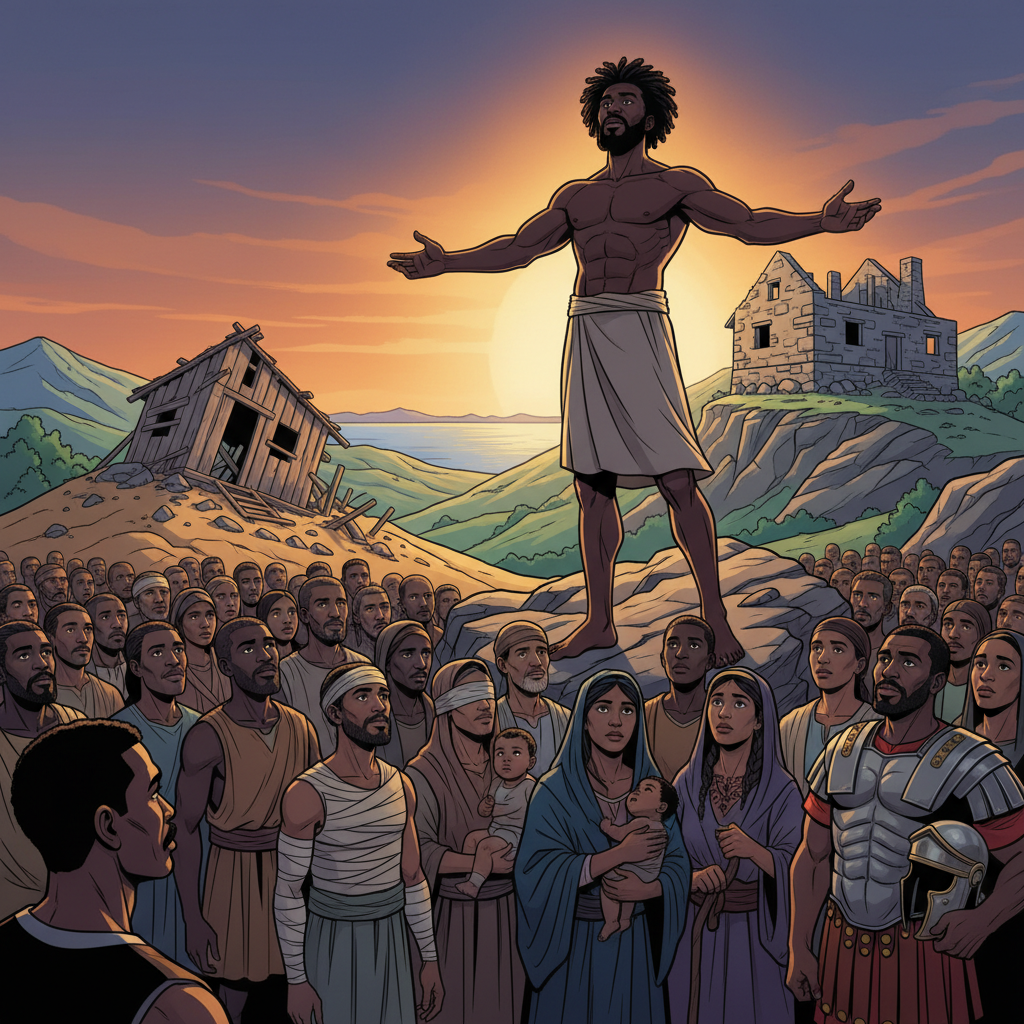
Yeshua stood now. The crowd tensed, because they felt he was coming to the end. “Everything I have said today,” he told them, “is this: do to others as you would have them do to you. This is the law. This is the prophets. This is maat.” He looked over the crowd — the lepers, the widow, Salma, the blind man, and last, the Roman soldier whose helmet was still under his arm. “If anyone hears these words and lives them, he is like a wise builder who built his house on rock. Rains came, floods rose, winds blew — but the house did not fall. But he who hears these words and does not live them is like a fool who built his house on sand. When the storm came, the house collapsed. And great was its fall.”
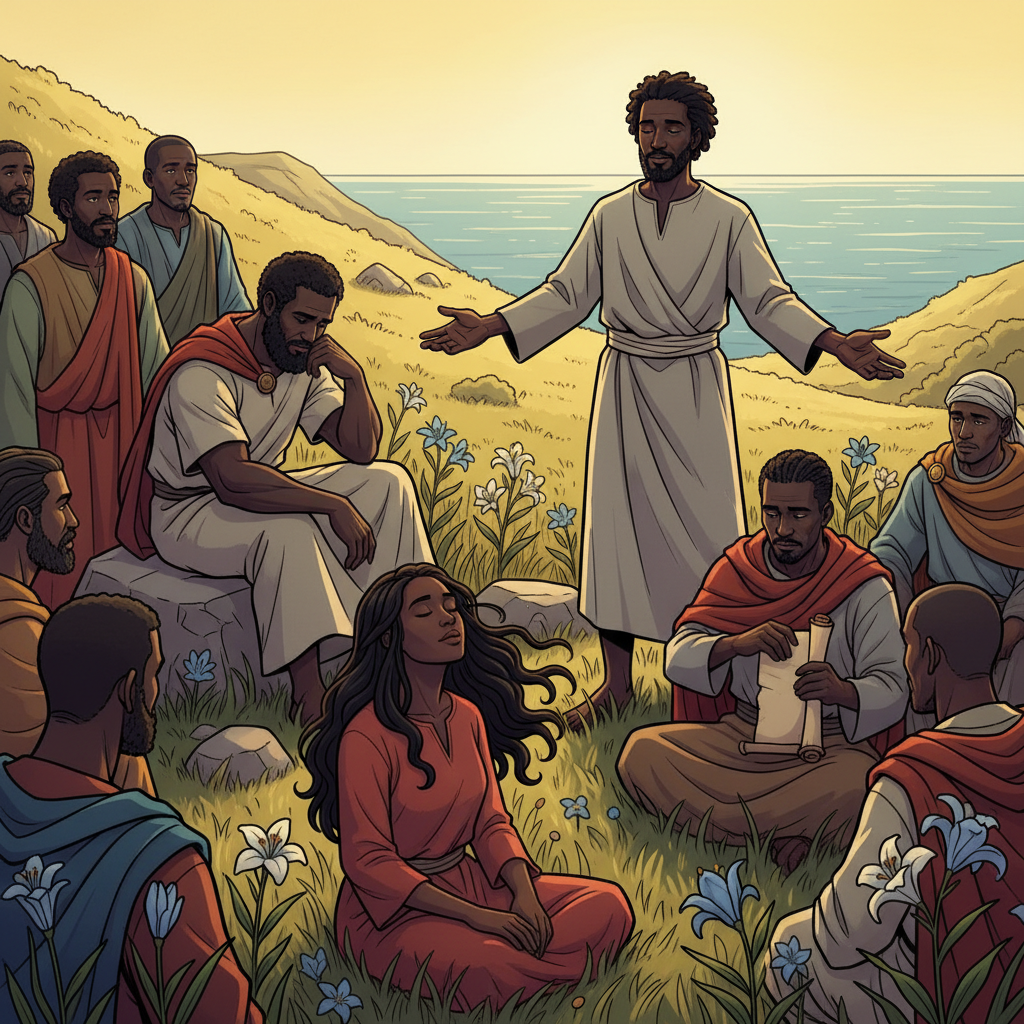
For a long moment, the hillside was silent. Then a small wind came off the Sea of Galilee, and it moved through the grass and through the lilies and through Salma’s hair, and it felt — she would say later, when she was an old woman — like the breath of Amun-Yah had walked across the slope. The teacher did not shout. He did not demand. He simply looked at them as a seba looks at students he loves, and he said: “Go now. And carry the feather in your heart.” And that was the end of the words on the hillside. Kepha sat down heavily on a stone. Yaakov wiped his eyes with the back of his wrist. Yohanan closed his scroll carefully, like a man closing a door on a holy room. None of them spoke.
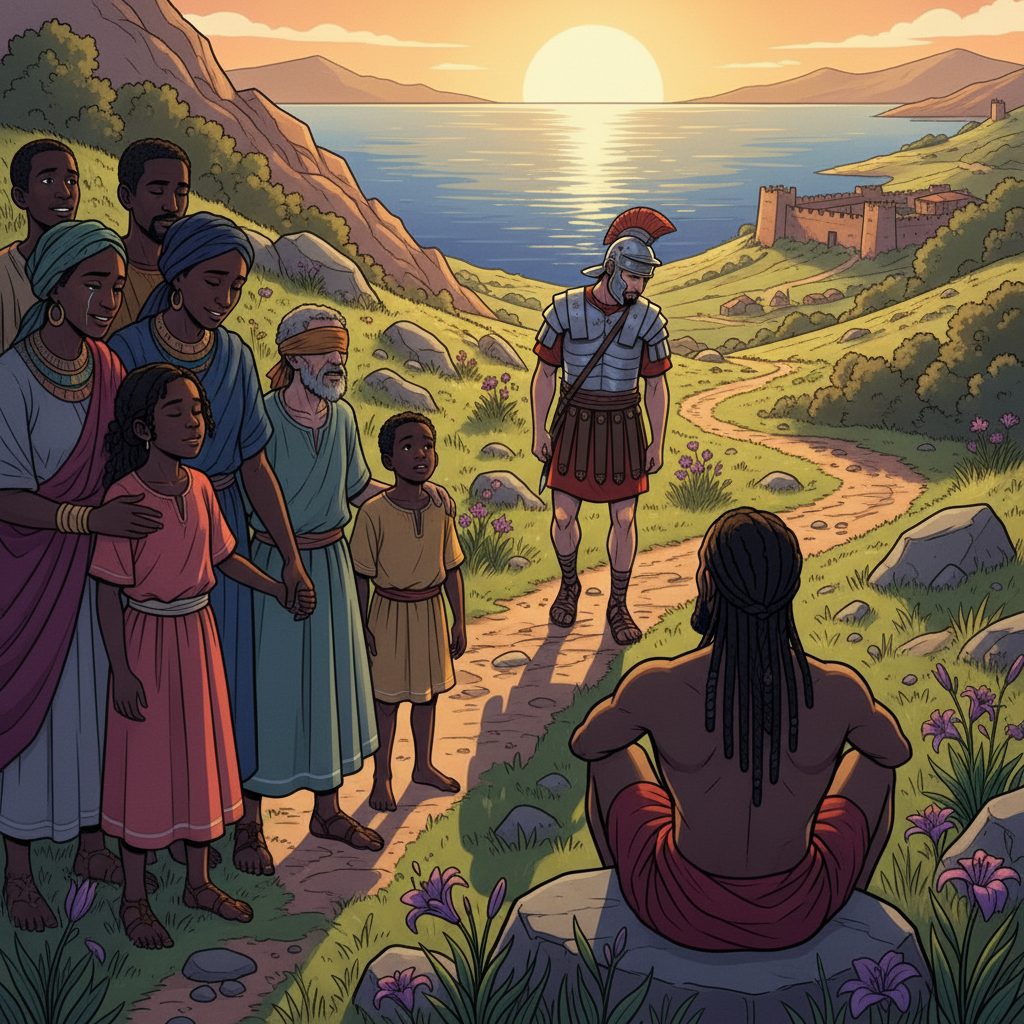
The crowd began to move down the hill slowly, as if their bodies had grown heavier and lighter at the same time. The Roman soldier stood for a long time without moving. Then he bowed his head — just once, just for a breath — and walked down the path toward his post. He did not know yet what he would do. But something in him had shifted, and shifted things do not shift back. The blind man let his son lead him home, and on the way he recited, very quietly, the Maxims of Ptahhotep from his grandfather’s memory. He got some of the words wrong. It did not matter. The widow held Salma’s hand tighter than before, and she was smiling, though her eyes were wet. Yeshua sat back down on the stone, and closed his eyes, and was still.
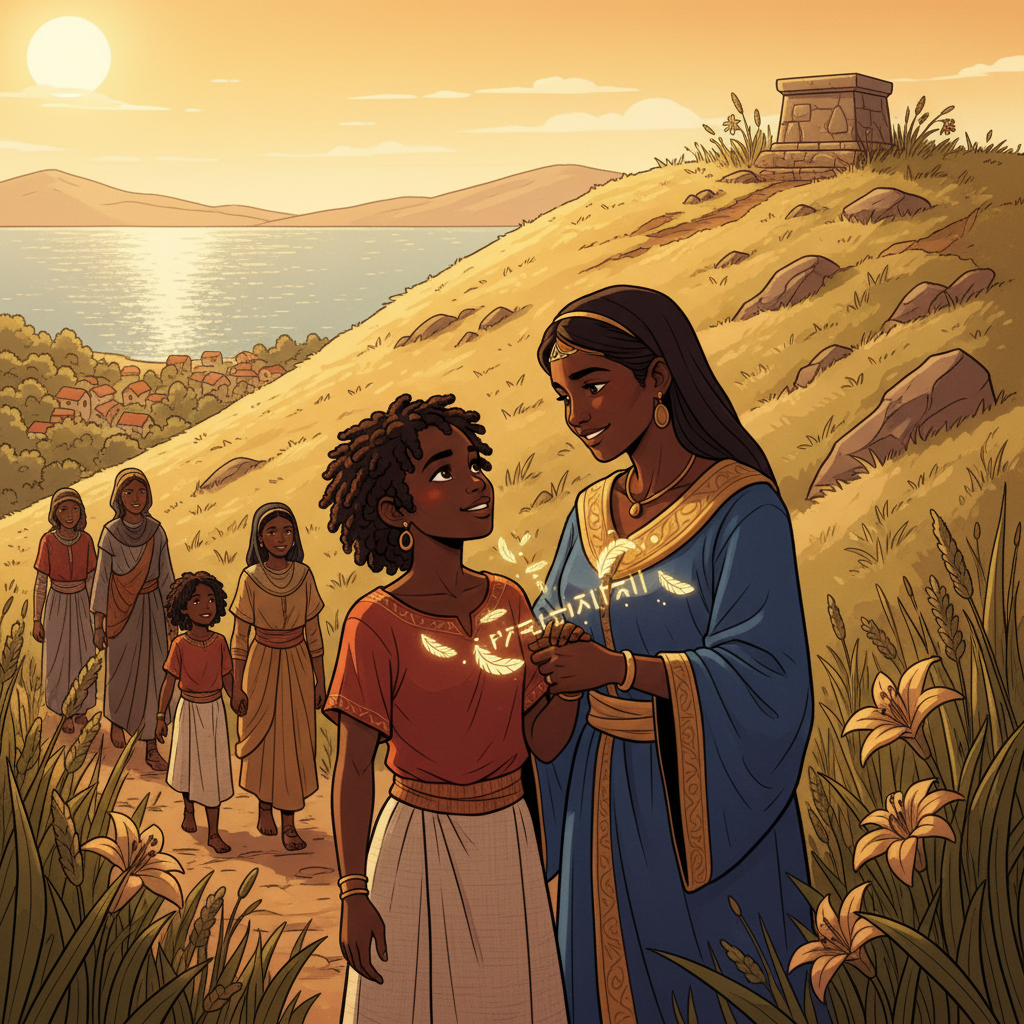
Halfway down the hill, Salma stopped. Her mother looked down at her. “What is it, child? Are you tired?” Salma shook her head. “Mama. When we get home, I am going to tell Yusuf I am sorry. About the jar. About the shouting.” Her mother’s eyes shone. “And then,” Salma said, “I am going to help him find clay. We will make a new jar together.” Far above, on the hillside, the stone was empty. The teacher had gone. But the words stayed in the grass and in the wind and in the chest of one small girl walking home toward her brother. The old words. The feather-light words. The words of Ptahhotep and of maat and of a Galilean seba who had said, clearly and without pride: “I do not bring new words. I return the old words.”